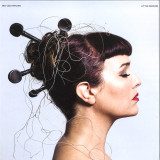
Bev Lee Harling returns with her first solo recording in almost a decade. She won the hearts and musical minds of DJs across the board with her 2012 debut LP, Barefoot In Your Kitchen, which BBC 6Music's Gilles Peterson made his Album of the Week. Now the gifted singer, violinist and composer returns with twelve beautiful pieces of music that tell a very personal story of the years since.
Having swapped the busy streets of North London for the calmer shores of Hastings in Sussex to bring up her young family, it's fair to say that Bev's priorities might have changed somewhat over the past few years, but the music was never far away. Her new environment, and musical family (including multi-talented partner and album co-producer Frank Moon) added plenty of fresh inspiration to her recordings, and we're very excited to share her new album, entitled Little Anchor, with you this Autumn.
The album is in some senses a travelogue, a 9 year journey of a creative womannavigating the landscape of parenting. Each song is a snapshot taken at a differentlocation in time, in a world where finding balance between creative freedom and motherhood is still a struggle, from the uplifting and euphoric Beautiful Life, to the heavy and harassed Only Got A Minute.
Between the unexpected joys of parenting, grappleswith mental health and feelings of inadequacy, and fighting for every second ofcreative time while slowly accepting a life very different to the one that existedbefore, this unedited family album emerged bursting with quirky childhoodmemories, dark musings and celebrations of musical passion and legacy.
Each song carries breakthrough personal moments in rebuilding strength as an artist, as a person, as a parent. Even down to a very emotional moment with Ray Davies of The Kinks, during a songwriting retreat, where album closer This Violin String, a deeply personal ode to her recently departed mum, was written…
"Everyone turned up writing on guitars and piano and I just had my battered old violin. I felt totally out of touch with my former confident musical self and had zero confidence in what I was doing after an intense period of car crash parenting. I wrote it, performed it on the same day and then sobbed my guts out in front of a bunch of total strangers (sorry Ray!). Something shifted for me in the act of being quite so vulnerable though and I found my mojo again in writing solo with my violin."
The personal nature of this record is self-evident, it bursts through every note and word in each song. We're very excited to be able to share such a special album,afresh foray into the always unpredictable, experimental and playful world of Bev Lee Harling.
out of Stock
Last delivered 4 years ago available to reorder, subject to availability
C-L-A-S-S-I-C library breaks and beats set of super-heavyweight espionage-funk.
One of two Be With forays into the archives of revered British library institution Conroy, we present one of our favourites on the label - the super in-demand Background Action from Sammy Burdson, originally released in 1975. Rare and sought-after for many years now, this is one of those cult library LPs that rarely turns up on even the deepest dig.
Sammy Burdson was one of the many, many aliases of the mighty Austrian composer, arranger and conductor, Gerhard Narholz. Founder of adored library label Sonoton in 1965, and a classically trained composer, his work runs from easy listening through pop, jazz and electronic, to avant-garde.
Background Action’s first side is all Blaxploitation wah-wah, funky clav and heavy, heavy drums. It’s top-quality takes on the sort of hard-knocking psychedelic sleuth-funk that the library labels gave us in spades. However, we think the real killers are over on side B. Styles upon styles upon styles is what we have. The trio of swish “Water Pollution” variations are pure gold. The two-part mid-tempo b-boy drumathon “News Background” is nothing short of epic whilst the sensational “Kabul Trip A” and “Kabul Trip B” are two different takes on some tough funk, street jazz style with some dope organ, bass and drum sounds. In short, this is a must for both DJs and producers.
The British library label with those instantly recognisable “orangey-red” sleeves, Conroy began releasing production music in 1965. A sub-label of Berry Music Co, its catalogue typified the library industry’s strange mixture of tradition and experimentation from the start. Conroy’s early releases included work by big band stalwarts like Eddie Warner as well as early electronic recordings by the likes of Belgian experimental pioneer Arséne Souffriau. With Berry Music Co working as a distribution partner to the German library label Sonoton, it was through the Conroy that a great deal of German library music found its way into the UK market.
Conroy stopped putting out new music in the 1980s, but its history and its catalogue offer an excellent window into the trends and eccentricities of a highly unique industry at the height of its international appeal.
This re-issue of Background Action has been mastered for vinyl by Be With regular Simon Francis from audio from the original tapes. Richard Robinson has handled reproducing the iconic, hypnotic original Conroy sleeve. Essential.
out of Stock
Last delivered 3 years ago available to reorder, subject to availability
C-L-A-S-S-I-C library breaks and beats set of heavy drums and louche funk.
One of two Be With forays into the archives of revered British library institution Conroy, we present one of our favourites on the label - the super in-demand Dramatic Tempi / Larry Robbins Background Rhythms, originally released in 1975. Rare and sought-after for many years now, this is one of those cult library LPs that rarely turns up on even the deepest dig.
As a single LP, Dramatic Tempi / Larry Robbins Background Rhythms is two distinctly different collections of music. The first side, Dramatic Tempi, is made up of four tracks each from Sammy Burdson and Klaus Weiss.
Sammy Burdson was one of the many, many aliases of the mighty Austrian composer, arranger and conductor, Gerhard Narholz. Founder of adored library label Sonoton in 1965, and a classically trained composer, his work runs from easy listening through pop, jazz and electronic, to avant-garde.
About as cult as it gets when it comes to library music legends (German or otherwise) Klaus Weiss produced essential records on German library labels Coloursound, Selected Sound and Sonoton, as well as making two essential entries in the Conroy catalogue. Having started his career at the age of 16 as a jazz drummer, the Klaus Weiss trademark electronic sound is unsurprisingly built on top of sometimes funky, sometimes frenetic, but always hard-hitting drums.
The second side is both titled and also credited to Larry Robbins Background Rhythms. We have to admit to being stumped as to who Larry was, but we don’t think it’s too much of a stretch to assume it might well be yet another incarnation of Gerhard Narholz’s.
First up from Dramatic Tempi are the phased, gargantuan hip-hop beats of Sammy Burdson’s impeccable “Pop Waves”. This is otherworldly funk on a whole new level. Hearing is believing. The magnificently titled “Cyclodrom” is up next, a beast of booming bass and wah wah guitars over frenetic funk drums. “Devils Drive” is dramatic, blaxploitation street funk with rolling, pounding drums. “Crime Ways” is an acid-squelch, slow-pace neck-snapper.
Klaus Weiss starts by askings us “Is It Hip” and we can only answer “yes it is!” to the clean, skipping drums, booming bass and proto-hip-hop bells, layered beneath laconic and melodic guitar shredding. This is just horizontal soul perfection. “The Camp”, propelled by jazzy guitar à la Joe Pass over fast drum and conga breaks, gives way to the dark guitars and cymbal crashes of “Tomorrow”. It sounds like an early New Order jam session. Closing out a pretty startling side of library greatness, “Rhythm Trip” presents early stuttering funk before easin' on in to a jazzy, soulful groove; all breezy guitar and warm keys. Lush.
Larry Robbins Background Rhythms is a lighter, poppier affair, but it’s not without its drum-heavy bangers. “Vox Pop” and “Pop Phase” each have clean, open-ish drum breaks, ripe for sampling or more daring DJ sets. “Pop Twang” is a short and sweet beat-heavy number that gives way to the fantastically out-there “Canned Pop”. We‘d love to know if this was ever actually licensed for something! The final seven tracks are a set of 1-to-2 minute “Percussion Takes”. All compelling, and all equally useful for any number of production needs. Get sampling.
The British library label with those instantly recognisable “orangey-red” sleeves, Conroy began releasing production music in 1965. A sub-label of Berry Music Co, its catalogue typified the library industry’s strange mixture of tradition and experimentation from the start. Conroy’s early releases included work by big band stalwarts like Eddie Warner as well as early electronic recordings by the likes of Belgian experimental pioneer Arséne Souffriau. With Berry Music Co working as a distribution partner to the German library label Sonoton, it was through the Conroy that a great deal of German library music found its way into the UK market.
Conroy stopped putting out new music in the 1980s, but its history and its catalogue offer an excellent window into the trends and eccentricities of a highly unique industry at the height of its international appeal.
This re-issue of Dramatic Tempi / Larry Robbins Background Rhythms has been mastered for vinyl by Be With regular Simon Francis from audio from the original tapes. Richard Robinson has handled reproducing the iconic, hypnotic original Conroy sleeve. Essential.
out of Stock
Last delivered 4 years ago available to reorder, subject to availability
Serendipities surround the collaboration between Berlin's Stroboscopic Artefacts label founder Lucy and their most recent record with Malaysian Bangkok based emerging artist Wanton Witch. The release culminates in the reimagining of WW debut LP as seen and felt through the lens of Lucy. This is a follow up full-length album by Lucy not approached as a usual remixes record, but instead a fully fleshed out new body of work with the WW material being an integral part of Lucy's sonic palette.
Despite the label hiatus during the first year of lockdowns, the isolation of the pandemic helped create a fertile ground for a back and forth between Wanton Witch and Lucy's own distinct sound palettes to collide. With the normal every day pressures of touring lifted and enlightened by WW's sonic world, Lucy has seen this as a positive opportunity to manifest new pathways of connectivity and process a phase of personal growth. Not simply about the breaking of gender lines, but also about the blurring of creative boundaries, especially when making music.
Lucy's original patronage of Wanton Witch and her relatively fresh and new voice in the electronic music scene can be seen as a contribution to this idea of dismantling industry norms. In more than a decade of SA operations this is a reset moment for the label's mission focusing on empowering new talent, refreshing and growing with them, presenting a dynamic two-way process bewtween the label as a whole and the individual artists output.
Lucy's personal revolution has coincided with Wanton Witch's own discovery of her musical voice and their paths have created a synchronicity. This osmosis of thought and feeling, even through massive distances, can be so real and tangible. Lucy's new album is a testament to the power of connective tissue in collaboration. It is this catalyst of realisation that has allowed the creative work to flourish under the toughest of pandemic conditions.
out of Stock
Last delivered 4 years ago available to reorder, subject to availability
His last LP has barely touched record store shelves and Ivan ave is back with a EP for Mutual Intentions. Mid Season finds Ivan Ave in bloom as he evokes the sounds of
spring on his latest offering. The EP title also refers to a mid-album-recording process, which Ave currently finds himself in. Mid Season gives the listener insight into a
forthcoming full length album, entitled All Season Gear.
The prolific Norwegian rapper continues to charm with a seductive baritone that blows like a cool breeze through the production’s warm accompaniment. Dusty drum
machines under glacial keys and guitars offer a platform from which Ivan waxes lyrical about everything that touches him. He has crafted a unique voice in Hip Hop echelons, finding quirky analogies in the mundane. While in the past, he could find a parable for love in a bicycle lock or existential questions in an worn out sock, he turns his
attention increasingly to social realities.
He regularly takes aim at the ridiculous aspects of our contemporary society throughout Mid Season, with lyrics that poke fun as much they ask what the fuck?
“Spotify owner 'bout to buy a whole ball team… That mean I own a corner flag or some seats at least?,” he sings on «What a Day!!!». The record is peppered with these
types of anecdotal metaphors that come together like a social media story through a bionic AI. Ivan Ave is the product of this generation and it’s only right he should reflect
that. He does it in a unique way that requires the listener to untangle these preternatural allegories.
Playing with a dichotomy of words, he doesn’t labour on a thought before he’s lazily propelled onto the next at the turn of each bar. His laissez faire approach is only
emboldened by the slow moving percussion and keys that have come to define his sound. Picking up on early nineties influences from the likes of Native Tongues or Dilla,
the music on Mid Season continues to reassess and revolutionise these archetypes. It’s in the keyboard sounds of this latest EP, that Ivan Ave and producers have found
yet another new evolution in his sound.
Synthesisers that sound like they belong to a Maynard Ferguson record rather than a Hip Hop EP make the record come alive over a chugging and forceful rhythm section. It provides an airy and playful contrast to the more serious elements on the track, and much like Ivan Ave’s lyrical prowess offers an extra layer of depth that often
eludes Hip Hop’s most successful stars. The more you listen to Ivan Ave the more you get entrenched in his work and Mid Season continues to send the artist on an
exciting trajectory.
out of Stock
Last delivered 4 years ago available to reorder, subject to availability
Oftentimes in this busy and chaotic world it’s challenging to draw a parallel between two congruent events. In this case drawing its inspiration from Detroit’s meteoric rise from the ruins
of the past, BerettaMusic a label founded in Detroit in 2002 who took a several year hiatus is back in a big way, also rising from the ashes like it’s birth city has done.
Ryan Sadorus who co-founded the label with Brian Kage delivers some next level quirky Detroit house jams. Already getting spins by local Detroit DJ’s and the verdict is in and the tracks are
dance floor ready and sure to get people moving. The release also features vinyl artwork by renowned midwest artist Jon Griffin featured on full color vinyl jackets.
First off is “Slippah”, a shuffling and quirky bass heavy stormer. The track builds through various levels dropping into syncopated and distorted vocal riffs, lifting its way into some pulsing
synth stabs with perfectly timed filtering which lends itself to the overall energy rise through the track. With a huge breakdown and vocal stab sequence, it’s sure to have them moving! “Hit
'em with da slippah!”
Expansive is a chugging deep house tune with atmospheric synth business to really set the mood anytime of the night. A deep bassline carries the tune along into a breakdown complete with a quote from the man himself, Carl Sagan.
Brian Kage delivers a stunning remix of Expansive, imprinting his own defined style he’s known for as he keeps things level grounded with evolving Detroit-inspired soulful elements.
Last but not least, “Flexxin” is ripping speaker work out of epic proportions. Another quirky, bass heavy jam that will definitely wake up the dance floor. Written and Produced by Ryan Sadorus, mixed by Brian Kage at The Bear Cave in Detroit Mastered by Dietrich Schoenemann Label art by Brian Kage & Juju / painted original portrait art by Jon Griffin Special thanks to: Juju, my parents and family, Brian Kage, Ronnie Perez, Sims Cabrera and the entire Guam crew, Norm Talley, Dietrich and to you for your support! - Ryan Sadorus
out of Stock
Last delivered 3 months ago available to reorder, subject to availability
Array expresses the experience of a remote Antarctic research station through the convergence of sound, site and performance. The result is an immersive and affective experience of the spaces, protocols and conditions comprising the bracing polar environment. Array is a companion piece to Polar Force, a performance-installation work by Philip Samartzis and Eugene Ughetti, presented by Speak Percussion.
Array features recordings of radar and scientific instrumentation used for upper atmospheric research and terrestrial communication. These sounds reveal the sophisticated technology and architecture used and heard within the Australian Antarctic Territory. Many of the recordings focus on the way the built environment is transformed through stress and fatigue caused by extreme climate and weather events including freezing temperatures and high velocity winds.
Together with the field recordings are layers of live performance using custom built instrumentation to produce a unique series of textures, rhythmic cycles, resonances and timbral phenomena. The application of tension and pressure upon the assorted instruments recalls the distressed state of highly specialised infrastructure found within the perimeters of a research station.
A polar research station comprises many types and volumes of prefabricated space. In dialogue with this are the unique spaces used to record the instrumental performance. By merging different spaces Array brings into focus various industrial resonances, spatial characteristics, timbres of metal and concrete, and sonic artefacts produced by hard and permeable materials and surfaces.
In three parts, Array presents Antarctica as a liminal space oscillating between representation and abstraction to challenge often repeated tropes. The intent is to blur the relationship between the recorded and performed to produce a hyper-realistic encounter of the powerful forces that operate at the margins of our planet. One hears the precariousness of a remote research station contorted by unrelenting stress, compressed air forced through waterborne fipples and the volatility of weather events.
Life on remote research stations is progressively resembling the broader contemporary experience, in which strict protocols are used to govern and preserve life. The resilient communities who live and work in these places have learnt how to co-exist with an increasingly hostile environment, along with its unknowns and necessity for hyper-vigilance. Rather than consider it as a place on the edge of elsewhere, Antarctica and its assemblage of durable, super modern colonies provides an archetype for an uncertain future in anticipation of the volatility that awaits.
BIOHAZARD formed in Brooklyn in 1988 and soon after released their first demo. The band consisted of founding members Billy Graziadei (vocals, guitar), Bobby Hambel (lead guitar) and Evan Seinfeld (vocals, bass). After the release of their second demo in 1989, drummer Anthony Meo left the band and drummer Danny Schuler replaced him. BIOHAZARD released their combined the urban sounds of hard-core, metal and rap with scorching lyrics describing the forces at work in our modern urban lives. With an impressive career spanning over 20 years with 10 albums (on both indie and major labels), the band sold over 5 million records. In 1990, Biohazard signed a recording contract with Maze Records. The band's self-titled debut album was poorly promoted by the label and sold approximately 40,000 copies. The album's subject matter revolved around Brooklyn, gang-wars, drugs, and violence.
In 1992, Biohazard signed with Roadrunner Records and released Urban Discipline, which gave the band national and worldwide attention in both the heavy metal and hardcore communities. The video for the song "Punishment" became the most played video in the history of MTV's Headbanger's Ball, and the album sold over one million copies. The band also began opening for larger acts such as Pantera, Suicidal Tendencies, House of Pain, Fishbone, and The Cro-Mags. In 1993, the hardcore rap group Onyx brought on Billy Graziadei for an alternate "Bionyx" version of their hit single "Slam" with Biohazard as their backup band. This led to a collaboration on the title track of the Judgment Night soundtrack. The soundtrack would go on to sell over two million copies in the United States. Months later, the band left Roadrunner Records and signed with Warner Bros. Records Inc. who released their third studio LP, State of the World Address. The album was produced by Ed Stasium in Los Angeles and contained the single "How It Is" featuring Sen Dog of Cypress Hill, for which a video was also shot. During their 1994 tour, the band made an appearance on the second stage at the Monsters of Rock festival held at Castle Donington. State of the World Address went on to sell over one million copies, and Rolling Stone magazine selected the Biohazard logo as the best logo of the year.
This was the last Biohazard album with Bobby Hambel, who left due to differences with the rest of the band. The band recorded their fourth studio album, Mata Leao, as a three piece in 1996. It was produced with the help of Dave Jerden. For the 1996-97 Mata Leao Tour, former Helmet guitarist Rob Echeverria joined the band. The band also played on the Ozzfest mainstage alongside Ozzy Osbourne, Slayer, Danzig, Fear Factory, and Sepultura. While touring Europe in support of the Mata Leao album, the band recorded their Hamburg, Germany, show for their first live album, No Holds Barred (Live in Europe), which was released in 1997 through their former label, Roadrunner Records. The band signed to Mercury Records and released their fifth studio album, New World Disorder, in 1999, once again with Ed Stasium as a producer.
The relationship with Mercury Records soured quickly as the band felt betrayed and misunderstood by the label. They severed their ties with the label amidst the merger of Mercury Records, Island Records, Def Jam Records, and Polygram into the Universal Music Group. The following year, Biohazard signed two new record deals with SPV/Steamhammer in Europe and Sanctuary Records for the remainder of the world. Despite the new record deals, the band took some personal time in order to work on other projects. Graziadei and Schuler also collaborated in transforming the band's rehearsal Brooklyn studio into a digital recording studio, known as Rat Piss Studios and soon after changed the name to Underground Sound Studios. Re-investing into the band, Graziadei and Schuler honed their engineering and productions skills while recording and producing local acts and new Biohazard demos. The band then undertook the process of writing, recording, and producing their own music. Their studio work led to the band's sixth studio album, Uncivilization, released in September 2001.
The album featured several guest appearances by members of bands such as Agnostic Front, Hatebreed, Pantera, Slipknot, Sepultura, Cypress Hill, Skarhead, and Type O Negative. Shortly after the release of Uncivilization, guitarist Leo Curley left the band and was replaced by former Nucleus member Carmine Vincent, who had previously toured with Biohazard as part of their road crew. The band had to cancel scheduled European festival dates when Carmine Vincent underwent major surgery. The band did manage to find a temporary guitarist, Scott Roberts, formerly of the Cro-Mags and the Spudmonsters, in time to join the Eastpak Resistance Tour with Agnostic Front, Hatebreed, Discipline, Death Threat, Born From Pain and All Boro Kings. Biohazard completed their seventh studio album in seventeen days; Kill Or Be Killed was released in 2003. While touring North America with Kittie, Brand New Sin and Eighteen Visions, Biohazard announced that Roberts would remain as their permanent lead guitarist. The tour was curtailed when it was announced that Seinfeld had fallen ill. With more downtime due to Seinfeld's illness, Graziadei and Schuler collaborated to mix Life of Agony's live comeback album, River Runs Again: Live 2003. Once Seinfeld was healthy again, the band toured Japan and North America, headlining over bands such as Hatebreed, Agnostic Front, Throwdown, and Full Blown Chaos.
By the end of 2003, the band had begun recording its eighth studio album, Means To An End. The completed album was lost in a studio disaster, forcing the band to completely re-record the album, which was finally released in August 2005. In October 2004, Graziadei announced that Means To An End had been the final Biohazard album and that he would continue playing with his new band Suicide City as his main focus. One month later, on the Biohazard website, it was announced that there would in fact be a 2005 Biohazard tour. On December 15, 2005, Seinfeld and Graziadei participated in the Roadrunner United conglomerate event at the Nokia Theater in New York for an all-star event. The show opened with Biohazard's "Punishment," performed by Seinfeld, Graziadei, Sepultura's Andreas Kisser, former Fear Factory member Dino Cazares, and Slipknot's Joey Jordison. Graziadei and Schuler relocated their recording studio to South Amboy, New Jersey and renamed it Underground Sound Studios. The studio was renovated to include a live room with 20-foot (6.1 m) ceilings and 4,000 square feet (370 m2) of studio space. After Schuler's departure from the studio business, Graziadei relocated the studio to Los Angeles and changed the name to Firewater Studios. In January 2008, the classic lineup of Evan Seinfeld, Billy Graziadei, Danny Schuler and Bobby Hambel made the announcement that rehearsals had begun for a 2008 summer tour to commemorate the band's 20th anniversary. They toured Australia and New Zealand in April with Chimaira, Throwdown, Bloodsimple and headliners Korn to celebrate their newly declared reunion. The band also took part in Persistence Tour 2009, and announced at one of their shows that they were working on a new record. Biohazard brought in producer Toby Wright to work on the album and after several months at Graziadei's Firewater Studios in Los Angeles, the band completed their recording sessions. In June 2011, Biohazard announced that Evan Seinfeld had quit the band and Scott Roberts returned to replace Seinfeld for two UK dates but no decision regarding a permanent replacement was made. In January 2012, the band decided that Scott Roberts would remain with the band as a permanent member. The new album, Reborn In Defiance, was released worldwide, with the exception of North America, on January 20, 2012 through the Nuclear Blast label. In support of the album, Biohazard embarked on a short co-headlining tour of Europe with Suicidal Tendencies in the latter half of January 2012. After touring the world in support of Reborn in Defiance, the band entered the studio to work on a new release and after a falling out, Roberts departed the band.
Biohazard remains as it’s core founding members of Graziadei, Shuler and Hambel. Graziadei has since ventured off onto a solo career as BillyBio and teamed up with Cypress Hill frontman Sendog to start Powerflo. Both groups are working on their second releases due out late 2021 and early 2022.
In 1994, hip-hop was going through an at-times painful growth spurt. Since N.W.A.'s and Ice-T's ascent in the late '80s, the rap game was no longer owned by the East Coast. After the worldwide popularity of Dr. Dre's The Chronic in 1992, things were looking even worse for hip-hop's hometown. The East Coast / West Coast feud that would later indirectly claim the lives of Biggie and Pac was still in its infancy, but New York needed a shot in the arm. The hype behind young Queensbridge native Nasir 'Nas' Jones had been in full swing months before his smash debut album Illmatic, thanks to Columbia Records' promo machine. From his earliest appearance on Main Source's 'Live at the BBQ,' to his own accomplished debut 'Half Time' (as Nasty Nas, on the Zebrahead soundtrack in late 1992), it was clear that this kid was something special. In fact, the pressure on him must have been overwhelming at times. April 19, 1994 couldn't have come soon enough. And as soon as the first lines of 'N.Y. State of Mind' kick in, bolstered by perhaps DJ Premier's darkest beat of all time, the entire East Coast breathed a collective sigh of relief. God's Son had arrived. Backed by an absolute all-star cast of New York's top-shelf producers - Premier, Pete Rock, Large Professor, Q-Tip and a youngster named L.E.S. - the album never lets up. Serious to a fault, and lyrically dense to an extent that has possibly never been matched, the 20-year old Nas stood on the shoulders of his predecessors and proudly proclaimed, 'Don't f*** with the East... we are BACK.' Illmatic was actually a slow-burn, which might surprise fans that have come to its genius more recently. Despite an unheard-of '5 Mics' in The Source - despite an unwritten rule of never awarding classic status to debuts - it didn't go gold until early 1996, and didn't hit platinum status until late 2001. But when you dive deeper that shouldn't be a shock: like Black Moon and Wu-Tang's debuts, it was a dark, hard record, made for heads in New York, not teeny-boppers in Des Moines. There were no dance beats, no crossover love songs. Just boom-bap and rhymes, skills and heart.
Ninja Gaiden, of the most iconic and beloved 2D action game series ever created, was first released in the arcades in 1988, while making its console debut on the Nintendo Entertainment System (NES) later in the same year. At the time of the console release, Ninja Gaiden was renowned not only for its deep storytelling beautifully visualized by TECMO’s unique “cinema scenes,” but also through its legendary chiptune soundtrack, whose unique rock-’n’-roll sound and drum beat instantly became a formative musical experience for players who were only just getting into video games.
Ninja Gaiden: The Definitive Soundtrack is divided into volumes. The first, Ninja Gaiden Vol. 1, features the music of both the NES title and the Arcade game, both titled Ninja Gaiden. These legendary soundtracks have been digitally restored under the supervision of Keiji Yamagishi, one of the original series composers. The booklet includes a comprehensive roundtable discussion among several members of the original development team, including the director, producers, artist and composers; an essay by game historian Ray Barnholt; and original archival artworks.
"TJJA10025" Double Vinyl, Gatefold Jacket! Movie Soundtrack by full Orchestra of Tokyo City, Philharmonic Orchestra! Main Theme “Princess Mononoke”, Vocal by Yoshikazu Mera!
Revelation of the 1st MIDEM in January 1967 with its tile 7h du mat labelled a sixties jewel by Rock & Folk or little gem by La Voix du Nord while Juke Box sees this track as a 60s classic. A must, appreciated by all true connoisseurs - no female French rock compilation is complete without her. Jacqueline Taïeb is a comet, whose songs come back regularly without a wrinkle, every bit as modern.
out of Stock
Last delivered 4 years ago available to reorder, subject to availability
Originally released in 2006, Eingya by Helios aka Keith Kenniff returns in a new 2021 edition vinyl re-release, remastered by Taylor Deupree.
Beginning the album on a high with the pastoral beauty of "Bless This Morning Year," Kenniff showcases of what he does best: heartbreaking guitar and piano melodies punctuated by crumbling beats and backed by the most atmospheric synthesizer sounds this side of Eno's Apollo. The appetizing "Halving the Compass" blends subtle field recording with the kind of piano melodies so beautiful they could be compared to Virginia Astley or Harold Budd. This is followed by the album's clear highlight, "Dragonfly Across an Ancient Sky." It's an unsurpassable folk guitar piece with a decomposing percussive background and the sort of melodies that would turn evil tyrants into weeping babies. An album that could appeal as easily to fans of Nick Drake as to fans of Boards of Canada or even early AIR, this truly has something for everyone.
Raised in rural Pennsylvania, Kenniff put out Helios's 2004 debut album, Unomia, while studying percussion at Boston's Berklee College of Music. Since then, he's released six more albums as Helios, in addition to collaborating with his wife Hollie Kenniff in the shoegaze-inspired pop duo Mint Julep and composing music for films and archival use.
"A protracted sunset of an album guaranteed to see you through the longest days of summer and into the twilight of the autumn." - The Wire
"A soundtrack of molasses-sweet, midsummer sunset melancholy and pastoral mellifluence." - Tinymixtapes
out of Stock
Last delivered 4 years ago available to reorder, subject to availability
NEW REPRESS (SAME COLORS) - RELEASE SEPTEMBER 24th
Ninja Gaiden, of the most iconic and beloved 2D action game series ever created, was first released in the arcades in 1988, while making its console debut on the Nintendo Entertainment System (NES) later in the same year. At the time of the console release, Ninja Gaiden was renowned not only for its deep storytelling beautifully visualized by TECMO’s unique “cinema scenes,” but also through its legendary chiptune soundtrack, whose unique rock-’n’-roll sound and drum beat instantly became a formative musical experience for players who were only just getting into video games.
Ninja Gaiden: The Definitive Soundtrack is divided into volumes. The first, Ninja Gaiden Vol. 1, features the music of both the NES title and the Arcade game, both titled Ninja Gaiden. The follow-up, Ninja Gaiden Vol. 2, features the music of both Ninja Gaiden II: The Dark Sword of Chaos and Ninja Gaiden III: The Ancient Ship of Doom. This bundle includes BOTH Vol. 1 and Vol. 2 at a special price. These legendary soundtracks have been digitally restored under the supervision of Keiji Yamagishi, one of the original series composers. The booklet includes a comprehensive roundtable discussion among several members of the original development team, including the director, producers, artist and composers; an essay by game historian Ray Barnholt; and original archival artworks.
Limited coloured marbled vinyl edition of this album Booker T. & the M.G.s formed as the house band for Stax Records and provided playbacks for numerous singers, including Wilson Pickett and Otis Redding. During a - recording break for Billy Lee Riley, 17-yearold keyboardist Booker T. Jones, guitarist Steve Cropper, Lewie Steinberg on bass and Al Jackson Jr. on drums began messing around with a bluesy organ riff. The president of Stax Records, Jim Stewart, was at
the mixing board. He liked what he heard and recorded it. The result: „Green Onions,“ with „Behave Yourself“ as the B-side.
The record became a hit when radio DJ Reuben Washington played it four times in a row, even before the band had a name. The single went to #1 on the US R&B chart, #3 on the pop chart, reached #7 in the UK
and sold over a million copies. The song was listed as one of the 500 greatest songs of all time by Rolling Stone magazine and received a Grammy Hall of Fame Award in 1999. It was followed by the allinstrumental album „Green Onions“, which is now a classic of the era.
The album was included in Robert Dimery‘s 1001 Albums You Must Hear Before You Die. Booker T. & the M.G.s have been called the most influential stylists in modern American music. Until the 2000s, they
played as the house band for countless world stars such as Bob Dylan, Stevie Wonder, Johnny Cash, Eric Clapton, George Harrison, Neil Young and many others.
out of Stock
Last delivered 4 years ago available to reorder, subject to availability
Limited Edition Turquoise/ Yellow &White Splatter Colour Vinyl 2LP Set. 1500 Units for UK.
Nina Simone’s story from the late sixties to the nineties can be told through her legendary performances in Montreux. Taking to the Montreux stage for the first time on 16 June 1968 for the festival’s second edition, Simone built a lasting relationship with Montreux Jazz Festival and its Creator and Founder Claude Nobs, which uniqueness, trust and electricity can be clearly felt on the recordings. Simone’s multi-faceted and radical story is laid bare on ‘Nina Simone: The Montreux Years’. From Nina’s glorious and emotional 1968 performance to her fiery and unpredictable concert in 1976, one of the festival’s most remarkable performances ever witnessed, the collection includes recordings from all of her five legendary Montreux concerts – 1968, 1976, 1981, 1987 and 1990.
Featuring rare and previously unreleased material from Claude Nobs’ private collection, Nina Simone devotees worldwide will be thrilled by the inclusion of the powerful I Wish I Knew How It Would Feel To Be Free, poignant and fearless Four Women and Simone’s hauntingly beautiful performance of Ne Me Quitte Pas. A spine-tingling version of Janis Ian’s searing and potent Stars, which Simone covered for the very first time during her 1976 Montreux performance, sits alongside her bold and electrifying re-imagine of Bob Marley’s ballad No Women No Cry in 1990. The collection closes with the encore of Nina Simone’s final Montreux Jazz Festival concert and one of Simone’s most-loved and best-known recordings, the exuberant My Baby Just Cares For Me, showcasing the deep and multidimensional facets of Simone’s life and music.
out of Stock
Last delivered 4 years ago available to reorder, subject to availability
Undefined #12 comes from the hand of Dan Piu. Since 1992, Dan has been keeping it versatile by blending different styles of music throughout his career. We are very happy to welcome him to the Undefined family.
His 'Fantasy Juxtaposition' EP resembles exactly what Undefined stands for; versatile and timeless.
On the A side we have a straight up DJ track with a certain techno and bleep flava combined with deep luscious vocals. Aa. gives us an old nu groove kinda beat with naughty 80ies jazz and old school bleepy acid house.
The B side starts with a real old recorded 90ies track, one of Dan's first tracks ever made. A dull love romance evolves from a harmony of batteling synthesizers layered on a break beat groove and fueled with a portion of soul. A mindbending trip. The Bb rounds it off! A track that Dan created back in 1998 together with his friend Gary Rich, Take a walk to a mysterious forest with this uplifting vibe. Gary Rich was a mysterious producer himself - people may know him from his Nightstalker moniker which he was in together with Dan.
out of Stock
Last delivered 22 months ago available to reorder, subject to availability
After the incredible success of Polygondwanaland in 2017, we want to give everyone a chance to get their lucky hands on these King Gizzard albums, so let’s make it real together one more time with fair prices and no margin ! MAKE IT VINYL!
Live at The Enmore Theatre, Sydney, Australia, April 22nd 2021
There may not be a more suitable name than Hard Hitter to grace an album cover ever again. The drums hit, and they hit hard. From cinematic funk (“Speed Trap”, “Hard Hitter”, “Decisive Action", and “Big Dipper”), to strutting grooves (“Fun Seeker”), along with jazzy ("Three’s A Crowd") and erratic (“Super Drive”) recordings, this record sounds like a 1970’s action movie. Released in 1975, Hard Hitter features compositions by Keith Papworth, who, in addition to writing hundreds of tracks for de Wolfe Music's production library over the course of three decades, is best known for having his recordings featured in Monty Python skits and movies. Hard Hitter is beloved by crate diggers of all genres for its minimalist orchestration over heavy grooves.
out of Stock
Last delivered 4 years ago available to reorder, subject to availability
Re-mastering by: Cicely Baston at Alchemy/Air Mastering, London
Wendell Harrison was born in Detroit in 1942 where he began formal jazz studies for piano, clarinet and tenor saxophone. At 14, while still in high school, Harrison started performing & recording professionally with artists such as Marvin Gaye, Grant Green, Sun Ra, Hank Crawford … and many others.
In 1971, Harrison began teaching music at Metro Arts (a multi-arts complex for youth) where he also connected with Marcus Belgrave, Harold McKinney and Phil Ranelin…soon after they formed the (now legendary) Afro-centric TRIBE record label and artist collective. TRIBE used the Metro Arts complex as a vehicle to convey a growing black political consciousness. Wendell Harrison also published the very popular TRIBE magazine, a publication dedicated to local and national social and political issues, as well as featuring artistic contributions such as poetry and visual pieces.
In 1978 Harrison and McKinney co-founded REBIRTH, a non-profit jazz performance and education organization, in which many notable jazz artists have participated. Around the same time Wendell Harrison also created the WENHA record label and publishing company, which released many of his (now classic) recordings as well as those of other artists, such as Phil Ranelin, Doug Hammond and Reggie Fields (The Real ShooBeeDoo).
In the early 1990s, Wendell Harrison was awarded the title of “Jazz Master” by Arts Midwest. This distinction led Harrison to collaborate with fellow honorees and gave him the chance to tour throughout the United States, Middle East and Africa. Even to this day Wendell Harrison’s recordings for the TRIBE, WENHA and REBIRTH labels have a large worldwide fanbase.
DREAMS OF A LOVE SUPREME is a monster album that features an all-star line-up that includes Phil Ranelin on trombone, Harold McKinney on Keyboards and Roy Brooks on percussion. Although you can hear the 80ies creeping in with a smoother sound, more synths, and disco/R&B vocals… this remains a very spiritual (and soulful) jazz record. The record’s an irresistible blend of soul jazz combined with funky electric instrumentation…a groovy sound which is very much of its time, yet overtly timeless and as relevant today as it was back when it was initially released. Notes courtesy of Tidal Waves
Kalita are excited to unveil the first ever album reissue of one of - if not the - strongest South African kwaito/bubblegum albums in existence, Jivaro's 1989 masterpiece 'Saturday Fever'.
out of Stock
Last delivered 2 years ago available to reorder, subject to availability
During the late 1970s, deejay-turned-producer Jah Thomas played a key role in the emerging dancehall movement, harnessing the Roots Radics at Channel One studio for rough-edged futuristic rhythms that became platforms for songs of everyday life. Junior Keating’s solid debut LP Weekend Lover gathered popular singles such as ‘Watch What You Do,’ which implored upright living, and lovers laments ‘Long Long Time’ and ‘Something Is Bugging Me’; ‘Conquering Lion’ showed that the versatile singer was also adept at deep roots tunes. With a tough mix by Scientist at King Tubby’s studio and additional editing by Bullwackie, this superb offering is of massive appeal to all fans of late roots and foundation dancehall.
out of Stock
Last delivered 4 years ago available to reorder, subject to availability
Life At Robert Johnson is a natural home for Superpitcher, and this two tracker shows his sense of belonging.
Lush Life featuring vocals by Fantastic Twins was inspired by Corsican polyphony, an epiphany after a church concert though as ever with Superpitcher, simplicity is multi-layered: the track itself could be a trip back to the golden (rave) days of deep electronic US house à la François K, dubby yet peacefully driving the ecstasy home. No religious gospel euphoria though, the lyrics are a pagan hymn to Eventide presets. You can’t take the geek out of the schatzi.
Diario stretches its 10 minutes in a misleading laidback groove: Sueno Latino languid clichés are blown away by a smoothly unforgiving acid line. This is a trip, not a journey, a trip dedicated to the young raver in all of us and to a friend too soon departed. As Pasolini said in the poem of the same name: “That’s why I've never abandoned happiness, that’s why in the anxiety of my sins I’ve never been touched by real remorse. Equal, always equal, to the inexpressible at the very source of what I am”
In other words, kids, keep faith out there.
out of Stock
Last delivered 13 months ago available to reorder, subject to availability
Eva Cassidy’s un-paralleled posthumous recording career began with the release of the Songbird album in early 1998. Twenty-three years and over five million sales later, Songbird sits atop Eva’s album catalogue; with Eva becoming one of only 11 female artists to ever achieve 10 or more UK Gold albums.
The Nonesuch debut of Hurray for the Riff Raff (aka Alynda Segarra), LIFE ON EARTH, is a departure for the Bronx-born, New Orleans-based singer/songwriter. Its eleven new “nature punk” tracks on the theme of survival are music for a world in flux – songs about thriving, not just surviving, while disaster is happening. Hurray for the Riff Raff tours North America this spring, beginning March 19 in Atlanta and continuing through April 20 in Nashville, with stops in Austin, Chicago, Los Angeles, and New York, among others. International tour dates will be announced shortly.
For her eighth full-length album, Segarra (they/she) drew inspiration from The Clash, Beverly Glenn-Copeland, Bad Bunny, and the author of Emergent Strategy, adrienne maree brown. Recorded during the pandemic, Life on Earth was produced by Brad Cook (Waxahatchee, Bon Iver, Kevin Morby).
Life on Earth’s first single, ‘RHODODENDRON’, is about “finding rebellion in plant life. Being called by the natural world and seeing the life that surrounds you in a way you never have. A mind expansion. A psychedelic trip. A spiritual breakthrough. Learning to adapt, and being open to the wisdom of your landscape. Being called to fix things in your own backyard, your own community,” says Segarra.
Of the ‘Rhododendron’ video, which was directed by New Orleans-based artist Lucia Honey, Segarra says: “It is really far out and fun. I got this bodysuit that just looks like the inside of the human body. It looks like you’re skinless. It’s in a scene where I’m playing to an audience of plants. Just really absurd, but I put that suit on and I was like man, this feels really good. It feels like, ‘This is who I am. Let’s just take the skin off.’
“It reminds me a little bit of Kids in the Hall,” they continue. “With this ‘Rhododendron’ shoot, something clicked in me where I was like, ‘All I have to do is be myself.’ I had been thinking that I had to be something bigger than myself. I felt like I was just never quite making the mark and then something clicked where I was like, ‘I just gotta be me. I could do that. I could show up and be me. And if people don’t like it, then I don’t know what to fucking tell them.’ It was like a brain shift of, ‘Oh, this can be fun. It doesn’t have to be suffering.’ With so many videos and photo shoots before, it really felt like suffering. I felt so uncomfortable being perceived. I didn’t know who I was.”
Honey adds: “We wanted to create something surreal, playful, and saturated that indulged heavily in the aesthetic of the early ‘90s. Alynda and I had many overlapping visual and philosophical references which sparked the initial collaboration. We wanted to make this video an homage to Gregg Araki’s Teenage Apocalypse trilogy but as a nature documentary crossover. I came across Araki’s work as a queer teenager, and he’s always been a big inspiration. Sex, blood, punk rock, camp, etc.
“We live in a moment where the future is bleaker and more unknown than ever, so there becomes a deep comfort in nostalgia and reliving the past. Through our talks, I realised Alynda’s new album touches on many of these same subjects, but perhaps in reverse; running from a past that is always haunting you. Shifting into a more refined self/identity through confronting one’s trauma and baggage. It was easy to reach collaborative synergy for this video project because we’re both interested in tackling similar issues.”
Alynda Segarra was born and raised in the Bronx, which they left at the age of seventeen, running away from everything and everyone they knew, hopping freight trains or hitchhiking across the country in the company of a band of street urchins. Segarra moved to New Orleans in 2007 and formed two bands: Dead Man’s Street Orchestra and Hurray for the Riff Raff. In 2015, Segarra decamped to Nashville, then to New York, to make her most recent album, 2016’s critically praised The Navigator, an ambitious and fully realized concept album that was her quest to reclaim her Puerto Rican identity. Segarra’s previous records as Hurray for the Riff Raff are Crossing the Rubicon (EP, 2007), It Don’t Mean I Don’t Love You (2008), Young Blood Blues (2010), Hurray for the Riff Raff (2011), Look Out Mama (2012), My Dearest Darkest Neighbor (2013), and Small Town Heroes (2014).
"The core of confusion and upheaval that drove some of the band's most fiery earlier work, however, is replaced by a more stabilized undercurrent, a mentality that's reflected in songs not afraid to try new things and honestly explore uncomfortable feelings. When combined with exciting production and songwriting choices, that mindset helps make Feels So Good // Feels So Bad one of the Shivas' best albums.” - AllMusic "Portland, Oregon-hailing psych-surf band The Shivas accomplish another time-traveling, reverb-ridden sound that refuses to get boring. Jared Molyneux’s guitar work knows when to be bright or bashful at the right times, breaking into guitar solos that possess a late-’60s groove… The Shivas seem to blissfully flourish” - Paste "a consistent treat for the ears” - The Vinyl District "Though the psych-tinged guitar riff that drives 'Feels So Bad' was written while The Shivas were still on the road, its lyrics didn’t fall into place until the band was well into lockdown, unsure of when they’d be able to return to their most imperative true love: Live shows... Accordingly, 'Feels So Bad' permeates with a sense of urgent desperation, building off a chugging prog-rock instrumental.” - Consequence (on “Feels So Bad”) "They hooked the audience with their throwback rock sounds. The guitar strums and rhythmic drum beats were layered atop smooth and hallucinogenic vocals. The eyes can tell the take at times and there was a sparkle there that said that the band members just love doing live performances." - California Rocker "This single layers on the fuzz but keeps it dreamy, with an especially sticky guitar riff sure to lodge itself in your brain with minimal effort." - Portland Monthly (on “If I Could Choose”) “'My Baby Don’t' translates the genuine vibrant joy
of the live experience into the studio, bringing the band’s ‘60s garage rock roots, sharp pop vocal harmonies, and fervent performances along for the ride." - Under The Radar "Perfectly straddling the line between a solid-head bopping track and an introspective deep cut, The Shivas’ 'Undone' is a rock & roll gem. The track sounds straight out of the late 60s and fits seamlessly in the Portland band’s electrifying catalog." - The Luna Collective "The first time I clicked play on this track, I knew it was a yes for me." - Ear To The Ground Music (on “If I Could Choose”) "The harmonies would make the “Happy Together” Turtles blush, but the unsettling guitar doesn’t shy away from the woollier implications of the ’60s." - Willamette Week (on “If I Could Choose”) "'Undone' is just the perfect song for the good days and the bad ones." - GlamGlare "another hit" - Austin Town Hall (on “Undone”) "one of the best forthcoming albums of the year" - Austin Town Hall RADIO: #3 Most Added @ NACC - 50 official adds BIO Every working musician has had their life turned upside down by Covid-19. For The Shivas, who had recently released a new LP and normally keep a rigorous touring schedule, it was a particularly screeching halt. “We were about to go to SXSW, the following weekend was Treefort in Boise, and then we were going to open for our friends’ band on tour in the US before going to Europe,” Jared Molyneux remembers. Then everything just stopped. They were faced with a dilemma. “It forced us to adapt or just quit,” Molyneux says. “The reality is that shows are our job.” In truth, live shows aren’t just The Shivas job: they are the band’s greatest love. Shivas shows are bombastic, explosive and thoroughly communal live rock and roll experiences where barriers between the performers and their audience seem to dissolve into the sweat and sound. The stage—or the basement, or the living room—that’s The Shivas’ true element. It’s their raison d’etre. It’s their religion. The band’s live urgency may have been born in 2006, when the band’s young members—who began booking West Coast tours while still in high school—waited without fanfare on sidewalks or in parking lots, before being rushed onstage for their sets at 21-and-up clubs. Maybe it developed a little later, as The Shivas blasted their way through Portland’s storied and unsanctioned mid-aughts house show scene. Whatever the origin of their famously kinetic live experience, it’s the show that keeps them coming back after over 1,000 performances spread over 25 countries in 15 years. In those 15 years, The Shivas have grown tight-knit as a group. Guitarist/singer Jared Molyneux, bassist Eric Shanafelt and drummer/singer Kristin Leonard have all been with the band since its earliest days; guitarist Jeff City, another high school friend, joined in 2017. Together they’ve learned to thread a seemingly impossible needle: They’ve honed and tightened their performances without sacrificing the element of surprise that makes each show special. And despite touring and recording for most of their lives, they speak about their project with humility, in the DIY vernacular of their Pacific Northwest upbringing. They talk up their own favorite bands, play all-ages shows as much as possible, and bring a sort of blue-collar humanism to the live performances they relish so much. “We just want to make people feel good,” Molyneux says. “We want them to forget they have to work tomorrow.” Kristin Leonard elaborates, “The live show is all about that feeling of catharsis—in ourselves and in everyone who comes out. We’re creating this safe space where we can all let go. Where we can exhale. And it feels really good when we are able to facilitate that.” So when Covid hit, the band knew it was time for transformation. After a settling realization that live music would be grounded for the foreseeable future, The Shivas booked significant studio time with Cameron Spies, who also produced the 2019 Dark Thoughts LP. They also transformed their lives: three of the band’s four members found work with a local nonprofit serving unhoused Portland residents. They became engaged in protests and fundraisers for social justice. They spent a whole summer actually living in Portland, settling into the city they had always called home, but that sometimes felt like a temporary stop between tours. “We got into a more community-minded headspace,” Leonard says. “And that did give us some purpose. It felt cool to see everybody come together to stick up for what they believe in. It feels like an incredibly formative last twelve months.” The album that emerged from this new moment finds The Shivas reborn as a band that seems seasoned and perfectly at home with itself. There is a calm, even a hopefulness, to Feels So Good // Feels So Bad that sounds new. The Shivas didn’t write or record the album with a particular theme in mind, but one seems to have emerged: where Dark Thoughts was about confronting your demons with fearless self-examination, much of Feels So Good // Feels So Bad is about what happens once you find that peace: how being honest with yourself changes your relationships and your priorities. “I do think it’s about acceptance,” Leonard says. “There’s a weird relaxation that comes with being at peace with things you can’t control or have regrets about.” Maybe that’s why the squealing, riff-laden break-up song opener, “Feels So Bad,” is such a shock to the system. But it’s more of an exorcism than a melodrama: more a song about not being able to do the thing you love (in
this case, playing live shows) than splitting with a partner. “It’s like part of you goes to sleep,” Leonard says. As bandmates who are also in a long-term relationship, Molyneux and Leonard know that their songs might be seen as glimpses into their personal lives, but their songwriting is rarely autobiography. Leonard compares their process to something more akin to screenwriting. “There’s bound to be some autobiographical material in there,” she says. “But the common denominator is the exploration of universal feelings: ones that everyone experiences or can relate to.” The goal is to use the music to drill down into something genuine and sincere, beyond genre or stylistic affectation. That’s where The Shivas have arrived. Whatever growth led the band to Feels So Good // Feels So Bad, plenty of their fascinations remain. They’re still turning love songs into psychedelic, transcendent epics. “Tell Me That You Love Me” subverts doo-wop extravagance and dabbles in Flamenco rhythms. “Rock Me Baby” is a bubblegum anthem soaked in so much reverb that we might just be hearing it from the stadium nosebleeds. “Sometimes” is almost impossibly huge, like a witchy outtake from the Brill Building era. Those songs feel like logical expansions from a band that has always excelled at a timeless sort of rock and roll that tinkers with and explodes elements from every era. But on the towering and mournful “You Wanna Be My Man,” a slow-burning six-minute shoegaze prayer for a higher sort of love, there is a level of emotional nuance that feels like something altogether revolutionary. It’s there again in the stripped-down vulnerability of the album-closing elegy “Please Don’t Go.” Yes, Feels So Good // Feels So Bad is an album about acceptance. Sometimes that acceptance feels enlightened and sometimes it feels like the end result of a lot of kicking and screaming. The Shivas have adapted in both of those ways. With new tours scheduled and a new album on the way, they’re still hoping--like all of us--for a new era of vibrant, cathartic live music. The lessons they learned from having their normal upended, though, have only helped them grow
Disposable Arts is a concept album by Masta Ace, originally released in 2001. It follows the Brooklyn MC as he is being released from prison and returns home, joining 'The Institute of Disposable Arts', a school in which Ace enrolls after realizing how bad the situation in Brooklyn has become. The songs and skits combine to complete one full story, and they feature guest contributions from Strick, Punchline & Wordsworth, Apocalypse, Greg Nice, Rah Digga, J-Ro, King Tee, Jean Grae and more, plus production by Ayatollah, Paul Nice, Domingo, and more, including tracks from Ace himself.
Modern metallers DAGOBA are back! After putting their stamp on the metal scene with a unique blend of metal and neckbreaking grooves, relentlessly touring and sharing the stage with legendary acts like Metallica, Machine Head and In Flames, DAGOBA have signed with leading Austrian metal label Napalm Records and are prepared to hit the next level. The French four-piece returns with the band’s most ambitious material yet: punishing vocals, groove and modern metal infused guitars and hard-hitting production shows DAGOBA on top of their game, pushing boundaries and incorporating electronic elements seamlessly into a unique modern metal formula. Vocalist Shawter impresses with a high variety in his singing by covering a wide span from intense and deep growls, strong shouts and precise clean vocals. The album starts off with an electronic intro that bursts into the massive attack „The Hunt“, that has already been released in July 2021 as a standalone single and includes all the significant trademarks: melodic passages with clean vocals alter with intense breakdowns and all of this underlined with electronic elements. This mixture leads to a catchy sound as showcased on the dramatic „Bellflower Drive“ or the melodic „City Lights“. Furthermore the sound of DAGOBA stands out for dominant drumming that oscillates between double bass, blast beats and forward going up tempo drumming as it occurs on „The Last Crossing“ or „Sunfall“. Between all the action, there is also space for calmer parts such as the interlude „Break“ or the track „On the Run“ that begins with female vocals that gradually build up into another hymn lining up brilliantly with the other songs of the album. DAGOBA manages the balancing act between harsh breakdowns, dense soundwalls and grooving passages with ease. Even on its hardest passages, the album never gets too enigmatic - quite the opposite: One smashing track is followed by the next, the record just flies by and leaves no time to breathe. By Night is a beast of an album showcasing how far DAGOBA can take electronic influences on the upcoming material – a must-have for true fans of modern metal! alone!
'Bang Bang Boom Boom' was the follow- up to the highly successful soul-rock covers album 'Don't Explain', a collaboration with blues sensation Joe Bonamassa. The album features 11 original Beth Hart tracks and is an artistic statement that hits the bullseye, delivering on Beth's fuzzing potential, and finding her at peace with herself and looking to the future. "This album is a new voice," she concludes, "and I feel like it's a whole new place for me to go. I mean, I hope that I get to keep working for the next 40 years and die old, and if I get that
chance, I'd keep going down this path. I'm happy. This album is a whole new start for me..."
On 'Bang Bang Boom Boom' Beth gives her eclectic infuences free rein, spinning from Spirit Of God's brassy gospel to the sparse Window, with her frst-ever piano solo on Swing My Thing Back Around, and an impossibly tender vocal on the Billie Holiday-favoured Baddest Blues.
"It’s a voice that soars –pure, clear and true —above bass and synths, traditional percussion and infectious Mande guitar grooves. A stop-you-in-your-tracks voice instantly familiar to anyone in Mali, West Africa: Rokia Koné, aka the Rose of Bamako. On her debut international release, she’s teamed with Irish-born, California-based rock producer Jacknife Lee —and reimagined the Malian sound in ways leftfield and ground breaking.
BAMANAN is a collaboration that connects the great ancient kingdoms of Mali and the bustling modern street life of its capital, Bamako to a remote recording studio nestled within California’s Topanga Canyon. That bridges deep tradition and forward-facing innovation. One of Mali’s most beloved and dynamic artists, Rokia Koné is a force to be reckoned with. Her captivating performances in the city’s local maquis clubs very often last for hours, as Koné runs the gamut of emotion from joy to despair, fury to tenderness, wielding that astounding voice with grace and power. In 2016, she joined feminist supergroup Les Amazones d’Afrique and made her debut on an international stage alongside the likes of Oumou Sangaré, Angélique Kidjo and Kandia Kouyaté. Jacknife Lee is the acclaimed producer of bands including U2, R.E.M and The Killers, and has a Grammy for his work on Taylor Swift’s multi-million selling Red. Stadium-sized soundscapes are his speciality. Yet BAMANAN finds Lee upholding the stark beauty of Rokia’s voice with subtlety and sensitivity. Every nuance and breath is heard, each inflection and melismatic improvisation carefully preserved on this exciting debut."
The meaning of the Blues whether sung, moaned or
shouted is a reflection of the troubled performer's
soul and there is little doubt that John Lee Hooker
was one of the most successful Blues artists that
ever lived. This collection of songs express twelve
chapters of a novel from a Blues icon who's music
continues to inspire with a legacy that lives on.
The Incredible Jazz Guitar of Wes Montgomery, cemented
his reputation and led to him becoming generally
acknowledged as one of the most important Jazz
Guitarists of all time, alongside Django Reinhardt and
Charlie Christian. Wes would eventually be cited as an
influence by guitarists as diverse as Stevie Ray Vaughan
and Jimi Hendrix
Additional Artists: McCoy Tyner Wynton Kelly Paul Chambers Jimmy Cobb Elvin Jones Steve Davis
John Coltrane's Coltrane Jazz on 180g 45RPM 2LP from ORG Music!
180g 45rpm Double LP Mastered From Original Analog Tapes!
Pressed at Pallas and Mastered by Bernie Grundman!
Mastered from the Original Master Tapes : You Will Not Hear a Better Analog Version
Meticulous LP Pressing Boasts Incredible Tones and Presence
1960 Atlantic Set Followed Groundbreaking Giant Steps
Originally released in 1960, and on the heels of Giant Steps, Coltrane Jazz came in the midst of the saxophonist's peak Atlantic period. The album is among several recordings that Coltrane issued from 1959-1961, and which, ultimately, forever changed the face of music.
Featuring pianists Wynton Kelly and McCoy Tyner, bassists Paul Chambers and Steve Davis, and drummers Elvin Jones and Jimmy Cobb, the set was recorded at three separate sessions. The expert personnel are a harbinger of the great quartet Coltrane soon would assemble for 1960's My Favorite Things. And while not as famous as that iconic title, Coltrane Jazz belongs in the pantheon of phenomenal jazz albums and is an absolute must for any music fan.
In addition to boasting superior performances and playing, the set marks Trane's first use of multiphonics, the practice of extracting more than one tone at a time from the horn, which here, and unlike on any other Coltrane record, is querulously pitched, allowing him to explore new tonalities on tracks such as "Harmonique." Innovations abound. Every cut is an original composition save for Johnny Mercer's "My Shining Hour." Not surprisingly, Miles Davis' influence is felt throughout; his rhythm section is used on all but one selection.
ORG Music continues its praiseworthy archival vinyl series, presenting this landmark jazz effort cut at 45RPM and on first-rate 180g vinyl. Mastered from the original master tapes with meticulous care, Coltrane Jazz teems with new life, with the headliner's horn playing and tonalities assuming lifelike richness, boldness, and presence. The supporting cast's movements and fills are heard in pristine clarity, and the airiness that all jazz lovers prize is here in spades.
Musicians:
John Coltrane, tenor sax
McCoy Tyner, piano (on "Village Blues")
Steve Davis, bass (on "Village Blues")
Elvin Jones, drums (on "Village Blues")
Wynton Kelly, piano
Paul Chambers, bass
Jimmy Cobb, drums
The duo from North of England (Silverdale) is finally back with their 3rd studio album ‘A Safe Place To Be’. ‘A Safe Place To Be’ comes as the most personal and up-close album from the band.
It’s an album the two of them have been working on, on and off for 2 years, and they and it has been through so much in that time.
The creative aspect of this album (shown in the artwork, videos, and physical formats) is a huge part of this album. The detailed model village where everything was captured, is based on the band’s memories old and new. It’s set in the village (Silverdale) where they both grew up and each song holds a special place in that model village for the two of them. It itself is the band’s ‘Safe Place To Be’, their memories, their hometown, and the songs of this album all in one place. It’s a journey they’d like to take their fans and listeners onto and hopefully, they can find or return to their own ‘safe place to be’.
Curated by Death Cab For Cutie’s Ben Gibbard, Ocean Child: Songs of Yoko Ono is various artist project covering songs of Yoko Ono compiled here by a generation-spanning group of musicians for whom her work has meant so much. It will feature contributions from David Byrne, Deerhoof, Death Cab For Cutie, The Flaming Lips, Japanese Breakfast, Jay Som, Stephin Merritt, Sharon Van Etten, Yo La Tengo & more and will be out on vinyl & CD on the February 18th 2022 with a portion of proceeds to go to WhyHunger.
On an album born out of both love and frustration, Ben evokes “the seemingly bottomless well of inspiration and enjoyment” that Yoko Ono’s music has provided, both for him and everyone else present on this compilation. “As an advocate, the tallest hurdle to clear has always been the public’s ignorance as to the breadth of Yoko’s work” he continues, as “she has consistently created melodies as memorable as those of the best pop writers”. It is his sincere hope that a new crop of Yoko Ono fans fall in love with her songwriting due in small part to this album that they have put together.
THE ALBUM EXHALES A NEW TAKE ON THIS GENERATION OF MODERN / CONTEMPORARY JAZZ MUSIC CONTRIBUTED BY THE QUARTET. STARRING TRACISGREY, PROFESSOR CREEPSHOW, DOMSTA AND MACKJUNT.
out of Stock
Last delivered 4 years ago available to reorder, subject to availability
More than anyone, Blind Willie Johnson embodies the archetype of the cursed bluesman. Despite the fact that his records have sold fairly well at his time, or that one of his ballads (Dark Was The Night, Cold as the Ground - that also gives the name to this compilation) was included on the Voyager disc launched into space in 1977, the American singer/preacher has lived his whole life in total misery. However, his powerful voice fascinates. His guitar style, a mixture of picking and slide, will influence several generations of musicians. And like many of his contemporaries, it was not until the 1960s that his talent would finally be recognized at its fair value (via the work of the brilliant Reverend Gary Davis).
This is Freestyle free from any style.
There is no need for the disembodied voice telling you THIS IS HOUSE.
It is simply felt and known.
Every kick.
Every arpeggio.
Every bass note.
Experienced through the prism of now.
Ribs rattle from the heart center to the endless reaches of consciousness.
The racks are stacked high beyond the heavens as the Filter Queen speaks of love without words.
Bound to no earthly constructs, beholden to no laws.
This is the joyous sound of overground resistance.