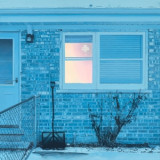
Celebrating our tenth release, we proudly present "Feeling Everything, All At Once" - a compelling VA compilation featuring music from our current label family and introducing some talented debutants from Scotland.
RED010 marks a powerful statement of intent as we look to the next five years and beyond whilst reflecting on our achievements so far, what we aspire to accomplish and how we can continue to push the sounds that resonate with us. Although it has taken time to reach this milestone, our commitment to quality over quantity remains unwavering.
This compilation serves not only as a collection of club-ready tracks but also as a longform piece suitable to more passive listening. With a total of 14 tracks, it stands as our most extensive release yet, expanding our label family to well over 20 artists. The digital release will be complemented by a physical cassette, perfect for playing in the dusty tape deck of your mate's Vauxhall Corsa as you head to that mad rave in the countryside everyone is talking about.
We are thrilled to announce our collaboration with the Scottish Action for Mental Health (SAMH) on this project with all the profits being donated to this cause. Both Lewis & Ethan have their own personal experiences with mental health difficulties and strongly believe that SAMH is absolutely vital in facilitating the provision and promotion of mental health care, support & information.
A massive thank you to all those involved in making this happen and their generosity in donating their time and talent to the project.
Omit’s in/Sec is “new,” but not new. Recorded in 2013, the masters lost in the label’s murky somewheresville that always shows up when moving. For those who don’t know, Omit is an experimental electronics artist from New Zealand’s south island who, since 1990, has released thirty-some xerographed cassettes and CDrs in the Dead C orbit for those who do. It’s not enough to say that in/Sec is an ambient masterpiece bringing to mind a John Carpenter soundtrack performed by the Hub because listening to it engineers new species. The infectious and corrupting sounds synthesize new life forms in your brain's enzymes. If you specialize in a niche too much, you are prey to predators outside, but Omit never goes for low-hanging fruit and isn't simulating anything. I can vomit a better looking face than the ones on these little fuckers eating my brain right now. In this century that flatters itself to be of drinking age, it is a queer thing we haven’t come face to face with aliens. There is a time for everything and they're all intermixed. Besides the xenobiological effects, Omit constructs your sentiment through timbral concepts that repeat and shift with minimal reference to harmony, melody, key, or mode. Streams jump and skitter, knitting tightly high and low in a dense rattling driven to the long and most plaintive tones amongst the countless gizmos (that’s including you, but not “you”). This one is for big fans of Anode/Cathode, Ikue Mori, Papa Srapa, Fronte Violeta, and Insignia refrigerators.
The identity of Deep Drive comes in large part from the way Zummo moves through the world. Using his smartphone, he records daily fragments: of daydreams and conversations, signage and slogans, moments that that strike him as insightful, odd, amusing, thereby creating a sonic collage of rhythms, melodies and voices. His deep baritone is imbued with laconic humour, and Deep Drive's track titles riff off his messaging. "Prepare For Docking" refers to the Staten Island ferry and the spectacle of humdrum city movements, but also suggests the nautical deep or even extraterrestrial life, with otherworldliness woven deep into the sound. "It's not a recital," says Zummo, of this way of working, "it's a movie." Deep Drive, then, is an album about the totality of the artistic process, seen from a generous and honest vantage point. The record was recorded in Copenhagen alongside Mabe Fratti, Sebastian K, Peter Broderick and Joseph Carvell
During the 1990s Shizuka self-released a series of four cassettes, barely heard by anyone outside of their inner circle. Culling together live recordings and home demos, these served as companions to the scant amount of proper Shizuka releases at the time (including the recently reissued Heavenly Persona). Concentric Circles is proud to present the third and most anomalous cassette from Shizuka, simply titled III, on vinyl for the first time in an edition of 500 copies. Formed by guitarist and singer Shizuka Miura, alongside husband Maki Miura, who’d previously played with both Les Rallizes Dénudés and Fushitsusha, the group known as Shizuka started in the early 90s with Jun Kosugi (also of Fushitsusha) on drums, and a revolving cast of bass players, including J.J. Junko, whose sole recorded appearance with the band is here on III. Devoid of any of their trademark noise and bombast, III feel distinct from their studio and live albums of the era, largely due to its fragility; haunted and spare, the songs revolve around Shizuka Miura’s gentle, unforced sighs, and Maki’s flickering, flinty guitar. The first side of the album features four songs – “For You,” “Lunatic Pearl,” “The Night When The Door Opens” and “To The Sky” – which will be well-known to Shizuka fans from previous recordings, but the drastically understated renditions here are particularly moving for their quietude and intimacy. The second half of III consists of a side-long duo session, just Shizuka and Maki Miura together at home, circling around the simplest two-chord motif for twenty minutes, Shizuka singing the most heavenly melody, strung through the sky of this lengthy improvisation. It’s an astonishingly beautiful performance, one that stills time through its becalmed repetition, pointing towards the endless forever. In this respect, it feels like an ultimate extension of Opal’s early recordings, Big Star’s 3rd or even Galaxie 500’s quietest moments. III lifts the darkness away, allowing for a softer, more gentle Shizuka to shine through, bringing with it a side to the band that most never knew existed. A lovely discovery if there ever was one.
limited repress available! *gatefold sleeve + insert, regular 120g black vinyl!0 Through the recent years of lockdowns and silence and having too much time to think, Tex Perkins always found solace in the company of song. Having his friend Matt Walker as a co-writer-conspirator, Perkins revelled in the experience which prompted the forming and recording of the first Fat Rubber Band album at Walker & #39's Stovepipe Studios with bassist Steve Hadley, drummer Roger Bergodaz and percussionist Evan Richards. After such an affirmative and creative experience Perkins was itching to commence work on what has become the band's second album, Other World. "The first Fat Rubber Band album was kind of deliberately a little ragged. A bit fuzzy around the edges" said Perkins. "There is a certain maturity that we now possess where ideas can be realised and take form very quickly. We've become a real band. I think what you heard on the first album is the band being formed." While he's played with many musicians, finding true collaborators is something that Perkins treasures. During the lockdowns, he pondered whether he would ever have that day-to-day musician experience again. With The Fat Rubber Band it's not just another grouping of musicians playing music together, but a gathering that is very much about the head, heart and soul and something he is clearly grateful for. "Roger Bergodaz was incredible. His drum kit was in the control room and he engineered the record and played drums pretty much at the same time! He constantly created the surroundings where an enthusiastic and positive atmosphere always prevailed. We never came away empty handed. I loved making this record so much," Perkins says, "because fucking magic happened. Yes, that's right, magic or how about alchemy? (A medieval science with a mysterious process that seeks to turn base metals into Gold.) Well, I dunno about gold, but I witnessed ideas, thoughts, whims and imaginings transmute almost effortlessly into living breathing songs with a soul and a heartbeat and even their own private history every time we went into the studio for this recording. Actually, no, magic is better." Perkins explains "This magic came about with the help of over 4O years of experience from each of the Fat Rubber band members. They're all truly great players and they're all really generous collaborators, so I guess what I'm saying is, it doesn't matter what happens from here. I'm very aware these days, with 100s of new releases each week, it's harder than ever to get people to give a shit about a new album from anybody, let alone from a bunch of hairy blokes in their 50s from Australia fronted by a dude that's been around since the early eighties named Tex. Actually, I can't believe you're still reading this! But you know it doesn't really matter, I've seen the magic."
Los Angeles dream merchants return with a re-release of classic tracks initially from the 1994 debut “Nearfield”. This new interpretation entitled “Dissolve” includes different mixes and a never-before-heard track, “Skywards”. Closedown stand out as one of the most curiously overlooked. This four-piece from Los Angeles was one of America’s earliest shoegaze bands; some even say they were the first. Emerging from currents of drenching spectral etherealism, Closedown pin you down permanently with swelling whirlpools of brilliant sounds. The comparison to other bliss-rock bands is inevitable, yet such analogies overlook the uniqueness of Closedown’s musical conception.
ASC returns with a deeply emotive album on Past Inside the Present, showcasing a new chapter in his musical journey. Known for his versatility across electronic and drum & bass genres, James Clements channels introspection and healing in Loss. Quiet bird calls and field recordings intertwine with ASC's expertly crafted synths, creating a therapeutic sonic landscape. Each track evokes a range of emotions, from melancholy to hope, acceptance to sorrow. Loss invites listeners to embark on a poignant journey, where ASC's mastery shines through in every moment. It's a captivating and beautiful testament to the power of music as a form of self-expression and healing.
At just 21 years old Peter Frampton had already played with The Herd and co-formed and left Humble Pie. So he struck out on his own with the appropriately named, “Wind of Change.” Freed from Humble Pie’s narrower focus on hard-rock boogie, Frampton’s debut solo album reveals an artist exploring more dimensional, delicate and nuanced songwriting and guitar playing … Frampton showed his own brand of rocking hard with tunes like “It’s a Plain Shame,” “All I Wanna Be (is by your side)” and even made a Stones song his own with “Jumping Jack Flash,” which became a staple of Frampton’s live shows. But these tunes and even the hook-laden “The Lodger” are balanced with intricate, beautiful tunes like the elegiac “Fig Tree Bay” and the title track “Wind of Change.”
Janis Joplin wouldn't be denied on Pearl. The powerhouse vocalist had kicked her addictions, teamed with a stupendous band, and partnered with a producer that knew how to best showcase her voice on record. She came to the sessions with an armload of astonishing songs, and a burst of creative energy that mirrored her rejuvenated emotional state and undeniable spirit. You can hear it on every note of the 1971 record. Ranked #135 on Rolling Stone's 500 Greatest Albums of All Time list, Pearl sold more than four million copies and stands as the first female rock superstar's definitive studio work.
Mastered from the original master tapes, cut at 45RPM, and pressed on dead-quiet vinyl at RTI, the iconic audiophile label's reissue takes Joplin and Co.'s stupendous performances to newly transcendent levels. Boasting a fidelity that further magnifies the singer's passion and producer Paul A. Rothchild's clear production, this pressing benefits from increased spaciousness, dynamics, and openness afforded by the wider grooves. Joplin's husky, strong, and penetrating singing has never sounded so vibrant or made deeper connections. Warm, organic, and free of any artificial ceilings, this version lets you step into Sunset Sound Recorders with the performers, such is the degree of realism and authenticity. Indeed, few, if any words, describe Joplin better than "authentic," and her spirit comes to life on this 2LP set in positively transcendent fashion. Like its headliner, this pressing leaves it all on the floor.
While Joplin's electrifying vocal prowess is universally lauded – she's recognized as the greatest white female blues singer the world has ever seen – her mix of compassion, confidence, and charm play as large a role in attracting listeners and keeping them ensnared more than four decades after her tragic death. And on Pearl, she burrows into deeper stylistic veins, teasing out sides of her persona and craft she'd never previously displayed. Her signature desperation, sadness, and vulnerability remain – the harrowing, lonely wail that begins her soul-ravishing take on Jerry Ragovoy's "Cry Baby," underlined with a Wall of Sound-like piano accompaniment, could only come from a person severely scarred by loss and disappointment – yet Joplin also reveals a sense of humour and beatnik innocence that helped propel the album to the top of the charts for nine straight weeks.
Playfully introduced as "a song of great social and political import," the acapella "Mercedes Benz" reflects Joplin's throaty timbre as well as her enhanced, sunnier mood. Similarly, her definitive read of Kris Kristofferson's "Me and Bobby McGee" signals a laidback demeanour and a move into country strains, with the delivery as natural, carefree, and loving as any in the rock canon. As she does throughout the record, Joplin invests her all in the narrative so that there's no line between the performer and the song. She makes everything on Pearl feel autobiographical, and by extension, gut-wrenchingly honest, and devastatingly intimate. Joplin achieved these feats often during her brief career, yet there are differences on Pearl, chiefly among them her balance of impeccable timing and raw emotion. Heart-aching anthems such as "A Woman Left Lonely" offer both grit and control, subtlety and attack, resulting in cathartic releases distinguished with originality, personality, and instinctual passion.
Pearl remains Joplin's finest hour, with credit also owed to the Full Tilt Boogie Band – the only group she ever considered to be her own – as well as the Doors alum that sat behind the boards. Joplin and Rothchild both admitted to sharing a common bond and understanding, with the latter inheriting the role of teacher and Joplin, a willing student ready to discover how she could use her voice in new, more expressive ways. The fruits of the pair's labours fill Pearl, be it the guardedly optimistic "Get It While You Can" or assertive, fleet-footed "Move Over."
Experienced in the new light brought to fore by this definitive Mobile Fidelity edition, Joplin's swan song is no longer about a masterpiece that its creator never lived to see finished. Rather, it's about a once-in-a-lifetime vocalist realizing mammoth potential and wringing passion out of every note. It's not a tragedy, but a triumph. Get it while you can.
Recorded by award-winning mastering engineer Kevin Gray's record label, Anthony Wilson's Hackensack West is Cohearent Records' follow-up to Kirsten Edkins' Shapes & Sound album. Produced by Joe Harley and recorded all-analogue/all-tube at Gray's studio, Cohearent Recording, the AAA vinyl release is pressed on 180-gram vinyl at RTI and housed in a deluxe tip-on gatefold jacket.
From the liner notes:
The week before these sessions in the summer of 2023, I sat down each morning with the goal of composing one new song by day's end. I knew I'd soon be in the room with my dear friends Gerald Clayton, John Clayton, and Jeff Hamilton, three musicians whom I trust the most, and with whom I've played the most over the last couple of decades. I tried to imagine themes that would feel natural to us, the kinds of songs we could simply dive into without much thinking. When we headed to Kevin Gray's studio to record, I brought seven new songs along with me. Five are included on this album.
"Daido" is dedicated to Japanese photographer Daido Moriyama, who became known in the late 1960s for his grainy, sometimes blurry, high-contrast black and white images made throughout Japan. I love his pictures taken on the streets of various Tokyo neighbourhoods such as Shinjuku. His portrait of a menacing stray dong, from his series "A Hunter," is the kind of picture that, seen just once, is unforgettable. These days Daido is still out on the street making pictures, at the ripe young age of 85.
"Verdesse" has a sinuous, chorinho-like melody and rhythmic feel. The tune seems to weave and bob playfully in a space of brightness the way a grapevine seems to curl towards the sunlight. So I named it after a wine grape native to the pre-Alpine region of Isère, near Grenoble in eastern France, that makes a particularly delicious and drinkable white wine.
I wrote "Sunday," well...on Sunday. It unfolds slowly, like a good Sunday does when there's nothing to do, you can sleep in, you've got your person beside you, and you just relax into the day.
"The Lands" is dedicated to a family very dear to my heart: that of tenor saxophonist Harold Land. My mother met Harold when they were both teenagers growing up in San Diego, California. The two of them became lifelong friends, and a little later, Harold enjoyed a fruitful musical association and close friendship with my father, Gerald Wilson. Harold, his lovely wife Lydia, and their son Harold Jr. were extended family for us; they looked after me with love and care. Some of my first gigs ever as a young guitarist were with Harold's incredible band that included Oscar Brashear, Billy Higgins, Richard Reid, and Harold Land Jr.
I've loved Todd Rundgren's "Marlene" since I first heard it on his epic double-album Something/Anything. With its tender, well-contoured melody buoyed by a few special harmonic surprises, it almost seems like something from the pen of Burt Bacharach. It tells such a complete musical story. Rundgren's recorded version has a beautiful endlessly repeating tag. So we played the melody simply, and used the tag as a small staging area for a bit of improvising.
Hackensack West is our alias for engineer Kevin Gray's studio Cohearent Recording, a place inspired by Rudy Van Gelder's first studio in Hackensack, New Jersey. Located inside Van Gelder's parents' home, the musicians played in the living room! It was there, in 1954, that Thelonious Monk recorded his classic tune "Hackensack," a "contrafact" melody over the chord changes to the Gershwins' "Oh, Lady Be Good!" In contrafact-like fashion, my own bebop-spirited melody "Hackensack West" seems to nod toward the changes of a few recognizable standards, without corresponding to any particular one.
Out of print as a stand-alone release for decades since its original 1974 issue. Produced by George Harrison, Shankar Family & Friends is an almost-forgotten masterwork – an emotional and sonic pact between two like-minded souls to both advance their spiritually minded bond and unite musical styles, cultures, and sounds in wondrous fashion Contributions from Ringo Starr, David Bromberg, Billy Preston, Nicky Hopkins, Jim Keltner, Klaus Voorman, and a host of virtuosic Indian musicians add to a diverse album that melds Eastern and Western traditions; encompasses jazz, funk, bhajan, Indian, and pop; and represents the spirit and breadth of Harrison's Dark Horse Records imprint.
Memorable contributions from an A-list of American and English musicians — Ringo Starr (drums), David Bromberg (electric guitar), Billy Preston (organ), Nicky Hopkins (piano), Jim Keltner (drums), Klaus Voorman (bass), Robert Margouleff (Moog), Malcolm Cecil (Moog), Tom Scott (saxophone) included — add to the richness of a set that melds Eastern and Western traditions. These “names” mesh with a host of Indian virtuosos — Alla Rakha, Ashish Khan, Kamala Chakravarty, Hariprasad Chaurasia included — who turn Shankar Family & Friends into a journey laced with percussive, string, and vocal components that aren’t soon forgotten.
Throughout, Shankar Family & Friends remains true to its title — a mesmerizing record named to reflect the group participation approach of its creators. The idea started when Shankar told Harrison about a ballet he wrote. The Beatle, who first met Shankar in June 1966 — roughly a year after Harrison became interested in Indian music after overhearing it in a restaurant while filming Help! — immediately was convinced they needed to record it. Harrison’s staunch admiration of Shankar and serious approach to Eastern styles are reflected throughout the album.
Indeed, for Harrison, Shankar Family & Friends marks the culmination of a years-long effort to master the sitar, study Hinduism, and incorporate elements such as drones, unusual chords, and expressive picking into his own songs. The seeds of this unique collaboration can be heard in Beatles works such as “Norwegian Wood,” “Love to You,” and “Within You Without You.” Both musicians were also fresh from performing at the 1971 Concert for Bangladesh shows. Yet Shankar Family & Friends remains entirely unique in each visionary artist’s history — and ultimately, led to a collaborative tour Harrison and Shankar staged across North America.
Encompassing jazz, funk, bhajan, Indian, and pop, Shankar Family & Friends is thematically split into halves. Side One reveals Shankar’s uncanny ear for melody — even when applied to Western forms. The lead-off “I Am Missing You,” the first single ever released by Dark Horse Records and reportedly the first pop composition Shankar completed, underscores his skills as a composer and global ambassador. Beautifully sung across three octaves by his sister-in-law, Lakshmi Shankar, the devotional song features multiple drummers and production that mirrors Phil Spector’s Wall of Sound approach. Harrison plays autoharp and guitar; Starr sits in on drums; Scott handles flute and soprano saxophone. It’s the inviting start of a musical adventure teeming with color, majesty, and mysticism.
A second version of the track — designated with a “(Reprise)” tag — appears minutes later. Unfolding in different ways, it follows a folk ballad structure stitched together with Indian instrumentation. Here, according to Shankar, the musicians “attempted to convey the sounds and atmosphere of Vrindavan, the ancient holy place where Krishna grew up.” Both renditions speak to the cross-continental fusion that came so naturally to Harrison and Shankar, whose oversight on the side’s other vocal tracks ensures listeners familiar with Western methods gain easy access to the hypnotic allure of his native country’s music.
Nowhere is this more evident than on Dream, Nightmare & Dawn (Music for a Ballet), the side-long piece that served as the genesis for Shankar Family & Friends. Launched with an airy overture and unfolding across three movements, the mostly wordless suite features everything from call-and-response interplay and classical lyricism to uptempo dance figures, stacked rhythms, and intoxicating grooves. Blurring the lines between contemporary and traditional, and Western and Eastern, the inspirational work is the exclamation point on a record that defined “world music” well before the term became co-opted as a catch-all genre.
Miles Davis' boundlessly influential On the Corner was so far ahead of its time upon release in 1972, the jazz cognoscenti rejected its groundbreaking concoction as middling in nature. Yet time has a way of righting wrongs and shifting views by adding needed context and perspective to visionary ideas, music, and approaches — the likes of which fill Davis' boldest and most controversial — undertaking. Designed to bring the focus back on the groove and bottom-end frequencies, the funk-loaded On the Corner revolutionized jazz. It also set new standards for record production, presaging remixing and electronica by more than a decade. And the work has never sounded more thrilling thanks to this very special pressing.
Sourced from the original master tapes and pressed on MoFi SuperVinyl, Mobile Fidelity's numbered-edition 180g 33RPM SuperVinyl LP of On the Corner exposes the internal mechanisms, free-associated playing, and then-unmatched studio techniques in vivid fashion. The low end, crucial to every composition here, is both heard and felt, with locked-in bass lines and low-range percussion conveyed as taut, solid, and visceral passages. You can discern the multiple layers of rhythm Davis employed on complex tracks such as "Black Satin," as On the Corner stands as his first effort to use overdubbing and multiple tape machines. As a pioneer, Davis likely would’ve loved MoFi’s groundbreaking SuperVinyl profile that features the lowest-possible analogue noise floor as well as pristine transparency, dead-quiet surfaces, and superb groove definition.
New degrees of spaciousness and airiness — equally important to the musique concrete arrangements — give the impression Davis and Co.'s creations float in space. Instruments are portrayed in three-dimensional manners, rhythmic loops retain tonal purity, and horn solos skitter across an extra-wide soundstage that takes listeners into Columbia's Studio E. Mobile Fidelity's SuperVinyl LP captures Teo Macero's innovative production — and the trumpeter's cutting-edge aural collages — in definitive fashion.
Heavily inspired by Sly and the Family Stone, On the Corner portrays street vibes and remains Davis' Blackest-sounding record. The conscious attempt to connect with youthful audiences tapped into rock and funk is evident not only on the colorful cartoon cover art depicting hot-pants and zoot-suit revelers, but in the music's emphasis of recurring drum and bass grooves. Distinct from Davis' earlier fusion experiments, the record's long-misunderstood set dials back improvisation in favor of beats, loops, and atmospherics that generate trance-like effects. While Davis utilizes his band for core duties — Chick Corea and Herbie Hancock prominently figure — he also relies on an all-star cast of side-men for concentrated soloing and additional support.
With rhythm providing the basic foundation, other notes fall into place, with their positioning steered by Macero and Davis' editing-room techniques. Looking to the manipulation-based work of Karlheinze Stockhausen and teaming with Stockhausen disciple Paul Buckmaster, Davis re-imagines what grooves constituted and could accomplish throughout On the Corner. The shapes of the songs become completely transformed as they progress. Faint melodies, spacey chords, chunky riffs, wah-wah fills, and repeated motifs bounce in and out of a sonic funhouse that wouldn't be out of place at a Harlem block party.
Exotic, intrepid, and filled with Davis' "jungle sound," On the Corner remains daringly hip more than four decades later.
The album "Vital - Van der Graaf Live 2CD Edition" by Van der Graaf Generator is a captivating live recording that showcases the band's exceptional talent and energy on stage. Released by Cherry Red Records, this 2CD edition offers fans an immersive experience of the band's electrifying performances.
Recorded during their European tour in 1978, "Vital" captures the essence of Van der Graaf Generator's unique sound and intense live presence. The album features a selection of tracks from their critically acclaimed albums, including "Pawn Hearts," "Godbluff," and "Still Life."
From the opening track to the closing notes, each song on "Vital" is performed with precision and passion. The band's signature blend of progressive rock, jazz influences, and poetic lyrics shines through in every moment. Peter Hammill's powerful vocals soar above the intricate instrumentation provided by Hugh Banton on keyboards, Guy Evans on drums, and David Jackson on saxophone and flute.
The remastered audio quality of this 2CD edition enhances the listening experience, allowing fans to fully appreciate the dynamic range and nuances of each performance. The package also includes a booklet with rare photos and extensive liner notes written by renowned music journalist Sid Smith.
Whether you are a longtime fan or new to Van der Graaf Generator's music, "Vital - Van der Graaf Live 2CD Edition" is a must-have addition to your collection. Immerse yourself in the energy and artistry of one of progressive rock's most influential bands with this exceptional live recording.
An expanded 3-LP edition of Sonny Rollins’ essential and legendary live trio album A Night At The Village Vanguard: The Complete Masters is added to Blue Note’s acclaimed audiophile vinyl series in Q1, mastered for the very first time from the original tapes. (The first release and subsequent reissues were made from a tape transfer.) This deluxe tri-fold edition includes a plethora of great editorial, including a new interview with Rollins in conversation with Blue Note President Don Was.
“As we began to prepare for this album, I made my customary call to Capitol tape vault archivist Jack Arenas to inquire about the analog master tapes. Naturally, I assumed there would be a set of Rudy Van Gelder assembled 15ips analog masters of all the material. Indeed, there was, but then Jack said something that caught my ear. ‘Now there are these other tapes, but they haven’t been assembled, and they are all recorded at 7.5ips.’ I sat straight up and probably looked a bit like the mind-blown emoji. With this issue of Sonny Rollins ‘A Night At The Village Vanguard: The Complete Masters’ we are finally able to hear the actual masters that were recorded that afternoon and evening.” — Joe Harley
Everything flows. Arutani's third album is a very personal note on change and life. The stories we see and create, the balance of hope and melancholia that accompanies every step we take. Calm, light, modest and mindful as the artist himself, with a glimpse of light in every aspect. Minimal in character and rich in detail. Luise is once again oh so happy to give a home to this masterpiece.
out of Stock
Last delivered 18 months ago available to reorder, subject to availability
Anna Gréta goes gentle...into her second album on ACT, “Star of Spring”. The Reykjavik-born pianist, singer and a songwriter, who has lived in Stockholm since 2014, has her own way of approaching the art of quiet, artful, deeply personal songs, often drawing inspiration from the beauty and power of Iceland’s natural landscape. Her 2021 ACT debut "Nightjar in the Northern Sky" was named after a bird, and this follow-up album lands gracefully on a flower, the “glory of the snow”, also known as the "star of spring", which symbolises the ending of winter and the arrival of spring.
But look closer, and there are always other levels of meaning. Her "Nightjar”, the rare bird she once saw in front of the northern sky, was a metaphor for the search for the things which are special and essential. In fact, almost all of Anna Gréta's lyrics have more than one significance, and her storytelling has now taken a leap forward on "Star of Spring". She says of the little flower on the title track: "I wasn't just inspired by the way it takes over the meadows in spring and turns them from green to blue, but also by the fact that it blooms because it is compelled to do so. It cannot do anything else."
Anna Gréta's starting point to creating music was and is the piano. She first studied classical music, then switched to jazz. She only started singing later, when she was writing the songs for Nightjar and wanted to express herself in words. Anna Gréta's debut as a singer, pianist and songwriter earned her international acclaim: Downbeat Magazine called it „an album with the metamophoric diversity of a year’s seasons and a voice like the everchanging colours of the Northern lights“, France Musique “a remarkably immersive experience” and Jazzwise “starkly beautiful”.
On "Star Of Spring" Anna Gréta has further developed her individual style. Her vocal lines can resemble piano motifs, often doubling them and resonating with an impressively quiet vibrato, sometimes quirkily reminiscent of Björk, at other times with the brooding ease of Norah Jones. The album also bears a very distinctive production style. For each of the songs, Anna Gréta has created her own little world of choirs, rhythmic textures and various smartly used keyboard instruments. The album ranges from the hymnal and elegiac - in "She Moves" or in the title track - to the playful and cheerful "Space Time" or the extremely pared-down melancholic ballad "Denouement". And even if the general mood of the music exudes above all warmth and comfort, Anna Gréta also deals with serious topics, such as the forced birth control of women in Greenland during the 60s and 70s in the song "The Body Remembers".
There is a directness of expression and emotionality, even sensuousness about the new album, and that is not least because Anna Gréta’s band has developed and become a properly played-in unit with the experience to take this album’s more complex arrangements in its stride. The sheen and brightness of her piano playing is contrasted with a deeper voice, that of her father Sigurður Flosason's bass clarinet, on three tracks. "This album is more playful and experimental," she says. "A lot of things were easier for me than on the first album. And while I was still completely focussed on my own world then, now I was even more conscious and aware of what was going on around me."
The result is music that is rooted in jazz, but at the same time goes far beyond it in a very subtle and deeply touching way.
Every morning when Dent May wakes up, the first thing he says is, “What’s for breakfast?” For the Los Angeles-based songwriter and pop auteur, this question is part inside joke with his girlfriend, part sitcom-style catchphrase, and part mantra about getting up every day and persevering in the face of good or bad is happening around you in your life. It’s also the title of his sixth album, which is out on March 29, 2024 via Carpark Records. What’s For Breakfast? is May’s most immediate, nostalgic, and rollicking LP yet, one that’s concerned with breaking daily routines and rediscovering the joys of songwriting.
Over the past 17 years, May has been a consistently adventurous and prolific bedroom pop pioneer and connoisseur of impeccably crafted melodies. Though his songs are always well-written and comfortable, with What’s For Breakfast?, May has freed himself up to more playfully experiment with new and vintage musical inspirations. “I’ve occupied a lot of different lanes over the years,” says May. “I’ve always been drawn to making kaleidoscopic pop inspired by old soul, disco, country, whatever. This time around, I was tapping into music from my childhood, like The Strokes, Weezer and Elephant 6 Collective bands.” By revisiting the music of his youth—energetic and infectious guitar rock—he found a vibrant palate to explore for this new LP.
Lead single “One Call, That’s All” kickstarts with frenetic guitar-driven intensity. While the track slyly takes its name from the slogan of an ambulance-chasing Mississippi lawyer, May sings of unrequited love and phone-based ennui. “It’s a fast tempo pop-rock song that isn’t like anything I’ve done before,” says May. Elsewhere, opener “You Already Know” showcases May’s goofball lyrical charm with lines about playing chess online and looking like a Dawson’s Creek character. Beyond the jokes in the song, there is a bittersweet recognition of time passing and a call to action when May sings, “Now you already know what time it is / It’s time to live your life / Cuz it’s flying by / No matter the day, week, month or year / It’s time to do a lot / Ready or not.”
What’s For Breakfast? marks another first for Dent in being his most collaborative LP yet. Alongside guest appearances from Jimmy Whispers and co-writes with Paul Cherry, are two standout singles with Jordana and Pearl & The Oysters respectively. Jordana assists on the wistful “Coasting on Fumes,” which captures the feeling of being stuck in a rut while the yearning “Time Flies When You’re Having Fun” guests Pearl and the Oysters. “My first album came out almost 15 years ago, so bringing in others to help out is crucial to keep things interesting,” says May. “I’m constantly falling back in love with music through the eyes of others. This album is about remembering why I like music.”
Ratboys have been recording and releasing music for over a decade, but their newest album, The Window, marks the first time they’d ever traveled outside their home base of Chicago to make a record, journeying to the Hall of Justice Recording Studio in Seattle to work with producer Chris Walla.
The sessions with Walla (Death Cab for Cutie, Tegan and Sara, Foxing) struck the perfect balance between preparation and experimentation, injecting new life into the band’s style of soft-hearted Midwestern indie rock with an ever so subtle Americana twist. The solidified Ratboys lineup stretched and expanded their vision in the studio, adding unexpected elements and instruments like rototoms, talkboxes, and fiddles. The result is Ratboys’ most sonically diverse record, shifting wildly from track to track. It flexes everything from fuzzy power pop choruses on “Crossed That Line” and “It’s Alive!” to
a warm country twang on “Morning Zoo” to mournful folk on the titular track. After more than ten years and four studio albums, The Window finally captures Ratboys as they were always meant to be
heard—expansive while still intimate, audacious while still tender—the sound of four friends operating as a single, cohesive unit. This release comes with a Download Code.
This is long overdue. I mean, looooooonnnnnng overdue. A solo album by Jim. The trap kit - so straightforward, so mysterious. What"s inside those things? Air and light - from which century? Which continent? Which planet? Depending on how and when you hit them it can be a vibration sent through a prehistoric breath, particles of Saturn"s atmosphere, the dead, wet leaves you walked through on the way to the first day of school. These are the memories of the drums on this record. Infinite and personal. Editing each other as they muscle to the front or soft shoe to the shadow. Cymbals can override/cancel everything out - wipe your memory clear or make the memory clearer. Drums are the instrument where you can feel the presence of the player the most - the full body - and sense the thoughts of the player the most. The instrument with the most choices to be made sends out the most brainwaves. A bouquet of brainwaves is on this LP. Jim oversees it all, surveys from the lost place we"re in, the void - the drumless song. We trust. We trust, Jim. His big green eyes search for the right tool (mallet, brush, etc), eyes that search you like you"re a song he wants to join, wants to see if he can add to or understand. Before humans, drums were playing - these drums. Genesis was a solo drum piece. After humans, these drums, this album. Someone - the last man - is out in a spaceship at the edge of space. He plays a single chord on a synth to set time free from its bind and then lets go. This album sets time free, lets it frolic, lets it graze, lets it remember. This is a record of thoughts, memories, surgery. A deft surgical operation you may not even realize is happening as it"s happening but you"re back on your feet when it"s over. Memories refreshed. Did you really even listen to it? -Bill Callahan, November 2023
This is long overdue. I mean, looooooonnnnnng overdue. A solo album by Jim. The trap kit - so straightforward, so mysterious. What"s inside those things? Air and light - from which century? Which continent? Which planet? Depending on how and when you hit them it can be a vibration sent through a prehistoric breath, particles of Saturn"s atmosphere, the dead, wet leaves you walked through on the way to the first day of school. These are the memories of the drums on this record. Infinite and personal. Editing each other as they muscle to the front or soft shoe to the shadow. Cymbals can override/cancel everything out - wipe your memory clear or make the memory clearer. Drums are the instrument where you can feel the presence of the player the most - the full body - and sense the thoughts of the player the most. The instrument with the most choices to be made sends out the most brainwaves. A bouquet of brainwaves is on this LP. Jim oversees it all, surveys from the lost place we"re in, the void - the drumless song. We trust. We trust, Jim. His big green eyes search for the right tool (mallet, brush, etc), eyes that search you like you"re a song he wants to join, wants to see if he can add to or understand. Before humans, drums were playing - these drums. Genesis was a solo drum piece. After humans, these drums, this album. Someone - the last man - is out in a spaceship at the edge of space. He plays a single chord on a synth to set time free from its bind and then lets go. This album sets time free, lets it frolic, lets it graze, lets it remember. This is a record of thoughts, memories, surgery. A deft surgical operation you may not even realize is happening as it"s happening but you"re back on your feet when it"s over. Memories refreshed. Did you really even listen to it? -Bill Callahan, November 2023
So I have a problem: I hate everyone and all music. Well, OK, not everyone. But c’mon - you know what people are like. Honestly, they’re the worst. And fair enough I might not really hate all music, but let’s be honest: have you ever actually heard any music? I mean, jeeez. If I’m gonna listen to a record, I’ll need something that matches this misanthropy; something that really gets the neurotransmitters firing on all cylinders and ready to obliterate the feelgood factor. Something like Cleveland band Cruelster, basically. Cruelster are made up of members of Knowso, Perverts Again, and a plethora of other Ohio noiseniks. If it seems like you’ve seen that name before, it’s highly probable - they released a demo back in 2012 and have been sporadically dropping bundles of rough-edged sonic snot ever since, thanks to labels like Lumpy (whose own Dumpers are at the very least sonically adjacent) and Turbine Piss. This singles collection compiles all the non-album tracks they’ve released since that early demo to make a thrillingly ‘orrible racket. Twelve years’ worth of punk rottenness and general stupidity contained in 29 tracks and 40 noisy minutes. It is, of course, fucking brilliant. From the gleefully melodic dumbness (and Booji Boy-flavoured additions) of ‘My Embarrassment’ to the malevolent rumble of ‘Double Trouble’, not to mention a fabulously energised cover of Icona Pop’s dance-pop smash ‘I Love It’, every track here is a winner. It’s the perfect tonic for your rage and the perfect foil to a cruel world where everyone else’s disdain seems more pronounced than your own. You owe it to yourself to complete your record shelves with this instantly classic comp - it’s punk rock par excellence. And as for that ‘hating all music thing’... ah, who cares, this is all gold. Listen immediately, you’ll be causing chaos to its raucous brilliance before you know it. Genre: Alternative / Punk
The new record from San Francisco based band Monophonics entitled "In Your Brain" sits on the fuzzy psych side of soul and funk. Paying homage to innovators such as Sly Stone, Norman Whitfield and Funkedelic's George Clinton, the 6 piece outfit displays their ability to put a moody stamp on each composition. Touching on everything from cinematic soul, heavy funk, 60's rock and spaghetti western laced with yellow sunshine acid, the album is sure to leave you tuned in and turned on!
Tom Saltas (Deathloop, PUBG, Halo) zutiefst beunruhigender Soundtrack zum Horror-Survival-Spiel 'The Outlast Trials' (Red Barrels Games, 2023) wurde komplett (35 Tracks) für 180g Heavyweight-Doppelvinyl gemastert und erscheint samt Linernotes-Einlage. 'The Outlast Trials' bietet einen abwechslungsreichen Horror-OST mit gruseliger Audioproduktion und ungewöhnlichen Orchester- und Musique-Concrète-Techniken, ergänzt durch einen nervtötenden falschen Mid-Century-Jingle, jazzige Fahrstuhlmusik und Honky-Tonk-Klavier. Salta nutzt geschickt die Sprache der Musik, um die Menschen in eine alptraumhafte emotionale Dimension eintauchen zu lassen und die grausamen Erlebnisse zu unterstützen, denen die Spieler begegnen werden.
decade-plus together, the four-piece - Julia Shapiro (guitar, vocals), Lydia Lund (guitar, vocals), Gretchen Grimm (drums, vocals), and Annie Truscott (bass, vocals) - have created a resonant body of work. Live Laugh Love is a natural continuation. Against the bizarre backdrop of the past few years, Chastity Belt remained a supportive space for the members to grow and experiment, drawing on the ingredients most essential to their process since the beginning: authenticity and levity. Recorded over three sessions in as many years (January 2020, November 2021 and 2022), the focus became more about enjoying their time together in the studio than making it feel like work. Their ease and familiarity with engineer Samur Khouja in LA, who also recorded their last album, made for a particularly enjoyable process. Once completed, they returned to renowned engineer Heba Kadry who mastered the album. Album opener "Hollow" sets the tone with a gently driving rhythm while guitar layers stream like sun rays through an open car window. A warmth radiates through Shapiro's voice, even while grappling with feeling lost and stuck. "The older I get," Shapiro says of the lyrics, "the more I realize that I might just always feel this way, and it's more about sitting with the feeling and accepting it, rather than trying to fight it." That wisdom seems to anchor Live Laugh Love . Chastity Belt has never shied from navigating the spectrum of difficult emotions, and an existential thread weaves throughout the subject matter. And yet the songs feel more grounded than ever; there's a sense of quiet confidence and self-assurance that comes with being less numb and more present. Facing discomfort takes more fortitude, after all. Live Laugh Love finds the members in their prime as musicians. Their parts trace intricate patterns over one another, but there's room to breathe between the layers. Everyone contributes to the writing, sometimes switching instruments, and for the first time, all four members sing a song. It's never been more apparent that they are creative siblings, cut from the same belt. "We've been playing music with each other for over a decade," says Shapiro, "so it really does feel like we're all fluent in the same language, and a lot of it just happens naturally." "Laugh" seeks in the balm of friendship, aware of the anticipatory nostalgia that hits during a good time that you're already missing before it's gone; the heavier guitar tones on "Chemtrails" streak ominous chord progressions over Grimm's precision timekeeping, lamenting memories that won't fade easily. During a transitional time, Truscott came across a note in their phone that read, "it's not hard all day, just sometimes," which inspired a poignant line in the chorus of "Kool-Aid," their first song as lead vocalist on a Chastity Belt recording. Another standout, "1-90 Bridge" shines with a silvery melody that soars as Lund belts one of the most resounding moments on the album: "Tell your girlfriend she's got nothing to fear/I'm set in my head/My body's a different story." The track "Blue" saunters nonchalantly with a wink; you can almost hear Shapiro's smile as she sings "Faking it big time/So I can hit my stride/Man, it feels good to be alive," channeling early Chastity Belt channeling early '90s before channeling the late Elliott Smith in a spiral of distortion and insight: "Don't get upset about it/It's gonna pass/Tell all your friends about it/They're gonna laugh." "We have such a strong sense of each other's musical inclinations" says Lund. "I think this allows for a lot of playfulness...we can kinda surprise each other, like a good punchline would."
High Llamas present Hey Panda - a modern pop music/deep listening experience that could only issue forth from their personal quadrant of the galaxy. Hey Panda projects soulfully through an enervating abstract of today"s popular music; the sound of the Llamas" stately melodies and expressive ditties laid open - blissfully shattered - with drums and vocals hitting different, burning sounds and contemporary production twists pulling the ear at every turn. For the past few decades, High Llamas have trafficked in contemporary pop sounds directed toward the avant end of the spectrum as much as not. But here the message was clear. Llamas" composer-in-residence Sean O"Hagan was determined to let go. Hey Panda does just that, with a set of tunes reflecting on multiple levels how definitions change over the course of a lifetime, radiating an optimism derived from the diverse conundrums of today. Eight years since their last release, the pop musical Here Come The Rattling Trees, High Llamas have reinvented themselves again, mixing their peerless harmonic voice with what Sean regards as the "extraordinarily good" production sounds of today on Hey Panda. Choosing not to look backward to former golden ages celebrated in earlier Llamas eras, Sean"s instead found himself opened up by the sounds of music brought into the house by his adult children and the sounds encountered at sessions for which he"s recently written arrangements. In addition to the more traditional contributions he made to The Coral"s Sea of Mirrors album, plus his score for the Safdie brothers" 2022 film production, Funny Pages, Sean"s drawn great inspiration through working with Fryars, Rae Morris, King Krule, Pearl and The Oyster, while also soaking up the work of Tierra Whack and Chicago"s Pivot Gang, and being cheered on from a distance by longtime admirer Tyler The Creator. Thus, Sean"s producer procedural has evolved again, with upgrades first detected in his 2019 solo effort, Radum Calls, Radum Calls. With a cover of Billie Eilish"s "Wish You Were Gay" arranged for Bill Callahan and Bonnie Prince Billy"s Blind Date Party, along with his COVID-era solo single, "The Wild Are Welcome", Sean has leveled up again and again, leading to the delirious revelations of Hey Panda. Hey Panda"s wide reach is aided by two co-writes from Bonnie "Prince" Billy, (who bonded with Sean over a shared love of gospel soul during writing sessions), guest vocals from Rae Morris and Sean"s daughter Livvy, production twists from Fryars and the stalwart, flexible presence of High Llamas. For all of its sense of departure, Hey Panda is a movement in the High Llamas oeuvre that"s been a long time in development. Aspects of soul music were addressed at the time of Can Cladders; similarly, aspects of electronic dance music were in the mix in the late 90s, around the time of Cold and Bouncy. But nothing up to now has refocused the music of High Llamas so completely. Sharing the impulse of late-period Miles Davis and Quincy Jones, with further inspiration from Steve Lacy, SZA, Sault, No Name and Ezra Collective, among many others, Sean O"Hagan and High Llamas are living joyfully in the new and the now, with Hey Panda.
Die britischen Metalcore-Überflieger While She Sleeps loten auf ihrem neuen Album kompromisslos unberechenbar die Grenzen ihres Genres neu aus. So entsteht eine Collage der musikalischen Leidenschaften ihrer einzelnen Band-Mitglieder. 'SELF HELL' fühlt sich an wie das zweite Debütalbum einer Band, die in den letzten zehn Jahren zu einer so vitalen Kraft geworden ist. Die Riffs sind weiter brachial. Vintage Synthesizer lassen elektronische Einflüsse wie Aphex Twin, Bicep oder Prodigy erkennen.
Die fünfköpfige Band hat auf ihrem sechsten Studio-Album einen unglaublich kraftvollen und kreativen Weg gefunden, die Essenz und Vision jedes einzelnen Bandmitglieds zum Ausdruck zu bringen. 'SELF HELL' ist von einer von Britpop geprägten Working-Class-Jugend in den Bergbaudörfern rund um Sheffield geprägt. Ein trotziger „Nothing-to-lose-and-everything-to-gain“-Spirit schwebt über allem.
Die britischen Metalcore-Überflieger While She Sleeps loten auf ihrem neuen Album kompromisslos unberechenbar die Grenzen ihres Genres neu aus. So entsteht eine Collage der musikalischen Leidenschaften ihrer einzelnen Band-Mitglieder. 'SELF HELL' fühlt sich an wie das zweite Debütalbum einer Band, die in den letzten zehn Jahren zu einer so vitalen Kraft geworden ist. Die Riffs sind weiter brachial. Vintage Synthesizer lassen elektronische Einflüsse wie Aphex Twin, Bicep oder Prodigy erkennen.
Die fünfköpfige Band hat auf ihrem sechsten Studio-Album einen unglaublich kraftvollen und kreativen Weg gefunden, die Essenz und Vision jedes einzelnen Bandmitglieds zum Ausdruck zu bringen. 'SELF HELL' ist von einer von Britpop geprägten Working-Class-Jugend in den Bergbaudörfern rund um Sheffield geprägt. Ein trotziger „Nothing-to-lose-and-everything-to-gain“-Spirit schwebt über allem.
Die britischen Metalcore-Überflieger While She Sleeps loten auf ihrem neuen Album kompromisslos unberechenbar die Grenzen ihres Genres neu aus. So entsteht eine Collage der musikalischen Leidenschaften ihrer einzelnen Band-Mitglieder. 'SELF HELL' fühlt sich an wie das zweite Debütalbum einer Band, die in den letzten zehn Jahren zu einer so vitalen Kraft geworden ist. Die Riffs sind weiter brachial. Vintage Synthesizer lassen elektronische Einflüsse wie Aphex Twin, Bicep oder Prodigy erkennen.
Die fünfköpfige Band hat auf ihrem sechsten Studio-Album einen unglaublich kraftvollen und kreativen Weg gefunden, die Essenz und Vision jedes einzelnen Bandmitglieds zum Ausdruck zu bringen. 'SELF HELL' ist von einer von Britpop geprägten Working-Class-Jugend in den Bergbaudörfern rund um Sheffield geprägt. Ein trotziger „Nothing-to-lose-and-everything-to-gain“-Spirit schwebt über allem.
..and this is how an endless summer night's dream sound! Puestel meets his alter ego Friebe again! Can you imagine that this whole song came to Rico Friebe in a dream?!
In that dream, he was sitting in a strange living room, playing a live set with very odd, weird and partially never-seen-before equipment while everyone was annoyingly talking to him (while performing) – one person right next to him even told him that he frequently manages to eat glass by accident. WTF?!
According to all this obscurity, he tried to escape into his performance, just looking straight into a weird countertop electronic device that created sound and suddenly he played this completely unknown song with these special vocals kicking in and he immediately fell in love with and got lost in it, forgetting all about the strange situation he was in – the distracting voices around him fell into a mute state.
Shortly afterwards, he woke up and kept trying to remember all the details, the lyrics, the melody, the production, just anything, wandering around like a maniac. Finally, all of it went pretty well and you're now listening to a dream composition. Magic everywhere!
out of Stock
Last delivered 20 months ago available to reorder, subject to availability
As she's gotten older, Ella Smoker has found that her subconscious has been trying to tell her "some pretty wacky stuff". Thoughts will come to the 21-year-old singer-songwriter in dreams, or as she writes lyrics in studio sessions, words floating onto the page before she's really had a moment to realise what they are. "As soon as we start making the music, my brain sort of turns off," she explains. "I'll be sitting there, writing all this stuff that feels like a load of nonsense, and a month later, I'll look back and be like `oh'. It all comes from a place I didn't even realise was there." In learning how to open up to herself, gglum ended up finding a kindred spirit in producer Karma Kid (Maisie Peters, Shygirl, Connie Constance), pushing past her natural bedroom-pop introversion to find joy in the process of collaboration. Whether it's the ragged radio-rock of `SPLAT!' ("basically about realising that somebody you held up very highly is actually just a massive shambles of a person") or the riotous, industrial energy of `Easy Fun', Smoker is able to reshape her vocal around the mood, creating a record which expertly balances light and shade. "I've never really done anything in like that vocal style before," she says of `Easy Fun's near-spoken delivery. "I love that song because it's not something I would have come up with on my own, but Karma Kid was great at pushing me out of my comfort zone. I just thought like, look: I can be a little silly with this." The release of `The Garden Dream' will offer gglum plenty more opportunity to get both silly and serious, to be bold in her exploration of new ideas and sounds But it will also offer the opportunity to further accept herself as the dreamlike artist she always wanted to be; confidently embellishing acoustic worlds that her listeners can burrow safely within. "I feel like I naturally gravitate towards wanting to make musical spaces that you can feel like you're living in, rather than trying to make songs", she says. "That's something I really wanted to solidify with this album: I basically want to make music that feels like when you're looking out the window and it's the end of the film and you're imagining what comes next. That's the sound of what I want to be doing."
As she's gotten older, Ella Smoker has found that her subconscious has been trying to tell her "some pretty wacky stuff". Thoughts will come to the 21-year-old singer-songwriter in dreams, or as she writes lyrics in studio sessions, words floating onto the page before she's really had a moment to realise what they are. "As soon as we start making the music, my brain sort of turns off," she explains. "I'll be sitting there, writing all this stuff that feels like a load of nonsense, and a month later, I'll look back and be like `oh'. It all comes from a place I didn't even realise was there." In learning how to open up to herself, gglum ended up finding a kindred spirit in producer Karma Kid (Maisie Peters, Shygirl, Connie Constance), pushing past her natural bedroom-pop introversion to find joy in the process of collaboration. Whether it's the ragged radio-rock of `SPLAT!' ("basically about realising that somebody you held up very highly is actually just a massive shambles of a person") or the riotous, industrial energy of `Easy Fun', Smoker is able to reshape her vocal around the mood, creating a record which expertly balances light and shade. "I've never really done anything in like that vocal style before," she says of `Easy Fun's near-spoken delivery. "I love that song because it's not something I would have come up with on my own, but Karma Kid was great at pushing me out of my comfort zone. I just thought like, look: I can be a little silly with this." The release of `The Garden Dream' will offer gglum plenty more opportunity to get both silly and serious, to be bold in her exploration of new ideas and sounds But it will also offer the opportunity to further accept herself as the dreamlike artist she always wanted to be; confidently embellishing acoustic worlds that her listeners can burrow safely within. "I feel like I naturally gravitate towards wanting to make musical spaces that you can feel like you're living in, rather than trying to make songs", she says. "That's something I really wanted to solidify with this album: I basically want to make music that feels like when you're looking out the window and it's the end of the film and you're imagining what comes next. That's the sound of what I want to be doing."
As she's gotten older, Ella Smoker has found that her subconscious has been trying to tell her "some pretty wacky stuff". Thoughts will come to the 21-year-old singer-songwriter in dreams, or as she writes lyrics in studio sessions, words floating onto the page before she's really had a moment to realise what they are. "As soon as we start making the music, my brain sort of turns off," she explains. "I'll be sitting there, writing all this stuff that feels like a load of nonsense, and a month later, I'll look back and be like `oh'. It all comes from a place I didn't even realise was there." In learning how to open up to herself, gglum ended up finding a kindred spirit in producer Karma Kid (Maisie Peters, Shygirl, Connie Constance), pushing past her natural bedroom-pop introversion to find joy in the process of collaboration. Whether it's the ragged radio-rock of `SPLAT!' ("basically about realising that somebody you held up very highly is actually just a massive shambles of a person") or the riotous, industrial energy of `Easy Fun', Smoker is able to reshape her vocal around the mood, creating a record which expertly balances light and shade. "I've never really done anything in like that vocal style before," she says of `Easy Fun's near-spoken delivery. "I love that song because it's not something I would have come up with on my own, but Karma Kid was great at pushing me out of my comfort zone. I just thought like, look: I can be a little silly with this." The release of `The Garden Dream' will offer gglum plenty more opportunity to get both silly and serious, to be bold in her exploration of new ideas and sounds But it will also offer the opportunity to further accept herself as the dreamlike artist she always wanted to be; confidently embellishing acoustic worlds that her listeners can burrow safely within. "I feel like I naturally gravitate towards wanting to make musical spaces that you can feel like you're living in, rather than trying to make songs", she says. "That's something I really wanted to solidify with this album: I basically want to make music that feels like when you're looking out the window and it's the end of the film and you're imagining what comes next. That's the sound of what I want to be doing."
Driven by lust-fueled limerence and drifting far from conformity, Butterflies Don't Go Away captures Majesty Crush's transient, yet subversive mark on the landscape of American shoegaze to come. Tracked between 1991-1995, the quartet reimagined the collapse of the American rust belt as a late-night, nail biting fever dream/revenge fantasy. This deluxe 2xLP compiles their Love 15 album, singles, EPs, and rarities, all remastered from the original tapes, with thorough annotation and visual documentation in a 24-page booklet. An immortal transcendence if there ever was one.
Domino kündigt die physischen Wiederveröffentlichungen von Nicos zweitem und drittem Soloalbum an, „The Marble Index“ von 1968 und „Desertshore“ von 1970. Beide Alben sind seit langem vergriffen; die Wiederveröffentlichungen werden ab dem 29. März auf Vinyl und CD erhältlich sein, mit Audio-Mastering von den Originalbändern.
„The Marble Index“ und „Desertshore“, die beide von Nicos Bandkollegen John Cale von Velvet Underground mitproduziert wurden, haben die Goth-Rock-Bewegung stark beeinflusst. Der ikonische Musikjournalist Lester Bangs schrieb: "The Marble Index ist das bisher größte Stück 'avantgardistischer Klassik', 'ernster' Musik der letzten Hälfte des 20 Jahrhunderts. Beide Alben sind nun wieder auf CD und Vinyl erhältlich, nachdem sie vergriffen waren. Der Ton wurde von den Originalbändern gemastert. Die CD & LP für beide Alben enthalten bisher unveröffentlichte Fotos von Nico von Guy Webster.
Mesmerizing and exuberant Argentinian La Yegros, probably the most magnetic artist on the South American continent, is back with a new album!
The undisputed Queen of "Nu Cumbia" has not rested on her laurels. Surrounded by the same accomplices who have supported her for the last ten years, but eager to renew herself, she has set about recording her fourth album, which stands out from her discography. Although her personal folklore is still rooted in South American folklore, La Yegros is now absorbing contemporary, global music, while tackling intimate, often melancholy and even painful subjects, which she overcomes with the same resilience that drives her in concert. Nothing stands in the way of this Argentinian whirlwind, all the more fascinating for the fact that personal considerations are now surfacing beneath the veneer of the party atmosphere she sets alight.
La Yegros returned to the stage in 2022 to celebrate the 10th anniversary of Viene de Mí, her single hit from the self-titled album, released in 2012 in Argentina and then worldwide in 2013, which catapulted her to international fame. We then discovered a singer who had grown up in the traditions of her country. Her parents come from Misiones, a province bordering Brazil and Paraguay, where balls are filled with the sounds of chamamé (a mix of polka and Guaraní music), Carnavalito (Andean folklore) and Colombian Cumbia. But she herself is a native of Buenos Aires, whose nights are enlivened by the bass of Dancehall and electronic music.
These influences have merged in two further successful albums, Magnetismo (2016) and Suelta (2019), followed by high voltage tours during which La Yegros has been able to display her generous nature, inexhaustible energy, exuberant personality and infectious enthusiasm.
To record her new album entitled 'HAZ', La Yegros has put her faith in the same team that has worked with her since Viene de Mí. On one hand, producer Gaby Kerpel (also known as King Coya), a pioneer of synthetic experimentation applied to traditional music, who has remained her faithful accomplice for over twenty years. On the other hand, composer Daniel Martín, who knows how to come up with melodies to dream about and hymns to sing along to. Inseparable and complementary, the trio continues to concoct this mesmerizing mixture where acoustic instruments meet samples and the rolling of machines. But the new productions don't rely on a tried and tested formula. Generally co-produced between France and Argentina, they break away from over-defined genres. La Yegros knits together new rhythms and incorporates sounds that are unheard of in her country, derived from the latest urban trends, as well as echoes of reggae and funk. As for the lyrics, signed alternately by the trio, they are embodied by La Yegros whose charismatic voice questions a period of her life tossed by waves of love and lovelessness, joy and sorrow, euphoria and anguish, indulgence and resentment.
The album is open to a wealth of musical styles. You'll hear funk guitar and Andean flutes, melancholy accordion and rolling drums, Tuareg blues enhanced by brass, house and electro Cumbia loops, and the bassoons of a chamber orchestra. The folklore 2.0 of La Yegros, nourished by its colorful inspiration, at times tender or exalted, has been imagined as a hymn to love and the contradictory feelings that come with it. As always, it has also been conceived with the stage in mind. Hatching in a storm of overturned emotions, the album is all the more explosive for the strength of the live show that accompanies it. In addition to the usual line-up of guitar, accordion and percussion, a musician handles synthesizers and machines to boost the electronic turboshaft. In any case, you can count on the singer to assert her increasingly clear-cut character with each new project. And, above all, she won't give up. L.a Yegros is back and her batteries are fully charged.
Donovan invited fans to submit their top 5 favourite songs of his to help curate this limited edition Record Store Day exclusive vinyl. With over 680 submissions, the top songs were chosen and became the tracklist. Each fan who submitted their song picks will have their name listed in the liner notes of the record. Description from Donovan Woods: People like vinyl records, you may have heard. So folks are always asking me about when certain songs will be available on vinyl. The problem is, some of these songs were singles. They were never on an album. I’m not gonna make vinyl singles. This ain’t 1952. I was hoping that vinyl’s popularity would wane and I could wait it out, but that doesn’t seem to be happening. So, we had an idea to let fans vote on which songs they’d like on a vinyl release. Not like a greatest hits, because I have no “hits”, but like a compilation. So, you voted (thank you) and these are all of the popular choices that would fit on an album. Do I agree with all of them? No, of course not. But it's not up to me, that's the beauty of it. It’s not a greatest hits, I can’t stress that enough. It’s just a compilation of songs that a certain set of people enjoy and they'd like to hear these songs with a few more vintagey crackley-pops. Canada RSD Exclusive Pressing - 300 Units - Recycled Mixed-Blend Colourway USA RSD Exclusive Pressing - 200 Units - Recycled Mixed-Blend Colourway Merch Store Exclusive Pressing - 200 Units - Pink Colourway (DW Online Sales Only)
Yuko Kureyama returns to TAL with the album Heart Fresh, her first ever full length release under her Kopy moniker. All tracks for the album were recorded in Tokyo in June 2023 at the famous live house Ochiai Soup. For the recordings of the ten tracks, Ochiai Soup was swiftly converted into a recording studio as the intimate atmosphere of the club and its perfect room acoustics gave Kopy the chance to record her music like in a live situation.
Amazingly Kopy‘s instrumentation on Heart Fresh consists only of a Jomox x Base 09 rhythm machine and an Elektron Digitakt mini sampler. In the hands of Kopy this fairly basic and common gear creates an unmistakeably intuitive and original approach to drum programming, which is recognizably her very own.
Due to extensive live playing in the past two years, Kopy has garnered a lot of admiration for her consistently unpredictable and fearless club performances and has easily become one of the most exciting and inventive live acts from the ever vibrating electronic music scene in Japan.
However, Heart Fresh seems even more focused, urgent and ambitious than its predecessors, the Paredo EP (TAL12 including a remix by Lena Willikens), the Eternal EP (TAL 24 featuring a remix by Elena Colombi) and the split album Super Mild (TAL15). Nothing on Heart Fresh is subdued. The entire production is resonating with its peculiar frequencies, it is wonderfully evocative, open hearted, full of life and intelligence.
The album opens with Night Sarkas with quirky snare rolls played against slashing, nervy chunks of melody. Samples of organ and chimes evoke an rollercoaster spinning out of tune and synch. Hole Hole is a beat driven and melody free short story for bass drum, snare and hi hat with constantly changing bpm‘s. Tir Tone marks the arrival of annunciatory rhythm patterns and a lovely sprinkling of distorted synths. The album's final track Moonlight Pool is the perfect closer for an album of taut, free wheeling figurations of meter and tone, a nod to classical ambient music as well as to contemporary more experimental digressions.
However, the album’s most startling and unexpected moments come when Kopy follows her futuristic inclinations and matches them with dissonant excoriations that shuttle the mind into a completely different place where all kinds of different activities seem to follow their own individual compasses. Imagine to walk down the noisy streets in Tokyo and you hear all kinds of different sounds infiltrating your ears independently from different sources and directions. In that sense Heart Fresh is the most appropriate soundtrack we can imagine for the contemporary era.
"Soul artist Bettye Swann was born in Shreveport, USA on October 24, 1944 and spent her first nineteen years in Louisiana. She moved to California and signed a deal with Money Records, recording her breakthrough hit ""Make Me Yours"" in 1967, which is still her biggest selling record. After the contract expired, she signed to Capitol Records and teamed up with producer Wayne Shuler and recorded a R&B version of Hank Cochran's country song ""Don't Touch Me"". On this comprehensive self-titled double album, compiled by Mark Ainley, classic songs such as ""Tell Me Like It Is"", ""Stand By Your Man"", ""(My Heart Is) Closed For The Season"", ""Willie & Laura Mae Jones"" plus 18 heartfelt soul songs showcase Bettye's unique voice. Bettye Swann is available as a 2LP and includes an insert with liner notes written by Tim Tooher. "
Bettye Swann by Bettye Swann, released 29 March 2024, includes the following tracks: "I'm Lonely For You", "Little Things Mean A Lot", "Just Because You Can't Be Mine", "Sweet Dreams" and more.
This version of Bettye Swann comes as a 2xLP. This release comes with (a) Insert(s).
30 Jahre nach der Veröffentlichung des selbstbetiteln Debütalbums erscheint "Electric Orange" nun endlich auch auf Vinyl gepresst. Die Doppel LP kommt auf 180g schwerem, orange-marbled Vinyl und im Gatefold-Sleeve daher. Dirk Jan Müller interessiert sich seit 1988 für die deutsche Underground-Musik der 70er Jahre, und seine Leidenschaft für Bands wie Amon Düül, Tangerine Dream, Nektar, Neu! und Can führte dazu, dass er Synthesizer, Keyboards, Verstärker und verschiedene Musikgeräte aus den 70er Jahren sammelte. Von seinem Heimstudio aus veröffentlichte er einige Underground-Kassetten mit elektronischer Musik, die im Kassettennetzwerk zu kursieren begannen ("Octopus's Garden" und "Time Signals"), bis 1992 eine britische Firma namens Electronic Dreams "Time Signals" veröffentlichte. In der Zwischenzeit begann Dirk mit der Arbeit am Debütalbum "Electric Orange", zu dem er eine Reihe anderer Musiker und eine Fülle von Instrumenten wie Hammondorgel, Saxophon, Flöte, verschiedene Schlaginstrumente, Samples und E-Gitarren hinzuzog. Im März 1994 veröffentlichte das deutsche Underground-Elektronik-Label "Manikin" das Album auf CD. Es hieß schlicht "Electric Orange" und war eine atemberaubende Mischung aus Krautrock der frühen 70er Jahre und psychedelischem Space Rock, aber mit einem völlig modernen Sound, der das Genre mit neuen Technologien und Produktionswerten aktualisierte. Das Album wurde schnell zu einer begehrten Veröffentlichung, allerdings haperte es am Vertrieb und schien somit zum Kultstatus verdammt zu sein, bis Delerium Records es entdeckte und die Rechte erwarb. Auch 30 später fasziniert der Electric Orange-Sound noch immer und es war überfällig, dieses Juwel endlich auch auf Vinyl zu veröffentlichen.