
pre-order now23.05.2025
expected to be published on 23.05.2025
29,62 €
expected to be published on 23.05.2025

4 track 7” on green vinyl . Individual hand painted sleeves. Limited to 500 copies
worldwide. Includes poster.
Part of the Optic Sevens 5.0 Reissue Series.
Originally released in 1986 on Australian label Voyeur Records.
This is the first time that the single has been released in the UK.
Even As We Speak is an indie band from Sydney, Australia. Formed in the mid 1980s, founding members Matthew Love (guitar, banjo, vocals) and Mary Wyer (vocals, guitar) were later joined by Rob Irwin (bass) Anita Rayner (drums, banjo, mandolin), Julian Knowles (guitar, keyboards, production), and Paul Clarke (guitar, vocals.)
After a series of vinyl releases on Australian independent labels including Phantom Records, and success on the Australian indie scene, they came to the attention of BBC Radio 1 DJ John Peel who started to play the band’s ‘Goes So Slow’ Phantom Records release on his show. This brought them to the attention of UK audiences and began a relationship with UK indie label Sarah Records.
The band released several singles and an album on Sarah Records, three of which reached the Top 5 of the Melody Maker and New Musical Express UK independent music charts in 1992 and 1993.
Order now and we will order the item for you at our supplier.

7" Originally released in 1987 on Australian label Big Home Productions both tracks were later re-released in 1990 on Sarah Records together with the Goes so Slow single as a five track 7 inch EP titled Nothing Ever Happens.
This is the first time that the single has been released in the UK in it’s original format.
Even As We Speak is an indie band from Sydney, Australia. Formed in the mid 1980s, founding members Matthew Love (guitar, banjo, vocals) and Mary Wyer (vocals, guitar) were later joined by Rob Irwin (bass) Anita Rayner (drums, banjo, mandolin), Julian Knowles (guitar, keyboards, production), and Paul Clarke (guitar, vocals).
After a series of vinyl releases on Australian independent labels including Phantom Records, and success on the Australian indie scene, they came to the attention of BBC Radio 1 DJ John Peel who started to play the band’s ‘Goes So Slow’ Phantom Records release on his show. This brought them to the attention of UK audiences and began a relationship with UK indie label Sarah Records. The band released several singles and an album on Sarah Records, three of which reached the Top 5 of the Melody Maker and New Musical Express UK independent music charts in 1992 and 1993.
Order now and we will order the item for you at our supplier.
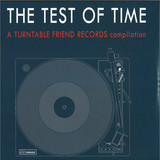
The return of A Turntable Friend Records starts with an opulent 40 track retrospective compilation of their heydays in the 1909s. Peers of Sarah Records and Slumberland Records but far from copying their style, ATF Records always had their own musical identity allowing for a roster as diverse as Boyracer (with Even As We Speak), Secret Shine, The Claim, The Ropers, the Hellfire Sermons + Lorelei.
This compilation is a feast of highlights from the long-deleted back catalogue plus 8 unreleased tracks from the period. Many of the original 7s & 12s are much sought after collector items and several tracks appear on cd for the first time.
Indie guitar popof the best variety delivered by bands from the UK< USA, Australia + Japan.
The release is luxuriously packaged in a tri-fold sleeve for the triple vinyl, strictly limited to 500 for the world. It includes a 12 x 12 full colour booklet and a download code.
The double cd comes with the same tracks also in a gatefold sleeve with full colour booklet.
This compilation is a fundraiser for the William Wates Memorial Trust in the UK with all profits being donated.
Order now and we will order the item for you at our supplier.

Sublime compilation of long-lost Australian indie-pop, acoustic jangle and beat happenings gathered by Melbourne-based collector and DJ Bayu and label head Moopie. Twelve tracks of singular vision spanning up- and downbeat pop, post-punk and minimal synth rarities recorded between 1982 and now. Australian twee pop royalty the Cat's Miaow shares the stage with the Cannanes and the Particles; Ya Ya Choral with Sarah Records' own Even As We Speak. Included is the previously unreleased 'Dot', by Mutant Sounds cult band Maestros and Dipsos. Full colour reverse-card sleeve with printed insert and lyrics sheet.
Order now and we will order the item for you at our supplier.

For her new and most radical album »Electroacoustic Works for Halldorophone«, Martina Bertoni used the electronic instrument at EMS Stockholm to create four pieces that are massive in scale and incredibly intimate, sonically restrained and emotionally overwhelming—almost ambient and always demanding your full attention.
Martina Bertoni returns to Karlrecords with »Electroacoustic Works for Halldorophone,« her most radical album yet. The foundation for the four electroacoustic pieces was laid during a residency at Stockholm’s legendary Elektronmusikstudion (EMS) that the Berlin-based cellist and composer used to explore the curious instrument, originally designed by Halldór Úlfarsson in 2008, as an algorithmic system in order to examine tunings and the mathematical relationships between Aiming to analyse and understand their interaction beyond the composer’s control, Bertoni sought to engage more deeply with the concepts of time, tuning, and, most importantly, control. Accordingly, her four »Electroacoustic Works for Halldorophone« seem both massive in scale and incredibly intimate, sonically restrained and emotionally overwhelming— almost ambient and always demanding your full attention.
While the halldorophone—famously used by Hildur Guðnadóttir for her »Joker« score—roughly resembles a cello and can be played like one, it is an electronic instrument. The vibration of its strings is being picked up, amplified, and then routed through a speaker. This creates a feedback loop that becomes increasingly complex depending on how much gain is added to individual strings. Úlfarsson gave Bertoni a carte blanche for how to handle the instrument, but she stresses that she relied on »minimal interventions—some string strumming and plucking« that set the interactions of different sounds and frequencies into motion. »I decided to not approach it like a cellist would,« she explains. »Instead I used it as a kind of generative organ by turning it into a feedback machine, with tuned feedback triggering more feedback depending on the tuning, which was based on tetraphonic scales that I could apply on the four main strings as well as the sympathetic group of strings.«
Bertoni recorded the material in the EMS studio, later composing and arranging the four complex pieces in her home in Berlin, after which they were mixed and mastered by Ciaran O’Shea. While this can be considered a compositional abstraction process, traces of her concrete work as a performer are firmly ingrained in the music. »The halldorophone doesn’t have a line output, just a double set of speakers, which is why I recorded all sounds with two microphones in the EMS studio,« she explains. »That’s why there’s plenty of breathing sounds here and there—label owner Thomas Herbst and I jokingly refer to the album as my ›chamber music record‹.« And indeed, there is a striking sense of intimacy to these four pieces throughout which individual sounds, harmonic frequencies, and even subtle rhythmic figures seem to move both on their own accord but also according to a underlying vision that steers their interplay.
Indeed, »Electroacoustic Works for Halldorophone« is an album built on and marked by contrasts. The soothing polylogue of single sounds in the higher register on opener »Omen in G« is counterpointed by massive bass drones, while the second piece, »Nominal in D,« plays a cunning game of repetition and difference by combining thick textures with all kinds of rhythmic elements. »Fades in C«—the longest of the four pieces, clocking in at 17 minutes—unlocks the emotional potentials of the sonic qualities of the halldorophone, sounding at once serene and anthemic, and »Organon in D« closes the album by underscoring how Bertoni’s unconventional approach allows her to seamlessly transform simple, quiet tones into complex, towering walls of sound.
expected to be published on 18.05.2026
A friend of mine told me he had visited the place that Cancer House live and record.He said they jammed together all afternoon. In the moment, in the zone so to speak,he became more and more convinced that what they were making together was thebest music he had ever been involved with. As the afternoon drifted by, second byrevelatory second, he began making grandiose plans to release the recording. By the timeit was dark outside the windows he imagined it as a future lost classic, a key livedocument of a scene, a moment and an aesthetic. He thought about all the recordshe loved. He thought about the great, little known, statements of lo-fi, downer indie:dark, sweet, crawling guitar music by bands like Farewood, Bedhead, UN, orThe Sonora Pine. He could even picture the sleeve down to the last detail.
The session ended and as they were all packing up he asked about the recording.And someone said ‘oh, we weren’t recording.’ ”- Jack Rollo
expected to be published on 18.05.2026
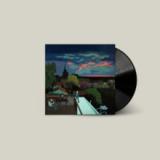
Mildred have announced their debut album Fenceline (out 24 April via Memorials of Distinction / Dog Day Records), they have also shared the Nick Roberts directed video for lead single ‘Fish Sticks’. Speaking of ‘Fish Sticks’ and the album, Mildred say: “Fish Sticks is a song of scenes from two worlds. Conversations with your boss. Acute workplace mediocrity. Riding home and eating fish sticks with your friends. For UK audiences, a fish stick is a fish finger, ideally Alaskan-caught cod. The song comes packaged in Fenceline, an album about conversations with old friends, little cousins, ceaseless piles of dust in your crumbling duplex, loves and theologians and their books. Fencelines mark two places but belong to neither. Neither nor, either or.”
Ahead of Fenceline, at the end of last year Mildred released their debut twin EPs mild and red, an insatiable collection of songs birthed before Mildred even knew they were a band. Arriving purposefully on the scene in that gentle, approachable Mildred way, the EPs picked up support from The Guardian, The Line of Best Fit, Uncut (‘We’re New Here’), The New Cue, Clash, DIY and more. Mildred is a band from Oakland, CA of four equal parts. They don’t have a lead singer, no one person writes the songs. The songs that make up Fenceline come together as a group with their genesis sprouting from any one of their members - Henry Easton Koehler (vocals, guitar), Jack Schrott (vocals, guitar), Matt Palmquist (vocals, bass, woodwinds) or Will Fortna (drums, production) - each time.
The songs are often wrestled from the lead writer by the other three, a lyric might have been mumbled absentmindedly for a few days before one of the other three grabs at it. Summed up neatly by Clash “imagine if Pavement went Americana and you’d be close”, Mildred make music that is pure and poetic, gently addictive and never overwrought. The lyrics for their songs are written largely alone and often draw from their own individual lives and experiences but there’s a shared something there. “It makes sense when common threads emerge” they say, “because we do things together a lot as friends: cook, laze about on a weekend, listen to an album, go walkabout, read, go see movies etc.
Strikingly literal or intriguingly oblique, Mildred have a remarkable way with lyrics that lodge themselves in your head softly but with such determination that they begin to feel like shimmering memories from your own life. Fenceline is a collection of songs that you want to hold close and delve into, and yet play to everyone you know.
expected to be published on 18.05.2026

Sometimes the title of an album tells you everything you need to know. Laurence Pike’s Possible Utopias for Jazz Quintet is like that: The music within represents a search for freedom, potentiality—liberatory strategies that transcend the ego and the solitary, atomized figure.
But in this case, the album title is also a red herring, because there is no jazz quintet here—just Pike, his drums, and his machines, not so much an ersatz ensemble as a purely notional one, a thought experiment equipped with drumsticks, circuitry, and the desire to go beyond hardwired limits.
And the results, strictly speaking, aren’t really jazz, though they incorporate the vocabulary of jazz, along with that of ambient, electronica, and post-rock. They are some other thing, cognizant of genre but never beholden to it. Again, we’re talking about a search for freedom here.
The Sydney-based musician has a long history of coloring outside the lines, not just in his solo recordings—including four albums for the Leaf label between 2018 and 2024—but also in the trio Pivot (later PVT); Szun Waves (alongside saxophonist Jack Wyllie and Border Community’s Luke Abbott); Triosk, which recorded an album with Jan Jelinek in 2003; and even post-punk titans Liars, whom he joined in late 2018.
Of his first album for Balmat, Pike says, “My loose concept was: What does music sound like when the expectations of late capitalism are removed from it? How might a jazz musician from an idealised culture of the future, or even another world, utilise musical language when the conventions of style and marketing are no longer a factor in music making?”
That inquiry, he says, connects to his “guiding principle: that the purpose of music is to access something bigger than the individual, and reveal a sense of possibility and freedom in the world to the listener. To create an understanding that the future can be something other than what we imagined or expect, even unconsciously.”
Heady ideas, but plug into his stream-of-metaconsciousness flow and you may start to intuit what motivates him. There is a deeply lyrical expression in these pieces—in the ruminative piano of opener “Guardians of Memory,” for example—but also a sense of exploded perspective, of ideas approached from more angles than any one mind could dream up. Of a collectivized consciousness, of mycelial networks branching across tone and rhythm and timbre, of ideas articulated in distributed fashion, nodal points dancing across drum heads.
Pike’s imaginary quintet is hardly without precedent; it’s a continuation of concepts floated across Jan Jelinek’s Loop-Finding-Jazz-Records, Burnt Friedman’s many guises, and much of the recombinant improv of the International Anthem roster, not to mention the far corners of ECM’s catalog in the late 1970s and 1980s, which Pike says have been integral to his development since he was a teenager. Possible Utopias for Jazz Quintet is a point in a continuum, a voice in a conversation, a question with no obvious answer: How can the search for otherness in music manifest something true about ourselves?
expected to be published on 29.05.2026
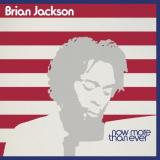
Produced by Masters At Work (Kenny Dope and Louie Vega).
'Collaboration is stimulating, it's in my blood.' Thus speaks Brian Jackson and his philosophy for making music and it's indeed collaboration that runs through this amazing album of reimagined and revisited songs from his artistic past. Featuring artists such as Black Thought, Rahsaan Patterson, Josh Milan, Moodymann, Omar, J. Ivy and others and being produced by Masters At Work, Now More Than Ever takes the enduring classic tracks that Brian made with Gil Scott-Heron and places them in the now over nineteen tracks and across a triple vinyl LP or double CD.
Songs such as Lady Day & John Coltrane, The Revolution Will Not Be Televised, Home Is Where The Hatred Is, Winter In America, The Bottle and more soundtracked a generational movement of Black Consciousness in the 70s and 80s. As Brian says, 'This album is one way to connect to what we were about in the 70s; we were about change and this is part of the lineage of resistance. These tracks mark a period of time when resistance was essential and now a younger generation has picked them up.'
'As young men in their twenties we (Brian and Gil) just wrote about what we saw and were feeling and people interpreted these songs in ways we never thought about but as Sly stone said the song comes from me but it's for you.' This statement from Brian perfectly sums up the collaborative nature of Now More Than Ever and the relevance of these songs in a contemporary perspective can be perfectly summed up by the songs themselves. The formidable stable of artists contributing to each track and the excellent production from Louie Vega and Kenny 'Dope' Gonzalez make this album an event in itself. However, these songs are there to be enjoyed as a canon or as individual masterpieces, whether on the dancefloor or on a home system. ‘Now More Than Ever’ just has to be in everybody’s music collection.
expected to be published on 29.05.2026
"Remnants" is an album marked by the ambiguity of presence and absence. The pieces, recorded using minimal equipment in what Suzuki describes as a ritual-like atmosphere, began as a way of processing the loss of her father in 2019. But beyond this, they also come to speak to the ways in which loss changes our relationship with someone, and our experiences of the world. Indeed, the experience of loss is not marked merely by a single event, but is instead a process that unfolds over time. Despite the other's absence, a particular location, the smell of a certain brand of tobacco, a look on a friend's face - traces such as these are enough to bring about a renewed presence.
It is through these subtle traces and remnants, encountered over time, that we come to understand loss as not only the acceptance of absence, but the recognition of a continued presence. As Suzuki says, "this is not a solo album." Its creation was instead shaped by an ongoing dialogue, the continued elaboration of a complex and ambivalent relationship. At once melancholic, warm, and embracing, it is this ambiguity, these subtle traces, that Suzuki’s compositions speak to. These are not merely the sounds of mourning, but instead have been shaped by the evolving dialectic of presence and absence into something far more subtle and haunting. (Zefan Sramek, 2026)
expected to be published on 05.06.2026

PAUL WALKER: Paul Walker is the debut studio album by American post-hardcore band, Drug Church. It features 10 tracks, including "Thinking About Joining Drug Church", "Reading Youtube Comments", and "Clifton Country". SWELL: Drug Church, monsters of alt-rock, have weathered a year of dope shows and fan adoration since the release of their seminal punk masterpiece Paul Walker. Now, the chickens have come home to roost. The band has dedicated itself fully to a true ‘sophomore slump’ EP full of indulgent missteps and overreaching stabs at pop crossover. All that being told, they’re “the sickest band ever” has yielded real results. On Swell, Drug Church push their idiosyncratic blend of punk and alt to new heights of sick. Recorded with J. Robbins (every band, ever) in a big, professional studio, Swell delivers the biggest Drug Church sound to date. It’s pretty much the life-changer you assumed it would be. This new repress of the album includes remastered tracks. HIT YOUR HEAD: Drug Church is the logical limit of heavy alt. Like the Bee Girl from the Blind Melon video pitting hard for Helmet. Hit Your Head, recorded with Jay Maas, fully embraces the futureless aesthetic the band hinted at on previous records. This is worst-body-on-the-beach music. These are fired-from-your-window-tinting-job songs. An album for people on probation for crimes that aren't even cool. Big riffs and petty concerns.
expected to be published on 05.06.2026
Kēpa is built whole, even if life has broken a few bones along the way.
Back when he was a pro skater, he gave everything to the board. Today, he gives that same intensity to the stage, delivering hypnotic cine-concerts where motion, sound, and image blur into one. The only falls left now are the ringing final chords of his guitar — not just an instrument, but an extension of his body.
Fingerpicking is his native tongue. So much so that Kēpa no longer sings — he lets the strings speak. Percussive, alive, essential. This music isn’t about performance, it’s about living: a personal quest, a way to reach others by first going inward. Moving against the current without fighting the wind. Finding breath, essence, and remembering we’re all drifting on a spinning planet, surrounded by forces bigger than us.
It’s easier to look away. Easier to follow noise, fear, or false prophets. Harder — and braver — to truly connect.
Released in late 2025, Hotline Service opened the door, offering a wide-open, spiritual escape. With SOUL WASH SERVICES— produced by Timber Timbre — Kēpa goes further. Warmer, deeper, more focused. The album feels like sunlight on asphalt, a long drive with the windows down, time slowing just enough to let something real surface.
A kindred spirit to Hermanos Gutiérrez, Kēpa plays the role of a modern, pagan preacher — guiding us through a dusty, golden road movie that unfolds entirely inside the listener. His music doesn’t shout; it cleans.
Kēpa does it all: writes, plays, films, edits, mixes. Music becomes image, image becomes music. Nothing is separate, on record or on stage. There’s no excess, no showboating — just an open invitation to slow down, go deeper, aim higher.
Tracks like Solarium and Paradisiac reach the peaks with minimal gear: five strings, a few picks, and total control of touch and space. Listening to Kēpa feels like checking in with yourself — a quiet inner trip shaped by sounds from every corner of the world. Blues, not to feel them, but to leave them behind.
After years devoted to picking, his playing has become something sacred.
And if you let it, it carries you with it.
On Stock and ready to ship
What's the point of the howl of string to speaker, the hammering of stick-on skin? Is it transcendence, elevating the human spirit by catharsis in sound? Or is it summoning chaos, a purgatory in which to bask in all that’s unclean, the better to feel alive?
Why not both? Because that’s what’s on offer on Diet Of Worms, the second Rocket release by The Shits, Leeds via Newcastle’s titans of disgust and deliverance. This is a feast for the senses in the worst way possible - primal rock boiled down to its essence and flung full in your face. Using repetition, tortured vocal invective and heads-down intensity as blunt instruments, these eight tracks are an unprecedented torrent of acidic salvation. Whilst lurking somewhere on the decadence-destruction axis between the nihilism of prime Stooges and the bloody blackout of Braimbombs, Diet Of Worms is possessed of a legitimately uncompromising hostility that both elevates and debases it to co-ordinates unknown.
There are revelations here in the riffage and the rancour, even if they are the kind that occur in the bleary miasma of the lock-in, or witnessing the streetlight blur of the subsequent stagger home. Even more single-minded and remorseless than the band’s Rocket debut ‘You’re A Mess’, this is a record that demands full immersion. Whether it’s ‘Then You’re Dead’ hammering on a pulverising garage-stinking riff until it begs for mercy, or ‘Change My Ways’, whose Creedence-In-Hell swagger and lurch is that of abjection transmuted into joy, this is psychedelia forcibly removed from its comfort zone of pastiche, and thrust into a bad-trip realm of the vivid and nightmarish.
But rarely has the process of making beauty and horror indivisible seemed like so much fun. If Werner Herzog was right, and the only harmony in the universe is that of overwhelming and collective murder, then The Shits are the true music of the spheres.
expected to be published on 12.06.2026
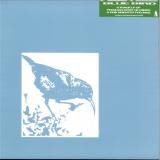
Following the critical success of last year’s ‘Cold Feet’ LP, producer, DJ, and multi-instrumentalist Alek Lee returns to Isle of Jura with his most introspective work to date, the ‘Blue Bird’ album. Across eight tracks, the Athens-based artist explores what he describes as a "Peculiar state of minds & Dub Orientated Feelings," blending his signature guerrilla style production with deep, organic soul.
The album’s centerpiece and title track, ‘Blue Bird’ features the haunting vocals of singer-songwriter Keren Ilan. It is a raw, heartfelt exploration of the aftermath of a breakup. The lyrics speak of a "desert heart" and a "loss that grows tall and loud," eventually finding a path toward healing as the "blue bird sings the dawn." Musically, the track is anchored by hazy, sun drenched guitars, a central instrument that weaves a consistent Balearic thread throughout the LP.
The journey through ‘Blue Bird’ is one of shifting shadows and unexpected textures. ‘Treasures’ is a standout instrumental, leaning into a grit-flecked, bluesy "twang" reminiscent of Duane Eddy, while ‘The Beach Road’ sees long time collaborator and ‘Shame On Us’ bandmate, Yovav, lending his magical bass and guitar work to a track that feels like a slow drive toward the horizon.
Side B shifts the energy toward the dancefloor and the sophisticated leftfield pop of the 80s. ‘First Rain’ is a subtle house leaning gem underpinned by a kick drum and lush, synth heavy emotive chord progression. ‘Thanks to Sade’ is a seductive downtempo groove with epic guitar lines shifting through, while ‘Remember the Good’ brings a subtle reggae skank and a French-influenced organ sound into the mix. The LP comes full circle with a smoked out Dub version of the title track ‘Blue Bird’.
A 180 gram pressing in a 3mm spine full colour sleeve and sticker designed by Bradley Pinkerton.
On Stock and ready to ship
In spring 2025, Abul Mogard and Rafael Anton Irisarri created the source material for their second album, Where Light Pauses in the Silence of the Sun, during a three-day residency at Morphine Raum in Berlin. Functioning as both recording studio and performance venue, the space has no stage, with the audience gathered around the performers. Working within an open framework, the duo reshaped the music each evening while recording the performances live to multitrack. Rotary speakers, modular synthesizers and bowed guitar formed the core of their sonic language, captured through a 1970s mixing console and microphones placed around the room.
Back in Mogard’s studio in Rome, the material was further crafted as motifs were stretched, fragments isolated, and tempos dissolved. Irisarri recorded additional guitar textures and treatments in New York, while passages recorded by Martina Bertoni and Andrea Burelli in Berlin reinforced the harmonic centres and brought breath, refinement and a new sensibility to their compositions. The process continued as Mogard’s layering and subtraction reassembled everyone’s parts into the final arrangement.
The album opens with “In the Eastern Wild,” building from a sparse outline into a monumental formation of low-frequency weight, its internal motion shaped by the rotating Leslie speaker. “Over the Domes” widens into a broader acoustic field, where sustained modular tones meet waves of softly plucked guitar. The music then turns inward with “A Blue Descent,” centred on Bertoni’s cello, whose growling timbre introduces a melancholic depth.
At the album’s centre, “In a Quiet Radiance” unfolds around a slow guitar ostinato, its luminous stillness opening into a more expansive and reflective state. Across its ten-minute span, Burelli’s violin lines and Bertoni’s lower cello phrases gradually surface, weaving through the harmonic field. Mogard brings Burelli’s processed voice to the fore, its emotive, operatic presence becoming one of the record’s pivotal moments. “Of Blessed Ages” suspends the sonic flow, shifting between parallel major and minor chords as lingering, slowly decaying melodies shape the music’s internal drift. The closing “Among Shadows” settles into a darker resonance as layered textures recede.
Mogard and Irisarri’s shared language balances restraint and maximalism. UK magazine Crack describes the music as “a tidal wave held in suspension,” while Dutch newspaper de Volkskrant writes, “What a colossal sound, and how this music strikes at the emotions.” Reflecting on the residency sessions, Irisarri recalls: “At moments I genuinely couldn’t tell if a sound was coming from me or from Abul. It stopped feeling like two people making decisions and began to feel like we were inside a system moving on its own."
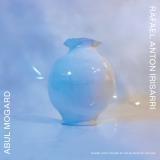
Marja de Sanctis’ cover artwork revisits the vessel sculpture from the duo’s first album, Impossibly Distant, Impossibly Close. There it appeared as raw, unfired clay. Here it has been fired in the kiln and finished with a glaze. Light gathers on its polished surface and spills into the surrounding space. As she explains, “I wanted to convey the idea of continuity within the duo, and the vessel became a kind of container for that idea. However, their music felt different this time, and with the collaboration of Martina and Andrea, I felt it should have a sleeker, softer, more glamorous look, very distant from the first raw appearance.” The transformation of the vessel from raw clay to fired form suggests a passage from immediacy toward permanence, mirroring the music’s gradual expansion.
expected to be published on 26.06.2026
In spring 2025, Abul Mogard and Rafael Anton Irisarri created the source material for their second album, Where Light Pauses in the Silence of the Sun, during a three-day residency at Morphine Raum in Berlin. Functioning as both recording studio and performance venue, the space has no stage, with the audience gathered around the performers. Working within an open framework, the duo reshaped the music each evening while recording the performances live to multitrack. Rotary speakers, modular synthesizers and bowed guitar formed the core of their sonic language, captured through a 1970s mixing console and microphones placed around the room.
Back in Mogard’s studio in Rome, the material was further crafted as motifs were stretched, fragments isolated, and tempos dissolved. Irisarri recorded additional guitar textures and treatments in New York, while passages recorded by Martina Bertoni and Andrea Burelli in Berlin reinforced the harmonic centres and brought breath, refinement and a new sensibility to their compositions. The process continued as Mogard’s layering and subtraction reassembled everyone’s parts into the final arrangement.
The album opens with “In the Eastern Wild,” building from a sparse outline into a monumental formation of low-frequency weight, its internal motion shaped by the rotating Leslie speaker. “Over the Domes” widens into a broader acoustic field, where sustained modular tones meet waves of softly plucked guitar. The music then turns inward with “A Blue Descent,” centred on Bertoni’s cello, whose growling timbre introduces a melancholic depth.
At the album’s centre, “In a Quiet Radiance” unfolds around a slow guitar ostinato, its luminous stillness opening into a more expansive and reflective state. Across its ten-minute span, Burelli’s violin lines and Bertoni’s lower cello phrases gradually surface, weaving through the harmonic field. Mogard brings Burelli’s processed voice to the fore, its emotive, operatic presence becoming one of the record’s pivotal moments. “Of Blessed Ages” suspends the sonic flow, shifting between parallel major and minor chords as lingering, slowly decaying melodies shape the music’s internal drift. The closing “Among Shadows” settles into a darker resonance as layered textures recede.
Mogard and Irisarri’s shared language balances restraint and maximalism. UK magazine Crack describes the music as “a tidal wave held in suspension,” while Dutch newspaper de Volkskrant writes, “What a colossal sound, and how this music strikes at the emotions.” Reflecting on the residency sessions, Irisarri recalls: “At moments I genuinely couldn’t tell if a sound was coming from me or from Abul. It stopped feeling like two people making decisions and began to feel like we were inside a system moving on its own."
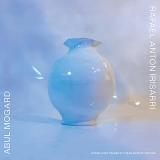
Marja de Sanctis’ cover artwork revisits the vessel sculpture from the duo’s first album, Impossibly Distant, Impossibly Close. There it appeared as raw, unfired clay. Here it has been fired in the kiln and finished with a glaze. Light gathers on its polished surface and spills into the surrounding space. As she explains, “I wanted to convey the idea of continuity within the duo, and the vessel became a kind of container for that idea. However, their music felt different this time, and with the collaboration of Martina and Andrea, I felt it should have a sleeker, softer, more glamorous look, very distant from the first raw appearance.” The transformation of the vessel from raw clay to fired form suggests a passage from immediacy toward permanence, mirroring the music’s gradual expansion.
expected to be published on 26.06.2026
In spring 2025, Abul Mogard and Rafael Anton Irisarri created the source material for their second album, Where Light Pauses in the Silence of the Sun, during a three-day residency at Morphine Raum in Berlin. Functioning as both recording studio and performance venue, the space has no stage, with the audience gathered around the performers. Working within an open framework, the duo reshaped the music each evening while recording the performances live to multitrack. Rotary speakers, modular synthesizers and bowed guitar formed the core of their sonic language, captured through a 1970s mixing console and microphones placed around the room.
Back in Mogard’s studio in Rome, the material was further crafted as motifs were stretched, fragments isolated, and tempos dissolved. Irisarri recorded additional guitar textures and treatments in New York, while passages recorded by Martina Bertoni and Andrea Burelli in Berlin reinforced the harmonic centres and brought breath, refinement and a new sensibility to their compositions. The process continued as Mogard’s layering and subtraction reassembled everyone’s parts into the final arrangement.
The album opens with “In the Eastern Wild,” building from a sparse outline into a monumental formation of low-frequency weight, its internal motion shaped by the rotating Leslie speaker. “Over the Domes” widens into a broader acoustic field, where sustained modular tones meet waves of softly plucked guitar. The music then turns inward with “A Blue Descent,” centred on Bertoni’s cello, whose growling timbre introduces a melancholic depth.
At the album’s centre, “In a Quiet Radiance” unfolds around a slow guitar ostinato, its luminous stillness opening into a more expansive and reflective state. Across its ten-minute span, Burelli’s violin lines and Bertoni’s lower cello phrases gradually surface, weaving through the harmonic field. Mogard brings Burelli’s processed voice to the fore, its emotive, operatic presence becoming one of the record’s pivotal moments. “Of Blessed Ages” suspends the sonic flow, shifting between parallel major and minor chords as lingering, slowly decaying melodies shape the music’s internal drift. The closing “Among Shadows” settles into a darker resonance as layered textures recede.
Mogard and Irisarri’s shared language balances restraint and maximalism. UK magazine Crack describes the music as “a tidal wave held in suspension,” while Dutch newspaper de Volkskrant writes, “What a colossal sound, and how this music strikes at the emotions.” Reflecting on the residency sessions, Irisarri recalls: “At moments I genuinely couldn’t tell if a sound was coming from me or from Abul. It stopped feeling like two people making decisions and began to feel like we were inside a system moving on its own."
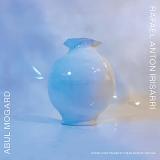
Marja de Sanctis’ cover artwork revisits the vessel sculpture from the duo’s first album, Impossibly Distant, Impossibly Close. There it appeared as raw, unfired clay. Here it has been fired in the kiln and finished with a glaze. Light gathers on its polished surface and spills into the surrounding space. As she explains, “I wanted to convey the idea of continuity within the duo, and the vessel became a kind of container for that idea. However, their music felt different this time, and with the collaboration of Martina and Andrea, I felt it should have a sleeker, softer, more glamorous look, very distant from the first raw appearance.” The transformation of the vessel from raw clay to fired form suggests a passage from immediacy toward permanence, mirroring the music’s gradual expansion.
expected to be published on 26.06.2026

Atkinson first saw Les yeux sans visage when she was a teenager, around the turn of the century. The film made an impact for its iconic imagery and the way Franju draws on the aesthetics of early filmmaking, from its score that relies on stylistic markers typical of the 1940s or 50s to the decision to shoot in black and white. Even four decades after its first release, it was clear that this was a work that stood outside of the cultural moment that birthed it, speaking through time in ways that were uncanny, but profound.
A quarter-century later, Atkinson was approached by the Belgian cultural center VIERNULVIER to create a new score for Les yeux sans visage for its celebrated Videodroom series, which has seen artists like claire rousay, Mabe Fratti, Lee Renaldo, and many more create new original scores for cult classics and genre cinema. Atkinson's music, with its sublime meditations on space and proximity, its elusive sense of narrative development, mirrors the pacing and mystery at the heart of horror filmmaking. There is a shadow at the heart of her soundtrack to Les yeux sans visage, an ever-shifting wisp and an insinuation of encroaching transfiguration. Echoing a climactic moment in the film, the music obliquely points to "the Beyond," an impossible place of discovery and revelation.
Atkinson envisioned her music as something akin to the air moving throughout and beyond the many cages that appear in the film, unconstrained by the bars and with undefined borders. Those cages hold the victims of a madman surgeon, determined to graft a new face onto his daughter, the protagonist Christiane Génessier, who lost hers in a car accident while he was behind the wheel. Atkinson was reminded of her predecessors at the pioneering French studio the GRM, who approached sound in a less sinister, but similarly surgical manner, and took inspiration from their playful approach to cerebral soundmaking for the electroacoustic topography into which the piano is embedded. As such, Atkinson’s reactions to the larger themes and the minute-by-minute happenings onscreen are both audible simultaneously.
A film about a man who destroys the lives of young women marked by their beauty and similarity to his daughter in a shame-fueled rage has clear, continuous cultural resonance. "Through the music, I decided to bring back their empowerment despite what they endure," says Atkinson. "This is why the record is also dedicated to Gisèle Pelicot, whose trial happened while I was in the process of composing the music and kept thinking of her strength and her decision to share her trial in order to reverse the shame."
This recorded version of the soundtrack is a 34-minute synthesis of the full 90-minute score, presented on LP along with an essay by writer-musician Claire Cronin and drawings by Momo Gordon, together forming a complex reflection on the film's themes. If these sounds move as if the bars of cages are no barrier, they also intimate the freedom and power of those held behind them. Rather than simply mirroring the fear and confinement shown onscreen, Atkinson offers an elusive escape, a beacon for the characters, and the listener, to follow as they reckon with the narrative and move through it.
expected to be published on 26.06.2026

Rising star Storm Mollison lands her debut on Heist with an ep blending House & R 'n B and we're completely hooked.
The future is looking bright for Storm Mollison - Heist's newest. Marked as artist to look out for by Shazam on their fast forward 2026 list, Storm's got a bright and busy year ahead, after an already big 2025. Last year alone, she featured on Kiki's hit 'Getting ready for the party', featured on a Mixmag London event and a Raw Cuts X Heist ADE party, had her first cover feature on Spotify, multiple radio 1 appearances, released several singles, a full EP on Noir Fever and a Luuk van Dijk remix.
If that's not enough to get you excited, we suggest you just listen to her 'Act like that' EP on Heist. In Storm's own words: "it's the most exciting music I've made so far" and we couldn't agree more. Her EP is a perfect blend of her love for house music and soulful R 'n B with its 4 tracks smothered in deep chords, smooth vocals and crunchy textures.
EP opener 'Doing Sumthin'' has been a staple in Dam Swindle's sets ever since receiving Storm's first demo and has never failed to make the crowd bounce from left to right with its quirky and equally cool vocal courtesy of Aaron Pfeiffer. Sometimes, you just need someone to tell you which way to move and before you know it, the whole club is doing it. The beat is chunky, and the sax lick is a nice wink to the old school house that has influences Storm's sound so much.
Act Like That - the EP's title track -, is a modern R' n B song that could have easily been on Rochelle Jordan's latest album. The lyrics are perfectly delivered by Storm herself and celebrate women who stand up to unreliable men. It could well be the badass soundtrack of womanhood for 2026 delivered in a silky-smooth package that'll live rent-free in your head for the foreseeable future.
On the flipside is "Gotta Go', an undercover dancefloor burner with lush keys and a lean-back groove. The track relies on crisp textures and little frizzles all throughout the track, with a big breakdown for ultimate release.
Ep closer 'Workin' takes us back into R 'n B territory, this time in a very danceable form. Storm's soft vocals lie on top of a steady beat with deep chords and a bassline so sexy It'll make you get down no matter where you're hearing this.
It's hard to speak about a breakthrough for an artist that has already seen such a rise in the scene, but if we're talking about her music, this will be the record that people come back to after years and say, "remember when she releases ALT!?"
As always, enjoy the music and play it loud!
Yours, Maarten & Lars
On Stock and ready to ship
