Buscar:even as we speak

Estilos
Todo
cktrl - yield LP

Cktrl

yield LP

12inchOHX008
OHX
07.02.2023

British musician, multi-instrumentalist, producer and DJ cktrl returns with the release of his new EP ‘Yield’. Born from a desire to change the narrative around contemporary Black British music, the boundary-pushing musician aims with this project to prioritise the art of bonafide musicianship. A stark departure from cktrl’s previous work, ‘Yield’ is a celestial and palpably more inward body of work that harkens back to the pre-electric age of modal jazz while simultaneously pulling in elements from the disciplines of classical and baroque music. Speaking on the project’s sonic identity, cktrl says: “I want to be able to show that you can make things from scratch again that have that feeling and beauty without having to sample an old record. Even though that’s an art-form within itself, I want to show raw orchestration and instrumentation can be the sole source” The origins of the title came from a period where cktrl was looking to find solace in himself after an introspective period of grief and heartbreak. As an intentionally instrumental project with minimal vocals, cktrl wants prospective listeners to see these new songs as guided meditations where they can wholly insert themselves in it. Eliciting and reaping whatever feelings come to the fore. Speaking on what ‘Yield’ means to him as a concept, cktrl explains: “Some people who I've asked to define the word ‘yield’ have looked at it from a harvest point of view, whereas others have seen it as something to submit to, to render, like you're giving up yourself. I see it as a barometer for how you feel - no matter if you're at your lowest or your highest vibration, you still need to show up for yourself. You still have to be present. It’s about getting the best from yourself no matter where you are in life” The new project is the follow up to last year’s ‘Zero’ which featured collaborations with esteemed contemporaries like the GRAMMY-nominated Mereba and anaiis. Upon the project’s release, it was met with a plethora of critical acclaim from highly regarded publications and platform such as British Vogue, Dazed, CRACK Magazine, Resident Advisor, NOTION, Harper's Bazaar and ES Magazine for its sprawling and experimental scope, spanning avant-garde jazz, classical music, alternative R&B and electronica. cktrl has a tune for every occasion: as content making beats by himself at home in Lewisham as he is amongst this generation’s fashion and cultural vanguards. Music has been a part of his life for as long as he can remember: from clarinet lessons throughout his school life to fond memories from his NTS days. Moulded by a unique blend of his West Indian heritage, years of classical training in both the clarinet and saxophone, cktrl strives to do what hasn’t been done before. His approach to creation is decidedly wide-ranging and broad. In fact, where sonic descriptions might fail to encompass the breadth of cktrl’s scope, three words surface when he unpacks his musical aims: freedom, range and feeling. Elsewhere, throughout his career, cktrl has been recognised and heralded by fashion and film VIPs as he firmly embeds himself within the black cultural renaissance emerging here in Britain. Acquiring a global network of creatives that include the late Virgil Abloh, Bianca Saunders, Tremaine Emory, Saul Nash, Maximilian Davis, Ahluwalia, Stephen Isaac Wilson, Sean Frank, Campbell Addy, Ib Kamara and Jenn Nkiru who secured him a cameo in Beyoncé’s ground-breaking film ‘Black Is King’.

Disponible

En el almacen y preparando para el envío

12,48
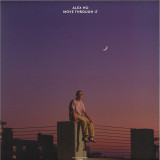
ALEX HO - MOVE THROUGH IT LP

Debut album from Alex Ho out of Los Angeles.

In his foundational essay on Los Angeles, L.A. Glows, the essayist Lawrence Weschler speaks on the city's uncanny, immediately recognizable light; "The late-afternoon light of Los Angeles—golden pink off the bay through the smog and onto the palm fronds." Weschler traces the city's mysterious refracted light from the iconic paintings of David Hockney through the city's frequent portrayal on film and TV, noting its ability to put residents into a state of "egoless bliss."

Similarly, Alex Ho's new album for Music From Memory, 'Move Through It', radiates with the unmistakable LA glow. While the Pasadena native's studio work is just now coming to light, Ho has long been a fixture in the Los Angeles dance music scene, throwing what are perhaps the city's most musically expansive warehouse events and carving out a singular voice as a DJ, as heard on his brilliant Moony Habits show for NTS. The eight-track record, however, lands in a more contemplative zone, better suited for a golden hour drive than a night out.

Though it's his first record, 'Move Through It' is the accomplished work of a fully-formed artist, produced patiently between 2017 and 2020 with help from friends including Baba Stiltz, Phil Cho, Damon Palermo and John Jones. "Mark," the Koanic track conclusion side A, is an arpeggiated slow burn reminiscent of Pino Donaggio's brilliant score for Brian De Palma's 1984 film Body Double. Ho's stunning, pure falsetto soars above gentle melodies. "Miss Suzuki," the piece that originally caught the ear of MFM's Jamie Tiller and Tako, opens the record with a blue, cinematic sway. Ho's facility for poignant melodies—easily conveyed through saxophone, vibes, various keyboards and his own voice—shines on "College Crest Drive," as well as the title track. The lyrical "Move Through It" and the restrained and beautiful closing cut, "TYFC," are abetted by glimmering Kraut guitar figures courtesy of John Jones.

While Ho's rhythms and melodies paint a crystal-clear musical vision, the music's emotional centre is more elusive, indicative of a yearning feeling synonymous with the City Of Angels. Hitting these hazy and subtle notes, Move Through It falls within a canon of sun-addled records spanning from Herb Alpert's "Rotation" to Dam-Funk's Private Life trilogy as Garrett. An immersive and concise statement, Alex Ho's 'Move Through It' is as warm and uncanny as the city that inspired it, a definitive LA album.

Disponible

En el almacen y preparando para el envío

20,38
Charlotte de Witte - Asura EP

Charlotte de Witte

Asura EP

12inchKNTXT012
KNTXT
04.10.2021

Charlotte de Witte continues her fantastic year with brand new EP, Asura, on her KNTXT label. All three of the tracks on this release will be exclusively included in her BBC Radio 1 Essential Mix, which is scheduled to be broadcasted on 18th of September.

As well as being back on the road and serving up her high-intensity DJ sets at the world's best clubs and festivals, Charlotte has also been busy in other areas. She has forged a new alliance with Apple Music and is now curating multiple exclusive mix series including a monthly KNTXT Residency Mix and KNTXT Active, which sees the Belgian artist and her label further investigate the connections between high-performance music, sports and BPMs. She has recently remixed the hugely influential trance classic 'The Age Of Love' by Age Of Love' alongside Enrico Sangiuliano and continues to A&R essential new tunes for the label.

Says Charlotte of this EP, "with Asura EP I’m trying to give you a little insight into my musical influences by going back to my roots. We’re speaking about a young Charlotte who, about 12 / 13 years ago, got indulged in the world of electronic music by going to her first underground clubs and raves. From electro and techno to acid core and hardcore to psytrance. This EP flirts with the soundscapes of the latter."

This EP finds Charlotte delve deep into her own past in electronic music with plenty of psychedelic influences. Opener Asura is a brightly lit techno track with big chords that bring the colour. They are sleek and metallic and sure to get hands in the air, with acid sounds and rumbling bass all adding extra weight and depth to this fantastic opener. 'Soma' is another dramatic and psychedelic track with hard-edged drums pounding away beneath celestial chords. They are mysterious and emotive and bring colour to the darkness. Last of all comes another big, psytrance-tinged and emotional roller coaster in 'Stigma' with its all-consuming techno groove and bass that sounds like it's fired from a machine gun. After an acidic breakdown, the drums roll again and even the biggest festival crowd is sure to be swept away.

Charlotte de Witte leads from the front once more with her standout new Asura EP.

Disponible

En el almacen y preparando para el envío

12,56
Crushed Soul - Family Of Waves

Berlin-based, Dutch-born Steffi possesses near-boundless prowess. As a DJ, she’s proved her effortless mastery of disco, house, electro, and techno; as helm of labels Klakson and Dolly, she’s long maintained her status as tastemaker; as a producer, she has graced us with three solo LPs and numerous 12”s. Dark Entries is now honored to unveil the debut of her project Crushed Soul, a moniker she had used only once in 2013 for an Ostgut Ton compilation track. The mutual esteem of Steffi and DE has been previously fruitful, with Steffi providing a remix for Cute Heels’ 2016 EP on DE, but this is their first full-length collaboration.

The Family of Waves EP represents both familiar and novel pastures for Steffi. While her love of electro and classic Detroit techno have been oft-evident, here we witness the darker shades of new wave and industrial creep to the forefront. This turn for the twisted feels not just natural, but predestined, an inevitable succumbing to morbid forces. But Steffi also views Family as “a playful association...a mix of my past and new modern waves". There is a kernel of whimsy, even joy, lurking within the record’s temporal jumblings. The A-side opens with “Gravitational Field”, which juxtaposes its gnarled bassline with unearthly percussives and a recurrent resonant gong. The wild sonic palette speaks Steffi’s singular voice. “Scalar Property” continues the paranoid propulsion with an unhealthy dose of what can only be described as Metroid-funk, its staccato bass jabs interlaced with ghastly vocal pads. The B-side contains a diptych of slower tracks that juggle reference points both retro and futurist. In “Family of Waves”, a churning EBM-esque bassline battles acerbic yelps. On this track, the collision of past and present is most pronounced, as if A Split Second were covering Mike Parker. “Diffusion of Heat” closes the EP with what feels like a perfect synthesis of Steffi’s musical passions: funky, warbling chord stabs; intricate rhythmic diversions; the ecstasy of repetition. Here, disco, new wave, and techno marry harmoniously, if only to inform us of the disharmony of our present.

All songs have been mastered for vinyl by George Horn at Fantasy Studios. The sleeve and accompanying postcard were designed by Eloise Leigh using video art stills by Goldenliustra.

Disponible

En el almacen y preparando para el envío

13,87
David Fostex - Dark Yacht 2 LP
  • 01: My Brain Is Broke
  • 02: I Just Can&Apos;T Get It Up
  • 03: Manopause
  • 04: Dental Breakdown
  • 05: I Got Hacked
  • 06: Colonoscopy
  • 07: Back Ache
  • 08: Taking Out The Trash
  • 09: I Can&Apos;T Remember My Password
  • 10: Dirty Clothes

Shawn Lee, the Silver Fox, did it again! He managed to persuade David Fostex to reord a follow up to his intriguing 2023 offering "Dark Yacht" with an even more cutting-edge venture into the world of sinister, mysterious world of the super yacht sounds and releases "Dark Yacht 2" including 10 new, original compositions written during a frosty, starry night somewhere near Marina Del Ray.

"As I find myself entering into the new era of my personal musical odyssey, I reflect back to a simpler time -a kinder, more gentle world where people listened without hearing," says David Fostex. "An artistic genius such as myself could easily live a life of excess and luxury without even breaking a sweat. I now find myself slaving away in a hot cramped home studio perspiring profusely over childlike chord structures and rudimentary themes. However, I am still reaching for musical greatness and to be perfectly honest, I am creating sonic masterpieces beyond the shackles of my so-called peers- if you can even call them that. My work speaks for itself and I speak for myself. So it is with great pride that I present to you ,Dark Yacht 2', an intimate journey into the mystical world of DAVID Jeremiah FOSTEX the living legend and purveyor of all things good and true. You will laugh-you will cry… Find a friend or a loved one… hold them close and listen to the splendour of what no doubt will be considered to be one the greatest albums of all time. You're welcome".

Reservar15.05.2026

debe ser publicado en 15.05.2026

21,81
Arm's Length - There's A Whole World Out There
  • 1: The World
  • 2: Fatal Flaw
  • 3: Funny Face
  • 4: The Weight
  • 5: Palinopsia
  • 6: The Wound
  • 7: You Ominously End
  • 8: Early Onset
  • 9: Genetic Lottery
  • 10: Attic
  • 11: Halley
  • 12: Morning Person

There’s a song on There’s A Whole World Out There, the second album by Canadian four-piece Arm’s Length, called “Palinopsia”. Derived from the Greek for “again” (palin) and “seeing” (opsia), it’s a visual phenomenon marked by the persistent image of something that’s no longer actually there. Singer and lyricist Allen Steinberg wrote the song wrote about “pure devotion or love towards someone that may no longer be a part of your life”, but it also applies to the record as a whole.

Because throughout this album’s 12 songs, Steinberg wrestles a with the part of life that’s been and gone. Yet there’s a noticeable difference between the person who wrote this record compared to the one who wrote Arm’s Length’s 2022 debut, Never Before Seen, Never Again Found. “This record speaks more to my life at the moment than the past,” he explains, “even though there’s still a good amount of past on it. But it’s how I’m dealing with it now, as opposed to being enveloped in it—there’s more a sense of being on the other side of it, of seeing it with hindsight. The tone has shifted a little. I’m probably just a bit more mature, as my frontal lobe is developing as we speak.” Produced by Anton DeLost—who worked with the band on Never Before Seen, Never Again Found and 2021’s EP, Everything Nice—There’s A Whole World Out There does indeed expand Arm’s Length’s horizons in accordance with Steinberg’s developing frontal lobe, presenting him as more self-reflective contemplative than he was before. He wrote the parts for all the instruments, as well as the vast majority of the lyrics, alone in his room, and then brought those initial sketches, recorded as voice memos, to drummer Jeff Whyte, who added percussion to Steinberg’s song skeletons. While the majority of the creative process was in Steinberg’s hands, it was only when these songs were recorded as a full band with Jeremy Whyte, who played bass on the record, and Ben Greenblatt that their full potential was realized. The result is that the feelings driving these songs burst and bloom with full force, building on the incredible foundations set by the band’s previous recorded output.

Reservar15.05.2026

debe ser publicado en 15.05.2026

26,68
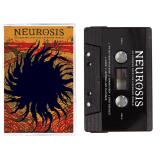
NEUROSIS - AN UNDYING LOVE FOR A BURNING WORLD MC

‘An Undying Love For A Burning World follows Converge’s Love Is Not Enough this year as a pivotal metal album about acknowledging the darkness for what it is and trying to accept it.’ - the QUIETUS

‘Neurosis Know You’re Hurting. Their Stunning New Album Is a Life Preserver.
An Undying Love for a Burning World, the band’s first album with new member Aaron Turner, is a reminder of how even the darkest music can be a guiding light’ - 9/10 ROLLING STONE

Evolution can be ugly and beautiful, painful and euphoric. An Undying Love For A Burning World is the first new release from Neurosis in a decade, and a potent statement of intent and rebirth - one that marks the first new steps of resolve and resilience.

An Undying Love For A Burning World is an epic album of colossal hypnotism - beautiful, fearsome and utterly compelling in a way that only Neurosis can be. Aaron Turner (Sumac, Isis) joins the band on vocals and guitar, a name whose legacy is intertwined with the band’s own and a true kindred spirit.

“From the moment I first heard Neurosis over 30 years ago, I felt this was the music my heart and mind had been seeking but not yet heard. Now after many years travelling along various musical paths of my own, the singular sound and spirit embodied by Neurosis continues to speak to the depths of my being. It is an honor and a true pleasure to have been welcomed so warmly into a band that not only shaped my perspective on the limitless possibilities of music - but has lived and exemplified the necessity of upholding creative integrity and camaraderie above all else.” - AARON TURNER

Neurosis have never been afraid of change, and here they embrace endless regeneration, surrendering to the emotional exorcism through heaviness and distortion that their music incites. Just as the universe tends towards balance, Neurosis’cacophony of noise, rhythm and dissonance always resolves towards moments of beauty. The addition of Turner's powerful vocals and wildly creative and unhinged approach to guitar proves to be a vital force as Neurosis find themselves again at the mercy of evolution and expression.

On every song in the band’s history, Neurosis shifts restlessly between tension and relief, invoking a feeling both feral and transcendent in listeners. The band describe their songwriting process as an inescapable impulse to create with each other - a need rather than a choice. Indeed, the band insist that their return is “not a reunion - we never broke up.”

The album was recorded by Scott Evans (Kowloon Walled City, Sumac, and Great Falls) at Studio Litho in Seattle during three weekends this winter, and mixed in three days just six weeks before release at Evan's Antisleep Audio in Oakland.

Neurosis will play their first show in seven years on the traditional lands of the Blackfeet Nation in Montana as part of Fire in the Mountains festival by special invitation of Firekeeper Alliance, a non-profit dedicated to reducing youth suicide in Indian Country.

FITM, is a unique festival known for bringing epic music to epic landscapes with the intent of reconnecting and immersing oneself with the natural world, and strengthening our ancestral roots as human beings - an aim which aligns directly with Neurosis’ deep-rooted power.

Stay tuned for further news over the coming months.

PREVIOUS PRESS:

‘In less skilful hands, this relentless sonic oppression would be gruelling, but by expressing human frailty with such visceral abandon, Neurosis have once again turned darkness into euphoria.’ - 4/5 THE GUARDIAN

‘The Oakland band has evolved from gritty metallic punk to harrowing post-hardcore prog to the majestic doom of their current phase’ - 7.9 PITCHFORK

‘It’s not often an album of such stature exceeds one’s anticipations, but Honor is too astounding to not be revered.’ - The QUIETUS

“Fires Within Fires is the summation of thirty years of experimentation in tonality and texture. Yes, NEUROSIS are firmly positioned within the extreme metal underground yet their music, with its ability to generate images of beauty akin to those many of us have experienced in our own lives – not to mention the loss that accompanies them – challenges this categorization. ‘’ - WIRE MAGAZINE - FULL PAGE REVIEW.

"Their intensity remains undimmed on Fires Within Fires...The already converted will take heart from the evidence that age is unable to wither the fury of this heaviest of bands." - KERRANG! 4K REVIEW

"Every monstrous sludge riff gnashes menacingly for the right amount of time and every delicate moment of folk-inspired drift is emotionally exacting. Neurosis continue to create art without equal, and Fires Within Fires is another worthy addition to an awe-inspiring canon containing a number of truly pioneering and timeless albums." - METAL HAMMER - 8/10 LEAD REVIEW

Reservar

El artículo no se ha publicado. Tú puedes reservar ahora el artículo y después de ser pagado se te será enviado.

10,88
Pume Orenge - Angel By Milo

Bristol duo Pume Orenge unspool a world of spectral electronica from cassette loops and instrumental improvisation on their debut album Angel By Milo for Odda Recordings.

It is a world that opens draped in ferric hiss. A fog of sound, dense and yet not quite there, catching the light in strange shades and ambient drifts. Looping and receding, looping and receding, as pucks of static burst like faraway fireworks on a cold winter’s night. Sound sources obscured, ambiguous, not quite what they seem.

Angel By Milo takes its lead from the analogue process and textures by which it was made. Percussive and melodic loops were established, manipulated and responded to with instrumental improvisation, in a give-and-take with the materiality of the medium.

Across these seven intricately developed tracks, the sound fluctuates between the cinematic and the introspective, at times melancholy, at others verging on a kind of restrained anger, before the calm sets in once more. It is music for the small hours, awash with the grainy stuff of memory.

Embedded within Bristol’s independent scene, Pume Orenge’s quiet debut also speaks to the duo’s shared roots in the area, and like many of Odda’s previous releases, contains a sensitivity to place and atmosphere, even when these are no more than implied.

Angel By Milo builds on the DIY ethos of Pume Orenge's 2023 self-titled debut EP, whose tracks were recorded live in single takes, now honing a more intentional, purposeful approach to music making. It is one in which layers of meaning are allowed to reveal themselves, a way of composing that makes a virtue of its labour and the chance occurrences that can arise in the process.

This is music in praise of shadows. Of the things we can’t quite see, the feelings we can’t quite grasp. Heard through the haze, or maybe not at all.

No en stock

Haga su pedido ahora y le encargaremos el artículo en nuestro proveedor.

24,79

Ültimo hace: 4 Días
Various - Tchic Tchic: French Bossa Nova 1963-1974  Colored Edition LP 2x12"
  • A1: Les Masques - Il Faut Tenir (1969)
  • A2: Isabelle Aubret - Casa Forte (1971)
  • A3: Christianne Legrand - Hlm Et Ciné Roman (1972)
  • A4: Jean Constantin - Pas Tant D'chichi Ponpon (1972)
  • A5: Billy Nencioli & Baden Powell - Si Rien Ne Va (1969)
  • B1-: Marpessa Dawn - Le Petit Cuica (1963)
  • B2: Jean-Pierre Sabar - Vai Vai (1974)
  • B3: Sophia Loren - De Jour En Jour (1963)
  • B4: Isabelle - Jusqu’à La Tombée Du Jour (1969)
  • B5: Sylvia Fels - Corto Maltesse (1974)
  • C1: Frank Gérard - Comme Une Samba (1972)
  • C2: Ann Sorel - La Poupée Des Favellas (1971)
  • C3: Charles Level - Un Enfant Café Au Lait (1971)
  • C4: Andrea Parisy - Les Mains Qui Font Du Bien (1970)
  • C5: Audrey Arno - Quand Jean-Paul Rentrera (1969)
  • C6: Aldo Frank - T’as Vu Ce Printemps (1970)
  • D1: Christianne Legrand - Cent Mille Poissons Dans Ton Filet (1972)
  • D2: Clarinha - Lemenja (1970)
  • D3: Hit Parade Des Enfants - Aquarela (1976)
  • D4: Jean-Pierre Lang - Tendresse (1965)
  • D5: Magalie Noël - Une Énorme Samba (1970)
  • D6: Françoise Legrand - La Lune

Ever since the late 1950s bossa-nova revolution, Brazil’s influence on French music has been undeniable. Pierre Barouh, Georges Moustaki and a vast array of lesser known artists, all made the Musica Popular Brasileira (MPB) an axis of promotion at the service of a cool and metaphysical, modern and mixed Brazilian lifestyle. Some were seduced by the poetic languors of the bossa, some were looking for fun, and others just loved the American hybridization of jazz-bossa, jazz-samba.


What is bossa nova? One of its creators, Joao Gilberto said: "Its style, cadence, everything is samba. At the very start, we didn't call it bossa nova, we sang a little samba made up of a single note - Samba de uma nota so .... The discussion around the origins of bossa nova is therefore useless”. It is nevertheless useful to remember that these magnificent Brazilian songs, which the guitarist describes as samba, were shifted and balanced around improbable chords. "I like things that lean, the in-betweens that limp with grace," said Pierre Barrouh, quoting Jean Cocteau.


With emotion, arrangements for violin and supple guitar licks, bossa nova rapidly changed. A transformation that can be heard in the Tchic, tchic, French Bossa Nova 1963-1974 compilation, the result of a cultural reappropriation, which traveled through the United States and supplemented itself in France.

A musical revolution that has remained significant, bossa nova was born in Rio. From 1956 to 1961, Brazil lived through its golden years. In five years, the country had invented its modernist style. Elected president in 1956, Juscelino Kubitschek de Oliveira, an elegant man with a broad forehead, brandished a promising slogan: "Fifty years of progress in five years". He quickly got to work. Not worried about increasing debt, he launched the project for a new federal capital, Brasilia, designed by the communist architect Oscar Niemeyer. Volkswagen opened state-of-the-art factories and created the “fusquinha”, the Beetle. In Rio, the Vespa made its first appearance. The Arpoador Surf Club crew run into the “girl” from Ipanema, Helô Pinheiro - the tanned garota ("chick"), between a flower and mermaid, who at 17 walked by the Veloso bar, where the fiery author and composer, Tom Jobim and Vinicius de Moraes, were getting drunk on whiskey. From then on, bossa symbolized cool.

In 1958, Joao Gilberto recorded Chega de Saudade, which the directors of Philips denied, calling it "music for fagots". The marketing director, who believed in it, secretly pressed 3000 78-inch vinyls and distributed them at schools around Rio, creating a tidal wave.

American jazzmen then took over. In particular, trumpeter Dizzy Gillespie and guitarist Charlie Byrd. In November 1962, the Brazilian Ministry of Foreign Affairs funded a "Bossa-Nova" concert at Carnegie Hall in New York, inviting the genre’s pioneers. Unprepared, the show soon turned to disaster. But the troupe was invited to the White House by Jackie Kennedy. The first lady loved "the new beat" and in particular Maria Ninguem, a song by Carlos Lyra, later covered by Brigitte Bardot.

In Brazil, the 1964 military coup quickly ended this euphoria. The destructive atmosphere that ensued pushed many Brazilian musicians to leave, if not to exile. Thus, Tom Jobim, Sergio Mendes and Joao Gilberto arrived to the United States. In New York, Joao Gilberto met saxophonist Stan Getz. At the time, he was married to the Bahianese Astrud Weinert Gilberto, who had a German father. She had never sung before, but she knew how to speak English. Getz therefore asked her to replace her husband on The Girl From Ipanema. The Getz/Gilberto record with Tom Jobim on piano, was released in March 1964. Phil Ramone, the "pope of pop" was in charge of sound.

Bossa nova arrived in Paris through the classic “guitar-voice” channel (Pierre Barouh, Baden Powell, Moustaki…) But France loved jazz and Paris had already welcomed its American contributors. All these good people were to pass through Saint-Germain-des-Prés. The cabaret l'Escale became the Mecca of Latin American sound where one could find Pierre Barrouh and his friends, such as the Camara Trio, samba-jazz aces, whose only record was published by the Saravah label. With a band strangely called Les Masques (a band that included Nicole Croisille and Pierre Vassiliu, among others), the Camara Trio recorded an interesting Brazilian Sound, including the track Il faut tenir which is present on this tasty compilation of rarities.

Other enlightened musicians can also be found on the compilation, such as Jean-Pierre Sabar (songwriter for Hardy, Auffray, Leforestier ...) and the French pop rock organist Balthazar. In 1975, Sabar recorded Aurinkoinen Musiikkimatka on a Finnish label, which featured the crazy Vai, Vai, included on this record. We are now following the footsteps of Brazilian electronic musicians such as Sergio Mendes, Eumir Deodato or Marcos Valle who created funk and disco sounds on their keyboards and synthesizers. A style that influenced Véronique Sanson when she wrote Jusqu’à la Tombée de la nuit in 1969 for Isabelle de Funès, the niece of Louis and a great friend of Michel Berger - Sanson did end up singing this track on her 1992 Sans Regret record.


The pinnacle of exoticism and travel, Sylvia Fels’ Corto Maltese includes bongos, sea mist and ocean sounds. The title was taken from Jacky Chalard’s concept album written in 1974, Je suis vivant, mais j’ai peur (I am alive, but I am scared), based on Gilbert Deflez’s science fiction novel.


However, bossa nova extended the scope of popularity. "In the 1970s, I was a fan of Sergio Mendes, Getz / Gilberto. I fell in love with this music that I knew because I had been an orchestral singer, " explained Isabelle Aubret, who in 1971 delivered a composite record of covers by the very funky Jorge Ben, Orfeu Negro, Tom Jobim, Vinicius de Morais and Jean Ferrat. "I recorded this album for Meys Records in Paris, far from Brazil, with wonderful musicians, François Raubert, Roland Vincent, Alain Goraguer...". The latter wrote the arrangements for Casa Forte, a very percussive title borrowed from Edu Lobo, one of the initiators of the bossa who spent time in California. "Jazz and bossa came together and produced very rhythmic music. I love singing, it allows me to dream, to have fun, to feel a high on stage, and these songs brought me joy, made me swing, my singing felt like a dance.”


The world tours of French singers and their desire for the tropics, often brought them to Rio with its hills, forests, caipirinhas and tanned bodies. There are surprises though, like this Iemenja (Iemenja is the goddess of the sea in the Afro-Brazilian candomblé religion). Not unlike the composer and musician Jean-Pierre Lang, based in Sao Paulo, Claire Chevalier taught Brazil to Brazil. In 1970, the singer and painter published a 45-inch vinyl, Mon mari et mes amants (My husband and my lovers), under the improbable pseudonym of Clarinha (little Claire). She was then living in Rio, with her husband, Joël Leibovitz, who founded a band called Azimuth, and who owned a record label specialized in "sambas enredos" songs for samba school parades.


For its B side, she asked Pierre Perret to come up with lyrics for a song composed by Carlos Imperial: "Oh goddess of the sea, o goddess Iemenja, I bring a white rose to adorn your long hair ..." . "Perret came to see us, and we had fun, remembers Joël Leibovitz. We wrote Lemenja for fun, we recorded it at the Havaí studio, behind the Central do Brasil the central station. Erlon Chaves, the arranger who worked with Elis Regina, joined us" adding his share of Afro-Brazilian percussions and funky brass to the mix.

There is a common misunderstanding in Franco-Brazilian history: that bossa, admittedly hedonistic, is perceived as funny, even though the poets who wrote the texts are often philosophizing on the human condition. Its French interpreters pull it towards a carnival inspired universe, far removed from its fundamental essence. Thus, Jean Constantin covered the famous Samba da minha terra, an ode to the art of samba written by the classic Bahian composer Dorival Caymmi, renaming it with the enticing title of Pas tant de tchi tchi pompon: "On your pier there is no tchi tchi / when you arch your back, you know everything is alright ”(lyrics by Gérard Calvi). This expedited bossa aims for the absurd, but retains a certain elegance.

Indeed, Jean Constantin was not an idiot, the rather large man had a huge mustache and liked fantasy, (Les pantoufles à papa, Le pacha, inspired by cha-cha-cha-cha, salsa and jazz) but he was also the lyricist of Mon manège à moi interpreted by Edith Piaf, the composer of Mon Truc en plume by Zizi Jeanmaire and the soundtrack of François Truffaut’s 400 Blows. Le Poulpe, published in 1970, from which this bossa is extract, was arranged by Jean-Claude Vannier, an accomplice of Serge Gainsbourg’s Melody Nelson. In short: "There is enough of samba / By looking at the parasol / Because my poor cabeza / Is going to die in the sun".

Even the American actress Marpessa Down, who was at the heart of the bossa nova revolution with her role as Euridyce in Marcel Camus’ film Orfeu Negro, winner of the 1959 Cannes Palme d'or, fed the clichée with Je voudrais parler au petit cuica - "Tell me how you manage to always make people want to dance / It's true, I must admit that I cannot resist your magic" - in consequence, once can hear the cuica, a little drum inherited from the Bantu.


But bossa nova had many angles. Societal, of course, pushing actresses who were symbols of women's liberation like Brigitte Bardot, Jeanne Moreau, or Sophia Loren to engage in the exercise of accelerated bossa. In February of 1963, Sophia Loren made a record in French in Rome, Je ne t'aime plus, featuring the song De jour en jour, a bossa written by two Italians, Armando Trovajoli and Tino Fornai, which was released a little later by Barclay. Bossa accompanied the 1960s, a decade of moral liberation. Ann Sorel, who interpreted La Poupée des favellas, caused a sensation with L’amour à plusieurs, a provocative song written by Frédéric Bottom and Jean-Claude Vannier. As for the actress Andrea Parisy, she displayed her bourgeois cheekiness in Marcel Carné's Les Tricheurs before interpreting Les mains qui font du bien. And Magalie Noël, the friend of Boris Vian, who sung Johnny fais-moi mal, was hired to sing Une énorme Samba, composed by Alain Goraguer (arranger to Gainsbourg, Bobby Lapointe and Jean Ferrat) with lyrics by Frédéric Botton.

But in the end, of what wood is bossa nova made of? The answer is given by Christianne Legrand, daughter of Raymond the conductor, and sister to Michel the composer: "With me, with jà" - jà means "immediately" in Portuguese. In 1972, the singer, an expert in vocal jazz and a member of the Double Six, published Le Brésil de Christianne Legrand. Two songs included on the Tchic Tchic compilation that demonstrate how bossa, jazz, funk, rock, etc. work like a swiss army knife: the music is used to denounce broken systems, or miracles, HLM et ciné roman, Cent mille poissons dans ton filet, two songs from the O Cafona soundtrack, a successful telenovela broadcast, at the time in black and white, on TV Globo. The first was adapted in French by the fighter and friend of the Legrand tribe, Agnès Varda. The second is content with a play on words, jostling them into a summer fun.


Véronique Mortaigne

Reservar17.04.2026

debe ser publicado en 17.04.2026

27,31
I Am An Instrument - Vol. 2 & 3

I Am An Instrument

Vol. 2 & 3

12inchIAAI003
IAAI Music
17.04.2026out soon

The recordings on Volume II were captured in Copenhagen, Denmark on January 18, 2020. Guided as much by human instinct as by musical intention, the ensemble moved through the evening with a shared sensitivity…listening, responding, and trusting the moment as it unfolded. Though Morten McCoy admits to having felt quite ill that evening, nothing in the music suggests restraint. Instead, what remains is a vivid, playful exchange, where McCoy and Johannes Wamberg carry both Part I and Part II as a flowing conversation, speaking through sound rather than words.

Part I begins abruptly, almost throwing the listener back in time to the exact moment the improvisation was born. Jonathan Bremer steps to the forefront, providing a solid, melodic bassline as Kristoffer and Eliel, perfectly in sync, lay down a steady foundation for whichever voice chooses to rise above the rhythm.

This is also one of the few I Am An Instrument recordings to feature two guitarists. Johannes Wamberg leads the way, shaping the harmonic direction, while Steven Jess Borth II adds subtle rhythmic textures through muted palm work, deepening the groove without ever stepping into the foreground.

Part II unfolds with Morten McCoy on his Moog One, delivering a beautiful, expansive solo. Using a carefully chosen patch, the sound pulses through the rhythm, moving with the groove rather than above it, riding the beat like a wave through the ocean.
Shaped by trust, presence, and collective improvisation, Volume II captures a group deeply attuned to one another, allowing intuition and momentum to guide the unfolding form.
——
Volume III was recorded in Copenhagen on March 5, 2020. Little did anyone know that only days later, the world would be placed on pause for years. Captured just before that moment of global stillness, this session carries a heightened sense of presence, a final gathering before silence reshaped everything. Recorded in a space more commonly associated with a club atmosphere, the music draws on a different kind of energy and immediacy. With Eliel Lazo unable to attend, the group invited Victor Dybbroe of Girls In Airports to join on percussion, subtly reshaping the ensemble while preserving its core spirit. Part I opens with Steven Jess Borth II calling out on tenor saxophone, answered by Morten McCoy on Wurlitzer electric piano. The piece gradually unfolds into a meditative groove, patient and expansive, carrying the listener through an eight-minute journey of layered rhythm and restraint.

Part II begins with Jonathan Bremer on stand up bass, slowly joined by the rest of the ensemble as each voice enters with intention. Midway through, an unexpected vocal melody from Borth emerges, drenched in reverb and delay, later reappearing as a melodic line on the tenor saxophone.

Part III is led by Morten McCoy on Wurlitzer electric piano. His signature melodic language sets the direction, guiding the ensemble while leaving ample space for the music to breathe and evolve through collective improvisation. Reprise returns to the closing moments of Part II, its title reflecting its origin. The familiar groove reappears, transformed into a distinctly Jamaican-influenced rhythm, over which Borth delivers a final tenor saxophone solo, bringing the conversation to rest.

Any questions about any of these products feel free to get in touch and we'll help you out!

[a] a1. Part I [Vol.2]
[b] a2. Part II [Vol.2]
[c] a3. Part I [Vol.3]
[d] b1. Part II [Vol.3]
[e] b2. Part III [Vol.3]
[f] b3. Reprise [Vol.3]

Reservar

El artículo no se ha publicado. Tú puedes reservar ahora el artículo y después de ser pagado se te será enviado.

25,63
Guilty Razors - Complete Recordings 1977 - 1978

UILTY RAZORS, BONA FIDE PUNKS.


Writings on the topic that go off in all directions, mind-numbing lectures given by academics, and testimonies, most of them heavily doctored, from those who “lived through that era”: so many people today fantasize about the early days of punk in our country… This blessed moment when no one had yet thought of flaunting a ridiculous green mohawk, taking Sid Vicious as a hero, or – even worse – making the so-called alternative scene both festive and boorish. There was no such thing in 1976 or 1977, when it wasn’t easy to get hold of the first 45s by the Pistols or the Clash. Few people were aware of what was happening on the fringes of the fringes at the time. Malcolm McLaren was virtually unknown, and having short hair made you seem strange. Who knew then that rock music, which had taken a very bad turn since the early 1970s, would once again become an essential element of liberation? That, thanks to short and fast songs, it would once again rediscover that primitive, social side that was so hated by older generations? Who knew that, besides a few loners who read the music press (it was even better if they read it in English) and frequented the right record stores? Many of these formed bands, because it was impossible to do otherwise. We quickly went from listening to the Velvet Underground to trying to play the Stooges’ intros. It’s a somewhat collective story, even though there weren’t many people to start it.
The Guilty Razors were among those who took part in this initial upheaval in Paris. They were far from being the worst. They had something special and even released a single that was well above the national average. They also had enough songs to fill an album, the one you’re holding. In everyone’s opinion, they were definitely not among the punk impostors that followed in their wake. They were, at least, genuine and credible.

Guilty Razors, Parisian punk band (1975-1978). To understand something about their somewhat linear but very energetic sound, we might need to talk about the context in which it was born and, more broadly, recall the boredom (a theme that would become capital in punk songs) coupled with the desire to blow everything off, which were the basis for the formation of bands playing a rejuvenated rock music ; about the passion for a few records by the Kinks or the early Who, by the Stooges, by the Velvet mostly, which set you apart from the crowd.
And of course, we should remember this new wave, which was promoted by a few articles in the specialized press and some cutting-edge record stores, coming from New York or London, whose small but powerful influence could be felt in Paris and in a handful of isolated places in the provinces, lulled to sleep by so many appalling things, from Tangerine Dream to President Giscard d’Estaing...
In 1975-76, French music was, as almost always, in a sorry state ; it was still dominated by Johnny Hallyday and Sylvie Vartan. Local rock music was also rather bleak, apart from Bijou and Little Bob who tried to revive this small scene with poorly sound-engineered gigs played to almost no one.
In the working class suburbs at the time, it was mainly hard rock music played to 11 that helped people forget about their gruelling shifts at the factory. Here and there, on the outskirts of major cities, you still could find a few rockers with sideburns wearing black armbands since the death of Gene Vincent, but it wasn’t a proper mass movement, just a source of real danger to anyone they came across who wasn't like them. In August 1976, a festival unlike any other took place in Mont-de-Marsan – the First European Punk Festival as the poster said – with almost as many people on stage as in the audience. Yet, on that day, a quasi historical event happened, when, under the blazing afternoon sun, a band of unknowns called The Damned made an unprecedented noise in the arena, reminiscent of the chaotic Stooges in their early adolescence. They were the first genuine punk band to perform in our country: from then on, anything was possible, almost anything seemed permissible.

It makes sense that the four+1 members of Guilty Razors, who initially amplified acoustic guitars with crappy tape recorder microphones, would adopt punk music (pronounced paink in French) naturally and instinctively, since it combines liberating noise with speed of execution and – crucially – a very healthy sense of rebellion (the protesters of May 1968 proclaimed, and it was even a slogan, that they weren’t against old people, but against what had made them grow old. In the mid-1970s, it seemed normal and obvious that old people should now ALSO be targeted!!!).
At the time, the desire to fight back, and break down authority and apathy, was either red or black, often taking the form of leafleting, tumultuous general assemblies in the schoolyard, and massive or shabby demonstrations, most of the time overflowing with an exciting vitality that sometimes turned into fights with the riot police. Indeed, soon after the end of the Vietnam War and following Pinochet’s coup in Chile, all over France, Trotskyist and anarcho-libertarian fervour was firmly entrenched among parts of the educated youth population, who were equally rebellious and troublemakers whenever they had the chance. It should also be noted that when the single "Anarchy in the UK" was first heard, even though not many of us had access to it, both the title and its explosive sound immediately resonated with some of those troublemakers crying out for ANARCHY!!! Meanwhile, the left-wing majority still equated punks with reckless young neo-Nazis. Of course, the widely circulated photos in the mainstream press of Siouxsie Sioux with her swastikas didn’t necessarily help to win over the theorists of the Great Revolution. It took Joe Strummer to introduce The Clash as an anti-racist, anti-fascist and anti-ignorance band for the rejection of old-school revolutionaries to fade a little.

The Lycée Jean-Baptiste Say at Porte d’Auteuil, despite being located in the very posh and very exclusive 16th arrondissement of Paris, didn’t escape these "committed" upheavals, which doubled as the perfect outlet for the less timid members of this generation.
“Back then, politics were fun,” says Tristam Nada, who studied there and went on to become Guilty Razors’ frontman. “Jean-Baptiste was the leftist high-school in the neighbourhood. When the far right guys from the GUD came down there, the Communist League guys from elsewhere helped us fight them off.”
Anything that could challenge authority was fair game and of course, strikes for just about any reason would lead to increasingly frequent truancy (with a definitive farewell to education that would soon follow). Tristam Nada spent his 10th and 11th unfinished grades with José Perez, who had come from Spain, where his father, a janitor, had been sentenced to death by Franco. “José steered my tastes towards solid acts such as The Who. Like most teenagers, I had previously absorbed just about everything that came my way, from Yes to Led Zeppelin to Genesis. I was exploring… And then one day, he told me that he and his brother Carlos wanted to start a rock band.” The Perez brothers already played guitar. “Of course, they were Spanish!”, jokes their singer. “Then, somewhat reluctantly, José took up the bass and we were soon joined by Jano – who called himself Jano Homicid – who took up the rhythm guitar.” Several drummers would later join this core of not easily intimidated young guys who didn’t let adversity get the better of them.

The first rehearsals of the newly named Guilty Razors took place in the bedroom of a Perez aunt. There, the three rookies tried to cover a few standards, songs that often were an integral part of their lives. During a first, short gig, in front of a bewildered audience of tough old-school rockers, they launched into a clunky version of the Velvet Underground's “Heroin”. Challenge or recklessness? A bit of both, probably… And then, step by step, their limited repertoire expanded as they decided to write their own songs, sung in a not always very accurate or academic English, but who cared about proper grammar or the right vocabulary, since what truly mattered was to make the words sound as good as possible while playing very, very fast music? And spitting out those words in a language that left no doubt as to what it conveyed mattered as well.
Trying their hand a the kind of rock music disliked by most of the neighbourhood, making noise, being fiercely provocative: they still belonged to a tiny clique who, at this very moment, had chosen to impose this difference. And there were very few places in France or elsewhere, where one could witness the first stirrings of something that wasn’t a trend yet, let alone a movement.

In the provinces, in late 1976 or early 1977, there couldn’t be more than thirty record stores that were a bit more discerning than average, where you could hear this new kind of short-haired rock music called “punk”. The old clientele, who previously had no problem coming in to buy the latest McCartney or Aerosmith LP, now felt a little less comfortable there…
In Paris, these enlightened places were quite rare and often located nex to what would become the Forum des Halles, a big shopping mall. Between three aging sex workers, a couple of second-hand clothes shops, sellers of hippie paraphernalia and small fashion designers, the good word was loudly spread in two pioneering places – propagators of what was still only a new underground movement. Historically, the first one was the Open Market, a kind of poorly, but tastefully stocked cave. Speakers blasted out the sound of sixties garage bands from the Nuggets compilation (a crucial reference for José Perez) or the badly dressed English kids of Eddie and the Hot Rods. This black-painted den was opened a few years earlier by Marc Zermati, a character who wasn’t always in a sunny disposition, but always quite radical in his (good) choices and his opinions. He founded the independent label Skydog and was one of the promoters of the Mont-de-Marsan punk festivals. Not far from there was Harry Cover, another store more in tune with the new New York scene, which was amply covered in the house fanzine, Rock News (even though it was in it that the photos of the Sex Pistols were first published in France).
It was a favorite hang-out of the Perez brothers and Tristam Nada, as the latter explained. “It’s at Harry Cover’s that we first heard the Pistols and Clash’s 45s, and after that, we decided to start writing our first songs. If they could do it, so could we!”
The sonic shocks that were “Anarchy in the UK”, “White Riot” or the Buzzcocks’s EP, “Spiral Scratch” – which Guilty Razors' sound is reminiscent of – were soon to be amplified by an unparalleled visual shock. In April 1977, right after the release of their first LP, The Clash performed at the Palais des Glaces in Paris, during a punk night organised by Marc Zermati. For many who were there, it was the gig of a lifetime…
Of course, Guilty Razors and Tristam were in the audience: “That concert was fabulous… We Parisian punks were almost all dressed in black and white, with white shirts, skinny leather ties, bikers jackets or light jackets, etc. The Clash, on the other hand, wore colourful clothes. Well, the next day, at the Gibus, you’d spot everyone who had been at this concert, but they weren’t wearing anything black, they were all wearing colours.”

It makes sense to mention the Gibus club, as Guilty Razors often played there (sometimes in front of a hostile audience). It was also the only place in Paris that regularly scheduled new Parisian or Anglo-Saxon acts, such as Generation X, Siouxsie and the Banshees, the Slits, and Johnny Thunders who would become a kind of messed-up mascot for the venue. A little later, in 1978, the Rose Bonbon – formerly the Nashville – also attracted nightly owls in search of electric thrills… In 1977, the iconic but not necessarily excellent Asphalt Jungle often played at the Gibus, sometimes sharing the bill with Metal Urbain, the only band whose aura would later transcend the French borders (“I saw them as the French Sex Pistols,” said Geoff Travis, head of their British label Rough Trade). Already established in this small scene, Metal Urbain helped the young and restless Guilty Razors who had just arrived. Guitarist for Metal Urbain Hermann Schwartz remembers it: “They were younger than us, we were a bit like their mentors even if it’s too strong a word… At least they were credible. We thought they were good, and they had good songs which reminded of the Buzzcocks that I liked a lot. But at some point, they started hanging out with the Hells Angels. That’s when we stopped following them.”

The break-up was mutual, since, Guilty Razors, for their part, were shocked when they saw a fringe element of the audience at Metal Urbain concerts who repeatedly shouted “Sieg Heil” and gave Nazi salutes. These provocations, even still minor (the bulk of the skinhead crowd would later make their presence felt during concerts), weren’t really to the liking of the Perez brothers, whose anti-fascist convictions were firmly rooted. Some things are non-negotiable.
A few months earlier (in July 1978), Guilty Razors had nevertheless opened very successfully for Metal Urbain at the Bus Palladium, a more traditonally old-school rock night-club. But, as was sometimes the case back then, the night turned into a mass brawl when suburban rockers came to “beat up punks”.

Back then, Parisian nights weren’t always sweet and serene.

So, after opening as best as they could for The Jam (their sound having been ruined by the PA system), our local heroes were – once again – met outside by a horde of greasers out to get them. “Thankfully,” says Tristam, “we were with our roadies, motorless bikers who acted as a protective barrier. We were chased in the neighbouring streets and the whole thing ended in front of a bar, with the owner coming out with a rifle…”
Although Tristam and the Perez brothers narrowly escaped various, potentially bloody, incidents, they weren’t completely innocent of wrongdoing either. They still find amusing their mugging of two strangers in the street for example (“We were broke and we simply wanted to buy tickets for the Heartbreakers concert that night,” says Tristam). It so happened that their victims were two key figures in the rock business at the time: radio presenter Alain Manneval and music publisher Philippe Constantin. They filed a complaint and sought monetary compensation, but somehow the band’s manager, the skilful but very controversial Alexis, managed to get the complaint withdrawn and Guilty Razors ended up signing with Constantin with a substantial advance.

They also signed with Polydor and the label released in 1978 their only three-track 45, featuring “I Don't Wanna be A Rich”, “Hurts and Noises” and “Provocate” (songs that exuded perpetual rebellion and an unquenchable desire for “class” confrontation). It was a very good record, but due to a lack of promotion (radio stations didn’t play French artists singing in English), it didn’t sell very well. Only 800 copies were allegedly sold and the rest of the stock was pulped… Initially, the three tracks were to be included on a LP that never came to be, since they were dropped by Polydor (“Let’s say we sometimes caused a ruckus in their offices!” laughs Tristam.) In order to perfect the long-awaited LP, the band recorded demos of other tracks. There was a cover of Pink Floyd's “Lucifer Sam” from the Syd Barrett era – proof of an enduring love for the sixties’ greats –, “Wake Up” a hangover tale and “Bad Heart” about the Baader-Meinhof gang, whose actions had a profound impact on the era and on a generation seeking extreme dissent... On the album you’re now discovering, you can also hear five previously unreleased tracks recorded a bit later during an extended and freezing stay in Madrid, in a makeshift studio with the invaluable help of a drummer also acting as sound engineer. He was both an enthusiastic old hippie and a proper whizz at sound engineering. Here too, certain influences from the fifties and sixties (Link Wray, the Troggs) are more than obvious in the band’s music.

Shortly after a final stormy and rather barbaric (on the audience’s side) “Punk night” at the Olympia in June 1978, Tristam left the band ; his bandmates continued without him for a short while.

But like most pioneering punk bands of the era, Guilty Razors eventually split up for good after three years (besides once in Spain, they’d only played in Paris). The reason for ceasing business activities were more or less the same for everyone: there were no venues outside one’s small circuit to play this kind of rock music, which was still frightening, unknown, or of little interest to most people. The chances of recording an LP were virtually null, since major labels were only signing unoriginal but reassuring sub-Téléphone clones, and the smaller ones were only interested in progressive rock or French chanson for youth clubs. And what about self-production? No one in our small safety-pinned world had thought about it yet. There wasn’t enough money to embark on that sort of venture anyway.

So yes, the early days of punk in France were truly No Future!

No en stock

Haga su pedido ahora y le encargaremos el artículo en nuestro proveedor.

21,43

Ültimo hace: 37 Días
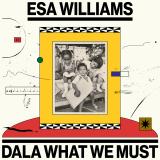
Esa Williams - Dala What We Must LP 2x12"

Esa Williams

Dala What We Must LP 2x12"

2x12inch199350128066
BBE Music
10.04.2026out soon
  • A1: Ita Ayelala
  • A2: Yanga
  • B1: Kwanini
  • B2: Nakupenda
  • C1: Summerskin
  • C2: Vanguard Drive
  • D1: Cruisin Kruga
  • D2: Dala What We Must

Marking twenty years since South African producer and DJ Esa Williams left Cape Town, Dala What We Must is a deeply personal and expansive debut LP, an exploration of movement, memory, and sound shaped by two decades of creative evolution.

Co-created with collaborator and multi-instrumentalist Robin G. Breeze, the album deftly combines field recordings, layered instrumentation, and emotionally resonant compositions into a nuanced, globally influenced body of work. It also stands as Esa’s most collaborative release to date, featuring contributions from musicians across London, Oaxaca, Nairobi, and Cape Town, each adding their own creative energy to a project built on openness, trust, and shared experience.

The album draws inspiration from Esa’s recent ventures into documentary scoring and soundtracking, with projects like Cursed (Audible) and The Invisible Hand teaching him to listen differently, to honour space, to serve the story. That sensibility permeates the album, resulting in music that breathes, lingers, and listens as much as it speaks.

The title, Dala What We Must, is a South African call to action: a reminder to do what’s necessary, even in uncertainty. Finalised in the months leading up to Esa’s transition into fatherhood, the record carries a sense of grounding, care, and quiet transformation.

Dala What We Must is a sonic reflection of journey and community, a deeply collaborative project rooted in connection and guided by intention.

Reservar

El artículo no se ha publicado. Tú puedes reservar ahora el artículo y después de ser pagado se te será enviado.

36,35
Esa Williams - Dala What We Must (2x12")
  • A1: Kwanini
  • A2: Ita Ayelala
  • A3: Yanga
  • A4: Nakupenda
  • B1: Summerskin
  • B2: Cruisin Kruga
  • B3: Vanguard Drive
  • B4: Dala What We Must

Marking twenty years since South African producer and DJ Esa Williams left Cape Town, Dala What We Must is a deeply personal and expansive debut LP, an exploration of movement, memory, and sound shaped by two decades of creative evolution. Co-created with collaborator and multi-instrumentalist Robin G. Breeze, the album deftly combines field recordings, layered instrumentation, and emotionally resonant compositions into a nuanced, globally influenced body of work. It also stands as Esa’s most collaborative release to date, featuring contributions from musicians across London, Oaxaca, Nairobi, and Cape Town, each adding their own creative energy to a project built on openness, trust, and shared experience. The album draws inspiration from Esa’s recent ventures into documentary scoring and soundtracking, with projects like Cursed (Audible) and The Invisible Hand teaching him to listen differently, to honour space, to serve the story. That sensibility permeates the album, resulting in music that breathes, lingers, and listens as much as it speaks.

The title, Dala What We Must, is a South African call to action: a reminder to do what’s necessary, even in uncertainty. Finalised in the months leading up to Esa’s transition into fatherhood, the record carries a sense of grounding, care, and quiet transformation. Dala What We Must is a sonic reflection of journey and community, a deeply collaborative project rooted in connection and guided by intention.

Reservar10.04.2026

debe ser publicado en 10.04.2026

32,35
Chalk - Crystalpunk LP

Chalk

Crystalpunk LP

12inchALT005
ALTER
13.03.2026
  • Tongue
  • Pain
  • Can't Feel It
  • Longer
  • Onenine-Eight-Zero
  • Eclipse
  • Skem
  • I.d.c
  • Beal Feirste
  • Ache

The beauty, confusion, complexity, and intensity of their youth - lived under the shadow and around the scars of conflict - are entangled in the industrial dance-punk hybrid encoded in the record's DNA, aptly entitled Crystalpunk. "This record is us waving a flag for that generation -- the ones who inherited confusion, resilience, and a fractured sense of self." They're waving that flag as intensely as possible too. For the uninitiated, Chalk mainlines the reaction between genres, eras, and cultures, commuting this collision into their sound. The Belfast group could comfortably power an underground warehouse party after-dark, incite a mid-day festival mosh-pit, or shake an arena on any given evening.

Their power has seamlessly translated to the stage with the group packing venues and delivering alternately sweaty and electrifying performances to a growing rabid fan base. As a group, they've sold out shows across the UK, EU and USA, notched festival performances such as Glastonbury, SXSW, BBK, Trans Musicals and more across 11 countries and were handpicked to tour alongside IDLES and Fontaines D.C.. Coming from dissimilar backgrounds and rallying together naturally, Ben and Ross first crossed paths in film school. As the story goes, Ben had noticed a framed poster of Dublin disruptors Gilla Band in one of Ross's Instagram photos and felt a kinship before ever actually speaking to him.

"Nobody else at our school was into experimental noise guitar bands, so that was all I needed to see," laughs Ben. Emerging in 2022, Chalk initially made waves with songs like "Them," "Velodrome," and "Static." Ultimately, they come-of-age and tell a story that resonates beyond borders. Not just a portrait of the band, but one of their home, a complicated place where the sacrifices made and risks taken by activists, artists, ravers and punks created the only environment that a band like Chalk could emerge from. Crystalpunk is not about choosing a side, it's about choosing the future.

Reservar13.03.2026

debe ser publicado en 13.03.2026

25,17
Arthur Russell - Another Thought 2x12"

2026 Repress


Another Thought was the first collection of Arthur Russell’s music to be released after his death in 1992. Released in 1993 on Point Music it marked the beginning of nearly 30 years of work to let the world hear the enormous archive of unreleased recordings Arthur left behind. Be With revisits this first compilation for a new gatefold double vinyl version and a triple-fold digipak CD reissue.

Both versions of Be With’s 2021 reissue of Another Thought have been mastered by Simon Francis and the vinyl cut by Pete Norman. The original artwork has been restored and tweaked at Be With HQ for the gatefold sleeve and the triple-fold digipak, with the essential help of Janette Beckman. Each version comes with an insert reproducing the liner notes and lyrics from the original CD release.

Together with Calling Out Of Context, Soul Jazz’s World of Arthur Russell, and much of the ongoing work of Audika, Another Thought is absolutely essential for even the most casual Arthur Russell collection. In fact we’d argue it’s essential for any fan of non-obvious pop music. This is the only place where you can hear some of Arthur’s most recognisable tunes and it’s an album that absolutely deserves to be kept in press.


We’ll assume that by now you’re all at least a little familiar with the story of Arthur Russell, the farm boy from Iowa who moved to 1970s New York. Arthur Russell the genuine musical genius who died just 40 years old, leaving behind a wealth of music that dwarfed the few 12"s and LPs that were released during his short life.

Although Arthur had been working on an album for Rough Trade during his last years, with the label no-longer operating it was Point Music (Philip Glass and Michael Riesman’s label set up together with Philips) who stepped in to help Arthur’s partner Tom Lee start working out exactly what Arthur had left behind.

Tom suggested that Arthur’s friend Mikel Rouse was the right person to make the first catalogue. Working in Tom and Arthur’s apartment he had only two weeks to go through what turned out to be around 800 tapes.

As Tom explained “at the end of each day he would generally wait for me to come home and I would, to the best of my knowledge, name and identify pieces in question from that day’s work. As he worked Mikel compiled about a dozen cassettes that he thought would present the most finished sounding songs for Don/Point to use. As Don listened he would then suggest and ask me and thus we collaborated on the choices.”

Don is Don Christensen, Another Thought’s producer. With a final selection of songs from recordings made between 1982 and 1990, including sessions with some of Arthur’s regular collaborators Peter Zummo, Steven Hall, Mustafa Ahmed, Elodie Lauten, Julius Eastman, Jennifer Warnes and Joyce Bowden, it was then Don’s job to turn these into a finished album.

Another Thought is a little different from the compilations of Arthur’s music that came out since. In our conversations with Steve Knutson (who founded Audika Records and who manages Arthur’s estate together with Tom), he explained that “more than any project released by Arthur during his lifetime or posthumously by Audika, ‘Another Thought’ is the most worked over. The material was significantly edited and rearranged from the original source tapes”.

If the aim was to release a comprehensive exploration of every facet of Arthur’s music, from the most avant-garde of his avant-garde compositions through to the most disco-not-disco of his disco-not-disco tunes then the project was a spectacular failure. But as a coherent album of non-obvious pop music Another Thought is wonderful.

Starting with the sparse voice-and-cello of the title track, A Little Lost adds some guitar along with the sneaking suspicion that we’re listening to something nowhere near as simple as it first sounds. By the time we get to This Is How We Walk On The Moon - it could be the moment you notice the congas, or the percussion that’s been building behind them, or maybe it’s that blast of trumpet and trombone - we realise we’ve gone from splashing around to being completely submerged in the musical world of Arthur Russell.

From here the album heads off on its journey around the sounds of the left-field contemporary classical music of the time, re-directed towards pop ears, with minor detours through the swirling woozy disco of the half-remembered night before on In The Light Of The Miracle and My Tiger, My Timing. Whether it’s just Arthur, his cello and some bleeps on Just A Blip, or whether he has some vocal help as he does on the bounding Keeping Up, this is difficult music made so, so easy. And through it all is Arthur’s voice and cello. Sometimes drowned in distortion and sometimes clear as a bell, but always there somewhere.

A Sudden Chill finally returns us to the calmer waters we started in and this last track closes the album with a melancholy that’s not surprising given how soon after Arthur’s death the album was put together.

Whilst Another Thought holds together with the consistency of a proper album, there’s still no getting away from the fact that this was put together from audio recorded in different ways, in different places, with different people at different times. Those with keen ears will hear traces of tape hiss, the occasional blown-out note and some digital fuzz, all fingerprints of those original recordings as well as of the 1990s digital equipment that was used to piece Another Thought together.

Add to this Arthur’s obvious pleasure in making music from the sort of sounds that can make microphones, speakers and ears uncomfortable, it’s no surprise that Another Thought isn’t glossy and pristine. Don Christensen’s productions have been careful to not scrub up those original recordings so much that they lose their original vibe, understandable given that Arthur wasn’t around as a guide. We’ve applied a similarly light touch with the mastering for these Be With versions, just working to make sure they sound like they should on both the vinyl and the CD.

Despite the Discogs rumours, Another Thought was never originally released as an LP. So when it came to the sleeve for this Be With vinyl version we took the original CD artwork as a starting point to come up with something that looks like it could have been in the record racks back in 1993.

We have to thank Janette Beckman for helping us reproduce her iconic photograph of Arthur in his newspaper boat hat. One of many photographs she took of Arthur, Janette shot this in her New York studio back in 1986 for a short article in the January ’87 issue of The Face Magazine. Those with eagle-eyes will notice we’ve used an ever-so-slightly different shot from the one that appeared in The Face and then again on the original cover of Another Thought. The original has long since been lost so we’ve worked with what is left in Janette’s archives. And we also have to thank Tom Lee for giving us permission to reproduce his liner notes from the original CD booklet, together with Arthur’s lyrics.

No en stock

Haga su pedido ahora y le encargaremos el artículo en nuestro proveedor.

28,19

Ültimo hace: 4 Años
Brandy Dalton - Fallen Angel LP

Somewhere between heaven and hell…there is Fallen Angel. Dark Entries continues its mission of shining light on a generation of composers and musicians lost to AIDS with Brandy Dalton’s Fallen Angel, his soundtrack work for the award-winning Fallen Angel series. Brandy was known for many years in the LA underground for his performances with his boyfriend, Robert Woods, who was the resident DJ at Club Fuck. Eventually, they recruited John Munt to form the band Drance, becoming infamous for their high-energy performances and songs that tackled taboo topics like sadomasochism. While Drance explored the aggressive sounds of industrial and EBM, Dalton continued to produce a wide range of electronica, from abstract sonic textures to techno bangers. The Fallen Angel album collects 16 sweaty, sticky cuts composed for the pornographic series Fallen Angel, a trio of leather-focused films released by Titan Studios. The sounds here span from the fractured cyberpunk-rave of “Swelled” to the tabla-laced trance of “FA2,” taking listeners on a journey through hedonistic recesses chock full of crunchy digital drum machines and wailing FM synths.

This album was originally released on CD in 1999 by Titan Studios, capitalizing on the success of the film franchise. It will be reissued on LP as well as CD, featuring 6 bonus tracks. Artwork for the album, designed by Eloise Shir-Juen Leigh, features stills from the Fallen Angel film. Also included is an insert with liner notes and photographs. This album is dedicated to Brandy, who passed away from AIDS-related illness in 2006, after battling with the disease for 17 years. Brandy’s passing was preceded by his best friend and Drance co-founder Robert’s death in 1995. Documenting a sonic shift in the 90s bathhouse music, Fallen Angel provides a hardcore BDSM ride, building upon the analogue archival soundtracks that Dark Entries has previously released.

No en stock

Haga su pedido ahora y le encargaremos el artículo en nuestro proveedor.

19,75

Ültimo hace: 47 Días
Carré - Hibiscus EP

Carré

Hibiscus EP

12inchTEMPA127
Tempa Recordings
19.02.2026

Following the widely acclaimed release of Body Shell in Spring 2025, Carré returns to Tempa, for a new EP, ‘Hibiscus’, featuring a collaborative track with LA-artist Bbyafricka, highlighting the synergy of West Coast Rap & London Soundsystem culture.

Connected by warmth and groove that define where Carré is musically right now, each of the four tracks on ‘Hibiscus’ stands on its own, yet together they continue to showcase Carré’s flair for producing sleek dubstep with melodic verve. From the shimmering ‘Warm Light’, the razor-sharp edge of ‘X Effect’, the deep stepper ‘Ride It Out’ to the stripped back ‘Hibiscus’ which glows with the addition of Bbyafricka’s sultry vocals, the EP is a concise statement of Carré’s evolving sound.

Speaking about the collaboration, Carré says, “I’d been a fan of Bbyafricka’s sound, style, and tone — tracks like ‘Baton Rouge’ and ‘Dumbo’ really stood out to me — and I could already imagine how her voice would fit with my production. The fact that she’s from LA made the connection feel even more natural. When I reached out, she was down straight away and came back with something I genuinely loved. She captured the energy of the track perfectly, and together I think we created something that feels authentic and even better than I’d imagined.”

For Bbyafricka, working on ‘Hibiscus’ was a moment of overcoming writer's block, “this song was me coming out of it on a weekend spent in Joshua tree, sitting outside looking at the view and the solar panels. I think you can envision what my view was when you play the song,” she explains.

Carré’s next outing on Tempa is a welcome return, signifying the home run she’s on as a producer and marking another impressive instalment in the producer's growing catalogue. In the last three years, Carré has quickly become a leading figure in the contemporary wave of artists pushing the true school Dubstep sound to new places and new audiences, expanding on the roots laid down by the likes of Skream, Benga, and Loefah.

No en stock

Haga su pedido ahora y le encargaremos el artículo en nuestro proveedor.

14,50

Ültimo hace: 53 Días
Lucia Cadotsch - Speak Low II

Lucia Cadotsch

Speak Low II

12inchWJLP30P
WE JAZZ
30.01.2026

Berlin-based Swiss vocalist Lucia Cadotsch returns with her celebrated Speak Low trio for their second album, released by We Jazz Records on 27 Nov. "Speak Low II" features Cadotsch on voice, Otis Sandsjö on tenor saxophone and Petter Eldh on double bass, and introduces guest artists Kit Downes on hammond organ and Lucy Railton on cello. "Speak Low II" picks up where their genre-bending and forward-looking debut album left off, introducing new shades into the band's sound and also diving even deeper into the songs they tackle. What makes Speak Low special is their approach to really get to the heart of each composition with seemingly minimal means, yet generating a sound which is both instantly recognisable and remarkably impactful.

"Speak Low II" comes almost five years after the band's lauded debut, and proves the depth of the band's approach right from the start. At the core of the trio's operation is an openness to their love of the music and to their surrounding scene(s). The album comes across as a unified collection of songs made truly theirs and found through listening to records and spending time with their musician friends, often on the road. The highly evolved band sound and the equality of the musicians shines through on the Speak Low sound, as the group uses their 100+ performances together as a vehicle for the development of their music.

"The first album was filled with pretty famous songs, but that was actually not at all intentional" explains Cadotsch. "Those were just my favourite songs of the previous 10 years and we started working on making them ours, musically. We were playing around with concepts for the second album, but soon realised that we just needed to find the right songs and adapt them organically, which comes through in how we interact with the songs and each other. This time around, we wanted to dig deeper and made finished arrangements of around 20 tracks, half of which we ditched in the process. The ones that made the cut have been through a lot and they just felt right for us."

In a way, the Speak Low approach could be described as archaeological. Three music lovers connecting with songs found at various sources, readily throwing away any ideas that don't seem natural to them, and hanging on tight to the ones that do.

Turns out there is a concept to "Speak Low II". It's the band itself, their shared musical development and their love of music.

"Speak Low II" will be available on We Jazz Records on vinyl (PURPLE and BLACK editions), CD and digitally. The vinyl versions come with a heavy duty tip-on sleeve and a printed inner sleeve. CD in digisleeve with no breaking plastic parts.

No en stock

Haga su pedido ahora y le encargaremos el artículo en nuestro proveedor.

21,64

Ültimo hace: 5 Años
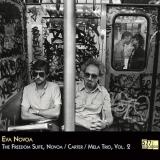
Eva Novoa - The Freedom Suite, Novoa / Carter / Mela Trio, Vol. 2

"Brooklyn-based pianist Eva Novoa returns with The Freedom Suite: Novoa / Carter / Mela Trio, Vol. 2 — the second radiant release from her compelling trio with saxophone icon Daniel Carter and celebrated drummer Francisco Mela. This marks Novoa’s sixth album with 577 Records. The trio first came together live in 2021, followed by a series of performances, including appearances in Cambridge (Boston) and later at the Brooklyn edition of the NY Forward Festival.
"The Freedom Suite is an homage to jazz titan Duke Ellington — particularly his masterful big band suites and legendary orchestra featuring Johnny Hodges and other luminaries who helped define an era of jazz greatness. In contrast, Novoa presents her Suite in a more intimate format: the piano trio. The album comprises twelve pieces — mostly brief — with a few extended tracks such as Free to Be Free and Cyborgs.
"For this recording, Novoa also steps in as a vocalist on several tracks, including Mainstream Media, Big Grande, Global, Free to Be Free, Dream, and Cyborgs. These pieces often feature a vocal dialogue between Novoa and Mela, whose expressive, word-infused style draws from rich Cuban traditions.
'Words are powerful,' says Novoa. 'They define who we are, where we come from, and who we hope to become. Without words, there is no conversation — and without conversation, there is no real sense of time, space, or connection.'
The Freedom Suite emerged from deep philosophical and creative conversations — spoken, written, and improvised — between Novoa, Carter, and Mela. In the studio, Novoa introduced printed texts that served as thematic foundations for spontaneous, in-the-moment musical interpretation. The result is an urgent and organic interplay, where instruments speak to one another in a language as fluid as it is fearless.
"Standout track Cyborgs begins with Novoa’s percussive piano, exemplifying the trio’s dynamic, conversational energy. Creative Destruction features Novoa on electric harpsichord in a wild, electric exchange. While Free to Be Free stands out as the album’s leading single, it also captures the essence and message of the entire Suite.
"Recorded in 2021 at New York City’s legendary Sear Sound Studio, the album captures a creative explosion of sound and spirit. Novoa dazzles on piano, Fender Rhodes, electric harpsichord, Chinese gongs — even whistle — showcasing her expansive sonic palette. Together, the trio embodies the power of free improvisation and emotional storytelling.
"Originally from Barcelona, Spain, Eva Novoa has been cultivating her distinctive voice since childhood. Now a staple of the New York creative music scene, she has performed across the globe and collaborated with some of the most adventurous voices in jazz and beyond."

Reservar30.01.2026

debe ser publicado en 30.01.2026

23,32
The Hirsch Effekt - Der Brauch (2x12")
  • 1: Der Brauch
  • 2: Der Faden
  • 3: Das Seil
  • 4: Brauch Reprise
  • 5: Der Doppelgänger
  • 6: Die Lüge
  • 7: Die Brücke
  • 8: Das Nachsehen
  • 9: Die Heimkehr
También disponible

Gold Vinyl[33,57 €]


Since their formation, The Hirsch Effekt have carved out a unique niche in the German-speaking music scene. Yet, despite—or perhaps because of—their elusiveness, the band has captivated a devoted audience. Musically, The Hirsch Effekt have always embraced limitless possibilities. Acoustic, introspective moments—where bassist Ilja John Lappin brings out his cello or guitarist Nils Wittrock returns to his classical roots—sit naturally alongside massive progressive metal onslaughts. The band is equally at home on intimate club stages as they are at international festivals, evidenced by repeated appearances at Euroblast and numerous events across the UK. Recently, they toured Germany alongside scene giants like Leprous, Tesseract and traversed Europe with Caligula’s Horse. Yet between these extremes, The Hirsch Effekt continually create songs that flirt with radio accessibility—almost—because the band steadfastly resists any form of standardization. With their seventh album, Der Brauch, they continue this course uncompromisingly. While earlier works, despite their diversity, were still labeled “metal albums,” this new record explores paths first hinted at on the multilayered second album, Holon : Anamnesis—the same album that fans of VISIONS magazine voted the only German-language entry among the 20 best albums of all time. Der Brauch can be seen as a return to that pivotal point—and simultaneously as a bold step forward. Drummer Moritz Schmidt doesn’t entirely forgot blast beats, but the record demands a new heading. In the end, though, there is only one truth: it unmistakably sounds like The Hirsch Effekt.

Reservar30.01.2026

debe ser publicado en 30.01.2026

32,35
Artículos por página
N/ABPM
Vinyl