On their powerful new album When A Flower Doesn’t Grow, Softcult (Mercedes and Phoenix Arn-Horn) deliver their most unflinching and transformative work to date. Written during a period of personal upheaval and self-discovery, the record charts a journey through trauma, disillusionment, empowerment and eventual liberation. Musically, Softcult continue to expand their world of grunge, shoegaze and alt-rock textures, pairing fuzz-laden riffs and dreamy soundscapes with raw, confessional lyricism. The result is both intimate and universal: a record for anyone who has ever felt trapped or diminished by their surroundings and a rallying cry to nurture ourselves and each other in the pursuit of freedom and authenticity.
out of Stock
Last delivered 84 days ago available to reorder, subject to availability
Courtney Marie Andrews has long been celebrated as an artist who challenges herself, and who finds new interplays of Folk and Americana.. Also a vivid poet and accomplished painter, she brings a multidisciplinary richness to her work that shines throughout her 9th studio album, Valentine. Co-produced with Jerry Bernhardt and recorded almost entirely to tape, the album features complete in-studio performances that prize raw performance rather than perfection. It is Andrews’s most sonically explorative record thus far – she plays flute, high strung guitars, myriad synths, and draws heavy inspiration from her art outside of music. Her voice is gorgeous and acrobatic always, but on Valentine it finds a new depth, an assertiveness that brings new dimension to its biggest anthems and its softest moments. Written during a period of profound endings and new beginnings, Valentine is a vulnerable exploration of love vs. limerence. While anticipating the imminent loss of a loved one who would eventually recover, a new but uncertain romance began to develop. Rather than lift her up, the two emotional poles seemed to bleed into each other to sow doubt, trouble, even obsession. But through her own exploration of music and art, Andrews found a way to grow stronger inside this feeling. “I didn’t want to slink into my pain, I wanted to embrace it, own it” she says. The songs that emerged are devotional in their lyrics but defiant in their energy; it’s the very sound of a woman standing in her first wisdom. With Valentine, Andrews rejects the objectification of love, the love filled with gestures and objects instead of trust, mess, and growth. In doing so, she delivers her most beautiful and loving album to date.
out of Stock
Last delivered 5 months ago available to reorder, subject to availability
After all of the fun had - and, if we may brag a bit - the acclaim for NWB001, we're back with a follow-up.
So here's NWB002. Our start and end points shift this time (1979–1997 vs 1977-1989) but again the focus is on revolutionary moments in music and subculture.
We've got pieces from The Face, i-D, Time Out, Village Voice, Rolling Stone, Mixmag, The Observer and - a particularly big pleasure - Collusion magazine. We've got brilliant photography, too, documenting seminal afterdark moments. And we've put it all together with much love, craft and attention to detail.
This is material that lets us experience culture in its rawest form. In-the-moment and before endless layers of post-rationalisation have kicked in. Breakthrough events in dance music, hip-hop and pop – and parallel shifts in art, design and fashion. Inspirational, ground-level creativity and enterprise that set the scene(s) for subsequent decades.
We hope you enjoy reading NWB002 as much as we enjoyed bringing it together.
Inside No Way Back 002
Behind The Groove - the epic 1983 feature by Steven Harvey in David Toop's Collusion magazine, charting the NYC disco underground
Photographer Steve Eichner documenting the club kids scene at The Limelight, Palladium, Tunnel and Club USA
Year zero reporting as The Face's Sheryl Garratt visits Chicago in 1986, witnessing the emergent house sound
The Mudd Club - 'disco for punks' as Rolling Stone put it; the Lower East Side party which arguably spawned a thousand indie discos
In the 'socialist city' of Sheffield, meanwhile, Jon Savage heads for a night of sharp clothes and even sharper moves at Jive Turkey
Paul Morley writing in Time Out in 1988 on the tension materialising between glossy style mags and the the monochrome music press
The House That Rap Built - Village Voice celebrates the short but sweet glory years of hip-house
Mixmag in 1992 on the 'return of sex' to clubs like Roxy and the Sound Factory
Images and commentary from Eddie Otchere, rewinding to jungle's halcyon days
Kodwo Eshun reporting on jungle's full-throttle ascent for i-D in 1994
+ Editor’s notes, supporting commentary, playlists, and covers, spreads and imagery from original titles
Chicago deep house pioneer Merwyn “Merle” Sanders needs no introduction to true heads.As one half of the legendary Virgo Four (alongside Eric Lewis) and under a slew of aliases, Merwyn helped shape the sound of late ’80s deep and acid house. Their records, now considered foundational, continue to echo across dancefloors and DJ sets worldwide.In the late ’90s, after years of trying to release more material through Trax Records, Merwyn took matters into his own hands. He self-produced his first 12” under the Merle alias — a record that sadly flew under the radar at the time, with most copies eventually destroyed. But one track survived and thrived: “Fannie Likes 2 Dance.” What started as a quiet release became an underground classic, highly sought after by DJs and collectors alike.
Now, Still Music and Jerome Derradji proudly present the full reissue of this cult favorite — featuring the two original mixes along with a never-before-heard unreleased remix by Merle himself.
This special edition comes housed in a full sleeve, complete with a detailed backstory written by Jerome Derradji about the track’s origins and legacy. A true slice of Chicago house history, back where it belongs — on wax.
out of Stock
Last delivered 31 days ago available to reorder, subject to availability
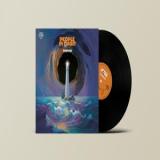
Leading outlet for forward-thinking Scandinavian jazz, April Records, proudly presents the new album from Malmö-based quintet People In Orbit. A followup to their critically acclaimed 2023 release Close/Away (Naxos Prophone), the group continues to explore Scandinavia"s jazz tradition through a contemporary lens, blending acoustic interplay with electronics and a focus on collective improvisation. Led by trumpeter and composer Adam Sass, People In Orbit were formed in late 2020 with the intention of reimagining the classic jazz quintet with a contemporary edge. The group prioritises space, interaction, and ensemble balance, allowing composed material and collective responsiveness to shape the music. Alongside Sass, the band features Edvin Ekman (tenor saxophone, effects), Niklas Bergström (piano, Moog, keyboards), Edvin Elmersson (double bass), and Frank William Reis (drums). Viewpoint is a concept-driven album centred on perspective; how different viewpoints influence the way events are interpreted, and how perspective can foster connection or distance. Much of the album is built around Cycles, a four-part suite composed from a graphic score, with each section representing a different human life and its relationship to the surrounding world. The album moves through shifting emotional and psychological states, from curiosity and tension to reflection and release. Perspective is explored not only through human experience, but also via non-human viewpoints - including music inspired by deep-ocean communication between whales and slow, drifting motion. Musically, Viewpoint continues People In Orbit"s blend of modern jazz-rock and electronics, while drawing influence from the Scandinavian jazz quintet tradition of the 1960s. The music balances structured composition with openness, allowing individual voices to exist within a clearly defined collective sound. With Viewpoint, People In Orbit presents a focused and cohesive statement - an album shaped by shared intent, conceptual clarity, and a continued commitment to collective expression.
Concert at Prades-le-Lez marks the origins of the Intercommunal Free Dance Music Orchestra. In 1974, François Tusques and his companions (Michel Marre, Jo Maka, Adolf Winkler and Guem), in the spirit of Don Cherry or Chris McGregor, playfully dismantle all borders and all styles of creative music.
On this second volume, the Intercommunal builds unprecedented soundscapes around a song of revolt, a dance tune, or a burst of dissonance. The journey is unforgettable, no question about it. On repeat listening, it even becomes… lunar!
“The music that we make is primarily meant to be listened to live,” warned a leaflet from the Intercommunal Free Dance Music Orchestra. This is precisely why the (restored!) reissue of the two volumes of Concert at Prades-le-Lez, recorded on January 25 and 26, 1974 by François Tusques and his comrades, is such an important event.
In 1971, after recording a series of albums that would leave a lasting mark on French jazz (Free Jazz, of course, with Michel Portal, François Jeanneau, Bernard Vitet, Beb Guérin and Charles Saudrais, but also Le Nouveau Jazz with Barney Wilen, or the solo Piano Dazibao), François Tusques founded the Intercommunal—a grouping whose very name called for the fraternization of the various communities making up the country: Our music will help, we hope, to resolve the contradictions that exist between workers be longing to different communities, by breaking down various forms of national chauvinism, and more particularly the chauvinism of certain French people toward the cultures of Third World countries… Long live the friendship between the peoples of the whole world!
Among the great records made by the Intercommunal Free Dance Music Orchestra, the two volumes of Concert at Prades-le-Lez come first, before L’Inter Communal, Vol. 4, Le Musichien, and Après la marée noire (four titles already reissued by Souffle Continu). François Tusques and his companions (Michel Marre and Jo Maka on saxophones, Adolf Winkler on trombone, and Guem on percussion) performed on January 25 and 26, 1974 at the Moulin de Prades-le-Lez, a few kilometers from Montpellier. It was thus in the southern region of Occitanie that the first echoes of this musical vision of a borderless brotherhood were recorded.
“We’re not among the Colonels,” the Intercommunal reassures us right away, performing a stride piano tune carried by African winds that the audience cannot resist for long. The energy is already striking and it never lets up throughout these two recordings, from start to finish: jazz, blues, traditional music, minimalism, even funk… The musicians of the Intercommunal have heard a lot of great music and now delight in reinventing it by mixing it all together.
“We want the song form to take its place as a weapon in the struggle against capitalist exploitation and all those who oppress us morally and materially,” declared an Intercommunal leaflet, quoting Jean-Baptiste Clément, author of the lyrics to “Le Temps des cerises.” The struggle was therefore serious—but it did not prevent François Tusques and his group from waging it in a festive spirit: each piece on Concert at Prades-le- Lez sends out a call for love and fraternity. Fifty years later, the message remains as relevant as ever—and once again, it is François Tusques who makes it heard.
Concert at Prades-le-Lez marks the origins of the Intercommunal Free Dance Music Orchestra. In 1974, François Tusques and his companions (Michel Marre, Jo Maka, Adolf Winkler and Guem), in the spirit of Don Cherry or Chris McGregor, playfully dismantle all borders and all styles of creative music.
On this first volume, the Intercommunal takes its audience from New Orleans to Brittany and on to North Africa. The journey was bold, without a doubt—and its memory remains unforgettable.
“The music that we make is primarily meant to be listened to live,” warned a leaflet from the Intercommunal Free Dance Music Orchestra. This is precisely why the (restored!) reissue of the two volumes of Concert at Prades-le-Lez, recorded on January 25 and 26, 1974 by François Tusques and his comrades, is such an important event.
In 1971, after recording a series of albums that would leave a lasting mark on French jazz (Free Jazz, of course, with Michel Portal, François Jeanneau, Bernard Vitet, Beb Guérin and Charles Saudrais, but also Le Nouveau Jazz with Barney Wilen, or the solo Piano Dazibao), François Tusques founded the Intercommunal—a grouping whose very name called for the fraternization of the various communities making up the country: Our music will help, we hope, to resolve the contradictions that exist between workers be longing to different communities, by breaking down various forms of national chauvinism, and more particularly the chauvinism of certain French people toward the cultures of Third World countries… Long live the friendship between the peoples of the whole world!
Among the great records made by the Intercommunal Free Dance Music Orchestra, the two volumes of Concert at Prades-le-Lez come first, before L’Inter Communal, Vol. 4, Le Musichien, and Après la marée noire (four titles already reissued by Souffle Continu). François Tusques and his companions (Michel Marre and Jo Maka on saxophones, Adolf Winkler on trombone, and Guem on percussion) performed on January 25 and 26, 1974 at the Moulin de Prades-le-Lez, a few kilometers from Montpellier. It was thus in the southern region of Occitanie that the first echoes of this musical vision of a borderless brotherhood were recorded.
“We’re not among the Colonels,” the Intercommunal reassures us right away, performing a stride piano tune carried by African winds that the audience cannot resist for long. The energy is already striking and it never lets up throughout these two recordings, from start to finish: jazz, blues, traditional music, minimalism, even funk… The musicians of the Intercommunal have heard a lot of great music and now delight in reinventing it by mixing it all together.
“We want the song form to take its place as a weapon in the struggle against capitalist exploitation and all those who oppress us morally and materially,” declared an Intercommunal leaflet, quoting Jean-Baptiste Clément, author of the lyrics to “Le Temps des cerises.” The struggle was therefore serious—but it did not prevent François Tusques and his group from waging it in a festive spirit: each piece on Concert at Prades-le- Lez sends out a call for love and fraternity. Fifty years later, the message remains as relevant as ever—and once again, it is François Tusques who makes it heard.
With Dispersion, Loom & Thread return to the volatile architecture of the expanded piano trio - and quietly fracture it from within.
Daniel Klein (drums), Tobias Fröhlich (double bass) and Tom Schneider (keys, sampler) remain the sole agents on stage and in the final recording. The triangle holds. And yet, the field has expanded. For their second studio album, the trio fed their improvisations with the timbral signatures of guest saxophone and vibraphone players - not just as additional voices to be featured, but also as material to be absorbed, atomized and redistributed. The result is not augmentation but thorough refraction.
Where the debut album explored the recursive labyrinth of Schneider's live sampling of his own piano, Dispersion introduces an external grain into the feedback system. Breath and metal. Reed turbulence and struck resonance. The trio sampled extended improvisations by saxophone and vibes players: Victor Fox, Asger Nissen, Volker Heuken, and L&T's own Daniel Klein; dissected their attacks, overtones and decay curves, and integrated these fragments into the trio's internal circuitry. What emerges is a play of presences without bodies - instrumental ghosts circulating through the dense weave of rhythm and keys.
At first, one might hear the familiar relational tension: Klein's polyrhythmic elasticity interlocking with Fröhlich's tensile double bass figurations, Schneider poised at the hinge between tonal field and percussive impulse. But soon, the surface splinters - again. A vibraphone shimmer appears, yet no mallets are visible. A reed multiphonic surges through the texture, bending space between bass and drums. These events are neither quotations nor overlays; they are redistributed energies, dispersed across the trio's grammar. A digital multidimensional interplay ensues.
If the first album unfolded as a two-tiered game - live phrase and sampled reflection - Dispersion adds a further axis. The sampled materials from other improvisers are stripped of their erstwhile two-way interaction and reconstituted as malleable particles. Signifier detached from origin, resonance detached from gesture. The trio navigates a constantly shifting topology in which acoustic memory and electronic manipulation are indistinguishable.
Crucially, the album never abandons the physical urgency of three musicians reacting in real time. The additional timbral layers do not thicken the texture into opacity; rather, they introduce stark points and arrows of diffraction. Density opens into prismatic clarity. Lines splinter and regroup. What seems like a quartet or quintet collapses back into three bodies negotiating an expanded field.
Dispersion is not about addition but about distribution - of agency, of timbre, of temporal perspective. It is an album in which the trio setting becomes a site of multiplicity without surrendering its immediacy. A dissolution not only of the divide between present experience and memory, but between inside and outside, self and other.
Three musicians. Countless vectors. A music that fractures in order to cohere.
CREDITS:
Tom Schneider: piano & sampler
Tobi Fröhlich: double bass
Daniel Klein: drums & percussion
sample sources:
Victor Fox: tenor saxophone
Asger Nissen: alto saxophone
Volker Heuken: vibes
Daniel Klein: vibes
Recorded by Martin Dressler at Bauer Studios, Ludwigsburg.
Mixed & mastered by Martin Ruch.
Artwork by Viet Hoa Le.
out of Stock
Last delivered 6 months ago available to reorder, subject to availability
SELF-iSH is a quick but intensely dramatic concept album with dark psychedelic themes and nonstop experimental energy. Will Wood and the Tapeworms quickly grabbed attention in the punk scene following "Everything is a Lot" due to Wood's unique writing and refusal to break character even backstage and the band's dangerously high-energy shows. Face paint, confetti, and on-stage violence became the project's calling card, making SELF-iSH's dark and intense drama an inevitable direction for Wood. Mere months after the debut, producer Kevin Antreassian offered Wood a deal on his follow-up but only had a narrow time window, so Wood improvised. Bringing together a new lineup and with the help of guitarist Mike Bottiglieri, Wood wove scraps of discarded or unfinished songs together and created a tight yet abstract psychedelic concept album with the intent of taking every risk and trying every off-kilter idea he had. SELF-iSH began its highly conceptual production process during the holiday season in 2015, and the studio became littered with notepads, graphic charts, and teeth. The result was a manic little album featuring screaming, theremin, kazoo, power drills, the sound of breaking furniture, and an almost heavy-metal twist on Wood's off-kilter vision. By the time the album was finished, the piano was bloody, and the studio was wrecked. The album became what Wood described as the "bastard child" of his discography. Will Wood's early career can be primarily defined by his experimental vocal delivery, honky-tonk piano smashing, and darkly edgy songwriting. While his stylings have matured and taken on a more precise approach, his refusal to conform to expectations and constant shifts in the genre have continued to be hallmarks of his songwriting and production. In his "Will Wood and the Tapeworms" releases (Everything Is A Lot in 2015, SELF-iSH in 2016), audiences can see the first glimpses into what would eventually become his signature style, presented in a uniquely raw and chaotic state of potential.
out of Stock
Last delivered 43 days ago available to reorder, subject to availability
Time Out, a pause, like an injunction to suspend the course of events in order to project oneself into a more serene future, is the title of Malted Milk's eighth album. From the haunting Afro beat of the title track to the decadent boogaloo of "I Feel Numb", via the ballad "What a Night" and the funky "It's Alright" , the band demonstrates i ts mastery of arrangements, its creative ability and its talent for revisiting the soul/funk genre. As with the previous album, 1975, Marco Cinelli is back on writing and production duties, bringing undeniable added value to the band's sound and aesthetic. The live translation of this album bears Malted Milk's trademark precision, energy, instrumental talent and group cohesion. Malted Milk once again demonstrates its musical strength and affirms the special place the band occupies on the current soul scene.
Brighton four-piece Lime Garden return with their self-reckoning second album 'Maybe Not Tonight' So Young Records (the record label launched by So Young Magazine).
'Maybe Not Tonight' unfolds as a full night out, charting the pleasures and perils of partying and impulsive decisions.
Vocalist and guitarist Chloe Howard says: “The album is about a night out, from start to finish. As the night progresses, you’re having a great time, until your ex walks in with someone else. You hate the way you look but rather than going home, you press the big red button and get even more drunk. Eventually, you take yourself home full of melancholy, chaos and anger.”
Following their critically acclaimed 2024 debut 'One More Thing', which captured the raw live energy that earned them slots at festivals including Glastonbury and Green Man, Maybe Not Tonight sees Lime Garden expand their signature “wonk-pop” sound upwards and outwards. The result is their most intoxicating and luminous material to date.
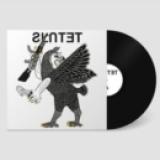
Crypt of the Wizard is proud to make available two legendary underground albums by Slutet on vinyl and digital formats. Here we present the debut self titled LP Slutet - Slutet
Slutet originated in Uppsala well over a decade ago, first emerging as a loose idea around 2010. The original cluster of strangely like minded individuals - Dingir, Ryttersson, J.P., Sviatopolk, were equally set on starting a cult as they were a band, the former emerging as a loose collective known as The End Commune, while the latter eventually began rehearsing together as Slutet on September 1, 2013.
From this constellation three notorious demo tapes sprung which were self-released in very limited numbers, and only available by trading bodily fluids, blood, and/or hair for the cassettes. “A very loose guess but we made probably around 20-30 hand-drawn/custom demo tapes of the first three releases. We got blood and hair from many places, actually the very first offering was from INDONESIA. Slovakia, Germany, USA, Argentina, Norway, Canada, Finland followed.... if my memory serves..... hazy years indeed”
J.P. left early 2015. Later that year, after trying the band as a bass-drum-vocals outfit for a while, Fjalar joined on guitar. This is the classic constellation. Dingir, Ryttersson, Fjalar, Sviatopolk. The same troupe playing to this very day.
While the difficulty of obtaining the demos certainly added to the band’s bottomless mystique, the subsequent release of the self-titled compilation / LP secured their reputation as one of the most interesting and unorthodox bands recording under the somewhat ill-fitting moniker of ‘underground black metal’.
First released as a cassette by Berlin label Teratology Sound & Vision, and later on vinyl in an edition of 100 by Goatowarex, the self-titled LP is the definitive document of the very early and very wild years of the band as they begin to take form, fulminating against whatever was on offer.
“Between September 2013 and September 2014 we rehearsed and recorded 3 very crude demo cassettes; although sub-par in many musical and performance-wise aspects, the passion seeping through those recordings were evidently very real.”
Writings on the topic that go off in all directions, mind-numbing lectures given by academics, and testimonies, most of them heavily doctored, from those who “lived through that era”: so many people today fantasize about the early days of punk in our country… This blessed moment when no one had yet thought of flaunting a ridiculous green mohawk, taking Sid Vicious as a hero, or – even worse – making the so-called alternative scene both festive and boorish. There was no such thing in 1976 or 1977, when it wasn’t easy to get hold of the first 45s by the Pistols or the Clash. Few people were aware of what was happening on the fringes of the fringes at the time. Malcolm McLaren was virtually unknown, and having short hair made you seem strange. Who knew then that rock music, which had taken a very bad turn since the early 1970s, would once again become an essential element of liberation? That, thanks to short and fast songs, it would once again rediscover that primitive, social side that was so hated by older generations? Who knew that, besides a few loners who read the music press (it was even better if they read it in English) and frequented the right record stores? Many of these formed bands, because it was impossible to do otherwise. We quickly went from listening to the Velvet Underground to trying to play the Stooges’ intros. It’s a somewhat collective story, even though there weren’t many people to start it.
The Guilty Razors were among those who took part in this initial upheaval in Paris. They were far from being the worst. They had something special and even released a single that was well above the national average. They also had enough songs to fill an album, the one you’re holding. In everyone’s opinion, they were definitely not among the punk impostors that followed in their wake. They were, at least, genuine and credible.
Guilty Razors, Parisian punk band (1975-1978). To understand something about their somewhat linear but very energetic sound, we might need to talk about the context in which it was born and, more broadly, recall the boredom (a theme that would become capital in punk songs) coupled with the desire to blow everything off, which were the basis for the formation of bands playing a rejuvenated rock music ; about the passion for a few records by the Kinks or the early Who, by the Stooges, by the Velvet mostly, which set you apart from the crowd.
And of course, we should remember this new wave, which was promoted by a few articles in the specialized press and some cutting-edge record stores, coming from New York or London, whose small but powerful influence could be felt in Paris and in a handful of isolated places in the provinces, lulled to sleep by so many appalling things, from Tangerine Dream to President Giscard d’Estaing...
In 1975-76, French music was, as almost always, in a sorry state ; it was still dominated by Johnny Hallyday and Sylvie Vartan. Local rock music was also rather bleak, apart from Bijou and Little Bob who tried to revive this small scene with poorly sound-engineered gigs played to almost no one.
In the working class suburbs at the time, it was mainly hard rock music played to 11 that helped people forget about their gruelling shifts at the factory. Here and there, on the outskirts of major cities, you still could find a few rockers with sideburns wearing black armbands since the death of Gene Vincent, but it wasn’t a proper mass movement, just a source of real danger to anyone they came across who wasn't like them. In August 1976, a festival unlike any other took place in Mont-de-Marsan – the First European Punk Festival as the poster said – with almost as many people on stage as in the audience. Yet, on that day, a quasi historical event happened, when, under the blazing afternoon sun, a band of unknowns called The Damned made an unprecedented noise in the arena, reminiscent of the chaotic Stooges in their early adolescence. They were the first genuine punk band to perform in our country: from then on, anything was possible, almost anything seemed permissible.
It makes sense that the four+1 members of Guilty Razors, who initially amplified acoustic guitars with crappy tape recorder microphones, would adopt punk music (pronounced paink in French) naturally and instinctively, since it combines liberating noise with speed of execution and – crucially – a very healthy sense of rebellion (the protesters of May 1968 proclaimed, and it was even a slogan, that they weren’t against old people, but against what had made them grow old. In the mid-1970s, it seemed normal and obvious that old people should now ALSO be targeted!!!).
At the time, the desire to fight back, and break down authority and apathy, was either red or black, often taking the form of leafleting, tumultuous general assemblies in the schoolyard, and massive or shabby demonstrations, most of the time overflowing with an exciting vitality that sometimes turned into fights with the riot police. Indeed, soon after the end of the Vietnam War and following Pinochet’s coup in Chile, all over France, Trotskyist and anarcho-libertarian fervour was firmly entrenched among parts of the educated youth population, who were equally rebellious and troublemakers whenever they had the chance. It should also be noted that when the single "Anarchy in the UK" was first heard, even though not many of us had access to it, both the title and its explosive sound immediately resonated with some of those troublemakers crying out for ANARCHY!!! Meanwhile, the left-wing majority still equated punks with reckless young neo-Nazis. Of course, the widely circulated photos in the mainstream press of Siouxsie Sioux with her swastikas didn’t necessarily help to win over the theorists of the Great Revolution. It took Joe Strummer to introduce The Clash as an anti-racist, anti-fascist and anti-ignorance band for the rejection of old-school revolutionaries to fade a little.
The Lycée Jean-Baptiste Say at Porte d’Auteuil, despite being located in the very posh and very exclusive 16th arrondissement of Paris, didn’t escape these "committed" upheavals, which doubled as the perfect outlet for the less timid members of this generation.
“Back then, politics were fun,” says Tristam Nada, who studied there and went on to become Guilty Razors’ frontman. “Jean-Baptiste was the leftist high-school in the neighbourhood. When the far right guys from the GUD came down there, the Communist League guys from elsewhere helped us fight them off.”
Anything that could challenge authority was fair game and of course, strikes for just about any reason would lead to increasingly frequent truancy (with a definitive farewell to education that would soon follow). Tristam Nada spent his 10th and 11th unfinished grades with José Perez, who had come from Spain, where his father, a janitor, had been sentenced to death by Franco. “José steered my tastes towards solid acts such as The Who. Like most teenagers, I had previously absorbed just about everything that came my way, from Yes to Led Zeppelin to Genesis. I was exploring… And then one day, he told me that he and his brother Carlos wanted to start a rock band.” The Perez brothers already played guitar. “Of course, they were Spanish!”, jokes their singer. “Then, somewhat reluctantly, José took up the bass and we were soon joined by Jano – who called himself Jano Homicid – who took up the rhythm guitar.” Several drummers would later join this core of not easily intimidated young guys who didn’t let adversity get the better of them.
The first rehearsals of the newly named Guilty Razors took place in the bedroom of a Perez aunt. There, the three rookies tried to cover a few standards, songs that often were an integral part of their lives. During a first, short gig, in front of a bewildered audience of tough old-school rockers, they launched into a clunky version of the Velvet Underground's “Heroin”. Challenge or recklessness? A bit of both, probably… And then, step by step, their limited repertoire expanded as they decided to write their own songs, sung in a not always very accurate or academic English, but who cared about proper grammar or the right vocabulary, since what truly mattered was to make the words sound as good as possible while playing very, very fast music? And spitting out those words in a language that left no doubt as to what it conveyed mattered as well.
Trying their hand a the kind of rock music disliked by most of the neighbourhood, making noise, being fiercely provocative: they still belonged to a tiny clique who, at this very moment, had chosen to impose this difference. And there were very few places in France or elsewhere, where one could witness the first stirrings of something that wasn’t a trend yet, let alone a movement.
In the provinces, in late 1976 or early 1977, there couldn’t be more than thirty record stores that were a bit more discerning than average, where you could hear this new kind of short-haired rock music called “punk”. The old clientele, who previously had no problem coming in to buy the latest McCartney or Aerosmith LP, now felt a little less comfortable there…
In Paris, these enlightened places were quite rare and often located nex to what would become the Forum des Halles, a big shopping mall. Between three aging sex workers, a couple of second-hand clothes shops, sellers of hippie paraphernalia and small fashion designers, the good word was loudly spread in two pioneering places – propagators of what was still only a new underground movement. Historically, the first one was the Open Market, a kind of poorly, but tastefully stocked cave. Speakers blasted out the sound of sixties garage bands from the Nuggets compilation (a crucial reference for José Perez) or the badly dressed English kids of Eddie and the Hot Rods. This black-painted den was opened a few years earlier by Marc Zermati, a character who wasn’t always in a sunny disposition, but always quite radical in his (good) choices and his opinions. He founded the independent label Skydog and was one of the promoters of the Mont-de-Marsan punk festivals. Not far from there was Harry Cover, another store more in tune with the new New York scene, which was amply covered in the house fanzine, Rock News (even though it was in it that the photos of the Sex Pistols were first published in France).
It was a favorite hang-out of the Perez brothers and Tristam Nada, as the latter explained. “It’s at Harry Cover’s that we first heard the Pistols and Clash’s 45s, and after that, we decided to start writing our first songs. If they could do it, so could we!”
The sonic shocks that were “Anarchy in the UK”, “White Riot” or the Buzzcocks’s EP, “Spiral Scratch” – which Guilty Razors' sound is reminiscent of – were soon to be amplified by an unparalleled visual shock. In April 1977, right after the release of their first LP, The Clash performed at the Palais des Glaces in Paris, during a punk night organised by Marc Zermati. For many who were there, it was the gig of a lifetime…
Of course, Guilty Razors and Tristam were in the audience: “That concert was fabulous… We Parisian punks were almost all dressed in black and white, with white shirts, skinny leather ties, bikers jackets or light jackets, etc. The Clash, on the other hand, wore colourful clothes. Well, the next day, at the Gibus, you’d spot everyone who had been at this concert, but they weren’t wearing anything black, they were all wearing colours.”
It makes sense to mention the Gibus club, as Guilty Razors often played there (sometimes in front of a hostile audience). It was also the only place in Paris that regularly scheduled new Parisian or Anglo-Saxon acts, such as Generation X, Siouxsie and the Banshees, the Slits, and Johnny Thunders who would become a kind of messed-up mascot for the venue. A little later, in 1978, the Rose Bonbon – formerly the Nashville – also attracted nightly owls in search of electric thrills… In 1977, the iconic but not necessarily excellent Asphalt Jungle often played at the Gibus, sometimes sharing the bill with Metal Urbain, the only band whose aura would later transcend the French borders (“I saw them as the French Sex Pistols,” said Geoff Travis, head of their British label Rough Trade). Already established in this small scene, Metal Urbain helped the young and restless Guilty Razors who had just arrived. Guitarist for Metal Urbain Hermann Schwartz remembers it: “They were younger than us, we were a bit like their mentors even if it’s too strong a word… At least they were credible. We thought they were good, and they had good songs which reminded of the Buzzcocks that I liked a lot. But at some point, they started hanging out with the Hells Angels. That’s when we stopped following them.”
The break-up was mutual, since, Guilty Razors, for their part, were shocked when they saw a fringe element of the audience at Metal Urbain concerts who repeatedly shouted “Sieg Heil” and gave Nazi salutes. These provocations, even still minor (the bulk of the skinhead crowd would later make their presence felt during concerts), weren’t really to the liking of the Perez brothers, whose anti-fascist convictions were firmly rooted. Some things are non-negotiable.
A few months earlier (in July 1978), Guilty Razors had nevertheless opened very successfully for Metal Urbain at the Bus Palladium, a more traditonally old-school rock night-club. But, as was sometimes the case back then, the night turned into a mass brawl when suburban rockers came to “beat up punks”.
Back then, Parisian nights weren’t always sweet and serene.
So, after opening as best as they could for The Jam (their sound having been ruined by the PA system), our local heroes were – once again – met outside by a horde of greasers out to get them. “Thankfully,” says Tristam, “we were with our roadies, motorless bikers who acted as a protective barrier. We were chased in the neighbouring streets and the whole thing ended in front of a bar, with the owner coming out with a rifle…”
Although Tristam and the Perez brothers narrowly escaped various, potentially bloody, incidents, they weren’t completely innocent of wrongdoing either. They still find amusing their mugging of two strangers in the street for example (“We were broke and we simply wanted to buy tickets for the Heartbreakers concert that night,” says Tristam). It so happened that their victims were two key figures in the rock business at the time: radio presenter Alain Manneval and music publisher Philippe Constantin. They filed a complaint and sought monetary compensation, but somehow the band’s manager, the skilful but very controversial Alexis, managed to get the complaint withdrawn and Guilty Razors ended up signing with Constantin with a substantial advance.
They also signed with Polydor and the label released in 1978 their only three-track 45, featuring “I Don't Wanna be A Rich”, “Hurts and Noises” and “Provocate” (songs that exuded perpetual rebellion and an unquenchable desire for “class” confrontation). It was a very good record, but due to a lack of promotion (radio stations didn’t play French artists singing in English), it didn’t sell very well. Only 800 copies were allegedly sold and the rest of the stock was pulped… Initially, the three tracks were to be included on a LP that never came to be, since they were dropped by Polydor (“Let’s say we sometimes caused a ruckus in their offices!” laughs Tristam.) In order to perfect the long-awaited LP, the band recorded demos of other tracks. There was a cover of Pink Floyd's “Lucifer Sam” from the Syd Barrett era – proof of an enduring love for the sixties’ greats –, “Wake Up” a hangover tale and “Bad Heart” about the Baader-Meinhof gang, whose actions had a profound impact on the era and on a generation seeking extreme dissent... On the album you’re now discovering, you can also hear five previously unreleased tracks recorded a bit later during an extended and freezing stay in Madrid, in a makeshift studio with the invaluable help of a drummer also acting as sound engineer. He was both an enthusiastic old hippie and a proper whizz at sound engineering. Here too, certain influences from the fifties and sixties (Link Wray, the Troggs) are more than obvious in the band’s music.
Shortly after a final stormy and rather barbaric (on the audience’s side) “Punk night” at the Olympia in June 1978, Tristam left the band ; his bandmates continued without him for a short while.
But like most pioneering punk bands of the era, Guilty Razors eventually split up for good after three years (besides once in Spain, they’d only played in Paris). The reason for ceasing business activities were more or less the same for everyone: there were no venues outside one’s small circuit to play this kind of rock music, which was still frightening, unknown, or of little interest to most people. The chances of recording an LP were virtually null, since major labels were only signing unoriginal but reassuring sub-Téléphone clones, and the smaller ones were only interested in progressive rock or French chanson for youth clubs. And what about self-production? No one in our small safety-pinned world had thought about it yet. There wasn’t enough money to embark on that sort of venture anyway.
So yes, the early days of punk in France were truly No Future!
out of Stock
Last delivered 6 months ago available to reorder, subject to availability
The earliest foundations of the Detroit Harmony group ‘The Gaslight’ came when future lead singer Oliver “Butch” Cheatham via an introduction by his sister Jackie joined a group known as ‘The Young Sirs’ who recorded, “There’s Something The Matter (With Your Heart/African Love” for Magic City during 1969. The group included Oliver’s future brother -in-law Allen Cocker (Jackie’s future husband).
Oliver and Allen went on to form a new vocal quartet with Curtis “Kippy” Anderson and Michael Eatmon. Under the group name of ‘The Gaslight’ they signed to Uptight Productions Incorporated, a local production company founded by local businessmen Marvin Figgins and Arnold Wright. The Gaslight were the only vocal harmony group signed to Uptight Productions and as such, it was they who made the most recordings across two label imprints Grand Junction and Black Rock. The Gaslight’s first single “I Can’t Tell A Lie/Here’s Missing You” was released on Grand Junction (GJ1001) in 1970, For the groups second single Figgin’s placed them under the guidance of legendary producer/songwriter, the late George McGregor under whom they recording “Drifting Away/If You See Her” Grand Junction (GJ1002) released in 1971 For their next release Figgin’s switched the group to his Black Rock label to record “Out Of My Hand/I’m Only A Man” Black Rock (2002) under the pseudonym of Butch & The Newport’s With “Butch” being Oliver’s nickname. A later, second release of “I’m Only A Man” but with a different flip side “I’m Gonna Get You” came out on Grand Junction (GJ1100) in 1973 with the performing artist credits reverting back to ‘The Gaslight’.
Upon leaving Uptight Production’s the group found a new home when George McCregor took them to a new fledgling label T.E.A.I (an abbreviation for “Tellin’ Everybody About It”) owned by ‘The Dramatics’ Road Manager Charles Underwood. ‘The Gaslight’s’ first and only release for T.E.A.I, was the mellifluous 1975 double sider “Just Because Of You/It’s Just Like Magic”. Underwood had precured a working relationship with Polydor Records who picked the release up for national distribution three months later. As good as the record was due to poor promotion it failed to make any notable noise and eventually sank with the group soon after breaking up.
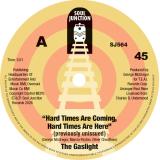
During Soul Junction’s later dealings with the late Oliver Cheatham, respected UK Collector Andy Rix mentioned he owned a three track acetate containing the two mentioned T.E.A.I/Polydor tracks plus a third unissued dance track “Hard Times” which through a licensing deal with Charles Underwood Soul Junction now present to you on a three track 45, released under its full title “Hard Times Are Coming, Hard Times Are Here” backed with a previously unissued mix of “Just Because Of You” alongside the issued 45 version of “It’s Just Like Magic”.
out of Stock
Last delivered 3 months ago available to reorder, subject to availability
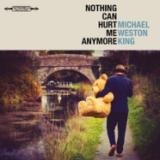
But, in the summer of 2024, a personal tragedy changed everything. Michael and Lou lost their six-year-old granddaughter, Bebe, in the Southport attacks in July that year, and, as much as they tried to carry on and make a My Darling Clementine album, with the weight of so much sadness and grief bearing down on them, it just didn't feel the right thing to do. The tragic events of summer 2024 not only changed the music they were making and the songs they were writing, it also altered their outlook on life. Recognising that everyone's grief is individual even that of a husband and wife Michael and Lou needed to channel their suffering via their own individual creativity and in their own way, rather than in collaboration, so they worked on two solo albums. Michael's "Nothing Can Hurt Me Anymore" is the first of the two to be released.
An album the defies genre, it is simply his instinctive musical reaction to the events of summer 2024. Michael writes "To be honest, it was impossible to write about anything else. It overwhelmed everything. I hope I am now creatively exhausted on the subject, but I think it will affect my writing forever, just as indeed, the loss of Bebe will". It features eleven brand new MWK songs Partly recorded in rural Wales and partly in not so rural Sheffield, "Nothing Can Hurt Me Anymore"was produced by Michael, along with wunderkind Clovis Phillips, and the brilliant Colin Elliot, who also mixed the album.
Foundations Records has landed! A brand new label from the Foundations Series camp. Last year saw their launching F-BOMBS Records, a UK Garage and Bass focused label with a mighty debut from Swankout on the Speed Garage EP. Foundations Records will be a home to Hardcore, Jungle and all things Rave inspired.
Early support from: Pete Cannon, Billy 'Daniel' Bunter, Origin8a & Propa, T-Cuts, Vali NME, Swankout, Jay Cunning, LMajor, Chinese Daughter, Arkyn, Uplift, Drumskull, Andy Foundations.
Vintage hardware junkie, 12bit Jungle Out There (aka Kris Buckle), dusts off the Amiga and the Akai to craft authentic 90s Jungle beats. The Aussie-based Brit boasts a rich musical history that began as the guitarist for Sunscreem, sharing stages with The Prodigy, and continued with a stint alongside Soulwax favorites, Soapstarter. As a session guitarist and musical director for singer-songwriter Liam Bailey, Kris honed his craft on international stages, gaining valuable experience and deepening his musical versatility while touring with drum & bass giants Chase & Status. Recently, he's been sharing his expertise in retro Jungle production through YouTube tutorials and actively contributing to Perth's Jungle/DnB community with the high-energy SUB/Stance events.
out of Stock
Last delivered 57 days ago available to reorder, subject to availability
One of the first punk bands to set up an "indie" label, they were also pioneers of "alternative" music, mixing punk with experimental sounds. Swell Maps released four singles and two albums in a brief but eventful career, in partnership with Rough Trade, topping UK indie charts and influencing acts including Sonic Youth, Nirvana, Stereolab, and Blur. The original line-up split in 1980, but still their studio albums, A Trip to Marineville and Jane From Occupied Europe, attract new generations of enthusiasts. In 2021, Jowe organised performances
with ten musicians to play a diverse selection of Maps material over two consecutive nights at London's Cafe Oto, and did it again at the Rough Trade launch for Jowe's book on Swell Maps in 2022. Concerts followed across the UK and Europe, with more planned. This ongoing project has resulted in a new studio album, C21, released through Tiny Global Productions. The material was composed at various times between 1979 and the present, including older songs never recorded professionally, a remake of Soundtracks' astonishing Jelly Babies and plenty of surprises. C21 offers memorable melodies, wild riffs with super hooks, yet never veers from their adventurous spirit, radical ideas and eccentric musical shapes. The current collective of musicians features: Jowe Head, David Callahan of Wolfhounds / Moonshake / solo fame, Jeff Bloom out from Television Personalities, Alternative TV's Lee McFadden, Lucie Rejchrtova (Crazy World Of Arthur Brown), Chloe Herington from chamber rock faves Chrome Hoof, and Luke Haines, who led Auteurs and Black Box Recorder and plays with REM's Peter Buck. SWELL MAPS will be performing throughout 2026 across the UK and Europe and are proud to present this stellar document, which maintains the group's devotion to D-I-Y ideals and impulses. The vinyl album covers were hand-screened and stamped by a feminist cooperative in Valencia, Spain and are offered in three randomly picked variants. The Guardian is going to run a 1400-word piece on the release.
Chlar delivers his debut record for SHDW & Obscure Shapes' Mutual Rytm imprint.
Emerging as artist of note for both now and the future, Chlar continues to craft and shape his sound as he curates his own high-octane approach to techno. Combining dynamic performances taking in three and four deck mixes with his own up front productions and his talents as a former mastering engineer, the Swiss talent has become a respected name amongst his peers. After releases on Lobster Theremin and his own Bipolar Disorder imprint, the Berlin-based DJ, producer and label boss heads to SHDW & Obscure Shape's blooming label Mutual Rytm to deliver six precise and powerful cuts across his 'Optimized Groove' EP.
"As the names states, 'Optimized grooves' is a collection of tracks designed to match specific parts of the event/night. From 'Night Genesis' at the origin of the night through to tracks like 'Maximum Performance', a peak time bomb, and 'Spirit Enhancer' - an uplifting and warm production elevating individuals to higher labels after hours of spiritual connection'" - Chlar
Opener 'Early Morning Acceleration' sets the tone early and dives into a looping ride through slinking hats and bustling arrangements - combining classic influences with forward thinking touches to reveal a dynamic slice of techno. Next, 'Maximum Performance' fuses swelling low-ends, sharp percussion and vibrant leads, while 'Love Blaster' delivers an all out fiesta armed with rolling drums, sharp whistles and rich chords. On the flip, B1 'Night Genesis' sees hypnotic loopy vocals balanced by tough kicks and luminous synths, before 'Spirit Enhancer' showcases a soulful trip as resonant electronics work around the track's tunnelling groove. The digital EP comes with a bonus exclusive production in 'Synaptic Discussion', a euphoric and impactful closer which brings things to a close firmly in the peak time hours.
Chlar 'Optimized Grooves' drops via Mutual Rytm on 9th September 2022.
out of Stock
Last delivered 52 days ago available to reorder, subject to availability
Part 2 of our 1980 Taxi showcase, and it's heavier than the first. Here is one of Sly & Robbie's most loved productions, in its initial raw dubplate form. In August 1980, this raw cut of the haunting lovelorn classic first started to make its way out there on dubplate, in this spare, cavernous heavy mix without the synthesizer and syndrum sounds that would eventually adorn the final released mix. As tapes of these type of early mixes made for sound systems more often than not were not saved or archived, we're overjoyed to have located this one and brought it out. Like our previous Viceroys Taxi releases, this is some of the heaviest music of its day, in its pure initial form like you would have heard Shaka or other serious sounds playing thru the end of 1980.
For A Dramatic Turn of Events, Dream Theater underwent a self-proclaimed musical change, reevaluating and restructuring themselves. The album has drawn stylistic comparisons to two of the band’s past albums, Images and Words and Metropolis Pt. 2: Scenes from a Memory. Limited edition 2LP release on clear vinyl
Here comes the first appearance on vinyl of Elf Bagatellen, a 1990 FMP classic from the legendary Schlippenbach Trio where the group achieved fever-dream beauty through self-imposed temporal limitations. The trio deliberately shaped the music, opting for more concise pieces rather than concert-length performances that had become standard practice. Those durational limitations clearly inspired them, bringing a jewel-like, compositional flow to many of the works, although even when the trio seems to be playing a tune in a piece like "Analogue: Scaled" the performance moves so rapidly into the next event any such notion is banished. And yet some of Schlippenbach's older themes resurface in abstracted ways, whether it's Pakistani Pomade's "Sun-Luck Night-Rain" appearing as quicksilver line in "Sun-Luck: Revisited" or Globe Unity's "The Forge" sneaking into "The Forge: Rebellowed." The concision of shorter pieces, including several solo works, arrive as a kind of fever dream in the usual context of free jazz. Schlippenbach Trio soon snapped back into its working methodology on its follow up album, Physics, in 1993, which further elevates the singularity of Elf Bagatellen. The album captured a different side of the trio and helped inform the modern classical tilt in European improvised music. Cien Fuegos is delighted to reissue this undeniable classic, making it available on vinyl for the first time ever, freshly remastered by Martin Siewert. Evan Parker - soprano & tenor saxophone - Alexander von Schlippenbach - piano - Paul Lovens - selected drums and cymbals This album was released as a cd on FMP 1990, remastering for vinyl by Martin Siewert 2025
She studied classical music on viola from the age of 3 through into college where she was on a path to be a performer in a large ensemble, but eventually left after feeling frustrated and limited in a world that did not provide much of an outlet for individual creativity. But the doors of perception really opened when she moved to British Columbia and was exposed to the raw beauty of the wilderness there.
She began recording at home using a basic audio setup along with a cello, viola, violin and double bass, and spent time making field recordings of natural sounds in BC. Her next idea was to actually move into nature to record, curious as to “how it would sound if I recorded outside entirely, with the natural reverb and sounds of the environment in the recording from the very beginning. The rustling of the leaves or a raven’s beating wings were as integral to the music as whatever I played.”
Fables is a mix of pieces that were recorded in the fall of 2024, in a small, remote cabin and outside, primarily using stringed instruments. The result is a series of stunning vignettes, meditations patiently unfurling like gentle waves, slowly advancing and retreating.4, in a small, remote cabin and outside, primarily using stringed instruments. The result is a series of stunning vignettes, meditations patiently unfurling like gentle waves, slowly advancing and retreating.
out of Stock
Last delivered 6 months ago available to reorder, subject to availability
"Recoiled" is a rambunctious alchemy, of magikal Coil sensibilities and hi-tech home circa 90s mixing technique, all fused in the cave-like early studios of Danny Hyde / Peter Christopherson. These were the unrestrained PRE- BIG studio- mix downs, of four songs which long time Coil admirer / collaborator Trent Reznor requested Coil to remix. Reznor sent over the original multi-tracks and DATs to Hyde / Christopherson, who independently mixed versions and then met to synch both creations, molding them into these master versions. "Recoiled" includes a fuller, more opulent version of the track 'Closer', which eventually made it onto the opening credits to the movie "SE7EN". These 5 lengthy compositions are pre-Ableton / laptop generation type priest song creations, with the use of baby alarms and numerous wires to create bespoke effects. These legendary tracks were always rumoured to exist and, only the due diligence of a dedicated NIN forum who hunted them down, are released/unleashed for your listening pleasure. Black vinyl LP+, printed inner!
Will Wood's very first LP displays a variety of genres, with a chaotic homemade anti-folk feel and an experimental edge. "Everything is a Lot" began its long production in 2014, when the singer-songwriter was still 20 years old and performing drunken alt-comedy at open mics. With no funding, Wood led a slapdash band into the studio to bring songs mainly from his teenage years to life, and the unstructured production process and youthful experimentation gave it a uniquely loose and chaotic feel. The debut LP's sound is defined by Wood's Jay Hawkins-esque vocal delivery, an out-of-tune old upright piano, wailing wind instruments, jangly guitar, high-powered yet loose drums, and sardonic overdriven kazoo solos. Delivering everything from swing jazz and twee indie pop to pseudo-mariachi and waltz, these sounds and their accompanying bizarre lyrics come together to match the existential title, "Everything is a Lot." Will Wood's early career can be primarily defined by his experimental vocal delivery, honky-tonk piano smashing, and darkly edgy songwriting. While his stylings have matured and taken on a more precise approach, his refusal to conform to expectations and constant shifts in the genre have continued to be hallmarks of his songwriting and production. In his "Will Wood and the Tapeworms" releases (Everything Is A Lot in 2015, SELF-iSH in 2016), audiences can see the first glimpses into what would eventually become his signature style, presented in a uniquely raw and chaotic state of potential.
out of Stock
Last delivered 6 months ago available to reorder, subject to availability
Manfredi Romano, founder and A&R of Life and Death Records, has been a pivotal figure in electronic music for over two decades. This year marks an important milestone as he is invited to curate the upcoming fabric presents mix for fabric Records, a release that highlights his instinctive storytelling and the distinct musical identity he has cultivated throughout his career.
Manfredi’s journey began in Italy around the turn of the millennium, tour-managing punk bands and organizing left-field music events before completing his studies in computer science at the University of Pisa. He went on to form DAZE, Italy’s first booking agency dedicated exclusively to electronic music, laying the groundwork for what would become a globally influential presence in the scene.
In 2010, he shifted focus to his own artistic project, DJ Tennis, which quickly gained international recognition for its emotive blend of house, techno, and disco. Renowned for creating intimate atmospheres in even the largest spaces, DJ Tennis has performed at leading clubs such as Circoloco Ibiza, Fabric London, and Panorama Bar Berlin, and at major festivals including Sonar, Timewarp, Primavera Sound, and Coachella. His 2022 residency at Phonox in London further showcased his ability to shape dancefloors with nuance and depth. Since 2017, he has also co-founded and curated Rakastella, the celebrated Art Basel Miami festival created in partnership with Life and Death and Innervisions.
As a producer, DJ Tennis draws from early relationships with post-rock pioneers such as Godspeed You! Black Emperor, Tortoise, and Fugazi, channelling their influence into intricately layered electronic compositions. His work has appeared on respected labels including Kompakt, Rhythm Assault, Running Back, !K7, Cercle Records, Aus Music, and Circoloco Records, alongside frequent releases on Life and Death. His remix portfolio includes collaborations with Diplo, Boys Noize, Loco Dice, WhoMadeWho, and Acid Pauli, among many others. He has also previously contributed a DJ-Kicks mix, bringing his eclectic sensibilities to one of electronic music’s most beloved series.
After extended periods living in Miami, Berlin, and Barcelona, DJ Tennis now resides in Paris. Outside the studio and club environment, Manfredi is a passionate chef who has curated menus for charity events and collaborated with Beatport at ADE, Pioneer, and Resident Advisor. He is also an avid collector of bicycles, vintage action figures, and vinyl — his record collection now surpasses eleven thousand pieces.
With the forthcoming fabric presents DJ Tennis release, he offers a deeply personal, narrative-driven statement that reflects decades of crate-digging, boundary-pushing selections, and a lifelong devotion to sound. It marks a new chapter in his artistic evolution and stands as one of the year’s most anticipated entries in the iconic series.
The first single from DJ Tennis is a collaboration with long-time studio partner Ashee, and it immediately sets the tone for the mix: warm, seductive, rhythm-driven, and emotionally charged.
“I Wanna Know” is a sleek club track built around a pulsing groove and a steady, hypnotic rhythm. The low end is rounded and warm, giving the track a driving but understated momentum. Percussion is crisp and minimal, allowing the bassline and vocal elements to take center stage. The repeating, robotic earworm of a vocal hook, “I wanna know’ is the lynchpin to the track and will remain in your head long after the track has finished.
It’s the kind of record that warms up a room early in the night, sets the tone for a sunset beach set, or adds a lush, emotional peak during a more leftfield club moment.
out of Stock
Last delivered 3 months ago available to reorder, subject to availability
When Saracen released their debut album ‘Heroes, Saints & Fools’ back in 1981, the UK Rock scene certainly took notice. Their combination of Magnum-like melodies and Uriah Heep intensity and vocal stylings immediately endeared them to fans of the NWOBHM scene, and fans of classic British Rock in general.
All songs and lyrics were written by lead guitarist Rob Bendelow, who left prior to the release of their second album, ‘Change Of Heart’, in 1984. While this sophomore effort still contained a few Bendelow songs, the band had changed direction, moving away from the almost Pomp and NWOBHM of the debut for a more polished and Melodic Rock direction.
Unfortunately, this new direction didn’t resonate with the fans, and the band broke up not long after.
However, Bruce Mee of Now & Then Records had always been a massive Magnum and Saracen fan. Having already convinced Bob Catley to start a solo career in the late 90s, he also had very productive talks with Rob Bendelow. This great friendship resulted in the band reforming and the release of ‘Red Sky’ in 2003. Rob Bendelow and Saracen were back.
Later signing to Escape and releasing several more great albums, Rob Finally retired from the music scene a few years ago, but the band gamely soldiered on, keeping his songs and legacy alive for their many adoring fans.
In an instance of total cosmic kismet, that same Bruce Mee was also co-organiser of the inaugural ‘Tower of Fire’ UK festival, and in 2024 invited Saracen to play the event along with other well recognised names of the scene such as Nitrate, Remedy, Atack, White Skies and Gabrielle de Val. The event was multi-track recorded, and the results of the Saracen set were so good that it was decided to release a very first live album.
The title of the live album is taken from the name of their crushing opening song: ‘Crusader’. And in a further act of unbelievable karma, the magnificent album artwork and design are created by Sebastian Kozak, the very same creative artist responsible for the brilliant artwork on the band’s come-back album ‘Red Sky’ back in 2003.
All but one of the songs that day were from that incredible debut and those 5 songs, along with 3 others previously recorded live by the band, make up this totally amazing live album. For fans of Saracen and NWOBHM, this is a moment we never thought we’d ever see: a brilliant live Saracen album with vocalist Steve Bettney sounding as incredible as he did over 40 years ago.
EXODUS resurge at full force with their 12th studio album and Napalm Records debut, Goliath, out March 20, 2026! The top-charting band reinforces their eternal foothold at the top of thrash metal's hierarchy with 10 of their most diverse, anthemic tracks so far. Goliath marks the return of legendary singer Rob Dukes to the band. Produced, mixed and mastered by Mark Lewis (Whitechapel, Nile, Undeath), Goliath beams with the explosive authenticity that has set EXODUS eons apart from their peers since the release of their groundbreaking 1985 debut, Bonded By Blood.
Nikaido Kazumi’s acclaimed and enduring masterpiece "Nijimi", originally released in 2011, returns on vinyl. The album eventually led to her performing
the theme song “Inochi no Kioku” for Studio Ghibli’s The Tale of the Princess Kaguya. Filled with songs capturing her heartfelt emotions and charm—such
as “Onna wa Tsurai yo” and “Totsutotsu I Love You”—this is a truly precious record.
With two deeply cherished compilations already in the bag, Luke Una steps up for the third volume in his É Soul Cultura series on Mr Bongo. A love letter to the dancefloor and its power to unite people from all corners of society amid growing division and extremist politics. Genre-spanning in nature, the 15 tracks travel between cosmic soul, boogie, proto-house, slo-mo technoid grooves, drum machine afro, astral bass-bugging futurism, jazz funk, dance, and disco. Each having the ability to move the body as much as the heart.
From his formative years in Sheffield to co-founding Manchester’s much-fabled Electric Chair with Justin Crawford, through to helming the iconic LGBTQ institutions of Homoelectric / Homobloc, Luke has spent 40 years immersed in dance music. His latest outlet, É Soul Cultura, has grown from a label to a globe-spanning events series with Luke holding residencies and embarking on tours across the world from Japan and Australia to America and Europe.
“For me, the dancefloor was never about a one-dimensional, thudding, 130 BPM beat only. It's a much more dynamic, broader vision than that. I cut my teeth in an era where a 100 BPM record had as much impact, excitement, and energy as a 134 BPM dancefloor jazz funk or techno record”, Luke mentions. É Soul Cultura Volume 3 is the perfect embodiment of that notion: “It’s about four decades in the trenches playing dance music, the late-night afters, the shebeens, the basements, warehouse parties, the eight-hour journeys in East London, through to festival sets at Houghton and We Out Here. It’s music unconstrained by genre or tempo and more about making your body move”.
But this isn’t simply a collection of disparate dance tracks; they carry meaning and soul. “It’s less about escapism, more about reconnection. My experience of post-covid has been the coming together of all the clans in various clubs and gatherings. A reaction to a very toxic world out there, where the aggro rhythms of division have sought to divide us, and people don't meet as often. The coming back together face-to-face in clubs has encouraged a real love in the air, there's a real togetherness and collective spirit”.
Opening up the compilation is a track that channels that very message, the transcendental, soul-rousing Harris & Orr ‘Spread Love’. Joining the dots from there, to the low-slung deep house closer of Fatdog ‘Remember’, you’ll find electronic drum machine Nigerian funk, sitting side by side with dancefloor Cape Verdean brilliance, a post-punk cover of Fela Kuti, rubbing shoulders with cosmic electro, and an Una-championed, 8-minute, kickless DJ Harvey remix. There’s jazz funk in various guises moving from boogie synth to astral travelling, slo-mo acidic raw techno, and a ‘79 soul stepper, alongside swirling percussive Italo disco and tribal-charged house. All infused with an innate ability to bring people together.
As society becomes increasingly fractured, É Soul Cultura Volume 3’s message is more than movement. It’s about dance music’s power to unify people from all walks of life and break down the barriers that divide us.
out of Stock
Last delivered 30 days ago available to reorder, subject to availability
Scopeotaku’s latest is a continuation of themes he explored in System Failure. Mutating into darker dimensions, influenced by recent world events. reality error is steeped in strangled synths, tape hiss and distorted echoes. Featuring crushed low-tech rhythms and recordings inspired by science fiction B-movies. Scopeotaku seizes the means of production with full on DiY approach. Setting out to soundtrack a dystopian society that has lost touch with the soul of humanity. A world where corporate greed and disruptive extremist views amplified by echo chambers soaked in misinformation drown the voices of reason and compassion. Within this murky swamp however lies a glimmer of light and hope for us all to not accept the future but to shape it.
This Record Label is connected to ZEL Events and times to release music from residents and artists around our community.
Livorno based Ducato Driver, 360° dj and producer, comes out with a solo EP, to be the 2nd release on ZEL Records. “The meaning of dé” are 4 tracks travelling across Techno, Progressive, EBM, dark and trippy vibes. Enjoy the listen.
out of Stock
Last delivered 7 months ago available to reorder, subject to availability
‘Call To Arms & Angels’ is the title of the twelfth studio album from South London collective Archive.
A 17-track double CD / triple LP recorded at RAK studios in London and released on Dangervisit/PIAS.
Deluxe editions of the album also include a bonus ‘Super8’ album of new and exclusive instrumentals, as featured in the band’s ‘Super8’ documentary that will accompany the release of the album.
Produced by Archive and long-time collaborator Jérome Devoise, ‘Call To Arms & Angels’ is the band’s first studio set since 2016’s ‘The False Foundation’.
Talking about the new album, Darius Keeler says, “Writing our twelfth studio album was an extraordinary time for the band. The song writing became an unfolding narrative as the world got stranger and more disturbing every day. With people’s freedoms being pushed to the brink, the suffering Covid caused and the terrible events in the US lead by Trump and the rise of the Right, anything seemed possible.
“To reflect on these times as artists brought up a darkness and an anger, but also a strange kind of inspiration that was at times unsettling. It really made us appreciate the power of music and how lucky we are to be able to express our feelings in this way.
“It seems there is light at the end of the tunnel, but there are always shadows within that light.”
Deluxe 2CD album plus ‘Super8’ bonus CD in 40-page casebound Polaroid bookpack.
2CD album.
Deluxe vinyl box set with white coloured vinyl 3LP (exclusive to this box set), ‘Super8’ bonus LP on white vinyl (exclusive to this box set), deluxe 3CD with Polaroid booklet and 12” x 12” art print.
Triple LP on gold vinyl in triple gatefold sleeve.
Triple LP on green vinyl in triple gatefold sleeve.
Triple LP on black vinyl in triple gatefold sleeve.
out of Stock
Last delivered 7 months ago available to reorder, subject to availability
Brooklyn Sway's 8th installment arrives from outside with more unexpected debuts and riotous returns to form. Experienced Barcelonian Larry Lan's epic 10-minute opener 'WTNG' is minimal goes post-punk, repurposing well-known, undisguised lyrics into an aggressive take on early Perlon and explanation enough for his recent album drop on Cadenza. BKS vets N/UM return with 'A Free Woman in Queens' showing off a reduced side of their sound adjacent to mid-00s minimal with plenty of character, its stripped intro giving way to a fuller, dubbed-out second half, with the cheeky vocal and instrumental touches joined by a swelling pad. Featuring spoken vox from Mari Blue and the debut of BKS co-head Asha Jasz alongside DeWinter and Jay Prouty, 'Acid in Your Coffee' takes the dirtier route, with layers of zapping electronics, an insistent single-note acid bass, and synths drifting between tones and textures all veering off like its vocals before eventually returning to center. LA/Bucktown scallywag $coe brings it home with 'The Devil is a MF Liar', an acid jam whose profanity-laced vocal samples don't require divine intervention to decipher. Bookended by a pair of interludes, the first on the power of repetition and the last in memoriam BK legend Big Sexy in his own words, and again featuring striking artwork from notable NYC street artist Fumero, BKS keeps that Sway from going astray.
out of Stock
Last delivered 7 months ago available to reorder, subject to availability
‘Call To Arms & Angels’ is the title of the twelfth studio album from South London collective Archive.
A 17-track double CD / triple LP recorded at RAK studios in London and released on
Dangervisit/PIAS.
Deluxe editions of the album also include a bonus ‘Super8’ album of new and
exclusive instrumentals, as featured in the band’s ‘Super8’ documentary that will
accompany the release of the album.
Produced by Archive and long-time collaborator Jérome Devoise, ‘Call To Arms &
Angels’ is the band’s first studio set since 2016’s ‘The False Foundation’.
Talking about the new album, Darius Keeler says, “Writing our twelfth studio album
was an extraordinary time for the band. The song writing became an unfolding
narrative as the world got stranger and more disturbing every day. With people’s
freedoms being pushed to the brink, the suffering Covid caused and the terrible
events in the US lead by Trump and the rise of the Right, anything seemed possible.
“To reflect on these times as artists brought up a darkness and an anger, but also a
strange kind of inspiration that was at times unsettling. It really made us appreciate
the power of music and how lucky we are to be able to express our feelings in this
way.
“It seems there is light at the end of the tunnel, but there are always shadows within
that light.”
Deluxe 2CD album plus ‘Super8’ bonus CD in 40-page casebound Polaroid
bookpack.
2CD album.
Deluxe vinyl box set with white coloured vinyl 3LP (exclusive to this box set), ‘Super8’
bonus LP on white vinyl (exclusive to this box set), deluxe 3CD with Polaroid booklet
and 12” x 12” art print.
Triple LP on gold vinyl in triple gatefold sleeve.
Triple LP on green vinyl in triple gatefold sleeve.
Triple LP on black vinyl in triple gatefold sleeve.
out of Stock
Last delivered 7 months ago available to reorder, subject to availability
Emerging artist Beifer presents his highly anticipated debut album "constant.transition": an eclectic fusion of electronic music with strong influences from dubstep, garage and drum&bass, enriched with captivating jazz elements. This cross-genre work takes listeners on a journey through dark atmospheres and avant-garde soundscapes, brought to life by the artist's complex percussion layers and interesting chord structures.
With great experimentation and a desire to break new ground in electronic music, Beifer has created an album that captures the listener's attention with its unique textures and unconventional soundscapes. Each track is an exploration of musical possibilities, with Beifer masterfully blending a wide variety of genres while creating a cohesive and infectious atmosphere.
The album also features notable collaborations with renowned musicians. Wanja Slavin, Moritz Stahl (Ark Noir/Lyder) and vocalist Enji have collaborated with Beifer to add an additional dynamic and layered dimension to the album. Their unique talents and empathy blend seamlessly with Beifer's vision, opening up new worlds of sound for the listener. Beifer has managed to push the boundaries of electronic music and make an impressive artistic statement with his debut album.
"constant.transition" is the first release on the newly founded tunnel.visions label. Starting as a event-series, the three members of the electronic alternative experimental jazz band Ark Noir have made it their mission to present progressive, contemporary music that includes acoustic and electronic instruments, takes up compositional and improvisational concepts and thus breaks down the boundaries between academic and autodidactic practice.
Over the past year, Ark Noir has featured Beifer several times at concerts and brought the music of "constant.transition" to the stage with live instrumentation. The program was enthusiastically received by the audience.
out of Stock
Last delivered 7 months ago available to reorder, subject to availability
In the pantheon of classic free jazz, Noah Howard's The Black Ark looms large. Recorded at Bell Sound Studios in New York City in 1969 – just prior to the alto saxophonist's relocation to Europe – the album was eventually released in 1972.
The Black Ark exhibits not only the power and imagination of Howard's playing, but also his breadth as a composer and bandleader. Listeners expecting unrelenting blasts of "energy music" might be surprised to find a cohesion atypical of free jazz; amidst the wild, impassioned solos, Howard weaves in Latin rhythms and fat-bottomed grooves.
The first side, consisting of "Domiabra" and “Ole Negro,” sets the album's tone. Both tracks sound as if they could have appeared on some of Blue Note's proto-spiritual jazz, groove-heavy releases – evoking the likes of Lou Donaldson or Horace Silver – before ceding the floor to the horn players' anarchic firepower.
As John Corbett writes in the liner notes, "Two players stand out. Bassist Norris Jones – who would soon consolidate his name into a one-word reversed amalgamation/permutation of the two, Sirone – is given ample room, largely unaccompanied; his corporal approach foreshadows later work with the Revolutionary Ensemble. But the secret weapon on The Black Ark is Arthur Doyle. Straight from basement rehearsal sessions with Milford Graves, whose ensemble he had joined and who remained a favorite of the drummer for decades, Doyle is a human flamethrower."
Trumpeter Earl Cross' guttural, vocal effects complement Doyle's take-no-prisoners approach, while the estimable combination of Muhammad Ali (Rashied's brother) on drums and Juma Sultan on congas adds an ever-shifting propulsion. The septet is rounded out by the enigmatic pianist Leslie Waldron, who anchors the group with imaginative accompaniment and occasional boppish flourishes.
Every bit worthy of its reputation as an "out-jazz" holy grail, The Black Ark only sounds better with age. It remains the ideal record to convert the remaining free-jazz skeptics.
Return To Forever is often cited as one of the core groups of the jazz-fusion movement of the 1970s. The final album by the longest-lasting "classic" lineup of the group (which consisted of Chick Corea, Stanley Clarke, Lenny White and Al DiMeola) was Romantic Warrior, on which they continued their experiments in the realms of jazz-rock and related music genres, and was lauded by critics for both the technically demanding style of its compositions as well as for its accomplished musicianship.
The album is more avant-garde and less funky than the band's previous album, No Mystery. It would go on to become the best selling of all Return to Forever's efforts, eventually reaching gold disc status in the US.
Romantic Warrior is available as a 50th anniversary edition of 1500 individually numbered copies on blue vinyl and includes an insert.
America Giovane is part of a reissue series produced in collaboration with Edizioni Leonardi (Milan, Italy), dedicated to extremely rare library music LPs originally released between the late 1960s and early 1970s — most of which had never been reissued until now. These recordings are finally made available again for collectors and library music enthusiasts.
Remigio Ducros, pianist and composer and author of around 20 library music LPs, presents with America Giovane ("Young America") a heterogeneous compendium of musical styles drawn from the United States — perfectly suited as a soundtrack to late '60s and early '70s hippie gatherings and countercultural events.
Behind the name Pouf Pouf Pantoufle lie six musicians from Nancy, graduates of the Lillebonne music school: Vincent Petit on double bass, Gabriel Lambert on bass, Guillaume Schwab on keyboards, Tom Colombain on trombone, Gaspard Petitnicolas on flute, and Solal Piquand on drums.
In 2022, they founded the APC (Appellation Pantouflarde Contrôlée) association and started organizing concerts at the legendary MJC Lillebonne, often alongside BMM and RPT. Thanks to their eclectic and avant-garde line-ups, these events have become unmissable for fans of hybrid music, electronic curiosities, and off-format performances.
Through a form of free, improvised, and chaotic jazz, the band Pouf Pouf Pantoufle echoes the local scene that they federate. The sextet now presents its first eponymous studio album, a genuine laboratory of improvisation and experimentation with different materials and sound textures, mixing acoustic and electronic elements in an intense and exhilarating jumble.
out of Stock
Last delivered 7 months ago available to reorder, subject to availability
Formed in Southend in the late 90’s, Beatglider’s tale is a familiar one taking in early acclaim only for momentum and promise to be dashed by major label statis and indifference.
After the release of the debut long-player, ‘40 Days Of Summer’, in 1999 the band signed to Sony subsidiary Lakota and decamped to LA to record its follow-up, ‘Dreaming Of Roads’, an album that was never to see the light of day.
And now, over 20 years later, ‘Dreaming Of Roads’ eventually gets a deserved release on 28th February via the Arlen label. A beautiful 11-track understated delight which musically falls somewhere between the likes of Elliott Smith, Grandaddy, Yo La Tengo and Sparklehorse, the album has not only stood the test of time, but arguably sounds as fresh as ever in 2026.
The tracklisting of the album - recorded in Los Angeles at the famed Sound City studios - is as follows: