The Slow Show release their fourth studio album, their first for three years, entitled ‘Still Life’,
via PIAS. The four-piece, who first formed in Manchester, will support the release with a
European tour in February and March 2022, culminating in an already sold-out hometown show
at Manchester’s Hallé St Peters on 4th March.
Lead track ‘Blinking’ is a perfect taster to the new direction ‘Still Life’ offers. Same but different
again. “An ode to love and loyalty. The song is a defiant pledge to never giving up on the
people you love. Musically we wanted the song to have impact, a directness and powerful
punch that we’d previously shied away from.” - Robert Goodwin (vocals)
The making of ‘Still Life’ has been quite the ride. Following their breakthrough album, ‘White
Water’, it was clear The Slow Show were not just ‘another band from Manchester’. The legacy
of The Smiths, Joy Division and all those other great predecessors is not something to be trifled
with, but The Slow Show didn't need to wear their address on their sleeve: this was something
else, fully formed, with a mesmerising sound, rich in atmosphere and melody.
With the band’s desire to push each other outside of their respective comfort zones during the
recording process, ‘Still Life’ subsequently offers a more diverse, rich and interesting sound
than previous albums.
“We did develop our sound,” says Rob Goodwin. “We had to try something else. We felt we
owed that to ourselves, and to the people that come and enjoy the music. We explored a lot of
stuff: different sounds, different feelings, different ideas, different processes as well. Some of
them didn’t work at all, but some did. It was difficult and challenging, but it felt good in the end.”
This experimental side to the creative process allowed the band to introduce new elements to
their work. “Some new approaches and sounds crept in,” keyboardist Frederik ‘T Kindt admits.
“Some were far from our older work. For instance: after some initial encouragement from me,
Rob was keen to sing a bit higher on this record. Chris was encouraged to make his drums a
bit more present; some things almost sound like a breakbeat to my ears.”
Recorded remotely over the course of the past year, with Goodwin recording vocals from
Dusseldorf in Germany and the rest of band recording in the UK, ‘Still Life’, as a concept, takes
inspiration from the experiences of lockdown: “Before the virus arrived, I had a busy life;
spending two weeks in Germany with my girlfriend, and then flying to Manchester to work with
Fred or to a gig.” Goodwin remarks: “And then all of a sudden, life came to a halt. It took a little
getting used to, but I actually had a really nice realisation during that time. I understood that the
slower life got, the more I saw. I spent a lot of time in nature, seeing things in a different
perspective. And that's what you need when you're trying to create. You have to really look,
and then you see things happening everywhere.”
The tracks themselves are brimming with emotion and reverence towards the significant
relationships we encounter in life. Stand-out anthem ‘Blinking’ is a defiant pledge to never
giving up on the people you love. Musically the band wanted the song to have impact, a
directness and powerful punch that they’d previously shied away from. Whilst ‘Woven Blue’
deals with the aftermath of uncoupling. The idea that meaningful relationships are very often
woven and complex, making resolve difficult.
These very personal tracks are counterbalanced with the more topical, ‘Breathe’, which
documents some of the unjust and heart-breaking scenes of 2020 with spoken word references
to John Boyega’s emotional rallying cry in support of Black Lives Matter movement in London’s
Hyde Park.
In all, Still Life marks another evolution of a band that have never tried to fit in any particular
box but have inhabited their own unique universe.
LP pressed on white viny
Buscar:everywhere
American rock band King’s X combines progressive metal, funk and soul with vocal arrangements influenced by gospel, blues and British Invasion rock groups. Recurring themes are their struggles with religion and self-acceptance. During their major label career with Megaforce Records, King’s X secured opening slots for bands like Cheap Trick, Iron Maiden, AC/DC, Scorpions, Pearl Jam and Mötley Crüe.
In 1990 they released their third studio album Faith Hope Love, which charted #85 on the Billboard Top 200 Album Chart. The featured single “It’s Love” peaked on the Billboard Singles Chart at #6. On the tracks “Mr. Wilson” and “Faith Hope Love” you’ll hear the Galactic Cowboys who provided backing vocals.
Outernational Sounds very proudly Presents The Mallory-Hall Band "Song of Soweto" & "The Last Special".
Limited, fully licensed digital and vinyl reissues of two crucial South African sessions led by Charles Mallory and Al Hall, Jnr., featuring Kirk Lightsey, Marshall Royal, Rudolph Johnson, Billy Brooks and more! Essential companion pieces to Kirk Lightsey’s legendary ‘Habiba’.
Featuring tracks:
Song Of Soweto: Side A – ‘Song of Soweto’, ‘Hamba Samba’; Side B – ‘Cape Town Blues’, ‘Moroka Rock’, ‘The African Night’
The Last Special: Side A - ‘The Last Special’, ‘Princess of Joh’Burg’; Side B - ‘Amafu (Clouds)’, ‘Blue Mabone’
Never released outside South Africa, and out of print since 1974, Outernational Sounds presents two long-lost Johannesburg sessions from the Mallory-Hall Band – an all-star review of West Coast jazz stars who toured apartheid South Africa in the mid-1970s.
Sanifu Al Hall, Jnr. is a musician’s musician. During a storied career stretching across six decades, Hall has recorded with the greats of the music including Freddie Hubbard, Doug Carn, and Johnny Hammond, and leads his own Cosmos Dwellerz Arkestra. But until recent years, the only records on which he had appeared as leader were a brace of rich, funky LPs, Song Of Soweto and The Last Special, issued only in South Africa under the moniker of The Mallory-Hall Band (named for Hall and his co-leader, guitarist Charles Mallory – musical director for Martha Reeves and the Vandellas, Mallory was conductor for Dusty Springfield touring bands, and had worked with John Lee Hooker, Stevie Wonder, and many others). Neither LP had any wider release, and both have remained out of print since 1974. How did a young stalwart of the Los Angeles jazz scene end up in a recording studio in apartheid South Africa?
Al Hall, Jnr. and Charles Mallory had arrived in South Africa as part of the touring band for the singer Lovelace Watkins. Sometimes billed as ‘the Black Sinatra’, the Detroit-born Watkins sang standards and ballroom classics on the Las Vegas circuit. He never made it big in the US, but in his 1970s heyday he was a huge star in southern Africa, and 1974 he hired a jazz big band to accompany him on a tour of South Africa – Hall and Mallory were part of the line-up, alongside Mastersounds bassist Monk Montgomery, pianist Kirk Lightsey, tenorist Rudolph Johnson, drummer Billy Brooks, and Marshall Royal, musical director of the Count Basie band. The tour was a huge success, and during downtime from performing, members of the group managed to independently record no fewer than three albums. Lightsey and Johnson’s stunning Habiba was the first (reissued as Outernational Sounds OTR.013), and it was followed by two crucial sessions led by Hall and Mallory – Song of Soweto and The Last Special, issued on the local IRC imprint.
Visiting apartheid South Africa in 1974 was a controversial choice for any artist. Numerous artistic and cultural bodies around the world had already announced that their members would boycott the country in solidarity with the struggle against apartheid, and working in South Africa was severely frowned on by anti-apartheid activists everywhere. For a Black band, touring the country to play to mostly white audiences could have been seen by many both inside and outside South Africa as a questionable decision. ‘It was a batch of mixed reactions when I choose to visit South Africa whilst apartheid policies were in place,’ Hall recalls. ‘To me the choice was a simple one – “I wanna see for myself!” I also wanted to be a part of breaking down racial barriers, having been down some of the same roads in my own country.’
The albums were recorded by a twelve-piece band at Johannesburg’s Video Sounds Studios in December 1974, and feature the legendary pianist Kirk Lightsey, Black Jazz recording artist Rudolph Johnson, and the rest of the touring band. Both records are superbly arranged slabs of peak 1970s funky big band soul jazz, with tasteful Latin inflections and more than a nod to South Africa’s upful township jazz sound. They are the sonic traces left by a seasoned African American band who were touring South Africa in the depths of the apartheid era, and who immediately moved beyond the segregated hotels and ballrooms to build links with local South African players and audiences.
Never previously available outside South Africa, Outernational Sounds’ new editions of Song of Soweto and The Last Special (alongside our edition of Kirk Lightsey’s Habiba) represents the first time these albums have been in print for nearly fifty years. Fully licensed from Gallo Records and pressed at Pallas in Germany from Gallo’s original masters, they feature new sleeve notes from Francis Gooding (The Wire) based on interviews with Al Hall, Jnr., and a reminiscence from pianist Kirk Lightsey.
Following on from his 2021 debut on Phantasy, ‘Qué Sientes’ ft. Tee Amara, Cromby returns with another release that’s long been a secret weapon in his high-energy DJ sets everywhere from Berlin to his home city of Belfast, accompanied by an expertly-executed remix from Head High. Once again, Cromby provides one of his own sublime paintings as the artwork for 'Loving'.
Distinctly playable as either high-velocity house or pure rave with a refreshing streak of suspense, ‘Loving’ fires out the gate with inspired wonkiness, tripping on hardcore chords and a vocal sample manipulated to lunacy. Cromby reaffirms his instinctive ability to tip a dancefloor over the edge, planting multiple explosions of serotonin, the sort of drops that might shatter the windows of his beloved Panorama Bar, then confidently returning to a timeless groove.
Given the material, Head High, the alias of René Pawlowitz (AKA, Shed), proves a sublime choice to take on ‘Loving’. Delivering his first remix in a number of years, Pawlowitz induces a different kind of pressure, once again indulging in his lifelong devotion to classic organ chords, timeless breakbeats and the kind of chemically enhanced atmosphere bottled firsthand on the Frankfurt rave scene of the early nineties.
Complimenting the valleys of energy previously sculpted, Cromby winds things tighter on the rolling ‘Acid Trifle’, weaving percussive passages that speak for a reverence to Latin-House rhythms amid an undulating acid journey.
For more than 20 years, Brad Barr has been counting the number 216. It’s a mysterious number that seems to show up everywhere—from clocks and license plates to Ouija boards and receipts—and now it’s also sewn the fabric of his new album, like the 216 stitches on a baseball. The Barr Brothers frontman has set aside his band, his microphone and even his lyric-sheet—picking up his instrument for a solo guitar album that ripples with immediacy, vulnerability, and the spell of six-cubed.
Barr spent decades developing his visceral approach to the guitar, first with The Slip and then across three LPs with the Barr Brothers. The Winter Mission—the follow-up to The Fall Apartment, Barr’s 2009 solo debut—had its origins in an instrumental commission for New York City’s All For One Theater. It “felt like a gift,” Barr recalls—to have a sound he could explore all by himself, away from the road, during COVID’s strange intermission.
Endlessly sampled, covered, quoted and requoted, this may well be one of the most influential hip-hop singles ever released. But, in many ways, its importance goes beyond its sheer classic status as a single in its own right.
In retrospect, it shows the duo of Erick Sermon and Parrish Smith as pioneers in production, creating a funk-based sound that helped to provide a blueprint for artists on the other side of the country. In 1987/88, most West Coast rap still adhered to an East Coast audio blueprint. By 1989, they were leaning as heavily on Zapp and Roger Troutman samples as EPMD were on this single.
The foundations of the track are interesting, with a snatch of Juice’s much-plundered ‘Catch a Groove’ (which has popped up everywhere from The Beastie Boys to Kings of Pressure) overlaid with big chunks of Kool & The Gang’s ‘Jungle Boogie’ and Zapp’s irrepressible ‘More Bounce to the Ounce’. Vocodered funk was a rarity in New York hip-hop until this song, but it’s the West Coast G-Funk artists who really ran with it.
Its popularity spanned the country (and the globe, to be fair), with EPMD performing numerous shows in California on the basis of the sound, moving away from their James Brown-obsessed peers to display their own musical tastes. That said, the flipside – here presented on 7” and, indeed, on any single, for the first time – takes it back to that JB-era. ‘(It’s Not the Express), It’s the JB’s Monaurail by The JB’s is woven with Otis Redding and Beastie Boys to create a mid-tempo headnodder par excellence. It was always too good not to be a single.
Following his collaboration with Kenny Beats -
‘lowlife’ - dvr releases the ‘dirty tapes’ EP.
Continuing his signature slacker sound, lead track
‘stupid’ comes with an infectious acoustic hook and
trademark wry lyricism.
Written, recorded and produced by dvr, who is fast
becoming one of the UK’s most compelling young
talents.
Fans include Snoop Dogg, FINNEAS, Omar
Apollo, Joy Orbison and Clara Amfo: “dvr - a name
that is going to be everywhere in the coming
years.”
New Zealand dreampop luminaries French For Rabbits have dedicated nearly a decade to creaming warmly detailed and expansive music together. Their third, prophetic, LP The Overflow is set for release via Reckless Yes (UK), AAA Records (NZ/Aus), and A Modest Proposal (Italy) is described by the band as their most “immediate and honest” record to date. The Overflow draws on the influence of contemporary artists Laura Jean, Hannah Cohen and Hundred Waters alongside the storytelling of folk and rap music, and even references 90’s cultural touch points such as Moby, Enya and The Lion King. Whilst its inspirations are diverse-the result is a singular album that is confident in its delivery. The album follows on from their elegantly stated second LP The Weight of Melted Snow and their 2014 break-out Spirits, which received millions of streams, and song placements everywhere from the Vampire Diaries to Netflix’s Never Have I Ever TV series. On their new album, the group, led by Brooke Singer, sweeps forward with their most dazzling body of work to date-from the introverts’ anthem ‘The Outsider’ to the unfurling end-of-the-world statement piece “Nothing in my Hands”. Written and recorded mostly in 2020 in Wellington, the songs on The Overflow cover a wide range of topics, with the common threads of introversion and anxiety woven throughout. Yet, on first listen, you could be forgiven for mistaking the album’s subject matter for something lighter and more upbeat, resplendent with featherlight vocals and delicate layers
- A1: Lust In The Movies
- A2: Once And Never Again
- A3: Only Lovers Left Alive
- A4: Giddy Stratospheres
- A5: In The Company Of Woman
- A6: Heaven Help The New Girl
- B1: Separated By Motorways
- B2: You Could Have Both
- B3: Swallow Tattoo
- B4: Weekend With Makeup
- B5: Madame Ray
- B6: A Knife For The Girls
- 1: Five Ways To End It
- 2: Fulwood Babylon
- 3: The Whippet Fancier
- 4: Who Are You To Her?
- 5: Never To Be Repeated
- 6: All Bar One Girls
- 7: I 'M Coping
- 8: Last Night On Northgate St
- 9: Platitudes
- 10: Melville Farr
- 11: The Unbearable Lightness Of
- 12: Building
Rough Trade Records announce the release of the
15th Anniversary edition of The Long Blondes’
debut album, the acclaimed ‘Someone To Drive
You Home’.
The home of a host of indie disco classics with its
noir atmospheres and vivid storytelling - qualities
that saw the record inspire recent, generationcapturing movie ‘Giddy Stratospheres’ which takes
its name from The Long Blondes’ iconic single -
the Sheffield band’s first album managed that rare
trick of capturing the 2000s zeitgeist while leaving
a timeless artistic mark for the ages.
Initially inspired by the frisson of the indie disco -
now, fittingly, a classic of low lit dancefloors
everywhere - ‘Giddy Stratospheres’ is The Long
Blondes’ sophisticated calling card. A swirl of
razor-sharp guitars and vivid storytelling, waltzing
melodies and burning vocals, the Sheffield band’s
2000s single fizzes with dancing, desire and the
most stylish sing-a-long you’ll ever hear.
The Anniversary edition of ‘Someone To Drive You
Home’, which was originally released in November
2006 and was produced by Pulp member Steve
Mackey, comes as a gatefold double LP, pressed
on to red and yellow vinyl to mirror the album’s
artwork - a picture of actress Faye Dunaway
painted by frontwoman Kate Jackson. The edition
features the original record, plus 11 additional
tracks that the band used on B-sides.
- 1: Square Wheel Ft. Kokayi& Michael Mayo
- 2: Altitude Ft. Joel Ross & Michael Mayo
- 3: Street Lamp
- 4: Band Room Freestyle Ft. Kokayi
- 5: Don't Let Me Get Away Ft. Stokley
- 6: Collision Ft. Regina Carter
- 7: Rambo: The Vigilante Ft. Vernon Reid
- 8: Meditation: Prelude
- 9: See The Birds Ft. Joel Ross & Michael Mayo
- 10: I Burn For You Ft. Ammawhatt
- 11: Fly (For Mike) Ft. Brittany Howard
Nate Smith Recruits Special Guests Vernon Reid, Brittany Howard, Kokayi, Joel Ross, Michael Mayo, Stokley, AmmaWhatt and Regina Carter for Kinfolk 2, the successor to his Grammy-nominated debut.
Kinfolk 2: See the Birds is the highly anticipated follow-up to the 2017 Grammy-nominated album Kinfolk: Postcards From Everywhere. Featuring the diverse and all-star talents of Brittany Howard, AmmaWhatt, Joel Ross, Kokayi, Michael Mayo, Regina Carter, Stokley and Vernon Reid, Kinfolk 2: See the Birds is the inspired and emphatic album that exemplifies Nate's artistry as one of the most exciting, dynamic and innovative drummer-composers of his generation, adept across multi-genres and styles. Taking inspiration from his teenage years spent absorbing the diverse and eclectic riches of Prince, Michael Jackson and Living Colour. Kinfolk 2: See the Birds is a multi-faceted jewel and is set to be one of the most significant albums of 2021. Nate is one of the most important artists in the progressive jazz world (Kamasi Washington, Makaya McCraven, Shabaka Hutchings, Robert Glasper, and Nate Smith) He's a torchbearer of progressive music / "one of the faces of progressive jazz" His profile / reach is significantly larger than that of his peers (larger than most successful pop/mainstream artists too) Nate accesses wider audiences by seamlessly operating in the jazz and mainstream/pop worlds. Nate operates in a unique space within the progressive world because of his drumming, his collaborations with Brittany Howard and the Fearless Flyers (Vulfpeck spinoff), his recording work with famed producers Dave Cobb and Mike Elizando, and his talent as a composer/arranger/producer. He also brings a "grown" R&B element to his music the Makaya, for example, does not. Nate Smith is an icon. He represents where jazz as a genre is going and is easily one of the most important artists you can cover in 2021/2022.
You Should Be Here, the 2015 follow-up to debut mixtape Cloud 19 from Bay Area-born two-time GRAMMY Award-nominated multiplatinum songstress Kehlani, is out on vinyl on November 26th.
The 15-track mixtape, available as a physical vinyl, includes the hugely popular tracks “The Way”, “You Should Be Here” and “Jealous”, with appearances on the album from Chance the Rapper, BJ The Chicago Kid, Lexii Alijai & Coucheron. After bowing at #5 on the Billboard’s Top R&B/Hip-Hop Albums Chart and at #1 on the iTunes Top R&B Albums Chart, the mixtape garnered a 2016 Grammy Award nod for “Best Urban Contemporary Album”. Upon release, Pitchfork praised how, “You Should Be Here’s dynamism and generosity is something to be amazed by,” while Billboard proclaimed it, “The year’s first great R&B album.” It landed on Complex’s “Best Albums of 2015,” Noisey’s “50 Best Albums of 2015,” and Rolling Stone’s “20 Best R&B Albums of 2015.”
Critically acclaimed R&B pop songstress Kehlani is praised by Complex as “a special talent, making the kind of personal music that speaks to her fans as much as it functions as a therapeutic release for her”. It doesn’t really need an explanation – you know exactly what Kehlani means when she sings. Without sugarcoating or softening a word, she will drop a hard truth in one breath and flip a middle finger in the next. She may extend a seductive invitation or an empathetic plea before leaving you in your thoughts and feelings. Either way, she finds a way to consistently relate without filter and with each move she strengthens this connection to listeners everywhere.
- A1: Mon Amour Tu Bois Trop - 3 27
- A2: Les Chants De Maldoror (Kraut Koto) - 4 37
- A3: À Rebours (Hang Bôté) - 3 33
- A4: Intérieur Négro - 3 13
- A5: Vowel - 2 33
- B1: Hard Billy - 3 41
- B2: La Mort De Pierre - 2 38
- B3: Le Cirque De Consolation - 3 40
- B4: Il Pleut Des Hommes - 3 43
- B5: Dandelion (Piano Solo) - 2 15
- B6: Missing Love - 3 22
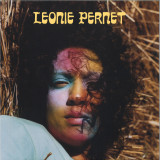
Léonie Pernet's second album Le Cirque de Consolation, to be released November 19th on InFiné & CryBaby, inhabits a world where borders dissolve and everyone makes their own unique and singular utopia. Hereby, the record questions the links between pop music, African cultures and electronic music, neo-classical music or the role of voice, whether human or synthetic. Sophomore albums can be a painful process for an artist - how refreshing it is to hear one so decidedly optimistic.
Textextext - (add your write up)
The sought after whirlwind of French Pop that exploded onto the scene with her debut "Crave", Leonie Pernet, returns with her second album, "Le Circque de Consolation", a sort of double negative of her first. While the yearning that sat at the center of "Crave"might not have been resolved, the young multi-instrumentalist and singer has found a new perspective - a more open and positive outlook on her own life and work. Perhaps telling, then, that the title was the first element of the album to exist: as it is and has always been a journey of personal (and collective) consolation first, a musical confrontation with the self.
"This record parallels my life's journey," confirms Léonie, "it reflects what has happened in my life since 'Crave' came out and how I feel today. There's still a lot of melancholy, but a lot more sunshine and light. In four years, I've become sober, which has saved me; I've worked a lot on my voice, which is a part of a desire to speak, to address my audience more directly, and also a more pronounced pop desire." In line with her new-found "openness", Leonie invites another musician into her creative process for the first time on "Le Cirque de Consolation": Jean Sylvain le Gouic, who lended his coproduction and perspective to her, while Leonie still plays almost all instruments herself with an astounding prowess.
Leonie's voice oozes with a new-found self-confidence and takes center stage amidst eclectic, distinctively fun and open-minded production. Sometimes she sings in English, mostly in French: "I worked a lot on my voice," confirms Léonie, "I didn't dare to sing before, neither live, nor on record, nor in the studio." Surrounding her astounding, intoxicating voice are forays into any direction imaginable: from harsh, experimental electronics to the more sombre, organic and quiet moments - and everywhere, there is the vision of Africa, (also Middle East) it's many sonic gifts and cultures.
Leonie has found a universal utopia that she craves for - a musical, cultural amalgamation that is decidedly non-western, political and poetic, rooted in self-discovery and the connection with other humans: African and oriental percussion, synthesizers, drum-machines; Léonie mixes genres and instruments with ease and precision. The French novelist and philosopher Édouard Glissant - whose work and writing had a big influence on Pernet - coined the term "Creolization ", the "bringing together of several cultures or at least several elements of distinct cultures, in one part of the world, resulting in new data, totally unpredictable in relation to the sum or the simple synthesis of these elements."
From "Hard Billy ", a techno-influenced rebellious anthem, to "Les Chants de Maldoror," a club and dance song propelled forward by feverish derboukas, to the deeply moving "A rebours" and its Afro-electronic rock. Léonie Pernet inhabits a world where borders dissolve and everyone makes their own unique and singular utopia. Hereby, the record questions the links between pop music, African cultures and electronic music (Intérieur Négro), neo-classical music (Le Cirque de consolation, Dandelion), or the place of the voice, whether human or synthetic as in the atmospheric "Vowel". Sophomore albums can be a painful process for an artist - how refreshing it is to hear one so decidedly optimistic.
- A1: Breakloose The Monro. L’pool, 29/8/86
- A2: Freedom Song The Queens. L’pool, 15/12/86
- A3: Son Of A Gun Pen & Wig. L’pool 2/12/86
- A4: Clean Prophet Pen & Wig. L’pool 2/12/86
- A5: Trees & Plants Pen & Wig. L’pool 2/12/86
- A6: What Do You Do? Pen & Wig. L’pool 2/12/86
- A7: Doledrum Pen & Wig. L’pool 2/12/86
- A8: Get Down Over Pen & Wig. L’pool 2/12/86
- B1: Feelin’ World Downstairs Royal Court, L’pool, 2/10/87
- B2: Come In Come Out World Downstairs Royal Court. L’pool, 2/10/87
- B3: Way Out World Downstairs Royal Court, L’pool, 2/10/87
- B4: There She Goes Flying Picket. L’pool 5/6/87
- B5: Failure Flying Picket. L’pool 5/6/87
- B6: Timeless Melody New Adelphi Club. Hull 31/7/87
- B7: I Can’t Sleep The Marquee. London 9/19/87
- B8: Knock Me Down The Marquee. London 9/19/87
LIMITED PRESSING OF 500 COPIES WORLDWIDE.
The La's live 1986-87 manages to capture the band's original ethos and attitude. Side one, contains Liverpool ‘live’ recordings from 1986 when Mike Badger and Lee Mavers shared material and vocal duties. These recordings have a skiffle like quality that flew in the face of the highly produced trends dominating the mid-eighties and can see the band defining & developing it’s sound. Side two, shows a band that had evolved, almost at times garage rock which suited certain songs in a better way, eventually selling out the Marquee Club.
This album in many ways illustrates the true nature of the La's from its original inception to its eventual place in the hearts and minds of music lovers everywhere. Pure magic and history in the making.
Night Divine is a series of hymns covered by Brian Fallon. This is a project he's been wanting to create for a long time, inspired by his time singing in the church choir as a child: “These are some of the very first sounds I remember hearing as a child. My mother used to sing these hymns everywhere she went. I felt it was time for me to join in.” He finally got the opportunity to make the intimate record during lockdown, with background vocals by his mother. The lead singer of beloved heartland-punk band The Gaslight Anthem, Brian Fallon stepped away from that sound and into a more soulful singer/songwriter territory on his third solo album, Local Honey. Produced by Grammy-award winning producer Peter Katis (The National, Frightened Rabbit, Death Cab for Cutie), the album debuted at #1 Americana/Folk Album Sales, #2 Current Rock Albums, #3 Americana/Folk Albums, and #9 LP Vinyl Sales. It was largely praised as one of his best works, with Rolling Stone saying “Local Honey is as warm and comforting as its title, full of hooks and narratives that draw you in” (Best Country & Americana Albums of 2020) and Kerrang saying “No matter what side of the genre he sets his mind to, Brian always delivers the goods” (Best Albums of 2020).
“ When I started working on the piece in March of 2020, I had only decided to record it in the way I wanted to. The coronavirus was spreading globally, and the situation was gradually changing into something very serious. With no gigs scheduled and hardly seeing anyone, I felt as if my spirit was in a slightly deeper place than usual during the production. I sat down in front of my equipment as if I were dropping a fishing line into a quiet lake. I kept feeling that something new was lurking beneath the water surface. I was trying to catch that something that seemed to be just out of reach, that floated in and out of sight like a speck of smoke. “ _Referenced from: Afterword of 7FO「Ran - Bouten」
2021 brings a new album by Osaka electronic musician / producer 7FO. This work is a departure from the recent global ambient / new age approach, and the unique sound aesthetic created using only hardware equipment is a new frontier of 7FO or a return to his origin. "Ran - Bouten" is a new electronic music album with a poetic sensibility using machines.Discovered by overseas labels such as RVNG intl., Bokeh Versions, and Metron-and with the release that followed EM Records in his hometown Osaka, it's like his personal folk craft that was once quietly played at his own pace. Music has reached listeners around the world. In recent years, he has been touring from a famous performance with Tapes at the Belgian "Meakusma Festival 2019" to a Japan-Korea tour. "Ran - Bouten" was born as a result of facing the sound alone without being asked by anyone to cool down the heat when the steaming and intense experience had settled down. Inside the cool electronic sound like a water bath, you can feel the maker's heart sending hot blood.Peep into the condensed universe of a home-recorded miniature world that looks like an independent production of unknown age. He was alone in a dark room, making full use of KAWAI's 1990 digital and FM synthesizers , tracing the shape of nature and resonating the micro and macro sound worlds. The Rhythm and melody that continues to the Paradise Pure Land, which floats in a dreamy atmosphere, is the true value of 7FO even without his guitar play.Mastering by Makoto Oshiro, which supports everything from home listening to club sound systems. Hiroaki Hidaka designed the jacket to make the image of the sound appear cool and friendly everywhere.
Dj Spinna&Kai Alcepresent:“Foundations”
Classic House 45 Series Part 5: Ralphi Rosario ft Xaviera Gold...
After a two year hiatus, DJ Spinna and Kai Alce return to BBE Music with the 5th instalment of their 7” vinyl series ‘Foundations’, this time showcasing Ralphi Rosario &Xaviera Gold’s undisputed club classic: ‘You Used To Hold Me’. With global interest in ‘45s on the rise, ‘Foundations’ aims to fill those frustrating gaps in all our collections by releasing specially crafted edits of classic house tracks on 7” vinyl for the very first time.
The youngest member chosen for Chicago’s ‘Hot Mix 5’ on WBMX back in 1981, Ralphi Rosario is nothing less than House Music royalty, and 1987 smash ‘You Used To Hold Me’ is surely his most enduring hit. Featuring fellow WBMX DJ and vocalist Xaviera Gold, the song has seen several cover versions, remixes and reissues over the years, but has surprisingly never before appeared on ’45. Spinna and Alce have chosen to create special edits of the ’87 ‘Riviera’ version and the ‘(You Used To Beat Me Black and Blue) Bonus Beats’ for this double-sided slice of Dance Music history.
“This is the blueprint to vocal House music and how it should be delivered” says Kai Alce, “and to have the opportunity to present it on 7" for the first time with Ralphi's blessing is overwhelmingly gratifying!”
“You Used To Hold Me seems like one of those anthemic jams that you pretty much heard everywhere- it was massive” recalls DJ Spinna. “I remember hearing it at the Paradise Garage in 1987, but it may have already been a hit on NY radio by that time. It’s one of those classic vocal tracks that impacted the House world as hard as Ten City ‘Devotion’ and ‘Move Your Body’ by Marshall Jefferson. The Bonus Beats on the 12” was a great tool for the DJ. You often heard it used in blends with other tracks.”
- A1: Fight Like A Fighter
- A2: Much Too Young To Rock N Roll
- A3: We Don T Wanna Go Home
- A4: Highway Queen
- A5: Let S Have More Fun
- A6: Provocation Is Everywhere
- A7: Heroes Never Win
- B1: Desperation
- B2: Willy Is Back
- B3: We All Want A Better Time
- B4: Glat All Over, (Single A Side)
- B5: Lost In A Dream With Marilyn, (Single B Side)
- B6: Hurt My Feelings, (Single A Side)
- B7: All Right Now
Nanocluster Vol 1. is an album with some serious pedigree. It sees Immersion (aka Malka Spigel and Colin Newman of influential groups Minimal Compact and Wire respectively) collaborating with some of the finest left field artists of our era: Tarwater, Laetitia Sadier, Ulrich Schnauss and Scanner. The project was born out of a Brighton based club night, also called Nanocluster, run by Spigel and Newman alongside writer, broadcaster and DJ Graham Duff, and promoter Andy Rossiter. The club features a range of influential and cutting edge music acts. But the unique aspect of the evenings is that each show climaxes with a one off collaboration between Immersion and the headliners. The songs having been written and recorded in the studio in just three days prior to the performance - or one day in the case of Schnauss. "It could have just been a series of performances." Says Newman.? "But the fact that we had built the tracks in the studio for the performances means we had these recordings." Says Spigel. The recordings have since been developed with Immersion heading up pro- duction duties. The result is a beautiful and unique album.? "I think the really interesting thing is how different everybody is," says Spigel. "Both as people and creatively." - Immersion and Tarwater: The German duo of Ronald Lippok and Bernd Jestram have created an impressive body of work. Yet their involvement with Immersion has opened out their sound, creating a more panoramic soundscape. The opening instrumental 'Ripples' is a gentle breathe of optimism, all purring tones and sun dazzled synths. Meanwhile, 'Mrs. Wood' is a dubby psychedelic shuffle, Lippok's vocal cool and assured over a fat bass line and skybound eastern melodics. It feels like a more spacious take on the Tarwater of albums such as 'Suns, Animals and Atoms'. The four musicians' 3rd collaboration is Nanocluster's most pop moment: with a heartfelt yet unsentimental lyric unfurling over feline rhythms, 'All You Cat Lovers' is a feel-good anthem for cat lovers everywhere. - Immersion and Laetitia Sadier: An original and distinctive presence in contemporary music, Sadier made her name with the inimitable Stereolab, but she's also created several impressive solo works. The instrumental 'Unclustered' sees Sadier's spidery guitar weaving through Immersion's lush web of synths drones. The following 'Uncensored' has a subtle melodic tug with a classic Spigel guitar line underpinning Sadier's sweet yet worldly wise vocal. 'Riding the Wave' is another feel good song, swapping between Newman's plaintive vocal, and Spigel's vocal and Sadier's backing vocals. With its uplifting chorus: 'Things have a way of working out' 'Riding The Wave' feels like it might be the sound of the summer we've all been waiting for. - Immersion & Ulrich Schnauss: A highly respected solo artist, as well as being a member of Tangerine Dream, Schnauss' skill with electronics is legendary. The opening 'Remember Those Days On The Road' skips along on a rimshot rhythm with Spigel's honeyed vocal telling a tale of life on tour. Yet it is far removed from such usual fare. This feels vulnerable and flecked with melancholy. 'Skylarks' opens with a lattice of arpeggios before a gently nag- ging guitar enters and everything takes a turn for the sublime. 'So Much Green' is everything you'd hope a collaboration between Newman, Spigel and Schnauss could be. A constantly spiralling urban-kosmisch, with Spigel's plangent bass anchoring the celestial sounds. The addition of her wordless backing vocals and recordings of real birdsong only serve to elevate the mood further. - Immersion & Scanner: Scanner - aka Robin Rimbaud - is one of the most prolific and diverse artists currently working in contemporary music. Spigel and Newman have of course collaborated extensively with Rimbaud before: alongside Max Franken in the art-pop group Githead. But this is something very different. Their opening piece together: 'Cataliz' is the album's moodiest moment. With its serpentine synth drones it sounds like the soundtrack to a mysterious thriller. The rich pulsing 'Metrosphere' recalls Immersion's early work whilst adding another layer of grainy uncertainty. The closing 'The Mundane and the Profound' opens with a "Rimbaud scanned" recording of an irritated flight attendant but this is eventually subsumed by a simple yet emotive piano figure: a gentle and touching end to a unique collection of songs. Nanocluster Vol.1 is a testament to a remarkable synergy between a diverse assembly of strongly individual talents. The fact that it not only succeeds, but excels should be cause for celebration.
Born in Majorca, Marc Melià is a composer/producer, who’s been based in Brussels for over 10 years. First spotted alongside Françoiz Breut, Lonely Drifter Karen or Borja Flames, he released Music for Prophet in 2017. It was issued on Gaspar Claus’s label Les Disques du Festival Permanent, as part of Flavien Berger’s curation.
On that first album, Marc Melià had explored the possibilities of a mythic synth; on Veus, as if sloughing, he applied the process of sound modification to his own voice, until becoming an android. But an android who sings of love and dreams, a sensitive automaton who plays with the tropes of pop music. Through this device, Marc Melià knowingly seeks poetry and beauty within transgenics, in the search of a universe where one can surf though waves of profoundly moving chord patterns, hear voices unconstrained by range limitations, or dance freely, as in zero gravity.
Part of the album has been recorded in Une ferme dans les Vosges, courtesy of Rodolphe Burger. It was recorded with Roméo Poirier, one of the most promising figures of ambient, and the elegant multi-talented Lou Rotzinger. As if progressing in parallel with his own linguistic experience, to add another layer to the sloughing, side A is sung in Catalan, Marc Melià’s mother tongue, and side B in French, his adopted language.
Like an echo to his previous album, Veus opens with an instrumental, “Pulse on a E”, which starts with a sequence created with a single note transposed to its octave, just like “Fata Fou”, the last song on Music for Prophet.
Although the title seems to reference an iconic 80s synth, “DX7” is actually about the seven days of the week. It is a love song, about the temperamental oscillations which make every morning the blank canvas of an unpredictable story. Wednesday, I hate you, Sunday, I love you. With few words and a lot of emotion, a synthetic voice is trying to grow more human each day.
“Dent de Serra” deals with the weight of memory on our relationships, but also with the way we revisit them constantly in order to integrate souvenirs within present relationships. Suddenly, the song stops and enters a new dimension, everything is different, as if what had just happened was now forgotten forever.
Oxytocin (“Oxitocines” in Catalan) is said to be the hormone of love. This song deals in a playful way with the duality between science and faith, between rational and magic, when it comes to sentimental relationships. Love is a universal theme, it is everywhere in the world, and love songs have been written for a very long time. But this particular love song is an ode to an aspect of love that has been less sung about: biology, which makes it possible to feel like you’re floating in space when you fall in love.
“Les étoiles” is a trio with Flavien Berger and Pi Ja Ma. The song is about attraction. What attracts humans to each other, but also the inevitable gravitational attraction. The song is also about accidents, magic moments that take us outside of our daily lives and give us the possibility to imagine a sidereal, infinite love.
“A propos d’une chanson” was born after Marc Melià had dreamed he had written the most beautiful song he’d ever created. When he woke up, he realized that song was actually O Superman by Laurie Anderson.
Aside from these songs, Marc Melià offers a few breaks, instrumental but no less narrative.
“Final d’hivern” conjures these quiet moments between two intense events; sleeping at night between two days; the calm that settles in after a hard winter, right before spring properly starts.
Using a musical language that clearly references Ryuichi Sakamoto, “Romain”, with its theme based on a melancholic chord pattern, could be the soundtrack to a 1970s movie lost in time. Little by little, elements that seem to come from a completely different context find their place, while turning the initial mood into something strange and unexpected.
Finally, “Retorn”, which finishes the album, is a reprise of the theme of “DX7”.
From the chords that make up a song, to the days that make up our lives, existence is but a cycle, and Veus is an exploration of them. Marc Melià keeps on drifting on his personal path, between homage to the past and visions of the future.
B. ASHRA's "Diestelman" is danceable for a long time with its just under 130 bpm and yet it gives off such a strange calm that it just seems weird. Very, very slowly, the 303 and percussion sounds accumulate and take you away. This spectacle lasts 11 minutes, in which one can only be a will-less object. Quite aloof brilliant. Askja