
4
non in magazzino
Ordina ora e ordineremo l'articolo per te presso il nostro fornitore.
14,71 €
Last In: 5 months ago
Ordina ora e ordineremo l'articolo per te presso il nostro fornitore.
Four years on from their landmark Grassroots, visionary half-time heavyweights The Untouchables return with their third album, Lost Knowledge. The duo of Kate McGill and Ajit 'Nitrox' Steyns have carved out a space in modern D&B all their own, building on a legacy that reaches back to the late 00s to keep pushing into unexplored terrain with an assured and deadly line in rhythmic intrigue and atmospheric immersion.
Lost Knowledge launches into action instantly with the high-pressure drum science and dubby splashes of 'Drunken Bells', capturing the loopy techno propulsion and rolling intensity that drives so much of the output on Samurai Music. Where The Untouchables excel is in finding variety and nuance in their relatively forbidding, pared down sound. The heads-down groove of 'Mafia Town' owes as much to dembow and dancehall as D&B, while 'Lost Knowledge' spirals out into psychoactive flurries of synth strafes and organic percussion slathered in tight-locked delay trails. There's no light relief from strident hooks or riffs, just a pure, unshakeable commitment to the power of the beat and deeply designed layers of sound shaping out the space around.
'Busy Bones' makes space for carefully deployed hints of pad tone while the snares snap out of the mix with a sharp set of teeth. 'Four Eared Demon' baits the gabber crowd with its rapid-fire 4/4 hats atop seasick creaks across the midrange, keeping subtlety and patience in the lower frequencies to maintain the signature elegance readily associated with The Untouchables. 'Phase Correlation' teases an artfully unhinged ripple of synth that stands out amongst the murky murmurs filling out the middle distance, but it's still exercised with brutal precision.
Nothing happens by accident or feels out of place - McGill and Steyns are in total control, and they demonstrate incredible range and inventive approaches within their focused style. The accent of the grooves shifts, and individual sounds carry all kinds of artefacts, yet everything gets folded into the exacting Untouchables sound with a liberal dubwise sensibility. Brimming with inspiration and immaculately produced, on Lost Knowledge their one-of-a-kind sound is stronger than ever.
Ordina ora e ordineremo l'articolo per te presso il nostro fornitore.

dovrebbe essere pubblicato su 14.11.2025

I first remember meeting Eminence in 2019, at one of her Upraw events she was doing at the time in Leeds (now taking place in Bristol). She had booked me & Coco Bryce to play & since then, we kept in contact and she would send me her music that she was working on.
Last year, I heard that she had collaborations on the go with both Dwarde & Kid Lib, which made me curious about how those tunes would sound & when she sent me early previews of them, I was very keen on getting them for the label. It took quite a while for both of these collabs to get finished but eventually, after many back & forth between Eminence & both artists, we reached a point where everyone was happy (I think!) with the end results.
I was asked by Priori (a producer based in Montreal) who runs a label called NAFF about doing a remix of this tune called "First Step To Peace" by Sabola. I did the remix that month & both him & Sabola were pleased with how it sounded and it got the go ahead for release (should be out at some point soon!)
In February, I had a gig in Montreal where I was able to meet both of them beforehand to hang out and chat about music and such & getting to know Sabola in person, I realised that he had more interest in & knowledge about jungle than I had initially assumed. Also, he was occasionally producing jungle tunes, but none of them had been released before.
I asked him to send me some of what he had been working on & when he sent me "Close Your Eyes", I knew straight away that I needed to get him on the label in some form. I signed that track instantly and then waited for him to work on some more music for a Future Retro London release, which then resulted in "Give You Some Space" & that was all I needed.
In the end, I decided that rather than doing 2 separate 10" releases for the collabs Eminence had done with Dwarde & Kid Lib and the tracks that Sabola had made, it would be more practical to combine them into a split 12" EP release & here we are.
Big up to Eminence for her collabs (as well as her putting up with my constant chasing up of progress for the release), to Dwarde & Kid Lib for their work on the collaborations, to Sabola for his excellent work on his two tracks & to Priori for introducing me to his music.
Ordina ora e ordineremo l'articolo per te presso il nostro fornitore.

Epsilon Record Co is pleased to introduce its latest release ICE CREAM.
The two previously unissued tracks from 1978, recorded in Los Angeles, California, re-mastered by Steve Fuji.
Steve Fuji and I have collaborated on several projects including Paris Ford, The Kopestetics, Real Side, Taxie, Kenyatta, Henderson & Jones, Natural Impulse, Ray Williams & Prime Cut. He is a valued member of Epsilon Record Co and we are grateful for his assistance and expertise.
Several years ago Steve informed me that he had a master tape from a recording session he conducted in 1978 (he believes it was at Mystic Studio) from one of the original members and co-founders of Taxie, Charles Erwin Williams II, also known as ‘Ice Cream’.
The tape was in good condition and the original version of With Love You’ll Find A Peace Of Mind was 7 minutes 38 seconds. I asked Steve if it was possible to shorten it to approximately 3 minutes.
A few days later I received several versions re-mastered and re-mixed by him and we both agreed they sounded excellent.
We hope you will enjoy this as much as we do. It is a fantastic piece of unheard Californian soul music available exclusively on Epsilon Record Co.
The B side Seaside Vibe is a killer funky instrumental with an amazing production.
dovrebbe essere pubblicato su 10.11.2025

When Straight Ahead hit the shelves in 1974, it marked another bold chapter for Brian Auger’s Oblivion Express. The band—Steve Ferrone on drums, Barry Dean on bass, Jack Mills on guitar, and Lennox Langton on congas— was firing on all cylinders, pushing jazz fusion into fresh, uncharted territory.
Critics took notice, with Billboard praising the album as “excellent in development and inventiveness, ” and it found its way onto multiple charts at once.
The journey begins with “Beginning Again, ” a lively opener built on Langton’s congas and Ferrone’s muscular groove. Auger’s electric piano sparkles here, immediately setting the album’s adventurous tone. Then comes their take on Wes Montgomery’s “Bumpin’ On Sunset. ” Darker in mood and drenched in atmosphere, Auger stretches out into improvisation while still honoring Montgomery’s spirit. The interpretation struck such a chord that, years later, Wes’s widow wrote to Auger to tell him it was her husband’s favorite version of his much-loved tune.
The title track, “Straight Ahead, ” shifts gears into funk, showcasing the group’s ability to slide effortlessly between genres. “Change” pushes further, blending rock’s raw energy with jazz’s improvisational freedom, driven by Auger’s command of the Hammond organ. To close, “You’ll Stay in My Heart” brings the tempo down with a tender, soulful ballad—an intimate ending to an album full of bold explorations.
At the time, reviewers hailed the record as a gem. One called it “a minor masterpiece of incredibly engaging and melodic keyboard-centric jazz-rock fusion. ” Another singled out “Bumpin’ On Sunset” as “the best reason to own this recording.”
Half a century later, Straight Ahead still resonates. It captures that fertile moment in the 1970s when jazz, rock, and funk were colliding, and artists like Auger were busy redrawing the map. To this day, it stands as proof of Auger’s fearless curiosity and his knack for breaking boundaries—music that looked forward then, and still feels ahead of its time now.
dovrebbe essere pubblicato su 07.11.2025

When Straight Ahead hit the shelves in 1974, it marked another bold chapter for Brian Auger"s Oblivion Express. The band - Steve Ferrone on drums, Barry Dean on bass, Jack Mills on guitar, and Lennox Langton on congas - was firing on all cylinders, pushing jazz fusion into fresh, uncharted territory. Critics took notice, with Billboard praising the album as "excellent in development and inventiveness", and it found its way onto multiple charts at once.
dovrebbe essere pubblicato su 07.11.2025
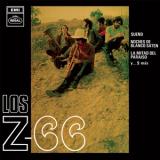
For the first time ever, the only full-length album by Spanish soul and garage legends Z-66 is being reissued. Z-66's signature blend of powerful soul, psychedelia, and pop-clearly influenced by bands like The Move, Stones, Vanilla Fudge, and Blood, Sweat & Tears delivers a bold, modern sound that remains fresh and compelling. Unlike other Spanish bands of the time, Los Z-66 enjoyed unique conditions that allowed their sound to stand out as one of the most advanced on the local scene in the late 1960s. As was the case with many other groups, their repertoire for entertaining discotheques had to include the hits of the moment and was not always open to the songs of the most daring international bands, which was the sound that most stimulated the musicians. In the case of Los Z-66, being based in Mallorca meant they had privileged access to hard to-find records, imported by foreign tourists, and to a much more modern atmosphere than in other parts of the country. Songs in Italian and French soon gave way to English hits by the Animals, the Stones, and the Beatles. But it was the offer received from Mike Jeffries, manager of Jimi Hendrix, the Animals, and others, to serve as the house band at the newly opened club Sgt. Pepper's that allowed the group to raise their live performances to a level rarely seen in these parts... They even soon incorporated the distorted sound of fuzz into their guitar when they received a fuzz face pedal as a gift from Jimi Hendrix himself, who was invited to play at the club's opening! Their excellent blend of stunning soul, psychedelia, and pop became their hallmark, not only in the band's concerts but also in the handful of singles and EPs they released on the Regal label. We are now re-releasing for the first time their only full-length album, originally published in 1969, which is actually a compilation of songs previously released in 45 rpm format, complete with two bonus tracks not included on the original LP plus a booklet with liner notes and rare photos.
dovrebbe essere pubblicato su 07.11.2025

The word "amateur" originates from the Latin word "amator," meaning "lover" or "admirer". This Latin term is derived from "amare," which means "to love". The French adopted "amateur" from Latin, and the English then borrowed it from French, initially retaining the sense of someone who loves or is devoted to something. Over time, the English usage of "amateur" also developed a meaning related to a lack of professional skill or experience. How did a word derived from love become a slur? Is love really so defenseless? They say love conquers all, but in reality isn’t love quite ridiculous? It has no intention, no motive, no agenda. How could it possibly prevail? It can’t be bought or sold, or so they say.Its mere existence can't be proven or even measured. What an impossible thing. Trying and failing, time and time again, no wonder cynicism always seems to win. I see “amateurism” as a delighted, even foolish, protest. Protest against everything. Of what’s expected of someone, or expected of someone to desire or strive for. To be elite, to be expert, to be professional, to be a master, to excel and succeed. Where’s the joy in that? I just want to have fun. I want to want. I want to love. And keep doing it, forever. I want to have fun, even when it’s tiring and sometimes even heaven is boring as hell. I want to be bad. I want to do my own thing. “I vant to be alone”. I want to be someone so dedicated to their passion that it starts to seem like there’s something wrong with them. All the way. We can take it all the way, and never get it back. ” - Molly Nilsson Amateur is the 12th studio album by Molly Nilsson. Deep in the teeth of a career that threatens to tip into something resembling a “legacy,” Molly Nilsson celebrates with an album recorded instinctively, quickly and bursting with so many moments of emotional brilliance and clarity it may be her greatest yet. Hers has been a career spent reaching out, perennially powerful in her earnestness, a warrior ridiculously defenceless and armed with a glittering sincerity. Shearing herself of the machinations of the music industry, recording at home, writing direct to the heart. Amateur is a jubilee for losers. A treatise in 13 songs, Amateur states clearly that we should live our life with eternal curiosity, offers us an open hand of comradeship out of the rat race. The songs on the album are both some of the most personal of Nilsson’s career and the most anthemic. First single How Much Is The World asks us to re-evaluate value in the face of a Neo-liberal system squeezing the life out of our loves. Pulsing opener Die Cry Lie satirises the commercialisation of emotion in the form of a shout-along diss-track. With a pounding rhythm track held down by gorgeous chord changes, heartbreaker Valhalla carries the torch for the main themes of the album: never growing up, making mistakes with kindness, moving on. When the drums crash in on the line “It’s going to get better now, you’ll see, going to be much better off without me” there is a world of feeling swirling about in the vocal delivery. One reading of the track might be that it’s a break up song but the subtext is classic Molly Nilsson: by living truthfully, making mistakes, we’re active agents against the myriad oppressions of the world. All The Way takes the theme for a run into the eternal sunset. It’s a manifesto for living fully. “Take it all the way, and never get it back” - it’s the process that’s the important point. The journey not the destination. Big Life, follows on like a part 2: An ode not only to Molly Nilsson’s career of endless gigs, endless connections with people, it’s a massive ode for following your dreams, doing it yourself. Closer The Bitter End is a powerful anthem for friendship, another definition of love infused in Nilsson’s work, A beautifully poignant ode to comradeship til the end, it seems to be the songwriter approaching aging, approaching life’s inevitability with the same vigour and earnestness, the same love of life she enjoyed at the onset of her career. There are moments on Amateur shrouded in reverb, slightly out of focus, forcing the listener to step deeper into the Mollyverse.. Nilsson’s open-armed beseeching to the world permeates every beat, every chord. These are songs exploding with life: the chunky, aggressive bassline on the punker Get A Life can’t hide its massive, catchy chorus. The sweeping Swedish Nightmare might be a tongue-in-cheek self-reference, but at its heart it’s a song about the duality of living life large, what is a dream, what is a nightmare? Molly Nilsson says you can’t have one without the other, and why would you want to? Here’s to making mistakes.
Ordina ora e ordineremo l'articolo per te presso il nostro fornitore.

Blue Vinyl[46,64 €]
dovrebbe essere pubblicato su 31.10.2025
Black Vinyl[44,50 €]
dovrebbe essere pubblicato su 31.10.2025

Rotterdam's Bright Message Records' second release is the highly anticipated 12-inch vinyl "KING INNA THE RING," produced by Imperial Sound Army. The title refers to the powerful vocal version, sung by UK-based King Stanley, which immediately creates the impression of a true anthem and a strong tribute to Jah Rastafari. The vocal version is paired with a dub cut that strongly emphasizes this element of praise. The way this dub connects the A-side and B-side of the record, reveals both Dan-I's years of experience as a soundsystem selector and excellent production skills.
The B-side contains the fantastic melody version "TROMBONE INNA THE RING." With an unexpected intro and upfull vibes, Matic Horns shows he grooves like no one does and keeps the melody tuff till the end. The final track is a dub of Matic's melody version, in which Dan-I explores the full depth of his riddim.
"King Inna The Ring" is a versatile record that captivates from start to finish and was played as dubplate by a handful of well-known soundsystems during the summer of 2025.
Play it loud and let the world know who's the KING INNA THE RING!
Vocals: King Stanley (UK)
Trombone melody: Matic Horns (UK)
Horns vocal riddim: Ital Horns (UK)
Keys: Smiling Roots (IT)
Riddim, mixing and production: Imperial Sound Army (IT)
Mastering: Pressure Mastering (UK)
Ordina ora e ordineremo l'articolo per te presso il nostro fornitore.

After returning from Australia, Brian Baker has wasted no time in making an impact on the NZ scene with much heralded and reviewed singles and film clips, and in particular his solo show which has seen him perform at gigs and Festivals across the country. Now he"s joined two local Whanganui Musicians, Stu Duncan and pro drummer Brad MacMillan, both seasoned performers. The act is called BB and The Bullets and has a focus on the blues, doing tracks by Albert King, BB King, Muddy Waters plus some Stevie Ray Vaughan and other blues classics. They also feature some of Brian"s excellent releases and have a few of their own recorded. These tracks make up their debut LP which will soon be released on vinyl, CD and digital through Nixon Street Recordings, Whanganui"s own international record label. Yes, the guitaring that made Brian"s solo show stand out is heavily on display here, now backed by a tight, live rhythm section. Their shows have been very well received wherever they have performed, getting standing ovations at the recent Bay Of Islands Jazz and Blues Festival where they played six standout shows over three days ! They are drawing crowds wherever they appear, have been invited back to the Capital Blues Inc in Wellington after a knock em dead show there, and were a solid crowd pleaser at Snells Beach this summer for Auckland city council"s Music In Parks series. They are delighting audiences with rock solid, emotive performances of classic blues tracks underlined by undoubtedly one of the finest guitarists New Zealand has produced !
dovrebbe essere pubblicato su 31.10.2025
"It may surprise some that, after two decades of silent films, when Alam Ara broke the silence in 1931, it and every South Asian talkie that followed was what we in the West think of as a "musical." Music had been integral to the culture's staged drama going back to the Gupta Dynasty — sometime between the 4 th and 6 th Century CE. Since its inception, South Asian cinema drew heavily from Marathi, Parsi, and Bengali musical theatre and silent film screenings were often accompanied by live music to mimic a live staged experience.
When sound films arrived, actors with serious singing skills became the next wave of stars. Songs were performed live while shooting, with musicians hidden off-camera, to the side or sometimes even in trees. Playback singing — the practice of dubbing a real singer's voice over a lip-syncing actor — didn't become standard until the 1940s.
Thus, the biggest stars of the 1930s were also the greatest singers, with some, like Govindrao Tembe and Pankaj Mullick, excelling as both composers and vocalists. None, however, were more beloved than K.L. Saigal, whose emotional, untrained crooning captivated audiences across the subcontinent. Saigal's voice inspired a young Lata Mangeshkar, who vowed to become India's greatest filmi singer to win his heart. Sadly, Saigal grew increasingly addicted to alcohol, unable to perform without it, and passed away at age 42, seven months before the Partition. Lata never married.
This collection features some of the earliest songs from South Asian cinema, sourced from CDs and LPs found in Jackson Heights, Queens, Coney Island Avenue in Brooklyn, Lexington Avenue in Manhattan, and Oak Tree Road in Iselin, New Jersey — areas home to vibrant immigrant communities. South Asian immigration to New York and New Jersey surged after the 1965 Immigration and Nationality Act, which lifted non-European quotas. By the 1990s and 2000s, the region's Indian, Pakistani, and Bangladeshi media outlets flourished, especially in Jackson Heights, where such stores outnumbered the total number of regular record shops throughout the five boroughs.
The nascent period of sound film featured a limited palette of musical styles, predominantly Marathi Bhagveet, like the Ghazal, but with greater flexibility of subject matter and rhythm, and Rabindra Sangeet, the approximately 2,000 songs and poems composed by Bengali Nobel laureate Rabindranath Tagore. But there was some evolution as well, with the success of South Asian cinema's first woman composer, the classically trained Saraswati Devi, and the introduction of Western instruments including the piano and Hawaiian guitar.
While much of the music was dark and brooding, perhaps exemplified best by Devika Rani's interpretation of Saraswati Devi's "Udi Hawa Mein" from 1936's Achhut Kannya (Untouchable Maiden), there were moments of brightness, such as R.C. Boral's "Lachhmi Murat Daras Dikhaye" sung by Kanan Devi in Street Singer, an otherwise thoroughly depressing film from 1938 that cemented Devi's and co-star K.L. Saigal's superstardom.
This selection was chosen to emphasise a range of expressivity, instrumentation and style achieved even within the decade's relatively limited scope, setting the listener up for the relative explosion of possibility in the 1940s, to be covered in the next installment of this series."
Ordina ora e ordineremo l'articolo per te presso il nostro fornitore.

Limited edition BROWN & BLACK SWIRL vinyl 1000 copies worldwide. Remastered by Bob Weston at Chicago Mastering Service. Originally released in 1989 vinyl reissue includes 2 bonus tracks. "...one of the best examples of melodic hardcore just a step away from emo. The album is excellently played and is full of breathtaking anthems that, from time to time, even wink at metal soundscapes." - Debaser - // Naked Raygun were an extraordinary staple in the Chicago music scene - beginning in the early 80's and continuing until their quiet demise in the early 90's. Their music showed the world that punk rockers could play and be really good at it. Founded in Chicago in 1980, by Marco Pezzati, Jeff Pezzati and Santiago Durango, Naked Raygun released six albums during their eleven year career that would change the sound of punk rock indefinitely. The band is widely recognized as being one of the most influential punk bands of the 80's. Their anthemic style incorporated politics in a uniquely accessible way, melding pop and hardcore into one cohesive sound, that would later be dubbed, "The Chicago Sound". Shortly after their first release, Basement Screams, Durango left to join Big Black permanently, and was replaced by John Haggerty, whose unique style of buzzsaw guitar would define Raygun's sound for their next four albums. Additionally, Pierre Kezdy replaced Camilo Gonzalez and Eric Spicer took over drums for Jim Colao. In 1990, Haggerty left the band to start Pegboy. Bill Stephens joined the band for their final studio release entitled, Raygun...Naked Raygun.
dovrebbe essere pubblicato su 24.10.2025

Next up on Luke Slater's Mote-Evolver is Primal Instinct co-founder Chlär with the 'Topography' EP. It follows his debut album, 'The Architects of Shadows', which came out on Primal Instinct at the tail end of 2024, and sees the Swiss-bom, Germany-based artist deliver four more tracks of unmistakable, dance-floor-primed Chlär sound.
Chlär's 'Topography' EP embraces Mote-Evolver's tradition of deeper groove Techno with finesse, seeing 'Altitude' kick off proceedings as a heads-down slice of hypnotism featuring can't-miss Techno rhythm while otherworldly creatures add to the atmosphere. 'Serac' then delves even further, its effective bassline welded together with subtle sequences before we flip the record around for 'Lamin', a track rife with ghostly dub chords and remnants of a vocal sample. Closing out the trip is 'Phantom Grid', a clap riding its groove as it builds the intensity, dropping the pressure with hammering kickdrums and excellent, warped percussion for another lose-yourself club offering from the ever-promising Chlär.
Ordina ora e ordineremo l'articolo per te presso il nostro fornitore.

Black Vinyl[45,25 €]
Effortlessly picking up from their excellent demonstration cassette, it sees the band refining their sound even further. An audio amalgamation combining the profoundness of early Ulver, with the gloom of old Katatonia and exalted boldness of Fields of the Nephilim, thus adding unique elements of nostalgia and atmosphere to their own melodic interplay of guitars and excellent musical framework.
The album contains strong signs of a band that knew at a young age how to draw their canvas. Very Scandinavian in nature, and influenced by the American landscape of the Pacific Northwest, it firmly put Agalloch on the map and raised eyebrows about what a band from North America would be capable of. As a person that grew up checking out records based on their cover-artwork alone, this album is particularly notable for such an experience, considering the wooden cover with a gold emblazoned logo engraved. This is music that glorifies the night sky, envisions campfire magic, heralds nature over humans, arcane arts & poetry, and worships the beauty of a crackling fireplace. It could be the soundtrack for a lone wanderer striving through a wintry storm, only to end up knocking on a faded
wooden door to find shelter in a desolate cabin. In many ways the sound of forlorn times.
If you are looking to fill your heart with woodsmoke and the fire of
the mountain's spirit, look no further.
"Pale Folklore was a watershed moment in American heavy music, when a few young musicians with a shared love of underground death metal - and broad personal tastes beyond - turned their already virtuosic talents toward a fresh hybrid of metal and neofolk through a gothic lens." - Daniel Lake / author of USBM: A Revolution of Identity in American Black Metal
dovrebbe essere pubblicato su 17.10.2025

Smoke Vinyl[45,25 €]
Effortlessly picking up from their excellent demonstration cassette, it sees the band refining their sound even further. An audio amalgamation combining the profoundness of early Ulver, with the gloom of old Katatonia and exalted boldness of Fields of the Nephilim, thus adding unique elements of nostalgia and atmosphere to their own melodic interplay of guitars and excellent musical framework.
The album contains strong signs of a band that knew at a young age how to draw their canvas. Very Scandinavian in nature, and influenced by the American landscape of the Pacific Northwest, it firmly put Agalloch on the map and raised eyebrows about what a band from North America would be capable of. As a person that grew up checking out records based on their cover-artwork alone, this album is particularly notable for such an experience, considering the wooden cover with a gold emblazoned logo engraved. This is music that glorifies the night sky, envisions campfire magic, heralds nature over humans, arcane arts & poetry, and worships the beauty of a crackling fireplace. It could be the soundtrack for a lone wanderer striving through a wintry storm, only to end up knocking on a faded
wooden door to find shelter in a desolate cabin. In many ways the sound of forlorn times.
If you are looking to fill your heart with woodsmoke and the fire of
the mountain's spirit, look no further.
"Pale Folklore was a watershed moment in American heavy music, when a few young musicians with a shared love of underground death metal - and broad personal tastes beyond - turned their already virtuosic talents toward a fresh hybrid of metal and neofolk through a gothic lens." - Daniel Lake / author of USBM: A Revolution of Identity in American Black Metal
dovrebbe essere pubblicato su 17.10.2025

Returning to Curvature for his eagerly awaited second EP, Senses brings an impressively varied array of atmospheric jungle to the table, drawing from a multitude of influences across the musical spectrum with Convex Reflex.
A1 - Ratio
A break-laden intro lays the groundwork for a considered foray into the old-school - Senses flecking the mix liberally with synths and female vocal hits of yesteryear, before the welcome crunch of thunderous amens takes over. A cascade of rip-roaring edits
floods the track taking you on an epic ride through the ages, breaks chopped with riotous energy confirming this track as a perfect DJ tool for the dancefloor.
A2 - Sun Runner
Beautifully crisp drums open a DJ-friendly intro to Sun Runner, delightfully clear sounding with distinctive cymbals, a thick snare and subtle bongos. An airy soundscape soon washes into the mix with calming synths and flutes, creating a delicately jazzy blend of styles with soothing melodies contrasting perfectly with the breaks. More pronounced synthwork follows to spice things up as the bassline rumbles along below.
B1 - Spirit Vector
Dense atmospherics are the order of the day as Senses deploys Spirit Vector, opening with an array of synths and strings to create an intro reminiscent of Intense's work in the late 90's. Soon we are treated to a paradoxical assortment of heavy amens that work impeccably in the mix - thundering forth with pads soaring high and a heavy sub bass below. Various instrument samples litter the breakdown before a vocal sample declares "Yes". Yes indeed.
B2 - Still
Closing the EP in style, Still opens with sparse breaks, lightly building with extremely subtle apache breaks in the backdrop with sporadic keys and smooth pads. The drop arrives with warm, room-filling basslines and synths to elevate the atmosphere alongside luscious flute samples.Layers are added to the excellent breaks as Senses sprinkles instrument samples, keys and a classic female vocal, completing a joyous composition for Curvature.
Words by Chris Hayes (Spatial / Red Mist)
Ordina ora e ordineremo l'articolo per te presso il nostro fornitore.

An exclusive collaboration lands on Drumcode, with Bart Skils linking up with rising German artist A.D.H.S for the divine ‘Can’t Hear You’. Fresh off the excellent ‘Torn Clouds’ single with Weska on Drumcode, Bart Skils is on-point as ever with his production output. The Dutchman has enjoyed a strong summer highlighted by Awakenings and a sunrise set at the iconic Fusion Festival. Meanwhile A.D.H.S is no stranger to Drumcode, having shared slick contributions to past A-Sides compilations including ‘Razor’ and ‘2Step’. He’s otherwise dropped strong releases on Exhale, Spannung and Electric Ballroom. “Can’t Hear You” was born during a Sri Lanka holiday after A.D.H.S injured his back and spent time sketching ideas on his phone. “I started playing around with samples on my phone and found this beautiful vocal and just started sketching some ideas. No pressure, just emotions,” A.D.H.S explains. “Back at the little jungle studio I had set up, I kept working on it – really taking the time to find the right chords to match what I was feeling at that moment. It’s a bit of an unusual track, and I had no intention of ever releasing it. It was just for this moment,” he shares. A.D.H.S begun testing an early version at open airs and festival, later uploading a teaser clip onto Instagram. When Skils heard the track’s unique vocal line, he was hooked. “It was a no-brainer for me to decide to work on the track with Bart, I’d been a big fan of his for years. He brought in his ideas, worked on the mix and arrangement, and together we shaped it into a version that we both absolutely love.
It’s one of those rare tracks that just capture a moment.” Indeed ‘Can’t Hear You’ is an emotional behemoth; one of those rare tracks that sounds genuinely unique and is simultaneously a banger and tear-jerker in one. “When I first heard the clip Michael (A.D.H.S.) shared of ‘Can’t Hear You,’ I was hooked by the infectious vocal. We decided to craft a full collab blending both our signature sounds, and the result is a rolling party weapon that’s become my go-to closing track,” shares Bart Skills.

Following up the big room belters on Pablo and Shoey 'Raw Human Emotion' EP was going to be quite the task for those lovable Dublin disco messers at Fatty Fatty Phonographics, so they handed the reins over to one of the true maestros of the artform - NYC legend Mr. K.
The A-side is a propulsive extension of 'Let The Sunshine In', featuring ecstatic, gospel-shouting breakdowns. Dropped at the right moment, this is one of those tunes that brings everyone together with that look on their face, the hairs on the back of the neck standing up, arms instinctively flying toward the sky, disco fingers aloft...Excuse us, we just have something in our eye here...
Flip it over for a serious one for the heads...A few years ago Mr. K put out '1,2,3' on a 7-inch on the aptly named Most Excellent label. It was an edit of a roaring clav-funk number from the acetate collection of the legendary 'DJ's DJ' Walter Gibbons.
The Fatty folk persuaded him to revisit it, and he did a magical job of extending it out across the full 12 inches of vinyl, just the way the good Lord intended. 2 sides of utter dancefloor devastation here, be quick!
Ordina ora e ordineremo l'articolo per te presso il nostro fornitore.

This is the first collaboration between singer-songwriter Leola, who has released numerous ocean-themed works and is considered a bridge between Japan's
surf music scene and J-pop, and GIRA MUNDO, a Brazilian-based artist who has worked with Kimaguren, Aimyon, Ketsumeishi, and other J-pop artists.
The lyrics are by Leola, a love song set against the backdrop of a sunset beach, depicting feelings for a lover. Leola's vocals, which are both sad and pure,
evoke the gentleness of the setting sun reflected on the water's surface. GIRA MUNDO's sound production features a city pop-inspired beat, 90s-inspired rhythms,
and an excellent arrangement with beautiful piano and acoustic guitar sounds that add a natural feel. Be sure to listen to this as the perfect soundtrack for a
late-summer sunset.
This single is from "SALT... meets ISLAND CAFE -Sea of Love 3-," a surf music compilation curated by "SALT...," a magazine that proposes new values in
beach lifestyle and surf culture.
dovrebbe essere pubblicato su 10.10.2025

Questo articolo non è stato ancora rilasciato. È possibile pre-ordinare il prodotto ora.

There's no denying that 3 Chairs sole self-titled album, first released in 2004 and now reissued in a fresh 2025 edition, is a high watermark in Detroit electronic music culture: a decidedly dusty and ultra-deep collective endeavour from Motor City heavyweights Kenny Dixon Jr (AKA Moodymann), Malik Pittman, Rick Wilhite and Theo Parrish that somehow managed to sound even better than their respective solo productions. Highlights include the chugging, Rhodes-laden beatdown sweetness of '3 Chairs Theme' (featuring Norma Jean Bell), the ultra-deep and gently jazzy dustiness of 17-minute epic 'Blackbone Waltz', the organic deep house excellence of 'Dance of Nubia' (which sounds like it could have featured on the St Germain album Boulevard) and the sample-rich, slow-motion shuffle of 'Underwater People'.
Ordina ora e ordineremo l'articolo per te presso il nostro fornitore.

Francois Kevorkian (Wave) : Lovely EP, atmospheric vibes.
Chris Udoh (Various) : Lovely !!!
Lea Lisa (Phonica Records / Folklor Club) : Fred P is a master of deep house. Live Long Love & When in Miami for me.
Will Hofbauer (Third Place, Wisdom Teeth, Rinse) : nice n deep ty!
Radio Slave (Rekids) : The King is back and what an EP ! Full support.
Jon Hester (Rekids, EDEC, Les Enfants Terribles, L.A.G.) : Lovely vibes on When In Miami and Live Long Love!
Jacques Renault : Nice EP, into When In Miami and The Heights in particular
Danny Howells (Dig Deeper) : Love Fred so much, always the highest quality music with soul. All four are stunners.
Dan Beaumont (Chapter 10 / NTS) : Always brilliant.. deeep! When in Miami for me
DJ Sprinkles (Comatonse) : thank you
Kai Alce (Real Soon) : Live Long Fred P!
Tomoki Tamura (Holic Trax) : pure class, deep house
Raresh (ar:pi:ar) : super! thanks
Laurent Garnier : FRED P alwayssssssssssssssss
Marcel Dettmann : thx
Archie Hamilton (Microhertz / FUSE) : Nice thanks
DVS1 : thanks
Alinka (Twirl, Classic, Crosstown Rebels, Batty Bass) : Beautiful tracks
Pat Hyland (Northside Loft Society) : Fred P is a master of deep. AWEsome EP!
Thor (Thor-Thule Records) : Another great release by the master of Deep House. Full support
Colin Dale : One of my fave producers from way back! Excellent 4 tracker with all the cuts 'hittin' the mark'. Will rotate & support.
Geir Aspenes (G-Ha (Sunkissed)) : Thank u
Jaye Ward (Dalston Super Store / Netil Radio) : Syncrophone just continues to churn out the goodness.. love Fred P too. so deep and full of the good soul ace! thx
Ame (Innervisions) : thanks
Domenic Cappello (Subclub) : love this
Greg Gow (Restructured / Transmat / KMS) : cool vibes full support
Jerome Sydenham (Ibadan) : When Miami is the business! Overall nice E.P!
Bill Brewster (NTS) : FRED P RETURNS!
Bailey Ibbs (Metafloor Records / Habits / Dansu Discs) : Live Long Love <3

Fresh off producing a seminal documentary about the origin story of Portuguese rave culture, Shcuro returns to his mother tongue, music, to give us four slices of fresh yet classic Lisbon underground flavour right as the summer sets in. 'Echo Chamber' EP, Para?so's 17th outing, comes with two equally excellent remixes separated by the atlantic: Brooklyn's MoMA Ready and Berlin's Mareena. Side A starts with two tracks first blueprinted this past year as Shcuro prepared a new live set. 'No Expectations' opens the record with a high-paced sweat-breaker that elegantly evokes early rave culture as stabs, funk and feelings abound. A2 'Persistence' follows suit with the work that exudes proficiency: sound design, dub techno learnings and masterful layering all conspire to create a moment of pure techno draw. Closing side A, 'Deviation' pulls some of the previous track's energy even though it's a rework from the artist's earlier unreleased catalogue: another sign that we're talking realness here. Clever percussion and refreshing washes drive us well into dubby territories. 'Suspension' opens the B side, picking up where it left off with the last original: a beautifully produced piece with fleeting mutating stabs that seem to swim alongside us in an imaginary oceanic dancefloor. Liquid, refreshing sensorial motifs seem to underpin this record and that spirit spills into the remix pack, starting off with MoMA Ready's take on 'Persistence', bringing out the rawness in the original while adding a special sauce with Robert Hood-like funky yet minimalistic bleep work. Tresor's Mareena steps in for a centered, dancefloor-geared - but still mysterious - twist on 'Deviation', perfectly rounding up the record with the expertise of a club resident.
Ordina ora e ordineremo l'articolo per te presso il nostro fornitore.

Clement "Minkie" Moore's introduction to the music business came via his friend the great deejay U Roy. Back in the mid 1970s, Minkie and U Roy were both living in the Tower Hill area of Kingston, and U Roy was resident deejay on King Tubby's sound system. Minkie followed his friend and the sound, and occasionally U Roy let him hold the mic and deejay on Tubby's set. U Roy encouraged Minkie to take music more seriously, and with that encouragement, his first record "Wickedness" was made. Minkie got a cut of a rhythm from his friend the late Sydney Wilson, and voiced and mixed the rugged deejay tune "Wickedness" at King Tubby's studio. Sydney had earlier voiced this rhythm as a tune called "Why Do I Cry", but alongside "Wickedness", voiced it again with a new vocal called "Time Has Gone". In fact that tune and "Wickedness" share the same dub version. Clement continued to move in the music scene, next recording for Harry J's Jaywax label in 1979 with a tune called "Jah Is Real", as a duo named UNI-TONE along with his friend Denzil. Then in 1980, Clement revisited the great rhythm of "Wickedness", deciding to this time sing rather than deejay on the rhythm. He returned to Harry J studio, adding some choice new instrumental overdubs on the rhythm for this new cut, "Every Time I Do My Thing." In the decades since, astute roots collectors have honed in on this excellent rhythm and its several cuts, not least of all this pair of them by Mr. Clement "Minkie" Moore. It should be noted that in the manner of the day, other associates of Tubby's studio, Prophets Yabby You and Alric Forbes, also utilized this rhythm. Minkie's musical journey continued thru the 1980s, when he linked with American group Lambsbread, writing and performing on their second album which was recorded at Channel 1 in early 1987. In the 1990's Clement returned to self-production on his Allah label, in addition to cutting a 45 for Chinna Smith's High Times label. Nowadays Clement is still going strong, occasionally dropping new music like "Greedy", recorded at Bravo's Small World studio in downtown Kingston.
dovrebbe essere pubblicato su 30.09.2025

Clement "Minkie" Moore's introduction to the music business came via his friend the great deejay U Roy. Back in the mid 1970s, Minkie and U Roy were both living in the Tower Hill area of Kingston, and U Roy was resident deejay on King Tubby's sound system. Minkie followed his friend and the sound, and occasionally U Roy let him hold the mic and deejay on Tubby's set. U Roy encouraged Minkie to take music more seriously, and with that encouragement, his first record "Wickedness" was made. Minkie got a cut of a rhythm from his friend the late Sydney Wilson, and voiced and mixed the rugged deejay tune "Wickedness" at King Tubby's studio. Sydney had earlier voiced this rhythm as a tune called "Why Do I Cry", but alongside "Wickedness", voiced it again with a new vocal called "Time Has Gone". In fact that tune and "Wickedness" share the same dub version. Clement continued to move in the music scene, next recording for Harry J's Jaywax label in 1979 with a tune called "Jah Is Real", as a duo named UNI-TONE along with his friend Denzil. Then in 1980, Clement revisited the great rhythm of "Wickedness", deciding to this time sing rather than deejay on the rhythm. He returned to Harry J studio, adding some choice new instrumental overdubs on the rhythm for this new cut, "Every Time I Do My Thing." In the decades since, astute roots collectors have honed in on this excellent rhythm and its several cuts, not least of all this pair of them by Mr. Clement "Minkie" Moore. It should be noted that in the manner of the day, other associates of Tubby's studio, Prophets Yabby You and Alric Forbes, also utilized this rhythm. Minkie's musical journey continued thru the 1980s, when he linked with American group Lambsbread, writing and performing on their second album which was recorded at Channel 1 in early 1987. In the 1990's Clement returned to self-production on his Allah label, in addition to cutting a 45 for Chinna Smith's High Times label. Nowadays Clement is still going strong, occasionally dropping new music like "Greedy", recorded at Bravo's Small World studio in downtown Kingston.
dovrebbe essere pubblicato su 30.09.2025

4 track 12"; A-side two vocals, B-side vocal w/ version.
B-side is previously unreleased mixes/version.
Comes in Wackie's company sleeve.
Better-than-before new edition of our long out of press previous 10" from 2014, now with something extra. This release corrals three excellent vocals that originally appeared on a couple different compilations. For this new 12" release, with "Home To Africa", instead of the cut from "Wackie's Selective Showcase Vol. 1" LP as before, we have the tune in a different mix straight from the original session tape, plus a nice raw rhythm version, newly mastered by Bullwackie himself just for this re-release.
dovrebbe essere pubblicato su 30.09.2025

Brand new music/previously unreleased.
Mfg. by Jerry Harris, distributed by DKR/Bond Export.
Brand new release on Jerry Harris' Motive Records, top notch modern roots reggae with a classical feel from the veteran himself. Proper message music, much needed. Excellent stuff here from a true solider of the music still out here making the real thing.
dovrebbe essere pubblicato su 30.09.2025

South London singer, songwriter and cultural powerhouse Joy Crookes has today unveiled the news that her worth-the-wait second album Juniper will be released on September 26th ahead of a full UK & EU headline tour.
A stunningly candid and fearless body of work, the album reaffirms Joy as one of the UK’s most vital and original voices. A once-in-a-generation talent, Crookes delivers a record that is both emotionally raw and sonically rich; humorous, heartbreaking and profoundly human.
Following the success of her 2021 debut Skin, which earned BRIT and Mercury Prize nominations, went Top 5 in the UK charts, and drew acclaim from The Guardian, NME and many more, Joy set out to make an album that pushed her further both musically and personally.
Juniper is the result: a project defined by its depth and dynamism.
Written with a stripped-back approach and produced by long-time collaborators including Blue May (Kano, Jorja Smith), Tev’n (Stormzy) and Harvey Grant (Arlo Parks),
Juniper features standout guest appearances from Vince Staples on the incendiary ‘Pass The Salt’ and Kano on the bittersweet confessional ‘Mathematics’.
Crookes describes the record as “more nuanced” than Skin: “With Juniper, every situation is visceral and I’m very much in it. It’s me in the centre of it all.”
The title itself nods to resilience (an evergreen that thrives in harsh conditions) and the album dives deep into themes of body politics, mental health, queer love, anxiety, industry hypocrisy and the ecstasy (and terror) of falling in love.
Lead singles like ‘Pass The Salt’ and ‘I Know You’d Kill’ showcase Crookes’ lyrical agility – blending poetic detail with razor-sharp wit. Meanwhile, the euro-pop inspired ‘First Last Dance’ channels euphoric melodies to mask deep emotional struggle, and the cinematic ‘Perfect Crime’ sees Joy fully self-actualise in the style of a Western showdown.
On ‘Paris’, the closing track, Joy reflects on a formative queer relationship: “Something I feared so much finally, actually felt like love.” It’s a sentiment echoed across Juniper – a record that captures the beauty and brutality of emotional openness.
The album arrives after a period of personal upheaval for Crookes, including a mental health crisis that shadowed the album’s creation. “I was in the trenches,” she says. “But the studio became my solace. What you hear is live and direct from that time.” Despite the darkness, Juniper radiates warmth, levity, and life, powered by Crookes’ ever-restless creativity and artistic excellence. Ahead of her performance this weekend at BBC Radio 1’s Big Weekend event in Liverpool, followed by a slot at Glastonbury, Joy is pleased to announce a full UK & EU headline tour for the backend of the year.
In celebration of Juniper's release, Joy will head out to all major cities including Dublin, Manchester, Bristol and London where she’ll play the much coveted 02 Academy Brixton for the first time. See below for full routing and ticket info.
dovrebbe essere pubblicato su 26.09.2025

West coast writer / producer George Semper recorded four sides on the Sherilles − a group led by Vessie Simmons, who had been lead singer for the Ribbons in the early 60s. She would go on to have a prolific solo career in the 70s, right through to the 90s. Ace sleuth Alec Palao found four Semper-produced sides on two DCT acetates and we licensed the rights from the Semper family.
These fully realised recordings are from 1968 when the group had to swiftly change their name from the attempted one of the Shirelles − which they had hoped to get away with, and presumably cash in on that outfit’s fame. A court injunction put paid to that plan and though the name change was only slight, it was never tested in court, as the tracks were never issued. ‘Nobody’s Gonna Love You’ is an excellent George Semper song and judging by the 100 Club’s audience reaction to recent plays will become a staple of forward-thinking club’s playlists.
‘Make It On My Own’ is in the same groove and not far short of the A side. Vessie would re-write and re- record it in 1975 as ‘I Can Make It On My Own’ for a solo release on her Simco label.
dovrebbe essere pubblicato su 26.09.2025

Lights… Camera… Revolution is the fourth studio album from Venice Beach, L.A. heavyweights Suicidal Tendencies. Suicidal’s flirtation with the mainstream (complete with obligatory criticism of ‘selling-out’) went Gold in the US with over half a million copies sold, and to this day remains an essential record in any Metal or Punk collection. It is an excellent record for fans of Anthrax, Metallica, Biohazard and Black Flag. Lights… Camera… Revolution is available as a 35th anniversary edition of 2000 individually numbered copies on red coloured vinyl
dovrebbe essere pubblicato su 26.09.2025

Ordina ora e ordineremo l'articolo per te presso il nostro fornitore.

A1 - The Moon On The Moors
ASC opens the EP with a distinctive, purposeful and dancefloor-friendly piece, driven by an intensely memorable drum pattern that will have your head nodding instantly - that's before the deep, earthy room-filling bassline quakes below. Filtered metallic breakbeats join the mix periodically along with string melodies and a plethora of sci-fi effects and classic micro samples. Absolutely essential stuff from the atmospheric wizard that is ASC.
A2 - Persuasion
A measured approach introduces Persuasion, with light hats and a subtle bleepy melody gradually pulling us toward a stunningly crisp slice of breakbeat heaven. Impossibly detailed rapidfire snares dominate the mix with incredible clarity that just has to be heard to be believed. Light bongos and airy synthwork nestle beautifully alongside trademark old school high pitched female vocal hits to cap off another stunner.
AA1 - Time and Again
Setting the tone immediately with thunderous, deep Hot Pants breaks - finely crafted as ever - Time and Again sees ASC explore an other-worldly setting with an uneasy intrigue to the echoing keys, while rousing strings provide a suitably nervy backdrop to the mix. A mellow yet tense breakdown is quickly nudged aside with the crunching breaks and darkly bassline, while echoed vocal hits add further texture.
AA2 - Severance
A wonderfully old school slice of breakbeat action quickly unfolds as Severance sees ASC playfully experiment with varied break patterns riddled with delicious little details you will pick out with each repeated listen. Sublime intent is present throughout with a heavy undertone bassline, not to mention the excellent sampled quote from the show of the same name - eventually we all have to accept reality. If this is our reality, bring it on.
Words by Chris Hayes (Spatial / Red Mist)
Ordina ora e ordineremo l'articolo per te presso il nostro fornitore.

dovrebbe essere pubblicato su 19.09.2025

DK takes ‘em to church! The connections between Black Gospel traditions and dance music are strong and deep, and in this latest masterclass from the Mr. K Edits series Danny Krivit explores two under-the-radar but powerful examples. After the success of his disco-funk hit ‘This Feelin’, the Washington DC-based Frank Hooker turned from the club to the chapel, releasing a full-length album of worship music set to the early ’80s sound of post-disco boogie. ‘Rise and Shine’ is a clear precursor to piano house — full of energy and giving all the hands in the air vibes of the best gospel. Danny’s edit extends the too short original and adds a sneaky isolation of the chorus vocals for an extra theatrical touch. Also hailing from the DC area, Lafreda’s ‘Church Girl Church’ is a quirky 12-inch from 1983 that has remained largely undiscovered, just the sort of left-field pick you’d expect the deep digging Krivit to have lurking in his crates. Mr. K’s edit melds Lafreda’s impassioned vocals with the stomping dub version to create an unexpectedly powerful cut that is the very embodiment of fierce.
Ordina ora e ordineremo l'articolo per te presso il nostro fornitore.

Author: Mal-One & The Glam Collective
Title: ROXY MUSIC – Then Out Of The Blue – 1971-1976 A CHRONOLOGY
Format: A5 - 232 Page Hardback Book
Who? What? Why? Where? When?
Roxy Music - Then Out Of the Blue… tells the story of the bands career, giving dates and a timeline to their events. The birth of Roxy Music just before 1971 upto 1976 including Bryan Ferry's early solo career.
A Who? What? Why? Where? When? Chronology of all their dates, places and times.
“I’ve got a favourite songwriter and band in England called Roxy Music with a character called Bryan Ferry who I think is probably spearheading some of the best music that has come out of England in years.” David Bowie.
“That was a band that broke so many barriers. They were poncy, pontificating, absurd, over melodramatic and absolutely adorably excellent.” John Lydon - Sex Pistols / Public Image Limited.
dovrebbe essere pubblicato su 12.09.2025

Deaf Club continues their scathing indictment of society with their second full-length album, being released on Southern Lord and Three One G: We Demand a Permanent State of Happiness. Fast wit and faster blast beats are mainstays of the band, but there is also a sense of growth. This is their strongest songwriting yet, incorporating more hooks and good old-fashioned moments to mosh while staying as weird as ever. Raygun guitar riffs and unexplainable sounds abound. Justin Pearson, Brian Amalfitano, Scott Osment, and Jason Klein excel at inciting emotion in the face of apathy and voicing disgust amid a world rapidly burning.
dovrebbe essere pubblicato su 12.09.2025
dovrebbe essere pubblicato su 12.09.2025
