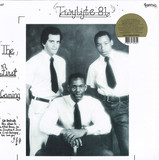
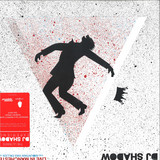
Papiro’s approach to music is never technical, but always personal. Since the mid-Nineties, he has released a handful of noteworthy albums, each carefully put together and seemingly self- contained, yet all sharing an unmistakable musical language and a certain escapist aura.
La finestra dentata (The Toothed Window), is no exception. It includes both studio and concert recordings from 2016–2020. The sounds on this album appear infinite and full of marvels, ingenious in portraying imaginary creatures and environments.
The title track and Anelli take up most of the first side and include live outtakes. Papiro likes to describe his performances as therapeutic. These swirly symphonies are specifically intended as immersive deep-listening experiences for concert venues, and have been edited for this album to meet the physical demands of vinyl and domestic use. Imagine the younger cousins of Laurie Spiegel’s Concerto Generator performance, or Terry Riley’s Shri Camel.
However, those who know Papiro only from the stage might be unaware of a different side to his oeuvre; starry-eyed miniatures that may appear frivolous in comparison to the more heady stuff, but are nonetheless well worth discovering. Each piece adds a chapter to a phantasmagoric world populated by such characters as "Giant Duckling", "King Hard-Beard", or the "Bodulator". Tracks like the opener Odilon or Il triciclo nascosto, meanwhile, emanate a candor rarely found in the domain of serious music, and revisit Papiro’s early days of instrumental storytelling.
About Papiro:
Marco Papiro is a Swiss-Italian musician, composer and graphic designer. He teaches at the Schule für Gestaltung in Basel and is known for the posters and album covers that he's created for a number of prolific artists (Sun Araw, Sonic Boom, Panda Bear, Oren Ambarchi)
Поиск:except live
Все
- 1: Intro
- 2: Messias
- 3: Königin Der Käfer
- 4: Unsterblich
- 5: Imperator Rex Graecourm
- 6: Dein Anblick
- 7: Kleid Aus Rosen
- 8: Das Elfte Gebot
- 9: Sieben
- 10: Kalte Winde
- 11: Minne (Faun Version)
- 12: Henkersbraut
- 13: Falscher Heiland
- 14: Tanz Auf Dem Vulkan
- 1: Drag Me To Hell
- 2: Island
- 3: Kein Meer Zu Tief
- 4: Arme Ellen Schmitt
- 5: Eisblumen
- 6: Sie Tanzt Allein
- 7: Ix
- 8: Veitstanz (2014 Version)
- 9: Grausame Schwester
- 10: Alles Was Das Herz Will
- 13: Outro
- 14: Julia Und Die Räuber
- 11: Aufgewacht
- 12: Ausgeträumt
Chart-breaking German folk rock institution SUBWAY TO SALLY have carved a unique live experience in stone with their upcoming release, Eisheilige Nacht: Back To Lindenpark, out on BluRay/DVD/CD on June 18, 2021 via Napalm Records. Since their foundation in the early ‘90s, SUBWAY TO SALLY have established themselves at the top of the scene. Having released thirteen studio records so far, the seven-piece featuring the remarkable Eric Fish on vocal duties never fails in surprising their devotees with an ingenious symbiosis of folk, heavy metal and rock. In the course of time, it became a tradition to celebrate every year with numerous fans and a final live show on December 30. What started as Eisheilige Nacht - with sold out solo-gigs in the band's hometown of Potsdam at the venue Lindenpark - turned into a whole annual festival tour shortly after, where top-notch bands heeded the call to join SUBWAY TO SALLY for some magical evenings. Due to the pandemic, 2020’s edition couldn’t take place in its usual form. As a result, the German folk rock unit decided to offer an unforgettable lockdown live event which they hope will be a unique way to fill the gap until they return to the stage. SUBWAY TO SALLY returned to Lindenpark and - supported by many great artists like Chris Harms (Lord Of The Lost), Joachim Witt, Feuerschwanz, Schandmaul, Saltatio Mortis, Major Voice and Patty Gurdy - created an extraordinary live experience. In an intimate setting, the recording starts with “Messias” and “Königin der Käfer” from the band’s latest chart-breaking full-length, Hey! (DE #5). SUBWAY TO SALLY then continue to not only travel through their own discography with songs like eerie “Unsterblich”, animated “Tanz auf dem Vulkan” and live-sensation “Grausame Schwester”, but also present a bunch of enchanting features as well: Don’t miss when highly talented Birgit Muggenthaler-Schmack and Saskia Forkert (Schandmaul) join SUBWAY TO SALLY for Schandmaul’s “Dein Anblick” and a premier version of “Kleid aus Rosen”, or when the band sets the exceptional stage on fire for an explosive performance with Saltatio Mortis on their hit “Sie Tanzt allein” - just to name a selection.
These tracks were recorded early-to-mid `74, almost a year after the band had formed and almost 2 1/2 years before the release of the first Saints` single in 1976. The recording was made in Ed Kuepper`s parents` garage, except for "Misunderstood" which was recorded at Queensland University, direct onto a mono cassette-deck and features the second line-up of the band. Before this the Saints were a 3-piece, with Ivor Hay on piano and no drummer. It captures the band near the beginning of its first phase, as opposed to the EMI release which was at the end, and without getting into a debate about aesthetics, this one`s probably better. In a different universe this would have been the first Saints LP.
First-ever career-spanning retrospective (1956–1980) – 5 CDs with repertoire from the Riverside, Fantasy, Verve, and Warner years. Includes the previously unreleased concert ‘On A Friday Evening’ recorded live at Oil Can Harry’s in Vancouver, BC on June 20, 1975, featuring Jazz legends Eddie Gomez on bass and Eliot Zigmund on drums. Craft Recordings proudly honors the pioneering jazz artist Bill Evans, and his enduring musical contributions, with two new titles. The first—a deluxe, five-CD box set and digital album, titled Everybody Still Digs Bill Evans: A Career Retrospective (1956–1980)—marks the first-ever career-spanning collection of music from the pianist, featuring over 60 tracks that spotlight Evans’ exceptional work as a leader and co-leader. The expansive set also includes a previously unreleased live performance from 1975, captured at Oil Can Harry’s in Vancouver, B.C. This recently unearthed concert recording will also be issued as a standalone album titled On a Friday Evening, which will be available on 2-LP, CD and digital formats, including hi-res 192/24 and 96/24.
Stand Atlantic are a female fronted band from Sydney, Australia. Their fresh blend of melodic hooks and power-driven instrumentals allow them to sit atop of the genre. With their honest lyrical nature and relentless ability to move an audience live, the band are being tipped to be the next to break through the Australian scene. At the end of 2016 Stand Atlantic entered Electric Sun studio to record their new EP 'Sidewinder' with producer Stevie Wright (With Confidence). The EP shows the band mixing accessible song writing and exceptional musicianship, balancing out both the 'pop' and 'rock' aspects of their sound.
Five years after the release of ‘Pressure Loss’ the modern master of electronic minimalism Nicola Ratti returns to Where To Now? in collaboration with Japanese MC ‘MA’, for a suite of submerged, outsider Trip-Hop.
‘Shinkai’ meets at the crossroads of the gloomy sonic snapshot world of Tricky, the South London DIY avant pop bloom of Curl/Mica Levi, the outer fringes of Hip-Hop heralded by the Anticon crew, and the deep textured minimalism of Machinfabriek.
‘Shinkai’ heralds the first time Nicola Ratti has worked with a vocalist, and MA’s unique brand of ritualistic vocal methods and experimental approaches to intonation and inflexion only enhances Ratti’s otherworldly soundscapes. The depth of meaning behind MA’s lyrics further expands this sprawling sound world, revealing a twisted beauty, a deep insight into the melancholic world MA reflects upon within his abstract wordplay – on ‘Suiso’ MA laments above Ratti’s mourning electronics….
“A ship with the wind in the sails erased a path to the skies.
Gone forever,
In sandy finality,
A scene never to be repeated,
Never to be understood.
Never to hatch,
Dreams of never continuing beyond the crossroads
A painting dissipates as the allure runs dry
Without consulting the dusk, dawn never arrives.
Agonising over the silence brought on by a stumble,
Attacked from all angles until I find my ground once more.
What comes next does not matter - just as long as it comes.
A not-so-distant-future, born from certain uncertainty.
Let me face it with wavering reservations,
Bury me in it
My sins left unanswered
Cover the snow on which it falls.
An unthawing aquarium.
An unanswering aquarium.
Hiding, evolving, recollecting, transferring,
A precarious contradiction befalls.
Timeframes cut, edited and replaced with resentment
The ritual aesthetics of a secret ceremony.
The thoughts of once again,
Fills me with dread and rage.
Painted in blood.
Alas, it was fun...”
On the surface this is an unlikely (yet inspired) collaboration – MA has been a part of the Tokyo Hip-Hop underground for many years, over which time he has stylistically leapt into noisier, more experimental territories. We have Rabih Beaini to thank for shining a light on MA’s talents, with the 2019 LP ‘AMA’ being released on Morphine records, and Beaini opening new doors for experimentation and collaboration.
‘Shinkai’ was composed and recorded between January and April 2020. The pair had met a couple of times in Japan first and then in Europe, undertaking a live collaborative experiment combining sounds and words that had not been designed to be performed together, ‘Shinkai’ reflects the fluidity of this encounter and is in essence a consequence of it.
Ratti assigns the following poetic grounding to the intentions and thematic form of the album – “Shinkai means deep sea, a place most of us will never see except on the surface. The sea depths do not belong to us, they are not places for us, we do not know them and they disturb us, they are a material that we can look at without seeing. I have always thought that height, verticality in general, was not a familiar dimension except in relation to our physicality. The horizon reassures us, the depth disturbs us. The Italian language is written and read horizontally, from left to right, the Japanese language can be written vertically and read from right to left. Does the horizon still reassure us?”
With relationships, as with music, timing is everything. When the elements sit together in the pocket, it just feels right - and that groove can’t be forced. Lovers and players can fall in and out of time, depending on the rhythms of their lives, and how they react in the moment. In the end, we’re simply either in sync or not - because Time plays its beat on all our hearts without exception.
- 01: Music Box Lba (Aka Lba’s Theme)
- 02: The Empire
- 03: Mother Earth
- 04: In The Temple
- 05: Desert
- 06: Emerald Moon
- 07: Hamalayi
- 08: The Quest
- 01: Opening For Lba (Lba1)
- 02: The Quest (Lba1)
- 03: The Rebels (Lba1)
- 04: Village (Lba1)
- 05: Hamalayi (Lba1)
- 06: Lba’s Theme (Lba1)
- 07: Song For Gabriel (Lba2)
- 08: The Empire (Lba2)
- 09: Honey Bee (Lba2)
- 10: Emerald Moon (Lba2)
- 11: Zeelich (Lba2)
The cult French game is celebrating its 25 years old with Wayô Records! Philippe Vachey, the original compositeur of this game series, achieved this fantastic Symphonic Suite with the Scoring Orchestral, recorded at the Seine Musicale of Paris!
1994-2019. For the 25th anniversary of the Little Big Adventure game series, here come the fully-licensed Symphonic Suite based on the music from these cult games by their composer Philippe Vachey, with the official support of the original team led by Didier Chanfray and Frederick Raynal! This project is, of course, led by the composer himself!
In the mid-nineties, Little Big Adventure (Relentless: Twinsen’s Adventure in USA and Asia) revolutionized the video gaming with an innovative system, a captivating storyline and characters that live in everyone’s memories. The hero, Twinsen, fights evil in a journey that leads him to discover the secrets of his destiny and to explore fantastic places around the world, and beyond!
It is the symphonic music composed by Philippe Vachey which adorns the two opuses of Little Big Adventure, with an extraordinary orchestration and quality of writing. These two titles are two standouts in the action adventure and fantasy genre. 25 years after the creation of the game, Philippe Vachey finally realizes the project of arranging the music of Little Big Adventure 1 & 2 for an exceptional symphonic suite, in collaboration with the best talents of the symphonic production in Europe!
While the Swedish progressive metal / rock pioneers and innovators Pain of Salvation continue to challenge and bend stylistic boundaries with their frontline albums (Most recently: PANTHER, 2020), InsideOutMusic continues to re-work the group’s comprehensive and ground-breaking back-catalogue: The classic 2004 concept album “BE” and the exceptional 2004 acoustic live album 12:5 are consequently now made available for the first time ever on vinyl. Both releases come as Gatefold Double-LP’s on 180g. vinyl with insert sheet and full album on bonus CD, making them essential items for any Pain of Salvation fan and collector, as well as a special discovery for open-minded progressive music fans looking for the true gems within the genre. And watch out for even more Pain of Salvation output coming soon…
11001 Records is a Berlin-based record label focused on techno, ambient, experimental and other forms of abstract visions. Co-founder of Teufelsberg Domecast, a sound installation podcast series with ambient experimental live performances using the dome at the top of Teufelsberg as a natural parabolic reverb. In ‘Dimensional Perception’, each song revolves around an object in outer space: A1 RYUGU Ryugu is the name of an asteroid. In June 2018, a Japanese spacecraft called ‘Hayabusa2’ landed on it, took some measurements and samples. After a long journey it landed successfully in the desert of Australia early December 2020. The goal is to discover what asteroids carry with them across the universe. If they carry water this could explain how life is spreading in the cosmos. A2 QUASAR A Quasar also known as a quasi-stellar object, is an extremely luminous active galactic nucleus, in which a supermassive black hole with mass ranging from millions to billions of times the mass of the Sun is surrounded by a gaseous accretion disk. They are capable of emitting hundreds or even thousands of times the entire energy output of our galaxy, making them some of the most luminous and energetic objects in the entire universe. B1 SEDNA Sedna is a large planetoid and possible dwarf planet in the outer reaches of our solar system. Its surface is one of the reddest among Solar System objects. It is a possible dwarf planet. It has an exceptionally long and elongated orbit, taking approximately 11,400 years to complete and a distant point of closest approach to the Sun at 76 AU. Understanding its unusual orbit is likely to yield valuable information regarding the origin and early evolution of the Solar System. Scientists continue speculations on its origins of this trans-Neptunian object. B2 NAMAKA Namaka is the smaller, inner moon of the dwarf planet Haumea at a distance of 25,600 kilometres. It takes 18 Earth-days for the moon to complete one orbit around the dwarf planet. Discovered on 30 June 2005 it was named after Nāmaka, the goddess of the sea in Hawaiian mythology and one of the daughters of Haumea. Photometric observations indicate that its surface is made of water ice.
Harry Wolfman has been a staple member of the Dirt Crew family since his debut collaboration with Loz Goddard in 2016. We’ve since seen considerable growth with EPs on Phonica’s “Karakul”, “Omena” and “Outplay” all lending a hand to the development of his signature sound into its now established lo-fi style, delving into a range of genres... ethereal ambience, electro and left-field rhythms, and of course deep, often break beat laden house grooves.
This new EP is no exception, Harry drops some irresistible dance tunes with “Walk With Me” and the banging title track “Sly Contrast” but also explores the boundaries of his palette with the vocal interludes “A21z” and the majestic “Courage” featuring the voice of “Mona Vale”, dipping a toe into the floaty world of lo-fi pop.
We also find ambient and Jazz elements cleverly combined in “Fhloston Paradise”. And the closing drum break joint “Wokit Shep” loops live drums, strings, piano and brass elements, twirling towards a majestic finale reminiscing dusty jazzy Trip Hop and instrumental Hip Hop pieces.
This record offers hope for better times... we are really glad to have Harry back with these strong tunes and can’t wait to hear these out again on a juicy sound system. Enjoy!
Sun Milk was recorded in two months, a much quicker process than the three years spent on their previous release, Flowers. The band recorded the album at the Pharmacy, Vroom’s home studio in Toronto, located above an actual pharmacy. It was the first album to be recorded after Little Kid solidified their live lineup, with Boothby, Vroom, and Germain having played together for over two years. Every song except “Like a Movie” began as a full-band live take, with overdubs performed democratically, with both Boothby and Germain layering guitars. It was also the first record to feature Lunn’s vocals, who joined the band shortly after the album’s release.
The result is a deeply affecting document of personal crisis, mirroring the dramatic changes in Boothby’s life—a breakup, living alone for the first time, beginning a new career. The lyrics have less Christian content and more personal overtones than other Little Kid records. “It was a relief when these songs came out,” says Boothby, “processing recent changes in my life, trying to take ownership of my identity and choices.” This lends a confessional warmth to the songs, a feeling of reconnecting with an old friend, sharing stories. Highlights include the off-kilter opening track “The Fourth” and the lovely, meandering “Ugly Moon.” The centerpiece of the album is “Slow Death in a Warm Bed.” A meditation on why people stay in flawed relationships, the song builds in calming repetitions until the guitars explode in the last minute, climaxing in a full-fledged distorted freakout. It’s one of the most beautiful and harrowing songs in Little Kid’s catalog.
The drifting, gentle “Dim Light Coming Down” features some of Boothby’s best lyrics. The narrator describes a person seeing “the likeness” of their own dead father “floating high above the road,” a mystical encounter rendered in the most plainspoken of terms. But Boothby quickly undercuts the moment: “But you'd been drinking when you saw him/And your mind was moving slow/Like your ears were full of cotton/So what he said you'll never know.” It’s a thwarted encounter that becomes more powerful for that very fact. Just before the song reaches its slow-building climax, Boothby sings, “Coming down/There’s a bright light/A gentle sound/Opening wide.” The transcendence does finally arrive, but it’s in the coming down, the hangover, the regular life that comes after the big moment. There's little wonder why it's become a live staple for the band.
The record is a high point in a remarkably consistent career. Looking back at Sun Milk, Boothby believes it’s one of the strongest in Little Kid’s oeuvre. “It’s probably my favorite,” says Boothby. “In general, I love slow songs, and this album is full of them. I like the structure of seven long songs—can’t think of too many albums with only seven songs. It gives the album an interesting flow.”
Stephanie Lottermoser’s brilliant and highly anticipated album ‘Hamburg’, is her follow-up project to ‘This Time’, which was number two in the German jazz charts in 2018 and which was characterised by Jazzthing, as “containing feather-light songs with a surprising level of thoughtfulness”.
There are some decisive differences that set ‘Hamburg’ apart from the abovementioned recording: the autobiographical elements in the storyline and the musician’s thoughts on important social topics of our time, which had a determining influence on the structure of the songs. the album - does not only focus on the city itself but lets the eye wander further away.
The result is an exceptionally entertaining album, agreeably close to the live sound of the band, intertwining elements of funk, jazz, pop and soul splendidly and of a quality rarely to be found.
Lingering at the remains of a campfire before dawn, with the politics of the personal burnt into ash, running his stick through what’s left, Wand singer/guitarist Cory Hanson is reflecting on a series of moments in which he steps farther into himself, finding the ultimate big sky country on the inside of his skull. It’s a combination of songs and sounds that journey
through bleak and broken territory and places of sweet, lush remove and it adds up to the best record he’s been involved in yet: his second solo album, ‘Pale Horse Rider’.
Cory’s first solo, ‘The Unborn Capitalist From Limbo’, was an intense affair, a grand experiment that produced inspiring,
nconventional music - but this time around, he wanted to breathe a bit easier, to feel that breath in the music as well. So he and his band drove out to the desert to record in a lowstress environment: Brian Harris’ Cactopia, a house surrounded by 6ft tall sculptural psychotropic cacti. They built a studio inside and then they made music and lived off pots of coffee and chili and cases of Miller High Life as they played guitars, bass, keyboards and drums in what seemed increasingly like a living biomech, their tech made out of fungal networks and cacti needles.
It was loose and flowed onto tape well. Recorded by Robbie Cody and Zac Hernandez (who assisted on Wand’s ‘Laughing Matter’), the sounds were great from the get-go. First takes were mostly best takes. Fuelled with DNA lifted from country-rock cut with native psych and prog strands, Cory guided his craft toward the cosmic side of the highway, a benevolent alien in ambient fields hazy with heat and synths, early morning fog and space echo spreading the harmonies wide.
‘Pale Horse Rider’’s got a lot to get out of its mind, looking around and seeing that, on the surface, things don’t always look like much. A lifelong Californian, Cory’s naturally found himself standing to the left of most of the
country. The west may be only what you make it; these days, the roadside view looks exceptionally sunbleached and left behind. ‘Pale Horse Rider’ eyes the city, the country and the fragile environment that holds them both in its hands - a record as much about Los Angeles as it can be with its back to the town and the sun in its eyes; as much about
ostalgia as new music can be with the apocalypse over the next rise.
On ‘Pale Horse Rider’, Cory Hanson moves ceaselessly forward. The old myths weave and waft, the shadows of tombstones flickering in the mirages and the light that lies dead ahead.
Lingering at the remains of a campfire before dawn, with the politics of the personal burnt into ash, running his stick through what’s left, Wand singer/guitarist Cory Hanson is reflecting on a series of moments in which he steps farther into himself, finding the ultimate big sky country on the inside of his skull. It’s a combination of songs and sounds that journey
through bleak and broken territory and places of sweet, lush remove and it adds up to the best record he’s been involved in yet: his second solo album, ‘Pale Horse Rider’.
Cory’s first solo, ‘The Unborn Capitalist From Limbo’, was an intense affair, a grand experiment that produced inspiring,
nconventional music - but this time around, he wanted to breathe a bit easier, to feel that breath in the music as well. So he and his band drove out to the desert to record in a lowstress environment: Brian Harris’ Cactopia, a house surrounded by 6ft tall sculptural psychotropic cacti. They built a studio inside and then they made music and lived off pots of coffee and chili and cases of Miller High Life as they played guitars, bass, keyboards and drums in what seemed increasingly like a living biomech, their tech made out of fungal networks and cacti needles.
It was loose and flowed onto tape well. Recorded by Robbie Cody and Zac Hernandez (who assisted on Wand’s ‘Laughing Matter’), the sounds were great from the get-go. First takes were mostly best takes. Fuelled with DNA lifted from country-rock cut with native psych and prog strands, Cory guided his craft toward the cosmic side of the highway, a benevolent alien in ambient fields hazy with heat and synths, early morning fog and space echo spreading the harmonies wide.
‘Pale Horse Rider’’s got a lot to get out of its mind, looking around and seeing that, on the surface, things don’t always look like much. A lifelong Californian, Cory’s naturally found himself standing to the left of most of the
country. The west may be only what you make it; these days, the roadside view looks exceptionally sunbleached and left behind. ‘Pale Horse Rider’ eyes the city, the country and the fragile environment that holds them both in its hands - a record as much about Los Angeles as it can be with its back to the town and the sun in its eyes; as much about
ostalgia as new music can be with the apocalypse over the next rise.
On ‘Pale Horse Rider’, Cory Hanson moves ceaselessly forward. The old myths weave and waft, the shadows of tombstones flickering in the mirages and the light that lies dead ahead.
I’ve known Alex Bleeker my entire life. Well, okay, maybe not since I was born, but there’s no doubt that I’ve shared a fair bit of memories with him over the years. We’ve acted in high school productions of Shakespeare together, gone on late-night diner runs, argued about which Weezer album is the band’s best, and swapped mutual appreciation for the music of Yo La Tengo on car rides careening around the snaky suburbia of our hometown. Just like his Real Estate bandmates Martin Courtney and Julian Lynch, we attended high school in the New Jersey enclave of Ridgewood, a place where sticky summer days yielded cool nights with a glow so nocturnal that you can practically hear the fireflies buzzing off of this sentence alone.
Indie rock—a type of music that can easily be made or listened to in someone’s garage—often dominates teenage suburban preoccupations, and both Alex and I were no exception. You can hear this legacy of listening on his new album Heaven on the Faultline, which departs from his last full-band outing as Alex Bleeker and the Freaks, 2015’s Country Agenda. Whereas that album had a more full-bodied explicitly folk-y feel, Heaven on the Faultline finds Bleeker getting back to his homespun roots over the course of its 13 songs, from the jangly guitar pop of New Jersey heroes the Feelies and YLT’s hushed, acoustic reveries to the open-hearted folk rock that marks so much of the Grateful Dead’s early catalog.
Written and recorded over the last several years, Heaven on the Faultline’s songs were initially recorded straight to GarageBand in Bleeker’s bedroom before receiving further studio refinement in co-producer Phil Hartunian’s Tropico Beauty space in Los Angeles. With contributions from Confusing Mix of Nations’ Josh Da Costa, Cameron Stallones of Sun Araw, singer-songwriter Kacey Johansing, and Parting Lines’ Tim Ramsey, Heaven on the Faultline achieves a warm and intimate feel that defines Bleeker’s mission for the album: “I wanted to capture the moment in which I fell in love with making music to begin with. This is music for myself—me getting back to music for music’s sake.”
The unsteady times we live in certainly creep into view on Heaven on the Faultline. The deceptively easygoing “D Plus” was written on the day of President Donald Trump’s inauguration with the cursed event in mind, while the anxiety of climate change hovers just above the lovely guitar loops of “Felty Feel.” “The album is very much about dealing with the anxiety of a sense of impending doom,” Bleeker states while discussing the album’s portentous vibes. “When is the hammer going to fall? How do we go forward in the face of such anxiety and experience the complexity of life?”
Tough questions with few answers, but try not to stress too much. It’s possible to experience such existential doubt while also enjoying the simple pleasures that life has to offer, and that ethos is square at the heart of Heaven on the Faultline. It defines who Alex Bleeker is, too, and is one of many reasons why I’m proud to have known this special person and artist for so long.
Larry Fitzmaurice
LIMITED TRANSPARENT RED WITH BLACK SWIRLS DOUBLE VINYL
Nine years after it’s initial release, 'The Ripper At The Heaven's Gates Of Dark' is back. The original black vinyl and CD editions sold out pretty quick, and have been a constant source of repress requests ever since. So, at Makoto’s personal request here it is. And I agree with him that it’s definitely the best AMT studio album from that short lived four piece line up.
With the exception of the album's opener 'Chinese Flying Saucer' and it's unashamedly obvious musical references to Led Zeppelin II (hello 1969!) the rest of the album locks into a much more laid-back groove than on recent AMT releases. This dynamic shift is best displayed on the 22 minute jam, 'Shine On You Crazy Dynamite' and also the album's closer 'Electric Death Mantra'. The band opt for less frantic explosions of electric guitar overload and fuzz, replacing those elements with a more epic, blissed-out and at times brooding Japanese psychedelia, with more emphasis on acoustic guitars, sitar, organ, synthesiser and at times, really trippy vocals (most prevalent on 'Back Door Man Of Ghost Rails Inn'), recalling the twisted psychedelics of early Pink Floyd. Yet still, their sound remains so expansive that it is easy to become totally immersed in this album.
Epic in proportions, cloaked in a cosmic haze and shimmering in a synth utopia. 'The Ripper At Heaven's Gates Of Dark' maintains AMT's status as masters of out-of-this-world music and reveals their darker side of the moon.
Acid Mothers Temple & The Melting Paraiso U.F.O. at the time of this recording were :Tsuyama Atsushi : monster bass, voice, soprano sax, cimpo flute, soprano recorder, acoustic guitar, cosmic joker Higashi Hiroshi : synthesizer, dancin'king Shimura Koji : drums, latino cool Kawabata Makoto : electric guitar, electric bouzouki, sitar, organ, percussion, electronics, speed guru
Recorded at Acid Mothers Temple, Japan Produced & engineered by Kawabata Makoto
Digital mastered by Yoshida Tatsuya.
LIMITED TRANSPARENT BLUE WITH BLACK SWIRLS DOUBLE VINYL HOUSED IN A NEWLY REDESIGNED FULL COLOUR GATEFOLD SLEEVE/JACKET.
Nine years after it’s initial release, 'The Ripper At The Heaven's Gates Of Dark' is back. The original black vinyl and CD editions sold out pretty quick, and have been a constant source of repress requests ever since. So, at Makoto’s personal request here it is. And I agree with him that it’s definitely the best AMT studio album from that short lived four piece line up.
With the exception of the album's opener 'Chinese Flying Saucer' and it's unashamedly obvious musical references to Led Zeppelin II (hello 1969!) the rest of the album locks into a much more laid-back groove than on recent AMT releases. This dynamic shift is best displayed on the 22 minute jam, 'Shine On You Crazy Dynamite' and also the album's closer 'Electric Death Mantra'. The band opt for less frantic explosions of electric guitar overload and fuzz, replacing those elements with a more epic, blissed-out and at times brooding Japanese psychedelia, with more emphasis on acoustic guitars, sitar, organ, synthesiser and at times, really trippy vocals (most prevalent on 'Back Door Man Of Ghost Rails Inn'), recalling the twisted psychedelics of early Pink Floyd. Yet still, their sound remains so expansive that it is easy to become totally immersed in this album.
Epic in proportions, cloaked in a cosmic haze and shimmering in a synth utopia. 'The Ripper At Heaven's Gates Of Dark' maintains AMT's status as masters of out-of-this-world music and reveals their darker side of the moon.
Acid Mothers Temple & The Melting Paraiso U.F.O. at the time of this recording were :Tsuyama Atsushi : monster bass, voice, soprano sax, cimpo flute, soprano recorder, acoustic guitar, cosmic joker Higashi Hiroshi : synthesizer, dancin'king Shimura Koji : drums, latino cool Kawabata Makoto : electric guitar, electric bouzouki, sitar, organ, percussion, electronics, speed guru
Recorded at Acid Mothers Temple, Japan Produced & engineered by Kawabata Makoto
Digital mastered by Yoshida Tatsuya.
- A1: Intro
- A2: In Your Eyes (Feat Alida)
- A3: Speechless (Feat Erika Sirola)
- A4: Live & Let Live (Feat Sam Martin)
- B1: All We Got (Feat Kiddo)
- B2: Alane (With Wes)
- B3: Better With You (Feat Svrcina)
- B4: All This Love (Feat Harloe)
- C1: One More Time (Feat Alida)
- C2: Make Me Feel The Night (Feat Tyler James Bellinger)
- C3: It's Only For You
- C4: Kill The Fire (Feat The Leonard)
- D1: Dream (Feat Colour Your Mind)
- D2: Rather Be Alone (With Nick Martin & Sam Martin)
- D3: Float
- D4: Feel Something (Feat Saygrace)
- D5: Outro
A few years ago, a certain Robin Schulz released a DJ mix on SoundCloud. Hailing from the town of Osnabrück, Germany and completely unknown at the time, he dubbed his mix “Wenn Träume fliegen lernen”, referencing the Peter Pan movie “Finding Neverland”. Seven years down the line, Robin Schulz hasn’t only found his Neverland, but keeps adding new chapters to his fairy tale.
Take this one, for instance: Robin Schulz is now the only German artist in the country’s chart history with three diamond-certified singles. Following “Prayer in C“ and “Waves“, his hit single “Sugar“ is the latest to officially reach this rare feat. Add his 275 gold and platinum awards in 30 markets, sales in excess of 20 million and nearly 8 billion global streams and you get the idea why the German DJ and producer is considered an exceptional phenomenon.
It should come as no surprise that he didn’t get there by accident. That also goes for his coming fourth album “IIII”, slated for a February 26 release. Over the course of three years, the creative powerhouse that is Schulz created ideas and worked tirelessly on the album whilst touring all around the world. “Of course, I’m absolutely stoked about gaining the third diamond award in my career”, Robin shares. “However, in my head I’m still that bloke from Osnabrück who wants to make it out there with his creative vision. With that ambition, I also approached my new album.” Some of the album’s songs are already well familiar – “Speechless” (feat. Erika Sirola)”, “All This Love” (feat. Harloe), “Rather Be Alone” (feat. Nick Martin & Sam Martin), “In Your Eyes” (feat. Alida), “Alane” (feat. Wes) and the current single “All We Got” (feat. Kiddo). Another 11 tracks are still to see the light of day and Robin is looking forward to releasing them soon: “I can’t wait to share the new cuts with you. I really hope you’ll love them as much as I do”, he says.
Robin is ready to write the next chapter of his very own fairy tale.
e 5. All We Got (feat. KIDDO) Explicit
- A1: Intro
- A2: In Your Eyes (Feat Alida)
- A3: Speechless (Feat Erika Sirola)
- A4: Live & Let Live (Feat Sam Martin)
- B1: All We Got (Feat Kiddo)
- B2: Alane (With Wes)
- B3: Better With You (Feat Svrcina)
- B4: All This Love (Feat Harloe)
- C1: One More Time (Feat Alida)
- C2: Make Me Feel The Night (Feat Tyler James Bellinger)
- C3: It's Only For You
- C4: Kill The Fire (Feat The Leonard)
- D1: Dream (Feat Colour Your Mind)
- D2: Rather Be Alone (With Nick Martin & Sam Martin)
- D3: Float
- D4: Feel Something (Feat Saygrace)
- D5: Outro
Doppler Vinyl 2x180g (1xRed 1xGreen vinyl)
A few years ago, a certain Robin Schulz released a DJ mix on SoundCloud. Hailing from the town of Osnabrück, Germany and completely unknown at the time, he dubbed his mix “Wenn Träume fliegen lernen”, referencing the Peter Pan movie “Finding Neverland”. Seven years down the line, Robin Schulz hasn’t only found his Neverland, but keeps adding new chapters to his fairy tale.
Take this one, for instance: Robin Schulz is now the only German artist in the country’s chart history with three diamond-certified singles. Following “Prayer in C“ and “Waves“, his hit single “Sugar“ is the latest to officially reach this rare feat. Add his 275 gold and platinum awards in 30 markets, sales in excess of 20 million and nearly 8 billion global streams and you get the idea why the German DJ and producer is considered an exceptional phenomenon.
It should come as no surprise that he didn’t get there by accident. That also goes for his coming fourth album “IIII”, slated for a February 26 release. Over the course of three years, the creative powerhouse that is Schulz created ideas and worked tirelessly on the album whilst touring all around the world. “Of course, I’m absolutely stoked about gaining the third diamond award in my career”, Robin shares. “However, in my head I’m still that bloke from Osnabrück who wants to make it out there with his creative vision. With that ambition, I also approached my new album.”
Some of the album’s songs are already well familiar – “Speechless” (feat. Erika Sirola)”, “All This Love” (feat. Harloe), “Rather Be Alone” (feat. Nick Martin & Sam Martin), “In Your Eyes” (feat. Alida), “Alane” (feat. Wes) and the current single “All We Got” (feat. Kiddo). Another 11 tracks are still to see the light of day and Robin is looking forward to releasing them soon: “I can’t wait to share the new cuts with you. I really hope you’ll love them as much as I do”, he says.
Robin is ready to write the next chapter of his very own fairy tale.
- A1: Shine On You Crazy Diamond Parts 1-5
- A2: Signs Of Life
- A3: Learning To Fly
- A4: Yet Another Movie
- B1: Round And Around
- B2: A New Machine Part 1
- B3: Terminal Frost
- B4: A New Machine Part 2
- B5: Sorrow
- C1: The Dogs Of War
- C2: On The Turning Away
- C3: One Of These Days
- C4: Time
- D1: On The Run
- D2: The Great Gig In The Sky
- D3: Wish You Were Here
- D4: Welcome To The Machine
- E1: Us And Them
- E2: Money
- E3: Another Brick In The Wall Part 2
- E4: Comfortably Numb
- F1: One Slip
- F2: Run Like Hell
Delicate Sound Of Thunder encapsulates a band at their best. Alongside the classic live album and full concert film (restored and re-edited from the original 35mm film and enhanced with 5.1 surround sound), included in The Later Years box set, all stand-alone editions feature 24-page photo booklets, with the 4-disc box edition including a 40-page photo booklet, tour poster and postcards. The 3-LP 180-gram vinyl set includes 9 songs not included on the 1988 release of the album, while the 2-CD includes 8 tracks more than its original release.
In 1987, Pink Floyd made a triumphant resurgence. The legendary British band, formed in 1967, had suffered the loss of two co-founders: keyboardist / vocalist Richard Wright, who left after sessions for The Wall in 1979, and bass player and lyricist Roger Waters, who had left to go solo in 1985, soon after the 1983 album The Final Cut. The gauntlet was thus laid down for guitarist/singer David Gilmour and drummer Nick Mason, who proceeded to create the multi-platinum A Momentary Lapse Of Reason album, a global chart smash, which also saw the return of Richard Wright to the fold.
Originally released in September 1987, A Momentary Lapse Of Reason was quickly embraced by fans worldwide, who flocked to attend the live tour dates, which started within days of the album’s release. The tour played to more than 4.25 million fans over more than two years, and, as a celebration of the enduring talent and global appeal of David, Nick and Richard was unsurpassed at the time.
Filmed at Long Island’s Nassau Coliseum in August 1988 and directed by Wayne Isham, the 2020 release of the Grammy Award nominated Delicate Sound Of Thunder is sourced directly from over 100 cans of original 35mm negatives, painstakingly restored and transferred to 4K, and completely re-edited by Benny Trickett from the restored and upgraded footage, under the creative direction of Aubrey Powell/Hipgnosis. Similarly, the sound was completely remixed from the original multitrack tapes by longtime Pink Floyd engineer Andy Jackson with David Gilmour, assisted by Damon Iddins.
Pink Floyd’s stellar supporting cast for the live dates included: Jon Carin (Keyboards, Vocals), Tim Renwick (Guitars, Vocals), Guy Pratt (Bass, Vocals), Gary Wallis (Percussion), Scott Page (Saxophones, Guitar), Margret Taylor (Backing Vocals), Rachel Fury (Backing Vocals) and Durga McBroom (Backing Vocals).
Technical credits include: Film Producers: Curt Marvis and Carl Wyant; Director of Photography: Marc Reshovsky; Lighting Designer: Marc Brickman, with conceptual footage directed by Storm Thorgerson, except ‘Money’ directed by Storm Thorgerson, Barry Chattington and Peter Medak. Animation on 'Time' was by Ian Emes.
"I’ve had the pleasure of being a Fall fan since I was a teen.
I was lucky enough to have some guidance from my local record shop stoner-lords.
They turned me on to many of my heroes, but once I heard my first slanted and barky Fall song, I was part of the army for life.
The word prolific gets tossed around a lot.
It almost seems like a slag-off in the press, as if they wish the artist would produce less so they wouldn’t have to do their self imposed job of judging releases for the rabble.
The Fall is subjected to this lazy word often.
Yet I can honestly say that I am SO thankful for any nugget of Fall that lands at my feet and in my brain.
Live Fall performances are always a pleasure because they seem to take what already made the Fall great and push it even a bit more into the rough and bloody uncharted wasteland that is drug scorched proto-punk and heady political poetry.
So, it is with great pleasure that we introduce this Fall bootleg soundboard recording to you.
Recorded during one of the many strong points in the bands vast and mighty history.
They really burn bright here and bring every ounce of what you expect from this formidable force.
We have reached out to every surviving member of the band, the sound person, the bootlegger who recorded it and the photographer and received their blessings & help piecing it all together.
Castle Face will be donating 50% of our profits to Centrepoint which helps the homeless in the Manchester area get back on their feet, so the local and deserving Fall fans get a little, and give a little back, too.
Nothing but the hits here folks and as raw as you dig it.
This one really is exceptional in terms of live sound for The Fall.
All the stars were aligned over St. Helens that eve.
And it wouldn’t be complete with a bit of Fall fan saltiness so, fuck you too, Jason.” - John Dwyer
It’s out on Castle Face Records exclusively on vinyl (12” and a 7” in a gatefold jacket, including a digital download) on February 19th
Angel Tears in Sunlight is Pauline Anna Strom's first album in over thirty years; an assemblage of music that refracts the expansiveness, and minutiae, of imagined realms while embracing the kaleidoscopic echoes of our distant epochs. The capacity to collapse time might elucidate the enigma of Pauline Anna Strom. A mystic force in music, emerging during the dawn of new age as the Trans-Millenia Consort, the pioneering synthesist channelled primordial energies into future-facing sound through a series of full-length releases between 1982 and 1988. Little was known about her, except by a constellation of devoted followers who saw a unique legacy forming amidst the (mostly male) synthesist canon of the time. Following the 2017 release of Trans-Millenia Music, an anthology revitalizing the most evocative parts of Strom's catalog, the Bay Area visionary sensed the universe telling her to return to music. As with her work in the 80s, Angel Tears in Sunlight was composed and recorded in the same San Francisco apartment where Strom has lived for almost four decades in synthesis with her machines and "dinosaurs." Populated by a compact array of modern instruments that streamline the sound of her analog past and her beloved iguanas, Little Soulstice and Ms Huff, the terrarium of her home forms an intimate yet limitless ecosystem that defies the constraints of the outside world. Within this sanctuary, Strom becomes lost in time, drawing on the ancient energies of her inner visions. Her hardware forms the crux of translating these ideas into sound. "It's the only way this stuff can be pulled out of myself, the universe, Little Soulstice, an ammonite_," Strom notes. "It couldn't be done without this machinery, because there's no other way to draw and capture these frequencies into sonic interpretation." Strom's process of recording transient live-takes enriches the mystery of her work. She renders the machinery a composer itself, a cohabitation with a living other. "Many musicians wouldn't go that far because of ego," Strom muses. "The equipment has to become part of you and your creativity. That's how I think it all comes together." Music-making becomes a harmonic language of intuition with an instrument, where Strom cultivates sound for a harvest that defies season. Shaped by circadian contours, Angel Tears in Sunlight is a celestial observatory of earthborn phonic mosaics. Strom uncovers a symbiosis between hardware frequencies and apparitions of nature in the record's arena of organic tones, emulating the melodic pulses of primeval terrain. The album transcends both shadow and light, falling to hushed stretches of sound as if not to awaken antediluvian animals, before soaring through the treetops where ancient skies peer over reptilian traffic and unsparing rains.
Hunt & Gather’s debut vinyl release comes by way of Pezzner’s cryptic moniker “The Native Language”. Written as a quasi-homeless man living off the rich in the San Juan Islands who writes music once per year to suffice his own delusions.
Walking the streets in these damp, anxious days that all run together lately, I was approached by a man who would blend right into the neighborhood, layered in flannel and sweatshirts for sleeping.
Rough, but for his shoes. (Never cheap out on anything that separates you from the ground.) “Pezzner,” he called out, from a safe distance. “What did the mangrove say to the marauding hordes.” My soul left my body for a moment and my voice responded on its own. “Petrichor.”
He caught my eye, nodded, left a padded envelope on the ground and vanished. The envelope had passed through many hands, slipped into the bed of a ferry-bound truck, passed from one fellow traveler to another, stashed under the counters of anarchist bookstores, left tucked between books at Little Free Libraries. The greenish stains suggested that at one point it had been swum across a lake. Another DAT, contents encoded here unabridged, and a letter from someone who called himself The Sentinel.
The Vessel lived out his days on Shaw Island, under a canopy of trees that gets smaller and smaller every season. His condition the same, any electricity lit his brain on fire, could only bring himself to compose one day a year, only at night, out of sight. Until he met The Angel, an eccentric with means, who built for him a device.
A Faraday Cage to block all electromagnetic emissions. Burlap walls, for atmosphere. A system of pulleys and levers, wood and rope, all running into a box that sat outside. An entirely mechanical control surface. No electrons in here. The Vessel lit fires, watched the shadows dance, closed his eyes and disappeared into the motion for hours at a time. The Sentinel came every morning to change the tapes. The Angel watched and pondered, his plans unknown.
The box sat sealed, bare except for another set of ideograms, scratched in day by day over time. Inside, the usual bedroom-producer shit. Outside, the ideograms told a story, passed from the Vessel to the Sentinel and drawn by the Angel, of a man who became another creature. Alert to the lowest frequencies, feeling music deep in the soil below their feet. Music that brings messages, from distant friends, warning of new creatures and the danger they brought. Skin alive to the world, so sensitive it can detect the landing of a single fly. A mind capable of keeping a map of the world inside. A mind that can look in a mirror and see a soul it knows well. A mind that can grieve.
After processing its contents, I filled the envelope with granola bars and walked it down to the market. The clerk gave me a knowing look as I placed it on the counter behind a stack of pork rinds from the previous century. As I walked out, a young man carrying a plastic bag and wearing impeccable shoes walked in.
"On Tour" - Delaney Bramlett (g, voc); Bonnie Bramlett, Rita Coolidge (voc); Eric Clapton, Dave Mason (g); Bobby Keys (sax); Jim Price (tb); B. Whitlock (org, voc); Carl Radle (b); Tex Johnson (bgo, cga); Jim Gordon (dr)
This 42-minute-long live album, which was recorded in December 1969 in Croydon, England and was awarded 5 stars by the magazine Rolling Stone, is not only the culmination of Delaney & Bonnie’s creative output, but also marks their connection to the further careers of Eric Clapton and George Harrison. On this particular tour Clapton plays the same mixture of country music, blues and gospel that were to hallmark his own early solo appearances from 1970. He rose to the occasion with consistently brilliant virtuosity; the highlights are a dizzying solo in "I Don’t Want To Discuss It", a lengthy 'Slowhand' passage in "Only You Know And I Know", and a dry fervent introduction to the wonderfully balanced "Coming Home". Vocally Delaney & Bonnie were never better than on this live set, and the 11-piece band sounds musically more close-knit than many a quartet of the times, regardless of whether they are playing a lengthy blues number or a medley of Little Richard songs. It is certainly no coincidence that the band featured here would become Clapton’s own choice for his first solo LP, or that the kernel of this group – Bobby Whitlock, Carl Radle and Jim Gordon – would metamorphose into Derek and the Dominos, or that the bulk of the band would constitute the group that would perform with George Harrison in "All Things Must Pass" and The Concert For Bangladesh, except that their playing (not to mention the recording) is better here. Half the musicians on this record attained near-superstar status less than one year later, and although their fame was fairly short-lived, this is certainly justified, as you will ascertain when you listen to this live performance.
This Speakers Corner LP was remastered using pure analogue components only, from the master tapes through to the cutting head. More information under pure-analogue.
All royalties and mechanical rights have been paid.
Recording: December 1969 live at Fairfield Halls, Croydon (UK), by Andy Johns and Glyn Johns
Production: Delaney Bramlett and Jimmy Miller
The fourth 10-inch EP from the 10th anniversary of U Know Me Records series comes from Immortal Onion. The album consists of 5 pieces. For those missing live concerts there are 2 songs taken from the band's performance on 8th of August at Jassmine club in Warsaw. The B-side starts with a rework of the song called "Leaving", originally composed by Hania Rani (who often performs with 2 members of Immortal Onion). The next song ("Zu Hause") was created especially for this album as the result of the band's experiments with electronics. The EP closes with a rework of "Eye Tracking" - a song from "XD Experience Design - made by Kadrych.
The rework of "Leaving" will be released only on vinyl and won't be available on streaming services.
Strictly limited edition - 300 hand-numbered copies. The first hundred will be released on red vinyl and copies from 101 to 300 as classic black ones.
The album was created with help of trusted people, who also worked on "XD Experience Design" - graphic design by Martiszu, mix by Envee (except the last song mixed by Maciej Stendek) and mastering by Eprom.
A folk/bluegrass troubadour from Vermont who delves into shape-note traditions and Appalachian ballads and makes it all beguilingly his own. His guitar lines have the fancy fingerwork of a crack banjo player and his banjo lines have the tugging suspensions of a jazzer.’ – Guardian
‘Amidon is a rare Americana artist whose … signature banjo-strewn style … and disparate mix of influences play into a sound that is at once archaically rootsy and savvily refined.’ – Wall Street Journal
Sam Amidon considers his new self-titled album the fullest realization to date of his artistic vision. It comprises his radical reworkings of nine mostly traditional folk songs, performed with his band of longtime friends and collaborators. Amidon produced the record, applying the sonic universe of his 2017 The Following Mountain to these beloved tunes, many of which he first learned as a child. ‘Pretty Polly,’ for example, was one of the first traditional tunes he learned to play, and ‘Time Has Made A Change’ is a song that his parents – singers who were on the 1977 Nonesuch recording Rivers of Delight with the Word of Mouth Chorus – sang around the house when he was young. Amidon will perform two concerts at Kings Place in London on October 3. A limited number of tickets will be available in the venue, as well as tickets to stream the event from home. Further details are available here.
Amidon and his frequent band of multi-instrumentalist Shahzad Ismaily and drummer Chris Vatalaro were joined in the studio by Belgian guitarist Bert Cools (who played on his last EP), as well as Amidon’s wife, Beth Orton, who adds vocals on three songs. Acoustic bassist Ruth Goller and saxophonist and labelmate Sam Gendel also play on the album, which was mixed by Leo Abrahams. Sam Amidon was mostly recorded live in the studio. Amidon arranged the songs, which are traditional tunes, with the exception of Taj Mahal’s ‘Light Rain Blues’, Harkins Frye’s ‘Time Has Made A Change’, and ‘Hallelujah’, which is an 1835 William Walker shape-note tune using earlier words by Charles Wesley, found in the Sacred Harp collection of early American folk-hymns.
Sam Amidon is Amidon’s fifth recording on Nonesuch and follows the 2019 EP Fatal Flower Garden (A Tribute to Harry Smith). Additional recordings include his 2017 album The Following Mountain and Kronos Quartet’s Folk Songs the same year, on which he was a featured singer along with Rhiannon Giddens, Natalie Merchant, and Olivia Chaney; Lily-O in 2014; and his label debut, Bright Sunny South, in 2013.
- A1: Feelin’ Alright?
- A2: Shelter Me
- A3: Hitchcock Railway
- A4: Up Where We Belong
- B1: Guilty
- B2: You Can Leave Your Hat On
- B3: When The Night Comes
- B4: Unchain My Heart
- C1: With A Little Help From My Friends
- C2: You Are So Beautiful
- C3: The Letter
- D1: She Came In Through The Bathroom Window
- D2: High Time We Went
- D3: What Are You Doing With A Fool Like Me
- D4: Living In The Promiseland
Joe Cocker Live is a superb live album by Joe Cocker, released in 1990. It was recorded on October 5th, 1989 at Memorial Auditorium in Lowell, Massachusetts with the exception of the last two tracks which were recorded in the studio.
The album features tracks by Dave Mason (“Feelin’ Alright”), Randy Newman (“Guilty”, “You Can Leave Your Hat On”), The Beatles (“With A Little Help From My Friends”), and the Dennis Wilson / Billy Preston penned hit “You Are So Beautiful”.
The album went platinum in Austria, Germany and Switzerland, and achieved gold status in France. Available as a limited edition of 2500 individually numbered copies on transparent red vinyl.
• 180 GRAM AUDIOPHILE VINYL
• GATEFOLD SLEEVE
• LIVE ALBUM WITH 2 STUDIO TRACKS
• LIMITED EDITION OF 2500 INDIVIDUALLY NUMBERED COPIES ON TRANSPARENT RED COLOURED VINYL
The fourth 10-inch EP from the 10th anniversary of U Know Me Records series comes from Immortal Onion. The album consists of 5 pieces. For those missing live concerts there are 2 songs taken from the band's performance on 8th of August at Jassmine club in Warsaw. The B-side starts with a rework of the song called "Leaving", originally composed by Hania Rani (who often performs with 2 members of Immortal Onion). The next song ("Zu Hause") was created especially for this album as the result of the band's experiments with electronics. The EP closes with a rework of "Eye Tracking" - a song from "XD Experience Design - made by Kadrych.
The rework of "Leaving" will be released only on vinyl and won't be available on streaming services.
Strictly limited edition - 300 hand-numbered copies. The first hundred will be released on red vinyl and copies from 101 to 300 as classic black ones.
The album was created with help of trusted people, who also worked on "XD Experience Design" - graphic design by Martiszu, mix by Envee (except the last song mixed by Maciej Stendek) and mastering by Eprom.
Nils Frahm announces the release of Encores 3 on 20 September 2019, the third and final instalment of his Encores series. The three EPs will be available as one full length release titled All Encores featuring 80 minutes of music on 18 October, to follow his masterful 2018 album All Melody. Whilst Encores 1 focused on an acoustic pallet of sounds with solo piano and harmonium at the core, and Encores 2 explored more ambient landscapes, now Encores 3 sees Nils expand on the percussive and electronic elements in his work.
“The idea behind All Encores is one we had from before All Melody; to separate releases each with their own distinct musical style and theme, perhaps even as a triple album. But All Melody became larger than itself and took over any initial concepts. I think the idea of All Encores is like musical islands that compliment All Melody.”Moulded during All Melody but refined by his live performances, All Encores is testament to Nils’ exceptional ability to craft his art on stage.
Artificially Intelligent which showcases his ‘mad professor’ organ, and All Armed which has been a live favourite for some time, appearing on set lists since 2015, are now available to hear on record for the very first time. The final track of Encores 3, as well as the whole series, Amirador, perhaps aptly nods to the Spanish word for ‘lookout’ and hints at what’s to come.
Frahm has been touring extensively following the release of All Melody, bringing his spectacular live show all around the world with sold out performances including the Hammersmith Apollo in London, L.A.’s Disney Hall, Brooklyn Steel, Le Trianon in Paris and Funkhaus in Berlin. Nils returns to the UK capitol for The Hydra’s summer 2019 series, headlining Printworks on August 23, with further European dates following the release of Encores 3 and All Encores. For all dates and tickets: nilsfrahm/concerts.
Heavyweight LP Picture Disc in a Deluxe PVC bag with flap.
The album opens with an abandoned soundtrack to a recent Hollywood movie, leading into an expansive score for Dutch National Ballet which premiered at the re-opening of the Stedilijk Museum Amsterdam in front of Queen Beatrix, with synths and live strings offering a sinuous melancholic path.
Side Two explores a deep sense of intimacy and reverberant space. Baltik Kitlab introduces a throbbing variation on chamber techno, with soft shuffling rhythms. The album concludes with a contemplative, cloistered and emotional piano piece, Dead Letter Office, with a strong emotional pull.
It’s music that is tender, elegant and heartfelt. The Signal of a Signal of a Signal is a mature work of contemporary electronica from an artist who has been re-inventing himself for nearly the last thirty years.
The Signal of a Signal of a Signal was originally released in an extremely limited CD box set on Touched Music in December 2019. It was accompanied by new albums from FSOL, Locust, Anders Llar and others. The box set sold out in 10 minutes and raised more than £10,000 for Macmillan Cancer Support in the UK. Interest in the album continued and so here is a special edition on heavyweight vinyl in deluxe PVC bag with flap, with all new artwork. It’s an exceptionally personal and fragile release, woven in with the deaths of his entire family to cancer. The album is both a rhetoric of mourning and a celebration of music to empower.
Alfredo "El Inca" Linares is one of the best and most beloved musicians in the history of salsa. Fans love his piano playing because of his authentic Cuban feel and 'swing' combined with progressive arrangements and uncompromising phrasing. "Lo Que Tengo" is full of rock solid dance floor killers and no filler, recorded in 1980 with some of the cream of the crop of contemporary Venezuelan salsa musicians (members of Mango, Madera, El Trabuco Venezolano, Los Dementes, Los Melódicos, Dimensión Latina, Guaco, and La Salsa Mayor) and launched there on the indie label A.L.G. Records as ¡Con Todo!, and then a year later on the much larger Velvet Records with a different cover. This a classic Alfredo Linares album, but with the updated studio sound of 1980s Caracas. With five perfectly paced salsas, one funky cha cha chá, a steamy bolero and a dance-friendly Latin jazz number to top it off, there is something for everybody on this record. Thankfully today's generation can now enjoy this rarity at a fraction of the cost of an original copy. Presented in its original artwork and pressed on 180g vinyl. Good to know: Alfredo "El Inca" Linares is one of the best and most beloved musicians in the history of salsa. Fans love his piano playing because of his authentic Cuban feel and 'swing' combined with progressive arrangements and uncompromising phrasing that puts one in mind of Eddie Palmieri. As a composer, arranger and band-leader Linares is highly respected as well. Ever since the 1960s in Lima Peru when his career began, his records have always been on point, being super tight, sharp, and hard as hell, what salseros call salsa brava con afinque. It's no surprise that Lo Que Tengo is exactly that: full of rock solid dance floor killers and no filler, played with verve and flair. Unlike some of his other records that were patched together from various sessions made in different studios (sometimes even in several countries!), this album has the advantage of being produced, recorded and mixed by Alfredo Linares all in one studio and block of time, and backed by hand-picked seasoned professionals who Linares had already played with, both in the studio and on stage, lending it a consistency and sonic integrity that is excitingly manifest in every groove. The album was recorded in 1980 in Caracas with some of the cream of the crop of contemporary Venezuelan salsa musicians (members of Mango, Madera, El Trabuco Venezolano, Los Dementes, Los Melódicos, Dimensión Latina, Guaco, and La Salsa Mayor) and launched there on the indie label A.L.G. Records as ¡Con Todo!, and then a year later on the much larger Velvet Records with a different cover. The LP was also released in Colombia (INS, 1982) and the US (Gallo, 1984), both editions utilizing the Velvet Records cover. During this time Linares had been in Venezuela for some five years and was under contract with a nightclub in Caracas. Through being on the salsa scene there he became friends with the band Mango and even guested on an album with them in 1976. After the contract was up Linares was a free agent again and he was able to draw on his friendship with Mango and assemble a band to back him, first for the Colombian/Venezuelan production Salsa de Verdad (Fonodisco, 1976) and then again with ¡Con Todo! / Lo Que Tengo. One of the distinctive aspects of Alfredo Linares tunes is the 'break' (la cierre)-there are always plenty of dramatic hand-clapping breakdowns followed by an infectious tumbao (sustained vamp) section that sends shivers up the spine and makes the dancers go crazy. In addition, Linares always lets his musicians stretch out, especially in the percussion section. Again, Lo Que Tengo is no exception: there are so many examples of typical arrangements here that one could call this a classic Alfredo Linares album, but with the updated studio sound of 1980s Caracas, which was awash in petro-dollars at the time and so had the latest equipment and a strong consumer base for the salsa market. The album's title tune (originally credited on the Venezuelan edition as 'Lo que tengo que crear'-'What I Have To Create') is by Mango's timbalero José "Cheo" Navarro and sums up Linares' central career philosophy: the musician lives every day to create music, to spread joy and create a party, without complications, wherever he goes. With five perfectly paced salsas, one funky cha cha chá, a steamy bolero and a dance-friendly Latin jazz number to top it off (note the bluesy piano solo from Linares and the sublime vibes of Mango's Freddy Roldán), there is something for everybody on this record. Thankfully today's generation can now enjoy this rarity at a fraction of the cost of an original copy.
In March of 2020 bassist Dezron Douglas & harpist Brandee Younger were nestled in their apartment in Harlem, New York, not long after every live concert in the world was cancelled and most folks in the United States were forced to shelter in place for the covid lockdown. With all their gigs cancelled and their incomes strapped.. the two came up with an idea. They would host a live-stream performance from their living room, where they would perform classic tunes for friends and family to watch online, and folks could send them donations. They called it “Force Majeure: Brunch in the Crib with Brandee & Dezron,” the first part in homage to the ubiquitous contract clause that never seems to have any use (except all of sudden, c/o a covid-induced live music industry collapse). The immense popularity of their first performance roped them into doing it again, and again, until it eventually became a weekly ritual for Douglas, Younger, and their many friends and family who tuned in every Friday morning (ourselves included). Knowing the beautiful, natural sound they made in their living room would be as enjoyable (or more) as a record as it was through a social media stream… we mailed them a microphone to record themselves. What’s heard on this album, Force Majeure, is a collection of highlights from Douglas & Younger’s legendary lockdown livestream brunch sessions. It includes gorgeous interpretations of songs by Alice & John Coltrane, The Stylistics, The Jackson 5, Pharoah Sanders, Kate Bush, Sting, and The Carpenters… plus some solid gold nuggets of their banter between tunes. It’s an uplifting suite of real, soulful comfort music – a spiritual salve, emanating warmth from the hearth of a Harlem sanctuary.
Dezron Douglas & Brandee Younger are long time companions in life and in music. The two East Coast natives met early in life and have accompanied each other, personally and professionally, through their equally prolific careers. Douglas, a bassist who has established himself as a musician’s musician, is known to many for his work with Pharoah Sanders, Ravi Coltrane, David Murray, and Keyon Harold. Younger, a harpist who has distinguished herself as one of the premiere voices in her field, is known for her work with Jack DeJohnette, Charlie Haden, Stevie Wonder, The Roots, Lauryn Hill, and Moses Sumney. To the day Douglas and Younger often accompany each other in many of the ensembles they lead, respectively. The two played together in sessions for Makaya McCraven’s 2018 release Universal Beings, on which they are both featured artists. Of Force Majeure, McCraven says: “It’s a testament to the power of music to uplift us through the most challenging times.
Reissue of this long lost funky Afrobeat/Reggae classic from 1978
For fans of Fela Kuti, Peter Tosh, Bob Marley, Segun Bucknor
The year is 1978 and one hot thing from the musical underground is Reggae music from Jamaica, the USA or the UK, where most of the acts had musicians of Caribbean descent. Reggae had the groove, the rebel spirit, and the relaxed attitude all in one, to enchant a big part of the world’s inhabitants. And while at least Jamaica as a relatively poor and so-called "Third World“ country proved to spawn Reggae acts of the highest quality, literally nobody dared to look further and dig deeper into the underground except of a few maniacs who were not satisfied with spinning Marley over and over again. And maybe they stumbled over the 1970s Afro Beat sound from countries like Zambia or Nigeria and then got interested. What did they find in the simmering metropolises of this still mysterious continent? Somewhere in Nigeria, they would have certainly caught a glimpse of mind-blowing performances of The Sea Lions, a six-piece group mixing the then hip Reggae and Afro Beat styles to generate fresh and furious music with a hypnotizing atmosphere.
Polyrhythmic beat patterns build the foundation, the utterly fruitful soil for the heartwarming melodies wailed out by the guitars and the commanding vocals with their conjuring charm. Great organ work builds the link between the groove section and the melody instruments. You can imagine what a pleasant experience this band might have been live back in 1978 when their sole album "Free The People“ got released. And this album, of which copies in only good conditions already fetch prices of $450, while nice clean pieces might go up to $1200, lives up to the expectations one might have from watching a live show by the Sea Lions. The sound is vivid, transparent, powerful, and clean enough to make the music a real pleasure listening to, but earthy enough to present nothing but the band going wild here. The songs all have a similar pace, not too fast, but swinging and pulsating to spread their energy to and among the listeners. The melodies are simple but come from the depth of the heart. This feels typical for African 70s music and despite being kind of reduced, these melodies keep haunting you still even hours after the record been taken off the turntable and put back into its sleeve. They bring images of an ever pulsating city by night, warm climate, palm trees, people at the bar, a witches cauldron of sounds, smells, voice, and pictures. And you feel the magic floating through the air while this groove will not let you go so easily.
You can either dance your soul out to this ultimate reissue or you can sit down, listen and let the music tell you a story of the dark corners of the big city, the narrow alleys that lead you into a boiling labyrinth of mystical dreams. And in songs like "You Can Make It If You Try“ you will find the whole magic of the African world, a world so fascinating for us Europeans but still so unapproachable in some ways and dangerous for the weak. Do not try to resist, this is your pleasure. Grab a copy and the Sea Lions will carry you off to their place. I haven’t heard such a killer Afro Beat and Reggae album with songs this exciting and wild in a long time. If you equally love Peter Tosh, Bob Marley, Segun Bucknor, and Fela Kuti, look no further. Here is the spiritual essence of all these great artists merged into one giant act.
- A1: Pace
- A2: The Message Continues
- B1: Source (Feat Ms Maurice, Cassie Kinoshi, Richie Seivwright)
- C1: Together Is A Beautiful Place To Be
- C2: Stand With Each Other (Feat Ms Maurice, Cassie Kinoshi, Richie Seivwright)
- C3: Inner Game
- D1: La Cumbia Me Esta Llamando (Feat La Perla)
- D2: Before Us In Demerara & Caura (Feat Ms Maurice)
- D3: Boundless Beings (Feat Akenya)
Multi award-winning saxophonist and composer Nubya Garcia is back with her much anticipated debut album, SOURCE. Her first release on Concord Records, under the iconic Concord Jazz imprint. The album follows her 2018 self-released EP, WHEN WE ARE, the title track of which was described as “effervescent” by The New York Times and named one of NPR’s Best Songs of 2018. Her debut EP, NUBYA’s 5IVE, released in 2017, was hailed as “exceptional” by The Vinyl Factory and sold out on vinyl within 24 hours. In 2018, Garcia also featured on five of the nine tracks on WE OUT HERE, the Brownswood compilation project celebrating London’s young and exciting jazz scene. She won the Jazz FM Breakthrough Act of the Year Award and the Sky Arts Breakthrough Act of the Year Award in 2018, and the Jazz FM UK Jazz Act of the Year Award in 2019.
A collection of sonic mantras to live by, SOURCE is a deeply personal offering in which Garcia maps cartographies around the coordinate points of her identity, her family histories, grief, afro-diasporic connections and collectivism. SOURCE is fundamentally about getting grounded within yourself, so that you can be present with others. It's about a realization of personal and collective power: the evolution of the saxophonist’s values as she re-connects with herself, her roots and her community. Garcia digs deep to present an album with a global outlook: from London to Bogota, Caura to Georgetown, it's a record drawing inspiration from the many places Garcia calls home.
French producer Najem Sworb re-joins Wolfskuil Records with ‘Pergelisol’ featuring remixes from Darko Esser and Doka’s collaborative project, The Leap.
Najem Sworb is an intriguing artist who’s been putting together absorbing techno productions for over ten years now which includes outings on labels such as Days Of Being Wild, Technorama, Clone Basement Series and Wolfskuil Records. ‘Pergelisol’ sees Najem return to Darko Esser’s exceptional Wolfskuil imprint following recent releases from Border One, Architectural, Physical Therapy, Ambivalent and Cadans and features remixes The Leap – a new live project from Dutch producers Darko Esser and Doka.
‘Sorl’ begins with rattling percussion enticing you from the start fused with angelic melodies and undulating euphoria while ‘Egilep’ taps into more of a heads-down kind of vibe featuring tough, modulated drums, robust synth shatters and pulsating bass stabs.
On the flip, The Leap offer up a remix of ‘Egilep’ which blends haunting undertones, airy pads and vibrant rhythms that shimmer throughout before their remix of ‘Sorl’ rounds off proceedings with wavering bleeps, clattering 909s claps and dreamy ambience in the distance allowing for a evocative atmosphere to finish.
- A1: My Baby Just Cares For Me
- A2: Love Me Or Leave Me
- A3: I Love You Porgy
- A4: Little Girl Blue
- A5: Mood Indigo
- B1: Blue Prelude
- B2: Stomping At The Savoy
- B3: You've Been Gone Too Long
- B4: That's Him Over There
- B5: He's Got The Whole World In His Hands
- B6: African Mailman
- C1: Wild Is The Wind
- C2: The Other Woman
- C3: Summertime
- C4: Exactly Like You
- C5: I Don't Want Him, You Can Have Him
- C6: Fine & Mellow
- D1: Work Song
- D2: Just Say I Love Him
- D3: Do Nothin' Till You Hear From Me
- D4: Something To Live For
- D5: Can't Get Out Of This Mood
- D6: Solitaire
Nina Simone was an exceptional artist. She was gifted with a precocious talent and she played music at home and in church. Nina originally counted on becoming the first black female classical pianist ; her plans were thwarted and that frustration no doubt permeated almost her entire career. Yet she became a diva capable of combining the jazz world with those of the classics and soul, and among other titles she recorded are some of the most vibrant and moving performances of Wild is the Wind or You Can Have Him, I don’t Want Him.
She was one of the greatest artists of her time, and her fervour and rigorous demands concerning the quality of her music took her to the highest summits, whether in her compositions or in her vocal and piano performances. For all that, she never forgot her condition as a black woman in the America of the Sixties, and her active commitment to defending the rights of the black minority was exemplary - and at times even excessive, for which she was often reproached.
She has left us some of the most beautiful chapters in jazz and soul music, among them the 23 titles that appear in this album.
Three years after their critically acclaimed and sold out Abrada LP the great and joyful Japanese afro groovers Ajate are back with their much awaited brand new album Alo!
Ajate is a Japanese band who plays a unique blend of afro-groove dance music mixed with Japanese traditional festival music called "Ohayashi". Formed in 2011 by the band-leader John Imaeda, Ajate consists of 10 Japanese musicians.
Another unique feature of the band is the use of hand-made bamboo instruments as well as traditional Japanese percussion. The "Jahte" is a bamboo-made xylophone or balafon with a piezo pick-up mic attached to each key, connected to a pre-amplifier to obtain a loud sound and to add some touch of dirty distortion to its warm and natural acoustic sonority.
The "Piechiku" is also a bamboo-made string instrument inspired by the west-African "Ngoni" or Moroccan "Guembri" instruments. The Piechiku uses strings of the Japanese traditional "Shamisen". This instrument is also played through a pre-amplifier and John sometimes adds some wah-wah effect to it. All these bamboo instruments are designed, made and named by John Imaeda himself.
On Alo you will also be amazed by the exceptional sound of the Japanese Shinofue flute, which was not on the previous Abrada LP. Now, add to this unique sound some well-crafted Japanese female and male singing and you get a killer mix of Afro-Funk flavored grooves with traditional Japanese music!
Since the release in 2017 of their Abrada LP on the 180g label Ajate has toured Europe twice and has played a memorable concert at the world famous Trans Musicales festival in France in 2018, which has been followed by another great KEXP Live session.
Here is some music you will not be able to hear anywhere else, by one of the most joyful Japanese band to hear on record and to listen live!
Syrian wedding singer turned global dance icon Omar Souleyman releases his 4th studio album Shlon via Mad Decent / Because Music.
On Shlon (Arabic for “how,” or literally “which color”), Omar Souleyman presents 6 new techno-meets-dabke songs of romance and love — singing poetry of a woman’s lips as sweet as Hillah’s dates on “Layle”; an intriguing woman he watches from afar whose kiss would be worth 10 million other kisses on “Shlon”; a lover ready to offer his beloved anything she wishes under the sun on “Shi Tridin” (“What Do You Wish For?”); a man in admiration of a woman with green eyes and blonde hair on “Abou Zlilif” (“Her Face is Like The Moon”); a song about love that will last forever on “Mawwal”, a traditional — all superimposed on complex techno arrangements by Hasan Alo, and based on the hi-speed Kurdish and Arabic dabke and baladi styles with the exception of “Mawwal” being presented in its traditionally slower pace. Shlon features double keyboard work from Hasan Alo, a fellow native of the Hasaka region in Northeastern Syria who has recently been active in the vibrant nightlife scene of Dubai. Azad Salih, a young Syrian man currently living in Mardin, Turkey, accompanies on saz, with the lyrics and love poetry written on the spot during the album’s recording session by longtime Omar collaborator Moussa Al Mardood - also currently based in Turkey.
Omar Souleyman, who has collaborated with Björk and Four Tet, began his career as a prolific wedding singer, releasing nearly 500 live albums before civil war broke out in his native Syria in 2011. He then moved to Turkey and in 2013 released his Four Tet-produced debut studio album Wenu Wenu via Ribbon/Domino, which NPR called, "...a jam so visceral, thrilling and intense as to make the mysterious matter of earthly borders seem hardly worth the time to contemplate." His 2015 sophomore album Bahdeni Nami (various producers including Four Tet, Gilles Peterson and Modeselektor) garnered widespread critical praise including The Guardian, who proclaimed "It's so fast that the only appropriate way to engage with it is to wriggle your limbs. Melodies are both abrasive and ebullient, chattering endlessly like raucous birdsong," and 2017’s To Syria, With Love via Mad Decent placing Omar firmly in the canon of global electronic music.
Souleyman has bolstered his growing status as a world and electronic music icon establishing an extensive international following after touring widely and performing at major festivals including Glastonbury, Bonnaroo, Pitchfork Paris and Roskilde. Since its founding in 2013, Souleyman has been an advocate for the charity "Our Heart Aches for Syria," which operates in collaboration with Doctors Without Borders. In that same year, he performed at the Nobel Peace Prize Concert in Norway.
We are very proud to presents this official and first ever reissue of The First Coming, by Twylyte ’81, an extremely rare and underrated Soul-Jazz album produced and released in 1981. Twylyte ’81 was a 3 pieces band composed of Frank Jones Jr., Alfred Brown Jr. and John
Belzaguy, who, except for John, have never recorded anything else than this incredible album. The First Coming is primarily standing out by a superb composition, mixing touch of Soul, Jazz, and Disco together. It secondly shines thanks to the amazing deep and spiritual
voice of the band leader, Frank Jones Jr., whose vocals style can sometime remind of John Lucien. Even more impressive is the fact that these 3 fellas were all less or close to 18 years old when composing and recording this beauty. As did others brilliant hidden projects such as Ted Coleman Band, or Minority Band, it was also useful for Twylyte ’81 to receive the support of JSR Records, a kind of non-profit label dedicated to help young bands and artists in recording and producing their own records. Here are a few words from Al Brown Jr. about this release: “After 38 years, I still have the euphoric feeling while listening to this album. I would say that this was one of my greatest achievements. I want to say "Thank you" Pascal Rioux and associates for sharing the group's vision with the rest of the world. I pray the listeners will feel a portion of what we tried to convey through these songs. When I first began this project, I thought it was just killing time. Being 17 years old at the time, I didn't see the music we worked on being recorded. We (Frank and I) were in a basement practicing each song. Who knew that this music would be recorded let alone picked up 38 years later? I still remember every beat, drum roll, every stop/start; everything. Wow, the nostalgia of it all. I wish this album much successful and I hope in the future I can perform this album live.
Samuel Rohrer CONTINUAL DECENTERING With his Arjunamusic label and a growing catalog of categorydefying releases, Samuel Rohrer continues to quietly, yet confidently, make a name for himself as a genuinely unique Gigure within the European electronic music realm. In the current era, talk of blurring boundaries between musical genres and attitudes is more the rule than the exception, but not always something done with any degree of success. Rohrer is one of those rare alchemical explorers to have truly created a hybrid which is all his own, one that does not just exist to melt distinctions for its own sake, but is a natural result of years of experimentation with both the determination of electronic music and the ludic spirit of ‘free improvisation.’ On his newest offering, Continual Decentering, this vision is applied to a set of mostly in real time (live) performed explorations. In keeping with his many years’ worth of fruitful collaborations, the tonal palette on this new record is one that is expectedly rich for those familiar with his work, yet still surprising in terms of how exactly the differing tonal colors come together. Representative tracks like Spondee and The Fringe are brimming with dub pulses, noir shivers and blooming timbral variations that are in many places carefully isolated / focused and in other places blended together in vivid fusions. In terms of the emotional atmosphere created here, the pensive and questioning tone hearkens back to the ‘wide open’ state of electronic music in the mid-late 1990s, yet with a greater clarity and maturity of vision that makes this music feel like a possible answer to aesthetic questions being raised at that time. As with Rohrer’s most recent solo work, like the Range of Regularity LP, Continual Decentering showcases the artist’s skill in turning the drum kit into a lead instrument. While the term “lead instrument” denotes a kind of exuberant “Glash,” or a clear separation from the rest of the voices in an ensemble, we can take the term to mean something different throughout this listening program of 13 short vignettes: that is to say, everything else within the audible environment exists to complement the character of the percussive playing rather than to stand apart from it. It helps that Rohrer has, in fact, developed a unique and complex hybrid system in which drum hits trigger modular synthesizer processes, the use of which makes for an incredibly fluid response time between distinct sonic events. In contrast to the previous Range... LP, this new offering is propelled less by interlacing threads of intensity and more by a shared sense of deep listening. As displayed on pieces like All Too Human, there is a profound sense of attention to silences or thoughtful pauses that maybe hints at another crucial aspect of Rohrer’s style: over the course of this program, we tend to hear the player not only playing but listening, an activity which makes perfect sense given the sense of instrumental dialogue already mentioned. All of the above come together to give Continual Decentering a “live”-ness that will easily translate from recorded document to dynamic performance.
Black Truffle is pleased to present Realejo, the first vinyl release from Brazilian sound artist and composer Manuel Pessoa de Lima. Having composed works for diverse contexts including cinema, contemporary dance, theatre and television, Lima’s live appearances often take the form of self-reflexive lecture performances that combine electro-acoustic sound, red light, video and spoken text, moving unpredictably from the hilarious to the distressing.
Realejo consists of two side-long pieces of highly idiosyncratic electro-acoustic collage, beginning with recordings Lima made of himself playing the organ in the Schloss Solitude Chapel in Stuttgart. Exploring the peculiarities of the instrument’s mechanics, Lima made hours of recordings with the organ stops half-way open, moving from haunting gliding tones to oddly tuned fair-ground melodies reminiscent of the record’s namesake realejo, a hand-cranked organ traditionally found in Brazil as the musical accompaniment to the work of fortune-telling parrots.
To these organ sounds, Lima added recordings of a security guard made in São Paulo: ‘Just before coming to Stuttgart, I started making field recordings of a security guard in São Paulo. It's something pretty common in residential areas: they sit in a chair with a whistle, and use that to signal when people arrive, leave or pass by in the street. This particular security guard, Miguel Viana, works on the same street my parents live, and where I had my childhood, and he has worked there since I was a small child. He has watched the street at night, from 8PM to 6AM, every single day, except Sundays, for over 30 years’.
The poignant sounds of the security guard’s whistles punctuate Lima’s electro-acoustic environment, which also includes raw digital synthesis, recordings of his friends’ infant child, audio lifted from Youtube, and, on the LP’s second side, elements taken from an earlier work, ‘36 English to Portuguese Lessons’. Finely chiselled from dozens of hours of source material into a detail-rich, mercurial structure, Realejo is alternately jarring and seductive, introducing listeners to a young composer with a powerfully individual voice.
Recital publish the newest record by Canadian composer Sarah Davachi. Currently working on her PhD in Musicology at UCLA, her trajectory has been unorthodox. Hailing from Calgary, Alberta, which, if you've never been there, doesn't really scream "Avant-Garde" (Calgary is the rodeo capital of the world). From a young age, Sarah was a driven pianist (and figure-skater, although that's a story for a different time). It is important and interesting that she chose to study esoteric music; as Sarah could have easily been a cowgirl or a concert pianist had her ingrained love of synthesis and sonic phenomenology not taken the wheel.
Sarah is a considered person. I find few people that have the diligence and resolve to take their time with music... especially in a live context. I respect that about her. The first time I saw Sarah perform, I presumptuously told her that her music reminded me of my favorite Mirror albums (the exceptional project of Andrew Chalk and Christoph Heemann). Sarah was not familiar with Mirror, so the compliment was initially lost on her. Years back I was in the same situation when a review compared my music to Andrew Chalk, who was unknown to me at the time. So I felt a kinship in our magnetic drift towards unspoken and clustered beauty.
Let Night Come On Bells End The Day follows the release of her "sound-wheel" LP All My Circles Run, which examines the isolation of different instruments. Let Night Come On..., recorded mainly with a Mellotron and electronic organ, feels like a return to the nest. Burrowed in the studio, Davachi was the only performer on this album. She both splays her compositional architecture and re-contextualizes the essence of her early output. She chiseled careful and shadowed hymns; anchors of emotion.
Two pillars of this album are "Mordents", which to my ears drops hints of her love for Progressive rock music - and "Buhrstone," comparable to a sombre funeral march of piano and flutes. These two examine punctuations of early music, gently plucking melodies and movements. The three other compositions are tonal works, blowing slow jets of lapping harmonics.
Writing this description now, I find it hard to separate "At Hand" from filmmaker Paul Clipson, who made a melancholic film for this piece of Sarah's. A fitting title for Sarah and Paul's relationship - frequently working in orbit of each other, meticulous and tactile. I cherish this track as a memory of Paul.
This is a lovely album to fill an evening living room with. A blanket, a cup of wine, a dim bulb, a wide window.
Three beautiful photo-prints by Davachi are included with Let Night Come On Bells End The Day. Frames are not included.
- Sean McCann
- A1: Music To My Ears
- A2: Little Journey
- A3: Birds Of A Feather
- A4: Golden Dream
- A5: Chubby Cheeks
- A6: Guiding Light
- B1: Saskamodie
- B2: Somehow Someway
- B3: Jiinti
- B4: Music To My Ears (Reprise)
- B5: Sleepy Time
- B6: For Pepecito
- A1: Birds Of A Feather (Single Edit) 7
- A2: Guiding Light (Gonzales Solo Piano Version) 7
- B1: Birds Of A Feather (Vulfpeck Version) 7
- B2: Birds Of A Feather (Remix Feat Gza) 7
12" + 7"
In 2009 Mocky made a radical decision: after having become one of the cult figures of the leftfield Berlin electronic music scene of the early 2000s, Mocky retired his sampler and travelled to Paris to embark on an all acoustic journey with the producer Renaud Letang in the vintage Studio Ferber, previously inhabited by the likes of Nina Simone and Serge Gainsbourg.
Named after a song he made up when he was 7, using imaginary words, "Saskamodie" was an instant new future/retro classic: a return to pure musical expression by a cutting edge artist who was no longer bound by the electronic music scene. "Saskamodie" was a brave step into unchartered waters, the sound of a musician exploring where his talent can take him with rare confidence and authority. At different points you could hear a vintage soundtrack suite, a debonair jazz record (minus the solos) or a golden era '60s soul ballad recording ... yet, as if all these charming stylistic sorties weren't loveable enough, cut "Saskamodie" through the middle and you'll find that sweet, inescapably infectious melody is the lifeblood trickling through its core.
Mocky is listed as playing drums, bass, rhodes, piano, guitar, percussion, bells, recorder, vocals, whistle, organ and toys as well as writing string arrangements. Taylor Savvy, Gonzales, Jamie Lidell and Feist contribute additional instrumental and backing vocal performances that make this record sound more like a live performance than a studio creation.
"Saskamodie" has definitely stood the test of time and Mocky still successfully follows the path he started with this recording - be it on his series of digital Moxtapes, his album "Key Change", his recent "recorded-in-one-day" jazz album "A Day At United", his score for the japanese Netflix anime "Carole & Tuesday" or his writing and production work for the likes of Feist or Kelela.
Originally only released as CD/Digital Download, this 10 years anniversary limited vinyl edition brings us "Saskamodie" in it's original form, re-mastered for deluxe 180g vinyl and accompanied by an exclusive bonus 7" with a new single edit of the album's hit "Birds Of A Feather", a solo piano version of "Guiding Light" by Chilly Gonzales, the recent coverversion of "Birds Of A Feather" by LA's underground funk sensation Vulfpeck and a remix featuring a collaboration with noone less than the Wu Tang's GZA.
"An exceptionally musical album – there’s no other word for it – that could fail to seduce only the hardest of hearing, or the hardest of hearts" (Pitchfork, 8.0 review)
"An amazing record…a big hit for me" (Gilles Peterson)
"If Saskamodie was a film, it would undoubtedly be The Science of Sleep by Michel Gondry. Please take that as a wholehearted endorsement" (BBC)
- A1: Lentz 1 Mg (Viersen / D)
- A2: Grossenhainer Eu (Grossenhain/ D)
- A3: C.a.roscher Bo (Oberlausitz / D)
- A4: Henry Livesey Bo (Blackburn / Gb)
- A5: Lentz 2 Mg (Viersen / D
- A6: Saurer Mg ( Aarbon Ch)
- A7: Ruti / Łódź / Pl, 1892 Rec M.w
- A8: Saurer 400 Bo (Aarbon Ch & F)
- A9: Günne (Irmscher) Bo
- A10: Bändchen Mg (Jacquard F? Unbekannt)
- A11: Dornier Mg (Lindau / D)
- A12: Transmission / Bo
- A13: Elitex Jet Mg. (Cz)
- A14: Robert Hall Mg Solo (Bury / Gb)
- A15: Fred Greenwood Mechanical Works / (Łódź / Pl 1889) Rec M.w
- A16: Kleiner C.a.roscher Bo (Oberlausitz / D)
- A17: Jean Güsgen Bo (Dülken / D)
- A18: Grossenhainer Eu / Lower Floor (Grossenhain/ D)
- A19: Grossenhainer Eu (Grossenhain / D)
- A20: Grossenhainer Eu Lower Floor / Variation1 (Grossenhain/ D)
- A21: Looms/ Group* Łódź, Pl / Rec M.w
Editions Mego is proud to present the latest addition to the compelling discography of Thomas Brinkmann. Throughout his career Brinkmann has focussed on the human operating amongst industry alongside rhythms that manifest as a result of technological advancement. With this new release Brinkmann makes a u-turn, looking back to the early industrial age. Comprised of recordings of various looms, Raupenbahn investigates the sonic properties and consequences of the first automatic loom as constructed by Jacques de Vaucanson in 1745. Thomas Brinkmann once again adheres to his tendency for clarity and simplicity whilst further investigating not only the sound and rhythms of the machines (looms) but also what role they serve in society and what consequences they have on the environment. Raupenbahn presents 21 tracks in total, 11 feature on the vinyl, the remaining 10 as digital bonus tracks. The majority of recordings were undertaken by Brinkmann in 2017 with a Neumann KM 184 stereo set. Additional recordings were sourced with permission from Monika W. recs. from 2014 Central Museum of Textiles Łódź, Poland. Each piece presents a diversity of material which borders on the breathtaking and beautiful in richness and complexity. The various looms unravel rhythms and patterns unexpected from machines of the early industrial age.
The loom holds a significant role in shaping our world being the catalyst for Charles Babbage's Analytical Engine which, alongside the subsequent work of Byron's daughter Ada Lovelace, paved the way for modern computing. There is a linage of the loom that fits succinctly in Brinkmann's overall argument. Here we encounter a parallel between machine driven economies and the music that rose from such places, consider the Sheffield steel industries, the Manchester weaving industry or the Rhineland / Düsseldorf loom and machine industry. Is it a coincidence that the practice of such machines in the environment gave rise to today's predilection for electronic dance music, in pop, soundtracks, etc.
Raupenbahn features no treatment or processing and explicitly displays varying tempo and timbres which ascertain a wide range of acoustic structures. The artwork features Ingrid Wiener, Rosemarie Trockel and Alexandra Bircken, three different generations who would with ideas of fabric weaving, loming and the like. This exceptional release works on a number of levels alongside it's striking sonic palette.
i 9 Günne (Irmscher) BO Möhnesee / D
Black Truffle invite you to an evening of drunken revelry in the Batcave! After a chance meeting at a local supermarket in Poughkeepsie, New York, Joe McPhee and Graham Lambkin have performed together as a duo extensively in recent years, in addition to their joint work excavating some of the wildest tapes from McPhee’s archive for Lambkin’s now defunct Kye label. Live in the Batcave documents an evening the two friends spent together in the company of Joe’s brother Charlie and Lambkin’s son Oliver in November 2017 at Charlie’s house in Poughkeepsie. The LP captures seven increasingly drunken snapshots of the four shooting the breeze, playing flutes and whistles, drumming on anything at hand, and playing records.
Edited together in Lambkin’s distinctive style of lo-fi domestic tape collage, the multiple simultaneous cassette recordings of the shenanigans abruptly cut in and out and fall out of sync, creating disorientating, woozy echoes. Mics are bumped, stories are told, drinks are poured, text messages arrive, and AACM-esque flute jams are interrupted by violent bursts of laughter and wet-mouthed sound poetry. All the while, classic soul records play, initially in the background, but coming increasingly to the fore until the record culminates in a strangely moving free-associative singalong. Presented in a gatefold sleeve with extensive photographic documentation and liner notes from Joe McPhee, Live in the Batcave is a truly unique document that exists somewhere between free jazz, audio verité, performance art, and everyday life. File next to your copy of Das Kümmerling Trio. ‘Our music was born from the sounds of jazz, funk, soul, noise … sounds with no other reason so exist, except because they did, sounds which occurred like putting one step in front of the other to see if the way was clear to take the next step. The plan was, there is no plan, just start at the beginning, end at the end and party like it’s 1999’ – Joe McPhee
Pregnant Void returns with another of their deeply involving and thought-provoking albums, this time from Berlin based sound designer and live-performer Francesco Devincenti.
Devincenti has been making music all of his life and quickly established himself back home in Northern Italy. To further his talents he headed to Berlin to study at the S.A.E. Institute and soon went on to a job at Analogcut mastering studio. As such he is a sound design wizard with an exceptional ear for detail and someone who can get real meaning and soul of out the machines he often solders together himself. He is part of a couple of live hardware duos - MORK and TDV - and always fuses ambient, techno, distorted grooves, jungle beats and dub moods into his immersive recordings.
This new album draws on ten years of life experiences and uses music as a way of telling his own autobiographical story. "With the album I try to explain what I have inside in a way I cannot using only simple verbal communication: those moments of Brutal Reality where you lose something very important and cannot fully express yourself." Though always obsessed with finding his own musical voice, Devincenti is also inspired by studio masters like King Tubby, Adrian Sherwood and Mark Ernestus. His experimental music follows no existing path and is made on modular systems that result in unpredictable and unconventional ambience and rhythms. A number of collaborations add more flavours to this most rich and rewarding album, including friend Hi.Mo, label boss Simone Gatto and vocalist Alice Lobo.
Brutal Reality is filled with truly freeform electronic music - sounds without borders, but with very real narrative and an absorbing sense of emotion that makes it a moving listen in more ways than one.
Path Records' second release for 2019 showcases label head Reade Truth releasing a stunning EP that saw their debut during his 2019 live tour. With hard hitting Brooklyn flavoured techno-electro beats and his trademarked immorally playful sampling style positively punctuate this exceptional release. The New York native has released on a plethora of serious, for those who know, labels including: Planet E, Strictly Rhythm, Sonic Groove, Black Market, and Cartulis Music. Path Records is known for their uniquely deep electronic visions. With a steady mixture of both new material and old unreleased tracks, the label remains hotly anticipated. Further releases will include Upsetting keys and The Lotus Project,
« Hôtel Costes presents... » is a collection of exclusive music recorded or mixed at Studio HC, the hotel studio, and composed by Adrien de Maublanc guests. This unique studio with exceptional gears craft the sound of MidiMinuit.
The second opus, Round the clock, by Midiminuit, is a modern album where classical and jazz music meet modular synths.
MidiMinuit is a collaborative project between pianist Julien Quentin, bass player Yonatan Levi and electronic musicians Cesar Merveille & Adrien de Maublanc. Four experts in their respective fields are harmoniously combining their music creating a new entity.
Three days, twelve hours of music per day, from 12pm to 12am. This was the primary rule of the jam sessions, giving the band its name. This was the first time all four musicians came together. In those three days, there was no rehearsals. Every piece was improvised, recorded and it was moved on to the next track. Bringing those world-class musicians together had the potential to create something unique. And so… ROUND THE CLOCK was born!
Cesar Merveille is known for his collaborations with labels such as Cadenza and Visionquest, and has been a major player in the electronic scene for the past 15 years touring extensively as a DJ, and has now started his own imprint Roche Madame. He started early on collaborating with musicians from different backgrounds. Combining electronic music with acoustic instruments has been part of his defining style since the early days. His love for modular synthesisers brings a unique colour to the sound and groove of MidiMinuit.
Julien Quentin – Born in Paris, graduated from the Juilliard School in New York, pianist Julien Quentin performed in all major concert venues such as Carnegie Hall, the Berlin Philharmonie or the Concertgebouw in Amsterdam. Julien’s interest after 20 years of classical music on the road is opening up to projects ranging from improvisation to producing electronic music and could be heard live at Sonar Off and Amsterdam Dance Event, or in Berlin clubs where he is now based. His remarkable depth of musicianship and distinct clarity of sound coupled with flawless technique bring its distinctive classical influence to MidiMinuit.
Yonatan Levi – Born in Tel-Aviv, Israel, Yonatan Levi first started with classical guitar and switched to classical stand up bass studies from the Israeli Conservatory of Music in Tel Aviv. He then got a full scholarship at Berkley College of Music. He has been playing alongside some of Jazz greats like Avishai Cohen and Eddie Henderson. In the past few years, since moving to Berlin, Levi has ventured into the vast electronic music world, becoming an avid vinyl collector as well as collaborating with electronic music producers who are known for their cross-genre, multi disciplinary approaches. Bringing all that jazz to the band.
Adrien de Maublanc – Adrien is well known as a producer and sound engineer as one half of the Masomenos duo which is a productive partnership with graphic designer and DJ Joan Costes. They have a long collaboration with the Hôtel Costes music history. In fact, they have been in charge of the Costes presents serie, a minimal electronic oriented serie of albums by glacial, seuil and themselves. Since two years now, they have located their studio in the Hôtel Costes extension that have been on works, and named the place Studio HC. It is in this unique studio that MidiMinuit has been mixed. Maublanc is now part on his own several bands that like midiminuit will be released on Hotel Costes Presents label.
A1. from The Triple J broadcast. Live at The Palace, Melbourne, 1992.
B1. recorded at The Pier in Seattle, 1993 and broadcast from MTV USA, except B6 & B7 from Saturday Night Live, 1992.
2025 Repress
2019 marks the year that Music for Freaks has officially been running for over 20 whole years. Two decades of topsy turvy, downright Freakish behaviour. How the hell did that happen?
So, what better time to delve deep into the labels vaults again and uncover more of its hidden treasures. Back in 2015, we approached some of today's most discerning producers, those who truly "get" the label's ethos from old, to let them loose on tracks old and new. It brought to the fore the "Freaks - Let's Do It Again" series of releases and we're super chuffed to bring you the 3rd in the series to kick off the label's 20th anniversary celebrations; a new collaboration with likeminded artists and we think you'll agree it's another testament to the divergent & insouciant house music that has always been the beating heart of this label.
First up, we welcome back the Chilean anti-hero Ricardo Villalobos.
When we sent Ricardo the parts to the Freaks album, "The Man Who Lived Underground" a few years ago, he sent back 5 interpretations which blew our collective minds. This is the 3rd of his journeys. Edited by head Freak, Justin Harris, it delivers a tripped out, discordant tech mix of the Freaks track, 'He's Angry' and is a wonderfully warped and highly hypnotic jam, that drives deep down into the subconscious.
The 20th anniversary wouldn't feel right without some brand spanking new music from Freaks themselves.
This track was properly hidden in the Freaks DAT vaults from the 1990's and Justin & Luke have dusted it off, mixed it down and "Unbeknown To Us" will finally see the light of day. It's safe to say Freaks have always had a timeless feel to their music and this track, despite being 20 years old as an original production, is no exception.
Next up, The Martinez Brothers make their MFF debut and to say we're chuffed to be releasing this one after 3 years of it being in the vault, is a huge understatement. There's nothing but good vibes, cranked to eleven, on this cut and the brothers have cooked up a true rip snorting tech house remix of "Time", that will charm the roof off any self-respecting club or festival tent.
And last but by no means least, fellow previous collaborators on Let's Do It Again, Part 1, Gerd Jansen and Phillip Lauer, aka Tuff City Kids, have graced us with another superb remix of a firm Freaks favourite from back in the day, "Turning Orange". The duo have whipped up an excellent stripped 808, electro-hop mix with low slung electro beats, minor key atmospherics and nostalgic 80s vocal pitch-shifts. Villalobos, Martinez Brothers, Tuff City Kidz and Freaks all on the same record? This is the type of house music madness that dreams are made of.
A fitting start to the celebrations - we reckon you'll agree!
Godtet is the brainchild of Australian Instrumentalist and producer Godriguez. Praised for his production on 'The Great Mixtape' for Sampa the Great. Godtet see's Godriguez stepping back into the live format of production with his band plus Simon Mavin (Hiatus Kaiyote) & Zeke Ruckman (30/70).
After releasing the self-titled debut in late 2017 Godtet have quickly become a staple within the emerging Australian Jazz & Instrumental scene with adulation streaming in from all parts of the globe. House Shoes called it his" album of the year" whilst Gilles Peterson made an exception in his Melbourne focused WorldWide FM show playing the Sydney outfits music. Whilst in Melbourne playing shows launching the first album, Godtet decided to record the next album "II", the bulk of which was laid down over one day and was rooted deeply in improvisation, just like the first record.
"It's a masterful piece of production" - Supreme Standards
"They are crazy, insane musicianship" - Jordan Rakei
Airplay on BBC6 and World Wide FM.
In her varied career that would combine art gallery installations, major film soundtrackings and commissions for Atari, Suzanne Ciani’s earliest experiments remain some of her most challenging, beguiling and timeless... Flowers Of Evil ticks all the above boxes and flicks switches that would power-up a new uncharted universe of her own musical modernité. Finders Keepers present the first-ever release of these vital archive recordings.
As a genuine vanguard of electronic music composition at the forefront of the modular synthesiser revolution in the late 1960s, Suzanne Ciani’s forward-thinking approach to new music would rarely look to the past for inspiration, which makes this unheard composition from 1969 a rare exception to the collective futurist vision of Ciani and synthesiser designer Don Buchla. In choosing to adapt the controversial prose of French poet Charles Baudelaire, Suzanne would join the ranks of ongoing generations of pioneering musicians like Olivier Messiaen, Karlheinz Stockhausen, Serge Gainsbourg, Etron Fou Leloublan, Celtic Frost and Marc Almond (not forgetting Star Trek’s William Shatner!), all equally inspired by the 19th century writer’s works of “modernité” (modernity), a self-coined term dedicated to capturing the fleeting, ephemeral experience of life in an urban metropolis, best exemplified in his symbolic, erotic and macabre ode to Parisian industrialisation, Les Fleurs du mal (Flowers Of Evil).
In her varied career that would combine art gallery installations, major film soundtrackings and commissions for Atari, Suzanne Ciani’s earliest experiments remain some of her most challenging, beguiling and timeless... Flowers Of Evil ticks all the above boxes and flicks switches that would power-up a new uncharted universe of her own musical modernité. For the many enthusiasts that have already drawn the parallels between Baudelaire’s writings and experimental/electronic music (a relationship rivalled only by the likes of J. G. Ballard and Aldous
Huxley) some might instantly recognise an unconscious sistership between this recording and another 1969 electronic adaptation of Flowers Of Evil by celebrated female electronic composer Ruth White. An interesting distinction of White’s excellent version of Flowers Of Evil (released via Limelight records, home to the likes of Fifty Foot Hose and Paul Bley) is that its dark tone generation and vocal manipulation was created with a Moog synthesiser, the commercially triumphant
rival to Suzanne and Don’s Buchla Systems (Buchla and Moog’s historic, simultaneous, neck-and-neck synth developments are well documented.) The fact that Ciani’s version was never intended for commercial release (not unlike her 1975 Buchla concerts, which could easily have taken Morton Subotnick’s Bull by the horns!) is also poetically reflective of the nature of Ciani and Buchla’s alternative perspective. The choice to present this extract from Flowers Of Evil in its intended French language further distances Ciani’s faithful reaction from some of its better-known variations. Having attempted to voice the poem herself, the multilingual Italian-American composer’s French accent did not meet her own standards, resulting in the request for a fellow unnamed French student who lived on campus at Mills College in Oakland to accurately verbalise the section of Baudelaire’s collection entitled Élévation.
DJ Shadow has shared the artwork for his anticipated live album and film, Live In Manchester: The Mountain Has Fallen Tour. Recorded at a sold out Albert Hall in Manchester, England, the release (out 13th July on Mass Appeal Records) is now on vinyl, CD, and digitally.
Live In Manchester: The Mountain Has Fallen Tour, documents DJ Shadow's most ambitious, extensive worldwide tour yet - surrounded by stunning visuals, he blasts through classics and more obscure cuts from his discography. Watch the trailer here.
The release will be available on gatefold 12' vinyl, CD / DVD double pack, digital audio and digital video formats.
The news follows the recent announcement of DJ Shadow's podcast, DJ Shadow Presents Find, Share, Rewind, broadcast on Manchester-based radio station and music platform, MCR Live. Episodes are online here, and the first instalment hit number 1 in Apple's music podcasts chart.
Bay Area producer DJ Shadow (Josh Davis) was catapulted to prominence thanks to his landmark debut album, Endtroducing, acknowledged by Guinness World Records as the first LP created entirely from samples. Since then, Shadow has continually moved forward releasing innovative albums and collaborating with the likes of Thom Yorke, Massive Attack, Jason Newsted (Metallica), Mike D (Beastie Boys), Zack de la Rocha and several others. Live In Manchester: The Mountain Has Fallen Tour continues an exceptional couple of years for the producer: in 2016 he unleashed innovate new album The Mountain Will Fall, which birthed his biggest single yet, Nobody Speak featuring Run The Jewels; a massive worldwide tour followed - The Mountain Has Fallen Tour - plus an EP featuring collaborations with Oscar-winning film composer Steven Price, rap maverick Danny Brown and hip-hop hero Nas.
The Conspiracy Hailed From Mount Pleasant, A College Town In The Center Of Michigan. Originally Formed As The Allusions, They Became Nino & The Nomads Before Changing Their Name To The Conspiracy In 1966. For The Next Few Years The Group Stayed Busy On The Live Circuit. "we Were Booked All Over The State," Remembers Singer Aquilino Soriano. "every Weekend We'd Be Somewhere. We Were About Two And A Half Hours From Detroit, So We'd Go Down South, We'd Go Up North, We'd Go Everywhere. There Was This Network Of Teen Clubs Where Kids Didn't Have To Be 21 And Everybody Could Go. It Was Fantastic." In 1967 The Group Had What Aquilino Describes As "probably Our Apex Moment". Kustom Amplifiers Sponsored A Statewide Battle Of The Bands Tournament, And The Conspiracy Battled Through Several Rounds Of Competition To Make It All The Way To The Finals In Saginaw. "it Was A Statewide Thing That Culminated There," Remembers Aquilino. "question Mark & The Mysterians And A Couple Of Others That Were Notables Were Also In It - And We Won It! We Got Our Award From Bob Seger." The Prize Was Thousands Of Dollars Worth Of Gigs And A Tuck And Roll Kustom Pa System, Which The Band Put To Use As They Moved Forward Into 1968, Brimming With Confidence. A Roving Capitol A&r Man Caught Their Show In Cadillac, Michigan, And Encouraged Them To Write Some Original Songs And Go Into The Studio. So In 1968 That's What They Did. `dream World' And `with You' Were Recorded At A Studio In Grand Rapids And The Session Turned Out Exceptionally Well. "it Just Floored Me That We Didn't Sit Down And Write Some More Songs," Says Aquilino, "because I Thought We Did A Pretty Good Job." `dream World' Is Particularly Great With A Soulful Lead Vocal, An Insistent Fuzz Guitar Line, Waves Of Hammond Organ, A Catchy, Harmonized Chorus And An Insistent Dance Groove. Shades Of The Doors, The Young Rascals, The Blues Magoos And Src. A Mixdown Of The Tape Was Forwarded To Their Contact At Capitol Records, But Ultimately No Deal Was Signed. "we Were Just Starting To Separate From High School," Remembers Aquilino. "it Was The Start Of That Transition. I Was Class Of '67, They Were Class Of `68. There Was The War In Vietnam. You Could Go To College To Avoid The Draft. It Was A Lot Of Decisions And I Guess What Happened Is Nothing Really Happened From Us Recording. I Mean They Liked It, They Made Us An Offer, But I Think That The Parents Weren't Really Happy With That. I Think That There Was Some Dissent In The Band Too." The Conspiracy Broke Up In Early 1969 And The Tape Of The Only Original Songs They Ever Played Remained Unreleased And Unheard Until 2018, When Soriano Brought The Original 1" 8-track Session Tape Into Earthling Studios In El Cajon, California, Where It Was Mixed And Mastered By Mike Kamoo For This Release. "getting This Out On Vinyl - It's What We Dreamed Of!" Aquilino Grins. "even If It Took Fifty Years To Happen!" Mike Stax
White Shadows In The South Seas is the title of a book written in 1919 by Frederick O'Brien as part of a trilogy he wrote based on his experiences living in the Pacific islands in the early part of the 20th century. His book was taken as the starting point for a film to be directed, initially, by Robert Flaherty (famous at the time for his groundbreaking documentary / fiction film Nanook Of The North) with W.S.Van Dyke as his support. The film, ultimately, apart from the title, had little to do with O'Brien's book and Flaherty left the film after a few months leaving Van Dyke to finish it.
I purchased O'Brien's book, along with many others, from Basement Books, a secondhand bookstore in Melbourne/Australia. Part of my 'Islomania' and on going fascination with all things Pacific. When I discovered there was a 1929 silent film based on the book I sought it out and started to present it as part of my 'Live Music/Silent films' repertoire. Tabu by Frederick Murnau, which coincidently also had Flaherty as co-director originally, was the first film I ever wrote / improvised a score for and presented as a live film/music performance. My repertoire extends to over 23 films now.
My eclectic and diverse musical and artistic interests extend into 'Hawaiian', 'Exotica', 'Ambient' and 'Electronic' Music. I have produced several volumes of so called 'Electronic, Ambient, Exotica' on CD and Vinyl, including Kiribati, Globe Notes, Rayon Hula ( on Vinyl, CD and digital format ) and most recently, New Globe Note on Vinyl and White Shadows In The South Seas on CD.
White Shadows In The South Seas features some of the music presented in my live screenings of the 1929 silent film.
The film is the story of Dr. Matthew Lloyd, an alcoholic doctor who is disgusted by the exploitation by white people of the natives on a Polynesian island. The natives dive for pearls, however, numerous accidents occur and one diver dies. In anger, Dr. Lloyd punches Sebastian, the employer. As revenge and to prevent further interruption of his activities, he tricks Dr. Lloyd onto a ship with a diseased crew (thinking they are ill) and his men rough him up and send the ship off into a storm. Dr. Lloyd survives and is washed ashore on an island where none of the natives have ever seen a white man before. Lloyd is rescued and ultimately falls in love with the chief's daughter, who is Taboo, hence Lloyd is prevented from pursuing his love for her. An incident occurs and a young boy is thought to have drowned but Lloyd is able to revive him, earning him points and permission with the chief's daughter. Lloyd begins to realise that the local islanders have no sense of the value of the black pearls which grow in abundance around their island and he starts to dive for them and collect them. One morning the white man Sebastian unexpectedly turns up on a scooner and starts to offer the islanders trade for their pearls. Llloyd tries to interrupt the encounter and is shot and dies. His wife and the islanders morn for his dead body and, symbolically, the passing of a way of life.
Mike Cooper plays - Electric and acoustic lap steel guitars / electronics / Zoom Sampletrack / Kaos Pad / Casio SK1 / Korg Drum Machine / Self Made Instruments.
It also features field recordings made on Pulau Ubin by Mike Cooper during a month as Artist In Residence for The Artist Village / Singapore.
I would like to acknowledge and thank Lawrence English (Room40 Records) for his assistance and encouragement with the original recordings and the CD version of White Shadows In The South Seas.
All music written and played by Mike Cooper PRS/MCPS - except Po Mahina (trad. Arr. Cooper) and Hilo Hanakahi (trad. Arr. Cooper)
Recorded and Mixed at the Steelworks in Rome 2012/2013.
A White Shadow In The South Seas
In February 2014 'A White Shadow In The South Seas' was the title of an audio-visual installation I made at the Teatro In Scatola in Rome, Italy, presented as part of a series of sound installations titled 'Visitazioni' produced by Proposte Sonore.
The essay below, as well as our collection of Hawaiian shirts, Exotica and Hawaiian vinyl records, was an inspiration for this installation.
'..the transformation and reconstitution of the souvenir commodity as an indigenous ethnic art form and a scarce relic of Hawai'i's romanticized past...' from - Clothing and Textile Reasearch Journal - From Kitsch to Chic by Marcia A. Morgado.
And....
Michael Thompson's Rubbish Theory (1979)
' ...a critical aspect of Western culture is the pre-disposition to see objects in terms of two overt categories: the transient and the durable. Objects identified as transient have finite life spans and lose value over time, whereas those identified as durable have infinite lives and over time increae in value....category assignments are arbitrary, but once assigned a category membership determines relative value. Fashion apparel-by defenition-is assigned to the transient category; paintings commonly are designated durables....how is it that transient objects.. ( e.g. Hawaiian shirts and vinyl records ) ..sometimes become durables.
Objects assigned to the rubbish category are largely invisible, have no value and, ideally, no life span. Fashion for example, no longer worn and relegated to the back of the wardrobe has fallen into the covert rubbish category. But rubbish can be rescued and transformed. Thompson says ' What I believe happens is a transient object gradually declining in value and in expected life span may slide across into rubbish. Here it exists in a timeless and valueless limbo where it has a chance to be re-discovered and be successfully transformed to a durable. Such transferes are radical: objects gradually slide from transcience to rubbish, but the transformation from rubbish to durable involves an all-or-nothing leap across two boundaries, that separating the worthless from the valuable and that between the covert and the overt. Things drift into obscurity but they leap into prominence.
The delightful consequence of this hypothesis is that in order to study the social control of value we must study rubbish.
The rubbish-to-durable transformation is accompanied by the development of highly specialized knowledge derived from the discovery of subtle variations and complex details that went unnoticed in the objects transient stage. The discoveries initiate renewed interest in the object and its market value begins to climb. As prices soar beyond the reach of ordinary people, the object becomes available only in high priced collectors' markets. Furthermore, as market values rise, the aesthetic value of the object undergoes a reassessment as well, and it becomes increasingly apparent that the objects intrinsic beauty has been overlooked. Ultimately the object is re -assigned as a durable and becomes recognized as a timeless classic.
Exotica, Ambience and Pacificism - A dialogue with Mike Cooper & Professor Philip Hayward Deputy Pro Vice Chancellor of Research Southern Cross University, Lismore, Australia.
DGTL Records hits close to home with their latest release 'Dancing Glass Figures' by De Sluwe Vos. The dj/producer has been affiliated with DGTL since the beginning, as he played at numerous of their festivals from day one. So it was only a matter of time for De Sluwe Vos to release his music on DGTL's label. With Dancing Glass Figures he delivers a strong 4-tracker that is truly hard to resist. De Sluwe Vos has been making waves lately, not only with his steady sets but also with his own label Patron Records, which has seen a string of well-supported releases since its launch. Never Know, the first track of the EP, takes no prisoners, as this straight-up banger with the hard-hitting synth line keeps you captivated throughout the entire track. The repetitive vocoder vocals give the track a spacey touch, especially during the break. De Sluwe Vos teamed-up with fellow Amsterdammer Sjamsoedin, who's known for his exceptional synth knowledge and hard-hitting live-sets. Together they produced a strong lead track that you will definitely get to hear a lot on the dance floor.
Fast rolling drums and a dreamy warm synth lure you into the title track Dancing Glass Figures. But don't get too comfortable, halfway into the track you will get a sturdy surprise, which only makes the track more interesting, while taking you back to where it all started at the end of it all.
Moving on to the B-side. Sophisticated Topless Raver is mesmerizing, with an intriguing and hypnotizing melody that comes and goes throughout the track. Bringing in some hard claps and an eerie laughing vocal, this track for sure is one for the later hours.
Bambounou has the honour to close-off the EP with a remix of Sophisticated Topless Raver. The French dj/producer, who's been on everybody's radar this past year, slowed down the original version and added a sleazy bassline, synth stabs and extra percussion, while keeping the melody and the vocal. Making the track just as enticing as De Sluwe Vos' version.
Lance Ferguson's Raregroove Spectrum is a collection of newly recorded versions of classic funk, soul, jazz and latin vinyl rarities, which features some of Melbourne's finest musicians across the album, including past and present members of The Bamboos, The Putbacks and Hiatus Kaiyote.
As the man at the helm of many musical projects over the years including Cookin' On 3 Burners, Menagerie & his solo project Lanu, Lance is no stranger to the art of imaginative musical re-interpretation, be the material soul, funk and jazz based or the works of James Blake, Roxy Music and Prefab Sprout.
For Raregroove Spectrum, Lance explains that much of the inspiration for the re-works comes from his experience as a DJ, "Some of these versions can almost be looked at as DJ re-edits, sometimes we're extending what may be a really short track into something longer, or teasing out the elements in a song that really make it work on a dance-floor. It's essentially what someone does with a club re-edit, except we went the extra step and re-recorded the whole thing with a live band".
In other cases, top-shelf classics have been re-imagined in different guises: James Mason's 'Sweet Power, Your Embrace' as a sun-drenched Samba, or Anderson Paak's sure shot tune 'Am I Wrong' given an 1980's style Boogie/Jazz Funk makeover. Stir into this musical gumbo stew the raw Deep Funk of 'Egg Roll', the swinging Mod R&B of Googie Rene's 'Smoky Joe's La La' to the epic, widescreen Jazz-Funk of Pleasure's 'Joyous' - Rare Groove Spectrum provides new perspectives on the obscure to the well-loved, from old-school to new sounds - this is rare grooves re-grooved... beautifully.
Obituary's death metal debut album Slowly We Rot was a ground-breaking release at the end of the 1980s. As one of the pioneers of this genre they created a heavy album where everything was monstrous. From their down-tuned guitar riffs, deep growls and moans and distinct tempo changes. The songs are often slowing down to a doomy tempo, a revolutionary thing at the time of release. Slowly We Rot is inspired brilliance, where the meaning of the title is illustrated in the music and lyrics. Overall, you're in for one hell of a package with this album, as this is the true classic from the death metal.
The Floridian death metal band Obituary is one of the most successful death metal bands of all time. With the exception of their 1997-2003 split, they continue to perform live around the world.
Obituary is available as a limited edition of 2000 individually numbered copies on coloured (solid yellow & transparent green mixed) vinyl.
Lance Ferguson's Raregroove Spectrum is a collection of newly recorded versions of classic funk, soul, jazz and latin vinyl rarities, which features some of Melbourne's finest musicians across the album, including past and present members of The Bamboos, The Putbacks and Hiatus Kaiyote.
This 2 track single provides just a hint of what delights the full Raregroove Spectrum album contains - Lance explains that much of the inspiration for the re-works comes from his experience as a DJ; "Some of these versions can almost be looked at as DJ re-edits, sometimes we're extending what may be a really short track into something longer, or teasing out the elements in a song that really make it work on a dance-floor. It's essentially what someone does with a club re-edit, except we went the extra step and re-recorded the whole thing with a live band".
First up is a reinterpretation of a super obscure deep funk acetate 45 released by Keb Darge, Egg Roll - the follow on track is Lance's take on The Soul Vibrations The Dump.
The forthcoming album reaches further - and includes James Mason's 'Sweet Power, Your Embrace' as a sun-drenched Samba, or Anderson Paak's sure shot tune 'Am I Wrong' given an 1980's style Boogie/Jazz Funk makeover to the epic, widescreen Jazz-Funk of Pleasure's 'Joyous' - Rare Groove Spectrum provides new perspectives on the obscure to the well-loved, from old-school to new sounds - this is rare grooves re-grooved... beautifully.
Bizz O.D. is somewhat of a mystery.
A known fact is that she released noisy hypnotic acid-house tracks on Force Inc. and Smile Communications back in 1993-1998. 'Warship The Speakers' was taken very literally when Detroit was kneeling in front of their sound- system praying to the allmighty bass drum. 'I'm Coming Out Of Your Speakers' went heavy rotation with Junior Vasquez at Sound Factory NYC. A collaboration with Jimi Tenor for OZON Records in 1995.
A few live shows have been proven to be Bizz O.D. herself. She would send someone, kinda anybody, to play her trademark Casio RZ-1 drum-machine and tweak her TB303 acid-lines. The vocal loops coming off some defunkt Dictaphone. So she's never been really seen or photographed. Bizzi has ZERO social media except the mentions on Discogs and some up-loads on YouTube.
'The New York Push' is two previously unreleased tracks. Fetish club, distortion and newyorican-soul all in one. Set aside some pretty bizarr promo pictures that will add to the mystery.
It's House, New York House with a Latin-Industrial subtext. Ok, whatever!
P.S. Bizz O.D. live shows this year in Berlin, her new home since 2017. The 'T' a monthly tea-dance with Eric D. Clark of Whirlpool Production fame at Paloma/Berlin. Catch her if you can!
Re-mastering by: Ray Staff at Air Mastering, Lyndhurst Hall, London
Four-and-a-half decades after the event, saxophonist Charles Lloyd's Love-In, recorded live at San Francisco's Fillmore Auditorium in 1967, the counterculture's West Coast music hub, endures as much as an archaeological artifact as a musical document. From sleeve designer Stanislaw Zagorski's treatment of Rolling Stone photographer Jim Marshall's cover shot, through the album title and some of the track titles ("Tribal Dance," "Temple Bells"), and the inclusion of John Lennon and Paul McCartney's "Here There and Everywhere," Love-In's semiology reeks of the acid-drenched zeitgeist of the mid 1960s, a time when creative music flourished, and rock fans were prepared to embrace jazz, provided the musicians did not come on like their parents: juicers dressed in sharp suits exuding cynicism.
It is likely that more joints were rolled on Love-In's cover than that of any other jazz LP of the era, with the possible exception of saxophonists John Coltrane's A Love Supreme (Impulse!, 1965) and Pharoah Sanders's Tauhid (Impulse!, 1967). Chet Helms, a key mover and shaker in the West Coast counterculture, spoke for many when he hailed the Lloyd quartet as "the first psychedelic jazz group."
It is to Lloyd's credit that, at least in the early stages of his adoption by the counterculture, he resisted dumbing down his music. The adoption stemmed from Lloyd's espoused attitude to society, his media savvy, his sartorial style and his sheer nerve in playing jazz in the temples of rock culture. He took the quartet into the Fillmore West three years before trumpeter Miles Davis took his into the Fillmore East—as documented on Live at the Fillmore East, March 6 1970: It's About That Time (Columbia)—by which time his pianist, Keith Jarrett, and drummer, Jack DeJohnette, were members of Davis' band (although Jarrett didn't appear at the 1970 gig).
Since 2008 Düsseldorf based producer and live wizard Stefan Schwander deeply concentrates on his always evolving electronic venture named Harmonious Thelonious. It besprinkles the world with fractional musical structures in the spirits of American minimal music, in order to immingle them with African rhythm patterns. Exceptional hypnotic opiates, enlarged with twisted harmonies and tricky rhythm archetypes. All heavy danceable!
After five magnetic albums for labels like Emotional Response and his old home base Italic as well as a highly acclaimed string of EPs for in-demand platforms like Asafa, Diskant, Disk, Kontra-Muzik, Meakusma, The Trilogy Tapes or Versatile Records, he now produced a heavy arresting 'Petrolia' LP for Marmo Music - a label that is not new to Harmonious Thelonious. Already on the label's second release Tru West: 'The DOWC part 2' his 'Sunset Liturgy' fingerprints are audible with a moving remix. Now he delivers six epic tunes that only partly dance the familiar Harmonious Thelonious dance. There are deeply traces from Africa and Arabia. There is the polyrhythmic witchery that makes his music special. But in contrast his new tunes are more mental then his former ones. They have a menacing industrial feel but yet continue to be enlarged with the enchanting spirits of the land of the Sahara. Furthermore, there is a slight manic touch arising from nervous electronic and foremost organic melodies. The live played jittery is coming from the Berlin based experimental musician Ghazi Barakat, also known under monikers like Pharoah Chromium or Crème de Hassan for mind shredding ambient, drone, experimental, noise, industrial, free jazz and free improvisation music from beyond. For Harmonious Thelonious Barakat, who also produced together with Marmo Music artist Günther Schickert the collaboration album 'OXTLR' in 2014, tuned his wind instruments Rauschpfeife and Kangling elflock-stricken the Master Musicians of Jajouka way. And instead of giving them a prominent lead position, Schwander deeply implements his tones into his propulsive creations to evoke a modern rhythmic meltdown of Occident versus Orient spheres that exhale a deeply absorbing soul.
A record, who's psychedelic energy fits perfect into the Marmo Music cosmos - a world where the progressiveness of the 70ties continues to live in the current to disband all white bread musical norms for the energy of music without classes. Dancers of the world, unite!
For this EP, Jófríður Ákadóttir has re-recorded some of the finest songs from her bands and solo-projects (JFDR, Samaris, Pascal Pinon) with new string arrangements. These versions have a simple, inherent beauty that is juxtaposed with their seething, stark intensity.
To replace the original arrangements with strings was originally planned as a one-off event: When preparing a Pascal Pinon performance in Portugal, Jófríður asked NYC-based composer Ian Davis to help her re-arrange four tracks. After the show Jófríður realized that the material deserved to be captured.
The featured songs were chosen from the repertoire of JFDR (her solo project) and Pascal Pinon (the duo she forms with her sister Ásthildur). There were no objective selection criteria: - I chose the songs that called for strings, songs that I was interested in continuing their story', Jófríður says. - Making this EP was meant to cast new light onto old bodies, to explore what is song and what is arrangement'. Indeed, the arrangements establish a fresh perspective on the selected songs (except for - My Work' - as the track will appear on a forthcoming JFDR album). Being freed from genre, these versions also expose JFDR's voice and its dynamics— the absence of beats gives her vocal performance new possibilities.
The EP was recorded live in a studio in Reykjavík, where Jófríður was joined by producer Albert Finnbogason, her sister Ásthildur (additional vocals and piano) and a string quintet. Ian Davis also made it to the recording sessions and brought two new transcriptions: - I wanted to have moments of clear simplicity juxtaposed with more dense, experimental passages. Sometimes the strings are just holding root notes and simple chords and other times they open up into more contrapuntal and textural moments', Ian explains. As a result, you'll find both moments of modest beauty as well as intensely seething passages. Even if Jófríður's voice clearly is the main attraction here, this EP - as she emphazises herself - is a collective work of those involved: - Trusting your collaborators is the truest gift'.
A1: The Exceptional Producer Stenny Has Been A Munich Resident For A Few Years To Be As Close As Possible To His Musical Home Port Of Ilian Tape. Here He Once Again Proves What A Perfectly Mixed Supergroovy Breakbeat Board Is.
A2: Janis And Fabian From The Live Duo Aka Trap10 Do Not Hide Their Musical Ideals. In people Zoo' It's Classic But Classy, according To Old Detroit Style And Chicago Tradition.
B1: Jonas Friedlich's Eps On Molten Moods And Four Triangles Are A Good Example Of What Techno's Style Is All About: Tape Delay Is His Weapon Of Choice, Often With Vocals And Rarely Straight Beats. With jazzersizzzze' He Ties In Masterfully To It.
B2: P-t2 Has Become An Integral Part Of The Red Sun (club Rote Sonne) In Just A Few Years, Indulging Her Fondness For The Harder Pace Of Club Music. Accordingly, Their Rfr Post Is An Acid Board, As It Is Written In The Book.
Very cinematic, tunnel visioned & on-going arpeggiated synth-techno in two versions by Stiletti-Ana (half of Jesse from last years Twotinos LP on Keys of Life). A-side with steady kick and feedbacked percussions riding through a deep, analogic, cloudy and live drummed landscape. B-side highlights the scope with no drums, except the ever lasting cymbals.
Optimo Music is thrilled to release the new album from Jacob Yates. Not only is he one of our all-time favourite artists from Glasgow, but he is one of our favourite artists from anywhere. Criminally unknown except to a few who have been long transfixed by his recordings and performances, we hope this release will open a few more ears to his wondrous musical world.
The Hare, The Moon, The Drone' is the third album from Jacob Yates. This recording finds the band exploring dark hawthorn hedged lanes, moors and suburban, new build estates. There's something more earthy about the songs but the menace and darkness remains. Musically there is a big shift on this album, a field recording of a folk band from a dark, pine filled glen. The opener, The Car sets the scene for the rural side of the album, dank and stone cold. The tracks then shift through the woods, people turn into animals, we pass a sunlit glade, do you hear a love song Cassie Ezeji closes the side sweetly lamenting in Gaelic as the snow falls.
Side two is a more urban affair opening with despair in a bedroom in Belgium, we visit a faith healer and drop in on your lonely mother. Lovatt recounts the story of a karaoke addicted murderer before we finally go home to our new build just outside of town where the pylons tower over Michael and his sister Rachel. It's a journey you can go on, looking out of the window of the bus, glimpses of lives glide by, cards on seats promise to help you. Ding! It's time to get off.
- A1: I'll Bet You
- A2: I Got A Thing, You Got A Thing, Everybody Got A Thing
- A3: Funky Dollar Bill
- A4: I Wanna Know If It's Good To You
- B1: Hit It & Quit It
- B2: You & Your Folks, Me & My Folks
- B3: A Joyful Process
- B4: Loose Booty
- C1: You Can't Miss What You Can't Measure
- C2: Cosmic Slop
- C3: Red Hot Mama
- C4: Standing On The Verge Of Getting It On
- D1: Let's Take It To The Stage
- D2: Get Off Your Ass & Jam
- D3: Undisco Kidd
- D4: Maggot Brain (Live)
* Out of print since 1997
* Sixteen carefully selected tracks including their most renowned work
* Covering Funkadelic at the height of their career (1970-1976)
* Double LP set that comes with OBI-strip, Limited to 1000 copies
Tidal Waves Music proudly presents: FUNKADELIC Finest
Compilations are tricky and hard to get right ... Finest is that rare one that knocks it out of the park. This release focuses on George Clinton and crew at the height of their career & on their most renowned work.
Comprised out of sixteen carefully selected tracks and covering a six-year period (1970-1976) Finest may be the best-assembled Funkadelic collection from this period yet, as both renowned band standards share space with several oft-overlooked tracks.
The early tracks "I Got a Thing" and "I Wanna Know if It's Good to You" show the band-members still honing their rich 'n' funky sound, before they hit their stride with selections from the classic 'Maggot Brain' album. As a result, you get a healthy sampling of some of the best funk the '70s had to offer, including "Hit It and Quit It," "You and Your Folks, Me and My Folks," "Loose Booty," "Cosmic Slop," "Red Hot Mama," and "Get Off Your Ass and Jam."
Finest is an exceptional sampler for those discovering the wild and wacky universe of Funkadelic. Out of print since 1997 and transferred from the original analogue master tapes, now finally back available as a deluxe Double-LP set with some of the craziest psychedelic crumb-style artwork you'll ever see.
Alien Ensemble's trombone man Mathias Goetz caused quite a splash when he released his eponymous debut LP under his Le Millipede moniker back in 2015: The multi-instrumentalist's initial offering was clearly something else, impossible to grasp, a musical vessel beyond genre, beyond style or era, seemingly beyond space and time even, a vessel that carried an almost cosmic kind of song-craft - music with no fixed stamp of origin, though it did somehow feel like an Alien Transistor release. Followed by remix album Mirror Mirror, which comprised reworks by 1115, Protein, LeRoy, Olaf Opal, and Saroos, to name a few, it's now time for album #2: The Sun Has No Money.Let's face it: There's nothing as majestic as the sun. At least not in our world. If it runs out of juice one day, it's game over: The End. Light's out. For everyone. At that point, it wouldn't even matter if you're rich or poor. We're all equal under the sun. Same level. And yeah, this might not be major news, but then again... we're talking about the sun. The sun! Guess it's about time to acknowledge its power and superiority, right In fact, you can feel it on your bicycle: pedaling at night, when it's on duty in other hemispheres, and you're working hard at the dynamo, sweating, you can actually feel how powerful it is. In the end you get off the bike all recharged, a tune on your lips - and somehow feeling like a miniature version of the sun yourself. And whenever you feel like that, that's exactly the right moment to grab a melodica and get to work.Following an initial warm-up round sans electricity, this new album soon begins to glow: Mathias Goetz aka Le Millipede doesn't need pedals, he boosts circulation by single-handedly* playing tons and tons of different instruments - it actually feels like thousands, easily. And thus begins a show that has countless levels to it: There are various sonic illusions... and yet Le Millipede doesn't hide anything: He's also willing to show the inner workings, the actual recording process and everything else. In short: he goes meta. Makes songs about making songs. That's right: why not use all these beautiful means to address the issue of money It's not the sun that casts shadows, all it does is recharge, fuel: growth & thriving, that's the sun's area of responsibility. And yet there came a man whose plan was simple: steal the fruit from your garden, only to sell it right back to you, for money. We can hear the sea gulls crying in the distance, as somebody is throwing breadcrumbs up into the wind that carries their voices...It's not the sun that casts shadows - all it does is radiate light. And yet there came a time when someone blocked those rays of light. Now if you're some kind of Diogenes, you'll simply say, Move at least a little out of the sun.' But if you're a teacher, you'll maybe light up your pipe and use that to lighten up. What matters is that the percussion parts, in this case, resemble some serious musique concréte. The sun doesn't know shadows - all it knows, is itself. And yet somebody entered the picture and built an entire city. A city full of streets, so that houses can cast shadows into these avenues. Plus, there's music in the streets, music originally written inside the walls of said houses.One of those streets is known as the Tin Pan Alley: a place that got its name from a music writer who compared the sound of so many pianos to the banging of tin pans. That sound: that's one side of the road that is this album. Some of these melodies appear to be shadows of earlier tunes, dating back to, say, 1898 or even before that, melodies that were first registered in the Tin Pan Alley publishers' offices back in 1912 or 1917. We actually get to see this Alley at that point in time. We see the ropes, the workings. How things come together, the actual act of creation. Suddenly, we can hear the shadows!
Okay, so one side of this street is America. The US of A. The opposite side: Russia. And smack dab in the middle: Europe. A pothole in the center. All the back-and-forth that occurs between these two poles ultimately depends on the movement of the sun. Night and day, taking turns, commuting in and out of sight. We get to meet Prokofiew's and Scriabin's ghost, among other spirits, reframed and published by Le Millipede's own imaginary label imprint on the historic Tin Pan Alley. Indeed there are moments on this album when Le Millipede seems to be playing Scriabin's clavier a` lumie`res (tastiera per luce), when his performance seems to be based on synesthesia, a wild cross-pollination of colors and sounds. In case you didn't know this: In the States, Prokofiew goes by the name Brian Wilson, and Scriabin's also known as Sun Ra - yet another guy who's usually broke, but gets to spend a lot of time out in the sun. Together, these assorted protagonists ask the people of the Antilles for Mutabor dance-tokens and send postcards to Moondog in Germany, right back into the darkness. On the postcards you can see people dancing the Biguine...Firing foreign fossil fuels from all pipes (Brennelementsteuer!), Le Millipede controls the very center of this hustle and bustle: going as far as to employ some southern Chopped & Screwed styles, he's 100% current and zeitgeisty! Houston, we've got a problem: there's some kind of myriapod, centi- or millipede on the loose! Well, give me another sip of lean, sizzurp, dirty Sprite, and on goes the journey in the Pullman coach. Let's follow the sun! Keep on moving, keep things motorik! Here comes the Trans-Eureka-Express. Cherish the backpacking days! A piercing rhapsody of sound (bohrende Rhapsodie), we'll remember them fondly! And thus things move on, the sun, the days, the earth: rise, set, action, round and round... onwards eternally. The sun: the biggest loop known to mankind. As if it was some kind of sonic Rube Goldberg contraption, time seems to be stretching out while listening to that hmmm. After all: time is a lot (a lot!) more than just money. And yeah, the sun is the real big shot on (or rather: above) Planet Earth. Le Millipede's live line-up also includes Markus & Micha Acher (The Notwist etc.), Nico Sierig (Joasihno), and Manuela Rzytki (G. Rag & die Landlergschwister, Kamerakino etc.).
*sole exception: Evi Keglmaier (Zwirbeldirn, Hochzeitskapelle) plays the viola. Words/sun worship: Pico Be
- 180 GRAM AUDIOPHILE VINYL
- INCLUDES INSERT
Invitation was the third album by Jaco Pastorius, originally released in 1983 while the bassist was a member of Weather Report. This is a live album recorded at various venues during a tour of Japan, featuring his Word of Mouth' big band. While his debut album Jaco Pastorius (MOVLP136) showcased his eclectic and impressive skills on the electric bass, both Invitation and his previous album, Word of Mouth (MOVLP1260) focused more on his ability to arrange for a larger band.
This album features mostly numbers written by other artists. The exceptions are Continuum', from his debut album, and Liberty City', from Word of Mouth, as well as Reza', an original number bookending his version of John Coltrane's Giant Steps'.
The band's all-star cast included Randy Brecker, Bobby Mintzer, Toots Thielemans, Peter Erskine, Othello Molineaux and Don Alias.
Nat Birchall charts new paths toward spiritual communion, connecting jazz with classical Indian influences guided by the wistful flow of the harmonium.
Cosmic Language sees the UK-based saxophonist, composer and arranger return to Jazzman Records with a cross-cultural approach: an exploration of the parallel musical paths of jazz and Indian ragas. Here he takes influence from spiritual jazz forebears such as Alice Coltrane and Yusef Lateef and introduces the Indian harmonium to his band, where it takes the place of the piano. Making new connections to realise his transcendental ambitions, it's a logical next step in making music as spiritual cleanser.
The idea for the album was spawned from a one-off performance at a meditation centre, the Maharishi Golden Dome in West Lancashire. Seeking to bring a band set-up that was fitting to the quiet-minded setting, Birchall brought the harmonium with him. A small pump organ, it's an instrument he'd been in possession of for many years but hadn't previously used in his music. Building on the spiritual context of that show, and the associations of that instrument, it led naturally to the musical approach undertaken on the album.
Both the album and the show which preceded it were recorded with the same tight-knit group of players which have featured on Birchall's previous albums. All members of the group are part of the same like minded circle of Manchester-oriented jazz musicians, sharing stages and acquaintances with the likes of Matthew Halsall (a longtime collaborator with Birchall) and GoGo Penguin.
Birchall has always channeled wide-ranging ideas into music that's simple to understand, and this album is no exception. Album opener 'Man From Varanasi' is an ode to Bismillah Khan, one of Birchall's heroes of Indian music who hailed from the northern Indian city named in the title. It also sees him taking cues from the Indian raga tradition which, as with most other traditional Indian music, is a foundation which underpinned Khan's music.
Crucially, the ragas tap into the idea of of music as a means of spiritual release. As Birchall explains, "The whole act of making music is a spiritual experience. It's during performance and when playing music that I look for a kind of truth. It's with music where I find myself feel closest to attaining that 'enlightened' kind of feeling." "On rare occasions I've actually felt as though I was listening to the music being played rather than being involved in making it, almost like an out-of-body experience."
This natural feeling comes from Birchall's attitude toward jazz music. He sees it as an essential part of day-to-day life: instead of brightly-lit, occasional entertainment in lugubrious concert halls, he considers it an everyday, vital source of inspiration. At a moment where jazz-influenced music is undergoing creative renewal and wider appreciation, it's an important perspective that's found resonance elsewhere. His experiences and the world around him are filtered through his music, and he looks to have his music - be it live or on record - absorbed in the same quotidian way. "To me, it's an integral part of society, an everyday thing," he says. "You should hear the music every day."
Celebrating the imprint's 10th anniversary, Mike Dehnert returns to his own Fachwerk label with a new full length LP available in 2x12" and digital, following a striking 12" on DJ Koze's Pampa Records at the end of 2016. Across 10 tracks, here Dehnert explores new territory with a restrained and subtle sound while retaining his commanding touch when it comes to creating deep club music. Intro sets the tone of the album, providing an profusion of tidal tones and textures that soak the listener in sound. Before long though, you're listening to the percussive stabs and pensive drums of Between No Words. Here we hear for the first time on the record the subtle but remarkable vocals of Albert Vogt, who returns throughout the LP. Listeners will also be reminded of Dehnert's skill for crafting complex and emotional music with very few elements, which becomes only more evident as this LP opens up. From here Dehnert traverses through dubbed out techno, deep house and downtempo, all with an experimental playfulness and a lightness of touch that only a producer with his talent and raw experience could pull off. The album peaks with the storming Providing Home 2. With swirling, unpredictable arpeggios, hard hitting drums and a sparingly used vocal hook, this is the track that'll ignite ecstasy across dancefloors for years to come. From here, Dehnert quickly cleanses the palette with the beatless Starground, a ringing and pulsing synth piece, pierced by all manner of klangs and bleeps. This perfectly sets up the album's final epic, Laxwax. Another one aimed squarely at the club, but this time it's for darker dancefloors. In stark contrast to its predecessors on the record, this track is insular, hypnotic and raw. Not content to end on such a note, Dehnert provides one last exertion. Outro is bombastic and pounding, with a rave inspired synth line and heavily swung percussion. Topped with cut up and percussive vocals, the track lives up to it's name summing up the LP and adding to it at the same time. This thoughtful record takes elements of modern pop music and extrapolates them with a patience rarely found within the genre itself. Backed by Dehnert's exceptional experience when it comes to producing club music, the result is an album that's simultaneously poppy and experimental, yet fundamentally rooted in techno. It's for that reason that this will surely be such a crossover hit; it has a palette that is broad yet refined, that will undoubtedly reach new ears while appeasing and surprising familiar ones.
Philippe Hallais returns to Modern Love with a new album, the first under his own name following his label debut as Low Jack with Lighthouse Stories in early 2016.
It's by some distance his most important work to date, setting aside the squashed dancefloor productions of his Low Jack Alias for an album of emotive, indefinable ambient pieces.
After working through different subcultural musical languages as Low Jack, this time Philippe takes inspiration from the TV biopics of high-performance athletes for an album of exceptional
emotive impact; somewhere between pastiche, tragedy and electronic futurism.
Fascinated by the sports documentaries mass-produced by the US TV channel ESPN, Hallais transcribed and amplified its dramatic recipes. These form the material of tearful soap operas
which develop the same narrative ad nauseam; the rise to the top, the betrayal, decline, salvation, comeback and, ultimately, nostalgia and regret. The TV formatting reduces the life of these high level athletes to a generic tale, transforming them into impersonators of their own lives through extreme use of editing, slow motion and musical themes.
Divided into four sides (and eleven tracks) acting as parts in a greek tragedy, the album delves into the dislocations of the mythology of sports and its achievement in mass entertainment; whereby the hero becomes a dispensable and mimetic body. Hallais delves into this unusual portrayal of triviality and disaster, naivety and cynicism that make the real life and ordeals of the hero indistinguishable from their scripted form on TV.
This obsession with storytelling and the creation of bigger than life characters forms the narrative of 'An American Hero', a parable for our times.
Fire in the hole! Luca Agnelli's Etruria Beat hits its 40th release and it's a truly historic affair with two very top remixers : Slam and Truncate! Now seven years deep into the label's innovative techno trip, Etruria has made nurturing exciting new Italian talent one of its key signatures. Bastinov, Dast, Reform, Kaiser, Diego Amura and Toms Due are just some of the progressive creators Etruria have supported over the last two years alone. But for this release it's down to the label bossman himself... And he's made sure it's a deeply Etruscan affair. Released in the wake of his mass-scene-supported 'Metamorphosis' EP and building on a body of work that boasts tastemaker labels such as Soma, Drumcode and Planet Rhythm, Luca lays down two slabs of absolute dynamite that not only bang, but also tie his sound, vision and inspiration back to his deepest roots with rich mythology... 'Voltumna' pays homage to the supreme god of Etruscan people. Not just in name and honour, but also in its powerful dynamic and touching balance of shades thanks to its atmospheric, rhythmic chord. 'Aplu' continues this spiritual theme with a dedication to another Entruscan divinity. An offering to the god of thunder and lightning, once again it lives up to its name with a barbed rolling dynamic that suddenly cracks open into a cosmos of light and emotion before hurling you back into the dark drum drama. Thunderous isn't the half of it. It comes complete with two exceptional remixes of 'Voltumna' by Slam and Truncate. Soma bosses Slam add their signature Glaswegian grit with distorted textures that loop in a hypnotic frenzy while Truncate strips the groove back to a jacking dynamic that becomes progressively bouncier with raw machine funk insistency. Across the originals and remixes there's not a corner in techno that isn't exceptional
Berlin Atonal Recordings is happy to announce two forthcoming releases, both featuring live cuts from two of the most talked about performances at the 2015 edition of the festival.
Peder Mannerfelt supplies four jams fashioned out of his own exceptional live show at the festival. Raw, unsoftened, brutely analog sound from an EMS Synthi AKS punctures space in an oddly futuristic rhythmic experiment, gesturing at a brand new way of thinking about electronic music.
The cuts are also packaged in a special 12" featuring artwork based on his own breathtaking live audio- visual show.
- A1: Sob O Mar
- A2: Não Valia Tanto
- A3: Samuel Arcanjo; Anjo
- A4: Névoa Seca
- A5: A Bica De Chororó
- A6: Nigue Ninhas E Coco Do Norte
- B1: Das Minas
- B2: Olhos Para São Paulo
- B3: Reino Das Pedras
- B4: Sabiá, (Diga Lá)
- B5: Boi-Lê-Lê
- B6: Zabumba Do Nego
Among the happy encounters that luck and destiny can bring, one of the most remarkable is the partnership between Jaime Além and Nair Cândia. The arranger, multi-instrumentalist, and composer teamed up with the singer to form a musical partnership that extended into their lives. The couple released two albums, the first of which was “Jaime & Nair,” from 1974. The album returns to shelves as part of the “Classics on Vinyl” collection from Polysom, under license from CID, on 180-gram vinyl.
Praised by Dori Caymmi and Edu Lobo, whose comments appear in the insert and back cover, the album was produced by Durval Ferreira and recorded at Somil Studios. Its twelve tracks are all written by Jaime, except for “Das Minas” and “Zambumba do Nego.” The duo alternates on vocals and showcases a distinctly Brazilian sound in each track. This is an essential work for lovers of national music.
Heavyweight soul providers Fat Freddy's Drop are about to take flight once again with the worldwide release of new album Blackbird on 24th June 2013. Blackbird is the third full-length release from the New Zealand band and will see Fat Freddy's Drop exceed half-a-million album sales worldwide, the result of playing over 800 shows in their career-to-date, clocking up 412 appearances in Europe, 27 Australian Tours and over 300 shows in their homeland.
Fat Freddy's Drop celebrate a decade of European touring by releasing Blackbird in East London. The already sold-out show at Village Underground attracted over 4,000 hopeful ticket ballot entries in just 24 hours for only 500 lucky spots.
Featuring nine tracks, Blackbird was written and recorded at Bays, the band's own studio, which was one of the last vinyl pressing plants in New Zealand and then an apostolic church. Fitchie says, 'What you hear on the album is the sound of Bays, the room itself, the vibe of the place and the performance we can get out of the band in there.'
'Blackbird is truer to FFD's musical philosophy than anything else we've done', says Chopper Reeds. 'The song structures are open and unruly - just like our live shows - whilst we've pushed ourselves to deliver rich and deeply layered arrangements that showcase Joe Dukie's exceptional voice. We feel totally at home melding together this unholy mix of disco, rootsy dub, blues, soul and electronic funk - it's what we do.'
Fat Freddy's Drop have released two studio albums, 'Based On A True Story' (2005) and 'Dr Boondigga & The Big BW' (2009), two live albums, 'Live At The Matterhorn' (2001) and 'Live At Roundhouse' (2010) and a stash of limited edition vinyl singles, including the now legendary 'Midnight Marauders' and 'Hope For
he second time around: fred p aka fp-oner is back on mule musiq with another record that demonstrates the many cosmic qualities of his deeper shade of soul.
it is the second part of a trilogy that features his detailed sonic landscapes that are full of mystery and power. while his last fp-oner album 5' was leaning more to the jazzier, relaxed and atmospherically side of his artistically deep house expressions, the runner-up grinds even deeper into spherical worlds that enhance deep meditative highs.
they are not made for club use only. in fact all eleven compositions work also massively without big speakers. again the new york city native that is working on his very own music for almost 20 years produced a journey inwards that is compelling, mesmerising and enchanting.
you find cosmic dust in it as well as dark entropies, percussive power, sweet seducing melodies and rolling bass power that shakes your inner and outer profoundly. the tracks are listening to names like awakening co creator', alternate reality' or adjusted perception' and the album title 6' stands for a meaning,
that fp-oner describes like this: 6 represents the number of man and his or her limitations, weakness and imperfections.
this body of work examines and looks towards one awakening. adapting to a new way of being creating an alternative and reaping a higher state of mind and being. enhanced by love and serenity, satisfaction and joy.'
all tunes are produced around the world, as he is a guy who never stops feeling in sound. that is why he caries his studio around to get up in the middle of the night or right in the morning after a sweaty party to transfer his emotions directly into sound. the result is massively powerful music with slow, intimate passages for treacly melodies, stirring synth-lines and little rhythmical quaintness.
an almost lyrical house journey that works like a musical sculpture in which organic machine grooves float along keys on air. the evolution of the each track is impeccable and their power grows with any new listening session. fp-oner himself characterizes his art like that: 'my music is designed to enhance deep meditative, or altered states, to allow the listener to personally connect to the creator of all that exists in the universe.
my music style is to first create a foundation using cyclic, polyrhythmic music, then build several layers of improvised leads and rhythms that allows you to transcend time and space... we have memories of past lives that reverberate in our hearts like echoes from ancient caves'.
there is nothing more to add, except that those who do not know fp-oner so far should know that he danced in his younger years in legendary new york city clubs like the red zone, sound factory or tunnel to dj sets of larger-than-life selectors like david morales, frankie knuckles or danny tenaglia.
during those nights he learned that sometimes less is more. and that he should rather listen to your heart and soul, then to the susurrus of the music market. most of the eps and albums that he produced under his other monikers like fred p or black jazz consortium have been released via his very own label soul people music, which exists since more then ten years.
as fred p he also dropped 12inches on jus-ed's underground quality imprint as well as on toshiya kawasaki's mule musiq label. for the latter he now is working on a trilogy under the fp-oner alias. this little paper introduces the second part of it. the final one will hit your heart and soul in an unwritten future. whatever circumstances of life will be around by then: you can be sure that fp-oner will transfigure them into a dynamic emotional and spiritual terrain.
Reaching the milestone of its 100th single/EP release, Circus Company welcomes back Aquarius Heaven with a new EP of poignant, uplifting house music loaded with a meaningful message for these transient times. It's nearly three years since Brian Brewster delivered the Parallela Mundi 12', and in that time he has been on a relentless mission to spread his unique blend of house music, Caribbean roots and psychedelic magic across the globe in a whirlwind of live performances and collaborations. In a manifestation of his well-travelled soul, these new pieces call upon traditional influences in amongst the modern motifs that Aquarius Heaven has been built on, while lyrically dealing with the pressing issue of refugees escaping conflict, poverty and famine. The proud drum throwdown and carnival bleeps of 'Bato Chargé' conceal the seriousness of its theme. In Brewster's native tongue Creole, bato chargé translates as overloaded boat. With the Caribbean as equally rooted in the history of displaced humanity at the hands of sinister powers, the groove of 'Bato Chargé' takes on a defiant, hopeful tone directly inspired by the traditional percussive music style Gow Ka. '50 Drops' by way of contrast takes on a noirish tone with its gritty, street-weary tale and nocturnal melodics played out through enchanting arpeggios and warbling leads. Cooling off the tempo and heading into a digi-dub skank that plays off Brewster's roots in reggae and dancehall, 'Marie Galante' takes those same warm synths and runs them through a low-but-heavy stepping landscape; the perfect backdrop to the vocalist's dexterous ramblings on the mic. It's not often you hear Creole New Release Information delivered in contemporary electronic music, with a rare exception being the legendary work of Tikiman et al with Rhythm & Sound in the 90s.
Mugwump's debut album, « Unspell » has recently
received serious accolades in the music press, from the
likes of Uncut, Mixmag & Mixmag Germany DJ Mag,
Nowness or The Fader to Les Inrockuptibles, Le Soir, De
Standaard or Metro and been dubbed as « Belgium's
underground answer to Daft Punk » by German
electronic bible, Groove magazine. After two singles and
remixes by Andrew Weatherall, Mark E & Jack Savidge,
Subfield are now launching a massive remix campaign with
the album's opener , « After They Fall » getting the remix
treatment by dance duos only. Mugwump old
acquaintances Tuff City Kids are man-of-the-moment
Gerd Janson (Running Back) paired with producer-of-the-
moment Lauer (Live At Robert Johnson), both delivering a
bonafide italofunk-house anthem (vinyl-only !). Runaway
are Mugwump's NYC buddies Jacques Renault (Let's
Play House) & Marcos Cabral (L.I.E.S), exceptionally
reuniting here for a big Mood2Swing revival moment,
recalling the pioneering duo at their hypnotic best. Eskimo
Twins stay faithful to the original while injecting some
London acid chug and that ALFOS flavor while Mugwump
finally rewrites his killer original with fellow partner DC
Salas into an arpeggiated disco-techno monster (digital-
only). All bases are duly covered with this summer
package. Early support by Andrew Weatherall, Sean
Johnston, D'Julz, Erol Alkan & Jamie Jones.
Following a three year hiatus from Cadenza, the label is delighted to welcome back Felipe Valenzuela and Dani Casarano for a third release on the Luciano's imprint. Both producers are respected individually for their prowess in the studio and as DJs, but as a combined force collaborate with magical effect in the studio. Together the pair run Melisma records and considers each other as musical soulmates. The pair's familiarity with dance floors across the world is reflected in these two tracks for Cadenza, continuing the labels rich musical history of electronic dance music fit for all purposes. 'Instinct' opens the release with an instant bubbling groove, supported by a groovy bass melody, crunching claps and shimmering rides, dancing around the tracks core rhythm. Subtle drum edits, reverberating snares and warm pads grab the listener's attention, whilst the tracks central rhythm maintains the pulse and lively feel of this exceptional production. A versatile slice of intricate house music that will find it's way into many sets this Summer. 'Impulse' sees the pair venture into more avant-garde territory; exploring themes of dissonance, syncopation and tension and release. Lo-fi electronics and discordant pianos notes create a unique pallet of sounds responding to each other. Offbeat string arrangements and shimmering synths evolve over the 14+ minutes track duration. Perfect headphone electronics with stacks of detail and fresh touches.
freshly repressed!
Leisure System, the collective, label and famed Berghain club night of four years standing, is back with their third release from co-founder and resident, Sam Barker. Known for its genre-defiant lineups, Leisure System's quarterly residency has consistently brought together artists with varying styles. Flying Lotus, Autechre, Afrika Hitech, Jackmaster, Surgeon, Jimmy Edgar, Blawan, 808 State, Dopplereffekt, Clark, Machinedrum, Surgeon, Venetian Snares, Objekt and Egyptian Lover have all graced the decks, showing off the collective's commitment to the exploration of new and experimental sounds in EDM. The development of the label, and now this release from Barker, is no exception. After discovering computers and raves in the late '90s, Barker began making tracks at age 13, building up a sizable collection of vintage analogue synths, paving the way for his future solo work and collaborations with artists like Tim Exile, Clark, Shitmat, Scotch Egg, The Field, Leafcutter John and Jimmy Edgar. Shortly after his 2007 move to Berlin, Barker began collaborating with fellow Berghain resident nd_baumecker, resulting in their ongoing project Barker & Baumecker. Their first EP 'Candyflip', was released on Ostgut Ton in 2010, followed up by a live show tour throughout Europe. The duo is currently readying their second EP and have a long player due out in August 2012. For this new solo EP, mastered by electronic music legend Pole, Barker presents a creative three-track lesson in diversity and highlights Leisure System's ever-evolving aural curiosity. The opener and title track 'Like An Animal' is a number that builds and builds, quickly changing course and mutating into a percussive and texturized melting pot of sounds. Up next the hypnotic 'I Feel', which is filled with moody pads and syncopated breakbeat rhythms, paving the way for the mechanical, yet smooth half-step rhythm of 'Hot Lover'. Siimilar to the collective, this offering pushes boundaries and mirrors the progressive ideals of the collective. Just like Leisure System's first two 12's from Pixelord and Eprom in 2011, Barker's 'Like An Animal' EP is a clear statement of the label's simple and distinct commitment : to be a platform for timeless, thrilling and soulful dance music in the fields of house, techno and electronica, disregarding media hype and genre borders. In keeping with this clear sonic manifesto, Leisure System's design aesthetic is equally individual, with all vinyl releases housed in deluxe die-cut jackets.
Here's Sunlightsquare's 10th Anniversary special red edition of "I Believe In Miracles" 7inch vinyl record. This is a repress from the same metalwork as the original 2010 release.
One of the most played tracks in latin music circles worldwide for the past decade, this salsa cover of Jackson Sisters' 1973 hit was produced by British-Italian pianist and producer Claudio Passavanti. The recording features a 25 piece band recorded live in Cuba, at Instituto Cubano de Radio y Televisión in Havana.
The original 45 has become very rare amongst vinyl collectors, being valued between 50 and 200 USD on Discogs at the time of writing. This special edition looks and sounds 100% as the original (pressed by the same plant using the same stamper) except... it's in bright red vinyl!