
the second Egyptian Eyeliner release on käfTen is just as tearful and sentimental. Ecstasy on the housefloor.
нет на складе
Закажите сейчас, и мы закажем товар для вас у нашего поставщика.
6,18 €
Последний логин: 7 г. назад
the second Egyptian Eyeliner release on käfTen is just as tearful and sentimental. Ecstasy on the housefloor.
Закажите сейчас, и мы закажем товар для вас у нашего поставщика.

hile it may seem as though it's been a quiet year in the studio for Brooklyn-based DJ/Producer Greg Schappert (aka Donor), his first full-length album entitled Against All on Chicago-based Prosthetic Pressings, will prove otherwise.
This 10-track release is a tour de force of formidable intensity and suspense and Donor wastes no time creating an ethereal realm right from the start. By taking a deep dive into a dystopian world full of distant transmission like voices, expressed through field recordings taken in and around New York City, Donor successfully paints a picture of what could be his unsettling vision of the future. While it may be difficult to explain how this album progresses throughout, there is something below the surface tying everything together, leaving us with a feeling of despair in that the world does not end how it is likely to be perceived through this beautiful or haunting, yet sophisticated, soundtrack. Alien invasions, civil war, post apocalyptic mayhem, call it what you will, Donor sets the stage for an unsettling vision of the not so distant future that can be heard in his thought provoking debut LP.
Donor's time spent overseas living in countries like Spain and Japan, his love for Birmingham Industrial Techno and early Dutch and Detroit Electro, combined with his upbringing on John Carpenter films, have all contributed to Donor creating his unique, yet recognizable sound.
Feedback:
Audio Injection / Droid Recordings
Yeah my boy Greg getting down! Great album!!
Leonard Posso / Thema
Hands down one of the best bodies of work to date from Greg aka Donor! SOLID PACKAGE! Many of these will get played throughout the night! Big Ups Donor and PP!
Vidal / Droid Recordings
nice sounds
Ergin Karabulut / FAZE Magazin
ok
DJ Nori / Posivision
cool dark essence.
Paul Clarke / Dj Mag
Not exactly heartwarming but lots of good stuff if you like it bleak.....
Mark EG / Core Magazine, Tilllate Magazine
IP Test
Nerk / V-Records / De:Bug
dark & minimal (in a good way)
Exberliner
!
Frank Hilpert / Freshguide (5x Regional A5 Mag) , Freshguide BLN, Freshguide MDL, erwischt.org/
Big - Review to follow.
Berlin Mitte Institut / Berlin Mitte Institut
More IDM than techno. Some interesting tracks on this album.
David Marcia / Phuturelabs, Phuturelabs
Good stuff. Considering for review and radio play.
Bleed / De:Bug
considering for review
Benoît Carretier / Tsugi
solid one tx
Pawel Gzyl / Nowamuzyk
killer1
Laurent Diouf / MCD magazine / WTM radio show
another wtm's playlist is coming soon...;)
Alland Byallo / Nightlight Music, Bad Animal, Pokerflat
Fantastic album. Deep, dark, nasty. Pure mood (and some seriously heavy BOOM).
Solomun
Hello, i am downloading and pre checking all promos for Solomun. I will give you a personal feedback if he plays and supports this release. Thanks a lot and have a great day.
Solenoid / Graphene / Belief System
wikked album of deep ritualistic techno ...
Electric Indigo
cool tracks here. station a14, ip test and own exile are my favorites after first listen. thank you!
Corin Arnold / BLN FM
sounding good, support!
RADIO CAMPUS BESANCON / THE VINYL GUERILLA
not really for me ... DJ Gaogao
Riyaz Khan / Diversions on chry105.5fm
like the shifting tensions and brooding atmospheres throughout!
Fabian Birke / WOMR College Radio / BLN.FM
For radio play, thanks
Andrew Grant (Circo Loco)
Own Excile is very good
Slam / Soma Records
cool album thanx
Sebastian Roya (Connaisseur)
Bomb! nice job!
Matthias Springer / Diametral / Chillkyway
great release, brainsqueezing!
DJ Hyperactive
good tune on here man
Patrick Bateman (Tic Tac Toe / Connect Four)
Hands On, Calling, Menace Is Mine & In Your Place are the ones for me. As always full quality from Donor!
Jonas Kopp / Curle, Deeply Rooted House
Will check properly , thanks.
HalfStereo
Dark moods is what i like...
Angel Molina ( Sonar / Tresor )
LOVE this dark & hypnotic release. Tracks like 'Menace Is Mine', 'Station A14', 'Counter' or 'Fault Is Found' are absolutely fantastic. thanks!!!
Scuba (Hotflush)
thanks. downloading for scuba!
Bryan Zentz / Minus / Thoughtless / Portlandia
I am miserably late on this—but really like it on quick listen. In Your Place and Us For Them are awesome. Looking forward to listening all the way through. Thanks!
Pär Grindvik / Little White Earbuds
thanks
Dr Hoffmann / Blind Spot
Great release, digging most of the tunes. thanks
Philip Downey / Swoon / pastlessonfuturetheories blog
Like Calling, IP Test, Us for Thenm, Fault, could try some on radio.
Tim Thaler / Bln.fm
downloading
Lukasz (Nermal) Napora / Audioriver Festival, Radio 4 Poland
great stuff. eager to listen to it from wavs
Vito Camaretta / Chain D.L.K
Interesting sonorities
Noah Pred / Thoughtless Music
Stark business worthy of a deeper listen.
2000 And One (100% Pure, Intacto) / 100% Pure
Oh yes perfect intermezzo stuff :)
Alexi Delano / AD ltd, Plus 8
Will have a proper listen.
Echologist (Steadfast) / Third Ear, Echocord
really liking this. fresh beats and trippy hypnotic vibes. look forward to spending time with this.
john1 / Bedrock
downloading
James Zabiela / Renaissance
In Your Place is nice in a bleak way.
Marcel Dettmann / MDR, Ostgut Ton
thx
Richie Hawtin / Minus, Richie Hawtin
downloaded for r hawtin
The Advent / Tresor
fantastic.. pure techno here.. Donor - Station A14 Donor - IP Test
Andrew Weatherhall / Rotters Golf Club
Downloading obo Andrew Weatherall
Noice Podcast Series
very nice Techno...
Samuli Kemppi / Prologue
Great album. Donor in top shape. Full support!
Lee Holman
Good album of deep dark sounds. Especially like Station A14. Thank you!
Benna Schneider / Harry Klein
some nice tunes here ,that I´ll play out surely
Douglas Fugazi / Medellinstyle
Yeah! Sounds really good. Thanks!
Plastic Lounge @ Freies Radio Freudenstadt
good tecno,playing
Kyle Geiger / Drumcode
Really like Space Station!
Paul Ritch
thx a lot for the promo
Dave Angel / Apollo, Rotation Records, Polydor/Love, OuterRythum, React Records, Island
Thanks! Will let you know if supporting.
Luciano Esse / Safari Electronique, Out-Er, Leftroom, Material Series
Great sounds, but I couldn't use them in set! Thanks anyway!
Arnaud Le Texier / Affin, Bass Culture, Cocoon, Children Of Tomorrow, Syncrophone.
Some inspiring tracks on this album! Thx
Henning Lösch / Radio Dreyeckland Freiburg
last exit Brooklyn...:-)
Roko (Sub.fm/B.O.M.B.)
OH shit this is good!!
Sigha / Immerse / Hotflush / Avian
loving this, many thanks
Jerzy Przezdziecki / Recognition Records, Boshke Beats Records
raw and mental. i like.
Alex Tolstey / Triangle Eyes/Boshke Beats Records
ho ho! review to follow
Alan Fitzpatrick
epic! love this.!
Закажите сейчас, и мы закажем товар для вас у нашего поставщика.

L/F/D/M is from London and studied art with Dom from Factory Floor, who encouraged him to work on music production. But his musical influences range from jazz, exotica, afrobeat, disco, post punk - you name it.
'I guess all the music you soak up just filters through one way or another. Music production is often about exploiting chance and about decisions made in that moment. I'm always trying to reach that magic point where you can remove yourself from what you're making, and the music starts to trigger an emotion rather than just being blocks of colour on a computer.' - L/F/D/M
Закажите сейчас, и мы закажем товар для вас у нашего поставщика.

After months of careful excavation and meticulous restoration, dj echotree finds his way to ZitStill with a singular artefact. Delving into lost remnants of the spirit world, a gapless collage of found footage, spoken word and otherworldly jazz slowly emerged. A mute yet eloquent testimony, held together by instinct and the steady pulse of the MPC.
Much remains to be uncovered about this entity and its teachings, rooted in beliefs that left no written trace. What is known is its devotion to the human touch, unafraid of imperfection. A form of worship rich in texture, best experienced on hazy afternoons and mist-laden mornings.
Есть у нас в наличии и готов к отправке

Demilitarize follows Nazar’s remarkable 2020 debut Guerrilla, which reprocessed Angolan kuduro music with rough textures, field recordings and media clips, telling a personal story of the civil war that exiled his family to Europe, while his father, a rebel General, fought a losing battle in the jungle back home. After Guerrilla, and an extended period of serious illness, now Demilitarize is motivated by a reckoning with mortality and the flowering of new love, turning the ‘rough kuduro’ of Guerrilla inside out.This is a deep sound world, genuinely dreamy, the arc of the album describing shedding the armour of trauma and surrendering to this new situation. A constant and unexpected aspect of Demilitarize is Nazar's gentle, submerged vocal. Insistent and mantra-like, it’s like a cross between Elisabeth Frazer, Arthur Russell and Frank Ocean, and the music is fragile and opaque in response. The rhythms of kuduro are still here,but move around his voice like fish around a swimmer, while precise sound design illuminates from different angles. Chords spiral, ripple and shoot through the beats giving tracks the loosest of settings; songs disassemble; vocals float off-centre.
он должен быть опубликован на 18.05.2026
он должен быть опубликован на 19.06.2026
E23 Records second release is where electro has a love triangle with synthwave and Italo. Reality is the original Rorschach,
E23 founding member Mavanov worked diligently on delivering you eight varying tracks perfectly suited for working out on the dance floor and to find nuance and reflection at home or on the go. You will find hints of EBM and Detroit, with notes of cold wave and synthpop. A nostalgic journey into the future delivered on a beautifully crafted 12” limited to 200 copies.
Есть у нас в наличии и готов к отправке
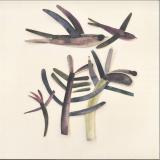
Krope is a six-part conceptual album by Belarusian sound artist and producer Anton Anishchanka. Rooted in archival folk songs recorded between the 1960s and 2000s, it transforms fragile voices of the past into living, cinematic sound worlds. Created in collaboration with ethnographer Iryna Vasilyeva, the album weaves Belarusian traditional music with field recordings, acoustic instruments, and analog synthesizers — an immersive journey where memory, landscape, and resilience converge.
Flowing as one continuous suite, Krope unfolds like a film: memory re-emerges, fragile yet persistent, shaping an emotional narrative of displacement, loss, endurance, and hope. The archival voices at its core — songs of love, exile, and mourning — resonate across decades, echoing the urgent realities of today. The album flows as a single, immersive sonic odyssey. From the tender rejection in Krope (Dill) to the grief carved in Dubrovuška (Oak Grove), it traces an arc of human experience that is both deeply personal and universally shared. By reimagining traditional music through contemporary sound art, Anishchanka preserves endangered cultural heritage while revealing its timeless relevance.
Credits:
Produced by Anton Anishchanka
Engineering by Tenzor
Mastered by Alex at Quitfish Mastering
Lacquer cut by Tim Xavier at Manmade Mastering
Cover Art by Sasha Zeliankevich
Graphic Design by Ihar Yukhnevich
Creative Direction by Nadzeya Burmistrava
Archival materials courtesy of the Institute of Art History, Ethnography and Folklore named after K. Krapiva, National Academy of Sciences of Belarus.
Special thanks to Iryna Vasilyeva for her assistance with archival selections and ethnographic material.
Shatkavalka 2025
Есть у нас в наличии и готов к отправке

Есть у нас в наличии и готов к отправке
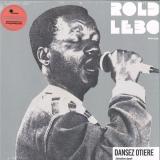
We’re proud to present the first-ever official reissue of Rold Lebo - "Dansez Otiere" — a folk-jazz treasure from 1986, originally released in the Republic of Congo on vinyl and cassette (self-released on small quantities). This vinyl gem revives the energy and elegance of a rare record, now brought back into the light — a timeless work, finally restored to its full glory.
This album alternates between the call to celebrate the ancestral homeland and cultural identity and poignant ballads about love, exile and homesickness. It is a work that is both intimate and cosmic. Finally restored to its full glory, it returns on vinyl for the first time since its initial release.
This is an essential restoration — a sophisticated synthesis of Congolese Folk-Jazz, subtle soul, and deeply introspective rhythms. Recorded in the 80s, the album channels a timeless spirit, exploring multilingual themes of ancestral identity, the melancholy of exile and the delicate games of love.
Rold Lebo’s music is a profound emotional capsule — once overlooked, now revived for a new generation of listeners eager to explore the sophisticated sounds and resonant stories of the Republic of Congo.
Есть у нас в наличии и готов к отправке
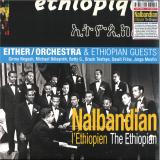
The Éthiopiques series returns! Essential archive recordings from an extremely fruitful period in Ethiopian music.
Before “Swinging Addis” took over the world, there was Moussié Nerses Nalbandian — the Armenian-born composer who shaped modern Ethiopian music. Mentor, arranger, and pioneer, he laid the foundations of Ethio-jazz.
This Éthiopiques volume revives his forgotten legacy, recorded live by Either/ Orchestra First issue ever with new exclusive photos and in depth liner 8-page insert.
“Ethiopian jazzmen are the best musicians that we have seen so far in Africa.
They really are promising handlers of jazz instruments.”
Wilbur De Paris
(1959, after a concert in Addis Ababa)
አዲስ፡ዘመን። *Addis zèmèn* **A new era.**
The time is the mid-1950s and early 1960s, just before "Swinging Addis" bloomed – or rather boomed – onto the scene. Brass instruments are still dominant, but the advent of the electric guitar, and the very first electronic organs, are just around the corner. Rock’n'Roll, R’n’B, Soul and the Twist have not yet barged their way in. Addis Ababa is steeped in the big band atmosphere of the post-war era, with Glenn Miller's *In the* *Mood* as its world-wide theme song, neck and neck with the Latin craze that was in vogue at the same period. Life has become enjoyable once again, with the return of peace after the terrible Italian Fascist invasion of Ethiopia (1935-1941). The redeployment of modern music is part and parcel of the postwar reconstruction. *Addis zèmèn* – a new era – is the watchword of the postwar period, just as it was all across war-torn Europe.
The generation who were the young parents of baby boomers** were the first to enjoy this musical renaissance, before the baby boomers themselves took over and forever super-charged the soundtrack of the final days of imperial reign. Music is Ethiopia's most popular art form, and very often serves as the best barometer for the upsurge of energy that is critical for reconstruction. Whether it be jazz in Saint-Germain-des-Prés or the *zazous* who revolutionised both jazz and French *chanson* after the *Libération*, be it Madrid's post-Franco Movida, or Dada, the Surrealists and *les années folles* that followed World War I, the periods just after mourning and hardship always give rise to brighter and more tuneful tomorrows. Addis Ababa, as the country's capital, and the epicentre of change, was no exception to this vital rule.
**Two generations of Nalbandian musicians**
Nersès Nalbandian belonged to a family of Armenian exiles, who had moved to Ethiopia in the mid-1920s. The uncle Kevork arrived along with the fabled "*Arba Lidjotch*", the** "*40 Kids*", young Armenian orphans and musicians that the Ras Tafari had recruited when he visited Jerusalem in 1924, intending to turn their brass band into the official imperial band. If Kevork Nalbandian was the one who first opened the way of modernism, pushing innovation so far as to invent musical theatre, it was his nephew Nersès who would go on to become, from the 1940s and until his death in 1977, a pivotal figure of modern Ethiopian music and of the heights it. Going all the way back to the 1950s. Nothing less. And it is Nersès who is largely to thank for the brassy colours that so greatly contributed to the international renown of Ethiopian groove. While the younger generations today venture timidly into the genealogy of their country's modern music, often losing their way amidst a distinctly xenophobic historiographical complacency, many survivors of the imperial period are still around to bear witness and pay tribute to the essential role that "Moussié Nersès" played in the rise of Abyssinia's musical modernity.
Given the year of his birth (15 March 1915), no one knows for sure if Nersès Nalbandian was born in Aintab, today Gaziantep (Turkiye/former Ottoman Empire) or on the other side of the border in Alep, Syria... What is certain is that his family, like the entire Armenian community, was amongst the victims of the genocide perpetrated by the Turks. Alep, the place of safety – today in ruins.
Before Nersès then, there was uncle Kevork (1887-1963). For a quarter of a century, he was a whirlwind of activity in music teaching and theatrical innovation. *Guèbrè Mariam le Gondaré* (የጎንደሬ ገብረ ማርያም አጥቶ ማግኘት, 1926 EC=1934) is his most famous creation. This play included "ten Ethiopian songs" — a totally innovative approach. According to his autobiographical notes, preserved by the Nalbandian family, Kevork indicates that he composed some 50 such pieces over the course of his career. This shows just how much he understood, very early on, the critical importance of song as Ethiopia's crowning artistic form. Indeed, for Ethiopian listeners, the most important thing is the lyrics, with all their multifarious mischief, far more than a strong melody, sophisticated arrangements or even an exceptional voice. (This is also why Ethiopians by and large, and beginning with the artists and producers themselves, believed for a long time — and wrongly — that their music could not possibly be exported, and could never win over audiences abroad, who did not speak the country's languages).
Last but not least, one of Kevork's major contributions remains composing Ethiopia's first national anthem – with lyrics by Yoftahé Negussié.
Nersès Nalbandian moved to Ethiopia at the end of the 1930s, at the behest of his ground-breaking uncle. Proficient in many instruments (pretty much everything but the drums), conductor, choir director, composer, arranger, adapter, creator, piano tuner, purveyor of rented pianos,... he was above all an energetic and influential teacher. From 1946 onwards, thanks to Kevork's connexion, Nersès was appointed musical director of the Addis Ababa Municipality Band. In just a few years, Nersès transformed it into the first truly modern ensemble, thanks to the quality of his teaching, his choice of repertoire, and the sophistication of his arrangements. It was this group that would go on to become the orchestra of the Haile Selassie Theatre shortly after its inauguration in 1955, which was a major celebration of the Emperor's jubilee, marking the 25th anniversary of his on-again-off-again reign.
At some point or other in his long career, Nersès Nalbandian had a hand in the creation of just about every institutional band (Municipality Band, Police Orchestra, Imperial Bodyguard Band, Army Band, Yared Music School…), but it was with the Haile Selassie Theatre – today the National Theatre – that his abilities were most on display, up until his death in 1977. To this must be added the development of choral singing in Ethiopia, hitherto unknown, and a sort of secret garden dedicated to the memory of Armenian sacred music, and brought together in two thick, unpublished volumes. Shortly before his death (November 13, 1977), he was appointed to lead the impressive Ethiopian delegation at Festac in Lagos, Nigeria (January-February 1977).
His status as a stateless foreigner regularly excluded him from the most senior positions, in spite of the respect he commanded (and commands to this day) from the musicians of his era. Naturally gifted and largely self-taught, Nerses was tirelessly curious about new musical developments, drawing inspiration from the very first imported records, and especially from listening intensely to the musical programmes broadcast over short-wave radio – BBC *First*. A prolific composer and arranger, he was constantly mindful of formalising and integrating Ethiopian parameters (specific “musical modes”, pentatonic scale, and the dominance of ternary rhythms) into his “modernisation” of the musical culture, rather than trying to over-westernise it. It even seems very probable that *Moussié* Nerses made a decisive contribution to the development of tighter music-teaching methods, in order to revitalise musical education during this period of prodigious cultural ferment. Flying in the face of all the historiographical and musicological evidence, it is taken as sacrosanct dogma that the four musical modes or chords officially recognised today, the *qǝñǝt* or *qiñit* (ቅኝት), are every bit as millennial as Ethiopia itself. It would appear however that some streamlining of these chords actually took place in around 1960. It was only from this time onward that music teaching was structured around these four fundamental musical modes and chords: *Ambassel*, *Bati*, *Tezeta* and *Antchi Hoyé*. A historical and musical “details” that is, apparently, difficult to swallow, especially if that should honour a *foreigner*. Modern Ethiopian music has Nersès to thank for many of its standards and, to this day, it is not unusual for the National Radio to broadcast thunderous oldies that bear unmistakable traces of his outrageously groovy touch.
Есть у нас в наличии и готов к отправке

Glorias comprises minute samples of pieces by composers who were exiled from Franco's Spain after the Spanish Civil War and field recordings of the Spanish countryside. It is an attempt to reconcile the exile and the homeland, and a tribute to the International Brigades, volunteers from around the world who travelled to Spain to fight fascism, many of whom never returned.
Есть у нас в наличии и готов к отправке

For its first vinyl release, Shakshouka Records proudly presents the first ever reissue of the Algerian Kabyle band Syphax, a 7-inch featuring two irresistible disco gems that set the dancefloor alight while channeling a kaleidoscope of psychedelic textures and North African Amazigh spirit.
Born in exile on the outskirts of Paris, Syphax fused psychedelic rock, funk, and North African rhythms with the lyricism of Amazigh poetry and the rebellious energy of the 1970s. This record pairs the celebratory "Thamghra" meaning "party" in Amazigh and originally featured on their long-forgotten LP, with the disco-infused "Skate Dance," released years before skate culture spread across the globe and a testament to the band's cutting edge.
Remastered by Nick Robbins and compiled by Cheb Mimo, this reissue restores the bold sound of Syphax: a voice of diaspora, freedom, and boundless creativity.
Есть у нас в наличии и готов к отправке

2025 Repress
When people think of Tough Gong they usually think of Bob Marley and rightly so, as he was nicknamed and often called Tough Gong and from this his early releases which came out on the Tough Gong label. But Tough Gong was also the name of a recording complex named after Bob Marley hat included a top level recording studio, pressing plant and distribution centre that would allow reggae music to carry on many years after his sad and too early demise.
Bob Marley had take over the former residence of Island Records boss Chris Blackwell the Island House, 56 Hope Road around 1974. Just before the 'Smile Jamaica' concert on 03rd December the same year the house was ambushed by gunmen. Bob's manager Don Taylor was hit 5 times AND Bob was shot in the arm and his wife Rita Marley was hit in the head by a stray bullet. How no one was fatally injured is staggering. Immediately after the concert Bob Marley started his self imposed exile from Jamaica, settling in London, England. This would lead to the aptly named exodus album being recorded there in the summer of 1977. It would not be until the 'One Love' peace concert in Kingston's national arena on the 22nd April 1978 that would see Bob's return to the island. Marley felt is was important to show his commitment to the people of Jamaica and on his return to 56 Hope Road he began construction of his own recording studio with the help of music mogul Tommy Cowen. Unfortunately Bob Marley's short life would end on the 11th May 1981 from cancer which originated form a football injury. His passing would lead to 56 Hope Road being turned into a museum to the legend of reggae music.
A new location would have to be found to carry on Bob's work which was 220 Marcus Garvey Drive, Kingston 11. The buyer would be Rita Marley and the Tough Gong International Organisation.
Engineers working at the new facility included Errol Browne who had worked at Treasure Isle studios and Hopeton Overton Browne known as 'Scientist', named by the great producer Bunny 'Striker' Lee who worked with him previously at King Tubbie's and Channel One's studios described his ground breaking style as being like that of a scientist.
We focus for this release on the work carried out by the great Scientist on the songs of the Black Solidarity Label run by Ossie Thomas (aka Joe The Boss) recorded at Tough Gong studios. One of the foremost recording, pressing and distribution facilities on the Jamaican island set up from the work of Bob Marley to carry forward reggae music. Hope you enjoy this set......
Есть у нас в наличии и готов к отправке

Mythology has a recurring theme: creating ambiguity by rearranging worlds and creatures that normally don’t belong together. Centaurs, Minotaurs, Hydras and so on: mockery and mystery intertwine into entities that are in equal parts magnificent and ridiculous. Referencing this idea in the present, Loris S. Sarid conjures 12 compositions simultaneously showing traits of dreamlike trap, candy-flavoured New Age and Spoken Word. The lines between spiritual and mundane, drama and parody are bent and questioned, used as raw material and treated with the same importance. Binding the work together is the sense of feeling peacefully lost inside a shuffling iPod, buried in a quiet zen garden inside a noisy shopping mall or vice versa. What connects Ambient music, which often anonymously swims into endless sleeping playlists with monthly subscriptions to well-being, to the mainstream output of commercial music? "Ambient $" doesn’t explore the social aspect of this question, but rather celebrates the beauty of its paradoxes. This album is the morning choir of forgotten NFTs, brewing lyrics in their binary exile. The television homily of a wrestler turned priest, turned influencer chef, then hermit and then rapper. Randomness is reclaimed as a human quality, and the aesthetics of mass music consumption are repurposed into a rather inexpensive guide to streaming-service-enlightenment.
Есть у нас в наличии и готов к отправке

SUBURBAN BASE RECORDS PRESENTS BOOGIE TIMES TRIBE – ‘THE DARK STRANGER’ – REMIXES
The Dark Stranger by Boogie Times Tribes is one of the most iconic anthems from the evolution of Drum & Bass. The Dark Stranger now returns for Halloween 2025, with an incredible new double-vinyl package featuring brand new remixes alongside long-lost classics. Pressed on a stunning glow-in-the-dark vinyl and housed in a specially illustrated sleeve depicting the mysterious Dark Stranger character, this release is as collectible as it is powerful.
The package contains eight mixes of this legendary track, cut loud for maximum DJ impact with just two tracks per side to ensure the heaviest playback. Brand new 2025 remixes come courtesy of Crissy Criss (mixed and mastered by TC), Marvellous Cain & DJ Choppah, Metrodome & Sl8r, Exile & Mark XTC, AKAS, and Freeze UK, all reimagining the anthem for today’s dancefloors.
To complete the set, the original 1993 remixes from QBass and the classic Origin Unknown Part 2 Remix are included, both made available here for the very first time since their original release in 1993, having never been repressed or released digitally until now.
This release is already generating massive buzz across the scene. At the recent D&B All Stars event, Andy C dropped the Crissy Criss remix, sparking the only rewind of his epic set. Other versions are already receiving huge support on Kool FM, Rinse, Pure FM, and across clubs and festivals nationwide.
A true piece of legendary Drum & Bass history reborn, The Dark Stranger returns this Halloween 2025! A must-have for DJs, collectors, and D&B fans worldwide.
Есть у нас в наличии и готов к отправке

Bringing together the elder statesman of the Zulu guitar Madala Kunene and internationally acclaimed Sibusile Xaba, kwaNTU pulls two generations of South African guitar mastery into a single point of focus. Under-represented on recordings outside of South Africa, Madala Kunene (b. 1951), the ‘King of the Zulu Guitar’, is revered as the greatest living master of the Zulu guitar tradition. Sibusile Xaba, whose collaboration with Mushroom Hour Half Hour reaches back to his first recording in 2017 (Open Letter To Adoniah/Unlearning), has garnered international acclaim for his unique voice and virtuoso guitar stylings, which bring together multiple South African guitar lineages in an original, spiritualised fusion. Collaborating with Mushroom Hour and New Soil for kwaNTU, the two players come together to weave a filigree sonic fabric which reaches down to the heartwood of Zulu guitar music but moves resolutely outward, building on the past to create a deeply rooted statement about present conditions and future travels. kwaNTU – which can be roughly translated ‘the place of the life-spirit’ – is also conclave of teacher and student, as Xaba has been taught by Kunene for the last decade. Meditative, rich and sonically sui generis, kwaNTU finds these two musicians linking up within the inimitable space of sound and spirit that they share through Kunene’s teaching.
The great masters of South African music have not all had equal exposure. For many years the generation of musicians who were exiled during apartheid took centre stage, as the regime made it very difficult for those at home to be heard. More recently, a new cohort of important voices, especially in jazz, has broken through to international consciousness. But for the generation of musicians in between – those who shone like beacons in the most difficult final years of apartheid and immediately afterward – international recognition has been slow in coming.
Madala Kunene, ‘the King of the Zulu Guitar’, is among this number. A revered figure for current generations of South African musicians, Kunene began his recording career in 1990, at the bitter end of apartheid, with a now classic self-titled LP for David Marks’ storied Third Ear imprint. Born in 1951 in Cato Manor, near Durban, he had determined to be a musician from early childhood, and by the time he first entered a recording studio he had already had a long career as a popular performer. His virtuoso absorption and transformation of the venerable Zulu maskanda guitar tradition and his richly spiritualised approach to music immediately marked him out as someone special, and in the years that followed, Kunene cemented his position as one of South Africa’s musical elders. He is without doubt the grand master of the Zulu guitar tradition, but his sound and sensibility ranges far beyond it into varied sonic terrain, and he has collaborated with a wide range of musicians both at home and abroad. Now in his mid-seventies, he remains a shining light for those that are making music in contemporary South Africa.
‘He is really an amazing person,’ says the guitarist Sibusile Xaba, who has been mentored by Kunene for over a decade, and now invites a collaboration with him on kwaNTU. ‘As a mentor, he's really powerful in showing us the way. For us to have this opportunity to make music together and have a project together is really a blessing to me.’
Xaba himself grew up in Newcastle, KwaZulu-Natal, where his mother had been in a band and his father sang in a church choir, and from early childhood Xaba played homemade tin guitars. He only later realised that music was his calling. ‘I just loved music. I was fortunate. My parents loved music. And when it was time for me to leave home and go to study outside Newcastle, I knew that music was what I wanted to do. There was no second option. It was just music.’ Moving to Pretoria to study music formally, Xaba committed himself to his craft, developing a unique style that draws on both US jazz masters such as Wes Montgomery and Jim Hall, and the rich and varied heritage of the South African guitar, from inspirational jazz players such as Allen Kwela and Enoch Mthalane, to the music of the Malombo groups and Dr. Philip Tabane (Xaba has previously collaborated with Dr. Tabane’s late son, Thabang), and the Zulu guitar tradition embodied by Kunene.
‘I was really in love with the jazz guitar, I really admired it, and I was digging a lot in that direction,’ says Xaba, recalling his first encounter with Kunene’s music, over a decade ago. ‘And then one day on my timeline, Kunene popped up, and I was like – “What's this sound?” I was so connected to it. It really touched me deep. I started checking out his records, and then I found out he's from the same region as I am, which is Zululand.’ After Kunene played a show at the Afrikan Freedom Station in Johannesburg, Xaba make contact with him, and visited him at home in Durban. They struck up a friendship, and Xaba became the elder’s student, as Kunene began to pass on his knowledge and his inimitable way of playing.
kwaNTU is a tribute to this relationship and the deep learning that has defined it. The album was recorded in Zululand in the town of Utrecht, at a cultural centre called Kwantu Village, which gives its name to the album. ‘It's such a broad word,’ Xaba says, ‘but the elders teach us that Ntu is basically an energy, almost chi, an energy, a force that all living beings have within them. It's a living energy, so kwaNTU is like, almost the place of this energy.’ The two men sequestered themselves for five days of jamming, improvising and planning, and then the session was recorded in one take over a single night, with Gontse Makhene joining on percussion and backing vocals and Fakazile on vocals. Other voices and overdubs were later added in the studio in Johannesburg.
The result is a rich and meditative recording that finds two generations in a deeply engaged dialogue. Teaching and passing on his knowledge, the elder Kunene has brought Xaba into a space of sound and knowledge that they now share; Xaba’s own practice of deep communion with nature and his dedication to his musical craft make him the perfect interlocutor for Kunene. The result is an album that foregrounds the two musicians engaged at the highest levels of responsive listening, sympathetic unity, and collaborative concentration. Bringing an elder statesman of South African music to an international listening audience for the first time in decades by pairing him with one of South Africa’s most important new voices, kwaNTU is a meeting of generations and a powerful demonstration of musical lineage and continuity.
‘Before music, there is sound,’ Xaba observes, speaking of Kunene’s unique approach to music. ‘And sound is like a common compartment…it's not restricted to particular people or particular geographic places, you know what I mean? It's sound. Everybody can hear it. So when he constructs that sound into music, I think everybody resonates with the energy behind his construction of sound into song. Here at home, we really love him for preserving our history through the guitar, through his stories as well the music, the songs that he writes. We really, really admire him.’
Есть у нас в наличии и готов к отправке
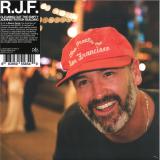
Cleaning Out The Empty Administration Building ist Ross Farrars neuestes Werk aus rohem, gesprochenem Wort und experimentellem Sounddesign, hier präsentiert unter dem Namen R.J.F.. Der Frontmann der amerikanischen Bands Ceremony und SPICE begann dieses Soloprojekt zunächst als persönliche Herausforderung: Songs von Grund auf selbst zu schreiben, sich mit Instrumenten vertraut zu machen und dabei zugleich sein Unterbewusstsein freizulegen. Dabei ging es weniger um musikalische Virtuosität als um Verletzlichkeit - darum, etwas Ehrliches aus einem ungeschützten, unbearbeiteten, unpolierten Moment zu ziehen, kompromisslos amateurhaft und rein.Diese Sammlung zeigt Farrar im offenen, poetischen Dialog: mit Drumloops und gefundenen Klängen, durchbrochen von Gitarren, Bass und Tasteninstrumenten. Nach über zwanzig Jahren in der vertrauten wie chaotischen Welt von Band-Kollaborationen, legt Farrar all das ab - als Experiment. Das Ergebnis ist unverwechselbar und bewegend.Farrars Punk-Pathos ist in Spuren vorhanden, doch seine deutlichsten Einflüsse stammen von repetitiven Musikformen: Drone, No-Wave, Avant-Jazz und darüber hinaus. Seine nüchternen Texte erinnern an Lou Reed, Rowland S. Howard und andere große Exzentriker. Farrars Texte kreisen um Liebe, Sucht, Vaterschaft und das Leben in der heutigen Welt. ,Ich wollte Bilder schaffen, die die Menschen klar vor sich sehen können", sagt er. Farrar unterrichtete früher Schreiben und Literatur - und wendet hier ein einfaches Prinzip an, das er auch seinen Schülern mitgab: Nicht zu viel nachdenken. ,Ich habe mir einfach gesagt: Diese Songs sollen Spaß machen. Sie sollen nicht stressig sein. Zwei, drei Takes aufnehmen und dann gut ist. Nicht über jedes Geräusch den Kopf zerbrechen. Mach einfach das, was natürlich aus dir herauskommt - und wenn es sich gut anfühlt, dann nimm es."Aus hunderten freier Songs, die Farrar in den letzten Jahren mit geliehenem Equipment aufgenommen hat, kristallisierte sich dieses Album langsam heraus. ,Es kam einfach immer wieder."Der Ton von Cleaning scheint die Zeit zu verbiegen, versetzt die Hörer in eine Art Gang voller Songs, bei denen jede Tür in einen neuen Raum führt - Räume, die oft auf unheimliche Weise vertraut wirken. Der gurgelnde Bass des Openers ,Advance" taucht auch in anderen Stücken wieder auf, etwa im gespenstischen ,Ovidian", benannt nach Ovids Metamorphosen, in dem Farrar über das Wunder der Veränderung sinniert - begleitet von fernen Glockenklängen. Instrumentalstücke wie ,Gravity Hill" - ein Flattern aus Synth-Brummen und statischem Rauschen - oder ,Frogs", mit Saiteninstrumenten und perkussivem Topfschlagen, wirken wie tranceartige Zwischenspiele und verstärken die Wirkung der Texte drumherum.,Exile" blickt zurück auf Verluste, die sich nicht mehr reparieren lassen: ,So much of your heart caught in my exile", singt Farrar mit sanfter Resignation - über einer einsamen Klaviermelodie und schlingernden Gitarrenakkorden. Es ist das strukturierteste Stück der Sammlung und erinnert daran, dass Farrar ein Gespür für melodische Linien besitzt.Das Album endet mit ,Traveling Light From Afar", deutlich schneller als alle vorherigen Songs. Hier, über einem stoischen Motorik-Beat, spricht Farrar das zentrale Thema des Projekts direkt an:,I've been so young in my old age / Selfish & self-pitying / But that's just narcissism - man."Genau dieser Balanceakt - zwischen schonungsloser Selbstbefragung und der Klarheit, die mit dem Älterwerden kommt - schafft Raum für Entwicklung. Farrar leert das Gebäude - Zeile für Zeile.
Есть у нас в наличии и готов к отправке

After years in aesthetic exile, Wolfgang Voigt returns as Wassermann - for the first time on These Eyes. An elegant escalation, a technoid homage to The Palace in Gstaad - alpine glamour meets minimalist rigor. Between champagne flute and fog machine, Voigt draws his unmistakable lines: precise, cool, hypnotic. High society meets high fidelity. Alpine views in 4/4 time.
Push Das Leben
Macht Es Eben
Echtes Leben
Mach Das Eben
Hartes Leben
Deswegen
Das Leben
Bis Eben
Wirst Du Gehen
Willst Du Gehen
Musst Du Gehen
Genug
Wolfgang Voigt, 2025
Есть у нас в наличии и готов к отправке
Mannequin Records presents Artificial Salvation, the long-awaited next chapter from Taiwan-born, Berlin-based artist Jing. A visceral journey into fragmented identity, post-human desire, and sonic disobedience, the album marks a bold evolution in Jing's unmistakable language—where rhythm is weapon, voice is distortion, and silence is political.
Known for her uncompromising DJ sets and past releases exploring industrial textures, field recordings, and haunting spoken word, Jing now delivers her most narrative-driven and confrontational work to date. Artificial Salvation lives at the intersection of club dystopia and spiritual unease: glitched-out techno structures collide with ghostly chants and collapsing machinery, echoing themes of surveillance, digital exile, and existential displacement.
Crafted between Taipei and Berlin, the album draws from a palette both hyper-modern and deeply ancestral—melding broken beats, noise, and vocal manipulation into an unflinching statement of intent. This is not music for escapism. This is a sonic exorcism.
Есть у нас в наличии и готов к отправке
