DARK MEDITATION may hail from Seattle, but their sound is steeped in
traditions associated with other corners of the globe'England's workingclass cities, frosty Scandinavian towns, Southern California meccas of
the '80s
Or as the band puts it, DARK MEDITATION sounds like the bastard amalgamation
of Venom and Judas Priest fighting it out on the Sunset Strip while Danzig and
King Diamond cheer them on. While such reference points may suggest a nexus
of evil kitsch and arena-level theatrics, the band's debut album Polluted Temples
comes from a place of down- and- out urgency and punk ethics, adopting the
gloomy anthems and riff worship of heavy metal titans for their sonic exorcisms
rather than their rock n' roll panache. It's an album that basks in big hooks,
righteous guitar work, and an arena-level stomp without compromising any grit,
grime, or guts.
Tracks: Prelude / Babalon.Money.Magick / Haunt of Fear / Strange Caress (of the
night) / Masters Coil / Desolation Days / The Howling Wild / Drink of the Blade /
Nocturnal Forever / Polluted Temples
Radio Diaspora works on the concept of cultural identity, which is flexible and dynamic. This provocation is generated by referring to all African ancestry moved by the diaspora and its sonorous, vocal, polyrhythmic, and polyphonic codes - all the ancestral heritage that has spread throughout the world following expropriations, genocide, and slavery - sampling and amplifying references that become triggers of energetic approaches. A heavy core of representations and senses aims to exorcize through noise and strangeness all secular violence against people of the African diaspora. In the title song of this album, 'Negro Humor', the respected Brazilian actor Grande Otelo highlights the contradiction of the clown, which awakens joy in everyone but is a sorrowful, lonely figure, ridiculing himself and putting himself in the most embarrassing situations. Relieved, loud laughter echoes in the audience because it is not the target of ridicule. In 'Despacho', Radio Diaspora explores the dichotomy of society by introducing a speech by Brazilian lawyer Hédio Silva Júnior specialised in Afro-Brazilian religion. He questions a rule under discussion in Brazil's Congress that would prohibit the use of chickens in Candomblé and Umbanda rituals. Silva Júnior points out that everyone takes a stand to protect the rights of animals, but the same cannot be said of the defense of young black people and outlying societies. The track 'Meia-Noite' evokes a celebrated point of Umbanda, an Afro-Brazilian religious syncretic cult, permeated by free jazz and electronic atmospheres developed by the duo. The other songs on the album are divided into two parts. They feature the voices of North American icons of the black struggle for civil rights: The tracks 'A.H.M. Al-Shabazz 1 and 2', amid sonic dissonances, use extracts from speeches by the American leader Malcolm X, and in 'Muhammad Ali 1 and 2' we hear quotes from famous interviews given by the boxer and activist. Ali ironizes the questions he asked his mother as a child, why all good and positive things are associated with white. "Mother, how come is everything white? Why is Jesus white with blonde hair and blue eyes? Angels are white, the Pope, Mary, and even the angels. When we die, will we go to heaven? She said naturally we go to heaven. So, I said, what happened to all the black angels they took from the pictures." His Inquiry, however, is seen as a joke by the white audience present at the TV show, which laughs off Ali's scathing criticism. Radio Diaspora uses art as an instinctive force to reject submission to traditions and culture as taming. Music is the weapon. "The (album) sound means to exorcise racism out of our minds and make us ready to act". - Rômulo Alexis
Ever Crashing, the second LP by Kennedy Ashlyn aka SRSQ pronounced ‘seer-skew’, is the summation of a nearly three-year journey of soul searching, songwriting, and self-discovery: “I became myself in the process of making this record.” From the first choral swells of opener “It Always Rains,” it’s clear this collection exists on an ascendant plane, capturing an artist in super bloom. Every song hits like a single, heaving with guitar, synth, strings, live drums, and oceans of Ashlyn’s astounding voice, balletic and illuminated. The tracks gleam with detail, often assembled from as many as 100 separate tracks, all of which were written and played solely by Ashlyn – a feat of world-building as daunting as it is devastating.
For her, however, the process is intrinsic and intuitive – even a matter of survival. Her 2018 solo debut emerged in response to the tragic Ghost Ship fire in Oakland, which took the life of her bandmate and best friend Cash Askew. Similarly, Ever Crashing began materializing in the wake of an ADHD and bipolar disorder diagnosis, prompting a profound personal overhaul. Ashlyn cites such periods of turmoil as a muse of sorts, when “songs begin to echo within me,” gradually reverberating clearer and more vividly. As melodies and arrangements come into focus, the songs act like containers, vessels in which to externalize and exorcise tumultuous emotions, a transformation she memorializes in the climax of “Élan Vital:” “Reeling in and out of deep despair / I am saved by song.”
From swooning end credits balladry (“Dead Loss”) to orchestral slow-burn torch songs (“Abyss”) to dizzying shoegaze heavens (“Someday I Will Bask In The Sun”), the album exudes a sense of aching grandeur and bewildered joy, rich with triumphs hard won and lost loves never forgotten. Melodies pirouette and crescendo in dazzling, elevated acrobatics, somewhere between Kate Bush and The Sundays, threaded with ethereal undercurrents of shimmering shadow. Riffs brood and sparkle over crystalline synths, buoyant bass, and patient percussion, steadily building to holy moments of tidal power, finessed to perfection by producer Chris Coady (Beach House, Slowdive, Zola Jesus). Ashlyn’s is a dream-pop of questing catharsis, vulnerable but orchestral, as dense with hooks as heartbreak.
The album’s title refers to Ashlyn’s recurring sensation of being trapped in the crest of a wave, turned and churned in the surf, mirroring the cycles of self-flagellation and surrender that she battles being bipolar. But as the poetic raptures of these songs attest, her creative process thrives at transmuting trauma into potent music of arresting beauty and hidden divinity. Ever Crashing is an aching, rare work, shaded with gradients of reverie and regret, loss and letting go, “mourning the person I thought I should be, mourning the person I never was.” But even in its pain, Ashlyn’s voice exerts a redemptive gravity, yearning to transform and transcend: “Even on the inside / I’m bracing for impact / I’m waiting to destroy my life / To become sunlight.”
Ever Crashing, the second LP by Kennedy Ashlyn aka SRSQ pronounced ‘seer-skew’, is the summation of a nearly three-year journey of soul searching, songwriting, and self-discovery: “I became myself in the process of making this record.” From the first choral swells of opener “It Always Rains,” it’s clear this collection exists on an ascendant plane, capturing an artist in super bloom. Every song hits like a single, heaving with guitar, synth, strings, live drums, and oceans of Ashlyn’s astounding voice, balletic and illuminated. The tracks gleam with detail, often assembled from as many as 100 separate tracks, all of which were written and played solely by Ashlyn – a feat of world-building as daunting as it is devastating.
For her, however, the process is intrinsic and intuitive – even a matter of survival. Her 2018 solo debut emerged in response to the tragic Ghost Ship fire in Oakland, which took the life of her bandmate and best friend Cash Askew. Similarly, Ever Crashing began materializing in the wake of an ADHD and bipolar disorder diagnosis, prompting a profound personal overhaul. Ashlyn cites such periods of turmoil as a muse of sorts, when “songs begin to echo within me,” gradually reverberating clearer and more vividly. As melodies and arrangements come into focus, the songs act like containers, vessels in which to externalize and exorcise tumultuous emotions, a transformation she memorializes in the climax of “Élan Vital:” “Reeling in and out of deep despair / I am saved by song.”
From swooning end credits balladry (“Dead Loss”) to orchestral slow-burn torch songs (“Abyss”) to dizzying shoegaze heavens (“Someday I Will Bask In The Sun”), the album exudes a sense of aching grandeur and bewildered joy, rich with triumphs hard won and lost loves never forgotten. Melodies pirouette and crescendo in dazzling, elevated acrobatics, somewhere between Kate Bush and The Sundays, threaded with ethereal undercurrents of shimmering shadow. Riffs brood and sparkle over crystalline synths, buoyant bass, and patient percussion, steadily building to holy moments of tidal power, finessed to perfection by producer Chris Coady (Beach House, Slowdive, Zola Jesus). Ashlyn’s is a dream-pop of questing catharsis, vulnerable but orchestral, as dense with hooks as heartbreak.
The album’s title refers to Ashlyn’s recurring sensation of being trapped in the crest of a wave, turned and churned in the surf, mirroring the cycles of self-flagellation and surrender that she battles being bipolar. But as the poetic raptures of these songs attest, her creative process thrives at transmuting trauma into potent music of arresting beauty and hidden divinity. Ever Crashing is an aching, rare work, shaded with gradients of reverie and regret, loss and letting go, “mourning the person I thought I should be, mourning the person I never was.” But even in its pain, Ashlyn’s voice exerts a redemptive gravity, yearning to transform and transcend: “Even on the inside / I’m bracing for impact / I’m waiting to destroy my life / To become sunlight.”
The turn of the millennium ushered in an apex visionary phase for English esoteric duo Coil. Relocating from the city to the coastal quiet of Westonsuper-Mare freed them to follow even more fringe obsessions, fully untethered from peer influence. During a single six-month stretch in 2000 they released the devious underworld sequel to Music To Play In The Dark, arcane drone summit Queens Of The Circulating Library, and a malevolent hour-long synthesizer exorcism prophetically titled Constant Shallowness Leads To Evil. This latter work remains one of the group’s most miasmic and mind-expanding creations, on par with Time Machines – a sustained divination of shuddering, psychoactive noise, rippling with the motion sickness of an all-seeing eye.
Thighpaulsandra characterizes the album as “an exercise in brutality,” born from a thorny patch of his Serge modular unit that Peter “Sleazy” Christopherson found entrancing. Processing this sliver of electronics into a ravaged labyrinth was a trial and error process, aided by Christopherson’s visual sense of sound, stretching and manipulating it for maximum spatial disorientating. Frequencies nauseously crawl across the stereo field, burrowing into the ear like a sinister brainwashing experiment. An outlier / centerpiece is the 13-minute alien tribalist sea shanty, “I Am The Green Child,” guided by John Balance’s sung-spoken free verse concerning vengeance, oblivion, and insanity, culminating in the memorable refrain, “We're swimming in a sea of occidental vomit.” But the rest of the record seethes in unhinged instrumental chaos, divided into 18 micro-movements of a composition called “Tunnel Of Goats.” Intended to scramble the functionality of a CD player’s shuffle mode, the piece throbs, thrashes, and flatlines in compressed frenzies of twisted synthesis, at the threshold of some bottomless purgatory, forbidding and unknown.
The subterranean slumber of Nile mastermind Karl Sanders’ Eastern-ambient Saurian series finally ceases with the third chapter of his darkly hypnotizing saga, Saurian Apocalypse! The album’s musical and lyrical themes detail the vexing fictional journey of Dr. Eduardo Lucciani, one of very few survivors of mankind’s self-destruction, who descends into madness after discovering the violent horrors occurring at the hands of the Saurian Masters. Emphasized by unique instruments like the baglama saz (Turkish lute), Ancient Egyptian Anubis Sistrum, Dumbek (Middle Eastern goblet drum), glissentar and gongs, the album’s score weaves cinematic auras and deep grooves, accented by the tribal percussive stylings of original Nile drummer Pete Hammoura and returning Saurian vocalist Mike Breazeale. Whispering atop the ominous sands of opener “The Sun Has Set on the Age of Man” are resonant flutes, forewarning percussion, and an exquisitely tasteful and contextual acoustic guest solo by guitar virtuoso Rusty Cooley – kicking in the massive doors of Saurian Apocalypse. Immediately, the album’s impactful production and crystal clarity versus its predecessors is apparent
Für LORNA SHORE ist das Dreigestirn von Songs im Herzen von '...And I Return to Nothingness' nichts weniger als ein Exorzismus - und ein Eintauchen in etwas Dunkleres. Von der orchestralen Passage, die den Titeltrack der EP eröffnet, geradewegs in einen Bombast aus geschwärzter Intensität und wütender Erhabenheit, sind diese aus New Jersey stammenden Extremisten zurück und erheben sich wie ein Phönix aus der Asche. Wiedergeboren und auf die Dunkelheit eingeschworen. Ein kommendes Feuer, das selbst die LORNA SHORE-Gläubigen fassungslos machen wird.Als die Welt im Jahr 2020 stillstand, tauchten LORNA SHORE tiefer in die kreativen Instinkte ein, die sie ursprünglich mit bahnbrechenden Alben zu einer festen Größe in der extremen Metal-Szene machten: 2015's 'Psalms' und 2017's 'Flesh Coffin'. Seitdem haben sie Einflüsse und Ideen miteinander verwoben, die von der symphonischen Grimmigkeit des europäischen Black Metals bis hin zu den komplexen, tödlichen Klangformeln des Death Metals und der auralen Intensität des Hardcore reichen. Was LORNA SHORE erreicht haben, ist ein neues Level an geschwärzter Technizität und der nächste Schritt auf ihrer Darkside-Reise. Verschönert mit dem Artwork des bekannten polnischen Malers Mariusz Lewnadowski (Bell Witch, Fuming Mouth) bekräftigt '...And I Return to Nothingness' den kreativen Fokus und die Intensität von LORNA SHORE. Die drei Tracks der EP: 'To the Hellfire', 'Of the Abyss' und der Titeltrack sind der Beweis, dass LORNA SHORE nicht nur ihr feuriges Vermächtnis fortsetzen. Sie entfachen es und setzen ihr eigenes Vermächtnis spektakulär in Brand.'...And I Return to Nothingness' ist nun als schwarze LP+CD mit Ätzung auf Seite B erhältlich.
Repossessed by the past, bitten once again and forced to relive drama, history, memories, tradition and roots. A past that needs exorcizing, bending and re-imagining in order to move forward and depend on. This is ‘Rimorso’, Mai Mai Mai’s colossal mediterranean gothic album.
Known for his incredible blend of Southern Italian Folklore, industrial drone, proto-techno & punishing miasmic electronic music, Toni Cutrone aka Mai Mai Mai approached ‘Rimorso’ with a clean slate. Following ‘Nel Sud’ (La Tempesta International, 2019) and his mediterranean trilogy ‘Theta’ (Boring Machines, 2013), ‘Δέλτα’ (Delta) (Yerevan Tapes, 2014) and ‘Φ’ (Phi) (Not Not Fun Records / Boring Machines, 2017) the Roma based noise artist recreated his spirits of the past by collaborating with musicians and ethnomusicologists that work on the present, on traditions that are still passed on and morphing continuously, healing our nostalgia for a lost future. ‘Rimorso’ sheds the past heavy use of samples and sound manipulation in lieu of a human element: voices, percussion, lap steel guitar all embedded in a rich cultural heritage.
Astrel K is Rhys Edwards of Ulrika Spacek. Astrel K's debut single ‘You Could If You Can’ was released via Duophonic Super 45s - a label which has a history of releasing limited edition abstract releases from Stereolab, Broadcast & Yo La Tengo. 500 copies of the 7” were made, hand stamped and numbered, quickly selling out in selected record shops. Following the loss of KEN, a shared house in which Ulrika Spacek band members lived and worked from, Edwards relocated to Stockholm, Sweden where he began making music on his own: “At this time, I didn’t really know anyone in Stockholm so kinda retreated into making music just by myself. The album title definitely reflects this period; I was on my own making music and sometimes nothing would be happening and sometimes there would be little sparks of ideas that could keep me going” Edwards would spend nights writing and recording in a shared rehearsal space producing music rich with layers and texture, synonymous with the work of Ulrika Spacek but with perhaps a greater focus on the art of ‘song writing’. Tracks with verse’s and chorus’s are surrounded by instrumental interludes; inspired by old library music and compositions for film as well as being reminiscent of bands such as Broadcast. The album doesn’t sound like one made in either London or Stockholm, rather somewhere in the nether region. Written pre pandemic but mixed in the past year, the music led Edwards to finding like minded musicians from the Stockholm music scene: “Though I’m now glad I can say I wrote an album by myself, I was definitely confronted with my own musical strengths and weaknesses. Sometimes when you have an A/B decision you want some perspective and you’d be in the studio, turn around and no one is there. It really made me curious to bring in more people into the fold, not to compromise any original vision or anything, but to have other energy in the room, to exorcise out any lazy tricks I may fall into”. Stockholm musicians (including Lili Holényi, Milton Öhrström, Niklas Mellberg, Tomas Hellberg) played on the album and join Edwards in the live version of the project. UK and European live dates to follow.
To emerge from a global pandemic with a renewed sense of situational awareness, hard won insight, and a new album is the kind of move we've come to expect from THRICE over the last twenty years. With Horizons/East, Dustin Kensrue and his bandmates address, with candor and courage, the fragile and awkward arrangements that pass for civilization, while inviting us to dwell more knowingly within our own lives. Without surrendering any of the energy and hard edge of their previous albums, they've given us a profoundly meditative work which serves as a musical summons to everyday attentiveness. Since forming THRICE with guitarist Teppei Teranishi, bassist Eddie Breckenridge, and drummer Riley Breckenridge in 1998, Kensrue has never been one to back down from a mental fight. This mood is set by the opening synth-driven number "Color of the Sky," which sounds well-suited to accompany the closing credits of the Stranger Things season finale. Think Flying Lotus giving way to Elbow and setting the listener down in a new dimension. A self-recorded effort, Horizons/East conveys a palpable sense of danger, determination, and possibility.
To emerge from a global pandemic with a renewed sense of situational awareness, hard won insight, and a new album is the kind of move we've come to expect from THRICE over the last twenty years
With Horizons/East, Dustin Kensrue and his bandmates address, with candor and courage, the fragile and awkward arrangements that pass for civilization, while inviting us to dwell more knowingly within our own lives. Without surrendering any of the energy and hard edge of their previous albums, they've given us a profoundly meditative work which serves as a musical summons to everyday attentiveness.Since forming THRICE with guitarist Teppei Teranishi, bassist Eddie Breckenridge, and drummer Riley Breckenridge in 1998, Kensrue has never been one to back down from a mental fight. This mood is set by the opening synthdriven number "Color of the Sky," which sounds well- suited to accompany the closing credits of the Stranger Things season finale. Think Flying Lotus giving way to Elbow and setting the listener down in a new dimension. A self-recorded effort, Horizons/ East conveys a palpable sense of danger, determination, and possibility.
After a quarter century of nearly nonstop activity, dystopian Detroit synth-punk institution ADULT. have perfected a strain of stylistic cohesion in the album format, "but for this we wanted something that's falling apart." Becoming Undone, the 9th official full-length by cofounders Nicola Kuperus and Adam Lee Miller, explicitly succeeds in this aim, simultaneously rejecting and reflecting the planetary discord that inspired it. Begun in the latter half of 2020 against a backdrop of unprecedented flux and seismic isolation, the duo kickstarted their muse by sourcing fresh additions to the rig: a vocal loop pedal for Kuperus and Roland percussion pads for Miller. Reconnecting with legacy influences like the politicized industrial percussion of Test Department and the queasy miscreant synthetics of TG's 20 Jazz Funk Greats sparked a series of fruitfully frenetic sessions, centered on themes of impermanence and dissonance. Miller's rationale is blunt: "We weren't interested in melody or harmony since we didn't see the world having that." From the tense technoid blitz of "Undoing / Undone" to the twitchy EBM of "Fools (We Are_)" and "I Am Nothing," the sides bristle with strident acidic revolt and black leather sequential circuits, unhinged and unforgiving. Elsewhere, slower tempos of purgatorial unraveling ("Normative Sludge," "She's Nice Looking") showcase a breadth of vocal FX, Kuperus sounding alternately indignant and possessed, decrying the crimes, fears, and failings of a deluded world. Throughout, the band's chemistry crackles with revulsion and strobe-lit dissent, equal parts exorcism and denunciation. "Humans have always been pretty terrible," Kuperus explains. "But every year the compromises of culture just accelerate." Becoming Undone is also freighted with a more personal pain, as Kuperus' father passed away during the height of the pandemic, just before the album took root. As his hospice caretakers, she and Miller faced the banality of finality, surrounded by objects drained of meaning, "the joy of having a body, but also the drudgery of having one." The record's bewitching closing track, "Teeth Out Pt. II" - which happens to be the first ADULT. song in the group's history without drums - speaks to this sense of doomed corporeal mass and the looming, lightless unknown that binds us all. A seasick haze swells and subsides in slow, low waves, flickering with ring modulation, above which Kuperus sings in a dazed, brooding, transcendent state, as if having finally glimpsed beyond the pale: "Some day / some day I will be silent and free / of this relentless gravity."
out of Stock
Last delivered 4 years ago available to reorder, subject to availability
"The core of confusion and upheaval that drove some of the band's most fiery earlier work, however, is replaced by a more stabilized undercurrent, a mentality that's reflected in songs not afraid to try new things and honestly explore uncomfortable feelings. When combined with exciting production and songwriting choices, that mindset helps make Feels So Good // Feels So Bad one of the Shivas' best albums.” - AllMusic "Portland, Oregon-hailing psych-surf band The Shivas accomplish another time-traveling, reverb-ridden sound that refuses to get boring. Jared Molyneux’s guitar work knows when to be bright or bashful at the right times, breaking into guitar solos that possess a late-’60s groove… The Shivas seem to blissfully flourish” - Paste "a consistent treat for the ears” - The Vinyl District "Though the psych-tinged guitar riff that drives 'Feels So Bad' was written while The Shivas were still on the road, its lyrics didn’t fall into place until the band was well into lockdown, unsure of when they’d be able to return to their most imperative true love: Live shows... Accordingly, 'Feels So Bad' permeates with a sense of urgent desperation, building off a chugging prog-rock instrumental.” - Consequence (on “Feels So Bad”) "They hooked the audience with their throwback rock sounds. The guitar strums and rhythmic drum beats were layered atop smooth and hallucinogenic vocals. The eyes can tell the take at times and there was a sparkle there that said that the band members just love doing live performances." - California Rocker "This single layers on the fuzz but keeps it dreamy, with an especially sticky guitar riff sure to lodge itself in your brain with minimal effort." - Portland Monthly (on “If I Could Choose”) “'My Baby Don’t' translates the genuine vibrant joy
of the live experience into the studio, bringing the band’s ‘60s garage rock roots, sharp pop vocal harmonies, and fervent performances along for the ride." - Under The Radar "Perfectly straddling the line between a solid-head bopping track and an introspective deep cut, The Shivas’ 'Undone' is a rock & roll gem. The track sounds straight out of the late 60s and fits seamlessly in the Portland band’s electrifying catalog." - The Luna Collective "The first time I clicked play on this track, I knew it was a yes for me." - Ear To The Ground Music (on “If I Could Choose”) "The harmonies would make the “Happy Together” Turtles blush, but the unsettling guitar doesn’t shy away from the woollier implications of the ’60s." - Willamette Week (on “If I Could Choose”) "'Undone' is just the perfect song for the good days and the bad ones." - GlamGlare "another hit" - Austin Town Hall (on “Undone”) "one of the best forthcoming albums of the year" - Austin Town Hall RADIO: #3 Most Added @ NACC - 50 official adds BIO Every working musician has had their life turned upside down by Covid-19. For The Shivas, who had recently released a new LP and normally keep a rigorous touring schedule, it was a particularly screeching halt. “We were about to go to SXSW, the following weekend was Treefort in Boise, and then we were going to open for our friends’ band on tour in the US before going to Europe,” Jared Molyneux remembers. Then everything just stopped. They were faced with a dilemma. “It forced us to adapt or just quit,” Molyneux says. “The reality is that shows are our job.” In truth, live shows aren’t just The Shivas job: they are the band’s greatest love. Shivas shows are bombastic, explosive and thoroughly communal live rock and roll experiences where barriers between the performers and their audience seem to dissolve into the sweat and sound. The stage—or the basement, or the living room—that’s The Shivas’ true element. It’s their raison d’etre. It’s their religion. The band’s live urgency may have been born in 2006, when the band’s young members—who began booking West Coast tours while still in high school—waited without fanfare on sidewalks or in parking lots, before being rushed onstage for their sets at 21-and-up clubs. Maybe it developed a little later, as The Shivas blasted their way through Portland’s storied and unsanctioned mid-aughts house show scene. Whatever the origin of their famously kinetic live experience, it’s the show that keeps them coming back after over 1,000 performances spread over 25 countries in 15 years. In those 15 years, The Shivas have grown tight-knit as a group. Guitarist/singer Jared Molyneux, bassist Eric Shanafelt and drummer/singer Kristin Leonard have all been with the band since its earliest days; guitarist Jeff City, another high school friend, joined in 2017. Together they’ve learned to thread a seemingly impossible needle: They’ve honed and tightened their performances without sacrificing the element of surprise that makes each show special. And despite touring and recording for most of their lives, they speak about their project with humility, in the DIY vernacular of their Pacific Northwest upbringing. They talk up their own favorite bands, play all-ages shows as much as possible, and bring a sort of blue-collar humanism to the live performances they relish so much. “We just want to make people feel good,” Molyneux says. “We want them to forget they have to work tomorrow.” Kristin Leonard elaborates, “The live show is all about that feeling of catharsis—in ourselves and in everyone who comes out. We’re creating this safe space where we can all let go. Where we can exhale. And it feels really good when we are able to facilitate that.” So when Covid hit, the band knew it was time for transformation. After a settling realization that live music would be grounded for the foreseeable future, The Shivas booked significant studio time with Cameron Spies, who also produced the 2019 Dark Thoughts LP. They also transformed their lives: three of the band’s four members found work with a local nonprofit serving unhoused Portland residents. They became engaged in protests and fundraisers for social justice. They spent a whole summer actually living in Portland, settling into the city they had always called home, but that sometimes felt like a temporary stop between tours. “We got into a more community-minded headspace,” Leonard says. “And that did give us some purpose. It felt cool to see everybody come together to stick up for what they believe in. It feels like an incredibly formative last twelve months.” The album that emerged from this new moment finds The Shivas reborn as a band that seems seasoned and perfectly at home with itself. There is a calm, even a hopefulness, to Feels So Good // Feels So Bad that sounds new. The Shivas didn’t write or record the album with a particular theme in mind, but one seems to have emerged: where Dark Thoughts was about confronting your demons with fearless self-examination, much of Feels So Good // Feels So Bad is about what happens once you find that peace: how being honest with yourself changes your relationships and your priorities. “I do think it’s about acceptance,” Leonard says. “There’s a weird relaxation that comes with being at peace with things you can’t control or have regrets about.” Maybe that’s why the squealing, riff-laden break-up song opener, “Feels So Bad,” is such a shock to the system. But it’s more of an exorcism than a melodrama: more a song about not being able to do the thing you love (in
this case, playing live shows) than splitting with a partner. “It’s like part of you goes to sleep,” Leonard says. As bandmates who are also in a long-term relationship, Molyneux and Leonard know that their songs might be seen as glimpses into their personal lives, but their songwriting is rarely autobiography. Leonard compares their process to something more akin to screenwriting. “There’s bound to be some autobiographical material in there,” she says. “But the common denominator is the exploration of universal feelings: ones that everyone experiences or can relate to.” The goal is to use the music to drill down into something genuine and sincere, beyond genre or stylistic affectation. That’s where The Shivas have arrived. Whatever growth led the band to Feels So Good // Feels So Bad, plenty of their fascinations remain. They’re still turning love songs into psychedelic, transcendent epics. “Tell Me That You Love Me” subverts doo-wop extravagance and dabbles in Flamenco rhythms. “Rock Me Baby” is a bubblegum anthem soaked in so much reverb that we might just be hearing it from the stadium nosebleeds. “Sometimes” is almost impossibly huge, like a witchy outtake from the Brill Building era. Those songs feel like logical expansions from a band that has always excelled at a timeless sort of rock and roll that tinkers with and explodes elements from every era. But on the towering and mournful “You Wanna Be My Man,” a slow-burning six-minute shoegaze prayer for a higher sort of love, there is a level of emotional nuance that feels like something altogether revolutionary. It’s there again in the stripped-down vulnerability of the album-closing elegy “Please Don’t Go.” Yes, Feels So Good // Feels So Bad is an album about acceptance. Sometimes that acceptance feels enlightened and sometimes it feels like the end result of a lot of kicking and screaming. The Shivas have adapted in both of those ways. With new tours scheduled and a new album on the way, they’re still hoping--like all of us--for a new era of vibrant, cathartic live music. The lessons they learned from having their normal upended, though, have only helped them grow
Boy Harsher’s latest release, ‘The Runner (Original Soundtrack)’, is an exorcism.
Augustus Muller and Jae Matthews’ fifth release entitled ‘The Runner (Original Soundtrack)’ is not a traditional album. Rather, it is the soundtrack to a short film, also entitled ‘The Runner’. The film, written, produced, and directed by the duo, is a searching horror film, attached to a meta-style “documentary” about Boy Harsher’s recording process. The album includes several distinct components: cinematic arrangements, vocal features, and of course classic Boy Harsher dark pop.
Both the album and short film will be released in January 2022.
Last year, in the midst of the obvious chaos (the global pandemic), but additionally with Jae’s MS diagnosis, Augustus started working on moody, cinematic sketches. It was uncertain what these pieces would become, other than catharsis. In Jae’s period of convalescence, she kept thinking about this sinister character: a woman running through the woods. Together, they developed this idea further into a film. They were unable to tour, a drastic (and isolating) shift in their career, and making ‘club music’ did not feel right. But there was so much they needed to get out. The next Boy Harsher release would be a reconciliation of this time. The album processes feelings of universal anxiety and the confrontation of at home illness. A necessary expulsion during a time of unrest.
The album opens with “Tower”. The only track on ‘The Runner (Original Soundtrack)’ that Boy Harsher has previously played live, but never recorded. The song is an incantation, with its pulsing synth and Jae’s begging vocals. A spell about desire and impending destruction. Jae asks 'But are you honest? Do you trust? You trust in me?' Questions answered by her desperate yells. It starts both the film and the soundtrack with a heavy presence.
Two songs on ‘The Runner (Original Soundtrack)’ feature vocalists other than Jae Matthews. He allows a distinct sound for both vocalists and really leans into the possibility of divergent genres. “Machina”, is a HI-NRG homage, performed by Mariana Saldaña of Boan, and “Autonomy” a new wave tribute, performed by Cooper B. Handy of Lucy. Augustus Muller fully embraces the soundtrack ethos, by creating fictional ‘bands’ to generate additional content.
‘The Runner (Original Soundtrack)’ is exactly what’s in the name: a soundtrack. At first the shape of the release was nebulous - yet once realized the album is dynamic. It serves as the story of the running figure and her musical accompaniment. Those expecting a traditional release will be surprised, but not disappointed.
out of Stock
Last delivered 4 years ago available to reorder, subject to availability
The debut album from the iconic American tattoo artist, TV Star, beauty entrepreneur, author, fashion designer, Kat Von D is a pastiche of shapeshifting analog synths, post-punk dreamscapes, gothic hues, and shy pop magnetism !
Enlisting prestigious guests such as Bauhaus legend Peter Murphy, Kat Von D’s brilliant debut encompasses classic gothic influences from Depeche Mode to the Sisters Of Mercy executed with a modern sound that echoes the likes of Cold Cave or I Love You But I’ve Chosen The Darkness.
A digital only companion piece to the album has just surfaced and enlists remixes from Scratch Massive, Cold Cave or Gunship, and Kat Von D will embark on a headline tour all over Europe in May 2022.
The debut album from the iconic American tattoo artist, TV Star, beauty entrepreneur, author, fashion designer, Kat Von D is a pastiche of shapeshifting analog synths, post-punk dreamscapes, gothic hues, and shy pop magnetism !
Enlisting prestigious guests such as Bauhaus legend Peter Murphy, Kat Von D’s brilliant debut encompasses classic gothic influences from Depeche Mode to the Sisters Of Mercy executed with a modern sound that echoes the likes of Cold Cave or I Love You But I’ve Chosen The Darkness.
A digital only companion piece to the album has just surfaced and enlists remixes from Scratch Massive, Cold Cave or Gunship, and Kat Von D will embark on a headline tour all over Europe in May 2022.
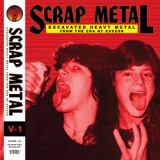
By now you’re probably familiar with our wildly popular Brown Acid series of rare, lost and unreleased proto-metal and stoner rock singles from the 60s-70s. In the endless pursuit of those glorious gems, we often uncover equally brilliant rarities from the late-70s to late-80s Golden Age of Heavy Metal that also just must be heard, but they don’t fit the series’ aesthetic. Scrap Metal, Volume 1 collects some of the greatest unknown and lost Heavy Metal tracks, long buried beneath the avalanche of the era’s classic output.
We all know the old adage that history is told by the winners. But sometimes the losers tell the best stories. And while none of these bands found fame and fortune, this artifact and the volumes to come are testament to the enduring power of heavy music. You can hear the blood, sweat and beers that went into each of these singles. The recordings may be low budget, but the inspiration and talent is immutable. Not only are the amps turned up to 11, the boyish sexual innuendo is cranked to 69. You can hear the convergence of influences — NWOBHM, thrash, glam metal, doom, etc — colliding at once as the era birthed a wellspring of subgenres.
Many of these singles are self-released and were thus limited to a small run of copies. Those that remain are hoarded by collectors and sold for exorbitant amounts. We’ve collected the best of the best for you here. As with Brown Acid, all of these tracks are licensed legitimately and the artists all get paid. Because it’s the right thing to do.
LINER NOTES:
Rapid Tears launch this series with the perfect christening. The Toronto, ON quintet’s 1981 single “Headbang” is such the pinnacle of heavy metal madness that it almost sounds like a spoof. There’s also enough of the rapid-fire sputum that inspired Metallica to bang the head that doesn’t, as such, engage in said practice, to be found on the band’s sole full length Honestly. But “Headbang” is a straightforward glammy anthem for the ages.
Air Raid’s “69 In A 55” may be lyrically so sophomoric that it’s actually pretty clever, but this 1983 Bay Area power metal single is loaded with sleek Judas Priest riffs and interwoven melodies that are downright sublime. The band’s sole release, the 2-song Rock Force 7” features a curious band photo in which 3 band members — dolled up in Crüe makeup and leather — are sexually menacing the lead singer/guitarist tied to a bed. Another low budget highlight is when singer/guitarist Tommy “Thrasher” Merry imitates a delay effect on his vocals as he sings, “tonight!...tonight...night.”
Hades’ “Girls Will Be Girls” has a real demo cassette feel to its vastly uneven mix, but the energy to the performance makes this an undeniable keeper. The long running Paramus, NJ quintet’s 1982 2- song debut 7” titled Deliver Us From Evil features this blistering thrasher dominated by shimmering leads and confident vocals that show why the band went on to near-fame on Metal Blade Records.
Resless don’t need no T to prove that they’ve got “The Power” with this 1984 driving mid-tempo rocker in the vein of Mötley Crüe and Ratt. The River Vale, NJ quartet’s tight crunch wails all over Bon Jovi posers but it’s the band’s unique and subtle deployment of background vocals that gives this rager its staying power.
Pittsburgh, the Steel City, is home to Don Cappa, a band that pays tribute to the burgh, the metal, and the awesomeness of both with “Steel City Metal.” Their lone single, issued in 1987 with only 300 copies released, sounds like the work of some serious steel driving men, with a drummer who might’ve forgotten to wear a hard hat one too many times on the construction site.
The Beast has more of a punk feel to their aggressive “Enemy Ace” track from the 4-song Power Metal EP from 1983 — something like Dr. Know meets D.O.A. But their look, artwork and lyrics all prove that Heavy Metal is where their hearts lie. And this hook filled monster delivers repeated lines like, “I command them all in my lofty realm,” with commendable conviction.
Dead Silence from Denver, Colorado, debuting in 1984 is not to be confused with Dead Silence from Denver, Colorado, who also debuted in 1984. The former a workman’s hard rock bar band, the latter a political peace punk band and neither knowing of the other’s existence throughout their tenure. The pre-internet days were a marvel, indeed.This Dead Silence spits out a slick, Nugent tinged rocker called “Can’t Stop” about life on the road.
The Danger Zone is, by all accounts, not the place to be. And, Hazardous Waste of Boston, MA saw fit to add their two cents on the matter with this 1986 single that combines Van Halen’s flashy musicianship with NWOBHM aggression that sounds so awesome it teeters on itself entering the “Danger Zone.”
Czar’s heavy, doomy “Iron Curtain” single from 1982 hearkens to the sleazy sounds of Saint Vitus and Pentagram with its cranked up DOD Distortion pedal in a Peavey combo amp guitar tone and meaty, barking vocals. The upstate NY quintet only issued this 2-song single, but its driving rhythm, nosedive whammy-bar guitar solos and comparatively mature Cold War subject matter show they had real potential.
Not much is known about Real Steel’s majestic “Viking Queen” from 1987, other than it rocks hard and the 7” 45 sells for upwards of a grand on the collectors market. The Flint, Michigan band recorded at the home studio of local radio personality Bill Lamb, who primarily released Christian Gospel recordings. So, perhaps the band was struck down by a bolt of lightning shortly after this rare single’s release. Whatever the case may be, it’s a must have for fans of classic metal mayhem.
To emerge from a global pandemic with a renewed sense of situational awareness, hard won insight, and a new album is the kind of move we've come to expect from THRICE over the last twenty years. With Horizons/East, Dustin Kensrue and his bandmates address, with candor and courage, the fragile and awkward arrangements that pass for civilization, while inviting us to dwell more knowingly within our own lives. Without surrendering any of the energy and hard edge of their previous albums, they've given us a profoundly meditative work which serves as a musical summons to everyday attentiveness. Since forming THRICE with guitarist Teppei Teranishi, bassist Eddie Breckenridge, and drummer Riley Breckenridge in 1998, Kensrue has never been one to back down from a mental fight. This mood is set by the opening synth-driven number "Color of the Sky," which sounds well-suited to accompany the closing credits of the Stranger Things season finale. Think Flying Lotus giving way to Elbow and setting the listener down in a new dimension. A self-recorded effort, Horizons/East conveys a palpable sense of danger, determination, and possibility.
* Kamana is a multiformat release inspired by and channeling the cultu- re and traditions of the Aeta, an indigenous group from the Zambales region in the Philippines. One of the oldest inhabitants of the region the Aetas are also some of the most fascinating and ancient nomadic and hunter gathering cultures. The release goes from the realms of the real to the imaginary, from transcription to syncretism, from concrete to abstract. An (un)real Sonic Exorcism filled with
*Ancestral Frequencies, Haunted Ghosts and other animistic spirits roaming the Pinatubo forests.
The release features a series of materials released in different formats from the Field recording digital only release, an LP and CD release to a special 7inch vinyl featuring an Interview with a bat hunter.
* Kamana is a long due homage to the Aeta community that hosted me a few years back, fascinated by the endurance of these people and their connection to their land, devastated by the eruption of the Pinatubo volcano in 1991, they continued to go back to their ancestral lands surviving on basic agriculture and hunting bats and wild pigs. Living with them for weeks, I managed to capture some essential field recordings and sounds that form and com- pose the basis for this release, from the more reprocessed and interpreted LP release to the pure field recording documentation of the digital release. It is meant to be accessible to all and provide a window to the livelihoods of these unique communities. For this reason, this release serves as both an archival document and a syncretic one, trying to channel memories and feelings of living in these jungles whilst listening to their stories as well as witnessing their lifestyles.”
Carlos Casas, 2021
out of Stock
Last delivered 5 years ago available to reorder, subject to availability
With 10 years in the 'biz' firmly under his belt, Jiah Wells is poised to release the first full-length LP of his Galtier project, Pulchra Es Elementis. Whilst Galtier is arguably one of the originators of the percussive style that would eventually fall under the Hard Drum label, the heightened theatrics of his recent output have seen him channel Blade Runner-styled sonics and move further away from absolute club functionality. Whilst Galtier's output often seems to soundtrack hypothetical, off-planet words, Pulchra Es Elementis turns the focus inwards: towards Wells' own emotional constellation, his evolving spirituality and his attempts to tap into planes of existence beyond the tangible. The album's Latin title translates to 'Elements are Beautiful' and encapsulates the artist's belief that there is grace in all of life's aspects; pushing past what we deem as good or bad, minuscule or massive.
Pulchra Es Elementis begins with Crystalised Larva, a brooding opener of breathy pad synths and expansive kick drums which reverberate through the mix as if the hits originate from the bottom of a valley. There's an indistinct sense of tension on this track, in part due to a central melody, which never resolves but only descends lower in pitch. This tension turns to explorative wonder on Wilfull Saviour, where a mirage of musical ideas come in and out of focus. Although the sonic worlds Galtier explores are internal to him, Wilfull Saviour still possesses that sense of a cosmic journey we've come to expect from Wells; an ardent fan of dystopian films and literature.
Continuing this emotional odyssey, Bruised, But Not Broken sees the artist push deeper into the psychological undergrowth; its murky tonality juxtaposes crisp, Reggaeton-inspired drum patterns with a heavily compressed one-note synth line that modulates wildly - cutting through the mix like a nagging thought that won't leave your mind. Next up is U Were, U Are & What U Will Be, one of the more club-ready tracks of the LP, which gets us moving with a snarling bassline and layers upon layers of percussive hits and inflections.
At Pulchra Es Elementis' mid-point is the LP's title track, a drumless interlude where blissful, shimmering synths create a patchwork of intensities. Galtier's approach to songwriting shines through here; ignoring musical pragmatics, he opts to feel his way through his compositions without knowing where they might end up. Following on from that weightless breather, Phantasiai turns up the freneticism with its head-spinning mix of drum programming and a glitched-out synth line that yo-yos up and down octaves. Things get even more furious on the Superficie-featuring Cavernam, a hollow Hard Drum banger inspired by Eskibeat sensibilities and designed to create a sense of self-implosion.
The album's penultimate track, (U Are) Beautiful, is a tale of two halves: beginning with a moment of serenity as synthesizers swell like an ocean tide before evolving into a marching crescendo of raw energy. Rounding off the album, Shine Forth hurtles through pacey drum work and all manner of strange zaps and klaxons before giving way to a final dose of nebulous ambience.
A musical journey unlike any other 'club music' albums, Pulchra Es Elementis is an LP that demands to be consumed in one sitting. Reflecting on his place within the universe and the musical landscape, the album could be viewed as a musical exorcism which sees Galtier working through and shedding huge chunks of his ego that stuck to him out of fear of the unknown. Pulchra Es Elementis begins on an insecure, overwhelming or, even, existential note before rounding off with a related sense of vastness seen with new, more positive eyes. It's a voyage we hope you will join him on.
out of Stock
Last delivered 5 years ago available to reorder, subject to availability
Kamana is a multiformat release inspired by and channeling the culture and traditions of the Aeta, an indigenous group from the Zambales region in the Philippines. One of the oldest inhabitants of the region the Aetas are also some of the most fascinating and ancient nomadic and hunter gathering cultures. The release goes from the realms of the real to the imaginary, from transcription to syncretism, from concrete to abstract. An (un)real Sonic Exorcism filled with Ancestral Frequencies, Haunted Ghosts and other animistic spirits roaming the Pinatubo forests.
The release features a series of materials released in different formats from the Field recording digital only release, an LP and CD release to a special 7inch vinyl featuring an Interview with a bat hunter.
“Kamana is a long due homage to the Aeta community that hosted me a few years back, fascinated by the endurance of these people and their connection to their land, devastated by the eruption of the Pinatubo volcano in 1991, they continued to go back to their ancestral lands surviving on basic agriculture and hunting bats and wild pigs. Living with them for weeks, I managed to capture some essential field recordings and sounds that form and com- pose the basis for this release, from the more reprocessed and interpreted LP release to the pure field recording documentation of the digital release. It is meant to be accessible to all and provide a window to the livelihoods of these unique communities. For this reason, this release serves as both an archival document and a syncretic one, trying to channel memories and feelings of living in these jungles whilst listening to their stories as well as witnessing their lifestyles.”
Carlos Casas, 2021
Ten songs, ten exorcisms of negative energy, ten lifesavers:
Before the last sounds of the gripping finale ‘Mountains’ have faded you have
become aware that this could be the new gold standard for contemporary metal, a journeyman’s piece that in a just world will propel VENUES up the ladder.
And then, at some point in the future, we can all say: Well, I always knew they’d
get that big!
"Following on our first EP, 'Collisions', we wanted to explore the use of modular synths, and also hardware, in more depth. Exordium was crafted from countless modular jams, passed back and forth between London and Liege, and polished into a piece of work that captures our love for club music, with an experimental edge. We wanted to get out for a moment from the 170 which we are a bit more known for. Hopefully you will enjoy this exploration into our shared sound and influences as much as we enjoyed creating it."
- Fearful & Mtwn
out of Stock
Last delivered 4 years ago available to reorder, subject to availability
City Slang is thrilled to welcome Pom Pom Squad into the City Slang family. The way Mia can nod to her influences, be they of the iconic 60’s girl group, characters from a John Waters film, or cutting edge fashion from today, while simultaneously spinning a beautiful and original story in her songs, is absolutely thrilling. This is the kind of record that makes you not only excited to see what you can do with an artist in a post-pandemic future, but also how you can build their career in the present circumstances. We cannot wait for you to hear this record in its entirety!
Produced by Sarah Tudzin of Illuminati Hotties and co-produced by Berrin herself, it’s a record that plays out like an exorcism in front of your bathroom mirror -- confronting the dark we’ve had planted within us and then ripping it out, all while watching every second of it. It’s vulnerable yet triumphant, deliciously irreverent & inviting yet sneering in the faces of those that had once tried to define her. First single “Lux” was unanimously praised by press including Stereogum who called it “a serrated blast of noise in which Berrin takes someone to task with glee” and The Fader who said “come for the scrappy punk reimagining of The Virgin Suicides, stay for Pom Pom Squad's galvanizing treatise on feminine awakening in a world that would rather keep your eyes shut.”
Mia Berrin spent her childhood trying to find where she fit right in the world, looking to the pop culture icons on TV in hopes of finding an image she connected to. She connected with the films of John Waters and David Lynch, loved the dark campiness found in Heathers, was in awe of the power of women like Courtney Love and Kathleen Hanna. Growing up as a female of color who would later in her life unearth and embrace her queerness, discussing and reconciling
‘Any Other City’ by Life Without Buildings, the only
album recorded in their brief existence, is
repressed and available again. Originally released
on Tugboat Records (a Rough Trade affiliated
label) in February 2001, ‘Any Other City’ has slowly
become a widely admired cult album.
Life Without Buildings formed in Glasgow in 1999,
they existed for three years and then split in 2002,
having released just one album and three double A
side singles, yet they’ve continued to build a
strong underground following in the years since,
which has culminated in copies of the original
album on vinyl changing hands for exorbitant
figures and numerous musicians citing it as a
major influence and inspiration.
Frontwoman Sue Tomkins’ unique vocal delivery
which is somewhere between talking and singing,
a kind of narrative, combined with the often spiky,
course backing that the rest of the band provide,
tends to prove magnetic after a few listens.
Life Without Buildings managed to be utterly
unique in the sound they made and ultimately
that’s what has made this album’s reputation grow
over time to be deemed absorbing, timeless and
utterly essential listening.
1977 ORIGINAL SOUNDTRACK LP FOR THE HORROR SEQUEL - MUSIC COMPOSED BY ENNIO MORRICONE.
In one of his first forays into big budget Hollywood, Ennio Morricone handed in one of his weirdest, eeriest scores - Rolling Stone (top 35 greatest horror soundtracks)
From the beautiful to the absolutely demented, while still playing in the same sandbox. Once you get to the deranged Satanic prog rock of “Magic And Ecstasy,” it hits you: this is the craziest we’ve ever heard Morricone. And it’s amazing.
“I like the first Exorcist, because of the Catholic guilt I have, and because it scared the hell out of me; but The Heretic surpasses it”. Martin Scorsese
Stix Records, a sub-label of Favorite Recordings, proudly presents Scary Dub, a new project by Mato, made of exclusive Dub versions of some of the most famous horror movie soundtracks. Available as Vinyl LP & Digital on February 5th 2021.
Do you remember The Exorcist, Halloween, Jaws, Evil Dead, The Twilight Zone or The Return Of The Living Dead and their haunting musical themes? Imagine all and many more remixed by the French dub master, along with three original and scary compositions. Needless to say, Mato, who’s playing most instruments and synthesizers, did a fantastic job and you’ll be blown when hearing these versions.
Starting his reggae production career in 2006, Thomas Blanchot (aka Mato) has released music through various projects on EDR Records, Big Singles or Makasound... In the meantime, he developed a real trademark: taking over classics French, Hip-Hop, OST, Classical or Pop songs, into roots reggae-dub new versions. Besides, since 2010, Mato has built a solid reputation thanks to his hot remixes of Hip-Hop classics on Stix Records.
out of Stock
Last delivered 5 years ago available to reorder, subject to availability
What new can be said about this incredible band? They have played the most danceable electronic death disco on the planet since 2012…or was it 2112? The past and the future melts together, trying to draw their timeline but anyways, right now their new 7” ”Stonerdisco”/”Superstandard” is out on Höga Nord Rekords.
Exorcist have embraced hard rock more obvious than before, especially on the A-side, which is a boogie nightmare with fuzz bass and totally freed from guitar solos. The rhythm section with Osynlige Mann on bass and Tentakel on drums, plows in usual manner down space and time while Vesslans synthesizers shoots gamma rays through Exo-universe. The B-side is haunting, unsentimental dystopic disco.
The Exorcist prove that they still hold the powers of making supersonic dance music!
out of Stock
Last delivered 5 years ago available to reorder, subject to availability
Hotrebor open this EP with a superb Acidcore fly over the hard kick creating an hypnotik dimension The Untitled sometime does nawaday... but mostly reminding me nevertheless than XMF ! Art Is Anal keeps on scouting the A side with his bending kick, bassy alert call ! The flip open with Fist Of Fury and his skills of clearness opoosites to his solid kick, both aerian and tellurik.... The ep finishes with a speedcore Armaguet Nad furious neveous maker... This is the best Go More Core for sure one of the best prods from the SODOM familly ! BIG !
A 38 minutes exorcism, dionysac sexyness fueled with romanticism, made of mechanical incantations mixed with spectral vocals of forgotten imaginary tribes, words from a physicist (Incomprehensible Image), and mystical breathings… To remind you that music is demanding your soul and body, fully.
A master irritator, disclosing this talent all the way, down to every chosen title, for the album itself and all of its components (would you put Milk in Water ?). As repetitive or minimalist music may already make some of you feel nervous, it seems more accurate to talk here about primitive music – notwithstanding a non violent anarchism. But those are only words and vain attempts to attach TLT to a region or a family. Neither the burden of classical European music legacy, which eventually lead to pop music, seemed to interfere with his wild mind, and if it is no surprising to hear Bach in German electronic music, there is here a clear statement that you are out of this sirupy prison…
For D.W. is a sorcerer. He’s been empirically learning the speaking of trance with years of touring and experimenting with all kinds of audience and venues, from clubs to museums, from Mongolia to Brazil, from his performances with his bands Kreidler or Toresch to solo ones, sustained by a steady limited set up, as the one used when he’s recording : one MPC, rudimentary synths, few effects and a mixer. No sound engineer on stage as only he knows his secret language… Raw dubmaking, leaning towards hip hop, indubitably underlining here a significant distanciation from his previous industrial inspirations. The bewitchment of this record is operating with no warning from the very first seconds until the last epiphany of Sales Pitch.
He is using his knowledge of techno, psychedelism (Inverted Sea), UK bass (Jumping Dead Leafs), only to bring you out of it. We all tend to be slaves, without even being conscious about it, and a balance must be existing between being a slave and showing off. Mr. Weinrich’s answer is unsettling because it is an utter call to this balance, in our world of black and white and political correctness. There is no morality in music… Don’t expect anything else than an unaccountable liberating immediate experience. Don’t expect any kind of music because you are already in the past or the future… From his recording technique mainly relying on one takes, his adoration of mistakes and jeopardy, to the core essence of repetitive music, it is all here about being in the present. No ears no glasses.
out of Stock
Last delivered 5 years ago available to reorder, subject to availability
Parisian label Another Moon are pleased to announce the imminent release of the second collaborative album by Scott Monteith aka Deadbeat and Paul St Hilaire aka Tikiman entitled 4 Quarters of Love and Modern Lash. When asked about about the album's motivations and production process, Monteith had the following to say: “I first heard Paul's voice back in 1996 when I stumbled upon the first Burial Mix 10 inch in a local shop, and it would be no exaggeration to say it has echoed in my mind ever since. We began working together in 2008, and it's fair to say the experience of performing and learning from him has left an indelible mark on my artistic process and my outlook on life in general. He is possessed of a truly electrifying spirit. I’ve had a folder on my hard drive called “For Tiki” for 14 years now, for those more often than not late night studio moments when I stumble upon a rhythmic or musical phrase and hear that unmistakable voice bubbling up in my mind. When that folder fills up with enough of those little magic moments I know it's time to call him, though strangely enough, he more often than not ends up calling me around those times. Such is his deep universal awareness.” “I wrote the initial sketches for what would eventually become this new album over the course of last year to a large extent as a way of trying to process what I perceived as a creeping darkness and sickness in both my own life and the world in general that desperately needed exorcising. When I received his initial responses I nearly fell off my chair. It goes without saying that Paul is a lyricist and poet second to none, and anyone familiar with his enormous body of work can attest to that. And yet, there was something in these latest pieces that hammered the proverbial nail clean through the wood. They perfectly captured this sense of rising tension, of a world that was getting almost psychedelically weirder and darker by the day, and both held a mirror up to this and offered some much needed release. Little did we know, nor could we possibly have imagined, that by the time the record actually hit the shelves, things would get exponentially weirder and darker still.” “It is my great hope that at some point in the coming months we will be able to get back on the road and share these new pieces with people in a live setting, as performing with Tiki is truly one of my greatest joys, and I think it’s where the fire in our work together truly burns brightest. In the meantime, it is my great hope that these 4 long form meditations might provide a little solace for people in their isolation, be it quietly, eyes closed lying on the coach, or cranked up, full on raving in their living rooms.”
out of Stock
Last delivered 4 years ago available to reorder, subject to availability
Lazy Harts Club man Evan Baggs is not one for keeping up a regular release schedule; in fact, his last single of note appeared way back in 2015. This first appearance on Time Passages has arguably been worth the wait, though. The Neu Rochelle EP offers a quartet of contrasting cuts. For example, compare the rough-and-ready, bass-heavy Drexciyan space electro of "UTL", the rolling, acid-flecked old school tech-house of "Neu Rochelle", and the melodious machine jam that is closer "Still Breezin". Best of all, though, is "All Question All Answers", which comes on like an unlikely collaboration between 'Pure Trance' era KLF, bleep types Sweet Exorcist, and late '90s tech-house jams.
out of Stock
Last delivered 11 months ago available to reorder, subject to availability
The Flying Luttenbachers’ “Imminent Death” is the second release by the seminal cult band since its reincarnation in 2017.
“Imminent Death” is very different in many ways from the previous Luttenbachers releases, but then again, you could consistenly say that about most of them. The group has always followed the direction set by its leader 'Weasel Walter' and reflects his desire to create music of a determinately less common quantity in any given era.
'The Flying Luttenbachers' have always been staunchly committed to making artistic statments which defy current trends and seek the expression of personal truth, mania and iconoclasm.
This offering is a record, Mr. Walter has pondered and thought about making for 30 years - finally, here it is, and it is quite a cathartic exorcism. ... Hope, you enjoy.
out of Stock
Last delivered 6 years ago available to reorder, subject to availability
After their first issue focus on Benga, a Kenyan musical movement, FLEE is proud to present its new project: «Tarantismo: Odyssey of an Italian Ritual», available on 2LP Gatefold and as a bundle with 2LP Gatefold and a 168 pages Book.
Please note that the book only is not available
Dedicated to Tarentism, this project tells the story of a centuries-old choreo-musical ritual from Southern Italy, mobilizing frenetic rhythms and maniac dances, to exorcise women of a mysterious evil caused by the bite of a spider. Trans-disciplinary, this effort of documentation and artistic re-interpretation of one Europe’s most mysterious trance phenomenon is comprised of a double LP vinyl compilation including original recordings from Italian Maestro's Carpitella, Lomax and De Martino with reinterpretations from Don't DJ, Bottin, LNS, Bjorn Torske & Trym Søvdsnes, KMRU, Uffe and a hardcover Italian/English book.
out of Stock
Last delivered 6 years ago available to reorder, subject to availability
"Coconut Grove started as a secret. I wrote & recorded it in deliberate solitude over the course of a year, in long sessions when I was alone at home or after everyone else had gone to sleep. I had the uncanny sense of discovering something quite old rather than of making something new.
Every album I've made revealed itself over time - Coconut Grove snaked its way through my psyche, going back to my beginnings. While working on it, I found some notes I had jotted down back in 2006, when I was 22 & first inching away from punk towards electronic music. I wrote that I had been dreaming of something humid and menacing, melting but also alluring. I heard some of that in the haunting, dubby minimal techno of the time, and imagined it crossed with the slashing urgency of my favorite no wave & post punk bands. I imagined the catharsis I experienced as a performer rerouted through techno's mercurial endlessness. Those visions never left me, and I've been dreaming of them in one way or another ever since. Coconut Grove folded that time back onto the present, letting me start again from the beginning.
A lot can happen in a year, and, at the risk of sounding coy, a lot happened to me in 2018. Coconut Grove was an exorcism, or maybe a rebirth, but whatever it was it moved with a little extra fluidity. You can hear it for yourself, but I will say the album's softer touch is no accident. Living in that secret space, it felt good to let some air in."
-Daniel Martin-McCormick aka Relaxer
out of Stock
Last delivered 6 years ago available to reorder, subject to availability
With their 2013 debut single "Vintage Voudou," Conjunto Papa Upa cemented themselves as the torchbearers of a rare breed of Afro-Caribbean psychedelic soul, a clear delineation from the wonderful world of Venezuelan poly rhythms. That original song, named after the short lived but heavily influential Amsterdam brick and mortar record shop that band leader Alex Figueira founded, was a perfect clue into the deep exploration that Papa Upa would begin to take on their musical journey. Like the store itself, known for its solid connection to the musical footprints put down in relatively undiscovered places like Suriname, Curacao, Cabo Verde, Portugal and of course Figueira's native Venezuela, Papa Upa has captured a sound that is entirely unique, a new concoction of influences that at once sound strange, yet totally familiar. Perhaps because Venezuela shared such a rich & diverse mix of sounds from the Atlantic, Caribbean & US, a kindred spirit to their neighboring country, Colombia, an equal in terms of their industry output from the 60's & 70's, yet not nearly as publicized and compiled in recent years. Like many places in the greater Afro-Caribbean nexus, they were musically ahead of their time.
This futuristic mélange of sounds is reflective of Papa Upa itself, made up of musicians from Venezuela, Uruguay, Cuba & The Netherlands, all living, practicing & recording at Figueira's Amsterdam studio, Barracão Sound. With such a wide range of tropical influences, in a cosmopolitan and diverse city like Amsterdam, it's no wonder that Papa Upa's first extended project would find kinship in a collaboration with New York's Names You Can Trust.
Their lead single for the label, a preview of an upcoming full-length project in 2020, features "El Secreto Del Metalero" & the 45-only bonus B-side, "Chicharrón Pelúo." Metalero, or "The Metalhead's Secret" is a fitting anecdote for Papa Upa, with Figueira's synthesized vocals leading the way. It's an allegorical exorcism of a debauched headbanger on a discreet dance floor of a tropical rave. The shedding of a gruff & gothic exterior for the buckle-to-buckle bliss of the changa. Similarly in the music itself, under the cloak of vintage synths and a woofer exploding bassline, lies a frenetic fusion of afro-latin percussion that is highlighted by the intense rhythms of Angola's giantguacharaca (or scraper), thedikanza. At its heart is a sugary sweetness that is capable of converting the roughest of rockers into a tropicalista on the dance floor.
out of Stock
Last delivered 6 years ago available to reorder, subject to availability
Oblique Russian sound strategist Natalia Salmina’s latest forking path portfolio as Atariame, Voiceless, arose in the wake of a dissociative relocation to Moscow, where she found herself adrift amidst a manic metropolis, alone in a skyscraper staring out at trees: “It made me lose faith in my ability to communicate, in my ideas about life.” Days without speaking turned to weeks. Even in private she felt estranged from her voice, and soon ceased singing.
For solace she turned to her Waldorf Blofeld, mining its panoramic frequencies to craft a shivering suite of futurist-noir nocturnes and rhythmic noise vignettes, equal parts exorcism and manifestation, desperation and delirium. Track titles hint at the headspace – “Outside At 5 AM,” “Same Thought All Day,” “Stay Late” – mirroring the music’s mood of hoods up, headphones on, wandering empty urban tunnels under flickering streetlights. Enigmatically, Salmina slips in a sliver of spectral voice on the intro and exit songs (“Breathe Exercise” and “Deconstruction”), framing them as induction into and escape from the cryptic isolationist condition of the rest of the collection. Mastered by P. Nikolsky, Powerhouse Moscow. Design by Britt Brown.
out of Stock
Last delivered 7 years ago available to reorder, subject to availability
Ten releases in, and STILL far better than the rest
In a more raucous mood, it seems Bitter End have pre-empted the summer of debauchery ahead of us by unleashing their Sweetest exorcism yet...
ITCHICRICKITCH is the tweaking weirdo in the corner, the unsettling presence that invariably unites the room in the simplistic joy of judgement free release.
'PRINCESS' appeared on the flipside of a frankly far more regal diva originally on GALL005, here she's the smudged mascara version, much stroppier and not due home 'til way after sunrise.
As always, limited and LOUD
out of Stock
Last delivered 6 years ago available to reorder, subject to availability