Bouquet Records features Olive T. for their sixth EP release on vinyl to infuse their 2021 roster with the desired verve and energy that dormant club kids are thirsting for.
Releasing in early summer, the energetic dance tracks herald a return to the dance floor, uplifted by soul-stirring synthesiser orchestral strings.
The native New Yorker and scene fixture was influenced by 90's house, inspired by Raze, Deee-lite, Green Velvet, and smooth disco flows.
The ascension sensation of 'Goin' Up' builds on familiar house grooves with digital synths and a thoughtful utilisation of today's technology.
Known to play a range spanning hip hop to club, jazz to funk, disco to garage, and more, Olive T has DJ'd countless venues and over international airwaves.
An early exposure to house and techno, combined with a wide span of diverse musical taste, shaped her unique style. In 2020 she started her own 2 hour radio show on The Lot Radio.
Olive T worked with Tiro! due to her admiration of his use of traditional sounds of the 90's era, sensing he also listened prolifically to 90's house and techno. Tiro!'s remix of 'This Is A Bop' adds organic flare to the original.
A long-time fan of Matt Karmil, she invited him to remix 'Opaque' - He flips the track upside down to reveal a different, but still vibrant interpretation, with his technical approach to remixing.
Olive T has released singles and remixes on Nervous records, 2MR, and on her own. The four track record 'Goin' Up' marks Olive T's first label-released EP, and first release on San Diego-based Bouquet Records.
Поиск:f dorm
Все
Concentric Records presents Radiant, the third compilation of its introductory release trilogy. Featuring music by ASWA, HOLOVR, Max Loderbauer, Petre Inspirescu, Supply, The Waves, William Selman, the album evokes luminous, iridescent and ethereal sonic spaces - a journey that overcomes struggles, spinning upward towards the light.
The album opens with calm, bright and assertive tonalities, evoking mental spaces prone to exploration and wondering. Molecular textures and real-world sounds bring us closer to an intimate and physical sphere, a voice. Ultimately everything dissolves into a synthetic domain of acid-like washes, in a cinematic sense of departure.
MAX LODERBAUER has been an active engineer, producer, and musician across four decades. He first came to notice in the late ‘80s as a member of Fischerman’s Friend. Known then as Daimler Max, Loderbauer’s associates included Stephan Fischer and Tom Thiel, as well as producer Thomas Fehlmann. Once the group went dormant, Loderbauer and Thiel established Sun Electric; one of the leading sources of entrancing downtempo and ambient techno through the ‘90s. During the 2000s and 2010s, Loderbauer collaborated in numerous settings, including NSI with Tobias Freund, Chica & the Folder with Paula Schopf, and Moritz von Oswald Trio with Vladislav Delay and Moritz von Oswald. Loderbauer was partly responsible for some of the most progressive and experimental electronic music released during these years. In 2011, he and contemporary Ricardo Villalobos assembled Re: ECM, a project that involved radical transformations of ECM label recordings by the likes of Bennie Maupin, Christian Wallumrød, John Abercrombie, and Arvo Pärt. More recently he consolidated the collaboration with Ricardo Villalobos via the Vilod project, and with Samuel Rohrer and Claudio Puntin as Ambiq - both described as ‘a fertile patch of inspiration, shaking up the principles of minimal techno with the loose, expressive qualities of jazz’. The album opening track - ‘Harmonic’ - feels like a glowing dream. Composed of stunning electronics in a polychromatic, blinding and shimmering light; harmonious interwoven melodies calmly wind down invoking a serene mental state and grounding peace.
WILLIAM SELMAN was the very first artist ever approached by Concentric Records prior to the label’s birth, back in 2018, following his defining release ‘Musica Enterrada’. A musician and multimedia artist currently based in Portland, Oregon, his work employs analogue and digital synthesis techniques, live percussion and instrumentation, and his own rich field recordings to create compositions and sound art focused on the ideas of place and environment. Selman's recent works have been released on Mysteries of the Deep and Hausu Mountain.
PETRE INSPIRESCU is an extremely versatile composer. As co-founder of the legendary RPR Soundsystem together with Rhadoo and Raresh, he mostly produced club-ready, heavily textured takes on tech-house and minimal techno. In 2015 he released his first album on Mule Musiq, considered a significant departure from his previous work, scoring piano, strings and woodwind instruments for the first time, resulting in a set that sat somewhere between ambient and neo-classical. Since then, he continued to explore further sonic territories, adding in vintage synthesizers and occasional nods to dub techno, resulting in melodious sequences of musical movements that relate to the work of classical composers, American minimalists and ambient legends. ‘The Garden’ is a dreamy, intimate and nature inspired composition, recorded in his home studio in Ibiza sometime in the Summer.
DJ and producer SUPPLY (youngest so far on the label) was born and raised in Gießen, within sight of the skyscrapers of Frankfurt am Main, and has been living in Berlin since 2017. Musically socialised through hip hop, he found his connection to electronic music produced in Chicago and Detroit in the 90s by moving to FFM in 2013. For almost 6 years he has hosted his own events in his hometown. His productions connect the dots between hip hop, retro futuristic movie soundtracks and techno, he recently released on YAY Recordings. ‘Inhale / Exhale’ was created during a time of stress and mental tension, partly self-inflicted, partly result of my surroundings, as it turned out in retrospect. The track tries to capture a moment of taking a deep breath by releasing that tension for a moment. I came up with the first sketch one night around 4am, the final arrangement found its way onto a C60 Chromoxid Cassette - inhale - exhale.’ - Supply
THE WAVES is a post-punk and synthwave-inspired project led by Maayan Nidam, that places her vocals at its front and centre. As a musician obsessed with sound and the technology behind its creation, her workflow places a strong focus on the studio environment. Triggering chain reactions between guitar pedals, drum machines, modular synths and acoustic instruments, generating sounds in unpredictable ways. Drum machines keep a steady groove as to give support to an array of guitars and synthesisers, all topped with The Waves own, mostly unmasked, lyrics and voice. ‘Hold On’ was written by Maayan during the 2020 pandemic as she dived deeply in studio work in Berlin. Her lyrics are featured as part of the art print insert, and have became a central statement to the LP and its narrative - the power to hold on and break through.
Jimmy Billingham's HOLOVR project has racked up various releases on some of the most forward-thinking electronic music labels over the past few years, including Firecracker Recordings, Likemind, Further Records, Opal Tapes and his own Indole Records. Though best known for melodic, drifting acid techno and electronica, he's equally at home crafting textured ambient soundscapes. HOLOVR's deeply emotional synth passages and pads will take you on a journey into the outer. 'Melancholy of Time came out of a period exploring ways of producing and recording outside of the grid-based structures that I was previously working with. I wanted to strip it back to what I often find to be the emotional core of a piece of electronic music - ebbing and flowing synth pads - but to push and pull it a bit to create a slight disjointedness, unpredictability and shop-worn texture, as if it's coming apart and fraying, yet retaining a sonic clarity. I recorded it live using looped and layered synth phrases, underpinned by a layer of hiss and pin-prick textures. I find reflections on time and its passing to be a recurrent feature of my work, both in a more straightforward way of harking back to music of a certain period or pieces of equipment but also in a more abstract sense of creating a feeling where time doesn't matter - a deep feeling of now; that escape that you find in music and other ecstatic experiences. Though of course we’re always in - and running out of - time, and hence the melancholy.’ - Jimmy Billingham
Hailing from the German underground scene, ASWA aka Attila Fidan has an intricate, hypnotic style of electro, techno and ambient. Coming from visual arts and not primarily a trained musician, Attila produces under various and multiple monikers: ‘I never really start out knowing which moniker the track will be made under’. Since 2017 he runs a boutique Berlin label named ‘Tape Archive’. ‘Dust Palace’ is a synthetic piece that resonates with a cinematic vastness, closing the LP in an uplifting tone that evokes new departures and new beginnings.
Fake Laugh & Tarquin first became acquainted a very long time ago, before they were either Fake Laugh or Tarquin. Two humans in their late teens with a keen interest in sound, they would indulge each other in whatever conversation they could muster while loitering in the corridors of their sixth-form college. Their place of learning existed in a sleepy Sussex town where once a year, the skies are filled with explosions, while burning effigies are carried through the cobbled streets by inebriated locals. The two did not suspect that much would become of their light friendship - but in good time that would all change…
In the years that followed, the two young artists moved to London and embarked upon their own totally distinct musical journeys - Fake Laugh was playing in venues with ‘rock bands’, while Tarquin was carving out a niche for himself in the bubbling, lava-like instrumental grime scene, which brought a new kind of heat to the clubs of the city. His vibrant, unapologetically obtuse (and at times absurd) brand of club-music delighted the ears of listeners, the feet of dance-floor dwellers and the brains of music theorists - all in one fell swoop. Having released with Mr. Mitch’s crucial Gobstopper imprint as well as big-guns Rinse, Tarquin has become a household name in the homes of those that know. All the while, Fake Laugh was in his bedroom writing scores of songs and occasionally releasing collections of the strongest cuts on a variety of indie labels who believed in his talent for timeless melody, focussed through his own rose-misted, yet modern lens.
It wasn’t until the fabled summer of 2019 that Fake Laugh & Tarquin would make music together in the same room. The first session resulted in album opener Slow, a song which for the previous two years, lay dormant in an acoustic form on a dusty Fake Laugh hard-drive. Fake Laugh had the idea that perhaps the song could be transformed into something far bigger and better in the hands of Tarquin - a theory which was proven correct.
Throughout Fake Laugh & Tarquin the pair continuously confound the listener, fusing sharp and glacial synthetic elements with warm organic tones and heartfelt vocal performances. Money was written at the start of the global pandemic, a time in which people had more financial concerns than usual. Rejecting total doom and gloom, Fake Laugh & Tarquin turn this dystopian angst on its head and create a one-of-a-kind club mover that pulls inspiration from the super-slick grooves of early noughties stalwarts Moloko and Groove Armada. The album twists, turns, morphs and mutates until it’s peaceful conclusion in the form of existential piano-ballad Meaningless Thin
After the exploration of snowy mountains of Alpestres, released on Hands in the Dark in 2018, French composer Matthias Puech ventures into new territories, sketching a cartography of the invisible where the journey, in chiaroscuro, is announced as a rite of passage. A Geography of Absence, as introspective as unpredictable, immerses the listener into a unique sensory whirlwind where organic matter becomes almost palpable. A researcher in theoretical computer science and an engineer at GRM, Matthias Puech constructs a dialog between synthetic music and field recording, capturing sounds that surround him and creating his own sonic language with the help of synthesizers he designs and develops; notably the Oscillator Ensemble and the Tapographic Delay, made by the American company 4ms.
Composed during a moment marked by ordeal and mourning, A Geography of Absence retraces an inner journey where the physicality of sound leads the listener into an initiatory tunnel filled with apparitions, ghosts, visions. With sound oscillations as a navigational map, we progress, step by step, through the meanders of an unknown world, dazzled by the prospect of a new synthetic horizon, an electronic biotope teeming with life and incarnations. Playing with time, space and matter in an approach similar to that of musique concrète, Matthias Puech combines ambient and noise, floating sounds and electroacoustic experimentations, thus shaking up our listening perspective, which finds itself walking through a parallel universe, strata after strata, sequence after sequence.
The trip begins with “Hollow”, as if on board a night train travelling at full speed through ghost towns. Or is it a spaceship? Removed from their original habitat, sounds – picked up during walks or moduled by synths – are free to be interpreted differently by everyone, according to the memories that shape us. Granular and metallic, this first piece takes us to an elsewhere in orbit. "Work Song" is built around the pulsation of the void, of space, where strange creatures and liquid emanations abound. We become fetus, cocoon coiled in the placenta, heart beating to the rhythm of the gooey choreography of the human body. "Chrysalis" awakens the racket that lies dormant in us, when the skin changes, when the transition takes place. One seems to recognize certain sounds stemming from nature but they could also be mirages, imitating reality to render the barely perceptible engulfing. “Tunnel Vision” brings out a herd of haunted bells, slowly swelling in a pastoral maelstrom, ending in a deafening buzz. Further on, the chirping of an animatronic bird mixes with the hooting of an owl: "A Faint Beacon" invokes a nocturnal vigil that mixes the crackling of a fire and icy gusts of wind blowing everything away. Like an epic, sucking the listener into the breach of a black hole in the center of the Milky Way, it's up to "Homeostasis" to conclude in the high spheres and contemplative vapors, where the balance of dawn announces a rebirth.
A Geography of Absence is a meticulous and sensitive piece that constructs a delicate symphony of extremes, between introspection and desire for the unknown. Accompanied by the ink work of the artist Léa Neuville, whose folds of prints sketch this imaginary atlas, Matthias Puech becomes a narrator of mental adventures. And succeeds once again in transcending reality to dig a path to the unspeakable.
Originally composed around 1994-1999, James Bernard's Unreleased Works have lie dormant bar a select group of friends who were lucky enough to experience the release through an extremely limited CDr. Over 25 years later, James and A Strangely Isolated Place have repackaged this deeply personal collection of acid-infused ambient-breaks into two LPs and one extended digital album: Volume 1 (Acid Dreams) and Volume 2 (Elemental Dreams). Arriving at a time when James was primarily producing Trance and Acid under his Influx or Cybertrax aliases on Rising High Records, these compositions came to life when James felt most vulnerable and his style most malleable. The music was never intended to be heard by the outside world and was a remedy for his own private centering - a personal journal through tough times. Encouraged by close friends to rip copies to CDr after a few tracks were posted online, the album has since been long-sought-after and confined to the Discogs want lists. Originally spanning 3 CDs and themed in styles ranging from 'Beatless', to 'Beats' and finally 'Beats and Modular', it was a descriptive yet humble description for the tantalizing journey that lies within. The recordings combined elements of what is only now (over twenty years later) evident within James' extensive production arsenal over the years. Be it pure melodic modular synthesizer work, emotional chords, chugging trip-hop basslines, euphoric acid-lines, ambient-leaning trance, or a simple combination of all of the above; trying to further categorize the extensive work at play here is ultimately irrelevant past these notes.To help present the album in an updated and digestible concept, the full 28 tracks were reduced to 20 and further sequenced between two thematic vinyl editions. Volume 1 (Acid Dreams) on transparent yellow vinyl, takes its cues from the 303 with acid-soaked basslines, epic breaks, and more futuristic-leaning escapism. Whereas Volume 2 (Elemental Dreams) on transparent orange vinyl, brings more organic elements to the trip, with samples from unexplored fantasy worlds, deeper dives down the rabbit hole, and a nod to the chill-out rooms of the '90s. Featuring artwork by Steve Hyland (Geometric Love) and fully remastered by Rafael Anton Irisarri, James Bernard's Unreleased Works is available as an extended Pre-order in two Gatefold 2LP editions and one full digital album.
Kojaque follows his critically acclaimed cult concept record, ‘Deli Daydreams’, with an
expansive, urgent debut album. In this landmark debut, Kojaque mines both his
emotional interior as an artist, and the external forces of a love triangle barrelling
towards chaos. ‘Town’s Dead’ is a mind-bending, explosive and expansive trip,
documenting a tumultuous love triangle that unfolds across New Year’s Eve in a
place where gentrification poses as much a threat as the violence of street dealers.
Sonically, the record smashes any previous expectations, stretching an aural palate
that leaps from rage to solace, from clattering musical combustions to tender
ruminations. The tremendous scope and scale of ‘Town’s Dead’ demonstrates an
artist utterly untethered to assumptions about what a particular voice or genre should
be, and instead explores radical musical territory. Dark corners of parks, bedrooms,
clubs, streets and psyches are excavated and pouring over the rubble is an artist
who refuses to conform, unafraid of the vulnerabilities that are exposed when the
voice rings true, because there’s just no point in being anything else.
Kojaque is part of a new wave of Irish artists flooding the world with blistering and
sophisticated literature, film and music - ideas and work that emerged from a social
revolution stonewalled by late-stage capitalism. Welcome to that state of mind, where
the path less travelled is the only one worth taking.
On the announcement of his debut album Kojaque has said: “‘Town’s Dead’ comes
from the potential that I see in Dublin and in the people I’m surrounded by day in and
day out. There’s nothing but talent and ambition among young people, I’m constantly
reminded of that through the art and music that I see being made but I think so often
the city grinds you down, it takes your hope and your ambition. I know that it can
change because so many of my friends express the exact same wants, desires and
frustrations with living in Ireland. If so many of us are on the same page then I know
that things can change, there just needs to be some sort of catalyst to kick start that
change and for me that’s always been art and music. Time and time again, amazing
art continues to be made in spite of the struggles and setbacks that are presented
when living here. The title track and the album is a fight against what can sometimes
feel inevitable, it’s a rejection of what people tell you is your destiny as a young
person in the city, Town’s NOT dead it’s just Dormant.”
CD housed in digisleeve containing 12-page lyric and photo booklet.
Black double vinyl housed in 5mm wide spine single sleeve with 12-page lyric and
photo booklet.
“Hints of Odd Future and its offspring... Kojaque is not your average rapper” - i-D
“Dublin’s hip-hop community are making waves right now... an intimate introduction
to the world this bold artist inhabits” - Clash
“Social realist rhymes set to silky hip-hop” - NME
“Likeable and funny” - Trench
“The Dublin MC forcing us to face real life; both the gory and the glory” - Wonderland
“Ireland’s freshest hip-hop hope, Kojaque, serves ‘soft hip hop’ with a side order of
poetry and performance art” - Notion
The idea for the album came in summer 2020. At first I only played around on my piano for myself. More and more ideas came up and I started to take recordings. After producing electronic music for more than 20 years and publishing it under different names, the corona pandemic slowed life down. No more gigs, clubs closed, festivals
canceled. For me the chance to try new things and find a new way to make music.
Without the club context, I was free in my mind. Making music right out of myself was a liberating feeling. I could do what had been dormant in me for a long time. There were attempts now and then, but in the end I couldn't get rid of the feeling of always
doing techno. Nice too, but not everything for me.
Many inspirations of my music come from artists such as Nils Frahm, Ólafur Arnalds, Yann Tiersen, Martin Kohlstedt, Poppy Ackroyd and many others, as well as nature, forest and city noises. And often from the instruments themselves.
I switched my setup in the studio from the electronic to a minimalist instrument setup, just piano, double bass and a Moog synthesizer. I also like the background noise that comes from an instrument, like the hammers and dampers on the piano, the fingerboard and bow noises of the double bass. So I tried a lot of recording
techniques and microphones until I found the sound I was looking for.
After a few recordings, a number of pieces came together that went well together. I decided to finish it as an album. Some of them are one-takes with the associated imperfections, others are recorded and arranged layer by layer in the studio. I also used field recordings. A warm summer rain was the starting point for "Rain".
The album will be released in May 2021 as a limited vinyl edition and digitally on my newly founded label "Feldeffekt".
Under his own name, Rossano Baldini has enjoyed a career as a renowned composer for film and television; a jazz pianist and keyboardist who has recorded with the likes of Gianluca Petrella, Michele Rabbia and Pierpaolo Ranieri; and a performer with the revered, Oscar-winning composer Nicola Piovani as well as the most esteemed orchestras in his native Italy. His latest project represents a rebirth of sorts, necessitating a new name: HUMANBEING.Establishing a wholly new persona as an electronic composer/performer, HUMANBEING finds Baldini reconnecting with his own, long-dormant vision while striking out in stunning new directions. His self-titled debut album, is a unique hybrid of the organic and the technological, delving deep into the composer's essential humanity by way of evocative synthetic soundscapes. It's a timely reinvention, occurring at a moment when we've all been starkly reminded of our biological natures at the same time as we're more interconnected than ever in the virtual realm.
Toronto’s infamous psychedelic multimedia collective, Intersystems, make a surprise return with a new full-length LP, #IV. Coming via Waveshaper Media, #IV is Intersystems’ first new material since 1968! Intersystems’ pioneering avant/electronic music sounded positively alien in the 1960s, and more than 50 years later, this latest body of work sounds just as otherworldly.
When they arrived on the scene in the late 1960s, Intersystems stood out from their peers. Comprised of architect Dik Zander, light sculptor Michael Hayden, poet Blake Parker, and musician John Mills-Cockell (of Syrinx, Kensington Market and more), the group mounted groundbreaking pan-sensory events and released a trilogy of defiantly disorienting records.
Where more conventional purveyors of sonic psychedelia were content with fuzztone guitar and orientalist tropes, Intersystems managed to approximate the full psychedelic experience in all its euphoric wonder and terror. Initially wrangling homespun gadgetry, feverishly spliced-together tapes, and mutant beat poetry, Intersystems were also among the very first to deploy a Moog Synthesizer; their Moog modular system was the first to be imported into Canada. Intersystems’ three vinyl LP recordings, meanwhile, justifiably became coveted collector's items given their scarce quantity and singular unsettling vision.
The reissue of Intersystems’ full discography in 2015 prompted acclaim from a number of major outlets. Among them, PopMatters hailed the set as "one of those great lost recordings (three of 'em actually) that comes from the lysergic era..." Mills-Cockell’s work in Syrinx has also been reissued to great acclaim in recent years.
Fifty-plus years after their 1968 album Free Psychedelic Poster Inside, Hayden and Mills-Cockell decided to revive the long-dormant project with a series of sessions at Hamilton's storied Grant Avenue Studio. The resultant music remains remarkably congruent with the project's original vision while clearly emerging from the present moment. With original poet/lyricist Blake Parker now deceased, Hayden and Mills-Cockell made the counterintuitive (yet strangely apt) decision to render Parker's words electronically. As the computer-synthesized voice alternates between an eerily life-like delivery and slurred cybernetic faltering, it brings a new dystopian tint to the group's anxious surrealism. Taking cues from its predecessor, Free Psychedelic Poster Inside, a modular Moog Synthesizer system is the primary instrument, yet here it offers a dynamic blend of different sonorities: barbed wire basslines, Subotnickesque chirping, gestural plumes of colour and percussive filigree.
While the group cut their teeth in the 1960s, make no mistake these new Intersystems recordings aren't a “comeback" or an attempt to rehash the "good old days". What one hears instead is the sound of Mills-Cockell and Hayden re-energizing the project, bringing with them the myriad experience they’ve accumulated in the intervening 50 years. These aural concoctions—no less perplexing than their 1960s predecessors—build upon the Intersystems foundation but very decidedly reside in the present moment, reminding listeners of just how forward-looking this group was in the first place.
The imaginative talents of writer Neil Gaiman come to vinyl with this collection of three full-cast radio dramas based on his bestselling works. This highly collectible box set presents 5 x 140g gold
vinyl, in three individual sleeves (two gatefolds plus one single LP). Each one features an exclusive sleeve note by Neil Gaiman plus full cast, credits and broadcast details.
A frameable, full-colour print of Neil Gaiman, signed by the author himself, is also included. These are strictly limited to 750 copies.
Stardust, adapted by Dirk Maggs (Sandman, Good Omens) tells the story of Tristran who goes in search of a fallen star and enters the world of Faerie.
Norse Mythology is Gaiman’s retelling of myths populated by gods and monsters, all featuring tricks and trust, fiery endings and new beginnings. Chivalry tells the tale of Mrs Whitaker, who discovers the Holy Grail in a charity shop… The cast for these three productions features the crème de la crème of acting talent: Eleanor
Bron, Diana Rigg, Glenda Jackson, Matthew Beard, Sophie Rundle, Frances Barber, Maggie Steed, Derek Jacobi, Natalie Dormer, Colin Morgan, Nathaniel Martello-White, Kit Harington and many more, plus cameo appearances by Tori Amos and Neil Gaiman. A superb soundscape of music and effects accompanies each one.
Zona Utopica Garantita is a electronic punk project born from the join of Frasco (Bloodygrave & Die Lust), Jules (Cronaca e Preghiera) and Danilo Fatur (CCCP Fedeli alla Linea) . Machine-gunned electropunk + teutonic body music+poetry is their formula. ZUG!, ZUG!, ZUG! Ltd. Edition EP comes presented in a ONE-OFF truly limited edition of 200 copies lacquered pressed on 180 gr. high quality SOLID BLACKvinyl. All tracks have been specially remastered for LONG CUT vinyl by Daniel Hallhuber at Young and Cold Studios.
Formed from the ashes of The Beta Band, The Aliens blazed a trail with two critically acclaimed LP's in the mid to late Noughties - hitting the UK official charts as well as Hollywood film & TV - before mysteriously vanishing from the Humanoid star system.
Hot on the heels of marking their return with the surprising electronica-delia of Electronville The Aliens pre-sent their latest album-length EP and a return to something more familiar for their long time fans. The A-side on Back To Beyond entails the 10 minute drone rock disasterpiece Follow The Son, the melancholy instru-mental sdlmnm strings and the bastard love child of two of their most popular songs in Roxbot. Side B features atmospheric instrumental tingler For Emma, a Robot Man disco mix appropriately titled Reboot Man and finishes with the longer, dirtier, rawer, inbred cousin of fan favourite Magic Man - Majic Man Pre-quel. Something old, something new, something borrowed, something blue… Back To Beyond is like a wedding of The Aliens.
After a dormant decade the mercurial Gordon Anderson AKA Lone Pigeon is on a crusade to release as many of his estimated 10,000 songs as Alienly possible and come to the rescue of the downward spiralling Humanoids of Planet Earth. While The Aliens continue work on their much anticipated new LP the good news is that there’s plenty to keep fans occupied in the meantime.
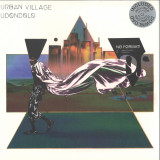
Signed to Parisian label N F rmat! (home to Oumou Sangar , Blick Bassy & M lissa Laveaux), Soweto-based 4 piece band Urban Village present their debut album, ‘Udondolo’.
Marrying the day-to-day experiences of black South Africans with ebullient elements from traditional Zulu music, Urban Village is the alias of four experimental musicians all born & raised in the township of Soweto at the tail end of apartheid.
Urban Village release music under a name which specifically references the blend of cultures, music & rites which were assimilated into the now 1 million strong population of Soweto, when black South Africans from multiple provinces were brought to the area during the establishment of apartheid, under strict segregation from Johannesburg’s white suburbs.
Born for the most part in the last years of apartheid, whilst growing up the band plunged happily into house and dance music that turned the page of a heavy past. Guitarist Lerato came across older Zulu musicians and their style of maskandi playing. Lerato has since mixed styles from homelands and rural areas, sharpened in club jam sessions (where he went on to meet Tubatsi and form Urban Village) during which spoken word, hip-hop and jazz rub shoulders freely.
‘Udondolo’ - partially recorded at legendary Downtown Studios in the heart of Johannesburg and at Figure of 8 studios in the leafy suburbs of Randburg, - is a journey through all the colours of Soweto. This is where it draws its consistency, strength & identity. That of Soweto itself - a dormitory town designed to
monitor those who were sent there, it has become a laboratory of music where the hopes of an entire people resonate, even today.
The latest signing to Parisian label No Format! (home to Oumou Sangaré, Blick Bassy and Mélissa Laveaux), Soweto-based 4 piece band Urban Village will release their debut album "Udondolo". Marrying the day-to-day experiences of black South Africans with ebullient elements from traditional Zulu music, Urban Village is the alias of four experimental musicians all born & raised in the township of Soweto at the tail end of apartheid; Urban Village release music under a name which specifically references the blend of cultures, music & rites which were assimilated into the now 1 million strong population of Soweto, when black South Africans from multiple provinces were brought to the area during the establishment of apartheid, under strict segregation from Johannesburg's white suburbs. Born for the most part in the last years of apartheid, whilst growing up the band plunged happily into house and dance music that turned the page of a heavy past. Guitarist Lerato came across older Zulu musicians and their style of maskandi playing. Lerato has since mixed styles from homelands and rural areas, sharpened in club jam sessions (where he went on to meet Tubatsi and form Urban Village) during which spoken word, hip-hop and jazz rub shoulders freely. "Udondolo" - partially recorded at legendary Downtown Studios in the heart of Johannesburg and at Figure of 8 studios in the leafy suburbs of Randburg - is a journey through all the colours of Soweto. This is where it draws its consistency, strength & identity. That of Soweto itself - a dormitory town designed to monitor those who were sent there, it has become a laboratory of music where the hopes of an entire people resonate, even today.
“Lucky Veil” is Al Pagoda’s first mini album to be released via Bigamo Musik, October 30th. Seven songs built out of layering luminous synth melodies that sound strong, iconic, like a childhood memory that’s long been dormant.
Al Pagoda, originally from Valencia, Spain, settled in Berlin in 2015, where he started working as a composer for movie soundtracks. During these years he experimented with new sounds and recording techniques. In 2018 a colleague of his, who had witnessed some of his free-form experimentation sessions, asked him to play at Loophole, a small club in Neukölln, Berlin. He accepted and came up with a few songs for the show. After this, the album would crystallise in no time.
Al Pagoda's cinematic approach can be felt throughout his music; his songs unfold like stories that take us to the crux of an inescapable revelation. Built from short snippets recorded in his phone over the years, Lucky Veil was put together during a winter in Berlin, in a room with no windows.
Soul Development AKA Deka Selector is a DJ and music producer from Barcelona. He started playing vinyl and performing as a DJ in Ibiza from 2002 at Warhol Club, Diosa Discotheque and Tira Pallá Bar, and also played twice at international festivals like Sziget Festival in Budapest.
Nowadays he is focused in music production, composing his own music with rhythm machines and synthesizers. His first release was in 2016 called "Poker Hat", and "Roots" in 2017. Now, under the label Sounds Of Mass Distraction (SOMD) Soul Development is about to release his first vinyl EP in September 2020, "Treballa Dorm Consumeix".
"Treballa dorm consumeix" is the new artwork of "soul development" who, at this time, edits as an EP on vinyl format as also on the current streaming nets. The title disc mentions and actually criticizes, the consume urban society where the majority population in the world live.
The author, Javier Ortega Cejas, pretends to generate consciousness about our fail system where we walk: every day, we awake and go to our job posts to spend a huge part of our daily time to generate incomes to later on, spend and spend in objects, sometimes, not really needed. If so, eat, we need to eat, sometimes we get satisfaction just purchasing and purchasing objects totally superfluous. Do not lie to ourselves, to buy, generates satisfaction, but maybe, at a high cost: our health, physical and mental.
As Dalai Lama said with his own words, that, resumed would be: "occidental man spends its health to get money, later on, spends its money to get again health, and lives the present thinking so much on the future that finally, lives like it wouldn't never die, and dies as it wouldn't never have lived".
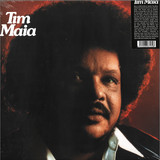
First vinyl reissue of this 1977 LP by one of the great figures of Brazilian music. Brilliant tracks like E necessario, Verao carioca, Venha dormir em casa or Musica para Betinha make it one of the strongest albums to come out of Brazil in the 1970s. Presented in facsimile artwork and pressed on 180g vinyl. TIP!
Tim Maia was born in 1942 in the suburbs of Rio de Janeiro and started his musical career at an early age, along with close friends such as Roberto Carlos or Jorge Ben. Carlos would eventually help him to get a deal for his first single at CBS.
During the 70s Maia started to incorporate soul and funk elements into his style. After a two-year period involvement in the Racional cult in Brazil, Maia's funky style was still at its best when he released this album in 1977. It was his first and only recording for Som Livre, the legendary label that became extremely popular due to the many soap operas soundtracks in its extensive catalogue.
The compilation "Celestial Birds" reveals and focuses on the widely unkown electronic compositions of the AACM founder and jazz pianist MUHAL RICHARD ABRAMS. #5 in the Perihel Series, curated by zeitkratzer director REINHOLD FRIEDL.
Anybody interested in jazz knows that Chicago has always been an impressive hot spot for new talents – and still is. One essential landmark in the history and development of jazz was the founding of the AACM (Association for the Advancement of Creative Musicians) in May 1965. This non-profit organization was a melting pot (and starting point) for artists like ANTHONY BRAXTON, ROSCOE MITCHELL, GEORGE LEWIS or LESTER BOWIE and his ART ENSEMBLE OF CHICAGO but one of its actual founding members is known only to the deep connaisseurs: MUHAL RICHARD ABRAMS (1930 – 2017).
The autodidact pianist and composer left music school and university, deciding to learn music by himself.
From 1961 on, the EXPERIMENTAL BAND was his first ensemble, but it soon turned out that ABRAMS' interests went beyond jazz and that he was open to the avant-garde and new music and most of all: electronic music. Which led to a double problem: On the one hand, black musicians had almost no access to the rare electronic music studios located in and funded by universities or broadcasting corporations. On the other hand, there were strong reservations regarding electronic music in the black music community.
In his important book "A Power Stranger Than Itself – The AACM and American Experimental Music" GEORGE LEWIS writes that "the use of electronics … proved controversial and widely misunderstood in a world of jazz in which acoustic instruments became conflated with musical, and eventually, cultural and even racial authenticity." ABRAMS' response was to actually "hide" his electronic pieces on the B-sides of his albums, and this compilation focuses on some of his best electronic experiments: the 22-minute long epic "The Bird Song" from 1968 in its original version incl. the reverb that was removed on the later CD reissue on DELMARK, the synthesizer compositions "Conversations With The Three Of Me" (1989) and "Think All, Focus One"1995) plus " Spihumonesty" (1980) with a 2nd synthesizer played by GEORGE LEWIS and YOUSEF YANCEY on theremin.
"Celestial Birds" casts a new light on the underrated experimenter MUHAL RICHARD ABRAMS, his innovative approach to composition and pieces that lay dormant for way too long!
2 mental progressives tunes on the A Side. The flip opens with a very psychedelic track, naturally sounding as if you were irie... The last track is a dub tune, quiet collector of a style ! A very active processus... Sonic illusion confirmed ! And then will come teh first Reggae track on mackitek ! With Malcom & Jerash, Dub Sensi style !
To call Marcos Valle 'a legend' of Brazilian music is much more than just easy press-release hype. As singer, writer, musician and record producer, Marcos has played an integral role shaping the sound of the country’s music from the 'golden era' of the 60's and 70's, through to the modern day. Alongside his brother, Paulo Sergio Valle, they have penned a huge catalogue of classic songs, not just for themselves but for other greats such as Elza Soares, Astrud Gilberto, Claudia to name a few.
‘Braziliance!’ takes things back to the early heady days of Marcos’ career with the bright and optimistic sound of Rio's Bossa Nova scene. It includes an instrumental version of ’Crickets Sing For Anamaria’ or 'Os Grilos’ in Portuguese, which would also be re-recorded with vocals. Though only in his early twenties at the time, ‘Braziliance!’ depicts very sophisticated production for a musician so young. Recorded in 1966, produced by Louis Oliveira and Ray Gilberts with arrangements by the very talented Emir Deodato, the album was released on Warner Bros. Records.
The artwork presents a very clean-cut, wholesome looking Marcos but darker things were around the corner for Brazil. The ‘Tropicalica’ movement was on its way and about to shake thighs up both musically and politically.
Unlike some of his Bossa Nova contemporaries, Marcos continued to stay relevant, surfing the changes and adapting to the musical developments that culture and society projected and needed, without comprising his art. Under exclusive license to Light In The Attic Records & Distribution, LLC | Mr Bongo Records.
These two new tracks continue to push the band’s sound into new territory; ‘Overture 1’ is a brand-new composition from Ruby Rushton keyboard player Aidan Shepherd. Taking inspiration from bands like Weather Report and Soft Machine, it's explosive introduction leads you to a dub-like breakdown, creating an open space for Shepherd to let loose his synthesizer for some deep space, Headhunters’esque exploration.
Yardley Suite - is a song first conceived by band leader Ed ‘Tenderlonious’ Cawthorne back in 2012. Having lied dormant for several years it felt like an appropriate time to pull it back out the bag. It’s a composition inspired by Cawthorne’s solo work as an electronic producer, under his alias Tenderlonious. Always wanting to merge his various approaches, ‘Yardley Suite’ is the perfect mix of Jazz and House. With a steady four to the floor beat and snappy horn lines it's sure to work its magic on dancefloors around the globe.
Having focused on improvisation and more “open” compositions in the past, the bands new direction is geared towards tighter, more groove-orientated arrangements. This exciting new material is yet further evidence that this is a highly prolific band at the top of their game, continually evolving, stretching out their own unique sound across the full jazz spectrum.
DJ Support: Tom Ravenscroft, Bradley Zero, Huey Morgan, James Endacott, Kev Beadle, Chris Phillips, Tony Minvielle, Tim Garcia, Delia Tesileanu, Kamaal Williams, Al Dobson Jr, Contours, Poly-Ritmo.
Third outing on Funclab Records, a dime bag of tunes that blends Hip- Hop and House while maintaining the same unpolished and crusty sound.
2x12"
Adam X’s highly respected, deep, science fiction laden, Traversable Wormhole project celebrates its 10-year journey with a first full-length studio album titled Regions Of Time. Lying mostly dormant since 2012, with a cameo appearance on Hospital Record back in 2016 with two tracks, TW is now fully awoken from the long travel through the space-time continuum with eight new songs of thought-provoking, psychedelic, bass-heavy, galaxian techno.Adam X’s back catalog is, of course, vast, spanning over a period three decades under several aliases. The New York native recently released his devious escapade through rumbling EBM and industrial techno in the form of his full-length album Recon Mission, released under his Sonic Groove Imprint. With this project being under the Traversable Wormhole alias, be sure to expect a completely different facet to X’s repertoire of pounding excursions.
Step through the wormhole portal and take a deep cerebral mind trip into “Regions Of Time “
After several apparitions of the modern electronic scene, Warzou strikes again, here on the Lyon based Mystery Booms Records for a détour dub called "J'irai dormir chez Mouss"! Tripping to a digi-dub exercice with two silent and ritual songs, from aerian flutes to pop arrangements composed with cheap instruments, including an MPC 2000, keyboard Casio VZ-1, Digital Delay and Mother Reverb. Tribute to the old way with this futil contemporary feeling! Expected red eyes' soundboys tunes to play them loud on your system!
Red eyes sound boys from Lyon strike again with this second record from Warzou. After several apparitions on the modern electronic scene, the local producer plays a digi-dub exercice for a detour dub called "J'irai dormir chez Mouss ». Tripping on two quiet and ritual songs, composed with MPC 2000, keyboard Casio VZ-1, digital delay and spring reverb, as the tradition! To play loud on your system!
"In his solo work and as a member of Nine Inch Nails, Alessandro Cortini's music casts the listener into an intricately rendered vortex of emotive dynamics,where he expertly maximises the boundaries of contemporary electronic music. His new album, 'Volume Massimo,' combines his fondness for melody with the rigour of experimental practice. Follows on from 2017's universally acclaimed album ‘Avanti. 8 tracks of deftly arranged synthesizers saturated with sonic artefacts and luscious pop sensibilities.
+ Includes download code."
Phillip Mitchell only cut one single for the Spring subsidiary, Event, in 1975 and despite the beautiful ballad ‘There’s Another In My Life’ being an R&B hit, he did not have a follow-up. However, there were three songs recorded at the Brad Shapiro-led Muscle Shoals session and ‘I’ll See You In Hell First’ was the superb mid-tempo track that lay dormant until compiled on an Ace CD in 1990. It features Mitchell singing at his best on an inspired, self-penned song and is long-overdue a vinyl pressing as originally hoped for.
Singer Ray Godfrey had four 45s for the label but like Mitchell he was best known as a songwriter for Millie Jackson, Joe Simon and Act I in particular. He wrote under his real name of Raeford Gerald. He produced this song on both Joe Simon and Millie Jackson and his own reading has now been found on the multi-track tapes for the song’s recording session. It is a worthy addition to the Godfrey/Gerald catalogue.
Repress
In 1981, Alexei Borisov, a history student at the Moscow State University, formed his first band "Prospekt (Avenue)", drawing inspiration from kitchen table talks and new wave music coming from the West. They broke up in 1984 and a year later Borisov joined forces with Ivan Sokolovsky, an electronic music enthusiast and a connaisseur of rare synthesizers, to introduce the new and "updated" version of the band. By becoming Notchnoi Prospekt (Night Avenue), Borisov and Sokolovsky started moving towards industrial music and viscous, psychedelic synth pop.
In 1986, after a few conceptual, revolutionary albums as Notchnoi Prospekt, various solo projects and collaborations, the duo reunited in the studio to record their only instrumental album "Kurorty Kavkaza" (Resorts of the Caucasus). Built around the hypnotic meshing of afro-caribbean drum machine percussion and vintage Soviet and Italian synthesizers' vivid sonic palette, the resulting record was something that was absolutely different from Borisov and Sokolovsky's dark signature sound and wasn't well received both by the public and underground scene.
Until now, these tracks were never released and Notchnoi Prospekt never performed them live. Shortly after the recording session the duo focused on a return to their industrial roots that resulted in a number of monumental albums including "Kisloty" that became an instant underground classic.
"Kurorty Kavkaza" lay dormant and forgotten decades, and thirty three years after its recording, it gets the deserved official release.
From the artist:
"pootek" - Paul (Solpara) and I laid down the majority of this track one November night in Berlin. We lived in the same dorm in university nearly 10 years ago and bonded over weird electronic music. We hadn't seen each other in a while and had never made music together. We got so rowdy making this my neighbour who I had never seen before came up to complain we were being too loud.
"whendialupbecomeform" - I was thinking a lot about dial-up modems, especially after I heard a Lana Del Rey song that featured that sort of sound in the background, whether intentionally or not. I woke up in the middle of the night and laid down the main arrangement in a couple of hours. I later added some vocals, random sounds from freesound.org, and what might be described as "dreamy pads."
"dosheepdreamofandroidelectrics" - I don't think the song has much to do with Philip K. Dick. I wanted to make something that someone could introspectively zone out to, maybe under the influence of a plant, either at home or at the club.
Down co-founder N'conduit presents his third solo release on the label with Latent States. The first release to come out of his new Brooklyn studio, Latent States has three original jams inspired by defunct beverages and dormant memories. From the A1 though the flipside, expect dirty modular basslines, warbly reel-to-reel FX, dusty saturated beats, and spaced out feedback. October, Bristol-based DJ/producer and O.G. Voodoo Down confidant, has contributed an ac
It's safe to say that Detroit, a city steeped in economic, cultural and musical history, will soon weave its way into your soul should you spend any sustained time there. This rings all too true for Monty Luke. He has immersed himself in Detroit's scene since moving to the Motor City in 2008. His new eight track LP, released via Dogmatik, showcases the style of a new generation of Detroit producers carrying the beacon for a deep, Detroit sound that blends analogue weight and punchy drum programming together with masterful synth work and raw emotion.
Even at first glance the polarised artwork, an aerial map of Detroit, shows the more introspective nature of this Motor City ingrained release, with Luke purposefully steering away from writing club ready material. Introductory track 'City Lights' gives a first taste of this, combining swelling synths, dreamlike arps and crisp percussive hits. There's a real weight to the bass synth that compliments Abi B's soulful vocals all too well. 'Anton's Room' & 'Crime Wave' follow suit -the former with itslayered gritty bass, expansive stabs, glitchy bleeps and undulating arps and the latter creating a sonic swell between your ears manifested by a surging, panned arp, alongside sirens and punchy, gunshot like snares. Inspirations from Moodymann to Theo Parrish are clear to be seen in tracks like 'Move', taking a range of jazzy loops and samples and chopping them into a low slung, bouncing MPC laden jam.Progressing into the 2nd half of the album there's a transition from deep, Detroit house into harder hitting, electro territory. 'Willie Maze' with its killer drum programming, reverberating Rhodes and dynamic bass and 'Roja', combining emotive late-night chords and melancholic synth melodies, really honeinon that pensive, thought-provoking aesthetic. One of the highlights, 'Wasteland', is the best example of this transition -interlacing a commanding electro drum pattern with squelching, synth melodies and Serene Arena's introspective lyrics.
Then taking it full circle, closing track 'Block Is Hot (Black Hole Mix)' -co-produced by King Britt in Philadelphia (alongside City Lights, Crime Wave & Willie Maze), returns to the 4/4 path with a thumping party track, carrying through that raw nature emanating from the dark melodies and Monty's adlibbed vocals.
'Hard Work/ Not Hype' is a record flying the flag for those underground artists working tirelessly behind closed doors to produce material that's based on feeling, emotion and skill, rather than riding off the back of an inflated, socially constructed image. Monty Luke, as someone that follows that mantra, has been able toconstruct an album showcasing this, creating a real weight and depth to this release; it's raw, powerful and thought provoking, expertly capturing the soul of Detroit -the city that's had such a profound effect on him
DETROIT SWINDLE
Ouch that's HOT! Bring it on.
KRISTIAN RAEDLE/ INNERVISIONS
Yes please. Very nice.
AYBEE
Fanatastic Work Monty!!
ASHLEY BEEDLE
Thanks for sending over the Monty Luke album to listen too. It's a great
contemporary album with of course Detroit running through it's veins! It
really pulls you in and I think the arrangements and productions are great.
Fave tracks are City Lights, Roja, Willie Maze and Block Is Hot.
LAURENT GARNIER
Oh yes..This is so elegant and sexy. Love it Would love to play it
OSUNLADE
This one is a guilty pleasure vibe..hate that I love every song equally
transparent red vinyl[8,36 €]
The four tracks on this EP represent a bit of a transitional phase for Louis Jaquet (aka Kid Who), marking a move from a basic setup with an MPC2000XL sampler and a computer to a fully-fledged hardware studio. The initial versions of these tracks were quick jams that he had made early on in this change, but which had lay dormant on his hard drive for some time, before being revisited and reworked for this release with the new equipment.
'Rhythm Code' began life as an exercise in using only freely distributed software synths, and the majority of those sounds are still there, bar some additional acid sequences and tweaks to the rhythm parts.
On 'ZF Cut' his focus switched to samples, in an effort to squeeze the most he could out of his MPC, which at the time had only recently been upgraded. The unassuming beige box gives colour to anything you feed into it (breakbeats in particular), and a host of basic onboard effects add further quirky character, in this case hollow drones and rumbles which are the core of the track.
One of Kid Who's early purchases was a cheap old Yamaha multitrack cassette recorder, which presents many opportunities for sound manipulation. Different tape speeds, tape types and manual manipulation during playback open up a world of noisy, woozy atmospheres, some of which formed the basis of 'Spool Night'.
Of all four, 'Timescape' required the least revising, and the version presented here is very close to the original, 100% computer-based draft. Although the beat was built with Roland 707 drum machine sounds, a staple of early Chicago house records, he wanted to juxtapose these with a more up-to-date techno aesthetic, with a handful of final touches added in the new studio to finish
The four tracks on this EP represent a bit of a transitional phase for Louis Jaquet (aka Kid Who), marking a move from a basic setup with an MPC2000XL sampler and a computer to a fully-fledged hardware studio. The initial versions of these tracks were quick jams that he had made early on in this change, but which had lay dormant on his hard drive for some time, before being revisited and reworked for this release with the new equipment.
'Rhythm Code' began life as an exercise in using only freely distributed software synths, and the majority of those sounds are still there, bar some additional acid sequences and tweaks to the rhythm parts.
On 'ZF Cut' his focus switched to samples, in an effort to squeeze the most he could out of his MPC, which at the time had only recently been upgraded. The unassuming beige box gives colour to anything you feed into it (breakbeats in particular), and a host of basic onboard effects add further quirky character, in this case hollow drones and rumbles which are the core of the track.
One of Kid Who's early purchases was a cheap old Yamaha multitrack cassette recorder, which presents many opportunities for sound manipulation. Different tape speeds, tape types and manual manipulation during playback open up a world of noisy, woozy atmospheres, some of which formed the basis of 'Spool Night'.
Of all four, 'Timescape' required the least revising, and the version presented here is very close to the original, 100% computer-based draft. Although the beat was built with Roland 707 drum machine sounds, a staple of early Chicago house records, he wanted to juxtapose these with a more up-to-date techno aesthetic, with a handful of final touches added in the new studio to finish
"In 1978, Nova performed for Obama. Well, kind of: Nova was the band for the Punahou School prom in Honolulu, Hawaii, and a young student named Barack (known then as 'Barry') was in attendance.
Backtrack to 1976, and Nova was the opening band for Donald Byrd at the nearby Blaisdell Arena. The day was Sunday, June 27. The following day, Isaac Hayes would perform on island for the admission price of $1.
Nova, led by singer Checo Tohomaso, was one of several go-to party bands during the golden era of Hawaii funk and soul music in the mid-1970s through early 1980s.
The band's infectious gospel-funk-disco can be heard on their sole release, a self-titled 1980 LP that feels like one big party recorded live in the studio. (Check out the Marvin Gaye-inspired 'I Feel Like Getting Down' on the 2016 'Aloha Got Soul' compilation on Strut Records).
The story is all too familiar, however: funk band releases LP, the music goes dormant in years to follow, and today original copies sell for hundreds online.
Not long after the album's 1980 release, Checo met Marvin Gaye, who was living on Maui (where George Benson also resided). Shortly after, Marvin invited Checo and his counterparts to join his multi-city tour across Europe. Videos of Checo rocking keyboards, percussion and singing background vocals for Marvin Gaye's last European tour can be found online.
Checo, born in Florida yet raised in lush Manoa Valley as well as Okinawa, Japan, now resides in Vancouver, Canada, where he leads the VOC Sweet Soul Gospel Choir and continues to deliver his signature sound: high energy, positive, 'sweet soul' music.
AGS-7010 features two non-stop groovers with a 7' edit by Roger Bong on the A-side. LP reissue in the works!"
- A1: N'écrire Que Du Vent
- A2: La Visite Au Musée
- A3: And Then The Wind
- A4: Chienne De Vie
- A5: Quand Natalia Peint
- A6: Thème Entre Deux Chants
- A7: Les Sanglots Du Locataire
- B1: John Doe
- B2: C'était À L'aube
- B3: Le Dialogue Des Joueurs De Cartes
- B4: Et L'obscurité Toute Entière Pour Me Rappeler Cela
- B5: Le Train Ne S'arrêtera Plus
- B6: L'oubli
- B7: Chryséléphantines
- B8: D'un Pas Chancelant
Le Raccourci is a welcome introduction to the world of modern classical identity Sebastian Gandera. The impressionist landscapes of a sensitive soul self-reflecting, these miniature compositions alternate across a rudimentary set up of piano, field recorder, sampler and four track. Melancholic utterings hastily captured some 100km east of Paris. Classically trained by the same teacher as his parents, Gandera first began recording in the confines of his university dorm room, inspired by a C60 from friend and future collaborator Bernard Odot (A Gethsémani). Humbly existing without sparing a thought to music industry or career, Gandera's personal effects surfaced via the European and US cassette networks from 1988 to 1994. Impressively accomplished for the DIY scene they orbited, these tapes were issued in scant quantities, rendering his pieces as private secrets shared and duplicated in small concentric circles. Aside from a sole, avowedly traumatic performance, the material was never shared in a live context.
- A1: Music From Installations 1 (Lp 1)
- C1: Music From Installations 2 (Lp 2)
- E1: Million Paintings (Lp 3)
- G1: Lightless - Music For The Marble Palace 1 (Lp 4)
- I1: Lightless - Music For The Marble Palace 2 (Lp 5)
- K1: Dormienti (Lp 6)
- M1: Kite Stories (Lp 7)
- O1: Making Space (Lp 8)
- Q1: Music For Installations (Lp 9)
If you think of music as a moving, changing form, and painting as a still form, what I'm trying to do is make very still music and paintings that move. I'm trying to find in both of those forms, the space in between the traditional concept of music and the traditional concept of painting.' Brian Eno.
Musician, artist, thinker, activist Brian Eno first came to international prominence in the early '70s as a founding member of Roxy Music, and immediately followed by a series of highly acclaimed solo albums. His visionary production work includes albums with U2, David Bowie, Talking Heads, Coldplay and many others.
His recordings and other collaborations are endless and endlessly known, however his visual experiments with light and video covers an even longer span of time and have been exhibited all over the globe - from the Venice Biennale to the Marble Palace in St. Petersburg, from Beijing's Ritan Park to the Sydney Opera House. Eno's installations are the fertile ground from which so much of his other work has grown and continue to parallel his musical career.
Music For Installations is a collection of original recordings from these installations with new and unreleased work covering the period from 1986 until the present and beyond.
________________________________________________
Designed by Brian and long-time collaborator Nick Robertson, this limited edition 9LP Vinyl boxset comes with a 64-page booklet featuring rare and unseen exhibition photographs and a new essay written by Eno.
- 12 x 12 rigid box set of 9 LPs containing music from Brian Eno's installations past, present and future.
- 64 Page book containing a brand new essay by Eno plus rare and previously unseen photographs from his various exhibitions from 1997 to the present.
- Each album is housed in a beautiful die-cut sleeve designed with long-time collaborator Nick Robertson and all music is guaranteed first time on vinyl.
- 50% of the music contained in the box set has never been available in any format and the rest has only ever had very limited cd release direct to consumer release.
- Vinyl mastered and cut by Matt Colton at Alchemy Mastering, London
- 100 % First time on vinyl, strictly limited edition
1st release on NYC's BLKMARKET MUSIC kicks off with 'Twenty Eight Thousand Clouds' E.P by Cesare vs Disorder. The 4 track EP also features a track collaboration with Costa Rica's duo Mobius Strum. The catalogue will start from zero and BLKMUSIC_000. Label run by Taimur. Hand Stamped 12' Vinyl. Limited Edition.
Joanne Forman's Cave Vaults of the Moon created in 1987 for an exhibit of sculptures in Taos, New Mexico is a mesmerizing score for voice, Ensoniq Mirage, Juno 106, flute, guitar and effects. The playful extra-terrestrial recording wafted through the exhibit every day for its duration and then lay dormant for nearly 30 years. Unearthed now, Cave Vaults of the Moon sounds prescient and timeless, as if Pep Llopis and Iasos scored a Wicker Man remake set on Mars. Restored, remastered and cut using DMM.
.
We humans, the nascent beings that we are, still haven't quite figured out the full potential of music. Dancing, meditating, emoting, protesting, these are all pretty basic. But what if we communicated more complex ideas with music What if we codified all of our activities with music This idea came to composer Joanne Forman
when commissioned in 1987 to create the soundscape for an environmental exhibition of sculpture called Artifacts from an Alien Civilization in Taos, New Mexico. The sculptures, elaborate ruins that had been found on the moon, begged the question: who created them and for what purpose
Joanne Forman imagined that Earth's moon was a vacation spot for advanced beings from another galaxy. In her mind, the sculptures in the exhibit were the remnants of a deserted playground. Cave Vaults of the Moon became a collection of sonic texts describing the recreational activities that went on there, earth-viewing, collecting information, building and playing.
This is the first album of Borusiade, in which she takes her music to a new level, finding her very own expression, that is making us first shiver then sweat, then chill and finally melt.
Cómeme starts 2018 by proving again to be a safe haven and a sanctuary for sensitive plants and unique characters devoted to music - just like Miruna Boruzescu aka Borusiade - from Bucharest - who conquered the radio stations of our parallel worlds and utopian desire. 'Dream catcher' was the name of the show, and 'Jeopardy', a nocturnal EP, her first release on vinyl.
Now, after adventurous travels through night clubs, theatres, windy cities, snowy fields and merciless deserts her desires and imagination have manifested themselves in her very first album, carrying the intriguing title: 'A Body'
The record sleeve features the back of her head, making us wonder what she sees, on the other side. Her visions unfold through 8 pieces of music that follow a dreamlike narrative of associations and transformations. Somber synthetic atmospheres, sparse and spatial rhythmical arrangements, strangely seductive melodies and lysergic ally pulsating bass lines lead us away from a dystopian present towards a sensorial experience we long to repeat as soon as it's over.
'A Body' is a deeply poetic work in which again and again you will hear Borusiade's voice, sometimes dissolving and recreating meanings in mantra-like repetitions, sometimes layering itself to pagan choirs of smooth ecstasy. Then again you will also hear that voice close to you, singing, sharing an experience or a thought. It is always soft, effortless and unpretentious, but always strong, clear and precise, like the voice that speaks to you in an altered state of consciousness. It seems to come from the same person that is holding your hand, when everything else seems to fade into uncertainty while wandering through strange times and places...
Starting with the song CLUSTER the effect is kicking in, we sink into the universe of the album through this throbbing ambience that seems populated by a reverberated ant colony that broke into a synthesizer. The introduction of this album is a complex emotional soundscape that is followed by a song: BREATHE, which sounds like a classic you never heard. With its catchy melancholia, it creates a déjà vu like strange familiarity of the unknown - a memory from the future. And though our minds were just twisting and turning in an overflow of information, we suddenly leave our bodies and observe ourselves breathe.
Other tracks, like DORMANT are more focused on the narration of the body and its state. Words, describing it in many ways, softly and incessantly repeated, are mixed deeply into the soundscapes of a track that features a bass drum so soft it could be a heartbeat. Foggy moments like these dissolve in a track like AN ACUARIAN FEELING, which is queer synthesizer love, shifting in shape and momentum, a ray of light that pushes itself through the nightly atmosphere that was preceding these moments, a similar landscape in different times - a choir enters, cheerful drums, climbing and descending melodies and rhythms of hope. Just like the utopian vision in the title track A BODY, that stands at the end of this journey, which in itself just opens another new horizon.