"Switch Records was started by myself alongside Bill Campbell in the early eighties", says Aaron Harry - a library music producer who began using Lansdowne Studios in Holland Park for his productions on the renowned Bruton Music label. The studios had been operating there since the late 1950s, becoming the breeding ground for some key & early UK jazz and pop records (owner Adrian Kerridge teamed up with Joe Meek to lay down the first recordings there in 1958). It was here that Harry and engineer Chris Dibble started to work together as a regular team. After spending some time at the studio observing them in acton, Kerridge and (Burton MD) Robin Phillps "recognised what a good team Chris and I had become. So, it was inevitable that I would also make pop music alongside Production Library Music."
The output of the relatively obscure Switch label is the result of this work, and Freestyle has licensed 3 of the most hard to come by 12"s as part of their series of rare & foundation UK funk & soul records. This one, Steppin' Out on the Groove was written by the late Tony Jackson, "a renowned session singer/musician that I had worked with on numerous occasions" says Harry, and also a key brit-funk figure who formed part of a string of UK groups throughout the 70s and early 80s (Sweet Dreams, Midnight, Ritz & Indigo) and later went on to be successful as lead singer in Rage. He died in 2001. Backed up with a killer instrumental that really lets the solid production shine, this one is an essential in any DJ or collector's bag.
Cerca:f free
This extraordinary NYC trio combines free jazz and post-punk with pointed commentary about issues of race, gender, the pandemic, and political autonomy.
Rose Tang, a Mongol from Sichuan, sings/recites and plays guitar, piano, and percussion. Tenor saxophonist Ayumi Ishito, from Japan, plays in a plethora of bands along the jazz/rock spectrum. Drummer, composer, and educator Wen-Ting Wu, from Taiwan, combines jazz drive and classical rigor.
The group came together to play one song at an event. ESP-Disk’, already familiar with the separate work on the NYC scene of all three members, immediately invited them to make an album. After intensive rehearsals, the members recorded the album in a one-day session, then reunited during the pandemic to add words about its effect to an existing instrumental on “8 Steps/7 O’Clock.” This album is simultaneously part of ESP-Disk's Drive To Revive Weird Rock and an extension of the label's famed free-jazz legacy.
Damian Schwartz makes a welcome return to Pulp for his third full-length album, La Sal De Tu Especie. The 11 track record was written over the last three years as a way of coping with some tough experiences and features remixes
from K15 and Gifted & Blessed. It once again finds the Madrid producer serving up the sort of richly musical house that has always stood him apart.
Schwartz has been away for a while but emerged in the early 2000s with an artful take on house music. As a student of jazz, composition and bass, his intricate grooves have always been embellished with real melodic craftsmanship. In the past, they have come on this label, Esperanza and A Harmless Deed which he co-runs with Jose Cabrera. He has put out two albums before now and also works under the Epiphany alias as a producer and live act. He is a real master of his analog machinery and someone who never fails to bring fresh ideas. This superbly adventurous and widescreen new album proves that once again and shows off diverse influences such as 90s broken beat by acts like Hanna and 4 Hero, the early IDM of LFO and Aphex Twin and the Detroit house and electro styles of greats such as Juan Atkins, Teknotika, Marcellus Pittman and Kyle Hall.
It kicks off with Renacido which is a cinematic synth opener that places you into orbit. La Elipa is expansive and jazzy house with cosmic chord work over the tight, punchy kicks and Lopp then gets physical with broken beat drums and funky bass dancing around each other to uplifting effect. The superb Zwei Danke is another masterclass in off-grid beat programming and soulful machine sounds that captures the essence of early Detroit house.
It is remixed by K15, a vital London beatmaker with credits on labels like Eglo and Wild Oats. His version showcases rugged, lo-fi and dusty drums softened by heart-melting chords and angelic vocal coos.
Schwartz's 'Morro Da Urca' is a suspensory ambient interlude that makes way for the crisp electro-funk and starry-eyed pads of 'Rufo,' then 'Meco' cuts loose
with boogie bass and glistening drums and perc that voyage through a whole eco-system of bright, nebulous synths. 'Mika' is another out of this world house composition with majestic leads and pixelated pads that bring warmth and future soul. There is real electricity in the freeform keys and corrugated drums of Coney Island that will ensure any dance floor takes off.
Final remixer Gabriel Reyes-Whittaker aka GB (Gifted & Blessed) is a composer and sound artist whose music is a constant exploration of the bridge between the technological and the ancestral. He flips 'Loop' into an Afro-future jazz dance with infectious percussion and expressive chords that never rest.
La Sal De Tu Especie is a timeless fusion of jazz freedom and house grooves that takes you into a magical new dimension.
Horse Lords return with Comradely Objects, an alloy of erudite influences and approaches given frenetic gravity in pursuit of a united musical and political vision. The band's fifth album doesn't document a new utopia, so much as limn a thrilling portrait of revolution underway. Comradely Objects adheres to the essential instrumental sound documented on the previous four albums and four mixtapes by the quartet of Andrew Bernstein (saxophone, percussion, electronics), Max Eilbacher (bass, electronics), Owen Gardner (guitar, electronics), and Sam Haberman (drums). But the album refocuses that sound, pulling the disparate strands of the band's restless musical purview tightly around propulsive, rhythmic grids. Comradely Objects ripples, drones, chugs, and soars with a new abandon and steely control. This transformation came, in part, due to circumstance. Sidelined from touring their early 2020 album The Common Task in a world turned upside down, Horse Lords promptly returned to their Baltimore practice space and began piecing together the music that became Comradely Objects (Bernstein, Eilbacher, and Gardner have since relocated to Germany). Removed from their tried and true method of refining new music on the road, the quartet invested less energy ensuring live playability and more rehearsing and recording. The deliberate writing and tracking process, a rarity since the band's earliest days, led to a collection of pieces that signal a new peak of creativity and musical heft without devolving into studio sprawl or frippery. Comradely Objects reflects familiar elements of Horse Lords' established palette_the mantra-like repetition of minimalism and global traditional musics, complex counterpoint, the subtleties of microtonality, a breadth of timbres and textures drawn from all across the avant-garde_with some standout stylistic innovations. At different moments, the album veers closer to free jazz than anything else in the band's catalog, channels spectral electroacoustic tones, and throbs with unexpected yet felicitous synth. While these new elements are evidence of additional studio time and care, Comradely Objects retains the dizzying obsessive rhythmic energy that galvanizes the best moments of the band. Music for people who like Mdou Moctar, This Heat!, Battles, Ndagga Rhythm Force, Can, Captain Beefheart, Art Ensemble of Chicago, LaMonte Young.
As Far As Death is the cross-generational debut of fire music evangelist and saxophonist Paul Flaherty with double bassist and composer Zach Rowden. The Connecticut natives forge an album of dynamic free jazz interplay that also draws on imporous textures of contemporary music - an ecstatic reflection. After a half century of blowing the alto and tenor saxes, Flaherty's playing continues to molt and electrify. Whether solo, or with collaborators (Joe McPhee, Chris Corsano, Bill Nace, Daniel Carter, etc.), his blues-based, lyrical melodies anchor lung-bursting gallops. Rowden - whether as Tongue Depressor (a string duo with Henry Birdsey), in performance with cellist Leila Bordreuil, or his own musique concrète constructions - balances harshness and elegiac drones. His past releases resemble resolute exploration into acoustics and noise. Together, Flaherty's monstrous howl is perfectly matched by Rowden's subterranean pitched drone and glacial pace. Each offers weeping lurches of tune, gasps of balladry and microtonal fields of interplay on five pieces. The side-long "Thrown Shadows" is an epic passage of avant jazz vs minimalism, as Rowden's low-register bowing offers a blackened landscape for Flaherty's most mournful notes. Artwork by Chris Corsano.
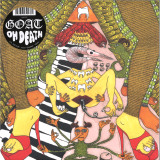
Formidable psychic warriors, channelers of the mystic and proponents of a spiritual quest that transcends this realm, Goat remain a band shrouded in mystery. Travelling from their inscrutable origins in the Swedish village of Korpilombo across the stages and festivals of the world in the last decade, this band has created their incendiary music entirely according to their own co-ordinates. With all this in mind, the casual observer might have guessed from its title that 'Requiem', their beatific and melancholic album of 2016, was to be their last. Yet the ancestral spirits summoned by their art are always restless. Thus the eternal cycles of rebirth have triumphantly produced 'Oh Death' - a ceremonial conflagration as powerful as any this band has made. Invigorated by forces we can only guess at the origins of, 'Oh Death' is a party to which all are welcome. Blithely waving away easy classification, these heat-hazed serenades are just as comfortable in the headspace of vicious '70s funk as they are in zesty ZE records post-punk. Folk-haunted incantations and free jazz skronk here find common ground, buoyed by relentless forward motion and raucous energy. Yet all of the above is locked into a delirious gnostic groove that threatens to throw the whole shebang spiralling into orbit. 'Oh Death' is driven by a supernatural charge that unifies, invigorates and transcends borders, whether geographical, musical, or between this world and the next. In the hands of these sages and soothsayers, this is just the beginning. Goat Is 'Oh Death', Long Live Goat!
Take To The Sky is a sun soaked EP with four dance floor heaters soundtracking the summer; capturing the euphoria and release of collectively gracing sweaty dance floors again. Inspired by nostalgic 90s UK club music/Summer of Love, incorporating broken-beat, garage and street-soul rhythms carried by melodic ear-worm vocals performed and produced by J. Caesar with co-production and mixing by Z Lovecraft (Rhythm Section). This year the East London based producer, singer/songwriter blessed the BBC airwaves with the EP title track, ‘Take To The Sky’ premiered on 1Xtra by Jamz Supernova originally featured on the well-received Scenic Route compilation and has been testing out dubs at his club night, Space Ghettos co-run by Qendresa and Albertina.
The opening track “I Told You” is a balearic love letter of gratitude to his friends, “ all I had was love, love of my friends, love of music and love of living.” his sentiment of meaningful relationships evoked through his sparse vocal arrangements, sprinkled over downtempo street soul drums. Take To The Sky, similarly paying homage to the underground Black dance music of the 90's, is a tale of escapism whilst Give Me To The Night is a celebration of hedonism featuring Jim’s sultry vocals punctuated by broken-beat drums. Lost In Space co-produced by Z Lovecraft is a moody, Garage/D’n’B infused B-side with disorientating breaks capturing the essence of romantic turmoil he found himself in during COVID. In his words “Take To The Sky EP is an ode to freedom”.
Support from Jamz Supernova BBC 1Xtra, CC:Disco Track IDs, Stamp The Wax, NTS; Anu, Zakia,
- A1: Paul Kalkbrenner - Feed Your Head
- A2: Tori Amos - Professional Widow (Armand Van Helden's Star Trunk Mix)
- B1: The Knife - Heartbeats (Rex The Dog Remix)
- B2: Trentemøller - Moan (Trentemøller Remix)
- C1: Yeah Yeah Yeahs - Heads Will Roll (A-Trak Remix)
- C2: Goose - Synrise
- D1: Zombie Nation - Kernkraft 400 (Dj Gius Remix)
- D2: Bomfunk Mc's – Freestyler
This extraordinary NYC trio combines free jazz and post-punk with pointed commentary about issues of race, gender, the pandemic, and political autonomy. Rose Tang, a Mongol from Sichuan, sings/recites and plays guitar, piano, and percussion. Tenor saxophonist Ayumi Ishito, from Japan, plays in a plethora of bands along the jazz/rock spectrum. Drummer, composer, and educator Wen-Ting Wu, from Taiwan, combines jazz drive and classical rigor.
At the Moers Festival 2018, OXBOW got together with Peter Brötzmann to deliver a memorable performance, bringing out the best of two legends in their very own genres while playing old and new Oxbow songs together. Oxbow, formed in 1988 in San Francisco, plays a blend of noise rock, avant garde jazz, musique concrè te and blues, creating intimate soundscapes, with overtones of paranoia, revulsion and exaltation. They released a couple of cult albums, eg. on. Neurot, Hydra Head. Peter Brötzmann , active since the 60s with his distinct saxophone sound, is one of the key musicians in European Free Jazz. ,I think we have at least one thing in common: a certain kind of energy, which we could share and where we will meet." Peter Brötzmann *** Peter Brötzmann -saxophone / Eugene S. Robinson - vocals / Niko Wenner - guitars, piano / Dan Adams - bass guitar / Greg Davis - drums
Following the release of acoustic EP Letters To Our Former Selves – Acoustic late last year, Youth Fountain is excited to be back at it with new single “Peace Offering" “This track was written in the perspective of knowing you could never truly love or be loved by anyone before being comfortable with who you are as a person,” shares Tyler Zanon “No matter what positive aspects can come out of a relationship - if the foundation isn’t there of having that bare minimum of self love, things inevitably tend to tarnish.” As Youth Fountain prepares to move forward, the future perfectly mirrors the past. What began as a solo project by guitarist/vocalist Tyler Zanon in 2013 under the name Bedroom Talk eventually blossomed into a full-blown band by 2017, with the Vancouver-based Youth Fountain (then a duo) proudly announcing their presence with the debut single “ Grinding Teeth ” and a pair of Pure Noise Records releases that expertly toed the line between pop-punk fervor and more reflective emo moments. Alternative Press hailed the band’s 2019 debut full-length, Letters To Our Former Selves , as one of the year’s very best, dubbing it the “ perfect blend of emo-tinged punk to soundtrack reflecting on every single life decision you’ve ever made ,” while North American tours with the likes of Free Throw, Can’tSwim, and Chris Farren cemented Youth Fountain’s sweat-soaked sound as something best experienced live – all while dodging a few stray elbows and overzealous crowd-surfers. Now once again, Zanon finds himself as a solo artist following the departure of co-vocalist Cody Muraro in mid-2020 – but this time, he’s exactly where he wants to be. Youth Fountain’s new release, Letters To Our Former Selves – Acoustic EP, re-introduces Zanon’s project to the world, reimagining fan favorite aterial from the 2019 LP of the same name.
GREY VINYL/GREY SLEEVE REPRESS.
Recut from the Silver Sonyare masters in November 2008 at Chicago Mastering Service, features a new blue cover , BLUE VINYL, and comes with a free MP3 download of the album.
racks 1-8 are from the first Minor Threat 7". Tracks 9-12 are from the "In My Eyes" 7 Inch. The Digital version of this record includes the song "Stand Up," from the Flex Your Head compilation. All songs are available on CD.
Recorded: April & August 1981
Released on 12": June 1984
Ian MacKaye vocals
Lyle Preslar guitar
Brian Baker bass
Jeff Nelson drums
By freeing himself from the labels that have made D.L.i.d.'s career, Casini turns to more pointed and experimental sounds, he is now part of a purely electronic current, at the electronic current, at the crossroads of the influences that have forged his unique musical identity. For this adventure, the objective is simple: to let the creativity of its author take him to where he where he wishes it. From Trap to house through more hybrid styles, he lays his deep and catchy voice on 6 tracks that will be unveiled one after the other in the heart of an evolving EP.
repress
Levon Vincent returns with his fourth full-length studio album Silent Cities a striking departure from his previous records. This, his first release experimenting with the cassette format, Silent Cities is a kind of mixtape through more private moods and personal pitches (literally given Levon’s non-standard tunings).
While Levon has always pro
duced dance floor jams with the intention of raising people’s heart rates, Silent Cities began with 72 bpm: his average resting heart rate, and the concept of tuning the music he was making to his own body rather than increasing anything. This brought the tempos down to 72 bpm or even half of that, at 36bpm. Programming the record during the empty cityscape of Berlin lockdowns, this is the first time Levon’s created an album for the home stereo or for headphone listening whilst navigating through a city. A mixtape specialist in his youth; he was always wanted to play with the cassette format. The results are sure to delight any listener, with the ever-present ambient, krautrock, shoegaze, hip-hop and electro influences coming to the foreground on this work.
“I was expanding further along the lines of a surprise favourite from my previous LP, a song called She Likes To Wave To Passing Boats which was not a 4 on-the-floor piece to play in clubs but a more impressionistic piece of music that I wrote to expound some emotions one day” says Levon. “It was a song written using just intonation. I really love how warm the pure 4ths sound, so when working on the new LP Silent Cities I decided to use my own tunings”.
Historically, the use of just intonation has meant that such instruments could sound "in tune" in one key but at the expense of more dissonance in the other keys. None of the songs on Silent Cities use standard Western equal temperament, Levon created his own scale designs coupled with the ancient ratios found in just intonation.
Born in Houston in 1975, Levon’s life changed dramatically when his parents moved their family to New York in 1981, uprooted from what he knew, the shock, the change from Houston to New York at 6 years old, is referred to constantly in Levon’s Musical output over the years. Levon's family moved houses in and around NYC from 1981 -2010, never more than a mile or two from the WTC. He lived on the Lower East Side during his teenage years and early 20s. This time period and this locale are also a big theme recurrent in his music as he tries to convey how the "downtown" lifestyle and culture-melding affected him so much at a tender age. He cut his teeth working in record shops around lower Manhattan, and while working at the Halcyon Record shop in Brooklyn he (alongside DJ Jus-Ed) was instrumental in creating the wave that came to be known as the "NYC House Renaissance" circa 2010. During the Y2K years he studied 20th C post-minimalism at Purchase college of New York under James McElwaine (who tangentially produced Man Parrish’s Self-Titled proto-hip-hop debt LP). Levon was fortunate to study theory with avant-garde composer Dary John Mizelle and orchestration under conductor Joel Thome. He undertook masterclasses with Philip Glass and also served as intern for John Kilgore, engineer for Steve Reich, where he was present for notable mix sessions such as “Violin Phase.”
Post-minimalism clearly remains an influence not to mention the early sampler stars of 80s freestyle and synth pop. Mixing such far-reaching influences is something Levon executes tremendously well. The first track Everlasting Joy moves at a head nodding 96 BPM tempo, reflecting formative influences like Paul Hardcastle’s Rainforest or Art Of Noise’s Moments in Love. “Those types of songs were a big eye opener for me as a youth, because it was where I realised songs in popular culture didn’t have to be kept to just 3 minutes, and they didn’t require vocals either. So, Everlasting Joy is a song with that intention, one that might be radio-friendly, despite the long arrangement and without vocals. You could say it was inspired by 107.5 in NY because that was a station I listened to a lot in the 1980’s.”
The majority of demos on Silent Cities were recorded before Covid-19 hit the world - when Levon had found a studio space outside of home in his adopted city of Berlin. It was a career first - working on music outside the bedroom. This riding the train or bicycling ‘going to work’ in Berlin opened up a new mood in his music, using the time back and forth to be inspired - commuting as an NYC transplant who still feels as a tourist in Berlin, with a pair of headphones, looking out the window on the train, or stopping on bridges and parking his bike to enjoy Berlin's skyline and horizon. Then, the pandemic struck and “work” came to a halt. Levon had recorded so much material during that year in the studio out of house it seemed like an inflection point for him to lighten the burden of the possessions he was carrying.
“People close to me have watched me give away synths and hardware regularly and I have given away my record collection every few years for my whole life. As a struggling artist in my 20s who had worked in record stores that whole time, I learned that moving constantly with 12k records just wasn't the way to live. So, in light of the pandemic, I set up a shop online, and sold all my music equipment. I also created a separate shop for all my sneakers and clothes. Easy come, Easy go. This provided me with a slow drip type of income that carried me quite well through the pandemic and it allowed me to focus on my own art and music. Getting rid of all my possessions felt like a weight being lifted from my shoulders and I was able to stay the course and remain committed to the music. I needed a further 2 years to mix and arrange the LP. If it weren’t for the pandemic, I would not been able to make this type of LP, so in light of everything, I was able to turn a depressing time in to something lasting and musically very positive.”
You can hear how his approach to a cassette release retains the "Medium is the Message." ethos. Silent Cities is a spooling, warm piece about life memories and embodiment.
Emotional Rescue finally gets around to reissuing some House music with the start of a 3 x 12 series from Miami's Dancefloor Records. Covering House and Freestyle, this is music as worthy as any other explored to date.Founded by British ex-pat Jeffery Collins in 1983, Dancefloor Records was the culmination of a music industry journeyman's long career from swinging sixties London to bohemian seventies NYC before relocating to the sunnier climbs of Miami.Taking in the City's unique mix of American, Latin and Caribbean sounds, Dancefloors early success came via a long association with reggae turned disco star King Sporty. While his legacy will be looked at in future, this series concentrates on Dancefloor's shift to the growing club sounds emanating from Chicago and NYC.First is the little is known Eighth Ray. As often the case, a project by a group of musician friends who went on to release under various pseudonyms. From the opening spoken word intro of Axis Of Love, the spaced-out 4/4 and spiritual, pulsing arps, this could be mistaken for the then in-vogue 'Italian House'. With Rimini in its sights, the vocals are the journey, underpinned by simple, up'n'back bass and Mateo and Matos style keys, pure 6am sunrise. Backed with the deeper 8th Ray, the EP eschews the bumpin' House then coming from NYC and looks to the sound system vibes out across the Atlantic. Deep House before the term had grabbed hold, been twisted and contorted and donned head-to-toe in black. Simply, real House music.
Freedom is both an integral and multi-layered topic for improvised music, describing its mechanics, aesthetics, and values and often an underlying political dimension as well. In the case of free jazz specifically, the word carries additional weight given the music's deep connection to the black liberation movement of the 1960's and 70's.
The passionate and unclassifiable work of Calgary-based improviser Jairus Sharif embraces each of these definitions of freedom and others, albeit strictly on its own personal and idiosyncratic terms. Since early 2020, the 34 year-old autodidact has been generating a steady stream of homespun solo recordings that forge unprecedented connections between hip-hop abstraction, cosmic skronk, outsider jazz, and staunch post-punk DIY ethos.
Leading up to the pandemic, Sharif's immersion in spiritual and exploratory jazz had culminated in him deciding to purchase an alto saxophone. Unbeknownst to him this instrument would be a catalyst for him to discover his own ardently individualistic artistic voice.
Prior to that point, he had always been somewhat of a solitary musical traveler. In 2002, he acquired his first instrument—a pair of Technics 1200s — but struggled to find local collaborators that had equal investment in hip hop culture. Ultimately, Sharif picked up the guitar, turning to the resilient local punk community, that had also nurtured both of his mothers some time earlier.
As Black Lives Matter gained momentum in the wake of George Floyd's murder, Sharif was suddenly flooded with an acute awareness of his own identity. It compelled him to zealously plunge headlong into open-ended spontaneous solo creation. Water & Tools, his strange and stirring debut for Toronto's Telephone Explosion Records (home to full-lengths from the likes of Brodie West's Eucalyptus, Mas Aya, and Joseph Shabason), offers a glimpse into this ongoing hermetic journey.
As Sharif dedicated himself to uncovering his own deeper musical truths, he assembled a home studio in his basement, cobbling together a drum kit from bits his bandmate had left at his house pre-pandemic, chaining effects together and outfitting the entire space with microphones. Somewhere between the chaos of child's treehouse and the tidy import of a shrine, this space (pictured on the album's back cover) consecrated his own imagination. He laid it out to maximize access to any and every tool in his arsenal, providing him a freedom to explore that he had never permitted himself to consummate before.
Within this cozy private universe, his recent purchase—the saxophone—assumed new meaning. It furnished a tangible connection to the black radicalism that mobilized free jazz, but also something far more personal. From a technical standpoint, the instrument was completely unfamiliar to him, yet rather than this being a hindrance to Sharif, his inexperience opened fruitful path forward, unencumbered by preconceptions. Resolving to shirk formal training, convention, and build his own understanding of it from scratch, allowed him to access his most raw, fundamental creative impulses. The Saxophone's inseverable bond with breath compounded this effect, echoing revelatory discoveries he had been making about breathing through yoga, research, and psychotherapy. Of course, the parallels with BLM's harrowing rallying cry—“I can't breathe”—were not lost on him either.
Water & Tools is a dense, contradictory statement with a blustery surface that shelters a soulful heart. It's generous music, exuding profound vulnerability—grappling with the loss of one his mothers, Lisa—all the while brimming with electric wide-eyed wonder. Almost every one of the nine pieces seems to carry some semblance of a groove, while remaining completely untethered from pulse. For Sharif, this collection is an expression of newfound lucidity, however for the listener his sonic concoctions act as powerful psychotropics. At points, there's a timelessness that's conveyed through the music's processional, ritualistic tenor, and yet there's an endless amount of wild, futuristic detail waiting to unspool at any given moment. Similarly, while this recording emerges from Sharif's private pilgrimage and personal emancipation, he also leaves room for collaboration. Woven throughout Sharif's one-man-ensemble textures, one finds Maxmilian Turnbull (of Badge Epoque, U.S. Girls, and Cosmic Range infamy) providing sundry keyboards and treatments, as well as his mixing skills.
Whether conjuring effusive psychedelia or plumbing introspective depths, the music that Jairus Sharif produces is singular, visceral, and wondrously unpredictable. Water & Tools sketches a raw, firsthand account of his nascent explorations within his own unbridled imagination.
Following the reissue of the self-titled debut by Tülay German & François Rabbath in 2021, we're presenting the 2nd and final part of our Tülay German reissues: "Homage to Nazım Hikmet" (1982). Once again in a duo setting with François Rabbath, Tülay German pays tribute to one of Turkey's greatest poets of the 20th century: Nazım
Hikmet (1902-1963).
Recorded in the early 80s this two-album workcycle refers heavily on turkish poets and the tradition of aşıks (singer-poets and wandering bards) and consists of unique and modern interpretations of turkish folk songs unmatched to this day.
Back in the 60s Tülay German (*1935 in Istanbul, Turkey) shook the turkish music landscape with several 7" records. Most notably her first 7" record Burçak Tarlası (1964) is now considered
the cornerstone of what was to become the Anadolu Rock/ Pop movement and underlines her rebellious nature and sense of justice. But due to increasing repression Tülay German and her
lifelong partner and intellectual impetus Erdem Buri decided to leave Turkey a few years later.
In France Tülay German signs a major contract with Philips resulting in many 7" releases sung in french under her french moniker Toulaϊ. In the long run Tülay German doesn't feel quite comfortable with this major deal. And thus, despite the success and recognition she had gained, she decides to quit the contract with Philips!
Later on she signs to independent world-music label Arion to pursue her actual artistic goals more in line with her origin and temperament. Back to her mother tongue, Tülay German records above mentioned albums for Arion under full artistic freedom, the only full-lenghths in
her 20+ years career. Alongside with double-bass virtuoso and turkophil François Rabbath (*1931 in Aleppo, Syria) the albums consist of aşık traditionals and intonated poems mainly by
Nazım Hikmet. Her passionate voice and the restrained arrangements of François Rabbath turn these centuries old melodies and poems into glowing manifestos for love and justice. The fruitful collaboration of these artists-in-exile adds significantly to the rich heritage of turkish folk music.
Nazım Hikmet (1902-1963) is considered as one of Turkey's greatest poets of the 20th century, though during his lifetime his works were banned in Turkey for decades and he spent most of his life in prison or in exile. He is up to this day a huge reference for turkish writers,
musicians and intellectuals.
Tülay German ended her musical career in 1987. In 2021 Tülay German was awarded with the Lifetime Achievement Award by the Istanbul Foundation for Culture and Arts, Turkey.
ASA 808's new album Boy, crush is a very personal inner journey as well as a call to fight and free ourselves from toxic masculinity. In eight tracks that subtly merge electronica, ambient, breakbeat and house, the Berlin-based artist process their own quest for gender identity. Out on vinyl and digital via the TOYS Berlin imprint, the album proposes new, softer and more diverse forms of gender fluidity.
ASA 808 invites listeners to expand their views of the gender spectrum. The title Boy, crush plays with the term "boy crush" and is meant as an encouragement for all men to "collectively crush manhood" with all its toxic traits and consequences:
"Toxic masculinity has kept our grandmothers and mothers small and brought deviant boys into line. It took me a long time to unlearn so much sexism and queerphobia and find my inner queer child again to let it grow, bloom and shine. I dream of a world in which men emasculate themselves. In which masculinity (if we feel it's still needed) will embrace softness, weakness, vulnerability, solidarity, consideration, mindfulness, self-reflectiveness and nonviolence", explains the non-binary producer and DJ who discovered their gender-nonconforming side already at an early age.