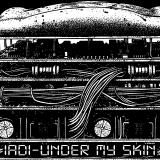
Between flesh and silicon. “Under My Skin” (2026) is the first album by IADI, released by Neo Life. A record like few
others, highly conceptual, cover art included. Its essence lies in the folds of the increasingly ambiguous relationship
between man and machine, where the former designs the latter and, perhaps without fully realizing it, is gradually
destined to adapt and be reprogrammed by it. Each track of “Under My Skin” is, in fact, a sort of interface, connector, or
any other imaginative point of contact between two creative phases, amid emotional impulses and binary calculations.
The sonic architecture oscillates between analog warmth and algorithmic coldness, constructing landscapes in which
pulsating synthesizers and mechanical rhythms seem to question each other. There's no linear narrative, but rather a
progressive immersion in a zone of near-friction, where the comfort of technology coexists with more than a faint
musical uneasiness, like a background noise that never ceases to remind you who's truly in charge. In “Under My Skin”,
the machine is neither an enemy nor a simple instrument: it's a real presence, intimate, even tactile, amplifying desires,
fears, and dreams of dawns beyond the digital realm. Intelligent dance music. Less noise, more sensations. Electronic,
but profoundly human.
The final result, then, is a music project that speaks to the present, yet sounds like an X-ray of the future, capturing that
fragile moment when humanity and technology stop observing each other from afar and begin to merge, track after
track. It's no coincidence that IADI's album opens with “Impulse”, an immediate expression of an electrical impulse, for
both humans and machines, which is also the language of the nervous system, as fast as it is vital—pure energy and
rhythm, a track as intense as it is irregular. And after this introduction, it's the turn of the equally erratic “Axon”, whose
title describes the neuron that transmits the signal over distance, telling the listener to sit back and relax for a new
journey through the notes toward the more melodic “Cortex”. The cerebral cortex, the ultimate seat of thought and
memory, becomes the source from which the musical flow of the first part of the work is drawn.
Then, suddenly, an automatic, or instinctive, response to the constant succession of impulses: “Reflex”, or zerotemperature techno, with a fragmented pace, featuring vocal samples, breaks, and restarts. In the producer's
imagination, the subsequent, and conversely placid, “Neuron” represents the emotional core of the second part of the
work, providing a kind of respite from the seething vibrations. While the neuron is the basic unit of the nervous system,
the synapse is the functional connection point between one neuron and another effector cell, essential for the
transmission of nerve impulses and communication in the nervous system, enabling functions such as learning and
movement. Likewise, a track like “Synapse” once again illuminates the path traced by IADI. The more experimental and
streamlined “Static” instead suggests true ordered chaos. “Dreamstate” is the conclusion suspended in the void, relating
to that dreamlike state between waking and sleeping, where consciousness fades toward infinity and visions begin. Pure
fading into the subconscious. Eternal return to where it all began. Dancing is a form of consciousness. Every beat is a
question. IADI, however, holds all the answers you need.
quête:fa
MUSICA SOLIDA Vol. 3 finally touches down.
Flexi is wrapping up their 40th-anniversary celebration with a bang, and trust me, the wait was worth it. This VA 12” is a heavy-duty blend of family ties and international heat.
The Breakdown
* Gratts: The Adelaide-based crate-digger returns to Flexi with "Ghost Swell." It’s a deep, atmospheric builder that keeps the soul intact.
* Slowaxx & Ai Lati: Pure "rollin" energy. This Tuscan duo delivers a rhythmic, four-handed organic groove that’s been the secret sauce in the Italian underground.
* Melchior Sultana: The Maltese Deep House maestro brings the sub-heavy vibes. Total class, total depth.
* Robotalco: Fresh off his LP, he drops an Acid House banger. This 303-laced heater is strictly for the warehouse heads.
* DJ Soch: the "Italian Stallion" puts his classic old-school vein aside and reveals a darker, more minimal side: sharp drums, soulful vocal touches, and an essential, hypnotic groove shape a timeless track.
Forty years of curation distilled into one essential plate. It’s raw, it’s solid, and it’s built for the crates. Don’t sleep.
Glasgow’s Fortified Audio returns after at least a ten years long hiatus (No pun intended) and now returns to the world of bass with a full length album from local music firestarter Ten Years Lost. Modern day trap instrumentals at its core whilst sub-consciously giving hints of Drexciya, Moroder and the Memphis & Croydon bass music regions alongside some real deft sampling but still remains Glasgow at its core!
2026 Repress
Gaudi’s Jazz Gone Dub is a masterclass in genre fusion, seamlessly blending the improvisational essence of jazz with the heavy atmospheric grooves of dub. Known for his eclectic approach to music production, Gaudi pushes the boundaries yet again, creating a sonic landscape that feels both nostalgic and refreshingly innovative.
Four years in the making, from the opening track it’s clear that Jazz Gone Dub is more than just a mashup of styles—it's a thoughtful exploration of the intersections between two rich musical traditions.
Gaudi’s multi-instrumental talents are on full display, and the presence of reggae royalty is palpable, courtesy of rootsy melodies from David Hinds (Steel Pulse), Jah Wobble’s iconic bass grooves, Ernest Ranglin’s intricate guitar lines and Sly & Robbie’s rhythmic genius. Add Sardinia’s Train to Roots band, Manu Chao collaborator Roy Paci, veteran guitarist Marcus Upbeat, Mr Woodnote and Tim Hutton’s brass work, Gavin Tate-Lovery’s sultry sax and flute, Horseman’s percussive flair plus Colin Edwin and Vlastur’s serious basslines, and the
result is a rhythmic foundation that’s both solid and fluid, allowing the jazz elements to float freely above the dub undercurrents.
Despite this star-studded line-up, Gaudi remains the glue that holds this gem together: his production is meticulous yet organic, allowing each track to breathe and evolve naturally. The use of space, delays and reverb—a hallmark of dub music—is expertly handled, giving the album a dreamy, immersive quality. Tracks like Susceptible and Alabaster Moon showcase Gaudi’s ability to create mood and atmosphere without sacrificing melodic and rhythmic complexity.
In Jazz Gone Dub Gaudi has crafted an album that feels both timeless and forward-thinking, a celebration of musical synergy where the free-spirit of jazz meets the deep resonance of dub. Whether you’re a fan of either genre or simply appreciate masterful musicianship and innovative production, this album is a must-listen.
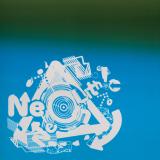
With Neolithic Neon, Appleblim creates a kaleidoscopic reflection of the spirituality inherent within electronic music — the ineffable frequencies and communal traditions that spring from exploratory synthesis, deep-rooted rhythms and myriad other sonic codes.
Throughout his third album for Sneaker Social Club, Laurie Osborne continues to express a fascination with the ancient resonance held within modern rave as he guides his own studio practice towards more purposefully analogue processes. It's reflective of his desire to let go and trust his instincts within the more chaotic realm of voltages and signals, not to mention turning to a wider spread of instrumentation and opening up to noisier avenues. This direction defines the character of Neolithic Neon, which bristles with the living imperfections of the gear in the context of incisive and wide-ranging cuts touching on jungle, dubstep, techno, electro, acid and experimental electronic music of all stripes.
Across Osborne's solo output from 2018's Life In A Laser to 2021 tape Infinite Hieroglyphics, a strong melodic sensibility spills out of the richly layered production. It's equally audible in his Wrecked Lightship collaboration with Adam Winchester, and it charges Neolithic Neon with its star-gazing, contemplative streak. From the knotty plucks and licks weaving through opener 'Moorland' to the vaporous synths darting across the top of hardcore conductor 'Thunderstorm', a dreamlike evocation takes the sound off terra firma, musing on cosmic events and our connection to the enormity of the universe.
Eternally in thrall to the maverick vocabulary of pioneering beat scientists and fuelled by the inspiration of great thinkers dwelling on our purpose and place, Neolithic Neon unfurls big ideas without heavy-handed messaging. Instead, it trusts in the universal and time-honoured language of experimentation and rhythm to present its ideas, true to Appleblim's legacy to date while opening a new chapter in his ongoing sonic quest.
Presenting the 2nd in the series of Persian remix EPs, following the bumping Dub House remakes from Picasso, the label is joined by Yorkshire’s own young electronic folklore master, a fast-rising name, Miles J Paralysis.
Whereas Picasso took the first Dubplate ‘Space Within Art’, here Miles J delves in to the follow up ‘Smoke Dub’, turning out a selection of dubwise cuts that build on the dark electronics of his excellent debut releases for his Crying Outcast label.
Yorkshire born and based, with a love for the Moors, as well as the teachings of lore, magick and mysticism, this young producer has been emersed in music since a young age, with a penchant of Dub, Hip Hop and Reggae.
Starting with Survival Dub, the anthemic Ragga Dub original morphs into 2 parts, first heading down Paralysis’s alley of dark and brooding production marrying perfect touches of the vocal samples, before the amen break builds the track to the light.
Smoke Mari follows, the languid Digibreaks chugger, utilizing Linval Thompson’s iconic vocals, now comes as a deep meditative Dub excursion. Stripped back to a raw essence, the vocals whirl, while hypnotic keys and dub bass complete the psychedelic mosaic.
There Is No Love is modern dub style, off beat syncopation, reverb, tape delays and heavy vocal sampling all in the mix. The breakbeats of the original are jettisoned for a Dub (Drug) Chug, the atmospherics seeking the dark corners. “These are the last days; can’t you see the sunshine…”
Zatoichi’s Troubles ends the pack, the trip hop, Depth Charge dub bass cut transforms at the mixing desk of Miles J in to Dub Techno territory, haunting, melodic. Miles J’s love of the deeper side of electronic music expanded. Club music but not produced for clubs. Made for the discerning.
Paralysis the Mystery.
- 1: Three Tree's (Part )
- 2: Shadow Mirror
- 3: Neptune
- 4: Three Tree's (Part 2)
- 5: All Tunnel No Light
- 6: Ekstasis
Gnod's now twenty year journey through spiritual and audial exploration has been driven by relentless curiosity, magpie irreverence and a fierce countercultural imperative, their project has always refused to acknowledge all or any rules and boundaries, internal or external. The latest adventure of this band may never have been intended to celebrate their two-decade anniversary, but in true Gnod fashion by, what began as a trip into a residential studio setup in Hellfire Studios with producer John `Spud' Murphy (Lankum, Black MIDI, Caroline) for six days, resulted in more potent material than anyone bargained for. The end result has been three studio albums to be released over the next year. "This trilogy revealed itself to us in the studio" says Paddy. "We were hoping to get a good album out of the session and lo and behold we got three of the fuckers. It's interesting that we did pretty much capture the full spectrum of the Gnod sound across all three". In fact, this intrepid first instalment of the `Chronicles Of Gnowt' trilogy covers an alarming amount of sonic territory all on its own. Driven as always by the power of repetition as well as Gnod's alchemical marriage of the maximal and the minimal, this album is imbued with a vivid focus that's testimony to the chemistry of the sessions, coupled with a detailed and spacious production from Murphy that brings out the psychedelic sound worlds of the band in vivid colour. This is a travelogue which delves into pastoral tranquillity (as on `Three Trees Parts 1&2') just as adeptly as expansive Earth-tinged riff monoliths (`All Tunnel No Light') and just as formidably as the closing epic `Ekstasis' - a hallucinatory vista where kraut-tinged experimentalism meets Swans-style intensity. Yet all the while, truly sounding like no one but Gnod.
Phil Berg is back on the label, with his highly anticipated return. Four tracks that
continue to pave the way he laid in 2023 with his Raid EP.
Titled Iso, the EP is a study in reduction and discipline. Phil builds each track around a single guiding tension, rhythmic loops that breathe and shift injecting different emotions as each sound passes.
Phil Berg first appeared on SK11 in late 2023 with Raid, one of his biggest and most accomplished releases to date, an EP that made an immediate impression across techno fans worldwide. Iso's four productions here, each with their own identity, each showcasing the same commitment to craft and precision that defined his introduction to the label.
The EP is a statement of intent for Phil in 2026 and one of SK11's strongest releases of the year.
BRIXIA is a music collaboration project that began in Prague, founded by Czech multi-instrumentalist Max Lipovsky and Chilean synth aficionado Daniel Rodriguez. From the depths of a cold basement in Prague's Žižkov district, the duo crafted hypnotic rhythms and a fusion of cosmic, tropical, and oriental sounds during their never-ending live jam sessions—until they were finally ready to hit a record button.
Seeking a change of scenery, they packed up their instruments and drove 1,500 kilometers to Rome, where they recorded their music in the vibrant heart of Pigneto. There, they met Jonida Prifti, an Italian poet of Albanian heritage, and invited her to layer her poetry onto their tracks.
The result is both unexpected and deeply captivating. The title track is a dub-infused, ever-evolving piece of shamanic minimalism, laced with Balearic guitars and swirling synths that emerge only to fade back into the depths. Jonida's whisper-like vocals drift above it all—so ethereal they almost feel imagined.
In contrast, Vortice jolts you awake. This one will surely find its way into the bags of more adventurous DJs out there, with its driving post-punk bassline and near-harmonica melodies, it feels like a journey through uncharted territory. Jonida's voice guides you like a navigator, and suddenly, you've arrived.
DJ Support: Phil Mison (Cantoma/Ambala), Charlie Bones (Do!You!!!), Frank Booker, Trujillo, Alice Palace, CIAN, DJ Aficionado, No Plastic, Jad & The, Leon D, Moe, Sadeedo, Longboss (Strangelove), Tom Kutsche, Marian Tone, Andy Pye (Balearic Social), Soft Rocks, Wrekin Havoc, Alfresco Disco, Manuel Darquart, Tom Bolas, Danny Russell, Craig Christon (Passport to/Beyond Paradise)
Many Hands - Basement Versionz #2, continuing from #1 with further excursions into Basement Balearica. From Bunker to Beach: Wiggy Dread Italo, Rebel Disco Reggae, Thai Boogie Funk and freshly creased 80s Steppers to help clever selectors get out of, or into trouble.
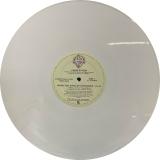
When Henry Street & Sacred Rhythm Music join forces for a remix outing, it should be obvious the source material and resulting productions are of the utmost caliber. This record proves such a case in point: Johnny "D" DeMairo & Joe Claussell team up for two takes on Candi Staton’s 1979 disco opus 'When You Wake Up Tomorrow.’ The original, whose pedigree could be inferred simply by reading Patrick Adams’ and Jimmy Simpson’s names on the label, is a faultless dance floor cut featuring all the elements you’d expect—lavish horn and string arrangements, sparkling synthesizer accents, and plenty of hand-beat drumming—along with with Staton’s peerless voice. Johnny D’s mix starts carefully, the vocal refrain accented with auxiliary percussion until the rug is pulled out from under us, the ensuing chasm making the following thrust of the track that much more powerful. On the flip.
Claussell’s take starts with reinforced four-on-the-floor, along with a studio count-in, perhaps alluding back to his previous ‘It Seems To Hang On’ edit. As the track establishes itself, ample room is afforded for interplay between bass and guitar, with all the interlacing elements aggrandizing the mood with careful shots of delay and expertly-timed pivots in atmosphere. Both sides are proof of what shouldn’t need evidence: two masters of their craft assembling two wholly new mixes that far surpass the banal copy and paste, add and subtract methodology slung by the less blessed. Pressed on white vinyl, with a custom jacket to boot.
- A1: Acid Lullaby 12
- A2: Acid Lullaby 3
- A3: Acid Lullaby 15 (N In Remix)
- B1: Acid Lullaby 6 (Afternoon Lights)
- B2: Acid Lullaby 13 (Philipp Otterbach Remix)
- B3: Acid Lullaby 14 (Museum Of No Art Version)
- C1: Acid Lullaby 4
- C2: Acid Lullaby 5 (Uhlenbusch)
- C3: Acid Lullaby 16
- D1: Acid Lullaby 7 (Birds Inside)
- D2: Acid Lullaby 8 (Rain Outisde)
- D3: Acid Lullaby 1 (47In4 Remix)
During a job in Cologne, I stayed in a room with a loft bed that had no electrical outlets at the top. Every night, I would listen to my TB303, which runs on batteries, through headphones to help me fall asleep. I loved the sequences, it was like meditation. The TB-303 bassline is iconic in acid music, so I created the Acid Lullabies to bring these two elements together. In 2017, the label Doom Chakra Tapes released ten of the Acid Lullabies on tape. Last year, I felt the urge to rework the tracks, so I mixed them again and created some new ones. I also
asked friends to contribute their own versions.
I’m very glad that the following artists contributed the Acid Lullabies: 47IN4 (Pudel Produkte, Doom Chakra Tapes), Museum of No Art (Séance Center, Cosima Pitz), N:in and Philipp Otterbach (Music from Memory, Offen Music). Two violinists from Ensemble Resonanz performed my piece 'Afternoon Lights' for Acid Lullaby 6. Alex Solman designed the cover, which captures the essence of the project perfectly. Have fun with the Acid Lullabies!
With Dispersion, Loom & Thread return to the volatile architecture of the expanded piano trio - and quietly fracture it from within.
Daniel Klein (drums), Tobias Fröhlich (double bass) and Tom Schneider (keys, sampler) remain the sole agents on stage and in the final recording. The triangle holds. And yet, the field has expanded. For their second studio album, the trio fed their improvisations with the timbral signatures of guest saxophone and vibraphone players - not just as additional voices to be featured, but also as material to be absorbed, atomized and redistributed. The result is not augmentation but thorough refraction.
Where the debut album explored the recursive labyrinth of Schneider's live sampling of his own piano, Dispersion introduces an external grain into the feedback system. Breath and metal. Reed turbulence and struck resonance. The trio sampled extended improvisations by saxophone and vibes players: Victor Fox, Asger Nissen, Volker Heuken, and L&T's own Daniel Klein; dissected their attacks, overtones and decay curves, and integrated these fragments into the trio's internal circuitry. What emerges is a play of presences without bodies - instrumental ghosts circulating through the dense weave of rhythm and keys.
At first, one might hear the familiar relational tension: Klein's polyrhythmic elasticity interlocking with Fröhlich's tensile double bass figurations, Schneider poised at the hinge between tonal field and percussive impulse. But soon, the surface splinters - again. A vibraphone shimmer appears, yet no mallets are visible. A reed multiphonic surges through the texture, bending space between bass and drums. These events are neither quotations nor overlays; they are redistributed energies, dispersed across the trio's grammar. A digital multidimensional interplay ensues.
If the first album unfolded as a two-tiered game - live phrase and sampled reflection - Dispersion adds a further axis. The sampled materials from other improvisers are stripped of their erstwhile two-way interaction and reconstituted as malleable particles. Signifier detached from origin, resonance detached from gesture. The trio navigates a constantly shifting topology in which acoustic memory and electronic manipulation are indistinguishable.
Crucially, the album never abandons the physical urgency of three musicians reacting in real time. The additional timbral layers do not thicken the texture into opacity; rather, they introduce stark points and arrows of diffraction. Density opens into prismatic clarity. Lines splinter and regroup. What seems like a quartet or quintet collapses back into three bodies negotiating an expanded field.
Dispersion is not about addition but about distribution - of agency, of timbre, of temporal perspective. It is an album in which the trio setting becomes a site of multiplicity without surrendering its immediacy. A dissolution not only of the divide between present experience and memory, but between inside and outside, self and other.
Three musicians. Countless vectors. A music that fractures in order to cohere.
CREDITS:
Tom Schneider: piano & sampler
Tobi Fröhlich: double bass
Daniel Klein: drums & percussion
sample sources:
Victor Fox: tenor saxophone
Asger Nissen: alto saxophone
Volker Heuken: vibes
Daniel Klein: vibes
Recorded by Martin Dressler at Bauer Studios, Ludwigsburg.
Mixed & mastered by Martin Ruch.
Artwork by Viet Hoa Le.
AUDIO VERSATILE RECORDINGS is an independent record label dedicated to producing and promoting high-quality electronic music. With a passion for discovering and supporting unique artists, Whether you're an artist looking for a label or a listener seeking fresh, cutting-edge tracks, Audio Versatile Recordings is your destination for diverse and dynamic electronic music.
Over a decade has past since this was released, and it has truly aged like fine wine. This release features 2 timeless cuts from the mind and soul of cv313 mixed and recorded near the heart of Detroit. This was beautifully remastered by dub innovator and pioneer, Stefan Betke POLE @ scape mastering in Berlin, DE. The recordings were pulled from the session masters conducted by Bazza @ Alchemy Mastering in London to ensure a perfectly balanced mix and preserving the soul and spirit of the original tape masters. This EP features two equally seductive cuts opening with "Fading Lights" which finds its pulse in the rhythmic elements while floating in a world of vaporous mist and resynthesized stardust. On the B side "Magenta" fills the space with ghostly apparitions and a rather hypnotic hook; pushing the boundaries of the spiritual principles found in the power of repetition. Close your eyes and drift into 14 minutes of endless flotation as modulating low frequencies massage your brain and mind, dive deep into a fathomless analogue world!
- A - Ricardo Eddy Martínez Y Expreso Rítmico - La 132
- B - Juan Pablo Torres Y Algo Nuevo - Rompe Cocorioco
- C - Farah María - Ámame Y No Pienses Mas
- D - Grupo Ismaelillo - Amanecer - Dj Koco Edit
- E - Fa-5 - Muévete Con Las Fuerzas Del Corazón - Dj Koco Edit
- F - Grupo Los Yoyi - Paco La Calle
- G - Juan Pablo Torres Y Algo Nuevo - Y Viva La Felicidad
- H - Orquesta Riverside - En Casa Del Trompo No Bailes
- I - Grupo Fa-5 - Ya Tengo Un Amor Verdadero
- J - Rembert Egües - Tema Para Un Amanecer
Two years since DJ KOCO aka SHIMOKITA curated his sold-out Mr Bongo Brazil 45 boxset, he is back with another Record Store Day special, this time turning his attention to Cuba. Following a meteoric rise to the top, the Japanese DJ / turntablist extraordinaire has won the world over with his unquestionable humility, refreshing positivity, and flawless skills. The DJ’s DJ, it’s as much about taste as it is technicality for one of the world’s best showmen.
When the idea arose for a Cuban Classics 45 Boxset to mark RSD 2026, DJ KOCO was top of the list. With a deep-seated passion for Cuban music, its melting pot of cultures, its focus on rhythm, and its undeniable groove, DJ KOCO presents a selection of his favourite Cuban cuts, as well as two exclusive edits for the boxset.
It kicks off with the Latin funk sounds of Ricardo Eddy Martínez y Expreso Rítmico’s ‘La 132’ from 1978, before rolling into one of two spellbinding Juan Pablo Torres y Algo Nuevo cuts found on the boxset. Elsewhere, you’ll hear Farah María’s slow disco ‘Ámame Y No pienses Mas’, an unusual American-leaning production for Cuba at the time, given the state of US-Cuban political relations in that period. Other highlights include Orquesta Riverside’s ‘En Casa Del Trompo No Bailes’, taken from a rare collectable 7”, channelling a low-slung Latin bounce which explodes into an Afro-Cuban dancer as the track progresses.
In signature style, DJ KOCO has also served up two exclusive edits for the boxset. These include a reworking of the Cuban children's band Grupo Ismaelillo’s quirky ‘Amanecer’, giving it a more DJ-friendly structure. You’ll also find DJ KOCO’s take on FA-5’s much-loved funky dancer ‘Muévete Con Las Fuerzas Del Corazón’ with its heavy b-boy/girl break from 1976.
Testament to Cuba’s vast and vibrant musical landscape, DJ KOCO has cherry-picked some of the finest recordings to emanate from the country, spanning a wide range of styles and rhythms. Yet what ties all the tracks on this boxset together, is a hip hop sensibility and thirst for a breaks-heavy, danceable energy which radiates through DJ KOCO’s masterful DJ sets.
- A1: Horse Steppin' - Sun Araw
- A2: Paris - M.o.o.n
- A3: Miami Disco - Perturbator
- B1: Knock Knock - Scattle
- B2: Hotline - Jasper Byrne
- B3: Crystals - M.o.o.n
- B4: Vengeance (The Return Of The Night Driving Avenger) - Perturbator
- B5: Musikk Per Automatikk - Elliott Berlin
- C1: Silver Lights - Coconuts
- C2: Hydrogen - M.o.o.n
- C3: Daisuke - El Huervo (Feat Shelby Cinca)
- C4: It's Safe Now - Scattle
- C5: A New Morning - Eirik Suhrke
- D1: Flatline - Scattle
- D2: Release - M.o.o.n
- D3: Turf - El Huervo
- D4: To The To - Scattle
- D5: Miami - Jasper Byrne
- E1: Deep Cover - Sun Araw
- E2: Inner Animal - Scattle
- E3: Crush - El Huervo
- E4: Electric Dreams - Perturbator
- F1: Rust (El Huervo Remix) - El Huervo
- F2: Subbygroove - M.o.o.n
- G1: Untitled 2 - The Green Kingdom
- G2: Detection - Prey Growl
- G3: Blizzard - Light Club
- G4: Voyager - Jasper Byrne
- G5: She Meditates - Light Club
- G6: Guided Meditation - Old Future Fox Gang
- H1: Dust - M.o.o.n
- H2: Disturbance - Endless
- H3: Technoir (Feat. Noir Deco) - Perturbator
- H4: Divide (Miami Edit) - Magna
- H5: Simma Hem - Riddarna
- I1: Hollywood Heights - Mitch Murder
- I2: Richard - Life Companions
- I3: Chamber Of Reflections - Sjellos
- I4: Decade Dance - Jasper Byrne
- I5: Interlude - Chromacle
- J1: New Wave Hookers - Vestron Vulture
- J2: Around - Modulogeek
- J3: In The Face Of Evil - Magic Sword
- J4: The Winding Theme #1 - Dag Unenge
- J5: Remorse - Scattle
- K1: Frantic Aerobics - Mitch Murder
- K2: Sexualizer (Feat. Flash Arnold) - Perturbator
- K3: Java - Old Future Fox Gang
- K4: Rust - El Huervo
- K5: We’re Sorry - Life Companions
- F3: Hotline (Analogue Mix) - Jasper Byrne
- K6: Loodline - Scattle
- L1: Delay - M.o.o.n
- L2: Roller Mobster -Carpenter Brut
- L3: Keep Calm - Endless
- L4: Run - Iamthekidyouknowwhatimean
- M1: Ghost - El Huervo
- M2: Hotline Miami Theme - Benny Smiles
- M3: Quixotic - M.o.o.n
- M4: The Way Home - Magic Sword
- M5: Richard Theme - Dubmoo
- N1: Narc - Mega Drive
- N2: The Rumble - Cinimod
- N3: Le Perv - Carpenter Brut
- N4: Ms Minnie - Auto Delta Time
- O1: She Swallowed Burning Coals - El Tigr3
- O2: Acid Spit - Mega Drive
- O3: Slum Lord - Mega Drive
- O4: Future Club - Perturbator
- P1: Fahkeet - Light Club
- P2: Abyss - Lippi Sound
- P3: Abyss Intro - Lippi Sound
- P4: Black Tar - Nounverber
- P5: Escape From Midwich Valley - Carpenter Brut
- P6: You Are The Blood - Castanets
- F4: Angel Dust – Perturbator
To celebrate the 10th anniversary of the iconically brutal-yet-stylish Hotline Miami, the head honchos at Devolver Digital, Dennaton Games and Laced Records picked up the phone and made the call to bring back two killer soundtracks to vinyl.
This Standard Edition of the Hotline Miami 1 & 2: The Complete Collection 8LP box set includes traditional black vinyl.
Every in-game track from Hotline Miami and Hotline Miami 2: Wrong Number is present and correct, including Castanets’ “You Are The Blood” (not previously available via the HM2 Steam soundtrack release.) 76 tracks remastered for vinyl will be pressed to heavyweight LPs that come in spined inner sleeves, contained in a rigid board lift-off lid box with spot UV highlight.
Also included in the box are two 12” art prints of the front and back cover pieces, and a 50 Blessings symbol felt slipmat and metallic sticker.
The box set features brand new eye-exploding artwork by long-time Dennaton collaborator Niklas Åkerblad — aka El Huervo aka Beard — alongside illustrator -IZMA-. El Huervo’s grisly covers depict contradictory accounts of a berserk face-off between Jacket and Biker, replete with entrails. -IZMA-’s disc sleeves explore scenes from the series’ lore, tapping into the violence, psychedelia and nihilism that pervade its characters and themes.
10 years on, neon-soaked indie hit Hotline Miami has become a cultural touchstone in a way that few video games ever achieve — and the electronic soundtracks for both series titles are held up as modern classics that have transcended gaming. At turns brutal and laid-back, pulsating and aimless, coked-up and checked-out, these two ultracool compilations were at the heart of the retro-’80s synthwave scene that swept the Internet over the 2010s.
For her new and most radical album »Electroacoustic Works for Halldorophone«, Martina Bertoni used the electronic instrument at EMS Stockholm to create four pieces that are massive in scale and incredibly intimate, sonically restrained and emotionally overwhelming—almost ambient and always demanding your full attention.
Martina Bertoni returns to Karlrecords with »Electroacoustic Works for Halldorophone,« her most radical album yet. The foundation for the four electroacoustic pieces was laid during a residency at Stockholm’s legendary Elektronmusikstudion (EMS) that the Berlin-based cellist and composer used to explore the curious instrument, originally designed by Halldór Úlfarsson in 2008, as an algorithmic system in order to examine tunings and the mathematical relationships between Aiming to analyse and understand their interaction beyond the composer’s control, Bertoni sought to engage more deeply with the concepts of time, tuning, and, most importantly, control. Accordingly, her four »Electroacoustic Works for Halldorophone« seem both massive in scale and incredibly intimate, sonically restrained and emotionally overwhelming— almost ambient and always demanding your full attention.
While the halldorophone—famously used by Hildur Guðnadóttir for her »Joker« score—roughly resembles a cello and can be played like one, it is an electronic instrument. The vibration of its strings is being picked up, amplified, and then routed through a speaker. This creates a feedback loop that becomes increasingly complex depending on how much gain is added to individual strings. Úlfarsson gave Bertoni a carte blanche for how to handle the instrument, but she stresses that she relied on »minimal interventions—some string strumming and plucking« that set the interactions of different sounds and frequencies into motion. »I decided to not approach it like a cellist would,« she explains. »Instead I used it as a kind of generative organ by turning it into a feedback machine, with tuned feedback triggering more feedback depending on the tuning, which was based on tetraphonic scales that I could apply on the four main strings as well as the sympathetic group of strings.«
Bertoni recorded the material in the EMS studio, later composing and arranging the four complex pieces in her home in Berlin, after which they were mixed and mastered by Ciaran O’Shea. While this can be considered a compositional abstraction process, traces of her concrete work as a performer are firmly ingrained in the music. »The halldorophone doesn’t have a line output, just a double set of speakers, which is why I recorded all sounds with two microphones in the EMS studio,« she explains. »That’s why there’s plenty of breathing sounds here and there—label owner Thomas Herbst and I jokingly refer to the album as my ›chamber music record‹.« And indeed, there is a striking sense of intimacy to these four pieces throughout which individual sounds, harmonic frequencies, and even subtle rhythmic figures seem to move both on their own accord but also according to a underlying vision that steers their interplay.
Indeed, »Electroacoustic Works for Halldorophone« is an album built on and marked by contrasts. The soothing polylogue of single sounds in the higher register on opener »Omen in G« is counterpointed by massive bass drones, while the second piece, »Nominal in D,« plays a cunning game of repetition and difference by combining thick textures with all kinds of rhythmic elements. »Fades in C«—the longest of the four pieces, clocking in at 17 minutes—unlocks the emotional potentials of the sonic qualities of the halldorophone, sounding at once serene and anthemic, and »Organon in D« closes the album by underscoring how Bertoni’s unconventional approach allows her to seamlessly transform simple, quiet tones into complex, towering walls of sound.
Very exclusive high quality De La Soul T shirt print with raised embossed fabric graffiti design of Mase, Pos and Dove along with the De La font logo. An extremely well made design on a cool light T -shirt material fabric that's perfect for the summer. This is a one-off limited edition. Once they're gone, they're gone. Comes in 3 different colours Black, White and Khaki, in sizes Large, Extra Large and Double Extra Large.


![Cv313 - fading lights [remastered]](https://www.deejay.de/images/l/1/6/163616.jpg)