"Available again for the first time since original release in 1974, Outernational Sounds proudly presents one of the deepest custom press jazz recordings of all – Jaman’s spiritualised and funky Sweet Heritage.
The history of jazz is often told as though it was principally a history of releases and recordings. On those terms, it’s easy to mistake a small recorded footprint for obscurity or silence. But that is to put the cart before the horse, for the true history of the jazz is the story of the music as it was played night after night in the clubs, bars, concert halls and backrooms of cities and towns across America and the world. Only a tiny fraction of this living tradition ever makes it onto a recording. The far greater part is embodied in the musicians and their music as they play it and live it. And even though 1974’s Sweet Heritage is James Edward Manuel’s only release, the pianist and educator better known as Jaman has undoubtedly lived it.
Brought up in Buffalo, New York, Jaman studied classical piano before beginning formal jazz studies under greats including Earl Bostic and Horace Parlan. Quickly becoming a respected regular on the club scene in Buffalo, Jaman held down innumerable residencies and worked with top local musicians – one of his early trios included the renowned bassist John Heard and drummer Clarence Becton, both of whom were poached one night by a visiting Jon Hendricks; sometime Sun Ra Arkestra bassist Juini Booth and regular Ahmad Jamal sideman Sabu Adeyola (also of Kamal & The Brothers) have graced his groups too. At famous night spots all over Buffalo’s East Side and on excursions to Manhattan’s storied jazz clubs, Jaman has shared the stage with some of the most illustrious names in jazz and blues: Big Joe Turner, Muddy Waters, Joe Henderson, Ruth Brown, Frank Morgan, Woody Shaw, Sonny Stitt, and too many others to mention. His eponymous group, Jaman, was formed in 1970; they toured the US and Canada steadily in the years that followed. He became, in short, one of Buffalo’s true jazz stalwarts, and so he remains.
But despite a life lived deep within the music, Jaman only recorded a single LP, 1974’s Sweet Heritage. Pressed in tiny quantities by the Mark Records custom service, and issued with a stock landscape cover, Sweet Heritage featured the regular Jaman group playing a mixture of covers and originals. The whole LP showcases an ensemble in compete control, and with the flying, spiritual sound of ‘Free Will’ and the upful, Latin-tinged ‘In The Fall of The Year’ – both Jaman originals – the album has since become a legendary collector’s classic. Unavailable since its original issue, Outernational Sounds is proud to present Jaman’s Sweet Heritage – the soulful and spiritualised sounds of a master at work."
Cerca:far east
Ryan Crosson takes care of the fifth EP on tastemaking Detroit label My Baby Records with a fantastically forward-looking four-track vinyl offering. Ryan Crosson is a complex artistic creature who has roamed far and wide in his storied career. His always innovative music has come on groundbreaking labels including Wagon Repair, M_nus, Spectral Sound, and of course his own Visionquest. Each time he explores a new sound world and draws on things as diverse as musique concrète, Downtown New York funk, and East African jazz. Now he cooks up more beguiling brilliance on this fresh new EP. Opener ‘Speaker Dubs’ is a deep, bubbly rhythm track with dub chords rippling out to infinity. It’s a stylish track full of far-sighted reverence and supple groove that locks you in a trance. ‘Ogilvie’ is a piece of absorbing ambient with found sound recordings of muffled voices that sounds like you’re in an underground station. B-side opener ‘FutureTheory’ is another minimal masterpiece with glitchy sound design and eerie chords peeling off a tight, kinetic groove. Ghoulish voices add more late-night atmosphere and the whole track grows ever darker and more consuming as it unfolds. The excellent ‘OortCloud’ takes you back to the heart of a dance-floor with futuristic menace: the smooth drum loops are militant, the voices are dehumanised and the searching synths speak of a desolate landscape. It’s heady, brilliantly bleak stuff that is utterly infectious. This is another hugely inventive EP from one of the underground’s most consistent talents
Vermonische Melodien is a collection of compositions by DJ-producer M.RUX, made with old VERMONA machines from Eastern Germany. The nine Electronica tracks can’t conceal their influences from Exotica records of the 1960s as well as their fondness for vintage music technology. We hear voices singing lullabies (“Magische Time”), mumbling chopped up syllables (“Seelnatrax”) or reciting a Shakespeare quote (“Bakelit”) - are they real? Yes! But they are mostly generated by the world’s first speech synthesis hardware, the IBM 704 from 1954, and processed into off-key melodic beauty with vocoders. "I’ve always been curious about musical visions from the 1970s", says M.RUX about his inspiration for Vermonische Melodien. "Those nifty Vermona machines can today be seen as future machines from the 1970s. They seem almost mystical to me. Like relics from an epoch long ago… and I wanted to find out how music from that time could have sounded." On the album M.RUX uses, above all, equipment by Vermona, a brand from Eastern Germany manufacturing electronic musical instruments until 1990. The drum machine VERMONA ER-9 (1976) was the first instrument M.RUX ever possessed. It forms the rhythmical backbone of his studio on this record. The melodies on the other hand have mainly been played on a Vermona Formation-1, a suitcase synthesizer from 1980. Although these two machines are joined by countless other instruments and effect units, their particular soft sound is present in every single moment of this soothing album. "I also take a deep bow to the late Reinhard ‘Lacky’ Lakomy", M.RUX adds. "His releases were the first electronic instrumental records on the Amiga label which has been a huge influence for my work in general and this record in particular." M.RUX has appeared as a solo producer with his “In the Hold“ EP (2016) on his own YNFND imprint. Before that he had become famous for his edits which gently transform songs by Nina Simone, Townes Van Zandt, Tom Zé and many more into slow, dancefloor-ready gems. Pingipung is proud to present this first full-length album by M.RUX. He is not only a talented multiinstrumentalist and original producer but also a skillful remixer - as he has shown twice to the Pingipung audience in the last two years with his touches on Umeko Ando’s Ainu folklore songs
- A1: Girls Of Iskandariah
- A2: Night Entertainer (Azef El Layl) (Azef El Layl)
- A3: The Joy Of Lina (Farha) (Farha)
- B1: Dance Of Tenderness
- B2: Jamileh
- C1: A New Candle
- C2: Once A Year (Zourouni) (Zourouni)
- D1: A Flower Of My Imagination (Ya Zahraren) (Ya Zahraren)
- D2: A Night At The Station (Leylet Al Mahatta) (Leylet Al Mahatta)
- D3: Love Of Laura (Ya Laure Houbbouki) (Ya Laure Houbbouki)
The first release in Ernesto Chahoud’s ‘Middle Eastern Heavens’ reissue series for BBE Music, we are delighted to present Lebanese maestro Ihsan Al-Munzer’s 1979 album ‘Belly Dance Disco’.
In late 70's and early 80's Beirut, Lebanese organist, composer and arranger Ihsan Al-Munzer made a series of pioneering synth-driven fusion albums that reimagined Middle Eastern music. The records came at a pivotal time in Lebanon’s musical history of avant garde experimentation that was blossoming, just as the country’s 15-year civil war took hold.
Ihsan Al-Munzer’s first release as a solo artist, ‘Belly Dance Disco’ aimed to fuse ‘Western’ modern music and bellydance to make it more accessible to the local audience in the late 1970s. “I wanted to put a mixture of European beat with Arabic percussion, but I made the European rhythm and harmony very easy to listen to for the Arabic ear – soft and understandable” says Al- Munzer.
Today, the composer’s music has made the return journey back to the West; with tracks on the album featured by hip hop artists such as Mos Def, who sampled Al-Munzer’s composition ‘Joy of Lina’ on his 2009 song ‘The Embassy’.
The 10-track album was released in 1979 on the legendary Voix De L’Orient label, which was also home to pioneering Lebanese composers The Rahbani Brothers. One of the earliest artists to introduce the synthesizer to Middle Eastern music, Al-Munzer leads the band, playing the main melody lines on the Kawai Organ and Solina String Synthesizer. Three of his original compositions feature on the album, alongside creative re-imaginings of Turkish and Arabic folklore and modern classics, pushing the boundaries of bellydance music to chime with the international scene.
Al-Munzer’s five titles from the 1970's and 1980's are part of BBE’s ‘Middle Eastern Heavens’ reissue series, a collection of groundbreaking productions from Lebanon, curated by Lebanese DJ, compiler and music researcher Ernesto Chahoud.
Notes by Natalie Shooter, a music journalist and researcher based in Beirut, edited by Will Sumsuch.
... Medjool's story starts in 2010, at "Samar", it's a Kibbutz in the Arava valley in the far south of Israel, based on a unique, hippic and cooperative community. The band's four members met and lived there after their Military service. Being surrounded by musicians they started jamming together a lot, finding a joint creative language.
... In 2011, three of the band, – Ori, Nur & Aviram, moved to Tel-Aviv, trying their luck in the big city. 'Gilad' joined them in 2013 and the four friends became Medjool. The next three years were hectic with shows all over Israel, from small clubs to big festivals, gathering loyal crowd which followed the band everywhere. Nowadays, the band's members turned their energy to other musical projects, saying "we only took a short break which we're not sure when it'll end".
'Gbells' and 'Savana' are two energetic wild Afrobeat tunes.
The fact that the rhythm section comprises of a double base and percussion, grants 'Medjool' its unique highlife, groove color.
The guitar and saxophone travel through middle eastern to ethiopian melodies, suggesting the listeners the option either dancing or riding a camel in the desert, on your way to a flush oasis.
SOS: This two tracks on the 7", ... which were recorded in 2015, were the only music of 'Medjool', they had recorded professionally !!!!!
Hebi is tough, stomping, mesmerizing romany funk, riding Far East from the Baltic Sea on clopping hooves of uranium, with synths from spaceways further out still. Weakheart deejays will scatter, but Sotofett has road-tested this on dubplate for six months, tearing up parties and dancefloors.
Deeply meditative, desolately beautiful, Haru will stop you in your tracks. Osaruxo’s violin could be a rebab or a shamisen, a reed instrument or a voice.
Ravishing music.
... After his first appearance on Subaltern’s 'Kaleidoscope Vol.1’ with the scorching ‘Alter’, far-east sonic assassin and Back To Chill member Helktram makes his comeback on Subaltern Records with a heavy-as-stone three tracker. Each of the cuts is a dance-floor weapon which shows a different side of the Japanese mastermind’s razor-sharp production.
- Recoil: Opening with a crunchy guitar melody, ‘Recoil’ sets the pace
of the EP: a catchy and relentless bass-line takes us on a march
through forests and mountains, as distant pads and SFXs remind us
to stay alert. After the first round the guitar comes back, warning us
we’re not done yet. A straight hitter which will keep playing in your
head long after the night is over.
- Mineral: The aptly titled ‘Mineral' is hard as diamond and rough as
coal. This triplet juggernaut tramples systems all over the world
leaving its mark on any raver who encounters it. A sinister
thereminesque melody paves the way to a stripped-down beat with a
militant bass riff. Skilfully executed distortion engulfs the low-end
turning it into a powerful growly wobble.
- Beware: A threatening melody paints the post-apocalyptic landscape
of the EP’s third cut in what is Helktram’s trademark style. In this
track distortion is the name of the game: an unforgiving lead
matched by grimy and glitchy stabs evolves into an uninterrupted riff
which carries the rhythm leaving space for the bass melody. As the
title suggests, extreme caution is required when handling this
blaster.
Skyf Connection (pronounced skAyf) was a short lived project by long time friends Anthony Mthembu and Enoch Nondala. At the time they were working for Annic Music, an independent label run by married couple Anne and Nic Blignaut. Although the label was known mostly for Zulu, Sotho, Tsonga and other traditional styles, they had a few Disco releases on the label including groups like Keith Hutchinson’s Focus and Enoch’s discovery Lena, who went on to have huge success under the name Ebony a few years later.
In 1984, when an artist didn’t show up for a booked session they decided to make use of the studio time and began working on a demo. At the time Anthony and Enoch had been playing for a year at a new club called Gamsho, located on a farm on the outskirts of Kliptown Soweto. Along with Blackie Sibisi, Sepate Mokoena and Elijah “chippa” Khumalo they made up the resident house band. Due to cultural boycotts and American artists refusing to perform in the country, locals took it upon themselves to fill the market with the American sound the crowds demanded. The demo they recorded at Blue Tree Studios was going to be their product they could use to promote their brand of the American sound. They then took the demo to Universal Studios where their friend and trusted engineer Jan “fast fingers” Smit was working. It would be here that they would polish their demo into something they could take to their bosses and have pressed. Equipped with a DX 7, Linn Drum and some Juno synthesizers they were on their way. Jan lived up to his name and programmed the drums, it is rumoured he could program in almost real time, a skill that translated to the local arcade where he held high scores on many machines. Enoch would be singing and playing guitar while Anthony would do all the Bass and Keyboards. The result was 4 funky party anthems with synth work like no other recording at the time. Their take on what they believed the crowd would want to hear at the beloved club they called home.
From start to finish the 4 tracks portray what would have been a standard night at the Gamshu. Although the club would open earlier and the standard hours of most clubs was 6 to 6 , the band would start playing at 10pm. With their standard set time and Anthony and Enoch unique view on what a Disco should be, they chose the motto Ten to Ten as the album title because those were the hours when they were the stars and Disco ruled the dance floor. To get to the club was a bit difficult, you needed to drive along an empty road where thieves waited for any patrons trying their luck walking after dark. Since there was no transport during the night, the safest way to get home was to wait till the next morning to walk home. Even though in the summer months of Johannesburg light begins to peek in just after 4am, crowds refused to leave and stayed enjoying good music and company until 10am. The lead off track “Let’s Freak Together” has powerful lyrics encouraging people to let go of their worries, put aside any differences and let the music bring everyone to freak and dance together. The whole album is about the joy we can all feel when we share the same moments and how music can bring people together in a unique way, a philosophy shared with the original nightclubs of 70s New York. This approach to music is where the name Skyf Connection comes from, translating from slang to mean the connection we create through sharing, in this case Music and good times.
Skyf Connection would go on to play at Gamsho till the club’s closure in 1986. In those years their popularity lead to being booked for private events like weddings and birthday parties, as well as gigs in some other venues like Mofolo Hall. They would share the stage with many artists through the years learning artist’s songs and providing support as a backing band. After the club closed Anthony would go on to join the house band at The Pelican, another famous club located in Orlando East, as well as dabbling with songwriting for artists like Phumi Maduna and helping Enoch on many projects through the years. Enoch would ditch live music altogether and immerse himself in studio work, starting full time as a house producer and A&R for the recently formed Ream Music. He would go on to produce hit albums for pop artists like Percy Kay and Makwerhu but made his mark discovering countless artists that would become stars in the traditional market. They would remain friends until Anthony’s passing in 2016 and although Anthony is no longer with us his spirit lives in the grooves he left on this one of a kind record. His wife Vinolia will be accepting his portion of the profits on his behalf.
Hot off the heels of Aluxes, his 2018 Lumière Noire debut EP, young Mexican DJ/producer Iñigo
Vontier is inviting Chloé's label on a trip to the far corners of the body & mind with an album of
demented grooves, psychedelic take-offs and imaginary comic strips of mystical rituals. A
bewitching debut full-length. Mexicans may never possess the sonic science of the Germans,
the hedonistic madness of the English or the gift for synthesis of the French, but, as proven by
Iñigo Vontier's first full-length for Lumière Noire, their universe is much more exciting than
anyone would have ever thought.
The DJ/producer fully asserts his origins by brandishing the album’s title "El Hijo del Maiz" ("the
son of the corn") almost as an emblem: "in Mexico, corn is eaten daily. It has long been defined
as 'the gold of America', and I consider all Mexicans as children of corn". A spiritual and
embodied vision Iñigo's first Lumière Noire release, the four-track Aluxes, set the tone of the
young talent's distinctive interpretation of dark disco, which creeps up on the dancefloor from its
iconoclastic side. The two tracks and two remixes (one by Flügel, the other by Inigo himself)
featured on the 12" for lead single "Xu Xu" (featuring Red Axes-affiliate Xen's irrelevant vocals)
was a full-bodied confirmation that Vontier sees the dancefloor as an arena for the occult –
whether from the peoples of the equatorial jungle, the Middle East or, even from indocile
machines. But, while the spiritual element seems part and parcel of the Jalisco native’s output, it
is in no way the only ingredient of this first long-player: "this album best reflects my own vision
and spirituality, and the way I feel it" he says.
Whether contemplative or frenetic, the collection of tracks that make up “El Hijo Del Maiz” takes
the kitchen sink and throws it out the window: languid rhythms, haunted vocals, and mysterious
percussion fuel a discombobulated house set that scrambles the listener's five senses, leaving
one disoriented and exposed to the vagaries of vertigo. Following the demented, dystopian “Xu
Xu” EP, which explored an imaginary jungle that harbored Mayan and Egyptian pyramids,
Middle Eastern accents are once more present in the off-kilter “Bo Ni Ke” and its Japaneseinfluenced vocal trickery, which Moroccan flutes à la Jajouka transform into a feverish trance.
With the following three tracks, Iñigo Vontier raises himself to the same level of excellence as
the Pachanga duo (of which pride of the Mexican scene Rebolledo, is also known as a prolific
artisan of deconstruction): “Awaken”'s slumbering voice, heard as through the veil of hypnosis,
slowly introduces a techno beat which, as in follow-up “Time”, literally brings the listener to a
levitative state. In a housier vein, yet continuing in the same psychedelic, 90s-infused spirit,
“Don’t Go Back” disrupts the genre’s usual signatures with an out-of-tune keyboard that is
becoming the artist's trademark, destabilizing the listener into a drunken vertigo, with a good
helping of sexiness: "I think the sexy dimension definitely brings a kind of magic to music," says
Vontier. “I'm sure I felt this magic during my DJ sets, and I like to think that sorcerers use this
element in their practices. I might consider myself a bit of a sorcerer when I take over the DJ
booth, by the way." A mood and sound that can once again be found – in a quieter, more
bucolic version – on “Chiquitita” (feat. the flute stylings of pioneer DJ Rocca, now a partner of
cosmic disco legend Daniele Baldelli). The more cinematic, fast-paced and dreamy beat of the
no less captivating “Little Monster” might evoke the mischievous spirit of the Mayas' minor
mythological creatures, while ode to the magical herb Marijuana (feat Thomass Jackson)
proudly tramples into the debate that such a provocative title inevitably provokes: "psychedelic
drugs are powerful tools to reach a higher level of consciousness about what surrounds us, but
we must learn how to complete this psychic journey by ourselves, notably through meditation
and love.
In the end, El Hijo del Maiz is an album-length confirmation of Iñigo Vontier's uniqueness, and
his adherence to Lumière Noire's policy of letting artists fully express their vision – while letting
their passions guide their idiosyncrasies and explorations of innovative electronic signatures
Orange Marbled Vinyl
In the past few years, Korean labels and artists in the far east have begun to stand out. One label is Ameniia, led by Marcus L. The owner of Faust, an indispensable pioneer club in Asia, has been presenting EPs of various styles in recent years. Released in April 2019, 292513 = STORM EP is back with a remix version that includes promising four artists armed with intense beats and wild sound.
Released in Japan on the legendary Jazzy Sport imprint
180g heavy vinyl, comes with download card
Former member of the Kingdom Afrocks band and one of the most talented artists of today's Japanese music scene, drummer and multi-instrumentalist Naoito creates with "dotA" an explosive and unique mix of spiritual jazz, afro flavors and soul.
Sung in Japanese and English and bringing the very best musicians of Tokyo's underground scene, "dotA" is released in Japan on the legendary Jazzy Sport imprint. 180g is proud to bring to the international audience this essential album of contemporary grooves straight from the far-east!
It’s been a busy eight months since Dampé’s debut on Dirt Crew Recordings. That time has seen the producer hold down monthly slots on Rinse FM, contribute a downtempo electronica/jazz edit to the S3A ‘Pages Remixes” EP as well as open big rooms for the likes of Surgeon and Blawan.
The intervening months have also seen the producer set up camp in the Rhythm Section studio in South East London, and the result of new access to studio gear can be heard all across ‘Garden’. Compared to the debut ‘Peach Shuffle’ this is a far more machine-led and darker listening experience. Snatches of acoustic instruments and space remain, but it’s never long before the disembodied vocals and oversaturated classic drum kits return reminding you this is music best enjoyed in the club.
‘A Basement, 10 Years Ago’ started just there. A bass line dimly recalled from a long-lost 6am jam is sequenced on a weighty analogue keyboard, while syrupy R&B vocals dance around mbira and gangsa, all slowly building and building together. ‘727 and Arp Breaks’ is a love letter to two of the producer’s favourite instruments from the studio. A TR-727 and an Arp Odyssey collide across dubbed out stabs to form some very rolling breaks.
Sunday Night Machines’ sees Dampé tame the box-of-physics that is the Arp Odyssey again with a sprawling meditation on two repeating arpeggios.
‘Garden’ is the one for the dancers. Four variations play with the same melodic theme in distinct sections, with the second variation being the deepest and most floor-ready the whole record gets. ‘France’ is a warped dub-come-hip hop beat that manages to conjure both Lil Jon and Yusef Lateef. We approached Liverpool’s finest ASOK (Lobster Theremin, M>O>S Delsin) for remix duties and to close out the record with a twisted bang. He turned in a propelling weapon that brings a whole new texture to the track listing. It’s very 90’s, very ravey and very raw, in a true IDM style.
With this eclectic mix of sounds we are entering another chapter of the Dirt Crew story and we hope you dig it as much as we do!
Kenrick’s signature sound is haunting and richly melodic, phased and distorted, lending an ancient-to-the-future vibe to everything he touches, whether rootical collaborations or left-field version excursions.
Alter Echo & E3 and Headland had been wanting to collaborate for some time, and Kenrick’s high-plains-meets-far-east vibes seemed the perfect opportunity to build something truly unique.
From Far Out Recordings’ in-house producer, Daniel Maunick’s debut solo album Macumba Quebrada conjures scenes of collective hedonism from start to finish. Spanning Afro-Brazilian spiritual dance ceremonies, late-eighties Detroit techno parties and jungle and broken beat raves in nineties London, Maunick celebrates our instinctive, age-old desire to come together and lose our sense of self.
Daniel Maunick practically grew up behind the mixing desk. As the son of Brit-funk legend Jean-Paul ‘Bluey’ Maunick (of Incognito fame), he found himself immersed in music from an early age, and quickly became involved in London’s drum n’ bass, acid-jazz, house, broken beat and soul scenes, releasing his first production at the age of sixteen on Gilles Peterson and Norman Jay’s Talkin’ Loud label. Since then, he has produced albums by the likes of Azymuth, Marcos Valle, Terry Callier, Incognito, Ivan ‘Mamao’ Conti and Sabrina Malheiros.
Reflecting his dual residence between Rio de Janeiro and East London, Macumba Quebrada features deep house stompers and broken bangers littered with Brazilian rhythms - in the form of both dusty percussion and Maunick’s intricate drum programming. But the album sees Daniel draw inspiration from across the black music continuum, and the rich histories of communal celebration in Detroit techno, Chicago house, London D’n’B and New York disco. Bringing all this together in explosive peak-time club tracks, moments of eerie ambience, South American swing and tribal earthiness, Macumba Quebrada expands on Maunick’s recent vinyl-only EPs ‘A Vicious Circle’ and ‘Sombra Do Dragao’, with a 13-track double LP and 14-track CD and digital release.
Taking its title from a syncretism of South American spiritual practices, the cover art is photograph taken by acclaimed French photographer and self-taught ethnographer Pierre Verger, who travelled the world documenting civilizations that would soon be effaced by progress. Settling for good in Salvador, Brazil, Verger became initiated into the Candomblé religion, eventually officiating rituals and ceremonies within the community. Without having become an ordained priest, Daniel Maunick shares both Verger and Far Out Recordings’ love for Brazil: its people, its culture and its music.
"He's been producing Azymuth and all kinds of great musicians in Brazil, and finally his debut album is about to be released." Gilles Peterson (BBC 6 Music)
"This one is a good one. Thanks!" Derrick Carter
"Wow couple of killers on there so it sounds!! Thanks a lot" ?? San Soda
"He is always brilliant!" Voclov (Neroli)
"Energetic, summery and full of groove. "It's like Theo Parrish went to Brazil and never decided to come back." Errol (Touching Bass)
"Super dope release from Daniel! proper Venom / Viper Squad vibes!!" Pablo Valentino (MCDE/Faces Records)
"Organic and bumpy...healthy dance music!" Mad Mats (Local Talk)
"really diverse, great sound" Chris Todd (Crazy P)
"super dope" Nick Tyson (XOA)
"Keep em coming man! ... Nice one" Earl Jeffers
"Feeling this! As always with Mr Maunick." Opolopo
"Dirty Trix is real nice!" Jkriv (Razor N' Tape)
"This is great!" Danny MoodyManc
"He's right on the money with this one, isn't he? Deep, profoundly funky stuff that Larry Heard would be proud of. You can feel it!!!!" Mark Webster (BBC 5 LIVE)
"this is so dope" Alex Attias (Visions Recordings)
"Love these tracks" Serkan Cetin (SunSplash)
"Great release, I love It! I-Robots approved!" I-Robots
"This is excellent. Dirty Trix and Somra Do Dragao are the ones!" Dane (The Love Below)
The sought after LP from Zann ‘Strange Ways / Inside Jungle’ originally released as a private press in 1990 finally receives a full reissue.
Zann started life as a 7-member live band in 1982. Founder member Udo Winkler had been a part of New Wave & Post Punk band Konec touring extensively and releasing one LP on Polydor titled ‘Schrille Blitze’. Zann was an outlet for more experimental works heavily influenced by Brian Eno's collaborations with David Byrne and Jon Hassell, German bands like Embryo and Dissidenten, David Sylvian and middle & far eastern music.
In 1988 Udo and Hjalmer Karthaus built a small basement studio with a 4 track tape machine and musical experiments began in earnest. After the limitations of playing live it was an acoustic wonderland and they gave themselves no musical boundaries. The unlimited studio time meant they could pick up ideas and develop pieces gradually, friends would come to the studio to play and songs evolved from extensive jamming sessions. The resulting LP has Middle Eastern instrumentation at its core, particularly wind & string instruments such as the Tabla and Gong, and is a melting pot of influences incorporating elements of Ambient, Jazz and Folk with strong synth programming on a number of tracks. The band pressed up a handful of copies and sold them exclusively at record fairs in Germany and in the intervening years the LP has become highly sought after with copies changing hands for 150 Euros.
The LP has been fully remastered from the original DAT tapes with new full sleeve artwork from Bradley Pinkerton and is pressed on 180 Gram Vinyl.
Strangelove’s latest release turns left somewhere near the edge of the Atlantic, with Electricidade Estética” documenting a vibrant window into the musical landscape of 1980’s counter-culture Portugal. Compiling early un-issued works, DWART’s organic Ash-Ra Balearics meld with spikey Iberian electronics, coalescing around the floating beauty of ‘Mate’, reissued for the first time on vinyl. With emergent music technologies of the era enthusiastically adopted by Lisbon’s avante-garde, there was a collective desire by DWART and their contemporaries to push existing sonic boundaries;- Post new wave sounds melded with distinctive local sensibilities. Vítor Rua & Jorge Lima Barreto of the legendary Telectu (whom Antoñio currently tours with) were regular collaborators while composer/ guitarist Nuno Rebelo and guitarist/singer Bernardo Devlin feature throughout. Antoñio & Manuela Duarte’s search for an artistic language melded a continuing curiosity with aural and physical dualities: experimental pop integrated with performance art, mathematics sound-tracked on canvas, organic found sounds at ease alongside synthetic drum machines. The 9 songs found here document the early emergence of their own ‘Electricidade Estética’ (Big shouts to Invisible Cities & Steele Bonus- early champions of ‘Mate’) Vital Sales Points: Follow up to the labels previous releases - Frank Harris & Maria Marquez ‘Echoes’ and previous Portuguese release Lena d’Água ?- Jardim Zoológico
- A1: The Olive Garden / Night Sky
- A2: Bearing The Cross
- A3: Jesus Arrested
- A4: Peter Denies Jesus
- A5: The Stoning
- A6: Song Of Complaint
- A7: Simon Is Dismissed
- A8: Flagellation / Dark Choir / Disciples
- A9: Mary Goes To Jesus
- B1: Peaceful But Primitive / Procession
- B2: Crucifixion
- B3: Raising Rhe Cross
- B4: It Is Done
- B5: Jesus Is Carried Down
- B6: Resurrection
- 180 GRAM AUDIOPHILE VINYL
- PVC PROTECTIVE SLEEVE
- SCORE BY JOHN DEBNEY
- CONTAINS A 8-PAGE BOOKLET
- LIMITED 15TH ANNIVERSARY EDITION OF 500 INDIVIDUALLY NUMBERED COPIES ON TRANSPARENT RED VINYL
Passion Of The Christ (2004), composed by John Debney, is the original score for Mel Gibson's controversial film The Passion Of The Christ. The soundtrack received an Academy Award nomination for Best Original Score and it was on the first place in both Top Christian Albums and Top Soundtracks in 2004. In 2005, the album won a Dove Award for Instrumental album of the year at the 36th GMA Dove Awards.
The soundtrack succeeds as a coherent, moving, well-executed musical statement whether or not has seen the film. The album is a combination of folk instruments, Eastern-tinged harmonics, solo, and choral voices. Debney has used the Indian master violinist and vocalist L. Shankar, and singer/double-violinist Gingger Shankar.
Debney's soundtrack is an interesting and highly recommended work. It will offer those who choose to encounter it a far-reaching and deeply affective listening experience that is as aesthetically beautiful and unsetting as it is evocatively familiar.
Available as a limited 15th anniversary edition of 500 individually numbered copies on transparent red vinyl.
Don't let the date fool you, released back in 1983 this modal to slightly free jazz outfit from California takes you on a journey back to the late 60s and very early 70s, into the spiritual realms of greats like John Coltrane, Pharoah Sanders, John McLaughlin and Miles Davis among others. A soul jazz treasure from the LA scene of the early 80s - a fantastic record that I rank with the best Strata East sides of the time! The group's led by alto saxophonist Dadisi Komolafe, and features vibes by Ricky Kelly, piano by Eric Tillman, bass by Roberto Miranda, and drums by Sunship Theus - all working together in a style that's infused with soulful, post-Coltrane exploratory energy, never going too far outside, and always staying true to the rhythmic pulse at its core. Kelly's vibes are really great - sparkling underneath solos by Komolafe that remind me a lot of Gary Bartz's earliest work.
Founded in 1990 in Minneapolis, Minnesota, Cold Front were what you'd call early adaptors, their music at the time of its inception an oddity. This fourpiece, consisting of spouses Ayanna and Cam Muata, Jon Jon Scott and Ron Clark, were far ahead of their time and faded just as rapidly as they entered the stage, only playing a handful of local shows in support of Nine Inch Nails, Meat Beat Manifesto and such, alongside several cameos during early house nights and techno events.
Though short lived, their music nevertheless speaks volumes. It's intriguing stuff, a magical association of sound reminiscent of Ron Hardy and Klein MBO. New Beat-like drum parts, overdubbed by politically engaged raps, basslines that would make The Cure proud, held together by freakout speaking in tongues vocal experiments while also showing an obvious parallel to the rise of triphop at the other side of the ocean.
Beyond the Beat will burst dancefloors soon. In collaboration with Paris' recordshop Dizonord, Knekelhuis will close the summer of 2019 with this amazing gem.
Picture Vinyl "A balance between things that you know people will like and things that you think people will like" is what John Peel had to say on his BBC homepage about Apparat's music programming concept. Apparat then appeared at the Peel Session in May of 2004 substituting like with die for in JP's statement. Indeed, it's sad but true: John Peel passed away a few months later to a heart attack while vacationing in Peru. Apparat could only find a more fitting farewell mood with the rerecording of his session: a sonic dedication to the huge mentor John Peel from Shitkatapult and their people.
Apparat is known as a fluctuating mood-maker by way of his computer companion. In this case he leaves his garb behind. Apparat swings the composer's stick with emotion to give yearning its segway by conducting pieces of lonely melancholic beauty with godly discretion. New strings are thanks to the violin and cello of Kathrin Pfänder and Lisa Stepf aka Complexácord, whose soul-drenched expression lets your mind sway.
The trio harmonizes with dream-like perfection. It reminds one once again of the experimental modus operandi combining classical instruments with electronic music. Singer Raz Ohara and clarinet/sax player Hormel Eastwood find their chosen virtuous and emotional space on this promising cloud. What remains are warm dark drops of elegiac pop the pour down the back of your heart.
This Apparat John Peel Session was remastered by Bo Kondren at Calyx Studios in February 2019 incl. the digital bonus track - Komponent as Telefon Tel Aviv Remix.
The physical appears as picture disc featuring the wonderful original design by Hanna Zeckau & Carsten Aermes on vinyl.
The original release from 2005 (Strike 153) also contained more Remixes by Bus, Rechenzentrum and Apparat himself.
All aboard the Beyond Paradise escape capsule, as they throw down with a four-track trip of cosmic chuggers from The Local Beatnik.
‘Mountain Walk’ opens up proceedings, a weighty chugfest that stomps through the undergrowth. Tripped out vocals, throbbing bass synths and mystic wobbles, all venturing out of the interstellar jungle. Turning the corner, psychedelic new wave guitars, entrancing drum loops and lustful French phrases meld together for ‘Eskase’, causing kaleidoscopic swirls as far as the eye can see.
Flip it to take a trip to the Far East for ‘Travel’, getting lost along the way and wandering into a parallel universe where sci-fi, synth wielding robots dominant the dancefloors, drum machines are fed acid and disorientated travellers are captured for their musical knowledge. Out of their grasp and heading to relative safety, you stumble across a delectable ‘Eastern Dish’. One fork full, then two, spiced just right and you’re hallucinating to the space-age synths and percussive treats that follow. Sitars flow with steelpans offering a suitably immersive closer for this standout E.P. from The Local Beatnik.
- A1: Profondeurs Des Eaux Des Laques
- A2: Moments
- A3: Le Personnage Principal Est Un Peuple Isolé
- A4: Face A Ce Qui Se Derobe
- A5: Qu\'Il Fasse Nuit
- A6: The Wheel
- B1: Little Birds Sit On Your Shoulder
- B2: Etendue
- B3: Ces Personnages
- B4: Joyeux Regrets Imprécis
- B5: Hommes Assis Devant Un Mur Chaulé
- B6: La Magnifique Alcoolique
'Benjamin Lew was an enlightened amateur, in the noble and almost Renaissance-like sense of the word: he dabbled with equal grace in photography, writing, visual arts ... and worked part-time as a cocktail mixer in a tropical bar which was one of the favourite watering holes of Brussels' thriving artistic community of the early '80s. Tuxedomoon had just moved to Brussels, and Steven Brown was among the many musicians, designers & artists who patronized the bar. Benjamin had a secret passion: he wasn't a musician, but had acquired a small analog computer, with which he had started creating these strange mysterious little pieces. Benjamin played them to Steven and asked him if he'd agree to record with him. Steven was taken with them and accepted. The Douzième Journée was largely created in the studio by both protagonists, with the help of Gilles Martin and myself, in the spring of '82. Listening to his albums (he went on to record four more with Crammed) is like embarking on a dream journey to the Sahara or the Far East. You'd think that some of the pieces feature non-European musicians or samples but: no... this is just Benjamin's imagination, his synths, and his friends...'
Marc Hollander, Feb. 2019
The new album by Juno Award and Polaris Music Prize-nominated Canadian soul star Tanika Charles.
Produced by a stable of some of Canada's finest musical minds including among the others Chin Injeti (DJ Khalil, Eminem, Drake, Aloe Blacc..), Record Kicks proudly presents "The Gumption" the awaited new album by Canadian soul star Tanika Charles that will hit the streets worldwide on May 10.
"What gave you the gumption?" Tanika Charles rhetorically asks during the introductory notes of her sophomore album appropriately titled The Gumption. While the apprehensive lover at the receiving end of that inquisition should feel slighted by the remark, it also alludes to the assuredness Tanika has gained since the release of her Juno Award and Polaris Music Prize-nominated debut Soul Run. The Gumption picks up where Soul Run left off, continuing her tradition of marrying classic soul with modern production styles. Across a dozen songs spanning 38 minutes, Tanika addresses moments of vulnerability, vindication, uncertain love, forbidden fruit and the state of the world today. "It's a little more mature. It's not feeling guilty about being up front, not being afraid to address situations that aren't comfortable for me. I'm comfortable in my skin now in a way I never was before. The overall theme is growth. I feel the music reflects that, and my words reflects that. Even the album cover tries to convey the feeling too. I'm not putting up with unnecessary nonsense anymore."
Predominately guitar-driven mid-tempo soul, with a handful of dance floor friendly tunes and some psychedelic leanings, The Gumption was indirectly influenced by the likes of Alabama Shakes, The Supremes, Khruangbin, D'Angelo, and Moses Sumney. It is sonically moody at times, but with consistent silver-lining arcs. "I've grown up and learned to deal with situations significantly better. We have a tendency to hold back our innermost feelings for fear of hurting others. Even when we're happy we worry about over-sharing, as if joy is a competition you don't want to gloat about."
The success of Soul Run propelled Tanika in front of new audiences far and wide, with extensive touring in North America and Europe. "I've been touring, experiencing new places and meeting new people. And in that time also worked on completing this album". While criss-crossing Canada with festival appearances on both the east and west coasts, Tanika also embarked upon four overseas tours for a combined 45 European shows within a one year period. This included performances at the prestigious Trans Musicales Festival in France, the Lärz, Germany Fusion Festival, Mostly Funk & Soul and Jazz Festival in UK, the Holy Groove Festival in Switzerland, and the Canarias Jazz Festival in Spain.
Is another EP from D.K. about to land on Antinote while the first one has been announced only a month ago
Well, this looks very much like a series and - spoiler alert - Riding For A Fall EP is the second installment in a
trilogy.
With a BPM crossing the 120 line on 2 out of 3 tracks, there's little doubt that this second 12' is also meant to be
played in a club environment. The 9:37 min long Voices sprawls over the whole A-side. Like many productions
stamped 'D.K.', the structure is linear only in appearance: it winds up and down between fantasized exotic
landscapes, digital plug-ins mimicking 'far east' instruments that are barely recognizable. It gets even snakier with
the Samurai Showdown-inspired Shoubuari (Battle): pixel swords brushing past our ears, martial drumming and
menacing synths (D.K., were you the kind of kid who owned a Neo Geo) - it's pretty obvious that we're in the
world of SNK's legendary fighting game.
Things calm down with Riding For A Fall: less button-mashing, more concentration as we're witnessing the sacred
martial art known as Street Fighter's quarter circles... But enough with these video game metaphors! No need to
be a pro-gamer to enjoy this piece of music. It's sad & slow house music with a cinematographic quality - and,
perhaps, the most moving moment in this series of 12'.
To be continued...
Next up on First Word Records, we welcome the return of Don Leisure, with an EP of beats that see his two alter-egos go head-to-head, 'Shaboo vs Halal Cool J'.
Probably best known as 50% of Darkhouse Family, along with Melange label boss Earl Jeffers, they released their acclaimed debut album 'The Offering' in 2017 and subsequent remix project last year, featuring DJ Spinna, Kaidi Tatham and more. The duo are coolly establishing themselves as Cardiff's very own Mizell Brothers, recently producing Kamaal William's latest work, featuring on Kutmah's recent Izwid compilation, and collaborating on the Chicago x London project 'Where We Come From', featuring Makaya McCraven, Joe Armon-Jones, Nubiya Garcia, Theon Cross and First Word label-mate Quiet Dawn, amongst others.
'Halal Cool J' appeared originally in early 2017 with 'An Ottoman Excursion' on our sister-label, Excursions. A series of edits born out of a decade-long love of Turkish music, and some record-digging expeditions in Istanbul, something Don Leisure did the very day after 'The Offering' release party, prompting another series of beats. Ahead of an all-new full-length Halal Cool J album, here we have two tracks to give you a taste, 'Kazakh Honey' and 'Kaymak'.
'Shaboo Strikes Back' on the flip-side, with a track of the same name, and 'Mango Season'. 'Shaboo' was the name of a beat album that came out on First Word in 2017, inspired largely by Don's Bollywood actor Uncle, Nasser 'Shaboo' Bharwani, and by memories of journey's with headphones hurling out Hip Hop, fused with the sonics of his Mum's interruptions, and her favourite Asian radio station. 'Shaboo' featured in several end-of-year album lists, with Piccadilly Records calling it "the best album of it's kind since Dilla's 'Donuts'. Unmissable."
Both prior projects got love from DJs and selectors far & wide, including Tom Ravenscroft, Lefto, Huey Morgan, Rob Da Bank, Om Unit, Simbad & Mr Thing. A truly global affair, the beat battle of 'Shaboo vs Halal Cool J' takes us on several short, sweet hikes across a variety of Eastern climes.
Join in the journey once again on 7" vinyl and digital on April 5th.
Combo Lulo returns to Names You Can Trust for their sophomore single, digging deeper into the diversified sounds of the Caribbean that helped define their debut. While the first single took a Jamaican foundation south into the neighboring continent, fusing the sensibilities of rock steady with those of classic Afro-Latin orchestras, this single goes far east. Inspired by the heady and sublime sounds of foundational ska mixed with East African influences, (think Buster's Islam, Don D's Addis Ababa or Further East), The Sieve & The Sand is a brand new composition within this natural order, albeit with the fortune of different reggae eras and studio styles to draw from. Divided into two parts (but also available seamlessly as it was played in the studio), Combo Lulo's talented players move effortlessly from the galloping shuffle of ska into a deep and dark, Roots Radics-styled instrumental. It's a lovely ode to the original styles of reggae, but also another impressive accomplishment that will surely leave listeners and new fans in anticipation of the shape of things to come for Combo Lulo.
- A1: Right On Top
- A2: Invisible (Feat. Laura Vane)
- A3: It Just Goes (Feat. Sarah Scott)
- A4: 15,000 Words (Feat. Elliott Cole)
- A5: Part Time Millionaire
- A6: Who's Got Me (Feat. Laura Vane)
- B1: Two Steps (Feat. Elliott Cole)
- B2: Take Your Money
- B3: Ex-Factor (Feat. Laura Vane)
- B4: Some Day (Feat. Izo Fitzroy)
- B5: The Wheel (Feat. Laura Vane)
BBC Radio Quotes:
Zoe Ball "Frippin LOVE LOVE it!" - It Just Goes
Craig Charles: "It's a tune!" - It Just Goes
Tracks taken from the album have so far received 7 Plays on BBC Radio 2 and 6 Music from Zoe Ball and Craig Charles.
Regional spot plays on BBC Radio Cornwall, BBC Radio Bristol, BBC Radio Jersey, BBC Radio Devon, BBC Radio Guernsey and BBC Radio Somerset. Specialist plays on Jazz FM and Mi-Soul (Deadly's Mi-afternoon delight, Dave VJ,)
It Just Goes was Playlisted Delite Radio and Radio Krimi
Other spot plays on radio from RTE Pulse, KaneFm, Solar Radio, Eastside Radio, 1BTN, Dubmission Radio, Republic 100.3 Thessaloniki, Ketch A Vibe, WBAI 99.5FM, Milk and Chocolate Radio, Radio Pepper 96.6 Greece, AllFm Manchester.
DJ support comes in from Satin Jackets, Marc Hype, Mat the Alien, Basement Freaks, All Good funk Alliance and Noble & Heath
Welcome to the richly rhythmic and deeply esoteric world of Zaliva-D. Based in the Chinese capital of Beijing, they've been circling the country's borders for more than a decade due to the extreme difficulty of streaming music there. Zaliva-D consists of musician Li Chao and Aisin-Gioro Yuanjin, who's responsible for their stunning live visuals. We're very proud to present Forsaken, their 4th album, but first ever vinyl release. Wrapped around a core of gut wrenchingly ferocious kicks and haunting vocals, these tracks possess a mantra-like quality and drown the listener into a world of Chinese and South East Asian textures. Forsaken, mastered by Wouter Brandenburg, is their most well-written, organic and esoteric record to date, showing a more fragile, sensitive side. Soon Zaliva-D will perform on European soil, accompanied by this Knekelhuis debut.
Andrew Wasylyk is the alias of Scottish writer, producer and multi-instrumentalist, Andrew Mitchell.
In 2018, Andrew was extended a residency invite from arts centre and historic house, Hospitalfield, Arbroath, Scotland to create new music for their restored, 19th century, Erard Grecian harp.
During Wasylyk's five-month sojourn he created melodies and progressions echoing the building's unique relationship with the looming North Sea horizon. Using not only the harp, but the house's original grand piano, Andrew explored the Angus landscape and beyond, gathering field recordings on trips to neighbouring Seaton Cliffs and Bell Rock Lighthouse (the world's oldest surviving sea-washed lighthouse).
Winter slipped into spring, and harp-led compositions gave way to an ambitious third, full-length album, exploring a range of themes utilising a broad palette of instrumentation, including flugelhorn, euphonium, oboe, string trio, vintage synthesisers, drones and upright piano.
From the wandering, Bob James-esque, Fender Rhodes and shimmering strings in the study of coastal light, "(Welter) In The Haar", to the plaintive brass and farewell transmission blowing through, "Adrift Below A Constellation", punctuated by the fragility of Wasylyk's sole lead vocal of this collection - "The Paralian" (a dweller by the sea), is a conclusion embued with blue and golden melodies that land in a territory akin to experimentalists such as Robert Wyatt and Brian Eno. Through which, Wasylyk weaves the listener along a Modern-classical, Ambient and Jazz dream of Scotland's east coast.
Athens Of The North team were stunned by the luminous beauty and creativity at play in this work. Falling between genres and time, it stands next to 60s British Jazz, effortlessly blending notes of Library and soundtracks with dashes of British Folk.
The second release on AF Trax, again with all profits being donated to Hope Not Hate, is the debut from Al Jerry who has the following to say -
I was initially picturing Al as an ambivalent character trying to evoke in his music deep issues and emotions related to Middle Eastern cultures, but not without a certain self-depreciating sense of humour and a questionable taste for stereotypical arabesque harmonies.
On a personal level, I'm from a family who is half-French, half-Armenian (from Turkey). I grew up with this sort of historical ambivalence in mind, born and bred in the relatively untroubled French culture but not completely oblivious (how could I) of the troubled past of my modern Armenian ancestry who had experienced the first genocide of the 20th century - which as you may know some people and countries still deny its very existence as we speak now in 2018. So, instead of doing something purely on my personal history and origins, I just wanted to celebrate/acknowledge the modern history of the both fascinating and chaotic Middle Eastern cultures.
When I introduced that vague idea of a project/alias to B with an early version of Sana'a Riots, he got instantly into it. The hybrid feel of the project really allowed us to experiment and mess around with odd tonalities and enthused solos. It was the first time for both of us that we manage to collaborate on an EP with someone else. We had never tried something together before and it actually turned out to be a lot of fun. More to come from Al then :)
AF Trax = Against Fascism Trax and is a new label project instituted by JD Twitch/Optimo Music. Its aim is to make a musical and cultural protest in opposition of rising far right politics and ideology in the world. Encouraging artists to make music intended to interrogate these toxic ideas, and with all label profits donated to Hope Not which campaigns to counter racism and fascism. Against Fascism Trax's intent is to provoke conversation, inform and financially support the opposition to fascist thinking. Its simple idea is that we must do something more than just talking. The moral thing to do is to act
Analog Room Director and co-founder Mehdi Ansari expands his dedication to the electronic music scene of the Middle East. After six years of weekly events, presenting quality and cutting edge electronic music from around the globe, the educating continues with the launch of Moozike Analog Room. Moozike ('Music of' in Farsi) Analog Room launch is to showcase the sounds and artists that Analog Room is all about.
The first release is an EP by Analog Room's co-founder and resident artist Salar Ansari who has been producing for over a decade. Salar's sound is influenced by a very unique mix of
residencies from Tehran and Dubai to Detroit, Michigan. It took all these years for Salar to reach a place where he is happy to share his work with the world.
In this release he speaks jazz in house music by a very romantic conversation of percussions, horns, keys and bass. The release contains of 2 special remixes by Patrice Scott and Donald
Lee Roland II where both explain their angle of these heavenly compositions.
Hungarian producer Giash has been on Metroline Limited radar for quite some time. It took a while to get him on board but the wait is finally over: the misteriously titled Sen_d_Ingo Ep is here and it is super-tasty!
An expert crafter of minimal beats and hypnothic grooves, Giash career has spanned over 10 years with his productions being released on wax through seminal labels such as Archipel, Plaisir, Why So Series and many more.
The opening track, Brunc_hc-_h, give us the first shot of underscores and a high dosage of machine funk minimalism. It's a full on/slow-mo industrial churning groover with sci-fi licks and lush pads work!
The second cut on the A side it's the beatiful Imagin__ary and it's deep minimalism at the highest level. It's a great mixture of new and old as far as reduced jacking grooves are concerned.
It could have easily fitted in the late 90's Perlon/Playhouse era but it surely sounds as current, fresh and forward thinking now.
Side B is solely occupied by the tripped out grooves of Sen_d_ingo. Close your eyes, imagine yuorself in an East London basement at the darkest of after-parties, this track is the perfect fit for that particular moment.
Over 13 minutes of dark and hypnotic beauty, the track is crunchy and punchy with a wigglesome broken rhythm, some subtle synth variations and plenty of dark and deep atmoshperics!
If you read the name Shankar you may right away think of Ravi Shankar, the grand master of contemporary Indian folk music who was very popular in the 60s due to his connection with the music industry in the United States despite staying away from the pure pop music by maintaining his classic sitar and tabla style ragas to express himself musically. Ananda Shankar used to be his nephew who also made a journey to the USA to gather inspirations from rock artists like Jimi Hendrix among others. His first album from 1970, a conglomerate of classic Indian folk tunes and instrumental versions of the hottest rock songs of the day clothed in a veil of sitar melodies and backed up with tabla drum grooves, was an attempt to combine the spiritual approach of his cultural origins with the light minded blissful attitude of western psychedelic pop music. It worked well in the sense that it is still, nearly fifty years later on, a groovy little album that leaves nobody sitting around at any random hippie party. He took a five year break from recording to create what should become his second album and this is what I am about to present to you now. The cover-tunes were replaced by all original compositions with a lush instrumentation that features the typical sitar, tabla and bowed string instruments such as sarong and sera arrangements mixed with sounds that have a definite western origin such as rock guitars, Hammond organ and moog synthesizers plus full drum kits that take care to enhance the actual groove. Psychedelic rock, raga, fusion-jazz and funk flow into each other quite naturally giving birth to something fresh and exciting I would label as Bengali pop'. The borders between eastern and western music get abrogated here. If it was not for a few deeply mythical chants on a bed of drones here and there you could not even tell this was a record by an Indian artist. This album is quite accessible most of the time and comes with a certain slickness that makes it easy for the listener to understand and appreciate what is going on. Still there is the other side of the coin, the depth pop music often lacks. So in the end this might have been too far out for the average western mainstream fanatic back in 1975 when disco began to rule but it is an awesome sound trip for fans of psychedelic dance music like INCREDIBLE BONGO BAND and all eastern influenced popular rock.
- A1: A Winter In Los Angeles Feat. Private Agenda
- A2: Trust The Direction Of The Wind Feat. Peaking Lights
- A3: Feel Live
- B1: Villaggio Paradiso (On Acid)
- B2: I Promise
- B3: Geometric Crystal Spaces
- C1: Endless Change
- C2: Raving At The Acropolis
- C3: Fare Spazio
- D1: Properties Of Distance
- D2: Floating Room Feat. Fort Romeau
- D3: Two Weeks Later Feat. Kim Anh
The body never lies. Every dance is a graph of the heart. Nothing is more revealing than movement.
These are the words of Martha Graham, one of the greatest American dancers and choreographers of the 20th century. Massimiliano Pagliara might as well have them tattooed on his chest, close to his heart, being an accomplished dancer, too. He has studied contemporary dance in Milan and Berlin, and went on to dedicate his life to transforming experience into movement, be it musical, physical, or spiritual. Massimilano's message is clear: Don't stand still. Don't keep looking back. Know where you are coming from, but don't remain petrified by the past. Take a chance at Endless Change, instead. Move on! Just like Massimilano did.
Stemming from Lecce province, an area at the south-eastern-most tip of Italy, Massimilano has been based in Berlin for several years where he's been one of the main forces behind recombining the city's hardboiled techno scene with an often overlooked sensibility for the soft and the tender. Call it underground disco passion. Massimilano's last and sophomore album, With One Another, released in 2014, was about celebrating the joy of human encounters and in parts seemed like a big get-together with like-minded artists and friends (among them nd_baumecker, Lee Douglas, and Credit 00). The record quickly hit the number one spot in Groove magazine's album chart - and its creator hit the road.
Besides his busy DJ schedule and far from the usual club circuit routines, Massimilano dedicated himself to intense travelling and exploring the world anew. 'I felt like I have lived more than ever,' he states. 'Getting to discover all these beautiful places around the world and meeting so many lovely interesting people, has inspired me in many different ways. I feel enriched.'
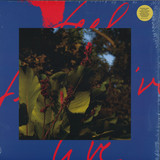
The result of these experiences is Feel Live, Massimiliano's third full-length endeavour. It was recorded in several intimate, sometimes improvised studio settings between Los Angeles, Portland, and Massimiliano's homebase in Berlin as well as at airports and on intercontinental flights high up in the sky. Featuring vocals by Private Agenda, Peaking Lights, Kim Anh and instrumental contributions by Fort Romeau, Tim K, and Jules Etienne, Feel Live is Massimilano's most playful and imaginative work to date. It's as emotional as sensual, as vibrant as the first ray of light after a thunderstorm has cleared the air.
Is it awkward or odd to call this record jazzy Presumptuous to pinpoint its spacial, almost orchestral qualities Unfair on the ruling Cosmic powers to highlight its aspirations of founding a new land of Balearic Harmonia and getting down at a huge fertility rite with electro enthusiasts and house lovers Not one bit. Feel Live is pure grandeur and elegance. It feels like an eternal movement.
Martha Graham has dedicated her whole life to dancing. 'It's permitting life to use you in a very intense way,' she said. 'Sometimes it is not pleasant. Sometimes it is fearful. But nevertheless it is inevitable.' Massimilano couldn't agree more. His advice when facing the inevitable: 'Live what you are feeling, feel what you are experiencing, good or bad, it is an experience.'
The second vinyl release from Nollern Records draws together three cuts of minimalistic groove-driven techno.
Francesco Passantino has delivered two hypnotic dance floor excursions built on throbbing basslines and eerie vocal samples. Tuberoom' is a melodic ride with haunting synths and groovy percussion, whilst Tabu' goes a shade deeper, as mesmerising as it is stripped back.
On the flipside the label founders craft a mind-bending modular kissed restyle of the original, with inspiration taken straight from the Far East. Rich in emotive energy, Nollern envelope the track with a prime vocal sample and subtly enchanting chords.
In the sweltering North-Eastern Brazilian state of Pernambuco lies the coastal city of Recife, where Amaro Freitas is pioneering the new sound of Brazilian jazz. For the prodigious young pianist, the spirit of his hometown runs deep. From the Afro-Brazilian maracatu born on the sugar plantations of slavery, to the high intensity carnival rhythms of frevo and baião, Amaro's heavily percussive approach to jazz is as indebted to these Pernambuco traditions as it is to Coltrane, Parker and Monk.
As with many of the greats before him, Amaro began playing piano in church aged 12, under the instruction of his father, leader of the church band. As his natural talents became obvious, the young prodigy quickly outgrew his father's instruction. He won a place at the prestigious Conservatório Pernambucano de Música but had to drop out as his family could not spare the money for the bus fare. Undeterred, Amaro gigged in bands at weddings and worked in a call centre to fund his tuition. The transformative moment came at age 15 when Amaro stumbled across a DVD of Chick Corea concert, 'he completely blew my mind, I'd never seen anything like it but I knew that's what I wanted to do with a piano'.
Despite not actually owning a piano, Amaro devoted himself to studying day and night - he would practice on imaginary keys in his bedroom, until eventually striking a deal with a local restaurant to practice before opening hours. By the age of 22 Amaro was one of the most sought-after musicians in Recife and resident pianist at the legendary jazz bar Mingus. It was during this time he met and begun collaborating with bassist Jean Elton and the pair went in search of a drummer. 'We kept hearing about this crazy kid who was playing in 7/8 or 6/4, we knew we had to meet him'. Hugo Medeiros joined, and the Amaro Freitas Trio was born.
'I want to show the simplicity of music, to break the stigma that the piano is for a particular social class. Yes, it's a difficult instrument, which many people do not have access to, but with it you can express everything.'
Following his critically acclaimed debut album Sangue Negro (black blood), the title of his sophomore release Rasif is a colloquial spelling of Amaro's home town. A love letter to his native northeast, Amaro explores its traditional rhythms through the jazz idiom, employing complex mathematical patterns reminiscent of some of the most challenging works by fellow Brazilian masters Hermeto Pascoal, Egberto Gismonti and Moacir Santos.
Preferring to see the piano as a though it were a drum with 88 unique tones, Amaro's intelligence and emotion intertwine on every track, from album opener 'Dona Eni': a scorching reconstruction of the baião rhythmic structure, played in seven measures instead of two, to the serene homage to the coastal reef and its ecosystems on the title track 'Rasif'. 'Aurora' is a suite of three parts, representing the sun's journey from the light and soft of the rise, to the aggressive dissonance at its midday zenith and descending chromatic cadences as the sun sets.
Due for an Autumn release on Far Out Recordings, Rasif sees Amaro Freitas take a deserved step onto the world stage. Having already made a name for himself in Brazil, Amaro and his phenomenal band will embark on their first European tour later this year.
Amaro Freitas - Piano
Hugo Medeiros - Drums & Percussion
Jean Elton - Double Bass
Henrique Albino - Baritone Sax, Flutes & Clarinet
All compositions by Amaro Freitas
Produced by Amaro Freitas
Recorded by Bruno Giorgi @ Carranca Studio, Recife, Brazil
Mixed and mastered by Bruno Giorgi @ Quarto Studio, Rio de Janeiro, Brazil
Executive producer and management: Laercio Costa
Nach Dem Sensationellen Erfolg Des Ersten Albums - oracle Im Letzten Jahr, Erscheint Nun Das Zweite Album Der Deutschen Jazz-supergroup Web Web. - dance Of The Demons Ist Ein Furioser Tanz Mit Den Dämonen - Mal Im Positiven Spirit Soul Jazz Rausch Wie Bei - land Of The Arum Flower , Das Mit Seiner Ergreifenden Melodie An Ethopian Jazz Der 60er Jahre Erinnert, Oder Mal Verrückt, Entfesselt Wie Bei - sandia .
Web Web Spielt Nun Mittlerweile Seit 2 Jahren Intensiv Zusammen, Man Hat Duzende Konzerte Absolviert Und Man Spürt Förmlich Die Geschlossenheit, Intensität Und Kraft, Die Sich Als Homogener Organismus Aus Einem Guß Heraus Zu Einem Phantastischen Sound Zusammenbraut.
Als Einen Besonderen Glücksfall Konnte Die Band Den Berühmten Marrokanischen Sänger Und Gembri-spieler Majid Bekkas Gewinnen, Der In Rabat Beheimatet Ist. Tony Lakatos Arbeitete Mit Majid Und Joachim Kühn In Den Letzten Jahren Immer Wieder Zusammen, Ebenso Roberto Digioia In Zusammenhang Mit Klaus Doldinger. Insofern Lag Es Nahe, Diesen Brillianten Musiker Mit Seinen Nordafrikanischen Wurzeln Mit Dem Ungeschliffenen Konzept Von Web Web Zu Verbinden. In - maroc Blues , Einer Soloperformance Von Majid, Hört Man Den Warmen Klangkörper Der Gembri, Einem Kontrabassartig-klingendem Instrument (dreisaitige Langhalslaute), Sowie Auch Majids Wunderbare Stimme, In Der Sich Die Jahrhunderte Alte Tradition Der Berber Widerspiegelt. - safar Zeigt Ebenso Die Große Improvisatorische Klasse Von Web Web, Vor Allem Wie Sie Auf Allen Ebenen In Die Spirituelle Sprache Eintauchen.
Majid Bekkas Ist Einer Der Bedeutendsten Musiker Und Vertreter Der Gnawa-musik, Die In Der Südlichen Sahara Beheimatet Ist. Am Konservatorium Für Musik Und Tanz In Rabat Studierte Er Seit 1975 Klassische Gitarre Und Oud.
Nach Ersten Erfahrungen Mit Eigenen Bands In Den 80er Jahren Gründete Er 1990 Sein Trio Gnaoua Blues Band, In Dem Er Blues Mit Gnawa-musik Verband. In Den Darauffolgenden Jahren Interessierte Er Sich Zunehmends Für Jazz, Trat Schon Bald Mit Größen Wie Archie Shepp, Louis Sclavis, Peter Brötzmann Oder Hamid Drake Auf.
- dance Of The Demons- Wurde Wie Auch - oracle An Einem Wochenende Live In München Eingespielt
Toningenieur Ist Wie Auch Bei - oracle Jan Krause (beanfield, Poets Of Rhythm U.v.m.)
Das Nächste, Dritte Web Web Album Wird Im Winter 2018 Ebendort In München Aufgenommen, Und Es Werden Wíeder Ein Oder Zwei Hochkarätige Gäste Dazu Eingeladen.
Web Web Sind: Roberto Di Gioia (piano, Synth, Percussion), Tony Lakatos (tenor- Und Sopranosaxophone), Christian Von Kaphengst (upright Bass) Und Peter Gall (drums).
Roberto Di Gioia Arbeitete Mit Zahlreichen Jazz-legenden Zusammen, Wie Z.b. Mit Woody Shaw, Art Farmer, James Moody, Johnny Griffin, Charlie Rouse, Clifford Jordan, Clark Terry, Roy Ayers, Gregory Porter U.v.m.
Anfang 1990 Wurde Er Mitglied In Klaus Doldingers Passport.
Als Pianist Machte Er U.a. Aufnahmen Mit Udo Lindenberg (mtv-unplugged,2011), Charlie Watts (- music Of The Rolling Stones , 2005), Console (- reset The Preset , 2003), The Notwist (- shrink 1998, - neon Golden , 2002).
Seit 2007 Arbeitet Er Zusammen Mit Samon Kawamura Und Max Herre Als Kahedi: Max Herre (- hallo Welt , 2012), Joy Denalane (- gleisdreieck , 2017), U.v.m.
Seine Eigene Band Marsmobil (produziert Von Peter Kruder) Wird Im Herbst Ihr 4.studioalbum Veröffentlichen.
Tony Lakatos Stammt Aus Der Berühmten Lakatos-familie Aus Budapest, Ungarn. Sein Vater War Ein Berühmter Geiger, Ebenso Sein Jüngerer Bruder Roby. Er Begann Mit Dem Saxofon-spiel Als Er 15 Jahre Alt War.
Tony Studierte Auf Dem Bela-bartok-konservatorium In Budapest, Machte Seinen Abschluß 1979 Und Spielte Seither Auf Über 350 Jazzproduktionen Weltweit Mit, U.a. Mit Al Foster, Kirk Lightsey, Randy Brecker, George Mraz, David Witham, Terri Lyne Carrington, Anthony Jackson. Tony War Mitglied Der Band Pili Pili Von Jasper Van´t Hof. Seit 1993 Ist Er Solist In Der Hr Radio-bigband.
Christian Von Kaphengst Bekam Mit 6 Jahren Klassischen Klavierunterricht Im Peter-cornelius-konservatorium In Mainz.
Von 1988 Bis 1995 Studierte Er Jazz-kontrabass Sowie Instrumentalpädagogik An Der Musikhochschule In Köln.
Sein Jazzquartett - cafe Du Sport Absolvierte Im Auftrag Des Goethe-instituts Tourneen Nach Pakistan, Indien, Türkei Und Westafrika. Seit 1999 Ist Er Regelmäßig Bassist Von Patti Austin Sowie Der New York Voices Für Europäische Konzerte.
Von Kaphengst Spielte U.a. Mit Randy Brecker, Nat Adderley, Roy Hargrove, Joe Sample, Charlie Mariano, Katja Ebstein, Xavier Naidoo, Roachford, Yvonne Catterfeld.
Peter Gall Gewann Bereits In Jungen Jahren Erste Preise Bei Jugendjazzt Und Tourte Mit Dem Bundesjazzorchester Unter Leitung Von Peter Herbholzheimer. Er Studierte An Der Berliner Universität Der Künste Und Am Jazz Institut Berlin Bei John Hollenbeck. Gall Absolvierte Sein Masterstudium An Der Manhattan School Of Music Bei John Riley.
Er Arbeitete U.a. Mit Kurt Rosenwinkel, Seamus Blake, Ben Street, Gabriel Rios, Jasmin Tabatabai, Thomas Quasthoff, Peter Fessler.
Feedback - Web Web - oracle :
"oracle Ist Nicht Nur Ungemein Packend, Sondern Klingt Auch Absolut International, Bewegt Sich Auf Einer Ebene Mit Leuten Wie Kamasi Washington Oder Shabaka Hutchings." - Jazzthetik
"ein Wirklich Erstaunliches Erstes Album" - Süddeutsche Zeitung
"sun Ra Wäre Stolz Gewesen Auf Web Web Und Ihr Erstes Album Oracle." - Soultrainonline.de
"...the Album Is Engaging And Fascinating In Equal Measures. ... Sonically, The Album Embraces The Various Late 1960s And '70s Jazz Aesthetics Of Modal, Fusion And Spiritual Jazz Soundscapes, But 'oracle' Isn't A Strata East Or Black Jazz Tribute Record. This Is Very Much A Contemporary Affair With Its Richness Emanating From The Group's Varied Musical Tastes And Sensibilities And It Favours An Entire Listening Experience." - Ukvibe.org
"raise A Glass And Toast This Supremely Enjoyable Recording." - Birdistheworm
"oracle Contains 13 Tracks Of Pure Retro Sounding Perfection. This Is Like A Long Forgotten Treasure. It's Certainly An Album Serious Lovers Of The Genre Will Embrace." - Reviewgraveyard
"wonderful Album!!" - Simon Harrison / Basic Soul
"this Is Amazing. Going To Have To Grab A Vinyl Copy For The Collection" - Kev Beadle
"fantastic Record ! Love It ! We Need More Music Like This !!" - Peter Kruder
2022 repress
currently the rediscovery of long forgotten japanese electronic, jazz and new age music is at a peak like never before. but although many re-issues already flood the record stores around the world: the large, diverse musical culture of japan still got some gems in store that are really missing.
for example, it is still quiet around the the work of japanese bass player, new-age and ambient musi-cian motohiko hamase. when the today 66-years old artist started to be a professional musician in the 1970's, he quickly gained success as a versed studio instrumentalist and started to be part of the great modern jazz isao suzuki sextett, where he played with legends like pianist tsuyoshi yamamoto or fu-sion guitar one-off-a-kind kazumi watanabe.
he also was around in the studio when legendary japanese jazz records like 'straight ahead' of takao uematsu, 'moritato for osada' of jazz singer minami yasuda or 'moon stone' of synthesizer, piano and organ wizard mikio masuda been recorded.
in the 1980's hamase began to slowly drift away from jazz and drowned himself and his musical vision into new-age, ambient and experimental electronic spheres, in which he incorporated his funky medi-tative way of playing the bass above airy sounds and arrangements.
his first solo album 'intaglio' was not only a milestone of japanese new-age ambient, it was also fresh sonic journey in jazz that does not sound like jazz at all. now studio mule is happy to announce the re-recording of his gem from 1986, that opens new doors of perception while being not quite at all.
first issued by the japanese label shi zen, the record had a decent success in japan and by some overseas fans of music from the far east. with seven haunting, stylistically hard to pigeonhole compo-sitions hamase drifts around new-age worlds with howling wind sounds, gently bass picking and dis-creet drums, that sometimes remind the listener on the power of japanese taiko percussions. also, propulsive fourth-world-grooves call the tune and all composition avoid a foreseeable structure. at large his albums seem to be improvised and yet all is deeply composed.
music that works like shuffling through an imaginary sound library full of spiritual deepness, that even spreads in its shaky moments some profound relaxing moods. a true discovery of old music that oper-ates deeply contemporary due to his exploratory spirit and gently played tones. the release marks another highlight in studio mule's fresh mission to excavate neglected japanese music, that somehow has more to offer in present age, than at the time of his original birth.
During the eighties it was possible to observe an Italian fascination with the mysterious Far East. This can be found across art, design and music in Italy during this time, in subtle or obvious ways. Specifically there are Italo-disco records that proudly show this influence, some of the best known being: Fun Fun Living In Japan, Koto Chinese Revenge and City-O' Rose of Tokyo.Following in this theme is Fancy Null Null. Not to be confused with the famous Euro-disco artist behind Slice me Nice, this 'Fancy' is a one-off project from Italo-disco icon Raffaele Fiume, the artist and voice behind many great Italo-disco hits, such as: Helicon You See, Malcom & the Bad Girls Shoot Me and Ralph River Band Strange Vibration.Adding to the original tracks of the 1982 release is a totally ecstatic and powerful remix from Betonkust: one of the most talented and exciting Dutch producers of recent years. Also included is an instrumental edit from Hysteric, for those who find the unique vocals challenging.
* "Of all the dubplates in my bag from this last few years, the ones I've selected most often have Walton's name scribbled on the sleeve. 'Black Lotus' is a unique creative statement; I'm very proud to release it on Tectonic and to support Walton, who I believe is a true talent." Pinch
* On July 6th Tectonic recordings presents the game-changing second album by 26 year old Mancunian Sam Walton, better known as simply Walton.
* 'Black Lotus' follows his inclusion on Tectonic's landmark 100th release - Riko Dan's 'Hard Food' EP, plus the 'Praying Mantis'/ 'Koto Riddim' 12' (also on Tectonic) and the 'Taiko' EP on Kaizen - the latter two of which hinted at the album's sound, but didn't fully prepare us for the brilliance to come.
* Abstract electronics, grime, dubstep and new styles that don't even have a name yet coalesce perfectly on this classic in the making. It finds Walton at peak power, reaching just as far (if not more so) than anything on the Pan, Different Circles, Boxed or Tectonic catalogues for pure futurism and new-terrain-traversing brilliance.
* Spacious and modern sounding, with just the right amount of grit, on 'Black Lotus' Walton has taken things the next level - setting an impressive new high bar. This is the best music to take inspiration from far eastern culture since Photek's seminal 'Ni - Ten - Ichi - Ryu' and 'The Water Margin'.
* Cinematic may be a term bandied about too often, but on this record it unquestionably applies, with the whole thing playing out like an epic movie, full of highs, lows, action, reflection and changing scenes.
* The album kicks off with 'Black Lotus', which makes it quickly evident that this isn't just another generic longplayer; a weightless/sino style intro segues into a mystical kalimba line, which is then is enveloped by huge waves of synthesized, pitched-down brass.
* 'Point Blank' offers locked, harsh mechanical funk, full of aggravated excitement, before sleek, spacious grime and disguised pop garage achieve twisted anthem status, on the hugely satisfying 'Koto Riddim'.
* 'No Mercy''s Yakuza crime riff is perfect for Riko Dan's threatening menace, especially at the point his voice gets distorted into a guttral and unsettling, demon-like wretch.
* 'Mad Zapper' is abstract, comprised of simple yet challenging beats, tones and stutters, whilst 'Angry Drummer''s taiko/kumi-daiko style percussion has a rousing, heavy thump.
* 'Pan' sounds equally enthralling whether soundtracking a dark movie scene of impending danger, or carying enratptured ravers on a danceflor journey, especially one suited to the synapse-prodding drama of a high production, lazer-heavy festival set.
* Choppy drums and bouncy bass tones are laced with the georgeos melody of 'Ehru', and 'Vectors' is sleek 'n' deep breakbeat-garage-meets-IDM.
* Although already known for elements of musicality, Walton raises his game even higher with the beautiful closing track 'White Lotus', which has a wow factor akin to hearing Aphex's Twin's 'Jynweythek Ylow' for the first time.
* 'The title came from the idea that I wanted it to be sweet and melodic in areas, but dark and grimey at the same time', recalls Walton. 'I never really listened to much Japanese and Chinese music before working on this, and that element originally came from listening to a lot of Sino grime stuff. It wasn't until I was deep into the process of making the album that I started listening to loads of traditional stuff on YouTube for melodic ideas, which changed how it turned out. The whole dubstep techno crossover thing was also a big influence.'
* 'I'm really happy to have Riko Dan & Wen on there', he adds. 'I've done a few remixes of Riko tunes which have had a great response, so it's been wicked to get some original material done together. The track with Wen was first started a while back, so I'm glad it was finally finished and will see a release.'
* Walton has been steadily gaining serious clout through releases since 2011 on Hyperdub, Keysound, Tectonic and Kaizen, with supporters including Mumdance, Logos, Slimzee, Laurel Halo, Wen, Hodge, Mary Anne Hobbs, Giles Peterson, Paleman, Teki Latex, Commodo, Loefah and Kode9. Key club, festival and radio shows include FWD at Plastic People, Fabric, Outlook, NTS, Rinse and BBC 1xtra.


