Johnny's disk record is an independent jazz label run by the owner of jazz cafe kaiunbashi no johnny located in rikuzentakata city in iwate prefecture, japan.
the legendary label released a string of albums of high quality but down-to-earth music, spanning from modern jazz, avant-garde jazz to left-field pop. albums such as 'farewell my johnny / left alone' and 'aya's samba' has reached cult status among fans as some of the best works to come out of the japanese jazz scene.
following a cult classic jazz fusion album on bourbon records, king kong paradise delivered an album of alternative, left-field balearic rock that was way ahead of its time.
an anomaly that sticks out in johnny's disk's catalogue, the rare record may appeal more to new wave, reggae and rock fans than jazz heads—in fact, i wouldn't be surprised if people like dj harvey or theo parrish dropped this oddity in their sets.
if you dig the kind of weirdness that's being reissued by music from memory, you might find this record intriguing.
PAUL LABRECQUE (SUNBURNED HAND OF THE MAN) and GHAZI BARAKAT (PHAROAH CHROMIUM) present two epic cosmic, dystopian tracks where guitars, synths and traditional instruments blend into an anarchic sound system.
After excessive years in rock bands like THE GOLDEN SHOWERS or his solo project BOY FROM BRAZIL, time had come for the German-Palestinian artist GHAZI BARAKAT to develop a new aesthetic - the birth of his alias PHAROAH CHROMIUM where BARAKAT creates "meta-music for meta-people in a meta-world", or in other words:a mutoid blend of post-krautrock, psychedelism, free jazz, ancient rituals, science fiction and electronics. So far the Berlin based sonic performer released a couple of solo albums on labels like GRAUTAG or TAPEWORM and a triple LP with krautrock legend GÜNTER SCHICKERT. For his latest output he decided to simply use his civilian name BARAKAT, as does PAUL LaBRECQUE (SUNBURNED HAND OF THE MAN) who contributesguitar and synthesizer to the two side-long tracks. "Jajouka Pipe Dream" is a clear reference to the MASTER MUSICIANS OF JAJOUKA, with lots of flutes and percussion, a very rhythmical, ritualistic track, while "Planet R-101" turns out a spacey trip with elements of krautrock and Kosmische Musik / Berliner Schule.
What may sound contradictionary on paper functions perfectly on LP - freeform / free-floating music, absorbing and integrating a wide range of influences and inspirations, sounds and styles - and highly psychedelic!
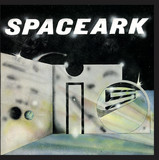
The second album from SpaceArk. More brilliant self-released, private-press jazz/soul from 1976 Los Angeles.
'SpaceArk Is' came out on Color World records in 1976, on a limited run of about 5,000 copies. It followed their self-titled debut (also available now on Mr Bongo) on the same original label, the year before.
For a handful of years in the Seventies, SpaceArk was one of the most promising and electrifying bands in Southern California. Although their music was far greater than the sum of its parts, those parts made for a very original style. R&b, soul, rock, pop, jazz, classical ... it all came together in blissful stream of intricate compositions that swept up crowds from US military bases to Northern Soul clubs around the UK.
SpaceArk wrote and performed more than 100 songs during their time together. Most of them were not recorded and are now either lost or forgotten.
Official Mr Bongo reissue with liner notes by Amar Patel. Licensed direct from Peter Silberg.
The Seeds of Fulfillment by David Drazin (November 2018)
Andrew Venson founded Seeds of Fulfillment (SOF) in early 1978. In the 1960s he had played electric bass with Arthur Conley, and later the original Peaches and Herb. On the same bill with Big Brother and the Holding Company, he hung out backstage with Janis Joplin. Yes! Vince was hoping SOF would get all of us to the top. He composed three tunes for the band, and we always had a ball playing them.
Roger Myers is a marvelous drummer. We co-composed Namaste. Roger would settle on a drum pattern of four measures at a time that he wanted to keep, and I'd put chords and melody right on top of his pattern. When he layered a second drum pattern on top of the first one, we'd get two melodies at the same time. We thought we were going to collaborate on more songs this way, but it didn't happen.
Lee Savory is a very inventive jazz man. He's musically literate, and wrote excellent transpositions. I remember Lee's asking for my input while he was composing Tight Squeeze, but it was clear he had it down. Once when I was visiting a DJ who played the album in a local radio station, the total of checks next to Tight Squeeze for number of plays was by far the highest!
Randy Mather's sax playing always knocked me out. I could hardly wait to hear him solo. When he left SOF to go with Woody Herman's orchestra it was amazing, but true.
Jeanette Williams had recorded 45s for the Duke and Peacock label when she was 17 years old. Her powerful singing was incredible to me. When we needed an original for Jeanette, Vince composed it, and Roger's wife Linda wrote the lyrics.
In 1978 I was in my senior year at Ohio State University when I met Vince. He came into a bar called My Brother's Place where I was playing with a trumpet player named Bobby Alston. When I was a freshman at OSU I'd played in an off campus band called Akadama. Before that I played in my home town of Cleveland, Ohio in the Brush High School Stage Band and a jobbing band called The Midnight Combo.
Everyone in the band contributed something to Egg Cartons in a composition jam session. We rehearsed in Vince's basement, and he had covered the walls with egg cartons to make the room sound more like a recording studio. The Provider was inspired by Country Preacher by Joe Zawinul. In those days I especially admired the way Zawinul would get his soulful feelings across, but also loved Herbie Hancock and to a lesser degree Chick Corea too. It took two years (with a break of several months) for the band to conquer Self-Fulfilling Prophecy. It shows you what consideration and dedication is, that ultimately they felt it was worth learning.
We recorded at Fifth Floor Studios in Cincinnati, Ohio. While we were there I got to shake hands with Bootsy Collins, who was recording in the rooms downstairs at the same time. Years later, Fifth Floor burned down and all the master tapes were destroyed.
'For The Colleagues Of Ubu & Their Authorities' is the brainchild of Vienna based vinyl enthusiast, DJ & producer The Reboot Joy Confession. What once started as a series of mixes has been expanded into this compilation, on which he brings together diverse genres of music like electronica, modern minimalism, folk, post-rock, avant-garde or modular music, which also reflect his own versatile musical taste. 'As I stopped thinking in genres, my attempt was to merge my musical taste in the most fluent way possible onto one record. There are mesmerizing songs from some of my favourite contemporary artists - I feel a timelessness in their music, I can ´t get tired of. With the compilation I wanted to create a contemplative, fictitious, surreal world, merging those different styles together. Giving it that title, I wanted the listener to be able to imagine a tale that is building up with each song. I am really happy about the outcome of this compilation and hope that many other listeners can feel the magic.' The compilation includes the surreal work of Swiss producer Dim Grimm (also known as Dimlite), as well as a collaboration between Merz & Julian Sartorius Drum Ensemble who radically altered the original version of 'The Hunting Owl' into a monstrous percussive live version. Taken off the debut album from one of Poland ´s most interesting musicians at the moment, Waclaw Zimpel & Kuba Ziolek, 'Wrens' is a fusion of folk, jazz and modern minimal music. Experimental pop musician & filmmaker Tujiko Noriko appears with an emotional piece that challenges the paths between pop and avant-garde. Gerhard Zander, whose musical work started on the outskirts of experimental pop music in the early seventies in Germany, delivers a modular synth masterpiece with unique sounds, textures and a far-out synth choir. Rock and ambient influenced musician Helen Money (also known as Alison Chesley) is a Los Angeles based cellist and composer who appears with a massively dark post-rock song called 'MF', which was recorded at Steve Albini's Electrical Audio studio in Chicago in 2009. Often compared to Frank Zappa and known for their richness of ideas, Liverpool's a.P.A.t.T. contribute the hypnotic 'Young Free & Parasite', with references to British glam, post-punk or synth rock, but in a fresh and obscure sounding outfit. SSELLF, the moniker of New Zealand ´s Christoph El Truento, inspired by post-punk and noise. 'Visitors' is simple and simply in your face, with lo-fi drums, distorted synths and raw vocals by Christoph himself. After a few seclusive years, The Reboot Joy Confession returns with a new, crispy and soulful track. Cinematic strings written by Martin Riedler, arranged by Flip Phillip, and recorded at the established Vienna Konzerthaus, based on a properly arranged drum outfit and played by a villain named Gurlimu. Both strings and drums are guiding through the whole song and culminate in Glockenspiel and Rhodes melodies. Oceaneer aka Japanese pianist Oneechan Nanashi completes the compilation with her beautiful and profound composition 'The Sea, Forever'. She describes her music as 'improvised instrumental underwater music from the bottom of the Pacific Ocean, played with broken instruments, directed by the spirit of drowned people who are talking through the hands of the pianist. It's lonely and bleak music for the dead.'
Phil Ranelin's first record as a leader is worlds away from his later 1976 offering, Vibes From the Tribe. The Time Is Now is a vanguard jazz record, full of the spirit, determination, and innovation inspired by John Coltrane, Eric Dolphy, Cecil Taylor, Pharoah Sanders, and Archie Shepp. Recorded in 1973 and 1974 and released at the end of 1974, the set shows Ranelin to be an imposing composer and frightfully good trombonist. The original album contained six compositions that are a deep musical brew of avant-garde improvisation, hard bop jazz esthetics, and soulful melodic ideas that were superimposed as a jump off point for both harmonic and rhythmic (read: Latin) invention. The stamp of Detroit is all over this thing. Tracks like the title and "Black Destiny" reflect the anger and vision of the era, while moving it all in a positive musical direction. Soloists on the set include the rest of the Tribe collective -- Marcus Belgrave and Wendell Harrison -- as well as local players who deserved far more than they received in terms of national recognitions: bassist Reggie "Shoo-Be Doo" Fields, trumpeter Charles Moore, pianist Keith Vreeland, drummer Bill Turner, and others including Ranelin himself. The arrangements on The Time Is Now were ahead of their time, clustering a rhythm section as part of the horn's front line ("13th and Senate" and the title track) and a stylistic angularity that reflected both musical history and futurism in jazz and R&B ("Time Is Running Out" and "Times Gone By"). The Time Is Now is a must for any vanguard jazz aficionado or anyone interested in the strange, rhythm-oriented evolution of Detroit music. Thom Jurek/AMG
Jac Berrocal, David Fenech and Vincent Epplay return with Ice Exposure, their second album for Blackest Ever Black. A sequel and companion piece of sorts to 2015's Antigravity, its title couldn't be more apt: sonically it is both colder, and more exposed - in the sense of rawer, more volatile, more vulnerable - than its predecessor, capturing the combustible energy and barely suppressed violence of the trio's celebrated live performances with aspects of noir jazz, musique concrète, no wave art-rock, sound poetry and spectral electronics all interpenetrating in unpredictable and exhilarating ways. While there are moments of great sensitivity and even a cautious romanticism, the prevailing mood is one of anxiety, paranoia, and mounting psychodrama: close your eyes and Ice Exposure feels like a dissociative Hörspiel broadcasting from the seedy backstreets of your own troubled mind. Before he picks up an instrument or opens his mouth, Berrocal's unique and compelling presence can be felt: a combination of studied, glacial cool and anarchic, in-the-moment intensity that has served him well over a long and storied career. It was honed during his time as a theatre and film actor, and in the 70s Paris improv scene, it powered his influential Catalogue group in the 1970s, numerous seminal, sui generis solo sides, and far-sighted collaborations with the likes of Nurse With Wound, Lol Coxhill, Pascal Comelade and James Chance which have seen him come to be valorised by two generations of avant-garde agitators and eccentrics. Now in his eighth decade, it comes with an added gravitas, perhaps, but no less energy or vitality. On Ice Exposure, his lyrical, instantly recognisable trumpet playing is a key feature - see especially the ghostly, dubwise take on Ornette's 'Lonely Woman', the dissolute exotica of 'Salta Girls', and the sublime echo-chamber soliloquy 'Opportunity'. But more often it's his voice that commands centre-stage, whether casually discharging surreal poetic monologues or moaning in animal despair - a vocal tour de force that transcends language and culminates in the Dionysian frenzy of 'Why', Berrocal's half-spoken, half-howled exclamations jostling with David Fenech's slashes of dissonant guitar, over Badalamenti-ish, panther-stalk drums. Fenech's origins are in the mail-art scene of the early '90s, when he led the Peu Importe collective in Grenoble, and since then, in addition to his own recordings he has worked as a software developer at IRCAM and played with Jad Fair, Rhys Chatham and many others. Together with Vincent Epplay he is responsible for Ice Exposure's inspired arrangements and vivid, vertiginous sound design. Epplay is a visual artist and composer with particular interest in aleatory composition, concrete, and the reappropriation of vintage sound and film material. He and Fenech fashion a remarkable mise-en-scene for Berrocal to inhabit, one that embraces cutting-edge electronics while also paying homage to the best traditions of outlaw jazz and libidinous rock'n'roll ('Soundcheck' invokes the brutish spirit of Berrocal's hero Vince 'Rock N Roll Station' Taylor). On 'Blanche de Blanc', Berrocal's voice is framed by a groaning, ghoulish orchestra of industrial drones, while 'Equivoque' evokes the most humid and hostile Fourth World landscapes and 'Panic In Surabaya' lives up to its name, a hectic, pulse-quickening concrète collage that leaves you gasping for air. This is a searching and singular trio operating at the absolute peak of their powers, with an interplay that transcends studio and stage and occurs at an almost telepathic level. Ice Exposure is a triumph of that group mind, an underworld dérive as life-affirming as it is unnerving and psychologically precarious.
If you read the name Shankar you may right away think of Ravi Shankar, the grand master of contemporary Indian folk music who was very popular in the 60s due to his connection with the music industry in the United States despite staying away from the pure pop music by maintaining his classic sitar and tabla style ragas to express himself musically. Ananda Shankar used to be his nephew who also made a journey to the USA to gather inspirations from rock artists like Jimi Hendrix among others. His first album from 1970, a conglomerate of classic Indian folk tunes and instrumental versions of the hottest rock songs of the day clothed in a veil of sitar melodies and backed up with tabla drum grooves, was an attempt to combine the spiritual approach of his cultural origins with the light minded blissful attitude of western psychedelic pop music. It worked well in the sense that it is still, nearly fifty years later on, a groovy little album that leaves nobody sitting around at any random hippie party. He took a five year break from recording to create what should become his second album and this is what I am about to present to you now. The cover-tunes were replaced by all original compositions with a lush instrumentation that features the typical sitar, tabla and bowed string instruments such as sarong and sera arrangements mixed with sounds that have a definite western origin such as rock guitars, Hammond organ and moog synthesizers plus full drum kits that take care to enhance the actual groove. Psychedelic rock, raga, fusion-jazz and funk flow into each other quite naturally giving birth to something fresh and exciting I would label as Bengali pop'. The borders between eastern and western music get abrogated here. If it was not for a few deeply mythical chants on a bed of drones here and there you could not even tell this was a record by an Indian artist. This album is quite accessible most of the time and comes with a certain slickness that makes it easy for the listener to understand and appreciate what is going on. Still there is the other side of the coin, the depth pop music often lacks. So in the end this might have been too far out for the average western mainstream fanatic back in 1975 when disco began to rule but it is an awesome sound trip for fans of psychedelic dance music like INCREDIBLE BONGO BAND and all eastern influenced popular rock.
With a string of resonating releases and progressively improvised live-shows, ANNANAN have been expanding and refining their stylistic range across gritty Acid psychedelia, explosive, dark-waving Electro and a raw blend of Techno and House that is as fierce as it is fragile. The duo's first album on their own imprint MACHINE JAZZ does take all of this into account - and yet it's crucially different to everything else they've put out so far. - You' is a captivating electronic pop adventure, an experimental amalgam aligning Anne Ghost's polymorphic lead vocals with Tom Aaron's vast and versatile analogue productions in unexpected ways. Dominated by reduced rhythms and a carefully crafted melodic shape, the result of this dialogic fusion are irresistible, forceful songs that draw from diverse contemporary and traditional sources: you'll even hear Trap fragments, an R&B trained voice, reminiscences of the Knife as well as cinematic synth excursions. While exhibiting a broad set of moods, claims and longings, the LP attains emotive poignancy from beginning to end through its bold openness. Annanan's first album is stripped down, immediate and full of surprises - but don't you worry, there's no lack in bang either!
In the sweltering North-Eastern Brazilian state of Pernambuco lies the coastal city of Recife, where Amaro Freitas is pioneering the new sound of Brazilian jazz. For the prodigious young pianist, the spirit of his hometown runs deep. From the Afro-Brazilian maracatu born on the sugar plantations of slavery, to the high intensity carnival rhythms of frevo and baião, Amaro's heavily percussive approach to jazz is as indebted to these Pernambuco traditions as it is to Coltrane, Parker and Monk.
As with many of the greats before him, Amaro began playing piano in church aged 12, under the instruction of his father, leader of the church band. As his natural talents became obvious, the young prodigy quickly outgrew his father's instruction. He won a place at the prestigious Conservatório Pernambucano de Música but had to drop out as his family could not spare the money for the bus fare. Undeterred, Amaro gigged in bands at weddings and worked in a call centre to fund his tuition. The transformative moment came at age 15 when Amaro stumbled across a DVD of Chick Corea concert, 'he completely blew my mind, I'd never seen anything like it but I knew that's what I wanted to do with a piano'.
Despite not actually owning a piano, Amaro devoted himself to studying day and night - he would practice on imaginary keys in his bedroom, until eventually striking a deal with a local restaurant to practice before opening hours. By the age of 22 Amaro was one of the most sought-after musicians in Recife and resident pianist at the legendary jazz bar Mingus. It was during this time he met and begun collaborating with bassist Jean Elton and the pair went in search of a drummer. 'We kept hearing about this crazy kid who was playing in 7/8 or 6/4, we knew we had to meet him'. Hugo Medeiros joined, and the Amaro Freitas Trio was born.
'I want to show the simplicity of music, to break the stigma that the piano is for a particular social class. Yes, it's a difficult instrument, which many people do not have access to, but with it you can express everything.'
Following his critically acclaimed debut album Sangue Negro (black blood), the title of his sophomore release Rasif is a colloquial spelling of Amaro's home town. A love letter to his native northeast, Amaro explores its traditional rhythms through the jazz idiom, employing complex mathematical patterns reminiscent of some of the most challenging works by fellow Brazilian masters Hermeto Pascoal, Egberto Gismonti and Moacir Santos.
Preferring to see the piano as a though it were a drum with 88 unique tones, Amaro's intelligence and emotion intertwine on every track, from album opener 'Dona Eni': a scorching reconstruction of the baião rhythmic structure, played in seven measures instead of two, to the serene homage to the coastal reef and its ecosystems on the title track 'Rasif'. 'Aurora' is a suite of three parts, representing the sun's journey from the light and soft of the rise, to the aggressive dissonance at its midday zenith and descending chromatic cadences as the sun sets.
Due for an Autumn release on Far Out Recordings, Rasif sees Amaro Freitas take a deserved step onto the world stage. Having already made a name for himself in Brazil, Amaro and his phenomenal band will embark on their first European tour later this year.
Amaro Freitas - Piano
Hugo Medeiros - Drums & Percussion
Jean Elton - Double Bass
Henrique Albino - Baritone Sax, Flutes & Clarinet
All compositions by Amaro Freitas
Produced by Amaro Freitas
Recorded by Bruno Giorgi @ Carranca Studio, Recife, Brazil
Mixed and mastered by Bruno Giorgi @ Quarto Studio, Rio de Janeiro, Brazil
Continually pushing the boundaries of jazz, funk, electronic music and disco, as expressed through their signature samba swing, the Brazilian mavericks have recreated the energy of those spellbinding seventies' sessions which would launch them into international recognition and confirm their status as one of Brazil's most successful bands. Since the passing of keyboard maestro Jose Roberto Bertrami in 2012, remaining members Ivan Conti and Alex Malheiros have worked tirelessly to keep the spirit of Azymuth alive, and to continue the legacy of Bertrami's genius. But Fênix also marks a new era as the Azymuth trio is complete once again, by special guest keyboardist Kiko Continentino. A hugely talented pianist, composer and arranger, Kiko has worked with the likes of Milton Nascimento, Gilberto Gil and Djavan, and the fresh energy and inspiration he has brought to the group is undeniable. The album also features Brazilian percussion legend Robertinho Silva, one of Brazil's most important and influential players.
From the disco-carnival title track to sunny jazz-funk head-nodder Orange Clouds, through to the deep-space samba Corumbá, Azymuth have drawn upon five decades of consummate craftsmanship - which coupled with their endless desire for experimentation and improvisation - has resulted in a 10-track journey encapsulating the full spectrum of Azymuth's brilliantly coloured expressionist fusion. With all the cosmic energy and masterful musicianship you'd expect from the three-man orchestra, Azymuth rise from the ashes!
Recorded in Rio De Janeiro in May 2016 with producers Daniel Maunick and Joe Davis the official release date is set for December 2016, on super-heavyweight vinyl.
In 1975, the prolific and multi-talented Brazilian comedians Chico Anysio and Arnaud Rodrigues recorded an album based on the protagonist of one of their most celebrated TV series. Sporting a dodgy moustache and an equally troubling haircut, Carioca conman Paulo Maurício Azambuja (played by Anysio) would flog his own mother's leg if he could, and his ever-ridiculous scams are inevitably always destined to fail. This soundtrack/musical re-imagining of the series combines jazz-funk with samba soul and MPB, with the help of cult Brazilian trio Azymuth. Keyboard maestro Jose Roberto Bertrami, who arranged the album alongside renowned conductor and composer Jose Menezes, elevates the groovy odd-ball sound to another dimension, with his set up including Fender Rhodes, Arp Strings, Arp Omni, Clavinet and Hammond organ. Remaining Azymuth members Ivan Conti (drums) and Alex Malheiros (bass) provide the signature Azymuth foundation, and saxophone prodigy Victor Assis Brasil and legendary multi-instrumentalist producer Durval Ferreira also feature.As well as its distinctly comedic character, what makes the music so special is the coming together of traditional samba roots, and Azymuth's ahead-of-its-time psychedelic funk influence. Each side ends with a comedy monologue, complete with live audience laughter, but before that you get seven tracks of weird and wonderfully emotive Brazilian groove music.
Fourth Kind the self titled mini album on Omniverse Records. It's hard to pinpoint a genre with records like this; produced by Marc Mac of 4hero and similar to some of the 4hero output, it defies genre and fits somewhere in-between many. The production is heavily reliant on synthesisers and vintage drum machines in places but is full of real life and organic movements, this is partly down to the signature drums played by Luke Parkhouse. The only other guest spot is filled by Nu Jazz Funker Pascal Strauss aka Luman Child who plays bass guitar on "Take Me To Your Sky" which along with "Afterglows" are the closest we get to dance tracks, in most parts a 70s fusion feel is present. The short interlude type tracks tie the journey together and I would go as far as to say vital to telling the story. Moogs, Arps and Solina strings weave patterns throughout, all in all, across the 10 tracks the album is a journey of mood and emotions. 180g Pressing. Released 28th September 2018.
SEPT 2016. The Moog Sound Lab's first trip out for a live session at Café Oto's project & café rooms. Jimi Tenor, finnish futurist, shako & Warp Records confederate, jazzed, funked, far-ra'd out. Tony Allen - original drummer to Fela Kuti - Godfather of the Afro-Beat.
These two titans of the beat strange -fed & watered through the mighty Moog Sound Lab via a prototype future sound
systems drum trigger unit built & operated by UK moog minder engineer Mr Finlay Shakespeare. New sound universes emerge, collide.
Explosions & implosions make sonic debris. Cosmic dancers prepare to be run ragged by a feral 'tronic funk that brings to mind early 'D.A.F.
Thomas Fehlmann steps away as co-member of The Orb following two acclaimed full lengths on Kompakt (COW - 2016, Moonbuilding 2703 AD - 2015) and embarks back on his solo career with a career defining album 'Los Lagos' - from Detroit to Schaffel techno he conducts a broad spectrum of electronic music into a seamless flow.
Thomas Fehlmann has been active since the late 1970's from Palais Schaumburg, the Tresor defnining trio 3MB (with Moritz von Oswald and Juan Atkins), Ocean Club (together with Gudrun Gut) and of course The Orb.
Artwork direction and design by DESIGNERS REPUBLIC.
'Los Lagos' is Thomas Fehlmann's seventh solo full-length, his 4th for Kompakt following his Berlin inspired 2010 full length 'Gute Luft'. in the musician's own words it's about "checking the juice".
Establishing a picture of his current artistic condition, as suggested by the title - los lagos / die lage / the situation (literally translating to 'the lakes' but taking the meaning of 'wassup' in the context of a relaxed discussion between friends), the album refers to Fehlmann's "musical motivation, dreams and wishes" through the language of music exclusively: a way to "allow myself to techno" he says, "to techno as a means to deconstruct and rebuild again. Set up an area of tension, loose it in the flow of the grooves. Magnifying some detail out of proportion, regroup around that and slowly knit a texture. Expand."
"It was time to take a bend and head where the sun rises or sets, wherever my heart drives me." This is pretty much the kind of decision Thomas Fehlmann has made. 61 and shining, longstanding member of The Orb, multi-talented composer and boundless experimentalist, had to make in the twilight of his collaboration with Alex Paterson, eager to taste the flavours of the unknown on his own again. "It was the moment when felxibility would have become compromise'. Far from being the demise of their joint dream, this was bound to split it in two distinct, parallel fantasies - rich of their own singularity.
As goes with that essential love of his for the free-flowing nature of electronic music, a fascination born out of its "lack of borders", capable of "inventing, changing the emphasis, experimenting with an unpredictable outcome", 'Los Lagos' "freely connects disparate extremes. Art, disco, minimalism, schmalz, jazz and funk". As he likes to say, Fehlmann's head functions as a sampler, capturing elements and re-assembling them under his own embracing perspective ; not afraid to leap from a deep, dubbed-out hypnotism ('Window', 'Morrislouis', 'Freiluft') to the playfulness of '90s-style bleepy schaffel ('Tempelhof' featuring Max Loderbauer), through out-there, muscle-flexing dancefloor cuts ('Triggerism') onto the calmness of ambient ('Geworden').
In need to keep his inner balance in check, Fehlmann committed himself to "switch off the control" and follow his intuition, which isn't so much of an easy process as he also wanted to incorporate the side disturbances experienced: "it's a complex process of search and destroy to bring out a new beauty trying to expand my vocabulary". With 'Los Lagos', Fehlmann looked at finding "the structure that's surprising, disturbing and rewarding". The artwork for the record, courtesy of contemporary artist and friend Albert Oehlen whom he shares lots of artistic ambitions with, echoes the producer's "funky use of shape and space, sludge and clarity" like a second skin. A search for light and harmony that Fehlmann sums up eloquently: "Does your inner musical voice respond", that is the question. Then "doors open up in unexpected corners, rays of light appear; you follow through and you're in - in your oasis."
Released on Leeds Jazz & Soul labelATA Records, the debut LP fromThe Lewis Express takes the rich legacy of the soul-jazz outfits of the 1960s as the initial blueprint of their sound. Taking inspiration from the likes of Ramsey Lewis, Young-Holt, Eddie Cano, Ray Bryant and Cannonball Adderley, they present a collection of tracks that range from introspective spy film themes to burning Brazilian jazz.
Primarily based in Leeds, The Lewis Express is comprised of many of the musicians that have graced previous ATA releases: George Cooper, Piano (Abstract Orchestra) Neil Innes, Bass (The Sorcerers, The Magnificent Tape Band, Tony Burkill), Sam Hobbs, Drums (Dread Supreme, Tony Burkill, Matthew Bourne) and Pete Williams, Percussion (The Sorcerers, The Magnificent Tape Band, Tony Burkill). Recorded over an intense two-day session by the band of the same name, "The Lewis Express" is a nod to the classic soul jazz recordings of The Young Holt Trio / Young-Holt Unlimited and Ramsey Lewis, from who this group take their name. But, delivered with a distinctly European feel. As with many of the classic Ramsey Lewis cuts, this album was recorded live, capturing the rich inter-relationship between the players.
Kicking off the album isLove Can't Turn A Man, a slow burner that introduces the piano of George Cooper as he works over a rock solid backbeat.Cancao De Momentois an up-tempo Brazilian Workout in the style of Milton Banana with rhythmic piano punctuated by percussion.Brother Move Onis probably the most recognizable as being in the soul jazz vein, with nods to such classics as Ramsey Lewis'The 'In' CrowdandSoulful Strutby Young Holt Unlimited, particularly the latter. Moving intoHawkshaw Philly(their nod to session music legend and leader of The Mohawks, Alan Hawkshaw) the band create what sounds like a rare library cut.Theme From The Watcheris a nod to the cinematic soul-jazz of the 60s, conjuring up the sort of imagery that coincides with the black and white spy thrillers, espionage and intrigue.Last Man In The Chain Ganghas a very strong Ramsey Lewis feel and offers some of the most powerful piano playing of the whole album. The final track,Straight Seven Strut, is the only vocal track of the album. The staccato swing and French vocals lend it some of the qualities of 60s yé-yé music but with a far jazzier backbone, spiced with percussive handclaps.
Goatherder is the seventh album from underground London producer Kristian Craig Robinson, AKA Capitol K. This ace manipulator of audio and punk warlord of groove has crossed a tapestry of styles and approaches with his own secret compass since 1998.
Along with everything from Chinese pop to the marching band music of the United Arab Emirates in his early musical vocabulary, the influence of rave, new wave, grunge, and noise-core would collide to create a bold new sound. His early studio experiments gave birth to his debut, Sounds of the Empire (Planet Mu, 1999) built upon a heady balance of samples and live sources that placed Capitol K at the forefront of the UK's electronic scene. The follow-up, 2002's Island Row, was released via XL Records, with lead single Pillow becoming a daytime Radio 1 crossover. Nomad Junk (2005) combined Asian field recordings into a vibrant psychedelic collage, while Notes From: Life On The Wire With A Wrecking Ball (2008) paid homage to London's squats and free anarchistic artistic spaces of which K was a part for many years. Andean Dub (2012) was an exploratory South American-influenced album of heavy synth laden cumbia sound system tracks.
The last seven years have seen Capitol K's stature as a producer elevated with his establishment of the renowned Total Refreshment Studio and recording work with musicians such as the Mercury Music prize nominated The Comet Is Coming, global dance act Ibibio Sound Machine (Merge), the pan-Arabic Flamingods (Moshi Moshi), Serafina Steer and her BAS JAN project, and contemporary folk artist Rozi Plain, among many more.
This latest work was developed and recorded in his native Malta, where he built a studio in a cave (a former goat stable). K gathered bamboo instruments collected around the world, including an ancient Quecha reeded pipe (his new-found lead instrument), and various resonating vessels and percussive objects including dry fennel storks collected from Punic troglodyte sites, and atonal flutes built from fresh cut farmland reed. Ritualistic improvisations took place over a series of seasonal visits, awakening genetic memory and plant communication.
Back in London the tracks were interfaced and expanded with post-industrial machine beat and bass guitar lock down. Homage is paid to New Age synthscapes, while a Spirit Jazz overtone arrives from K's recent years as the sonic muscle behind a plethora of luminous albums born in his Total Refreshment Studio. Goatherder follows on from the 2016 collaborative incarnation LOOSE MEAT and sonically abridges 2012's Capitol K album Andean Dub.
Outside of studio production and his solo repertoire as Capitol K, Kristian has toured as guest musician with multiple bands over the last 15 years, including Brazil's Cibelle (Crammed Discs), Archie Bronson Outfit (Domino) (whom he also co-produced), and recently Du Blonde (Mute Records).
His last project, Loose Meat, was a collaborative album of poetic dance music received lots of radio play in the UK and toured across the country for a year, performing a number of festivals.
He established the Faith and Industry record label which handled his subsequent releases and through which now he releases a number of other artists that he develops and produces.
A long time ago, in a Norway far far away in time, keyboardist Bugge Wesseltoft introduced his New Conception of Jazz to the world. We're talking about the late 90s, when Bugge's cosmopolitan blend of jazz, hiphop and techno beats was pretty much the coolest music coming out of Norway at that moment. That was a golden time for Norwegian music, in fact, when the rest of the world began to sit up and take notice that something was stirring up north, and realised the music was more than just glacial tones hurtled from icy mountaintops and frozen lakes. This was the sound of urban Scandinavia.
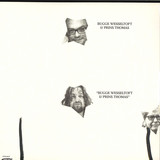
A few years later came the electronic dance genre 'space disco'. Along with Todd Terje, Bjørn Torske and Lindstrøm, Prins Thomas was at the epicentre of this next big wave to surge out of Norway. Now, the two generations have come together in this exclusive collaboration between Bugge and Prins Thomas on the Smalltown Supersound label. Jazz and electronics combine for that energising vitamin D shot of Nordic sunshine.
The Rainbow Studio in Oslo is a familiar name to anyone who follows the ECM label - many of its classic 1970s jazz albums were recorded there under the eye of resident producer Jan Erik Kongshaug. Bugge and Thomas booked a couple of sessions at the legendary space with Kongshaug at the controls, and improvised some tunes in the style and spirit of some of their favourite ECM moments, like the fresh, open sounds of Codona, Egberto Gismonti, Oregon and Kenny Wheeler. Bugge had previously done a remix of Thomas's 'Bobletekno' in 2015 but this is the first time they have worked together as active musicians. The results - also partly taped at Thomas's home studio - fuse programmed rhythms, live synths and percussion, all captured in a sumptuously spacious acoustic.
For an even more authentic touch they called up one of their all time local heroes and one of Norway's most famous jazz drummers, Jon Christensen, who's been the go-to guy for Jan Garbarek, Terje Rypdal, Keith Jarrett and many more. At 75 years he's still pretty spry behind the kit, as you'll hear on several tracks here.
Make no mistake, though, this is not retro pastiche but contemporary music, coasting on gently insistent programmed grooves and bubbling basslines. The whole thing feels not so much like a consciously hip fusion of DJ and jazz musician, more like two great musicians totally enjoying themselves. Which is exactly what it is.
Key facts:
Bugge Wesseltoft is one of Norway's leading jazz figures. He set up Jazzland Recordings in 1996. His solo Christmas LP It's Snowing On My Piano remains Norway's best selling jazz album!
Prins Thomas's real name is Thomas Hermansen. His label, Full Pupp, means 'full breast'. He's released several albums under his own name, as well as collaborations with Bjørn Torske and Lindström. Check out his amazing Paradise Goulash mixtapes.
South London producer Ben Hauke takes a sonic excursion to South America via Lewisham for a new seven track release for Far Out Recordings. While littered with Afro-Latin percussion, and samples of obscure Brazilian, Cuban and Colombian records, Only Old stays true to Ben's distinctly London identity, with a record that fluctuates between house, broken beat and instrumental hip-hop.Having collaborated with the likes of Nubya Garcia and Joe Armon Jones, Ben Hauke stands at the electronic end of London's new jazz movement. Currently working on new releases with more of a focus on live instrumentation, Ben titled the release 'Only Old' as it leans more heavily on his foundational approach to music making: an idiosyncratic, almost brazen sampling style in productions bursting with personality.Always full of character and style, Hauke's productions have seen him likened to Theo Parrish and Madlib, with an altogether physical approach to sound. Title track 'Only Old' is moody broken beat with eerie sampled vocals and piano. 'Get Up To Get Down' is a light n' breezy summer house stepper, while Brazil-inspired 'Runners' sounds as if it was made for MF Doom. Only Old will be released on 180g Vinyl on 20th July. Sleeve design by fellow South London based artist Samuel Lloyd.
First Word Records is very proud to present the debut album by Children of Zeus - 'Travel Light'. It's been a long road leading to this album for Tyler Daley and Konny Kon.
They first embarked on their expedition into the music game two decades back - Tyler entered the scene as a songwriter, producer and vocalist, originally under the moniker Hoodman, whilst Konny began MCing, DJing and beat-making for hip hop crews The Microdisiacs and Broke'n'£nglish, along with DRS & Strategy.
To date, Children of Zeus have released three sell-out singles on First Word ('Still Standing', 'I Can't Wait' and 'Slow Down') and a compilation EP comprised of tracks made by the duo over the last decade entitled 'The Story So Far...'. Children of Zeus are finally at the stage where they are releasing their debut album proper, the over-riding ethos of which is about keeping their eyes on the road ahead, whilst shedding the baggage they've accumulated over the years - 'Travel Light'.
Features mainly come from Manny family, ( K S R ), LayFullStop, Metrodome (Levelz) and former Broke 'n' £nglish spar DRS. Guest production comes in the form of Switzerland's Sebb Bash, Nottingham's Juga-Naut, and London's Beat Butcha, and there's your favourite DJ's favourite DJ,
Mr Thing, slicing up the turntables on two tracks too. There's a few extra special ingredients on this album, along with their trademark sub-heavy, rhodes-laden hip hop soul hybrid. Reggae music has always been an integral piece of the CoZ sound-system ethic, so we see Tyler putting on his lover's rock hat for 'Hard Work', and they invite soul queen Terri Walker to join them on the fierce 'Sling Shot Riddim', while the album closes with the epic K15-produced jazz-bruk opus, 'Vibrations', on which Konny breaks it down quite simply: "high frequency means that you travel light, so get lifted yo, we'll live gifted".
Long as the journey has been, the time for looking back is over. This is about the present and future of Children of Zeus. A shining light in Manchester's now-school, and rightly heralded by many as the best new act to emerge in British soul music in the past decade. Aside from the above features, this project is written, performed and produced entirely by Tyler and Konny.
Since the crew first took flight, the end destination has never changed, the aim remains the same - to create timeless music, in their own unique style, without compromise, irrespective of industry and life distractions. The moral being this - travel light.
Salvador Font studied violin, clarinet, composition and harmony at the Conservatori Municipal de Barcelona, but very soon started to gain notoriety as a saxophonist in the rich jazz scene of 1940s Barcelona. Font would soon be playing tenor sax and clarinet in the Orquesta Gran Casino. He was in his early twenties and his hot swing technique was already praised through the citiy's scene, he would grow to be considered the best saxophonist in Spain by playing in many orchestras and combos, among them: José Puertas', Antonio Vilá's Virgina, Bonet de San Pedro's band, Pierre Michel, El Lirio Campestre, Los Marios, Luis Rovira y su orquesta, Orquesta brasileña Fon-Fon, Jaime Camino, Los Embajadores, Italo Leone's... With these and others, Font toured constantly, visiting many countries and even staying on some for long seasons: Mexico, Morocco, Switzerland, Egypt... Hungarian violinst of Turkish ancestry Kurt Dogan gave him the "Mantequilla" surname - he felt "Mantequilla" (which means "butter") fit Font's mellow yet swinging improvisation style.
Mantequilla y su conjunto
In the early sixties, "Mantequilla" had the chance to lead his own combo, Mantequilla y su conjunto, with which he was to record the three splendid EPs that are compiled on the present album. All these 7" have become elusive collector pieces in the record market, with sellers demanding from 200 to as much as 950 euros per copy.
In 1961 "Mantequilla" was at his best moment, his gigs at the Jamboree Jazz Cava had brought him back to the first line of Barcelona's jazzmen after he had been working abroad for a long time, and was approached by the Belter label to record an EP. On the sessions he was accompanied by Manolo Mercedes on trumpet, Pedro Ferré on piano, Rafael Lizandra on double bass and Rafael Verdura on Drums. The material chosen for the disc were four original compositions by Salvador Font which had a high West Coast flavour all over: "La Tuna Club", "Whisky Jazz" and "Jamboree" named after famous jazz clubs and "Azul Trompeta", dedicated to Manolo Mercedes.
In late 1962, after spending some time in Madrid working as members of the Italo Leone combo, "Mantequilla" and pianist Manuel Gas came back to Barcelona for the recording of the second "Mantequilla" EP, also on Belter. We find again Manolo Mercedes on trumpet, Pedro Ferré on piano and Rafael Lizandra on double bass, the drummer this time was José Farreras. Another news is that Manuel Gas also sat on piano and vibraphone. The songs chosen for the occasion were two tunes from the Art Blakey Jazz Messengers repertoire: Bobby Timmons' classic "Moanin'" and the Jacques Marray track "No Problem" from the soundtrack of the Les liaisons dangereuses film (mispelled "Not Problem" on the sleeve and label), plus the Salvador Font penned "Blue Note" and "Full de ases" - on "Full de ases" "Mantequilla" trades his sax for the violin, which he also mastered under high influence from Stephane Grapelli. The record was released on Belter in early 1963 and showed "Mantequilla" adding a certain aggressivity to his sound, in a soloist style which has been compared to that of tenor saxophonists Barney Wilen or Benny Golson.
1965 was the year of release of Mantequilla y su conjunto's third EP, now on the Discophon label. Mercedes and Farreras are again present in the recording sessions, joined by Ricardo Miralles on piano and Enrique Ponsa on double bass. Four original Font compositions make up the fantastic EP: "Blues 3/4", "Atmósfera", "Vat 69" and "Balada".
There would be a further EP on Belter, released in 1971 as Mantequilla Group it was a cash-in operation to take some redits of the ye-yé discothèque phenomenon, it gets quite afar in style from the jazz works of Mantequilla y su conjunto, so we just left it aside for the present edition.
"Mantequilla"'s career would continue, in 1968 he would settle in Majorca and form a swing band with Bonet de San Pedro and Manuel Bolao. He played in local orquestras and also with first class world acts like Gerry Mulligan, Tete Montoliu, Errol Gardner, a.o. He was even approached by Henry Mancini to play sax on The Pink Panther Theme in a gig Mancini did with his orchestra in Palma de Mallorca in 1975, He also joined his son Salvador Font (a demanded drummer himself who has played with Máquina!, Orquestra Mirasol, Música Urbana, Gary Burton Quartet, Georgie Fame, and many others) and his peers Carles Benavent, Emili Baleriola, Josep Mas 'Kitflus' and Jordi Bonell with whom he recorded his acclaimed "Mantequilla" album in 1987.
Now, for the first time ever, the legendary three ultra rare and imposible to find EPs by Mantequilla y su conjunto are compiled in a lavish vinyl LP with remastered sound, featuring liner notes and photos and a fantastic period inspired, three backflaped, front laminated sleeve. It is a stricly limited edition of only 500 copies and they are expected to sell out very soon, do not miss your chance of getting yours - it may be the last chance of chasing the Mantequilla sound on vinyl at a reasonable price!
Way back in 1967, an animated superhero cartoon was released into the world. It was created by Grantray-Lawrence Animation and was based on a web-spinning, crime fighting blue and red dressed character that had originated in1962, in Marvel Comics by Stan Lee and Steve Ditko. This amazing series (that we're not allowed to mention the name of for legal reasons) ran on ABC TV in the USA, then Canada, then a few years later started to spread its web further, running here in the UK throughout summer holidays, after school and possibly early mornings at weekends in the late 1970s. The series then got released on VHS video (and probably Betamax too) in the mid 1980s and still continues to spin its animated magic around the world through further broadcasts, YouTube and DVDs.
The series was notoriously low budget, with animated errors everywhere and numerous scenes, sequences and backgrounds being re-used all the time, often across the same episode. Even a certain spider logo on a costume would appear with six legs, then eight legs later on, then back to six again in the same show.
Series One opened with a newly written spider theme, a classic, hooky song all about doing whatever spiders can, and had, as Big George (RIP) once pointed out to me, a set of session singers falling slightly out of time with the backing track after the first verse. Series One also featured background music by jobbing composers Bob Harris and Ray Ellis but these cues and master tapes are now believed to be lost.
After Series One the company Grantray-Lawrence went bankrupt, so the amazing spider series (that we're not allowed to mention for legal reasons) was taken on by producer Steve Krantz. He brought in new talent, including animation director Ralph Bakshi who later went on to turn a Robert Crumb strip cartoon into the feature Fritz The Cat. Krantz also slashed the already cripplingly small spider budget, and brought in the idea of using economic library music. Here, thanks possibly to an independent sync agent (it has been suggested that a company called Music Sound Track Services may have been the one) production turned to the KPM catalogue. This was one of the few really established library catalogues around at the time with a modern edge, it was full of fabulous, modern dramatic music tracks - often all on the same LP. But more importantly all the tracks were far longer than the one minute musical cuts that many of the fledgling USA library companies were issuing at the time. Not only would this KPM music be efficient, affordable and very easy to use, it would also mean syndication worldwide would not be held up by any future musical issues. Krantz produced two amazing spider series (that we're not allowed to mention for legal reasons), and both were smothered with KPM music. In fact barely a spider second goes by without music playing in either the background or foreground.
For many years I - and many nostalgic others - have been thinking about putting this vinyl album together. For many enthusiasts this really is formative music - a junior foray into hip swinging crime jazz and esoteric musical grooviness. I've also read on line accounts by DJs from WFMU on the trail of original spider master tapes, and there's even a whole forum dedicated to Spidey-Jazz'. Then recently I was looking at an old spider tracklist and realized that several of my favourite KPM cues were there including Syd Dale's Hell Raisers' and Walk And Talk', both from one of the most elusive and desirable KPM albums of all time (yes, you just try and find yourself a copy of KPM 1002 right now), so I decided to push on and get the album made.
So, what features on this Spider-Jazz Lp Well it's music from the amazing TV series we are not allowed to mention for legal reasons, BUT, not music from Series One. No, but it is all from Series Two and Series Three. From looking at archival cue sheets, over 50 tracks from various early KPM 1000 series albums were used across episodes. I've distilled this down into one exciting and enthralling LP, and if this works a further Spider Jazz album may well swing in to production. If you're interested (and I'm sure you may well be) cues here came from KPM1001, KPM1002, KPM1015, KPM1017, KPM1018 and KPM1043 and were composed by master library composers of the era - Dale, Hawkshaw, Hawksworth, Mansfield etc.
And if you are listening over there in the USA, you may well recognize many of the cues here not just from the amazing TV series (that we're not allowed to mention for legal reasons) but also from classic 1960s and 1970s NFL highlight shows that we are allowed to mention.
Baiano & Os Novos Caetanos was a band formed by prolific and multi-talented Brazilian comedians Chico Anysio and Arnaud Rodrigues. Satirising Brazil's Tropicalia movement in the 1970s, the duo took a friendly crack at the likes of Caetano Veloso and psychedelic rockers Novos Baianos, with their righteous tropicalista alter-egos 'Baiano' and 'Paulinho Boca de Profeta' poetically denouncing the dictatorship while simultaneously mocking those who took themselves too seriously. Jazz funk legends Azymuth play backing band with keyboard maestro Jose Roberto Bertrami also responsible for the arrangements on the album. Azymuth's free and funky psych sounds combine with accordion, harmonica, brass and plenty of rural Brazilian rhythms, for a hugely varied album drawing on MPB, funk and soulful samba rock. The album also features Orlandivo who co-wrote many of the songs, and renowned multi-instrumentalist and producer Durval Ferreira.
Max Loderbauer, who has so far made consistently engaging contributions to the Arjunamusic family, is back to lend his unique interpretive skills to the master recordings for the Brightbird album by João Paulo Esteves da Silva, Mário Franco and Samuel Rohrer. Loderbauer has set himself up for a chal- lenge, since the original album's completely improvised flow of small-ensemble, conversational jazz feels complete enough without outside intervention. However, Loderbauer's role as electronics operator in the similarly attuned Ambiq trio has already shown that, through his mastery of tone color, he has a talent for teasing out the additional hidden details within an apparently 'complete' sonic environment. It's a task he mana- ges to accomplish without ever overriding or contradicting the cohesive message provided by his collaborators.
Adding to the challenge here, Loderbauer chooses to re- mix using only sounds from the original recordings. By doing so, it might seem he is willfully denying himself the chance to use his own signature tools and turn Brightbird's source materi- al into stunningly new electro-acoustic hybrid blooms. Yet Loderbauer succeeds here by becoming something more like a translator than an augmenter - he finds a way to make mea- ningful syntactical changes to the trio's rich and versatile vo- cabulary, and once again unveils a verdant world of hidden details in the process.
The A-side 'Trusting Heart/Cosmos' has an anxious tone introduced by a set of Doppler-effected piano notes that seem to melt in the sun, and is soon complemented by a va- riegated, chattering rhythm line. Here Loderbauer builds up a tactile tension between rhythmic certainty and sharp-angled, de-tuned, and occasionally scrambled instrumentation, framing a disorienting (yet engaging) virtual space where ob- jects' bright hues rapidly change as they contract and expand along multiple dimensions. For the b-side 'Noontide', Lo- derbauer switches to a more focused and streamlined idiom with an uncanny ease, riding along steady waves of sequencer patterning and silvery, resonant shiverings. Reverberating, ho- lographic piano again provides the tonal center here, and the notes ring with a forward-thinking optimism not far removed from classics of the 'Krautrock' era.
Current supporters of all the artists involved will find this to be an invigorating synopsis of their work to date, while newcomers will be treated to a soundworld where skillful fu- sion (the act itself, rather than the music genre with the same name) is constantly on display.
Surface are back after a 5 year break with the first 65d Mavericks ep in over ten years ! With many struggles, false dawns and respectfully one man down, the long-awaited return of the 65d Mavericks shocks and awes with output as bizarre as ever!
Included are 4 deviations of the techno template, ranging from the spoken word rage of False Prophets on 'Notions of Progress' to the insane techno jazz workout of A2's 'Cosmic Drift'. 'You Lost Your Mind' goes abstract with live bass guitar and vocals while B2's 'Immovable (Dub)' throws down the angry man dub vibe.
Rebelling against the safety of the current scene and pushing the sound once more, expect more far out Surface releases from friends like Claude Young, Rich Oddie and new project 'The Downfall of Society' (Simon Shreeve + Nick Dunton) amongst others in the coming months.
For his third album for Far Out Recordings, London based multi-instrumentalist and one of Europe's finest saxophonists Sean Khan ventures to Rio de Janeiro to collaborate with iconic Brazilian polymath Hermeto Pascoal. Taking its title from the escaped slave settlement 'Palmares' in the Northeast of Brazil during the 1600s, Palmares Fantasy is Khan's utopian jazz message for the world, and features Azymuth drummer Ivan 'Mamao' Conti, bassist Paulo Russo, guitarist Jim Mullen, and guest vocals from Brazilian chanteuse Sabrina Malheiros, and Cinematic Orchestra frontwoman Heidi Vogel.
Like Hermeto Pascoal, Sean Khan is a self-taught musician. Never able to afford his original dream of studying at Berklee, and having been turned away from Guildhall School of Music for being 'too raw', he became disillusioned with what he saw as the exclusivity, elitism and dangerous institutionalisation of the jazz world. Yet Sean's love for music and the drive to create never faltered.
Hermeto Pascoal, the man Miles Davis once dubbed the most impressive musician in the world', is a similarly independent artist. A true maverick whose ingenuity and freedom from conventional restraints is so great that he has essentially conceived his own musical language, made him the dream collaboration for Sean.
Aspiring to inclusivity and equality also informs the message in Khan's music. Inspired by the 17th Century settlement of Palmares in Brazil's Alagoas region, which was free from the Portuguese crown's murderous exploitation of South America for a century, Khan notes his fascination with the fact that while majoritively made up of escaped African slaves, many deserter conquistadors also joined the settlement.
Hearing the deep-grooving title track with this history in mind, the listener is transported to a futuristic musical eden, with Mamao's insatiable 10/8 rhythm back-boning Hermeto's wild improvised vocals, rhodes and whistles, while Sean's harmonically brilliant sax and flute add more layers of moody, characterful expression. 'Moment of Collapse' is Sean's poetic study on the uncertainties of modern day western civilisation, delicately presented by the gorgeous vocals of Heidi Vogel and drenched in lugubrious strings and Alice Coltrane-esque harp. The two covers on the album are of Hermeto's own 'Montreux' (on which Hermeto plays solos on a teapot and a pint of water), and an uplifting soulful jazz-funk take on Milton Nascimento & Lo Borges MPB classic 'Tudo Que Voce Podia Ser' featuring the vocals of pioneering nu-bossa voice Sabrina Malheiros.
The recording sessions for the album were part of an intensive and hugely productive eight-week excursion to South America for Far Out boss Joe Davis in the summer of 2016, which also saw the sessions for Azymuth's Fênix and a forthcoming album from Uruguayan fusion legend Hugo Fattoruso.
Fantastic' Gilles Peterson
Loving this!' Opolopo
Thank you!' Sassy J
Proper! Great track.' Colin Dale
this is great!' Yannick Elverfeld (RBMA / Needs Records)
I've enjoyed Sean Khan's earlier releases, but this really seems like he's grown into his fairly considerable talent.' Mark Sampson (Songlines)
His last album was his best so far, but I think this one may be even better.' Laurence Pragnell (Soul Brother Records)
dope!!!' Kyri (R2 Records)
this is great - really cool vibe!' Sam Redmore
wonderful track - can't wait to hear the lp.' Simon Harrison (Basic Soul Radio)
This is very tasty indeed.' Gavin Boyd (Soul Has No Tempo)
On The 50th Anniversary Of The Band's Inception At An Event In Harlem, Ny To Commemorate Malcolm X's Birthday On 19 May 1968, Influential Spoken Word Artists, Poets And Commentators The Last Poets Are Set To Make A Glorious And Relevant Return With Their First Album In Over 20 Years, 'understand What Black Is'.
Produced By Ben Lamdin (nostaglia 77) And Brighton Legend Prince Fatty, Whose Speciality Is Traditional Reggae And Dub Production's, 'understand What Black Is' Is A Ten-track Album Which Speaks Of A Revolutionary Struggle Defined By Both Race And Identity, That Has Never Sounded More Relevant. Released On Studio Rockers, There Will Also Be An Accompanying Single Featuring Remixes Of The Title Track "understand What Black Is" By Mala (south London Collective Digital Mystikz) And Uk Dance Music Innovators Dego And Kaidi.
Since The Initial Line-up Of Dahveed Nelson, Gylan Kain And Felipe Luciano Formed In East Harlem's Marcus Garvey Park, The Last Poets Have Produced Under Various Guises Over The Subsequent Years. However, It Was Their Seminal Output, Namely 1970's 'the Last Poets' Under Both Umar Bin Hassan And Abiodun Oyewole That Secured Their Legacy, Becoming One Of The Most Important Influences In Early Hip Hop.
Throughout The Last 20 Years, The Band Have Remained Largely On Hiatus. But Their Influence Could Still Be Felt With Their Tracks Being Sampled By The Notorious B.i.g, Nwa, A Tribe Called Quest, Dr.dre And Snoop Dogg. Umar Has Recorded Various Solo Albums And Featured On Common And Kanye West's Grammy Nominated 'the Corner'. Abiodun Appeared On The Red Hot Organization's Album, Stolen Moments Which Was Named "album Of The Year" By Time. He Also Conducts Weekly Open House Poetry Readings, Where He Constructively Critiques Upcoming Poets, Helping To Nurture Them. He Has Also Conducted Classes At Columbia University, Where He Teaches Creative Writing.
The Inauguration Of Donald Trump As Us President In 2016 Inspired Hassan And Oyewole To Resurrect The Group To Create A Brand New Record, Modern And Edgy, And Deeply Relevant And Reflective Of Our Times.
Tracks On 'understand What Black Is' Include 'how Many Bullets', Which Bridles With Defiance As Oyewole Works Through A Litany Of Injustices Suffered By Black People In The Us: " You've Tried
To Blow My Brains Out With Bigotry, Chopped Off My Wings, So I Couldn't Fly Free, And Dared Me To Be Me, Took My Drum, Broke My Hands, Yanked My Roots Right Up Out Of The Land, And Riddled My Soul With Jesus" 'what I Want To See' Describes A Utopia - A Refuge From Hurt And Those Who'd Make "our Vision Blurred, And Our Faith Obscure", Whilst The Title Track 'understand What Black Is' Aims To Transcend Ethnicity: "understand What Black Is....it's The Source From Which All Things Come...black Is A Hero, Not A Villain."
The Album Even Takes Reference From Prince's 2003 Album Of Instrumentals, 'news', Which Hassan Drew Comparisons From With His Own Childhood Experiences: "that Poem Took Me About A Year To Write....i Just Kept Writing And Writing But Not Getting Too Far And Then I Heard That Album And The Musicianship Was Amazing. I Was Left Wondering If It Was Jazz, Classical, Rock Or Maybe Something New But All Those Images That I Write About Came To Me From Listening To That Album. I Loved Prince In That Movie Purple Rain Because My Father Was A Talented Musician But He Was Into Brutalising Mama At Times And In The Movie There's A Jerome And My Name Is Jerome, So It Was Like He Was Telling My Life Story As Well."
The Album Acts As A Body Of Work Between Individual Members Each Speaking Of Their Own Personal Journeys, But Feeding Into The Much Larger Narrative Of Struggle And Oppression, Alongside A Fervent Hunger For Social Change. These Are Struggles And Tests Of Personal Resolve That Have Directly Shaped And Moulded The Bands' Unique Sound Over The Course Of An Impressive 50 Years, And Their Powerful And Influential Commentary Remains As Relevant As Ever.
Far Out Monster Disco Orchestra returns with Black Sun, its second full-length album of 100% original, unadulterated disco sophistication, featuring all three original members of pioneering Brazilian jazz-funk trio Azymuth, a full orchestra with arrangements split between Arthur Verocai and Azymuth's late maestro Jose Roberto Bertrami, plus members of the legendary Rio funk group Banda Black Rio.Since its critically acclaimed self-titled debut album in 2014, the FOMDO imprint has released a string of remixes by some all-time greats of dance music, including John Morales, Theo Parrish, Mark Pritchard, Marcellus Pittman, Andres, Dego, Volcov, Kirk Degiorgio and Al Kent. To huge effect in clubs and festivals around the globe, some of the more recent remixes teased the new album material, which for the first time, is presented in its original, soul-heavy incarnation, alongside instrumental versions highlighting the album's stunning arrangements and compositional brilliance.Far from a throw-back - with disco music firmly entrenched in the modern club vernacular - Black Sun is ecstatic dance music at its finest.
For a label that wasn't around long, Strata East achieved the same sort of label recognition that Impulse! or Blue Note managed to build. In other words, you knew what you were getting when you bought a record on the label, even if you didn't know the names on the outside of the cover. This is no exception. Who is Shamek Farrah Who knows Who cares It's the music that's important. This is the standard spiritually intense new jazz one learns to expect from the label, soaked in some Eastern influences but always with its ear to the street. Musicians took their roles as leaders and spokesmen very seriously back then. This very adult statement from a group of very serious men is no exception. However, what might be an average, forgettable session is rescued by the propulsive engine of Milton Suggs' bass. He adds the fire and the drive that keeps things interesting and prevents the music from wandering into a circular spiritual morass. For fans of the sound or the label, this can be heartily recommended.
Following the recent reissues of Jose Mauro's Obnoxius, Piri's Voces Querem Mate and Victor Assis Brasil's Toca Antonio Carlos Jobim, Far Out Recordings presents a second album from Victor Assis Brasil from the treasure trove of the Quartin Records catalogue, Esperanto. Over the course of the 1960s, Roberto Quartin released more than 20 albums in Brazil on his label Forma, by artists including the likes of Eumir Deodato, Quarteto Em Cy, Baden Powell and Vinicius De Moraës. Selling the rights of Forma to Polygram in 1969, Quartin struck out for pastures new at the dawn of the 1970s with the launch of his self-titled label. Significant works and high-water marks for Brazilian music overall followed in that decade's first year. These singular gems in Brazilian music, difficult to categorise yet compellingly beautiful, have for too long gone unheard.Gifted his first saxophone by his aunt at the age of fourteen, only four years later the inherently gifted and determined young musician Victor Assis Brasil recorded his debut album, with a second to follow only a year later. The prodigious young carioca was subsequently granted a place to study at Berklee College of Music, where he played alongside the likes of Dizzy Gillespie, Clark Terry, Chick Corea and Ron Carter. It was also during this period he recorded Esperanto and Toca Antonio Carlos Jobim with Roberto Quartin, upon returning to Brazil in the summer of 1970.Recorded in the same sessions as the Toca Antonio Carlos Jobim album, Esperanto consists of five deep jazz cuts: original compositions except for a heavy-swinging latin-jazz cover of Jimmy Heath's 'Ginger Bread Boy', alongside more moments of wild frenetic jazz, like 'Quarenta Graus A Sombra', amongst more melancholic, but no less captivating compositions like 'Marilia' and 'Ao Amigo Quartin'. Esperanto's influences span both American continents, finding a meeting point for Latin jazz and North American post-bop, with Roberto Quartin's perfectionist approach to sound elevating the already incandescent music to divine new heights. The band consists of some mercurial greats of Brazilian music: Dom Salvador (bass), Edison Machado (drums), Helio Delmiro (guitar) and Edson Lobo (Bass).Victor Assis Brasil passed away aged just thirty-five, due to a rare circulatory disease, but by this point his status was already cemented as one of the most talented musicians in Brazil's history.
'The Layered Effect' by US rapper/producer Andy Cooper offers a punchy reminder of the creative fun to be had in digging for breaks, stringing up loops and layering up stratas of sound. Brimming full of delightful inflexions from the world of jazz, easy listening, film soundtracks and Hollywood voices, it's a perfectly stitched sound patchwork that pays loving hommage to the classic, funky days of early rap. A touching testimony to the joys of Hip-Hop then and now.
More than just the skinny white dude who's into old school beats, Andy Cooper has won his stripes after a twenty year stint with Hip-Hop trio Ugly Duckling, then a couple more hanging out with The Allergies, not to mention the recent release of eight 7" singles, an EP and now his second solo LP.What is utterly charming is how enamoured and respectful he is of how it was at the beginning AND of how it still should be.Far from being the "old timer/delusional revivalist" he describes in 'Last of the Dying Breed', Cooper cares not about colour or age, but that rap stays fresh, exciting, competitive, similar to a precious martial art.
For Andy, rap is a noble form. He's a wordsmith extraordinaire, snappy and audacious, tipping his hat "to all the microphoners who still bring that dedication and expertise to their craft" and choosing to work with equally rapid sparring partners like Blabbermouf and MC Abdominal. Ownership of the genre is a constant theme throughout the LP. Like a contact sport, you punch and fight your way to the mic and once there "no one can take it from me". Reverance is constantly being paid to the dons that went before, overtly Rick Rubin & the Def Jam crew, but covertly the reggae sound systems and jazzers of old.
Not a sloppy note or shabby rhyme here.It's an album that pops and fizzes with quirky beats and funky rhythms from start to finish. With production lines neater and sharper than a pair of sta press trousers, it's impossible not to be seduced by the sheer bouyancy of the lyrics, beats and intention. A refreshingly entire body of work with no low points, only head-nodding highs. It's good to stumble across a hip hop album that has you giggling, thinking, singing and wearing out the soles of your shoes all at once.
'Afro Rock Vol. 1' is one of the most important compilations of heavy original '70s Afro funk and soul to be released in recent years. Originally surfacing on Duncan Brooker's indie Kona label in early 2001, the album single-handedly kick-started the thirst among jazz, funk and soul fans and 'diggers' to rediscover lost music from Africa made during the '60s and '70s from a time when many countries were gaining independence and celebrating a Pan-African identity within their music. The album was one of the first to reach a far different audience to the traditional 'world music' market and spawned many further projects and labels in its wake. A year later, the 'Nigeria 70' compilation surfaced on Strut and labels like Soundway and Analog Africa would continue to unearth amazing lost gems from the Motherland.The album is testament to the determined work of Brooker following several research trips, especially to East Africa - Kenya and Zaire. It brought to light East Africa's finest funk band, Air Fiesta Matata, led by the recently deceased Steele Beautttah, 'The Nigerian James Brown' Geraldo Pino from Port Harcourt in Nigeria, and the storming Afro jam 'Yuda' by Dackin Dackino, a previously unreleased gem from Zaire discovered on a discarded reel. The album has remained influential since its release with tracks appearing on other Afro compilations and on TV and the big screen - Jingo's 'Fever' featured in Kevin McDonald's 2006 hit film, 'Last King Of Scotland'.Out of print since 2015, the album is being reissued on Strut in its original form with the extra dynamite unreleased psychedelic cut by Kenya's Ishmael Jingo, 'Keep On Holding On' taken from the original master tape. The package features the original sleeve notes by Duncan Brooker along with new additional notes providing further background to the album and tracks.
Back fighting, kicking and beating as strong as or perhaps even stronger than ever before, Ivan 'Mamao' Conti is releasing a brand new solo album next year. Now fitted with a new iron hip- thanks to the immense generosity of his fan base who crowdfunded the operation - the Azymuth drummer still remains one of the greatest and outright funkiest drummers alive anywhere in the universe as he enters this new bionic era. As people of earth are not yet quite ready to hear the explosively ethereal cosmic samba of his new album just yet, we're easing into it with a series of appropriately propulsive percussive jazz-headed remixes. For the second 12' of the series we've enlisted two of the most on-fire producers in Germany: Max Graef and GlennAstro, along with one of the UK's brightest ascendant producers.
Osage (pronounced Oh-Sage) is the electronic music making alter ego of dj/producer lil'dave, a veteran DJ on the Philadelphia nightclub scene, a member of the highly respected dj crew Illvibe Collective and the co-host of the internationally known broadcast Eavesdrop Radio. As a recording artist, he has released music under various aliases for record labels such as BBE Records, Tru Thoughts, Record Breakin' Music, Soulspazm, and First Word Records and collaborated with and remixed a diverse range of artists such as RJD2, Lady Alma, Ty, Ryat, Captain Planet, Foremost Poets, and more.The Osage sound is an amalgamation of musical influences such as deep house, samba, African rhythms, futuristic r&b, boogie, uk garage, salsa, broken beat, and soul. Built from slightly unorthodox drum programming, and layers of synthesizers, the music is focused on bringing the soulfulness out of the machines he is working with. Over the years, he has been building a solid reputation by creating a catalog of clever dance floor edits, remixes, and original tracks which have been supported by notable tastemakers such Gilles Peterson. This 12" compiles 4 of our favorite moments from the 2 EPs that Osage has released thus far on Bastard Jazz. The record kicks off with the bubbling house vibes of "I Found You" featuring Dezeray Dawn on vocals, before moving into a deeper House dub of the track from Washington DC's Sol Power All-Stars. On the flip, "Last Call" is a late end of the night anthem with Osage himself offering words of inspiration, and the EP rounds off with the "Anyway", a sparse dance cut with syncopated claps, moody synths and heartfelt vocals from Yemi.
The Passage EP brings together two of the chief champions of far reaching sounds in AYBEE, and Lars Bartkuhn. Bartkuhn best known for his work with his iconic (NEEDS) imprint, and AYBEE for his boundary pushing ethos at (Deepblak). A project spawned of mutual love, and respect the two met at an impromptu jam performance at the Xjazz Fest where the seeds were planted for further collaboration. Committed to stretching out beyond tight parameters they sought to capture the spirit of the dance. As "The Astral Walkers" they set out to combine the fearless freedom of the Jazzfunk era with the endless possibilities within electronic music.
It's just over 3 years since we launched the Africa Seven label in Paris and London. Our first release back then (Airways One) is still our best seller and had to be repressed 4 times so far. Forty or so releases later it is time to take to the clouds again. Being the unimaginative bunch we are, the fourth installment of our African sky filled musical cornucopia is called African Airways Four (Disco Funk Touchdown - 1976 - 1983). This time around all tunes have the Disco flavour. As ever it's all about the music... the skies are wide and funky and the air is filled with musical goodness. Your flight is about to leave.
Your flight opens with a punchy disco funk assault from Paris based Cameroonian Tala AM. Here with his drive bass and guitar funk riff 1981 stomper "Get Up Tchmassi". Next up and staying with the Cameroonian connection is Eko with "Bowaa Mba Ngebe". The lyrics talk of accomplishing the things in life for your family and yourself. The sweeping strings and gloriously uplifting music matching the sentiments of the words perfectly. Uta Bella began singing in the 60's and by the time disco hit in the 70's she was already established a singer in her native Cameroon, here the locked on groove of "Nassa Nassa" is a perfect snapshot of the sound and the African disco times.
Charly Kingson (cousin of Manu Dibango) is next with his "Nimele Bolo". Recorded in Germany with the cream of Munich's session musicians the bass synth is out in force on this one. Punchy brass, rock solid grooves and jazzy Rhodes add all the right ingredients for a fine disco synth excursion. Next is the musical heavyweight from Cameroon cousin Manu with his 1978 Disco, jazz funk masterpiece "Sun Explosion".
Side two opens with a blast of Elvis Kemayo and his piano and guitar funk bomb "Biram". Next Momo Joseph gives us "Africain". Best known in France as an actor, this disco funk groover was released on his self pressed LP "War For Ground" in 1983. A true gem indeed. Nigerian, ex Funkees member Jake Sollo is next with "Tinni Yanana". Recorded in the UK in 83 its slick and smooth with a hint of "at the car wash" groove. Pierre Didy Tchakounte follows on with his soul funk 'golden years' style groover "Soul Magabe". Produced by one of our favourite Parisian producers Slim Pezin. We close off our journey with the tribal chant disco-funk special from the Monstars "Funny Saga".
Ladies and Gentleman, we have landed at your destination, please remain seated until the aircraft has reached the terminal. We look forward to welcoming you aboard Africa Airways again soon.
After two hip-hop albums (Got To Get Down in 2016 and Impact in 2017), the unpredictable Afro Latin Vintage Orchestra comes back to its fundamentals with a new instrumental album:
MORPHEUS which repositions the band in the spirit of their previous spatial, almost cosmic albums Last Odyssey (2012) and Pulsion (2015), both released on Ubiquity Records and acclaimed by spiritual and fusion jazz lovers, library music fans, as well as rare grooves diggers (ALVO's first 4 vinyl albums now being out of stock).
Each new ALVO new release is a millesimal which evolved and learned from its predecessors.
Masta Conga, who's still leading the herd, has for main purpose to explore the musical space-time, gaining ground on never before revealed tracks, followed by his now faithful team of atypical and
farseeing musicians.
Compared to Miles Davis and his On The Corner by Wax Poetics, the band dives again in this realm of psychedelia and beyond', in particular with the contribution of Indian musicians. Twirling
around violins, superimposed patchy keyboards and effects, just as if their conductor wasn't already sufficiently influenced by Pierre Boulez and others such as Hiroshi Murakami... The result is however more uncluttered and loaded with multiple vibes than its predecessor Pulsion, which already carried the ceremonial characteristics of cult movie soundtracks. Tracks Moksha',
Air' and Morpheus' are the perfect demonstration, and far beyond their names. Simple grooves, lunar, but terribly efficient, emphasized by a mix that puts focus on these fiddly contributions of ethnic instruments, on percussions and horns on a drip of delay, reverbs and other space-echoes.
On the other side, the very rhythmic Descarga Uno', Descarga Dos' and Super Dopamine' show that the Parisian crew hasn't lost its good habit to look around latin, ternary, and syncopated
rhythms, in the ALVO only style! A new millésime, a Grand Cru maybe, but for sure to taste and appreciate in all weathers including space ones.
'Afro Rock Vol. 1' is one of the most important compilations of heavy original '70s Afro funk and soul to be released in recent years. Originally surfacing on Duncan Brooker's indie Kona label in early 2001, the album single-handedly kick-started the thirst among jazz, funk and soul fans and 'diggers' to rediscover lost music from Africa made during the '60s and '70s from a time when many countries were gaining independence and celebrating a Pan-African identity within their music. The album was one of the frst to reach a far different audience to the traditional 'world music' market and spawned many further projects and labels in its wake. A year later, the 'Nigeria 70' compilation surfaced on Strut and labels like Soundway and Analog Africa would continue to unearth amazing lost gems from the Motherland. The album is testament to the determined work of Brooker following several research trips, especially to East Africa - Kenya and Zaire. It brought to light East Africa's fnest funk band, Air Fiesta Matata, led by the recently deceased Steele Beautttah, 'The Nigerian James Brown' Geraldo Pino from Port Harcourt in Nigeria, and the storming Afro jam 'Yuda' by Dackin Dackino, a previously unreleased gem from Zaire discovered on a discarded reel. The album has remained infuential since its release with tracks appearing on other Afro compilations and on TV and the big screen - Jingo's 'Fever' featured in Kevin McDonald's 2006 hit flm, 'Last King Of Scotland'.Out of print since 2015, the album is being reissued on Strut in its original form with the extra dynamite unreleased psychedelic cut by Kenya's Ishmael Jingo, 'Keep On Holding On' taken from the original master tape. The package features the original sleeve notes by Duncan Brooker along with new additional notes providing further background to the album and tracks.
The Boutique Label presents an expanded vinyl edition of Backdoor Possibilities, the sixth album by cult German prog rockers Birth Control, originally released on the Brain Records imprint in 1976.
Formed in Berlin in 1968, Birth Control were known for a progressive hard rock sound which fused elements of jazz, psychedelia and so-called Krautrock. A surreal concept suite recorded with famed producer Conny Plank, Backdoor Possibilities arguably marked a final creative peak, blending rock, jazz, classical and avant-garde stylings with intricate polyrhythmic textures and lyrical nods to the legends of Faust and Odysseus.
On Backdoor Possibilties core members Bernd Noske (drums, vocals) and Bruno Frenzel (guitar) were joined by keyboard maestro Zeus B. Held, who also features on two long improvised tracks featured on Disc 2, Figure Out the Weather and Shake Those Crazy Nights, both recorded with Conny Plank in 1976. All material on Disc 2 is previously unreleased, with third track Rock It With a Long Bone being another extended piece recorded at Dierks Studio in 1982.
Eight releases in, Leonidas & Hobbes have honed a mutual love of soundtracks, disco, jazz, house, techno, acid, psychedelic, African and dub sounds.
Web Of Intrigue is one part tribute to lost 70s soundtracks, when music was created on the finest analogue hardware, featuring full bands, session players and lush orchestrations, one part tribute to 70s disco gods Nile Rodgers and Bernard Edwards (Chic) and one part mid-tempo but nonetheless cosmic house. The three parts fuse to form an instrumental track sounding as fresh as a whole meadow of daisies in 2017 and one that's been going down extremely well with international DJs who have road-tested the material.
Heavy Weather flips the script for a deeper workout in a 3/4 time signature - more of a cosmic waltz. Taking its main cue from 70s jazz fusion heroes Weather Report and The Doors' Ray Manzarek, it incorporates rich African percussion, spaced-out flourishes exhibiting the duo's love for the dubs of Lee Perry, King Tubby et al, and a good old fashioned arpeggio of an acid line - definitely a more esoteric number, all told.
The 'Dawn' and 'Acid Rain' mixes push different buttons for the heads, as suits the mood. It all adds up to a very Balearic confection, fitting snugly in with the burgeoning revival for this somewhat ineffable sound - a trend that seems to be getting stronger/bigger every year, popping up every time the sun gets his hat on and we all remember how to party like the lucky residents of that infamous White Isle....
MORE INFO
London/Edinburgh analogue electronic duo Leonidas & Hobbes released debut EP "Machines, Tapes & Electronic Setups" via the Hobbes Music label back in May 2013, picking up plaudits and support from the likes of Resident Advisor, Mixmag, Erol Alkan, Ashley Beedle, Alan Braxe, Shadow Child, Jimpster, Nick Warren, M.A.N.D.Y., Leftside Wobble, Mr G, Auntie Flo, Sasha, John Digweed and many more... The duo were consequently commissioned to remix the Pet Shop Boys.
Second EP "Mo' Machines" came out on the label in April 2014 and received equally high praise, with i-D Magazine inviting the duo to record a DJ mix which has to date chalked up a whole lot of love on Soundcloud.
Leonidas has released two other collaborative EPs with London-based Japanese DJ/producer Kay Suzuki via his Round In Motion imprint, equally winning fans worldwide, with a track now forthcoming on new label YAM Records' You And Music Volume 1 EP plus much more in the pipeline for 2017. Leonidas also has his own lovetoparty label, releasing edits of much-loved disco tunes on limited edition 12" vinyl format and free download. Previously, Leonidas made a name for throwing word-of-mouth parties around east London on his audiophile 'lovetoparty' sound system (providing some of the inspiration for much-admired late-night watering hole Brilliant Corners).
Equally, Hobbes ran the widely acclaimed Trouble nights for ten years in Edinburgh/Scotland, working with the great and the good from across the soul/jazz/dance spectrum since '02, and championed up-and-coming live talent via his Limbo 'gig-in-a-club' nights at The Voodoo Rooms for nine years since '07. Hobbes has toured his DJing style to the various corners of the dancing planet, including gigs in the Far East, much of Europe and across the UK. The Hobbes Music label has otherwise featured artists as diverse as Auntie Flo, JD Twitch (Optimo), Neil Landstrumm, Craig Smith (6th Borough Project), Ali Renault, iO Sounds, Joe Howe, Debukas, Fudge Fingas, Marco Bernardi, Dimitri Veimar, Mick Wills and Nightwave, with further support from Ben UFO, Justin Robertson, Motor City Drum Ensemble, KiNK, The Revenge, T.E.E.D, Kiki, Groove Armada, Maceo Plex, OOFT!, Domenic Capello (Sub Club), XDB, Ben Mono, Masa Sutela, Bawrut/Scuola Furano, Numbers, John Heckle and many more...