Black Truffle is back with his fourth EP on GAMM!
This time, BT goes all out, exploring everything from spaced-out, European disco to mid-tempo proto-disco and jazz-disco.
Expect disco interpretations flying in every direction on this 12"...exactly what we've come to love from Black Truffle.
All tracks are mastered by Lay-Far on reel-to-reel tape to capture that beautifully organic, warm analog feel.
“Nothing grows in the shadow of great trees,” said Constantin Brancusi when leaving Auguste Rodin’s studio. The same holds true in music, as Richard Raux’s journey proves. At the end of 1970, after recording the debut album of the legendary band Magma, which he co-founded, Raux set out to explore new musical horizons. Under the names Faarmadin and later Hamsa, he crafted a sound deeply rooted in jazz and improvisation, yet daringly open to experimentation.
A devoted admirer of Charlie Parker, Raux played bebop alongside René Urtreger and performed with Bernard Lubat’s Percussion Expérience. Jazz is a cornerstone of Hamsa’s iconoclastic approach, blending seamlessly with psychedelic and progressive rock, and the rich musical traditions of Madagascar, where Raux spent his formative years.
Hamsa is as much a personal endeavor as it is a “family affair.” Alongside his brother Patrice on guitar, Raux brought together a circle of friends—Alain Lecointe (double bass), Jean-Lou Besson (drums), John Faure (guitar), and Alain Pistre (percussion)—to record at the iconic Château d'Hérouville, just outside Paris, at the end of 1974. Yet the spirit of Hamsa is deeply Malagasy, rooted in the village of Andranomadio, which gives its name to the album’s opening track: a vibrant explosion of percussion and color. Africa’s presence resonates throughout the record, whether invoking Brotherhood of Breath (Chris McGregor) on “Johanna,” the Malagasy-infused work of Jef Gilson, or paying homage to John Coltrane’s Africa.
Far from being “just another fusion,” Raux’s music dazzles and transports. The saxophone-guitar unison on “Ahiri Lalita” captivates, the vocals of “Fahamadina” sweep you away, and the manifesto of “L’exploité” hits hard—yet with a liberating warmth. Sunshine and joy shine through on the album’s closing track, “Cultivate the Garden of Your Heart” (with Alby Cullaz on double bass and Jean Padovani on drums), capturing the ethos of Richard Raux and Hamsa—and now, ours too.
Abacus back in full effect — “The Earthly Pleasures” EP, a deep house gem celebrating 30 years since its original 1996 drop on 83 West.
Jazz-infused grooves, soulful rhythms, timeless vibes — this one still hits heavy.
A true classic from the Abacus catalog, reissued for the heads who know.
Pure deepness, no filler — essential wax.
Feedbacks:
Harri (Sub Club) : nice, will play and support
Hector Romero (Def Mix) : Proper deepness on Sunray - still sounds fresh! and the Bassline on Phonogrammeis a killer. Love it. H
Geir Aspenes (G-Ha (Sunkissed)) : Thank u
Pacific Coliseum (Dublab, Teen Daze, Noire & Blanche) : Moonbeamz is the jam for me; still sounds fresh all these years later!
Fred P : Nice..
Mr. V (Sole Channel Music / Strictly Rhythm / Salter Music / Defected) : Pure dopeness Thanks
Mark Farina : classic! nice.
Jimpster (Freerange) : Abacus doing what he does best and bringing the deep heaters! Loving all three tracks here.
Laurent Garnier : very elegant EP
Lea Lisa (Phonica Records / Folklor Club) : Play them since day one, good to repress for the new generation. Essential
Anthony Collins (Frank & Tony / Scissor & Thread) : great record
Franck Roger (Real Tone Records) : What a greta news to repress this old classic
Prosumer : 30 years later still hot AF
Red Eye (Crash Planet Rec, R.E.A.D., Red/Shift, Lavish Habits, Multipass) : Moonbeamz still out here holding its own!!!!
Felix Dickinson (Futureboogie, Rush Hour, Cynic) : Used to play Moonbeamz a lot when it first came out, nice to have the digis.
DJ Bone (FURTHER) : Crazy Hazy Days is really nice
Terry Farley : sunrays a legend
Antal (Rush Hour) : nice!!
Carista : love this thanks
Das fünfte Studioalbum von Psychic Ills, ,Inner Journey Out", feiert sein zehnjähriges Jubiläum. Ursprünglich erschien es 2016 als erstes Album der Band seit ,One Track Mind" (2013) und gilt als Höhepunkt einer dreijährigen Odyssee des Songwritings, die die Psych-Rock-Landschaft durchquert, die Psychic Ills im Laufe ihrer Karriere geprägt haben, während sie inspirierte Ausflüge in Country, Blues, Gospel und Jazz unternahmen. ,Inner Journey Out" begann so, wie viele Alben von Psychic Ills: mit den Demos von Frontmann Tres Warren. Wie bei allen ihren Alben ist Elizabeth Harts Bass das Bindeglied, das alles zusammenhält. Eine ganze Reihe von Musikern und Sängern - darunter Hope Sandoval von Mazzy Star, die beim Duett der Lead-Single ,I Don't Mind" mitwirkt - begleiten die Band auf dieser Reise. Dies ist zudem das erste Album, auf dem der Tour-Keyboarder Brent Cordero zu hören ist; sein Spiel auf Farfisa und Wurlitzer zieht sich wie ein roter Faden durch das Album. Diese Musiker bilden den Rahmen, auf den Warren seine verträumte Gitarre und seinen Gesang legt. Eine endlose Reihe von Freunden und Gästen beteiligt sich am Geschehen und steuert Pedal-Steel-Gitarre, Blasinstrumente, Streicher und Hintergrundgesang bei, was in einem karriereprägenden Moment für die Ills gipfelt. Thematisch ist ,Inner Journey Out" eine detaillierte Erkundung des Inneren und des Äußeren sowie des Weges zwischen beiden. Das fokussierte Songwriting sorgt dafür, dass sich die stilistischen Abweichungen nahtlos in das vielseitige Ethos der Band einfügen. Die mitreißende Gospel-Psychedelia von ,Another Change" und ,Baby" sowie die abgedrehte Free-Jazz-Erkundung ,Ra Wah Wah" tragen dazu bei, ,Inner Journey Out" zu einem facettenreichen, umfassenden Albumerlebnis zu machen. Abgesehen von dieser Weite ist es auch das persönlichste Album der Psychic Ills, das verlockend auf Liebe und Verlust anspielt, dem Hörer aber keine Auflösung bietet - es stellt Fragen, gibt aber nie Antworten; es sucht, kommt aber nie zu einem endgültigen Schluss. Stell es neben andere ,Drop-out"-Symphonien wie ,Ladies and Gentlemen We Are Floating in Space" von Spiritualized, ,Pacific Ocean Blue" von Dennis Wilson und ,Born to Be With You" von Dion - und lass deine Reise beginnen.
Return to Sky is the follow-up to the band's classic Euporie Tide, which consolidated the band as a crucial underground force in the European psych scene and spread their unique brand of warm-toned stoner rock to a wider audience. The album is a condensed piece of acutely experimental, yet immensely engaging, instrumental rock. Each of the album’s five epics unfolds as a microcosm of the band’s genre-transcending psychedelia at large, yet adds something different to the whole.
The tracks on Return To Sky travel far and wide: heavy, detuned riffs are transformed into wide, pastoral soundscapes, and fluid minimalism warped into swirling crescendos and back again. Occasionally the band even manages to sound turbulent, fuzzed-out yet strangely peaceful at the very same time. Whereas so much of today’s psychedelic scene comes off as merely a tribute to a certain period of the past, Causa Sui has always been on a different mission. More than any other record in their catalog Return To Sky declares their roots in the avant rock of the late 1990s - where different eras and genres merged into something that resonated as much with the present as it celebrated the past. It also reveals the fact that members of the band has had their hands in many different projects since the band’s debut album in 2005: solo excursions into synthesizer music, collaborations with members of Sunburned Hand Of The Man and Tortoise as well as film soundtracks and improv sessions with krautrock legends Faust and Damo Suzuki. It has all worked a subtle influence on the kind of band they have become. On Return To Sky their sound is more earthy and heavy than other Causa Sui record, but it’s also a record that has absorbed everything from shoegaze and vintage Italian film music to spiritual jazz and afrobeat into its fabric. Causa Sui has never sounded deeper or more mesmerizing than on this set.
Jazz-fusion, disco-funk, Latin jazz and batucada rhythms get the Filipino treatment onAfter Midnight, the sublime second album from keyboardist Boy Katindig. Originally released in 1980, After Midnight draws heavy influence from soul and funk contemporaries in the US as well as Latin America, in particular the famed Brazilian percussionist Paulinho da Costa.
It’s a testament to his musical prowess that Katindig weaves effortlessly between styles and tempos. His reverence for Paulinho da Costa extends far, with covers of several songs from the latter’s 1979 Happy People album. This includes slow-burner ‘Déjà Vu’ written by Isaac Hayes originally for Dionne Warwick; on the Filipino instrumental version, local legends Jun Regalado and Roger Herrera (from Regalado’s ‘Pinoy Funk’ single) are reunited on drums and bass respectively.
But Katindig’s original compositions hold just as much weight and unique personality: title track ‘After Midnight’ opens with a sultry funk serenade reminiscent of The Isley Brothers, and quickly transforms into a catchy, blistering, saxophone chorus that brims with swagger. Hidden B-side gem ‘Got The Need’ is an uptempo tribute to batucada that would not be out of place in a jazzy house set, and boasts increasingly elaborate and psychedelic solos from Katindig on keys and Ben Concepcion on soprano sax.
Meanwhile, ‘Love Till the End of Time’ is a masterclass in instrumental disco funk, penned by the prolific Greg Phillanganes who at that same time was writing for many of the greats including Chaka Khan, George Benson, Stevie Wonder, The Jacksons and Cheryl Lynn.
This album is lovingly reissued by Sama Sama Records, a boutique label from DJ and collector Norsicaa, who ran the esteemed Soundway Records for 8 years and released the compilation Ayo Ke Disco in late 2024.
It's been a busy 3 years since Danny Berman aka Red Rack'em released on his own Bergerac imprint.
Since then he's toured relentlessly, released a whole album of live music based disco/punk funk for Sonar Kollektiv as Hot Coins, managed to completely update his biggest track 'In Love Again' to make it a hit the second time around plus released spaced out, wonky party smashers on Wolf Music, Phonica, City Fly and Telefonplan.
While all this was going on Bergerac was largely on ice but now Berman is turning his energy back to the label with a vengeance.
Wonky Bassline Disco Banger is accurately titled. An uplifting intro breaks down into a slamming disco house number and just when you think you know what's going on...
Then the trademark Red Rack'em wonky bass drops in. 150% Guaranteed party smasher... Jazzy House Extension is super vintage Red Rack'em from around 2004 - something for the jazz heads out there - cracked out piano and far too loud double bass come together to birth a euphoric yet banging snapshot of a producer learning his chops. Destined is a slightly demented leftfield house number featuring mangled, pitch shifting fretless bass and vocals samples discussing someone's destiny.
A woozy end to the EP.
Sometimes the title of an album tells you everything you need to know. Laurence Pike’s Possible Utopias for Jazz Quintet is like that: The music within represents a search for freedom, potentiality—liberatory strategies that transcend the ego and the solitary, atomized figure.
But in this case, the album title is also a red herring, because there is no jazz quintet here—just Pike, his drums, and his machines, not so much an ersatz ensemble as a purely notional one, a thought experiment equipped with drumsticks, circuitry, and the desire to go beyond hardwired limits.
And the results, strictly speaking, aren’t really jazz, though they incorporate the vocabulary of jazz, along with that of ambient, electronica, and post-rock. They are some other thing, cognizant of genre but never beholden to it. Again, we’re talking about a search for freedom here.
The Sydney-based musician has a long history of coloring outside the lines, not just in his solo recordings—including four albums for the Leaf label between 2018 and 2024—but also in the trio Pivot (later PVT); Szun Waves (alongside saxophonist Jack Wyllie and Border Community’s Luke Abbott); Triosk, which recorded an album with Jan Jelinek in 2003; and even post-punk titans Liars, whom he joined in late 2018.
Of his first album for Balmat, Pike says, “My loose concept was: What does music sound like when the expectations of late capitalism are removed from it? How might a jazz musician from an idealised culture of the future, or even another world, utilise musical language when the conventions of style and marketing are no longer a factor in music making?”
That inquiry, he says, connects to his “guiding principle: that the purpose of music is to access something bigger than the individual, and reveal a sense of possibility and freedom in the world to the listener. To create an understanding that the future can be something other than what we imagined or expect, even unconsciously.”
Heady ideas, but plug into his stream-of-metaconsciousness flow and you may start to intuit what motivates him. There is a deeply lyrical expression in these pieces—in the ruminative piano of opener “Guardians of Memory,” for example—but also a sense of exploded perspective, of ideas approached from more angles than any one mind could dream up. Of a collectivized consciousness, of mycelial networks branching across tone and rhythm and timbre, of ideas articulated in distributed fashion, nodal points dancing across drum heads.
Pike’s imaginary quintet is hardly without precedent; it’s a continuation of concepts floated across Jan Jelinek’s Loop-Finding-Jazz-Records, Burnt Friedman’s many guises, and much of the recombinant improv of the International Anthem roster, not to mention the far corners of ECM’s catalog in the late 1970s and 1980s, which Pike says have been integral to his development since he was a teenager. Possible Utopias for Jazz Quintet is a point in a continuum, a voice in a conversation, a question with no obvious answer: How can the search for otherness in music manifest something true about ourselves?
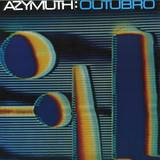
Following on from their seminal Light As A Feather LP, Outubro (October) was originally released in 1980 and began Azymuth's run of prolific output for Milestone Records throughout the decade. Typifying the consummate craftsmanship of the three members' performances - each with such distinct personality and together so perfectly balanced - their perfectionist attitude to sound is maintained across the production on the album, beautifully colouring the expressionist fusion of samba rhythm, jazz progression, funk attitude and psychedelic electronics.
The album hosts a wonderful mix of tempos and styles, from Alex Malheiros' earth-shaking slap-bass on 'Dear Limmertz', which was to become a hit on London's underground disco and jazz-dance club scenes alike, to the late maestro Jose Roberto Bertrami's genial melodic Rhodes excursions on the vocoder laden, samba-jazz masterpiece 'Un Amigo', while Ivan 'Mamao' Conti's signature swing on 'Maracana' exemplifies the root of Azymuth's 'samba doidoi' (crazy samba) philosophy.
The two cover versions on the album consist of the title track which was originally penned by Milton Nascimento and Chick Corea's '500 Miles High', both of which magically reimagine the originals and further demonstrate the immense virtuosity of this cult recording. This Far Out Recordings release is mixed and mastered from the original tapes and will be released on 180g vinyl and CD.
Bahamadia’s 1996 debut album Kollage is rightly regarded as one of the greatest rap albums of the 1990s. For the first time ever, Be With present the definitive double LP version of this eternal hip-hop classic, including the legendary "Path To Rhythm" which never appeared on the original LP or on vinyl, anywhere. An indelible VIBE from start-to-finish, Kollage presents Bahamadia's swirling rhymes delivered with an irresistibly butter flow and razor-sharp assuredness over a steady slew of smoothed-out, jazzed-up, blunted beats. Achingly cool and effortlessly funky throughout, it's an absolute must for true 90s hip-hop fanatics.
The entire Kollage project was recorded at D&D Studios and the ties to Gang Starr are keenly felt, with DJ Premier producing five tracks in addition to the killer songs Guru had already produced with her. Working with the cream of the mid-90s East Coast sound, Kollage is, accordingly, a record that demonstrates a varied musical taste with disparate influences, as Bahamadia has previously stated: “The title Kollage was a reflection of my state of mind. I first got interested in music from playing my parents’ and grandparents’ records, as well what I heard on the radio. I wanted Kollage to reflect that diversity both lyrically and sonically."
With intelligent, poetic lyricism and a laconic verbal style bursting with both warm texture and deceptive energy, Bahamadia’s flow was as inspired by Aretha and Nancy Wilson as it was Q-Tip, Schoolly D and Lady B. Swaggering out the gate, "WordPlay" finds Bahamadia confidently showcasing her considerable old-school battle-rhyme skills over a Guru beat that utilises an infectiously bouncy bassline with splashes of sultry jazz horns and a Jeru vocal snatch for the hook. Up next, the quietly shimmering and ruggedly beautiful "Spontaneity" is one of the most alluring on the record, Da Beatminerz crafting a brilliantly soulful and jazzy soundscape for Bahamadia's effortless vocals to float across. It's followed by "Rugged Ruff", where the rapper carefully constructs a swift off-beat flow over Premier's raw jazzy fire.
With smooth spacey synth vibes overseen by former Geto Boys producer N.O. Joe, "I Confess" is, without question, a fly love song and soothing (p)-funk groove. "UKNOWHOWWEDU" is an airy, chilled tribute to her hometown. Produced by Ski Beatz & DJ Redhanded, it rides a gloriously mellow break. It's a true Philly anthem, shouting out a who’s who of the entire city’s scene. Early banger "Total Wreck" follows, presenting a murky Guru instrumental elevated by jazzy horns. Bahamadia invokes the title's suggestion, firing her brilliant bars more aggressively than we’re accustomed to. More Beatminerz-brilliance comes in the way of "Innovation", an opportunity for the MC to invoke Freestyle Fellowship in her forward-thinking and literary verses. "Da Jawn" features hometown buddies The Roots, with Black Thought gliding into a back-and-forth with Bahamadia over ?uestlove’s warm, snapping percussion. With the strut club banger "True Honey Buns (Dat Freak Sh*t)", DJ Premier provides some laidback vibrant boom bap for Bahamadia to share a wild, cautionary tale about a night out with her girl, Kia.
Fan favourite "3 Tha Hard Way" is a hypnotically sinister cut, with Bahamadia, K-Swift and Mecca Star taking star turns to coast over DJ Premier’s raw beat whilst the tender "Biggest Part Of Me" is a heartfelt stunner dedicated to her son. Incredibly, only the European and Japanese CD versions of Kollage was released with the brilliantly breezy “Path To Rhythm”, featuring Ursula Rucker. Whilst ostensibly a "bonus track", it's anything but, to our ears. Very much in sonic conversation with KRS-One's stretched-out sleeper classic "Higher Level", it's absolutely essential so we had to include it, appearing on wax for the first time here, exclusively. Quite a coup.
Somewhat predictably, whilst Kollage was released to significant critical acclaim, it suffered from disappointing sales. In the intervening years - and for far too long - it was a criminally underrated record, an increasingly hidden gem. We hope this double LP reissue - which looks and sounds amazing - will go some way to correct this. This 2024 Be With double LP re-issue has been mastered for vinyl by Simon Francis, cut by Cicely Balston and pressed at Record Industry. It's too bold and beautiful to remain overlooked and underserved.
The Deku Trio's cozy Legend of Zelda coffeehouse jazz album
Jazz band The Deku Trio is back for an encore in Zelda & Jazz II, an 18-track smooth jazz Legend of Zelda tribute album. Featuring intimate piano, upright bass, and mellow drums, The Deku Trio reimagines the music of The Legend of Zelda with influences ranging from lounging bossa nova to coffeehouse jazz. Zelda & Jazz II features music from across The Legend of Zelda series. Highlights include Nintendo 64 classics Majora's Mask and Ocarina of Time, GameCube releases Twilight Princess and The Wind Waker, hand-held titles Link's Awakening and Spirit Tracks, Skyward Sword for the Wii, and the Super Nintendo's A Link to the Past. This wide-ranging tribute is topped off with artwork and character designs by comic and environmental artist Christian Benavides (League of Legends). The brainchild of Rob Araujo (Chillhop) and Chris Davidson (GameChops), The Deku Trio features rich reharmonizations on piano, gentle drums, and lush upright basslines, with mixes by Curran Sinha in Los Angeles.
The Deku Trio crafts an intimate smooth jazz tribute to the timeless Legend of Zelda series.
As one of the foundational artists of Flipsight, it is only fitting that ColorJaxx gives the first major 2 x 12" gatefold statement on the label. The debut album 'In Between' of the Belgian producer gives a full overview of his trademark deep grooves with a re-invention of his club sound.
The first record is your invitation to the beach. The A-side kicks off with the ambient "Playamer", setting a scene of salt air and warm breeze. The shoreline waves combine with an electric piano groove to "Out The Door". This is where a slick trumpet gets the parole and cuts through the atmosphere, signalling to the dancefloor. "Never Enough" serves as a spiritual successor of his first EP on the label "Tales of never": shimmering guitar samples, a warm, everlasting groove, and that unmistakable "ColorJaxx" swing that we fell in love with initially.
The B-side is where Jordy catches the first hints of Spring with "Just Around" by blending uplifting trumpets and sax melodies with a fresh forward-moving baseline. "Higher" elevates the mood further with smooth rhodes keys and a jazzy piano lead. As the evening chill sets in, the first disc concludes with the literal end of the day: "The Beach Is Closed".
Time to grab the second wax out of your gatefold: leave the sand behind for the strobe light as this is where the maestro gets in club mode. "Back Then" serves as the bridge into "Discotheques," a heavy-hitting wink to the old-school Belgian club scene that shaped the underground of the early 2000's. This vibe created "Moving On," a sophisticated French-like house tune with Chris Farmer where the vocalist enters into a constant conversation with rhythmic elements, creating a versatile track that fits in any part of a DJ set.
The finale is reserved for heavy hitters: "This This" and "Disco Trouble" are pure, pumpy club rollers. Peak-time bangers designed for maximum impact, before the album dissolves into the hazy, cinematic outro of "Blurred Lines."
Back in 2022, Is It Balearic? Recordings founders Coyote (AKA long-serving producers Richard Hampson aka Ampo and Timm Sure) took time out from releasing music on their own labels to deliver a near perfect mini-album on Phil Cooper’s similarly mind-ed NuNorthern Soul imprint, Everything Moves, Nothing Rests.
A superb exploration of their trademark sound, where gentle downtempo rhythms and nods to dub came cloaked in colourful ambient chords, sun-bright melodic motifs, organic instrumenta-tion and quirky spoken word samples, Everything Moves, Nothing Rests deserved a sequel. So, three and a half years on, the duo has delivered just that: a fine six-track EP that offers an even deeper and more atmospheric exploration of their signature sound.
It is a sonic approach that should now be familiar to Balearic en-thusiasts the world over. Aside from delivering a steady stream of singles, albums and remixes on their own imprint, Hampson and Sure have also showcased their skills and loved-up musical mis-sives on International Feel, Music For Dreams, Needwant, MM Discos and Citizens of Vice.
The Higher The Sky, The Deeper The Ocean, their hotly anticipated NuNorthern Soul return, is named in honour of a quote from Ped-ro Alonso’s documentary series On the Ship of Enchantment, an extended voyage in which the Money Heist movie star meets healers and masters of ancestral medicine across his native Mexi-co.
There’s naturally a meditative and slightly psychedelic sound to much of The Higher The Sky, The Deeper The Ocean, which offers a subtly varied exploration of Coyote’s style and influence. Yearning, soft-focus opener ‘Muted Beauty’ – the kind of immersive, effects-laden and sample-sporting ambient bliss found nestling on Fila Brazillia albums of the mid 1990s – is followed by the similarly gentle ‘Go All The Way’, where delay-laden acoustic guitars, spo-ken word snippets and gaseous chords stretch out atop a languid, slow-motion groove.
‘A Drop in the Ocean’ picks up the pace a little via a glorious hat-tip to turn of the 90s ambient house – all dub-wise bass, heady deep house sonics, spaced-out chords and half-buried references to sunrise-ready Balearic synth-pop records of the late 1980s. Late psychedelic guru Terrence McKenna appears in sampled form on ‘Dolce Far Niente’, a tabla-driven drift and musical hallucination which conjures mental images of lying in the Mexican desert, gazing intently at a starry sky.
In contrast, ‘Riviera Sound’ is a chunkier, brighter and more sun-splashed affair – all deep, dubby bass, sustained piano parts, punchy downtempo breaks and the duo’s trademark ambient pads – while superb closing cut ‘No Coincidences’ fixes jazzy double bass samples, twinkling keyboard motifs, subtle acid lines and Latin-laced percussion to a street soul-adjacent beat.
Heady, impeccably crafted and thoroughly enveloping, The Higher The Sky, The Deeper The Ocean is Coyote at their dazzling best. It marks another significant chapter in their ever-evolving musical journey.
M’Bamina – African Roll (1975)
The story of an album born between Africa, Italy, and the nightclub culture of the 1970s
In the heart of 1970s Italy — a country undergoing profound social change and a music scene just beginning to open itself to distant sounds and cultures — an extraordinary, almost improbable story took shape. It is the story of a group of young African musicians who found their way to Europe, of a Turin nightclub that became a crossroads for communities and experimenters, and of an album which, released in small numbers and largely unnoticed at the time, is now considered a rare jewel of Afro-fusion.
The band called themselves M’Bamina — an ensemble of musicians from Congo, Cameroon, and Benin, who arrived in Italy in the early Seventies. Settling between northern Italy and the Pavia area, they began performing in small clubs and community events, bringing with them a vibrant rhythmic heritage: African polyrhythms, call-and-response vocals, funk-infused bass lines, and Caribbean or Afro-Latin colours absorbed along their musical journeys. Their raw, contagious energy on stage quickly drew attention.
Meanwhile, in Turin, another story was unfolding. There was a venue becoming almost legendary: Voom Voom, one of the city’s liveliest nightclubs, run by Ivo Lunardi. The club attracted an eclectic crowd — students, artists, foreigners, night owls — and Lunardi quickly understood that the dancefloor wasn’t just a place for music, but a melting pot for a new kind of cultural energy. Out of this vibrant atmosphere came his idea: to turn the club’s name into a small independent record label, Voom Voom Music, capable of capturing the spirit of those years and giving voice to unconventional projects.
When Lunardi heard M’Bamina, he immediately sensed that this was the sound he had been searching for: fresh, different from anything circulating in Italy at the time, and capable of blending African tradition with funk and European sensibility. He brought them into the studio.
Production was handled by Lunardi along with Christian Carbaza Michel, while the engineering was entrusted to Danilo Pennone, a young sound technician with a sharp, intuitive ear.
The recording sessions — held in Turin in 1975 — produced a remarkably warm and direct sound. The music feels almost live: grooves rooted in African tradition, but open to funk-rock structures and modern arrangements. It is a natural fusion, never forced. Tracks move between tribal rhythms, funk basslines, light electric guitars, congas and Afro-Latin percussion, with call-and-response vocals and melodies that echo both Congolese tradition and the lineage of Latin jazz. Not by chance, one of the album’s most striking tracks, Watchiwara, reinterprets a Latin standard through M’Bamina’s own rhythmic language.
The album was titled African Roll — a name that was already a statement of intention. It is African music that “rolls,” that moves, adapts, transforms within a new geographic and cultural setting. It is not strictly Afrobeat, nor Congolese rumba, nor Western funk: it is a spontaneous, hybrid blend, shaped more by lived experience than by any calculated aesthetic program.
When African Roll was released, the world around it barely noticed. Distribution was limited, and 1970s Italy had yet to develop a cultural framework for receiving such music. The national music press rarely paid attention to African or “world” productions. The album slipped into silence — though the band’s own story did not.
M’Bamina continued performing across Europe and Africa, even sharing a stage in Cameroon with none other than Manu Dibango. By the late Seventies, they moved to Paris, signed with Fiesta/Decca, and recorded a second LP, Experimental (1978). Meanwhile, the peculiar record they had made in Turin began to resurface quietly among vinyl collectors, Afro-funk enthusiasts, and DJs hunting for forgotten grooves.
That is when the album’s fate began to shift.
Over the decades, African Roll emerged as an almost unique document: a snapshot of an intercultural Italy before the word “intercultural” even existed, a fragment of migrant history, a spontaneous experiment in musical fusion born far from major industry circuits but rich in authenticity. Original copies began commanding high prices on the collector’s market, and the album became recognized as one of the hidden classics of European Afro-fusion from the 1970s.
Today, more than fifty years later, this reissue finally restores visibility and dignity to a project that deserves to be heard, studied, and celebrated. It is not simply an album: it is the testimony of a rare cultural encounter, born in an Italy unaware of how fertile such exchanges would one day become.
It is the story of a visionary producer, an extraordinary band, and a fleeting moment in which music, migration, and nightlife came together to create something genuinely new.
African Roll is — now more than ever — the sound of a bridge: between continents, between eras, between cultures. A record that, after rolling far and wide, has finally come home.
since his first ep tips' on luciano's label cadenza in 2007 producer and dj petre inspirescu emerged into one of the key figures of the romanian electronic music scene.
so far he released music on labels such as vinyl club, lick my deck or amphia. together with his buddies rhadoo and raresh he also launched in 2007 the label (a:rpia:r) - a platform where he, his two friends and many producers from romania and abroad released detailed grooving house and techno, that stands out with delicate structures and one-of-a-kind grooves.
both of his more dance floor oriented solo albums intr-o seara organica...' and gradina onirica for (a:rpia:r) are enlarged with melodies, sounds and harmonies that go beyond the usual characteristics of a dance album.
furthermore his love for classic musicians like mily alexejewitsch balakirev, alexander porfiryevich borodin or or nicolai andrejewitsch rimsky-korsakow can be felt in the album padurea de aur (opus 2 in re major) and two more eps that he released under the alias pensemble on the romanian label yojik concon in order to unite classical spheres with analogue electronic music production.
in february 2013 he also released his highly acclaimed fabric mix cd that only features dance floor leaning music produced by himself. with talking waters' he published in late 2014 his first 12inch on mule musiq that is now followed by the full-length album vin ploile' which he produced without the intention to entertain with easy to hook up rhythms, melodies and harmonies.
even tough he established himself as a internationally playing house dj that regularly performs at all major clubs, festivals and other party destinations around the globe: as a musician petre inspirescu always tries to enter new territories to explore with a heartfelt human touch the infinite space of sound.
for his latest album the man that originally comes from the eastern romanian town braila stepped away from his former experiments of melting classical spheres with electronic music. instead the 36-years old man from bucharest only used some piano, string and wind instrument elements and analogue electronics to arrange a gracefully deep ocean of sound.
all slow grooving tracks spread the atmosphere of live improvised sessions that are edited, tweaked and mixed to perfection. in-the-moment moods of strange and unusual analogue synth sounds groove in a fluid quality with subliminal bass shapes, latinate percussions, jazz rhythms and acoustic melodies.
together they create a gaseous kinetic atmosphere full of tangible rhythm patterns, delicate chords and ghostly modular synth pads - all mixed subtle to create space for the tones between the tones.
you can call it a hypnotic after hour album for after hours that are dedicated to a deep listening experience. you can tag his arrangements as brilliantly textured and musically super-charged ambient, which goes beyond the usual definition of the genre.
all nine suspenseful compositions seduce with a deep melodic sensibility, harmonic adventures and an overall rhythmic ambiance of freshness and laidback enthusiasm. together they represent a challenging auditory experience that will resonate in your mind long after the music has finished.
The breakout underground star of the past year, the deservedly hyped Thought Leadership returns with another X ideas: the deck this time chooses the suit of Cups. This new collection is closer to the Post-Punk tonality of Pentacles, than the breezy Balearic Jazz of Swords. Gone are the brushed drum samples and airy synths and in their place are BIG guitars, 808 thumps and a decidedly more prominent use of bass as a melodic device.
As the suit of Cups reflects the emotional heart of the Tarot, presented within are a further X pieces, this time displaying the full range and fervour of Thought Leadership.
You know the drill by now. Originally out on cassette only, we present the first ever vinyl issue. It's a hideously limited pressing of 300 for the world, so don't sleep on this.
Side A explores the emotional levels of consciousness; angst, joy, love, sorrow, relief, regret – they are all represented across the first seven tracks, and often within the same piece. XXI kicks us off with a huge tumbling D minor passage, layers and layers of guitar front and centre, whilst the drums pound away in the distance. Release is provided with a gorgeous G Dorian section, where we hear the bass take flight with a high melodic line.
We’re still in familiar Durutti Column meets Dif Juz territory here, but things switch up with XXII. This piece showcases a darker, more angular palette of guitars; think Alan Rankine (The Associates), or Deb Demure (Drab Majesty) in the unexpected harmonic shifts, knotty arpeggiated patterns and heavy, goth-adjacent modulation. A real love letter to 45+ years of darkly inclined guitar heritage.
XXIII enters the fray with tight, thumping 808s and Marr-esque guitar figures; and again, the bass providing heavy melodic counterpoint to the guitars. Enter chiming, lyrical lead phrasing, reminiscent of the eternal opening to "Everybody Wants To Rule The World". Another accidental perfect pop moment from the Thought Leader. Whilst on the topic of Tears For Fears, XXIV comes swinging out of the gate with some serious Sophisti-chug; we’re reminded of "Shout" in the A section, before being beautifully juxtaposed in the B section with more Vini-eqsue patterns, reminiscent of his timeless classic, Another Setting.
XXV gives us welcome pause to take stock midway through the A side. No drums this time, but instead a heartbreaking conversation between two guitars; think Kevin McCormick and David Horridge’s masterful Light Patterns, or perhaps even the early solo-Bill Connors mid-70s cuts for ECM. The moment of quiet reflection passes, and is quickly shattered by the thudding march of XXVI – this piece comes across like The Associates playing "Wicked Game"; heavy, moody, and utterly compelling. XXVII ends our journey across Side A with more Marr-inspired playing; one for the heads and already featured on mixes, this one is real testament to the vision of Thought Leadership.
Side B again takes us on a trip through three long-form semi-improvised pieces. XXVIII is like those classic Jonny Nash, early Melody As Truth releases, slowly unfurling, additional details introduced deliberately piece by piece, this idea builds across 7+ minutes culminating in some utterly joyous ebow fireworks at the end – well Balearic.
XXIX again, like XXV before it, dispatches the drums with a focus purely on melody and mood. The piece feels like a lost Save Room Theme from the Resident Evil series, pure golden age Capcom Sound Team vibes. Unadulterated aural nostalgia for hours spent with a PS1 in haze of hash.
XXX completes this majestic voyage with another Modal exercise; this time the Thought Leader has opted for the Lydian Mode. Beautifully dreamy, undeniably Soundtrack-y, and arguably the most concise distillation so far of everything this project stands for; drum machines, guitars, pedals, one-take improvised solos – XXX has the lot, and is surely destined for greatness.
So, another X epic statements for guitar, homespun with the humblest of means, for all the dreamers out there. The first ever vinyl release of IV Of Cups has been carefully remastered by Be With's engineer Simon Francis to ensure it sounds better than ever after its initial tape release. Cicely Balston's expert skills have made sure nothing is lost in the cut at Abbey Road Studios whilst the records have been pressed to the highest possible standard at Record Industry, in Holland. The original tape cover artwork, so crucial to Thought Leadership's striking visual aesthetic, has been rejigged for vinyl issue here at Be With.
Emerging during the early stages of the recording industry in Japan, the ryūkōka style adopted western classical, blues & jazz elements into traditional and classical Japanese music.
This collection of 1920s & 30s ryūkōka recordings follows on from the Kouta Katsutaro tape we put out a couple of years back, and further captures the hauntingly unique sound of a cultural merging that was starting to reflect itself via popular song, ahead of the widespread influence of western pop music during post-war US occupation.
"Death Is Not The End are on a mission to expand the musical archive, with compilations of everything from Jamaican doo wop to pirate radio idents and adverts weaving new threads into the history of music. Longing For The Shadow: Ryūkōka Recordings, 1921-1939 goes back to the beginnings of the recording industry in Japan, and a style merging traditional Japanese forms with western pop and classical. Swooning orchestrations and prominent vocals capture some of the melodrama and bombast found in US and European music of the time, but beds of plucked and strummed instruments give an ordered elegance, tying it firmly to Hogaku tradition. Not much has been written about Ryūkōka, and a 2017 book by Hiromu Nagahara gives some clue as to why, arguing that although popular with the public, it was dismissed by critics both for its adoption of western sounds and its dwelling on Japanese traditional styles. Close to a century later, those are some of the qualities that make this compilation so fascinating." - The Quietus
The Éthiopiques series returns! Essential archive recordings from an extremely fruitful period in Ethiopian music.
Before “Swinging Addis” took over the world, there was Moussié Nerses Nalbandian — the Armenian-born composer who shaped modern Ethiopian music. Mentor, arranger, and pioneer, he laid the foundations of Ethio-jazz.
This Éthiopiques volume revives his forgotten legacy, recorded live by Either/ Orchestra First issue ever with new exclusive photos and in depth liner 8-page insert.
“Ethiopian jazzmen are the best musicians that we have seen so far in Africa.
They really are promising handlers of jazz instruments.”
Wilbur De Paris
(1959, after a concert in Addis Ababa)
አዲስ፡ዘመን። *Addis zèmèn* **A new era.**
The time is the mid-1950s and early 1960s, just before "Swinging Addis" bloomed – or rather boomed – onto the scene. Brass instruments are still dominant, but the advent of the electric guitar, and the very first electronic organs, are just around the corner. Rock’n'Roll, R’n’B, Soul and the Twist have not yet barged their way in. Addis Ababa is steeped in the big band atmosphere of the post-war era, with Glenn Miller's *In the* *Mood* as its world-wide theme song, neck and neck with the Latin craze that was in vogue at the same period. Life has become enjoyable once again, with the return of peace after the terrible Italian Fascist invasion of Ethiopia (1935-1941). The redeployment of modern music is part and parcel of the postwar reconstruction. *Addis zèmèn* – a new era – is the watchword of the postwar period, just as it was all across war-torn Europe.
The generation who were the young parents of baby boomers** were the first to enjoy this musical renaissance, before the baby boomers themselves took over and forever super-charged the soundtrack of the final days of imperial reign. Music is Ethiopia's most popular art form, and very often serves as the best barometer for the upsurge of energy that is critical for reconstruction. Whether it be jazz in Saint-Germain-des-Prés or the *zazous* who revolutionised both jazz and French *chanson* after the *Libération*, be it Madrid's post-Franco Movida, or Dada, the Surrealists and *les années folles* that followed World War I, the periods just after mourning and hardship always give rise to brighter and more tuneful tomorrows. Addis Ababa, as the country's capital, and the epicentre of change, was no exception to this vital rule.
**Two generations of Nalbandian musicians**
Nersès Nalbandian belonged to a family of Armenian exiles, who had moved to Ethiopia in the mid-1920s. The uncle Kevork arrived along with the fabled "*Arba Lidjotch*", the** "*40 Kids*", young Armenian orphans and musicians that the Ras Tafari had recruited when he visited Jerusalem in 1924, intending to turn their brass band into the official imperial band. If Kevork Nalbandian was the one who first opened the way of modernism, pushing innovation so far as to invent musical theatre, it was his nephew Nersès who would go on to become, from the 1940s and until his death in 1977, a pivotal figure of modern Ethiopian music and of the heights it. Going all the way back to the 1950s. Nothing less. And it is Nersès who is largely to thank for the brassy colours that so greatly contributed to the international renown of Ethiopian groove. While the younger generations today venture timidly into the genealogy of their country's modern music, often losing their way amidst a distinctly xenophobic historiographical complacency, many survivors of the imperial period are still around to bear witness and pay tribute to the essential role that "Moussié Nersès" played in the rise of Abyssinia's musical modernity.
Given the year of his birth (15 March 1915), no one knows for sure if Nersès Nalbandian was born in Aintab, today Gaziantep (Turkiye/former Ottoman Empire) or on the other side of the border in Alep, Syria... What is certain is that his family, like the entire Armenian community, was amongst the victims of the genocide perpetrated by the Turks. Alep, the place of safety – today in ruins.
Before Nersès then, there was uncle Kevork (1887-1963). For a quarter of a century, he was a whirlwind of activity in music teaching and theatrical innovation. *Guèbrè Mariam le Gondaré* (የጎንደሬ ገብረ ማርያም አጥቶ ማግኘት, 1926 EC=1934) is his most famous creation. This play included "ten Ethiopian songs" — a totally innovative approach. According to his autobiographical notes, preserved by the Nalbandian family, Kevork indicates that he composed some 50 such pieces over the course of his career. This shows just how much he understood, very early on, the critical importance of song as Ethiopia's crowning artistic form. Indeed, for Ethiopian listeners, the most important thing is the lyrics, with all their multifarious mischief, far more than a strong melody, sophisticated arrangements or even an exceptional voice. (This is also why Ethiopians by and large, and beginning with the artists and producers themselves, believed for a long time — and wrongly — that their music could not possibly be exported, and could never win over audiences abroad, who did not speak the country's languages).
Last but not least, one of Kevork's major contributions remains composing Ethiopia's first national anthem – with lyrics by Yoftahé Negussié.
Nersès Nalbandian moved to Ethiopia at the end of the 1930s, at the behest of his ground-breaking uncle. Proficient in many instruments (pretty much everything but the drums), conductor, choir director, composer, arranger, adapter, creator, piano tuner, purveyor of rented pianos,... he was above all an energetic and influential teacher. From 1946 onwards, thanks to Kevork's connexion, Nersès was appointed musical director of the Addis Ababa Municipality Band. In just a few years, Nersès transformed it into the first truly modern ensemble, thanks to the quality of his teaching, his choice of repertoire, and the sophistication of his arrangements. It was this group that would go on to become the orchestra of the Haile Selassie Theatre shortly after its inauguration in 1955, which was a major celebration of the Emperor's jubilee, marking the 25th anniversary of his on-again-off-again reign.
At some point or other in his long career, Nersès Nalbandian had a hand in the creation of just about every institutional band (Municipality Band, Police Orchestra, Imperial Bodyguard Band, Army Band, Yared Music School…), but it was with the Haile Selassie Theatre – today the National Theatre – that his abilities were most on display, up until his death in 1977. To this must be added the development of choral singing in Ethiopia, hitherto unknown, and a sort of secret garden dedicated to the memory of Armenian sacred music, and brought together in two thick, unpublished volumes. Shortly before his death (November 13, 1977), he was appointed to lead the impressive Ethiopian delegation at Festac in Lagos, Nigeria (January-February 1977).
His status as a stateless foreigner regularly excluded him from the most senior positions, in spite of the respect he commanded (and commands to this day) from the musicians of his era. Naturally gifted and largely self-taught, Nerses was tirelessly curious about new musical developments, drawing inspiration from the very first imported records, and especially from listening intensely to the musical programmes broadcast over short-wave radio – BBC *First*. A prolific composer and arranger, he was constantly mindful of formalising and integrating Ethiopian parameters (specific “musical modes”, pentatonic scale, and the dominance of ternary rhythms) into his “modernisation” of the musical culture, rather than trying to over-westernise it. It even seems very probable that *Moussié* Nerses made a decisive contribution to the development of tighter music-teaching methods, in order to revitalise musical education during this period of prodigious cultural ferment. Flying in the face of all the historiographical and musicological evidence, it is taken as sacrosanct dogma that the four musical modes or chords officially recognised today, the *qǝñǝt* or *qiñit* (ቅኝት), are every bit as millennial as Ethiopia itself. It would appear however that some streamlining of these chords actually took place in around 1960. It was only from this time onward that music teaching was structured around these four fundamental musical modes and chords: *Ambassel*, *Bati*, *Tezeta* and *Antchi Hoyé*. A historical and musical “details” that is, apparently, difficult to swallow, especially if that should honour a *foreigner*. Modern Ethiopian music has Nersès to thank for many of its standards and, to this day, it is not unusual for the National Radio to broadcast thunderous oldies that bear unmistakable traces of his outrageously groovy touch.
MAIDEN is Laurine Frost's third instalment of the 'LENA' series - where the narrative conceptually revolves around the fictional musical journey of his imaginary daughter over the course of a series of albums. ‘MAIDEN' is deemed to be the most intense piece of the series yet, with the figure of the unstable, hesitant protagonist teetering between light and shadow. Dramatic depths and heights, often dark tones, composed chaos and rumbling polyrhythmia - somewhere far on the edge of jazz and rusty contemporary electronica.
*Mastered and cut by Stefan Betke at Scape Mastering
* 12” 180gr heavyweight vinyl, with printed inside-out cardboard cover
Bringing together the elder statesman of the Zulu guitar Madala Kunene and internationally acclaimed Sibusile Xaba, kwaNTU pulls two generations of South African guitar mastery into a single point of focus. Under-represented on recordings outside of South Africa, Madala Kunene (b. 1951), the ‘King of the Zulu Guitar’, is revered as the greatest living master of the Zulu guitar tradition. Sibusile Xaba, whose collaboration with Mushroom Hour Half Hour reaches back to his first recording in 2017 (Open Letter To Adoniah/Unlearning), has garnered international acclaim for his unique voice and virtuoso guitar stylings, which bring together multiple South African guitar lineages in an original, spiritualised fusion. Collaborating with Mushroom Hour and New Soil for kwaNTU, the two players come together to weave a filigree sonic fabric which reaches down to the heartwood of Zulu guitar music but moves resolutely outward, building on the past to create a deeply rooted statement about present conditions and future travels. kwaNTU – which can be roughly translated ‘the place of the life-spirit’ – is also conclave of teacher and student, as Xaba has been taught by Kunene for the last decade. Meditative, rich and sonically sui generis, kwaNTU finds these two musicians linking up within the inimitable space of sound and spirit that they share through Kunene’s teaching.
The great masters of South African music have not all had equal exposure. For many years the generation of musicians who were exiled during apartheid took centre stage, as the regime made it very difficult for those at home to be heard. More recently, a new cohort of important voices, especially in jazz, has broken through to international consciousness. But for the generation of musicians in between – those who shone like beacons in the most difficult final years of apartheid and immediately afterward – international recognition has been slow in coming.
Madala Kunene, ‘the King of the Zulu Guitar’, is among this number. A revered figure for current generations of South African musicians, Kunene began his recording career in 1990, at the bitter end of apartheid, with a now classic self-titled LP for David Marks’ storied Third Ear imprint. Born in 1951 in Cato Manor, near Durban, he had determined to be a musician from early childhood, and by the time he first entered a recording studio he had already had a long career as a popular performer. His virtuoso absorption and transformation of the venerable Zulu maskanda guitar tradition and his richly spiritualised approach to music immediately marked him out as someone special, and in the years that followed, Kunene cemented his position as one of South Africa’s musical elders. He is without doubt the grand master of the Zulu guitar tradition, but his sound and sensibility ranges far beyond it into varied sonic terrain, and he has collaborated with a wide range of musicians both at home and abroad. Now in his mid-seventies, he remains a shining light for those that are making music in contemporary South Africa.
‘He is really an amazing person,’ says the guitarist Sibusile Xaba, who has been mentored by Kunene for over a decade, and now invites a collaboration with him on kwaNTU. ‘As a mentor, he's really powerful in showing us the way. For us to have this opportunity to make music together and have a project together is really a blessing to me.’
Xaba himself grew up in Newcastle, KwaZulu-Natal, where his mother had been in a band and his father sang in a church choir, and from early childhood Xaba played homemade tin guitars. He only later realised that music was his calling. ‘I just loved music. I was fortunate. My parents loved music. And when it was time for me to leave home and go to study outside Newcastle, I knew that music was what I wanted to do. There was no second option. It was just music.’ Moving to Pretoria to study music formally, Xaba committed himself to his craft, developing a unique style that draws on both US jazz masters such as Wes Montgomery and Jim Hall, and the rich and varied heritage of the South African guitar, from inspirational jazz players such as Allen Kwela and Enoch Mthalane, to the music of the Malombo groups and Dr. Philip Tabane (Xaba has previously collaborated with Dr. Tabane’s late son, Thabang), and the Zulu guitar tradition embodied by Kunene.
‘I was really in love with the jazz guitar, I really admired it, and I was digging a lot in that direction,’ says Xaba, recalling his first encounter with Kunene’s music, over a decade ago. ‘And then one day on my timeline, Kunene popped up, and I was like – “What's this sound?” I was so connected to it. It really touched me deep. I started checking out his records, and then I found out he's from the same region as I am, which is Zululand.’ After Kunene played a show at the Afrikan Freedom Station in Johannesburg, Xaba make contact with him, and visited him at home in Durban. They struck up a friendship, and Xaba became the elder’s student, as Kunene began to pass on his knowledge and his inimitable way of playing.
kwaNTU is a tribute to this relationship and the deep learning that has defined it. The album was recorded in Zululand in the town of Utrecht, at a cultural centre called Kwantu Village, which gives its name to the album. ‘It's such a broad word,’ Xaba says, ‘but the elders teach us that Ntu is basically an energy, almost chi, an energy, a force that all living beings have within them. It's a living energy, so kwaNTU is like, almost the place of this energy.’ The two men sequestered themselves for five days of jamming, improvising and planning, and then the session was recorded in one take over a single night, with Gontse Makhene joining on percussion and backing vocals and Fakazile on vocals. Other voices and overdubs were later added in the studio in Johannesburg.
The result is a rich and meditative recording that finds two generations in a deeply engaged dialogue. Teaching and passing on his knowledge, the elder Kunene has brought Xaba into a space of sound and knowledge that they now share; Xaba’s own practice of deep communion with nature and his dedication to his musical craft make him the perfect interlocutor for Kunene. The result is an album that foregrounds the two musicians engaged at the highest levels of responsive listening, sympathetic unity, and collaborative concentration. Bringing an elder statesman of South African music to an international listening audience for the first time in decades by pairing him with one of South Africa’s most important new voices, kwaNTU is a meeting of generations and a powerful demonstration of musical lineage and continuity.
‘Before music, there is sound,’ Xaba observes, speaking of Kunene’s unique approach to music. ‘And sound is like a common compartment…it's not restricted to particular people or particular geographic places, you know what I mean? It's sound. Everybody can hear it. So when he constructs that sound into music, I think everybody resonates with the energy behind his construction of sound into song. Here at home, we really love him for preserving our history through the guitar, through his stories as well the music, the songs that he writes. We really, really admire him.’