Skkkrt! Step Ball Chain is officially running redlights and disregarding road rules with Anderson in the driver’s seat. The US born, Berlin based producer and deejay offers up Cut The Breaks, a 5 track EP bursting at the seams with ruff, tuff and techy freakouts, never neglecting the groove. Transcending genre, the low key king of the underground reaches into new realms sprinkling in electro, tech house and bouncy techno with a nod and a wink to hip hop.
Sleek & sexy; the opening title track is as fresh as it gets, a soldering of prize elements from different electronic ecosystems. Whiplash drums and vocal chops that weave their way through the record, also cropping and popping up on the B Side. Pedal to the metal for Giving it All and Visconti Bounce; playfully traversing dancefloors with tongue & cheek turboness and rhythmic exploration that will drive you wild. Smell the rubber burn for STEP15; let Anderson strap you in and take the wheel.
Miss Aranivah was previously released (in 2021) on the Ska Fever vol.1 EP (OGR806). It’s had a slight re-mix / re-master and it’s proved very popular in the live set that I’ve been playing with Junior Dell at Ska and Reggae festivals in Europe.
Likewise, the B-Side has gone down very well live and we re-recorded it with Junior Dell on vocals (he did not appear on the original version which appeared on Reggae Dynamite vol.1 back in 2020).
Gladstone Deluxe is one of the most exciting musicians in the US right now. They make futuristic, deep, percussive yet smooth techno, deep house and electro. They also play timbales in NYC queer and trans salsa band Las Mariquitas, and are a frequent collaborator with fellow East Coast sonic trailblazers Kiernan Laveaux, Johnny Zoloft, and Mira Mira. They have released on Black Techno Matters, Data Disk, Misc, Innocent Music, How Things Are Made, and now Fixed Rhythms is excited to add to the Gladstone lore with their new offering, “No Haterade EP”.
A1 “Cleanse” is zippy tech-y house…think groovy, up-beat, sexy, like something you’d hear in a Titonton Duvante set. A2 is a remix, “Teakup – Where’s My Snare (Gladstone Deluxe Remix)”. Now the EP takes a turn towards psychedelic electro. Spacey trippy vocal manipulations, swelling deep space gravitational waves swelling and resolving. The B side opens with the “No Haterade” track. Arpeggiated electro that slaps with swagger. The final track is a longer, 9 minute driving deep housey techno tune. A bass line that you never want to stop, luscious pads, brain-tingling pings, melodic percussive synth runs, and a touch of acid.
If Gladstone is not already on your radar, take heed! Big tunes here!
Der offizielle Soundtrack zu "Frieren: Beyond Journey's End" von Evan Call ist jetzt als Doppel-Vinyl erhältlich. Diese exklusive 2-LP-Ausgabe bringt die emotionalen Höhepunkte von Frierens Reise auf den Plattenteller - eine Reise voller Freundschaft, Verbundenheit und der Kostbarkeit gemeinsamer Zeit. Die zwei coloured LPs (in Smaragdgrün und Kobaltblau) kommen in einem liebevoll designten Gatefold und mit einem Insert mit Original-Illustrationen. Ein Must-Have für alle, die Frieren, Himmel, Heiter und Stark ins Herz geschlossen haben.
“We All Jack” marks the first vinyl release from the Heattraxx label — a true celebration of the Chicago house scene. The original track features a powerful Klassik Mix by K'Alexi Shelby, his second release on the label, a living legend of Chicago house who earned critical acclaim with The Ron Hardy Memo and is now back on the label stronger than ever. The record also includes three heavyweight remixes: Sirus Hood, a longtime friend of the label, talented artist and producer, founder of Mood Child, and deeply connected to the Chicago scene — having produced a documentary featuring interviews with some of the most iconic names in house music; The Checkup, label head of Heattraxx, delivers his deep and driving grooves as seen on labels like Kaoz Theory, Snatch! and House Puff; and Joe Smooth, another legendary Chicago pioneer, known for classic acid house sounds and immortalized by the anthem “Promised Land.” A tribute to house heritage, infused with the spirit of the Windy City in every beat.
Lucy Duncombe and Feronia Wennborg compose a modern symphony for virtual choir on 'Joy, Oh I Missed You', muddling sound poetry with Nuno Canavarro and ‘Systemische'-style machine-damaged surrealism. Like a mashup of Lee Gamble's 'Models', Akira Rabelais' 'Spellewauerynsherde' and Robert Ashley's timeless 'Automatic Writing’ screwed to perfection.
Duncombe and Wennborg have been chewing over ‘Joy, Oh I Missed You’ for four long years, working their process until they were "queasily intimate" with their arsenal of artificial voice tools. Tracing the history of the technology, from voice synthesisers and chatbots to AI voice analysis tools, the duo experiment relentlessly to develop a digital-age response to IRL extended vocal technique - think François Dufrêne, Yoko Ono or Phew. Less interested in replicating human sounds exactly, they instead test how various tools might cough up their own idiosyncratic tics as they stretch and stutter through attempts to mimic their "fleshware" counterparts.
Duncombe's got prior form here, most recently re-synthesising her voice on the brilliantly oily 'Sunset, She Exclaims' 45 for Modern Love, following a stunner for 12th Isle in 2021. Wennborg brings along experience from her tenure as one half of microsound duo soft tissue, whose 2022 LP 'hi leaves' (Students of Decay) was a haptic treasure. These approaches mesh remarkably well on their first collaborative full-length, with Duncombe's eerie bio-electronic incantations providing the ideal foil for Wennborg's carbonated hardware processes. It's not completely clear where the human voice ends and the zeroes and ones begin on 'Your Lips, Covering Your Teeth', as rolling cyborg syllables tumble over OS-startup womps and surprisingly svelte outcroppings of glassy, synthetic glitches. The music is surprisingly mannered, a sonic reflection of the cover, where a mouth is pixellated until only colour swatches remain. Duncombe and Wennborg trace the gradual erosion of their voices, leaning into the chaos as their various tools veer off into unique patterns of failure.
What sounds like a far-off, ghosted folk rendition (we're reminded of the Icelandic laments that Rabelais chewed up on 'Spellewauerynsherde') is offset by gnarled, bitcrushed machine faults and pneumatic lip smacks on the brilliant 'Residue', and on 'Brushed My Hair', the duo massage the voice until it sounds like a flute. Assembling stutters and barks and sighs into a celestial chorus alongside time-stretched moans, they create a levitational atmosphere on 'Smell It', freezing the energy from bizarre pitch steps to configure a zonked vocal ensemble.
'Joy, Oh I Missed You’ is an album that, like its source material, constantly morphs, testing the boundaries of its concept repeatedly without bubbling over into conceptual goo. In fact, it's remarkably euphonious, even at its most theoretically abrasive; Duncombe and Wennborg wring out uniquely angelic formations through a process of trial and error that packs a surprising, hefty emotional punch.
FIRST-EVER VINYL RELEASE OF CULT 1980 CASSETTE-ONLY ALBUM BY EGYPTIAN SINGER NAGAT EL SAGHIRA, CURATED AND ANNOTATED BY DISCO ARABESQUO. INCLUDES PRODUCTION BY EGYPTIAN FUNK LEGEND HANY SHENOUDA
Following the highly-acclaimed "Sharayet El Disco" compilation, Wewantsounds is delighted to team up with Disco Arabesquo for the reissue of Nagat El Seghira's cult 1980 album "Eyoun El Alb"
Originally released only on cassette on the Egyptian label Soutelphan, the album has since become a sought-after classic on the Arabic groove scene and this is the first time it is released on vinyl. Consisting of four tracks, the album features two tracks produced by Hany Shenouda whose group Al Massrieen is a reference on the Arabic disco funk scene.
Remastered for vinyl by Colorsound Studio in Paris, the album features the original cassette artwork plus a two page colour insert featuring liner notes by Disco Arabesquo.
When it comes to Arabic Divas, Oum Kalthoum, Fairuz and Warda usually take the lead in the poll list. But in her native Egypt, singer Nagat Al Saghira comes very close to this triumvirate. Born in Cairo in 1938, Nagat began singing when she was still a child gaining her stage name "El-Saghira" ("the young one") at this occasion as she started giving concerts at the age of seven, pushed by her father, the famed calligrapher Muhamad Hosny (Nagat's half-sister is the renowned actress Soad Hosny).
Nagat quickly rose to fame in the late forties and became an essential part of classic period of Arabic music, interpreting songs by such titans as Mohamed Abdel Wahab, Baligh Hamdy and Kamal Al Taweel. She also sang the works of Syrian poet Nizar Qabbani whom she introduced to a mainstream audience. Nagat started singing shorter songs but then upgraded to longer ones, often performing/recording them live as it was the trend in the 60s and 70s.
One such song is "Eyoun El Alb" ("Eyes of the Heart") which makes up the whole of Side 1 of the original cassette. Written by Mohamed El Mougy and Abd al-Rahman al-Abdouni, Eyoun El Alb is a love song made up of several distinct sections enhancing Nagat's hypnotic singing, accompanied by a percussion-heavy, traditional Egyptian orchestra.
Side 2 is the "diggers" groovier side featuring two floaters,"Bahlam Ma'ak" ("I Dream with You") and "Ana Basha El Bahr" ("I Adore The Sea") produced by cult Egyptian musician and producer Hany Shenouda, whose albums with his group Al Massrieen are highly sought after on the Arabic funk and Disco scene. One Al Massrieen track features on the "Sharayet el Disco" set compiled by Disco Arabesquo who notes that "Hany Shenouda had made waves with his new musical style that weaved in western funk and disco sounds into Egyptian music"
Both tracks feature an infectious slow-burning groove and incorporate funk influences with fat bass and lines of synth and clavinet that adds a funky tone to Nagat's soft singing. The third track "Fakra" ("Do You Remember") brings the best of both world with a syncopated rhythm and arrangements that are slightly more traditional than the Shenouda-produced tracks.
Originally released in Egypt on Cassette in 1980 on the venerable Soutlephan label, the album is now making its vinyl debut on Wewantsounds annotated by Disco Arabesquo and remastered for vinyl by Colorsound Studio in Paris for the joy of Arabic funk and Global beats worldwide.
Eddie Palmieri's The Sun Of Latin Music (1974) is a landmark album that pushed the boundaries of salsa and Afro-Caribbean jazz. With this record, Palmieri won the first-ever Grammy for Best Latin Recording, cementing his reputation as a bold innovator. The album features dense polyrhythms, blazing horn arrangements, and exploratory piano work that blurs the line between traditional Latin dance music and avant-garde jazz. It’s celebratory and deeply complex—an album as much for the head as for the hips.
Anchored by tracks like “Un Día Bonito” and “Nada de Ti,” the record showcases Palmieri's willingness to experiment with song structure and harmonic language while staying grounded in the groove. His band, including the powerhouse vocals of Lalo Rodríguez (just 16 at the time), delivers performances that are fiery and technically dazzling. The Sun Of Latin Music isn’t just a classic of salsa—it’s a daring artistic statement that redefined the possibilities of the genre.
Das Debütalbum des enigmatischen Kollektivs Danzón El Gato stellt einen faszinierenden Dialog zwischen Jazz, Funk und Roots-Musik her. Gegründet im Untergrund der Madrider Experimentalszene, gehen die Mitglieder vom Groove aus, um Traditionen zu erkunden. "El Sonido Bastardo" ist ein Kaleidoskop aus Rhythmen, Landschaften und Echos aus Nordafrika, den Tropen und Lateinamerika, verflochten mit einer rockigen Rhythmussektion, die gleichermaßen von 1970er Library Music wie dem Hip-Hop inspiriert ist. "El Sonido Bastardo" fängt die Essenz eines kulturellen Schmeltiegels im ständigen Wandel ein, dessen Musik in der Tradition verankert ist, aber gleichzeitig einen kosmopolitischen und überschwänglichen Look aufweist. Die beiden Kernmitglieder Javier Adán und Santiago Rapallo schrieben in der Vergangenheit experimentelle Stücke fürs Kino und das Prado-Museum.
Planning For Burial is the solo project of Thom Wasluck, emerging from Wilkes-Barre, Pennsylvania. It’s Closeness, It’s Easy is the long-awaited follow-up to 2017’s Below The House. If Below The House was about returning home, following in the footsteps of one’s father and joining a union, and leaving behind youth’s wild days, It’s Closeness, It’s Easy embraces what comes next—the weight of all years, the quiet shifts, the reckoning with what remains. This record is many things. It captures the slow drift of time, the unnoticed shifts in a loved one—the creeping changes in mental health, the quiet pull of addiction, the kind of grief that settles in the bones rather than announces itself.
At its core, It’s Closeness, It’s Easy is about stepping into middle age and taking stock. It confronts the reality of living with the hand that’s been dealt and searching for meaning in what remains. It speaks to loss—the crushing weight of saying goodbye to a beloved 17-year old cat, the slow-motion grief of watching friends self-destruct, the inescapable passage of time as it bears down on aging parents and the self. But it also reflects the warmth of reconnection, the kind of love that never burns out but instead deepens. The feeling of picking up where things left off, untouched by the years in between.
While written over the course of two years, the recording process reflects a sense of immediacy. Rather than assembling songs piece by piece over time, the album took shape in singular, immersive sessions—less an act of construction, more an unveiling of something already waiting to take shape.
Rooted in a staunch DIY ethos, Wasluck handles every aspect of Planning For Burial project himself—recording the music, designing the artwork, and performing live as a one-man band. He books his own tours, ever and independent creative. This hands-on approach has led Planning For Burial to play hundreds of shows solidifying his place in the underground music scene. A defining moment came in 2018 when he performed at the Meltdown Festival in London, curated by Robert Smith of The Cure.
Das dritte Album der äusserst produktiven und genreübergreifenden Musikerin Jane Remover erscheint in einer ersten limitierten Auflage auf dem jungen Indielabel deadAir und enthält ein Danny Brown-Feature ("Psychoboost"). Die in New Jersey aufgewachsene und in Chicago lebende Künstlerin vermengt Hyperpop, Dubstep, Noise, Hip-Hop und Alternative zu einem exzessiven Amalgam, das nicht nur die Kritiker begeistert. "Die experimentelle Künstlerin macht im Vergleich zu ihrem vorherigen Album eine komplette Kehrtwende und entfesselt ein Inferno aus rohen Gedanken, das alles – Rap, Pop, Stimme, ihre künstlerische Persönlichkeit – bis zum Zerreissen treibt." - Pitchfork
Barcelona-based record label Hot Plates, founded by Nico and Dom of Suicide After 7, is thrilled to present its debut release: a four-track EP distributed by Runas. The record is a dynamic journey through analog textures and genre-blurring rhythms, unified by a shared spirit and sonic identity. Crafted with vintage gear like the TR-808, Juno-106, FM synths, and Prophet, the EP showcases a range of moods and energies:
“Blanked” sets the tone with crisp pads, a subtle Chicago house rhythm, and a blend of futuristic and retro synths. It carries an ominous yet invigorating feel—an understated dancefloor burner that slowly creeps in.
“Fish Fry” pushes into darker territory, with an edgy, slightly menacing EBM vibe. Anchored by a gritty FM bass and splashes of sharp percussion, it rolls forward with underground intensity and eerie momentum.
“Orion” shifts the tone into something romantic and nostalgic, channeling classic Italo influences. Soft pads and a hypnotic, pulsing synth create a dreamy, forwardmoving energy that feels both futuristic and wistful.
“Sole Seller” closes the EP with a disco-inspired banger—playful, stripped-back, and built to move. Sparse vocals float above the groove, giving it just the right hint of attitude while keeping it firmly locked in dance territory.
Each track opens a different window into the Hot Plates universe. Together, they form a cohesive, well-rounded EP—diverse in style, but united by that
unmistakable Suicide After 7 essence
In celebration of the iconic film’s 30th anniversary, this is a standard weight vinyl reissue of the platinum-selling original motion picture soundtrack, featuring songs by Radiohead, Supergrass, Beastie Boys and many more!
»Reise der Schatten« (»Journey of Shadows«) is the soundtrack to the eponymous debut feature-length animation film by Swiss artist Yves Netzhammer. Composed by Anthony Pateras and released as a stand- alone album through Hallow Ground, the 29 pieces are based on »weird folk melodies ornamented with electro-acoustics to give the film a more fantastical, fairy-tale feeling,« as the composer puts it. His extensive international recording sessions with a slew of guest musicians results in a record imbued with a sense of mystical surrealism, otherworldly and haunting.
»Reise der Schatten« tells the abstracted story of a genderless being coming to terms with its identity and place in a world full of conflicts and systems of control. »The film was made with old animation software that only works on Mac OS 9. So already, we are in a very hermetic, unique space,« says Pateras. Having tried (and failed) to compose something »typically experimental,« he went for long walks in the Australian bushlands and came home with something else: the idea to create a soundtrack that would create »a kind of distance, or perceptual shift, but also a narrative drive and emotional context which is not always clear.«
While recording the album, the tētēma co-founder did not use digitally generated sound, instead workingwith live instrumentation whose sound palette was enriched by the use of feedback, tape delay, analogue synthesizers, and samples from vinyl records. Wanting to work primarily with acoustic instruments suchas the clarinet made Pateras embark on a complicated journey of his own. The initial recording sessions took place in Basel on metallophones that were designed by Domenico Melchiorre’s Lunason company and laid the foundation for everything that came after.
Pateras recorded with musicians such as guitarist Alexander Garsden, viola player Erkki Veltheim, clarinetist Aviva Endean, multi-instrumentalist Justin Marshall and Lizzy Welsh on the viola d’amore among other instruments. He recorded percussion and recorders with Rohan Rebeiro and Natasha Anderson in his hometown of Castlemaine, double bass with Benjamin Ward in Sydney, bass and flutes with Jon Heilbron and Rebecca Lane in Berlin, and electronics in Zürich with Netzhammer. »Reise der Schatten« was thus a literal journey, made with a »big, international electro-acoustic ensemble.«
As a stand-alone album, »Reise der Schatten« opens up a space of its own. Its stylistic diversity makes it atmospherically and emotionally multi-faceted. As its composer notes, »music for screen can be very virtuosic, sophisticated, and variegated!« His own work is a testament to that claim.
Having carved out a place in the contemporary club scene with releases on Glitterbox/Defected, Boogie Angst & Lovemonk Records amongst others, Madrid's Casbah 73 recently shed his skin and is now ready to introduce The Jade, a live ensemble that prioritises emotion, excitement and the art of the song. Led by Oli Stewart (Casbah 73), the project brings together a remarkable group of players. At its core, this is about people: musicians in dialogue, shaping rhythms and melody, singing songs from the heart, that shared pulse based on a timeless musical vocabulary.
Opening with the exuberant 'Let The Light In', this is sizzling hi-jazz and sunny soul, shot through with a dose of funky Afro-Latin rhythms for good measure. Josh Hoyer leads the charge, delivering a powerhouse vocal performance, while Nia Martin and Deborah Ayo bring that gospel glow. As, indeed, they continue to do so throughout, especially on the deep, soulful standout 'When Love Left' or the shimmering, street soul meets Brit-funk feel of 'Change!' Experience the spontaneity and playful nature of tracks like 'Si No Me Quieres Esperar' (with Cuban maestro Ale Gutiérrez on vocals) infused with funky Latin and Brazilian rhythms, as well as sparkling, alien disco dub in the form of 'Space Lines'. There's no-holds, hands-in-the-air, fluid disco club grooves on 'What It Takes' and driving, riotous soul-jazz on 'Being Seen'. Just when you think you've got it figured out, the band change it up and stretch out with beautiful jazz-funk instrumentals like 'At The Queensboro' or lush sonic gem 'On That Strange', a track that feels like a long, blissful afternoon fading into evening, with things left unspoken in the air and mystery in its kinky grooves.
The Jade's sound is post-pout, studs up, raw soul, free from modern dancefloor tyranny.It's intimate disco, dead-selfie freedom, Afro-Latin jazz-dance and Iberian funk all rolled into one, rooted in emotion and shot through with a healthy dose of funky bad ass groovism. Genres that blend and bleed into each other following one simple idea: songs and the expressive power of live instrumentation.
ABC.LTD’s fourth vinyl features three raw, loop-driven cuts from Bread & Butter—tight percussion, stripped-back grooves, and subtle dub textures. Silat Beksi’s remix delves deeper with atmospheric tension. Proper material for heads who crave depth and motion in their grooves.
More Rice returns with its ninth release and second vinyl drop of the year, delivering a heavy-hitting EP from label cofounder Sarayu. The Don. Mueang. marks his first full solo release on the label since 2021, reaffirming his distinct voice in Asia’s underground dance scene. The A side features two peak-time weapons: no nonsense, bass-driven influenced techno rollers built with the dancefloor firmly in mind and straight to the point. On the flip, trusted More Rice regulars step in on remix duties. O-Wells reimagines Don Vito Bingus with a warm, rolling take that leans into house and tech
house territory, giving the track a smoother, hypnotic swing.
Mogwaa closes out the EP with his Fiesta Mix — an electrified, rhythm-forward version that does exactly what it says on the tin: it bangs. As always, all tracks made for the dancefloor
The third release on the B.I.T. Productions ALTERNATIVE label features another 4 Track E.P. with 4 different artists, K69 Dream Frequency, Stu Chapman, Matty D & Avit & A.PLUS.
The K69 Dream Frequency track is a new 2024 version of the K69 release from 2021, itself a cover of the Elevation track from1992, and it's much more energetic but still keeps the catchy vocals and the hands in the air pianos.
Matty D & Avit "Africa" is the Stu Chapman Remix with plenty of pianos, throbbing bass, strong breakbeat and catchy vocals.
Stu Chapman "Just Can't Get Enough" is a banging breakbeat track with a big piano riff, dirty synths and catchy vocal.
A.PLUS is a piano driven breakbeat track with catchy vocals &nice synth melodies that is even better than the A.PLUS track from COLLECTIVE E.P.1.
A great 4 track E.P.
TRSN hits release number 36 with a statement from one of the Netherlands' most promising new names. Groef steps up for his full solo debut on the label, delivering four meticulously crafted originals that twist and stretch the parameters of hypnotic, high-impact techno. Fresh off the back of appearances on Delirium Vol. II and a breakout debut EP on Bipolar Disorder, Groef showcases his signature blend of raw textures, tightly-wound percussion, and heads-down momentum. Rounding out the EP are two heavyweight remixes from French powerhouses Bours? and Ferdinger, adding their own flavour while keeping the energy locked firmly to the floor. A bold and confident six-tracker that marks Groef as one to watch.
Seoul-based producer and DJ Yetsuby conjures immersive, layered soundscapes that glide between breakbeat, jungle, and leftfield bass. As one half of the duo Salamanda and co-founder of Computer Music Club, she has released music on labels like Wisdom Teeth, all my thoughts, Human Pitch, and Métron. And her boundary pushing sets on Seoul Community Radio, Boiler Room, and NTS Radio have brought her experimental Seoul roots to a global audience.
Her new album, 4EVA, invites listeners to wander through strange musical landscapes. Blending digital, analog, and acoustic sounds, Yetsuby explores the magnetic pull between people and music—an experience that feels both cosmic and deeply personal. Effortlessly weaving through genres such as bass, breakbeat, ambient, footwork, contemporary club, and IDM, she creates maximalist compositions that remain cohesive and refined.
The inspiration behind 4EVA is equally surreal. A childhood doodle from her sister, calling her a “brain-ful human,” sparked reflections on loneliness, togetherness, and the joy of navigating both. The album channels these themes of connection, introspection, and the transformative power of music, delivering catchy melodies and restless harmonies that invite listeners to lose themselves in its nuanced rhythms.
Out on Pink Oyster Records in LP and digital formats, 4EVA marks a bold new chapter for Yetsuby. With this release, she emerges as one of electronic music’s most original and exciting voices, defining the sound of Seoul’s underground—and beyond.
Pink Oyster is a new label from Jess Goodchild and Jack Hardwicke (Métron Records)
43°C, the debut LP by French electronic producer Basile3, is the result of a decade of cultivating a musical identity that focuses on hybridization, sonic recycling, and playfulness. The enigmatic title "43°C" signifies a haze of bliss (4+3=7, the producer's lucky number) backdropped by the ecological state of a world that’s grown slightly but surely warmer.
In this anticipation fiction, Basile3 offers a soundtrack that is an exploration of club music, electronica infused with r&b and ambient synths. The French producer warmly invites listeners to his state of mind, blooming with genre-bending floating soundscapes.
Featuring Telma Cappelo, Daisy Ray, Loydfears, Lucy Sissi Miller and Minor Science.
This 15-track album features the original score composed by Nicolas Godin (of AIR) for Fire of Love, the Oscar-nominated documentary directed by Sara Dosa in 2022 (available for streaming on Disney+), as well as original music inspired by the film.
Fire of Love tells the extraordinary love story of fearless French volcanologists Katia and Maurice Krafft, who died as spectacularly as they lived, capturing some of the most breathtaking footage ever recorded of their greatest passion: volcanoes.
The writer Max Sebald often pondered over the nature of human memory, specifically, how our thoughts and desires - and their results - overlap and mutate over time. In A Place in the Country, he writes of the significance of what see as “similarities, overlaps and coincidences”. Are they the “delusions” of the self and senses, or manifestations of “an order underlying the chaos of human relationships, ... which lies beyond our comprehension”?
Song of the Night Mists, the new album by post-classical composer Stefan Wesołowski, often feels it draws on Sebald’s premise.
On a simpler plane, the one where the market dictates the neatly ordered information we consume, Song of the Night Mists can be described thus: recorded in the main by Stefan Wesołowski in Gdańsk, both in his studio and in Saint Nicholas' Basilica, the album incorporates acoustic instruments - piano, violin, double bass - and classic synthesizers such as the Roland Jupiter-8, the Soviet Polivoks. A Roland Space Echo RE-150 tape delay was also pressed into service as an instrument. We also hear the basillica’s organ and field recordings from the Tatra Mountains. Other musicians were Maja Miro, who played the flute parts on ‘Glacial Troughs’ and brother Piotr Wesołowski, who played the organ on ‘Wilhelm Tombeau’. Sound engineer was Marcin Nenko, who was also on hand to record the basilica organ parts. The album was mixed in New York by Al Carlson (Oneohtrix Point Never, Jessica Pratt, Zola Jesus, Lady Gaga, and Liturgy) and Rafael Anton Irisarri handled the mastering.
Ostensibly, Song of the Night Mists is the last in a trilogy, following on from albums Liebestod (2013) and Rite of the End (2017). All three deal with existential matters such as love, death, decay and “an ultimate end”; apocalyptic and Promethean in spirit, and betraying very human conceits. The Sebaldian nature of the new record starts to make itself felt when Wesołowski talks of how he used sampling. One element is unexpected, that of sampling himself: “I go back to dozens of my own unused sketches and recordings, treating them as raw material to cut, slow down, reverse, and transform in every possible way.” Memory as sound, to be reemployed by the listener through their own imaginings.
Another set of samples made by Wesołowski plays another role. These are field recordings, originally created for an audio illustration of the formation of the Tatra Mountains, and used in a film by sound designer Michał Fojcik. Wesołowski: “You can hear cracking ice, streams, footsteps in the snow and the wind, and a real avalanche, recorded from the inside.” The “Tatra connection” on the album is also found in samples referencing composer Karol Szymanowski. The album’s title alludes to a poem about the mountains by Polish poet, Kazimierz Przerwa-Tetmajer.
Wesołowski’s Tatra recordings are “about a world without humans - about the fact that the world existed, was beautiful, and had meaning long before people arrived, and for the vast majority of its history, it was a place without us.” Wesołowski, using one iteration of the natural world, plays out in sound Sebald’s idea of another order, underlying the chaos of human relationships lying beyond human comprehension.
These feelings play themselves out on the five album tracks. Sonorous and rich, they illustrate tectonic shifts we have no control over. Wesołowski hints that the overall sound is a “meditation on the metaphysics of the non-human set against the spirituality that human presence has brought into it.” In that light, the opening number, ‘Core’, with its slow build, and crackling and straining sound effects, create an effect of the earth groaning into life in a creation myth. Once the piano part raps out a simple melody and modulated tonguing trumpet samples add to the overall atmosphere, the listener can certainly find a cue in the “spiritual”, or “human” side of the story. Human versus nature: from the strains and harmonic muscle stretches of the second number, ‘Glacial Troughs’, through to the powerful and filmic ‘Stalagmite’ and heart-on-sleeve romance expressed in closer, ‘Wilhelm Tombeau’, we listeners are cast as Friedrich’s wanderer, looking out over a landscape that will appear only if we engage with it.
Formations of melody appear incrementally, almost appearing by chance - like hidden footings in the rock shelves to give us something to grasp onto. Rhythms are used sparsely: the prolonged percussive taps on ‘Glacial Troughs’ are an anomaly and maybe there to give pace to the album to come; essentially to keep the listener strapped in. Elsewhere, percussion is used as an aid to mood, the two thudding, timpani-style passages on ‘Peak’ there to offset the short, beautiful, kosmische passage that splits them.
Elements of the borderline religious spirit that drove German electronic music in the late 1960s and 1970s also find a place on Song of the Night Mists. The swells and recessions of the organ find their emotional climax on ‘Wilhelm Tombeau’, a track which summons up echoes of the “mountain magic” vistas created by Popol Vuh or Tangerine Dream, especially with the slightly atonal wobble of the Mellotron that counters it.
This is a dramatic album, but it does feel a strangely short, or curtailed listen on ending, evoking the feeling one gets when waking from a dream, and, for all its incipient grandeur, a track like ‘Stalagmite’, for instance, ends on a minor note. Wesołowski admits that Song of the Night Mists is born of the all too human process of temptation, doubt and recalibration - Sebaldian overlaps and coincidences forming something that must live another life, away from its creator. In Wesołowski’s words, the album is “a newborn foal must stand up and walk right after birth.” Now it is yours to ponder.
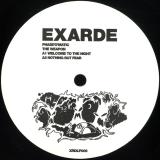
The labels catalogue is welcoming a third full feature album by no other than the young and promising producer from the UK – Phase ‘O Matic. This body of work marks the second LP by the artist in five years therefore to say the excitement levels can be measured by the excitement meter and these levels would be scientifically speaking - through the roof. From the opening track “Welcome to the Night” to the closing “The Weapon” which is named after the title of the album, the artist has demonstrated his impeccable production skills and knowledge of the 90’s sound with the modern twist applied. Over the years of hard work, he has developed his own sound and from what can be heard here safely could be said that this release is most definitely the weapon of mass destruction which has been added to the artist’s collection of releases. Straight from the mind onto this 12” canvas for you to enjoy.
The landscapes of Orlan 19 resembled the dream of a mad cartographer: cliffs were floating above the surface, horizons were bending and vanishing into infinity, and energy vortices were flaring up beneath their feet in psychedelic patterns. The familiar laws of physics didn’t apply here — gravity shifted chaotically, and time flew with unpredictable intensity. As Spacelunch, absorbed in thought, stroked the ground which distorted like a mirage under his touch, Cat’s grumbling echoed simultaneously from the past and future:
— Doc, don’t you think we’re just walking in circles?
— No wonder. That’s how inverse modelling works. Every action we take reshapes the surrounding space.
— Can you explain it in simpler terms? There’s only one genius here.
— Ever heard of the Philadelphia Experiment?
— Of course! You know how much I love sushi rolls!
— Well, I set myself up for this predicament… Back in my university days, we experimented with magnetic fields trying to program them by thought. You get where I’m going, don’t you? The planet is reacting to our intentions. So, focus on visualizing the portal.
The confusion on Cat’s face gave way to a mask of detachment. Clusters of matter began to tremble pulling the threads of reality to their breaking point before finally forming a vortex. Having devoured as much as it could, the vortex snapped shut with a loud pop and dissolved in a blinding flash.
As the scene began to take shape, silhouettes emerged under the soft glow of a desk lamp, evoking an overwhelming sense of nostalgia. A worn desk and a small bed stood by the wall adorned with faded photographs, while the floor let out a gentle creak underfoot. The clearer the interior came to be, the more paralyzing the realization, and the more elusive the explanation for what had happened became.
— Holy…! Cat, are we looking at the same thing?
— Yeah, but… This can’t be real.
Spacelunch slowly approached the window and froze still. A single thought raced through his mind: “The only force strong enough to pull me this far… was love.”
Life Elsewhere marks the striking debut of Catalan artist Oriol Cebrián, working under his Absent Corps alias. Known in underground circles for his razor-sharp ear and deep historical knowledge of electronic music, Oriol steps fully into the spotlight with an EP that both pays tribute to—and expands upon—the clubbing traditions of the late ’80s and early ’90s Valencia and Girona scenes: two epicenters of Spain’s most fervent and influential electronic underground. Crafted with a clear sense of purpose and sonic identity, Life Elsewhere is a masterclass in tension and rhythm—fusing hard- edged new beat with body-moving EBM, break-heavy trance detonations, and raw, unfiltered machine techno. All of it is filtered through a contemporary, uncompromising vision. Each track feels designed for the floor, yet refuses to fall into formula—constantly shifting between muscular propulsion and hypnotic detail. Presented in a truly limited ONE- OFF edition of 300 copies, lacquer-cut and pressed on 180g high-quality solid BLUE vinyl. All tracks have been specially remastered and mastered for vinyl.
Estado de Bienestar is the bold new solo project from Nico Cabañas, co-founder of the record label Oráculo Records and Ombra Festival. Emerging from a period of personal transformation, the project marks a departure from Cabañas’s earlier ventures — including Synths Versus Me (“So Far”, 22 Recordings) and Almax und Forte (“Nois d’Avui”, Oráculo Records). The latter had already begun shaping the sonic direction Cabañas now fully embraces: a raw, visceral, and fully analog “proto” sound. Chapters 1 and 2 of Estado de Bienestar offer a genre-defying journey through twisted, reimagined darkwave. As if curated by a seasoned digger, subgenres collide and dissolve — EBM blends seamlessly with breakbeat, industrial goth meets trip-hop, and dub-industrial collides with jazz, creating a rich and unpredictable listening experience. Presented in ONE-OFF truly limited edition of 300 copies lacquered pressed on 180 gr. high quality solid ORANGE and YELLOW vinyls. All tracks have been specially remastered and mastered for vinyl by Daniel Hallhuber at Young and Cold Studios (Germany).
New on Sublease is label boss Steve Bug teaming up with Herve Solar, an emerging talent from Geneva whose debut was featured on Poker Flats Under One Roof series previously. The two artists first crossed paths at the Mixmasters retreat in Ibiza, where Herve participated as a student under the guidance of Steve Bug. Impressed by Herves material, Steve Bug saw potential for collaboration. Upon returning to Geneva, Herve sent Steve a few unfinished tracks, sparking the idea for a joint EP. The creative process involved each artist sending a track for the other to complete, with Steve Bug adding the final touches in his Berlin studio.
No Faith, No Dreams highlights a slinky, sexy sound that will instanty win over other DJs and crowds, and is also shared here via a remix courtesy of Jürgen Kirsch. His rework is a little tougher, stripping the sound down to ist essentials before bringing up the energy with a dubby bassline and intricate percussion. Swamp Frog is the 3rd track of the release, a grooving bassline providing the anchor for the rhythm and detuned chords that lend the whole thing a wonky, loose feel for the heads.
Jason Velo hails from Wisconsin and has been DJing for years, mostly in the rams of Chicago and Detroit house., He has recently decided to branch out into production and this latest outing comes on Noonish and is deep, groovy and minimal house for afterparties in cosy basements. Opener 'Dream Wheel' has diffuse, humid chords radiating out of a gentry bumping deep house groove, while 'Slow Burn' is just that with its horizontal vibes and gentle patter of drums over a nice rolling bassline. 'Lost Remote' is far less anxious than the situation it describes, though it does have a more eerie and cosmic feel than the others with its deft melodies and larger sense of scales. Tasteful stuff.
Das Leid ist uns allen verheißen, aber auch die Freude. Man muss muss man in dieser Dualität Frieden finden", sagt Yaya Bey, die Humor, Liebe, die Kraft der menschlichen Bewegung und menschlichen Bewegung und Verbindung - auch wenn sie Angst hat. Mit ihrem neuen Album, das auf eine Veröffentlichungen folgt und ihr Debüt bei einem Indie-Label drink sum wtr erscheint, ist die Singer-Songwriterin aus Queens, New York, durch ihr aufmunterndes, sprudelndes Material. Eine Absage an vergangene Vergangenheit, die auf sie projiziert wurde, findet Bey in ,do it afraid ihre Geschichte mit entschlossenem Spaß, vollem Herzen und nuancierten Songs, die sich aus R&B, Hip-Hop, Jazz, Soul Soul und Tanzmusik, einschließlich des Soca-Stils ihrer Bajan-Wurzeln ihrer Familie. do it afraid zelebriert alle Seiten von Yaya als Teil einer kollektiven Lebenskraft, die nicht die sich nicht der Angst verschreibt, sondern den Momenten, die uns bewegen.
Waves Within is a genre-blending triumph from Mexican producers Luca Ferrand and Selva in which they serve up sounds that evolve through deep house, broken beat, jazz, nu-disco and hip-hop. Opener 'Bona Fide' pairs dusty jazz and disco-house with a slick hip-hop switch and some superbly sunny melodies. 'Zarapes (After the Rain)' marries Mexican folk and broken beat, then 'Back To That Thang' twists jazz guitar into a genre-fluid ride and the title track evokes tropical 90s house. Closer 'Lynx' is a shapeshifting house cut with bulbous bass and sophisticated sound design that really brings it to life.
King Street Sounds are back again with their fourth installment in the King Street Sounds Sampler Series. This release unearths four classics from house music heroes such as DJ Romain, Mike Delgado, Dennis Ferrer, 95 North, Sabrynaah Pope and Louie Vega.
The EP kicks off with DJ Romain’s “All Day, All Night”. Originally released on “Nite Grooves” in 1996, a perfect example of New York house with a memorable vocal sure to keep you hooked hopefully all day and all night.
Next up is Mike Delgado with “Get Ready”. This track is a certified dancefloor filler, with those fast hitting highs and catchy keys. It is definitely a secret weapon that any DJ should use in case of an emergency.
Flipping over to the B side, Dennis Ferrer is returning once again in this series with “Dem People Go (DF's Kicked Out Mix)” Featuring Bola Belo. This Tribal House classic emulates being in the sun for the listeners, effortlessly bringing that block-party vibe.
Rounding off the EP is 95 North featuring Sabrynaah Pope with “Hold On” (Louie’s MAW Club). An already great track by its lonesome, but with house music icon Louie Vega’s magical touch it makes it a must have for any DJ who wants to get the dancefloor bumping.
King Street sounds have done it again! All killer and no filler.
This 1998 album compiles unreleased sessions from the late 70s featuring Weldon Irvine, Don Blackman and a young Marcus Miller. Known for his rare groove classics like Spirit Man in 1975 and Sinbad in 1976, Irvin's work shines here and highlights come thick and fast. They include the soulful 'Morning Sunrise' which was famously sampled by Jay-Z and Drake, the jazzy funk of 'The Sisters' with Miller's bass and Tom Brown's trumpet and the smooth 'Heard It All Before' which mixes urban sophistication with mellow fusion. Toni Smith's dynamic vocals on the funky 'Think I'll Stay A While' is another doozy which makes this masterpiece rich with jazz, soul and funk goodness.
Organic Analogue returns with a rediscovery of Beppu's rare dubbed-out electronica and circuit-bent techno. Andrew Hargreaves is the Manchester-based producer behind this alias which was first making waves back in the late-2000s. Back then it was three limited CDr EPs in 2009, which came with just 50 copies each, that made a stir and still stand up today. As such, the sought-after recordings receive a proper vinyl pressing and have been mastered by Miles Whittaker. Two distinct remixes from Demdike Stare also add further quality and contemporary context to the origins, which blend dub techno and braindance with textured noise. IPOP continues Organic Analogue's tradition of spotlighting overlooked talent having already done so with names like DJ Guy and Jean-Louis Huhta.
DJ Feedback
dBridge:
"A moment in time."
Ben UFO:
"This is gorgeous, thank you."
Tolouse Low Trax:
"Very much my start into Electronic Music back in the days. Cool Reminder!"
Stonecirclesampler:
"All time Manchester classic from one of the best in the city, incredible project and so so so happy for it to be reissued and on vinyl, original and Demdike remixes are all beyond incredible and absolutely nail the sound of the late 2000s early 2010s post-Sandwell District/Berghain techno and pre-noise/techno/post-punk - an absolute snapshot of a city and sound moving FWD, brilliant cant wait for the wax!!!"
Eric Cloutier (Palinoia, Tresor | Detroit):
"Well god damn. I mean...god damn."
Yu Su:
"These are so good. Demdike Stare's remix also!!"
Ruf Dug:
"Next level even almost 20 years later."
Silent Era (Of Paradise) :
"Great project. What a gem."
Portuguese based Nørbak returns to Soma with his second single for the label, the Myelination EP. Nørbak is quickly making a name for himself in the global scene and has just completed his debut album to much critical acclaim. The young producer has built a wealth of knowledge on sound design and is clearly represented in his music which is deep and rich in sonic experiments whilst retaining dancefloor focus. This latest EP has Spanish techno maestro Oscar Mulero & fellow Portuguese talent Lewis Fautzi, deliver two fantastic remixes that perfectly compliment the originals.
Nørbak's "Myelination" starts the EP with driving percussive elements that propel the track from the opening. Swamped with light & ethereal FX, dark and droning sounds take the track down a ominous path. Lewis Fautzi steps up next with his remix of Myelination. With a more minimalistic interpretation he manages to continue the dark and direct momentum of the original. On the flip, Mirante rattle hards with steady and precise percussion, bolted together with heavy rolling kicks and sub and a perfectly muted rhythm throughout. Techno don Oscar Mulero closes the EP with his version of Mirante. He immediately ups the ante with driving 909 beats and huge atmospheric FX that guide the rhythms. Mulero always on point with his signature sound design and techno aesthetic.
PRESSED ON PINK COLORED VINYL Czarface returns from the shadows with "Knull & Void", a bone-rattling 12” straight from the film Venom: The Last Dance. Featuring Wu-Tang Clan's Method Man and the elusive Frankie Pulitzer, and rounded out with a never-before-heard B-side "Safe Haven", this one's destined to be a collector's grail. Whether you're a hip-hop head or a Marvel-maniac, these tracks hit harder than Venom himself...grab it before it vanishes into the void!