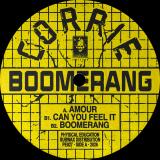
For its third release, Tremendo Recordings brings together long-sought-after tracks by Corrie, one of UK tech house’s pioneers, drawn from his early releases on Wiggle and Bosh. Increasingly hard to find in their original form, these records return as a tribute.
Taken from releases between 2003 and 2005, this selection captures a side of Corrie that feels immediately recognisable: bold, playful and unmistakably his own.
Some records are made for the hour when the light goes long and low - when you can feel the day slipping and want to hold it a little longer. Escaping Sunset is a deep house collection built for exactly that stretch: warm, unhurried, and turned toward the last of the glow. Like the hourglass on its label, it's about the kind of time you can't keep - so you turn the glass over and let it run again.
Andu Simion, a Romanian producer with deep roots in the European minimal and microhouse underground (Tzinah, Palinoia, Diffuse Reality) and a careful hand for groove - teams with Thomas Wood, a deep and raw house producer (Circle of Us, Berg Audio), across the A-side: the title track and then "Onde Viola." On the flip, Sickdisco - now based in Belgrade, and as at home in deep and minimal house as he is among the minds behind punk outfit ВсадникиЖКХ (The Horsemen of Housing & Commercial Services) - lays down "Beats," before Nicolas Barnes, the Riga producer and ECOUL SND founder already woven into the MixCult family, closes the record with "Phantom Lights."
Adlibitum Tum Tunes is a division of MixCult Records
High Voltage returns for its fourth outing, digging deep once again to unearth two forgotten gems. Both are brought right up to date, reimagined and transformed into club-ready classics for a new generation.
Professor Roth's debut EP, self-released on his newly formed label Maestro, is music that feels half remembered. Familiar enough to settle into, strange enough to keep shifting beneath your feet, it lives in that sweet spot where groove and abstraction lean into one another. Dusty textures, hazy melodies and understated rhythms never demand attention, yet quietly refuse to let go. Every track feels like another realm of the same dream: warm, weightless and just slightly out of focus.
‘Daydreaming’ is an inviting first step into the haze, opening the door without ever fully revealing what's on the other side. Gentle movement carries drifting melodies that seem to appear and disappear with every listen. An ethereal vocal breakdown creates the feeling of being quietly carried away from its hypnotic groove before pulling you back under its spell. Patient and understated, ‘The Way It Is’ lets the groove do the talking while subtle details gradually come into focus. Dubby percussive chaos is softened by warm, lifelike pads, encouraging your body to move while your mind wanders elsewhere.
As the name suggests, ‘Swells’ arrives in waves. Layers fold over one another, building and dissolving without urgency. There's a beautiful tension between motion and stillness, leaving the track suspended somewhere between the dancefloor and a reverie. ‘Shades’ is a fitting close that blurs the edges even further. Soft, hypnotic and quietly psychedelic, it feels less like an ending and more like waking up slowly. Content to linger in that in-between a little longer, glitchy samples drift through swirling soundscapes, keeping the dancefloor gently spun until the very end.
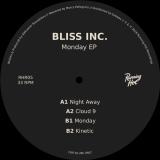
Running Hot welcomes Bliss Inc. for RHR05 with the Monday EP, four cuts of warm, groove-led house music built for intimate spaces and long nights.
The EP arrives during a busy year for Bliss Inc., following a recent release on Punctuality and the start of a new residency at Tokonoma in Frankfurt, where he’s been regularly playing the Holo and Sakuru floors. Those smaller rooms have had a clear influence on the EP, with subtle shifts, detailed percussion and hypnotic grooves given room to unfold.
Across the four tracks, rolling low-end sits alongside understated melodies and intricate percussion. The EP draws from the deeper end of house and minimal without ever sounding overly referential, and feels just as at home in a low-lit warm-up as it does deep into the night.
Corrie is back with 3 fresh tracks, all made this year, and they're exactly what you'd want from him: fun, catchy, and built for the dancefloor. Driving percussion, basslines that stick in your head, and mischievous vocal samples weave together across all three, built to work instantly in any set.
No unnecessary frills, no gimmicks, just club house made with craft, steady groove, and that cheeky edge Corrie has kept intact throughout the years.
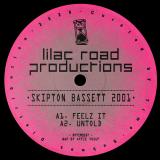
Curated By Time digs into the early 2000s once again with 'Skipton Bassett 2001', unearthing four previously unreleased tracks from Affie Yusuf under his Lilac Road Productions alias.
Recorded in early 2000s, the EP captures the raw, stripped-back sound of UK tech house at the time: rolling basslines, tight percussion, trippy details and hypnotic grooves. Four cuts pulled straight from the archives and finally making their way onto wax more than two decades later.
Formed in 1969, Soul Media set out with a clear mission to fuse jazz and rock. That approach took a decisive next step with In The Groove, recorded in 1973. Here, the sharpness of jazz is brought to the forefront, rock elements are dissolved and refined to give a cutting edge, and funk is injected to add drive, elasticity, and physical force. The result is a body of music that transcends existing genre labels—jazz-rock, jazz-funk, or fusion—and stands instead as something simply, undeniably cool: strong yet sophisticated.
This album is often described as Soul Media’s response to The Crusaders, a band that saxophonist Jiro Inagaki was paying close attention to at the time. The aim hit its mark. With In The Groove, Soul Media acquired a “refined black feeling”, setting them firmly on the path toward their ultimate destination: Funky Stuff.
LILDAVE215 is a proud Philly representative who channels funk, soul and acid jazz into his delicious take on disco. For this new outing on the young but already promising Sweet Breeze Sound label, he kicks off with 'Music Takes Me' which rides on slinky drums that slide irresistibly on nice dusty cymbals and has funky riffs down low. The vocals add simple but effective colour that adds to the feel-good nature. 'Carnaval Del Tiempo' is more Latin influenced, with prickly percussion and big vocals, even bigger drums and sax energy all added for when the sun shines down hot.
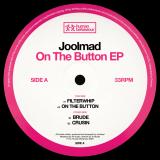
For our second release, not only do we have a true artist with an extensive catalog of big releases and support. He is also our close friend. From first connecting with Joolmad as he walked through our villa in Croatia, we instantly had a bond and from that moment, we both knew sooner or later we will be bumping heads. The label was still a developing idea but Joolmad was one of the first to hear about it and see the vision. And for that we couldn’t be more thankful to have him on the second release, shaping the early chapters of Human Behaviour.
A1 taking a stripped back approach with a fast pace tempo, complimented by hypnotic sounds. A2, as soon as we heard this track we knew we had to sign it. A track that blends sub genres for a truly unique listening experience. An old war sample, techno bass line with a touch of techy drums is almost guaranteed to get hands in the air. B1 a swung feel good rhythm that fits nicely in any part of a set. Floor filling drums and light melodies is sometimes all you need! B2, taking you behind the wheel of driving you through the sun set.
The Doobie Brothers faced a serious predicament as they prepared to record Takin’ It to the Streets. That the group navigated a potentially serious personnel problem that would’ve tanked lesser bands and scored its fourth straight Top 10 album — while again expanding its range — speaks to the collective’s chemistry, broad-mindedness, and songwriting abilities. Known as the effort on which vocalist-keyboardist Michael McDonald makes his debut, the 1976 set stands as an all-encompassing representation of the various styles the Doobie Brothers explored during their heyday.
Sourced from the original analog master tapes, mastered by engineer Krieg Wunderlich, pressed at Fidelity Record Pressing in California, and housed in a Stoughton gatefold jacket, Mobile Fidelity’s numbered-edition 180g 45RPM 2LP presents Takin’ It to the Streets in definitive sound. Given the luxurious room of a 45RPM version for the first time and benefiting from the wider grooves, the music unfolds amid large soundstages replete with ultra-quiet backgrounds, big dynamics, and accurate imaging. By then a key component of the Doobie Brothers' success, Ted Templeman’s production is brought to light with stellar clarity and definition.
As is the case on Mobile Fidelity's four other acclaimed Doobie Brothers 45RPM reissues, myriad facets that help make Takin’ It to the Streets timeless, natural, and organic — minimal overdubs, voices that realistically rise and fall, notes that properly carry and decay, warm tones, bass lines that pop with color, well-placed percussive accents, defined separation between the players — emerge with incredible presence, openness, and fullness. Nothing is overdone or out of place. No small feat given Templeman and company didn't know how everything would unfold when they first met up in Southern California.
Confronted with a change in plans by co-founder Tom Johnston, whose contributions to the band up to that point in its career identified him as an indispensable member, the Doobie Brothers were thrown for a loop when he curtailed pre-planning work and retreated home to deal with ongoing health problems. Thankfully, Jeff "Skunk" Baxter, the group's newest full-time recruit, had a possible solution in his former fellow Steely Dan colleague McDonald. The singer-keyboardist had already sat in with the Doobie Brothers on their recent tour. So, why not give it a shot?
McDonald's prodigious talents notwithstanding, he couldn't technically replace Johnston. For starters: McDonald's soulful timbre bore little resemblance to Johnston's grittier voice. And McDonald played keyboards, not guitar. No wonder Templeman initially expressed reservations. He also knew the Doobie Brothers needed additional material before they could consider wrapping the record. Yet the skepticism began to dissipate on the first day of the sessions. Still waiting for second drummer Keith Knudsen, the band gathered in the studio with former roadie Bobby LaKind on congas and Little Feat drummer Richie Hayward for a live run through "Wheels of Fortune." The instrumental parts of that take landed on the record. Johnston would even return to share the lead vocal duties with Patrick Simmons.
Those magical results, and the experience of hearing McDonald woodshed the title track at the piano, turned Templeman into a believer and cheerleader. Spurred by their veteran producer's encouragement and McDonald's ideas for songs, the Doobie Brothers embraced new directions just as they did after their debut LP and on subsequent efforts with orchestral and horn treatments. The latter return on Takin’ It to the Streets courtesy of the five-piece Memphis Horns. Yet outside of viola accompaniment on "Losin' End," string elements step aside in favor of McDonald's pianos, synthesizers, and clavinet. And, on five cuts, lead singing.
As the new face of the band, McDonald ended up crafting all or portions of four tunes. His fingerprints are all over two of the singles, including the jazzy, blue-eyed-soul delight “It Keeps You Runnin’” and irresistibly melodic title track, which cracked the Top 15 and became one of the Doobie Brothers’ signature numbers. He and Baxter’s penchant for smoothness, and a precursor to the band’s coming transition into rhythmically oriented yacht rock, informs the brassy sway of “Carry Me Away.”
Further enriched by Tiran Porter’s gorgeous, time-signature-shifting ballad “For Someone Special,” Simmons’ peppy, spring-loaded “8th Avenue Shuffle,” and Johnston’s “Turn It Loose” — the move-your-feet boogie serving as kind of apt farewell to the band’s prior rock ‘n’ roll sound — Takin’ It to the Streets spun uncertainty into gold. Altered yet unbowed, the Doobie Brothers once again offered countless listeners “the best kind of remedy” with feel-good music that holds up amid any era.
Devo Marries Gritty Guitars with Expansive Keyboard Canvasses on Duty Now for the Future:
Transitional Album Furthers the Band’s Satirical Stance, Includes Cover of “Secret Agent Man”
Hear the 1979 Record in Audiophile-Grade Sound and at 45RPM for the First Time:
Mobile Fidelity’s Numbered-Edition 180g 45RPM 2LP Set
Benefits from Enhanced Definition and Presence
1/4” / 15 IPS Dolby A analogue master to DSD 256 to analogue console to lathe
“Pop music needs a big enema.” Devo created Duty Now for the Future with that mission statement, relayed to the press by co-founding bassist/vocalist Gerald Casale, in mind. Though unfairly pegged by some as an example of the common sophomore slump, the record spurred the group’s interest in electronic instrumentation, extended its penchant for biting social satire, and contained another transformative cover song in the form of “Secret Agent Man.” Above all, the 1979 work proved the Ohio pranksters were anything but a joke even if they would have to wait one more year until for their mainstream breakthrough.
Sourced from the original master tapes, mastered by engineer Krieg Wunderlich, pressed at Fidelity Record Pressing in California, and housed in a Stoughton gatefold jacket, Mobile Fidelity's numbered-edition 180g 45RPM 2LP set presents Duty Now for the Future in audiophile-grade sound. Benefitting from the extra groove space on this first-ever 45RPM version, it plays with enhanced definition, deep-black backgrounds, and ultra-quiet surfaces.
Though certain band members later expressed regret with some of his decisions, the merits of Ken Scott’s production emerge like never before. A lurking edginess serves as a signpost in Devo’s progression before it fully embraced keyboards as a primary tool. Guitars possess punch and grit and, along with the crisp arrangements, are sharpened with an ear toward accuracy and vibrancy. It all helps give Duty Now for the Future a direct immediacy that answers the complaints of listeners who felt the affair too processed or sterilized.
Notably, a majority of the material here stems from the same grab bag of songs Devo banked before Warner Bros. signed it to a deal. The album marks a capstone to Phase One of a career that for all intents and purposes began in 1973. And just like many of the group’s performances of that era, Duty Now for the Future remains just as famous for the critical disdain it inspired as the music itself. A vicious review in Rolling Stone — the very publication that a few decades later would trumpet the band as one of the most important of its age — ended with the writer offering to send readers shards of the LP he planned on smashing to bits.
Perhaps he just needed to experience this new-wave effort with the restored sound that makes everything now feel so explosive and urgent. Whatever the case, the songs hold up and, amid a contemporary period which gives increasing license to artificial intelligence and behemoth conglomerates, seem more apt than ever before.
Consider “Blockhead,” which skewers the predictable appearances and numb-to-the-world actions of a rule follower. Or the similarly themed “Clockout,” an uptempo ditty whose thumbing-its-nose bravado and sardonic lyrics send up corporate culture with an irresistible smirk. As for the wiry, hard-hitting urgency of “Wiggly World” and Mark Mothersbaugh’s loud declaration that “They say the fittest shall survive/Yet the unfit may live”: Evidence these art-school rabble-rousers still had some punk fury to flush out of their system. And the sincere allure of the charged power pop and wishful circumstances of “The Day My Baby Gave Me a Surprize” cannot be denied.
To point to an interesting bit of history that makes Duty Now for the Future all the more intriguing, particularly for the most committed Spuds, more than half its tracks were selected for Greatest Misses — a 1990 anthology that celebrates lesser-known cuts and functions as a rejoinder to a hits compilation from the same year. (The only track from the 1979 album to make the “hits” disc: “Smart Patrol/Mr. DNA.”)
Indeed, tunes like the riff-driven albeit controversial “Pink Pussycat,” atmospherically twitching “S.I.B. (Swelling Itching Brain),” and ceremonial instrumental “Devo Corporate Anthem” may lack the catchy appeal and all-together coherence of what follows on the group’s third and most commercially successful effort, Freedom of Choice. Yet in order to get there, to de-evolve if you will, the band needed the smorgasbord that is Duty Now for the Future.
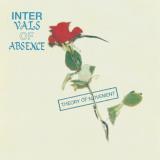
Dan Piu and Grant's Theory of Movement project is rather sporadic - we last heard from it more than a year ago - but that only makes fresh drops all the more essential. This return to When The Morning Comes opens with the swirling ambience and deft house depths of 'The Geometry Of Leaving', which is a heady scene-setter before 'Suspended Motion' floats you amongst more airy pads. 'The Distance Between Things' has a joyful feeling of hope and optimism in the luminous keys, and the Acid version beefs it up for extra club impact. Artful sounds from two seasoned heads.
Key To World Peace is the third release by Prophetic Justice Ministry - aka Australian musician Sam Perry. An atmospheric, cinematic album that belies a striking pop songwriting nous at its core, its conductor Prophetic Justice Ministry is at the centre of a new wave of creative, rule-bending Melbourne artists. Romantic, smudged and hazy, Perry emerges from behind a wall of
half-light with a clutch of earworms and affecting emotions.
Recorded in home studios in Belgrade (Serbia), Christchurch (New Zealand) and Melbourne (Australia) over the course of three years, Key To World Peace offers a dichotomy in approach. Shifting on a dime between ambient, filmic washes of sound and more traditional song structures, the approach feels natural, casually acid-tipped and emotionally revealing. While Perry’s
distinctive keys and production melding with melody is evidenced in Melbourne group Who Cares?, as Prophetic Justice Ministry there’s a heightened sense of mystery and space being used.
Swirling in a psychedelic fog with dry iced chords falling down like melting stars, the album pulses with an ominous, distorted intro that sculpts air into blocks of sound before Psyop offers a glimpse through the gloom at the artist navigating through crushed, shoe-gazing chords, singing a consolation into an abandoned building. Side A’s more abstract tone veers from industrial tracks (T-A) to pastoral, impressionistic pieces (Trance) before album highlight Life’s A Party showcases the effortless, classic songwriting lurking in Prophetic Justice Ministry. Built on the tension between the upbeat lyrics and suppressed, rich delivery, the song lopes on an alluring loop with acoustic guitars and Perry’s voice walking a tightrope between irony and sincerity. The song blooms into a bright burst of light, almost inducing synesthesia in the listener and reminding a little of The Beta Band’s most outre and catchy moments.
Opening Side B, Naked Shine’s scintillating guitar is punctuated by a sub bass swell that offsets the yearning vocal performance. With palpable sensitivity the song is shepherded into short, atmospheric passages before Love Drum’s direct delivery: Perry’s vocal and guitar, dancing over a hint of distortion feels like Syd Barrett at his most casually brilliant. Carrying on the tradition of a single cover on every Prophetic Justice Ministry release, here Lana Del Rey’s Mariner’s Apartment Complex is given a stripped back but faithful treatment. With a sound that feels like a hushed, Chris Isaak classic it’s testament to Perry’s own compositions that the cover doesn’t outshine the rest of the album. Album closer and single Spirit House Party combines a classic chord progression with Perry’s double-tracked vocal into a murky but brilliantly catchy chorus. While nowhere near as lush in its production, there’s something in the atmosphere of Prophetic Justice Ministry’s vocal sitting in the mix just so that reminds us of The Electric Prunes’ Holy Are You-era work with David Axelrod.
Key To World Peace flits between displaying a spectrum of blurred emotional resonance in its instrumental passages and vulnerability in the shape of raw, melodic songwriting. With his first release outside of Australia and vinyl debut, Sam Perry’s Prophetic Justice Ministry is a beguiling dance in and out shadows.
Brighter Discs opens with its first release from label founders Kamma & Masalo. Born out of Brighter Days, the duo’s long running party series since 2014. A colourful get together where generations mix freely, DJ legends share space with new voices, and the dancefloor is treated as common ground. Brighter Discs carries this same spirit into recorded form, a natural continuation following the Brighter Days compilation previously released on Rush Hour.
Brighter Discs starts things off with ‘Can’t Fake The Feeling’, built around the original vocal by Renee Mohannon, taken from the 1989 release produced by house music pioneer Joe Smooth. The vocal is fully cleared and officially licensed, with everything surrounding it newly written and produced, resulting in a club track that honours the emotional core of the original vocal while giving it new space to shine.
The ‘Club Mix’ unfolds with immediate lift, a classic yet upfront house energy carried by Kamma & Masalo’s elevating instrumentation moving in lockstep with Renee Mohannon’s vocal. A pure club track celebrating dance music to the fullest.
On the flip you will find K&M’s ‘Unity Dub’, a darker, percussion driven workout that strips things back and presents the track in a different light. A twilight version that highlights the duo’s versatility and deep dancefloor understanding.
Kamma & Masalo have tested both cuts extensively while touring, from sun soaked festival stages to esoteric club spaces. Each version has been shaped in real rooms and refined on the road, ensuring the tracks are heard in their best possible form.
All produced with care and free-spirited party energy, Brighter Discs 001 marks the beginning!
Marking a refreshed 2026 visual identity for Contemplate Recordings and a return to vinyl, Go Deeper EP draws from the atmosphere and musicality of classic Detroit and 90s deep house.
Built around warm synth textures, hypnotic grooves, sampled elements, and jazz-influenced harmonies, the release delivers a stripped-back yet immersive late-night sound. Classic 90s-style synthesis and sampler-based techniques underpin a record that balances subtle emotional depth with strong dancefloor focus.
Melodic, groove-led, and atmospheric deep house with a timeless, understated feel.
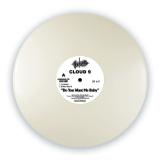
Do You Want Me Baby sees Cloud 9 deliver a timeless garage house cut from New York legend Victor Simonelli, returning on fresh 12” vinyl.
Built around uplifting piano lines, soulful vocal hooks and groove-driven rhythms, the track captures the feel-good energy of classic US garage house and remains a staple for DJs across house and garage sets.
Featuring a full suite of mixes including Club Mix, Deep Dub, Bonus Beats and Instrumental, the release offers strong versatility for DJs looking for both peak-time energy and stripped-back club tools.
With a sound rooted firmly in the New York house tradition, this release sits comfortably alongside artists such as Masters At Work, Todd Terry and Kenny Dope, making it a natural fit for stores supporting classic US house and garage.
Back on fresh 12" vinyl, this iconic track continues to resonate with both long-time collectors and a new generation of DJs.
A reliable and highly playable catalogue piece for stores supporting classic house and garage.
The NE21 stands as one of the most mysterious and elusive projects within the contemporary post-punk and minimal wave landscape. With only two previous releases—through Domestica and She Lost Kontrol—the project has already secured an unquestionable place among the essential names of the genre. After five years of complete silence on the release front, “No Zone” marks their long- awaited return. The record expands the project’s unmistakable universe: cold synth lines, suspended atmospheres, hypnotic rhythms, and a haunting sense of isolation that moves between Trisomie 21 minimal wave austerity and Neon’s emotionally charged post-punk tension, aligned with other Italian wave visionaries such as DsorDNE while connecting with newer tendencies in electronic krautrock and proto-experimental music. Everything in “No Zone” feels deliberate and restrained, unfolding a ghostly elegance, balancing shadowy electronics with sharp melodic instinct. With “No Zone”, The NE21 not only return—they reaffirm their singular position as one of the most distinctive and enigmatic voices operating in the darker edges of underground electronic music. Presented in ONE-OFF truly limited edition of 300 copies lacquered pressed on 180 gr. high quality solid BLACK vinyl. All tracks have been specially remastered and mastered for vinyl by Daniel Hallhuber at Young and Cold Studios (Germany).
Music From Memory presents 'Mood Programs – Extended Play', a two-track release by LA MARR, a new project conceived by Ron Trent. Representing the first in an ongoing series of releases on Music From Memory, ‘Mood Programs - Extended Play’ opens a new chapter within Trent’s deep and continually evolving body of work, rooted in mood-driven composition, spatial depth and the emotional resonance of sound within physical space.
Influenced by ambient and environmental music, New Age, dub traditions, New Wave, Krautrock and HiFi sound system culture, LA MARR reflects many of the formative ideas that informed Trent’s evolving approach to sound and sonic architecture from the early 1980s onward. Rather than revisiting these influences nostalgically, the project recontextualises them through a contemporary production language, balancing analog warmth with precision and spatial depth.
Developed through years of sonic experimentation and research into the physical and psychological qualities of sound, LA MARR extends Ron Trent’s long-standing interest in the relationship between rhythm, acoustics and human connection. Built through a combination of analog processes and contemporary computer-assisted production, the project explores warmth, resonance, depth and sonic clarity through carefully sculpted environments of tone and texture.
Gently unfolding within a spacious, ambient-leaning framework, 'Mood Programs – Extended Play' moves beyond passive background listening toward something more intentional and immersive. Across both tracks, ‘Good Magic’ and ‘Clear’, layers of hypnotic synthesizer arpeggios and gently floating pads gradually unfold alongside organic percussion and subtle low-end movement, creating compositions that feel simultaneously meditative, physical and emotionally responsive. Sound is treated not simply as musical information, but as an environmental force capable of shaping perception, mood and awareness within a room.
'Mood Programs – Extended Play' will be released digitally and on vinyl through Music From Memory on July 15th. Sleeve art and design by Michael Willis.
Synaptic Cliffs proudly welcomes Annie Hall for her label debut. With the Future Sports EP, she once again expands the boundaries between machine funk, speculative sound design, and forward-thinking club music. Delivering her signature fusion of IDM, electro, fractured breakbeats and experimental electronics, she sculpts a metallic, high-definition vision that feels as though it has been transmitted directly from centuries ahead.
Future Sports imagines the sonic landscape of sport in the year 3024. In a future where society has paradoxically stripped itself back to the essentials, aesthetics have returned to the elegance and restraint of the 18th and 19th centuries. Amid this cultural shift, fencing has emerged as the defining global sport, elevated from historical discipline to mass obsession.
Throughout the EP, the sounds of these future arenas become musical raw material: the sharp clash of advanced foils, the resonant impact of engineered protective gear, the tension of ritualized competition, and fragments of other, unnamed sports from a distant age. Annie Hall transforms these imagined athletic acoustics into intricate rhythmic structures and futuristic melodies, allowing the machinery and choreography of competition to shape the record's sonic identity.
The result is a vivid soundtrack to a world yet to come - precise, kinetic, and unmistakably futuristic, where sport, technology and sound merge into a singular vision. Future Sports is both a speculative narrative and a club-ready statement from one of electronic music's most distinctive voices.
As a special bonus, the EP features an animated picture label. When played at 45 RPM and viewed under a stroboscopic light operating at 9 Hz, the artwork comes alive, revealing a hidden motion sequence. Blurring the boundaries between sound, design and optical illusion, this kinetic visual layer extends the EP's futuristic narrative into the physical realm, transforming the record itself into an artifact from the year 3024.
"Some of my earliest musical memories were listening to my local pirate stations in the early 90's. The signal was quite weak in my area, and the sound was doused in FM static, creating this interesting amalgam of rhythm and noise. I found a strange sort of comfort in this, often falling asleep while listening to the radio, in bed, with my headphones on. The stations were run by young people, no older than kids really, relayed from non-descript flats, scattered around Bradford, Leeds, and the surrounding towns of West Yorkshire. The setups were primitive, and the production quality (and often the mixing) were dubious at best. But there was an endless supply of passion, and listeners tuned in because they were thirsty for something the legal stations could never supply. These voices on the other side of the transmission were, for many of us, a bridge into the future. One, which sadly, never really came to be. Hardcore, Static: Pirate Transmissions From The North of England 1990-1994 is a celebration of this unique period in UK history. The North of England feels overlooked during this time, with history's focus firmly gazed on London. But the signal was everywhere. These pirate stations were crucial for many young people, who were trying to find their place and identity in the UK. Many of these transmissions, even the ones which were recorded onto tape, have since become lost media, effectively erased from history. Radio, at least in the analogue domain, isn't something most young people have any experience with. Pirate radio was this unique flashpoint in time, and for me at least, it was important enough for me to want pay my respects to it" Dennis/36
Knowsum is set to release his new album, Cherry Stone Pillow on his label Sugar Brain.
A record that keeps swinging - blurred at the edges, and gently surreal. Psychedelic rock pulses at it's core, softened by the sweet touch of soul, the sway of bossanova, and the sun-faded glow of 60s easy-listening. Each track feels like an afternoon stretched into midnight – This is music for children of the moon, where drums riot like subway prophets and guitars drip human gasoline
If you could ever stop thinking about... you know... for just a moment, you might hear something else...
Foehn & Jerome return to Perfumed Freedom for the label's first release of 2026. Three refined minimal house tracks, balancing groove, restraint and dancefloor energy. Understated, hypnotic and exactly where the duo's sound feels most at home.
Sindh presents the Vagali EP, a striking continuation of his tunnelling, futuristic take on techno. Growling synths, driving basslines, alien atmospherics and finely tuned percussion define a sound that feels unmistakably his own.
Following his Komudo series — which has built a devoted following since its debut in 2024 — this latest release leans further into his signature sound design, pairing hypnotic sequences and menacing synth lines which feel right
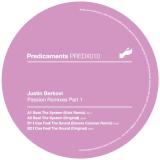
Justin Berkovi presents Passion - Remixes. Vol. 1 His classic track "Beat The System" comes around with a fulminant remix by KINK
On the other side we have "I Can Feel The Sound" incl. a huge remix by Dennis Caressa. Full energy package.
There’s no direct English translation for the word “hiraeth”. In the Welsh language, it describes a form of longing for an intangible something, somewhere or someone that no longer exists. Sofie Birch and Antonina Nowacka draw on the concept to guide their second collaborative album, a suite of vulnerable, open-hearted improvisations and reflections that attempt to grasp an image of the past that’s chimeric, dissolving almost as soon as it materializes. The duo’s process follows the same distant beacon; unlike Languoria, their critically acclaimed debut, Hiraeth is, at heart, an acoustic record, informed by in-person improvisations with voices and string instruments that gesture to an era before computers, AI and DAWs. It’s just as lush, but Hiraeth is warmer and more muted than its predecessor.
Nowacka and Birch conceived the album in the wake of a slew of collaborative live concerts, spurred on by serendipitous improvisations and an interest in paring down their setup. Unsound arranged a retreat in Sokołowsko, an idyllic village nestled in the verdant hills of Southern Poland, close to the Czech border. Sokołowsko surrounds a large ruined sanatorium that’s rumored to have inspired Thomas Mann’s 1924 novel The Magic Mountain, and has long been a magnet for artists. The two took the opportunity to rethink their approach completely, arriving with just a guitar, a zither and a portable Nagra reel-to-reel machine. Recording directly to tape, they sketched out ideas with just their voices and instruments, reflecting their surroundings without being distracted or mediated by modern technology.
“We wanted to get away from screens as much as possible,” says Birch, “to bring to the world something vulnerable and honest. Without advance preparation, every day we went out into the open air, finding places to sit, during sunset or the midday sun. We discovered new tunings on our instruments, picked up a melody, and started the machine, playing over
and over till we got a take.” In the autumn, they met again in a Copenhagen studio, sparingly and carefully layering old synths and organs to add more depth without muddying the mix.
Both Nowacka and Birch sing throughout, their voices threading the acoustic instruments and tangling with each other, almost becoming one. But it’s the environment of Sokołowsko, “the birds and the light, even the wind playing against the harps,” that’s woven into the music’s lining. Affected by time spent meditating and in nature, as well as the fact that Birch was pregnant whilst recording, the album feels alive and remarkably present. Even the sound quality of the tape machine gives Hiraeth a tactile, organic quality, as Nowacka puts it, “like being in a warm bath.”
They still have the raw recordings from Sokołowsko on old reels, physical souvenirs of their time spent making music in a “habitat for intuitive songs, a little ecosystem, alive and spirited.” The outmoded gear and remote setting helped the duo disengage from the modern world for a few moments and imagine an existence that’s been lost to time and nominal progress. With digital technology receding into the background, Nowacka and Birch had space to make “intuitive connections with frequencies and people,” as Birch explains. Hiraeth is a testament not to nostalgia, but to the power of kinship.
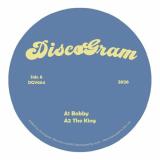
Diso Gram is based in Barcelona and deals in global disco, nu-disco and edits with in-house production from we don't know who, but we do know they're skilled in the studio. 'Bobby' is a life-affirming opener with proud trumpets and classic disco vocals before 'The King' taps into a funky bassline and slapping hits that all feel wonderfully live. 'Me Enciendes' brings more strutting disco house with massive claps and falsetto vocals that will take any crowd to a better place and 'Tropical' closes the account with a more subdued, early evening dub-disco builder with Afro flourishes.
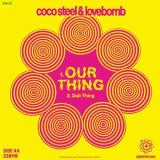
Anyone lucky enough to have lived through the 90s will know that Coco Steel & Lovebomb were a key acid house duo who dropped early tunes on Warp and penned a number of underground anthems including 'Feel It'. Now they are back with new tunes on Coco's Disappear label and the remit, stylise, is wide. This EP opens with gentle breaks and dubby undercurrents on 'El Acido,' which has already become a favourite after its digital release. DJ Rocca remixes with a blissed-out energy and 'Our Thing' (named after Coco's new party in Hastings) then taps into a more expressive sound world with new age pads, affirmation vocals and dusty broken beats plus lashings of bass. A dub version of the same tune, named Dub Thing, closes down with aplomb.
Georgian powerhouse Yanamaste drops long-anticipated new EP on Mutual Rytm.
In-demand DJ/producer Yanamaste is a resident at Georgia's renowned Khidi Club and a key part of Amsterdam's Vault Sessions crew. His unique sound and fresh creative approach result in raw and visceral techno, reflecting his passion for pushing boundaries and showcased perfectly via his 'Dance' EP on Vault last year. Now, he returns with an EP born out of the creative process behind his live set with a debut appearance on SHDW's Mutual Rytm, 'Evil' - a collection of heavily-requested tracks that have already made an impact after featuring in his Boiler Room and Stone Techno Festival livestream.
'Evil' kicks things off with perfectly rubbery, funky drum patterns and an urgent sense of movement that sweeps you off your feet. 'Lahante' is more percussive, with busy snares riding the rolling, forceful drums and stark synths arresting your attention. 'Dragonfly' is perfectly reduced via minimal drums intertwined with thunderous effects and ghoulish energy, while 'Modulation Detected' has a more cosmic feel as it journeys into the future with whispered spoken words and synths searching across the face of the groove. Last but not least is the irresistible broken beat goodness of 'Walking On Mars', with its swinging kicks and vast bassline spraying about the mix beneath hypnotic melodic patterns.
Two superb bonus cuts, 'Ohohoi' and 'Pwiu', are also provided for digital buyers, bringing further gems loaded with moody depths and compelling rhythms.
Brazilian producer 'Bungle' returns to Thirtyone Records with his sophomore EP for the renowned British outlet for all things drum & Bass. Doc Scott curates the label closely and has selected four Bungle cuts that all have that same prolific vibe to them.
''Cocooned EP'' opens up with the sublime and dark title song. 'Cocooned' revolves around a savvy bass cut and Bungle's signature big drums. 'Distance' is a special piece with a gigantic pad at the centre of the song.
The big and jazzy hats are compilmenting the rhythm nicely while splashes of FX are cleverly being used throughout.
'Eclipse' is a nervous electronic cut with a thumping feel to it. Tech sounds, distortion and ethereal sounds are moulded to a buldging piece of dancefloor music. On the last position of the 'Cocooned EP' tracklist we find 'Impulse'. This track stands for: huge drums, deep bass sounds and a very ominous atmosphere
As Selofan's fifth studio album, Vitrioli, from 2018, is a testament to the tragedy of life. The Greek duo, Joanna Pavlidou and Dimitris Pavlidis, who recorded the album in the Fabrika Records home studio, continue on in their poetic, but heartbreaking, music set to a dance beat. Between languages (Greek, English, German, and Spanish), Selofan feels on the brink of mania with Vitroli. However, the madness is controlled, the songs are restrained hysterics that culminate into the alchemic perfection of the band's specific moody sound.
From synthpop to synthpunk elements, the twelve-track LP leads listeners through dark corridors and into haunted, empty beds. There is a resignation to a doomed destiny with Vitroli—a trait that connects all Selofan releases—as a bitter pain and loneliness that cannot, or will not, subside.
The album begins with "Give Me a Reason" whose lyrics feel universal in this day and age: Give me a reason, to get out of bed / I could just watch the ceiling instead. Its heartbreak is profound as bells and voice pads echo under Joanna's voice. The adjacent music video for the song was directed by Dimitris Chaz Lee, and the band describes the video as "depicting the fragile nature, conflicts, emotional demands, and vulnerability of each person in a relationship."
"Billie Was a Vampire" is a story about an undead creature who works at a nightclub followed by the urgency of "Black Box." Brass sounds moan against the fast beat and suggest a frenzied need to escape.
"I'm Addicted" became the second single for the LP. I am addicted, you are mine, Joanna demands of the lover. The music video, also directed by Dimitris Chaz Lee, depicts a clean, white photoshoot primed for the most beautiful creatures of the Athenian wave scene. Alex Macharias, from the legendary Greek band In Trance 95, acts as the photographer for the session, as the models pose and flail under the bright bulbs. The director states: "Addiction is a mental state, something inside all of us. It altered our perception and created a parallel world of avant-garde beings and flashy lights making us part of this everlasting bond."
UK born, Fremantle-based producer Jon E. makes his return to Natural Element, after his sell-out debut release ‘Smoke’ in 2025 captured the attention of DJs and dancefloors around the world.
Here sees the first of a two-part series of EPs that displays the fruits of a deeply creative phase following an injury that had him bed bound for months. The sonic progression from his debut is tangible across all four tracks, with an enhanced palette and clear versatility. The EP is a deeper expression of his production skills and unique, authentic sound. Natural sounds of the city make for an organic touch throughout, giving tracks an atmosphere that makes them feel alive. ‘One More Time’ sets the pace with an irresistible groove that is both bold and refined, steeped in jazzy tones and calling to mind summer day parties. ‘We Can Make It’ is a blissful and uplifting jam that goes on a journey of its own, leaving a lasting impression with the delicate, distinct vocals of Roxanne forming a perfect match. On the flip, ‘Raise Them Up’ takes things a little deeper with a moody roller inspired by Moodymann, and ‘Day n Night’ rounds off the record in style with a more lo-fi groover exhibiting loose drums, intricate percussion and floating brassy licks.
Alex Nut returns with The Heat, a four-track EP that further explores the fertile ground between House, Soul, Broken Beat and Jazz. As co-founder and curator of Eglo Records, his productions have always reflected the same ethos that has defined his label: music unconcerned with genre boundaries, rooted instead in groove, feeling, history and culture. The Heat EP showcases his unmistakable musical palette, featuring collaborations with two of contemporary soul’s most distinctive voices: Allysha Joy and Steve Spacek. Title track The Heat finds Australian vocalist Allysha Joy at the centre of the record. Floating over skipping, broken, drum programming, warm analogue textures and deep low-end pressure. Opening the EP is Bright, Alex’s collaboration with the inimitable Steve Spacek, first unveiled earlier this year, here it’s joined by a brand new Re-FreQ Mix, flipping the original into an acid-soaked club workout, all bubbling 303 lines, swinging percussion and late-night bump. Closing the EP is Duck Duck, the original sketch that would eventually become Bright. Featuring long-time collaborator Sam Croweon Rhodes and piano. It’s a beautifully loose, deep, jazzy, House-infused piece that captures the spirit of the session before the song took its final shape.
Machine Affairs is an expansive dance record informed by classic hardware and deep studio collaboration, with the soulful side of Detroit’s dance music legacy serving as a key inspiration. Crafted by long-time friends Willem Mulder and Grover Duvall over an intensive two-week studio session, the project represents a new generation of artists interpreting dance music heritage with a fresh perspective.
Willem Mulder works from the raw functionality of house and pulls warmth from electronics across eras. With releases on Apron Records and Salon Recordings, he’s steadily been building a name with his soul-infused productions. Grover Duvall is a new name, but not a new story, with years spent deep in the craft of sound. Together, the two bring their distinct worlds into a shared space, united by a love of analogue hardware, dancefloor energy, and the kind of music that lives somewhere between feel and function.
Alpha’s Trip continues its vinyl journey with the Day Tripper EP from French producer - Framboisier. The title track sets the tone with rolling rhythms, E-MU basslines, and subtle UK garage inflections, while ‘Body Double’ leans into deeper territory through understated grooves. ‘Kessel Drive’ pushes forward with late-night energy, blending progressive and tech house influences into a stripped-back but effective club tool.
Throughout the EP, nostalgic vocal fragments and warm pads meet punchy low-end pressure, creating a sound that feels both timeless and contemporary. Designed for intimate dancefloors and peak-time moments alike, Day Tripper showcases Framboisier’s ability to fuse character and functionality. Closing the release, Alpha’s Trip founder A for Alpha delivers an exclusive remix, reshaping the original around a driving, seductive bassline and her signature atmospheric pads, while maintaining the groove-focused energy that runs throughout the EP. A versatile package that moves effortlessly between warm-up sets, intimate dancefloors, and late night moments, Day Tripper is a record built for selectors who value depth, movement, and timeless house music.
TRON: Divergence (Companion-Album zum Soundtrack)
Mit „Tron: Divergence“ veröffentlichte Nine Inch Nails das Companion-Album zum Soundtrack des aktuellen TRON-Films Tron: Ares, dem neuesten Kapitel des legendären Sci-Fi-Franchise, das 1982 mit Tron
begann und 2010 mit Tron: Legacy fortgesetzt wurde. „Tron ARES: Divergence“ vereint neue Songs und
Remixes. Darunter Tracks, die im Film selbst zu hören sind und zusätzlich neue Interpretationen von einer
stilistisch vielfältigen Riege an Kollaborateur:innen. Mit dabei sind u.a. Boys Noize, The Dare, Pixel Grip
und Chilly Gonzales, die dem digitalen TRON-Universum ihre ganz eigene klangliche Handschrift verleihen.
Das physische Album wird am 5. Juni erscheinen.
Ein echter Meilenstein der elektronischen Musik kehrt zurück:
Der Laserdance-Klassiker von 1994 ist endlich wieder als CD und Vinyl erhältlich. Fans von Spacesynth und klassischem Electronic Dance dürfen sich auf die Wiederveröffentlichung eines Albums freuen, das bis heute Kultstatus genießt. Laserdance gelten weltweit als die Pioniere des Spacesynth-Genres und prägten mit ihren futuristischen Soundlandschaften, treibenden Sequenzen und unverwechselbaren Synthesizer-Melodien eine ganze Generation elektronischer Musik. Mit ihrem einzigartigen Mix aus Italo Disco, Space-Electro und atmosphärischen Sci-FiKlängen setzten sie bereits in den 80er- und 90er-Jahren neue Maßstäbe.
Das ursprünglich 1994 veröffentlichte Album begeistert noch heute mit energiegeladenen Tracks, epischen Arrangements und dem typischen galaktischen Laserdance-Sound, der Fans rund um den Globus fasziniert. Die Neuauflage erscheint sowohl auf CD als auch auf hochwertigem Vinyl und bringt diesen elektronischen Klassiker zurück in jede gut sortierte Sammlung.