Long and intermittent running duo of Discrepant head honcho Gonçalo F Cardoso and Angela Valid's Alex Jones, with sometime collaborator Phil Laney aka Kenny Hosepipe joining in somewhere along the way, Hair & Treasure crossover from Sucata Tapes to Discrepant wax via 'Disc Rot'. Described by the duo, in their cryptic and scatological fashion, as "a fetid spread from the buttery catacombs of Hair & Treasure", one can only speculate on the mindset, if not for the scenario, for these file swap recording sessions. As if decaying throughout this back & forth process, the synthscapes, field recordings, voices from who knows where? and subliminal pulses assembled in these 11 pieces all coalesce into this out-there murk where invocations of "a" real are mangled into unhinged, squinting eyes moments of near- consciousness.
Compared to previous Hair & Treasure ventures like 'Two Fucking Tapes' or 'Forked Piss Blues', 'Disc Rot' forgoes side-long tapestries by focusing on shorter and clearer transmissions from the netherworld. Still, the feeling of pieces of discarded hardware and sound hubris lying around and turned music of the duo remains unscathed, filtered through a newfound precision. After the opening feverish threat of 'Warm Night', the suspended synth pads and working machinery of 'Byzantine Turd Skirt' actually comes as a relief, pulling away (a bit) of the dread to resurface with the Texas Chainsaw Massacre OST ambience of 'Amateur Depravity' and 2004-ish Midwest noise stylings of 'Busy Hubby's Flight to Gstaad' and 'Tit Ale'. 'Roads Gonad Today' and 'Just Jerkers' are not that far removed from a lower fidelity take on Black Dice circa 'Creature Comforts', while -'Professional Babies' goes back a couple of years to their collabs with Wolf Eyes, bust mostly, all of this sounds like nothing but Hair & Treasure themselves. If you know, you know.
Four new and ultra deep italo-deephouse cuts from Jacy aka Giacy Bozzi from Bari in Southern Italy.
Jacy is running his own label Home Of House Records and is well-known in his comfort-zone, the very Underground. May it be for his contributions to the amazing „Welcome To Paradise“ Compilation Series on Safe Trip, being featured on Volume I, II and III or his records on Kalahari Oyster or Hot Haus Records.
All of these come with Jacy signature sound– timeless and deep tunes to stay, intense balearic feels that guide you through the night and revive the golden-era of House music.
Smallville 68 as always comes with a Full Cover Artwork by Stefan Marx.
out of Stock
Last delivered 7 months ago available to reorder, subject to availability
With Leaving It All to Chance, Roomer don't quite leave everything up to fate. The Berlin outfit's debut album hums with guitar-driven heartbreak, pairing mind-splitting noise with seductive melodies. Capturing the gritty yet emotive energy of their live performances, the album welcomes in the occasional ear-candy, staying true to the raw physicality of a hazy club show all while sharpening its edges-crafted in true DIY spirit and released by Munich's Squama Recordings.
Roomer is the meeting point of four distinct creative forces in the European music scene, united through long-standing friendships and years of collaboration across projects ranging from avant-garde free improv to ethereal folk and ambient electronica. Inevitably-if surprisingly late-the question arose: why not start a band? In their hands, the rock band format became a canvas for their many musical worlds to collide.
Electronic music at its best offers a tantalising glimpse of the future, capturing the moment of conception where new worlds and genres are brought into being. Amsterdam-via-Berlin label Q1E2 (standing for “quality first, ego second”) embodies this expansive promise on their new various-artists compilation, a thrilling speed-run through the cosmic outer-reaches of contemporary club sounds that highlights the work of essential emerging producers from around the globe.
Milan producer Jack Bags opens the proceedings with “Natural Thing”, an astral deep-dance immersion with zero-gravity synthesizer pads and skeletal dub percussion that echo out through the void, sensuous vocal samples arriving like scattered transmissions from the stereo of some long-lost spacecraft. datSIM’s “Influx” races through kaleidoscopic sci-fi spacescapes, presenting a futuristic reimagining of UK bass sounds with dextrous organ melodics and widescreen atmospherics. Mike Riviera and Marco Ohboy bring us back down for a more earthly kind of ecstatic experience, cranking up the humidity and coaxing out the endorphins with the appropriately-titled “Euphoria” - a rugged, rave-adjacent heater that cleverly rearranges elements of classic house and garage into a decidedly modern club workout.
Elsewhere there’s a distinctive undercurrent of jazz flowing through the compilation, mapping out thrilling new evolutions of the music on and off the dancefloor. Dr Sud’s mesmeric rhythm excursion “Zaffiro” unfurls like the coils of a cosmic serpent, tessellating percussion and slinking subs tracing intricate beat geometries. A Soft Mist Production’s “Upside Down Rainbows” settles in for the afters with smoked-out soulful atmospherics, syrupy vocals curling and turning in the air like smoke vapors from the last vestiges of a still-lit cigarette. The Rabbit Hole’s “Tail Groove” closes out the proceedings with a surprising bait-and-switch - opening on lustrous lounge piano that could have been comped straight from a Bill Evans record, the track quickly gives way to interstellar bass ‘n’ breaks. The producer’s canny use of cello licks adds a grounded, organic feel, jazz futurism that recalls Photek or LTJ Bukem’s sampling experiments.
Taken together, the label’s new compilation provides a snapshot of a scene in constant evolution, taking the temperature of the modern electronic scene and finding it to be in rude health.
Written by Matthew Fidler
out of Stock
Last delivered 18 months ago available to reorder, subject to availability
"BODIES marks a bold evolution in our ever-developing sound. HEROINE was defined by its meticulously crafted and tightly woven concept, but the weight of this careful construction sometimes overshadowed the energy of the music itself, leaving some listeners feeling disconnected. With BODIES, we have embraced a more immediate, unfiltered approach that feels like a lightning bolt, looking to capture the energy of “Thornhill right now.” The album thrives on spontaneity and freedom, foregoing rigid concepts in favor of pure, in-your-face authenticity. It’s less about delivering a carefully constructed narrative and more about creating a visceral, open-ended experience. BODIES serves as a sonic moodboard—a collection of feelings and vibes—intentionally left open to interpretation. It has an upbeat and almost celebratory, party energy at times, but also retains all the emotion and intensity Thornhill are known for, making it our heaviest and most explosive work to date. With BODIES, we invite listeners to connect on their own terms. It’s raw, personal, and unapologetically immediate—a record that thrives in the moment, capturing our band at our most authentic and free."
Fraufraulein, the San Francisco duo of Billy Gomberg and Andy Guthrie, are master world builders. Their work is immersive — it wraps around you like a warm coat, guiding you deep into a trance-like state. Time moves in slow circles, folds in on itself, and unspools like caught fishing line. It’s tempting to say Guthrie and Gomberg construct a new reality with their work, but I think they’re revealing the contours of familiar territory, gluing together a complicated mirror more than constructing a quotidian diorama. Their music reflects a truth that we all share in some way. It’s the pauses between thoughts, the little observations that color a day, the beauty of how others’ lives imbricate for brief moments before pulling apart completely. Fraufraulein’s music feels beamed from inner space, the soft parts of our consciousness that glow like a flashlight beneath fingertips.
It’s also tempting to call Greater Honeyguide, the duo’s new record — and first in four years — a tool for fostering presence. Each composition can serve as a meditative space, and observing the quietly unfurling layers of sound — a footfall and a quiet breath, scraps of overlapping melodies sung like notes to self, synthesizers droning lightly in the distance — can be a very calming, grounding experience. But I also love to let these pieces guide me through the sulci of my brain like a slot canyon, emerging at some long-forgotten memory or idea. Think of it as a passively-active experience, like looking out of a train window, watching the scenery blur together. At the end of the album’s 37 minutes, I feel transformed. Not necessarily different, just in tune with something else. Something beyond. Something within.
Following the success of their 2023 release "Stockholm Kobenhavn", two of Denmark"s most celebrated musicians in multi-instrumentalist Gustaf Ljunggren and drummer Emil de Waal present their fourth collaborative album. Expanding on their growing reputation for crafting songs and sounds with masterful senses of subtlety, narrative and capacity to form meaningful connections with their collaborators and audiences alike, "Mikroklima" is set to release on February 7th on April Records. Emil de Waal has been one of Denmark"s leading drummers for three decades, best known for his work leading the band Kalaha and his collaborations with Elith "Nulle" Nykjær, as well as performing alongside most of the finest names in modern Scandinavian jazz. Gustaf Ljunggren initially studied the saxophone at the Rhythmic Conservatory of Copenhagen, where whispers spread throughout the school that he was the best saxophone player in town and yet never practiced. His career has seen him prove that he can bring grace, musicality and heart to any instrument he touches, from the pedal steel guitar, to the bass, piano, and more. "Mikroklima" is a testament to and celebration of musical growth, community, and the joy of musical gathering. One element that truly sets this album apart, is the bold move of inviting a group of 12 year old school children from a music class into the studio to record alongside Gustaf and Emil. Drawing from years of experience leading music workshops with young musicians, on Mikroklima Ljunggren and de Waal wanted to capture the sound of musicians from different generations and experiences coming together to contribute their ideas to their compositions. Showcasing Ljunggren"s colorful, comforting, folk-influenced approach to harmony and songwriting alongside de Waal"s distinctive touch on the drums, crafting simplistic yet creative grooves that feel as pleasing and refreshing as they do restrained and purposeful. As each piece unfolds, it becomes more and more apparent how present and communicative the duo are, playing only what the music needs and placing more weight on texture and feeling than soloistic flair. "Mikroklima" is an organic, generous offering that shows Gustaf Ljunggren and Emil de Waal doing what they do best: connecting with music.
*180g virgin leaded vinyl in a deluxe textured heavy gatefold cover, with paste-on artwork and special anti-static innersleeve.* Note: The pressing is absolute on point!!!!
Vincent Gallo and Harper Simon with a beautifully recorded suite of songs and instrumentals.
" More than two decades since he blew minds with a suite of brilliant releases on Warp, Vincent Gallo returns to the world of music at long last in Butterfly, his duo with Harper Simon, with the project’s full-length debut, “The Music of Butterfly”. A gesture of gentle, DIY / bedroom left-field pop, falling within the rough territory for which Gallo became renowned during the late '90s and early 2000s, while interweaving fascinating flirtations with minimalism and experimentalism, it’s a truly captivating piece of work that’s hard to get off the turntable after the first needle drop.
In the arts, the lines between genius and madness, as well as fact and fiction, often blur. Such, it seems, has always been the life of the artist, filmmaker, actor, musician, and composer Vincent Gallo. A cult figure and a member of various creative undergrounds for the better part of half a century, Gallo has courted controversy, ruffled feathers, and made some of the most singular statements to flirt at the outer edges of popular culture that can be called to mind. Arguably most well known for his work in film, during the late '90s and early 2000s - notably with his soundtrack for “Buffalo 66” and a suite of releases on Warp - Gallo became something of a sensation in the world of independent music for a visionary, incredibly unique and sensitive approach to sonority. For a time, the world was abuzz, waiting on bated breath for more, and yet time passed. Bar a few fragments, appearing here and there, almost nothing has been heard from Gallo, within the world of music, for more than 20 years. That is, until now, with the release of “The Music of Butterfly”, the debut full-length of Butterfly, his duo with Harper Simon: beautifully produced and issued by Family Friend Records - Gallo’s own label, founded in 1981 - in a deluxe edition that simply left us speechless: 180g vinyl in textured heavy gatefold cover with paste-on artwork and thick anti-static innersleeve. More or less picking up from where we last encountered him, spinning captivating melodies and gentle song-craft within the quieter temperaments of DIY, left-field pop, once again, and at long last, Vincent Gallo, encountered in an incredibly successful collaboration with Harper Simon as Butterfly, reminds us that he’s as much a force within the realm of music as he is within film. Not to be missed. This one isn’t going to sit around for long.
Vincent Gallo’s biography reads like the stuff of blaring beauty: a figure of moderate fame in his own right, who has remained at the centre of cultural ferment as the decades have rolled by. Born in 1961, in Buffalo, New York, as the story goes he ran away to New York City at the age of 16 and fell into the brewing counterculture of the Downtown scene, William Burroughs and John Giorno, in addition to the cream of his own peers, and began making paintings, music, and experimenting with film. In addition to being a member of the now legendary band Gray, with the artist, Jean-Michel Basquiat, and the filmmaker, Michael Holman, Gallo appeared in the cult 1981 film “Downtown 81”, before slowly beginning a career as an actor and catching the eye of Claire Denis, who brought his talents into the broader cultural gaze. Catapulted into the public by his own subsequent career as a filmmaker with “Buffalo '66” (1998) and “The Brown Bunny” (2003), both of which were marked by controversy and praise, Gallo further captivated the public with a partially brilliant, if not relatively brief, flurry of activity in the realms of music.
While Gallo had already been making music for roughly two decades at the time of his release of the “Brown Bunny” soundtrack, and the four release issued by Warp in rapid succession between 2001 and 2002 - “When”, “Honey Bunny”, “So Sad”, and “Recordings of Music for Film” - the almost fanatical fandom reached a fever pitch at the moment, allowing him, for some, to be regarded as much, if not more, as a musical artist than an actor and filmmaker. Anyway you cut it, in a few short years, he proved himself to be a polymath of rare talent. Somewhere along the way, while both were working as members of Yoko Ono's Plastic One Band, Gallo met the New York based, highly regarded singer-songwriter, guitarist, and producer, Harper Simon, who also happens to be the son of Paul Simon. The pair fell into an incredibly fruitful duo collaboration, which came to be called Butterfly, and “The Music of Butterfly” being their debut full-length release.
Written, performed, and recorded by Vincent Gallo and Harper Simon in New York City between the winter of 2018 and the spring of 2019, the ten tracks comprising “The Music of Butterfly” are cumulatively a gesture of gentle, DIY / bedroom left-field pop, falling within the rough territory for which Gallo became renowned during the late '90s and early 2000s, making one feel like barely a moment had passed since we’d encountered his graceful hand at song-craft. Stripped back and raw, while retaining a sense of warmth and intimacy, across the length of “The Music of Butterfly” the duo of Gallo and Simon weave something completely captivating at the juncture of minimalism, experimentalism, and pop: meandering moments of texture and tone, slowly forming toward flirtations of melody that flower into song and back again. Somehow playful and light, while also remarkably emotive and personal, it’s almost as though each of these tracks crystallised out the air, unlabored and exactly as they should be without a note or beat more.
An engrossing immersion into both Gallo and Simon’s remarkably accomplished minds, having followed the path toward one another after radically different experiences and careers, “The Music of Butterfly” is one of those records that’ll be hard to get off the turntable after that first needle drop, and rarely leave the listening pile for some time to come. Issued by Family Friend Records in a beautiful deluxe edition that is unmatched even among the most stunning recent productions we can call to mind - 180g vinyl in textured heavy gatefold cover with paste-on artwork and thick anti-static innersleeve - it’s lovely to have Gallo back in the musical mix after so many years. "
Liz Stringer has been a steadfast and captivating feature of the Australian musical landscape over a six album career. Venerated by her musical peers and devoted fanbase alike, Stringer's world-class vocals, multi-instrumental prowess, notoriously powerful live performances and story-rich, genre-defying songs place her among the most important songwriters of her era. Mirroring the scope and complexity of Stringer's sensibilities and accomplishment as an artist, The Second High draws from Stringer's wider influences of jazz, funk and soul, and takes her ability to dissect the minutiae of the human condition through song - and connect with her audience - to a new level. The album is redolent with motifs of self-actualisation, lessons learned, sharp and ever-relevant commentary on social issues, and a strong and consistent focus on justice and equality. Fuelled by keys-driven grooves ranging from poignant grand piano lamentations (When You Met Me), the Rhodes-led jazz odyssey of On the Level, hip-hop flavoured keys brightening the bottom-heavy and deeply funky The Second High, to virtuosic keys that dance between strings and soaring multi-layered vocals in To Survive, Stringer's seventh studio album is a fresh and engaging ride to a destination yet uncharted, even by Stringer's standards - thrilling, stark and transformative. If 2021's First Time Really Feeling was an excavation, The Second High is an exorcism.
Kneading dough is tricky – you should know how it’s supposed to feel. If you try too hard you could make it worse. It’s a beautiful practice – creation with a gentle touch, to work at something so it can be left alone. “If it’s too drawn out it’s awful. It’s easy to give too much.” Dance in the mirror. Contemplate your veiny hands. Who do they remind you of?
You begin by mixing flour and water. “What happens when your people die? Why’d they move the rock to the other side of Ulster Park?” Eliza Niemi asks two seemingly unrelated questions in a rising melody with guitar accompaniment, like fingers playing spider up to the nape of your neck. Gentle pressure. Strands of gluten form to bind the mix. A new question lingers in the binding. When she admits “but I don’t know how to tell if I’m feeling it or not,” that question surfaces through the text. It is reiterated throughout the album. When I’m working with dough I think the same thing to myself.
On Progress Bakery, her second album as a solo artist, Eliza knows to leave some questions alone – to let juxtaposition and tension be the proof. It doesn’t have to be hard. The feelings and revelations they provoke rise in the heat. The smell is sweet. Crispy on the outside and soft all the way through. She playfully slip-slides through words and sounds and images, delighting in surprise, skimming ideas like stones cast across clear water, touching down briefly with uncommon grace.
The question provoked between those opening lines resurfaces in the strands between songs – “Do U FM” is fully formed and beautifully layered, while “Novelist Sad Face” is a short, acapella rendering of gentle curiosity. What is holding these ideas together? Some songs demand more, seem to carry a whole load – eventually the skipping stone will halt to sink and resume its idle duty – while others drift in and out of focus, the way thoughts and dreams become interwoven before the mind is sunk into true sleep.
Music and words don’t always have to interact. Where she decides to keep them apart gives a new contour to where and how she puts them together. The kind of thing you’re supposed to take for granted with songs and their singers comes alive in Eliza’s hands – the little miracle of mixing, kneading, stretching, and stopping.
So often on Progress Bakery, Eliza teases out truth and meaning by asking questions. “Do I wanna be crying?” “Do you want me good or do you want me bad?” “Do I need an eye test?” “I’m writing songs in my head while you’re going over stuff with me — is that cruel??” In “Pocky” Eliza ends with a question that feels to me like the actual biography, succinct and revealing:
I don’t wanna be made to see
I just wanna ask “what’s that?”
Grace that ought to be rare, but in its care and precision is offered humbly, with great generosity, and without announcing itself. Eliza’s simple, miraculous music is given further form and shape by a group of collaborators – invaluable guest musicians Jeremy Ray, Evan Cartwright, Steven McPhail, Kenny Boothby, Ed Squires, Carolina Chauffe, Dorothea Paas, Louie Short, and Avalon Tassonyi. Together with Louie Short, who recorded, mixed, and produced the album along with Jeremy Ray and Lukas Cheung, Eliza has cultivated a richness in sound and texture that prods and provokes the ticklish ear. Barely audible guitar tinkering, a brief lo-fi field recording of trumpets, the harmonic clicking of a looped synthesizer, a flourish of reeds, a child’s conversation, each uncanny sound perfectly placed, rippling out under a soft breeze.
Lay in bed alone at night and ask aloud to the stillness,
“What were you doing at the Albuquerque Airport?
What were you doing there??”
And hear your question answered by a dream of swelling, undulating cellos. Try to grasp at the melody and structure. It’s not an answer (if there could be one), but it moves deeper, closer to the weird layer of fleeting moments and disconnected images, barely perceptible at its core. Wait for the dream reel to click into place.
Eliza took me for a ride in Nicole (her beloved Dodge Grand Caravan) and told me she’d been thinking of the album as an embodiment of transition – and I think every transition, known or unknown, carries the weight of new meaning, skittering off the surface tension of life as you know it, creating ripples, sometimes bouncing off and sometimes breaking through. There is a trick you can use to tell if a dough is glutinous enough. You’re supposed to stretch it out as thin as you can without breaking it and hold it up to the light. If you can see through, even if it renders the world murky and uncertain, you should leave it alone. I love this trick. It’s one that Eliza seems to know intuitively: work gently and ask questions and don’t always expect answers, and when you can, take a glimpse at something new, and then leave.
Kneading dough is tricky – you should know how it’s supposed to feel. If you try too hard you could make it worse. It’s a beautiful practice – creation with a gentle touch, to work at something so it can be left alone. “If it’s too drawn out it’s awful. It’s easy to give too much.” Dance in the mirror. Contemplate your veiny hands. Who do they remind you of?
You begin by mixing flour and water. “What happens when your people die? Why’d they move the rock to the other side of Ulster Park?” Eliza Niemi asks two seemingly unrelated questions in a rising melody with guitar accompaniment, like fingers playing spider up to the nape of your neck. Gentle pressure. Strands of gluten form to bind the mix. A new question lingers in the binding. When she admits “but I don’t know how to tell if I’m feeling it or not,” that question surfaces through the text. It is reiterated throughout the album. When I’m working with dough I think the same thing to myself.
On Progress Bakery, her second album as a solo artist, Eliza knows to leave some questions alone – to let juxtaposition and tension be the proof. It doesn’t have to be hard. The feelings and revelations they provoke rise in the heat. The smell is sweet. Crispy on the outside and soft all the way through. She playfully slip-slides through words and sounds and images, delighting in surprise, skimming ideas like stones cast across clear water, touching down briefly with uncommon grace.
The question provoked between those opening lines resurfaces in the strands between songs – “Do U FM” is fully formed and beautifully layered, while “Novelist Sad Face” is a short, acapella rendering of gentle curiosity. What is holding these ideas together? Some songs demand more, seem to carry a whole load – eventually the skipping stone will halt to sink and resume its idle duty – while others drift in and out of focus, the way thoughts and dreams become interwoven before the mind is sunk into true sleep.
Music and words don’t always have to interact. Where she decides to keep them apart gives a new contour to where and how she puts them together. The kind of thing you’re supposed to take for granted with songs and their singers comes alive in Eliza’s hands – the little miracle of mixing, kneading, stretching, and stopping.
So often on Progress Bakery, Eliza teases out truth and meaning by asking questions. “Do I wanna be crying?” “Do you want me good or do you want me bad?” “Do I need an eye test?” “I’m writing songs in my head while you’re going over stuff with me — is that cruel??” In “Pocky” Eliza ends with a question that feels to me like the actual biography, succinct and revealing:
I don’t wanna be made to see
I just wanna ask “what’s that?”
Grace that ought to be rare, but in its care and precision is offered humbly, with great generosity, and without announcing itself. Eliza’s simple, miraculous music is given further form and shape by a group of collaborators – invaluable guest musicians Jeremy Ray, Evan Cartwright, Steven McPhail, Kenny Boothby, Ed Squires, Carolina Chauffe, Dorothea Paas, Louie Short, and Avalon Tassonyi. Together with Louie Short, who recorded, mixed, and produced the album along with Jeremy Ray and Lukas Cheung, Eliza has cultivated a richness in sound and texture that prods and provokes the ticklish ear. Barely audible guitar tinkering, a brief lo-fi field recording of trumpets, the harmonic clicking of a looped synthesizer, a flourish of reeds, a child’s conversation, each uncanny sound perfectly placed, rippling out under a soft breeze.
Lay in bed alone at night and ask aloud to the stillness,
“What were you doing at the Albuquerque Airport?
What were you doing there??”
And hear your question answered by a dream of swelling, undulating cellos. Try to grasp at the melody and structure. It’s not an answer (if there could be one), but it moves deeper, closer to the weird layer of fleeting moments and disconnected images, barely perceptible at its core. Wait for the dream reel to click into place.
Eliza took me for a ride in Nicole (her beloved Dodge Grand Caravan) and told me she’d been thinking of the album as an embodiment of transition – and I think every transition, known or unknown, carries the weight of new meaning, skittering off the surface tension of life as you know it, creating ripples, sometimes bouncing off and sometimes breaking through. There is a trick you can use to tell if a dough is glutinous enough. You’re supposed to stretch it out as thin as you can without breaking it and hold it up to the light. If you can see through, even if it renders the world murky and uncertain, you should leave it alone. I love this trick. It’s one that Eliza seems to know intuitively: work gently and ask questions and don’t always expect answers, and when you can, take a glimpse at something new, and then leave.
Scowl is a band that sounds exactly like their name implies. Venomous, fierce, antagonistic. A sneer not to be crossed. Over the last five years, the Santa Cruz, California, band has firmly planted their flag in the hardcore scene with their vicious sound and ripping live show, sharing stages around the world with Circle Jerks, Touché Amoré, and Limp Bizkit, and filling slots at prominent festivals like Coachella, Sick New World, and Reading and Leeds. But with their new album, Are We All Angels (Dead Oceans), Scowl is aiming to funnel all that aggression through a more expansive version of themselves. Much of Are We All Angels grapples with Scowl’s newfound place in the hardcore scene, a community which has both embraced the band and made them something of a lightning rod over the past few years. Standout single “Not Hell, Not Heaven” outright rejects the narratives cast onto them by outsiders. “It’s about feeling victimized and being a victim, but not wanting to identify with being a victim,” explains vocalist Kat Moss. “It’s trying to find grace in the fact that I have my power. I live in my reality. You have to deal with whatever you're dealing with, and it ain’t working for me.” The band breaks from a sense of disassociation to seek deeper connections on “Fantasy.” “It’s incredibly challenging to try to balance my love for the scene while also feeling, in some spaces, extremely alienated and hated,” Moss says. “‘Fantasy’ is about feeling like I don't know how to connect with these people anymore, because I have shelled myself away so hard.” The album ends in a philosophical place on the closing, titular track, “Are We All Angels,” asking questions like, “Is this all there is?” and ultimately putting it on the listener to decide. “It’s about the personal struggle between good and evil. It doesn’t matter how ‘good’ or ‘bad’ you are, there are systems that will try to rewrite your narrative no matter what you actually do,” explains Moss, noting that punctuation on “Are We All Angels” has been deliberately omitted in an attempt to leave the statement open-ended. Are We All Angels is the highly anticipated follow-up to Scowl’s debut, 2021’s How Flowers Grow, a 16-minute primal scream over punishing riffs. But amidst the pounding chaos, it was the record’s sonic outlier, a cleaner interlude called “Seeds to Sow,” that, true to its name, planted the seed for what was to come for the band. “It kind of laid out this destiny for us, and I feel like now we’re fulfilling that,” says drummer Cole Gilbert. The band continued to expand their sound on 2023’s widely acclaimed Psychic Dance Routine EP, incorporating more pop hooks and favoring gentler singing over heavy screaming, paving the way for what would come next. Scowl’s growth got a huge boost from producer Will Yip (Turnstile, Title Fight, Code Orange, Balance and Composure), who broadened the band’s scope. “Will would say, ‘Everything you have here is correct, but it’s in the wrong place,’” says Gilbert. Moss adds: “Will really helped restructure a lot of the material. Some songs he tore apart to make more space for the really good hooks and choruses.” But even through this more eclectic approach, Scowl loses none of their edge, and still manages to convey the anger and frustration that lies underneath. They are deeply committed to carrying the ethos of punk and its sense of community. “Hardcore and punk have sculpted how we operate, what we want to do as a band, and how we participate,” says guitarist Malachi Greene. “At our core, we are a punk and a hardcore band, regardless of how the song shifts and changes.
Scowl is a band that sounds exactly like their name implies. Venomous, fierce, antagonistic. A sneer not to be crossed. Over the last five years, the Santa Cruz, California, band has firmly planted their flag in the hardcore scene with their vicious sound and ripping live show, sharing stages around the world with Circle Jerks, Touché Amoré, and Limp Bizkit, and filling slots at prominent festivals like Coachella, Sick New World, and Reading and Leeds. But with their new album, Are We All Angels (Dead Oceans), Scowl is aiming to funnel all that aggression through a more expansive version of themselves. Much of Are We All Angels grapples with Scowl’s newfound place in the hardcore scene, a community which has both embraced the band and made them something of a lightning rod over the past few years. Standout single “Not Hell, Not Heaven” outright rejects the narratives cast onto them by outsiders. “It’s about feeling victimized and being a victim, but not wanting to identify with being a victim,” explains vocalist Kat Moss. “It’s trying to find grace in the fact that I have my power. I live in my reality. You have to deal with whatever you're dealing with, and it ain’t working for me.” The band breaks from a sense of disassociation to seek deeper connections on “Fantasy.” “It’s incredibly challenging to try to balance my love for the scene while also feeling, in some spaces, extremely alienated and hated,” Moss says. “‘Fantasy’ is about feeling like I don't know how to connect with these people anymore, because I have shelled myself away so hard.” The album ends in a philosophical place on the closing, titular track, “Are We All Angels,” asking questions like, “Is this all there is?” and ultimately putting it on the listener to decide. “It’s about the personal struggle between good and evil. It doesn’t matter how ‘good’ or ‘bad’ you are, there are systems that will try to rewrite your narrative no matter what you actually do,” explains Moss, noting that punctuation on “Are We All Angels” has been deliberately omitted in an attempt to leave the statement open-ended. Are We All Angels is the highly anticipated follow-up to Scowl’s debut, 2021’s How Flowers Grow, a 16-minute primal scream over punishing riffs. But amidst the pounding chaos, it was the record’s sonic outlier, a cleaner interlude called “Seeds to Sow,” that, true to its name, planted the seed for what was to come for the band. “It kind of laid out this destiny for us, and I feel like now we’re fulfilling that,” says drummer Cole Gilbert. The band continued to expand their sound on 2023’s widely acclaimed Psychic Dance Routine EP, incorporating more pop hooks and favoring gentler singing over heavy screaming, paving the way for what would come next. Scowl’s growth got a huge boost from producer Will Yip (Turnstile, Title Fight, Code Orange, Balance and Composure), who broadened the band’s scope. “Will would say, ‘Everything you have here is correct, but it’s in the wrong place,’” says Gilbert. Moss adds: “Will really helped restructure a lot of the material. Some songs he tore apart to make more space for the really good hooks and choruses.” But even through this more eclectic approach, Scowl loses none of their edge, and still manages to convey the anger and frustration that lies underneath. They are deeply committed to carrying the ethos of punk and its sense of community. “Hardcore and punk have sculpted how we operate, what we want to do as a band, and how we participate,” says guitarist Malachi Greene. “At our core, we are a punk and a hardcore band, regardless of how the song shifts and changes.
Perila returns with a contemplative spiritual successor to her album »7.37/2.11«, which was also released on Vaagner’s sister label A Sunken Mall back in 2022.
Featuring a collection of 8 pieces produced between 2021 and 2023, the album carries a serene vulnerability that underpins each work, drawing the listener in while gently grounding them amidst a drifting, ephemeral motion of echoing voices, droning guitars and sonorous soundscapes. Like a whispered conversation in the quiet moments of the day.
Perila has once again created a world unto itself, one that doesn’t need to be understood but simply felt. If anything, it’s an album that brings us back to the present, reminding us that the chaotic disarray of the world outside can be addressed and mitigated through our internal landscape. By embracing imperfection and forging new paths, »The Air Outside Feels Crazy Right Now« is a testament towards Perila’s ability to turn fragility into a powerful form of strength.
out of Stock
Last delivered 18 months ago available to reorder, subject to availability
Selena Gomez and Benny Blanco team up to release their first project as a couple, "I Said I Love You First" set to be released on March 21st via SMG Music LLC & Friends Keep Secrets under exclusive license to Interscope Records. The album celebrates the pair's love story, giving fans a unique window into their relationship. This album came together organically as a direct result of the comfort that they both felt when working together creatively, allowing them to produce art that authentically reflects their experiences. It chronicles their entire story - before they met, falling in love, and looking to what the future holds.
out of Stock
Last delivered 18 months ago available to reorder, subject to availability
Bugge Wesseltoft has long been a shaper of his own jazz idioms, through his diverse solo albums, his group projects such as New Conception of Jazz, OKWorld! and RYMDEN, and collaborations with artists such as Sidsel Endresen, Henning Kraggerud or Henrik Schwarz.
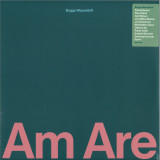
"Am Are" features special constellations of superb musicians that spans both generations and styles, and is an exploration of sonic textures, dynamic contrasts of mood and style, and ranges from sparse arrangements through to complex layers of dubs and loops and improvisational interplay.
The album begins with Bugge alone on "How?" with layers of undulating atmospheric synth, brought into focus by Bugge's piano at the forefront, creating a minimalist miniature that is both emotive and serene. For "Villrein" Bugge is joined by Elias Tafjord on drums, beginning with a santur-like synth figure, floating over ominous formant sci-fi bass synths bubbling and pulsing, and overlaid by phrenetic piano that only stops to lock into the santur figure before relaunching on its own journeys, all underpinned by Elias Tafjord's expressive drumming. "Is Anyone Listening?" demonstrate's Bugge's songcraft, layering muted percussive piano behind Rohey's distinctive and beautiful vocals punctuated by Martin Myhre Olsen's tenor saxophone, creating a soulful mood tinged with desperation.
"BAG" presents the first classic piano trio of the album - Bugge on piano and synths, Arild Andersen on bass, and Gard Nilssen on drums - announcing itself with an insistent riff, chattering drums, breaking into a progressive rock-style passage of bass and piano in unison. "Reel", the second track from this trio, is a mellow soundscape that evolves to become hazy urban downbeat jazz.
The second piano trio of Bugge (Rhodes and Korg MS20 synth), Sveinung Hovensjø (Electric Bass), and Jon Christensen (Drums and Bells) offers a completely different perspective. The first track "Render" features Bugge's Zawinul-esque Rhodes and monosynth leads, Sveinung's fuzz bass in something of a leading role, all carried with chattering gusto by Jon Christensen's dynamic drumming that brings texture and space as well as rhythm to the piece. "Vender" begins as an atmospheric piece, with reed organ-like synth washes, and octave-processed bass with a somewhat sitar-like tone, meandering until the track breaks down into drums and bass weaving around an insistent drum machine loop, dripping with synth pads and monosynth lead.
"JazzBasill" introduces the third piano trio - featuring Bugge (Piano), Jens Mikkel Madsen (Acoustic Bass) and Øyunn (Drums) - and offers a classic piano trio style with urban sophistication, that is lyrical, and interspersed with staccato cadences, giving a feeling of broken swing, slightly staggered yet driving forwards. The title track "AM ARE" is late night jazz, with baroque whispers, and distinctly melodic.
The final track, "Think Ahead" features the non-standard trio of Bugge (Piano/Organ), Oddrun Lilja (Guitar) and Sanskriti Shrestha (Tablas/Harp). Beginning with a minimalist piano figure, table, and sustained guitar, the track breaks down to a noise surge and ambient windscape, with guitar birds and abstract grinding, before returning to minimalist melodicism.
The shifting personnel across the album, as well as the three different studios in which it was recorded - Village Recording in Copenhagen, Rainbow Studios in Oslo, and his own Buggesroom Studio - creates a feeling of dynamic change and musical variety that is unified by Bugge's piano and keyboards. His playing moves between foreground, where he allows the music to elevate him, and background, where he move gently like a beneficent presence, tending to the demands of the spirit of the musical moments he has captured. It is an album powered by restless exploration and shaped by distinctive musical personalities; it is a journey through different moods, illuminated and brought into focus by Bugge's measured approach and guiding hand.
out of Stock
Last delivered 14 months ago available to reorder, subject to availability
Back in what now feels like a golden period in music and creativity, in the 1970s, many bands were formed by students. It almost seems like so many people could either sing, play, dance or write songs! This was also the case of several Woodland High School students in New York, who created Newban with fellow classmates.
The group started gigging around the tri-state area of New York, Connecticut and New Jersey, and were soon brought to the attention of legendary Bell Recording Studios audio engineer Malcolm Addey, who recorded with the band over a two-month period in 1974. Three years later the tracks made up two superb and sought-after albums released by tax scam label Guinness.
In 1977, Newban headed out to play the Los Angeles nightclub scene, closed a deal with A&M, and changed the band name to Atlantic Starr at the request of Herb Alpert.
For the first time on a 7” format, Soul4Real brings you two of the best songs from Newban. Enjoy the music...
out of Stock
Last delivered 18 months ago available to reorder, subject to availability
dreamcastmoe is the recording project of singer, songwriter, producer, and DJ Davon Bryant, a lifelong resident of Washington, DC. His music moves freely between moods and modes, hypnotic, romantic, traversing electronic, R&B, funk, soul, and hip-hop... Resident Advisor dubs it "soulful, cross-genre dance music." This ability to adapt and finesse, to twist in different directions while staying true and coherent in vision, can be traced to his home city and its complex cultural history. "Most Black kids in DC don't ever get to this point," he says. "This is what I am making this music for, in the DC tradition of soul and empathy and love that is rooted in this city. My music is for real people dealing with shit every day." A versatile, modern artist and collaborator, dreamcastmoe has thrived in the underground since his first uploads to Soundcloud and Bandcamp in 2017 and subsequent releases with labels like People's Potential Unlimited, Trading Places, and In Real Life Music. Bryant's laid-back personality, emotional honesty, and infectious energy shine through his work and how he talks about it, as Crack Magazine notes in their 2021 Rising feature: "a steady combination of confidence, creativity, and calmness." He grew up playing drums in church; he's worked dead-end jobs, had ups and downs, even sold off all his gear one time, but never stopped reinvesting in himself. He is quick to praise his co-producers, rattle off influences _ the visual feel of NBA 2K, the comedic timing of Bernie Mac, the savvy legacy of Duke Ellington, for starters _ and credit resourceful DC breakouts like Ankhlejohn that showed him the roadmap. His voice, a steady instrument, seemingly connects it all, capable of slow falsetto flow, swaggering talk-rap, and outright croon. His storytelling style is choppy yet fluid, like a mixtape, which is how Bryant sees Sound Is Like Water, his debut on Ghostly's International's freeform label, Spectral Sound. The two-part project culminates as a full-length LP release in November 2022. The first side, released as Part I, opens on the blurred beats of "El Dorado," which dreamcastmoe dedicates to his journey. It's a head-nodder, an off-kilter earworm co-produced by Max D (Future Times, RVNG Intl, etc.), with Bryant harmonizing hooks with synth jabs and a pitched-down presence. "Complicated" is the slow jam, delivered smoothly from a Saturday night crossroads. dreamcastmoe is contemplative and committed... gliding and locking ad-libs into skittering rhythms courtesy of co-producer Zackary Dawson _ but also willing to let something go, "acknowledging that everything in life IS NOT easy." "RU Ready" takes off from the jump as a tribute, challenge, and promise to his partner and his city ("The times you sat with me when I needed you the most / Told me the things that I needed to see / Young black man, really trying to be what I can be / And I'm really from DC). In its potent two-plus minutes, the sonics (co-produced by ZDBT) press the message, all cymbal crashes, breakbeats, and serrated synth lines. "Cloudy Weather, Wear Boots" is a blitzing dance-punk track made in collaboration with Jordan GCZ on Bryant's first trip to Amsterdam. The album's flipside opens on "Much More," the first of two synth-and-beat ballads co-produced by ZDBT. Later on "Long Songz," he claims, "I'm not writing love songs no more," prioritizing the vibe with "all my day ones." He calls it "a cry for more normal moments. Everything doesn't have to be a fantasy love story, more time spent getting to the money, growing, and making a way." He saves two of his most propulsive cuts for the finale, co-produced by Sami, co-founder of DC dance label 1432 R. As their titles suggest, "Take A Moment" and "Make Ya Mind" operate as anthems for movement, with Bryant free-flowing commands above wildly-styled percussion. Per Bryant, the latter is both "wake & bake jam" and a "dance floor bomb." His parting line: "Action / You got to show me action / Reaction." The world of dreamcastmoe straddles virtual reality and the realness of DC, images both imagined and lived-in. Bryant has a knack for unexpected melodies but what makes his music so exciting is his capacity to defy the expectations of genre and image. A fluid ingenuity and vulnerability bottled by Sound Is Like Water, and this is just the beginning.
out of Stock
Last delivered 18 months ago available to reorder, subject to availability
Dogma, die treuen Wahrheitssucher, veröffentlichen ihr selbstbetiteltes Debütalbum jetzt auf CD und LP. Das Album erzählt eine kraftvolle
musikalische Geschichte, die tief in die menschliche Psyche eindringt. Frontfrau Lilith sagt: „Auf unserem Debütalbum enthüllen wir eine rohe und
unverblümte Erzählung, die den Kampf gegen aufgezwungenen Glauben, ungerechte Zensur und die Befreiung von unlogischen Überzeugungen
beleuchtet. Es ist eine Reise durch verlorene Unschuld und eine Rebellion gegen archaische Zwänge. Ein kühnes Statement, das die Auflehnung gegen
gesellschaftliche Normen einfängt. Es geht darum, sich zu befreien, unsere Wahrheit anzunehmen und die uns auferlegten Beschränkungen
herauszufordern.“
Lilith führte weiter aus: „Visuell ist das Album-Artwork eine gewagte Reflexion der Allgegenwart der Lust in der Menschheit, unabhängig von allen
Bedingungen. Es dient als kühnes visuelles Testament, das die Wahrheit entlarvt, dass Lust ein inhärenter Teil unserer Natur ist, frei von jeglichen
auferlegten Beschränkungen wie falscher Moral und unlogischem Glauben.“ Dogma fordert uns auf, die Rebellion anzunehmen und unsere fleischlich
Gelüste zu entfesseln. Sie werfen die Ketten der Bescheidenheit beiseite und beschwören einen Sturm der Sinnlichkeit herauf, der unerschütterliche
Aufmerksamkeit und leidenschaftliches Mitmachen verlangt
out of Stock
Last delivered 7 months ago available to reorder, subject to availability
After a 30-year interstellar silence, the enigmatic producer Alien Signal—pioneering alias of Italian electronic composer Alex Silvi—reemerges with Whispers from Distant Suns, a transcendent odyssey that bridges retro-futurism and modern electronica. Hailed as a magnum opus, this album transcends genre boundaries, captivating ambient purists, downtempo aficionados, and even experimental listeners with its hypnotic fusion of analog warmth and digital precision.
Cosmic Tapestry of Sound
Drawing comparisons to Vangelis’ Antarctica and Alpha—but reimagined through a 21stcentury lens—Whispers from Distant Suns marries nostalgic synth textures with cuttingedge production. Silvi’s mastery of melody shines through in tracks like “Stardust
Memories” and “Fragile Eden” where shimmering arpeggios and celestial pads drift over robotic, glitch-infused drum patterns and sparse, meditative percussion. The result is a paradox: a retro-futuristic soundscape that feels simultaneously ancient and alien, familiar yet unexplored.
Listener Testimonials
Fans and critics have flooded forums with praise:
“An auditory revelation! It’s like Vangelis met Jon Hopkins in a nebula—vintage soul with a futuristic heartbeat.”
“The textures are gorgeously cinematic. Closing your eyes, you’re adrift in a Tarkovsky film scored for the Andromeda galaxy.”
The Vinyl Experience
Pressed on heavyweight vinyl, the album’s physical release amplifies its immersive qualities. The gatefold sleeve, adorned with surrealist astrophotography and metallic
foiling, mirrors the music’s cosmic ethos. Side A leans into Balearic serenity, with sundappled grooves and aquatic synth ripples, while Side B delves into darker, more
experimental terrain—think Aphex Twin’s Selected Ambient Works colliding with the organic rhythms of Jon Hopkins.
Maturity in Motion
This album is a testament to Silvi’s evolution. Tracks like “Seeds Of Light” and “Message from Andromeda Galaxy” showcase his refined ear for dynamics, balancing silence and sound with surgical precision. Vintage drum machines spar with glitches, while field recordings of crashing waves and interstellar static blur the line between Earth and cosmos. The closing track, “The Star Charts We Shared” crescendos into a 6-minute ambient requiem, leaving listeners suspended in a state of weightless awe.
Final Transmission
Whispers from Distant Suns is more than an album—it’s a transcendent odyssey. Spanning time, space, and the artist’s own creative evolution, this immersive work invites listeners to lose themselves in its ebb and flow. Designed for moments both intimate and expansive, its balearic-tinged atmospheres resonate equally through dawnlit Mediterranean terraces or the solitary glow of headphones in darkness. These are compositions that pulse, morph, and haunt the air long after the final note fades. A living soundscape meant to accompany life’s quiet revelations and clandestine joys—a soundtrack to your most personal moments, crafted as what the artist calls ‘private dance music.’
Tailored for the Discerning Listener
Whispers from Distant Suns is designed with the true connoisseur in mind. This album is a must-have for:
Vinyl Collectors & Audiophiles: Those who value the warmth and tactile experience of heavyweight, limited edition pressings
Electronic Ambient and Downtempo Fans: Listeners who appreciate immersive soundscapes that merge retro analog charm with modern digital innovation.
Retro-Futurism Enthusiasts: Fans of pioneering artists like Vangelis, Boards of Canada, and early Warp Records who seek music that bridges nostalgic synth textures with futuristic experimentation.
Experimental Music Explorers: Individuals drawn to sonic narratives that invite deep, contemplative listening—perfect for both introspective moments and immersive listening sessions.
This release is not just an album; it’s a curated experience for those who desire music as a multidimensional art form, merging the vintage allure of analog sound with a contemporary, cosmic vision.
For fans of: Vangelis, Biosphere, Jon Hopkins, early Warp Records.
out of Stock
Last delivered 16 months ago available to reorder, subject to availability
Bells Are Ringing is the debut EP by Melbourne Funk 10 piece outfit Mondo Freaks, released following on from the single of the same name and a thrilling Dub Version by Harvey Sutherland.
Mondo Freaks formed originally as a concept band, equipped with an ever-evolving setlist of late '70s and early '80s Funk classics, their journey has seen them invited to be the backing band for the Australian tours of such luminaries as Leroy Burgess (the producer and artist behind Boogie and Disco favourites Black Ivory, Logg, Aleem, Inner Life, and Universal Robot Band) and the iconic Evelyn "Champagne" King. Having performed at the iconic local Meredith Music, Golden Plains and Panama festivals and at numerous residencies Mondo Freaks have carved their mark, returning now to ring in a new era of groove-soaked original music.
The band revolves around the rhythm section of in demand session bassist Luke Hodgson and drummer Graeme Pogson (GL, The Bamboos). Gathering some of the finest musicians from Melbourne's legendary Soul scene, they're accompanied by five incredible vocalists including Jade McRae, Susie Goble, Francisco Tavares, Aaron Mendoza and Jason Heerah.
New tracks on the EP include "Find A Way", which hits straight away with a percussion and synth hook, blending Jade McCrae's vocal delivery with an uplifting message about finding hope in trying times.
Also included is the Harvey Sutherland Vocal Mix of "Bells Are Ringing", which keeps much of the spaced out Larry Levan, Shep Pettibone re-edit approach that was on his much lauded Dub Version.
It's easy to see why his remix skills have been in demand and utilised by Disclosure, Khruangbin, BadBadNotGood, Tycho, Boston Bun, Lucius, Jungle Giants, Genesis Owusu and Franc Moody. On his own releases Sutherland has collaborated with the likes of DāM FunK and Nubya Garcia.Tightening its hold on the dancefloor, the beefed-up rhythm section rolls deep into the nocturnal hours, as mesmerising reverb loops elevate the track skywards.
Luke and Graeme got to know Harvey Sutherland when they played together backing Leroy Burgesson his Australian tour in 2018. After that Luke and Graeme played in Harvey's live band across the world and then contributed his 'BOY' album. "We were thrilled when he turned in his Dub of "Bells"", Luke said. "A kind of 'what would Shep Pettibone or Larry Levan do?' moment. It's like being transported to Compass Point Studios in '81!"
Mondo Freaks make Funk inspired by late '70s / early '80s era as it gently moved beyond Disco. That era has continued to inspire many artists, but what sets Mondo Freaks apart is their live instrumentation plus a focus on vocals and great songwriting, creating something beyond simply instrumental grooves.In the studio and in their full live lineup Mondo Freaks are a formidable ensemble who take their sound beyond mere homage, without a hint of irony or any knowing winks. Mondo Freaks simply breathe life into a timeless sound and make it feel more relevant than ever.
out of Stock
Last delivered 18 months ago available to reorder, subject to availability
We're thrilled to welcome DJ Merci with four powerful tracks on the label! These DJ Tools are the perfect sound for our limited series and to conquer the dancefloors.
On A1 we start In The Middle with exactly this club feeling and an evocative vocal that couldn't be more appropriate for these times.
A2 continues with some funky drum loops and a jazzy sax. We love it!
On the flip, B1 starts really smooth with deep chords combined with a conga groove and continues
on B2 with bouncing drums and deep minimal house.
out of Stock
Last delivered 10 months ago available to reorder, subject to availability
Googling “paradise house”, the first results to pop up are an endless list of European b&b’s with whitewashed lime façades, all of them promising “…an unmatched travel experience a few steps from the sea”. Next, a little further down, are the institutional websites of a few select semi-luxury retirement homes (no photos shown, but lots of stock images of smiling nurses with reassuring looks). To find the “paradise house” we’re after, we have to scroll even further down. Much further down.
It feels like yesterday, and at the same time it seems like a million years ago. The Eighties had just ended, and it was still unclear what to expect from the Nineties. Mobile phones that were not the size of a briefcase and did not cost as much as a car? A frightening economic crisis? The guitar-rock revival?! Certainly, the best place to observe that moment of transition was the dancefloor. Truly epochal transformations were happening there. From America, within a short distance one from the other, two revolutionary new musical styles had arrived: the first one sounded a bit like an “on a budget” version of the best Seventies disco-music – Philly sound made with a set of piano-bar keyboards! – the other was even more sparse, futuristic and extraterrestrial. It was a music with a quite distinct “physical” component, which at the same time, to be fully grasped, seemed to call for the knotty theories of certain French post-modern philosophers: Gilles Deleuze, Félix Guattari, Paul Virilio... Both those genres – we would learn shortly after – were born in the black communities of Chicago and Detroit, although listening to those vinyl 12” (often wrapped in generic white covers, and with little indication in the label) you could not easily guess whether behind them there was a black boy from somewhere in the Usa, or a girl from Berlin, or a pale kid from a Cornish coastal town.
Quickly, similar sounds began to show up from all corners of Europe. A thousand variations of the same intuition: leaner, less lean, happier, slightly less intoxicated, more broken, slower, faster, much faster... Boom! From the dancefloors – the London ones at least, whose chronicles we eagerly read every month in the pages of The Face and i-D – came tales of a new generation of clubbers who had completely stopped “dressing up” to go dancing; of hot tempered hooligans bursting into tears and hugging everyone under the strobe lights as the notes of Strings of Life rose up through the fumes of dry ice (certain “smiling” pills were also involved, sure). At this point, however, we must move on to Switzerland.
In Switzerland, in the quiet and diligent town of Lugano, between the 1980s and 1990s there was a club called “Morandi”. Its hot night was on Wednesdays, when the audience also came from Milan, Como, Varese and Zurich. Legend goes that, one night, none less than Prince and Sheila E were spotted hiding among the sofas, on a day-off of the Italian dates of the Nude Tour… The Wednesday resident and superstar was an Italian dj with an exotic name: Don Carlos. The soundtrack he devised was a mixture of Chicago, Detroit, the most progressive R&B and certain forgotten classics of old disco music: practically, what the Paradise Garage in New York might have sounded like had it not closed in 1987. In between, Don Carlos also managed to squeeze in some tracks he had worked on in his studio on Lago Maggiore. One in particular: a track that was rather slow compared to the BPM in fashion at the time, but which was a perfect bridge between house and R&B. The title was Alone: Don Carlos would explain years later that it had to be intended both in the English meaning of “by itself” and like the Italian word meaning “halo”. That wasn’t the only double entendre about the song, anyway. Its own very deep nature was, indeed, double. On the one hand, Alone was built around an angelic keyboard pattern and a romantic piano riff that took you straight to heaven; on the other, it showcased enough electronic squelches (plus a sax part that sounded like it had been dissolved by acid rain) to pigeonhole the tune into the “junk modernity” section, aka the hallmark of all the most innovative sounds of the time: music that sounded like it was hand-crafted from the scraps of glittering overground pop.
No one knows who was the first to call it “paradise house”, nor when it happened. Alternative definitions on the same topic one happened to hear included “ambient house”, “dream house”, “Mediterranean progressive”… but of course none were as good (and alluring) as “paradise house”. What is certain is that such inclination for sounds that were in equal measure angelic and neurotic, romantic and unaffective, quickly became the trademark of the second generation of Italian house. Music that seemed shyly equidistant from all the rhythmic and electronic revolutions that had happened up to that moment (“Music perfectly adept at going nowhere slowly” as noted by English journalist Craig McLean in a legendary field report for Blah Blah Blah magazine). Music that to a inattentive ear might have sounded as anonymous as a snapshot of a random group of passers-by at 10AM in the centre of any major city, but perfectly described the (slow) awakening in the real world after the universal love binge of the so-called Second Summer of Love.
For a brief but unforgettable season, in Italy “paradise house” was the official soundtrack of interminable weekends spent inside the car, darting from one club to another, cutting the peninsula from North to centre, from East to West coast in pursuit of the latest after-hours disco, trading kilometres per hour with beats per minute: practically, a new New Year’s Eve every Friday and Saturday night. This too was no small transformation, as well as a shock for an adult Italy that was encountering for the first time – thanks to its sons and daughters – the wild side of industrial modernity. The clubbers of the so-called “fuoriorario” scene were the balls gone mad in the pinball machine most feared by newspapers, magazines and TV pundits. What they did each and every weekend, apart from going crazy to the sound of the current white labels, was linking distant geographical points and non-places (thank you Marc Augé!) – old dance halls, farmhouses and business centres – transformed for one night into house music heaven. As Marco D’Eramo wrote in his 1995 essay on Chicago, Il maiale e il grattacielo: “Four-wheeled capitalism distorts our age-old image of the city, it allows the suburbs to be connected to each other, whereas before they were connected only by the centre (…) It makes possible a metropolitan area without a metropolis, without a city centre, without downtown. The periphery is no longer a periphery of any centre, but is self-centred”.
“Paradise house” perfectly understood all of this and turned it into a sort of cyber-blues that didn’t even need words, and unexpectedly brought back a drop of melancholic (post?)-humanity within a world that by then – as we would wholly realise in the decades to come – was fully inhuman and heartless. A world where we were all alone, and surrounded by a sinister yellowish halo, like a neon at the end of its life cycle. But, for one night at least, happy."
out of Stock
Last delivered 3 months ago available to reorder, subject to availability
Each of the ten tracks on "mixtape suite" is likely to evoke such absurd associations in music lovers. The album authentically and unpredictably creates a feeling of total boundlessness with a global approach. Effortlessly uniting an entire record shop within itself. One time you think of Madlib or the Bee Gees, then of Joan Baez or Amon Düül, other times of Beck or Gorillaz. Between boom bap and Krautrock, disco styles, folk references and trip-hop vibes spread out organically. Analogue percussion blurs with 90s sampling sound aesthetics.
TIKHET sounds unplanned and anarchic, with a raw core and some well rounded patina on the outside.
1883 Magazin: "Keep an eye on this emerging act"
Mesmerized: "the project has all the elements needed for a powerful musical output..., an impressive debut for the visionary pair"
Indieshake: "Fucking love this"
out of Stock
Last delivered 18 months ago available to reorder, subject to availability
Recorded in 1967, Hank Mobley’s Third Season was a typically high-calibre hard bop outing by the tenor saxophonist with a 7-piece band featuring alto saxophonist James Spaulding, trumpeter Lee Morgan, guitarist Sonny Greenwich, pianist Cedar Walton, bassist Walter Booker and drummer Billy Higgins.
This stereo Tone Poet Vinyl Edition was produced by Joe Harley, mastered by Kevin Gray from the original analog master tapes, pressed on 180g vinyl at RTI, and packaged in a deluxe gatefold tip-on jacket.
out of Stock
Last delivered 18 months ago available to reorder, subject to availability
Soul music has always been in Paul Weller’s blood from early Jam covers of Martha & the Vandellas 1963 classic ‘Heatwave’. Along with other forms of music, soul found its way into Paul’s record collection, nourishing his ears and informing his own songwriting
We don’t need to recap a questing musical career from the Jam to the Style Council and then blossoming into one of the most productive and revered careers of any UK solo artist. Paul has written anthems, standards and a songbook that have always developed from his own feelings.
Whilst Paul has talked about his love of soul music he has, before now, simply been too busy to sit down and curate a collection of his favourite tracks and get it into the record racks.
Ace Records are honoured and delighted to finally release that Paul Weller curated collection which he has aptly titled, “That Sweet Sweet Music”.
This 2-LP set and CD open the curtains on 26 tracks that are some of Paul’s favourite soul records most of which nestle on vinyl in his own collection. He can still recall paying £70 for his copy of Jon Lucien’s 1971 ‘Search For The Inner Self’ 7” at a record shop in Leicester in the 90s. Some of these tracks are soul classics like James Carr’s 1966 ‘Pouring Water On A Drowning Man’ and Brother to Brother’s brilliant take on Gil Scott Heron and Brian Jackson’s ‘In The Bottle’ from 1974. Others are deliciously obscure wonderous gems like the A-side of Blackrock’s sole 1971 single ‘Blackrock “Yeah, Yeah”’, ‘Life Walked Out’ from the same year by the Mist or Syl Johnson’s ‘Black Balloons’ taken from his 1970 album “Is It Because I’m Black?”.
There are plenty of big vocal hitters such as Darrell Banks, Spinners, Joe Simon, O.C. Smith, the Dells and Betty Davis. Whilst the core is vocal soul the music does branch out with Paul selecting a wicked instrumental from the flipside of the Isley Brothers’ ‘Twist & Shout’ from 1962 and the funky jazz of the Headhunters ‘God Made Me Funky’, the A-side of their first 1975 seven-inch.
If every significant artist has an underrated gem in its catalog, then Mirage is that album for Fleetwood Mac. An obvious return to relative simplicity after the dramatic tension of Rumours and experimental ambitions of Tusk, the 1982 album finds the band re-grouping after a brief hiatus and again climbing to the top of the charts. Extremely well-crafted, well-produced, and well-performed, the double-platinum effort distills the group’s hallmark strengths into a filler-free set that never runs short of addictive pop hooks or daft accents.
Sourced from the original analog master tapes, pressed at Fidelity Record Pressing in California, and housed in a Stoughton jacket, Mobile Fidelity’s numbered-edition 180g 45RPM 2LP set presents Mirage in reference sound for the first time. The efforts co-producers/engineers Ken Caillat and Richard Dashut went to capture the splintered albeit formidable band can be heard with stunning accuracy, range, depth, and detail.
Though Rumours understandably gets a permanent spot in the audiophile hall of fame, the smooth, clear, and dynamic sonics on Mirage confirm that the record that stood as Fleetwood Mac’s last effort for five years deserves a place in the same vaunted arena. The presence and imaging of Mick Fleetwood’s percussion alone on this reissue might have you wondering how this slice of soft-rock bliss has gone under-noticed for decades. Other prized aural aspects — separation, definition, impact, tonal balance — are also here in spades.
Like much surrounding Fleetwood Mac in the 1980s, arriving at Mirage was not easy. Caillat searched for studios located outside of Los Angeles on a mission to change up the vibe of the band’s prior recording sessions. Everyone settled on Le Chateau in France, where relations between some members remained icy — and cooperation with the producers strained. Battles with exhaustion, bitterness, and addiction further informed the proceedings at the 18th century complex in the French countryside, where even communal meals were allegedly eaten in silence.
Inevitably, the feelings that co-producer Lindsey Buckingham, Stevie Nicks, Christine McVie, and company harbored — as well as the situations in which they found themselves — drifted into the songwriting. In its rapid ascent to rock-star royalty status, Fleetwood Mac drifted apart, embarked on solo pursuits, and found it was lonely at the top. Emptiness, the illusion of dreams, the longing for love, the want to escape to bygone times of innocence and happiness: Such themes inform a majority of the narratives. Even if the lyrics regularly take a back seat to easygoing arrangements that allow Mirage to come on like a refreshing breeze on a sunny summer afternoon.
Home to three Top 25 singles in the U.S. and having occupied the pole position of the Top 200 album charts for five weeks, Mirage rightfully resonated with the mainstream and attracted listeners on both sides of the pond. And how, via a smart blend of sugary melodies, warm harmonies, interlaced notes, nimble rhythms, taut structures, and passionate vocals. Not to mention the presence of what arguably remains Nicks’ signature song, the biographical “Gypsy,” a meditation on the loss of her close friend Robin Anderson that teems with majesty, mystery, and mysticism — and which gets an assist from Buckingham’s shaded tack piano and richly strummed guitar chords.
Its ranking as an all-time classic aside, that No. 12 hit has plenty of company when it comes to brilliant pop turns on Mirage. On the subject of Nicks, the raspy singer gets a little bit country on “That’s Alright.” Its clip-clopping pace and two-stepping progression complement subtle vocal swells that emerge during the final verse of a tune that is ostensibly about leaving but still conveys forgiveness and grace. And what would a Fleetwood Mac record be without Nicks drawing on the tools of the supernatural — cards, dreams, wolves, and the like — on the twirling “Straight Back.”
Despite the potency of Nicks’ primary contributions, Mirage seemingly unfolds as a tight competition between Buckingham and McVie — and one that ultimately ends in a draw. Buckingham’s salvos include the contagious “Can’t Go Back,” a yearning to time-travel back to the past that’s complete with hall-of-mirrors backing vocals; “Oh Diane,” out-of- left-field ear candy sweetened with hiccupped vocals and salt-and-pepper-shaken grooves; the chiming “Eyes of the World”; and “Empire State,” a delightfully fluttering track whose high-range vocals, lap harp notes, and ringing xylophones hint at the galaxies of sound that would erupt on Tango in the Night.
Then there’s McVie. As elegant, understated, and coolheaded as she’s ever been on record, she pours her heart out on cuts that revolve around her inevitable split with Beach Boy Dennis Wilson. In the process, she punctuates Mirage with a characteristic not always associated with catchy pop music: emotional weight, and the sense of dreaded acceptance in the face of dreams deferred.
“I wish you were here/Holding me tight,” McVie sings over a delicate melody on the album-closing piano ballad “Wish You Were Here.” Though they hoped otherwise, for the members Fleetwood Mac, distance and separation were always close at hand. Believing otherwise, inviting nostalgia, and pretending everything was fine only amounts to a mirage.
Because Sound Matters' meticulous One-Step process creates the definitive sounding audiophile version of k.d. lang Ingénue. This all-analog release comes from the original first-generation master tapes for the first time. Vinyl guru and editor Michael Fremer says, "This k.d. One-Step is insane – It's otherworldly great!"
This One-Step version is strictly limited to 3,000 copies. The album is housed inside a top-quality, foil-stamped, uniquely designed numbered slipcase. The enclosed gatefold jacket will feature an "old style" tip-on jacket with the original artwork.
Special care has been taken to faithfully preserve the original sound with exceptional clarity and depth, capturing the recording's nuances and subtleties at every step to create the best sounding record possible.
The One-Step process is highly regarded among audiophiles and collectors for its unparalleled sound fidelity and represents the pinnacle of vinyl manufacturing craftsmanship.
Ingénue was originally released March 17, 1992 and is k.d. lang's second solo album.
Upon release, the album charted at #18 in the US, #13 in Canada, #3 in the UK and Australia and #1 in New Zealand. Nominated for six Grammy® Awards with the breakout single "Constant Craving" winning a Grammy® Award for Best Female Pop Vocal Performance. "Miss Chatelaine" and "The Mind of Love" were follow-up singles.
k.d. received universal critical acclaim for the album from publications like Mojo, Pitchfork, Rolling Stone, Uncut and dozens more! Today, Ingénue is a true classic album and considered one of the great audiophile recordings of the modern era. This One-Step version certainly proves that!
Notes for This Release:
Ingénue was originally recorded and mixed on analogue tape and produced by Greg Penny, Ben Mink and k.d. lang. The original analogue master tapes were directly used as the audio source for this One-Step pressing! This is the first time the analogue tapes have been used as a vinyl source for this brilliant recording. The results are stunning.
Because Sound Matters used the Neotech VR900-D2 180g High-Performance vinyl compound, which is the same as what is known as Super Vinyl – the best in the world.
Chris Bellman at Bernie Grundman Mastering cut the lacquers with meticulous care! He also did the original mastering of the CD release in 1992.
Dorin Sauerbier at Record Technology, Inc (R.T.I.) has been plating records for decades and is considered the best in the world – he also has done more One-Step processing than anybody. This is a vital step in the process to ultimately delivering the absolute best sounding version of Ingénue ever.
Record Technology, Inc did the pressing – using the exact pressing machine used for so many other One-Step releases. The QC team is constantly monitoring each copy as it comes off the press.
Because Sound Matters' slipcases and gatefold "old style" tip on original art jackets were printed by world-renowned Stoughton Printing Company.
This new all-analogue edition will draw you into the music as never before—at least it did me. The sonic picture is rich, well-textured, harmonically saturated, spatially deep and all the rest of the audiophile buzzwords that no doubt the producers (who include lang) intended to give listeners but until now couldn't fully deliver. The musical flow will have you swooning in your seat. Before the opener 'Save Me' concludes you may already feel overwhelmed and in need of lifting the stylus to catch your emotional breath...What a treat!
-Michael Fremer, Tracking Angle, Music 11/10, Sound 11/10
Ramu Records presents their third release – ‘S Gytis - Aš Čia’ (translated as ‘I Am Here’). It’s a full-length double vinyl album, which is S Gytis’ second release. The sound of Gytis’ creation evolves alongside his life. Having swapped city noise for a rural setting, he began exploring new directions and this time settled on acoustic instruments. The deep experimental sound is infused with freshness and vitality. The entire album spans diverse spaces and emotions. Each track tells a unique story – a story about feelings or the spaces that Gytis wants to introduce us to.
Black Fairy is a fairy tale, but not in the traditional sense. When writing this play, i did not want to re-create the types of fantasies which are so common in Childrens theater. There is no kind of magic that can relieve black children from the oppression that retards their development. However, i do feel giving them a better understanding of their heritage can help them achieve their true potential. And those of us who are concerned with their development should try to expose them to knowledge that gives them a positive sense of identity. Although i do feel a chldren's play should be entertaining, I also feel it should be educational. Also, because there are so few children's plays which reflect the black experience, I wanted to write a play that Black children could identify with.
"Black Fairy" is a musical drama about a black fairy who lacks pride in herself and feels she has to offer Black children. But when she meets Black Bird and Queen Mother (Who take her to ancient Egypt, East Afrika, a southern slave plantation and the streets of Harlem) she begins toget a better understanding of her heritage. Her journey through the past enables Black Fairy to meet Aesop, Brer Rabbit, Brer Fox, Uncle Remus, Stag-o-lee, Leadbelly and many other characters in Black folklore and Black history. At the end of her journey, Black fairy realizes that "Being Black is nothing to be ashamed of" and is then able to share her knowledge with other Black children. Even though Black Fairy doesn't completely resolve her dilemma, having a knowledge of her heritage does give her more confidence to cope with the future.
During ther summer of 1974 "Black Fairy" was performed for over four thousand children in Chicago. And, in April of 1975, it played to over two thousand children in Detroit at Mercy College.
"Black Fairy" is the only the first of many children's plays we hope to produce at the Better Boys Foundation. There is an Afrikan proverb which says: "Children are the reward of life". We at Better Boys Foundationm are dedicated to this belief, and feel that helping childrren to appreciate their heritage is one means of showing our concern for their development.
Lucy Dacus, die als „eine der besten Songwriterinnen ihrer Generation“ (Rolling Stone) gilt, kehrt am 28.3. mit ihrem neuen Album „Forever Is A Feeling“ zurück. Als Bandmitglied der Indie-Supergroup „Boygenius“ gewann sie mit deren Debütalbum „The Record“ drei GRAMMY® Awards. In ihrem vierten Soloalbum schreibt Lucy Dacus in ihren Songtexten offen über Sexualität und den Turbulenzen der Liebe. In 13 Tracks, die von komplexen Instrumentals-Arrangements bis hin zu minimalistischen Sounds reichen, beschäftigt sich mit dem Thema Vergänglichkeit und dem Gefühl der „Unendlichkeit“. Das Album Cover ist ein Porträt von Lucy, das von dem Künstler Will St. John gemalt wurde. Außerdem holte sich die Indie-Rock Sängerin bei „Forever Is A Feeling“ nicht nur kräftige Unterstützung von ihren „Boygenius“ Bandmitgliedern Phoebe Bridgers und Julien Baker, sondern auch von Folk Musiker Hozier, Blake Mills, Bartees Strange, Madison Cunningham, Collin Pastore, Jake Finch and Melina Duterte.
Lucy Dacus, die als „eine der besten Songwriterinnen ihrer Generation“ (Rolling Stone) gilt, kehrt am
28.3. mit ihrem neuen Album „Forever Is A Feeling“ zurück. Als Bandmitglied der Indie-Supergroup
„Boygenius“ gewann sie mit deren Debütalbum „The Record“ drei GRAMMY® Awards. In ihrem vierten
Soloalbum schreibt Lucy Dacus in ihren Songtexten offen über Sexualität und den Turbulenzen der Liebe.
In 13 Tracks, die von komplexen Instrumentals-Arrangements bis hin zu minimalistischen Sounds reichen,
beschäftigt sich mit dem Thema Vergänglichkeit und dem Gefühl der „Unendlichkeit“. Das Album Cover
ist ein Porträt von Lucy, das von dem Künstler Will St. John gemalt wurde. Außerdem holte sich die
Indie-Rock Sängerin bei „Forever Is A Feeling“ nicht nur kräftige Unterstützung von ihren „Boygenius“
Bandmitgliedern Phoebe Bridgers und Julien Baker, sondern auch von Folk Musiker Hozier, Blake Mills,
Bartees Strange, Madison Cunningham, Collin Pastore, Jake Finch and Melina Duterte.
OHYUNG aka Lia Ouyang Rusli describes their new album as “my trans self and my former self in conversation, from both perspectives.” The record represents their lengthy, complicated, but crucial journey between lives, strewn with both doubt and excitement. It is an ecstatic, pop-oriented shift in direction from an artist primarily known for noise, experimental hip-hop, and ambient music, but carried with sleek confidence, maturity, and a silvery, hallucinogenic shimmer that reveals Rusli’s experimental background. It is, writes Rusli, “sometimes written from a dark place and other times from a place of happiness.” Throughout, darkness and light rise and fall in layers of phased strings, trip-hop drum production, and earworming vocal lines.
Also a film score composer, Rusli’s songwriting craft is meticulous and nuanced. You Are Always On My Mind was, perhaps surprisingly, formed primarily from processed “generic string loops” found in online sample packs - a strange and wilfully jarring reminder that what seems to be is not always what is. Recontextualised, these string loops enshadow the simplicity of their origins and reveal a grace and purposefulness perhaps not even imagined by their authors, subtly drawing out euphoria and tension in equal balance.
Rusli also writes of the influence of rave culture central to their transition, and of the record’s production and theme. “It’s a declaration of love for raves and the dark hazy rooms that helped me to be free and true with myself— seeing other people who are so free and beautiful and thinking that one day that can be me— that’s me in the future.” But there is also a fear and unease present. Key moment “no good” explores “the worst version of myself as a trans person, feeding doubt to my pre-transition self” with its core lyric anyone can see / I’m no good for you, delivered over a relentless beat, swooning strings, and glistening synthesis.
Later, “i swear that i could die rn” renders a Spectreish Motown beat lamenting and lush with breathy synths and knife-edge melodies that eventually yield a hazy, gliding string section, created again from mutated, spliced, and transitioned royalty-free sample packs. The track is about “seeing my beautiful friends at raves and feeling at home appreciating the harsh noises of hardcore techno and acid. Feeling that I could die at this moment and be happy.”
As a founding member of Dublin experimental folk group Lankum, Ian Lynch explores submerged leylines of music and song. Forging a musical path that is all at once dark, mysterious and foreboding, but ultimately transcendental. His new solo project One Leg One Eye sees him taking a fresh approach to musical arrangement culminating in a sound that is more rooted in the raw aesthetics of second wave black metal than contemporary folk. The project was born across 2021, a period in which Lynch was able to enjoy the freedom of experimenting and exploring different paths of sound design without expectation or pressure. Seeking out interesting settings to record music and gather field recordings, there are several environments, external and interior, whose respective essence have seeped into the spirit of the music and come to represent Lynch’s artistic approach and development with this singular debut album, …And Take The Black Worm With Me. Rediscovered spaces in Dublin and the familiar enclave of his bedroom are intrinsic to the distinct and sometimes harrowing atmosphere conjured throughout the album’s five enveloping compositions. One particular location, an abandoned factory where his father worked when Ian was a child, provided a space of great inspiration and intrigue during this time. Lynch frequently visited the large abandoned warehouse and sang with his shruti box, contented in his solitude. ‘I’d Rather Be Tending My Sheep’, grew into existence from those initial sessions, eventually finding a home as an emotive centrepiece to the album. Reflecting on the overall recording of …And Take The Black Worm With Me, Lynch says, “Everything I was doing with these songs was all kind of new to me; experimenting with different sounds, textures and palettes and seeing what I could come up with by piecing it all together. I spent about a year making the album. I loved the whole process because it was basically just me in my bedroom recording everything. The experience of recording like this and having my own time to do it was amazing. I could focus on recording a specific element and happily spend all day working on that one part, doing it as many times as I wanted. At the end of the day if it didn’t feel right, I could just try it again the next day. When you’re on your own you can spend as much time as you want on particular parts until you feel that it’s absolutely perfect. I found that to be a really liberating experience. It was probably my favourite experience recording music.” The collection of songs (and their chronology) featured on …And Take The Black Worm With Me tell a story unique to Lynch’s experiences with anxiety and recognising his shadow self. Whilst the album became an outlet of personal expression for Lynch, the overarching themes and subsequent journey to confront one’s internal dichotomy of light and dark before accepting this inherent duality is universally shared. The eerie and often unsettling world contained within the album’s texturally dense opener ‘Glistening, She Emerges’, driven by the captivating drone of distorted uilleann pipes, immediately immerses the listener in this transportive work. It descends with a great heaviness, yet woven throughout the arrangement is a fascinating and indescribable entity that draws you further into this otherworldly dimension. This mood continues as the tracklist progresses and transitions into Lynch’s haunting realisation of ‘Bold and Undaunted Youth’ which further demonstrates a cinematic influence to Lynch’s compositional style. Sonically, Lynch effectively builds an impressively vast terrain with brilliantly murky lo-fi recording techniques and an unshakable curiosity to move beyond conventional structures and play with the timbre of the instruments available to him. From recording hurdy-gurdy or concertina to tape and experimenting with loops and effects pedals to stitching field recordings together, there’s an intimacy established between Lynch and his audience established through the simultaneously eerie and beautiful tones courting through …And Take The Black Worm With Me. This culminates in ‘Only the Diceys’, the extraordinary closing track in which we reach a place of resolution mapped into the album’s narrative structure. Mixed by longtime collaborator John ‘Spud’ Murphy in his Dublin-based Guerrilla Sounds Studio and mastered by Harvey Birrell …And Take The Black Worm With Me features contributions from Ruth Clinton (Landless) on church organ and vocals by Laurie Shanaman (Ails, Ludicra). Of Shanaman’s participation, in particular, which further illustrates the lo-fi and DIY ethos to the recording, Lynch says, “Laurie is my favourite black metal vocalist of all time and so I reached out to her hoping to have her involved in some way. She did, and she features on the opening track by providing some incredible screams. She recorded them into her phone and sent them over to me; what appears on the album is literally a phone recording of her screaming in her kitchen!” …And Take The Black Worm With Me continues Ian Lynch’s groundbreaking work with Lankum; recontextualising traditional forms and generating new spheres of music in his wake, confirming his status as one of the most interesting and innovative artists working in Ireland today.
Although still very much a secret, Oakland, California's Justin Pinkerton has perfected and expanded his Futuropaco project to a stunning degree over the past seven years. The one-man band is deeply rooted in Pinkerton's masterful drumming, which builds on the legacy of 1960's and 1970's legends such as Tony Allen and Jaki Liebezeit. But he's an accomplished multi-instrumentalist as well, and the Futuropaco sound is a colourful fusion that sees him throw fuzz guitars, flutes, vintage synthesizers and Anatolian string instruments into the mix - seemingly without much effort. The second and final volume of the "Fortezza Di Vetro" series feels like a conclusion, the sound of an artist reaching his creative zenith. It's an experimental album, yet immediately seductive in its energy - channeling the vibey art-rock of Tortoise, Black Sabbath riffage and vintage Italian film music in equal measures. It's such a refined and esoteric blend, yet hits so directly. It's simply impossible not to crank the volume knob once this slab of vinyl is on the turntable, followed by immediate head nodding. Buy the ticket, take the ride. Justin Pinkerton is a vastly talented rhythmsmith, best known as a member of Californian stoners Golden Void. On this project he plays all the other instruments too so he can do what he blooming well feels. And it's not as if the drum solos go on for twenty minutes like those of John Bonham and his pale imitators. Nope. Into tracks that are both jam-packed and concise, Pinkerton has squeezed his love of vintage Italian library music, classic krautrock and heavy psych rock. At one point it suggests Grails have been performing super-speed cover versions of fusion-era Miles Davis with Adrian Younge on production. -The Quietus Futuropaco returns in a big way with Fortezza di Vetro, a buzzing, groove-heavy album that expands on what came before while staying true to the project's origins. Dizzying, fuzzed-out psych with just the right amount of melancholy for good measure. Justin Pinkerton and Futuropaco have done it again. Fantastico! -Complex Distractions
Apollo / R&S are delighted to welcome back The Primitive Painter, aka the duo of Roman Flügel and Jörn Elling Wuttke for a timely reissue of their 1994 lost classic self-titled album of sonorous IDM.
Growing up in Frankfurt, in the 80s and 90s the duo met at an indie rock club in their home town of Darmstadt, bonding over their shared obsession with the first wave of acid, Chicago house and early Detroit techno as well as their patronage of now iconic Frankfurt club nights like The Omen or Dorian Gray or the infamous Delirium Record shop run by scene stalwarts Ata (Robert Johnson) and Heiko MSO (Playhouse).
Taking inspiration from the likes of The Black Dog and Transmat as well as seminal compilations such as Planet E’s Intergalactic Beats and Warp’s Artificial intelligence compilation the duo honed their inventive take on the Detroit techno blueprint under the monicker Acid Jesus, debuting on their freshly minted Klang Elektronik label. The label was started in conjunction with Ata and Heiko after Fluegel & Wuttke (regular patrons of the Delirium store) pressed a demo on them, muttering the immortal line; “Please listen to the tape, we are big Mr. Fingers fans.”
Through the mid ’90s the project flourished giving rise to a classic album and a brace of singles that number amongst the best of the era’s techno, winning them a influential fans most notably Sven Väth, David Holmes and Andrew Weatherall who invited them to play live at one of the legendary Sabresonic parties in London.
Alongside the success of the Acid Jesus project, the duo found great inspiration in outside of the club, including an ambient happening when the KLF came to play Frankfurt; “There were live sheep eating grass on stage while they played at Mark Spoon’s club XS”, as well as cinematic influence from the likes of Jim Jarmush and Wim Wenders. It was however the euphonic IDM grandeur of Apollo Recordings self titled compilation of 1993 that really got their creative juices flowing: “It was a ten track compilation with artists like David Morley, Model 500, Aphex Twin which still sounds so good today,” Jörn enthuses. “ It was really the trigger to go away from the Detroit sound and more towards the big melodies of B12 etc.”
Deciding to make their tribute to this style of music the duo turned out 10 tracks of gauzy, melodious electronica in a white hot fever, one after another over the ensuing months. Settling on a name for the new project they picked ‘The Primitive Painters’ taking inspiration from the band Felt. “We are both children of the C86 movement,” explains Jörn. “this attitude of noisy art school influenced rock like Primal Scream, MBV, The Jesus & Mary Chain really inspired us to take a DIY approach to our music.”
They sent the resulting demo cassette to Renaat at R&S / Apollo. “We really had no expectations,” Jörn explains. “So we were shocked and delighted when we received a fax saying that he wanted to release it”.
The resulting release was bungled by an R&S mix up that attributed the album to the duo’s own Klang Elektronik label which confused both fans and distributors alike, denying the release the critical boost and attention that it so richly deserved. Accordingly the release slipped out without much fanfare, with a chastened Fluegel & Wuttke returning to their Acid Jesus activities which would eventually lead to their blockbusting success as Alter Ego.
Over the ensuing years the reputation of The Primitive Painter album has only grown, with second hand copies (only 500 vinyl were pressed) changing hands for exorbitant amounts on Discogs, leading us to this opportune moment of a richly deserved ‘first’ release on the label for which the project was started, Apollo / R&S.
“This really brings us full circle,” says Jörn. “Apollo / R&S meant and means so much to us as artists and so it was bittersweet to not have the official release - to put that right all these years later feels really good.”
This new vinyl release comes in re-created original gatefold artwork and includes all original 10 tracks (Stoned Soul Picnic was previously on the CD only).
out of Stock
Last delivered 14 months ago available to reorder, subject to availability
Tappa Zukie is not only one of Jamaica’s greatest DJ’s, is also a much respected producer and arranger. Looking back through his master tapes we have found a lost release that due to being a worldwide recording artist and the pressures that this carries, it has stayed on his musical shelf and been passed over... until now.
When rhythm was King way back in the 1970’s, the predominant feature of the final mix down would in most cases be the drums and bass. Bringing drums and bass to the fore, the other instruments that create the tunes mood would take a back seat in the mix. With such fine musicians in the horn sections as Vin Gordon, Deadly ‘Headley’ Bennett and the unstoppable Tommy McCook, it sometimes felt, their services if nothing else were slightly underused.
So one way of rectifying this situation was one that Tappa himself instigated, putting a release together by picking some of his favourite productions that carried classic horn lines alongside those tightly recorded rhythms. Pushing those horn lines up in the mix and so making a feature of some of those touches that although added some colour to the original cut, laid back in the mix to the more Sound System friendly drum and bass cut.
When looking at the music with this approach, some of the other influences that were also in Tappa’s mind can be noticed more. Maybe it’s a Jazzier / Bluesy feel shining through. A strange thing happens that almost takes the song down the avenue of a soundtrack album. An unreleased film score to accompany an unreleased film.
So sit back and enjoy a lost release that time and place did not find time to see the light of day. As the opening track testifies and in the immortal words of Mr Tappa Zukie himself.. “Your Musical Daddy is back... Horns Up !!!!”
out of Stock
Last delivered 18 months ago available to reorder, subject to availability
The Crystal Hum is the debut vinyl release by Taiwan-based artist Yuching Huang and her first release for Night School.
A beguiling dreamscape of crackles, spluttering, love-struck Casios presided over by the the spectral vocal and guitar work of Huang, Yuching sings love songs at the end of this world and the beginning of the next. Recorded during a hiatus from her group Aemong (a duo with artist Henrique Uba) in Berlin, these songs elevate Huang’s unique vocal style and grasp of atmospherics. The Crystal Hum deconstructs balladry, Garage, guitar music and reforms it into a
unified ghostly otherworld version of these languages.
The Crystal Hum thrums with buried desire, trails of nocturnal reverb seeping out of apartment windows, diaristic vocal performances and deeply emotive, evocative Western-style strings. Formulated by Yuching Huang after periods of frustration and experimentation, the album is an exercise in minimalism and paring back, with some tracks like JohnJohn featuring little else than an elastic bass, spring reverb trails, an interjecting vocal and swelling, dislocated synths. The effect is spellbinding, the soundtrack to getting lost in the labyrinthine, closed streets of Venice, Taipei, Hong Kong, or mirror versions of them in the imagination.
On opener Fly! Little Black Thing, a subterranean funk bassline roots Huang’s singing, a rudimentary, unreliable beat floundering in whimsy underneath. Demure, dream Dance music, Huang references classic lo fi experimenters Suicide and Arthur Russell as well as Night School label mates The Space Lady and Ela Orleans. In fact, after the release of Aemong’s third album Crimson, Huang credits the direction of The Crystal Hum to being enchanted by The Space Lady’s Greatest Hits,
the landmark lo-fi recording made by Susan Dietrich Schneider in 1990. The new, minimalist approach to her sound world reveals and shrouds in equal measure. On the heart-melter Love, a sultry mid-tempo Casio + bass backing drops into the ether with Huang’s vocal swimming in preternatural void before emerging anew, in awe at the world. Every chord change heralds new perspectives, every guitar flurry swells and drips emotion, nothing is wasted and space billows out from between the grooves.
Huang never reveals more than necessary, making this an in-between love album: the right amount of mystery and darkened mirror shines wanely on The Crystal Hum while remaining fragile and vulnerable in the sweet spots. Turning over in pillowing smoke and night in the dark corners, Huang sings in both Mandarin and English. The songs speak of earthly matters seemingly at the edge of dissipating into nothing. Distorted, beguiling Sambas warble like sweating dancehalls in an imagined Lynchian 60s, as on Thoughts. Closer You, An Illusion warps a classic 60s Girlgroup bassline beloved of the likes of Les Rallizes
Denudes into a slight ballad on the edge of the void, held back by the teary-eyed, wistful and enveloping vocal cooed by Huang. Each song feels like a love song dedicated to the bits between worlds, between beats, the negative space between people where desires, feelings and loss hangs in the air, resolute and unresolved.
out of Stock
Last delivered 2 years ago available to reorder, subject to availability
Pacific Coliseum (aka Jamison Isaak) also known as Teen Daze releases his new album : ‘Voice Wave’ ; his first release since 2020’s ‘How’s Life’. The winner of the Juno Awards for Electronic Album of the Year 2023 presents a new work even more immersive than before. Across 12 tracks, the album weaves through a kaleidoscope of different genres and sounds, all with Isaak's characteristic warm production.
‘Voice Wave’ is the new album from Pacific Coliseum (aka Jamison Isaak) also known as Teen Daze, his first release since 2020's, How's Life. Across 33 minutes, the album weaves through a kaleidoscope of different genres and sounds, all with Isaak's characteristic warm production. The album features collaborations with balearic legend Ruf Dug and Italian party starters, Eternal Love. Influenced by his love of All Things Balearic, the theme of the album is succinctly summed up in the repeated phrase of the track, "Understanding": "Let go of what you're feeling." Let go, and let the sounds of Voice Wave crash over you.
out of Stock
Last delivered 18 months ago available to reorder, subject to availability
Yukimi, die gefeierte Sängerin und Mitbegründerin der Grammy-nominierten Band, Little Dragon, veröffentlicht ihr Debütalbum „For You“ am 28. März 2025 bei Ninja Tune.
Mit ihrem Debüt-Soloalbum löst sie sich von einer Band und schafft einige ihrer schönsten und intimsten Werke, die es bisher gab: sehr persönlich und brillant nachvollziehbar. Auf „For You“ verwebt Yukimi auf elegante Weise Musikstile von Jazz über Soul und elektronischen Pop bis hin zu Hiphop, Folk und Psychedelic, aber die Themen ihrer Solosongs gehen tiefer als je zuvor und umfassen Liebe, Verlust, weibliche Energie und angeborene Widerstandsfähigkeit. Die Zusammenarbeit mit Erik Bodin (Schlagzeug bei Little Dragon) und Lianne La Havas war für Yukimi das erste Mal, dass sie mit einer anderen Frau Musik schreibt und kreiert, was ihr erlaubt, ihre weibliche Energie auf eine befreite und persönliche Weise auszudrücken. Passenderweise geht es in den Texten des Songs um die Erforschung ihrer inneren Stärke während herausfordernder Lebenserfahrungen. Es ist ein bemerkenswertes Statement einer Künstlerin, die eine neue Phase ihrer Karriere als Solokünstlerin einleitet, jedoch mit der Gelassenheit und Intuition einer „alten Häsin“ mit jahrelanger Erfahrung im Musikbusiness. Yukimis markante und anmutige Stimme hat seit der Gründung von Little Dragon ihre Fans in ihren Bann gezogen. Der Erfolg der Band führte dazu, dass sie auf einigen der größten (und kleinsten) Bühnen der Welt auftrat - von Coachella bis zu NPRs Tiny Desk - und mit Künstler:innen wie u.a. KAYTRANADA, Killer Mike, Gorillaz, Tinashe, Mac Miller, De La Soul, BADBADNOTGOOD, DJ Shadow, ODESZA, Kali Uchis, Faith Evans, Dave Sitek, Big Boi, Flume und JID zusammenarbeitete.
- Format: 140G schwarzes Eco Vinyl mit bedruckter Innenhülle und Downloadcode-Sticker