Luca Yupanqui was not yet born when she recorded her debut album. The music on the aptly titled Sounds of the Unborn is the expression of life in its cosmic state _ pre-mind, pre-speculation, pre-influence, and pre-human. It is the first album created by a person while they were still inside the womb, the expression of a soul that hasn't yet seen the light of day nor taken a single breath of air. It is a message that comes from a different realm, a sublayer of our existence. Sounds of the Unborn was made with biosonic MIDI technology, which translated Luca's in utero movements into sound. With the help of her parents, Psychic Ills bassist Elizabeth Hart and Lee Scratch Perry collaborator Iván Diaz Mathé, Luca's prenatal essence was captured in audio. They designed a ritual, a kind of joint meditation for the three of them, with the MIDI devices hooked to Elizabeth's stomach, transcribing its vibrations into Iván's synthesizers. They let the free-form meditations flow without much interference, just falling deeper into trance and feeling the unity. After five hour-long sessions, the shape of an album began to emerge. Elizabeth and Iván then edited and mixed the results of the sessions, respecting the sounds as they were produced, trying to intervene as little as possible, allowing Luca's message to exist in its raw form. This cosmic soul summoning created new sounds, striking into uncharted territory for Elizabeth and Iván as musicians. A new language was being created, a new form of communication. It was a music without intellect or intentionality behind it, with no preconception or attempt to create any specific sound or melody. Every note on Sounds of the Unborn occurred naturally. It is human nature to wonder what life is like inside another human being's consciousness. How does it feel? What does it sound like? All these questions became stronger and more important to Elizabeth and Iván while they were waiting for Luca to come into the world. At a certain point the questions turned into, What would she say if she could speak? How would she react to the outer world? And ultimately, What kind of music would she play if she was able to? This album is an attempt to answer those questions. RIYL: Brian Eno, Mort Garson, Kaitlyn Aurelia-Smith
Поиск:feeling inside
Все
Calgary songwriter Chad VanGaalen’s new album, ‘World’s Most Stressed Out
Gardener’, is a psychedelic bumper crop. A collection of tunes that does away with
obsessiveness, the anxiety of perfectionism, in favour of freshness and immediacy -
capturing the world as it was met while recording alone at home over a period of
years. “Don’t overthink it,” VanGaalen told himself again and again, despite the
push/pull love/hate of his relationship with songwriting. “I’m always trying to get
outside of the song - but then I realize I love the song.”
This is a record that gleams with VanGaalen’s musical signatures: found sound,
reverb, polychromatic folk music that is by turns cartoonish and hyperphysical - like
ultra-magnified footage of a virus or a leaf. Apparently, the album began life as a
“pretty minimal” flute record. (There’s only a vestige now, on ‘Flute Peace’, one of
three instrumentals.) Later it became an electronic record “for a while” and finally,
“right at the last second,” it “turned into a pile of garbage.” The good kind of
garbage: glinting, useful, free. Music as compost - leaves and branches ready to be
re-ingested by the earth, turned into a flower.
Throughout these 40 minutes, VanGaalen floats from mania to solace to oblivion,
searching for zen in all the wrong places. “Turn up the radio / I think we’re dead,”
he sings on ‘Nothing Is Strange’; or, on the inside-out rocker ‘Nightmare Scenario’:
“You’re stressed out when you should be feeling very well.” The singer’s mental
landscape is rotting and redemptive, beautiful in spite of itself - and his soundscapes
reflect this fertile decay.
He has been influenced by his instrumental work on TV scores (Dream Corp’s third
season began this fall) but still “nothing can really replace the human voice,” he
admits. Like Arthur Russell or Syd Barrett, it’s VanGaalen’s vocals that shine a path
through the swampland - from the cello-lashed ‘Water Brother’ to ‘Starlight’’s
krautrock pipe-dream.
These days, VanGaalen cherishes the privacy of the studio, the capacity to wander
around, get distracted, and “move at the speed of life.” Whereas once he would
obsess over mic techniques, now he puts the microphone in the same place every
time - trying to capture a song quickly, the idea at its heart. He’ll act on his
infatuations - for the flute, a squeaky clarinet, his basement’s copper plumbing
(remade into xylophones for ‘Samurai Sword’) - and then he’ll try to get out, “veering
away from responsibility,” before he overdoes his stay.
In the end, it’s like gardening. You have to live with your horrible decision-making;
the weather’s going to mess with you if it wants to; and if you plant a hundred
heads of broccoli, “now you gotta eat a hundred heads of broccoli - or watch them
go to seed.” But mostly VanGaalen just tries to be a deer: “I remember seeing some
deer come out in the Okanagan Valley once,” he says, “watching them wait for a
sunbeam to hit a perfect bunch of grapes - and then eating them right out of the
sunbeam. I’d recommend that.”
Initial LP copies pressed on clear with gold, red and blue high melt coloured vinyl.
Next up on MOM is another exploration of the link between art and music. This time it is dance performance. The musical artist is Okkre (Uge Pañeda) producer of the Spanish duo LCC, who have released two albums on the celebrated Austrian imprint, Editions Mego. Okkre is a composer of soundtracks, DJ and she is currently immersed in researching her "landscapes series" project, connecting countries and cultures that are seemingly unconnected to each other through field recordings... MOM 012 is the soundtrack to a very special performance named ÉPICA. Directed by Barcelona based choreographer Aimar Pérez Galí, it was premiered at Sonar 2017. EPICA brings clubbing culture inside the theatre, to deliver a highly energetic performance, joining bodies, sound and voices of historic and political dissidence. It is about communication between bodies (without language) and the liberty of being on the dancefloor. Freedom of movement, expression and happiness through music! Okkre has provided a startling soundtrack. This soundtrack complements the performance of the dancers beautifully but also deserves to be listened on its own. It is both powerful and dramatic, fitting the title. The music of the soundtrack has been adapted for its imminent release on vinyl. The piece begins with the rhythmic movement of beats, which provides a structured backdrop. They are complemented by a swirling bassline. Overlayed percussion of differing styles comes in and out. Harsh almost metallic synths enter after a few minutes, which also have the sensation of breathing. Later on, powerful synths battle sturdy cymbal assisted percussion. In the latter stages, everything gets even more intense techno feel and the A Side ends with dense dark synths. The music is alive! While the other side gently mixes a melodic bassline that moves like the wind with intertwined chorus and voices, which appeal to the spirit of the artistic work, evoking space for feeling and touching. At the same time, insistent beats offer a club feeling. Scary yet empowering strings create a hypnotic atmosphere alongside falling keys and vocal impressions. The final few minutes provides a strong climax to the record. This features hammering beats, a circling bass and powerful keys. A mighty performance! ÉPICA is indeed epic.
Three years in the making only to be held up nearly another whole year due to COVID, this dark brooding monster of an EP by Brussels based Strapontin, aka multi-disciplinary artist Patrick Belmont, is finally seeing the light of day.
Clocking in at over 35-minutes the record is almost album length and spans a multitude of depths and moods with elements of techno, new wave, rock 'n' roll, house and tribal…...all glued together with a sleazy atmosphere reminiscent of the electronic body music pioneered by Strapontin’s Belgian forefathers Front 242 and their German peers DAF.
Add to this a heads-down-no-nonsense darkroom beast of a remix by techno maestro Sascha Funke and the package is complete.
Strapontin provides us with some insight:
“It started with a desire to move away a bit from my 'dancefloor' side and go into more undefined fields, I wanted to work with blurry sensations that I can't understand. I like mixed feelings. Dramatex 300 is made of that ambivalent mood. The voice is saying 'I'm feeling empty' and 'I'm feeling healthy' at the same time. I like that paradox. Eunuque is a song but is also a character I will develop in a short movie (which will act as the 'music video' of the song). The Eunuque is a character full of anger yet he doesn't want to fight nor has he a target to aim at. A restrained aggressivity is boiling inside him/it that has no opportunity to escape from the body and gain release. The song is the fever he feels from these inner battles. I think Le Bain d'Huile and Anti-sceptical have the same slow and angry feeling. I'm proud of these tracks because they are a bit mysterious to me and it feels like they controlled me more than I controlled them.”
Getting plays from Monika Seta & Alexis Le-Tan
Hunt & Gather’s debut vinyl release comes by way of Pezzner’s cryptic moniker “The Native Language”. Written as a quasi-homeless man living off the rich in the San Juan Islands who writes music once per year to suffice his own delusions.
Walking the streets in these damp, anxious days that all run together lately, I was approached by a man who would blend right into the neighborhood, layered in flannel and sweatshirts for sleeping.
Rough, but for his shoes. (Never cheap out on anything that separates you from the ground.) “Pezzner,” he called out, from a safe distance. “What did the mangrove say to the marauding hordes.” My soul left my body for a moment and my voice responded on its own. “Petrichor.”
He caught my eye, nodded, left a padded envelope on the ground and vanished. The envelope had passed through many hands, slipped into the bed of a ferry-bound truck, passed from one fellow traveler to another, stashed under the counters of anarchist bookstores, left tucked between books at Little Free Libraries. The greenish stains suggested that at one point it had been swum across a lake. Another DAT, contents encoded here unabridged, and a letter from someone who called himself The Sentinel.
The Vessel lived out his days on Shaw Island, under a canopy of trees that gets smaller and smaller every season. His condition the same, any electricity lit his brain on fire, could only bring himself to compose one day a year, only at night, out of sight. Until he met The Angel, an eccentric with means, who built for him a device.
A Faraday Cage to block all electromagnetic emissions. Burlap walls, for atmosphere. A system of pulleys and levers, wood and rope, all running into a box that sat outside. An entirely mechanical control surface. No electrons in here. The Vessel lit fires, watched the shadows dance, closed his eyes and disappeared into the motion for hours at a time. The Sentinel came every morning to change the tapes. The Angel watched and pondered, his plans unknown.
The box sat sealed, bare except for another set of ideograms, scratched in day by day over time. Inside, the usual bedroom-producer shit. Outside, the ideograms told a story, passed from the Vessel to the Sentinel and drawn by the Angel, of a man who became another creature. Alert to the lowest frequencies, feeling music deep in the soil below their feet. Music that brings messages, from distant friends, warning of new creatures and the danger they brought. Skin alive to the world, so sensitive it can detect the landing of a single fly. A mind capable of keeping a map of the world inside. A mind that can look in a mirror and see a soul it knows well. A mind that can grieve.
After processing its contents, I filled the envelope with granola bars and walked it down to the market. The clerk gave me a knowing look as I placed it on the counter behind a stack of pork rinds from the previous century. As I walked out, a young man carrying a plastic bag and wearing impeccable shoes walked in.
Here in solo instrumental mode, the entire record consists of just one instrument, the pipe organ, and represents absolute liberation of the imagination.All Thoughts Fly radiates a melancholic beauty, and is distinguished by fluid transitions of contrasting elements; calmness and drama, harmony and dissonance, much like the place that inspires the music. About the album Anna explains"there's a sadness and wilderness that inspired me to write this album, also a timelessness. I believe that this park has survived not only due to its beauty but also because of the iconography, it has been liberated from predictable ideas and ideals. The people who built this park truly set their minds and imagination free. All thoughts fly is a homage to this creation, and an effort to articulate the atmosphere and the feelings that this place evokes inside of me. It's a very personal interpretation of a place that I lack the words to describe. I'd like to believe Orsini built this monumental park out of grief for his dead wife, and in my Sacro Bosco I used this story as a core for my own inspiration: love as a foundation for creation."
We’re excited to presentStill Hope–the firstfull solo EP from Fluidity for Integral Records, following the success of ‘Feeling Inside’, his debut feature on the Glow VA series. This Bristolian is one of the future Dnb collective's rising talentsswiftly making his mark on the scene with a liquid style all his own;refined, subterranean, rolling.
Coming with four explosive tracks covering the full intelligent spectrum; fromthe very deepest and most intricate melancholic vibes, through to the harder edged sounds the listening journey is nothing short of pure vibe. Intertwining atmospheric pads, blissed out chords, slickened percussion and groove pass through harmonic growls and alluring sub basslines of infinitely emotive soundscapes.
Don’t you realise that it’s getting warmer and warmer by the minute, that DJ JA’s “Warm”EP for hundert is just the beginning of something new while things continue to heat up?
Just think about hearing it on the news, that feeling of your skin crawling, shrivelling, theshrill alarm sounds ringing inside your head and you trying to keep your cool while theheat is rising. Just relax though, consider the Y2K panic – how everyone breathed a
breath of relief on the 1st of January once the clock had struck midnight and everything just stayed the same. After all, that’s maybe what we really need to be doing instead: wait for things and nature and this planet to settle this on their own terms. Wasn’t it all just a
hazy craze back then, and isn’t the same happening now? Aren’t we all susceptible for either apathy or paranoia, that bittersweet ambivalence also at the core of this EP, which navigates between harsh and nervous sounds, providing both heat and the (figurative and literal) chilling cool that we so desperately long for? Remember to stay calm when you can and that nature couldn’t give a fuck about whether or not we start acting only when it’s far too late; just consider your own insignificance while the melodies stretch out beyond the horizon and into the aether. May we suggest however that you wake up, take the first letter of each sentence, put them all together in order to see through the heat of the moment and the chilling anxiety in order to feel what’s true, real, and present?
There is definitely something "afro" inspired about this latest EP from Puma & The Dolphin, certainly in comparison to pretty much everything else I've ever heard from him, which includes a great EP on Canadian imprint Chambre Noir and some stellar inclusions on every one of Dj soFa's highly respected "Elsewhere" compilations.
I'm told that while immersed in domestic life during lockdown in Sofia, Bulgaria, the music evolved to take in what was happening at home and saw the inclusion of toy instruments, his own drum playing, the voices of his children playing and even the family parrots whistling and squawking in the background. These random ambient insertions when seen in the context of the hypnotic and percussive rhythms and timbres throughout are oddly reminiscent of the late, great Francis Bebey who, although culturally and physically a million miles removed, was also known for recording much of his work at home and who also featured the voices of his children playing.
In fact, it is as much the music's playfulness and simplicity that give the pieces their distinctive character, at times echoing the repetition and mesmerism of Raymond Scott's "Soothing Sounds For Baby" series. Yet, childrens' music this is not. There is a mysticism and depth on one hand and a willingness to experiment on the other that reminds me of pioneering experimentalist K. Leimer's early Eno-inspired tape outings as well (see "Supermarket" for example).
I asked Puma & The Dolphin's Nikko Names if he could share the story behind how these six tracks came together. He had this to say:
"This collection of pieces were created during a monotone period of my life which I have overlaid with colour: a time in which I surrender to the beauty of home life - watching my kids play, feeding the birds - entwining these sounds of my surroundings amongst the rhythmic layers of these pieces. Playing the drums to remind us of the next circle dance for four. There is something mystic to travel only in your head; a shamanic trip inside the body with no concepts and answers."
"Good stuff ... digging Am Am Am and Supermarket in particular" JD Twitch Optimo Music / Blackest Ever Black / Strut / On-U Sound
"Cool stuff" DJ SoFa Pingipung / Emotional Response / Kalahari Oyster Cult
Dutch groove connaisseur Ivano Tetelepta returns to his home base ESHU Records. Presenting four tripped out originals accompanied by two excellent reworks by befriended artists Jasper Wolff and Ion Ludwig. The pack perfectly captures the loosely and laid back attitude of the label and Ivano himself, doing their own thing as always. The a-side is all about the groove, a stripped down and playful rhythmic jam built for a hazy late night session with Ion Ludwig turning this inside-out, transforming the original into a lengthy minimal dub version. The early morning sun rays bring the vibes on the flipside where 'Loosen Up' is an atmospheric 90s feeling techno floater where Indigo aera head honcho Jasper Wolff shakes this up with a fierce techno twist. As special addition there's a 7" where Tetelepta shows one of his enlightening dub meditations and a rambling early Mills-esque tribal work-out. The whole bunch is mastered by Marco Spaventi and will be released digitally and in special 12"+7" pack.
'Chronos' is the debut album of Berlin-based trio AUSKLANG. Presenting a perfect blend of ambient and post-rock music, Chronos traces all the veins of rock, from a grandiose ensemble sound of a cinematic soundtrack to the delicate natures of ambient soundscapes. Each song has its own pulse and signature, giving a new feeling each time.
- LP 1: – Bob Mould - Workbook (1989)
- A1: Sunspots
- A2: Wishing Well
- A3: Heartbreak A Stranger
- A4: See A Little Light
- A5: Poison Years
- A6: Sinners And Their Repentances
- B1: Brasilia Crossed With Trenton
- B2: Compositions For The Young And Old
- B3: Lonely Afternoon
- B4: Dreaming, I Am
- B5: Whichever Way The Wind Blows
- LP 2: – Bob Mould - Blacksheets Of Rain (1990)
- C1: Black Sheets Of Rain
- C2: Stand Guard
- C3: It’s Too Late
- C4: One Good Reason
- C5: Stop Your Crying
- D1: Hanging Tree
- D2: The Last Night
- D3: Hear Me Calling
- D4: Out Of Your Life
- D5: Disappointed
- LP 3: – Sugar – Copper Blue (1992)
- E1: The Act We Act
- E2: A Good Idea
- E3: Changes
- E4: Helpless
- E5: Hoover Dam
- F1: The Slim
- F2: If I Can't Change Your Mind
- F3: Fortune Teller
- F4: Slick
- F5: Man On The Moon
- LP 4: – Sugar – Beaster (1993)
- G1: Come Around
- G2: Tilted
- G3: Judas Cradle
- H1: Jc Auto
- H2: Feeling Better
- H3: Walking Away
- LP 5: – Sugar – File Under: Easy Listening (1994)
- I1: Gift
- I2: Company Book
- I3: Your Favorite Thing
- I4: What You Want It To Be
- I5: Gee Angel
- D6: Sacrifice / Let There Be Peace
- J1: Panama City Motel
- J2: Can't Help You Anymore
- J3: Granny Cool
- J4: Believe What You're Saying
- J5: Explode And Make Up
- LP 6: & 7 – Sugar – Besides (1995)
- K1: Needle Hits E
- K2: If I Can't Change Your Mind (Solo Mix)
- K3: Try Again
- K4: Where Diamonds Are Halos (Live At The Cabaret Metro, 22Nd July 1992)
- K5: Armenia City In The Sky (Live At The Cabaret Metro, 22Nd July 1992)
- L1: Clownmaster
- L2: Anyone (Live At The Cabaret Metro, 22Nd July 1992)
- L3: Jc Auto (Live At The Cabaret Metro, 22Nd July 1992)
- L4: Believe What You're Saying (Campfire Mix)
- L5: Mind Is An Island
- M1: Frustration
- M2: Going Home
- M3: In The Eyes Of My Friends
- M4: And You Tell Me
- N1: If I Can't Change Your Mind (Bbc Radio Session)
- N2: Hoover Dam (Bbc Radio Session)
- N3: The Slim (Bbc Radio Session)
- N4: Where Diamonds Are Halos (Bbc Radio Session)
- LP 8: – Distortion Plus:1989 – 1995
- O1: All Those People Know
- O2: No Water In Hell
- O3: Dying From The Inside Out
- P1: Dio
- P2: Hickory Wind
- P3: Can’t Fight It
- P4: Turning Of The Tide
Demon Records presents Distortion: 1989-1995, the first in a series of four expansive vinyl box sets chronicling the solo career of legendary American musician Bob Mould. Bob Mould’s career began in 1979 with the iconic underground punk group Hüsker Dü before forming the beloved alternative rock band Sugar and releasing numerous critically acclaimed solo albums. Volume one in this new series covers 1989 to 1995, beginning with Mould’s first post Hüsker Dü album Workbook and continuing through to Sugar’s final studio album File Under: Easy Listening.
Each album is presented with brand new artwork designed by illustrator Simon Marchner and pressed on 140g clear vinyl with unique splatter effects.
Includes a 28-page companion booklet featuring: liner notes by journalist Keith Cameron; a foreword by writer and actor Fred Armisen; a tribute from Richard Thompson; lyrics and memorabilia.
Mastered by Jeff Lipton and Maria Rice at Peerless Mastering in Boston.
Featuring an array of bonus tracks including Sugar’s 1995 collection of Bsides and non-album tracks Besides, along with Distortion Plus: 1989-1995 a new and exclusive collection of rarities and collaborations (pressed on clear vinyl).
THE KILIMANJARO DARKJAZZ ENSEMBLE are a project which has always been tied to films. Films are luxurious because they dispose of all these boring, unimportant, and trivial parts of our lives. This allows them to fully control our sensations, to put us in a very specific mood. Joy and sadness are occasionally OK, endless joy or endless sadness are clinical. But there is one sensation which can be persistent and unconditionally bearable at the same time. In the absence of a better alternative, let's call it "the mood". The mood is what TKDE are aiming at. The mood.
The mood is infinite and illimitable, but not uniform and unique. On "From The Stairwell", TKDE deliver eight new incarnations of the mood. Stairwells have always been intriguing. They appear to unavoidably lead you to your destination, but they only disclose the path bit by bit. What lies far ahead of you and far beyond you is hidden in the shadows. The stairwell could just as well be infinite. You climb up this murky stairwell, passing by many doors. Every door contains a variation of the mood, a short film, a song. You open the first one, "All Is One". The evaporating mist discloses a large and empty room with a barstool in the middle. On the barstool, a chanteuse from the roaring twenties. Her voice starts to trigger vibrations of the ground, the walls start spiralling around her, but she remains untouched in the eye of the storm. Second room, "Giallo". Sly guy, telling smile, nice suit. Walking down the streets in the dusk. The ambience starts to get out of phase, the guy stumbles in horror while blending with the surrounding to a brown soup. Fourth room. "Cocaine". Naked people with pig heads crawl on the floor, on the walls, on the ceiling. They try to hopelessly suck up the white dust which covers every single piece of this room and is constantly spit out by tubes coming out of the walls. Dissonant sounds accompany the work of this desperate hive. As the people manage to counteract the tubes, fragile melodies start to overpower the dissonances. Sixth room, "Cotard Delusion". Baby morphing into a black fluid morphing into an old man which turns his eyes inwards and finds his inside to be completely empty. The journey up the stairwell, down the stairwell, continues. The pictures fill your head and make you forget where you wanted to go in the first place.
"From The Stairwell" is a surprise and a logical step at the same time. It is a surprise because the songs are far less beat-driven in comparison to TKDE's earlier works, and even contain a few hopeful tints here and there. It is a logical step because in the end each song turns to have a very diverse dramaturgic flow. This could raise the conjecture that TKDE, initially started out to make music for existing and non-existing films, wanted to incorporate the audiovisual impression completely into songs, making the films superfluous. At times, "From The Stairwell" makes you think of 60's soundtracks, but the organic feeling of those is always interwoven with mechanical elements. Altogether, every single of the numerous details present in TKDE's new songs feels to be at the right place and you can either just dive into the mood or pick one of the many aspects and enjoy it on its own - be it Gideon Kiers' beats & fx, Jason Köhnen's bass & piano, Hilary Jeffery's trombone, Charlotte Cegarra's voice & piano, Eelco Bosman's guitar, Nina Hitz' cello, Sarah Anderson's violin, or - appearing as guest musicians - Eiríkur Óli Ólafsson's trumpet and Coen Kaldeway's saxophone & bass clarinet.
TWR72 opens the EP with 'Ultraviolet', an energetic, club-like cut based in a closed and looped rhythm, with a vibrant, minimalist and industrial vision. The sequencing of his bass - giving him futuristic feelings - and the subtle sound of bells adds attraction to a cut intended to blow up the toughest dance floors.
What Alderaan proposes with 'Lino' is an insider techno journey, introspective by nature, textured and exciting. From a dystopian environment and in loop, all of it has one main idea: moving and touching the listener's mind.
Tuber through 'Second Choice' bets on a predominantly techno cut, as floor-friendly as abstract. Here is a sign of his love for the anabolic and the fierce and for that mentaloid touch that sometimes becomes schizoid.
Albert Van Abbe closes the EP with 'Inguma One', a cut that is an extract from the 'Broken Cymbals' set he recorded for Semantica. It's a dub passage in which he uses granular synthesis to create deep and icy atmospheres, giving rise to complex and escapist textures.
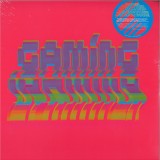
Following January’s acclaimed vinyl debut from Exterior and summer’s much-loved Kota Motomura EP, Edinburgh’s Hobbes Music label ends 2019 with its first album release, also a debut, from GAMING, a fresh new braindance electronica project straight outta Glasgow, from producer and musician Alan Bryden.
GAMING is a new solo outing that brings together a lifelong love of music and technology and creating left field, rhythmic electronica. It’s the sound of IDM, nineties techno and mensch maschine computer music that is as spontaneous as it is programmed.
“Scenes From A Deserted City is a collection of tracks that started as a set of riffs, loops, rhythms and grooves and unfurled around a sense of growing unease about the future of the urban environment around me.
It’s an album that started out as sound…and ended up as a way of telling stories about the age of anxiety we live in, how our world is changing, and how we find a way through that.
This is DIY electronica from Glasgow – it was made on a growing collection of digital and analogue synths and FX units, including a bunch of modular racks, each with its own idiosyncrasies and character that belies the assumption of the binary.
The studio where it was recorded – an abandoned, and often very cold, school building reclaimed by the community some twenty years ago – offered up stories of resilience, even when all seems lost. (I’m not sure what the mice contributed but they definitely climbed in and out of some synths).
This album is ultimately about my changing relationship with Glasgow, a city I’ve lived in for more than 25 years. It’s about how I feel now about the increasing sense of urban decay and how the city can be a very isolating place. It’s about how I reflect on my younger creative self trying to find a direction but mainly feeling a sense of dislocation and not fitting in. And it’s about the questions I have about how that relationship is changing, how it will be forced to move forward.
The result is a soundtrack for walking home on your own, in that headphone bubble when it’s just you focusing on that music that makes sense to you alone. It’s for early in the morning, after the night before, or going to work with the memories of that slipping and sliding inside your head. It’s about how it feels to be both elated and lonely, to be lost in the familiar, despairingly hopeful.”
ALAN BRYDEN (Glasgow, August ‘19)
A Thousand Harmonies in Silence is an album that highlights the idea of being "safe". Since writing this record I wanted to portray personal memory and experience that had me feeling at peace. Each track signifies a special place, thing, person and time. All of which had some sense of security. I challenged myself to really embody these moments and record my guitar in single takes. I can only hope you enjoy listening to this record as much as did writing it.
WRWTFWW Records is excited to announce the official reissue of Motohiko Hamase’s remarkable ambient/environmental/minimalism project #Notes of Forestry, available for the first time since 1988. The album is sourced from original masters and available on vinyl and CD with liner notes from the artist. This marks the third release from the ESPLANADE SERIES which focuses on the works of Yoshio Ojima, Motohiko Hamase and Satsuki Shibano. One of the most fascinating and peculiar works from the golden era of Japanese ambient, #Notes of Forestry was initially released in 1988 by Newsic, the cult label started by Tokyo’s Wacoal Art Center (also known as Spiral), home, notably, of Yoshio Ojima who co-produced the album. Conceived by Jazz bassist turned experimentalist Motohiko Hamase, the magnum opus offers an enchanting mix of free-form pastoral electronics, otherworldly percussions by Yasunori Yamaguchi, and delightfully allusive piano played by none other than Satsuki Shibano (Sound Process’ Wave Notation 3). Vibrant, sometimes eerie, and absolutely captivating, #Forestry captures Hamase’s quest for musical freedom, he explains: “Inside the body of a musician, music is always transcendentally resonating. More than language, music reigns. When creating music overlaps with the moment my body performs, I strive to be as close as possible to the feeling of musical freedom. I feel that this notion lies at the foundation of this album". Musical freedom, here, provides an essential escape, extending the path uncovered by pivotal releases such as Midori Takada’s Through The Looking Glass, Satoshi Ashikawa’s Still Way, and Yutaka Hiros’s Nova. #Notes of Forestry is reissued in conjunction with Motohiko Hamase’s Technodrome and Anecdote albums,
Tyyni is the third album by Finnish-born sound artist and musician Cucina Povera aka Maria Rossi. The second album recorded using a more studio-based scenario – as opposed to last year’s Zoom, a collection of in-situ, spontaneous recordings – Tyyni feels like a slowly unfurling mediation on the clash between nature and mechanical living, a rumination on the complexities of modern life that begin to unveil more about the inner landscape of the artist as it progresses. A Finnish word referring to still, serene weather, the title belies a new note of turmoil in Cucina Povera’s soundworld. Tyyni represents a more detailed focus on the sculpting of sounds that curl around Rossi’s hymnal vocal performances. It’s a more adventurous work than Rossi’s previous output that goes further into noise elements and vocal abstraction while maintaining the balance and ecclesiastical ecstasy of her debut Hilja.
While tension at the core of Cucina Povera is always prevalent, previously it was organic sounds that were used to counterpoint Rossi’s singing but on Tyyni these are often replaced with aggressive synths and distortion, profane clashes with the seemingly sacred hymns. Whether close mic’d and intoning in a loop or in full flight, Maria Rossi’s voice remains in the foreground, set here against a more synthetic backdrop. This development builds new worlds for Cucina Povera, a digital environment which brings in a sense of the alien for Rossi’s vocal to duel. The effect is often dazzling. On Salvia Salvatrix, an ode to the medicinal plant used to ward off evil spirits, Rossi’s invocation is encircled by a distorted synth sound tearing at the fabric of the composition. It’s an inspired juxtaposition, leaving the listener to appreciate both sounds as separate and as a duet. Anarkian kuvajainen embraces a sense of chaos, an accidental transmitting mobile phone’s pulse is swept up gently with looped synth swells as Rossi’s prayer-like vocal rhythmically teases the composition into loops that embrace and then drift apart. Teerenpeli flirts with a minimal beat rendered by sampler and processed, layered field recordings of capercaillies, while Side A ends with one of Rossi’s most beautiful, simple tracks yet recorded. Varjokuvatanssi is an a cappela recording built on top of a wordless glossolalia, a shadowy interplay which foregrounds the solo vocal.
Pölytön nurkka is the most melodic song yet recorded by Cucina Povera. While it still maintains an off-the-cuff performance style, the synthesized chimes and 4/4 beat are smothered by a distorted synthesizer which almost replicates the bravado of an electric guitar feedbacking into the night. Rossi’s subject matter talks of trying to start anew, getting rid of extraneous material, perhaps still feeling powerless to affect positive change. On Haaksirikkoutunut, the protagonist vocal is lost, a vessel rudderless on the ocean, buffeted by waves metaphorical or real, digital, atonal chords gurgling and splashing against the bow, a storm forever brewing on the horizon. Saniaiset recalls Coil in its eldritch, nocturnal tone and digital-bell like synth, Rossi’s half-spoken/half-sung voice attaining a creepy tone before flipping into flight. Album closer Jolkottelureitti uses an escalating, sequenced synth that splinters into both abrasive tones and harmonising chords creating a kosmische effect, reminding the listener of Kluster or synth-era Popol Vuh, all the while elevated by Rossi’s searching vocalising.
For an artist with such a singularly unique musical language, Cucina Povera is continually teasing new strands and emotive tones from an evolving palette. Most importantly, Tyyni appears to be pulling back the veil to uncover an artist finding a synergy between her own emotional inner world and practice. As such, on her third album, Maria Rossi has found a third way between abstraction and extraneous emotion, personal experience turned inside out to reveal more about the listener.
‘Rock Sutra’ is the new space rock album from Sun Araw.
‘Roomboe’, the first track, illustrates this process.
Experience is elastic. Humans alive right now tend to think
there is some sort of ‘baseline’ experience of a thing, a
room, a person, a feeling, some version we all agree on.
This isn't true at all: experience is completely dependent
on the quality of attention of the experiencer. There is a
granularity to experience that, when tuned up, reveals
deeper and deeper space inside of things. When you zoom
in (by pure observation: by not-articulating, not-thinking),
you create ‘room’, you make space. Just like that. For
instance, ‘Roomboe’ has an extremely limited tonal
framework; about 9 notes for the main guitar melody. As
the guitar pushes against these melodic limitations with
continually renewed attention and energy, it begins to
create space around itself. And all of the sudden (at about
4:57), out of this constriction, space balloons up from
everywhere simultaneously. ‘Roomboe’ is a clue about how
to open a portal outwards into free space.
‘78 Sutra’ is about orbital motion. ‘Catalina’ is about taking
a walk. ‘Arrambe’ is about a peculiar feeling you can get
when you zoom in far enough. The music is offered in a
spirit of generosity and adventure; it doesn’t stay put and
it keeps zooming in to reveal more and more.
The album was recorded live-to-midi with the band and
this is the first Sun Araw album recorded like that. That
band is Jon Leland on drums and percussion and Marc
Riordan on synthesizers and Cameron Stallones on
synthesizers and guitar and vocals.