Search:feeling

Styles
All
Joell Ortiz - Autograph

Joell Ortiz

Autograph

12inchMMG001681
MELLO MUSIC GROUP
30.09.2022

Joell Ortiz has a new solo album, "Autograph", coming out on Mello Music Group November 12th. Joell is 1/4 of the supergroup Slaughterhouse along with Joe Budden, Royce Da 5'9, and KXNG Crooked. His career started on Dr. Dre's Aftermath and then lead to Eminem's Shady Records, before joining the Mello Music Squad. He appears on Lin-Manuel Miranda's Hamilton soundtrack, as well as Eminem's most recent album "Music To Be Murdered By." Joell's upcoming album "Autograph" features production from 9x Grammy Nominee Salaam Remi, the Grammy Winning Heatmakerz, Hesami, and Detroit legend Apollo Brown, along with features from Sheek Louch, Marc Scibilia, KXNG Crooked, Pastor LBS, and CyHi the Prynce.

pre-order now30.09.2022

expected to be published on 30.09.2022

25,17
Julia, Julia - Derealization

Julia,Julia

Derealization

12inchSSQ195LPC1
Suicide Squeeze
30.09.2022

Debut solo album from Julia Kugel (The Coathangers). Limited edition first LP pressing on heartbeat pink color vinyl, includes DL (1500 copies). If you can’t trust yourself, who can you trust? This is the crucial question at the core of Julia, Julia, the moniker for Julia Kugel, founding member of garage punk icons The Coathangers and the dream pop duo Soft Palms. On her first solo full-length album Derealization, Kugel shifts her focus from collaboration and band dynamics towards a singular artistic vision and private self-discovery. Steeped in the beguiling pop elements of her past work, Derealization is a meditative deep dive into the mind of a person struggling to understand a crumbling internal and external world. The album traverses a landscape of ethereal folk, atmospheric deconstructed pop, and dubbed-out country ballads, all centered around straight forward and direct lyrics. This juxtaposition of nebulousness and lucidity gives the album a sense of clarity emerging from the haze, an apt refection of Kugel's personal growth and journey toward self-acceptance. Derealization is based on weaving the unreal, unsaid, and unknown into an undulating sonic fabric. Vocal layering and abstract instrumentation convey a blurred desperation to connect to an emotional and psychological focal point. Moody, dark, and sumptuous, the record is a flow chart of Julia Kugel coming into herself as an artist and songwriter. The album finds Julia playing almost all the instruments and taking her first stab at engineering at COMA, her and her husband's home recording studio in Long Beach, CA. “You know how touring musicians often speak of whether home is real or tour is real? Well, it can lead you to lose grasp on ‘reality,’ especially when touring is taken away and you are left to wonder if anything was ever real, including yourself. Like you we're just playing a character,” Kugel says of her headspace leading up to the creation of Derealization. “Honestly, I kinda lost it, and through making this record I made peace with it and reconciled myself as a real person. I forgave myself and in turn forgave those around me. The song ‘Forgive Me’ is the apology I wanted to say and to hear. I wrote every song from that place and gained the confidence I was pretending to possess.” This raw and personal approach to the lyrics is present throughout Derealization. On the opening track "I Want You," Kugel creates a woozy sense of space with reverb-soaked drums and spaghetti western guitars while she lists off her desires for a mysterious “you.” Is she actually listing off her desires for herself? For the people around her? As she repeats "do you feel it?" in the song’s chorus, it feels as if she’s conjuring a magical thread by which we are all connected, showing us how our desires are all the same. On "Fever In My Heart" the listener is treated to a lush, acoustic techno track detailing the exhilarating madness of an emotional breakdown. Simple truths percolate to the surface on "Words Don't Mean Much,” as if clearing away the murk of platitudes and empty gestures. The journey continues on the detached and conflicted "Do It Or Don't,” an alluring walk through the winding road of lonely choices. The name for the project Julia, Julia is a look in the mirror, a reflection of what is hidden and unanswered, of what is real and what is transient. The experience of living life not as you planned it but as it unfolded, and the mysterious, magical pain that creates meaning.

Tracklisting 1. I Want You 2. Forgive Me 3. Impromptu 4. Fever In My Heart 5. Words Don’t Mean Much 6. Do It Or Don't 7. No Hard Feelings 8. Big Talkin' 9. Paper Cutout 10. Where Did You Go 11. Corner Town

pre-order now30.09.2022

expected to be published on 30.09.2022

23,95
Doug Paisley - Starter Home

Doug Paisley

Starter Home

12inchLPDGP9196
Doug Paisley
30.09.2022

Starter Home was originally released November 2, 2018 on US-based
label, No Quarter
From Pitchfork, at the time: "For a decade, Canadian singer/ songwriter Doug
Paisley has turned quiet, specific moments into inquiries on life's larger struggles.
On his 2010 breakthrough, Constant Companion, Paisley used the inevitability of
endings to explore understanding oneself, the only possible constant companion.
For 2014's Strong Feelings, he mulled death and its uneasy relationship with life,
or how their juxtaposition ripples into every wave of existence. And now, on his
fourth album, Starter Home, Paisley details the chasm that separates what poet
Seamus Heaney described as getting started and getting started again. These
songs examine how the person you are never truly aligns with the person you
want to be, especially when you stumble upon a sticking point that's hard to move
past."

pre-order now30.09.2022

expected to be published on 30.09.2022

32,35
Chayse Porter - Chay's Palace

Some people choose the pages of a diary to spill their innermost feelings
and recount their trials and tribulations - Instead, Chayse Porter has a
palace - It's this metaphorical place where I can go to express myself and
feel safe, he explains
It's this place where you can get all your secrets out in the open and feel at home.
But rather than luxuriate in his regal mental abode, Porter's latest for Earth
Libraries takes listeners on a grand tour, revealing the nooks and crannies of his
heart and mind.Recording on vintage gear and working with producer Brad Timko
redoubles that sense of intimacy, imbuing every take with a bronzy finish. € I've
always really appreciated records that opt for analog, so this one is all just raw
performance, straight to tape, € Porter says. € It gives me time to sit with each
part of the composition, to live more within the song. €
As the album rolls ever forward to its conclusion, the rough edges of the pain and
suffering have softened, and Porter has come to a sense of hopefulness. "It was
very tumultuous to put this album together and express myself openly in this way,
but at the end of the album I'm reassuring myself that there's an opportunity for
growth both personally and interpersonally, having gone through this challenging
time and coming out the other side, € Porter says. At the end of the long and
fascinating tour of Chay's Palace, Porter makes the listener feel the warmth at its
core that he himself has found.
Tracks: Purpling Dawn / Jet Lag / Nobody Wants You (More Than Me) / Penny /
Heat Lamp / Theme from Chay's Palace / Palace Doors / Pacific Inn / Purpling
Dawn Pt. 2 / Blue Star / Yoshi

pre-order now30.09.2022

expected to be published on 30.09.2022

26,47
Noah And The Whale - Heart Of Nowhere

Noah & The Whale were one of the leading protagonists of the small but
perfectly formed indie-folk scene of the early days of the 21st Century
Formed in Twickenham, the five-piece, led by vocalist and guitarist Charlie Fink,
originally boasted Laura Marling in their line- up, before she left to begin her
successful solo career.
Inspired by sojourns at islands off the Essex coastline and in the South Of France,
Heart Of Nowhere was the group's final album, released in May 2013. The
Observer stated it was "a satisfying blend of youth and experience, at its best
when raw feelings and twenty20- something anxieties chafe against its smooth,
midtempo rock." Its ruminations of the passage of time suggested that the giddy
optimism of Peaceful,The World Lays Me Down was long in the past.
This re-issue faithfully recreates the original 2013 Mercury Records UK release,
including full colour lyric ineer sleeve and double sided map insert, and is pressed
onto high quality 180g vinyl.

pre-order now30.09.2022

expected to be published on 30.09.2022

27,31
Choked Up - Mala Lengua

Choked Up

Mala Lengua

12inchLPDG260C
Don Giovanni
30.09.2022

Cristy C Road has built a reputation in punk circles for her heavily political
visual art, showcasing her skills through zines, books, tarot cards, and
album art for bands such as the Muslims
Focusing on her identity as a queer latinx woman, these projects represent an
important part of her creative expression, but to her, they are just one part of a
larger whole. While her visual work thrived, Road was sharing another part of
herself with the world through music, most recently with her band Choked Up.
While her illustration allows her the opportunity to express frustration with an
unjust status quo, her music captures the parts of life that happen in between
politics. Feeling pigeon holed into the themes of her visual art, Road explains - its
an annoying task to be expected to be a certain way because you're a woman or
you're latina or you're queer. Choked Up pushes against that expectation by
making simple, catchy pop- punk rooted in everyday feelings. Pressed on Pink
color vinyl.

pre-order now30.09.2022

expected to be published on 30.09.2022

23,95
The Submissives - Wanna Be Your Thing

New one by Montreal singer-songwriter Deb Edison, working once again as The Submissives and willfully unchanged from 2016's Do You Really Love Me? cassette (Fixture). Six years into the most tumultuous period in global history since WWII – a pandemic, right-wing infiltration, attempts at government overthrow, climate catastrophe looming, a near-complete loss of the moral compass, conspiracies lording over facts natural resources running out – and Deb's still here, staring a hole through the floor/your head. "No one ever changes," she coos on "In a Pinch," and these songs are a textbook example of that sentiment, and her artistic embodiment of psychosexual desire, ready to shatter some lives and walk away looking for the next one. "I'm waiting for your signal/I'm several years older," she drones on "Sick Kinda Love," further reinforcing a long-held stance that the obsession, internalization of feelings, and the human power dynamic of The Submissives are on the menu once again. You'll find whatever it is you want to find in here, just dig in. Deb might even be talking about you, though there's a good chance she's not, and if you don't have the goods you can be sure she's gonna be doing all she can to passively drive you away. "Chirp Like a Bird" reads as Deb's bottom-looking-up retort to Whitehouse's "Wriggle Like a Fucking Eel," and might even be more severe, because she doesn't need microphonic feedback and screaming to intimidate. If you're in for surface thrills, scrape up the Shaggs-esque rock stumble, swooping viola, and behind-the-beat bash tapping out each of these eleven tracks. This is how it is; you get what you get, and you might be upset, but that's all on you. You'll never get to the bottom of this sketch. TRACKLIST: A1 Wanna be your thing A2 When it was all new A3 In a pinch A4 Sick kinda love A5 Chirp like a bird A6 I'm a mirror B1 Goodbye Betty B2 Four five B3 Isn't you B4 Think of me B5 Sweetly

pre-order now30.09.2022

expected to be published on 30.09.2022

22,06
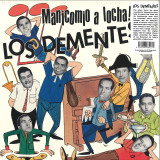
LOS DEMENTES - MANICOMIO A LOCHA LP

This album marks the debut recording for Venezuela's Velvet label by pianist Ray Pérez and his trombone-led salsa band Los Dementes. Heavy dance numbers and the distinctive vocals of Perucho Torcat make this historic 1967 rarity a sought-after collector's item. Now the LP has been lovingly restored, mastered from the original tapes, with its original artwork intact, preserving the legacy of Los Dementes for today's generation of salsa lovers everywhere. First time reissue. Salsa pianist, vocalist, composer and arranger Ray Pérez, acquired his nickname "Loco" by being a free, independent spirit, an innovator and iconoclast who was initially branded as "crazy" for the freshness and audacity of his sound. Amazingly, he is not that well known in the US, where he spent some time in the late 1960s and salsa was king during the 1970s. Yet he was quite popular in his home country from the beginning, especially amongst the working class of Caracas and Maracaibo, who adopted Cuban music played by New York Puerto Ricans as their own and called it "salsa" years before the term was employed by US labels like Fania as a marketing tool. Pérez is revered in Venezuela, as well as in Mexico and Colombia, and his storied career, which spans seven decades and thousands of concerts, has yielded more than 35 albums recorded by his various bands, including Los Dementes, Los Kenya, and Los Calvos, all of which are collector's items today. At the start of 1967 Pérez debuted Los Dementes, with vocalists Claudio Zerpa and Perucho Torcat backed by an ace band featuring only trombones in the brass section. Titled "¡Alerta mundo! Llegaron los 'The Crazy Men'" the record was released on the small Venezuelan label Prodansa. Soon after, Prodansa folded and Los Dementes were left without representation or much compensation for their efforts, being paid only in records. In the end of February of that year, Pérez returned to Caracas from a stint in Maracaibo in order to finish his first LP with the well-established and larger Velvet label, entitled "Manicomio a locha". In the first quarter of 1967, Velvet unleashed a trilogy of salsa records in order to compete with rival label Palacio and their recent success with Federico y su Combo Latino: "Porfi '67 Salsa & Boogaloo" by Porfi Jiménez y su Orquesta, "Guasancó" by Sexteto Juventud and lastly "Manicomio a locha". The LP begins appropriately with the boisterous title track, written by the band's conguero Carlos "Nené" Quintero, who would become a legend in coming years. Torcat describes a jam session in mental institution and introduces the band, with tasty solos by trombonist Rufo García followed by Ray on piano. Already you can hear something was different about Ray and his "Crazy Men"-a sound as wild and innovative as what was happening in New York with Eddie Palmieri, but with a more unhinged, raw feeling in line with Willie Colón and other younger Nuyorican bands. Next up is an intriguing track sung in a mix of Italian, English, Spanish and Papiamento by Pérez himself, performed in the complicated rhythm of the mozambique, an Afro-Cuban carnival beat developed in the early 1960s. This is followed by the heavy dancer 'Rico guaguancó', penned by Angelito Pérez, which changes from the guaguancó to the mozambique rhythm mid-way through, proving that Los Dementes were "different from the rest" as the lyrics say. 'Puerto Libre', sung by Torcat, is dedicated to the Venezuelan island of Margarita in the Oriente region, and the independent spirit of its working people. The rhythm changes from guaguancó to guajira and back again but remains danceable all the way through. The side closes out with a "3 in 1" medley inspired by the popular formula of the mosaicos of Billo's Caracas Boys, seamlessly knitting together several different tempos, rhythms, moods and compositions. Side two starts strong with the fierce yet satirical 'Corte e' patas', then 'Alma Cumanesa', a typical folk song refashioned as a guaguancó. This is followed by the funky 'Guajira con Boogaloo'. The tune echoes the sound of young Latin New York, pointing out the connection between Cuban and African American soul music. The pace picks up again with 'Fiesta de trombones', a hot descarga and then the album closes with another medley. Though this marks the end of a rather short album, it also signaled the emerging success of Los Dementes and their involvement with the salsa boom in Venezuela, quickly selling out of its initial run of 1000 records and making for a memorable debut on the Velvet label. Now this rare and sought-after LP has been lovingly restored, mastered from the original tapes, with its original artwork intact, preserving the legacy of Los Dementes for today's generation of salsa lovers everywhere.

out of Stock

Order now and we will order the item for you at our supplier.

24,58

Last In: 3 years ago
Bolam - Lost in Time EP

Bolam

Lost in Time EP

12inchSPACEDUST3
Space Dust
29.09.2022

Bolam is back on Space Dust with the 'Lost In Time' EP, a continuation of the journey started with the widely acclaimed 'Suspended Animation'. Another well-rounded and diverse record dives into the wormhole with ’Moving Lights’, a high-energy affair propelled by filtering resonators and a haunting vocal. ’Ozone’ breaks through the stratosphere of a new world, a huge track with electro-inspired groove, booming kicks and a razor-sharp lead melody, creating a feeling of uncertainty and delirium with swelling pads and arpeggiators.

The B-side begins with the mysterious and epic, genre-defying anthem ’Air Tension’, enticing the listener into the strange new world with a chugging rhythm, tantalising textures and an indescribable melody that keeps you on the line between paranoia and euphoria. ’Bioluminescence’ descends into an alien jungle, with a hypnotic, dreamy, downtempo beat and iridescent synths and chords. Finally, as you lay down in the otherworldly glade, the record wraps up with the ethereal, ambient finisher, ‘2 Parsecs From Home’.

out of Stock

Order now and we will order the item for you at our supplier.

12,23

Last In: 3 years ago
Various - Bridges: An American - European Dance Connection LP 2x12"

In their ever-expanding search for good electronic belters, Forbidden Dance Records went into building a bridge between two continents responsible for so many good artists in the last few decades, with some of them being true legends of the house sound. From Detroit to Napoli and Marseille. From Zurich and Bari to Chicago. Ladies and gentlemen, this is ‘Bridges: An American – European Dance Connection”

out of Stock

Order now and we will order the item for you at our supplier.

28,15

Last In: 2 years ago
ALEXIA - THE PARTY LP

Alexia

THE PARTY LP

12inchM2204
DWA Records
28.09.2022

1998 esce l’atteso secondo album di Alexia dal titolo “The Party”. L'album contiene quattordici brani tra cui i due singoli più gettonati dell’estate 1998 ovvero “Gimme love” e “The music I like”. L’album si aggiudica numerosi dischi d’oro e di platino con le sue oltre cinquecentomila copie vendute. “Gimme love” e “The music I like” sono stati al no. 1 delle classifiche quasi simultaneamente, vendendo un totale di più di centomila copie, un vero record nel mercato italiano. Nell’estate del 1998 Alexia domina la scena musicale in vetta alle classifiche, più di ogni altra artista italiana della dance music. In quel periodo, in Inghilterra, esce il remix di “Uh la la la”. E’ il primo singolo di Alexia ad uscire in quel mercato e diventa subito un successo, top ten in classifica. Questo particolare remix é contenuto
nell’album “The Party” come bonus track.

out of Stock

Order now and we will order the item for you at our supplier.

24,33

Last In: 3 years ago
The Comet Is Coming - Hyper-Dimensional Expansion Beam LP

Shabaka Hutchings am Saxofon, Danalogue (Dan Leavers) an Percussion, Roland SH−09, Roland Juno−60, Roland SH−101 und Moog Sub Phatty, und Betamax (Max Hallett) an Drums, Percussion, Roland TR−808 und JHS Pro-Rhythm, haben mit ihrer Mischung aus Synthesizer-Sounds der 80er, Saxofon und Schlagzeug, gespickt mit Punkrock, Jazz-Blasts und Dancefloor-Trance schon reichlich Fans gewonnen.

Für sein viertes Album ging das Trio THE COMET IS COMING diesmal in Peter Gabriels Real-WorldStudio, zusammen mit ihrem langjährigen Toningenieur Kristian Craig Robinson unterzogen sie sich einem
viertägigen Aufnahme-Marathon, angetrieben von Intuition, Können und Improvisation.

out of Stock

Order now and we will order the item for you at our supplier.

7,77

Last In: 2 years ago
Mariusz Duda - Claustrophobic Universe

SECOND TITLE IN THE LOCKDOWN TRILOGY 'CLAUSTROPHOBIC
UNIVERSE' NOW AVAILABLE ON VINYL.In 2020, Polish Prog multiinstrumentalist Mariusz Duda (Riverside, Lunatic Soul) decided to
conduct an experiment
He set out to create a third music world, independent of his band 'Riverside' &
solo project, Lunatic Soul. A world which would differ stylistically from the
previous two & underline the first steps he took in music.
30 years ago, a certain shy boy fascinated by the works of Jean Michel Jarre,
Vangelis & Tangerine Dream, locked himself up in his room & started to think up
his original music stories. He recorded them on cassette tapes, created covers
for them & arranged them on the shelf next to those of his masters. 30 years
later, when the world was taken over by a pandemic & an international lockdown,
Mariusz was beamed back to his childhood bedroom, where he was reading &
drawing comic books, playing games, listening to lots of music from cassette
tapes... & recording his own electronic sounds. "Why not do it again?" he thought
to himself, feeling inspired. "Why not create a new project where I will play only
the keyboards? And why not sing it just like I used to when I was a kid? Simply
'Mariusz Duda'".
And that's exactly what he did. Between 2020 & 2021, he recorded & released
online three electronic albums that make up the "Lockdown Trilogy".
'Claustrophobic Universe' is not an album inspired by books about astronomy &
astrophysics. It's an album about a journey into our mind. The universe here is a
metaphor for our escape from reality, escape to the place where we soothe our
response to stimuli.
MARIUSZ DUDA'S SECOND IN THE TRILOGY IS OUT VIA KSCOPE

pre-order now28.09.2022

expected to be published on 28.09.2022

28,78
Henry Keen - Freedom in Movement LP

What do notions of freedom and movement mean to us as we experience unprecedented restrictions on travel, culture and socialisation? Henry Keen’s Freedom In Movement offers a soundtrack to both remember and look forward to freedom through music, movement and community.

The memory and feeling of the Plastic People dancefloor were often in Henry Keen's thoughts as he produced the tracks on this new LP. Inspired by the London club nights he frequented – Balance, CDR, and CoOp – Freedom in Movement is Henry’s first vinyl self-release, an embodiment of self-expression that compliments his contributions to projects Electric Jalaba and Soundspecies.

The soulful tracks on the album pick up where Henry Keen’s 70's Baby (Maddjazz Recordings, 2017) record and EPs as The Room Below on the Don't Be Afraid label left off, bringing a range of tempos to get heads nodding while hips and feet work out. Lovingly made, the collection of songs offer meditations on questions evoked by the record's title and respite from the heaviness of challenging times.

The lead single from the album is Dexter’s Breakfast, featuring London-based woodwind expert, and previous collaborator Ben Hadwen on baritone/tenor saxophone, and flute.

Dexter’s Breakfast was released digitally on 25th June 2021 and gained support from the likes of Adam Rock (Jazz Re:freshed), Kev Beadle (Mind Fluid), Simon Harrsion (Basic Soul), Psycut (Music Is My Sanctuary) and Laani and Papaoul (Worldwide FM) amongst others

out of Stock

Order now and we will order the item for you at our supplier.

21,64

Last In: 3 years ago
Lee Tracy & Isaac Manning - Is it What You Want LP

As the sun sets on a quaint East Nashville house, a young man bares a piece of his soul. Facing the camera, sporting a silky suit jacket/shirt/slacks/fingerless gloves ensemble that announces "singer" before he's even opened his mouth, Lee Tracy Johnson settles onto his stage, the front yard. He sways to the dirge-like drum machine pulse of a synth-soaked slow jam, extends his arms as if gaining his balance, and croons in affecting, fragile earnest, "I need your love… oh baby…"

Dogs in the yard next door begin barking. A mysterious cardboard robot figure, beamed in from galaxies unknown and affixed to a tree, is less vocal. Lee doesn't acknowledge either's presence. He's busy feeling it, arms and hands gesticulating. His voice rises in falsetto over the now-quiet dogs, over the ambient noise from the street that seeps into the handheld camcorder's microphone, over the recording of his own voice played back from a boombox off-camera. After six minutes the single, continuous shot ends. In this intimate creative universe there are no re-takes. There are many more music videos to shoot, and as Lee later puts it, "The first time you do it is actually the best. Because you can never get that again. You expressing yourself from within."

"I Need Your Love" dates from a lost heyday. From some time in the '80s or early '90s, when Lee Tracy (as he was known in performance) and his music partner/producer/manager Isaac Manning committed hours upon hours of their sonic and visual ideas to tape. Embracing drum machines and synthesizers – electronics that made their personal futurism palpable – they recorded exclusively at home, live in a room into a simple cassette deck. Soul, funk, electro and new wave informed their songs, yet Lee and Isaac eschewed the confinement of conventional categories and genres, preferring to let experimentation guide them.

"Anytime somebody put out a new record they had the same instruments or the same sound," explains Isaac. "So I basically wanted to find something that's really gonna stand out away from all of the rest of 'em." Their ethos meant that every idea they came up with was at least worth trying: echoed out half-rapped exhortations over frantic techno-style beats, gospel synth soul, modal electro-funk, oddball pop reinterpretations, emo AOR balladry, nods to Prince and the Fat Boys, or arrangements that might collapse mid-song into a mess of arcade game-ish blips before rallying to reach the finish line. All of it conjoined by consistent tape hiss, and most vitally, Lee's chameleonic voice, which managed to wildly shape shift and still evoke something sincere – whether toggling between falsetto and tenor exalting Jesus's return, or punctuating a melismatic romantic adlib with a succinct, "We all know how it feels to be alone."

"People think we went to a studio," says Isaac derisively. "We never went to no studio. We didn't have the money to go to no studio! We did this stuff at home. I shot videos in my front yard with whatever we could to get things together." Sometimes Isaac would just put on an instrumental record, be it "Planet Rock" or "Don't Cry For Me Argentina" (from Evita), press "record," and let Lee improvise over it, yielding peculiar love songs, would-be patriotic anthems, or Elvis Presley or Marilyn Monroe tributes. Technical limitations and a lack of professional polish never dissuaded them. They believed they were onto something.

"That struggle," Isaac says, "made that sound sound good to me."

In the parlance of modern music criticism Lee and Isaac's dizzying DIY efforts would inevitably be described as "outsider." But "outsider" carries the burden of untold additional layers of meaning if you're Black and from the South, creating on a budget, and trying to get someone, anyone within the country music capital of the world to take your vision seriously. "What category should we put it in?" Isaac asks rhetorically. "I don't know. All I know is feeling. I ain't gonna name it nothing. It's music. If it grabs your soul and touch your heart that's what it basically is supposed to do."

=

Born in 1963, the baby boy of nine siblings, Lee Tracy spent his earliest years living amidst the shotgun houses on Nashville's south side. "We was poor, man!" he says, recalling the outhouse his family used for a bathroom and the blocks of ice they kept in the kitchen to chill perishables. "But I actually don't think I really realized I was in poverty until I got grown and started thinking about it." Lee's mom worked at the Holiday Inn; his dad did whatever he had to do, from selling fruit from a horse drawn cart to bootlegging. "We didn't have much," Lee continues, "but my mother and my father got us the things we needed, the clothes on our back." By the end of the decade with the city's urban renewal programs razing entire neighborhoods to accommodate construction of the Interstate, the family moved to Edgehill Projects. Lee remembers music and art as a constant source of inspiration for he and his brothers and sisters – especially after seeing the Jackson 5 perform on Ed Sullivan. "As a small child I just knew that was what I wanted to do."

His older brother Don began musically mentoring him, introducing Lee to a variety of instruments and sounds. "He would never play one particular type of music, like R&B," says Lee. "I was surrounded by jazz, hard rock and roll, easy listening, gospel, reggae, country music; I mean I was a sponge absorbing all of that." Lee taught himself to play drums by beating on cardboard boxes, gaining a rep around the way for his timekeeping, and his singing voice. Emulating his favorites, Earth Wind & Fire and Cameo, he formed groups with other kids with era-evocative band names like Concept and TNT Connection, and emerged as the leader of disciplined rehearsals. "I made them practice," says Lee. "We practiced and practiced and practiced. Because I wanted that perfection." By high school the most accomplished of these bands would take top prize in a prominent local talent show. It was a big moment for Lee, and he felt ready to take things to the next level. But his band-mates had other ideas.

"I don't know what happened," he says, still miffed at the memory. "It must have blew they mind after we won and people started showing notice, because it's like everybody quit! I was like, where the hell did everybody go?" Lee had always made a point of interrogating prospective musicians about their intentions before joining his groups: were they really serious or just looking for a way to pick up girls? Now he understood even more the importance of finding a collaborator just as committed to the music as he was.

=

Isaac Manning had spent much of his life immersed in music and the arts – singing in the church choir with his family on Nashville's north side, writing, painting, dancing, and working various gigs within the entertainment industry. After serving in the armed forces, in the early '70s he ran The Teenage Place, a music and performance venue that catered to the local youth. But he was forced out of town when word of one of his recreational routines created a stir beyond the safe haven of his bohemian circles.

"I was growing marijuana," Isaac explains. "It wasn't no business, I was smoking it myself… I would put marijuana in scrambled eggs, cornbread and stuff." His weed use originated as a form of self-medication to combat severe tooth pain. But when he began sharing it with some of the other young people he hung out with, some of who just so happened to be the kids of Nashville politicians, the cops came calling. "When I got busted," he remembers, "they were talking about how they were gonna get rid of me because they didn't want me saying nothing about they children because of the politics and stuff. So I got my family, took two raggedy cars, and left Nashville and went to Vegas."

Out in the desert, Isaac happened to meet Chubby Checker of "The Twist" fame while the singer was gigging at The Flamingo. Impressed by Isaac's zeal, Checker invited him to go on the road with him as his tour manager/roadie/valet. The experience gave Isaac a window into a part of the entertainment world he'd never encountered – a glimpse of what a true pop act's audience looked like. "Chubby Checker, none of his shows were played for Black folks," he remembers. "All his gigs were done at high-class white people areas." Returning home after a few years with Chubby, Isaac was properly motivated to make it in Music City. He began writing songs and scouting around Nashville for local talent anywhere he could find it with an expressed goal: "Find someone who can deliver your songs the way you want 'em delivered and make people feel what you want them to feel."

One day while walking through Edgehill Projects Isaac heard someone playing the drums in a way that made him stop and take notice. "The music was so tight, just the drums made me feel like, oh I'm-a find this person," he recalls. "So I circled through the projects until I found who it was.

"That's how I met him – Lee Tracy. When I found him and he started singing and stuff, I said, ohhh, this is somebody different."

=

Theirs was a true complementary partnership: young Lee possessed the raw talent, the older Isaac the belief. "He's really the only one besides my brother and my family that really seen the potential in me," says Lee. "He made me see that I could do it."

Isaac long being a night owl, his house also made for a fertile collaborative environment – a space where there always seemed to be a new piece of his visual art on display: paintings, illustrations, and dolls and figures (including an enigmatic cardboard robot). Lee and Issac would hang out together and talk, listen to music, conjure ideas, and smoke the herb Isaac had resumed growing in his yard. "It got to where I could trust him, he could trust me," Isaac says of their bond. They also worked together for hours on drawings, spreading larges rolls of paper on the walls and sketching faces with abstract patterns and imagery: alien-like beings, tri-horned horse heads, inverted Janus-like characters where one visage blurred into the other.

Soon it became apparent that they didn't need other collaborators; self-sufficiency was the natural way forward. At Isaac's behest Lee, already fed up with dealing with band musicians, began playing around with a poly-sonic Yamaha keyboard at the local music store. "It had everything on it – trumpet, bass, drums, organ," remembers Lee. "And that's when I started recording my own stuff."

The technology afforded Lee the flexibility and independence he craved, setting him on a path other bedroom musicians and producers around the world were simultaneously following through the '80s into the early '90s. Saving up money from day jobs, he eventually supplemented the Yamaha Isaac had gotten him with Roland and Casio drum machines and a Moog. Lee was living in an apartment in Hillside at that point caring for his dad, who'd been partially paralyzed since early in life. In the evenings up in his second floor room, the music put him in a zone where he could tune out everything and lose himself in his ideas.

"Oh I loved it," he recalls. "I would really experiment with the instruments and use a lot of different sound effects. I was looking for something nobody else had. I wanted something totally different. And once I found the sound I was looking for, I would just smoke me a good joint and just let it go, hit the record button." More potent a creative stimulant than even Isaac's weed was the holistic flow and spontaneity of recording. Between sessions at Isaac's place and Lee's apartment, their volume of output quickly ballooned.

"We was always recording," says Lee. "That's why we have so much music. Even when I went to Isaac's and we start creating, I get home, my mind is racing, I gotta start creating, creating, creating. I remember there were times when I took a 90-minute tape from front to back and just filled it up."

"We never practiced," says Isaac. "See, that was just so odd about the whole thing. I could relate to him, and tell him about the songs I had ideas for and everything and stuff. And then he would bring it back or whatever, and we'd get together and put it down." Once the taskmaster hell bent on rehearsing, Lee had flipped a full 180. Perfection was no longer an aspiration, but the enemy of inspiration.

"I seen where practicing and practicing got me," says Lee. "A lot of musicians you get to playing and they gotta stop, they have to analyze the music. But while you analyzing you losing a lot of the greatness of what you creating. Stop analyzing what you play, just play! And it'll all take shape."

=

"I hope you understood the beginning of the record because this was invented from a dream I had today… (You tell me, I'll tell you, we'll figure it out together)" – Lee Tracy and Isaac Manning, "Hope You Understand"

Lee lets loose a maniacal cackle when he acknowledges that the material that he and Isaac recorded was by anyone's estimation pretty out there. It's the same laugh that commences "Hope You Understand" – a chaotic transmission that encapsulates the duality at the heart of their music: a stated desire to reach people and a compulsion to go as leftfield as they saw fit.

"We just did it," says Lee. "We cut the music on and cut loose. I don't sit around and write. I do it by listening, get a feeling, play the music, and the lyrics and stuff just come out of me."

The approach proved adaptable to interpreting other artists' material. While recording a cover of Whitney Houston's pop ballad "Saving All My Love For You," Lee played Whitney's version in his headphones as he laid down his own vocals – partially following the lyrics, partially using them as a departure point. The end result is barely recognizable compared with the original, Lee and Isaac having switched up the time signature and reinvented the melody along the way towards morphing a slick mainstream radio standard into something that sounds solely their own.

"I really used that song to get me started," says Lee. "Then I said, well I need something else, something is missing. Something just came over me. That's when I came up with 'Is It What You Want.'"

The song would become the centerpiece of Lee and Isaac's repertoire. Pushed along by a percolating metronomic Rhythm King style beat somewhere between a military march and a samba, "Is It What You Want" finds Lee pleading the sincerity of his commitment to a potential love interest embellished by vocal tics and hiccups subtlely reminiscent of his childhood hero MJ. Absent chord changes, only synth riffs gliding in and out like apparitions, the song achieves a lingering lo-fi power that leaves you feeling like it's still playing, somewhere, even after the fade out.

"I don't know, it's like a real spiritual song," Lee reflects. "But it's not just spiritual. To me the more I listen to it it's like about everything that you do in your everyday life, period. Is it what you want? Do you want a car or you don't want a car? Do you want Jesus or do you want the Devil? It's basically asking you the question. Can't nobody answer the question but you yourself."

In 1989 Lee won a lawsuit stemming from injuries sustained from a fight he'd gotten into. He took part of the settlement money and with Isaac pressed up "Saving All My Love For You" b/w "Is It What You Want" as a 45 single. Isaac christened the label One Chance Records. "Because that's all we wanted," he says with a laugh, "one chance."

Isaac sent the record out to radio stations and major labels, hoping for it to make enough noise to get picked up nationally. But the response he and Lee were hoping for never materialized. According to Isaac the closest the single got to getting played on the radio is when a disk jock from a local station made a highly unusual announcement on air: "The dude said on the radio, 107.5 – 'We are not gonna play 'Is It What You Want.' We cracked up! Wow, that's deep.

"It was a whole racist thing that was going on," he reflects. "So we just looked over and kept on going. That was it. That was about the way it goes… If you were Black and you were living in Nashville and stuff, that's the way you got treated." Isaac already knew as much from all the times he'd brought he and Lee's tapes (even their cache of country music tunes) over to Music Row to try to drum up interest to no avail.

"Isaac, he really worked his ass off," says Lee. "He probably been to every record place down on Music Row." Nashville's famed recording and music business corridor wasn't but a few blocks from where Lee grew up. Close enough, he remembers, for him to ride his bike along its back alleys and stumble upon the occasional random treasure, like a discarded box of harmonicas. Getting in through the front door, however, still felt a world away.

"I just don't think at the time our music fell into a category for them," he concedes. "It was before its time."

=

Lee stopped making music some time in the latter part of the '90s, around the time his mom passed away and life became increasingly tough to manage. "When my mother died I had a nervous breakdown," he says, "So I shut down for a long time. I was in such a sadness frame of mind. That's why nobody seen me. I had just disappeared off the map." He fell out of touch with Isaac, and in an indication of just how bad things had gotten for him, lost track of all the recordings they'd made together. Music became a distant memory.

Fortunately, Isaac kept the faith. In a self-published collection of his poetry – paeans to some of his favorite entertainment and public figures entitled Friends and Dick Clark – he'd written that he believed "music has a life of its own." But his prescience and presence of mind were truly manifested in the fact that he kept an archive of he and Lee's work. As perfectly imperfect as "Is It What You Want" now sounds in a post-Personal Space world, Lee and Isaac's lone official release was in fact just a taste. The bulk of the Is It What You Want album is culled from the pair's essentially unheard home recordings – complete songs, half-realized experiments, Isaac's blue monologues and pronouncements et al – compiled, mixed and programmed in the loose and impulsive creative spirit of their regular get-togethers from decades ago. The rest of us, it seems, may have finally caught up to them.

On the prospect of at long last reaching a wider audience, Isaac says simply, "I been trying for a long time, it feels good." Ever the survivor, he adds, "The only way I know how to make it to the top is to keep climbing. If one leg break on the ladder, hey, you gotta fix it and keep on going… That's where I be at. I'll kill death to make it out there."

For Lee it all feels akin to a personal resurrection: "It's like I was in a tomb and the tomb was opened and I'm back… Man, it feels so great. I feel like I'm gonna jump out of my skin." Success at this stage of his life, he realizes, probably means something different than what it did back when he was singing and dancing in Isaac's front yard. "What I really mean by 'making it,'" he explains isn't just the music being heard but, "the story being told."

Occasionally Lee will pull up "Is It What You Want" on YouTube on his phone, put on his headphones, and listen. He remembers the first time he heard his recorded voice. How surreal it was, how he thought to himself, "Is that really me?" What would he say to that younger version of himself now?

"I would probably tell myself, hang in there, don't give up. Keep striving for the goal. And everything will work out."

Despite what's printed on the record label, sometimes you do get more than one chance.

out of Stock

Order now and we will order the item for you at our supplier.

23,49

Last In: 3 years ago
PAUL SITTER - Mood EP

Paul Sitter

Mood EP

12inchFS10ISLS
Funky Shit Edits
23.09.2022

turntable warrior Paul Sitter is back with another bout of cut-up grooves to give the nimble-fingered plenty to get busy with. This is all about bad-ass 45s to rock the party by pasting together all manner of iconic licks. 'Paul's Mood' is a midtempo strutter which revolves around the 'Funky Drummer' break and slips plenty more samples into every bar. 'How You Feeling?' pulls up a rave MC call-out you might well have heard from the likes of The Prodigy in the early days, although here the sample gets planted into some classic funk. Given the spectrum of sounds across each track, this 7" feels built for those who like to pick their favourite bits and juggle them to kingdom come.

out of Stock

Order now and we will order the item for you at our supplier.

12,19

Last In: 3 years ago
GUOHAN - CITY OF THE SUN AND MOON LP

Originally a native of Ningbo, China, Guohan began shaping his sound in the emerging beat scene in southern China. Now based in Nottingham UK, the producer"s unique influences and effortless style have solidified with his Darker Than Wax label debut - The City of the Sun and Moon.

pre-order now23.09.2022

expected to be published on 23.09.2022

20,55
Teielte - Melancholizm

Teielte

Melancholizm

12inchUKM100COLOR
U Know Me Records
23.09.2022

Melancholia is a made-up medical condition manifested in an incessant moment of reflection. The newest album is a soundtrack to different stages of it and the accompanying feelings. The extremes of those got illustrated by Wojtek Łebski who designed the graphic identity of the album.

"I wrote this music during the last 3 years which for me and to many others were the most bizarre time on the planet we live. Lots of dilemmas, problems, ups and downs, self-doubt and permanent anxiety I transformed into different frequencies of sound. From the very first song, you can hear my fascination with the bass and half-step music scene. Thanks to Mr Envee who mixed the album, it sounds exactly how I imagined - deep and worm. Welcome to the journey." - says the author.

Teielte is a very important person to U Know Me Records - his debut album was the first one in the history of the label. To honour the album properly, the "Melancholizm" was labelled with the number UKM 100 and it will be released exactly 12 years after the famous debut of Taielte's album "Homeworkz".

The album will be released in two versions - classic black LP and limited colour LP. What's special about the limited edition is that every copy is different and is numbered by hand (100 copies). Also, both versions have different covers designed by Wojtek Łebski

pre-order now23.09.2022

expected to be published on 23.09.2022

33,57
ERIC COPELAND & JOSH DIAMOND - RIDERS ON THE STORM LP

Basslines like a clumsy, exuberant puppy. A braid of guitar notes tickling your neck. The jittery buoyance of a marimba, so cartoonish you can picture its unblinking technicolor eyes. A snare that cracks like every friend knocking on your door at once. These are the fragmentary beats and visions that Josh Diamond and Eric Copeland spent the last two years exchanging, the magnetic, romantic, completely unashamed chunks stacked into the bubbling delight of "Riders on the Storm." These two are, yes, known for vastness, transcendence, and suffocation. Eric is a founding member of Black Dice, weaponizers of volume, misdirection, and alien language. Josh is a founding member of Gang Gang Dance, whose haunted, murky explorations drag listeners to infinite, irreversible revelations. Given these pedigrees, it's natural to anticipate their collaboration as an itchy, opaque monolith. Within the shit and terror of 2022 it's even understandable to yearn for something like that. But "Riders" with its light heart and wiggle and squirm is actually the record we need. "It's intentional," confirmed Josh of the record's lightness: "just wanting to make the opposite of what's going on outside." Eric reinforced this feeling of liberation and inversion, recalling the freedom of sharing unfinished ideas, of trusting Josh's creativity. "Nobody was vying for anything," he explained, "we were just trying to do it for each other." The completed exchange of sound unrolls like a laughter-filled conversation, Josh and Eric each banking on the other's improvements and re-configurations. The most remarkable thing about this trust, this generosity, is how their pair have managed to invite listeners into it, making everyone a part of this free-spirited dance. "Riders on the Storm" is the first full length collaboration between Josh Diamond and Eric Copeland, following their contribution to Mary Staubitz and Russ Waterhouse's 2020 `Distant Duos' project. It was recorded and mixed with the guidance of Ivan Berko (Hidden Fees, Ghost Exits). In addition to their work with Black Dice and Gang Gang Dance, Eric and Josh are both solo artists. Diamond released his debut solo album, "Seek Rips," in 2021. Copeland released his 16th solo album, "Spiral Stairs," in 2022.

pre-order now23.09.2022

expected to be published on 23.09.2022

21,22
Items per Page:
N/ABPM
Vinyl