
quête:fela soul
- 1

- 1: Psycho Killer
- 2: Heaven
- 3: Sugar On My Tounge (Dub)
- 4: Born Under Punches (The Heat Goes On)
- 5: Once In A Lifetime
- 6: I Zimbra
- 7: The Book I Read
- 8: Girlfriend Is Better
- 9: Mind
- 10: Burning Down The House
- 1: Uh-Oh Love Comes To Town
- 2: Seen And Not Seen
- 3: Road To Nowhere
- 4: Born Under (More) Punches (The Heat Goes On)
- 5: Take Me To The River
- 6: And She Was
- 7: This Must Be The Place (Naive Melody)
- 8: Crosseyed And Painless
18
également disponible
Vinyl[32,35 €]
Naive Melodies is a bold and visionary tribute to the music of Talking Heads, reinterpreted through the lens of Black musical innovation. Curated by Drew McFadden — the creative mind behind BBE’s acclaimed Modern Love (David Bowie tribute album) — this new collection dives deep into the Afro-diasporic rhythms and experimental soul roots that helped shape Talking Heads’ unmistakable New Wave sound. Inspired by artists like Fela Kuti, Parliament, and Al Green — whose influences loomed large in the band’s rhythmic DNA — Naive Melodies shines a light on the Black music traditions that underpinned their artistry. Far from a conventional tribute, Naive Melodies reframes the band’s catalog through the voices and visions of a new generation of genre-defying artists. These interpretations illuminate the foundational grooves and sonic textures that fueled Talking Heads’ rhythm-forward aesthetic, bringing them full circle with authenticity. “With Naive Melodies, I wanted to spotlight the deep and often overlooked influence of Black music on the sound of Talking Heads, drawing from the rhythmic foundations of Afro-diasporic traditions, soul, gospel, Latin, and spiritual jazz. This project is a chance to reimagine Talking Heads’ legacy through the lens of the very innovations that helped shape it, bringing those influences to the forefront through the voices of today’s most forward-thinking artists.” — Drew McFadden The album features a globally minded lineup, including Liv.e, Bilal, Rogê, Miguel Atwood-Ferguson, Aja Monet, Georgia Anne Muldrow, Theo Croker, Kenny Dope, Rosie Lowe, Pachyman, W.I.T.C.H., and more — spanning Afrobeat, jazz, soul, funk, gospel, dub, electronica, orchestral, and Latin styles. It reflects not only the boundary-pushing ethos of Talking Heads, but also the influence of Black music as a cultural force that helped shape it. This is not just a tribute album — it’s a recontextualization. A cultural conversation. A rhythmic reawakening.
- 01: Taste This Sound
- 02: Make Me Dance
- 03: Go Let Your Freedom Grow
- 04: Fight!
- 05: Tic Toc
- 06: No More
- 07: Once Again
- 08: Feel It
- 09: Aria
- 10: Falling Down
Until We Are Free is the debut album from fabric, a collective of musicians from diverse backgrounds united by a shared goal: to fuse irresistible rhythms and grooves with a direct, socially conscious message that draws vital attention to the contradictions of modern life. The project's name itself evokes the idea of a living, dynamic ensemble—a creative intertwining of different threads, from musical genres to founding musicians and guest collaborators, all actively woven into the social fabric.
The record blends funk, soul, and Afrobeat with a sharp, contemporary urban attitude, resulting in a sound that functions simultaneously as sonic resistance and an invitation to the dancefloor.
It finds its place in a lineage that runs from Fela Kuti and ESG to The Comet Is Coming, Sault and Jungle.
At its core is the conviction that music and civic engagement can coexist seamlessly without being didactic. While the lyrics—entirely in English—tackle themes of rights, equality, and freedom, the groove remains the heartbeat: constant, pulsing, and relentless.
Mixed by Tom Campbell (whose credits include Sault, Little Simz, Adele, Michael Kiwanuka, and Jungle) and featuring art direction by Raissa Pardini, Until We Are Free is a soundtrack for complex times. It is an invitation to refuse neutrality and isolation, and to imagine—together—new possibilities for movement, resistance, and the future.
fabric's singles "Taste This Sound" and "Fight!" have been featured in FIP's Spotify Playlists "FIP Radio (en live)" and KEXP's "New This Week" and "KEXP Rotation".
9
2026 RSD Release - GREEN Vinyl
Mark Pritchard (Global Communication / Africa Hi-Tech / Reload / Harmonic 313) produced gem from 2004. Featuring Eska, Nina Miranda and other vocalists. TIP!
An expanded edition of a long out of print Far Out classic. This double vinyl edition will include the track 'Strikehard' for the first time, which was omitted from the original pressing, only released on a separate 12" and CD.
=========================================================
Far Out Recordings announces the Record Store Day 2026 deluxe double LP reissue of Troubleman’s Time Out of Mind. Originally released in 2004, the album marked a distinctive turn in Mark Pritchard’s expansive career, channeling his pioneering electronic instincts through a filter of Brazilian grooves, African rhythms, and global soul. This special edition includes the underground club classic “Strike Hard” (previously unavailable on the original vinyl), alongside the album’s flawless blend of early-noughties space-age bossa, broken beat, future soul, and psychedelic downtempo.
Under the Troubleman alias, Pritchard stretched his focus outward in every direction. From the UK rave continuum to Brazil, the US, Africa, and beyond, he drew on the psychedelic soul of Dorothy Ashby and David Axelrod, the Afrobeat drive of Fela Kuti and Tony Allen, and the samba-doido energy of Azymuth. Filtering golden-era seventies influences through early-2000s pop, club, and rave lenses, the album moves effortlessly between club-ready tracks like “Strike Hard,” and more laid-back, tripped-out moments that highlight Pritchard’s range, shifting seamlessly from dancefloor heat to outer-bongolian cloud watching.
Featuring vocal contributions from Nina Miranda (Smoke City, Da Lata), Steve Spacek (Spacek, !K7), and Eska (New Sector Movements), the record captures Pritchard at a pivotal moment, exploring how electronic production could absorb and expand the rhythmic complexity of global sounds.
One half of Global Communication and Jedi Knights with Tom Middleton, and Harmonic 313 with Dave Brinkworth, Pritchard has since built a dense, acclaimed discography across numerous aliases and labels. His work on Warp Records has included collaborations with Thom Yorke, and his remix portfolio spans Depeche Mode, PJ Harvey, Underworld, Aphex Twin, Lamb, KRS-One, A Tribe Called Quest, The Orb, and The Beloved.
Remastered from the original sources and pressed to vinyl exclusively for Record Store Day 2026, this edition also faithfully reproduces the album’s psychedelic artwork by renowned British artist and designer Swifty.

10
A heavyweight library record delivered straight from the Gods; truly, we are all blessed: Dubmaster Dennis Bovell presents cLOUD mUsIc. A miraculous set of loose limbed, slinky funk-forward dub on the A-Side with totally blunted, spaced out trippiness on the grooving versions gracing the flipside.
A pioneer of dub and progenitor of lovers rock, genius producer-arranger Dennis 'Blackbeard' Bovell's prolific and eclectic career encompasses a huge range of music: from dub poetry to lovers rock, afro-beat to post-punk, disco to pop and beyond.
His production work encompasses such diverse figures as Ryuichi Sakamoto, The Slits, Fela Kuti, Linton Kwesi Johnson, The Pop Group, Janet Kay, Saada Bonaire, Orange Juice, Golden Teacher, I Roy, Maximum Joy, Steel Pulse and more.
cLOUD mUsIc features 8 new, deep, never-heard heaters, initially created for upstart UK library label FOLD. Dennis had written some music under the influence of Cloud-watching and presented it to FOLD with a view to them presenting it as Library Music to be utilised by anyone interested in having music for incidentals, films, TV and advertising etc.
cLOUD mUsIc represents Dennis expressing himself freely and inviting others to join and express themselves. As Dennis explains: "Library music is what makes the difference between creating for specific reasons and creating for your own individual enjoyment. cLOUD mUsIc was created whenever I felt the urge to create music that I wanted to, with no pressure. It was recorded at various times and in various studios around the world with various musicians’ assistance. Much sonic indulgence with many different recording devices."
Who doesn't like the sound of that?

Unearthed from the Crammed Discs vaults after nearly four decades (Originally recorded in 1987), a hidden gem finally sees the light. Maurice Poto Doudongo’s The Lost Album arrives on vinyl for the first time—limited to 500 copies, with printed inner sleeve featuring release notes and photographs.
Back in the hazy margins of late-’80s Brussels, where boundary-blurring sounds were seeping through the cracks of pop music, a young autodidact named Maurice Poto Doudongo was crafting music that didn’t quite belong to any scene. Born in Kinshasa and growing up in Belgium, Maurice was a sonic nomad—raised on Franco, Miriam Makeba, and Tabu Ley Rochereau, transfixed by James Brown and Prince, and shaped by the fertile collision between African music and experimental electronics occurring all around him.
Leaving school at 16 to concentrate on music full-time, he began recording on borrowed 4-tracks, using cardboard boxes for percussion, and absorbing whatever sounds the airwaves served him: “Music has no frontier,” he says. “You take what you like. Prince, Fela, Papa Wemba—there is no contradiction. It’s all part of the sound.”
The result? A record that’s equal parts analog drum machine funk, homegrown Afro-pop futurism, and new wave R&B-informed synth poetry. Marc Hollander, founder of Crammed Discs, met Maurice through his friend and associate, musician/producer Vincent Kenis and quickly recognized the spark. The two began working in earnest, preparing tracks intended for a full-length release that, for reasons lost to time and memory, never materialized—until now.
Marc remembers: “The album was never completely finished. “Bolingo” was the only track that came out on a Crammed compilation at that time… and the rest sat on the shelf for decades until we started opening the Crammed vaults.”
Maurice recalls the session as being, “like an unstoppable current”. Listening now, the Lost Album feels both of its time and well beyond it. While tracks like “Momo” sound not a million miles away from the slinky and sophisticated Balearic pop ambience of Wally Badarou’s Echoes album, "Passport Train" shakes itself loose of any genre boundaries, veering into free-form Afro-electronica and tough electronic rhythm. Others pulse with a sweet and soulful groove that suggests dance floors dreamed of but never reached.
In decades hence, Maurice never left music, and the music never left him. Now working mainly as an arranger, he describes his job as being like that of a musical psychologist: “Someone comes to me with their sound, and before anything I have to understand their mind and heart,” he explains. That same intuitive fluency can be heard across this entire album—music that listens before it speaks, that absorbs before it asserts.
This reissue is more than a remastering. It’s a second breath. Sourced from cassette roughs and 24-track demos, carefully restored with Maurice’s blessing, and released as a complete album on vinyl for the very first time, The Lost Album isn’t lost anymore.
It just took nearly 40 years to find its way to you. - Editions de Lux
9
Voom Voom Records and Fred Spider presents, The Future Is Now, along with The Tune Recreation Committee. Mandla Mlangeni's project, co-produced and including some compositions from the virtuoso Afrika Mkhize, this masterwork transcends boundaries, weaving South African jazz heritage with global influences into a tapestry of sound that feels both timeless and revolutionary.
The formidable core ensemble expands its sonic palette with extraordinary guest collaborators including classical flautist Khanyi Mthethwa and 2020 Standard Bank Young Artist Sisonke Xonti, and Mark Fransman, Reza Khota, Yonela Mnana, Nick Williams, Haile Supreme...The album pays heartfelt tribute to giants who shaped their journey—Bra Hugh Masekela in the stirring “Wena Fela” and trumpet innovator Roy Hargrove in the soulful “RH”—while confidently establishing TRC’s distinctive musical identity.
These ten compositions represent the pinnacle of creative exploration and ensemble interplay. The Tune Recreation Committee continues to push boundaries and reimagine the possibilities of South African jazz with uncompromising vision and breathtaking artistry.
Remastered for the vinyl by Simbad.

- A1: Konkparty (7 Inch)
- A2: Baby Dee
- A3: Sokalokamoki
- A4: Honeymoon Side
- B1: Your Life (7 Inch)
- B2: Elephant
- B3: Cool Out Gar (Third Stone From The Sun)
- B4: Suave Y Caliente
- C1: Love Attack
- C2: Machine
- C3: Alien Jam
- C4: Soka-Loka-Moki (7 Inch Part I)
- C5: Soka-Loka-Moki (7 Inch Part Ii)
- D1: Tonton Macoute (Live At Cbgb 81)
- D2: Alamo (Live At Cbgb 81)
- D3: High On The Hill (Live At Cbgb 81)
- D4: Fela (Live At Cbgb 81)
- D5: Frog Talk (Live Broadcast To Paris)
- E1: Konk Party (Uptown Breakdown)
- E2: Konk Party (Master Cylinder Jam)
- E3: Konk Party (Bonus Beats)
- F1: Your Life (12 Inch)
- F2: Your Life (Skull Whip)
- F3: Your Life (What U Want Dub)
24
Repress!
This year, get ready for KONK! with the ultimate collection The Magic Force Of Konk 1981-1988. This white hot Limited Edition 3xLP set is a lovingly composed Deluxe retrospective, showcasing the Definitive Sounds Of A New York Jazz Punk Afro Funk Disco Machine.
The Magic Force Of Konk 1981-1988 is a testament to the bands artistic staying power, the music sounding as fresh now as it did then, from the crossover funk grooves of the ‘Planet Rock’ inspired ‘Konk Party’, to the innovative punk funk synth bass of club hit ‘Your Life’, the bands influence indisputably lives on in this specially created deluxe collection. This beautifully designed package is a feast for the senses, looking as good as it sounds and sure to please fans of Liquid Liquid, ESG, Pigbag, James Chance, Soul Sonic Force, LCD Soundsystem, to name but a few, or simply those intrigued by those tales of wild nightlife that have become synonymous with the vitality of 1980’s downtown New York City.

- A1: Ozzobia - Ndi Oma
- A2: Sammy Obot - Edue Ukot Akpa Itong
- A3: Eppi Fanio - Farofa Dancer
- B1: Etiene T Boy - Jealousy
- B2: Ayo Manuel - Do Good (Dub)
- B3: Feladey - Experience
- C1: Chimex G Udensity And His Afrikan Band - Okpoko Na Azo Eze (Edit)
- C2: I S.c.a.c. Band - Igbo Nwe Egwu (Edit)
- C3: Jeje - Jeje
- D1: Dizzy K - Omoge
- D2: Blackman Akeeb Kareem - Oya A (Eje Kajo)
- D3: Jimi Solanke - Owo Orisa Ancestral Respects
- E1: Soki Ohale - Wumaya Awuma
- E2: Jap Band & Feladey - Japadodo
- E3: Pal Sagie - Esan
- F1: Mannix Okonkwo - Ka Anyi Gbaa Egwu
- F2: Sonny Okosuns - Highlife (Dub)
- F3: Wura Fadaka Band - Eyo
18
Soundway Records presents a collection of Nigerian music chronicling a time when drum machines, synthesisers, imported pop, reggae, disco and soul collided with highlife, juju and cultural music. The late 70s saw a period of political turbulence and prompted change across the country. Following suit, musicians and producers entered a period of experimentation, adaptation, modification and innovation, using new technology to renew and refresh cultural traditions.
Nigerians formed their own unique approach to the limitless creativity these new instruments offered, to reveal a distinct sound which would dominate local airwaves for the decade to come. Nigeria Special Volume 3 celebrates the rich diversity of culture and musical styles of the nation, showcasing eighteen tracks across various genres which laid foundations for the innovation of Afrobeats artists of today. Triple Vinyl gatefold LP compiled by Miles Cleret and Jeremy Spellacey, includes a large 8 page booklet with detailed liner notes, record scans and never-seen-before photos.
- A1: Wanna
- A2: Treat Each Other Right
- A3: Waited All Night (Ft Romy, Oliver Sim)
- A4: Baddy On The Floor (Ft Honey Dijon)
- A5: Dafodil (Ft Kelsey Lu, John Glacier, Panda Bear)
- A6: Still Summer
- A7: Life (Ft Robyn)
- B1: The Feeling I Get From You
- B2: Breather
- B3: All You Children (Ft The Avalanches)
- B4: Every Single Weekend (Interlude)
- B5: Falling Together (Ft Oona Doherty)
12
également disponible
White Vinyl[22,27 €]
Fast ein Jahrzehnt hat sich Jamie xx seit Veröffentlichung seines Solodebüts Zeit gelassen. „In Waves“, das zweite Album des Londoners, der mit seiner Band The xx zu den prägendsten Figuren der jüngeren Musikgeschichte gehört. Erneut lässt er seiner Liebe zur elektronischen Musik freien Lauf und entwirft die Geschichte einer Nacht, in der man in den himmlischen Puls von Schatten, Licht und Dancefloor-Rhythmen hinabtaucht.
“In Waves” hat seinen Ursprung in einem Mix, den Jamie 2020 für BBC Radio 1 machte. Hier tauchten neben Tracks der aktuellen Generation an UK-Dancemusic auch diverse musikalische Helden auf, etwa Roy Ayers, Fela Kuti, Tom Zé oder Philip Glass. Auch erste Versionen von Songs, die nun auf dem Album erscheinen werden, waren zu hören. “Es erinnerte mich daran, warum ich diese Musik liebe“, so Jamie, der zuvor lange mit der Frage gehadert hatte, wie es für ihn weitergehen würde. “Ich fand einfach Spaß am kreativen Prozess, ohne dabei an ein Ergebnis zu denken.“
Jamie xx pflügt auf „In Waves“ durch die Subgenres und Dekaden und fügt Northern Soul, Disco, Garage, Acid House, Techno, Tropicalia. Hip-Hop, Funk und den Sound der UK Underground Pirate Radios zusammen. Die kleinen Momente sind dabei so eindrucksvoll wie das übergreifende Ganze. Etwa jener Part bei “Treat Each Other Right“, der parallel zum Album-Announcement erscheinenden neuen Single: Zunächst wird man herausgerissen aus dem breiten Breakbeat-meets-Future-Soul-Vehikel, um sich mit den gepitchten Motown-Vocals plötzlich im Mittelwellenradio der 60er wiederzufinden. Die Worte “I’ll never let you down“ werden in die Ewigkeit gezogen, bevor ein biepender Puls über atmosphärischen Synths einsetzt und man direkt zurückgeführt wird in die schweißnasse Katharsis des Dancefloors.
Im Zeitalter der Algorithmen ist “In Waves” Zeugnis für pure menschliche Empfindung, ein lebensbejahendes Gegengift, das über den Kopfhörer in eine andere Dimension führt und zugleich gemeinsam auf der Tanzfläche erlebt werden will. Mit dabei sind u. a. Romy und Oliver, The Avalanches, Robyn und John Glacier.

- A1: Mulatu Astatqe - Munaye
- A2: Mulatu Astatqe - Meche Dereshe
- A3: Tesfa Maryam Kidane - Yetesfa Tezeta
- A4: Mulatu Astatqe - Kasalefkut Hulu
- A5: Mulatu Astatqe - Tezeta
- B1: Bahta Gebre Hiwot - Ewnet Yet Lagegnesh
- B2: Mulatu Astatqe - Yegele Tezeta
- B3: Mulatu Astatqe - Bemgnot Alnorm
- B4: Mulatu Astatqe - Yekermo Saw
- B5: Tesfa Maryam Kidane - Heiwote
10
Reissue of the original ethiopian vinyl compilation. 180g vinyl + heavy cardboard cover.
"Ethiopians' deep-seated ethiocentrism, the legacy of a thousand years of history, has contributed in no small way to their music's strong national identity, particularly impervious to any African influences. Latin influences, so pervasive in the great musical centers of West Africa and the Congo, have been similarly rebuffed, despite the brilliant attempts of a musician like Mulatu Astatke. He was the first and for a long time the only Ethiopian to have studied music abroad (England and USA). In the late '60s, he brought back 'ethio-jazz', as well as a passion for Latin rhythms that was not readily shared by the Ethiopian audience. As early as 1966, he released a single and two LPs in the US entitled Afro-Latin Soul (and a third LP, Mulatu of Ethiopia in 1972), with his Ethiopian Quintet composed of American and Latin-American musicians (Worthy Records). That was three years before Fela's first American tour and six years prior to Manu Dibango's key breakthrough with the release of Soul Makossa in the Western 'pre-World music' market. All this goes to show how much the history of the African continent's musical modernity should be reconsidered in light of the Ethiopian adventure, even though this lone spark bore little relation, musically or ideologically to the musical revolutions initiated most notably by Ghanian highlife, South African jazz, Congolese rumba or, much later on, by Fela."
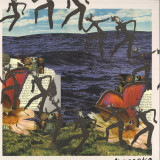
REPRESS!
The afrobeat-inspired eight-piece drop their hotly-anticipated debut.
A horn-fuelled, soul-shaking introduction to the young collective.
Their first solo release after featuring on london jazz primer we out here.
Kokoroko are part of the thriving scene that's grown out of london's young, jazz-influenced musical circles. Led by bandleader Sheila Maurice-Grey, their self-titled ep is the group's first solo release, following their early 2018 debut with 'Abusey Junction', a track that has gone on to accrue over 15 million plays on youtube and 2.6 million on spotify. Across the E.P's four tracks, the eight-piece deliver on the promise of that memorable introduction, offering a bigger vision of their afrobeat-influenced, soulfully-imbued sound, west african roots shaded with inner London hues.
'Abusey Junction' was first featured on we out here, the 2018 Brownswood compilation documenting London's bright-burning, jazz-influenced musical underground, picked by Rough Trade as compilation of the year 2018, and praised by the Wire, Monocle and the New York Times. Writing and performing as a group since 2014, Kokoroko have played at iconic venues from ronnie scott's, performed at the festival, Afropunk, and toured in Brazil, Colombia and France. Inspired by Fela Kuti, Ebo Taylor, Tony Allen and the great sounds that come out of West Africa, Kokoroko put on a performance to honour the masters that taught them.

13
Named "best kept secret of Canadian funk" by the Quebecois newspaper La Presse, The Brooks are a band of accomplished musicians, well-known in the soul/funk scene across the Atlantic. Expert instrumentalists led by Alexandre Lapointe create a dazzling combo with frontman Alan Prater— an incredibly energetic showman who has worked alongside some of the biggest names in the music industry. This passionate and experienced band fan the sacred fire every time they perform! Thanks to a solid realization, their musical message comes across beautifully. The Brooks go beyond mere interpretation and style exercises: they are a powerful groove machine and a driving force in their sector. 50 years of African American music are condensed in the band's aesthetic. In their live shows and in their records, you can hear James Brown's meticulousness, D'Angelo's delightfulness, Fela Kuti's radiance, Herbie Hancock's intergenerational openness, and J. Dilla's innovative spirit. These heroes of music didn't let rules and trends dictate their messages, and neither do The Brooks. Just like these history makers, they built their reputation with sweat and rigor, outside of conventional channels. The Brooks are incredibly hard workers united in a project where pleasure and complete artistic freedom are the only key words. After 8 years of existence, with an EP and two albums, they have already won many awards and nominations (GAMIQ, Independent Music Awards, ADISQ...) and built a solid reputation in the Quebec indie world.
Who are The Brooks? First, there's the icon, Alan Prater! This Florida-born musician can boast that he shared the stage with the Jacksons! Thanks to his many trips and experiences, he became a key member of Montreal jazz. He is the band's biggest asset: if The Brooks were a sports team, Alan Prater would be captain. Then, at the drums: Maxime Bellavance, one half of the Beat Market duo, whose "dancy and retro futurist" groove can be heard in several major and underground projects in Canada. Philippe Look aces guitar and vocals. His experience as a session musician working with famous bands for 20 years allowed him to take part in different projects: rock, downtempo, trip hop, electro… As one of the founding members of The Brooks, he also wrote many of the band's songs. Keyboardist Daniel Thouin is an integral part of the Montreal jazz scene. He is both an accomplished acoustic piano player and synthesizer player, well versed in writing as well as in improvising, in organic sounds as well as in the latest technologies. Thouin possesses a double vision, which allows him to both exalt and lead productions. Composer Sébastien Grenier wows us with his saxophone. Thanks to his theoretical knowledge and his 20 years of experience, acquired through continuous training all around the world, he is a true guiding force. French trumpetist Hichem Khalfa begun learning the instrument at 7 years old. He attended a musical conservatory before going to the Haute École de Musique and finally pursuing his studies at McGill University. He won prizes at Rimouski International Jazz Festival and received the François Marcaurelle prize at Montreal Off Festival. His successful jazz projects allowed him to work with famous musicians like Blitz the Ambassador, Nomadic Massive, Rhonda Ross and Kalmunity. Philippe Beaudin can be considered an apostle of Afro-Latin percussions, which he teaches and practices with great passion. Thanks to his participation in several projects, you can discover his talent both on stage and onscreen. The Brooks' philosophy is based on art in its rawest form, on perfectionism in musical practice. The choices they make and the directions they take are motivated mostly by instinctive feelings. This is how The Brooks recently crossed the path of Underdog Records during a trip in France. It was love at first sight for the two groups who share a passion for soul. Their chemistry allows them to be completely free in their creative process and natural as ever in their conception-creation-communication approach.

Coming in hot on Berlin's Toy Tonics label: a new EP by the talented duo ALMA NEGRA!
Founded in 2013, Alma Negra is a Swiss collective centered around the brother duo Dersu and Diego Figueira, whose diverse roots in Switzerland and Cape Verde inform their sound. The project was launched with the ambitious vision to explore the world's diverse rhythms and drive musical innovation by mixing different styles. Their work is anchored in a process of digging and sampling, skillfully blending traditional sounds-from Fela Kuti-influenced Nigerian afrobeat and Angolan Lamento to Caribbean Zouk and the Maloya sound of Réunion-into a contemporary dance music context.
The Figueira brothers' eclectic DJ sets embody this ethos, peppering disco and house with salsa, samba, jazz, and Afro-Caribbean carnival rhythms, all under their guiding motto: "As long as it's Funky."
Since 2014, Alma Negra has made an important contribution to intercultural exchange in their hometown of Basel. Their international presence began in 2015 with their first shows abroad in countries like France, the Netherlands, and Portugal. From 2016 to 2019, their reach expanded significantly, with performances in major hubs like London, Paris, and Berlin, as well as Istanbul, Tel Aviv, and Tunisia. Highlights from this period include sets at the Montreux Jazz Festival, Dimensions Croatia, and Fuse Club in Brussels. Their standing is further cemented by releases on respected labels like Heist Recordings, Sofrito, and Basic Fingers, alongside remixes from an elite group of peers, including Soulphiction, Kuniyuki, and Yuksek.
Parallel to their studio and DJ work, the project expanded into the Alma Negra Live Band, formed with jazz musicians from Basel. While the band is currently on hiatus, this collaboration made live instrumentation increasingly central to their productions, creating a dynamic they feel is essential for any dancefloor. The live band has performed in cities like London and Hamburg and has led to collaborations with artists such as French singer Pat Kalla and jazz trumpeter Bodo Maier.
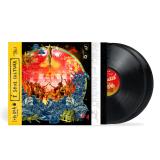
- A1: Harris & Orr - Spread Love
- A2: Terry And Deep South - Trying To Get By
- A3: Toshiyuki Honda - Burnin' Waves
- A4: Igna Igwebuike - Disco Bomp
- B1: Janette Renee - What's On Your Mind (Super Club Remix)
- B2: Grupo Serenata - Sodade, Tem Pena D’mim
- B3: Vital Disorders - Zombie
- B4: Alphonsus Idigo - Flight 505
- C1: Dj Food - Peace (Harvey's 30 Something Mix)
- C2: Man Jumping - In The Jungle
- C3: Stars - Dancin’ People
- D1: Gaucho - Dance Forever (Club Version)
- D2: 49Th Floor - Night Passage (Bongo Mix)
- D3: Orion Agassi - Desacato
- D4: Fatdog - Remember Feat Cj Raine
15
également disponible
yellow vinyl[28,15 €]
With two deeply cherished compilations already in the bag, Luke Una steps up for the third volume in his É Soul Cultura series on Mr Bongo. A love letter to the dancefloor and its power to unite people from all corners of society amid growing division and extremist politics. Genre-spanning in nature, the 15 tracks travel between cosmic soul, boogie, proto-house, slo-mo technoid grooves, drum machine afro, astral bass-bugging futurism, jazz funk, dance, and disco. Each having the ability to move the body as much as the heart.
From his formative years in Sheffield to co-founding Manchester’s much-fabled Electric Chair with Justin Crawford, through to helming the iconic LGBTQ institutions of Homoelectric / Homobloc, Luke has spent 40 years immersed in dance music. His latest outlet, É Soul Cultura, has grown from a label to a globe-spanning events series with Luke holding residencies and embarking on tours across the world from Japan and Australia to America and Europe.
“For me, the dancefloor was never about a one-dimensional, thudding, 130 BPM beat only. It's a much more dynamic, broader vision than that. I cut my teeth in an era where a 100 BPM record had as much impact, excitement, and energy as a 134 BPM dancefloor jazz funk or techno record”, Luke mentions. É Soul Cultura Volume 3 is the perfect embodiment of that notion: “It’s about four decades in the trenches playing dance music, the late-night afters, the shebeens, the basements, warehouse parties, the eight-hour journeys in East London, through to festival sets at Houghton and We Out Here. It’s music unconstrained by genre or tempo and more about making your body move”.
But this isn’t simply a collection of disparate dance tracks; they carry meaning and soul. “It’s less about escapism, more about reconnection. My experience of post-covid has been the coming together of all the clans in various clubs and gatherings. A reaction to a very toxic world out there, where the aggro rhythms of division have sought to divide us, and people don't meet as often. The coming back together face-to-face in clubs has encouraged a real love in the air, there's a real togetherness and collective spirit”.
Opening up the compilation is a track that channels that very message, the transcendental, soul-rousing Harris & Orr ‘Spread Love’. Joining the dots from there, to the low-slung deep house closer of Fatdog ‘Remember’, you’ll find electronic drum machine Nigerian funk, sitting side by side with dancefloor Cape Verdean brilliance, a post-punk cover of Fela Kuti, rubbing shoulders with cosmic electro, and an Una-championed, 8-minute, kickless DJ Harvey remix. There’s jazz funk in various guises moving from boogie synth to astral travelling, slo-mo acidic raw techno, and a ‘79 soul stepper, alongside swirling percussive Italo disco and tribal-charged house. All infused with an innate ability to bring people together.
As society becomes increasingly fractured, É Soul Cultura Volume 3’s message is more than movement. It’s about dance music’s power to unify people from all walks of life and break down the barriers that divide us.
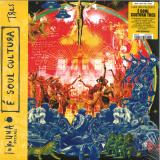
- A1: Harris & Orr - Spread Love
- A2: Terry And Deep South - Trying To Get By
- A3: Toshiyuki Honda - Burnin' Waves
- A4: Igna Igwebuike - Disco Bomp
- B1: Janette Renee - What's On Your Mind (Super Club Remix)
- B2: Grupo Serenata - Sodade, Tem Pena D’mim
- B3: Vital Disorders - Zombie
- B4: Alphonsus Idigo - Flight 505
- C1: Dj Food - Peace (Harvey's 30 Something Mix)
- C2: Man Jumping - In The Jungle
- C3: Stars - Dancin’ People
- D1: Gaucho - Dance Forever (Club Version)
- D2: 49Th Floor - Night Passage (Bongo Mix)
- D3: Orion Agassi - Desacato
- D4: Fatdog - Remember Feat Cj Raine
15
également disponible
black vinyl[26,68 €]
With two deeply cherished compilations already in the bag, Luke Una steps up for the third volume in his É Soul Cultura series on Mr Bongo. A love letter to the dancefloor and its power to unite people from all corners of society amid growing division and extremist politics. Genre-spanning in nature, the 15 tracks travel between cosmic soul, boogie, proto-house, slo-mo technoid grooves, drum machine afro, astral bass-bugging futurism, jazz funk, dance, and disco. Each having the ability to move the body as much as the heart.
From his formative years in Sheffield to co-founding Manchester’s much-fabled Electric Chair with Justin Crawford, through to helming the iconic LGBTQ institutions of Homoelectric / Homobloc, Luke has spent 40 years immersed in dance music. His latest outlet, É Soul Cultura, has grown from a label to a globe-spanning events series with Luke holding residencies and embarking on tours across the world from Japan and Australia to America and Europe.
“For me, the dancefloor was never about a one-dimensional, thudding, 130 BPM beat only. It's a much more dynamic, broader vision than that. I cut my teeth in an era where a 100 BPM record had as much impact, excitement, and energy as a 134 BPM dancefloor jazz funk or techno record”, Luke mentions. É Soul Cultura Volume 3 is the perfect embodiment of that notion: “It’s about four decades in the trenches playing dance music, the late-night afters, the shebeens, the basements, warehouse parties, the eight-hour journeys in East London, through to festival sets at Houghton and We Out Here. It’s music unconstrained by genre or tempo and more about making your body move”.
But this isn’t simply a collection of disparate dance tracks; they carry meaning and soul. “It’s less about escapism, more about reconnection. My experience of post-covid has been the coming together of all the clans in various clubs and gatherings. A reaction to a very toxic world out there, where the aggro rhythms of division have sought to divide us, and people don't meet as often. The coming back together face-to-face in clubs has encouraged a real love in the air, there's a real togetherness and collective spirit”.
Opening up the compilation is a track that channels that very message, the transcendental, soul-rousing Harris & Orr ‘Spread Love’. Joining the dots from there, to the low-slung deep house closer of Fatdog ‘Remember’, you’ll find electronic drum machine Nigerian funk, sitting side by side with dancefloor Cape Verdean brilliance, a post-punk cover of Fela Kuti, rubbing shoulders with cosmic electro, and an Una-championed, 8-minute, kickless DJ Harvey remix. There’s jazz funk in various guises moving from boogie synth to astral travelling, slo-mo acidic raw techno, and a ‘79 soul stepper, alongside swirling percussive Italo disco and tribal-charged house. All infused with an innate ability to bring people together.
As society becomes increasingly fractured, É Soul Cultura Volume 3’s message is more than movement. It’s about dance music’s power to unify people from all walks of life and break down the barriers that divide us.

- A1: Beaten Metal
- A2: Filibuster X
- B1: Sanctuary
- C1: Hilo
- C2: War Hero
- D1: I.c.e
- D2: Age
Antibalas established themselves in the late 1990s as a burning, tough, horn, bass and drum driven Afrobeat ensemble cut from the Fela Kuti mold, who were politically savvy and socially conscious. Their live shows have been incendiary events where rhythm and perspiration from completely crazy, booty-shaking audience members shared something deeper and wider than the music itself. Security is Antibalas' fourth album. It was co-produced by the band with John McEntire from Tortoise.
The group, whose name means "bulletproof" in Spanish, has indeed proved they possess the mettle to not only survive but also thrive by employing a musical arsenal that has become known worldwide. Initially using the revolutionary blueprint of afrobeat as a launching pad, the dozen-strong members of Antibalas weave a rich tapestry of latin, jazz, classical, funk and soul into their horn-driven mix. Words fail in trying to describe the result: simultaneously polyrhythmic and political, independent and contagious, and the reason why many have credited the band for introducing afrobeat's framework to a new generation.
Security is available as a numbered limited edition of 500 copies on white vinyl and is packaged in a gatefold sleeve.

After a few previous edits here and there, the two outsiders are back to add another stop to their endless journey through worldwide funky sounds. Deep disco, Boogie with a capital B (as in Bass or Beat — take your pick), breezy modern soul with an AOR touch, or hypnotic Afrobeat — the purpose of this four-tracker is simple: to bring some heat to any dance floor. Groove is in the heart (of Africa), as somebody once said.

- 1: Psycho Killer
- 2: Heaven
- 3: Sugar On My Tounge (Dub)
- 4: Born Under Punches (The Heat Goes On)
- 5: Once In A Lifetime
- 6: I Zimbra
- 7: The Book I Read
- 8: Girlfriend Is Better
- 9: Mind
- 10: Burning Down The House
- 1: Uh-Oh Love Comes To Town
- 2: Seen And Not Seen
- 3: Road To Nowhere
- 4: Born Under (More) Punches (The Heat Goes On)
- 5: Take Me To The River
- 6: And She Was
- 7: This Must Be The Place (Naive Melody)
- 8: Crosseyed And Painless
également disponible
Tape[25,17 €]
Naive Melodies is a bold and visionary tribute to the music of Talking Heads, reinterpreted through the lens of Black musical innovation. Curated by Drew McFadden — the creative mind behind BBE’s acclaimed Modern Love (David Bowie tribute album) — this new collection dives deep into the Afro-diasporic rhythms and experimental soul roots that helped shape Talking Heads’ unmistakable New Wave sound. Inspired by artists like Fela Kuti, Parliament, and Al Green — whose influences loomed large in the band’s rhythmic DNA — Naive Melodies shines a light on the Black music traditions that underpinned their artistry. Far from a conventional tribute, Naive Melodies reframes the band’s catalog through the voices and visions of a new generation of genre-defying artists. These interpretations illuminate the foundational grooves and sonic textures that fueled Talking Heads’ rhythm-forward aesthetic, bringing them full circle with authenticity. “With Naive Melodies, I wanted to spotlight the deep and often overlooked influence of Black music on the sound of Talking Heads, drawing from the rhythmic foundations of Afro-diasporic traditions, soul, gospel, Latin, and spiritual jazz. This project is a chance to reimagine Talking Heads’ legacy through the lens of the very innovations that helped shape it, bringing those influences to the forefront through the voices of today’s most forward-thinking artists.” — Drew McFadden The album features a globally minded lineup, including Liv.e, Bilal, Rogê, Miguel Atwood-Ferguson, Aja Monet, Georgia Anne Muldrow, Theo Croker, Kenny Dope, Rosie Lowe, Pachyman, W.I.T.C.H., and more — spanning Afrobeat, jazz, soul, funk, gospel, dub, electronica, orchestral, and Latin styles. It reflects not only the boundary-pushing ethos of Talking Heads, but also the influence of Black music as a cultural force that helped shape it. This is not just a tribute album — it’s a recontextualization. A cultural conversation. A rhythmic reawakening.

10
Swan Song
The vinyl LP at the heart of this éthiopiques 31 tracks 2 to 11 was one of the very last vinyl records ever released in Ethiopia. But above all it represents, we felt, the absolute masterpiece of the Ethiopian Groove – the Swan Song of Swinging Addis. The album leaves a clear idea for posterity of the level of sophistication and mastery that modern Ethiopian music had achieved, before being crushed under the Stalino-military heel of the Derg – as the bloody revolution that was unfolding came to be called.
Ethiopia1976.
The Revolution that broke out in February 1974 rolled on in a ruthless march. The whole of Ethiopian society was utterly stunned. The bouquets of flowers handed joyfully to the first tanks of the coup d'état were to wilt very rapidly. From September 1976 to February 1978, 18 months of Red Terror (the name given by the junta itself) spilled blood throughout the country. This fratricidal conflict took its heaviest toll among students and youth. The shift from feudalism to a cruel and primitive Stalinism left the country's citizens deeply traumatised, and snuffed out any pretence of activism, whatever the sector of society. This ice age was to last for seventeen long years.
ሙሉቀን፡መለሰ Mulukèn Mellèssè Muluqän Mälläsä
It was three tracks by Muluken that served as the opener for éthiopiques-1 more than 25 years ago. Seven more tracks appeared on éthiopiques-3 and 13, all accompanied by The Equators, which was soon to become the Dahlak Band.
The first track, Hédètch alu, also the very first piece that Muluken ever recorded, left audiences both unsettled and amazed. Reflecting the singer's extremely young age (he was just 17 at the time), this angelic voice mystified many, who thought they were in fact listening to a feminine voice. He was not yet 22 when he released his last vinyl record in 1976 with Kaifa Records (KF 39LP), one of the very last to be issued in Ethiopia, before the cassette tape became the dominant medium for music distribution – and before the new revolutionary regime put a stop to all independent musical life, via an unspeakable barrage of prohibitions and other persecutions.
Mulu qèn, literally, “A well filled day”. This tender maternal intention wasn't enough to ward off the cruelty of fate. His mother's premature death drove Muluken to leave his native Godjam, in northeast Ethiopia, to live with an uncle in Addis Ababa. Born Muluken Tamer, he took his uncle's last name – Mèllèssè.
The spelling Muluken appeared in his administrative records. Transcription of Amharic to the Latin alphabet, both in Ethiopia and for scholars, gives rise to controversies and quibbles that can never be neatly settled. French allows for a closer approximation of the original pronunciation, thanks to its battery of accent marks, confusing as they may be to anglophones.
Between rather accommodating administrative record-keepers and the various versions that pop up in interviews given by the artist, Muluken's year of birth oscillates between 1953 and 1955…
1954? One thing is certain: the artist's talent made itself known very early indeed, because he got his start in 1966-67, at the age of 13 or 14. Photos from the period attest to his extreme youth. It's a strange sort of initiation for a very young teenager to become a sensation in the heart of Addis's nightlife at the time, Woubé Bèrèha – the Wilds of Woubé. And what's more, in the club of the Queen of the Night, the Godjamé Assègèdètch Alamrèw herself, the very same that was portrayed by Sebhat Guèbrè-Egziabhér in his novel-memoir Les Nuits d’Addis Abeba2… The legendary female club owner who is remembered to this day by the capital's ageing boomers.
Muluken first tried his hand at the drums, before he grabbed the microphone. He emigrated briefly to the Zula Club, across the street from the old Addis Post Office, one of the ground-breaking bars of the burgeoning musical scene, before joining the Second Police Band in 1968, for around three years. He spent a few months with the short-lived Blue Nile Band founded by saxophonist Besrat Tammènè. As the musical scene grew increasingly successful, and pulled slowly but decisively away from its institutional ties, Muluken released his first 45rpm single in February 1972 (Amha Records AE 440). It was included in two LP Ethiopian Hit Parade compilation albums in September of the same year. All in all, Muluken released eight two-track 45s and the same number of original cassette tapes between February 1972 and 1984, the year that he departed for permanent exile in the USA. After converting to Pentecostalism in 1980, Muluken gradually abandoned all secular musical activity. In 1985, at the end of a concert in Philadelphia, he decided to quit concerts and recording for good. Mèlakè Gèbré, the historic bass player from the Walias band who was playing with him that night, recalls that everything appeared so irredeemably diabolical in Muluken's eyes, that it was to be the end of his contribution to Ethiopian Groove.
The end of the story, the beginning of a legend.
Dahlak Band, forgotten by History
Aside from his personal history and vocal talents, it must be remembered that Muluken Mèllèssè was one of the biggest names in the musical innovations that marked the end of the imperial period. These éthiopiques aim to convince those who are just discovering this hidden gem... As for Ethiopians themselves, they are to this day captivated by this singular and atypical figure in the Abyssinian pop landscape – even though he withdrew from public life some 40 years ago. Incorrigible devotees of poetic twists, of more or less hidden meanings, Ethiopians appreciate above all the care Muluken took in choosing his lyrics and the writers who penned them, such as Feqerte Haylou, Alemtsehay Wodajo and, here, Shewalul Mengistu (1944-1977). Love songs, written by women, a far cry from the conventional drivel that pleases sappy sentimentalists.
Muluken is equally acclaimed for his perfectionism when it came to music, the opposite of the overly casual approach that is all too common. He remained a faithful partner of musicians who came from a lineage that borrowed from several inventive and pioneering bands (Venus, Equators, Dahlak). Amongst them were certain artists who began their musical lives with Nersès Nalbandian at the Haile Sellassie Theatre and who come of age in around 1973 – at just the wrong time, you might say. Among them were the pillars Shimèlis Bèyènè (trumpet), Dawit Yifru (keyboards) and Tilayé Gèbrè (sax & flute). Most notably Tilayé Gèbrè, certainly one of the most important musicians, composers and arrangers of his generation, of the end of the imperial era, and of the early years of the Derg.
It was only in 1981 that a miraculous opportunity arose for Tilayé to escape the Stalinist paradise of the dictator Menguistou Haylè-Maryam. Once again it was Amha Eshèté (1946-2021) who provided a solution. The spirited and courageous producer, who had been in exile in Washington since 1975, succeeded, thanks to his incredible perseverence, in bringing the Walias Band to the USA. It was, in fact an extended Walias Band comprising ten musicians3, six of whom chose to slip away after a few concerts and the recording of an LP (The Best of Walias, WRS 100). Tilayé Gèbrè was one of these. He has been living in the USA ever since. There he joined the then-nascent Ethiopian diaspora, which lived largely unto itself, and was making only very modest headway in the American musical market. It seems unfair that Tilayé Gèbrè and the Dahlak Band were not able to benefit earlier from the public recognition that they do deserve.
A similar draining away of the top-rate talents would lead to the reorganization of the major groups of the “Derg Time”. The remaining artists spread themselves around between Ibex Band (renamed Roha Band), Ethio Star Band and a remodeled Walias Band. That spelled the end of the Dahlak Band.
With this record, produced by the essential Ali Abdella Kaifa a.k.a. Ali Tango, we can appreciate everything that the Derg not only destroyed, but also prevented from flourishing. This gem of Ethiopian-style afrobeat came out in 1976 (and, by way of a parenthesis, before the FESTAC 1977 in Lagos, which was attended by an impressive delegation of Ethiopian musicians — although Fela was already personna non grata in his own country). Despite everything that might distinguish this ethio-groove from Fela’s music – no colonial axe to grind, no question of political confrontation with the authorities, no claims to negritude or Africanism for the Ethiopian musicians, and less extrovertion! –, this LP fits beautifully into the saga of intense and electrified soul of the new “African” groove that Fela and Manu Dibango embodied so well from that point onwards.
In restoring this record to its place in the afrobeat epic, it can be seen that, if nothing else, the timeline bestows a legitimate pedigree and a historical primacy to works that had no international impact when they were originally released.
Warning! Masterpiece!

2
Already championed by Gilles Peterson on Worldwide FM and DJ Koco from Japan is the newest collaboration between Wah Wah 45s & the vinyl only ,singles only label imprint Mukatsuku Records .Dele Sosimi is a modern Afrobeat torchbearer who worked with the genre's greatest, Fela Kuti. He has a varied and vital discography that includes the 2023 album The Confluence from which this new 45 rpm on Mukatsuku is taken. It is a sweet soul sound, laced with gentle jazz and warm, buttery vocals that slow your heart and mind equally. On the flip is an exclusive, never-released instrumental that allows the sax-laden sounds and virtuoso musicianship to shine. Both sides are perfectly cosy and gentle accompaniments to a lazy afternoon in by the fire as winter begins to bite.
b 02: Mo Se B'ola Tan (Unreleased Instrumental) feat. Get Cape. Wear Cape. Fly
b 02: Mo Se B'ola Tan (Unreleased Instrumental) feat. Get Cape. Wear Cape. Fly

- Fly Higher
- Love Is Still The Answer
- Don't Be Silent
- Roots
- Love Will Find A Way
- Ashim
- A Piece Of Gold
- To Be Free
- Bjp (Big John Price)
- Nothing We Could Do
Die britischen Afro-Dub-Meister Soothsayers liefern mit "Fly Higher" ihr wohl bestes Werk ihrer drei Jahrzehnte langen Geschichte ab. Ihr mittlerweile 12. Studioalbum spiegelt die Essenz der Band aus Afrobeat, Soul, Jazz und Dub-Grooves wider. Die mitreißenden, eingängigen Melodien kommen durch dreistimmige Harmonien, Bläser-Hooks und hypnotisierende Basslines voll zum Ausdruck. Der Sound ist organisch und warm im originellen Soothsayers Songwriting-Stil, der eine Vielzahl von Einflüssen kombiniert, aber Klischees und Vorhersehbarkeit vermeidet. Featuring u.a. Youthsayers, die jamaikanische Jazzikone Tommy McCook, die britisch-nigerianische Sängerin Lizzy Donsumu, den ehemaligen Fela Kuti-Keyboarder Dele Sosimi und die britische Jazzmusikerin Julia Biel.
[i] BJP (Big John Price) [feat. Youthsayers]

Fabio Nobile is a drummer and multi-instrumentalist who has been active on the music scene for over 25 years. Today, his musical
exploration draws from the deep roots of Afro traditions and the expressive freedom of jazz—two musical cultures that are an integral
part of his identity.
Sankofa Soul is a musical project born from the encounter between jazz, African traditions, and the search for a profound connection
between past and present. The term “Sankofa” comes from the Akan language (spoken in Ghana) and means “to go back and fetch what
is good” —an invitation to look to the past to better understand the future.
In an era where music is evolving at a rapid pace, Sankofa Soul looks to a rich and multifaceted cultural heritage, while also embracing a
modern voice—a universal call to reconnect with our European origins through the lens of African legacy.
Each track on Sankofa Soul reflects Fabio Nobile’s experiences, studies, and roots, forming a dialogue between past and present, the
sacred and the profane, individuality and community.
Sankofa Soul is a heartfelt tribute to West Africa, with a special focus on Nigeria.
Zuma Rock leads us into the rich and ever-changing soundscape of West Africa—a space where tradition meets innovation, and rhythm
tells stories older than words. Here, the legacy of Fela Kuti’s Afrobeat pulses through every beat, anchoring the music in political fire and
deep ancestral roots. At the same time, the unmistakable horn section weaves a vibrant fusion of Afro-Funk and Jazz. In Zuma Rock, we
enter a dialogue between past and present—a musical return to the source.
And then appears Kalakuta Republic, a heartfelt homage to the self-declared commune that was home to the legendary Fela Kuti—a
reminder not to forget the rebellious spirit of the Kalakuta Republic. This track gives voice to the very essence of Afro-jazz, wrapped in a
hypnotic 12/8 rhythm that echoes ancient African traditions. Its immersive pulse blends seamlessly with jazz’s boundless expressive
freedom, creating a vibrant, compelling dialogue suspended between ancestral roots and modernity.
Landed in Lagos and I Read the Stars naturally embrace the distinctive sound of Manu Dibango, while Say Your Prayer Now reminds us
how the evolution of Jamaican reggae—and its cultural and musical foundations—remains deeply linked to Mother Africa.
This is Sankofa: the soul’s journey back to the past to move forward.

Coflo is a dancer, producer and Capoeira expert born and raised in the East Bay Area of California with a lifelong love of house music. For this one on Jambala, he hooks up with Adeniji Heavywind for a tune named after the label. It's the sort of cultured, organic sound that brings musical charm as well as infectious groove with Afro, soul and jazz all worked in through the bold brass notes, jangling rhythms and funky guitars, which get topped with a charming vocal a la Fela Kuti. The Backside mix is more deep and dubby to make for a tidy two tracker.
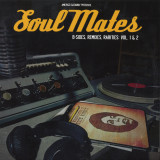
- A1: Fela Soul - Stillego Trippin
- A2: B B. & The Ugkz - I Ain't Heard Of That Feat.slim Thug
- A3: Yasiin Gaye - Ms Fat Booty Pt. Ii Feat.ghostface Killah
- A4: The Illmatics - Hip-Hop Is Dead
- B1: A Common Wonder - Reminding Me Of Those Days Feat C.l. Smooth
- B2: The Notorious J B.'s - Think B.i.g
- B3: Nina Simone & Lauryn Hill - Fu-Gee-La (Refugee Camp Remix)
- B4: Fela Soul - A Rollerskating Jam Named Saturdays
- C1: A Common Wonder - The Sixth Wonder
- C2: The O'jayz - Ain't No Jigga
- C3: Nina Simone & Lauryn Hill - Ex-Factor
- C4: Otis & The Outkasts - Shutterbugg Feat Cutty
- D1: B B. & The Ugkz - Get It
- D2: Yasiin Gaye - Got To Give It Up On Saturdays
- D3: Fela Soul - More Than U Know
15
Mash-up master AMERIGO GAZAWAY has compiled a collection of the most popular and sought after tracks in the SOULMATES catalog. Featuring choice cuts from very hard to find/out of print vinyl, fan favorites, and even a few former digital exclusives pressed to wax for the very first time.

10
Songs about the unity of Sudan, peace between Muslims and Christians and the fate of war orphans, backed by grooves equally taking influence from Arabic sounds, American funk as well as neighboring Ethiopia.
Kamal Keila was among the first artist we met in Sudan during our two trips to Khartoum and Omdurman last year. He is one of the key figures of the Sudanese jazz scene that was a vital part of the musical culture in Sudan from the mid 1960s until the islamist revolution in the late 1980s. When we meet Kamal he luckily presented us with two mold covered studio reels.
Each tape included five tracks. One with English lyrics and another with Arabic ones. Musically you can hear the influence of neighboring Ethiopia much more than on other Sudanese recordings of the time, as well as references to Fela and American funk and soul. His lyrics, at least when he sings in English which gave him more freedom from censorship, are very political. A brave statement in the political climate of Sudan of the last decades, preaching for the unity of Sudan, peace between Muslims and Christians and singing the blues about the fate of war orphans called "Shmasha".
A note inside one of the boxes specified the track titles, durations and the fact that the sessions were recorded on the 12th of august 1992. Both sessions stand as a hearable testament how Kamal Keila stuck to a sound aesthetic from decades ago, while incorporating current events into his lyrics.
Kamal Keila's album is the first in a series of releases covering the Sudanese jazz scene on Habibi Funk. Be on the lookout for albums by The Scorpions and Sharhabeel coming soon.
2LP + Download Code + 8 Page Booklet

- A1: Orlando Julius & The Afro Sounders - Alo Mi Alo (Parts 1 & 2)
- A2: Segun Bucknor & His Revolution - La La La
- A3: Lijadu Sisters - Orere Elejigbo
- B1: Peter King - Shango
- B2: Sahara All Stars Band Jos - Enjoy Yourse Lf
- C1: Fela Ransome Kuti & The Africa 70 - Jeun Ko Ku (Chop %U2018N%U2019 Quench)
- C2: Tunji Oyelana & The Benders - Ifa
- C3: Ofo The Black Company - Allah Wakbarr
- D1: He Funkees - Dancing Time
- D2: Monomono - Tire Loma Da Nigbehin
- D3: Bala Miller & The Great Music Pirameeds Of Afrika - Ikon Allah
- E1: Sir Victor Uwaifo & His Melody Maestroes - Akuyan Ekassa
- E2: Shina Williams & His African Percussionists - Agboju Logun
- F1: Gasper Lawal - Kita Kita
- F2: Sunny Ade & His African Beats - Ja Fun Mi (Instrumental)
15
également disponible
The Definitive Lp Edition[33,57 €]
Special edition repress of the groundbreaking ‘Nigeria 70’ compilation, now available on translucent green vinyl 3LP to celebrate the label’s 25th Anniversary.
Originally released in 2001, the collection set the benchmark for a new generation of archive labels and releases mining the vaults for rare Afro funk and Afro jazz fusions and helped to paint the wider picture of the 1970s Lagos scene beyond Fela Kuti's catalogue for a legion of soul, funk and dance music enthusiasts. Check!

11
A Funky Cali Deep Groove Classic. For Fans Of... Kind Gizzard and Lizard Wizard, Altin Gün, WITCH, Khruangbin, Fela Kuti, Bombino, Say She She, Goat, Monophonics. Exclusive first pressing of Orgone's 2008 release, Bacano. RSD Black Friday release for 2024. Orgone has sold over 15,000 units through retail and Bacano has streamed over 10 million times. Orgone is the backing band for Say She She. Colemine Records is proud to present Orgone's 2008 classic Bacano, on vinyl for the first time exclusively for Black Friday RSD 2024! Now and always, Orgone delivers dirty, organic, California soul with heart; music that grabs you by the collar, pulls you to your feel and shoves you wantingly onto the dance floor. It all started with two kids from the San Fernando Valley, whose shared affinity for gritty soul records of the 60s and 70s collided with the colorful music cultures brewing in Los Angeles during the late 90s. That friendship sparked a movement, and Orgone has been delivering nothing but gold to the funk faithful ever since. Orgone has sold over 15,000 physical units through retail and Bacano has been streamed 10m times. This band is the backing tour band for Say She She and played on their most recent album. This LP will follow their successful LP, Chimera, which was released in February of this year.

8
"This is the time that we, who have benefitted from the Last Poets shouldbe able to say, 'it's the Last Poets. It's them we should be honouring, because we did not honour them for so many years_"
KRS One wasn't just addressing the hip hop fraternity when he uttered
those words by way of introducing the video for Invocation - a poem
written thirty years ago, around the time of the Last Poets' last significant comeback. He was speaking to everyone who's been affected by the word, sound and power issuing from the most revolutionary poetry ever witnessed, and that the Last Poets had introduced to the world outside of Harlem at the dawn of the seventies.
In 2018 the two remaining Last Poets, Abiodun Oyewole and Umar Bin
Hassan, embarked on another memorable return with an album -
Understand What Black Is - that earned favourable comparison with theirseminal works of the past, whilst showcasing their undimmed passion andlyrical brilliance in an entirely new setting - that of reggae music. Trackslike Rain Of Terror ("America is a terrorist") and How Many Bullets demonstrated that they'd lost none of their fire or anger, and their essential raison d'etre remained the same.
"The Last Poets' mission was to pull the people out of the rubble o f their lives," wrote their biographer Kim Green. "They knew, deep down that poetry could save the people - that if black people could see and hear themselves and their struggles through the spoken word, they would be moved to change."
Several years later and the follow-up is now with us. The project started when Tony Allen, the Nigerian master drummer whose unique polyrhythms had driven much of Fela Kuti's best work, dropped by Prince Fatty's Brighton studio and laid down a selection of drum patterns to die for. That was back in 2019, but then the pandemic struck. Once it had passed, the label booked a studio in Brooklyn, where the two Poets voiced four tracks apiece and breathed fresh energy, fire and outrage into some of the most enduring landmarks of their career. Abiodun, who was one of the original Last Poets who'd gathered in East Harlem's Mount Morris Park to celebrate Malcolm X's birthday in May 1968, chose four poems that first appeared on the group's 1970 debut album, called simply The Last Poets. He'd written When The Revolution Comes aged twenty, whilst living in Jamaica, Queens. "We were getting ready for a revolution," he told Green. "There wasn't any question about whether there was going to be one or not. The truth was many of us still saw ourselves as "niggers" and slaves. This was a mindset that had to change if there was ever to be Black Power." He and writer Amiri Baraka were deep in conversation one day when Baraka became distracted by a pretty girl walking by. "You're a gash man," Abiodun told him. The poem inspired by that incident, Gash Man, is revisited on the new album, and exposes the heartless nature of sexual acts shorn of intimacy or affection. "Instead of the vagina being the entrance to heaven," he says, "it too often becomes a gash, an injury, a wound_" Two Little Boys meanwhile, was inspired after seeing two young boys aged around 11 or 12 "stuffing chicken and cornbread down their tasteless mouths, trying to revive shrinking lungs and a wasted mind." They'd walked into Sylvia's soul food restaurant in Harlem, ordered big meals, then bolted them down and run out the door. No one chased after them, knowing that they probably hadn't eaten in days. Fifty years later and children are still going hungry in major cities across America and elsewhere. Abiodun's poem hasn't lost any relevance at all, and neither has New York, New York, The Big Apple. "Although this was written in 1968, New York hasn't changed a bit," he admits, except "today, people just mistake her sickness for fashion." Umar is originally from Akron, Ohio, but had arrived in Harlem in early 1969 after seeing Abiodun and the other Last Poets at a Black Arts Festival in Cleveland. That's where he first witnessed what Amiri Baraka once called "the rhythmic animation of word, poem, image as word- music" - a creative force that redefined the concept of performance poetry and stripped it bare until it became a howl of rage, hurt and anger, saved from destruction by mockery and love for humanity. When Umar's father, who was a musician, was jailed for armed robbery he took to the streets from an early age where he shined shoes and raised whatever money he could to help feed his eight brothers and sisters. By the time he saw the Last Poets he'd joined the Black United Front and was ready to join the struggle. Once in Harlem, Abiodun asked him what he'd learnt in the few weeks since he'd got there. "Niggers are scared of revolution," Umar replied. "Write it down" urged Abiodun. That poem still gives off searing heat more than fifty years later. In Umar's own words, "it became a prayer, a call to arms, a spiritual pond to bathe and cleanse in because niggers are not just vile and disgusting and shiftless. Niggers are human beings lost in someone else's system of values and morals." And there you have it. It's not just race or religion that hold us back, but an economic system that keeps millions in poverty and living in fear - a system born from political choice and that's now become so entrenched, so bloated on its own success that it's put mankind in mortal danger. It was many black people's acceptance of the status quo that inspired Just Because, which like Niggers Are Scared Of Revolution, was included on that seminal first album. Along with their revolutionary rhetoric, it was the Last Poets' use of the "n word" that proved so shocking, but it would be wrong to suggest that they reclaimed it, since it never belonged to black people in the first place. There's never any hiding place when it comes to the Last Poets. They use words like weapons, and that force all who listen to decide who they are and where they stand. Umar's two remaining tracks find him revisiting poems first unleashed on the Poets' second album This Is Madness! Abiodun had left for North Carolina by then where he became more deeply enmeshed in revolutionary activities and spent almost four years in jail for armed robbery after attempting to seize funds related to the Klu Klux Klan. Meanwhile, the 21 year old Umar was squatting in Brooklyn and had developed close ties with the Dar-ul Islam Movement. A longing for purity and time-honoured spiritual values underpins Related to What, whilst This Is Madness is a call for freedom "by any means necessary," and that paints a feverish landscape peopled by prominent black leaders but that quickly descends into chaos. "All my dreams have been turned into psychedelic nightmares," he wails, over a groove now powered by Tony Allen's ferocious drumming. Those sessions lasted just two days, and we can only imagine the atmosphere in that room as the hip hop godfathers exchanged the conga drums of Harlem for the explosive sounds of authentic Afrobeat. Once they'd finished, the recordings and momentum returned to Prince Fatty's studio, since relocated from Brighton to SE London. This was stage three of the project, and who better to fill out the rhythm tracks than two key musicians from Seun Anikulapo Kuti's band Egypt 80? Enter guitarist Akinola Adio Oyebola and bassist Kunle Justice, who upon hearing Allen's trademark grooves exclaimed, "oh, the Father_ we are home!" Such joy and enthusiasm resulted in the perfect fusion of Nigerian Afrobeat and revolutionary poetry, but the vision for the album wasn't yet complete. He wanted to create a new kind of soundscape - one that reunited the Poets with the progressive jazz movement they'd once shared with musicians like Sun Ra and Pharoah Sanders. It was at that point they recruited exciting jazz talents based in the UK like Joe Armon Jones from Mercury Prize winners Ezra Collective, also widely acclaimed producer/remixer and keyboard player Kaidi Tatham, who's been likened to Herbie Hancock, and British jazz legend Courtney Pine, whose genius on the saxophone and influence on the UK's now vibrant jazz scene is beyond question. The instrumental tracks on Africanism are in many ways as revelatory and exciting as the Last Poets' own. It's important to remember that the kaleidoscope of styles and influences we're presented with here aren't the result of sampling but were played "live" by musicians responding to sounds made by other musicians. That's where the magic comes from, aided by Prince Fatty's peerless mixing which allows us to hear everything with such clarity. Music fans today have grown accustomed to listening to all kinds of different genres. Their tastes have never been so broad or all- encompassing, and so the music on this new Last Poets' album is as groundbreaking as their lyrics, and perfectly suited to the era that we're now living in. John Masouri

This one is highly recommended for fans of Khruangbin, Lord Echo, Leon Bridges or Fat Freddy's Drop.
Open is the sixth studio album from acclaimed composer, producer, filmmaker and multi-instrumentalist, Kutiman. It is an addictive & irresistible twelve-track trip taking in elements of classic soul, Middle Eastern psychedelia, Afrobeat, Thai funk, jazz fusion, cosmic library soundscapes and more.
The uptempo “Vanishing Point” opens proceedings, recalling both Abstract Orchestra’s 2017 Dilla tribute and the lounge OST/library music flips of Tosca and DJ Vadim fame.
My Everything introduces prominent guest & frequent Kutiman collaborator, Dekel, whose soul-pop vocals coupled with jangly acoustic guitar riffs tip to contemporary indie artists such as Michael Kiwanuka and SAULT. “A Day Off passes through” Anatolian psych and Khruangbin-esque Thai funk whilst the afrobeat/jazz fusion “Confetti” pays tribute to Kutiman’s other namesake, Fela Kuti.
Dekel rejoins for the beatdown, lilting dub-soul “Believe In You” with hints of Lord Echo and the sun-inflected New Zealand dub-soul sound. The Tuareg-leaning guitar lines on “Canoe” travel across the Saharan desert easterly towards Sudan and Ethiopia by the end, whilst meditative and Coltrane-adjacent album closer “Ripples” provides a final moment of reflection from a truly global excursion of soundscapes.

Founded in the stillness of 2020 when a group of tight tight-knit up and coming musicians were robbed of their livelihood and greatest joy - live performance - the group came together in a graffiti smudged artist s space in an old industrial facility in Copenhagen s outskirts and created a space for themselves to improvise in a funky, groove based setting. A followup to their 2023 debut Moko Jumbie which explored the rich culture of West African music popularised by Mulatu Asastke and Fela Kuti, as the name suggests, Soul Piece leans further into the tropes, grooves and idioms of Western 60" s Soul and Funk. Recorded live over two days at the Royal Danish Academy of Music, the albums raw, warm production captures the energy, intimacy and excitement of a live performance, transporting the listener right in the centre of a pulsating dancefloor. Each song is rooted in groove and exemplary band musicianship, and made up of every stylistic feature one might crave from the genre: crunchy rhodes tones, percussive clavinets, thick organ textures, grooving tambourines, searing guitar solos, deep pocket drum grooves, infectious basslines, punchy horn backings and James Brown Brown-esque stabs. Self described as the young lions " of the Danish jazz scene, each member of the six piece is an active contributor to the country s diverse musical output; Norregaard, Langebæk & Besiakov can be heard performing regularly in the Fela Kuti saluting Black Money Orchestra and Bæst, Eskildsen with the Addis Ababa Band, and Thofte & Toftemark each leading their own projects in contemporary hard hard-hop to name but a few of their many ventures.

9
Das neue Album der erfahrenen Soul-Funker The Brooks, welche seit Anfang der 2010er Jahre zusammen grooven, ist eine deepe Funk-Soul-Party. Von ihren Anfängen bei Dièse Onze bis hin zu den großen internationalen Bühnen verbinden sie Spielfreude, künstlerische Freiheit und kreative Synergie. Ihre elektrisierende Musik, eine Kreuzung aus Funk, Soul, R'n'B, Afrobeat und Jazz, wird von federnden Rhythmen, extravaganten Bläsern, einfallsreichen Keyboards und betörenden Gitarren angetrieben. Ihr kommendes Album ,Soon As I Can" verspricht, ihre Grooves in neue Höhen zu treiben. Inspiriert von Legenden wie James Brown, Fela Kuti und Herbie Hancock, navigieren The Brooks nahtlos durch Funk, Soul, R'n'B, Afrobeat und Jazz und haben sich einen weltweiten Ruf als unbestreitbare Groove-Maschine erspielt. Die Gruppe ist viel mehr als die Summe ihrer Teile und zelebriert mehr als 50 Jahre afroamerikanische Musikgeschichte und -entwicklung, wobei sie ihre Wurzeln nicht aus den Augen verliert und gleichzeitig in der Gegenwart verankert bleibt.

It is with great pleasure that we announce Mitchum Yacoub's debut album Living High in the Brass Empire_ a showcase in unique stylings of tropical funk, afrobeat, cumbia, and soul; a musical patchwork threaded by a heavy, hypnotic rhythm section and powerfully vibrant horn lines. What sounds like a 12-piece ensemble was actually mostly recorded and performed by Yacoub at his home in San Diego, featuring a few close friends from local groups Sure Fire Soul Ensemble and Boostive. The horn section is comprised of Travis Klein, Bradley Nash, and Wesley Etienne (featuring Todd Simon on "Los Muñequitos"), each with distinguished performances that send the music to higher heights. Nuanced vocalist Divina Jasso lends humanity and introspection throughout the head-nodding soul sounds of "Never Knew", latin dance anthem "Cumbia Divina", and the syncopated funk of "Empire". You'll hear rhythms from Colombia, folkloric percussion of Cuba, interlocking grooves à la Fela Kuti, 70's r&b influence, and something in between it all. Drawing many inspirations into a refreshing and unified record, we think you'll enjoy Living High in the Brass Empire.
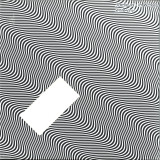
- A1: Wanna
- A2: Treat Each Other Right
- A3: Waited All Night (Ft Romy, Oliver Sim)
- A4: Baddy On The Floor (Ft Honey Dijon)
- A5: Dafodil (Ft Kelsey Lu, John Glacier, Panda Bear)
- A6: Still Summer
- A7: Life (Ft Robyn)
- B1: The Feeling I Get From You
- B2: Breather
- B3: All You Children (Ft The Avalanches)
- B4: Every Single Weekend (Interlude)
- B5: Falling Together (Ft Oona Doherty)
12
également disponible
Black Vinyl[22,27 €]
Fast ein Jahrzehnt hat sich Jamie xx seit Veröffentlichung seines Solodebüts Zeit gelassen. „In Waves“, das zweite Album des Londoners, der mit seiner Band The xx zu den prägendsten Figuren der jüngeren Musikgeschichte gehört. Erneut lässt er seiner Liebe zur elektronischen Musik freien Lauf und entwirft die Geschichte einer Nacht, in der man in den himmlischen Puls von Schatten, Licht und Dancefloor-Rhythmen hinabtaucht.
“In Waves” hat seinen Ursprung in einem Mix, den Jamie 2020 für BBC Radio 1 machte. Hier tauchten neben Tracks der aktuellen Generation an UK-Dancemusic auch diverse musikalische Helden auf, etwa Roy Ayers, Fela Kuti, Tom Zé oder Philip Glass. Auch erste Versionen von Songs, die nun auf dem Album erscheinen werden, waren zu hören. “Es erinnerte mich daran, warum ich diese Musik liebe“, so Jamie, der zuvor lange mit der Frage gehadert hatte, wie es für ihn weitergehen würde. “Ich fand einfach Spaß am kreativen Prozess, ohne dabei an ein Ergebnis zu denken.“
Jamie xx pflügt auf „In Waves“ durch die Subgenres und Dekaden und fügt Northern Soul, Disco, Garage, Acid House, Techno, Tropicalia. Hip-Hop, Funk und den Sound der UK Underground Pirate Radios zusammen. Die kleinen Momente sind dabei so eindrucksvoll wie das übergreifende Ganze. Etwa jener Part bei “Treat Each Other Right“, der parallel zum Album-Announcement erscheinenden neuen Single: Zunächst wird man herausgerissen aus dem breiten Breakbeat-meets-Future-Soul-Vehikel, um sich mit den gepitchten Motown-Vocals plötzlich im Mittelwellenradio der 60er wiederzufinden. Die Worte “I’ll never let you down“ werden in die Ewigkeit gezogen, bevor ein biepender Puls über atmosphärischen Synths einsetzt und man direkt zurückgeführt wird in die schweißnasse Katharsis des Dancefloors.
Im Zeitalter der Algorithmen ist “In Waves” Zeugnis für pure menschliche Empfindung, ein lebensbejahendes Gegengift, das über den Kopfhörer in eine andere Dimension führt und zugleich gemeinsam auf der Tanzfläche erlebt werden will. Mit dabei sind u. a. Romy und Oliver, The Avalanches, Robyn und John Glacier.

Kaito Cuts: Revert / Sequoia b/w Trek / Wait Up/ Sloan by Kaito | Galaxy Sound Co. — GSC45-042, Test Pressing | With their 42nd donut in the always-on-point 45 edit series, @galaxy_sound_company drops a new batch of lo-fi hip-hop beats instrumentals. This time out GSC is showcasing a newcomer to the head-nodding beat maker scene — @kaitoian.
Kaito, an out cold skater as well, has a couple of self-releases you can find on his Bandcamp page, which are solid & sound at home alongside his pop’s ( Todd Osborn) Ghostly International releases. This 7” EP outing spins at 33 1/3 to pack in as much as GSC can squeeze in & is straight up beatloverz heaven. What is impressive, for this old timer, is how clearly deep Kaito’s musical knowledge goes. He clearly has learned well from his father & all the good music he certainly has had at his fingertips. From Madlib to Os Mutantes to Fela Kuti to J Dilla & other artists who were not afraid to dig deep & unearth beats & melodies to tickle your fancy, Kaito’s tastes are as refined as anyone in the game. I know a number of the original source materials that comprise each track, but that I leave to you to dig out for yourself. Here I encourage you to open your eardrums & listen deep with your fav pair of headphones & let each track wash over you. From straight forward head-nodding hip-hop thumpers to beautiful Brazilian femme fatale vocals that lure you into the loop, to a Afrobeat driver that’ll break ya neck, to a mellow, soulful MPC hopper that will lovingly recall a Arlo Parks joint, to then closes out with a synth-laden spaced-out dreamy loop to end credits.

Studio One was founded by Clement "Coxsone" Dodd1 in 1954, and the first recordings were cut in 1963 on Brentford Road in Kingston.1[2] Amongst its earliest records were "Easy Snappin" by Theophilus Beckford, backed by Clue J & His Blues Blasters, and "This Man is Back" by trombonist Don Drummond. Dodd had previously issued music on a series of other labels, including World Disc, and had run Sir Coxsone the Downbeat, one of the largest and most reputable sound systems in the Kingston ghettos.
In the early 1960s, the house band providing backing for the vocalists were the Skatalites[3] (1964–65), whose members (including Roland Alphonso, Don Drummond, Tommy McCook, Jackie Mittoo, Lester Sterling and Lloyd Brevett) were recruited from the Kingston jazz scene by Dodd. The Skatalites split up in 1965 after Drummond was jailed for murder, and Dodd formed new house band the Soul Brothers (1965–66), later named the Soul Vendors (1967) and Sound Dimension (1967-). From 1965 to 1968 they played 9 a.m. to 5 p.m., 5 days a week, 12 rhythms a day (about 60 rhythms a week) with Jackie Mittoo as music director, Brian Atkinson (1965–1968) on bass, Hux Brown on guitar, Harry Haughton (guitar), Joe Isaacs on drums (1966–1968), Denzel Laing on percussion, and on horns (some initially and some throughout): Roland Alphonso, Dennis 'Ska' Campbell, Bobby Ellis, Lester Sterling, among others on horns during the era of Rock Steady. Headley Bennett, Ernest Ranglin, Vin Gordon and Leroy Sibbles were included among a fluid line-up, to record tracks directed by Jackie Mittoo at Studio One from 1966-1968.
During the night hours at Studio One from 1965-1968, singers like Bob Marley, Burning Spear, The Heptones, The Ethiopians, Ken Boothe, Rita Marley, Marcia Griffiths, Judy Mowatt, Alton Ellis, Delroy Wilson, Bunny Wailer[4] and Johnny Nash, among others, would put on headphones to sing lyrics to original tracks recorded by the Soul Brothers earlier each day. These seminal recordings included "Real Rock" (by Sound Dimension), "Heavy Rock", "Jamaica Underground", "Wakie Wakie", "Lemon Tree", "Hot Shot", "I'm Still In Love With You", "Dancing Mood", and "Creation Rebel".
Jackie Mittoo, Joe Isaacs, and Brian Atkinson left Studio One in 1968, recorded drums and bass for Desmond Dekker's and Toots' biggest hits at other Kingston studios, then moved to Canada. Hux Brown stayed in Jamaica to record on the soundtrack The Harder They Come, The Harder They Fall, and toured in Nigeria with Toots and the Maytals and Fela Kuti. The Soul Brothers (a.k.a. Sound Dimension) formed the basis of reggae music in the late 1960s, being versioned and re-versioned time after time over decades by musicians like Shaggy, Sean Paul, Snoop Lion, The Clash, String Cheese Incident, UB40, Sublime, and countless other Billboard originals and remakes trying to emulate their original Rock Steady sound at Coxsone's Studio One.
The label and studio were closed when Dodd relocated to New York City in the 1980s.

Studio One was founded by Clement "Coxsone" Dodd1 in 1954, and the first recordings were cut in 1963 on Brentford Road in Kingston.1[2] Amongst its earliest records were "Easy Snappin" by Theophilus Beckford, backed by Clue J & His Blues Blasters, and "This Man is Back" by trombonist Don Drummond. Dodd had previously issued music on a series of other labels, including World Disc, and had run Sir Coxsone the Downbeat, one of the largest and most reputable sound systems in the Kingston ghettos.
In the early 1960s, the house band providing backing for the vocalists were the Skatalites[3] (1964–65), whose members (including Roland Alphonso, Don Drummond, Tommy McCook, Jackie Mittoo, Lester Sterling and Lloyd Brevett) were recruited from the Kingston jazz scene by Dodd. The Skatalites split up in 1965 after Drummond was jailed for murder, and Dodd formed new house band the Soul Brothers (1965–66), later named the Soul Vendors (1967) and Sound Dimension (1967-). From 1965 to 1968 they played 9 a.m. to 5 p.m., 5 days a week, 12 rhythms a day (about 60 rhythms a week) with Jackie Mittoo as music director, Brian Atkinson (1965–1968) on bass, Hux Brown on guitar, Harry Haughton (guitar), Joe Isaacs on drums (1966–1968), Denzel Laing on percussion, and on horns (some initially and some throughout): Roland Alphonso, Dennis 'Ska' Campbell, Bobby Ellis, Lester Sterling, among others on horns during the era of Rock Steady. Headley Bennett, Ernest Ranglin, Vin Gordon and Leroy Sibbles were included among a fluid line-up, to record tracks directed by Jackie Mittoo at Studio One from 1966-1968.
During the night hours at Studio One from 1965-1968, singers like Bob Marley, Burning Spear, The Heptones, The Ethiopians, Ken Boothe, Rita Marley, Marcia Griffiths, Judy Mowatt, Alton Ellis, Delroy Wilson, Bunny Wailer[4] and Johnny Nash, among others, would put on headphones to sing lyrics to original tracks recorded by the Soul Brothers earlier each day. These seminal recordings included "Real Rock" (by Sound Dimension), "Heavy Rock", "Jamaica Underground", "Wakie Wakie", "Lemon Tree", "Hot Shot", "I'm Still In Love With You", "Dancing Mood", and "Creation Rebel".
Jackie Mittoo, Joe Isaacs, and Brian Atkinson left Studio One in 1968, recorded drums and bass for Desmond Dekker's and Toots' biggest hits at other Kingston studios, then moved to Canada. Hux Brown stayed in Jamaica to record on the soundtrack The Harder They Come, The Harder They Fall, and toured in Nigeria with Toots and the Maytals and Fela Kuti. The Soul Brothers (a.k.a. Sound Dimension) formed the basis of reggae music in the late 1960s, being versioned and re-versioned time after time over decades by musicians like Shaggy, Sean Paul, Snoop Lion, The Clash, String Cheese Incident, UB40, Sublime, and countless other Billboard originals and remakes trying to emulate their original Rock Steady sound at Coxsone's Studio One.
The label and studio were closed when Dodd relocated to New York City in the 1980s.

- A1: Intro Theme (The Departure) 0:55
- A2: Inner City Travelin' Man 6:07
- A3: Definition Of Infinity Featuring – Talib Kweli 4:43
- A4: I Want You 'Til The Summertime 6:28
- B1: Ms. Fat Booty 6:01
- B2: The Panties Featuring – Teddy Pendergrass 7:11
- B3: Workin' It Out 2:53
- C1: Peculiar Mathematics 6:24
- C2: T" Plays A Cool Loop (Interlude) 2:40
- C3: Time (To Get It Together) 4:36
- D1: Inner City Breathin' Featuring – Tammi Terrell 5:37
- D2: Two Worlds Featuring – Kanye West 2:49
- D3: Soul Mates Radio (Intermission)
13
également disponible
Part 2[41,98 €]
Repress!
The latest mash up from Amerigo Gazaway is a scorcher! You loved 'Fela Soul' and 'Bizarre Tribe', now 'Yasiin Gaye': 13 tracks that perfectly blend Mos Def and Marvin Gaye. feat. Teddy Pendergrass, Talib Kweli, Kanye West, Tami Tarrell and Black Astronauts. Full picture sleeve, double vinyl. Coming next week!

- A1: Intro Theme (The Return) 1:07
- A2: Travellin' Man Pt. Ii (Distant Lovers Mix) 5:38
- A3: Undeniable Featuring – The Temptations 3:42
- A4: Ghetto Rock Featuring – Chuck Berry 5:48
- A5: Sex, Love & Money 4:43
- B1: Re: Introduction 1:22
- B2: This Means You Featuring – Talib Kweli 3:35
- B3: Anna's Love Song 5:13
- B4: Living For The Funk Featuring – Toshi* 3:09
- C1: Modern Marvel Pt. I 4:47
- C2: High Drama Featuring – Mike Zoot 5:42
- C3: B Stands For Beef 3:46
- C4: A Message To The People 3:07
- C5: There Is A Way 6:29
- D1: Climb (Interlude) 1:40
- D2: Modern Marvel Pt. Ii 5:02
- D3: Umi Says 6:06
- D4: End Credits Featuring – Andy Flory 5:13
- D5: Ms Fat Booty Feat Ghostface Killah (Part 2)
19
également disponible
Part 1[41,98 €]
Repress!
The latest mash up from Amerigo Gazaway is a scorcher! You loved 'Fela Soul' and 'Bizarre Tribe', now 'Yasiin Gaye': 13 tracks that perfectly blend Mos Def and Marvin Gaye. feat. Teddy Pendergrass, Talib Kweli, Kanye West, Tami Tarrell and Black Astronauts. Full picture sleeve, double vinyl. Coming next week!

Robert Hood's techno and Femi Kuti's Afrobeat intertwine in a new form where jazz-grooves reign supreme. For the fourth season of La Compagnie des Indes & Sourdoreille "Variations" live series of creations for France TV, the duo were united around the singer and producer James Brown, performing a tribute to the legendary Godfather of Soul who passed away in 2006. This "Variations" album is the live recording of this unique collaboration and performance, capturing a very special moment in time.
The evening witnessed a meeting of two icons in their own genres: one with synths and drum machines, the other on saxophone: Robert Hood and Femi Kuti embody excellence in their respective fields and the pair combined to make something truly unique, soulful, funky and spontaneous. Recorded in one 30+ minute take, "Variations" is embellished by Femi's exquisitely free-flowing yet restrained saxophone, whilst Hood anchors the groove with layers of pads and kicks with the long-time mastery of a true DJ.
Alongside Jeff Mills and Mad Mike, Hood is one of the original members of Detroit techno group Underground Resistance. His style is characterised by minimalist and experimental tones with an assertive groove. Throughout the '90s, he helped pave the way for techno to flourish - giving birth to minimal techno with his seminal album "Minimal Nation". Since then, he has been consistently forwarding electronic music culture with ground-breaking productions, sensational performances and his M-Plant label.
Alongside him, Femi Kuti takes on every musical style with his saxophone, which he plays with a virtuoso touch: pop, soul, electronic music and Afrobeat, of which he is one of the leading exponents. The son of Afrobeat singer and political activist Fela Kuti, he has inherited his father's zeal for both music and activism, where he continues to highlight the plight of most Nigerians living conditions in the oil rich state.
With "Variations" the duo capture an explosive combination on a special night in Paris 4 years ago, November 2019, filmed at the ADP Group headquarters (Paris Aéroport - Charles de Gaulle (CDG) - Roissy).
"It is so amazing when a vision comes to fruition. I enjoyed collaborating with the legendary Femi Kuti for this special project." Robert Hood

Bruk OG Big Mac returns to the CoOp with a new 3 track E.P for some heavyweight fling foot biznizz. Expect Dub wise heavy Basslines, syncopated drums, crunchy crisp snares n soul claps with hypnotic stabs and electro hooks. immediate bruk floor fillers for the footwork massive. Available at all your usual music emporiums and outlets. Seek and destroy.

- A1: Intro Theme
- A2: Inner City Travellin' Man
- A3: Definition Of Infinity (Feat Talib Kweli)
- A4: I Want You 'Til The Summertime
- B1: Ms Fat Booty
- B2: The Panties (Feat Teddy Pendergrass)
- B3: Workin' It Out
- C1: Peculiar Mathematics
- C2: T" Plays A Cool Loop (Interlude)
- C3: Time (To Get It Together) (To Get It Together)
- D1: Inner City Breathin' (Feat Tammi Terrell)
- D2: Two Worlds (Feat Kanye West)
- D3: Soul Mates Radio (Feat The Black Astronauts)
- D4: Intermission
14

NEW 45 BY DEEP-FUNK PIONEER LUCKY BROWN RECORDED DURING THE NOW LEGENDARY SPACE DREAM SESSIONS!
In around 2001, Joel Ricci, the trumpet player/composer behind his former stage alias, Lucky Brown, went traveling on a worldwide "quest for funk". During that pilgrimage, he went to London England in time to attend Keb Darge's 'Legendary Deep Funk' 6-year anniversary at Madame Jojo's. While in the middle of the dancefloor, he was moved so significantly by this obscure brand of 'deep funk' Mr. Darge was unveiling, he became overcome by a mystical sense of 'coming home'. Additionally, he spent a week at Camden's Jazz Cafe to meet The Poets of Rhythm, The Breakestra, The Sugarman Three, DJ Snowboy, DJ James Trouble, and others. When Joel mentioned the nature of his quest to Neal Sugarman, he warmly invited him to come visit Brooklyn and kick it with members of Antibalas, Binky Griptite & The Mellomatics, and the Dap Kings. But before the trip back to the states, Joel spent some time in Paris playing his trumpet at a club called 'Cithea' where they would host weekly 'rare groove' jam sessions. During the jams, Parisian students of Tony Allen would overtake the stage with their instruments and their full African clothing, chant the word, 'Fela', and begin to play this intense free improvised funk and afrobeat. While traveling by train from Paris to the south of France to visit family, Joel began hearing this inspiring polyrhythm swirling in his inner ear and mixing with the "clack-clacka" of the train moving down the track. As soon as he arrived at his destination, he sat down at a piano and jotted down the polyrhythm, bass line and fundamental horn cluster on a piece of sheet music paper. The simple tune was finally rendered to tape ten years later with Lucky Brown's Crawdad Farmers aka The Funk Revolution on the Magik Carpet at drummer Olli Klomp's Lakeside log cabin in Stanwood, Washington. The tune became the title track to Lucky's first full-length on Tramp Records (Lucky Brown's Space Dream, TRLP-9011).
Space Dream is so titled in part to commemorate a soulfunk masquerade party Joel threw at a temporary all-ages Bellingham Washington music venue called 'The Pickford Dream Space'. This is Joel's stripped-down tape-only remix and re-edit which has never before appeared on 45RPM and commemorates the re-release, remaster and repackaging of upcoming Tramp LPs, "Space Dream" and "Don't Go Away", the fully realised 'director's cut' featuring Ricci's early group funk experiment: "The Funk Revolution."

10
Renowned Italian spiritual jazz master, DJ, producer, guitarist, and bandleader Nicola Conte proudly presents his new album Umoja via London based label Far Out Recordings.
A joyous exultation across ten tracks, Umoja taps into the abundant well of knowledge Conte has amassed over his career as connoisseuring compiler and archivist of deep jazz, latin, afrofuturist, bossa-nova and soul music from around the world. Expressing unity, oneness and harmony in Swahili, Umoja coalesces universal feelings through the multifaceted global music Conte has spent his life studying and researching.
Having released music with Blue Note, Impulse! and Schema records, Nicola Conte’s relationship with Far Out began over a shared love of hard-edged bossa-nova and swinging samba-jazz. Between 2009-2013 Nicola Conte compiled five volumes of forgotten 60s Brazilian music for his Viagem series. He then released his critically acclaimed Natural album: a collaboration with vocalist Steffania Dippiero, featuring jazz standards alongside covers of lesser known Brazilian gems.
The music of Umoja draws on the deep-dug 70's independent spiritual and free jazz sounds, private-press soul records, and African and Afro Caribbean rhythms in Conte’s collection. But he equally recognises his debt to many of the decade’s more celebrated musical icons, such as North American cosmic jazz masters Lonnie Liston Smith and Gary Bartz, and Afrobeat originators Fela Kuti and Tony Allen.
Since founding the Bari-based bohemian cultural movement and club night Fez at the dawn of the nineties, Conte has proven to be a pillar of the contemporary, international soul-jazz scene. Composed alongside his long time friend, guitarist Alberto Parmegiani, Conte brings together a dazzling host of guests from around the world, including award winning British vocalist Zara Mcfarlane, acclaimed Finnish saxophonist Timo Lassy, french vibes player Simon Mullier, US vocalist Myles Sanko, rising South African drummer Fernando Damon, former Roy Hargrove bassist Ameen Saleem and Serbian flute sensation Milena Jancuric.
Proudly revivalist, Umoja was recorded direct to analog tape, with just two takes for each track. “Searching for an unadulterated, spontaneous, almost improvised feeling”, Nicola made sure that the few overdubs were also transferred to tape in order to retain the colour and warmth of the analog sound. “Very little post production or editing has been added, so what you hear is largely what happened in those magical live sessions”.

It is with great pleasure that we announce Mitchum Yacoub's debut album Living High in the Brass Empire a showcase in unique stylings of tropical funk, afrobeat, cumbia, and soul; a musical patchwork threaded by a heavy, hypnotic rhythm section and powerfully vibrant horn lines. What sounds like a 12-piece ensemble was actually mostly recorded and performed by Yacoub at his home in San Diego, featuring a few close friends from local groups Sure Fire Soul Ensemble and Boostive. The horn section is comprised of Travis Klein, Bradley Nash, and Wesley Etienne (featuring Todd Simon on "Los Muñequitos"), each with distinguished performances that send the music to higher heights. Nuanced vocalist Divina Jasso lends humanity and introspection throughout the head-nodding soul sounds of "Never Knew", latin dance anthem "Cumbia Divina", and the syncopated funk of "Empire". You'll hear rhythms from Colombia, folkloric percussion of Cuba, interlocking grooves à la Fela Kuti, 70's r&b influence, and something in between it all. Drawing many inspirations into a refreshing and unified record, we think you'll enjoy Living High in the Brass Empire.

It is with great pleasure that we announce Mitchum Yacoub's debut album Living High in the Brass Empire a showcase in unique stylings of tropical funk, afrobeat, cumbia, and soul; a musical patchwork threaded by a heavy, hypnotic rhythm section and powerfully vibrant horn lines. What sounds like a 12-piece ensemble was actually mostly recorded and performed by Yacoub at his home in San Diego, featuring a few close friends from local groups Sure Fire Soul Ensemble and Boostive. The horn section is comprised of Travis Klein, Bradley Nash, and Wesley Etienne (featuring Todd Simon on "Los Muñequitos"), each with distinguished performances that send the music to higher heights. Nuanced vocalist Divina Jasso lends humanity and introspection throughout the head-nodding soul sounds of "Never Knew", latin dance anthem "Cumbia Divina", and the syncopated funk of "Empire". You'll hear rhythms from Colombia, folkloric percussion of Cuba, interlocking grooves à la Fela Kuti, 70's r&b influence, and something in between it all. Drawing many inspirations into a refreshing and unified record, we think you'll enjoy Living High in the Brass Empire.

White vinyl 7” is for Indie stores only. For Fans Of... Quantic, Erykah Badu, Fela Kuti, Antibalas. Unique blend of Alt. R&B and afrobeat. Smokey, soulful vocals, lush hom section and percussion. "Never Knew" features Divina Jasso's illustrious vocals over a heavy backbeat marinated in distorted farfisa, percussion, and a dynamic 3-piece horn section; a meditative groove that will keep your head nodding and hips swaying. On the flip, we have "Impala", a dark and hypnotic afrobeat tune that is mixed somewhere between Fela and Dr. Dre. Thick drums and bass with insistent percussion and scolding hot brass melted on top. Also Available From Mitchum Yacoub: Cumbia Divina 7”. Tracks: A: Never Knew (Feat. Divina Jasso. B: Impala (Inst. Feat. Bradley Nask)

8
In 1974, a brash young designer called Augustus Kerry Taylor had an idea. He'd gather together the hottest musicians in Ghana and record an album of the heaviest and funkiest sounds coming out of America. And this time, he wouldn't just design the cover, like he'd done with Fela Kuti, he'd even release it on his new label, Emporium, as well. Local Accra legends Joe Wellington, Jagger Botchway, Leslie Addy, Officer Toro, Oko Ringo, Soldier and Steve answered the call. They were christened the Kelenkye Band and gelled immediately. Moving World, is a funky, disparate album that exudes a rare warmth, enthusiasm and togetherness. 'Moving World' and 'Brotherhood of Man' are hard, grinding funk. 'Jungle Music' has a more soulful groove. There's also a bit of reggae, 'Dracula Dance', and old-skool highlife, 'Wale Tobite'. Accra's leading DJ, Charlie Sam, declared his mind 'well and truly boggled.' The Kelenkye Band never recorded another album. Augustus Kerry Taylor shut down Emporium and went back to designing album covers. But in Moving World they delivered a perfect moment of funk alchemy that has rightly become the Holy Grail of 70's Ghanian groove. - Peter Moore / Licensed by the bandleaders and songwriters of the album, Joe Wellington and Jagger Botchway.

- A1: Petit A Petit (Feat Agnès Hélène) 4 20
- A2: Man Bo Diak (Feat Amatah Keo) 5 06
- A3: Femme Qui Danse (Feat Pat Kalla) 4 11
- A4: Bas Les Masques (Feat Charly Sanga) 4 14
- A5: Oh Ma Cherie (Petit À Petit Part 2) (Feat Agnès Hélène & Charly Sanga) 3 39
- B1: Love Is Jokin (Feat Pat Kalla) 4 35
- B2: Metissage (Feat Sana Bob) 4 24
- B3: Kinkeliba (Feat Jy Cooly) 3 33
- B4: Electro Highlife (Instrumental) 5 10
- B5: T’es Haut (Instrumental) 4 18
10
After Joao Selva, Dowdelin, The Bongo Hop, Underdog Records continue their exploration of the Black Atlantic with IREKE.Ecstatic brass, 70’s keyboards, elastic guitars, round bass and world percussion: from this sonic heritage, Ireke makes a unique fusion, enhanced by the audacious contribution of his dub science, and a few electronic touches
IREKE
Ireke? Sugar cane in Yoruba. Like her, the duo loves tropical climates and intoxicating rhythms, quick to liberate the bodies gathered on a dancefloor. Afrobeat urgency, funk suppleness, dub alchemy, highlife jubilation: with Tropikadelic, Ireke summons the heritage of the masters and the audacity of machines to give life to new sonic territories. At the crossroads. For the love of groove.
From the West, with their ears to the Black Atlantic, Julien Gervaix and Damien Tes- son are both children of the collective and of improvisation, playgrounds for these complete multi-instrumentalists.
The first one puts his talents of arranger-saxophonist at the service of the Nantes collective Soulshine and of numerous formations - in turn funk or rhythm’n blues - where swinging is the rule.This is notably the case of the afrobeat group Walko, in which Julien Gervaix had the honour of sharing the stage and the studio for several years with Kiala Nzavotunga, guitarist extraordinaire for Fela Kuti and Egypt 80. Meanwhile, Damien Tesson was being trained as a dubmaster-guitarist-arranger at the reggae roots school with the digital option of the Vendée collective Shi Fu Mi Temple.This initiation led Damien Tesson to join, among others, the Nantes-based group BIBA (Bingy Band) and then to collaborate with Jideh High Elements, a key figure on the international dub scene, Roberto Sanchez and the team of his Lone Ark Studio, as well as Sana Bob, a famous reggae singer from Burkina Faso.And then, life being well done, the paths of Julien Gervaix and Damien Tesson ended up crossing within the jazz-funk combo Playtime, before meeting again in the Vendée a few years later.
With an obvious tropism for Afro-Latin grooves, tropical colours, electronic tricks and furious swaying, the two musicians create Ireke like a glass of well arranged rum. Here’s to us, here’s to you! As if guided by the spirit of the plant, Ireke toasts the immense richness of these danceable rhythms, true generators of life, connection and energy.
Like Legba, the Yoruba orisha of intersections and crossroads, Ireke thrives in the between worlds.Aware of the lineage of goldsmiths who preceded them, Ireke
knows his classics and humbly draws inspiration for Tropikadelic from the musical genius of Pat Thomas, Poly-rythmo Orchestra, King Tubby,Tony Allen, Fela Kuti, Maître Gazonga, Ernesto Djédjé or the Vikings of Guadeloupe. Ecstatic brass, 70’s keyboards, elastic guitars, round bass and world percussion: from this sonic heritage, Ireke makes a unique fusion, enhanced by the audacious contribution of his dub science, and a few electronic touches patiently flushed out in the studio - which the duo considers as an instrument in its own right.
Finally, to give voice to his compositions, on Tropikadelic, Ireke calls upon an army of serious enthusiasts, each member of which has come up with his or her own lyrics. Thus, alongside Ireke, we find the groove griot Pat Kalla (“Femme qui Danse”,“Love Is Jokin”), the Franco-Laotian reggaeman Amatah Keo (“Man Bo Diak”), the Vendée- based Agnès Hélène (“Petit à Petit”,“Oh Ma Chérie”) and Charly Sanga (“Bas Les Masques”,“Oh Ma Chérie”), the Burkinabè lion Sana Bob (“Métissage”) as well as the Nantes soulman Jy Cooly (“Kinkeliba”).
For the duo, music is above all a collective practice, an active liberation, a rhythmic approach to letting go, a source of communicative joy... In short, groove is the weap- on! And Ireke knows how to use it.

8
Tears are in the eyes of Xabiib Sharaabi, nicknamed the Somali King of Pop when he entered the stage of Berlin’s HKW. It is a mix of nostalghia, pain and joy. Like many Somalis he had been deprived overnight of both glamour and friends, the war in his homeland had sent him into exile. The glamorous discos and beachfront stages Mogadishu had once been famous for, had disappeared as the city was bombed to the ground. The King of Somali pop found himself stranded in Sweden, others like the members of Dur-Dur Band Int. ended up in London which until today has the largest Somali diaspora in Europe.
In the last decade many early recordings of Somalia’s funk, soul and disco era have been reissued. This record is not a reissue. The Berlin Session – is the first studio album of its kind since the golden days of Mogadishu came to a halt three decades ago. It is the living proof that Somali music is hot, funky and (!) well alive.
The record captures a historic reunion which took place in 2019 in Germany’s capital Berlin. London-based Dur-Dur Band Int. an eight-piece powerhouse of Somali live- music unites with three legendary Somali singers: Xabiib Sharaabi, Faduumina Hilowle and Cabdinur Allaale for a concert at Berlin’s HKW. Fueled with a restored sense of pride, the freshly reunited musicians decided to get together in a Neukölln studio for two amazing days of recording.
Female vocalist Faduumina Hilowle opens the album with an invitation to kickass: “Let’s shake off the dust, boys!” (Inta ka hurguf). Grooving with such a strong accent on the off-beat, any non-Somali listener may think of Reggae. But when you ask the musicians, they tell you: “They took it from us! It’s Dhaanto! It’s our rhythm”. Originating from the Ogaden region (now in neighbouring Ethiopia’s borders), Dhaanto dates back to the era of “clap & chant”. Some say it is an imitation of the camel’s bounce. Xabiib Sharaabi was once nick-named Somalia’s King of Pop for the body language and magnetising voice with which he incorporated the latest global musical trends - even recording two disco albums entirely in English. On the album Xabiib chooses to sing his Somali adaptation of “Lady” originally by Afrobeat pioneer Fela Kuti. Not unlike the Motown Sound of Detroit and Kingston’s Studio One: a small scene of musicians were fueling that new Somali Disco scene in Mogadishu. Cabdinur Allaale, the third vocalist on the album comes from neighbouring Djibouti. In the heydays the leader of then famous Sharaf Band was a frequent visitor, flying back and forth between Mogadishu, Hargeisa, Kismayo & Djibouti entertaining his fans on the Horn of Africa.
Dur-Dur Band Int. ‚The Berlin Session‘ brings the spirit, joy and hope of this era back: In the last decades Somalis stars have lived among us, spread all over the world, it is time to see them step into the limelight again.
Nicolas Sheikholeslami:
In 2015 Berlin-based Nicolas Sheikholeslami became fascinated by Somali music and ended up compiling a mixtape to share his passion. He did not know that his tape Au Revoir, Mogadishu Vol. 1 - Songs From Before The War would spark a massive international interest for Somali music. Soon later Nicolas co-compiled Sweet As Broken Dates: Lost Somali Tapes from the Horn of Africa for Ostinato records which got a Grammy-nomination in 2017. Berlin’s venue HKW took notice and asked him to set up a show with a selection of Somali artists from the golden era. This lead to this remarkable reunion. A studio was booked and within 2 days this album was recorded. The Berlin Session captures this emotional moment. In 2021/22 Nicolas Sheikholeslami finally sat down and mixed the recorded material. This record is the living proof that Somali music is hot, funky and well alive.

- 1: Winston Jarrett - Poor Mi Isrealites
- 2: The Flames - Scare Him
- 3: The Meditators- Give Me True Love
- 4: The Helpers - Help
- 5: Jackie Mittoo - Night Doctor
- 6: Lloyd Robinson - Run For Rescue
- 7: The Meditators - Tomorrow When Youre Gone
- 8: W Wellington - Too Many Miles
- 9: Lloyd Robinson - Double Crosser
- 10: The Helpers - Sweet Talking
- 11: Winston Jarrett - Just Cant Satisfy
- 12: The Gladiators - Jane
12
Studio One was founded by Clement "Coxsone" Dodd1 in 1954, and the first recordings were cut in 1963 on Brentford Road in Kingston.12 Amongst its earliest records were "Easy Snappin" by Theophilus Beckford, backed by Clue J & His Blues Blasters, and "This Man is Back" by trombonist Don Drummond. Dodd had previously issued music on a series of other labels, including World Disc, and had run Sir Coxsone the Downbeat, one of the largest and most reputable sound systems in the Kingston ghettos.
In the early 1960s, the house band providing backing for the vocalists were the Skatalites[3] (1964–65), whose members (including Roland Alphonso, Don Drummond, Tommy McCook, Jackie Mittoo, Lester Sterling and Lloyd Brevett) were recruited from the Kingston jazz scene by Dodd. The Skatalites split up in 1965 after Drummond was jailed for murder, and Dodd formed new house band the Soul Brothers (1965–66), later named the Soul Vendors (1967) and Sound Dimension (1967-). From 1965 to 1968 they played 9 a.m. to 5 p.m., 5 days a week, 12 rhythms a day (about 60 rhythms a week) with Jackie Mittoo as music director, Brian Atkinson (1965–1968) on bass, Hux Brown on guitar, Harry Haughton (guitar), Joe Isaacs on drums (1966–1968), Denzel Laing on percussion, and on horns (some initially and some throughout): Roland Alphonso, Dennis 'Ska' Campbell, Bobby Ellis, Lester Sterling, among others on horns during the era of Rock Steady. Headley Bennett, Ernest Ranglin, Vin Gordon and Leroy Sibbles were included among a fluid line-up, to record tracks directed by Jackie Mittoo at Studio One from 1966-1968.
During the night hours at Studio One from 1965-1968, singers like Bob Marley, Burning Spear, The Heptones, The Ethiopians, Ken Boothe, Rita Marley, Marcia Griffiths, Judy Mowatt, Alton Ellis, Delroy Wilson, Bunny Wailer[4] and Johnny Nash, among others, would put on headphones to sing lyrics to original tracks recorded by the Soul Brothers earlier each day. These seminal recordings included "Real Rock" (by Sound Dimension), "Heavy Rock", "Jamaica Underground", "Wakie Wakie", "Lemon Tree", "Hot Shot", "I'm Still In Love With You", "Dancing Mood", and "Creation Rebel".
Jackie Mittoo, Joe Isaacs, and Brian Atkinson left Studio One in 1968, recorded drums and bass for Desmond Dekker's and Toots' biggest hits at other Kingston studios, then moved to Canada. Hux Brown stayed in Jamaica to record on the soundtrack The Harder They Come, The Harder They Fall, and toured in Nigeria with Toots and the Maytals and Fela Kuti. The Soul Brothers (a.k.a. Sound Dimension) formed the basis of reggae music in the late 1960s, being versioned and re-versioned time after time over decades by musicians like Shaggy, Sean Paul, Snoop Lion, The Clash, String Cheese Incident, UB40, Sublime, and countless other Billboard originals and remakes trying to emulate their original Rock Steady sound at Coxsone's Studio One.
The label and studio were closed when Dodd relocated to New York City in the 1980s.

10
Studio One was founded by Clement "Coxsone" Dodd1 in 1954, and the first recordings were cut in 1963 on Brentford Road in Kingston.[1][2] Amongst its earliest records were "Easy Snappin" by Theophilus Beckford, backed by Clue J & His Blues Blasters, and "This Man is Back" by trombonist Don Drummond. Dodd had previously issued music on a series of other labels, including World Disc, and had run Sir Coxsone the Downbeat, one
of the largest and most reputable sound systems in the Kingston ghettos.
In the early 1960s, the house band providing backing for the vocalists were the Skatalites[3] (1964–65), whose members (including Roland Alphonso, Don Drummond, Tommy McCook, Jackie Mittoo, Lester Sterling and Lloyd Brevett) were recruited from the Kingston jazz scene by Dodd. The Skatalites split up in 1965 after Drummond was jailed for murder, and Dodd formed new house band the Soul Brothers (1965–66), later named the Soul Vendors (1967) and Sound Dimension (1967-). From 1965 to 1968 they played 9 a.m. to 5 p.m., 5 days a week, 12 rhythms a day (about 60 rhythms a week) with Jackie Mittoo as music director, Brian Atkinson (1965–1968) on bass, Hux Brown on guitar, Harry Haughton (guitar), Joe Isaacs on drums (1966–1968), Denzel Laing on percussion, and on horns (some initially and some throughout): Roland Alphonso, Dennis 'Ska' Campbell, Bobby Ellis, Lester Sterling, among others on horns during the era of Rock Steady. Headley Bennett, Ernest Ranglin, Vin Gordon and Leroy Sibbles were included among a fluid line-up, to record tracks directed by Jackie Mittoo at Studio One from 1966-1968.
During the night hours at Studio One from 1965-1968, singers like Bob Marley, Burning Spear, The Heptones, The Ethiopians, Ken Boothe, Rita Marley, Marcia Griffiths, Judy Mowatt, Alton Ellis, Delroy Wilson, Bunny Wailer[4] and Johnny Nash, among others, would put on headphones to sing lyrics to original tracks recorded by the Soul Brothers earlier each day. These seminal recordings included "Real Rock" (by Sound Dimension), "Heavy Rock", "Jamaica Underground", "Wakie Wakie", "Lemon Tree", "Hot Shot", "I'm Still In Love With You", "Dancing Mood", and "Creation Rebel".
Jackie Mittoo, Joe Isaacs, and Brian Atkinson left Studio One in 1968, recorded drums and bass for Desmond Dekker's and Toots' biggest hits at other Kingston studios, then moved to Canada. Hux Brown stayed in Jamaica to record on the soundtrack The Harder They Come, The Harder They Fall, and toured in Nigeria with Toots and the Maytals and Fela Kuti. The Soul Brothers (a.k.a. Sound Dimension) formed the basis of reggae music in the late 1960s, being versioned and re-versioned time after time over decades by musicians like Shaggy, Sean Paul, Snoop Lion, The Clash, String Cheese Incident, UB40, Sublime, and countless other Billboard originals and remakes trying to emulate their original Rock Steady sound at Coxsone's Studio One.

14
'Confection' is a surprise-album from the talented composer Sebastien Tellier released on October 14, 2013 by Record Makers.
Apart from one song, ‘Confection’ is an entirely instrumental piece that Sebastien conceived like a motion picture score. Several romantic musical themes are showcased in different versions, orchestral or acoustic. Their sequence brings the listener on a succession of subtle climaxes, creating powerful emotions and leaving room for fantazised images.
The recording session of 'Sessions' was definitely old-school, as decided by the maestro. The very team which helped Tellier create his cult classic song 'La Ritournelle' 7 years ago was reunited for the occasion:
Tony Allen, of Fela fame, on drums. Rob, keyboardist for Phoenix. Emmanuel d'Orlando on string arrangements and Philippe Zdar mixed the record. He is also responsible for mixing albums for Phoenix, Cat Power, Beastie Boys, or Kindness and part of Cassius
The album artwork and ‘L’amour naissant’ video are from Jean-Baptiste Mondino.
'Confection' is an album as close as possible to Tellier's soul, a testimony of his deep musical skills. it showcases his outstanding composer talent as rarely before, reminding of his early albums such as 'L'incroyable vérité' or 'Politics'. 'Confection' is a love letter for a film that doesn't exist yet.
To celebrate the release of 'Confection' and for the first time in his career, Tellier will perform a special concert with an orchestra, in Paris on October 12.

- A1: Bola Johnson & His Easy Life Top Beats - Ezuku Buzo
- A2: Ify Jerry Krusade - Everybody Likes Something Good
- A3: Sir Shina Peters & His International Stars - Yabis
- A4: Olufemi Ajasi & His New Nigerian Bros - Aiye Le
- B1: Ashanti Afrika Jah - Onyame
- B2: Sir Victor Uwaifo & His Melody Maestroes - Dododo (Ekassa No 1)
- B3: Peacocks Guitar Band - Eddie Quansa
- B4: Rex Williams - You Are My Heart
- C1: Peter King - African Dialects
- C2: Cheif Checker - Ire Africa
- C3: Eddie Okwedy - Happy Survival
- D1: Tony Tete Harbor And The Star Heaters Of Nigeria - Tete Muo Bo Muo
- D2: Eric (Showboy) Akaeze And His Royal Ericos - Wetin De Watch Goat, Goat Dey Watcham
- D3: The Immortals - Hot Tears
14
Originally released in 2001, Nigeria 70 was the first compilation of its kind to explore in depth the fertile music scene in Lagos as domestic artists mixed highlife and traditional rhythms with soul, funk, rock and jazz. While Western audiences were already familiar with Fela Kuti and his life story, the album placed the spotlight on some of the other great musicians and bandleaders in Nigeria during the "70s period: Joni Haastrup, Peter King, Segun Bucknor, Bala Miller, Blo, King Sunny Ade, Tunji Oyelana and many more.Three further volumes followed, exploring the far corners of original Afrobeat, juju, funk and soul.

6
Continuing his journey, the former member of Egypt 80 and last trumpeter of the Black President Fela Kuti releases his second album: APP (Accumulation of Profit & Power). Muyiwa Kunnuji and his band Osemako, which has been extensively recasted since Moju Ba O - which had already laid the foundations of his afroclassicbeat - have had quite an evolution, and are eager to share a recipe that has been
patiently elaborated and stewed, both on stage and in the studio.
A complex mix of deep musical and cultural heritages as well as a claimed and combative Pan-African culture, APP sets the bar still one step higher in the message, but also and especially in terms of composition and polyrhythms. Inspired by Western African highlife as well as the purest afrobeat of the Afrika 70 era, and even incorporating elements of South African marabi or Central African soukous, the whole does not sound less perfectly personal, tailored, with a natural and disconcerting ease.
But this easiness is only an apparent as Muyiwa devoted himself body and soul to the composition and harmony during the gestation of these tunes so widely inspired and yet intensely personal.
APP will thus delight fans of African music in the broad sense as well as connoisseurs, and just as much fans of funk grooves or jazzy solos; it is a deeply plural album. Multi-influenced, multicultural, multilingual, a slice of life as much as an initiatory journey, on which hovers the spectre of Covid, which has also largely inspired this second ‘effort’. Standing against absurd sanitary rules or the accumulation of profits by the powerful of this world and other
pseudo-philanthropists, APP, again, reminds us of the great Fela, as much by the use of an acronym to entitle the album as by the themes addressed or the mixing of genres. A warrior album, filled and full of revendications, but also of calls for open-mindedness. An intensely human, sincere, combative album, and however radically enthusiastic and optimistic.

2
DJ, Edit entrepreneur - Record Mission Records & Record dealer Nick The Record is adding another tab to his busy Calendar with the launch of a new label Natural House for showcasing new material & Remixes.
Studio 58's "Birds Of Paradise" is a place where Highlife meets House with a smile wider than its face.
Mandjou Koné hailing from Burkina Faso gives us "Wamian" which is perfectly pulled into the heart of the dance floor
with all manner of deftly deployed devices. Absolutely essential floor pieces from a man who knows.
In the late 90's Nick recorded a tribute to Fela Kuti with Tim Hutton under the Soul Ascendants moniker.
Tribute turned into an NYC underground anthem and was huge at Shelter & Body & Soul, often getting played 3 times a night.
For the Soul Ascendants project they worked with Tony Allen of Fela's Afrika 70 Band and on this new release Nick brings his love of African music onto the modern dance floor with 2 peak-time Remixes.

10
Repress!
Originally released in 2011 with a limited pressing and repressed once a few years later in 2016. “Right now in cities across the globe, there are plenty of great Afrobeat revivalist bands aping the sound and groove of Fela Kuti’s legendary sound. Yet, surprisingly few of the new groups have strayed from an orthodox interpretation of the genre or done much real innovation. ..Ikebe Shakedown is here to change that. The band takes signature Afrobeat elements—big unison horns, slinky bass lines, tight little guitar licks—and blends them with tasty grooves culled from '70s-style horn-driven funk”. -Marlon Bishop, WNYC
Ikebe Shakedown, the self-titled album and Ubiquity Records debut from the Brooklyn-based band, plays with elements of Cinematic Soul, Afro-funk, Deep Disco, and Boogaloo in all the right ways. Pushing their globally-informed sound and eclectic approach to tune-writing into new territory, “Self-titling the album is a way to introduce the audience to the many facets of the band -- to provide a more complete understanding of what we do,” bassist Vince Chiarito says. “Our sound has grown to incorporate our influences without overtly representing any one in particular. It just sounds like us," he adds.

This one is highly recommended for fans of Khruangbin, Lord Echo, Leon Bridges or Fat Freddy's Drop.
Open is the sixth studio album from acclaimed composer, producer, filmmaker and multi-instrumentalist, Kutiman. It is an addictive & irresistible twelve-track trip taking in elements of classic soul, Middle Eastern psychedelia, Afrobeat, Thai funk, jazz fusion, cosmic library soundscapes and more.
The uptempo “Vanishing Point” opens proceedings, recalling both Abstract Orchestra’s 2017 Dilla tribute and the lounge OST/library music flips of Tosca and DJ Vadim fame.
My Everything introduces prominent guest & frequent Kutiman collaborator, Dekel, whose soul-pop vocals coupled with jangly acoustic guitar riffs tip to contemporary indie artists such as Michael Kiwanuka and SAULT. “A Day Off passes through” Anatolian psych and Khruangbin-esque Thai funk whilst the afrobeat/jazz fusion “Confetti” pays tribute to Kutiman’s other namesake, Fela Kuti.
Dekel rejoins for the beatdown, lilting dub-soul “Believe In You” with hints of Lord Echo and the sun-inflected New Zealand dub-soul sound. The Tuareg-leaning guitar lines on “Canoe” travel across the Saharan desert easterly towards Sudan and Ethiopia by the end, whilst meditative and Coltrane-adjacent album closer “Ripples” provides a final moment of reflection from a truly global excursion of soundscapes.

7
Your Old Droog has been releasing music at a remarkable pace lately, and he isn't showing any signs of slowing down, as the prolific Brooklyn emcee is back with the new album “YOD Wave”.
Featuring appearances by Mach-Hommy and Tha God Fahim, the collection is pure hip-hop euphoria, with Droog’s sophisticated rhymes levitating over soulful loops. “YOD Wave” is entirely produced by famed Montreal artist Nicholas Craven, who has worked with the likes of Roc Marciano, Westside Gunn, Conway, Boldy James, Styles P, and more.

* Comes with the original 1985 artworks & obi strip. * All-star line-up featuring Herbie Hancock, Mory Kante & Bernie Worrell. * 180g blue Vinyl repress. Manu Dibango needs little introduction, born in Cameroon in 1933, Manu developed a musical style fusing jazz, funk, and traditional Cameroonian music. He's definitely among the best known African artists outside of Africa. Collaborations were numerous and include top acts like Fela Kuti, Herbie Hancock, Bill Laswell, Sly & Robbie, Don Cherry and Bernie Worrell. In addition to selling hundreds of thousands of copies of the albums he recorded, he played such huge venues as Yankee Stadium and Madison Square Garden. In 1972, at 40 years of age, Manu Dibango did something almost unheard of for an African artist - he had a pop hit. His song "Soul Makossa" became an enormous hit which influenced popular music for decades to follow. First picked up by David Mancuso (The Loft), "Soul Makossa" took New York dance floors by storm & in July 1973 it became the first disco record to enter the Billboard Top 40_an early instance of Western pop experiencing a paradigm shift thanks to Africa. The song's chant of "ma-mako ma-ma-sa mako-mako sa" echoes through the greatest-selling pop album of all-time, Michael Jackson's Thriller, and it's in the DNA of the music of Kanye West, Rihanna, A Tribe Called Quest, Akon and The Fugees. By 1985, Dibango was back in Paris, one of the most successful African artists in the world, to start on the recordings for the Electric Africa album. This album hooked Manu and the Soul Makossa Gang up with New York avant garde producer Bill Laswell, jazz pianist Herbie Hancock, Parliament-Funkadelic keyboard player Bernie Worrell, Pan African synthesist Wally Badarou, New York guitarist Nicky Scopelitis, African drummer Aiyb Dieng and Malian kora virtuoso Mory Kante. This means of working gave Manu and Laswell license to fuse synthesizers and kora, talking drums and samples, ngoni and electric guitar. What it all boils down to is world beat in its truest sense. Electric Africa remains one of Manu's strongest albums. His deep growl of a honey and sandpaper voice and the energetic honk of his saxophone merge with the seamless samples and the myriad hand percussion and overt funkiness of his band. Herbie Hancock plays on three tracks, contributing an amazing electric piano solo on the title track and interacting with Manu's sax while weaving to the warp of Mory Kante's kora during "L'arbre a Palabres." Similarly but more subtly, Laswell, Badarou and Worrell play dueling synthesizers in and around the band throughout "Pata Piya." All of this makes the album an hypnotic & upbeat Afro-Funk classic that will rock every part your body (and mind). Now finally back available as a limited vinyl edition (Blue vinyl, limited to 500 copies) for the first time since 1985.

8
Soul / Electro / jazz / trip hop. It was in 2019 that Matteo (one of the 3 members of the band Chinese Man and co-founder of the label CMR) met the first musicians who would be part of the project "Matteo & Bro". Starting with guitarist Karim Addadi and bassist Christophe Lincontang (with whom he collaborates on a film score), Matteo then surrounded himself with drummer Hugo Pollon and saxophonist, flutist and Duduk (Armenian flute) player Lamine Diagne. A real desire to launch a project where the musicians are at the heart of the creative process progressively grew as the meetings went on. The artists gather in Bron (near Lyon) for the composition of the eponymous opening track. On this album we also find the voices of two female artists, Isadora (Belgium) on "Sweet Shadows" and Tania Saleh (Lebanon) on "Sakakeen", as well as General Elektriks with its keyboards and its sublime groove on several tracks ("Bina" & "Prumirim"). Between programming & electronic production, arrangements and composition, the demos take shape, the groove and the universe between soul, funk, trip hop and world music extend the desire and the production of an album. Due to the health crisis, the album is finally recorded in late 2021 with the help of Sodi, sound engineer and producer of many albums (Fela & Femi Kuti, Saul Williams, Deluxe, IAM ...). For the orchestration of the tracks "Path" and "Sakakeen", Matteo also called on Franck Lebon (film music composer) to add a cinematic dimension to these two tracks. Tracklist : 01 – Bron / 02 - Prumirim ft. General Elektriks / 03 - Sweet Shadows ft. Isadora / 04 - With S / 05 - Path ft. Franck Lebon / 06 - Sakakeen ft. Tania Saleh / 07 - Bina ft. General Elektriks / 08 – Playa

- A1: Sky Reflections (Intro)
- A2: Labels (Feat Tiana Major9 & Kofi Stone)
- A3: I'll Be Here For You (Feat Teni Tinks)
- A4: Gotta Go Fast (Feat Poppy Daniels)
- A5: A Vibe
- B1: Don't Let It Get Away (Feat Emmavie)
- B2: Inhale & Exhale (Interlude)
- B3: Blow You Away (Delilah) (Delilah)
- B4: Sensual Loving (Feat Ghetto Boy)
- C1: Motherland Journey (Feat Killbeatz & Fela Kuti)
- C2: Ultramarine (Interlude)
- C3: Warp (Feat Jackson Mathod & Kaidi Akinnibi)
- C4: Slow Down (Feat Ego Ella May)
- D1: Dat It (Feat Kiefer)
- D2: Home (Feat Pip Millett & Dylan Jones)
- D3: Real Good (Feat Jerome Thomas)
- D4: Reflection (Outro)
17
London based duo Blue Lab Beats announce their new and most ambitious album to date : “Motherland Journey”. The two producers and musicians assemble an all-star lineup ranging from Afrobeat star Ghetto Boy to rising stars such as Tiana Major9, Pip Millet, Ego Ella May, Kofi Stone and much more. They broaden their inspirations from their trademark Jazztronica and masterfully blend afrobeat, New R’n’B and Soul.

8
Kapingbdi came together in Liberia, West Africa, during the late 1970’s and had their own unique style. This six to seven-piece band played original compositions in a vibrant mix of African Rhythms, Soul, Spiritual Jazz, Funk and Rock. Led by Kojo Samuels on sax, flute and vocals “Born in The Night” presents the essential tracks from their rare studio LPs produced between 1978-1981. The work has been carefully edited and remastered in 2019 for vinyl LP and a 6-Page Digipack CD, which includes two additional recordings. Kapingbdi toured through Europe and the U.S. and were the only Afro funk band to ever come out of Liberia.
Kapingbdi hail from Liberia, West Africa and have their own imitable style. They effortlessly combine traditional African music in a modern mix of Jazz, Funk, Soul and Rock. The band is a fusion of the old and the new.
The word "Kapingbdi" is taken from the Sierra Leone language Mende and means "born in the night". Kojo Samuels was given the name by his Latin teacher whilst attending high school in Freetown, They often meet and debate at night in the city and soon after Kojo is called Kapingbdi. The name serves as a description of his origin. Born In Lagos, Nigeria in 1943. The son of slave children. His mother from Nigeria and father from Sierra Leone who moved the family to Liberia, during the 1950’s.
Kojo has played music for as long as he can remember. He starts with the harmonica and later becomes a drummer and percussionist in his first band at school. During his art studies 1965-1972, he tours Germany and works as an art teacher in the USA. His band Kapingbdi is reorganized five times and consists of up to seven musicians. In a VW-Bulli he drives the group from concert to concert and if the drummer fails, he jumps in himself. Between 1978 and 1981 three Kapingbdi LPs are produced for the independent label Trikont, recorded in Hamburg and Munich. During this creative period, the band plays at festivals in Africa and Europe. In 1984, the band tours the United States and shortly after, they came to an end.
At their best, Kapingbdi would rouse the audience with original compositions like "Human Rights", justice for all, especially for South Africans, and "You Go Go You Go Come". The officials and employees in the government departments have no time for the common man, for any questions such as job search, scholarship or similar, he receives the answer "go, come back tomorrow" and the same thing the following day. Or "Now Is The Time For Cry For Love." Now it is time to scream for love and finally, time for humanity and justice. Despite immense difficulties, the musicians consciously live and work in Africa and are at home in Liberia.
On April 12, 1980, ordinary soldiers and non-commissioned officers organize a coup against the government. This is an attempt to put an end to a policy of exploitation of the Liberian people. Whilst efforts to eradicate poverty, lawlessness and illiteracy are obvious throughout the country, Liberia is still Americanized to a high degree. This is evident, as the radio programs of that time almost exclusively played American disco music. Under these conditions, the people seek a reconnection to their folk music, and Kapingbdi were aware of this. Kojo tried many times to come together with traditional Liberian musicians. This passion takes him north of the country. Meeting and playing with the old hornblowers and playing music on traditional instruments, such as the elephant tusk.
Kapingbdi make high quality tape copies of their own vinyl LPs and patiently try to displace all unauthorized tapes from the domestic "market". Nevertheless, it is hard to make a living through music in Liberia. Kapingbdi, is now celebrated. The radio plays are in abundance, but royalties are not forthcoming. Their musical link is the feeling of Afrobeat and Highlife, which is found in each of the many Kapingbdi pieces. They embody Jazz, which is understood to be the most refined example of black music outside of Africa. In Liberia, Jazz is virtually impossible to hear. Bright shining names such as John Coltrane, Charlie Parker or Miles Davis were widely unknown. Thus, the Black Jazz, including its Back-To-Africa movement of the 60’s and 70‘s, passes by without leaving a trace in Africa itself.
Kojo's claim at the time, was to make African music with the depth, sensitivity and the freedom of the technical level of Jazz. This makes Kapingbdi the torchbeares. The underpaid prophets in small Liberia. It is the passion with which the founder of the band continues to work on their music for years. Tirelessly, stimulating and encouraging his fellow musicians. This is ultimately responsible for the success of Kapingbdi in Liberia itself. The local audience seems to listen to the band in fascinated astonishment. One wonders about the ability to develop as demonstrated by Kapingbdi on the basis of their music. It is African and unusually jazzy, danceable and better than the American disco music heard on the radio.
Rather than chase the money and the job opportunities in Europe, Kapingbdi are firmly rooted in Africa. The musicians live in Monrovia, the capital of Liberia, at the Kabingbdi workshop, located in the Congotown area on the eastern edge of the sprawling city. Kojo works here as a sculptor, painter, batik artist and musician. The sales revenue that his activities generate, gives him the opportunity to support the development of African Jazz music. The highest percentage of funds are from Germany and Kojo’s work ethic is “to work on your own thing“. The stance taken aims to support the welfare of Liberians and Africans. The other musicians of the group live in a second house that is nearby.
For the sake of consistency, Kapingbdi is a full-time band. However, the revenue, from all of the sources, could not keep them afloat. Equally, as important to the group are Kojos's knowledge of traditional African music and his sculpting skills. His knowledge is shared with others at the afternoon workshops. It is here that they discuss new lyrics, engage in political debate and the self-imposed task of improving conditions in Africa. At times the debate became heated, especially during rehearsals. This was regarded as good and integrative, sowing the seeds of innitiative to keep the band together.
From 1980 to 1985 Kojo also opened and ran the club "Panjebota", located on the grounds of the U.S. Consulate in Monrovia. Almost every evening Kapingbdi perform the song "Wrong Curfew Walk", whose lyrics lament the killing of citizens during the curfew imposed by the Liberian government. When the head of state Samuel Doe hears the song, he behaves agressively and forces Kojo to close the "Panjebota". Kojo had already moved on. Soonafter he meets Fela Kuti at the Africa-Festival and plays concerts in Germany with Cecil Taylor's workshop band.
Kapingbdi is for thinking, dreaming, dancing. What they sing about is what they have experienced. Kojo Samuels is 76 years old today and still follows his vocation as a critical musician, artist and activist.
Ekkehart Fleischhammer / Sonorama 2019 (with the help of original press sheets and the memories of Kojo Samuels)

11
"A split-screen maelstrom of Fela Kuti, Led Zep, Morricone, psych and dub" The Budos Band - MOJO - Rising - August 2019
Celebrating 15 years from the release of their debut album, Daptone's Royal Court from Staten Island delivers a truly epic collection of new material that finds the group further bridging the gap between the farfisa-fueled Ethio-Funk stylings of their early recordings, with the psychedelic, Sabbath-inspired hellfire of late.
“In some ways, itʼs reminiscent of our first two albums The Budos Band and Budos II,” says Tom Brenneck. “We branched off on Burnt Offering and Budos V. Now, weʼre still moving forward. You can play these songs on the dance-floor. We knew the horns had to stand out too. Thinking about hip-hop allowed us to put the bounce back into The Budos.”
This is evident from needle drop to final rotation. Heavy drum breaks, reminiscent of the B-Boy approved grooves of their early output reign supreme, setting the stage for the pulsating, hallucinatory wall of organ, menacing horns, and rugged guitar riffs to permeate your soul - leaving the listener in a rhythmic wash of Budonian rapture.
Long in the Tooth represents the culmination of a 15-year journey by a band that has consistently carved its own distinct path through the grooves of history.

- A1: Orlando Julius & The Afro Sounders - Alo Mi Alo (Parts 1 & 2)
- A2: Segun Bucknor & His Revolution - La La La
- A3: Lijadu Sisters - Orere Elejigbo
- B1: Peter King - Shango
- B2: Sahara All Stars Band Jos - Enjoy Yourse Lf
- C1: Fela Ransome Kuti & The Africa 70 - Jeun Ko Ku (Chop %U2018N%U2019 Quench)
- C2: Tunji Oyelana & The Benders - Ifa
- C3: Ofo The Black Company - Allah Wakbarr
- D1: He Funkees - Dancing Time
- D2: Monomono - Tire Loma Da Nigbehin
- D3: Bala Miller & The Great Music Pirameeds Of Afrika - Ikon Allah
- E1: Sir Victor Uwaifo & His Melody Maestroes - Akuyan Ekassa
- E2: Shina Williams & His African Percussionists - Agboju Logun
- F1: Gasper Lawal - Kita Kita
- F2: Sunny Ade & His African Beats - Ja Fun Mi (Instrumental)
15
également disponible
25TH ANNIVERSARY EDITION[31,05 €]
Strut present a definitive vinyl edition of the groundbreaking compilation 'Nigeria 70'. Originally released in 2001, the collection set the benchmark for a new generation of archive labels and releases mining the vaults for rare Afro funk and Afro jazz fusions and helped to paint the wider picture of the 1970s Lagos scene beyond Fela Kuti's catalogue for a legion of soul, funk and dance music enthusiasts. This definitive reissue features the original LP remastered and pressed on 180g triple vinyl in a gatefold sleeve.
Narrated by Wunmi with commentary by the late Nigerian academic "Elder" Steve Rhodes, this one-hour piece is an essential snapshot of the 1970s Lagos scene and the cultural and political context from many of the key players of the time. It includes interviews with Ginger Baker, Fela Kuti, Ebenezer Obey, Segun Bucknor, Joni Haastrup of Monomono and many more.

Based in the Havana Nightclub, in the central plateau town of Jos, the Sahara All Stars of Jos weren't part of the Lagos scene or the one in the east. Their leader, Dan Satch Ayo, had played with Dr Sir Warrior in the Orientals. He'd jammed with Mohammed Ahidjo and Sonny Akpan from The Funkees. Together with the All Stars he took the best of both scenes and created his own tight, hypnotic groove. First released in 1978, Sahara All Stars of Jos is a musical journey through all of those influences. 'Freedom For Africa' is a potent rallying cry sugarcoated with a sweet reggae vibe. 'World People' is an Afrobeat gem that condenses a night out at The Shrine into 10 min 43 secs. You can almost feel the steam coming out of New York manholes on 'Take Your Soul.' And the Highlife-tinged 'Alikali Adajo' brings it back, full-circle, to the Jos Hotel, just off the roundabout, where it all began. Engineered by Fela Kuti's regular knob twiddler, Emmanuel A. Odunesu, Sahara All Stars of Jos is a tight, funky sonic gem and a timely reminder that, in 70's, the groove was strong all over Nigeria.

12
Repress! This is the first full length release from The Sure Fire Soul Ensemble. The Sure Fire Soul Ensemble - If you are a fan of the organ, gritty Funk, and beautiful original soundtracks, these guys are for you. The SFSE is a heavy, original, instrumental soul band based out of San Diego, CA that released their debut self titled album on Colemine Records in June of 2015, and the band will be releasing their sophomore album in the fall of 2016 on the same label. The Sure Fire Soul Ensemble has recently shared the stage with Lee Fields and the Expressions, Big Sam's Funky Nation, Kung Fu, Polyrhythmics, New Mastersounds, Monophonics, Kamasi Washington, and many others. They draw influence from the masters of the style from the past and modern day, including: The Meters, Isaac Hayes, El Michels Affair, Mulatu Astatke, Budos Band, The Nite Liters, Menahan Street Band, Fela Kuti, and The Poets of Rhythm.

- A1: There Is No End
- A2: Rich Black (Feat Koreatown Oddity)
- A3: Coonta Kinte (Feat Zelooperz)
- A4: One Inna Million (Feat Lava La Rue)
- B1: Stumbling Down (Feat Sampa The Great)
- B2: Crushed Grapes (Feat Lord Jah-Monte Ogbon)
- B3: Gang On Holiday (Em I Go We?)
- C1: Mau Mau (Feat Nah Eeto)
- C2: Tres Magnifique (Feat Tsunami)
- C3: Hurt Your Soul (Feat Nate Bone)
- D1: Cosmosis (Feat Okri & Skepta)
- D2: My Own (Feat Marlowe)
12
The wisdom of Tony Allen's words was as deep as his grooves, and these two sentences, which announce the dozen songs that follow, truly capture the spirit of There is No End. Tony’s motivating concept and desire was to work with younger artists, and especially the new generation of rappers, and give them voice in a time of global turmoil when music has never been more important – not necessarily as a "weapon" for the future in the manner of Fela's violently political songs, but also as medicine to heal a fractured world today.
For all those who knew him, he was a deeply spiritual man whose life's mission was not just to create a new musical language, but to pass it on to subsequent generations. In thinking back on the incredible process of creating this album without Tony physically present to guide him, producer Vincent Taeger remarked that his friend and mentor "was a teacher without speaking... a drummer and a guardian, with a great artistic vision and that vision filled the songs even after he had left us." Ben Okri, like everyone else involved in this valedictory album, had a very similar experience, declaring in awe that "this man could have lived another 150 years and kept creating new worlds. He had become the master shaman of his art. He knew himself and his mind. He wanted the album to be open to the energies of a new generation... but like a great mathematician or scientist who found a code of for a new world, with just a few beats, he created this extraordinary canvas." Featured artists include Skepta, Sampa The Great, Lava La Rue, Danny Brown, Damon Albarn and many others

Originally released in 2008 on Mr C’s and going for over £80 a throw, the band’s excellent funky debut 45, remastered for maximum dancefloor appeal. The stellar stand-out cut from the band’s 2010 album ‘The Outsiders Are Back’ was released on Luaka Bop. Think Curtis Mayfield with Fela’s horns and a percussion backing set to self-destruct; a spine tingling anthem, no less.
Cut with Willie Tee’s Gatur Records’ flipside that goes for £250 minimum. An organ-led, brass-powered groove from the New Orleans’ soul legend, originally released in 1972 A deep, soulful croon with an enveloping rhythm and a euphoric lift, remastered from the original sound files for added soul.

8
Melvin Ukachi needs little introduction, the Lagos (Nigeria) based vocalist and bandleader is a living legend. Melvin is known for his fantastic solo albums, his vocals for the afrobeat star-groups M.F.B. and Ozzobia_but his biggest legacy is without a doubt him being the singer and bandleader of Ofege. Melvin formed Ofege in the early 1970s (when he and the other band members were all still a bunch of teenagers). Due to their vibrant combo of sweet harmonies, hooks & fuzz, Ofege would become one of the most legendary Nigerian groups of all time, with expressive sales and national stardom to follow. At the turn of the century (and because of tracks appearing on various compilations) Ofege would receive international acknowledgment for being the first of their kind and THE ultimate West-African psychedelic funk band! Melvin Ukachi recorded four milestone albums with Ofege: 'Try and Love' (1973) 'The Last of The Origins' (1976), 'Higher Plane Breeze' (1977) and 'How Do You Feel' (1978). When the Ofege story came to an end, Melvin recorded two astonishing solo albums: 'Evolution-Bring Back The Ofege Beat' (1981) and 'I am Ok' (1985). Both of his solo recordings have now become much sought-after holy grails for collectors and fans alike. On the album, we are presenting you today (Evolution-Bring Back The Ofege Beat) the listener is treated to the trademark Ofege sound (as the title of the record obviously suggests). Next to the rootsy and raw Ofege sound, we're shown a perfect glimpse of the late '70s afrobeat works combining soul, jazzy rhythms, William Onyeabor style synths & fluid boogie-danceability Expect some serious 'all-star' guest musicians as well_featured on the album are Chyke Madu (The Funkees) on drums, Berkley Jones (Ofege) on guitar_and many other local legends. To top things off the tracks were recorded and mixed at the legendary Abbey Road Studios in London_all slickly engineered by Rafiu Ayoade (The Apostles) and produced by the president of sound himself Odion Iruoje (known for his work with Manu Dibango, Fela Kuti_and many others). 'Evolution-Bring Back The Ofege Beat' was released on EMI Nigeria in 1981 and is a total Afro-psych-funk classic that begs for a special place in your record collection. It's tight, funky and Melvin's soulful vocals are to die for. This record is a monster! Tidal Waves Music now proudly presents the first-ever reissue (supervised by Melvin Ukachi himself) of this amazing Nigerian Afrobeat album. This RARE classic (original copies tend to go for large amounts on the secondary market) is now finally back available as a limited 180g vinyl edition (500 copies) complete with the original artwork made at Grafikad (who were responsible for designing landmark sleeves for renowned artists such as Fela Kuti).
7
Justin Thurgur has been at the heart of the UK's World Music scene for over twenty years, primarily through his collaborations with the Afrobeat maestro Dele Sosimi (former keyboardist for both Fela and Femi Kuti) and with the pianist Kishon Khan. Most recently in Khan's projects Lokkhi Terra and the Afrobeat/Cuban crossover, Cubafrobeat.
Thurgur has worked with Cuban giants Giraldo Piloto, Changuito and Julito Padron, with the Nigerian drum legend Tony Allen and with Damon Albarn's Africa Express project; which included Cheick Tidiane-Seck and Fatoumata Diawara. He's also worked with the likes of Bukky Leo, Francis Fuster, Pandit Dinesh, Baby Akhtar, Inemo, Tony Kofi, Kodjovi Kush, The Soothsayers, The Levellers and The Selecter.
He is perhaps most known as the trombonist from the multi-award winning 'folk' group Bellowhead. Their split in 2016 led to him forming his own band and releasing his debut album as a bandleader, 'No Confusion'.
The album features original compositions written by Thurgur in collaboration with double bassist Max De Wardener, piano/rhodes/Hammond organ player Kishon Khan and guitarist Phil Dawson, with band members including the likes of Graeme Flowers on trumpet, James Allsopp on bass clarinet and Oreste Noda on congas.
Thurgur promoted 'No Confusion' throughout 2016 and 2017, culminating in an enthusiastically received performance at Love Supreme Jazz Festival in 2017. Jazz FM, in particular Chris Philips, gave extensive airplay to the album as well as streaming a live performance from the Jazz FM studios and doing an interview. They subsequently playlisted two of Thurgur's single releases. Lopa Kothari played a track on BBC Radio 3's show 'The World On 3'. The band did a live interview and performance on DJ Ritu's 'A World In London' show on Resonance FM. Beyond this Thurgur has been developing relationships with various other digital radio stations, including Gordon Wedderburn, John Waugh and a number of Global music stations based in Europe.

11
After three years of waiting since her seminal Sister funk hit single "2 Kinds Of Men", Record Kicks finally presents "Stop Look Listen" the debut album from the new Oporto soul diva Marta Ren & The Groovelvets that will hit the streets 19 February 2016. Anticipated from the first single "I'm Not A Regular Woman", which is getting airwaves all over Europe (including BBC 6, Rai Radio 1, LeMouv / Radio France), produced and recorded on an Ampex eight-track tape machine by New Max from Portuguese funk combo Expensive Soul and mastered in NYC by Andy Vandette, "Stop Look Listen" is pure dynamite and follows the best tradition of the Soul Sisters of the 60s. Marta Ren, not surprisingly described as the new Marva Whitney, brilliantly supported by her super tight 8-piece rhythm & soul combo The Groovelvets, serves you 11 tracks of pure fire and takes-no-prisoners. From the floorshakin' opening track "Don't Look" to the mellow feel-good anthems "Smiling Faces", "So Long" and the afrotastic "Be Ma Fela", the Portuguese combo deliver a visceral deep funk album, proving that they're the new 'real deal'.
Marta Ren is not a newcomer as she has been around in the Portuguese scene since the mid 90s lending her deep and powerful voice, amongst others, to break-beat outfit The Bombazines, recording two albums and establishing her unique talent at clubs and festivals all around Portugal. But Marta's passion has always been for the deepest funk and rawest soul of the sixties, and now the time has come for her to show the world her immense talent. With a powerful voice that would make the founding soul sisters proud, Marta Ren is looking to rule the world and make herself a household name. Fans of Sharon Jones & the Dap-Kings get on it!

- A1: Pa Pa Pa (Lp1 Stop The Hate)
- A2: As We Struggle Everyday
- A3: Stop The Hate
- A4: Land Grab
- A5: Na Bigmanism Spoil Government
- B1: You Can't Fight Corruption With Corruption
- B2: Show Of Shame
- B3: Privatisation
- B4: Set Your Minds & Souls Free
- C1: Free Your Mind (Lp2 For(E)
- C2: Your Enemy
- C3: Blood
- C4: Different Streets
- D1: Higher You'll Find
- D2: Hymn
- D3: Young Lady
- D4: We Are Strong
17
Legendary activist and Afrobeat originator Fela Kuti used his
music to lament social injustices and political corruption in his
native Nigeria. Fela’s legacy spans decades and genres,
touching on jazz, pop, funk, hip-hop, rock and beyond. While
this impact can be felt in Nigeria and the entire world, it also
greatly affected Fela’s son Femi and his son Made, both of
whom carry his legacy as torchbearers for change. Partisan
Records release two albums from Femi and Made, packaged
together and appropriately titled ‘Legacy +’.
Both albums that make up ‘Legacy +’ are steeped in the
tradition of Afrobeat invented by Fela but each also offers their
own unique vision.
Femi’s ‘Stop The Hate’ honours Fela in a traditionally fun,
sharply political and affirming way. Meanwhile Made’s
‘For(e)ward’ is a modern and progressive freedom manifesto,
pushing boundaries of the subgenre even further. Made also
performs every instrument on his album.
Both albums also feature portraits of Femi and Made, done by
Brooklyn-based artist Delphine Desane, whose work was
recently featured on the cover of Vogue Italia.

8
Founded in 1996 by the German-Nigerian lead singer Ade Bantu, his brother Abiodun Odukoya and Patrice, BANTU have been one of the West African acts transforming the legacy of King Sunny Adé and Fela Kuti into the soundtrack of the continent. The group is distinguished by the fact that while created and fronted by vocalist Ade Bantu, it is unmistakably a collective, collaborative effort. When you have a band this strong, this tight where everyone gets to shine, magic happens. And once again with this new album, the 13-piece ensemble is pushing the boundaries of funkiness and political prowess for contemporary music, in Africa or globally.
From their first release, “No Vernacular in 1996 to the present, BANTU has scored a series of hits across Europe and Africa garnering major awards. Indeed, the list of artists who've collaborated with BANTU is a testament to the power, originality and talent of the band: an international cornucopia including UB40, Tony Allen, Orlando Julius, Brothers Keepers (which they created), Gentleman, Ebenezer Obey and Burna Boy just to name a few. These collaborations helped the band earn several major Continental awards, including the Kora Awards (the Pan African equivalent of the Grammys) for “Best Group West Africa” and “Best Group Africa”.
Their latest release Everybody Get Agenda is nothing short of a musical sensation - Afrobeat, Funk and Soul seamlessly flow into one another as they merge with Jazz, Highlife, Hiphop and Yoruba music. The lyrics address issues around corruption, injustice, migration, xenophobia and urban alienation while a guest appearance by Seun Kuti on “Yeye Theory” rounds up this solid long player. There is no doubt that with Everybody Get Agenda BANTU has not just charted new musical territory but reached it and planted the flag.

2
Wah Wah 45s are proud to present a unique collaboration between the U.K.'s very own Afrobeat Ambassador, Dele Sosimi, and a producer who's been at the forefront of the South London electronic music scene for a decade now, Medlar.
The pair first joined forces five years ago, when Medlar was asked by Dele's label to remix the title track from his last album,You No Fit Touch Am. The result was possibly one of the most popular and cherished remixes to appear on the imprint. The producer's respect for the history of Afrobeat shined through in the mix of course, but it was his ability to finely balance that with his house music instincts whilst adding an infectious groove and classic 80s analogue synths that really stood out.
The track was an instant classic, and it soon became clear that the Afrobeat Ambassador and Peckham producer needed to make some music together. Having never actually met during the remix process, the dating began, and luckily the two were clearly a perfect match.
After some weeks of pinging ideas back and forth, and spending time in the studio together, it became obvious that this project was also something they could take out live. As so it has been, from their modest debut performance in East London last spring, to playing festivals across the UK and beyond. Never the same show twice, their shows are based around a bank of rhythms on MPC which come alive when combined with Dele's vocals and improvisational keyboard explorations, all of which are dubbed out live by Medlar. Their musical journey is always unpredictable, vibrant and often quite surprising!
With this in mind, when picking tracks they'd developed on the road over the last year to take into the studio,Full Moonevolved into what might be best described as a bossa nova meets country & western lounge track, suitable for sipping cocktails to on a beach, or perhaps in your back garden in the current situation!
"This is really great this track. Really great!" Gilles Peterson
The original version of the song dropped earlier this summer and has been championed by both Gilles Peterson and Moses Boyd on BBC 6Music. When it came to remix duties, there was only one production outfit who fitted the bill, and one who the label had been trying to coax a remix out of for a couple of years.
Lars Dales and Maarten Smeets, otherwise known as Detroit Swindle, have been turning out musical, soulful, tropical and always party starting house music for almost a decade now. Wah Wah label boss Dom Servini hooked up with the pair at a European festival a couple of years ago, and ever since has been waiting for the right project to come along that would spark their imagination.
"When we heard the original of 'Full Moon' for the first time, we really felt the retro style with the cr78 drum, the dreamy pads and that almost overly simple synth flute. For us, that really defined the direction of the remix and we looked for a hook that could make those elements pop in a more energetic way. The vocal is also super laid back so we chopped it up a bit to give it some more spice. I think it was when we wrote the chords for our remix that the dubbed out 80's synth vibe really started to take form. It turned out to be a really nice remix for this time of year and hopefully it'll warm some hearts when people hear it." Detroit Swindle
The follow up single,Gúdú Gúdú Kan,in turn received support from Tom Ravenscroft and Gideon Coe on BBC 6Music. It's Dele and Medlar's own take on an Afro-disco stomper. The title refers to the role the snare drum plays and its relationship with Ìyá Ìlù kan, or the kick drum. It's a simple but very effective metaphor for this unique musical collaboration where once again the pair forged a sound that's all their own.
Taking things back to The Shrine by way of a little Bugz style bruk magic, Daz-I-Kue's remix ofGúdú Gúdú Kanrestructures the tune more in the style of a Fela classic, albeit with a broken flavour and layers upon layers of keys galore! In doing so, Daz creates what we think is a sure fire future club classic.
For the first time you can enjoy the full length versions of both of these top class remixes on a single slab of gorgeous wax!

8
Reissue of this long lost funky Afrobeat/Reggae classic from 1978
For fans of Fela Kuti, Peter Tosh, Bob Marley, Segun Bucknor
The year is 1978 and one hot thing from the musical underground is Reggae music from Jamaica, the USA or the UK, where most of the acts had musicians of Caribbean descent. Reggae had the groove, the rebel spirit, and the relaxed attitude all in one, to enchant a big part of the world’s inhabitants. And while at least Jamaica as a relatively poor and so-called "Third World“ country proved to spawn Reggae acts of the highest quality, literally nobody dared to look further and dig deeper into the underground except of a few maniacs who were not satisfied with spinning Marley over and over again. And maybe they stumbled over the 1970s Afro Beat sound from countries like Zambia or Nigeria and then got interested. What did they find in the simmering metropolises of this still mysterious continent? Somewhere in Nigeria, they would have certainly caught a glimpse of mind-blowing performances of The Sea Lions, a six-piece group mixing the then hip Reggae and Afro Beat styles to generate fresh and furious music with a hypnotizing atmosphere.
Polyrhythmic beat patterns build the foundation, the utterly fruitful soil for the heartwarming melodies wailed out by the guitars and the commanding vocals with their conjuring charm. Great organ work builds the link between the groove section and the melody instruments. You can imagine what a pleasant experience this band might have been live back in 1978 when their sole album "Free The People“ got released. And this album, of which copies in only good conditions already fetch prices of $450, while nice clean pieces might go up to $1200, lives up to the expectations one might have from watching a live show by the Sea Lions. The sound is vivid, transparent, powerful, and clean enough to make the music a real pleasure listening to, but earthy enough to present nothing but the band going wild here. The songs all have a similar pace, not too fast, but swinging and pulsating to spread their energy to and among the listeners. The melodies are simple but come from the depth of the heart. This feels typical for African 70s music and despite being kind of reduced, these melodies keep haunting you still even hours after the record been taken off the turntable and put back into its sleeve. They bring images of an ever pulsating city by night, warm climate, palm trees, people at the bar, a witches cauldron of sounds, smells, voice, and pictures. And you feel the magic floating through the air while this groove will not let you go so easily.
You can either dance your soul out to this ultimate reissue or you can sit down, listen and let the music tell you a story of the dark corners of the big city, the narrow alleys that lead you into a boiling labyrinth of mystical dreams. And in songs like "You Can Make It If You Try“ you will find the whole magic of the African world, a world so fascinating for us Europeans but still so unapproachable in some ways and dangerous for the weak. Do not try to resist, this is your pleasure. Grab a copy and the Sea Lions will carry you off to their place. I haven’t heard such a killer Afro Beat and Reggae album with songs this exciting and wild in a long time. If you equally love Peter Tosh, Bob Marley, Segun Bucknor, and Fela Kuti, look no further. Here is the spiritual essence of all these great artists merged into one giant act.

- A1: 4Hero - Hold It Down (Bugz In The Attic's Co-Operative
- A2: Nsm - Dj Power (Use It)
- A3: Domu Feat Face - Save It
- B1: Jazztronik - Samurai
- B2: Kaidi Tatham - Organic Juggernaut
- B3: Vikter Duplaix - Manhood
- C1: Agent K - Feed The Cat
- C2: Fourth Kind - Take Me To Your Sky
- C3: Taylor Mcferrin - Broken Vibes (Feat Vincent Parker)
- D1: Agent K - Hands
- D2: Nova Fronteira - Baila Conmigo (Atjazz Remix)
- D3: Blakai Feat Bembe Segue - Afrospace
12
At the end of the 90s, a movement began in West London that birthed a fresh direction in dance music. Though this movement never got mainstream press coverage, never had a crossover chart single, and never really transcended its community roots, there was a unique alchemy at work - a fertile moment of creativity, where a group of friends began to experiment with new cadences, rhythms and distilled influences, crafting a new direction in the attics and bedrooms of their neighbouring postcodes. Their music was a head-on collision between the sounds they had been raised on; the reggae sound system culture of Notting Hill Carnival, the sophistication and sheen of Electro-Funk, Jazz Fusion, Soulful House and Disco, the Afro-Beat sounds of Tony Allen and Fela Kuti, and the raw minimalism of early Hip Hop. Though "Broken Beat" was never a tagline that the producers anticipated, and one that they often publicly resisted, those two words would gradually come to represent the scattered rhythms, rolling basslines and soaring changes that were inherent to this exciting new sound. It's not clear who first coined the term "Broken Beat", but try to imagine how it felt to hear it for the first time; the production was grounded in MPCs and SP1200s, the hand-me-down samplers of the Hip-Hop and Jungle golden eras, and the drums that tumbled out of these machines at the hands of these creators had a jagged, stuttering feel, almost as though the groove was close to collapse.

12
We were first introduced to Marumo’s ‘Modish’ album via DJ Okapi's amazing resource the ‘Afrosynth’ blog, which archives South African bubblegum/disco from the 80s & early 90s. Aside from this blog, this music would otherwise remained unknown outside of South Africa, apart from the most hardcore of digger and record collector.
‘Modish’ was originally released on Spades Record in 1982 and was recorded by producer West Nkosi, who was a member of supergroup ‘Mahlathini & The Mahotella Queens’. He worked with the big hitters in South African music such as Ladysmith Black Mambazo, Teaspoon & The Waves, Patience Africa and many more. Marumo were made up of a group of musicians from the Athlone School for the blind in Bellville, close to Cape Town. The band members, John Mothopeng, Munich Sibiya, Simon Falatsi and Marks Mbuthuma, had previously played in the groups Batsumi, All Rounders and The Orations and came together to record this versatile album. It covers a wide number of genres from Sotho soul, Mbaqanga, disco-funk, gospel & spacey-synth slow jams.
Flash forward 30 or so years later and lost dead-stock copies of the album start to appear and Marumo’s music begins to be heard across the world in the DJ sets of Motor City Drum Ensemble, Invisible City Editions, Floating Points, DJ Okapi and others.
We included the afro-disco-funk beauty of 'Khomo Tsaka Deile Kae?’ on our Mr Bongo Record Club Volume Three compilation, but felt ‘Modish’ needed to be available and heard in it’s entirety. We hope you enjoy!

8
‘Rejoice’ is a very special collaboration between Tony Allen, the legendary drummer and co-founder of Afrobeat, and Hugh Masekela, the master trumpet player of South African jazz.
Having first met in the 70's thanks to their respective close associations with Fela Kuti, the two world-renowned musicians talked for decades about making an album together. When, in 2010, their touring schedules coincided in the UK, the moment presented itself and producer Nick Gold took the opportunity to record their encounter. The unfinished sessions, consisting of all original compositions by the pair, lay in archive until after Masekela passed away in 2018.
With renewed resolution, Tony Allen and Nick Gold, with the blessing and participation of Hugh Masekela’s estate, unearthed the original tapes and finished recording the album in summer 2019 at the same London studio where the original sessions had taken place.
‘Rejoice’ can be seen as the long overdue confluence of two mighty African musical rivers – a union of two free-flowing souls for whom borders, whether physical or stylistic, are things to pass through or ignore completely. According to Allen, the album deals in “a kind of South African-Nigerian swing-jazz stew”, with it's roots firmly in Afrobeat.
Allen and Masekela are accompanied on the record by a new generation of well-respected jazz musicians including Tom Herbert (Acoustic Ladyland/The Invisible), Joe Armon-Jones (Ezra Collective), Mutale Chashi (Kokoroko) and Steve Williamson.

A chance meeting in a New York club led to the conception of Mowgan’s debut album, in collaboration with renowned African Benin-born Nigeria raised singer and multi-instrumentalist, Kaleta (Leon Ligan-Majek) an ex Fela Kuti, Sunny Ade, Lauryn Hill cohort who also fronted Akoya Afrobeat Ensemble and presently heads up a 70s style afro funk band called Super Yamba based in NYC.
The Frenchman was working at Lina Frey when he overheard a Beninese salsa singer called Laurent Hounsavi channeling Afro-centric vibes through his performance. He approached the singer and was put in touch with Kaleta, who lives in the Big Apple, too. What happened next was pure magic, as the two men got to work in the studio to bring their two worlds together.
It’s the kind of mystical alchemy that only happens once in a blue moon; Kaleta was given carte blanche over Mowgan’s extensive collection of Africa-inspired electronic instrumentals.
He selected his favourites and performed on each one, delivering an original vocal, and his own guitar licks, over the top. To stir up even more electrifying vibes, Kaleta also invited several of his talented friends to join the recordings sessions - they included vocalists Shade Myers Emmanuel, Justin Masters and Gbenga Wise, Freddie Deboe on sax, Mic Dada assisting Mowgan on synth pads and Takuya Kuroda, the infamous Japanese trumpet player from Kobe who specialises in neo-soul, hip hop and electronica.
The result is ‘Karoussel’, a vibrant, dynamic, soul-enriching hybrid between electronica and deep African musicality that sets the standard for contemporary collaborations between western and African artists, and the first in a series of album projects from Mowgan on his fledgling label Mow Records...

With its latest release Matasuna Records continues to explore contemporary Afrobeat from different countries. After the last trip to the Swiss Mittelland, this time the journey goes across the English Channel to discover more new & authentic Afrobeat and serve it on a tasty vinyl single.
Heroes of Limbo is a new studio project from long-time collaborators, producer and multi-instrumentalist Glenn Fallows (The Impellers, Disposable Breaks, Andres y Xavi) and trombonist/arranger Gram 'Canyon' Treldavs.
Reimagining classic and contemporary pop as authentic 70's Afrobeat and Highlife from Nigeria and Ghana, this first release asks you to fire up your time machine in your mind and wonder what would the Happy Mondays sound like if they'd played at Fela Kuti's Afrika Shrine, rather than Manchester's legendary Hacienda Club? What if Disclosure were not a Mercury Prize-nominated electronica duo, but a Highlife Orchestra based in Accra, Ghana?
Madchester Woman takes Ebo Taylor's African Woman and uses it as a chassis for a cut 'n shut reworking of Happy Mondays' 1990 classic 'Loose Fit' - a hot and explosive mixture as you can easily hear!
White Noise, featuring vocals from Clair Fallows (The Impellers, Soul Grenades), re-works Disclosure & Aluna George's electro-house anthem into an uplifting slice of afro-disco dancefloor shuffle.

9
Gyedu-Blay Ambolley was born on the 11th Street in Sekondi, Ghana 72 years ago. On the cover photo you can see on the right side the house of his birth which was also his parental home. The Ghanian legend’s latest release shows off a pride of heritage, and his honed talent for mixing highlife with other genres like rap, Afro-funk and Disco Ghanaian highlife. Gyedu-Blay Ambolley returns with 11th Street, Sekondi, his 31st album since his debut in 1973. The charismatic stage personality, no stranger to mixing humour into his music and who has performed alongside Afrobeat legend Fela Kuti and highlife bandleader Ebo Taylor, has been a record collector’s staple since his appearance on the seminal Ghana Soundz compilation on Soundway in 2002, which re-introduced the world to his trademark ‘Simigwa’ style. Highlife, which started in Sierra Leone and Liberia, took hold in Ghana in the 1940s as a coming together of the musicians fed up with the foxtrot and quickstep parties originally hosted by English colonists. It began with big band horns and happy lyrics, popularised by artists such as E.T Mensah, before opening up in the ‘50s and ‘60s with a wave of guitardriven, socially conscious and more danceable Afro-funk hits -- a product of the easy movement of people between Nigeria and Ghana. It was then that Ambolley’s trademark baritone vocals burst onto the scene, under the tutelage of close personal friend Ebo Taylor.
Ambolley’s latest album, 11th Street, Sekondi, named after the area of West Ghana in which he grew up, is a look back at the area and musical styles that shaped the musician’s life. Black Woman is a funky number that opens the album with Ambolley on a tenor sax solo, while tracks like Little Small Girl showcase his renowned James Brown-influenced vocal flourishes. Soul, jazz, blues and comedy are present -- in keeping with his fervent belief that music must always be entertaining for the listener. The album is the second of his to be released on German label Agogo records, after acclaimed 2017 hit, Ketan. It also stays true to highlife's social ambitions, with reflections on the misguided pursuit of European ideals ahead of African values. Ambolley's career has been filled with accolades, including a Lifetime Achievement Award from the Charles R Drew University in Los Angeles, and formal recognition from the Ghana Embassy in Washington DC for producing the first ever commercially recorded rap album.

6
Humans is the new album from sought after international touring band the London Afrobeat Collective. From Europe to Africa, Glastonbury to Nigeria’s annual ‘Felabration’ festival, LAC
deliver party music born of their truly global DNA. The nine-strong collective from England, Congo, Italy, France, Argentina and New Zealand combine diverse influences such as Fela, Parliament Funkadelic and Frank Zappa to create an eclectic sound drawing on funk, jazz, rock, and dub to create something addictive and unique.
Their 2015 album Food Chain, received widespread radio support on stations such as BBC 6 Music, Radio X and BBC Radio 2, as well as glowing reviews in The Sunday Times, London Evening Standard, Blues & Soul and Songlines Magazine to name just a few. The new album Humans, (featuring artwork by Ben Hito, renowned for his designs for Parliament / Funkadelic), is a collection of anthemic songs with socially conscious lyrics, set to bold brass lines and hypnotic danceable grooves. In 2015 the London Afrobeat Collective toured Nigeria, appearing several times on national TV and performing in front of ten thousand people at the New Afrika Shrine during ‘Felebration’. They are no less respected in their home town, having collaborated with the likes of Dele
Sosimi and supporting legends such as Ebo Taylor, Fred Wesley And The New JB’s, Tony Allen, and Fela’s son, Femi Kuti.
LAC are now globally recognised for what they really are: not a tribute, but an ever evolving, international band of expert musicians, continuously inspiring each other as they create distinct, sincere and powerful music. Humans is an accomplished work with international flair and cultural relevance from London to Lagos.

- A1: Geraldo Pino - Shake Hands
- A2: Sonny Okosunds Ozziddi - Dance Of The Elephants
- A3: The Wings - We'll Get Home
- A4: Alhaji (Chief) Prof. Kollington Ayinla - E Ye Ika Se
- B1: Colomach - Kassa Kpa Sama Kpa
- B2: Geraldo Pino - Heavy Heavy Heavy
- B3: Mfb - Beware
- B4: Tony Grey And The Ozimba Messengers - You Are The One
- C1: Sonny Okosuns - Oba Erediauwa I
- C2: The Wings - Single Boy
- C3: Geraldo Pino - Power To The People
- D1: Original Wings - Igba Alusi
- D2: Don Bruce And The Angels - Sugar Baby
- D3: Geraldo Pino - Africans Must Unite
14
Soul Jazz Records’ Nigeria Soul Power 70 album showcases the influence of funk, rock and disco on Nigerian music during the 1970s. Originally released as a now-long-out-of-print collectors’ 7” RSD box, this fully expanded album release now also includes extra tracks from Sonny Okosuns, Wings, Chief Kollington Ayinla and more. While for many people the fusion of funk and jazz music with Nigerian rhythms and aesthetics began with Fela Kuti and his afro-beat sound, in fact this can be traced further back to the phenomena of the 1960s Nigerian artists and house bands in nightclubs and hotels who interpreted US soul and pop music with a local flavour and none more so than Geraldo Pino, the ‘African James Brown’ who features heavily in this collection. Other similarly inspired Nigerian funk and soul artists featured here included Tony Grey and his Ozimba Messengers and Don Bruce and The Angels. Nigeria Soul Power 70 includes a number of tracks from the group Wings originally known as BAF (Biafran
Air Force) Wings, an army band formed during the Biafran civil war in Nigeria. The groups’ heavy mixture of funk, rock and African styles was popular among many Nigerian groups at the time.
Beneath the shadow of the few Nigerian artists who signed international recording deals in the 1970s – Fela Kuti, King Sunny Ade, Chief Ebenezer Obey – lies of vast wealth of largely undiscovered musical transmutation and cultural cross-pollination, and included here are heavy afro-funk/rock and disco tracks
from artists such as the legendary Sonny Okosuns as well as rare cuts from little-known outside of Nigeria - groups such as Colomach and MFB. Most of these obscure artists signed to major labels in Nigeria in the commercial slipstream that opened up as Philips, Decca and EMI tried to emulate the international
success of the big three international Nigerian artists. Finally featured here is Kollington Ayinla, one of the co-founders of Nigerian Fuji music, who gives us perhaps the heaviest of all tracks on this album. Ayinla is the great moderniser of the Fuji sound and in the late 1970s began adding Bata drums and synthesizers to his authentic music to create a powerful and heavy new fusion of traditional and modernist aesthetics, embracing both new technology and experimentation while rooted firmly in Nigerian historical lineage. Nigeria Soul Power 70 is released as a heavyweight gatefold double vinyl LP (+ free download code),
deluxe slipcase CD and digital album.

8
Chief Udoh Essiet believes in rhythm. He serves it Hot-and-Spicy on his new album Afrobeat Highlife Crossing, from the depths of his soul to the beat that emanates from his hand-made
antelope-skin congas and talking drums from his native Nigeria.
Chief Udoh is a veteran artist, singer, songwriter and virtuoso percussionist. His musical journey took him from the traditional rhythms of his village to Swinging Lagos in the 70s, where
Udoh apprenticed with Dr. Victor Olaiya’s Highlife Band while still too young to reach the tops of the congas onstage. (They stood him on a Coca Cola crate!) He has personally worked
alongside the biggest artists from Nigeria in the 70s and 80s, including the legendary Fela Anikulapo Kuti, creator of Afrobeat, at the height of his fame. Afrobeat Highlife Crossing has all the elements of these Old School styles, effortlessly blending the essence of Afrobeat and Highlife grooves, resulting in a sound that’s purely original. The percussion is out of this world, the bass is melodic, the horn arrangements are next level, the BVs are perfect and the ‘Pidgin’ language Chief Udoh sings tops it off with some Nigerian seasoning, like a dash of Hot Pepper on Stew!
His lyrics speak the cold-blooded truth, telling us to look inside ourselves and fight against corrupt governments that keep getting us into corporate-sponsored wars, leaving innocent civilians to live with the consequences. His label Uwem Music’s motto is “Right now is the best time to play the record” and we agree!

8
* Back on vinyl officially for the first time since 1973
* Reissue of this RARE Nigerian landmark Psy-funk album
* Comes with insert containing exclusive liner notes
* Strictly limited to 500 copies worldwide, comes with obi-strip
Tidal Waves Music now proudly presents the first OFFICIAL reissue of this landmark Nigerian album. This RARE classic (original copies tend to go for large amounts on the secondary market) is now finally back available as a limited vinyl edition (500 copies) complete with the original artwork and exclusive liner notes/pictures provided by Ofege's founding member 'Melvin Ukachi' who also supervised this reissue.
Ofege was formed in the early 1970s by a bunch of teenagers at the St. Gregory's College in Lagos Nigeria. They were largely influenced by the guitar solos of Carlos Santana, Jeff Beck & Jimmy Page while closer to home, they were influenced by the music of 'BLO' (Berkley Jones, Laolu Akins and Mike Odumosu), 'Monomono' (led by Joni Haastrup), The Funkees, and Ofo The Black Company.
Due to their vibrant combo of sweet harmonies, hooks & fuzz, Ofege would become one of the most legendary Nigerian groups of all time, with expressive sales and national stardom. At the turn of the century (and because of tracks appearing on various psychedelic music compilations) Ofege would receive international acknowledgment for being the first of their kind and the ultimate West-African psychedelic funk band!
Their first album was recorded while the band members were still in high school (average age of 16), Ofege's debut album 'Try And Love' was originally recorded and released in 1973 on EMI Nigeria.
'Try And Love' is wild and uncompromising blend of soul, funk and rock with complex and groovy rhythms. Ofege succeeded in creating a debut album drenced with fuzzy guitars, plaintive/wailing vocals and a backbeat as influenced by James Brown as it is by Fela Kuti. It's a unique, raw and beautiful take on the psychedelic sound. The ingenuity allied with the inexperience of its members makes this album a real treasure.

10
Cochemea Gastelum is coming home to connect with his roots. After nearly 15 years of touring the world with Sharon Jones and The Dap-Kings, the saxophonist offers a deeply personal album of jazz and indigenous-influenced rhythms. All My Relations¸ out February 22 on Daptone Records, is 10 tracks of mesmerizing and spiritually ascendant instrumentation. The first single 'All My Relations' is available now.
'All My Relations is a way for me to explore my roots through music. Some of it is a memory that is imagined from a time and place I've never been ('Sonora') or a musical impression of ritual ('Mitote'),' Cochemea says. 'I felt compelled to add the way I feel when I go to ceremony, when I feel connected with my ancestors, to the musical narrative.'
A California native with Yaqui and Mescalero Apache Indian ancestry, Cochemea grew up surrounded by music but without knowing much about his heritage. Both his parents were musicians, and they gave their son a heavy name meaning 'they were all killed asleep.' Cochemea has spent much of his diverse musical career - as a soloist, musical director, composer and ensemble player - exploring and iterating on roots music, and All My Relations is a capstone meditation on his own ancestry.
Originally conceived during Sharon Jones and The Dap-Kings' final year of touring, Cochemea and Daptone's Gabe Roth cast a varied but familial set of New York musicians to bring All My Relations to life. A large portion of the album was created through improvisation and collective writing, where its 10 musicians created a melodic, percussive conversation. 'It was a beautiful experience - people would start playing and we'd work up these arrangements on the spot, then record it.'
'In a sense, this record is a prayer for unity, love and the recognition that we are all part of a web, and everything we do effects everything else,' Cochemea says. 'These days there's so many lines being drawn, I wanted to focus on what unites us.'
Cochemea has a long history of uniting multiple genres with his powerful polyrhythmic sensibilities. His roots in jazz, Latin, funk and rock led to multiple tours with funk-jazz organist Robert Walter's 20th Congress, and connected him with Sharon Jones & the Dap-Kings for their 2005 Naturally tour. Cochemea also played tenor sax with The Budos Band and Antibalas, and Baritone sax on the Amy Winehouse sessions, before becoming a full-time Dap-King in 2009.
In between marathon tours, Cochemea recorded a critically acclaimed solo album of soul, funk, and afro-Latin jazz, The Electric Sound of Johnny Arrow, all while doing session work for the likes of Mark Ronson, Rick Rubin and Quincy Jones. He's performed alongside Archie Shepp, Beck, David Byrne, Public Enemy and The Roots. Cochemea was also a featured soloist in the award-winning Broadway play Fela!, which led to historic performances in Lagos, Nigeria.

As a radical jazz artist, Steve Reid played with an extraordinary group of artists - Miles Davis, Sun Ra, Fela Kuti, James Brown, Ornette Coleman, Lester Bowie and many more. He began his career as a teenager in the 1960s as a drummer at Motown.
Reid was born in the South Bronx, and grew up in Queens, New York, three blocks away from John Coltrane. In 1969, Reid refused to enlist to the Vietnam war and was arrested as a conscientious objector and given a four-year prison sentence.
On his release in 1974, he formed the Legendary Master Brotherhood and the independent record label, Mustevic Sound, to release his debut LP Nova.
At the start of the 21st century, Steve Reid began a successful collaboration with Kieran Hebden (Fourtet), who Reid referred to as his 'musical soul mate', resulting in a number of joint albums.
Steve Reid died in New York in 2010. Subsequently the Steve Reid Foundation was set up in his name, to help aspiring musicians and artists.

10
The Daktaris is a well-disciplined army of two hundred African Bull Elephants marching relentlessly up your business to the beat from Funky Drummer. Or so began the liner notes on the original pressing of this album.
Truth is often stranger than fiction. In 1998 Desco Records—a precursor to Daptone and Soul Fire records—released The Daktaris' Soul Explosion, ostensibly as a reissue of an unearthed Nigerian LP from the seventies. Though it's now common knowledge that the story was a bit of a hoax, the record's significance as a seminal part of the Afrobeat and afro-funk renaissance of the last two decades cannot be denied. The roots of the Budos Band, Antibalas, and uncountable others can be traced back to this enigmatic afro-funk release.
Now, two decades later, Daptone has remastered the album from the original tapes, including a bonus track that had previously only been available on a 45, and featuring extensive all new liner notes by Bosco Mann telling the bizarre true story behind the Daktaris sessions.
KEY MARKETING POINTS:
- FULLY REMASTERED, including new bonus track, 'In the Middle.'
- Extensive new liner notes by BOSCO MANN explaining the real story behind The Daktaris.
- Features members of The DAP-KINGS and ANTIBALAS.
- Features JOJO KUO (drummer for FELA KUTI) on vox and percussion.
- Originally released on DESCO RECORDS in the 1998, has been out of print for years.
- The spirit of the late, great Fela Kuti runs through The Daktaris' Soul Explosion. - Jazz Times

9
The Afro National Band Was Formed In Freetown, Sierra Leone In 1972. Their Inspirational Leader, Sulay Abu Bakarr Accompanied By His Wife Patricia And Ayo Roy Macauley Split From The Sabanoh Jazz Band To Form Their New Group. They Skillfully Merged Highlife And Jazz Sounds With A Deep Knowledge Of West African Sounds. Growing To Become One Of The Premiere Bands To Emerge From Sierra Leone They Not Only Defined The Sound Of The Country For A Generation But Also Crafted Some Of The Country's Most Popular And Memorable Songs (for Example Sonjo Which Is Included On This Collection).
The Band Toured Extensively Throughout Africa And Europe In The 70s (working With The Giant Of Sierra Leone Music Akie Deen In The Process). Towards The End Of The 70s The Band Departed Sierra Leone, Sulay And His Wife Moving To Maryland In The Us And Other Members Moving To London.
Our Collection Focuses On Possibly Not The Best Known Songs Of The Band But The Tracks Which Have The Rhythms To Move The Dance Floor. We Open With The Foot Tapping "jokenge" And Its Driving Shuffle Beat, Swirling Organ And Percussive Guitar Lines. "push Am Forward" Takes A Afro-psychadelic Turn With Its Hypnotic Rhythms And Driving Distorted Guitar. "mr Who You Be" Is A Cover Of The Fela Kuti Track, Doing It Fine Justice. "gowa" Highlights The Vocal Prowess Of The Band, As Dose The Ever Popular "sonjo" (the Version Featured Here Is A Rare Alternate Recording).
"money Palava" Opens Up Side Two With Its Infectious Highlife Beat And Hooky Vocals. "money Nor Bataya" Highlights The Bands First Use Of Synthesizers. "mother In Law" Sweeps Up Back To Free Town 1973 With Its Clever Vocal. "set My Soul On Fire" Is A Bonus Track Which Brings In The International Flavour Of The Band.
The Afro National Band Continues In Various Guises To This Day, With Sulay And Patricia Acting As The Proud And Talismanic Figures For A Whole Generation Of Sierra Leonean Music.

Legendary Ghanain album - with one of the music iconic covers ever! - that fuses Highlife, afrobeat, folk and funk. Ambolleys debut solo album originally released in 1975, written and produced with Ebo Taylor.
Ambolley grew up during the peak of Highlife in Ghana and was a key figure in its fusion with soul and funk influences from the USA. He played in many bands including Houghas Extraordinaires, Meridians Of Tema, Ghana Broadcasting Band and the Uhuru Dance Band, for which he was recruited by his friend, Ebo Taylor. The group went to Nigeria in 1973 to play with Fela at his legendary Shrine spot.
'Simigwa' was a chance for Ambolley to release his own productions and to experiment to a certain extent. A main inspiration for this album was the work of the mighty Mr. James Brown, something that is evident from the rhythm section, horns, vocal stabs and percussion breaks throughout the record.

12
Those of you who have followed Lucky Brown's tireless efforts since joining the Tramp family in 2007 can hear without a doubt the progress he and his various ensembles have made in almost every musical aspect. His songwriting skills amazed us right from the start of our relationship. What deserves much more respect is that during the past years he has proved to be probably one of the most authentic and steady but at the same time most innovative creative minds on the contemporary funk scene. Sure, many of today's funk bands are able to deliver a two-and-a-half minute funk killer, what distinguishes Lucky Brown, however, is his ability to create compositions which also employ the idiom as a means to deliver an artistic message, a hard-to describe feeling, or a conscious concept, just like James Brown and Fela Kuti mastered in the 1970s. Furthermore, Lucky has developed his own trademark production and sound whose depth and honesty form a basis from which his work will ever remain timeless.
But that's nothing new as you can hear on both of his first two albums for Tamp ("Lucky Brown's Space Dream, 2011 and "Mystery Road", 2015) On "Mesquite Suite" he is forging new paths by soaking up musical styles from all over the world to infuse with his own totally unique way of producing. Perfect examples are the Mulatu Astatke-ish tracks "Pauraque" and "Mother Corn Stalk" with its distinctive New Orleans Swamp-Jazz flavor. Fans of the Menahan Street Band or El Michels Affair may see in "Taterbug" and "Estrellas De La Tierra" their favourite tracks. But it's the entirety which makes this album standout.
It has been Lucky Brown's aim to paint for the world a picture of the vernacular jazz that America's neighborhoods once crafted as their own homegrown cultural heritage. Lucky Brown's music is a rejection of the elitism, classism, and status of the music industrial complex and is an antitoxin to it's resultant homogeneity. He wants with his heart and his art to transmit an everyday people's sound, made by everyday people, dedicated to the upliftment of all people.
Tobias Kirmayer, August 2018
key-selling points:
- limited to 500 hand-numbered copies
- incl. full album download code
- double vinyl LP with deluxe gatefold cover

Parisian-based Kodäma's experimental electro-soul is absolutely sublime (...) a warm and delightful sound to your ears !
Kodäma presents its second EP «Black Cloud», featuring five tracks to be released in spring, after the success of the debut EP end of 2016, highly acclaimed by Gilles Peterson and Bradley Zero. A mature and elaborate work, in which the band's influences take shape. From «Wonder» featuring Kiala Nzatovunga, to the impressing «Water No Get Enemy», covering Fela Kuti, along with «Black Cloud» 's enveloping harmonics, Kodäma delivers a unique & personal sound. The record was mixed in Los Angeles by Benjamin Tierney (Kamasi Washington, Shaq Husayn...) and mastering has been done by engineer Kelly Hibbert (J Dilla, Madlib, Flying Lotus...).

'syncho Sound System & Power' Features The Music Of Nigeria Fuji Machine,
Which Includes Some Of The Country's Finest 'fuji' Master Drummers And Singers, And Is Newly Recorded By Soul Jazz Records In Lagos, Nigeria. Fuji Is The Heavily Percussive And Improvisational Style Of Nigerian Popular Music, At Once Modern And Yet Deeply Rooted In The Traditional Islamic Yoruba Culture Of Nigeria.
Here On This Album Nigeria Fuji Machine's Striking And Powerful Lead Vocalist Taofik Yemi Fagbenro Soars Above A Wild And Energetic Backdrop Of Polyrhythms Played On Traditional Talking Drums, Trap Drums, Electronic And Street Percussion To Create A Powerful Wall Of Intense Sound. Fuji Is A Hi-energy Street Music, Heavily Percussive Which Evolved Out Of The Islamic Celebration Of Ramadan, Which Became A Major Event In Mid-20th Century Lagos. Groups Of Young Men Walked Through Muslim Neighbourhoods At Night Singing Improvised 'wéré' Music To The Accompaniment Of Pots, Pans, Drums, Bells
And Anything Else Available, Waking Believers For The Early Morning Prayer. By The Early 1970s This Music Had Crossed-over Into Popular Nigerian Culture Where It Came To Be Known As Fuji, First Made Popular By The Artist Alhaji Sikiru Ayinde Barrister, As The Music Began To Be Performed Commonly At Parties And Social Events. In The 1970s And 1980s Three Nigerian Artists - King Sunny Adé, Chief Ebonezer Obey And Fela Kuti - All Secured International Major Record Deals Bringing Popularity To The Nigerian Musical Styles Of Juju (adé And Obey) And Afro-beat (fela Kuti's Unique Mixture Of Highlife, Funk And Jazz) Abroad, But In The Process Ignoring Much Of Nigeria's Rich Musical Landscape. Fuji Is, Alongside Highlife, Juju, Afro-beat, Sakara, Afro-reggae, Waka, Igbo Rap, Apala And Numerous Others - One Of These Central Styles Of Nigerian Music. The Singer Barrister Described The Music As Follows: 'fuji Music Is A Combination Of Music Consisting Of Sakara, Apala, Juju, Aro, Afro, Gudugudu, And Possibly Highlife.' Juju Performer King Sunny Adé Described The Difference Between The Two
Styles Of Fuji And Juju Somewhat Competitively Thus: 'fuji Music Is More Or Less Like My Music Without Guitars. It's Like I'm Singing In A Major Key And They Are Singing In A Minor. The Music Itself Is The Music Of Juju Music.' Today Fuji Remains A Powerful Popular Music With Deep And Powerful Islamic Roots
Which Continues To Modernise And Attract New Generations Of Young Nigerians And Nigeria Fuji Machine's 'syncho Sound System & Power' Is A Powerful And Intense Musical Experience. This Album Is Released As A Limited-edition Heavyweight Vinyl Edition (+free Download Code), Deluxe Cd And Digital Format.
5
Favorite Recordings proudly presents Combattant, first EP by Pat Kalla produced by Bruno Patchworks' Hovart (aka VOILAAA).
PAT KALLA is a musician, singer and storyteller. Patrice of his birth name, in tribute to the great Lumumba! Lover of words, French language, and music of course. Born in Lyon, from a Cameroonian father, musician and political activist, and a French and literary mother, he explores from his childhood the Soul, the Slam, the Funk ... and the art of telling stories, life being a great one...
After years of touring alongside many bands (Conte & Soul, Legend of Eboa King, Mento Cloub, Voilaaa Sound System), and several acclaimed titles on the two albums by Voilaaa, he comes back with this project to put a bit of primordial lightness in a rainy world: A tribute to the African culture in honor of a father with "Sawa" origins, the tribe from the people of Makossa.
Jojo Ngallé, Moni Bilé, Pain, Manu Dibango, Franco, Rochereau, Kabaselé, Fela, François Nkotti & The Black Style, all these legends' vinyls have turned on the family turntable and the collection has whetted the child's appetite. Through this new trip, he revisits styles that are sometimes little known to Western audiences, such as High-Life, Makossa, Angolan Music, Afrobeat, Afro-Disco and others. We could talk about Franc CFA', we could talk about Jacques Foccart, but we will rather dance, because "the dancer seems naive, but his feet must be connected with earth to understand history..."
Backed by the "Super Mojo Disco", a hyperactive band from Lyon with deep groove and positive energy, Pat Kalla offers us an anti-crisis project, where swaying and feel-good humor is mandatory! An album soon in the crates, beware « c'est médicament » (it's medicine)!!

Giovanni Damico keeps amazing things coming and takes it with this release on the mighty label Kalakuta Soul Records to the next level. Joining forces with the mighty Gabriele Spagnuolo and Francesco Di Domenico on guitars and Saxophone, the italian boogie doctor brings to life three filthy stompers inspired by amazing artists from the african continent who have shaped what we now call (dance) music. To Fela's People is one of three stompers delivered for this joint teaming up with Mr. Villy Odili - Lead singer of the amazing nigerian band Villy and the extreme Volumes - who's precise lyrics and drifty voice joins forces with a charging afrobeat rhythm hailing from Giovanni Damico's bad ass laboratory. Afro Stomp and Baba on the other side come with the most furious drums and bassline one could ever imagine accompanied by a celestial instrumentation that hits the mind, the soul and the hips. Vital Sales Points: - Limited to 500 copies - Great feedback from Nomad, Lakuti and Antal

6
It's no exaggeration to say that Geraldo Pino and his band the Heartbeats kickstarted the whole soul/funk/afrobeat scene in West Africa. Mixing highlife, funk and jazz, and using the latest equipment, they laid waste to all before them. In 1966 Fela Kuti was a jobbing musician, eeking out a living with highlife bands. When Gerlado Pino came to town, it changed his life. Pino tore up the scene,' he recalls in an interview with Carlos Moore. I knew I had to get my shit together. And fast!'. Produced by Odion Iruoje and engineered by Emmanual Odenusi, Let's Have A Party is Geraldo Pino's masterpiece. It's slick and heavy, tough and uncompromising, with musicianship that will blow your mind. It's all killer, no filler, with 'Heavy Heavy Heavy' and 'Let Them Talk' bonafide, nailed on funk classics. The Heartbeats are exactly that, a tight and efficient engine that keeps the groove moving. This is US-style funk, with an emphasis on extended percussion workouts and organ wigouts. You can't listen to 'Power To The People' without being impressed - or compelled to dance. The extended call out to each Heartbeat in 'Let's Have a Party' is well deserved. If my house caught on fire, this is the one album I'd rescue. After one listen, I reckon you'd do the same. - Peter Moore

- A1: A Train Is Coming
- A2: One Device, One Method, One Thing
- A3: Rocking From Beginning To End (Feat. Kenny Keys)
- A4: This One Is For The Ladies And Gents (Feat. Miles Bonny)
- A5: The Kids Are Listening Interlude
- A6: Don't Box Me In (Feat. 80S Babies)
- A7: Beware Of The Groove (Feat. Mario Sweet)
- B1: Come With Me And Fly (Feat. Yusef Rumperfield)
- B2: Is There More To Life (Feat. Diggs Duke)
- B3: I Will Never Know (Feat. Moonchild)
- B4: Mario Smith Speaks On (Feat. Daniel Crawford)
- B5: Things Deeper Than My Skin (Feat. Ozay Moore)
- B6: Peace And Love (Feat. Masego & Rommel Donald)
13
'This is a journey into sound...,' These familiar words, accompanied by the rumble of a distant train, signal the opening of 'Let's Take A Trip', the sophomore album from Terrel Wallace aka Tall Black Guy. Since 2013's '8 Miles To Moenart' TBG has cemented his position as a standard bearer for the current hip-hop / beats scene. Born in Detroit and now residing in the UK, Wallace's signature style of incredibly clever sample flips and deft production chops has won fans across the globe including Gilles Peterson, Lefto, Jazzy Jeff and House Shoes.
Since his debut release in 2011 (a daring and addictive flip of Fela Kuti), TBG has become revered for his unique take on soulful hip-hop production. The swing of the drums, the textures of the instrumentation as well as a fearlessness in taking on the classics (his Soundcloud page includes flips and chops of tracks from James Brown, De La Soul and Michael Jackson) have marked him out from the crowd. One of the best-kept secrets in the scene, his singular talent is now beginning to get the recognition it deserves. In the last 12 months he has remixed Little Dragon and been invited to take part in Jazzy Jeff's Playlist Retreat alongside the likes of Eric Lau, James Poyser, Ali Shaheed Muhammed, Questlove and countless others.
For this album Wallace had a simple inspiration: 'This album is all about taking a journey. As simple as that. Be it physical, emotional or spiritual. It's asking and answering personal questions from myself within some of the tracks and also touching on social issues i.e. racism, inequality and privilege...that have been at the forefront of my mind over last three years.' Sonically there is also a shift: 'Jazz has definitely been more of an influence in this project, as I have been really inspired by so many up and coming musicians who I've been blessed to connect with'. Some of these musicians, including Kenny Keys, Miles Bonny, Diggs Duke and Dee Jackson feature on the project as well as regular collaborators Ozay Moore and Mario Sweet and fellow Playlist alumni Daniel Crawford and Masego. But this is one man's vision, and for Tall Black Guy this trip is just the beginning...,.

8
Stirred up from deep within, from an abstract spiral of sound and movement, from a sensation of time and space absolving and converging at once, the Black Flower musicians have molded a tangible matter: the album Artifacts. Their second full album sounds international and ageless. Eastern influences, Ethiodub and jazz effortlessly merge. Fantasy and reality seem to fuse. In a word: nourishment for body and soul.
"Psyche-delicious and accessible 20th century Ethiodubjazz. As if John Zorn put on Fela Kuti's shoes and imbibed Mulatu Astatke's whirls."
Piloted by saxophonist /flutist /composer Nathan Daems (Ragini Trio, Dijf Sanders, Antwerp Gipsy-Ska Orkestra), this instrumental band aims for originality. Fellow musicians and 'brothers down the road' are Jon Birdsong (dEUS, Beck, Calexico) on cornet, Simon Segers (Absynthe Minded, De Beren Gieren, Stadt) at the drums, Filip Vandebril (Lady Linn, The Valerie Solanas, Antwerp Gipsy-Ska Orkestra) at the bass and Wouter Haest (Los Callejeros, Voodoo Boogie) playing keys.
For many of us, the Ethiopian aspect once made known to the world by Mulatu Astatke will stand out. Still, Black Flower further adds oriental scales, Afrobeat à la Fela Kuti, jazz in a John Zorn way and varied western music traditions such as rock and dub. The resulting melting pot is undoubtedly inspired by Nathan's distant travels and the multifariously colorful city of Brussels.
...Pretty legit if you ask me - LeFto, Studio Brussel
After their well-received debut album Abyssinia Afterlife (2014, W.E.R.F. / Zephyrus Records) that created an atmosphere of mythical figures and psychedelia, Black Flower now reflects on ancient and modern cultures. The album title Artifacts refers to centuries-old fragile objects or tools that empowered the development of human culture. The world today would look entirely different without those artifacts. The seemingly brittle suddenly becomes a powerful welding cornerstone. Add the musicians' personal musical backgrounds and the result is an album with an ageless mystique. Artifacts is the synthesis of different cultures, of the past and present, and personal and collective memories. It is the soundtrack to modern reality, based on the elements that connect us.
Brilliant - Gilles Peterson, BBC Radio 6
One of Belgium's Best Bands of these past years (...) Black Flower does not simply play a tune, they always groove! - Kurt Overbergh, Ancienne Belgique
Uncomplicated originality, plenty of space for fantasy and an organic tone: those are the ingredients for Black Flower to lay claim to an age-old human ritual: dancing! Still, Black Flower also stands out in various other settings. Their audience at a jazz club will have felt exalted, their audience at a late-night show will not have resisted dancing. The band wields influence over their surroundings in a way only heart-and-soul musicians can. This mastery has repeatedly taken them to United Kingdom, France, the Netherlands and Germany.

After spending much of the '70s humping his congos around New York as a session musician, Nigerian Aleke Kanonu pulled in some favours to record an album of his own. The result was Aleke, a criminally obscure Afrobeat/Funk/Jazz masterpiece featuring Buddy Williams on drums, George Davis on guitar and a cameo from Wynton Marsalis on flugelhorn. There are only four tracks on the album but they are all killers. N'Gwode sounds like Fela Kuti and Manu Dibangu hanging out with Bobby Womack, probably somewhere across 110th Street. 'Keep New York Clean' struts like Shaft after a successful bust. And 'Mothers Day' keeps things sweet and soulful, before Wynton Marsalis brings back the groove with his flugelhorn on 'Home Sweet Home'. Until recently you would have had to take out a second mortgage to get hold of Akele. And sold a kidney for the Happiness/Nwanne, Nwanne, Nwanne 12'' Kanonu released a year later. Thankfully PMG has re-issued the LP and the EP, with the CD version containing both. - Peter Moore,
Hot Casa Records reissues Disco Hi-Life, a real treasure album composed and interpreted by Afro-Soul maestro, Orlando Julius. Comes as delux 180 gramms vinyl with tip on jacket & inserts with interviews & photos. Check!
Following up to the 12inch release (HC07 / 2009), here comes the remastered version of a real mindblower piece from 1976 including four unreleased tracks, all recorded with the best Nigerian musicians, between Ginger Baker' Studio in Lagos and the American Star Studio in West Virginia, USA.
Orlando Julius Aremu Olusanya Ekemode was born in 1943 in Ikole-Ekiti, Nigeria and can be considered as a main figure of the Afro-Soul music history. One of the first African musician to get signed on a 'Major' label (Polydor), he delivered many hit single as a composer and effortlessly performed live as a tenor sax and singer. He worked and met with some of the 'greatest', such as Louis Armstrong, James Brown (for his Nigerian tour with Bootsy Collins), The Crusaders, Gil Scott Heron, or Hugh Masekela.
In the middle of 1975, just after they finished the recording of The Boys Doing It' album with Hugh Masekela, they all flew to Ghana and Lagos. It was holyday and Orlando had also plenty of time to focus on his own songs. He wrote 'Disco Hi-Life' in Yoruba and 'Children of the World' in English. And he immediately planned a recording session including 12 finest musicians, such as the great singer Dora Ifudu Avery, Adelaja Gboyega on keys, Kenneth Okulolo on Bass guitar, Butley Moore on drums, Fela's collaborator Tunde William on Trumpet, and also Ade, who helped sang 'Love Peace & Happiness'.
Originally released by Nigerian label Jofabro in partnership with the UNICEF association for the 'International year of the Child', it was only available in few promotional quantity... here comes the very first official reissue of this dancefloor masterpiece!
18
Up and away / To your journey to the sun / Drink your rocket juice / Fly away (Hey, Shooter).
High up in the skies, amongst the clouds, Rocket Juice & The Moon was born. Literally. It happened back in 2008, when Damon Albarn, Flea and Tony Allen convened on the same Lagos flight, to play and exchange musical ideas in that city as part of the Africa Express collective. Relishing a shared enthusiasm for one another's work, and bonding immediately, there and then the triumvirate laid down the blueprint for Rocket Juice.
Still, more than a year passed before conditions were set for three weeks together at Albarn's West London studio, recording and refining two-dozen startlingly out and deeply funky instrumental grooves. The next stage was to invite onboard some extremely talented friends, with further sessions in Dallas, New York, Chicago and Paris... Erykah Badu, no less, queen of contemporary soul. Three companions from Africa Express: Malian singer Fatoumata Diawara, whose debut album has topped World Music charts since its release last Autumn; her multi-talented compatriot Cheick Tidiane Seck, whose prodigious keyboardism has lit up releases by artists ranging from Youssou N'Dour to Hank Jones; the young, Ghanaian rapper M.anifest, quizzically existential, switching seamlessly between Twi and English. And the Hypnotic Brass Ensemble, long-time stalwarts in the Honest Jon's set-up — since one of the team discovered them busking near the shop in Portobello Road, on his lunchbreak — with a second album for the label due in May... Finally, the tracks were dispatched for mixing to Berlin, to be meticulously honed, polished and envenomed by Mark Ernestus, one half of the legendary Basic Channel and Rhythm & Sound partnerships.
The result is Rocket Juice & The Moon — out March 26, 2012, on Honest Jon's Records — a triumphant exploration and proliferation of kinetic Afro-funk rhythms: organic, exuberant, communal music-making, evidenced by the project's live debut on stage as part of the Honest Jon's Chop Up in late 2011, which hit London, Marseille, Dublin, and Cork to such great acclaim (witness the flurry of smart-phone film-clips uploaded in the days thereafter).
From the inaugural bars — that absurdly funky slice of instructional timekeeping, 1-2-3-4-5-6 — the liquid pulse of Fela Kuti's classic recordings drives the action through a suite of 18 shape-shifting compositions. The greatest drummer in the world has never sounded so good as he does here. His intricate cross-patterns jostle and lock with Flea's nimble, rumbling bass riffs. Joined by Seck on There and Extinguished — 'when you dispose of something burning, be sure it's out' — Albarn's keyboards spray synth fusillades up top, over, and under... splicing into the mess of wires running between the freaked Afro-disco of William Onyeabor and the space-jazz-moog of Sun Ra. The HBE brings extra intensity and drama to Leave-Taking — likewise Flea's trumpet to Rotary Connection — teasing out the haunting melody coiled in the mix.
Where the best of vintage Afrobeat sides sustained their concentrated energies over the course of sprawling, marathon jams, RJ & TM manages something altogether different: the group bottles the idiom into capsules of funk... and real songs. Beautifully buoyed by Erykah Badu's unmistakable vocals, Hey, Shooter brilliantly traverses metaphysical spaceways sans any semblance of noodling. Lolo and Follow-Fashion — featuring the open-hearted sensuality of Diawara's singing, M.anifest's quick, brawny science, and more brass blasts — play like its musical cousins or codas. Indeed, the album's shrewd sequencing creates the composite effect of tracks working both individually or within the context of an extended song-cycle.
The lovely ballad, Poison, is bittersweet and ruminative: 'If you're looking for love, beware the signs / They will paralyze you one by one / Poison, it will only break your heart.' Down-tempo and dubby, Check Out and Worries amplify the range of styles and moods. And by the time of Fatherless — a chugging Afro blues that evokes John Lee Hooker lost in Lagos, one gets the sneaking suspicion there's very little outside the reach of this collective's inventive musical grasp.
There is, in fact, a palpable openness pervading Rocket Juice & The Moon — the sense of a limber willingness to follow creative impulse — right down to how the group acquired its name. When Ogunajo Ademola — the Lagotian commissioned to do the album's cover artwork — dubbed his submission 'Rocket Juice & The Moon', it quickly morphed into the formal name of the project, like trying to hold onto mercury.
Surely, the stars above also approved.
- 1
Articles par page:
