
In Stock
Disponibile in Stock e pronto per la spedizione
Last In: 20 months ago
19,29 €
Disponibile in Stock e pronto per la spedizione

Disponibile in Stock e pronto per la spedizione

Another deep dive into the Steve Pickton DAT archive brings us this gem from the golden age of UK Techno. Not previously credited as a Stasis outing this 4 track EP was originally released in 1995 as a limited run white label and stamped Sugar Plum (with Fat Boy Funk etched into the run out groove).
Each track builds with Steve’s signature Detroit inspired beats and chunky bass lines and those trademark ethereal pads eventually release the tension. Raw and powerful these are classic machine edged productions from a UK Techno pioneer.
Remastered by Simon Davey at The Exchange
Disponibile in Stock e pronto per la spedizione

Smoove is back with his infamous Multitrack Rework series with volume 8, kicking things off with a seven minute, stripped back bass and drums workout of ‘Engine Number 9’
The flip side has an extended version of ‘Got To Be Real’ with an open drum intro Smoove breaks down the incredible brass arrangements and showcases the stunning vocal harmonies.
The 12” also comes with a spacey dubbed out version of ‘Star Of A Story ‘ with upfront haunting backing vocals, super tight drums and dreamy fender Rhodes.
Disponibile in Stock e pronto per la spedizione

180G BLACK VINYL
Since Outlaws in 2020, Ludivine Issambourg's flute has not cooled down. How could it have, when with that album of Hubert Laws covers, it had reached incandescence? Still panting, burning despite the lid of its case left wide open, it awaited the opportunity to continue the adventures that Master Laws himself had praised.
A continuation? Above The Laws isn't quite that.
Although his name still appears, Hubert L. is no longer the sole guide in exploring the vast galaxies of jazz-funk. Through covers but especially as an enhancer of her own compositions, Ludivine has invoked the spirit and intangible presence of Jeremy Steig, Ronald Sneijder, and Bobby Humphrey—the legends of the flute.
Guided by an unescapable groove, with a musical dial set to the late 70s and early 80s, Ludivine has enlisted the help of a brass section this time, a true propulsion engine for funk that can also shift to a soulful breath if the moment calls for it. Supporting the keyboards, there's a Moog laying down its rich layers or twisting tones.
The flutes are used like levers to stabilize the flight or, conversely, to make it soar even faster through the measures. The alto version, which Ludivine had previously used sparingly, adds the necessary velvety note when it’s time to embark on smoother destinations. Speeding up the tempo to make passengers rise from their seats as if danger were imminent; calming the atmosphere to put them in a reassuring cocoon where they can let their thoughts and spirits wander, the improvisations find their place in the compositions observed from the porthole. Detached from gravity, yet still very much in tune with the vibe of cities marked as hot spots on the current jazz scene radar, it's the scent of these streets that permeates some tracks of Above The Laws.
Directed from the control tower by Eric Legnini, Chassol, Alex Finkin, and Michaël Lecoq, Above The Laws benefits from a few stops along the way where precious connections are established. Nils Landgren and his trombone in the colors of the Swedish flag, Laurent De Wilde for a chase between flute and Fender Rhodes, Céline Bonacina’s saxophone for an Afrobeat detour.
But it's at the edge of a journey where organic intensity has continued to assert itself without losing power that Ludivine connected with Brian Jackson for a cover of "Angel Dust," a track from the era when he and his partner Gil Scott-Heron were creating soul masterpieces. One of them featured a flutist by the name of Hubert Laws.
The starting point of Ludivine's latest jazz-funk explorations also becomes the endpoint. Elevated by the ten tracks of Above The Laws, Ludivine Issambourg closes a loop where she has placed her flute and its flourishes in an undeniably leading role. Opening the doors to ambitious orchestrations, unexplored horizons, she weaves into her compositions the experiences, places, and encounters that have shaped her.
Disponibile in Stock e pronto per la spedizione
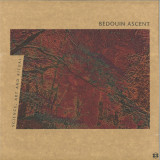
'Science, Art And Ritual' is a story of ‘process'. Growing up in Harrow (a then quiet suburb of London) in the 70’s and 80’s from the age of about 10, Kingsuk Biswas aka Bedouin Ascent's ears opened up to sound as he scanned the airwaves. The undeniable righteousness of 80’s dub via David Rodigan’s Roots Rockers shows was the first prominent influence he received, and with punk roots —and his burgeoning record collection— became exposed to the breathless post punk experimentation that followed in the early 80’s sweeping up free jazz, noise, dub and much more. Throughout though, he maintained his fascination with Indian Classical music which was a mainstay in his parent’s house and spoke with the same infinite space as Joy Division's 'Unknown Pleasures', and King Tubby’s Studio dispatches. Through those teens he assembled and de-assembled, knocking about with fellow travellers —punk bands, garage, space rock, noise. Something was happening. On-U Sound, ECM, Factory Records kept him plugged in and sane.
At that time Kingsuk's core studio setup revolved around his vintage Gretsch, Fender Jazz, Moog, TR-606 and rudimentary FX. He added congas, folk instruments, pipes, hand percussion, gongs, and jammed out shards of funk, noise, jazz fusion, electro and ambience into his hungry Tascam Portastudio. By 1987 these had morphed into what we’d now refer to broadly as techno, but the genre didn't exist beyond the reverberating walls of his bedsit, and he hadn’t yet plugged into the global conversation.
'Science, Art And Ritual' was released in 1994 by Rising High Records and was presented as Bedouin Ascent's debut album, although 'Music for Particles' (released in 1995, again on Rising High) was recorded even before —'SAR' sessions span from 1992-1993, whereas 'Music for Particles' were earlier from 1989-1992, with some older 4-track references from about 1986 too.
Weaved in throughout the album are subconscious references to music that Kingsuk heard in the past that still remained within sight as companions. The opening track "Ancient Ocean III", referencing the extinct ocean Tethis, unapologetically channels Tackhead, Colourbox, Mantronix and Lee Perry. The style was also deliberately juxtaposed to the prevailing sound in techno at the time, which had locked onto a rigid form of symmetrical kicks and light snare drums. Elsewhere 80’s soul and funk are frozen and captured in fragile glass lattices. Electric pianos resound throughout, such as in "He Is She", probably a half-memory of 70’s MOR radio from childhood sleepy night drives. A duel between kick drums from three generations of Roland drum machines —TR-808, TR-707 and R-8— is a central theme in "Transition-R", all in conversation, calling and responding. These were not just machines to Bedouin Ascent, but part of an extended family, with heart and soul.
Three decades after seeing the light, Lapsus is proud to present a special 30th anniversary reissue of this
left-field techno gem in a repackaged and redesigned edition. All pressed on a deluxe 3LP marbled vinyl and including a limited lithographic insert print of the original album cover. All tracks have been restored and remastered directly from the original DAT tapes, and the album also features previously unreleased tracks such as "In the Clouds" and "Thru Water" —regularly performed live at that time and produced in the same period as the album sessions in 1993.
'Science, Art And Ritual’ may refer to esoteric traditions in Indian philosophy, but equally embodies the collision of the science, the art and the ritual that is at the core of being immersed in a deep musical journey.
Disponibile in Stock e pronto per la spedizione
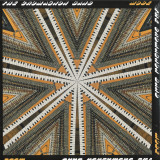
Releasing as a vinyl 45, Bad Night is the lead offering from The Cromagnon Band's new album Mode. This is the band's second LP and the first of theirs to be released on BBE Music. Mode itself is an album of cinematic and psychedelic dark Funk tinged and tinted with Nordic psych/jazz, classical, boom-bap Hip-Hop breaks and riff heavy rock. Bad Night is backed with Quadrant, a stand alone track that won't be on the album, thus making the vinyl single release a unique addition to the music lover's record collection. That said, these are are two tracks which give both a genuine flavour of the forthcoming album as well as the band's own musical influences and heritage as instrumentalists and producers. The Cromagnon Band's recording technique of taking breaks, riffs and melodies from favourite tracks and then improvising from there with completely live jam sessions in the studio allows them to record in their distinct and trademark 'reverse engineering' style. The trio of Drummer Tom Watt, Bassist Lenny Walker and multi-instrumentalist Bert Page work by making music as a team, playing for hours and united by a love of Hip-Hop breaks and psychedelic Jazz/Rock/Funk and classical music. They choose to record only instrumentals which allows space for Bert to weave intricate soundscape with Fender Rhodes, Moog, Sax and Clarinet over the beats and breaks they have written from their improvised jams. Bad Night b/w Quadrant are the lead releases from The Cromagnon Band's new album Mode. They will be released as a 7" vinyl and digitally.
Disponibile in Stock e pronto per la spedizione

Souffle Continu records presents Byard Lancaster – The Complete Palm Recordings 1973-1974, the definitive package of Philadelphia-born jazz wizard Byard Lancaster including his 4 legendary albums released on Jef Gilson’s Palm Records in the 1970s, Us, Mother Africa, Exactement and Funny Funky Rib Crib, along with the first ever standalone edition of Love Always, a fifteen minute modal jazz beauty plus a 20 page booklet with rare photos and in-depth article about Byard Lancaster’s Parisian years by Pierre Crépon.
At the beginning of the 1960s, at the Berklee College of Music, Byard Lancaster met some feisty friends: Sonny Sharrock, Dave Burrell and Ted Daniel. It is easy to see why he rapidly became involved in free jazz. Once he was settled in New York, he appeared on Sunny Murray Quintet, recorded under the leadership of the drum crazy colleague of Albert Ayler.
In 1968, the saxophonist and flutist recorded his first album under his own name: It’s Not Up To Us. The following year he came to Paris in the wake of... Sunny Murray. He would come back to France in 1971 (again with Murray) and in 1973 (without Murray for a change). This is when he met Jef Gilson, the pianist and producer who encouraged him to record under his own name again. On Palm Records (Gilson’s label), he would release four albums: Us, Mother Africa, Exactement and Funny Funky Rib Crib.
“Us”, the first of the four records was recorded on November 24th, 1973 with Sylvin Marc on electric bass (a Fender... Lancaster?) and the evergreen Steve McCall on drums.
On the album, the trio works from the John Coltrane model; free jazz shook up by the timely contributions of the bassist, followed by a mesmerizing atmospheric music. Then, Lancaster delivers a sinuous solo path, which is a reminder of his unique tone. On the album’s companion single, the trio launches into great black music of a different genre which would lead the clairvoyant François Tusques to claim that Byard Lancaster is an “authentic representative of soul/free jazz”, to sum up this is Great Black Music! A few months after recording “Us”, Lancaster recorded “Mother Africa” along with Clint Jackson III, a trumpeter, partner of Khan Jamal or Noah Howard on other recordings.
On march 8th, 1974, Lancaster and Jackson headed up a group composed of Jean-François Catoire (electric and double bass), Keno Speller (percussion) and Jonathan Dickinson (drums). Together, they create an immediate impression. From the first seconds of “We The Blessed”, they develop a free jazz which rapidly abandons any virulence under the effect of blues and soul based interventions. When Gilson’s composition “Mother Africa” begins, listeners are transported into the studio, listening to the musicians setting up: chatting and joking... Then comes the melody: a dozen or so notes of a repeated theme which is accelerated and deformed according to their whims... The jazz played by the association Byard Lancaster / Clint Jackson III is rare: creative AND recreational. “We the blessed”, is apt listening to this again today!
The recording of “Exactement” required two sessions in the studio: February 1st and May 18th 1974 – in between the two dates, Lancaster recorded, alongside Clint Jackson, the excellent Mother Africa.
Two names appear on the cover of “Exactement”: Lancaster (Byard) and Speller (Keno). Byard Lancaster wanted to be precise, moving regularly from one instrument to another: first on piano, which was the first instrument he learned. On “Sweet Evil Miss Kisianga”, his inspiration is first and foremost Coltrane (even if leaning more towards Alice than John), this announces the storm to follow.
It is Lancaster’s horn-playing which really stands out: on alto (the sound of which is transformed by an octavoice on one track, "Dr. Oliver W. Lancaster") or soprano saxophones, as well as on flute or bass clarinet, the musician walks a tightrope making the most of all the risks he takes. Using the full register of his instruments, he has fun with the possibilities.
Then, Lancaster invokes or evokes Ornette Coleman, Eric Dolphy and even Prokofiev, before going into a danse alongside Keno Speller on percussion. Above all, he has a unique sound. Byard Lancaster, on whatever instrument he plays and by continually seeking, always ends up hitting the right note... ends up by playing exactement the note he had to play.
“Funny Funky Rib Crib” is an unforgettable recording (made up of several sessions dating from the middle of 1974) of creative jazz overwhelmed by funk and soul. If Lancaster had already made successful albums in the same genre – notably New Horizons, under the name Sounds Of Liberation which he co-led with Khan Jamal –, this one is an homage to James Brown and Sammy Davis enjoying the company of a host of guests including François Tusques (electric piano), Clint Jackson III (trumpet), François Nyombo (guitar), Joseph Traindl (trombone)...
Funny Funky Rib Crib’s cover is a three-quarter profile portrait of the saxophonist (who can also be heard on flute, piano and even vocals), however, on the record, it is the whole group, inspired and frenetic, that tests the melodies of “Just Test”, “Dogtown” or “Rib Crib” – the two versions of which display leader Lancaster’s art of nuance. On both sides of the album, the group also moves into a calmer groove, infused by blues and soul, “Work And Pray” and “Loving Kindness” are meditative tracks where listeners can lay back and relax before asking for more: Funny Funky Rib Crib!
The magnificent “Love Always” was originally released on the fourth (and last) volume of the Jef Gilson Anthology series released in 1975.
Recorded on 8th March 1974, it is a beautiful 15-minute-long modal jazz piece. Four notes from the bass (the relentless Jean-François Catoire, who makes up the rhythm section alongside drummer Jonathan Dickinson and percussionist Keno Speller), and the group is up and running!
On piano, Gilson shows the subtle tact of a sideman, leaving the lions’ share of the place to the horns. This allows us to hear the trumpet of Clint Jackson III and the alto (which sometimes sounds almost flute-like) of Byard Lancaster each staking their claim in a long hallucinatory march which moves from moments of direct exaltation to profoundly sensitive collective playing. And if further proof was required of the confidence that Byard Lancaster and Jef Gilson inspire, “Love Always” provides it on this one sided release exclusive to the box set.
Disponibile in Stock e pronto per la spedizione
After LMURWAX001 – the 'Half Past Century EP' – which featured a remix by tRicMast (Ricardo Villalobos & Tripmastaz), Santos returns with the second vinyl release on his label, Let Me Understand Records. The 'Second Wave EP' presents four tracks, each exploring different styles.
On Side A, the first track, 'Nziscira', delivers a fast-paced, minimalistic beat with floating chords and a poetic solo. 'Dumbeat' starts with a dark breakbeat, transitioning into a 4/4 kickdrum accompanied by a modulated pad and ethnic-inspired sounds, topped off with a subtle vocal that brings a funkier groove.
Side B opens with 'Venus Gala', a modern funk track rooted in 70s sounds, blending Moog, guitars, a Juno 60, and a Fender Rhodes jam. The EP wraps up with 'In Everywhere', an 80s-inspired electro-funk track featuring Korg VC-10 vocoder vocals.
Disponibile in Stock e pronto per la spedizione

First Word Records is proud to bring you 'The Making of Silk', the brand new album from Allysha Joy.
Allysha Joy is a deeply-expressive singer, songwriter, producer & keys player hailing from Naarm (Melbourne), known for both her solo work and as front woman for 30/70. A uniquely-talented artist, her husky soulful voice, formidable Fender Rhodes prowess and raw poeticism has garnered legions of attentive fans the world over.
As an integral performer in the modern day jazz-soul scene, previous support has included selectors Gilles Peterson & Jamz Supernova (BBC 6 Music), Jamie Cullum (BBC Radio 2), China Moses (Jazz FM) & Laurent Garnier (PBB France), along with stations such as NTS, Lot Radio, KEXP & KCRW, and publications including OkayPlayer, Dazed and The Vinyl Factory.
Along with a recent foray into the USA market with a string of successful shows, Allysha Joy has performed alongside acts such as Snarky Puppy, PJ Morton, The Teskey Brothers, Kokoroko and Children of Zeus, to name a few.
Joy has previously released two full-length solo albums 'Acadie : Raw' in 2018, 'Torn : Tonic' in 2022 and an EP, 'Light It Again' in 2020, along with countless collaborations and features over the past few years.
Entirely self-produced and affectionately poured over, 'The Making of Silk' is about a new understanding of the meaning of love.
Joy says, "it's the kind of love that bell hooks writes about, that lives in the poetry of Mary Oliver, Hafiz and the passionate dreaming of a Koryusai painting. It's about a love that is compassionate, that lives in open conversation, deep listening, the front lines of social movement and would never seek to stifle the light in you. It's about accepting our aloneness, the impermanence of all things and still forever wanting to prove it wrong, to say that I understand that all things change, all things end, hurt exists, but I will love regardless."
Riding on the waves of rich string arrangements, layers of vocal harmony and the raw poeticism she is known for, Allysha Joy's next album is embodying love.
'The Making of Silk' is due to be released on vinyl & digital worldwide, September 13th 2024.
Disponibile in Stock e pronto per la spedizione

Since we finally brought Countdown into the Acid Jazz orbit
four years ago, we have released a series of excellent records,
all tied to our own Ed Piller’s roots in the mod scene. After all,
Ed originally founded the label (with Maxine Forte and Terry
Rawlings), as an offshoot of Stiff Records, against the backdrop
of the mod revival of the early ‘80s.
Something that we have been looking to do for a while is launch
a special series of Countdown 7” singles, looking back at the
original Mod classics of the 1960s – and the time is now!
The first release is from the Fleur De Lys – who we have been
working with for some time – pairing their 1965 cover of Pete
Townshend’s ‘Circles’, with the first-time single release of their
cover of The Temptations’ ‘You’ve Got To Earn It’.
The band emerged from the vibrant Southampton scene with a
love of Soul and R&B, and were signed to the Immediate label
by Tony Calder, who had connections on the South Coast. Their
first single was ‘Moondreams’ (produced by Jimmy Page no
less), before their incendiary take on ‘Circles’ – a number
originally slated as The Who’s follow up to ‘My Generation’,
before getting caught up in legal matters. The Fleur De Lys
version remains one of the finest slices of the Pop Art Mod
sound, and is as fresh today as it was then. Originally released
to take advantage of The Who’s misfortunes, it was rushreleased and failed to chart. It proved to be their final release on
Immediate, before they signed with Frank Fenter.
‘You’ve Got To Earn It’ is from a tantalising, lost session from
1966 (which also included takes of The Impressions ‘Amen’ and
Don Covay’s ‘Sookie Sookie’). All that survived from the
session was an acetate of this amazing cut, found by group
member Gordon Haskell, from which this cut derives. We
originally released it as the title track of the first Fleur De Lys
compilation on Acid Jazz in 2013. It has never before been
available on 7” vinyl.
Disponibile in Stock e pronto per la spedizione

Mit seinem Soloprojekt Konstantin Unwohl veröffentlichte der in Hamburg lebende Künstler Korbinian Scheffold in den vergangenen Jahren einige Kassetten.
2021 erschien das Debütalbum Im Institut für Strömungstechnik über das Berliner Label aufnahme + wiedergabe. Darauf perfektionierte er seinen
musikalischen Stil; eine Mischung aus minimalistischem Darkwave und kontemporärem Synth-Pop. Mit Neuer Wall, seinem ersten Album auf Tapete Records, legt Unwohl nun
seine zweite, komplett in Eigenregiekonzipierte, geschriebene und produzierte LP vor.
Disponibile in Stock e pronto per la spedizione

Kwamé Bâ aka Fényan
Music producer, keyboardist and professional dancer based in France.
Coming from a Senegalese bloodline and growing up in Martinique (West indies), Fényan is deeply rooted in Black music. Epitome of a childhood in the West indies. A Caribbean Tale about Kreyol langage, about legacy and resilience, about turning victimhood into proactivity.
Douvan Douvan can be translated by "avant garde" in Kreyol. It is a story about People growing up and facing themselves, and their elders in order to move forward in their enlightenment.
It is your story.
Disponibile in Stock e pronto per la spedizione

1981. A new South African band is making waves. Produced by the team “Van Blerk/Roos & Greg Cutler", it includes succulent voices and melodies, psychedelic Moog, Fender Rhodes surrounded by some Afro-folky guitars. This album is definitely a winner.
Between 1972 and 1973 Poy-Poy Makhubela appeared on 4 singles with The Young Movers produced by David Thekwane.
In 1975, as a lead guitarist, he decided to bring together four musicians to form the band Unity. Jeff Radine (Fender Rhodes, Moog), George Legobye (bass), Edward Modiselle (percussion) and Robert Moema (drum). The members were all from the group The Sound Jaws, except Jeff Radine who was with Rugare and played with Harari, Chicco, The Black Five or Prince Nico.
In 1978, after hearing Unity playing in a club, Mike Tswai joined the band as a manager.
Poy-Poy has gone on to have a long career, touring the world and playing with some of the South African’s greats including Brenda Fassie, Don Laka, Blondie & Pappa, Dorothy Masuka as well as Kwaito bands like Alaska, Boom Shaka or Trompies.
Disponibile in Stock e pronto per la spedizione

Chamber music masterpiece with electronics
Albert Alan Owen was born in Wales in 1948 to parents of Welsh and Latvian heritage. His family later moved to Zimbabwe, where his father took up a teaching position. There, Owen was deeply influenced by local music and culture, while also exploring American RnB and jazz. It was during this period that he became acutely aware of the harsh inequalities under British colonial rule, which instilled in him a lifelong aversion to discrimination and racism.
In 1967, Owen returned to Europe to pursue his studies and enrolled at the Royal Academy of Music in London. He went on to spend time in Paris, studying composition with the eminent Nadia Boulanger and piano under Jacques Février, a favorite pianist of Ravel’s and Poulenc’s. Owen's focus shifted almost entirely to composition, and the acquisition of a Fender Rhodes electric piano marked the beginning of a divorce from his classical Western training. This transition allowed him to merge his passion for African and African-American music with the impressionistic styles of Ravel and Debussy while exploring the innovative realm of electroacoustic composition.
These formative experiences framed Owen’s career as a composer and educator at the Royal Academy of Music and London’s Working Men’s College. He eventually returned to Wales, where he continues to reside.
In 1979, 29-year-old Albert Alan Owen released Keyboards & Strings, a light magical chamber music masterpiece.
Transcending the formal conventions of its era, Keyboard & Strings is an acoustic and electric piano piece, where the violin is met by synths and electronics.
As is often the case in Albert Alan Owen’s most intimate works, there is a sense of ethereal beauty that emerges from the music, akin to the emotional state one might experience while contemplating a Félix Vallotton landscape or the unfathomable mystery of dawn’s first light.
Quiet, profound, and immersive, Keyboard & Strings stands out as an electronic-age tone poem, a rare gem that transcends time and place.
Disponibile in Stock e pronto per la spedizione

Splatter is a new vinyl and digital underground techno label from Austrian artists Luca Tresque, Joe Haensn and Rotary Motion.
'Exceed Limits' follows their special prequel EP and launches the label catalogue in style.
Florian Meindl is a Berlin-based artist who runs the FLASH record label and who has appeared outside of his own imprint on labels like Stephan Bodzin's Herzblut to Oliver Koletzki's Stil vor Talent. "Gridlock" is a true jackin' cut with a multitude of mechanical elements and raw analogue energy.
Linear System is a Spanish artist who has released music on esteemed labels like Edit Select, Ben Sims' Symbolism and Dynamic Reflection. "Taurinom" is a moody, rolling groove with gripping suspense and haunting touches from gothic effects and an eerie atmosphere.
Leipzig is the home of JANEIN, a respected artist known for releasing on Index Marcel Fengler, Slam's Soma, Fiedel's Fiedeltwo, Exos' Planet X and Electric Rescue's Skryptom. "Neowise" is punchy and percussive track with a metallic, siren-like hook and infectious energy.
Daniel Heinrich is also from Berlin, and shows himself to be a top talent following his EP's on Elektrotribe to Inherit with remixes by Arnaud Le Texier an Hadone. "Close Your Eyes" has a pacey style with superb stabbing chords that create an old-school feel alongside vocal chants for extra impact.
Stuttgart-based Egotot runs the Schimmer label and also lists BCCO, OECUS and Ketch's SYXT in his quality back catalogue. "Name It As You Want" has a quirky, bouncing beat with Detroit-style stabs and a light-hearted vibe ready for the dance floor.
Disponibile in Stock e pronto per la spedizione

The package, posted from Inglewood in California, dropped through my letter box…
I was looking forward to seeing this, the VHS of the then relatively ‘unknown’ but now legendary live show at the Saenger Theatre in New Orleans by Maze featuring Frankie Beverly. But when I fed it into my VHS player, I was disappointed. I could not quite figure out why. The band were tight, each musician sounded great, the product of being on the road, year after year, club after club in the States, sometimes playing five shows a night, all propped up by one of the best soulful voices we had ever heard, the maestro Frankie Beverly.
It took a second play of the VHS to realise what was missing. It was ‘too comfortable’ an atmosphere. A few wealthy customers sat around coffee tables quaffing champagne. It seemed to me that this audience, somehow, did not fit the band.
Paul Fenn at Asgard promotions received the contract from the band to appear live in London and Manchester. I became more and more convinced that his UK fans were going to be a lot more responsive than those from New Orleans.
We put the word out with just a couple of exclusive ‘shout outs’ by Robbie Vincent on his Radio London Soul programme. Those two plugs were enough to sell out all four shows at London’s premier music venue, the Hammersmith Odeon. The ticket office was rammed and the queue six deep, stretched halfway down Queen Caroline Street.
“I have never seen anything like it” expressed the manager of the theatre as he rolled down the shutters and turned on the “Sorry, SOLD OUT” notice above the theatre box office.
I was curious, so I went up and stood in the wings of the Hammersmith stage on that first show. Frankie, introduced to the stage by his sound engineer, Greg Blockman, sauntered past me, strumming his rhythm guitar, dressed in a casual dark green towelling suit, a brown leather visor and flip flops…and then five seconds later, he suddenly stopped. He seemed suddenly to be aware of the thunderous ’Welcome to London Maze’ roar, circling around the theatre about to engulf him. He slapped every black and white hand offered up to him that night, with a huge smile as he circled the edge of that stage. We wanted to get next to him, even if it meant climbing over rows of seats in front of us to do so.
That was the beginning of our love affair with Maze and Frankie Beverly. It certainly wasn’t New Orleans comfort; it was more like a crazy, but friendly, London riot.
Five albums on from the “Live in New Orleans” LP, Frankie sauntered into the California recording studio, probably with the same swagger as in London, to cut the delightful A-side here, “Somebody Else’s Arms”, from his aptly named ‘Silky Soul’ album. Along with the B-side, ‘Love is’ (from the “Back To Basics” CD, 1993) both are so delicious you might want to relax and pour yourself that London glass of champagne, 1983 vintage. Tell your mates your Maze/Hammersmith story too. You deserve it.
Disponibile in Stock e pronto per la spedizione

London producer Kel McKeown celebrates the release of his tenth album as Kelpe, with a vinyl edition of uncategorisable dance music on Kit Records.
Kelpe's work combines live drumming with synthesis and guitars. Like the nine records that came before it, LP10 treads the line between gauzy melancholia and bustling, dancefloor-ready energy.
Listening to Kelpe's music can feel like fluttering through a photo album at speed. Familiar faces and locations are revealed, nostalgic scenes assembled then scattered by unruly rhythms and samples.
Analogue percussion takes centre stage on LP10. This restless drumming - gear-shifting from hip-hop through to jungle - showcases McKeown's chops as an instrumentalist, while harking back to the scrambled beats that were a hallmark of his early releases.
Kelpe has worked closely with the visual artist Nikita Iziev on this record. Inspired by pioneering film director John Schlesinger, the serendipitous geometry of new wave cinema is mapped out in fractured moments across the music and artwork.
While the track 'Schlesinger' echoes the bouncing unpredictability of the sleeve, 'The Palace Guard Loop' pours neon fertiliser over fender rhodes jazz keys. Adrenalin reaches a zenith on 'Events Proved Me Wrong', as Kelpe hits his stride for a homespun drum and bass workout.
LP10 will be the final full length Kelpe album.
Disponibile in Stock e pronto per la spedizione
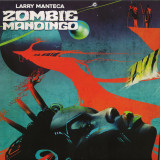
After over a decade as a digital-only album, Larry Manteca's Zombie Mandingo gets its first vinyl release, making a fresh comeback in a completely renewed version.
Like Manteca's previous full-length releases, this album too is conceived as a soundtrack to a non-existent exploitation film, drawing inspiration from the classic Italian B-movies of the 1970s. This time, cinematic references encompass both the zombies found in Lucio Fulci's horrors and the cannibalistic adventures directed by Umberto Lenzi, creating a strange mash-up between Jacopetti's Mondo Cane and Deodato's Cannibal Holocaust.
The setting is an unspecified island in the Atlantic Ocean, nestled halfway between equatorial Africa and the Caribbean. A handful of Western tourists, having miraculously survived a plane crash, collide with the age-old rituals of an indigenous tribe who perform human sacrifices to appease their local god—the Zombie Mandingo of the title—a monstrous creature with superhuman strength, half Haitian zombie, half African cannibal.
This fusion of genres and cultures is reflected in the music. Manteca creates horror-tinged exotica that evokes and re-imagines the soundscapes of distant lands and dreamlands, from Africa to South America, to the mysterious islands in the Bermuda Triangle. He boldly and brilliantly combines Les Baxter with Fela Kuti, Joe Zawinul with Piero Umiliani, Janko Nilovic with KPM libraries, sprinkling the mixture profusely with psychedelia, Afro-groove, and Italian soundtrack vibes.
The album's nine tracks, recorded between 2013-2019, were meticulously remixed and remastered in 2023. This process made it possible to add new solo instruments, including the Fender Rhodes on the title track. The result is a captivating, kaleidoscopic journey taking us into the sonic depths of the tropical jungle to unveil its dark secrets and surrender to the primary emotions behind every B-movie: action, adventure, erotic desire, and fear.
The album is embellished with a 650-gram hardcover sleeve featuring breathtaking artwork by Matteo Fumagalli.
i 09: Zombie Mandingo (Trailer Music) Remastered
Disponibile in Stock e pronto per la spedizione

Goettingen’s finest XDB is proving once again that he’s not just an incredible DJ and vinyl collector but also a great, forward thinking producer. The original version of Cagomi was first introduced on XDB’s Metrolux Music back in 2009 and here is getting a new reshape and an exciting remix by Detroit living legend - Delano Smith!
Disponibile in Stock e pronto per la spedizione

There's no denying Marcel Fengler's profound impact on the ever-changing techno landscape. A pioneer in his own right, Fengler's works have flooded dancefloors and set lists worldwide for decades, and that shows no sign of changing anytime soon. His latest work is an all-encompassing four-track EP titled "Unleashed", including a remix from sought-after Stuttgart duo SHDW & Obscure Shape.
Kicking off with the title track, "Unleashed" introduces the EP with high-octane rhythms, pulsating low frequency sonics and rave like harmonic layers. An unrelenting onslaught of fast paced thumping techno, built around long, sweeping notes, vocal injections and a piston-like bassline, this one was made for the height of the party. "Caution" is next to feature, presenting itself as a robust industrial number with harsh percussive drive and endless layers of cadence throughout the mix. Weighty yet groovy in a unique up-tempo way, its robotic vocal splashes make the perfect accomplice for its potent warehouse vibes.
"Cypher" pulls you into the second half of the EP with rattling rhythms and more gritty sweeping musicality. Exhibiting the depth in his production skills, Fengler loads up the mix with a kaleidoscope of percussive elements alongside thumping kicks, surging synths, and another haunting robotic vox before SHDW & Obscure Shape get their teeth into a signature remix. Taking it deeper and darker, the duo's emphasis on subtle progressions and increasing intensity throughout the mix with offbeat trickery and creative unpredictability make their remix of "Cypher" a certified peak-time bomb.
"It has been quite a journey with this EP, as I've been exceptionally discerning about the sound and the entire production process. My goal was to create a release tailored for the dance floor, with the right amount of energy for peak-time moments, while also ensuring a profound and well-structured sonic experience. After testing potential tracks in my DJ sets, I distilled what I believe captures the essence I want to share with the audience. Furthermore, I'm thrilled to have SHDW & Obscure Shape on board for a formidable remix. Their work carries echoes of the raw and forceful sonic textures from earlier times, which I hold in high regard. I'm genuinely delighted with how everything has come together, and I hope you enjoy it!" - Marcel Fengler
Order IMF012 now
Disponibile in Stock e pronto per la spedizione

Met trots presenteren Rosa Ana, Nosa en Soulution het album “GOLDEN HOUR”. Het album telt een zevental tracks, waarvan er geen één onder de drieëneenhalve minuut komt. Waardoor je volwaardige tracks kunt verwachten. Het is een bijzonder muzikaal project met kwetsbare onderwerpen die de drie bezig gebben gehouden. Producer Soulution heeft letterlijk alles uit de kast getrokken om zijn gevestigde sound (als vaste producer van Fat Windjacks en zijn internationale projecten met onder andere Edo G, Talib Kweli, Bahamadia enzovoort) te ontwikkelen.
Disponibile in Stock e pronto per la spedizione

The Belgian vibraphonist Guy Cabay has played with Toots Thielemans, Philip Caherine or Raoul Faisant. Composer, arranger, musicologist and singer, he also wrote and recorded two extraordinary albums in Liege Walloon. Tricatel is happy to make them available at last, 46 years after their publication.
"Gravity kills us. Perhaps that is the meaning of Adam's Fall. We are condemned to be Newton's apple, not the balloon carried away by the wind. But it happens nevertheless that, by the grace of music in particular, we escape gravity, that time escapes time, that another breath inflates our lungs, so much lighter than the one that usually suffocates us.
We don't take light music seriously, and that's good. Only serious music deserves to be treated so badly. Guy Cabay's music flows from a purer source and speaks to us in a more tender voice. One can obviously describe it as one labels export product. Origin: Belgium. Ingredients: jazz, bossa nova, tropicalism, song - proportions may vary. Calorific value: none.
Non-perishable product. But this would say as much about what this music really is as if, in. order to evoke what the foggy blue of a Norman sky inspires, one were to take note of the variations in the percentage of humidity in the atmosphere at Etretat and make a learned presentation on the laws of refraction.
Guy Cabay did pass through Brazil and still lives there a little, a Brazil that is not the one ofcartographers or travel agencies, a Brazil that is as real as the Far West in which Fenimore Cooper's child readers lived, as blurred and limpid as a dream. It is not the Amazon thatflows through this Brazil, but the Ourthe, a tributary of the Meuse, which makes it morefamiliar, stranger and even more poetic.
To let oneself be bathed in this melancholichappiness, to let oneself be carried by this river is sweet, as sweet as the fluid consonants of the Walloon language, this 'd' which becomes 'dj' in his mouth, as in Portuguese, by the way. To know how to create melodies that hold on a note like Jobim's samba, like a fildeferist above a waterfall of chords, is not given to everyone. It is a gift. Knowing how to lace others on dozens of points, as on Tot a-fet rote cou d'zeur cou d'zos, a poignant encounter between Randy Newman and Robert Wyatt, is another. These are not the only ones that the fairies offered to Guy Cabay and that, by an almost miracle, he offers us again today. Hearts up."
Bertrand Burgalat
Disponibile in Stock e pronto per la spedizione

Disponibile in Stock e pronto per la spedizione

In the early 1990s, a handful of black metal artists were enticed by the possibility of conjuring new fantastical worlds from the deep isolation of their home setups. Rather than the dense metal sound of their existing projects, this new direction would be centred around intimate synth soundscapes: forlorn organs and otherworldly MIDI theatrics.
The music on ASCEND is predominantly from self-produced, self-distributed releases, typically manufactured in small numbers. Though some artists producing this style of music, most notably Mortiis and Burzum, gained wider recognition outside underground circles, it is only in recent years that the sound and its influence has really been appreciated. This is particularly the case with the late Matthew Davis and his recently reappraised Secret Stairways project, whose song ‘Lammas Tide’ (from the 1997 Enchantment of the Ring album) appears on ASCEND. A simple home recording on a Yamaha KX-W392 manages to be both elegant and tortured, ambiguously devotional and recalling latter years Popol Vuh.
This battle between dark and light is a constant thread through ASCEND, with simple minimal synth lines that can be both delicate and menacing. Compilation opener ‘The Dark Dreamquest’ from Italian black metal group Evol is loaded with occult warning, and Finnish act Kadotus 609’s ‘The Summoning Through Crimson’ is languid, twisted and dark. In spite of the darkness, several pieces of the music on ASCEND have formal similarities with the sometimes saccharine new age music that rose to prominence in that era: but to a rougher, darker ends. The closing song from Darkthrone icon (and past NTS radio host) Fenriz, under his Neptune Towers pseudonym, pulls us further out, with ‘To Cold Void Desolation’ — an astral synth project, akin to ’70s kosmische muzik masters Harmonia.
The gentler side can often amplify an uncannily sinister edge, heard in German act Dolch’s ‘Tumulus’, where orc marching horns contrast against delicate rompler harps and softly whispered chanting. It hammers home a deep loneliness and detachment constant throughout ASCEND, made possible by these unusual contrasts, both unsettling and otherworldly.
Disponibile in Stock e pronto per la spedizione

In 1975, under the oppressive air of military dictatorship in Brazil, brothers Lelo and Zé Eduardo Nazario invited bassist Zeca Assumpção to join their musical experiments in a basement under Sao Paulo’s Teodoro Sampaio Street. As teenagers, the trio had already been playing together in Hermeto Pascoal’s Grupo, alongside guitarist Toninho Horta and saxophonist Nivaldo Ornelas, and it was while working together under Hermeto’s direction that the Paulista rhythm section (as they were then known) began to realise their own potential.
With many nightclubs and venues closed in the mid-70s and government censors dictating the output of radio, TV and art galleries, many Brazilian artists fled during the years of dictatorship. But underground, Grupo Um were fusing avant garde ideals with contemporary jazz and Afro Brazilian rhythm; making phenomenally free and expressive music - in stark contrast to the sterile, conservative conditions being imposed above ground.
Just like Hermeto Pascoal’s Viajando Com O Som from the following year, Starting Point was recorded over two days at Vice-Versa Studios, by revered engineer Renato Viola. The studio was one of the best in Sao Paulo and musicians communicated with engineers through cameras and a monitor, allowing the group complete immersion in the process. They also made use of the studio’s hemispherical tiled room, which served as an acoustic reverberation chamber.
The album begins with Zé Eduardo Nazario’s thunderous drum solo on “Porão da Teodoro”, before clearing the clouds with the lone Berimbau which opens “Onze Por Oito”. Built around a hypnotic electric bass line, heady Fender Rhodes improvisations, and more rip-roaring drums, it’s a rapturous, electrifying freak-jam in 11/8.
Like some invertebrate deep-sea curiosity, the free-form “Organica” is made up of Lelo Nazario’s playfully eerie prepared piano, with Zé Eduardo’s percussion flurries darting around Assumpçao’s double bass. The equally non-conformist, percussion-only piece “Jardim Candida” features many of Zé Eduardo’s home-made instruments, including a long saw blade played with vibraphone sticks and violin bow. While working with Hermeto, Zé Eduardo famously built his own all-in-one percussion set-up known as the “Barraca de Percussão” (Percussion Tent) - the first of its kind in Brazil, which he would also use on Hermeto Pascoal’s Viajando Com O Som and throughout his career.
“Suite Orquidea Negra'' (Black Orchid Suite) was written by Lelo Nazario as the score for an imaginary movie - the story of a rare, black orchid which produced a substance meant to cure all diseases, but which had mysteriously disappeared from the laboratory… “As a screenplay it’s not very good” reflects Lelo in jest, “but the music ended up being very interesting, the way its parts are chained to one another carries a little of the mystery I imagined for the movie.”
The album closes with the triumphant “Cortejo dos Reis Negros” (Procession of Black Kings) - a groovy variation on the Maracatu rhythm, with a two-note bassline underpinning piano improvisations, exultant wordless vocals, cuicas, slide-whistles and a very special guest appearance from Zé’s dog Bolinha.
Starting Point was to mark the inception of one of Brazil’s most daring instrumental groups. Their debut now sits in the lofty echelon of otherworldly 70s Brazilian music, alongside the likes of Marcos Resende & Index’s self-titled debut, Cesar Mariano & Cia’s Sao Paulo Brasil, Azymuth’s debut and indeed Hermeto Pascoal’s Viajando Com O Som. But just like all of those titles, which were either shelved or largely ignored at the time, Grupo Um - so radically ahead of their time - struggled to find a label to release their debut album. So Lelo kept the tapes safe in his archives, which is where they sat for almost half a century. Finally, almost fifty years later, this mesmerising piece of history is here, and it was only the beginning...
Grupo Um’s Starting Point will be released by Far Out Recordings, on vinyl LP, with an insert featuring unseen photos and liner notes by the Nazario brothers, as well as a CD on 17th February 2023.
Disponibile in Stock e pronto per la spedizione

‘Blemish’ was David Sylvian’s first solo album to be released on his own Samadhisound label following his departure from Virgin Records in 2003. This is the first official release on 180gram vinyl. Working primarily as a solo artist, Sylvian created an impromptu suite of songs for guitar, electronics and voice. The compositions were crafted from improvisational sessions by Sylvian and the acclaimed free-jazz guitarist, Derek Bailey on 3 tracks. “A Fire In A Forest” features the haunting electronic arrangements by Austrian guitarist / producer Christian Fennesz.
Disponibile in Stock e pronto per la spedizione
The full moon of May 2022 brings the 6th Hypnus record by Birds ov Paradise.
Early support from Dorisburg, TM404, Brando Lupi, Abstract Division, Arnaud le Texier, Ben Buitendijk, Felix Lorusso, Mosam Howieson, Samuli Kemppi, Takaaki Itoh, Hydrangea and Forest on Stasys to name a few.
Love and light
Disponibile in Stock e pronto per la spedizione

French techno artist Cøncenträte returns for his second vinyl release of Gynoid with a very deep and haunting track Semantika, that also gets a slightly more industrial rework by Jonas Kopp . The second track Timewarp is much fatter with lots of dance-floor punch and a bonus Developer remix.
The EP has already gained support from Ben Klock, Dave Clarke, Deep Space Helsinki, Drumcomplex, Kwartz, SLAM, Philippe Petit, Robert S (PT), Arnaud Le Texier, Rraph, Takaaki Itoh, Amelie Lens, Noaria, Advanced Human, Tom Hades, T-Dok, Unbalanace, Marcel Fengler, Cari Lekebusch.
Order now. Collecting orders for repress.

‘Oh, baby, this is where it gets good.’ - Zaphod
The last ever BBC radio series of The Hitchhiker’s Guide to the Galaxy makes its vinyl debut! Materialising in the lavish packaging style of the preceding five series (Primary Phase, Secondary Phase, Tertiary Phase, Quandary Phase and Quintessential Phase) the Hexagonal Phase will make its presence known to all humanity on heavyweight Neon Geen vinyl! First broadcast in 2018, the Hexagonal Phase is based on Eoin Colfer’s And Another Thing…, the first - and, to date, only – official sequel to Douglas Adams’s original book series. This is also the first ever publication of the original radio edits of the Hexagonal Phase, as heard on their original Radio 4 broadcast. Arthur Dent and friends are thrown back into the Whole General Mish Mash in a rattling adventure featuring Viking Gods and Irish confidence tricksters, taking in a rare glimpse of Eccenrica Gallumbits and a brief but memorable moment with The Ravenous Bugblatter Beast of Traal.
Starring John Lloyd as The Book, with Simon Jones as Arthur Dent, Geoff McGivern as Ford Prefect, Mark Wing-Davey as Zaphod, Sandra Dickinson as Trillian/Tricia McMillan, Samantha Béart as Random and Jim Broadbent as Marvin, with a guest cast including Jane Horrocks, Lenny Henry, Jon Culshaw, Mitch Benn, Ed Byrne, Toby Longworth, Professor Stephen Hawking and many more, with music by Philip Pope. Adapted, Directed and Co Produced by Dirk Maggs, based on the novel And Another Thing… by Eoin Colfer, with additional material by Douglas Adams.
Presented on 3 x 180g heavyweight neon green vinyl, and
presented in illustrated wallets inside a rigid, bound 20 page book,
including a perspective sleeve note by Geoff McGivern and a
concluding overview of the series’ development by Jem Roberts,
Adams’s official biograph
You’re home just in time for tea.’ - Fenchurch
Disponibile in Stock e pronto per la spedizione

High quality laquer cut LP with silver and pink pantone colors on cover.
Mutual Intentions is proud to present "Astral Traveling" which is Byron The Aquarius' debut album. A stunning piece of fusion built from everything between jazz, soul, hiphop and house makes Mutual Intentions a perfect platform for the release. String compositions is an on-going theme throughout the album. From the first chord on "Love Is 4U", until the very last second of "Spazzing Out", where Byron raps over a beautiful backdrop consisting only of Fender Rhodes, electric bass & strings. Byron jumps seamlessly between different genres throughout the whole album. From the acid house inspired "Sorry Kari", to 70's prog jazz sounding cuts like "Lost In Love". Once you put the needle on side B, you'll hear "Deep In That ***** feat. MDMA" which sounds pretty much like if Dexter Wansel took MDMA in 2019, inside Legowelt's studio and tried to re-create his classic cut "Theme From The Planets".
Disponibile in Stock e pronto per la spedizione

Nocta Numerica is happy to present its 14th release by Betonkust. "Sent Items' is a 4-Track EP that mixes Electro, New Beat and Acid music. The EP will be out on June 17th and available in digital & vinyl on all the usual platforms, Limited edition of 300.
Disponibile in Stock e pronto per la spedizione

With every album project comes a proper remix pack. Marco Bailey has invited some of his most respected colleagues in modern day Techno to come up with an interpretation of two of Temper's
toughest cuts. ''Planet Mad'' is being reworked by Marcel Fengler and Andre Kronert. Fengler's rework is an adventurous take on the original and has a strong emphasis on rhythm.
Without loosing with the original idea, Fengler builds the rhythm section into a wash of bold drums and rich percussion.
Andre Kronert's take on Planet Mad pushes the track's idea into a different direction. Kronert yet again proves to be a craftsman when it comes to textures and builds.
While the recognizable bass sound of the original keeps thumping, atypical bits of FX are added to build on an unusual but very soothing atmosphere.
For the B side, ''Naga'' is being reshaped by Croatian master of electronics ''Petar Dundov'' and Rotterdam based fast riser; Koen Hoets.
Petar Dundov comes up with an esoteric take on ''Naga''. Whilst respecting the form of the original, Dundov goes one notch deeper with his wide array dub elements and feral hat sounds.
Koen Hoets delivers a more demure take on ''naga''. Whilst the rhythm section might not be suitable for all club situations, this is adventurous techno at it's best. Noteworthy fx and soul touching
strings that float throughout.
Disponibile in Stock e pronto per la spedizione

Honey Soundsystem releases 'Cosmologist', the latest offering from our Resident DJ: Robert Yang aka Bézier. A multi-instrumentalist, Robert was trained in saxophone starting at age 10, before moving onto a Fender Telecaster after high school. After being exposed to Southern California rave culture in the late 90s, he moved onto DJing and collecting records. By the time he planted his roots in San Francisco in 2005, Robert had built an impressive analog synth-based studio, which also serves as the creative hub for his riveting live performances.
'Cosmologist' explores Robert's personal universe with three tracks that connect his varied musical lineages. "Cosmos", a celebration of the late 80s/early 90s KIIS FM universe, is built around an infectious freestyle hook that morphs into a seven minute tour of intersecting styles. "Ether" begins as gothic night-driving electro, but breaks into fantasy-scapes inspired by Italo and 1980s Japanese anime theme songs. The final track, "d. Quelle", clocks in at over 11 minutes, incorporating bebop jazz solos drawn from his early exposure to improvisation techniques by Charlie Parker, Cannonball Adderley, and Stan Getz. All songs have been mixed by Mark Pistel (Meat Beat Manifesto, Consolidated) at Room 5, San Francisco and EQed for vinyl by George Horn at Fantasy Studios.
Disponibile in Stock e pronto per la spedizione

Mangue counts 10' after a various artist record the labelheads are back with a really progressive record this time. Completed with a Marco Fender Remix by Supdub, Nulogic and Lordag.
Disponibile in Stock e pronto per la spedizione

It’s as sure as night follows day, one of the last truly reliable things in these uncertain times, a rock in the storm of information overload, and still one of the best things you can make from PVC: The new TOTAL compilation is here!
The cheerful opener “Xtasy” comes from the up-and-coming Cologne-based DJ H0TLINE. If it says ‘Ecstasy’ on the label, that’s exactly what’s inside. The term ‘legend’ is all too often bandied about lightly. In the case of ORLANDO VOORN, it’s almost an understatement. His ‘So Deep Remix’ is a goosebumps-inducing masterpiece in its purest form. Simply wow. FRANKEY & SANDRINO haven’t visited us for a while, but their key still fits the lock. Watch out – “Disruption” might expand your consciousness! Ah, nobody grapples so beautifully with life’s big questions as TEE MANGO, but what would the world be without melancholy? A Disneyland of triviality! TEAM 85E, newly formed around JÖRG BURGER, takes on a classic from the German songbook by Ton, Steine, Scherben and opens hearts with the same ease as others open tins of beer. Speaking of hearts, MICHAEL MAYER pays tribute to the successful Artemis 2 lunar mission, as a small thank-you for reminding us that it should really always be about love. SOG, aka WOLFGANG VOIGT, agrees wholeheartedly. Sometimes all it takes is a bass drum, eight notes and a bit of love for total satisfaction. ROBAG WRUHME does what he does best: luring us down the proverbial rabbit hole like the White Rabbit, just not quite so frantically. JÜRGEN PAAPE, together with FENJA LUDWIG, doesn’t pull a rabbit out of the hat, but rather a modern dub-techno hit. We watch in amazement as a new genre takes shape. Finally, it’s time to sit back and relax with REINHARD VOIGT and just let things be. Cocktail or beer? The main thing is: it’s cold.

After releasing two EP, Charles Dollé reveals an ambitious and cinematographic album with his label Tricatel. He reinvents his musical language, undulating across ethereal sound landscapes in a style bordering film music. The self-titled "singing composer" lets his dreamy lyricism lead his creations: at the crossroads between indie pop, soft rock, electronic music, and ambient, Charles bends music genres with subtlety and contrast.
dovrebbe essere pubblicato su 25.09.2026

Shaped in the shadows and sounds of the legendary Topanga Canyon, California. The debut album from Biita Houdei is buoyed by a magic that feels wildly and beautifully untamed; wild-hearted sentiments that are shaped by the world around it, fascinated by the enchantment of it all, and delivered via a collective (harmony layered) voice that understands the complex nature of what it means to be alive in the here and now.
Produced by Haley Heynderickx, 'This Bed Was Made For Me' is a striking collection of stirring, signature folk songs animated by subtle instrumentation and orchestral flourishes. It feels lived in: vocals weave together in a beautiful harmonic dance, seasons shift, sunshine appears and bold psychedelic colours warm the horizon.
In the early stages of making her debut album, Biita Houdei knew two things: that she wanted the recordings to feel distinctly and palpably warm, and that she would sew a unique patch for every song on the album. The first of those things is subjective, though brightness pours in from all corners of This Bed Was Made For Me. The second became a laborious task she undertook throughout the process, the completion of which is testament to the slow process of it all, to the physical commitment and patience required to make a full work of art.
The patches she crafted during the making of This Bed Was Made For Me became a full quilt, one that now adorns the album’s front cover. Beneath it sits a striking collection of Houdei’s stirring, signature folk songs, brought into fruition with the help of fellow songwriter Haley Heynderickx, in her first lead production role, and the album’s producer/engineer Sahil Ansari. It’s also the first release Biita (pronounced “bee-tah”) is releasing under her newly-taken name, one that was gifted to her by her auntie and means "unique" in the Farsi language. “I proudly take this name,” Biita says of the change. “It makes me feel that much closer to my Persian heritage.”
Recorded across ten back-to-back and full days, the album touches on themes of love and heritage, of taking chances, the preciousness of time and the impact we all have on the world around us. A number of the songs were written in Topanga, California, while Biita settled into a new home as wild fires raged, and as she adjusted to a life which no longer held distinct seasonal changes, far from the Ozark Mountain home she felt so attached to. Such themes reveal themselves in a variety of ways across the album’s fourteen songs, that key sense of warmth retained in the bones of the album whether they are stepping into darkness or seeking out light.
The album feels lived in and alive; dust swirls, seasons shift, sunshine appears and is held. Biita calls it ‘psychedelic’ and there is indeed a sense of that in the world building, in the way the bold colours are always shifting. Formed of fourteen songs, and filling nearly forty-five minutes, This Bed Was Made For Me not only builds a whole world for listeners to inhabit but also implores you to stay a while. This was deliberate, indeed it’s Biita’s wish that listeners give the album dedicated time; to learn its shape, to explore it fully, away from the instant grab of playlists and skewed algorithms.
“Many of my favourite albums didn’t reveal themselves instantly to me,” Biita, now based in the Catskill Mountains of New York, explains. “Some did, of course, but I had to work to understand the full scope of the piece as a whole. I encourage people to dive deeper into everything that they choose to consume. It is not my intention to sound pretentious, but instead, I am trying harder to explain the gratitude I have for being able to craft every part of this album— using my hands, my brain, my voice, my visions. To me, it is an all encompassing work of art,” she continues. “Making the quilt was laborious. Taking the cover photo was laborious. No shortcuts, but rather a manual and tangible approach. I am thankful for the time it took.”
dovrebbe essere pubblicato su 18.09.2026

Héritage Mélodies is the meeting point between saxophonist and composer Jean Vernhères and Black Stamp Music, brought together by a shared passion for the warm colors of music, groove, and the beauty of sound.
Nurtured from an early age by jazz and African-American music—from blues and soul to hip-hop—Jean Vernhères also ventured into Highlife, Afrobeat, and Funk, exploring the fertile “Black Atlantic” that runs throughout his musical journey.
For his first album as a bandleader, he brings together Pierre Bauzerand on Steinway piano, Laurent Vanhée on double bass, Guillermo Roatta on drums, and, as a special guest, Alfio Origlio on Fender Rhodes and piano. Six original compositions where Soul Jazz, Latin Groove, Afro-Caribbean rhythms, spirituality, and intimate melodies come together.
Recorded at Bernard Estardy’s legendary Studio CBE and mastered in Berlin at East Side Mastering, Héritage Mélodies embraces a true audiophile aesthetic: from the breadth and spaciousness of Haumea City, a nod to CTI Records, to the delicacy of Marion.
More than a jazz record, Héritage Mélodies is a story of lineage, travel, and transmission: a personal tribute to all those who have carried forward a musical heritage that transcends time.
dovrebbe essere pubblicato su 10.09.2026

Nachdem sie jahrelang durch's Netz, durch Köpfe und Herzen geisterte, hier nun endlich das Debüt-Album, auf dem die mittlerweile in Berlin ansässige Formation ein graziöses Kleinod liefert, das Melancholie und Aufbruchstimmung in sich vereint und mit seiner wundervollen Inszenierung sofort unter die Haut geht. Voodoo Beach liefern mit »Wonderful Life« Postpunk / Noiserock auf höchstem Niveau. Ähnlich wie Karies, Die Nerven, Friends Of Gas oder Messer, haben sich Voodoo Beach durch 90er Jahre Noiserock prägen lassen und vermengen diese Einflüsse mit offensichtlicher Liebe zu Postpunk und Shoegaze. Harte Anschläge treffen auf durch den Äther wabernde Gitarren-Riffs, walzende Basslines und packendes Drumming. Faszinierend die Chords der Gitarre mit einem manchmal leicht nahöstlichen Touch, aber immer im Postpunk-Noiserock-Psychedelic-Modus. Darüber thronen die verrauchten Vocals von Sängerin Heike Rädeker, deren vorgetragene Texte so ehrlich sind, dass sie weh tun. Mit Hendrik Otremba (Messer) und John Moods (Fenster) konnte die Band tolle Gastbeiträge für das Album gewinnen. Eine der Platten des Jahres!
dovrebbe essere pubblicato su 04.09.2026
