Lucas Santtana’s tenth album celebrates the vitality and musicality of the Romance languages.
The heir to Brazilian tropicalism, Santtana marks 25 years of his career with Brasiliano, a true collective celebration that brings together prestigious collaborators: Gilberto Gil, Oxmo Puccino, Flavia Coelho, Piers Faccini, Chico César, Paralamas do Sucesso, Cocanha, Dimartino, Karyna Gomes, Tainara Takua, Rachel Reis and Maria Lado.
Sung in eight different languages, Brasiliano is both an ode to linguistic diversity and a testament to its symbolic power. Carried by luminous and layered arrangements where voices intertwine like a polyphonic conversation, the album treats language as a musical instrument in its own right, but also as a political tool. Santtana questions cultural heritage, identity, colonial memory, and the possibility of a shared language. With his singular approach—blending popular rhythms, contemporary soundscapes and vibrant melodies—he celebrates the love and exchange embodied in Romance languages, where music becomes fertile ground for encounters and reinvention.
quête:fertile ground
- 1
Panthera is back at the Bordello with his most energy-packed release to date. Synthsizer Hits III is forged in the heat of Hi-NRG, the romance of italo and the daring synthesizer hooks of 1980s Europe. A thick rasping beat pounds above a juddering arpeggiator line before hedonistic surges ignite “Fumare”, an achingly addictive opener. Vocals are toyed with, used to increase the potency of the chosen machines and sounds. A circling chant infects “Lucifera” as a joyous melody takes hold of this modern Summer anthem, euphoric notes ushering in the dawn while speakers and strobe throb. There is a palpable power that permeates the 12”. “The Magic Touch” sends strings sailing skyward as rich percussive textures take root below. From this fertile ground, a sensational ode to the synthesizer flowers. Vocoder lyrics, pulsating rhythms and keys that are truly fantastical. “Toccata” finishes this analogue celebration. Slow burning with disco inflections, this finale soon shows its true colours. Daring counter melodies frolic, from the elegant and refined to the brash and broad, in this mirrorball inspired last dance.
When people think of Yacht Rock-those smooth, sun-drenched sounds that once drifted from Californian radio stations in the late '70s and early '80s-they rarely imagine it echoing through rehearsal rooms in Hamburg or Linz. Yet even far from the Pacific coastline, the appeal of shimmering chords, laid-back grooves, and polished production found fertile ground.
This compilation gathers rare and overlooked tracks from Germany and Austria. These artists embraced West Coast aesthetics with sincerity and subtle twists, resulting in music that feels both familiar and refreshingly new-smooth sounds for cloudy skies. So drop anchor, pour something cool, and enjoy this unexpected cruise through the lesser-charted waters of Euro Yacht Rock.
Our journey begins in Austria, where Reflection's Because (1981) set the tone with blue-eyed soul and analogue warmth-a sunlit blend of Doobie Brothers polish and local charm. Its creator, Dieter Heyduk, reappears with Austrian Sky, a heartfelt nod to his homeland that fuses mountain calm with oceanic longing.
From the North Sea island of Föhr, Ara Pacis dreamed of California on their 1979 self-release To the Westcoast. Inspired by Steely Dan and Lake, they turned German rock precision into breezy, melodic sophistication. Meanwhile, in Düsseldorf, Mainpoint fused funk and jazz-rock on Frisbee, their 1980 single bursting with rhythmic drive and optimism before the tide of the Neue Deutsche Welle swept such grooves aside.
Bremerhaven's Nuages offered the compilation's only instrumental gem, Strange Weekend (1985)-a gentle blend of jazz-funk and rock and largely lost to time. Its cool restraint captures the European interpretation of Californian ease.
Around the same period, British traveler Gavin James recorded River of Laughter in southern Germany, backed by the blues-rock band Black Cat Bone. His acoustic reflections on water and flow mirrored the soft, meditative pulse at Yacht Rock's core.
Berlin's Top Spin kept things playful with Bikin (1985), a funk-fusion snapshot of urban joy that showcased the city's finest session players. From the Ruhr area, the Jan Pack Band is up next. While not a typical Yacht Rock track, Cable Dance is driven by an effortless, groovy '80s vibe.
Peter Seiler's Goldfinger project reimagined Walkin' in the Sand as a relaxed reggae-tinged track, while Munich's Major Seven closed the voyage with Silverboat, a wistful soft rock ballad gliding between melancholy and light.
Across these hidden harbors of German and Austrian pop, the West Coast dream took on new forms-reflected in rivers, skies, and studio lights half a world away from L.A. Under and Above the Clouds celebrates that spirit: the enduring pull of smooth music, wherever it's made.
Strut proudly presents a new edition of one of Sun Ra's most celebrated albums, Sleeping Beauty, reissued in its original artwork for the first time.
Originally released in 1979 on his independent Saturn label, Sleeping Beauty captures Sun Ra and his Arkestra at their most soulful and serene. A masterclass in cosmic jazz, the album blends lush grooves, celestial soul, and meditative funk with Ra’s singular spiritual vision — a sound both grounded and otherworldly.
The album emerged during an extraordinarily fertile period for Sun Ra in late-‘70s New York. Between 1978 and 1982, Ra “occupied” Variety Recording Studios on West 42nd Street, often staging marathon sessions following late-night Arkestra gigs around the city — from the Village Vanguard to Sweet Basil and even a wedding in Central Park. These were not just recordings; they were rituals. Ra and his core players — John Gilmore, Marshall Allen, June Tyson, Michael Ray, and others — would begin sessions mid-morning, often continuing past midnight, much to the dismay of the studio owner. Out of this creative whirlwind came some of his most enduring work, including A Fireside Chat With Lucifer, On Jupiter, and Sleeping Beauty.
Across its three tracks, Sleeping Beauty showcases the Arkestra’s gentler side. From the dreamy sway of “Springtime Again” to the funk-deep uplift of “Door Of The Cosmos” and the title track’s meditative drift, this is music that floats, beckons, and unfolds. It’s a record of hypnotic beauty and quiet power — cosmic jazz for dreamers and seekers alike.
This new edition features a selected version of the hand-drawn original cover, embossed with the Sun Ra logo and housed in a heavyweight card sleeve. Liner notes come courtesy of Arkestra member Knoel Scott and Sun Ra authority Paul Griffiths. Remastered by Technology Works.
“Music is a language. You see, it’s not notes — it’s a language of the spirit. That’s why it’s so important.” – Sun Ra
Glossy Mistakes Reissues Resonance 001, a Proto-House & Trance Milestone from Belgium from 1992
Glossy Mistakes is proud to announce the reissue of Resonance 001, the groundbreaking debut EP by Belgian producer Fabrice Lagrange, created in collaboration with Frank Beekman and originally released in 1992. Long overlooked, this forward-thinking record captures a pivotal moment in the early European evolution of house and trance-melding minimalism, emotion, and club-oriented experimentation into a sound that remains strikingly fresh over three decades later.
Resonance 001 stands among the earliest European records to explore the fertile intersection of hypnotic house rhythms and atmospheric trance. The A-side, featuring The Awakening Earth and Pure Self, channels a stripped-down yet euphoric energy-deeply inspired by the spirit of Detroit techno but undeniably forward-looking. As Frank Beekman recalls: "This record was recorded in a very simple studio, with minimal gear, inspired by the Detroit techno sound."
On the B-side, the EP ventures further into experimental territory. Paris By Night offers a dreamy, tech-tinged house excursion, leading into Redondanz, a meditative downtempo closer that perfectly encapsulates the release's subtle charm.
The enduring appeal of Resonance 001 lies in its restraint: crafted with minimal tools, it delivers maximum emotional depth. It seamlessly blends hazy trance atmospheres, early house grooves, and ambient-inflected textures, capturing the open-minded, exploratory ethos of early '90s electronic music.
Now remastered for vinyl by Wouter Brandenburg, Resonance 001 returns in pristine form-faithfully preserving its original character while bringing new clarity to its timeless sound.
There is propably no single event that has as potent of an
effect on the german Techno- scene as the fall of the Berlin
Wall. A city divided suddenly, in one single night, became
uni¦ed, opening up both sides for the new experiences and
ways to view life the other might have. Berlin’s eastside with
it’s empty, unused warehouses proved to be a fertile breeding
ground for free spirits and those carrying a newfound ¦re in
their eyes. This was the zero hour. The Consolidation. And it
is this mindset, spirit and ¦re of Consolidation that Shaleen
conjures on her debut EP of the same name. The title track
opens up by sampling John F. Kennedy’s legendary “Berlin”
speech from 1964, before absolutely caving in the concrete
with a beyond-heavy kickdrum and a very stripped down but
effective 909-percussion section. Spursed in along the track’s
runtime are droning sirens and JFK continuing to beckon you
to lose yourself in the metropolitan bowels. This is the
anthem of a past revolution. On Deconstruction, Shaleen
goes down a slightly more basement oriented route. The
Percussion shares the title track’s stripped down
effectiveness, but the Groove is more rolling, the Vocal
samples are more distorted and there are sharp synths
cutting through the beats like shards of broken glass. Of
course, a revolution wouldn’t be complete without a mob so
both Cadency aka Hector Oaks and New Frames have put
their spin on the EP’s title track. Mr. Cadeny is up ¦rst and,
being no stranger to revolutionary anthems, has given
Consolidation an almost contemplative mood in his Remix,by adding a very subtle melody. This doesn’t mean it hits any
less hard, mind you, there is an incredibly strong drive to the
track, paired with an almost constantly looping vocal and the
sirens going into overdrive, this would be the track to drive
crowds into a frenzy. Meanwhile New Frames’ track is the
kind of thing you wouldn’t want to encounter alone in a dark
alleyway. The sub-basses are heavy enough to terraform
Mars, the Jungle-esque Synthlines roar and snarl at the
listener and every drop feels like a right hook to the chin. The
original’s vocal is cut in a way that it only adds to the
stomping rhythm, putting you in a mood to throw bricks. So
while this record showcases an aggressive sound and a
mood for revolution, it is important to remember it’s title.
Consolidation. It echoes a message of uni¦cation. Of
standing together. Because together we are, have been and
will always be stronger than by ourselves.
- A1: A Certain Ratio – Shack Up
- A2: 23 Skidoo – Coup
- A3: Gang Of Four – To Hell With Poverty
- B1: The Human League – Being Boiled
- B2: The Slits – In The Beginning There Was Rhythm
- B3: This Heat – 24 Track Loop
- C1: Throbbing Gristle – 20 Jazz Funk Greats
- C2: The Pop Group – She Is Beyond Good And Evil
- D1: Cabaret Voltaire – Sluggin For Jesus
- D2: 23 Skidoo – Vegas El Bandito
- D3: A Certain Ratio – Knife Slits Water
Unavailable for over 20 years, In The Beginning There Was Rhythm was Soul Jazz Records first foray into post-punk and punk-funk in the UK and captures the groundbreaking and seminal groups that crossed the divide of punk and dance music for the first time.
" In the Beginning is essential missing-link history – and body-rockin' fun" The Guardian
" In the Beginning doesn't have a single limp tune. It'll amaze new listeners and give old ones some hard-to-find tracks. Buy it." Pitchfork
"There's no denying that In the Beginning There Was Rhythm is a great gateway into this expansive, fruitful, trailblazing era." All Music
First released in 2001, this album is fully remastered, remade and presented once more in its entirety and features A Certain Ratio, Cabaret Voltaire, Throbbing Gristle, The Human League, The Pop Group, Gang of Four, The Slits, 23 Skidoo and This Heat.
This album comes as a limited-edition one-off pressing double coloured vinyl (red and blue) complete with two bespoke inner bags containing extensive sleevenotes and original photography.
As Muzik magazine noted on its initial release 'In The Beginning' is a choice selection from the fertile post-punk period when bands thought nothing of combining politics and philosophy with imported dance rhythms and edgy industrial angst.
The bands featured come (mostly) from the then bleak post-industrial North of England - Manchester, Sheffield, Leeds as well as Bristol and London, and yet all show a fascination with black American rhythms and an experimentation in sound that was completely unique at the time.
The title of the album comes from The Slits track of the same name.
This album is produced with all the original photos and full extensive sleevenotes.
Feedback Waves - the new imprint from independent label Rings of Neptune - is proud to present Trill, the first and only album by Palomatic. Almost thirty years after its original release on CD in 1995, this beautiful nine-track work is now available on vinyl for the first time.
Palomatic is an alias of Koji Takahashi, an active member of the bubbling Japanese electronic music scene of the early-to-mid 90s. Besides his solo work, he was a core member of Takahashi Tektronix (with Nic Yoshizawa) and Mutron (with Kiyoshi Hazemoto, aka Interferon), as well as working as a synth programmer for supergroup Denki Groove.
Following the release of his debut track 'Halo' on Syzygy Records in 1993, Takahashi made a series of contributions to compilations on the scene-defining Transonic label. His first and only full-length album, Trill, combined these tracks with original material to form an absorbing and versatile standalone statement of the Palomatic sound.
From the oscillating lilt of 'Flutter', which opens proceedings at a measured 104bpm, through to the symphonic epilogue of 'Soar', Trill is rooted in the fertile territory between organic and synthetic sounds - ground that was nourishing the work of many likeminded producers worldwide at the time. West Coast psychedelia and East Coast funk, the moody bass weight of Bristol trip-hop and Sheffield bleep, and the chemical rush of German techno and Belgian trance: with a distinctly Japanese sensibility, Trill drew these strands together into an elegant musical tapestry. The result is timeless - indeed, album centrepiece 'Foaming Waves' would sound right at home on the faster-paced dancefloors of today.
This double LP features an alternative artwork by Feedback Waves co-founder Max Binski.
‘Out There’, the first album by the duo KOLORA, is a continuous collection of warm and layered soundscapes. The organic guitar sound of Liloe Barend in combination with the synthetic synthesizer sounds of Koenraad Wiering provide a calming sound palette.
The collaboration between Liloe & Koenraad arose during and because of the corona period. Both musicians live in the artist commuity ‘Heesterveld Creative Community’ in Amsterdam South East and were restricted by the corona measures. However, these limitations turned out to be fertile ground for a new musical collaboration: KOLORA.
In addition to KOLORA, Liloe Barend has her own solo project ‘Liloe Rix’ and is a guitarist in the cover band Steam Sister. Last summer she released her new EP with her solo project as a singer-songwriter.
Koenraad Wiering works in the music world as a producer and DJ. You can find him on stage as a DJ under his own name ‘Koenraad’ and also under various pseudonyms including: DJ Beukeboom and 06NRG. In addition to music, he also designins and build light installations.
- A1: Begrüßung Und Buntspecht
- A2: Afraid Of Seeing Stars? (Heimische Gefilde Edit)
- A3: Uhu
- A4: Adler (Heimische Gefilde Edit)
- A5: Rote Waldameise
- A6: Klangteppichverleger Wolle (Heimische Gefilde Edit)
- B1: Goldammer
- B2: Die Alpenstrandläufer Von Spiekeroog
- B3: Feldgrille
- B4: Björn Borkenkäfer (Heimische Gefilde Edit)
- B5: Eistaucher
- B6: Der Hecht Im Karpfenteich (Heimische Gefilde Edit)
- C1: Gelbbauchunke
- C2: Die Rotbauchunken Vom Tegernsee (Heimische Gefilde Edit)
- C3: Nachtigall
- C4: Gasthof "Zum Satten Bass" (Heimische Gefilde Edit)
- C5: Rauhhautfledermaus Und Großer Abendsegler
- C6: Der Buchdrucker (Heimische Gefilde Edit)
- D1: Waldkauz
- D2: Harzer Roller (Heimische Gefilde Edit)
- D3: Ein Stelldichein Des Westerwälder Vogelchores
2026 Repress
Originally released in 2007 on CD and now re-released on double vinyl. "Heimische Gefilde" was the second full-length release on Traum at that time from Westerwald based DJ, producer and park ranger, Dominik Eulberg. Dominik has since then expended his activities enormously now appearing as a book author with best selling books in the German official bestseller list. He ist he ambassador of the most popular Conservation Union in Germany NABU, he has created a bird quartet and a hand made insect hotel and appears on national German TV regularly next playing in clubs world wide and producing stunning music. "Heimische Gefilde" includes spoken words by the man himself and the release won the price of the German critic awards for music. It is the only compilation that comprises a selection of Dominik Eulberg’s best early works and it is for the first time available on vinyl now.
As Dominik Eulberg says in his own words: „After more than 16 years, "Heimische Gefilde" is finally released on vinyl. At that time it was still a daring experiment to combine music with lustful science communication. Quickly one was thrown into the pot of the "weird eco-techno sound owl". Today, we are increasingly finding that we cannot stop the impending ecocide in a cognitive way. For more than 60 years we have known about the concrete threats to humanity from global warming and species extinction; yet nothing changes. Many alarmist efforts fail miserably, red lists grow longer and longer each year, and global temperatures continue to rise unchecked. It is becoming clearer and clearer that we have to reach out to our fellow human beings in a positive emotional way in order to make a difference, because we only protect what we love. Then sentimental minorities become majorities that change something. Art and culture are low-threshold vectors to make things majority-friendly. They are a fertile and valuable breeding ground to sensitize people outside the eco-bubble and to let their environment become a co-environment again. Today my transdisipilnary work is inseparable. I write books, develop games, lecture, make film, and am a visiting scholar at museums. "Heimische Gefilde" was a valuable cornerstone for my creative work, a very intrinsic work to go my very own way.“
We would also like quote here the description of Forced Exposure done at the time when the album was originally recorded and released to keep the authentic feel: „The influence of nature (bird twitters, owl hoots, flowing water, crunching leaves) and other domestic sounds has made his music easy to identify with. „Heimische Gefilde" means "native habitat," and this release takes the concept of his debut a step further and at the same time is a retrospective of his major hits. Tracks like "Die Rotbauchunken vom Tegernsee" and "Björn Borkenkäfer" are included here in unreleased edits that are even stronger than the originals, and as a bonus, previously vinyl-only
- A1: Choir Of Horrors
- A2: Akasha Chronicle
- A3: Weeping Willow
- A4: Lycantropus Erectus
- B1: Münchhausen Syndrom
- B2: Cautio Criminalis
- B3: Northern Command
- B4: Weena
- C1: Choir Of Horrors (Coh Pre-Production)
- C2: Weeping Willow (Coh Pre-Production)
- C3: Münchhausen Syndrom (Coh Pre-Production)
- C4: Lycantropus Erectus (Coh Pre-Production)
- C5: Northern Command (Coh Pre-Production)
- C6: Indescent Assault Of The Tribe (Coh Pre-Production)
- D1: Birth Of A Second Individual
- D2: Psychomorphia
- D3: Right For Unright
- D4: M.a.n.i.a.c
With bands such as Hellhammer/Celtic Frost and Coroner, but also more obscure formations such as Fear Of God, Excruciation, and Infected, Switzerland has always been a fertile breeding ground for extreme metal. Messiah, originally formed in 1984, also played a major role in the development of thrash and death metal in Switzerland. They released two groundbreaking albums on Chainsaw Murder Records: “Hymn To Abramelin” in 1986 and “Extreme Cold Weather” a year later. In the early nineties, Messiah signed a contract with Karl Walterbach's label Noise Records, on which three more albums were released: “Choir Of Horrors” (1991), “Rotten Perish” (1992), and “Underground” (1994). The classic lineup of Messiah during the Noise era consisted of vocalist Andy Kaina, who passed away far too early in 2022, Steve Karrer on drums, Patrick Hersche on bass, and band founder Brögi on guitar. Many consider “Choir Of Horrors” from 1991, produced by Sven Conquest at Sky Trak Studios in Berlin, to be the pinnacle of Messiah's work. Messiah Infernal Thrashing Records (MITR) is now releasing the 35th anniversary edition of this classic on vinyl
London's PRESTi lands on Shall Not Fade's Time is Now imprint with four dancefloor weapons that feel like they forked from the hardcore continuum at the point El-B, Horsepower and Artwork's dark garage was becoming proto dubstep.
EP title Track 'As We Move' is everything that is special about that time; bassweight, space and rudeboy swing. On "Big Ting" PRESTi reaches for more classic UKG groove but fuses it with yet more spacious wobbling low end precision. "Baile Pulse" pivots... channeling in grimey pulse basslines and 4/4 baile funk techno this time. "Get Back" is just the fait accompli for a producer clearly enjoying such fertile ground, a peak time speed garage warper ready to cause damage at any function.
Essential dancefloor gear from a producer growing tall and widening the cracks.
A year and a half has passed since Slovak-Hungarian artist Adela Mede self-released her debut album ‘Szabadság’. Its liner notes described it as “a navigation”, a search through “the personal, familial, cultural, folkloric and geographic of her past and present.” Her second album, ‘Ne Lépj a Virágra’ no longer searches; here, she puts down roots and delves deeper into the earthy reality of her home, Central Europe. Mede sings in three languages with newfound conviction and grace – this is an album of profound faith and confidence in the potential of this fertile soil.
Composed and recorded during the last 18 months in Bratislava, Slovakia – a city where three countries meet, where the East and the West collide – 'Ne Lépj a Virárga' translates to “don't step on the flower”. Its themes – budding potential, recognizing the beauty in the ordinary, solidarity, turning despair into hope – emerged through Mede's wholehearted involvement with her community, teaching singing to both children and adults, and various grassroots volunteering initiatives. It features collaborations with local artists, Mede's singing students, as well as fellow Eastern European contemporary artists Martyna Basta and Wojciech Rusin.
Adela Mede embellishes carefully crafted songs with minimalist and folklore influences, but also embraces more experimental approaches. The result is a collection of quite varied yet consistent pieces which highlight Mede's proficiency as a singer, arranger, producer and improviser. It is a grounded, confident next step for the Bratislava-based artist. Whether her vocals are naked, heavily processed, warped and reversed, or looped and layered; whether the production is sparse and minimalist or overwhelming and swampy; none of that changes the fact that the gentle tentativeness of her debut is gone. This is “Central European music”, at its most striking and meaningful: patient, determined, embracing both complexity and possibility.
- A1: The Whip Hand
- A2: Aegis
- A3: Dyslexicon
- B1: Empty Vessels Make The Loudest Sound
- B2: The Malkin Jewel
- B3: Lapochka
- C1: In Absentia
- C2: Imago
- C3: Molochwalker
- C4: Trinkets Pale Of Moon
- D1: Vedamalady
- D2: Noctourniquet
- D3: Zed And Two Naughts
Noctourniquet And then everything went black, at least for a while, at least for The Mars Volta. In the months and years following their fifth full-length, Octahedron, Omar kept on at his usual fearsome creative pace. In fact, he ramped up his output considerably, starting up his own Rodriguez Lopez Productions label and releasing a slew of solo albums. It was a practice he’d begun shortly after De-Loused’s release, with his solo debut A Manual Dexterity: Soundtrack Volume One, but as the decade reached its close, Omar grew to rely upon his solo recordings as an outlet for his prolific creativity, these albums often exploring musical pastures far beyond even The Mars Volta’s wide-ranging parameters. Before choosing to release music under his own name, Omar would always play it to Cedric first, to see if the frontman thought it had potential to become Mars Volta music. Shortly after Octahedron’s completion, Cedric flagged one batch of tracks Omar had cut with Deantoni Parks, a brilliant drummer and composer who’d briefly occupied the Mars Volta drumstool in-between Jon Theodore and Thomas Pridgen’s tenures, and whose volcanic creativity and unique, unpredictable approach to rhythm and composition had quickly made him one of Omar’s favourite artistic foils.
As with the music that made up Octahedron, the new tracks Cedric had optioned for The Mars Volta often veered far from the riotous, Grand Guignol visions of their earlier releases. It possessed the punchy, song-based focus of Octahedron, though this was a considerably darker, more menacing strain of pop, with synthesisers figuring heavily in the productions. Cedric took the tracks in 2009 and set about writing songs to the music. But no more new Mars Volta music would be heard until 2012. The years that passed in-between were nonetheless momentous, and busy, witnessing an unexpected reunion of the members of At The Drive-In, and Cedric joining his own side-project, Anywhere. But there wasn’t any sign of life within the Mars Volta until Omar, Cedric and their bandmates took to the road for a series of live shows in the spring of 2011, billed as The Omar Rodriguez-Lopez Group, debuting the songs that would become Noctourniquet. The album followed the next year, and it remains one of The Mars Volta’s finest, its electronic textures staking out unfamiliar but fertile new ground.
An unsettling, subtly turbulent listen, Noctourniquet found Cedric sketching out a story about “some sort of device that stops the darkness from bleeding”, drawing influence variously from the nursery rhyme Solomon Grundy, the Greek myth of Hyacinthus and the song Birth, School, Work, Death by British underground rockers The Godfathers. It was an album of dystopian futurism, signalled by the paranoid cyber-rock of opener The Whip Hand and its unnerving chorus, “That’s when I disconnect from you”. But it was also an album of inspired, unexpected moves and uncanny invention, like how Dyslexicon seemed to eerily evoke Blondie’s Rapture, before rushing headlong into its bruising chorus, tempos shifting restlessly throughout like quaking earth beneath the listener’s feet, or how Aegis put a brave new spin on The Mars Volta’s trademark rewiring of salsa’s overdriven passions, or how Cedric had never sounded as scary as he did on The Malkin Jewel’s mutant burlesque shuffle. Tracks like Molochwalker were sleek and concise in a way The Mars Volta had never really attempted before – which was all part of Omar’s plan.
“It had all been guitar, guitar, guitar, overdubs, everything fighting for space in the same frequency,” he explains. “So for Noctourniquet, it was all about subtracting elements, of sticking to how I made demos.” Deantoni’s presence helped revivify the group, playing against cliché and expectation, and taking each song in unexpected directions. “I’d beatbox a rhythm for him to play, to go with my guitar part, and he’d come back with three or four alternate options. It was so great.” Similarly, Cedric had never sung better than on Noctourniquet, staking out a fearsome spectrum from the chilling Tom Waitsian growl of The Malkin Jewel to the keening, beautiful vocalisation on Vedamalady, rising to match some of Omar’s most deft, most immediately effective and melodic songs yet. Indeed, Noctourniquet is the sound of a band discovering new ways to do familiar things, renewing their commitment to their mission, finding fresh inspiration a decade in, and shaking off any complacency that might have come with ten years of acclaim and success.
agoya-based multi-instrumentalist and rising DJ Hiroyuki Kato returns to the ever-consistent Flexi Cuts with Life 今 (FLEX 031), a record that perfectly distills the artist’s layered approach to sound and the label’s instinct for unearthing voices that carry both groove and depth. Having built a relationship with the label over the past two years—already signing an EP and a single—Kato now delivers a project that feels like a culmination of that dialogue: four tracks on wax, complemented by an additional cut exclusive to the digital edition.
True to its title, Life 今 exudes immediacy and presence. Kato draws on his background as a polyrhythmic player, folding live instrumentation into supple house frameworks, always with a subtle melodic sensibility. The vinyl selections range from the quietly propulsive to the rhythmically expansive, each tune infused with that warm, unhurried Flexi aura. Basslines strut with understated confidence, chords shimmer with daylight energy, and the arrangements move with a natural, unforced flow.
What stands out across the EP is Kato’s ability to balance the organic and the synthetic, never leaning too far into polish or rawness but finding a fertile middle ground that feels both contemporary and timeless. It’s the sound of someone equally at home behind a guitar as in the DJ booth, someone who understands that club music gains power not just from rhythm but from emotional resonance.
Flexi Cuts has long been a home for thoughtful, groove-driven records, and Life 今 is no exception. It is music that doesn’t demand attention with force, but rewards close listening with detail and atmosphere. At once intimate and club-ready, grounded yet expansive, it’s a confident statement from Hiroyuki Kato, an artist steadily carving his space within Japan’s evolving electronic landscape and beyond.
~~~~*
Written and produced by Hiroyuki Kato in Seto City, Japan
Mastered by Francesco Brini at Spectrum, Bologna
Distributed by Rubadub, Glasgow.
Designed by Galluzzi
A&R Simone Guerra aka Relative
Flexi Cuts, Italy 2025.
Sailing beyond the boundaries of electronic music, Purelink embrace liquidity on their second album, washing live instrumentation and exposed vocals over their patented cascade of dubbed ambience and ebbing rhythmic experimentation. Since 2020, Tommy Paslaski (aka Concave Reflection), Ben Paulson (aka kindtree) and Akeem Asani (aka Millia) have channeled their most euphoric musical whims into the Purelink project. Drifting between brittle '90s drum 'n bass and dub techno on their cult debut 12" 'Bliss / Swivel' and vaporizing Windy City jazz and post-rock motifs with muggy soundscapes on 2023's critically revered first full-length 'Signs', the trio have managed to define a painterly signature sound that's reflective but not reverent. Sure, Purelink's music can be graceful and bucolic, but it's powered by their innate devotion to the dancefloor's soundsystem.
'Faith' illustrates a period of upheaval for the three friends; relocating from Chicago to New York City, they found themselves surrounded by new scenery and fresh inspirations that permeated their compositions as they adapted to the change. On their previous records, the production process was relatively simple, just three laptops jacked into an interface in Paslaski's living room. Here, they augment the intermixed electronics with acoustic and electric timbres, opening up space for vocal contributions from Hyperdub luminary Loraine James and poet Angelina Nonaj. "Always time for rest," James ponders candidly on 'Rookie', "we settle." Her voice floats like smoke over the trio's familiar pattering rhythms and light-headed synths, now enhanced by capsized guitar motifs and subtle bass plucks.
On 'First Iota' meanwhile, Nonaj's deadpan narration grounds Purelink's dissociated echoes, sub swells and delicate improvisations. "Not everything beautiful has to be real," Nonaj repeats as organic and digital sounds sublime into a lysergic haze. And the softly propulsive 4/4 thuds that steered 'Signs' haven't disappeared entirely, either. On 'Kite Scene' a heartbeat-like pulse underpins Purelink's balmy pads and acidic synths, tactfully disrupted by hollow live percussion, and 'Yoke' muffles its chugging, broken beat sequences with swaddled trance hallucinations, gesturing cautiously towards euphoria. Each element falls into place on the album's final track, 'Circle of Dust', when Paslaski, Paulson and Asani find a fertile middle ground, ornamenting the kinetic, reverberating beats with evaporating whispers, evocative instrumental scrapes and hopeful, ecstatic harmonies.
-Combo Chimbita formed in 2016 as a loose combination of friends and bandmates, many of whom had played together in other groups, all of whom were products of the Colombian diaspora who ended up as first generation New Yorkers making their way in the city's fertile music scene
-Dímelo marks the group's first release on Wonderwheel Recordings and in many ways marks a return to the band's roots, as well as a hint of what's to come
-The track was recorded in late 2023 alongside their last single "Margarita" with Victor Axelrod aka Ticklah (Antibalas, Sharon Jones & the Dap-Kings)
-Busy Twist is one of the leading artists of the new global dance underground with his sophisticated fusion of Afro, Latin and UK bass
-Busy Twist has worked with artists like Bomba Estereo, Alewya, Kevin Flores to name a few, and released music on labels like Soundway, Sony Colombia, Because London, and Jamz Supernova's Future Bounce
-They have released music on iconic and cult-favorite labels such as Anti- Records, Names You Can Trust and Figure & Ground
"JUJU" drops on May 17th (WERF Records) and is programmed at Gent Jazz Festival (July 11th)
Juju continues the work done on the second album half, with the Terre Sol Four quartet: Willems' voice, drums, percussion objects, keyboards and field recordings accompanied by the saxes of Marc De Maeseneer, Vincent Brijs and John Snauwaert.Juju fits perfectly in Willems' output. Also: in the coherent oeuvre it has become, it is perhaps her most consistent release yet. It's infectious as hell, carefully crafted, packs a punch and more accessible than ever before.
Everything is connected. Not just in the grand scheme of things - politically, culturally, socially,... - but also in the colourful universe of Karen Willems. A lifelong quest for profound experiences through organizing sound led to the crucial Terre Sol-series, four tapes released in 2020. Out of that fertile well, Grichte (2022) was born. A double LP that presented Willems as an original explorer as well as a committed bandleader, it was her boldest statement to date.
While the first (solo) album halfalready received a follow-up in K A A P M I J (2023), another tape release that suggested there's still a lot of ground left to uncover, Juju continues the work done on the second album half, with the Terre Sol Four quartet: Willems' voice, drums, percussion objects, keyboards and field recordings accompanied by the saxes of Marc De Maeseneer, Vincent Brijs and John Snauwaert. It was already something to behold on Grichte, swerving from introspective exploration to expressionist riff rock and semi-Dadaist avant-garde.
On Juju, the four-piece digs even deeper and the results are utterly spellbinding. One of the many attractions of Willems' recent work is that it combines relentless artistic experimentation with a commitment to broader socio-political issues. In essence, the artist tries to set up a discussion with her surroundings, sending out musical invitations to connect and participate, reminding ourselves of responsibilities that are too easily forgotten in these hectic, self-centered times. The refugee crisis is one, ecology awareness another, and it's hard not to consider "Voor De Stranden Verdrinken" ("Before The Beaches Drown") a caustic warning. Things need to change.
As said earlier, the music on Juju remains as adventurous as before, but this time around, the playing feels even more confident, diverse and punchy. If the album opener accentuates its urgency with a throbbing pulse and reed sirens, "Tako Deli" continues with rich vocal arrangements, roaring saxes and sweeping melodies. What follows strikes with vigor and consistency: "Nuuki" is as dense as it is infectious, while "Fuzzy Williams" manages to combine Ellingtonian abundance with Swans-like preaching.
And there's more, much more. Eccentricity and playfulness ("The Woo Woo Room, Dance Back In Style", "In Open Veld") go hand in hand with smoldering exercises in tension and release ("Koortsdromen") and a ridiculously infectious call for connection in antisocial times ("Come Vai"). Guest contributions by Nabou Claerhout, Kapinga Gysel, Esther Lybeert and Filip Wauters enrich the band's sound considerably. By the time you reach album closer "When Daytime Lands", Willems takes you on a short trip through that eerie soundscape-land she previously explored.
In short: Juju fits perfectly in Willems' output. Also: in the coherent oeuvre it has become, it is perhaps her most consistent release yet. It's infectious as hell, carefully crafted, packs a punch and more accessible than ever before. It's the sound of an artist at the peak of her powers, not just expanding her range, but digging deeper with obvious glee. It's not just intriguing; it's inspiring to witness..
- Undesigned
- Judge The Seeds (A/ Happiness For No Reason B/ Bright Sadness)
- Probably Wizards
- Sympathetic Magic
- Bracelets For Unicorns (A/ The Spiritiual Body B/ The Articulate Body)
- Filling In The Swamp
- The Wounded Place (A/ Subliminal B/ Anonymous)
- Metaphoric Leakage
Following the hyperactive “Blood Karaoke” (2022, Reading Group), “Performing Belief” builds rhythmic thickets from gathered sounds interwoven with synths, drum machines and other samples. Having built these rhythmic nests, Krivchenia then called on two contemporary mages of the low end: electric bassist and fellow Angeleno Sam Wilkes (Wilkes/Gendel) and double bassist/multi-instrumentalist from Krivchenia’s native Chicago, Joshua Abrams (Natural Information Society). Wilkes and Abrams bring the presence of a grounding human witness to the rhythmic undergrowth, providing a centering and even at times melodic voice to the gathering. This alchemy carries a profoundly fresh sense of time, blurring the edges of the quantized grid and the generic boundaries of electronic music.
The core of the album is a lush, opulent matrix of percussion ranging from the familiar—hand claps and drum machines—to the mysteriously verdant, sampled largely from Krivchenia’s own performed field recorded collection. For years, he would record any and all of his musical encounters with natural objects: performing on a particularly resonant log on a hike, throwing rocks into a pristine pond, tap dancing in the mud. This archive of “natural” sounds became the fertile soil out of which the tracks on “Performing Belief” grew. What is gained in the process is not just a novel set of sounds, but a new rhythmic language. The particular give, the anticipatory rustle, the extra breath of a hollow log when functioning as a kickdrum provides a greenness that overtakes the rhythmic grid, giving this music a peculiar kind of stickiness. This rhythmic language, set in Krivchenia’s long-fermenting electronic musical palate, feels like a revelation, even while it calls back not only to his wonderfully elastic timekeeping behind the kit with his beloved band Big Thief, but also to his prior work in computer music as well as his deep study and love of the vast human archive of drumming. “Performing Belief” is in good company in the rank and file of the legendary Planet Mu label. From the foundational early releases of the likes of Jega and Venetian Snares, to the contemporary envelope-warping work of Jlin and hundreds of brilliant releases in between, Planet Mu has been a beacon of forward-thinking rhythmic music for decades, informing Krivchenia’s own sense of the weird metaphysics of musical time since he was a kid. Krivchenia’s contribution to this history calls to mind the principle of organic danceability that subtends Mu’s whole catalogue, while bending our sense of rhythm in new and gracious dimensions. Krivchenia brings out the loamy complexity of natural rhythms, a clearing as generous as it is inviting. Let the drummer give you some.
Emerging from the suburbs of North London in the early 1990s, Hulusi was an experimental electronic music collective formed by four friends of multi-ethnic origin: Cypriot, Caribbean, Indian and English heritage. Cultivating their musical practice within very specific parameters of time and space, Hulusi instills the essence and spirit of the acid house movement (and its aftermath) that had taken much of England by storm from 1988 onwards. The ‘Dream’ EP was the collective's first release of their self-funded and limited output, offering up a categorically elusive record that could soundtrack the most esoteric and life affirming club moments, whilst simultaneously satisfying the ears and obscure desires of those found dwelling in the heavily occupied ‘chill out’ rooms and nocturnal after parties. As the emerging UK rave scene aligned with newfound accessibility of music production, the late 80s and early 90s became a fertile ground for experimental electronic music, spawning a generation of bedroom and basement producers interacting with and creating music for often the very first time. Like many, Hulusi was a musical project that connected the dots between DIY spirit, technological advancements and the burgeoning cultural phenomenon of acid house. The project operated outside of the then perceived, traditional band conventions, instead developing their sound and exchanging ideas through the format of demo tapes and floppy disks, nurturing their work through individual bedroom studios and feedback sessions. Considered a crucial and possibly defining element of the record, is Hulusi’s unconscious exploration of the groups hybrid cultural identity. Rooted in a shared desire for self-invention, the Dream EPreflects Hulusi's response to a world of rapid musical and technological change. Each track on the record draws inspiration from both Western and Eastern musical frameworks, symbolized through the record’s structure. The ‘Western Side’, featuring "Dream," echoes the ambient techno and acid house influences of early rave culture and bands like 808 State and Orbital. In contrast, the ‘Eastern Side’ of the record is highly decorated with samples, yet stripped back, through its purposeful use of organic sounds, reflecting the group's fascination with blending Western modernism with imagined Eastern themes. Despite operating in near obscurity, Hulusi - The Dream EP acts as an audible catalyst to transport the listener to a different time and place, offering a lucid snapshot into the musical and cultural explorations of the past whilst simultaneously remaining a timeless piece of music.
- Placelessness I
- Placelessness Ii
Following nearly 20 years of working together as a trio, and numerous cross-collaborations in different configuration between them, Ideologic Organ presents Placelessness, the debut full-length by Chris Abrahams, Oren Ambarchi, and Robbie Avenaim, comprising two long-form works at juncture of ambient music, minimalism, rigorous experimentalism and improvisation, and machine music. Having carved distinct pathways across a diverse number of musical idioms for decades, Chris Abrahams, Oren Ambarchi, and Robbie Avenaim are each, respectively, among the most noteworthy and groundbreaking figures to have emerged from Australia's thriving experimental music scene. Ambarchi and Avenaim first encountered Abrahams when seeing the Necks - the project that has served as the primary vehicle for his singular approach to the piano since its founding in 1987 - together during the late 1980s, not long after having met in Sydney's underground music community. The pair's collaborations date back more than 35 years, criss-crossing Ambarchi's pioneering solo and ensemble work for guitar and Avenaim's visionary efforts for SARPS (Semi Automated Robotic Percussion System), robotic and kinetic extensions to his drum kit. In 2004, fate brought the three together in a trio performance at the What Is Music? Festival, the annual touring showcase of experimental music founded and run by Ambarchi and Avenaim between 1994-2012. For the nearly two decades since, Abrahams, Ambarchi, and Avenaim have intermittently reformed in exclusively live contexts, in Australia and abroad, cultivating and refining the fertile ground first tilled in that early meeting. Placelessness is the first album to present this remarkable trio's efforts in recorded form. Placelessness is the joining of three highly individualised streams, working in perfect harmony; the point at which friendship, mutual respect, and decades of creative exploration produce a singular spectrum of sound. Featuring Abrahams on piano, Ambarchi on guitar, and Avenaim on drums, the album's two sides draw on each artist's enduring dedication to long-form composition. Its two pieces, Placelessness I and Placelessness II, initially began as a single, 40 minute work, before being divided and reworked into distinct, complimentary gestures for the corresponding sides of the LP. Beginning with restrained clusters of reverberant piano tones, Placelessness I progresses at an almost glacial pace, with Abrahams' interventions increasing met by sparse responses, darting within vast ambiences, on guitar and percussion by Ambarchi and Avenaim. Remarkably conversational within its convergences of tonal, rhythmic, and textural abstraction, over the work's duration a progressive sense of tension unfurls and contracts, refusing release, as each of the ensemble's members contribute to an increasingly tangled sense of density at its resolve.While an entirely autonomous work, Placelessness II rapidly realises a distillation of the energy hinted at across the length of its predecessor. Following a luring passage of harmonious calm, Abrahams' launches into shimmering lines of repeating arpeggios, complimented at each escalation of tempo by Avenaim's machine gun fire percussion work and Ambarchi's masterful delivery of tonality and texture, as the trio collectively generate dense sheets of pointillistic ambience within which individual identity is almost lost, before slowly unspooling into unexpected abstractions and dissonances that deftly intervene with the work's inner logic and calm. What could easily be termed a maximalist take on Minimalism, Placelessness is a masterstroke of contemporary, real time composition, that blurs the boundaries between ambient music, experimentalism, free improvisation, and machine music. Drawing on Chris Abrahams, Oren Ambarchi, and Robbie Avenaim's decades of respective solo and collaborative practice, and the culmination of nearly twenty years of working together as a trio, it's two durational pieces - Placelessness I and Placelessness II - take form with a startling sense of effortlessness and grace, neither shying away from explicit beauty or rigorously tension within their forms
Mr. K returns to the fertile ground of the Paradise Garage for his latest with two certified floor-fillers closely tied to the legendary club.
TW Funkmasters’ “Love Money” took an unusual path to its eventual elevated status as a dance classic. The brainchild of UK radio reggae jock Tony Williams (the “TW” in the group’s name), it was conceived in response to seminal rap release “Rapper’s Delight,” but with reggae superstar Dennis Brown’s 1978 hit single “Money In My Pocket” as the lyrical inspiration. Indeed, the vocal version of the Funkmasters’ song is considered the UK’s very first homegrown rap tune. But it was the flip side that garnered the most attention in New York however. “The original track was quirky and worked at the Garage,” Danny Krivit says, “but when the dub came out, it really blew up everywhere. After that very few people played the vocal.” Krivit’s edit here takes the influential, futuristic dub and tightens the arrangement up for the 7-inch format. “Love Money” went on to heavily influence the New York City dance underground, with homages coming in the form of subtle tributes (Mateo & Matos’ “Love Style”) to a virtual remake from Larry Levan himself (Man Friday’s “Love Honey, Love Heartache”) to the untold records that have sampled or been influenced by the spacey, heavy groove.
We’re back closer to home and a more traditional source for Garage classics with our flip side, Janice McClain’s “Smack Dab In The Middle.” The Philadelphia born and bred singer burst out of the gate with this very Philly sounding single in 1979. Written and produced by her uncle, the song was recorded when McClain was all of fifteen years old, a fact made more astonishing by a commanding vocal performance that resonated immediately with listeners. Recognizing a good thing when he saw it, disco maven Ray Caviano picked the song up for his newly minted RFC label and enlisted Larry Levan himself to mix it for 12-inch release. It is Levan’s version that provides the jumping off point for Krivit’s edit here — “the original 7-inch version the way it was never seemed worth playing,” Krivit says — and he makes the most of the jazzy Philly disco groove, injecting extra energy in the early minutes of the song with a tasty filtered break unique to this mix.
Pressed and mastered with DJs in mind, this loud and crystal clear single is the perfect combination of bonafide Garage classics and the talents of Mr. K, all on one compact piece of vinyl.
- 1: The Border City
- 2: Crown And Anchor Lane
- 3: Grapes Lane
- 4: Demolishing The Old Lanes
- 5: The New Lanes Development
- 6: Shopping Centre
- 7: A Modern Retail Environment
- 8: The New Library
- 9: A Changing City
- 10: Your Council Working For You
Carlisle City Council is the latest project of acclaimed musician and producer Jonathan Sharp. Well known
for a raft of musical incarnations, including more lately acclaimed 'hauntological' musings as Jonathan
Sharp, and The Heartwood Institute, this latest revision sees Sharp turn his attention to the evolution of
town planning, where the intersection of civic and the personal proves to be fertile new ground. The
Lanes shopping centre in Carlisle (a city in Sharp's native Cumbria, in the North of England) opened its
doors in 1984, with the development proving to be controversial.
From Rotterdam's fertile grounds springs another thorny rose. Composer, DJ, and producer Muzmin kicks off the maiden release of 'Fusion of Thought' with 'Yucca EP', featuring four tracks of old-school harbour city slamming techno with a heady, contemporary twist. An elegant balancing act between thought-provoking sound-design and undulating, peak-time efficacy that the San Francisco Bay Area-based artist is such an expert at. A promising start for this young label.
Roberto Cacciapaglia is an Italian composer and pianist who started out in the fertile Milan avant-garde scene of the 1970s, which included Franco Battiato, Giusto Pio, Lino Capra Vaccina, Francesco Messina, among others. After studying at the conservatory, he worked at RAI's Studio of Musical Phonology – an electronic music laboratory similar to NDR/WDR in Germany, GRM/IRCAM in France or BBC Radiophonic Workshop.
Originally released in 1979, Sei Note In Logica (Six Notes In Logic) is Cacciapaglia's second album. While his debut, Sonanze, offers a series of ambient mini-soundtracks, Sei Note presents a singular, sinuous piece. The composition is based on a finite set of musical notes, yet this limitation is the point of departure for a grand tour of possible combinations and enthralling timbres (marimbas, strings, reeds and human voice).
Like Steve Reich's Music For 18 Musicians, the joyous experiment of Sei Note is grounded in constant variation. Often doubled by multiple instruments, non-repeating patterns are exquisitely layered, while electro-acoustic signals transform and further refract through visceral effects. Within this conceptual framework, Cacciapaglia does not so much juxtapose rigid dichotomies – acoustic vs. electronic, melodic vs. dissonant, simple vs. complex – as fuse them into an expansive whole.
What started as an inspired study in Minimalism becomes a bold feat of 20th century music. Sei Note In Logica is deeply sincere and, at the same time, quite playful. With one foot firmly planted in the past and the other steeped in technology, Cacciapaglia's influence can be heard in the work of Jim O'Rourke, Fennesz and Ben Vida.
Where would a painter paint if it were not on a white canvas? Where would a composer compose if it were not on the stave and the spaces in between the lines? How would a musician play his instrument if there were no melodies composed, written down, painted for him to follow?
The magic of art needs a frame, a somewhat solid container to hold the freedom that can only be found once we integrate some form of structure. And that also holds in every other area of life. We all need a frame, a structure, a rhythm, or else, we fall apart. This human form needs the body, and yet it transcends the limitations of the body - through art.
Consistency being one of them seems oftentimes less tangible, for it resides more in the act of doing, and showing up for the practice, for devoting energy and presence. Strangely, if we consistently show up for our practice, regardless of its form, the solid frame of the hour we devote to playing the instrument, learning a language, doing the sport, sitting silently for that meditation: It feels different every single time. It feels new every single time.
The repetitive consistency in being present again and again allows for nothing short of magic to happen. Magic feeds consistency. Consistency feeds magic. Consistency sets a foundation that strengthens over time. It allows us to slowly but surely develop any kind of skill, to find and hence to embody expertise. On the fertile grounds of such a solid foundation, creativity fosters, and innovation blossoms.
Establishing consistent rituals and routines can bring a sense of comfort and safety into every-day-life. For routine beholds repetition and its frame enables our experience within to change. In the familiar, we dare to explore, maybe even experiment, merely because a part of us remembers we depart from, and always return to, a safe space. We do not get lost. We do not fall apart. As we practice, again and again, we build resilience in overcoming obstacles or literally persevering through challenging situations and stretches of time.
While consistency gifts steadiness and stability, its overdose risks to result in what may appear as uniformity. It feels like constantly - consistently - dancing on the fine line of freedom within a structure. Life is filled with unexpected twists and turns, adjustments need to be made to accommodate change and avoid rigidity. By striking a balance between consistency and flexibility, we can create harmony in our lives, just like a beautiful melody that flows smoothly from one note to the next.
Within the magical waves of music, skills are needed, too. Consistency is key to show up and do the work. It frames the freedom of magic that resides beyond and only beyond effort. Learning to play an instrument, learning to sing, does never happen within the blink of the eye. It takes time. Time to show up for the practice, to do precisely that: practice. Again and again, every single time, again and again. Precision feeds perfection that falls apart inside the structure of a song, a line, a rhythm, dissolving into magic.
Consistency in practicing, in composing and sharing music with the world regardless of the form allows any musician to refine his style, to carve out his uniqueness. For any artistic expression is, after all: Unique. And this uniqueness is born inside the vessel of any structure, over and over again. Sharing music in the form of new releases and public performances nourishes the bond between artist and audience. And for that to unfold, both parties need to show up - while the underlying beat of this never-ending practice is presence fuelled by consistency.
Instant appeal for fans of quirky downtempo soul. Instrumental version on the B-side. Fresh collaboration between singular vocalist/musician and the Cold Diamond & Mink band. The musical Oroza bloodline just seems to keep pumping soul music from Finland for the world to hear. Now it's time for Franka to step to the stage and she comes out from the gate swinging with a sublime beat ballad "Indecision". Backed by the faithful Timmion Records house band Cold Diamond & Mink, Franka's folk jazzy vocal stylings seep into fertile ground. Building from the intro drum roll to the rootsy organ-led groove Franka jumps on the beat with a Joni Mitchell twist and it's immediately apparent that we're in for a treat. The vocal glides effortlessly between firm and delicate tones, perfectly underlining the lyrical content. Franka takes her time in setting the scene, holding a veil before the fact that we're actually listening to a love song. If all you're looking for is good songwriting with a soulful backbeat, with Franka Oroza you'll get a unique voice to boot. This is another sure shot for all fans of independent downtempo soul from the Timmion stable.
The musical Oroza bloodline just seems to keep pumping soul music from Finland for the world to hear. Now it's time for Franka to step to the stage and she comes out from the gate swinging with a sublime beat ballad "Indecision". Backed by the faithful Timmion Records house band Cold Diamond & Mink, Franka's folk jazzy vocal stylings seep into fertile ground. Building from the intro drum roll to the rootsy organ-led groove Franka jumps on the beat with a Joni Mitchell twist and it's immediately apparent that we're in for a treat. The vocal glides effortlessly between firm and delicate tones, perfectly underlining the lyrical content. Franka takes her time in setting the scene, holding a veil before the fact that we're actually listening to a love song. If all you're looking for is good songwriting with a soulful backbeat, with Franka Oroza you'll get a unique voice to boot. This is another sure shot for all fans of independent downtempo soul from the Timmion stable.
Introducing the next release in Names You Can Trust's long-running collaboration with the prolific and symbiotic musical universe of Bogotá, Colombia. Mau Gatiyo y Los Años Maravillosos formed in 2021, arising from the very same fertile ground of the Teusaquillo neighborhood that has spawned many records and musical mischievousness. At the heart of this experimental movement is what can only be described asTropicanibalismo, where a deep hunger for the roots of Colombian tropical music are only satiated by dissecting it, consuming it and ultimately creating something new again as some kind of untraditional, unholy, and yet referential form of musical sustenance.
Within this concept, there's a clear lineage of inspired and visionary artists that have been featured throughout NYCT's record catalog for the last 15 years that includes luminaries Frente Cumbiero, Meridian Brothers, and Romperayo. Each of these artists' tentacles have touched several parallel projects from their talented neighbors and friends, and whether through production, playing, engineering, or mixing, these collaborations have heavily contributed to a very fruitful and colorful scene that could only exist within Colombia's capital, while also gaining notoriety in the nooks and crannies of northern latitudes like New York, Chicago, and Los Angeles.
Mau Gatiyo, a talented accordian player and vocalist, together with his group (translated as The Wonder Years), is precisely one of these projects, a collective that has found their calling in the echoes of thevallenatosandcumbiasthat once populated the nation's airwaves throughout the 20th century. It's a traditional format that has always lent itself to storytelling, whether it be anecdotes about daily life, or using one's voice to raise uncomfortable questions in protest against the system. This is where Mau Gatiyo's poetic, almostnew wavetimbre finds a lane of its own, straddling a 2020s societal landscape under the guise of ostensibly old-time accordion music.
The debut 7-inch from the group, an excerpt from their recently released album Baño Unisex, was recorded at Mambo Negro studios by Ivan Medellin (La Sonora Mazurén) and mixed by Eblis Alvarez of Meridian Brothers, both familiar names and contributors to the NYCT catalog. Alvarez himself, who has emerged in recent years as an international beacon of this new tropical avant-garde, is no stranger to flipping traditional styles on their head, or at least respectfully off-kilter. Mau Gatiyo y sus Años Maravillosos proves to be another great vessel for this veryBogotano expression, draping the classical playing of its group members in a modern day cosmopolitan expression of righteousness, both outwardly in their dashing, performative fashion sense, and lyrically with their cheeky "420, Reloj"ganja-tune promotion – or even their outward dissenter objections to paramilitary and firearm power in "Poder Militar."
Ultimately, these songs lie at the crossroads where two cultural eras connect and become something unique, a protestation one with performance, dance, and artistic expression. This cathartic ritual of protest has a storied history in music, and these two new entries into the NYCT catalog will hopefully find their place amongst a modern day canon, or at the very least, have your feet moving and your head nodding in just approval.
The musical Oroza bloodline just seems to keep pumping soul music from Finland for the world to hear. Now it's time for Franka to step to the stage and she comes out from the gate swinging with a sublime beat ballad "Indecision". Backed by the faithful Timmion Records house band Cold Diamond & Mink, Franka's folk jazzy vocal stylings seep into fertile ground. Building from the intro drum roll to the rootsy organ-led groove Franka jumps on the beat with a Joni Mitchell twist and it's immediately apparent that we're in for a treat. The vocal glides effortlessly between firm and delicate tones, perfectly underlining the lyrical content. Franka takes her time in setting the scene, holding a veil before the fact that we're actually listening to a love song. If all you're looking for is good songwriting with a soulful backbeat, with Franka Oroza you'll get a unique voice to boot. This is another sure shot for all fans of independent downtempo soul from the Timmion stable.
Clock DVA is one of the pivotal groups of industrial music. Founded more than forty years ago, the instrumental outfit has seen a contemporary partnership of electronic experimentation forged between Adi Newton and Maurizio Martinucci since 2010. It is their source material that proves fertile ground for two remixes, remixes by two heavyweights of electronic music. Atom™ delivers his re-imagining of “De-Konstructor.” A lone string is met by snapping snares as an alluring, yet cold, melody unfolds. Newton’s raspy throaty words rise, a stark prescient poetry countered by angular acid-twisted keys before samples buckle and loop. The second stalwart of electronics drafted in is Scanner for his reframing of “Rayonist Refraction #1.” A ghostly female voice haunts a backdrop of electrical fizz and voluminous cracks of shuddering thunder. Guitar strings tremble in this eerie landscape with a smattering of spoken text bringing solace to this hostile environment. Music for an all to immediate reality.
1998 was a fertile year defined by juggernaut projects from Black Star, Lauren Hill, Outkast, and others, all of whom synced experimentation with foundational tenets that made the 1990s ferociously groundbreaking.
Out of Oakland, California, a collective known as Hieroglyphics were positioning away from industry control, to helm their own assets in manners more suited to their own marketing self-vision. While artists have certainly went solo prior, this came at a critical juncture for the crew during a spiraling and newfound Internet world. Born out of this independent spirit was the crew’s first official studio album 3rd Eye Vision.
The album spans twenty-two songs, all featuring beats by Domino who manned the lion’s share of production. A-Plus, Opio, Del, Casual, and Phesto also contributed beats. MCs each had their own song, short interludes highlighting their individuality through short verses, a clear espirit de corps statement.
Even among standouts like “Oakland Blackouts” or “At The Helm,” perhaps the most celebrated song off the release is “You Never Knew,” a track that propelled 3rd Eye Vision to #88 on the Billboard Top 200, not an entirely easy feat as a new label competing with the late ‘90s’ abundant onslaught of classic material.
In celebration of 20 years of 3EV, Fat Beats and Hiero Imperium are proud to present this CD/Vinyl reissue in deluxe packaging, expansive liner notes and the full original album tracks and a bonus for the very first time in one package.
‘Landmass’ Turtle’s first artist album since 2017’s ‘Human’. To be released on 24 March 2023, it is his third official album having also released the acclaimed ‘Who Knows’ EP in 2013.
‘Landmass’ is a beautiful body of work that flows naturally as one piece of music and is inspired by the sparse surroundings of Jon’s studio in Argyll, Scotland, an area he moved to to try and escape the noise of the city and a move that has directly impacted on his creative process.
Jon Cooper… “Since I started producing music I have never gone into a track with any preconceived ideas, I let the music develop in its own way so my direct surroundings have always played a huge part in how it sounds and the hustle of the city was something I felt I needed to get away from. This was a cathartic experience in making it - it's a real outpouring of love for the Scottish countryside and the beauty I’m lucky enough to live in and see every day!”
Jon’s musical journey is one of experimentation and passion. A regular of the electronic scene in Glasgow in the late 90's/early 2000’s, he started to experiment with DJing and music production more for his mates entertainment than with any aspiration of a career as one of the most understated electronic artists Scotland has produced.
Good Time is Teenanger boiled down to its very essence. A lean and muscular eight-song album that is the sound of a band who simultaneously has everything and nothing to prove. It’s what happens when seasoned songwriters flex their chops in an environment that fosters boundless creativity. It is also Teenanger’s most fun album. Choruses soar to previously unattained heights, descending to a rhythmically fertile ground to pull earworms that will stick inside listeners’ heads for days. If its songs were citizens, they would reside in a diplomatically neutral city-state, melting pots of art rock, pop, dub, post-punk and new wave.
The music of Good Time certainly elicits pleasure, but lyrically things are more weighty. The band does not shy away from its commentary on contemporary issues. There are calls to reject societal norms, ruminations on humanity’s obsession with technology and warnings about our impact on the environment. Teenanger never gets too earnest, delivering everything with an irreverence that has been there since day one.
Recorded at: Studio Z. Mixed by: Sandro Perri. Mastered by: Noah Mintz. Cover Photo: Colin Medley. Graphic Design: Thomas van Ryzwyek & Jonathon Yule.
This project is funded in part by FACTOR, the Government of Canada and Canada’s private radio broadcasters. Ce projet est financé en partie par FACTOR, le gouvernement du Canada et les radiodiffuseurs privés du Canada.
This album was created with the generous support of the Ontario Creates.
Merging doom, pychedelic sludge, grind, black metal and mighty mighty riffs to create a sound wholly their own, INTER ARMA deliver their Relapse debut Sky Burial, easily an early contender for heavy music record of the year. Emerging from the ever-fertile metal breeding grounds of Richmond, Virginia, INTER ARMA have spent the last few years touring relentlessly, perfecting a hypnotically punishing live show. Sky Burial brings that focus onto record, and what a record it is. Truly heavy in all senses of the word, Sky Burial is a spiritually intense journey through the halls of extreme metal. INTER ARMA have made a decisively loud proclamation with Sky Burial---this is a band that could very well be the next crown-holder in a regal line of iconic Relapse bands. Includes Digital Download
Following nearly 20 years of working together as a trio, and numerous cross-collaborations in different configuration between them, Ideologic Organ presents Placelessness, the debut full-length by Chris Abrahams, Oren Ambarchi, and Robbie Avenaim, comprising two long-form works at juncture of ambient music, minimalism, rigorous experimentalism and improvisation, and machine music. Having carved distinct pathways across a diverse number of musical idioms for decades, Chris Abrahams, Oren Ambarchi, and Robbie Avenaim are each, respectively, among the most noteworthy and groundbreaking figures to have emerged from Australia's thriving experimental music scene. Ambarchi and Avenaim first encountered Abrahams when seeing the Necks - the project that has served as the primary vehicle for his singular approach to the piano since its founding in 1987 - together during the late 1980s, not long after having met in Sydney's underground music community. The pair's collaborations date back more than 35 years, criss-crossing Ambarchi's pioneering solo and ensemble work for guitar and Avenaim's visionary efforts for SARPS (Semi Automated Robotic Percussion System), robotic and kinetic extensions to his drum kit. In 2004, fate brought the three together in a trio performance at the What Is Music? Festival, the annual touring showcase of experimental music founded and run by Ambarchi and Avenaim between 1994-2012. For the nearly two decades since, Abrahams, Ambarchi, and Avenaim have intermittently reformed in exclusively live contexts, in Australia and abroad, cultivating and refining the fertile ground first tilled in that early meeting. Placelessness is the first album to present this remarkable trio's efforts in recorded form. Placelessness is the joining of three highly individualised streams, working in perfect harmony; the point at which friendship, mutual respect, and decades of creative exploration produce a singular spectrum of sound. Featuring Abrahams on piano, Ambarchi on guitar, and Avenaim on drums, the album's two sides draw on each artist's enduring dedication to long-form composition. Its two pieces, Placelessness I and Placelessness II, initially began as a single, 40 minute work, before being divided and reworked into distinct, complimentary gestures for the corresponding sides of the LP. Beginning with restrained clusters of reverberant piano tones, Placelessness I progresses at an almost glacial pace, with Abrahams' interventions increasing met by sparse responses, darting within vast ambiences, on guitar and percussion by Ambarchi and Avenaim. Remarkably conversational within its convergences of tonal, rhythmic, and textural abstraction, over the work's duration a progressive sense of tension unfurls and contracts, refusing release, as each of the ensemble's members contribute to an increasingly tangled sense of density at its resolve. While an entirely autonomous work, Placelessness II rapidly realises a distillation of the energy hinted at across the length of its predecessor. Following a luring passage of harmonious calm, Abrahams' launches into shimmering lines of repeating arpeggios, complimented at each escalation of tempo by Avenaim's machine gun fire percussion work and Ambarchi's masterful delivery of tonality and texture, as the trio collectively generate dense sheets of pointillistic ambience within which individual identity is almost lost, before slowly unspooling into unexpected abstractions and dissonances that deftly intervene with the work's inner logic and calm. What could easily be termed a maximalist take on Minimalism, Placelessness is a masterstroke of contemporary, real time composition, that blurs the boundaries between ambient music, experimentalism, free improvisation, and machine music. Drawing on Chris Abrahams, Oren Ambarchi, and Robbie Avenaim's decades of respective solo and collaborative practice, and the culmination of nearly twenty years of working together as a trio, it's two durational pieces - Placelessness I and Placelessness II - take form with a startling sense of effortlessness and grace, neither shying away from explicit beauty or rigorously tension within their forms.
Pinchy & friends is delighted to present the latest offering from Kaifeng-born and raised, Vancouver-based musician Yu Su.
In her first major release of original music since 2021’s acclaimed “Yellow River Blue” LP, Yu Su says elements for the EP began to form during time spent in the deserts of Ojai, California and the fertile coastal areas around her home in British Columbia. Of the new release, Yu Su says the ideas are thanks to “the objects around (colors, reflections of light, wood burning in the fireplace, and material rhyme with the sounds in the room) the desert and valley plants, the ground where citrus grows, and the flood a rainstorm created.” She notes that “the golden earth is the changing point of the matter, earth centers, stabilizes, and conserves, nurtures, and seeks to draw all things together with itself.”
Likewise, the four varied pieces of the EP match four very different landscapes: Earth-of-water (Wet/Cold Earth) Earth-of-Fire (Arid/Hot Earth) Earth-of-Metal (Dry/Hard Earth) Earth-of-Wood (Loose-Fertile/Warm Earth).
Additional guitar and bass were provided by Scott Johnson Gailey and Aiden Ayers - who also play in Yu Su’s live band.
The vinyl release comes on 180g vinyl in a full-colour sleeve by Seoul based Lobde Kim, with OBI STRIP.
Introducing a new scintillating, transatlantic collaboration from Names You Can Trust and Loboko, a new group created in the fertile ground of modern New York City's melting pot. The band's debut recording features the young Congolese vocalist and guitar virtuoso, Yohni Djungu Sungu, alongside Soukouss-Stars legend and master bassist in his own right, Ngouma Lokito. The group is rounded out by drummer and co-founder Morgan Greenstreet (himself a contributor to NYCT and Combo Lulo's debut recording, amongst others). He, along with Yohni, helped spawn the group's few but raucous NYC live appearances with various members throughout a couple year period before 2020.
Built upon those influential jam sessions, Loboko took two original compositions to the studio in an effort to document some of the traditional Congolese music they have been cooking up. Rooted in a now ubiquitous guitar-driven sound of African soukous that have permeated the greater Caribbean music landscape for up to six decades, Loboko's take on the ethnic Baluba rhythm, mutuashi, adorns the single's A-side as "Kanyunyi." The B-side stand-out "Ekenge" draws from the Seben style. It's a familiar sound to those sound system aficionadas, an intoxicating guitar combination that has reverberated from the heart of the Congo, through a wave in France's popular African music industry, and into the discerning selections of Colombia's Pico culture. Loboko's original take on these rhythms is quite unique in 2023, eschewing any modern production crutches for the raw pedigree of an electrified trio, and ultimately represents a clear window into the group's authentic live performances.
Roadburn festival is arguably the world's most cutting edge boutique music festival out there, and has been a fertile breeding ground for innovative acts from a broad spectrum of musical genres for many years. Last year saw the unique collaboration of Danish electro-industrial duo John Cxnnor and Hungarian doom-folk artist The Devil's Trade take the stage to deliver a sonic journey into the void of deep space. Today, we are ex- cited to release this iconic set on vinyl to immortalise this one-time convergence of three akin artistic minds. John Cxnnor is made up of one half of Danish sci-fi-sludge metal juggernaut LLNN and sees the brothers Rasmus G. and Ketil G. Sejersen collaborating with numerous fellow artists to explore the synth side of their main project. Inspired by the Terminator-franchise and the scores of other sci-fi movies, the Sejersen brothers have been creating menacing industrial electronic opuses, the frst of which a crushing rendition of a The Devil's Trade track. "We've been enjoying the music from The Devil's Trade for quite some time now," commented the duo on the release of «Dead Sister Merope», describing it as "an interesting match of musical expressions formed by the same DNA." Indeed, the haunting atmospheric folk compositions of The Devil's Trade mastermind Da'vid Mako' carry a similarly cavernous quality which, when taken to the stage of Roadburn, is only reinforced by the sonic violence of John Cxnnor. Unlike many other live records, this set is captured and excellently produced down to the finest level of detail. On centrepiece «Lullaby», the trio seem to have perfected their definition of heaviness, with heavy bass blasts beyond anything you've heard before booming from the speakers. Together John Cxnnor and The Devil's Trade reach new heights in their respective trades capturing both the pressing darkness that gathers `round a bonfire at night as well as the void darkness of deep space. FOR FANS OF Author & Punisher, Godfesh, Lustmord, LLNN, The Devil's Trade, The Body, Uniform Ltd Gold (single colour) edition!
Scott Ferguson came to house and techno in one of its most fertile grounds - Detroit, in the mid 90s. Since then he has served up his own take on the timeless genres on a range of quality labels. Now he arrives on Chateau Chepere with four more of his stylish cuts. They are couched in deep house as always but with cues taken from future jazz, garage and plenty in between. These are real winter warmers that will seduce an early evening crowd or lock in a 5 am dance floor in equal measure.
For a quarter of an hour, Zürich was the navel of the world. Let's look back: at New York's CBGB's, pre-punks were shredding away, Malcolm McLaren, as a man with a fine-tuned taste for the hip, imported the sound to London, where his sweetheart Vivienne Westwood dressed the test-tube band The Sex Pistols. A few pop magazines later (we are in an analog world!) punk bands sprouted everywhere, like shiny pimples on poorly fed teenagers. Contrary to legend, even back then, it was often those with a musical background who were the most successful. One such example, Henrich "Wüste" Zwahlen, who had learned the violin, attended a jazz school and went into prog-rock before joining the Nasal Boys, one of the first punk bands in Zürich. The scene included the female band Kleenex (cover: Fischli of art heroes Fischli/Weiss), whose minimalism was praised by the London music press, while the world's most important rock theorist, Greil Marcus, wrote an ode highlighting Zürich's role as the birthplace of Dadaism. A fertile ground for the militant youth movement that exploded in 1980 and stirred up the city of banks, protestantism and boredom with raw wit and expressive violence. Gathering at concerts of local bands and fueled by endogenous and artificial substances - they paid homage to exuberance and self-indulgence.
The mantra of "everything-is-possible" was driven forward on the musical front by progress in terms of means of production: analog electronic instruments were no longer reserved for hippie nerds, who sat in front of large plug-in boards like autistic-psychedelic switchboard operators connecting cables for their sound carpets. Now snazzy stage personnel elicited fast-paced sounds from handy devices often made in Japan. Kraftwerk was fashionable, the Zurich duo Yello experimented with new synthetic sounds, and the groundbreaking album "Alles Ist Gut" by the Düsseldorf based duo D.A.F. (Deutsch Amerikanische Freundschaft) was released, which chanted its program of provocation times danceability with lines such as "Tanz den Jesus Christus, tanz the Mussolini, tanz the Adolf Hitler." In England meanwhile, electronically backed New Romantic bands were replacing New Wave. The Human League, Heaven 17, Duran Duran, OMD, Depeche Mode or Visage stormed the charts.
In Zürich's underground, the duo Aboriginal Voices caused a stir at that time. A couple, good-looking, styled, looking cool into the cold neon light, with a danceable beat and sequenced electro sounds, to which Micheline gave a very unique touch when she sang in French and English. Micheline had a classical piano education, had left home early, worked as a lighting technician in a strip joint and at Booster, the hottest boutique in town (one of the relicts that still exists). Voilà: a musician who was as stylish as she was tough. She was already playing with Wüste in the band "Doobie Doos", a band where everyone played an instrument they didn't master. In 1980 the Aboriginal Voices were formed, initially with vocalist Magda Vogel (of later UnknownmiX fame), who was trained as a classical singer.
Frustrated by organizational friction and constant hassles with band lineups, Wüste and Misch decided to do everything as a twosome: self-mixed, self-styled, self-produced. With the top-of-the-line Linn drum machine clocking the beat, Wüste's guitar and Micheline on the Yamaha synthesizer created a unique sound of danceable electronic music. Whereby the Aboriginal Voices acted as a kind of proto-influencer, receiving the latest equipment to try out, especially since they made it a point not to work with tapes, but to design everything for live shows. They had an interface built for the legendary Roland MC-4B, who sequenced the modular Roland System 100M but where one output controlled a light show synchronized with the sound. A pioneering act that fit well into the DIY spirit of punk, with its self-distributed tapes and fuck-you attitude towards the cretins of the music industry. Consequently only two cassettes and an EP were released. There was something futuristic about the sound, the vestiary style and the electronics, while the attitude remained rebellious. Of course something so deeped in the Zeitgeist wasn't meant to last. Wüste moved to New York, Micheline stayed in Zurich, both still active in the music scene to this day.
Sven Regener, head of the band Element of Crime and one of Germany's most successful pop writer said a few years ago when asked if he knew of any Swiss music: "Of course! In 1983, a Swiss band called Aboriginal Voices played with us at a festival in Zurich. Great, avant-garde electro-pop. That was my first encounter."
If you ever saw them live, you never forgot them, and so over the years you belonged to a teeny-tiny circle of insiders, happy to be joined after all these years by new aficionados who appreciate the sound of that quarter-hour, when Zurich was ravishing, creative and exciting.
- Thomas Haemmerli
Since the late aughts, Helsinki-based multi-instrumentalist, linguist, and skateboarder Olli Aarni has released a steady stream of diverse and remarkably consistent recordings via labels such as Mappa, Longform Editions, Cotton Goods, Laaps and Superpang. “Koko maailma” constitutes a major new work in his discography, finding a fertile middle ground between what might be understood as his two primary compositional modes: organic/chaotic/aleatoric music and rule-based, longform works of minimalism. The source material for these compositions was recorded exclusively using the Serge system at EMS Stockholm, but the timbres that Aarni arrives at do not recall archetypal Serge music as most know it. Meticulous editing and processing of the material with an array of digital tools has resulted in music that preserves the erratic and cybernetic character of the Serge system but sounds totally unique unto itself. The first piece, “Ylhäällä,” has the sonic character of fireflies at dusk or ants in the dirt — mercurial, hypnotic, flittering, and scattering tones presented in the spirit of the best environmental music. “Alhaalla” functions almost like a zoomed out impression of what precedes it, with just intonation tuning applied to sine wave generators to create grid-like, harmonically rich, and surprisingly emotive drone music. Micro and macro — two pieces of music, two perspectives of a world.
Tuhka, like its titular cinder or ash symbolises new beginnings, fertile ground and creativity after a long lapse. In the same vein, the tracks on this edition were created after a long fallow period.
Tuhka was created out of archival snippets and new vocal loops created on the sunny top floor of Merlijnstraat in early 2022. Late lockdown there was spent writing on the balcony and walking or playing in nearby parks. This creative but relaxed time is embodied in the feeling on ’Tuhka,’ a release wrapping itself around the core of two long-form tracks:
Kärpässieni is a soft, pensive number, with an archival cheap synth track and a chopped-up mystery field recording mingling with a simple subdued vocal loop. There is a titular reference to amanita mushrooms, a fungi encompassing the mystery and the melancholy bitterness present in the track. The feeling is akin to a frosty morning spent on a walk to the Mercatorplein library and feeling your toes start numbing.
Varisevalehti means ’shudderingleaf’ and it consists of an airy, optimistic voice loop that progresses and winds around the length of the track. Alongside it, at times you can hear tape-manipulated samples from a ’learn Italian’ record I used to own. The feeling is more of a wander around Westerpark when the blossoms have started come loose and fly around in the air, forming soft pink deposits in the corners of streets.
Thanks to Haron Aumaj for enduring support and for the copious quantities of Banjaan borani.
- A1: Bongo Man
- A2: Narration
- B1: Narration (Continued)
- B2: Mabrat
- B3: Poem 1
- B4: Four Hundred Years
- C1: Poem 2
- C2: Song
- C3: Lumba
- C4: Way Back Home
- D1: Ethiopian Serenade
- D2: Oh Carolina
- D3: So Long
- E1: Grounation
- F1: Grounation (Continued)
- G1: Blacker Black (Traditional) (Traditional)
- H1: Grounation (Excerpt) (Traditional)
LTD DELUXE BOXSET[66,18 €]
Like Sun Ra's Arkestra and John Coltrane are to jazz, the Mystic Revelation of Rastafari are to reggae – the ultimate expression of roots music and Rastafarian ideology in reggae music, music functioning at a high level of spiritual consciousness combined with an equally avant-garde and forward-looking approach to sound.
The group's stunning, unique and groundbreaking 1973 album ‘Grounation’, a mighty conceptual triplealbum (the first ever reggae triple!) is, similar to Marvin Gaye's 'What's Goin' On', a definitive allencompassing cultural statement of its time and place. A sprawling album of raw and unique cultural expression that combined Rastafari consciousness with deep spiritual jazz music – an absolute and essential classic of Reggae music.
The Mystic Revelation of Rastafari group came into existence at the start of 1970s, the union of two artists (and groups) of equal repute – Count Ossie and his African Drums and saxophonist Cedric ‘Im’ Brooks’ and his group,
The Mystics. Both Ossie and Brooks were alumni from the great Studio One Records. Master drummer Count Ossie and his collective of Rastafarian drummers performed for Haile Selassie on his
momentous visit to Jamaica in 1966. Cedric Brooks came out of the Alpha Boys School – the fertile breeding ground of musicians who dominated the Jamaican music scene from the 1960s onwards; Tommy McCook,
Don Drummond, Johnny Moore, Headley Bennett, Johnny Osbourne, Yellowman, Leroy Smart, Bobby Ellis, Joe Harriott, Eddie Thornton, Vin Gordon, Rico Rodriguez, Owen Gray, Leroy ‘Horsemouth’ Wallace and more.
The Mystic Revelation of Rastafari’s ‘Grounation’ is a massive opus, a work of profound musical genius that tells the story of Jamaica through music and words. The album is a cornerstone in the history of reggae, a unique and other-worldly album the like of which has never been made since.
Soul Jazz Records are releasing this long-revered album release in two unique vinyl formats: a one-off pressing limited-edition deluxe box set triple-vinyl edition complete with a free 45 single + art print + an exact-replica reproduction Mystic Revelation 1977 mag/zine + download code; And secondly as a triple album + download
code. There is also a deluxe 2 CD version
complete with large format booklet encased in
double-walled slipcase. All editions come with
extensive new sleevenotes, photography, exact
reproductions of the original text and artwork
LIMITED 180GM BLACK VINYL INCLUDES DOWNLOAD CARD WITH 8 BONUS TRACKS. GATEFOLD + BOOKLET INCLUDED.
During this feverish time, founding member Guy Smith was motivated to make music that reveled in always trying out different things. Normil Hawaiians was a very fluid ensemble at this point, Guy often accompanied by Kev Armstrong and Jim Lusted encouraged saxophones, violins, synths, pianos and a select pack of female backing singers to take their post-punk sound into wilder directions. One of the earliest line-ups of Normil Hawaiians featured a 15-year old Janet Armstrong on vocals alongside Guy, ‘Ventilation’ best showcases her deadpan digressions. Janet went on to sing alongside David Bowie a few years later on his breathtaking mid-80’s gem ‘Absolute Beginners’. By this point Kev Armstrong was also guesting for Bowie on guitar duties too.
Another guest to join the ranks of Normil Hawaiians during this fertile time of cross-pollination was Bertie Marshall (aka Berlin of the proto-punk Bromley Contingent). ‘Sang Sang’ is a good example of how he was inspired to deliver his poetic treatises over the band’s atmospheric, floating improvisations. Bertie’s impressionistic influence helped the group uncouple further from rock tropes, as they became restless and more rhythmically-focused. ‘Still Obedient’ fidgets, soars and careens across the dancefloor, “if you’re ahead close your eyes, you won’t notice the subtitles” chants Guy.
By the end of this transformative two years Normil Hawaiians had spun an exceptional chrysalis around themselves. The dark world surrounding wouldn’t win out, they’d eaten-up the music and grown continuously, wrote and recorded rapidly, covered Zappa & even David Lynch and could feel the light beginning to shine through. ‘Dark World’ is a snapshot of a band in flux, finding their feet, stretching their limbs. Normil Hawaiians cover an awful amount of ground in such a short time-frame on this record and these tracks document all the glittering debris from their magpie’s nest. Emergent, hopeful and resistant in sound and ethic.
- A1: Laboratorija - Jugoton Express
- A2: Laboratorija - Devica 69
- A3: D'boys - Zaba
- A4: Beograd - Sanjas Li U Boji
- A5: Data - Neka Ti Se Dese Prave Stvari
- A6: Brazil - Gdje Nema Te
- B1: Denis & Denis - Jugoton Express
- B2: Denis & Denis - Ti I Ja
- B3: Du Du A - Romance
- B4: The Master Scratch Band - Pocket
- B5: U Skripcu - Noc Ca, Ca, Ca
- B6: Parlament - Kad Je Kraj Blizu
- C1: Dorian Gray - Jugoton Express
- C2: Dorian Gray - Tonemo U Mrak
- C3: Hc Andersen - Palcica
- C4: Sladana & Neutral Design - Neko Je Tu (Sa Mnom U Sobi) (Sa Mnom U Sobi)
- C5: Amila - Vodi Me Iz Ovog Grada
- C6: Tuzne Usi - Ti Me Uci
- C7: Zana - On
- D1: Oliver Mandic - Jugoton Express
- D2: Oliver Mandic - Dode Mi Da Vrisnem Tvoje Ime
- D3: Hc Andersen - Snjezna Kraljica
- D4: Dubravka - Harakiri
- D5: Milka Lenac - Ponocni Express
- D6: Nicky - Radio Video
- D7: Mladen Kusec - Tonkica Palonkica Frrrrrrr
Synthetic Music From Yugoslavia 1980-1989
"The galloping technical progress in the second half of the last century dominated all spheres of daily life, art and culture. In the music industry machines took over the role of classical instruments and did not stop at RnR, punk nor industrial music. No one could resist the challenge, but also the prevailing trends in the 80s. The music industry was influenced by the electronic virus globally, not sparing even the remotest corners of the planet, producing bands like Depeche Mode, New Order, Soft Cell or lesser known ones like Liquid Liquid, Section 25, The Wake as well as the pioneers of the electronic music Silver Apples, Pierre Henry,etc .
What was going on in the music industry of former Yugoslavia and at Jugoton, the biggest YU music label at that time? The all over answer is given by a new release of Everland Music: Electronic Jugoton - Synthetic music from Yugoslavia 1964. - 1989. Vol. 1
Electronic Jugoton is the first part of two double albums, where the second part will even go back to pre-electronic music from 1964. Both double albums were initially released by Croatia Records (ex-Jugoton) in 2014 on a 2CD set with no less than two and a half hours of material (47 songs, 35 performers), showing the contemporary trend of Jugoton at that time towards avant-garde and provocative directions in electronic music. This untimely compilation is released for the first time on vinyl now on two double LPs, housed in gatefold sleeves by Everland Music, where part 2 will be released in 2023.
The brave and insightful creators of the compilation Electronic Jugoton, veteran crate diggers Višeslav Laboš and Zeljko Luketić, have excelled at reconstructing the musical past of electronic music in Yugoslavia from 1964 – 1989. Jugoton's extensive research included the most exciting and progressive moments of pop and disco music, early rap, electronic responses of new wave, RnR, post punk and industrial bands to the current trend of the 80s, but also pioneers of avant-garde electronic music.
Electronic Jugoton part 1 is officially opened by the band Laboratorija with the song Devica 69, which opens a window to a completely new and experimental world in former Yugoslavia.Laboš and Luketić have boldly chosen the material without reservations, suggesting that for the first time in one place we have a section of forgotten, unique underground bands like Beograd, Data, Brazil, The Master Scratch band, DU DU A and beyond.
Besides the excellent underground bands, we find popular performers of the time performing less well-known songs: Denis & Denis, Oliver Mandić, Slađana & Neutral Design.
Electronic Jugoton part 2 is partly dedicated to unique electronic music in the performance of important Yugoslav punk, new wave, RnR and industrial bands: Zana, Pekinška patka, Električni orgazam and Borghesia, while the second part of the material is focused on avant-garde early electronic music in Yugoslavia, where the works of composers Igor Savin, Branimir Sakac, Igor Kuljerić and Miroslav Miletić were presented. Luketić and Laboš rescued the obscure electronic tune Elektra by Zdenka Kovačiček, who was at that time Jugoslovska Soul and funk diva.
The uniqueness and quality of this compilation are also audio stories for children, which were extremely fertile ground for an experimentation with electronic sounds, as they should be highly imaginative to attract the attention of the childrens. Electronic Jugoton is also the first compilation in which the listener will find fragments of interviews with actors from the time gave for Jugoton Express. This was a series of promo vinyls printed in extremely small quantities in the 80's and intended to be exclusively for radio stations. An average of 30 minutes of promotion material and interviews with musicians were available for the first time through this compilation.
The value of this compilation is time and priceless. The only question is whether you will be fast enough to catch your copy of the limited double vinyl editions!"
In the late 90’s and early aughts, internet video capabilities like Real Video and Quicktime were expanding, proving the early prophecy that ‘anyone would be able to have their own television channel on the internet’ was indeed coming true. After the critical success of Mulholland Drive, director David Lynch doubled down on the medium, funneling virtually all of his time into personally animating, filming, and scoring content for his own internet destination: davidlynch.cm. It was fertile and limitless ground for a creative like Lynch, allowing him to return to the days of his experimental film roots, where it was actually possible for him to have his hands on every element of the process.
It was out of this newfound digital freedom that the early seeds of Inland Empire were born, evolving and fissuring from an internet-bound experiment itself, into something much more expansive. The film collated a variety of ideas and working methods that the recent web paradigm had nurtured in Lynch, one of which was an increased frequency of his own solo music productions. Having finished constructing his own personal recording studio in 1998, he was no longer tethered to the scheduling and high premiums of rented studio time and was free to accelerate his musical experimentation without constraint. As a direct result of this was a unique shift in Lynch’s musical trajectory; a shift that would eventually bear multiple albums and a short film featuring a lounge-crooning monkey. In the first weeks of 2005, Lynch would record a blues instrumental and instead of getting someone else to sing on the song, he would sing, via a formant and pitch-altering piece of equipment known as the Boss VT-1. It was because of the davidlynch animated series “Dumbland” that the director had discovered the device that would enable him to be ‘any character he needed.’ With “Ghost of Love,” Lynch was experimenting with bringing those ‘characters’ into his own musical compositions. Intrue Lynch fashion, it’s difficult to know which inspired which: did “Ghost of Love” birth a scene in Inland Empire, or did the film’s ideas birth the song? Just as “In Heaven” had served to encapsulate Eraserhead, “Ghost of Love” managed to encapsulate Inland Empire allowing its listener to close their eyes and immediately channel the film’s images and mood onto the screen of the mind.
“Ghost of Love” is backed with “Imaginary Girl,” originally released via CD single in 2006 are now finally seeing their vinyl and digital release for the first time in celebration of Inland Empire’s 2022 theatrical re-release. Both are signature cinematic Lynchian classics that feature Lynch on guitar and vocals, accompanied by his long-time collaborator and Sacred Bones staple Dean Hurley on bass.
"The past 5 years we have taken our music all over the world: Europe, Asia, Africa besides our homeland Denmark, and even though we cannot speak with many of the people we meet, our music is a universal language that transcends borders. The meetings we have had (and continue to have) all over inspire us to create new music. But of course we are the composers of the music, so this is our representation of those meetings.
Our 3rd album is called AFROTROPISM. Tropism is a biological phenomenon that indicates growth of a plant in response to the environment; so when you see a plant turning for the sunlight, this is tropism. In other words, this is not so much about the plant's roots but more about how it reacts when it touches the air, feels sunlight or rain - in other words the outside world. So AFROTROPISM refers to the fact that we are drawn towards the African traditions, but we are "growing" our own music.
On our first two albums we have recorded extensively with African musicians, and AFROTROPISM is centered around The KutiMangoes (TKM) as a band. We are developing our artistic direction by going more in depth with how we can mix our inspirations with our own musical heritage. Our musical mission is (and has always been) to mix cultures and create our own sound.
With our background in jazz music, TKM counts virtuoso instrumentalists with a heartfelt intent and sound innovators with our horns, effect pedals, synthesizers, drums and percussion from all over the world. AFROTROPISM is a further and deeper development of our trademark bold sound that experiments with synthesizers, soundscapes and a bit of electronic effects without losing it's focus on groove, melody, atmosphere and musicianship."
The KutiMangoes, July 2019
About each track:
STRETCH TOWARDS THE SUN
This track opens up with a synthesizer groove that is inspired by the polyrhythmic grooves played by the balafon (a predecessor of the piano) from West Africa. Our rolling sequence could not be played on the balafon because of the key changes, but the basic idea comes from that instrument. Quick and light, we wanted to write a song where you can feel the sun coming out and feel the energy it's rays give. The combination of the programmed groove, the horn-arrangement, the huge percussion section and the live instruments makes for a sound that we have not heard before, and it illustrates what this album is all about (and what the track's title refers to): that we stretch towards the things that give us energy – and that although our roots are in Denmark, when we encounter a musical tradition as rich as in West Africa, it changes us and our music.
A SNAKE IS JUST A STRING
The first time we saw Mali-bluesman extraordinaire Vieux Farka Touré on stage was just after we had played at a huge festival in Burkina Faso, and we almost literally caught on fire. Their groove was so strong and insistent that we were mesmerized, and it inspired us to come up with the opening guitar part of this song. Basically a bluesy tune with some unusual chord changes and a crazy synthesizer solo by Johannes Buhl Andresen reminiscent of that fuzzy guitar-sound we love so much in the Mali blues. The title is an homage to the Nigerian writer Chinua Acheba, who in his masterpiece novel "Things Fall Apart" tells that in the village during the night, to ward off the fear of darkness, people would call dangerous animals by a different name: don't be afraid, a snake is just a string.
KEEP YOU SAFE
It is a basic human necessity to have a place where you can feel safe. But there are far too many people in our world that fear for their safety, their livelihood, their children, their relatives – and this is surely not a feeling that helps us to flourish as humans. With this song we are saying that we all need to make it a priority to help our fellow humans to feel safe. And of course, if our song can offer a feeling of safety and comfort for a short time to those who listen, we are truly thankful.
MONEY IS THE CURSE
This track is directly inspired by Fela Kuti's ability to create music that is both physical and political. Dance music with a serious message about our times. For the solo part we wanted a more melancholy, pensive feel (than the full-on baritone-trombone melody) and also wanted to experiment with some choppy, stuttering effects to make the horns sound desperate. Money is the curse because it can become the objective of our life; money is the curse because it changes the relationships we have with our fellow humans. Money is the curse.
THORNS TO FRUIT
This melody is inspired by the scales and developments of a traditional Bambara folk-song. We love the way these melodies constantly evolve with small developments and changes. We felt like an accompaniment that is really dry, sparse and earthy would fit well and then made a contrasting solo part. As a group we are interested in how to develop our improvisations together and create sonic landscapes that evoke a distinctive atmosphere – so here, we have no soloist, but a collection of synthesizer parts, saxophone lines and guitar-sounds that together create a dreamy and lush ambience.
SAND TO SOIL
We started out with a short ngoni riff played by our good friend and master musician Aboubacar Konaté. We then sampled it, built soundscapes and our own both meditative and pumping groove around it. We created a melody with both melancholy and joy, with afterthought and impulse and then the brilliant Aske Drasbæk added an emotive and blistering saxophone solo. The title refers to the contrasts in our humanism. As part of our human nature, we have a dark side that drives us (and each other) towards destruction – making the fertile soil into barren sand. The title is an encouragement to emphasize the opposite movement in our nature: to create life and help it flourish. We keep ourselves human by insisting that we must never forget this side of our nature no matter how tough, tiresome or trying it might be. Let's keep our focus on the light, the warmth, the positive energy – that can turn the cold stone into fertile ground.
3x12"
Extraordinary musical talent returns with a deeply textured third outing on Blu Mar Ten Music.
Having made serious waves with the release of his debut album "Coeur Calme" in 2014 and the incredible 2016 follow up album "Zawadi", Kimyan Law steers his sound in a darker, more introspective direction with the twelve heavily themed set-pieces of his new album, "Yonda".
The album title, "Yonda", homophonically flits between a location in Kimyan Law's native Congo and definitions of something situated at a distance but still visible, foreshadowing the artist's move away from his typical uplifting palette into less playful territory.
While previous work seemed to be a personal exploration of joy-tinged melancholy, "Yonda", feels much more sober and pensive, infected with external events. In conversation with Kimyan Law the artist described one piece ("Krieg") as his "portrait of war", with the music moving through phases of violence, silence, panic, redemption and peace. Ever the allegorist, Kimyan Law relates themes of conflict and war not just to obvious geopolitics but also to his own physical struggles, and even an obsessive battle with the music itself, ("Yonda" has been more than three years in the making). In 2017 the artist wrote, "I've reached a point where I couldn't sleep because it bothered me so much... I have found myself unable to make any music except for Krieg".
An accomplished drummer in his own right, Kimyan Law's intricate rhythmic sensibility is the lifeblood that runs throughout the album, incorporating ever more outlandish sources of percussion recorded from his natural surroundings and filtered through technology.
"Yonda's opener, "Jaardin", is deceptively gentle, with off-kilter rhythms and pianos providing fertile ground for Elyn's delicate singing before the whole piece careens off into what can only be described as orchestral proto-jungle territory. It soon becomes apparent that this placid introduction is misleading, with subsequent tracks fluctuating between pounding tribal beats ("Arboreal Epitone" / "Kin"), chilling orchestration ("Byo" / "Krieg") and rehabilitated jungle forms ("Seven Ant Foley"). A constant mix of light and dark, futuristic yet primitive atmosphere hangs over the album, with waves of luscious synths and deeply musical string arrangements lovingly cloaked over the razor-sharp drum work.
Unusual conceptual themes litter "Yonda"; "Dor Rhythm" is about a Dung Beetle's journey, "Lampion" is about paper lanterns, "Nova" is about plant growth while "Kilele" is a song about peace, featuring Kimyan Law's own vocals in a new language he created himself, conjuring memories of Cocteau Twin's Liz Fraser.
While "Yonda" contains moments of incontestable beauty it can often be a difficult listen, an illustration of an anxious mind yearning for peace. An obsessive and intricate musician, Kimyan Law's use of African percussion, finely honed polyrhythmic patterns and celestial sprinklings of keys melded with slabs of sub-bass power and sheer energy makes for an intoxicating listen. As ever, Kimyan Law has delivered a profoundly serious piece of work that expands the vocabulary of his genre. Despite the darkness saturating the work, a soft light still breaks through the window. It is the east, and Kimyan Law is the sun.
- A1: Wanton Witch 1 (Daddyʼs Girl)
- A2: Wanton Witch 2 (Do I Pass)
- A3: Wanton Witch 3 (Walking On Moirai)
- A4: Wanton Witch 4 -5 (Lament Ceremony - Looping Projection Of You)
- B1: Wanton Witch 6 (Resentment)
- B2: Wanton Witch 7 - 8 (Is This All We Can Do - Unsound Mind)
- B3: Wanton Witch 9 (Nervous Burial)
- B4: Wanton Witch 10 (The Beautiful Trauma Of Being)
- B5: Wanton Witch 11 (Grieve)
Serendipities surround the collaboration between Berlin's Stroboscopic Artefacts label founder Lucy and their most recent record with Malaysian Bangkok based emerging artist Wanton Witch. The release culminates in the reimagining of WW debut LP as seen and felt through the lens of Lucy. This is a follow up full-length album by Lucy not approached as a usual remixes record, but instead a fully fleshed out new body of work with the WW material being an integral part of Lucy's sonic palette.
Despite the label hiatus during the first year of lockdowns, the isolation of the pandemic helped create a fertile ground for a back and forth between Wanton Witch and Lucy's own distinct sound palettes to collide. With the normal every day pressures of touring lifted and enlightened by WW's sonic world, Lucy has seen this as a positive opportunity to manifest new pathways of connectivity and process a phase of personal growth. Not simply about the breaking of gender lines, but also about the blurring of creative boundaries, especially when making music.
Lucy's original patronage of Wanton Witch and her relatively fresh and new voice in the electronic music scene can be seen as a contribution to this idea of dismantling industry norms. In more than a decade of SA operations this is a reset moment for the label's mission focusing on empowering new talent, refreshing and growing with them, presenting a dynamic two-way process bewtween the label as a whole and the individual artists output.
Lucy's personal revolution has coincided with Wanton Witch's own discovery of her musical voice and their paths have created a synchronicity. This osmosis of thought and feeling, even through massive distances, can be so real and tangible. Lucy's new album is a testament to the power of connective tissue in collaboration. It is this catalyst of realisation that has allowed the creative work to flourish under the toughest of pandemic conditions.
UK/Yorkshire born multi-instrumentalist Jules Brennan has been
creating original funk, jazz and psychedelic soundscapes for most of
his life. Cutting his teeth in the fertile ground of the acid jazz and hiphop scene of 1990s Nottingham in bands such as My Family Tree and his own quirky funk combo Eekman, he then took a left turn and planted himself in Kyoto, Japan, where he has lived for 20 years. This
eastern influence and his obsessive jazz vinyl collecting has inevitably filtered into his productions and lately his kaleidoscopic, Japanesetinged instrumental grooves have been finding their way onto the airwaves, gaining support from some of the leading tastemakers of the global underground.
- A1: Offering - Valgeir Sigurdsson
- A2: Witness (Selfless Rework) - Colin Self
- A3: Constructs Of Still - Kmru
- A4: Tendril (Midnight Peach Rework) - Hudson Mohawke
- B1: Returnless - Kara-Lis Coverdale
- B2: Tendril (Germinative Rework) - Caterina Barbieri
- B3: Fountain (Ars Amatoria) - Vessel
- C1: Sugarcube Revelations - Eris Drew
- C2: Everything Is Beautiful & Alive - Eris Drew
- C3: Cradle (Patience Rework) - Ben Frost
- C4: Kaca Bulan Baru - Gabber Modus Operandi
- D1: Gossip (Catalyst Rework) - Heaven In Stereo
- D2: New Moon (Distant Shores Rework) - Nailah Hunter
- D3: New Moon (In Pisces Rework) - Tygapaw
LIMITED ICE BLUE VINYL
On Delta, a dozen artists across four continents freely interpret Fountain across a double LP, again featuring Donna Huanca’s surreal artwork, and the unearthly graphic manipulations of Nufolklore Studios. Remaining faithful to Fountain’s presentation, Lyra’s curation reflects her commitment to stylistic diversity, with the old guard and the next wave alongside each other. Where some artists chose to rework existing works, others composed new material from fragments found across the record. The results showcase the very themes of wordless identity conflict and technological concerns that Lyra and her foremothers have projected.
the limitless highs of Sigur Ros and the steady pulse of The Knife. KMRU cloaks Lyra in a hazy film, soundtracking the depths of space embedded within the ghosts of jungle past. Gabber Modus Operandi expose the realities of artificial nature in a multicoloured rave dystopia. Eris Drew’s double opus takes the tenets of her philosophies into both ambient and peaktime expressions of the trip, the things that lead to the decision before, and the portals that can open up after.
Ben Frost dissolves Cradle’s deep and tremulous hymn in analogue warble, distressed tape spooling out of control and breaking up over the heavens, while remaining oddly serene. Heaven In Stereo conjures up post-rock with trap drums out of Gossip, buried in bass weight and dub space. Nailah Hunter and Tygapaw transform New Moon into an earthbound ode to nature and a pounding trance state induction, while Caterina Barbieri and Hudson Mohawke extract and amplify Tendril’s mind and soul. Vessel takes what feels like the entire album and builds it up to a frantic climax before subsuming into Enoesque pastoralia.
Alongside Delta, Lyra has collaborated with Spitfire Audio to develop Siren Songs, a free plug-in for their LABS series made from playable samples from Fountain, able to work across DAWs in multiple formats. By removing barriers to access, the listener can craft their own responses to the album’s themes, or use its language to express their innermost feelings in their own works.
Life and society emerge where water tessellates over land and provides fertile soil. The chances of evolution that made them interact as they did could have had meaningful environmental consequences had things developed differently. For Lyra Pramuk, that fertile geology provides the ground for her albums. Fountain was that burst of water and swell of energy that propelled her to critical acclaim. Delta is a new take on a traditional remix album, centred on transgenerational dialogue and global storytelling, and will be released again via Iceland’s Bedroom Community label. Projecting Fountain through prisms, wordless songs fractalize into lush creations that blossom with new life.
The ability to have such sheer diversity of material in one place is thanks to the global increase in accessible technologies, fueling an explosion of creativity and genre exploration that was thought of as unthinkable in our lifetimes. Like its namesake, Delta is a point where creative flows meet and triangulate, where global and personal folk histories are presented in novel ways, where transcultural collaboration is celebrated, where many worlds emerge from the depths below.
RIYL: The Knife, Spacetime Continuum, Lorenzo Senni, the soundtrack to Planete Sauvage, 3:45 AM by the front left speaker, 7:45 AM as light pours in and everything winds down.
Early support by: Laurent Garnier, AME, Marco Bailey, Jennifer Cardini, Terrence Fixmer, Kyle Geiger, Marcel Dettmann, Apparat, Richie Hawtin, Vril, Charlotte De Witte, Sasha, Benjamin Demage any many more..
Fresh off of a remix for Grimes’ “My Name is Dark”, producer Julien Bracht has been powering through CV19 studio seclusion on full-power, with a distinct vision for brighter days ahead. Bracht’s new album, “Now Forever One,” an emblem of dark analog synthwave, is set to drop June 11. Bracht’s first solo album under his own namesake is cut with surgical precision for the shoegazing astral sound travellers who long to break out of their pandemic quarantines, and reconvene for techno-induced ascension. The album’s first single, “Melancholia,” and it’s accompanying video, is already breaking hearts and charts. An exquisite sonic hybrid of communal revelry and profound introspection, “Now Forever One,” focuses Bracht’s multilayered craftsmanship on resolving this era’s angst with sensory exploration and optimism.
As a lifelong drummer, Bracht’s insatiable musical energy lead him to bang out his first 3 EPs within one year of first being signed in 2011-12. In 2015 he founded the band Lea Porcelain with Markus Nikolaus in London. Their hypnotic post-rock debut release in 2017, “Hymns to the Night,” gained instant acclaim from UK tastemakers Lauren Laverne, Steve Lamacq and Zane Lowe, to name a few. The lads broke back onto the international stage with dates on several major festivals around Europe, including the Leeds/Reading Festival, Great Escape Brighton and Latitude. Rich output combined with the inclusion of live drums in his solo live sets quickly gained Bracht recognition and slots on the global tour circuit.
“Now Forever One” forges Julien Bracht’s transition from techno djing, while continuing the explorations of texture and timbre over functional song structures from Lea Porcelain, to a more open-ended search for the aural sublime — the substrate on which music, life and light glide to create momentary nodes of meaning in an increasingly meaningless sociopolitical atmosphere. These are crucial themes to Bracht’s process and approach. “The intention in my music is to strengthen people’s awareness and minds… I want us all to gather in spirit and stick together.”
The album exemplifies Bracht’s hunt for elemental juxtaposition with the warm Prophet 6’s sawtooth howls and bright pads against chillingly indifferent pulsing basslines and percussion. Clocking in at just under 65 minutes, “Now Forever One’s” tracks are sequenced to take the listener through the full emotional arch of a 15-hour rave, with an emphasis on those moments of collective epiphany where heaving techno floors become the perfect microcosm for an idealistic and interconnected future. Interspersed with improvisational one-takes, the album submerges the listener in polyrhythmic meditations, of which “Streets” and “Nocturne” are standout examples, and soars on the vaulted synth melodies of future dance floor favourites “Melancholia” and “Dreams of Euphoria.” Sascha Ring of Apparat & Moderat puts it perfectly: “I played “Melancholia” the night I got it at Mutek Festival in Mexico City, and instantly knew it’ll shine on a big floor at the right time. It’s just the right balance of majestic melodic deepness.” The sounds are both triumphant and exploratory.
Greater than the sum of its parts, Bracht’s latest release hints at the artist’s emerging potential for nailing our moment’s zeitgeist; learning to live smaller while constantly seeking higher heights. Inhabiting the fertile ground between solitary rumination and dance-floor convenance, the launch of “Now Forever One’s” lunar expedition into the techno oblivion of pandemic lockdown is oddly fitting.
Concentric Records presents Radiant, the third compilation of its introductory release trilogy. Featuring music by ASWA, HOLOVR, Max Loderbauer, Petre Inspirescu, Supply, The Waves, William Selman, the album evokes luminous, iridescent and ethereal sonic spaces - a journey that overcomes struggles, spinning upward towards the light.
The album opens with calm, bright and assertive tonalities, evoking mental spaces prone to exploration and wondering. Molecular textures and real-world sounds bring us closer to an intimate and physical sphere, a voice. Ultimately everything dissolves into a synthetic domain of acid-like washes, in a cinematic sense of departure.
MAX LODERBAUER has been an active engineer, producer, and musician across four decades. He first came to notice in the late ‘80s as a member of Fischerman’s Friend. Known then as Daimler Max, Loderbauer’s associates included Stephan Fischer and Tom Thiel, as well as producer Thomas Fehlmann. Once the group went dormant, Loderbauer and Thiel established Sun Electric; one of the leading sources of entrancing downtempo and ambient techno through the ‘90s. During the 2000s and 2010s, Loderbauer collaborated in numerous settings, including NSI with Tobias Freund, Chica & the Folder with Paula Schopf, and Moritz von Oswald Trio with Vladislav Delay and Moritz von Oswald. Loderbauer was partly responsible for some of the most progressive and experimental electronic music released during these years. In 2011, he and contemporary Ricardo Villalobos assembled Re: ECM, a project that involved radical transformations of ECM label recordings by the likes of Bennie Maupin, Christian Wallumrød, John Abercrombie, and Arvo Pärt. More recently he consolidated the collaboration with Ricardo Villalobos via the Vilod project, and with Samuel Rohrer and Claudio Puntin as Ambiq - both described as ‘a fertile patch of inspiration, shaking up the principles of minimal techno with the loose, expressive qualities of jazz’. The album opening track - ‘Harmonic’ - feels like a glowing dream. Composed of stunning electronics in a polychromatic, blinding and shimmering light; harmonious interwoven melodies calmly wind down invoking a serene mental state and grounding peace.
WILLIAM SELMAN was the very first artist ever approached by Concentric Records prior to the label’s birth, back in 2018, following his defining release ‘Musica Enterrada’. A musician and multimedia artist currently based in Portland, Oregon, his work employs analogue and digital synthesis techniques, live percussion and instrumentation, and his own rich field recordings to create compositions and sound art focused on the ideas of place and environment. Selman's recent works have been released on Mysteries of the Deep and Hausu Mountain.
PETRE INSPIRESCU is an extremely versatile composer. As co-founder of the legendary RPR Soundsystem together with Rhadoo and Raresh, he mostly produced club-ready, heavily textured takes on tech-house and minimal techno. In 2015 he released his first album on Mule Musiq, considered a significant departure from his previous work, scoring piano, strings and woodwind instruments for the first time, resulting in a set that sat somewhere between ambient and neo-classical. Since then, he continued to explore further sonic territories, adding in vintage synthesizers and occasional nods to dub techno, resulting in melodious sequences of musical movements that relate to the work of classical composers, American minimalists and ambient legends. ‘The Garden’ is a dreamy, intimate and nature inspired composition, recorded in his home studio in Ibiza sometime in the Summer.
DJ and producer SUPPLY (youngest so far on the label) was born and raised in Gießen, within sight of the skyscrapers of Frankfurt am Main, and has been living in Berlin since 2017. Musically socialised through hip hop, he found his connection to electronic music produced in Chicago and Detroit in the 90s by moving to FFM in 2013. For almost 6 years he has hosted his own events in his hometown. His productions connect the dots between hip hop, retro futuristic movie soundtracks and techno, he recently released on YAY Recordings. ‘Inhale / Exhale’ was created during a time of stress and mental tension, partly self-inflicted, partly result of my surroundings, as it turned out in retrospect. The track tries to capture a moment of taking a deep breath by releasing that tension for a moment. I came up with the first sketch one night around 4am, the final arrangement found its way onto a C60 Chromoxid Cassette - inhale - exhale.’ - Supply
THE WAVES is a post-punk and synthwave-inspired project led by Maayan Nidam, that places her vocals at its front and centre. As a musician obsessed with sound and the technology behind its creation, her workflow places a strong focus on the studio environment. Triggering chain reactions between guitar pedals, drum machines, modular synths and acoustic instruments, generating sounds in unpredictable ways. Drum machines keep a steady groove as to give support to an array of guitars and synthesisers, all topped with The Waves own, mostly unmasked, lyrics and voice. ‘Hold On’ was written by Maayan during the 2020 pandemic as she dived deeply in studio work in Berlin. Her lyrics are featured as part of the art print insert, and have became a central statement to the LP and its narrative - the power to hold on and break through.
Jimmy Billingham's HOLOVR project has racked up various releases on some of the most forward-thinking electronic music labels over the past few years, including Firecracker Recordings, Likemind, Further Records, Opal Tapes and his own Indole Records. Though best known for melodic, drifting acid techno and electronica, he's equally at home crafting textured ambient soundscapes. HOLOVR's deeply emotional synth passages and pads will take you on a journey into the outer. 'Melancholy of Time came out of a period exploring ways of producing and recording outside of the grid-based structures that I was previously working with. I wanted to strip it back to what I often find to be the emotional core of a piece of electronic music - ebbing and flowing synth pads - but to push and pull it a bit to create a slight disjointedness, unpredictability and shop-worn texture, as if it's coming apart and fraying, yet retaining a sonic clarity. I recorded it live using looped and layered synth phrases, underpinned by a layer of hiss and pin-prick textures. I find reflections on time and its passing to be a recurrent feature of my work, both in a more straightforward way of harking back to music of a certain period or pieces of equipment but also in a more abstract sense of creating a feeling where time doesn't matter - a deep feeling of now; that escape that you find in music and other ecstatic experiences. Though of course we’re always in - and running out of - time, and hence the melancholy.’ - Jimmy Billingham
Hailing from the German underground scene, ASWA aka Attila Fidan has an intricate, hypnotic style of electro, techno and ambient. Coming from visual arts and not primarily a trained musician, Attila produces under various and multiple monikers: ‘I never really start out knowing which moniker the track will be made under’. Since 2017 he runs a boutique Berlin label named ‘Tape Archive’. ‘Dust Palace’ is a synthetic piece that resonates with a cinematic vastness, closing the LP in an uplifting tone that evokes new departures and new beginnings.
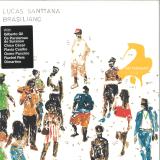
Zero 7 have released Shadows EP via Make/BMG. The four-track release is the British duo’s first collection in more than half a decade and sees them team with renowned new singer-songwriter/multi-instrumentalist Lou Stone.
From the melancholic electronica of Shadows, the ambient sheen of Outline to the lush arrangements of After The Fall & Take My Hand, Zero 7 fuse their long-standing gift for soulful songcraft and inventive production with the London-based Stone’s standout vocal delivery.
“The Shadows EP came together after a very fertile period of writing together with Lou Stone” explain Sam Hardaker & Henry Binns. “It’s the first body of work we’ve released since EP3 back in 2015 and hopefully is the start of many more creations".
Early tracks have received a groundswell of support from the likes of Lauren Laverne & Chris Hawkins at 6 Music, Robert Elms at BBC Radio London, as well as plaudits from Clash, The Independent, American Songwriter, Flood Magazine & KCRW.
The group recently shared a stunning live video for Outline which Clash described as ‘a spell-binding union of inventive production and that beatific vocal from Lou Stone’.
It’s almost twenty years since the release of the duo’s Mercury nominated debut Simple Things, which simultaneously catapulted Sia into the spotlight back in the early 00s. Shadows EP hears Zero 7 still at the very top of their game, and with an open ear for collaborating with rising talent along the way.
Released in 2020, Rheinzand’s self-titled debut LP heralded an authentic vibe of retro-futuristic disco-pop, distinguishing themselves in the current climate of dance music. The album was met with acclaim, picked by Piccadilly Records as their nr. 1 album of the year.
Since, the material on that album have proven fertile ground for practitioners in the art of the remix. On this EP, we release a selection of those efforts.
On the first slot, we have Running Back label owner and longstanding DJ heavyweight Gerd Janson polishing off his house music fluency with a gleaming take on ‘Blind’. The swerving vocals of Charlotte Caluwaerts’ reverberate through space ray arpeggiators and burnished drum gates. Belgian compatriot Blitzzega, the neon-drenched moniker of composer Bjorn Eriksson, features with a dizzyingly switched-on version of ‘Mi Mundo’, sporting gnawing synths and hijacked funk licks.
Next, dub-pop wizards Peaking Lights serve up a heady brew of plugged-up melodies braided around Reinhard and Charlotte’s shuffling vocals. This remix blends the magenta glow of synthwave with the deep grooves of maybe late Theo Parrish.
We round off the EP with a treat form Dennis ‘Citizen’ Kane, the iconic dance music figure who emerged in mid-90s NYC downtown scene. A veteran DJ and disco-head, Kane applies a luminous hand to Rheinzand’s ’14 Again’, deepening the vibe of kittenish mystery through carefully layered work of phasing drones, wandering synths, and mushrooming rhythm section (think T-Connection).
Steevio is perhaps one of the most influential electronic artists you’ve never come across. With more than forty years of knob-twiddling experience, this modular magician boasts enough cable to bring you to the moon and back. Away from the blinking racks, Steevio runs music festivals, like Freerotation, manages record labels and generally paves the way. Now this pioneer and Firescope are teaming up for a very special EP.
With Acatalepsy, this veteran dives deep into his machines before resurfacing with four tracks of melting organic techno. “Tarantism” comes to life with drums, percussive textures that prove fertile ground for ever more intricate patterns while orange blossom keys bloom. From understated chatter, a hive of beats soon forms around “Cynefin” as dewy notes float on the warmth of a new dawn. The natural world is an integral part of these compositions, the industrious movement of rhythms, the change and reshaping that comes with growth. Another presence on the 12” is the musician himself and his own influences. These early inspirations come to the fore in the hazy hi-hats of “Oxytocin” with its satellite-like bleeps and dreamy basslines that echo both the armchair and club of sounds of 90s techno. Those bleeps grow ever more distant in the fragile finale of “Intonation.” A melody precariously perches, thawing like ice, above delicate echoes that ghost behind modular bulges as drums fade.
Acatalepsy encapsulates the ephemeral nature of sound. Through this selection of one-off recordings, through these live jam sessions, Steevio captures a palpable and primal energy with an expert’s ear. An EP that casts spells from beginning to end, an EP from a true waveform wizard.
Recorded sporadically over five years from 2015 to 2019, Sixty Summers was shaped profoundly by Stone’s key collaborators on the album: Thomas Bartlett, aka Doveman, and Annie Clark, the Grammy-winning singer, songwriter and producer known as St. Vincent. Bartlett and Clark were the symbiotic pair Stone needed to realise her first pop vision. A wizard of production and songwriting, Bartlett helped coax Sixty Summers’ independent, elemental spirit from Stone, writing and recording over 50 demos with her at his studio in New York. Itself a thoroughfare for indie rock luminaries, some of whom, such as The National’s Matt Berninger and Bryce Dessner, ended up on the album, Bartlett’s studio was perfect fertile ground for Stone’s growth.
Clark was the incisive yang to Bartlett’s yin, a sharp musical polymath who, when presented with the work Bartlett and Stone had made together, quickly helped fashion Sixty Summers into the album it was destined to be. Contributing vocals and guitar in addition to production, Clark’s revered acidic touch ignited the sparks of Stone’s creations.
The scope of Sixty Summers is dizzyingly vast; miles away from Stone’s past work, it is a world unto itself, a surreal and breathtaking new landscape. Where Stone’s previous solo records, 2010’s The Memory Machine and 2014’s By The Horns, found her grappling with the natural darkness that comes with loving too much, Sixty Summers finds Stone claiming every part of herself: fire, fury, love, lust, longing. Touching on reference points as disparate as the avant-funk of Talking Heads (on ‘Break’) the romantic 2am musings of Serge Gainsbourg (‘Free’, ‘Dance’) and the sleek, ecstatic synth work of Lorde’s Melodrama (‘Substance’), Sixty Summers is an album you can dance to and one you can lose yourself in completely.
- A1: 4Hero - Hold It Down (Bugz In The Attic's Co-Operative
- A2: Nsm - Dj Power (Use It)
- A3: Domu Feat Face - Save It
- B1: Jazztronik - Samurai
- B2: Kaidi Tatham - Organic Juggernaut
- B3: Vikter Duplaix - Manhood
- C1: Agent K - Feed The Cat
- C2: Fourth Kind - Take Me To Your Sky
- C3: Taylor Mcferrin - Broken Vibes (Feat Vincent Parker)
- D1: Agent K - Hands
- D2: Nova Fronteira - Baila Conmigo (Atjazz Remix)
- D3: Blakai Feat Bembe Segue - Afrospace
At the end of the 90s, a movement began in West London that birthed a fresh direction in dance music. Though this movement never got mainstream press coverage, never had a crossover chart single, and never really transcended its community roots, there was a unique alchemy at work - a fertile moment of creativity, where a group of friends began to experiment with new cadences, rhythms and distilled influences, crafting a new direction in the attics and bedrooms of their neighbouring postcodes. Their music was a head-on collision between the sounds they had been raised on; the reggae sound system culture of Notting Hill Carnival, the sophistication and sheen of Electro-Funk, Jazz Fusion, Soulful House and Disco, the Afro-Beat sounds of Tony Allen and Fela Kuti, and the raw minimalism of early Hip Hop. Though "Broken Beat" was never a tagline that the producers anticipated, and one that they often publicly resisted, those two words would gradually come to represent the scattered rhythms, rolling basslines and soaring changes that were inherent to this exciting new sound. It's not clear who first coined the term "Broken Beat", but try to imagine how it felt to hear it for the first time; the production was grounded in MPCs and SP1200s, the hand-me-down samplers of the Hip-Hop and Jungle golden eras, and the drums that tumbled out of these machines at the hands of these creators had a jagged, stuttering feel, almost as though the groove was close to collapse.
This is the 2nd pressing.
The blues roots grow surprisingly deep in the Finnish music scene. From this fertile ground rises singer Emilia Sisco, who debuts on Timmion with her phenomenal single "Don't Believe You Like That". With her strong background in fusing blues, r&b and jazz, Emilia apparently slips also nicely into the dark soulful grooves of Cold Diamond & Mink.
In "Don't Believe You Like That" Emilia sets herself into the role of a mistreated lover, who still tries to see a speck of hope in the doomed relationship. By dubbing herself, and accompanying the lyric with graceful harmonies, she succeeds in building a powerful beat ballad, that should appeal to the darker end of the dance floor.
There's a special lane in history for soul music this understated. It's cool and intimate at the same time, like there's something dangerous lurking under the surface. So roll up something nice, if that's your thing, and hop along for the ride.
Seven years after its inception, Eaux is proud to announce the first solo release by an artist other than Rrose. As a member of the Sandwell District collective, David Sumner aka Function was instrumental incultivating the Rrose project. After releasing the first three EPs and album by Rrose between 2012 and 2013, Sandwell District terminated their mission abruptly, prompting Rrose to start a new label (Eaux) for solo projects andcollaborations. This EP brings history full circle.
Following closely on the heels of Function's mammoth 3LP/17 track album "Existenz" for Tresor Records, this EP takes similar themes as a departure point, but moves into more mysterious, yet also heavily dancefloor-focused terrain. "Binaural" encapsulates the timeless essence of the Function sound with menacing bleeps, cavernous stabs, and a sense that it could go on forever without losing its grip on the listener. "Desire and Memory" is a broken beat track drenched in modulated drones that feels like an infinite spiral, moving simultaneously forward and backward in time. Function's early Sandwell District records defined the "hypnotic" techno sound that has influenced countless artists (including Rrose), and this release plants those roots in new, fertile ground.
Recorded at Inanimate Objects, Berlin
Mixed by Tobias Freund at Non-Standard Studios
Mastered by Beau at Ten Eight Seven
- A1: Concrete & Glass
- A2: Back To Your Heart (Feat Kate Nv)
- A3: We Forgot To Love (Feat Kadhja Bonet)
- A4: What Makes Me Think About You
- A5: Time On My Hands (Feat Kirin J Callinan)
- B1: The Foundation (Feat Cola Boyy)
- B2: Catch Yourself Falling (Feat Alexis Taylor)
- B3: The Border
- B4: Turn Right, Turn Left
- B5: Cite Radieuse
- C1: Concrete & Glass
- C2: Back To Your Heart (Feat Kate Nv)
- C3: We Forgot To Love (Feat Kadhja Bonet)
- C4: What Makes Me Think About You
- C5: Time On My Hands (Feat Kirin J Callinan)
- C6: The Foundation (Feat Cola Boyy)
- C7: Catch Yourself Falling (Feat Alexis Taylor)
- C8: The Border
- C9: Turn Right, Turn Left
- C10: Cite Radieuse
When Air’s Nicolas Godin released his debut solo album, Contrepoint (2015), he channelled the influence of Bach into a rich, resonant and hugely rewarding spread of musical explorations. One soundtrack (A Very Secret Service) later, Godin builds on equally fertile conceptual foundations for the follow-up. Released through Because Music on 24th January, Concrete and Glass is an exquisitely crafted set of variations on architectural reference points: mounted with minimalist precision and delivered with an abundance of pop warmth, it finds Godin in his element, working seductive wonders with poise and style to spare.
For Godin, the album circles back to his formative work as half of ground-breaking French electronic group Air. Revered modern architect Le Corbusier was an influence on the young architecture graduate’s music, notably on his 1997 debut “Modular Mix”. Twenty-plus years later, Le Corbusier featured on a list of modernist architects Godin was invited to compose tributes for, tributes intended to be heard as the soundtrack to site-specific installations around the world.
In its soft ambient pulse and melting minimalism, lead track “The Border” is a perfect entry-point to Godin’s hymns to buildings, arranged and co-produced with Pierre Rousseau. Its levitating synths, vocoder vocals and scudding bass hove into view with understated elegance, all the better to accommodate the discreet slow-build of delicate details within. As with Air, Godin makes gorgeously light work of every angle: this is music that seems entirely unperturbed by gravity, occupying an elevated atmosphere of its own.
Elsewhere, the title-track’s clean synth lines, crisply apportioned arrangements and tender timpani offer another inviting entry-point, sculpted with architectural clarity. While Godin’s vocoder vocals also hark back to Air’s early work, the album accommodates a diverse spread of guest vocalists elsewhere. Hot Chip’s Alexis Taylor guests on the falsetto-soul dream-pop of “Catch Yourself Falling”, one of Godin’s sweetest melodies yet. Oxnard singer/activist Cola Boyy brings soul to the righteously engaged “The Foundation”; the squelchy synths and buoyant grooves burn slow, allowing the stealthy arrangements and message room to resonate. Psychedelic soul singer Kadhja Bonet sings with measured serenity over tremulous synths on “We Forgot Love”, while Russian experi-pop artist Kate NV brings a gracefully aching romanticism to the blissful swoon-pop of “Back to Your Heart”.
Additionally, Australian conceptual provocateur Kirin J Callinan contributes a vocal of restrained drama to “Time on My Hands”, a midnight-drift soft-pop ballad with a silky allure. One of the quickest tracks to record for the album, it emerged in collaborations between Los Angeles (”During some lively sessions in Mac DeMarco’s studio,” notes Godin) and Paris. After he missed his flight home, Callinan stayed in France for a day as the guitar solos were recorded, complementing the song's air of sleek luxuriousness.
Between its title-track and the sultry, smoky jazz stylings of closer “Cité Radieuse”, Concrete and Glass is an album that truly travels, in tune with its global pitch. For Godin, it marks another milestone in a musical journey that began when Air’s 1998 debut album, Moon Safari, became the sublimely weightless soundtrack of its time. For Concrete and Glass, Godin builds on his storied past with tremendous finesse, charm and fluency, opening fresh windows of perspective at every lovingly executed turn.
- A1: Pinta Manta - António Sanches
- A2: Dia Ja Manche - Dionisio Maio
- A3: Morti Sta Bidjàcu - José Casimiro
- A4: Pontin & Pontin - Bana
- B1: That Day - Fany Havest
- B2: Odio Sem Valor - Pedrinho
- B3: Mino Di Mama - Quirino Do Canto
- B4: Mundo D'margura - Tchiss Lopes
- C1: Po D'terra - Joao Cirilo
- C2: Corre Riba, Corre Baxo - Abel Lima
- C3: Ilyne - Os Apolos
- C4: Sintado Na Pracinha - Americo Brito
- D1: Capchona - Elisio Vieira
- D2: Djal Bai Si Camin - Antonio Dos Santos
- D3: Stebo Cu Anabela - Abel Lima
repress
2LP 140G VINYL + 12 PAGE BOOKLET.
"Space Echo - The mystery behind the "Cosmic Sound" of Cabo Verde finally revealed!" is the 20th release by the fabulous Analog Africa Label.
In the spring of 1968 a cargo ship was preparing to leave the port of Baltimore with an important shipment of musical instruments. Its final destination was Rio De Janeiro, where the EMSE Exhibition (Exposição Mundial Do Son Eletrônico) was going to be held.
It was the first expo of its kind to take place in the Southern Hemisphere and many of the leading companies in were all eager to present their newest synthesisers and other gadgets to a growing and promising South American market, spearheaded by Brazil and Colombia.
The ship with the goods set sail on the 20th of March on a calm morning and mysteriously disappeared from the radar on the very same day.
One can only imagine the surprise of the villagers of Cachaço, on the Sao Nicolau island of Cabo Verde, when a few months later they woke up and found a ship stranded in their fields, in the middle of nowhere, 8 km from any coastline.
After consulting with the village elders, the locals had decided to open the containers to see what was inside - however gossip as scintillating as this travels fast and colonial police had already arrived and secured the area.
Portuguese scientists and physicians were ordered to the scene and after weeks of thorough studies and research, it was concluded that the ship had fallen from the sky. One of the less plausible theories was that it might have fallen from a Russian military air carrier. The locals joked that again the government had wasted their tax money on a useless exercise, as a simple look at the crater generated by the impact could explain the phenomena. "No need for Portuguese rocket scientists to explain this!" they laughed.
What the villagers didn't know, was that traces of cosmic particles were discovered on the boat. The bow of the ship showed traces of extreme heat, very similar to traces found on meteors, suggesting that the ship had penetrated the hemisphere at high speed. That theory also didn't make sense as such an impact would have reduced the ship to dust. Mystery permeated the event.
Finally, a team of welders arrived to open the containers and the whole village waited impatiently.
The atmosphere, which had been filled with joy and excitement, quickly gave way to astonishment. Hundreds of boxes conjured, all containing keyboards and other instruments which they had never seen before: and all useless in an area devoid of electricity. Disappointment was palpable. The goods were temporarily stored in the local church and the women of the village had insisted a solution be found before Sunday mass.
It is said that charismatic anti-colonial leader Amílcar Cabral had ordered for the instruments to be distributed equally in places that had access to electricity, which placed them mainly in schools.
This distribution was best thing that could have happened - keyboards found fertile grounds in the hands of curious children, born with an innate sense of rhythm who picked up the ready-to-use instruments. This in turn facilitated the modernisation of local rhythms such as Mornas, Coladeras and the highly danceable music style called Funaná, which had been banned by the Portuguese colonial rulers until 1975 due to its sensuality!
The observation was made that the children who came into contact with the instruments found on the ship inherited prodigious capabilities to understand music and learn instruments. One of them was the musical genius Paulino Vieira, who by the end of the 70s would become the country´s most important music arranger. 8 out of the 15 songs presented in this compilation had been recorded with the backing of the band Voz de Cabo Verde, lead by Paulino Vieira, the mastermind behind the creation and promulgation of what is known today as "The Cosmic Sound of Cabo Verde".
The field of electronic music were involved. Rhodes, Moog, Farfisa, Hammond and Korg, just to name a few.
It might sound far fetched but here goes: Circadian Rhythms aka Dj Deg brought techno to Belgium before anyone was ready for it. The 1990s collective “Bad Woofers Posse” formed with lifelong friend Mike DMA and their “PK” warehouse parties served as fertile ground for the young producer.
Steeped in this new atmosphere, Deg locked himself up in his bedroom studio at his parents’ place and started developing his interpretation of the freshly imported techno/house sound. In the Belgian way. Combining emotional synth play with neck-breaking drum patterns, sequenced like dreams forever chasing the climax.
BM11 collects six unreleased takes from this almost forgotten period (1989 – 1994).
The blues roots grow surprisingly deep in the Finnish music scene. From this fertile ground rises singer Emilia Sisco, who debuts on Timmion with her phenomenal single "Don't Believe You Like That". With her strong background in fusing blues, r&b and jazz, Emilia apparently slips also nicely into the dark soulful grooves of Cold Diamond & Mink.
In "Don't Believe You Like That" Emilia sets herself into the role of a mistreated lover, who still tries to see a speck of hope in the doomed relationship. By dubbing herself, and accompanying the lyric with graceful harmonies, she succeeds in building a powerful beat ballad, that should appeal to the darker end of the dance floor.
There's a special lane in history for soul music this understated. It's cool and intimate at the same time, like there's something dangerous lurking under the surface. So roll up something nice, if that's your thing, and hop along for the ride.
Our Favourite Bothy Botherers Mac-talla Nan Creag (comprised Of Hoch Ma Toch, Other Lands And Lord Of The Isles) Return To Firecracker Recordings, Channeling Ancient Rites, The Mysteries Of The Scottish Landscape And Its Elements Through Technologies Both Old And New For Your Listening Pleasure.
This Time Round The Archaeological Work Of Forestry Commission Scotland At Dun Deardail In Glen Nevis, And The Links Between That Site And The Ancient Celtic Myth 'the Sorrow Of Derdriu' Provided Fertile Ground For New Exploration And Response. Accompanying The Music Once Again Will Be A Lush Booklet Containing Some Of The Stunning Imagery That Results From The Work Fcs Have Done There, All Packaged And Silk-screened With The Usual Finesse We've Come To Expect From Firecracker Recordings And Their Chief Visionary House Of Traps, In Conjunction With 12th Isle's Al White.
Captured In Part In A High Vaulted Medieval Church, Then In Home Studios, Bouncing Ideas Back And Forth Over The Internet, Mtnc Have Once Again Drawn On Field Recordings, Traditional Instrumentation, Analogue Electronics And The Simple Power Of The Human Voice To Create A Shimmering And Expansive Song Cycle.
Whereas The First Album Was Borne Out Of An Intense Period Of Field Trips And Whisky Fuelled Jam Sessions In Brochs And Had A Loose Approach Overall, The Second Is Perhaps More Focussed In Its Themes Relating To The Ancient Tale - Love, War, Beauty And Tragedy All Intertwined - And They Arguably Go Deeper This Time, Conjuring Up Something Of The Fourth World Feel, By Way Of The Firth Of Forth.
With Additional Contributions From Professor John Kenny - Whose Primal Zummoesque Playing On A Range Of Horns Including A Giant Conch Shell And A Replica Of The Ancient Deskford Carynx Underpins Several Tracks On The Album - And Eva Sutherland (daughter Of Other Lands) Who Provides A Reading From The Myth At The Very Beginning, This Is An Album That Not Only Carries The Heaviness Of History But Also Looks To The Light Of The Future.'
It is said that every generation casts its mind back to a previous era in times of crisis; the resources that will allow us to decode the questions of our moment may lie in the myths of another era.
Le Renard Bleu, the new musical and cinematic collaboration between Lafawndah and composer Midori Takada, and filmmakers Partel Oliva, takes a cross- generational echo as ground zero for recovering a crucial myth for uncertain times: the blue fox.
As transmitted by Takada, the fox appears in both ancient Senegalese and Japanese folktales as the trickster archetype; belonging both to the heavens and to the earth, the fox is the agent of chaotic good, shaking the world up when its energy has become stagnant. Above all else, the fox is famous for its cunning nature.
Renard Bleu marks the first new music released by Takada in nearly twenty years; it would be difficult to overstate the importance of her return to the public eye. Her first solo record, 1983's Through the Looking Glass, has been rediscovered and heralded as a lost classic; the influence of her percussion trio, the Mkwaju Ensemble, continues to permeate and inspire a new generation entranced by its lucid beauty, playfulness, and sensual patience. Takada has performed in numerous film score orchestras, including the ensemble for Akira Kurasawa's Dreams, coincidentally a key influence on Renard Bleu.
In the ensuing years, Takada has worked closely with theater group the Suzuki Company of Toga on productions of Electra and King Lear, an experience, she says, that allowed her to pursue 'a unity of music, body and space.' Recent live solo performances have evinced the depths of her exploration of all three.
Equally, it is Lafawndah's freedom of tone, decentralized maps of ancient and modern music cultures, and alloying of devotional intensity with modern songcraft casts her as a distinct relative of Midori Takada's.
Over the course of two EPs, self- directed music videos, and countless live performances, Lafawndah has drawn out an uncompromising exploration of how theater, situational intervention, and choreography can amplify the affective palate of forward pop music. One can trace the influence of artists such as Meredith Monk, Carlos Sara, and Andy Kaufman as much as musical antecedents AR Rahmann, Missy Elliott, or Geinoh Yamashirogumi.
It is in a mutual commitment to this unity that Lafawndah, Takada and Partel Oliva find fertile aesthetic common ground.
The music of Renard Bleu originated in Takada's preoccupation with the legend of the fox; after constructing a vivid instrumental composition dramatizing the spirit animal's journeys through waterphone, bells, marimba and various forms of drums, Lafawndah responded - in her inimitable mix of fairytale and undertow-- with melodies and lyrics capturing a dialogue between her and the fox himself. Eventually, the duo met in Tokyo for a week of communing with the material at Avaco Creative Studios, where new elements were composed on site.
Created in partnership with KENZO and premiered today via their channels, it was Partel Oliva who imagined a contemporary cinematic frame for the myth of the fox to re- appear, creating a hybrid of choreography and narrative around Takada and Lafawndah's performance of their joint composition (also titled Le Renard Bleu.) Returning to film in Japan for the third time, Partel Oliva's moving image work (Club Ark Eternal, The Pike and the Shield) has set the standard for and revolutionized the fashion art film. Their deployment of original music, dance, and a highly stylized mis en scene coalesces here in the casting of Los Angeles krump artist Qwenga as the eponymous fox, stalking the halls of the ancient Noh theater in which Takada and Lafawnda's performance takes place.
Why call up the myth of the fox now In Le Renard Bleu, Lafawndah and Takada's collapsing of distance between generations, styles, and milieus intimates that the relationship to time must be shaken. The future lies in fragments in the past; to remember is to recover it; the fox rises to thicken the plot.
- A1: Music From Installations 1 (Lp 1)
- C1: Music From Installations 2 (Lp 2)
- E1: Million Paintings (Lp 3)
- G1: Lightless - Music For The Marble Palace 1 (Lp 4)
- I1: Lightless - Music For The Marble Palace 2 (Lp 5)
- K1: Dormienti (Lp 6)
- M1: Kite Stories (Lp 7)
- O1: Making Space (Lp 8)
- Q1: Music For Installations (Lp 9)
If you think of music as a moving, changing form, and painting as a still form, what I'm trying to do is make very still music and paintings that move. I'm trying to find in both of those forms, the space in between the traditional concept of music and the traditional concept of painting.' Brian Eno.
Musician, artist, thinker, activist Brian Eno first came to international prominence in the early '70s as a founding member of Roxy Music, and immediately followed by a series of highly acclaimed solo albums. His visionary production work includes albums with U2, David Bowie, Talking Heads, Coldplay and many others.
His recordings and other collaborations are endless and endlessly known, however his visual experiments with light and video covers an even longer span of time and have been exhibited all over the globe - from the Venice Biennale to the Marble Palace in St. Petersburg, from Beijing's Ritan Park to the Sydney Opera House. Eno's installations are the fertile ground from which so much of his other work has grown and continue to parallel his musical career.
Music For Installations is a collection of original recordings from these installations with new and unreleased work covering the period from 1986 until the present and beyond.
________________________________________________
Designed by Brian and long-time collaborator Nick Robertson, this limited edition 9LP Vinyl boxset comes with a 64-page booklet featuring rare and unseen exhibition photographs and a new essay written by Eno.
- 12 x 12 rigid box set of 9 LPs containing music from Brian Eno's installations past, present and future.
- 64 Page book containing a brand new essay by Eno plus rare and previously unseen photographs from his various exhibitions from 1997 to the present.
- Each album is housed in a beautiful die-cut sleeve designed with long-time collaborator Nick Robertson and all music is guaranteed first time on vinyl.
- 50% of the music contained in the box set has never been available in any format and the rest has only ever had very limited cd release direct to consumer release.
- Vinyl mastered and cut by Matt Colton at Alchemy Mastering, London
- 100 % First time on vinyl, strictly limited edition
Techno Album of the month March 2018 in Mixmag UK!
Central to the Israeli club scene, Deep'a & Biri have long been defying expectations even within a community they helped construct. Serving as resident DJs, activists and bookers for Tel Aviv's legendary Barzilay Club, the pair helped build a transcendent club scene. Hugely influential artists such as Robert Hood, Derrick May, Rødhad, Ben Klock and Moritz Von Oswald passed through the club, enjoying legendary crowds and what they could surely sense was a genuine air of anarchy, rebellion and unadulterated rave pleasure.
As the duo held down dozens of parties with dozens of DJs, there was no 'eureka' moment for their emerging sound; just a steady stream of brilliant, inspiring electronic music, much of which left an indelible imprint on the pair. Now based in Berlin, for Deep'a & Biri, things are much the same, even if the landscape and the city is different. Always rooted in the fertile ground between machines and emotion, on their second full-length LP, 'Dominance', the duo demonstrate their unique grasp of the sensitive, unfolding relationship between man and machine. Steadfast in their insistence never to remain in one lane in terms of their sound, 'Dominance' flawlessly segues between forcefulness and weightlessness. From beginning to end, this is not a record afraid to show its teeth with an uncompromising, instantly recognisable techno palette that kicks the foundations of any sound system with menace, anger and determination, particularly on tracks such as the dense 'Voltage' and pulsing throughout the more industrial flourishes of 'Ecole De Nancy' and 'Seeking Solace'.
Beyond these grittier, although never mindless, moments of authority, a sense of escapism and curiosity imbues the album. 'Alpha Cephei' offers the first hint of Deep'a & Biri's more wistful concepts, producing a smoke trail of twinkling electronics out of a smudged but distinctive bassline. That understated sense of emotional catharsis carries throughout, to be found between the complex-yet-familiar bells that drive 'Flow Diverter's' rhythm to a Detroit-indebted landscape that will surely instantly elasticate any keen dancers, while 'False Memories' offers big-room techno fulfillment with none of the character or sincerity removed for cheap thrills. Saving the most remarkable moments for last, the pair sign off 'Dominance' with the poignant and purifying 'Astral Trails', fusing an ethereal, ambient landscape with the more pronounced rhythms of their hardware.
The album's distinctive artwork comes from the studio of Jewish orthodox artist Avraham Guy Barchil, who forged a powerful connection with Deep'a, both was immediately drawn to 'weird atmosphere, amazing technique and emotions involved with his work'. Perhaps one of the most interesting painters from Israel, Avraham is known for his unique perspective, taking his inspiration from the Zohar - the foundational work in the literature of Jewish mystical thought known as Kabbalah. The ambiguous figures represent mystical aspects of the Torah (the five books of Moses), as well as material on mysticism and mythical cosmogony.
Ensuring their natural, conscious touch always remains at the forefront of this unapologetically machine-driven music, Deep'a & Biri have produced an album in the lineage of their heroes and greatest influences. Cerebral yet satisfying, deep yet always engaging, 'Dominance' both reasserts and evolves Deep'a & Biri's forward facing and singular sound.
Fans donated €25,000 to Emika for the project
Fans paid for the album before hearing any music
Electronic & Neo Classical. Fits 2 genres / Cross over
The composition is inspired by electronic music
Emika hired double the amount of bass players in a normal orchestra
Emika created a new seating plan for the orchestra, to sound more like a wide stereo pop album
Echo concepts (electronic music)
Romantic piece, lyrical piece, universal themes of love and sadness, huge beautiful melodies
50 piece symphony orchestra
Silver-toned soprano Michaela Srumova
Composed in Berlin
Recorded in Prague at Czech Radio Studios.
* The crossover between electronic music and classical composition has never been in more vibrant and dynamic health. Multifarious musician Emika explores this fertile ground on her ambitious new opus 'Melanfonie': her first orchestral composition, some four years in the making.
* Funded by a hugely successful Kickstarter campaign that exceeded its target by an impressive €25,000.
* While many rebel from their classical training never to return to it explicitly, Emika has always been attracted to the potential and freedoms offered by the symphony form.
* As well as taking inspiration from her electronic music background in composing the music itself, Emika also applied some of production and playback principles from that realm to create a piece whose every element has been carefully considered.
* Emika is on a quest to try and change what we mean when we talk about 'classical music'. For her, the magic of the 'genre' is about the instruments themselves and more importantly the people who play them; not the restricting traditions and conventions of the classical world itself.
* I want to change the face of classical music and give it a more honest and real image. It is time we had something other than pomp and circumstance and avant-garde squeaks and pops..
Supported by
Chilly Gonzales, Zola Jezus, Ellen Alien, Nina Kraviz, Mala, Christian Kellersmann, The Barbican, Francesco Tristano.
Following the excellently received Dilation LP on FILM, the duo return to the Berlin based imprint for a remix package featuring FaltyDL, Grand Optimist, Djrum & Portable Sunsets. Erol Sarp & Lukas Vogel's ingenious use of the grand piano has won them many plaudits over the years. Working solely with the sounds of the grand piano and a set of 20 self-built hammers hitting the piano on different parts - filtered & warped in an extraordinary fashion, the pair craft dense, rousing music - kept fresh & current with nods to IDM, ambient & techno. As such, the original recordings are fertile ground for remix opportunities, and the FILM label call on a who's who of left-field electronica to reimagine the work. NYC native FaltyDL takes on Newtons Cradle, flipping the original and turning in a stepping, psychedelic slice of half time proto-Footwork while both Phillip Otterbach, operating under his Grand Optimist alias, and 2nd Drop's Djrum offer tripping, ambient reinterpretations. 1080p's Portable Sunsets reimagines key LP cut Neon as fuzzy beach house jam, reseting the original & eeking out a wholly different energy with driven drum machine hits & a soothing vox line.
The Estonian master of dubstep and techno Margus Löve, who has operated so far under the monikers L-OW and 1DERL&, has changed his creative direction into curvier areas and is presenting his fresh act Exit Safe Mode as a proof. Cool and ghastly darkness is still hoofing at your heels and ominous concrete thunder brings the skeletal techno to a new fertile ground. Seeming coldness is concealing a hot-blooded pulse and a stealthily transporting psychedely. A dangerously alluring adventure has begun and it's calling for an exit from the numbing comfort zone.
- A1: The Mark Harvey Group - For Margot
- A2: The Mark Harvey Group - Tarot: The Moon
- B1: Thing - Sketch Pts. 1 & 2
- B2: Thing - Road Through The Wall Pts. 2 & 3
- C1: The Phill Musra Group - The Creator Is So Far Out
- C2: The Phill Musra Group - Egypt
- D1: Worlds' - 9 Degrees Black Women Liberation
- D2: Stanton Davis' Ghetto Mysticism - Play Sleep
- D3: Baird Hersey With Dave Leibman - The Year Of The Ear: Herds & Hoards
This deluxe overview Of Boston's creative jazz scene is presented as a double LP Set, packaged in deluxe box with each piece of vinyl housed in its own euro-style glossy jacket. Also Included is an 8 ½ x 5 ½, 80 page book documenting the rich history of the music with in-depth analyses and photos. Check!
In the 1970s Boston was a fertile ground for a very creative jazz scene. Small, independent venues ranging from lofts to churches to clubs opened up to support this thriving backdrop while jazz musicians set up their own labels. One man was there through it all, playing music and documenting the musical landscape. His name was Mark Harvey and here is his story....
Mark Harvey and Deano Sounds pulled together the most comprehensive package of Boston
Jazz released to date. The album has been assembled as a deluxe package that includes, in
addition to the music, an 80-page book documenting the rich history of this music scene with in-depth analyses and photos of the jazz musicians involved.
The music on this album is culled from rare private press Jazz LPs that were pressed in small
quantities of a few hundred for members of the band and the local jazz community at the time.
The music here runs the gamut of funky jazz from Arnie Cheatham's "Thing" to the deep free jazz
of the Phill Musra Group or the spoken word brilliance of Worlds, to the complex metric structures of Stanton Davis' "Play Sleep." This is a collection of very rare eccentric jazz pieces for your
enjoyment!
Prolific Seattle producer Jon McMillion returns to Nuearth Kitchen with another crucial chapter in his epic tale of haunted house-music subversions. This EP offers four variations on a bizarre and engrossing theme. Don't It Make You (edit 1)' is a work of extremes: By some miracle of aural physics, it's at once one of McMillion's strangest tracks and one of his most accessible. He sets into motion a staunch, relentless house rhythm bolstered with congas, massed claps, synth-bass raspberries, and a badass male singer intoning, Don't it make you feel good, if you wanna get down/Just say it, say it again,' over which a miasma of enigmatic tones bubbles and swirls. Like Bohannon's disco-funk classics from the '70s, Don't It Make You' seems like a tease, even at 10 minutes duration, you wish it would roll on for at least 30. On Don't It Make You (edit 2),' McMillion strips things down to dance-floor essentials and erases some of the free-floating background weirdness.
The two remixes are revelatory. New York house icon Fred P. (aka Black Jazz Consortium) slides the track into a tighter pair of pants, but that just makes it swivel harder and slyer. He emphasizes Don't It Make You''s mysterious drones and then loops a female vocalist singing He keeps me' while dropping in some echoed male chatter to gently disorient. What a dreamy, soulful trip Fred P. conjures here. And rising German wunderkind Orson Wells layers and pitches up the original's cascades of bleeps, which becomes the dominant motif, and then subtly modulates said bleeps over the tune's seven minutes, while keeping that irrepressible rhythm strutting. McMillion's raw materials prove to be fertile ground for these two maverick remixers to flaunt their own fascinating quirks while maintaining the original cut's club-darkening and ass-moving functionality.
- 1