
pré-commande12.10.2026
il devrait être publié sur 12.10.2026
23,95 €
il devrait être publié sur 12.10.2026

That true beauty lies in the essentiality and meticulous combination of a few elements is sometimes not just a cliché. The delicate blend of Roland CR-78, acoustic guitar and dissonant organs that intertwine in Open Windows is a vivid demonstration of this. It is these few elements, now distant and hinted at and now close and deafening, that paint the backdrop of melancholic nostalgia where laconic whispers move the listener within the paintings that bear the sonic signature of Human Figures. To Daniel Lewis’ new project, which has seen its springboard through releases on the label of his friends at Frigio Records, perhaps the adjective “new” is already quite tight. He has built a very recognizable sonic tibre, an influence of producers and listeners at different latitudes of the post-punk and wave scene.
In the 8 canvases of Open Windows the folk tradition is repainted in a more contemporary guise: the sweet and sad litanies are alternated with fast and frenetic stornelli in which the combination of tradition and experimentation constitutes the stylistic signature. The open window through which the listener has the opportunity to look out in this album does not, however, give onto a natural external panorama. It projects into an inner world where introspection and silence are the only chance to grasp its sublime beauty.
Disponible en stock et prêt pour l'expédition
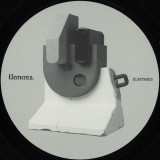
Elements. is back with its third release signed by Crihan. 'Recurring Figures' finds Alin right in his element, showcasing three purely minimal tracks rich in detail and deeply engrossing textures reminiscent of the golden ages of (organic) minimal circa 2010.
A-side's 'Periodic Arrangement' kickstarts the EP in distinctive, contemplative tones. Drum samples meticulously syncopated amongst a canopy of modulated noises, bass bleeps and dramatic piano chords - they keep the groove moving amidst cinematic soundscapes reminiscent of dark fantasy scenarios.
Flip-side's 'Regular Intervals' (B1) moves closer to micro-house realms. There's plenty of swing and playful sampling while maintaining the same cinematic deepness introduced before. 'Again & Again' (B2) sits perfectly as the EP's closing track, merging swingy, dance-focused drum arrangements with dramatic atmospheres and picturesque tones.
Disponible en stock et prêt pour l'expédition

With Figures of Glass (Piano Etudes – Edits), Vanessa Wagner offers a new listening perspective on Philip Glass’s Piano Études, shaping a curated selection of edited versions drawn from her acclaimed recording of the complete cycle. These edits do not alter the substance of the works; rather, they refine their temporal focus, revealing their emotional force with renewed clarity.
Conceived in parallel with Figures of Glass, a hybrid project developed with visual arts collective Scale, the release extends a dialogue between piano and light, sound and space. Between piano and light, Vanessa Wagner interprets Glass’s Études at the heart of a scenographic installation, exploring the visual imagination embedded in the composer’s music. Minimal structures become spatial gestures; repetition opens onto perception, colour, and resonance. Taken together, these edits form a coherent arc through Glass’s language: from tension and propulsion to suspension and introspection, from rhythmic urgency to contemplative stillness. Wagner’s approach is marked by precision, restraint, and a deep attention to resonance, allowing each piece to unfold with an assumed expressive sobriety.
Figures of Glass also exists as a live creation, presented for the first time in Paris at the Théâtre du Châtelet on April 7, 2026. In both recorded and staged forms, the project invites contemporary listening contexts — from focused headphone listening to immersive visual environments — while reaffirming the Piano Études as a major landmark of 21st-century repertoire. Bridging modern classical piano, minimalist writing, and spatial listening formats, Figures of Glass (Piano Etudes – Edits) speaks equally to traditional classical audiences and new listeners discovering Philip Glass through curated, editorial-driven experiences.
il devrait être publié sur 13.03.2026
il devrait être publié sur 21.11.2025
il devrait être publié sur 15.05.2025

Commandez maintenant et nous commanderons l'article pour vous chez notre fournisseur.

With his stripped down and raw vocal style, DMX didn’t need lyrical trickery, he just got straight to the point! This articulated, 3.75” scale DMX ReAction Figure is inspired by the cover art from his debut album, It’s Dark and Hell is Hot, and comes with microphone accessory. Is you wit us, or what- add this DMX ReAction figure to your collection of hip-hop legends today!
Cet article n'a pas encore été publié. Vous pouvez pré-commander le produit maintenant.

Cet article n'a pas encore été publié. Vous pouvez pré-commander le produit maintenant.

Cet article n'a pas encore été publié. Vous pouvez pré-commander le produit maintenant.

The RUN DMC ReAction Figure Holiday 3-pack is here to deliver some of that holiday spirit from Hollis, Queens straight into your collection! Inspired by their hit song Christmas in Hollis, this festive box set features 3.75” scale figures of Joseph Simmons, Darryl McDaniels, and Jam Master Jay sporting tracksuits, Santa hats, and gold chains, with two microphones with gift bows, a sack of cash, Santa’s wallet, and an “ill reindeer” figure. Celebrate the season in the company of Hip-Hop royalty with the RUN DMC ReAction Figure Holiday 3-Pack!
il devrait être publié sur 17.12.2024

il devrait être publié sur 20.11.2024

il devrait être publié sur 20.11.2024

il devrait être publié sur 20.11.2024

il devrait être publié sur 20.11.2024

Everything Around You is a co-release presented by K and Perennial.The second LP from Feeling Figures was in fact recorded before their first. Amongst the stuttered starts and stops of the pandemic, a window opened for `The Figs' to commit 11 songs to tape. After gradually preparing new and resurrected material, they gathered in drummer T's basement in the omicron winter of early 2022 to document their strongest songs on his recently acquired reel-to-reel. Compared to `Migration Magic', `Everything Around You' is a considerably deeper dive into the Figs universe, a more deliberate collection that includes compositions which push into the expanse, drawing from a broader palette of art rock influences. The songs on this album navigate tensions between the personal and political, encompassing inner turmoil and deep-seated desires for change at the entangled axis of individual and social transformation. `Everything Around You' is their most fully-realized accomplishment to date; the best recorded representation of their boundless, idiosyncratic approach to guitar-based music. A summation years in the making, years in waiting, finally set free.
il devrait être publié sur 27.09.2024

Commandez maintenant et nous commanderons l'article pour vous chez notre fournisseur.

For years Feeling Figures have tinkered away at the edge of the Montreal scene, never fitting neatly into the ebb and flow of the city's cultural trends or its more traditionalist camps. A geographer, a music therapist, a writer, and an underground arts biz maverick, the four Figures have long been friends and collaborators in various musical formations and continue to propel multiple projects. At the core of Feeling Figures is the Zakary Slax and Kay Moon songwriting partnership, which itself stretches back a decade, the pair first crossing paths in a vibrant period of musical upheaval in Sackville, NB - a college town on Canada's East Coast. In the big city, a series of self-releases, shifting monikers, and revolving live lineups eventually coalesced with Thomas Molander & Joe Chamandy as the ultimate rhythmic vehicle and spiritual consorts for Slax & Moon's unconstrained syntheses of multiple eras of indie rock, punk, psychedelia, folk, and outsider pop. Their debut 7" of 2021 was an early entry in Montreal upstart label Celluloid Lunch's catalog. We're nearly 3 years past the debut 7" from Montreal quartet Feeling Figures and in some ways it feels like 300, Such are the seismic changes that have occurred during that spell. But enough about Feeling Figures' musical depth and laser-like lyrical focus, I understand some things have happened in the real world, too. 'Migration Music' is not this generation's first ramshackle-as-fuckk art punk album and I'm not sure it's even the 30 thousandth. But I do know Feeling Figures have arrived fully formed, with a real voice of their own (several in fact, that must be a really good microphone). This album is simply too much fun to have been the product of years of serious study, though I'm told students occasionally have fun, too. I wouldn't know, i'm a university drop out. I did once see an episode of the television adaptation of "The Paper Chase" where one of the new Harvard Law hopefuls had a Kiss poster over his bed and that seemed highly implausible. The utter lack of affectation on 'Migration Music' may or may not be considered a selling point (affectation seems pretty huge — almost always) but Feeling Figures' rock'n'roll atom smashery is nothing short of astonishing. Maybe there will be a better record in 2023 perhaps two or three, even. But for now, this is the band to beat. 10 tracks 33RPM
il devrait être publié sur 24.11.2023

In 2021 the album "Footsteps" introduced listeners to the individual style of Human Figures.
Daniel Lewis aka The Recluse, Death Posture or Holt merged raw strings with primal percussion to forge a sound of his very own. Lewis now returns to Frigio with "Tabula Rasa¨. The entrancing title piece is a heady brew of intricate guitars, smoky basslines and a pulsing drum patterns. The uplifting melody indie wave of “Breaking Free” follows, with Lewis’ vocals haunting from an echoing distance. The low slung “Conclusions are Nil” gives way to the eastern infused harmonies and underhand dealings of the soundtrack streaked “Military School.”
Distortion drenched, the short and intense “Obedience” shrouds sorrowful vocals in drum machines, strings and haze. Those pain ridden lyrics are central in the closer. A stoical snare pierces the dirge of “Disparages,” a cold industrial march into the driving rain. Embittered brilliance from Human Figures. "
Commandez maintenant et nous commanderons l'article pour vous chez notre fournisseur.

18 Figures debuts on Southern Lights with a wide-ranging release covering magnetic and esoteric signals, including a blazing remix from Sciahri.
The EP is a nod to the ancient Roman festival Saturnalia, a celebration and holiday in honour of the god Saturn. The A-side introduces 18 Figures’ intent with 82 Moons and God’s Sickle: off-beat, obscure and opaque productions before closing with the ambient composition of Accretion Disk.
The B-side features Ammonia and a ferocious remix by Sublunar head Sciahri, turning the ritual-esqe and hypnotic sounds of the original on its head with an impulsive and heady interpretation.
Commandez maintenant et nous commanderons l'article pour vous chez notre fournisseur.

Clear Vinyl
Laila Sakini and Lucy Van’s sought after 2017 EP Figures resurfaces on a newly expanded and remastered edition, deploying taut poetry and creeping electro-pulses for an alchemical suite of slowly encroaching trip hop x dub-pop.
Long before releasing her slow-burn classic ‘Vivienne’ and last year’s compelling Princess Diana of Wales album, Laila Sakini was at work with acclaimed poet Lucy Van for an impromptu session for a local noise and spoken word night in Naarm, Australia. Those initial ideas marinated and eventually resulted in ‘Figures’ - an EP that was originally released on tape via Purely Physical Teeny Tapes, offseting Sakini’s minimal production against Van’s text, spoken in a carefully enunciated dialect lifted and wrapped around Sakini’s nocturnes. It’s the sort of thing that reminds us of Tin Man & Rashad Becker’s ‘Wasteland’ sessions, fused with the spirit of the contemporary Naarm/Melbourne scene.
For all those references, Sakini and Van’s songs are displaced from the contemporary wellspring too. The dusky blue waltz of opener ‘Those Who See’ comes off like a lighter Leslie Winer or melodic, early AFX, as Van dryly intones “...all my enemies in an orgy, of IQ to body ratio,” while ‘Deep End’ sees them nudge into more claustrophobic introspection, before shoring up a dank sort of trip hop sleaze with the title song, slithering with a similar energy to early 90’s Autechre as the narration echoes to a blur.
The three previously unreleased songs flesh out the release into the full album it always should have been, cut of equally rare, hand-spun fabric. With its post-Sleng Teng B-line and noctilucent chords, ‘What You Need’ feels like an Eski rhythmic bump accompanied by sub-aquatic synth bass, and the opalescent, gumtree-shaking shimmer ‘Rough Desires’ secretes its intimations with an absorbingly hypnagogic slow-burn that pools into the perfect curtain closer; ‘Trees Make Me High’.
Commandez maintenant et nous commanderons l'article pour vous chez notre fournisseur.

Sweetness and noise, light and dark, soul and body - KICK are back with
the new album Light Figures
KICK are Chiara Amalia Bernardini (vocals, bass) and Nicola Mora (guitars,
electric piano, synths, samplers), from Brescia. Their sound combines rough
elements and others more dreamy in a sound that could ideally be defined "sweet
noise", a style on their own melting the noise with the softness of the
atmosphere, without any limits of genre. The production of Light Figures,
composed between 2019 and 2020, was curated together with Marco Fasolo
(Jennifer Gentle, I Hate My Village), known for the international reach of his
works.
il devrait être publié sur 25.06.2022
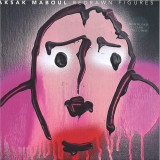
Im Mai 2020 erschien das Doppelalbum Figures der legendären belgischen Band Aksak Maboul. Nun folgen gleich zwei Alben mit Remixen, Coverversionen und neuen Versionen von fünfzehn ganz unterschiedlichen Musiker*innen auf Vinyl (jeweils streng auf 500 Exemplare limitiert). Betitelt sind sie Redrawn Figures 1 und Redrawn Figures 2. Mit von der Partie sind u.a. The Notwist, Cate Le Bon, Felix Kubin, Tolouse Low Trax und Matias Aguayo. Zu ihren Versionen kommen vier weitere von Aksak Maboul-Gründer Marc Hollander selbst. Wie im Albumtitel bereits anklingt, bat Aksak Maboul die Musiker*innen, sich nicht nur die Musik, sondern auch das von Véronique Vincent gestaltete Artwork von Figures vorzunehmen. Die daraus resultierenden sechzehn Bearbeitungen zieren das Cover von Redrawn Figures 1. Das Cover von Redrawn Figures 2 wiederum stammt vom französischen Maler Hervé Di Rosa, einem der Mitbegründer der "Figuration Libre"-Bewegung.
Commandez maintenant et nous commanderons l'article pour vous chez notre fournisseur.

Commandez maintenant et nous commanderons l'article pour vous chez notre fournisseur.

DGTL Records hits close to home with their latest release 'Dancing Glass Figures' by De Sluwe Vos. The dj/producer has been affiliated with DGTL since the beginning, as he played at numerous of their festivals from day one. So it was only a matter of time for De Sluwe Vos to release his music on DGTL's label. With Dancing Glass Figures he delivers a strong 4-tracker that is truly hard to resist. De Sluwe Vos has been making waves lately, not only with his steady sets but also with his own label Patron Records, which has seen a string of well-supported releases since its launch. Never Know, the first track of the EP, takes no prisoners, as this straight-up banger with the hard-hitting synth line keeps you captivated throughout the entire track. The repetitive vocoder vocals give the track a spacey touch, especially during the break. De Sluwe Vos teamed-up with fellow Amsterdammer Sjamsoedin, who's known for his exceptional synth knowledge and hard-hitting live-sets. Together they produced a strong lead track that you will definitely get to hear a lot on the dance floor.
Fast rolling drums and a dreamy warm synth lure you into the title track Dancing Glass Figures. But don't get too comfortable, halfway into the track you will get a sturdy surprise, which only makes the track more interesting, while taking you back to where it all started at the end of it all.
Moving on to the B-side. Sophisticated Topless Raver is mesmerizing, with an intriguing and hypnotizing melody that comes and goes throughout the track. Bringing in some hard claps and an eerie laughing vocal, this track for sure is one for the later hours.
Bambounou has the honour to close-off the EP with a remix of Sophisticated Topless Raver. The French dj/producer, who's been on everybody's radar this past year, slowed down the original version and added a sleazy bassline, synth stabs and extra percussion, while keeping the melody and the vocal. Making the track just as enticing as De Sluwe Vos' version.
Commandez maintenant et nous commanderons l'article pour vous chez notre fournisseur.

'String Figures Remixes' is a series of remixes released on December 14th 2018 following the previous-ly highly acclaimed LP String Figures by Zoe Mc Pherson. (Watch her Boiler Room live show)
Remixers for this EP include Ben Vince (Hessle Audio co release w/ Joy Orbison & Where To Now solo album where collaborators include Mica Levi & Rupert Clervaux), N1L (Opal Tapes & UIQ), Hester-1, Bartellow (ESP Institute, Public Possession) & Sukitoa o Namau (First Terrace Recordings).
The EP is pressed on transparent vinyl & comes along with transparent sleeve.
When asked why Zoe chose each artist for her remix album she writes:
Ben Vince is my mate since he opened for my release in London last April and he was really excited about making a remix. Which I think is even nicer is that he only remixed and did not play saxophone. He actually properly very much remixed all the elements, all recognisable, which is a delight to listen to when you know all the parts seperately. The only thing he did is making it a UK club banger track !!!! :)
N1L is a friend whom I admire totally for his capacities of producing incredibly wicked tracks in no time. He's got 10 000 collabs going on ( abit like Ben). I don't know how he does it, but damn his remix is also one of these that are a delight to listen to when the samples are re organised in a very cool way which is his own.
Hester -1 is also a friend, violinist and producer from Antwerp. She is a nerd, her style and projects are developing, we jammed together, and I wanted her to be on the original album, so now she is in the remixes and made a very dark piece and now I'm thinking she should meet N1L :)
Bartellow is also a friend, behind SVS, and he was the first one to make a remix in 1 hour on a flight I think actually even before the album came out!!!! He had already made a proper groovy banger, as he always does, with his style.
Sukitoa O Namau I've been chatting with since a while, she's an incredibly inspiring artist, releasing on First Terrace records, she used to be a dancer and is an explorer of sound and of many things. She basically fucked up my track, by changing the rythms into no rythms and purifying it very much which reveals other things. Only keeping rough elements of it and I think it's absolutely brilliant.
[A] A1 | Sabotage Story (Ben Vince's Perculator Mix) 2) The Gate
Commandez maintenant et nous commanderons l'article pour vous chez notre fournisseur.

Following on from his debut EP on Drumcode earlier this year, Ilario Alicante returns.For the past few years Ilario Alicante has enjoyed something of an unintentional Ibiza kinship with Adam Beyer. When the Swede played his special annual sets on the Amnesia Terrace for Cocoon, for three years out of four, the Italian has been right there playing alongside him, ensuring his talents were on the radar of the Drumcode chief.
Ilario made his first appearance on the label in 2016 with the stirring 'Temporary' featuring on A-Sides Vol.4, before securing his first full-length release with the 'Awakened' EP that dropped earlier this year. 'Figures & Echoes' deepens his contribution to the label with half a dozen powerful cuts.
'Figure of RA' opens the EP, combining a rousing vocal loop, pulsating beats and effective melodic interlude to fantastic effect.
'The Acid Runner' follows and is true to its name, characterised by echoing vocal effects that lead to a piercing 303-line that hits with peak-time power. 'Virgo's Echoes' features a persistent synth line that combining effectively with lush layers of melody to create an atmospheric impact. 'Third Eye' delivers an exhilarating dose of rave thanks to the hypnotizing riff that runs throughout.
Commandez maintenant et nous commanderons l'article pour vous chez notre fournisseur.
A multi-platform production that explores the overlap between the digital and the organic through field recordings of Inuit throat singing may sound, on surface level, to be something that is a rather niche. However, Zoe Mc Pherson's exploration of this world on String Figures is a deeply rhythmic, immersive and forward-thinking piece of electronic- leaning music that remains just as danceable as it does experimental.
The album is fundamentally one of duality, exploring the traditional and the contemporary, organic and electronic, audio and visual, history and the future. Rooted in this duality is also a core theme around string being one of the most ancient and playful art forms and the seemingly infinite possibilities it offers in terms of shapes, structures and figures lines up with this as a trans-global art project. One that over time will involve video art, choreography, 3D motion design, macro film, instrumental and electronic sound. Although for now is being presented through an AV performance, films and a record with Mc Pherson collaborating with director Alessandra Leone.!
Over the seven tracks (which are laid out as chapters) the record explores glitchy electronics, dub-tinged grooves, polyrhythms, and a huge array of instruments that takes in quiet blasts of atonal sax alongside wonky synths. This of course cross-pollinates with the throat singing and experimental field recordings to create an utterly inimitable sonic sphere. For Mc Pherson it's about mixing worlds, histories and timeframes and she uses a 1991 quote from Laurie Spiegel to hit home how she has elaborated upon this original thought of history and future overlapping. 'Folk music is considered anonymous common property in a culture and that's what a lot of computer music and other kinds of music data may end up becoming.' However, there's also a purer reason for the exploration of these worlds and colliding them together. 'Basically I thought that electronic music that is only digital is a bit boring and as I'm connected to jazz music for many reasons, I wanted it to sound organic: real instrumentation, field recordings.'
Commandez maintenant et nous commanderons l'article pour vous chez notre fournisseur.

Dez Williams returns to Mechatronica with Forlorn Figures in Godforsaken Places, dropping a stormy dose of diverse electro and machine funk for the Berlin based label.
Speedy, relentless electro cuts 'Xen' and 'Carkrash Vikdim' make up the A side, driven by haunting samples, rumbling basslines and eyes-down energy. Hypnotic roller, 'On the Verge', opens the flip with dazzling keys and forceful drum programming, before 'Tromb' rounds off the EP in murky fashion through a robotic, hazed electro chant.
O
Commandez maintenant et nous commanderons l'article pour vous chez notre fournisseur.

The long-awaited second album from John Heckle.
Commandez maintenant et nous commanderons l'article pour vous chez notre fournisseur.

As one of the most enigmatic figures of the 1970's Italian soundtrack and library music network Emma De Angelis and her short recording career provides thirsty fans of speedball psychedelic rock and drum heavy instrumental funk with a tight discography rivalling many of the long-standing bastions of the otherwise male-orientated business. * Strictly limited to 1000 copies.*
.
Born in Rocca di Papa, near Rome, into a flourishing musical environment Emma was the younger sister of future award-winning composers Guido And Maurizio De Angelis, a duo, who under names like Oliver Onions and Dream Bags, would write chart-topping lyrical theme tunes for a wide range of Italian crime, Giallo and Spaghetti Western films featured alongside full scores by Ennio Morricone and the Magnetic System composers (Bixio Frizzi Tempera).
With encouragement from her brothers, Emma, who would also write music under the pseudonym of Juniper, would record a tight clutch of solo-penned material and seldom credited studio contributions to Guido And Maurizio's film commissions, such as the score for Giuliano Carnimeo's Simone e Matteo: Un gioco da ragazzi (aka Convoy Buddies). While simultaneously pursuing a career as an illustrator and set designer the De Angelis family contacts would lead Emma to the offices of Romano Di Bari, whose up-and-coming Flirt label was finding success providing custom built mood music for use in TV and film. Alongside important composers like Alessandro Alessandroni, Gerardo Iacoucci and A. R. Luciani, the young Emma Di Angelis would record a small number of tracks for a compilation called Underground Mood (credited in the small print to E De Angelis - not to be confused with Italian singer Edoardo De Angelis). It is from this rare LP that the record you are now holding is compiled. Within the Flirt family of labels Emma De Angelis would also share schedules with other important female composers such as Daniela Casa and Giulia Kema' De Mutiis - both of whom have appeared on dedicated Finders Keepers releases.
The tracks on this record provide us with a rare glimpse into Emma De Angelis' short musical career before she became a full-time visual artist. With an unknown personnel or studio date it is easy to speculate a potential family jam in Piero Umiliani's Sound Workshop studio in 1972. One only has to take a listen to Guido And Maurizio's instrumental theme Gangster Story from Enzo G. Castellari's 1973 thriller High Crime (which later appeared on Tarantino's Death Proof soundtrack) or the trippy title theme to Paolo Poeti's kinky 1976 drama Inhibition to spot the family resemblance
Commandez maintenant et nous commanderons l'article pour vous chez notre fournisseur.

On their debut album as DOVS, Tin Man and AAAA summon the ethereal spirit of acid. Tin Man, AKA Johannes Auvinen, has been studying the emotional potential of the Roland TB-303 for 15 years now, and AAAA (Gabo Barranco), a fixture of the Mexico City underground, might as well be his acolyte. While the coincidental similarities of their studio and live approaches make this collaboration feel natural, even expected, Silent Cities is anything but. We recognize most of the elements here—the ubiquitous acid box and hardware drum machines—yet Auvinen and Barranco arrive in new, mysterious territory this time out. Lush arpeggiation, breakbeats and atmosphere imbue tracks like 'Nostalgic Oblivion' with a widescreen grandeur. 'Rene Figures' recalls Specific Momentific-era Cristian Vogel, symphonic, melodic techno with a kick heavy enough for dark, cavernous rooms. Meanwhile, beatless cuts like 'Whining Acid' are as intricately crafted as Tin Man's well-loved classical work (Vienna Blues). But as a duo, they craft a virtuosic harmonic narrative almost solely with 303s. Tin Man and Donato Dozzy's 'Nonneo' was the first release on Acid Test, setting the tone for the label and unlocking new potential for the genre. DOVS' closer on Silent Cities, 'Diazepam Blues', is the label's new melancholic acid anthem and a statement of purpose for Tin Man and AAAA, two hardware masters who have created an album of remarkable emotional depth.
[J}] D2 - Dysphoric Fix
Commandez maintenant et nous commanderons l'article pour vous chez notre fournisseur.

Bonobo veröffentlicht den lang erwarteten Longplayer-Nachfolger auf seine Erfolgalben Black Sands & The North Borders inklusive Vocal-Features von Chet Faker, Rhye & Hundred Waters!
Simon Green, alias Bonobo, kehrt mit seinem sechsten Album zurück, dem meisterlichen, gebieterischen "Migration" - ein Werk mit dem er sich ein für alle Mal an der Spitze der elektronischen Musik verortet. In abwechselnden Zügen opulent, manisch, wunderschön, melancholisch, freudig, voller Emotion und technischer Fertigkeit, ist dies womöglich sein bislang ehrgeizigster Versuch, die grundlegende Beschaffenheit menschlicher Existenz und deren ausgedehnte Dynamik zu erfassen. Neben Zeitgenossen wie Four Tet, Jon Hopkins oder Caribou, zählen Wiz Khalifa, Skrillex, Disclosure oder Warpaint zu Bonobos prominentesten Fans. Sein 2013er Album "The North Borders" erreichte im UK die Top 30 und katapultierte sich auf Platz #1 der elektronischen Charts, sowohl in den USA als auch im UK. Im Zuge dessen spielte sein 12-köpfiges Kollektiv weltweit über 175 Konzerte, darunter zwei ausverkaufte Shows im Sydney Opera House, ein ganztägiges Festival im Londoner Roundhouse, eine ausverkaufte Show im Londoner Alexandra Palace sowie einige renommierte Festival-Slots. Inzwischen verfügt Bonobo rund um den Globus über eine umfangreiche, loyale und engagierte Fanbase. Mehr als eine halbe Million verkaufte Alben und über 150 Millionen Spotify-Streams gehen auf sein Konto und verdeutlichen den Erfolg, den sich dieser ruhige, bescheidene Mann erarbeitet hat. Dank "Migration" wird seine wunderschön raffinierte und gefühlsgeladene Musik in Kürze ein noch größeres Publikum erreichen. Das zutiefst Persönliche kann schließlich ebenso gut allgemein gültig sein.
Commandez maintenant et nous commanderons l'article pour vous chez notre fournisseur.

Commandez maintenant et nous commanderons l'article pour vous chez notre fournisseur.
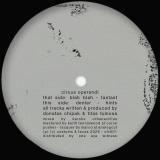
2026 Repress
Circus Operandi is the project of Donatas Chipak and Tumosa, two figures of the Vilnius electronic music scene, and residents at legendary clubs Opium (RIP) and Gallery 1986, where Ivan Smagghe & Niv Arzi (who jointly run Customs & Faces) met them countless times at countless hours. We’re not keen at describing the music we release at C & F, no need for pigeonholing ourselves but this EP completely ticked our boxes : electro, techno and everything in between, punch and deepness included.
Blah Blah has been played in every Ivan Smagghe set for the last 6 months and picked up by, amongst others, Shonky and Francesco Del Garda. Some kind of hit rambling about ordering a pizza is quite something. Fantast and Hints are slightly moodier pieces of emotional 4/4 electro while Denter subtly hits at non-cheesy trance. Expect much more from these two very soon.
il devrait être publié sur 30.09.2026

Lunfardo presents Heroica, the fifth chapter in its conceptual series, inspired by the Three Defences of Paysandú, events that remain embedded in the city’s memory and the history of Uruguay.
Among them, the Heroic Defence of Paysandú (1864–1865) stands as the most enduring symbol: a weeks-long resistance led by Leandro Gómez against overwhelming forces during the Brazilian intervention and allied advance. Across generations, these events have come to embody resistance, sacrifice and permanence.
Heroica is Lunfardo’s tribute to Paysandú, the city where the label was born.
The release explores this narrative through the work of Andrew Lagowski, one of experimental electronic music’s enduring figures. Active since the early 1980s, Lagowski has released more than 60 albums and over 10 vinyl singles, leaving a lasting mark across electronic, experimental and techno music.
For Heroica, Lunfardo revisits selected works from Lagowski’s 1995–2000 CD era, presented on vinyl for the first time, alongside a contemporary composition produced in September 2024.
Bridging archival electronics and contemporary vision, Heroica unfolds through themes of resistance, memory and permanence.
Artwork by @estudio.polar
For more info @Lunfardo.records
il devrait être publié sur 30.09.2026
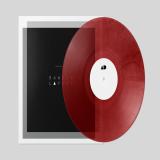
Gradient returns to Alt Dub with Random Layers, a deeply focused EP built around his exceptional control of minimal elements.
With a restrained palette of kick, bass, chords and texture, each track evolves with patience and precision, allowing subtle shifts and carefully placed layers to create a powerful sense of depth and space
Sound layers are introduced with such control that the music evolves naturally, revealing its depth over time. Nothing feels rushed and nothing is unnecessary.
Gradient’s productions have a rare ability to make minimalism feel rich and alive. Nothing is excessive; every sound has a purpose. The result is four timeless, immersive dub techno pieces that balance classic dub techno atmosphere with a distinct sense of detail and control.
The EP also features a timeless remix from Echospace Detroits CV313, One of the most respected figures in the deeper end of dub techno, he brings his unmistakable sense of space and depth to the release, making this a particularly fitting and exciting collaboration.
Elegant, restrained and deeply atmospheric, Random Layers is another strong statement from Gradient and a perfect fit for Alt Dub.
L'article est déjà en route pour nous et devrait être expédié de 30.09.2026.
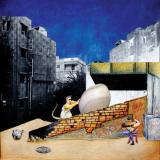
‘Oud-player with The Handover, Eissa was mentored by two legendary figures in Egyptian music: composer and multi-instrumentalist Abdo Dagher, and oud master Hazem Shahin. The music here is heavily rooted in both Egyptian classical music and a number of different folk music traditions, but it goes its own way, through expansive and intricate original compositions.
‘The epic title track, with Eissa playing oud exclusively, takes up two thirds of the album. It seamlessly transitions into heart-stopping recitation of the thirteenth century poet Baha´ al-din Zuhayr… serious, loving, tender and insistent, all at once. Visionary and virtuosic, but at the same time warm and close.
‘A future classic.’
il devrait être publié sur 30.09.2026
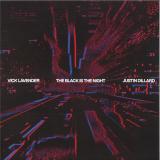
Forbidden Dance Records returns with its 13th release to the city where the label's journey first began: Chicago.
For The Black Is The Night EP, longtime Chicago house figure Vick Lavender joins forces with multi-instrumentalist Justin Dillard for three deeply musical downtempo cuts, bringing together the language of Chicago house with jazz, soul and live instrumentation.
Born and raised on Chicago's West Side, Dillard is a pianist, Hammond organist, percussionist, composer and arranger whose musical path has crossed with figures such as Branford Marsalis, Ornette Coleman, Roscoe Mitchell and the late Von Freeman. His musicianship has also become an integral part of Lavender's richly organic productions over the years.
Across three tracks, Lavender and Dillard slow down the tempo without losing the pulse. Warm keys, live instrumentation and loose percussion unfolding through the kind of deep, soulful arrangements that have long defined their work together.
A return to Chicago, but from a different angle.
L'article est déjà en route pour nous et devrait être expédié de 30.09.2026.

