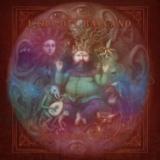
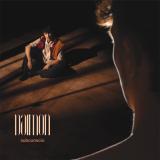
With Motions, Black Flower presents a unique EP, a compact collection of musical organisms that simply insisted on coming into the world. During the creation of their latest LP Kinetic, an abundance of ideas emerged, far more than could fit on the album. Among these half-formed sketches were a few striking pieces with such a strong character that they refused to be left behind, and some even grew into band favourites.
Diagonal Walk, for instance, has long opened the Kinetic live set while on tour in Europe, despite not appearing on the record itself. The band loved playing it so much that they decided to bring it to its full potential: mixing it, mastering it, and ultimately giving it a physical release. The result is a track where energy swells and breaks in waves, offering groove, colour and deft counterpoint.
That momentum also elevated Out of One, Many, a meditation on polyrhythm and shimmering harmony, as well as Trip to the Store. Both pieces were further developed and now complete this new collection of tracks. The time between full studio albums has proved creatively rich for Black Flower. Motions stands as a vibrant statement of kinetic energy, and the band is thrilled to finally share it with the world.
out of Stock
Last delivered 7 months ago available to reorder, subject to availability
Having transitioned between London, Lisbon and back again as a DJ and producer, as well as across the world as the drummer in beloved pop group, Metronomy, Anna Prior remains an essential and independent force in alternative and electronic music culture. The current epicentre of this creativity is undoubtedly Prior’s own label, Beat Palace. Established in 2021, it has showcased the talent and diversity of FLINTA producers carving an esoteric space within alt-pop and electronic music.
Returning to the imprint for the first time since its inception, Anna Prior utilises this vital platform to refine her own craft across the five-track ‘Firefly’ EP, exploring new moods and styles, balancing playfulness with vulnerability, shadow and light. Prior describes ‘Firefly’ as, “a collection of moments - some fleeting and some stubbornly lingering.... Each track came together almost by accident, but now feels to me like they've always belonged together.”
Lead single ‘True For You’ pulsates with soft euphoria, as Prior weaves softly cascading synths with her own earnest declarations, composing a sensual, sophisticated drama about “letting other people's differing truths sit alongside your own” that nonetheless carries a distinct club energy. In contrast, title track ‘Firefly’, written alongside co-producer Matt Karmil, unfolds as a spoken-word piece, investigating memory, “the tricky mirror that reveals more than it conceals”. Throughout, Prior’s inquisitive, native Yorkshire accent anchors a wide-eyed soundscape that gradually, impressively escalates into the cinematic.
Centerpiece track ‘Silence’ turns this approach inside out, escalating the tempo and revealing a DnB-influenced shade of Prior’s work that is certain to surprise and impress, scattering elegant syllables amongst serious soundsystem pressure as Prior navigates the feeling of being ghosted; by friends, lovers and even her own work. ‘No More Drama’ returns to pop, presenting a bold cover of Mary J. Blige’s classic that inverts the original’s unmatched intensity for a more serene, but no less affecting rendition.
Finally, ‘Beside You’ delivers one last, sublime blend of Prior’s songwriting and sequencing instincts, a simple pop incantation that coaxes dancers into a soft trance while concluding with a reminder from Prior that “amid life’s unanswered calls and fleeting highs, there is always space to feel safe and unjudged.” Concluding this sublime EP, Prior finds new ground to settle into her talents.
out of Stock
Last delivered 7 months ago available to reorder, subject to availability
If you like cold-wave music and you’re nostalgic of the 80s, “Lines & Parallels” by French Swiss trio Factice Factory clearly reveals multiple parallels with this golden decade of dark music. A delicious propulsive bass, cold synths and lots of atmosphere. A dark and at times even claustrophobic atmosphere.
On the release, two musical sides can be identified: two lines or parallels. An electronic and more hypnotic side with the Neue Deutsche Welle-like “Leuchtturm”, the minimal film noir tribute “Audran”, the eighties sounding “Sway” or the harsh industrial tainted “Extinguisher”. The other line is to be heard in tracks such as the desperate and goosebumping “Defeat”, the oriental sounding “Hatch End” or the melancholic end ballad “The Weeping Willow” These two parallel lines finally merge into one single and united sound pattern, a delight that will surely find its place in the ears of many dark music addicts.
out of Stock
Last delivered 7 months ago available to reorder, subject to availability
Hardcover slipcase box
Celebrate twenty-five years of Ape Escape and thirty years of PlayStation with Ape Escape 3 Originape Soundtracks in a Box!
Saru Get You 3
As with the Ape Escape Originape Soundtrack, composer Soichi Terada has meticulously re-recorded and reconstructed all tracks from the Ape Escape 3 Original soundtrack. Previously only available on CD, this is the complete soundtrack's first time on vinyl. This box set was produced in partnership with Mr. Terada and Far East Recording, and is an officially licensed Sony Interactive Entertainment product.
This release contains eighty tracks, spanning four individually sleeved records, housed in a hardcover box. It is similar in construction to the Ape Escape Originape Soundtracks in a Box release (2024), and the two will look quite nicely next to one another on your shelf!
We are happy to announce that this box set features a definitive edition of the Ape Escape 3 Originape tracklist. This also includes "Swanlake," a track previously unavailable on the CD release. At its core, the Ape Escape 3 soundtrack features much of Soichi Terada's signature sound: lush electronic, jungle, silky smooth synthesizer, humor, and charm.
Ape Escape 3 was originally released in 2005 (Japan), and its moviemaking pipos were unleashed across the rest of the globe in 2006. The game features two new protagonists (Kei and Yumi) who battle the Freaky Monkey Five, underlings of the nefarious Dr. Tomoki and the evil monkey Specter.
Complimenting the game's journey through the TV-verse, the Ape Escape 3 soundtrack also features twists on themes from Wild West Showdowns, Kung-Fu movies, and space operas. Fans of the Ape Escape Originape Soundtrack, as well as newer work like Asakusa Light, will certainly enjoy all elements of Soichi Terada's music present in Ape Escape 3.
The music on this box set was mastered by Justin Perkins of Mystery Room Mastering, who also mastered the original Ape Escape Originape Soundtracks box set (2024). Using Mr. Terada's premastered source files, the music was completely and specifically mastered for vinyl. The box set also features original Ape Escape 3 character renders and key art. All of the design elements have been put together with careful thought, referencing the original Japanese guidebook for inspiration and visual cohesiveness.
It is with great pleasure that we celebrate Soichi Terada's music and the Ape Escape franchise with this four-disc release!
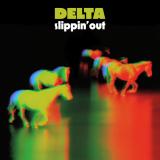
“From Birmingham and centred around the extraordinary songwriting talent of James and Patrick Roberts – initially as The Sea Urchins and since 1993 as Delta – they’ve only just got round to releasing their debut album, Slippin’ Out. It is a work of some beauty”. 9/10 NME ALBUM OF THE MONTH, 2000
“It’s classicist for sure, shot through with the influence of The Beatles, Byrds and Buffalo Springfield. In James’ downright beautiful closing ballad ‘I Want You’ one can also discern the school of ambitious English balladry that peaked in about 1968: The Casuals, Love Affair, Barry Ryan. The impression of accomplished old-schoolery is only furthered by the dizzying string arrangements penned by Louis Clark Jnr, son and namesake of the one-time orchestral chief of Electric Light Orchestra” – Mojo lead review, 2000
Having ended the 90s with the spirited ‘Laughing Mostly’ compilation of singles and demos (Guardian Album Of The Week) Delta finally released their debut studio album of twelve songs in the summer of 2000 on the Dishy Recordings label. Accepting that this might be their sole studio album the band threw everything at these recordings allowing it to exist in its own sphere, unbothered by their contemporary generation and disregarding the idea of even releasing a single.
Recorded at DEP International there was a notable difference to the scruffier, looser charm of their 1990s recordings, a tighter focus developed by having the experienced Lenny Franchi mixing the LP with them. Lenny had been working with a number of Island artists including My Bloody Valentine and Tricky so knew his way around a desk. There was also the question of budget (a few months passed between recording and mixing whilst funds were raised) so every day counted. Ultimately though you can hear the joy in the recordings, even amongst the melancholy and angst. As James recently recalled in an interview in Shindig! Magazine: “It was such a big deal for us. It’s one of my fondest memories doing that record. Everyone was happy. If there’s anything that I’d stand by, I think it would be that”
Louis Clark Jr joined the band towards the end of the ‘90s and brought a classically-trained element to the recordings particularly with his string arrangements. For ‘Cuckoo’, ‘I Want You’ and the prophetic ‘We Come Back’ Louis brought in eight players from the Birmingham Conservatoire; the baroque style is partly why the record often receives comparisons to Love’s ‘Forever Changes’.
On release ‘Slippin’ Out’ was a big favourite with writers at the NME, Mojo and The Guardian again and before long the band were signed to Mercury/Universal for their second studio album ‘Hard Light’, a far more expensive and expansive love affair. It was a temporary palatial home where things quietly fell apart again, but that’s another chapter.
“If long-term memory is nothing more than selective editing and only pop’s most weighty visceral works are built to last then it’s quite possible that in 50 years the Britpop era will be best recollected for the two bands it ostracised. Earlier this year we met Shack and thought their story of mercurial brilliance indicated the biggest music biz oversight of the 90s. We were wrong because we hadn’t met Delta yet. This is richer and more engrossing than anything by Shack”
Another Thought was the first collection of Arthur Russell’s music to be released after his death in 1992. Released in 1993 on Point Music it marked the beginning of nearly 30 years of work to let the world hear the enormous archive of unreleased recordings Arthur left behind. Be With revisits this first compilation for a new gatefold double vinyl version and a triple-fold digipak CD reissue.
Both versions of Be With’s 2021 reissue of Another Thought have been mastered by Simon Francis and the vinyl cut by Pete Norman. The original artwork has been restored and tweaked at Be With HQ for the gatefold sleeve and the triple-fold digipak, with the essential help of Janette Beckman. Each version comes with an insert reproducing the liner notes and lyrics from the original CD release.
Together with Calling Out Of Context, Soul Jazz’s World of Arthur Russell, and much of the ongoing work of Audika, Another Thought is absolutely essential for even the most casual Arthur Russell collection. In fact we’d argue it’s essential for any fan of non-obvious pop music. This is the only place where you can hear some of Arthur’s most recognisable tunes and it’s an album that absolutely deserves to be kept in press.
We’ll assume that by now you’re all at least a little familiar with the story of Arthur Russell, the farm boy from Iowa who moved to 1970s New York. Arthur Russell the genuine musical genius who died just 40 years old, leaving behind a wealth of music that dwarfed the few 12"s and LPs that were released during his short life.
Although Arthur had been working on an album for Rough Trade during his last years, with the label no-longer operating it was Point Music (Philip Glass and Michael Riesman’s label set up together with Philips) who stepped in to help Arthur’s partner Tom Lee start working out exactly what Arthur had left behind.
Tom suggested that Arthur’s friend Mikel Rouse was the right person to make the first catalogue. Working in Tom and Arthur’s apartment he had only two weeks to go through what turned out to be around 800 tapes.
As Tom explained “at the end of each day he would generally wait for me to come home and I would, to the best of my knowledge, name and identify pieces in question from that day’s work. As he worked Mikel compiled about a dozen cassettes that he thought would present the most finished sounding songs for Don/Point to use. As Don listened he would then suggest and ask me and thus we collaborated on the choices.”
Don is Don Christensen, Another Thought’s producer. With a final selection of songs from recordings made between 1982 and 1990, including sessions with some of Arthur’s regular collaborators Peter Zummo, Steven Hall, Mustafa Ahmed, Elodie Lauten, Julius Eastman, Jennifer Warnes and Joyce Bowden, it was then Don’s job to turn these into a finished album.
Another Thought is a little different from the compilations of Arthur’s music that came out since. In our conversations with Steve Knutson (who founded Audika Records and who manages Arthur’s estate together with Tom), he explained that “more than any project released by Arthur during his lifetime or posthumously by Audika, ‘Another Thought’ is the most worked over. The material was significantly edited and rearranged from the original source tapes”.
If the aim was to release a comprehensive exploration of every facet of Arthur’s music, from the most avant-garde of his avant-garde compositions through to the most disco-not-disco of his disco-not-disco tunes then the project was a spectacular failure. But as a coherent album of non-obvious pop music Another Thought is wonderful.
Starting with the sparse voice-and-cello of the title track, A Little Lost adds some guitar along with the sneaking suspicion that we’re listening to something nowhere near as simple as it first sounds. By the time we get to This Is How We Walk On The Moon - it could be the moment you notice the congas, or the percussion that’s been building behind them, or maybe it’s that blast of trumpet and trombone - we realise we’ve gone from splashing around to being completely submerged in the musical world of Arthur Russell.
From here the album heads off on its journey around the sounds of the left-field contemporary classical music of the time, re-directed towards pop ears, with minor detours through the swirling woozy disco of the half-remembered night before on In The Light Of The Miracle and My Tiger, My Timing. Whether it’s just Arthur, his cello and some bleeps on Just A Blip, or whether he has some vocal help as he does on the bounding Keeping Up, this is difficult music made so, so easy. And through it all is Arthur’s voice and cello. Sometimes drowned in distortion and sometimes clear as a bell, but always there somewhere.
A Sudden Chill finally returns us to the calmer waters we started in and this last track closes the album with a melancholy that’s not surprising given how soon after Arthur’s death the album was put together.
Whilst Another Thought holds together with the consistency of a proper album, there’s still no getting away from the fact that this was put together from audio recorded in different ways, in different places, with different people at different times. Those with keen ears will hear traces of tape hiss, the occasional blown-out note and some digital fuzz, all fingerprints of those original recordings as well as of the 1990s digital equipment that was used to piece Another Thought together.
Add to this Arthur’s obvious pleasure in making music from the sort of sounds that can make microphones, speakers and ears uncomfortable, it’s no surprise that Another Thought isn’t glossy and pristine. Don Christensen’s productions have been careful to not scrub up those original recordings so much that they lose their original vibe, understandable given that Arthur wasn’t around as a guide. We’ve applied a similarly light touch with the mastering for these Be With versions, just working to make sure they sound like they should on both the vinyl and the CD.
Despite the Discogs rumours, Another Thought was never originally released as an LP. So when it came to the sleeve for this Be With vinyl version we took the original CD artwork as a starting point to come up with something that looks like it could have been in the record racks back in 1993.
We have to thank Janette Beckman for helping us reproduce her iconic photograph of Arthur in his newspaper boat hat. One of many photographs she took of Arthur, Janette shot this in her New York studio back in 1986 for a short article in the January ’87 issue of The Face Magazine. Those with eagle-eyes will notice we’ve used an ever-so-slightly different shot from the one that appeared in The Face and then again on the original cover of Another Thought. The original has long since been lost so we’ve worked with what is left in Janette’s archives. And we also have to thank Tom Lee for giving us permission to reproduce his liner notes from the original CD booklet, together with Arthur’s lyrics.
out of Stock
Last delivered 4 years ago available to reorder, subject to availability
Finally, finally, FINALLY! After many years of fruitless praying, a true collector grail can finally grace every turntable the world over. Bright And Shining is a miraculous leftfield library classic from the genius mind of Barbara Moore. It's Highly Addictive Happiness Music TM and one of the coolest records to come out of anywhere...ever! With originals almost impossible to find - and, when they do, going for over £300 - you already know how crucial this beautiful reissue is.
Recorded in 1981 for Sylvester Music Company, Bright And Shining is breezy, dreamy and funky in a perfectly smooth jazzy-soul-groove fashion, with Moore's patented celestial male-female vocal harmonies this time benefitting from the addition of Fender Rhodes and pumping bass lines.
As one particularly enthusiastic Discogs user put it: "If Eno is responsible for Music for Airports, Moore is responsible for Music for Holidays." Indeed, this is brilliantly unique, "maximum happiness music". If you miss the sun-dappled soft-psych soul of Koushik, the heavenly vocal arrangements of the great Library Music doyenne Barbara Moore - her depth, richness, sophistication and warmth - will see you just right.
The gigantic title track, "Bright And Shining", gallops out the gate, all sophisticated, jazzy leisure-soul with sax and guitars backing Moore's effortless vocal swag in this relaxed, mid-tempo head-nod strut. Worth the price of admission alone. Up next, the sunny, vibey "Fly Me High" features strolling, "unworded" vocals (aside from the refrain of the title) alongside breezy alto sax and electric guitar. Pastoral and perfect. The slow'n'sultry "Affluence" presents a moody elegance, a classical "downlifting" gem. Another crucial highlight is the breezy "Going On Holiday". It's happy. It's sunny. It's lively. It's cool and happy. Did we say happy? A mid-tempo, romantic sax workout, "Alto Sex"presents smooth jazzy funk before the first side closes out with the soaring, jazzy "Stay With Me". Seriously uplifting.
Side B opens with "Feel Fine", an excellent uptempo and bright jazz groove. Up next, "Canon" is wracked with refinement, a peaceful, smooth vocal harmony over repeating bass making for an elegant, late-night classic. It's followed by the laconic "Smooth And Soft", a laidback, casual sophisticated soul and easy-feeling jazz gem. The jazzy "Real Thing" is another exercise in strolling sophistication, complete with wordless vocal harmonies. The fairly self-explanatory "Voice Over Sax" sounds precisely how you would expect; a relaxed sax number with heavenly vocal support! To close, the carefree "Feeling Free" is a pleasant, light and breezy mid-tempo groove.
The audio for Bright And Shining has been meticulously remastered by Be With regular Simon Francis, ensuring this release sounds better than ever. Cicely Balston's expert skills have made sure nothing is lost in the cut whilst the records have been pressed to the highest possible standard at Record Industry in Holland. The original, iconic sleeve has been restored here at Be With HQ as the finishing touch to this long overdue re-issue. We'll grant the final word to MillionDollars. on discogs from about 10 years ago: "If you listen to the record on a sunny day you feel like going out surfing in a white linen suit with a blunt on your lips, catching a cool breeze."
out of Stock
Last delivered 7 months ago available to reorder, subject to availability
San Francisco–born singer-songwriter Ben Kweller returns with Cover The Mirrors, his seventh studio album — and perhaps his most personal work to date. Known in the late ’90s as a member of post-grunge outfit Radish, who were signed to Mercury Records and even counted Nils Lofgren among their fans, Kweller has since carved out a long and prolific solo career rooted in melodic indie rock and unfiltered emotion. Cover The Mirrors is a deeply poignant record, written in honour of what would have been Kweller’s late son Dorian Zev’s 19th birthday. It also marks Kweller’s first release since Dorian’s tragic passing in 2023 — an event that reshaped both his life and his music. Far from retreating into silence, Kweller channels his grief into a collection of songs that explore loss, love, and renewal with raw honesty. “This is the most personal, emotionally raw project I've ever worked on,” he reflects, and every track bears that truth. The album features an impressive roster of collaborators from across the indie landscape: Waxahatchee joins on “Dollar Store,” a sparse and arresting song built on two vocals and a guitar that eventually erupts into a distorted, soaring finale; MJ Lenderman lends his touch to “Oh Dorian,” a tender tribute steeped in warmth and melancholy; Jason Schwartzman resurrects his mid-aughts project Coconut Records for the haunting “Depression”; and psych-rock icons The Flaming Lips appear on the shimmering, otherworldly “Killer Bee.” Musically, Kweller’s craft is as sharp and sincere as ever — intimate yet expansive, stripped-down yet powerful. Cover The Mirrors captures an artist walking through grief with purpose, turning heartbreak into something both fragile and transcendent. It’s the sound of Ben Kweller looking loss directly in the eye — and finding beauty, courage, and connection reflected back. - “One of the great American songwriters” – Jack Antonoff TRACKLIST: A1. Going Insane A2. Dollar Store (feat. Waxahatchee) A3. Trapped A4. Park Harvey Fire Drill A5. Depression (feat. Coconut Records) A6. Don't Cave B1. Optimystic B2. Brakes B3. Killer Bee (feat. The Flaming Lips) B4. Letter To Agony B5. Save Yourself B6. Oh Dorian (feat. MJ Lenderman) Clear Vinyl LP
I started writing the songs for V at the beginning of 2023, and the demos were finished by the end of that year. While creating this material, I kept returning to one thought: everything we take for granted - everything that feels stable and permanent - is, in reality, incredibly fragile. Nothing lasts forever, and the sense of things slipping away can hit much sooner than we expect. I tried to translate those feelings into sound. At that time, a lot of difficult things were happening in my life, things I didn't know how to cope with. Music became a form of therapy - a way to process emotions I couldn't express in any other way. In early 2024, we began working through the songs together as a full band. After finalizing the arrangements, we spent the rest of the year recording them. The process stretched over many months, split into several sessions across different studios. I didn't want to rush anything. I wanted, as always, to refine every detail the best we possibly could. Soon you'll be able to hear the result for yourselves. For me, this album is something deeply personal. It's an act of opening up to anyone who chooses to listen - a glimpse into things I can't fully describe with words, into what I felt and who I became during that period. I'm incredibly happy that together with my friends from the band, we've created another record. What comes next_ time will tell.
Magenta Vinyl, limited to 450 copies. I started writing the songs for V at the beginning of 2023, and the demos were finished by the end of that year. While creating this material, I kept returning to one thought: everything we take for granted - everything that feels stable and permanent - is, in reality, incredibly fragile. Nothing lasts forever, and the sense of things slipping away can hit much sooner than we expect. I tried to translate those feelings into sound. At that time, a lot of difficult things were happening in my life, things I didn't know how to cope with. Music became a form of therapy - a way to process emotions I couldn't express in any other way. In early 2024, we began working through the songs together as a full band. After finalizing the arrangements, we spent the rest of the year recording them. The process stretched over many months, split into several sessions across different studios. I didn't want to rush anything. I wanted, as always, to refine every detail the best we possibly could. Soon you'll be able to hear the result for yourselves. For me, this album is something deeply personal. It's an act of opening up to anyone who chooses to listen - a glimpse into things I can't fully describe with words, into what I felt and who I became during that period. I'm incredibly happy that together with my friends from the band, we've created another record. What comes next_ time will tell.
Sundays is the debut full length from Oakland-based Tanukichan, aka multi-instrumentalist Hannah van Loon. At surface level, the album sounds just how the title describes: hazy, dreamy, reflective, just like a lazy Sunday afternoon. Upon second and third listens, the dreamy music unveils a deeper world: an ever present sense of longing, an endless state of summer and a period of instability that plagues us all at one point or another in our lives.
Raised in San Francisco, van Loon started out making classical, bluegrass and jazz music as well as playing in numerous bands in the area before deciding to make something more personal. What started with a few unfocused demos, with van Loon playing all the instruments herself in her house, became a studio experience and viable collection of music after her friend Anthony Ferraro of Astronauts, Etc. introduced her to Company Records founder Chaz Bear (Toro Y Moi, Les Sins). After collaborating on her 2016 EP Radiolove, van Loon and Bear set out to make a much more sonically cohesive release, with both the producer and artist playing all the instruments on the record. The result is a slice of dream pop that could only come from the combination of the laid back atmosphere of California and the nostalgic and often difficult memories that are generally associated with coming of age.
To van Loon, the tracks of Sundays are a form of contemplation and approaching life’s issues from a different and less complicated perspective. “Sometimes for me, it feels easier to write songs about things than to talk. A lot of things in life are layered and paradoxical, but with songs it always seems simpler.”
Opening track “Lazy Love” sets the stage, sonically and lyrically, for the rest of the album, combining vulnerable lyrics with gorgeous, fuzzy tones. Above pummeling synths and guitar tones, van Loon sings “you know I'd do anything/don't you know I try my best/if I could wake up when the sun is rising” showing the album’s constant theme of balancing always wanting to be the best person you can be, while also feeling a low level joy at letting life play out as it wants to. “Natural” is a track that feels perfect for a road trip, a track that hums away with a driving beat, culminating in the sheer excitement of finally having a night alone with someone you’ve loved for a while, among many highs and lows: “a window too bright/it's natural sunlight/grey fades to white lie/kiss you tonight/it's natural delight/help me feel right.” The tracks collectively address a deep rooted sense of yearning for someone, something new, while also feeling content with your life; a realization that maybe the places you’ve always belonged aren’t where you should be anymore, that suddenly you might be looking for something completely different.
“I settled on the name Sundays as the title of the record because it encapsulated how the record felt to me,“ van Loon says. “I was thinking about the laziness, and dreamy clarity that you can feel after a late night, waking up having to face the world with a new perspective.” Sundays encapsulates this feeling, a nostalgic way of looking at the world, waking up feeling like a slightly different person than before, looking back on life, not sure if you can tackle what’s next, but doing your best, day in and day out
Dasha Rush resurfaces on Sonic Groove, her fourth EP for the label and her hardest offer yet! The Russian born, Berlin based producer drops four fierce tracks decidedly for dancefloor use and abuse. Starting with some enticing meticulous and exciting EBM flavored hard beats “El Kinky” seems poised to be a summer Berlin classic, with Dasha’s haunting vox riding the groove. “Psycho Runner” simply said, is an olympic, punishing piece of acid TB303 techno that will be one of the darkest things recorded this year. Her B-sides take it a little deeper, with the hypnotic, industrial and marching in-your-face flavored sounds on “Gallic Message” and finally ‘Darkness Digital” which presents an , EBM- esque groove, with wild broken hard beats patterned underneath another ear- worm sequence. Another great release added to Dasha’s already prolific discography
out of Stock
Last delivered 17 days ago available to reorder, subject to availability
Alex Rex, the project of acclaimed musician and former Trembling Bells bandleader Alex Neilson, is set to release his fourth and final studio album, The National Trust, on March 28th. Written in the wake of the sudden death of his younger brother, Alastair, the album is a poignant reflection on loss, love, and renewal, deeply rooted in the landscape of Carbeth—a cabin community in the Scottish countryside that Alastair called home. For Neilson, the cabin became both a physical and emotional project, a symbol of restoration and reconnection.
"For the first four years after Alastair died, his cabin lay empty and exposed to the remorseless Scottish weather. It came to look like a rotten tooth in a beautiful mouth. Cladding was dropping off its veneer, the ashen baubles of dead wasps nests clung to the rafters, all his possessions were just as he'd left them but eaten by mice, moths and time. Ashtrays still carried the crushed centimetres of his old tab ends. The cabins are so joyfully animated by their host's specific personality and this one looked like a haunted house. Guilt, unrealised hopes and encroaching nature yoked together in a wandering sadness. Combined with the fact that I didn't know the right way round to hold a hammer made the project of its restoration seem hopeless.”
Neilson, however, gradually began chipping away at the task, determined to transform the cabin into something he hoped would resemble “a National Trust site occupied by a psychopath,” with a little help from some friends, including Lavinia Blackwall and Marco Rea.
“They poured love into the cabin and helped restore Alastair's original vision. The project also helped restore my relationship with Lavinia which had fractured after Trembling Bells broke up in 2017. Alongside long-term Rex lieutenant Rory Haye, we applied the same intensity of dedication that we did in renovating the cabin, into creating The National Trust.”
As with Neilson’s previous albums, the recording process was intentionally unpolished, with songs presented in the studio with no rehearsals and captured in just a few takes. This raw, immediate approach amplifies the emotional weight of the album, which Neilson describes as being at a “personal apex of sour self-reflection, mock misanthropy, and self-exposure.” Longtime collaborators Lavinia Blackwall, Marco Rea, and Rory Haye return, alongside guest musicians like Jill O’Sullivan (Jill Lorean) and Trembling Bells guitarist Mike Hastings, to bring Neilson’s vision to life. The result is a deeply personal and multifaceted work, blending acid wit with haunting introspection.
The songs on The National Trust traverse a wide emotional and thematic range. The title track opens the album with a sharp and confessional edge, exploring love, loathing, and cultural critique with Neilson’s signature wit. “Boss Morris” pays tribute to the all-female Morris dancing troupe that reinvents British folk with vibrant energy, while “Two Kinds of Song” turns self-referential humour into an avalanche of remorse, culminating in the unforgettable chorus: “I’ve got two kinds of song. Which one will it be; one where I hate myself or one where you hate me?” Elsewhere, tracks like “Psychic Rome” draw from the decadence and hysteria of ancient Rome, while “The Coward in the Tower” breaks new ground as the only song Neilson has composed on an instrument before recording.
Throughout the album, Neilson’s lyricism is as vivid as ever, transforming personal tragedy into poignant and often darkly humorous art. Yet, there is a sense of finality to this work. "Songwriting has encouraged me to see the whole world as a resource. The things people say and throw away can be chiselled and polished and plopped into a lyric. It’s the same with building the cabin- scouring the edges of society for pallets, discarded wood, ornaments for the garden. But while song writing brings to life orphaned parts of my personality, the cabin is a synthesis of all my interests – nurturing my emotional health instead of exploiting it. With that in mind, I think this will be my last album as Alex Rex.”
With The National Trust, Neilson closes a significant chapter of his career, blending masterful musicianship with deeply personal storytelling. Known for his collaborations with artists such as Bonnie "Prince" Billy, Shirley Collins, and Current 93, as well as his decade-long tenure leading the psych-folk outfit Trembling Bells, Neilson has long been celebrated for his eclectic and uncompromising vision. This final album serves as a fitting culmination of his journey as Alex Rex, capturing the essence of his artistry while offering a profound exploration of loss, renewal, and the enduring power of love.
The last time Noir embarked on a similar creative exorcism was for 2012's Jimmy's Show LP which selected choice cuts from 18 E.P. 's released via straight to fan subscription over as many months. The resulting album is one of his most lauded and beloved by fans, with the vinyl now selling for silly money on Discogs.
Programmes for Cools is Jimmy's Show's spiritual successor, idiosyncratic, other worldly and brimming with timeless melodies. Noir's influences seep through the track list, wrapped with a haunting, dreamlike delivery.
First single 'Out Of Sight' is a Fleetwood Mac meets Selected Ambient Works era Richard D James, four to the floor banger. Already a fan favourite, it propels Side A forward with a somewhat misplaced optimism, much like Neil Young's 'Walk On' starting On the Beach.
Side B is more esoteric, exemplified by 'Fireworks’which includes lyrics and vocals from Marie Claude Dequoy,produced with the wooze of golden era Boards of Canada. Elsewhere, influences as disparate as Stevie Wonder, on the wonky clav funk of 'The Fountain', and Ian Brown 'I think I found it' illustrate Noir's disregard for musical straightjackets (the latter may have the most unapologetic baggy, hypnotic groove since the Mondays' 'Halleluiah').
As the album swells to its conclusion, via the epic Led Zeppelin meets the Warhol clique 'Morning Light’and the heart tugging finale of 'Motorbike’(the first song released from the most recent run of E.P.'s), there is a sense of completion and finality...
‘This is the last Jim Noir album. There are no more Jim Noir albums after this one. This time I'm serious. It's been the hardest I've ever worked on anything. I think I have created my own Be Here Now...Sorry.’
Joking and hyperbole aside, the album has more of an Abbey Road feel, and needs to be experienced in one sitting. If the infamous Davyhulme prankster is to be believed and this is his final outing, then you could wish for a more fitting album. - NM
Un-easy listening from »anti-singer« and improviser Sofia Jernberg, a celebration of the voice in its rawest, most malleable form. Jernberg was born in Ethiopia and grew up in Vietnam and Sweden, so one can only imagine these diverse languages opened up a wealth of phonetic possibilities before she entered academia to study jazz and composition. If you dive into her catalogue you’ll clock her startling range – working as a jazz soprano and as an improviser, collaborating with everyone from Stefan Schneider to Mats Gustafsson, as well as appearances on the stage and screen, most notably in Matthew Barney, Erna Ómarsdóttir, and Valdimar Jóhannsson’s »Union of the North«.
On »Voice«, Jernberg provides a ground-level entry point to her work, meticulously running through a litany of unconventional techniques (non-verbal vocalisation, split tones, toneless singing, and distortion) without any effects, just pure batshit sonics designed to show off the voice’s scope as an experimental instrument. On »Mouth Synthesizer« she purses her lips to make ratcheting pops like some analog oscillator, hoarsely mimicking the sort of blustery, Merzbow-coded distortions you might get if you patched a RAT pedal into a broken guitar amp. It isn’t an act of caricature, it’s Jernberg’s way of demonstrating that expensive modular rigs aren’t an essential tool for experimental music, before throwing a side-eye to the field recording industrial complex on »Birds«, transforming her vocal chords into a nightmare aviary. But it’s Jernberg’s startling »multiphonic« experiments that hit hardest. The album opens on »Multiphonic I«, and it’s difficult to tell that you’re listening to a human voice at first – you could just as well be on Colin Stetson’s overblown sax airstreams. Jernberg creates a captivating spiral of crooked, phased tones and hoarse, guttural croaks that she develops over three movements. On »Multiphonic II«, her voice is turned into a storm of pained shrieks, and on the third and final segment, it almost resembles Arve Henriksen or Jon Hassell’s muted brass curlicues. Each track pulls a different musical muscle, whether it’s »One Pitch« with its unsettling yodel-like quivering drones or »Gurgle«, sounding like a close mic-ed recording of a small pot gently simmering.
The highly anticipated collaboration album “97239 710” by Tokyo-based rap crew TiGht Plump and Olive Oil-who continues to lead the scene with his
one-of-a-kind beat magic-is finally arriving on analog LP from OILWORKS REC!!
Out on February 20th 2026. The album release will be preceded by the single " The Praise of Folly part 1". First 13 minutes of a long composition that will take up the entire side A of the album for a total of 21 minutes. Guitarist Alessandro Santori says about the album: " We are very excited to finally release these three songs that we have worked hard to arrange on over the past two years. Once again we invite the listener to join us on a journey beyond the constraints of song form and genre, and to dive into The Praise of Folly like reading a book where you never know what will happen when you turn the page... sometimes exactly what you expect, but very often... absolutely not.
From the production point of view we pushed even more on the live aspect and sounds of the single performance. We decided to not edit and comping between different takes of each song but to choose which one to use on the base of general feeling and then add some post arrangements to emphasize specific passages. We definitely did not want to create a perfect Frankenstein but to take the listener in the room with us during the performance, as in concert".
Leigh-Anne Pinnock is ready to reintroduce herself. After conquering the pop world with one of the biggest groups on the planet and stepping out as a solo artist, she has reached a new clarity: no more compromises, no more limits.
With the introduction of her debut album ‘My Ego Told Me To’, Leigh-Anne isn’t reinventing herself, she’s restoring the woman she always was. Bold, unapologetic and free, this album is the purest expression of her artistry to date and musically reflects every facet of Leigh-Anne Pinnock - unfiltered, independent and finally on her own terms. “Everything that has been in my heart, everything I’ve wanted to do, I’m doing now. It feels like freedom. It feels right.”
Minority Records is releasing a unique boxset Politique du silence with three early albums from Sylvain Chauveau, French composer of minimalist neoclassical music.
“When I made my first albums as a composer, I was obsessed with minimalism, and this quote from the film director Robert Bresson summed up my state of mind. I set myself three principles: 1) Use silence as a starting point, 2) Only add sound when it's absolutely essential, 3) Don't imitate the Anglo-Saxon musicians I admired, but draw on the musical culture of my country, France which lead me to listen intensively to Satie, Debussy and Ravel.” Chauveau explains the background to his work.
The collection Politique du silence contains the recordings of Des plumes dans la tête (2004), Un autre Décembre (2003) and Nocturne impalpable (2001) on coloured 180 gram vinyls. The cover features artwork by French photographer Valéry Lorenzo.
“When I discovered the simple and powerful black and white pictures by Valéry Lorenzo, in the 90s, I immediately fell in love with them. We became good friends and since then I ask him to let me use one of his photos for most of my album covers, or to make my portrait for press shots. It has become a real collaboration, music and images, for more than 25 years. It was then logical to ask him again for the cover of this boxset, like a gentle reflection on my piano and strings era. It's a true honour for me to see my early music recollected, repackaged, remastered after all this time. Which gives me hope that this music, in which I've put all my soul and heart during the years 2001 to 2003, is maybe not forgotten yet.” Chauveau himself adds of his collaboration with Valéry Lorenzo.
Nocturne impalpable and Un autre Décembre were re-issued by Minority Records in 2014 and 2015 and both titles completely sold out. This year’s release also includes the album Des plumes dans la tête in its world premiere on vinyl.
Nocturne Impalpable is a world of minimalism, abstraction, and contemporary rendition of classical music with variations for the piano, clarinet, strings, and accordion which are often compared to the compositions of composers Harold Budd and Claude Debussy. Here, Chauveau partially reveals his versatility as a composer by connecting electronic elements, noises, and ambient planes with monumental strings and piano preludes. The
album of piano variations Un autre Décembre is interspersed with field recordings and electronic noises. The inspiration for the recording of the album and for its name was the song Jaurès by the Belgian singer and composer Jacques Brel. This song tells the story of the grandparents’ generation who toiled in the mines. “Comfort and health won’t protect our generation from sadness and discontent. We also live through winter times, even if these are slightly warmer due to the current climate.” An album of 20 short instrumental sketches with several delicate intermezzos for the piano, string quartet, and the clarinet, Des plumes dans la tête, was composed for the eponymous film by director Thomas de Thier.
Sylvain Chauveau was born in 1971 in the French town of Bayonne and currently lives in Barcelona. His extensive discography of mainly meditative neo-classical recordings for the music labels FatCat, Sub Rosa, Sonic Pieces, and Flau is enriched by several collaborations and his participation in the Ensemble 0, Arca, and On projects. Chauveau has also composed many film soundtracks as well as music for the theatre. He has presented his works in Prague several times, most recently in the spring of 2024 at the Spectaculare festival. His compositions get tens of millions of streams on streaming services, and he’s been called the French king of minimalism.
Intricate structures with an intertwining of spontaneity and randomness, meeting the diverse genre influences of the band members from mediaeval music to shoegaze to noise. That is Unravel, the new album, and first in six years, from Czech band Manon Meurt.
"Unravel reflects the different stages of dissociation, a person's thoughts, observations - whether of the environment or of oneself - and admiration for the beauty and cruelty that nature mirrors," multi-instrumentalist and lyricist Kateřina Elznicová says of the album.
Produced by Eddie Stevens (Freakpower, Zero 7, Moloko, Roisin Murphy) the album was pieced together from recorded fragments, meticulously pieced together. The title Unravel refers to the development of the band, unravelling what they are to find the full potential of their music as well as uncovering the layered nature of the songs and emotions.
"Eddie Stevens’ approach to recording was a big surprise. We understood that there was no one right version of the songs. Each of our themes carries a certain energy that can manifest and blossom in many ways. Compared to previous records, the vision of each member was much more evident, while we learned not to cling to our individual ideas of a signifying break or a nu-metal bounce at the end of an ambient song. The main thing was a common concept," adds keyboardist David Tichý on creating the seven songs on the record.
Abum producer Eddie Stevens describes the collaboration, “Each album is an adventure. You do some preparation, check the route over and over, prepare for any eventuality that your packing space and imagination will allow, plan some places to stop and rest en route, places to eat, sleep, then consider the challenges - the ice wall, the summit, even just finding your way in foreign land. But despite all that planning, you can never really say for sure what’s going to happen, what unexpected path you might take, what strangers might invite you in for a cup of tea and to what ends. So it was making Unravel with Manon Meurt and engineer and studio owner Lukas Martinek at Svárov studios and of course back home in the relative safety of my studio. Musicians who quickly became friends showed me more than I showed them, people with ideas, with creativity seeping from their pores. Music making the right way: no blinkers, no walls, no preconceptions, no barriers, no rules. What a pleasure, and what a magical, technicoloured,
kaleidoscopic album we’ve made together, “
The combination of industrial material with plant motifs in the work Untitled_1 by Ukrainian artist Liza Libenko, which adorns the cover of Unravel, strongly attracted the band. After all, floral motifs have always been close to Manon Meurt's music. Libenko, a student of the Academy of Fine Arts and a finalist of the prestigious Austrian Strabag Artaward International Prize, has recently been working on overcoming the narrative boundaries of the canvas, the paintings "attack"the viewer. Sunflowers are a powerful symbol of life and the sun; in Libenko's paintings they are black and burnt, serving as an allegory for contemporary conditions. The work was photographed by photographer and artist Marcel Rozhoň, and the final processing of the Unravel album was done by graphic artist Zuzana Malá.
Above The Clouds I Finally Found Peace, the latest work from French artist Quelza (Leo Naït Aïssa) on Ostgut Ton, feels like a homecoming.
A testament to introspection and self-awareness.
Rather than adhering strictly to a club-focused approach, the EP marks a step forward in freedom of expression, breaking away from a purely club-based format and instead leading into a broader listening territory. It unfolds as a personal musical journal shaped by perception, memory, and emotion.
As its title suggests, the record carries a spiritual undercurrent. It stands as a sincere sonic statement from a young artist, driven by a clear intention: to express vulnerability and honesty through sound.
The EP invites the listener to let go of expectations formed by previous releases, while preserving the emotional intensity and distinctive sonic identity that have come to define this work in recent years.
„Above The Clouds I Finally Found Peace“, das neueste Werk des französischen Künstlers Quelza (Leo Naït Aïssa) auf Ostgut Ton, fühlt sich wie eine Heimkehr an.
Ein Zeugnis der Selbstreflexion und Selbstwahrnehmung. Anstatt sich strikt an einen cluborientierten Ansatz zu halten, markiert die EP einen Schritt vorwärts in Richtung Ausdrucksfreiheit, bricht mit einem rein clubbasierten Format und führt stattdessen in ein breiteres Hörgebiet. Sie entfaltet sich wie ein persönliches musikalisches Tagebuch, geprägt von Wahrnehmung, Erinnerung und Emotion.
Wie der Titel schon andeutet, hat die Platte eine spirituelle Unterströmung. Sie ist ein aufrichtiges klangliches Statement eines jungen Künstlers, der von einer klaren Absicht getrieben ist: Verletzlichkeit und Ehrlichkeit durch Klang auszudrücken.
Die EP lädt den Hörer dazu ein, die Erwartungen, die durch frühere Veröffentlichungen entstanden sind, loszulassen, während sie gleichzeitig die emotionale Intensität und die unverwechselbare klangliche Identität bewahrt, die dieses Werk in den letzten Jahren geprägt haben.“
out of Stock
Last delivered 7 months ago available to reorder, subject to availability
You don’t need to be Freud to regard teeth as a delicate issue. They can make joy look joyous and pain look painful, and on the cover of the new múm album they do both at the same time. As »Yesterday Was Dramatic – Today Is Okay« (2001), »Finally We Are No One« (2002) and »Sing Along To Songs You Don’t Know« (2009) »Smilewound« is another example of the band’s art of juxtaposing two conflicting meanings and taking advantage of the energy created through the tension between both.
Sparser in sound than many of its predecessors, »Smilewound« is an airy, relaxed record. The múm-core-duo of Örvar and Gunni doesn’t make you laugh out loud (except maybe for the quirky vintage Arcade-sound-start of »When Girls Collide«), but it will make you smile often - despite the heavenly voices singing about violence in one form or another in most songs. Musically, múm’s capability to build playful electronic sound-ornaments around simple melodies is in full bloom. And these days they know that trimming the ornamentation can strengthen the melody. Take »The Colorful Stabwound«: an aguish drum’n’bass piece and »Smilewound« gets close to a straight pop-song. Even that isn’t very close, but it combines its rhythmic strength with a simple yet effective piano-line and the soothing lushness of a female voice to something compelling that follows you like the smell of a delicate eau de toilette. Or »Candlestick« which started out as a little ditty strummed on an acoustic guitar many years ago and has grown into this bouncy piece of synth-pop that changes its musical colours every couple of beats until you feel comfortably dizzy. Perfect pop in very fancy clothes. No wonder that antipodean pop-princess Kylie Minogue wanted to collaborate with múm on the »Whistle«, the main song in 2012-movie »Jack & Diane«.
Recorded in, among other places, the band’s practice-space, an old baltic farmhouse and on the kitchen-table after dinner, the album was produced by múm themselves. And being the revolving collective they are, it comes as no surprise that we see the return of former member Gyda. Defining satellites as part of the core fits nicely with the band’s penchant for ambivalence - in fact that's part of the album's charm.
out of Stock
Last delivered 8 months ago available to reorder, subject to availability
A chance meeting in Mexico City set Points of Inaccessibility into motion. When Ibero-American composer Rafael Anton Irisarri crossed paths with Dutch media artist Jaco Schilp at MUTEK in 2024, a conversation about how technology shapes perception revealed an unexpected common ground. Schilp invited Irisarri to a spring 2025 residency at Uncloud, the Utrecht-based collective he co-founded, where Irisarri's sound began to take form amid an environment shaped by Schilp’s visual research.
The Uncloud studio was located inside the former Pieter Baan Centre, a forensic psychiatric prison where suspects of violent crimes were once confined. Its long history of silence and containment shaped the atmosphere in which the project developed. Within this setting, Irisarri coaxed long bowed-guitar tones through a network of pedals and looping systems. The raw gestures thickened into a vaporous and architectural field of sound. Schilp processed the material through a custom point-cloud software patch that produced images in continuous flux. The visuals flickered, dissolved and reformed like memories that resist coherence, functioning as a digital Rorschach that reflected the observer’s own perception.
Amid these spectral echoes, the project evolved into an examination of how the past persists within present signals. Memory endures as residue and interference, continually shaping perception even when its source has faded.
Schilp’s visual process required a continuous stream of sound in real time. Irisarri improvised throughout the residency, generating material that allowed the visuals to develop in parallel. Once back in his New York studio, he began shaping the recordings by carving pathways through the improvisations and mapping selected passages into MIDI. This process allowed him to build outward from the bowed-guitar material with minimal overdubs, adding Prophet 5 textures, Moog bass and strings that expanded the harmonic field while keeping the original performances at the center. To refine the structure, Abul Mogard provided editorial input, working with Irisarri’s stems to guide transitions and strengthen the overall pacing. The material, originally created under conditions of immediacy and constraint, evolved into a fully realized work through careful revision, patience and sustained reworking.
The title engages the geographic concept of the Poles of Inaccessibility, locations defined solely by their distance from all surrounding points. Irisarri adapts this idea to the conditions of digital life, where new forms of inaccessibility arise through the informational enclosures that structure perception. What appears to be a fully connected network often produces a deeper kind of separation, one shaped by the filtering logic of the systems that mediate experience. In this sense, the digital sphere mirrors its geographic counterpart. We inhabit spaces saturated with signals, yet the possibility of genuine contact becomes increasingly remote.
At its core, Points of Inaccessibility considers what can be understood as the new rituals of capitalist realism. Irisarri uses the term digital shamanism to describe the forms of simulated connection that organize contemporary life. These systems promise comfort through algorithms, influencers and AI interlocutors, yet they often reproduce the same conditions that generate loneliness in the first place. What appears as connection becomes the echo of connection, a sequence of gestures that imitate solidarity while withholding it. Like the geographic poles, these rituals are defined by distance. They pull us into environments where everything is illuminated, yet meaningful proximity becomes increasingly rare. In this sense, the work approaches a hauntology of the present, a reflection on futures that have stalled and intimacies that have been thinned by the algorithmic infrastructures that surround us.
This thematic tension unfolds across the album’s four movements. Faded Ghosts of Clouds introduces the work with textures that rise and dissipate in slow cycles, creating an atmosphere that resists clear definition. Breaking the Unison occupies a pivotal position in the sequence and focuses on the moment when the individual and the system fall out of alignment. Its shifting patterns trace the scattering of signals that once suggested connection, revealing the instability at the heart of contemporary perception. Signals from a Distant Afterglow forms the center of the album and features vocals by Karen Vogt, whose presence enters the sound field like a fragile transmission shaped by distance and delay. The closing piece, Memory Strands, follows motifs that appear, recede and briefly intersect before returning to quiet. Across these movements, the album outlines a landscape in which emergence and disappearance continually inform one another.
Listening to Points of Inaccessibility is an encounter with a sound field that is constantly in flux. Elements surface briefly, shift position and recede, creating a sense of motion that resists stable interpretation. The music moves between closeness and vastness, carrying traces of memory while withholding a clear point of resolution.
The album’s visual identity completes the project’s conceptual arc. In Mexico City, where Irisarri and Schilp first met, Daniel Castrejón transformed stills from Schilp’s point-cloud visuals into the cover image. The final artwork captures a single suspended frame of the digital material, a moment extracted from a field that is normally in constant motion. Its surface recalls the texture and abstraction found in the work of Catalan artist Antoni Tàpies, where material presence and erasure coexist within the same plane.
What emerges is a work that examines the tension between technological systems and human presence. Points of Inaccessibility asks whether connection is still possible within environments shaped by mediation and delay, or whether we have become isolated points within the very networks that promise proximity. What possibilities for relation persist within environments organized by algorithms and interruption? And how are we meant to understand presence when so much of it is constructed at a distance?
Points of Inaccessibility will be released on BioVinyl on February 6, 2026, with audiovisual performances planned throughout 2026.
Mastered by Stephan Mathieu
Artwork by Jaco Schilp
Design and layout by Daniel Castrejón
Artist photo by Iulia Alexandra Magheru.
out of Stock
Last delivered 7 months ago available to reorder, subject to availability
After the success of Soda Stereo’s three albums and their impressive Signos tour, the band released their first live album,
Ruido Blanco - En Vivo. This live album was recorded in Argentina, Chile, Peru, Venezuela and Mexico.
This shows how the band's already has a substantial fanbase across Latin America after just three studio albums.
The album features some of their biggest early hits, such as "Prófugos", "Persiana Americana", and "Signos",
and these live recordings give the songs really an extra kick.
Ruido Blanco - En Vivo is one of the most iconic live albums in Latin rock history, celebrating Soda Stereo’s status as pioneers of the Rock en Español movement and their enduring legacy.
out of Stock
Last delivered 7 months ago available to reorder, subject to availability
Mike Mareen – “Africa” (Previously Unreleased Maxi Single) – A long-lost Italo disco gem finally sees the light of day.
In the mid-80s, Mike Mareen was at the height of his fame, setting charts and dancefloors on fire with hits like “Love Spy” and “Agent of Liberty”. Riding that wave, he began work on his second album “Let’s Start Now”, which featured socially conscious songs addressing issues like the Berlin Wall, German reunification, and famine in Africa.
One standout track, “Africa”, was inspired by movements like Band Aid and USA for Africa. Though recorded and intended as a single, it was mysteriously shelved and never released in maxi format… until now.
Thanks to Vintage Pleasure Boutique, this missing piece of Mareen’s discography is finally available on vinyl, complete with a special DJ Edit crafted for today’s retro selectors. A must-have for fans and collectors of true 80s synth-pop and Italo disco.
out of Stock
Last delivered 7 months ago available to reorder, subject to availability
APORIAMOR noun 1. The death of love’s contradiction.
| “Embody APORIAMOR”
Etymology
aporia-: an irresolvable internal contradiction or logical disjunction in a text, argument, or theory. from Greek aporos ‘impassable’, from a- ‘without’ + poros ‘passage’
-amor: love. Sentimiento intenso del ser humano que, partiendo de su propia insuficiencia, necesita y busca el encuentro y unión con otro ser. Del latín amor.
-mor: latin for death.
APORIAMOR explores the affective ontological and organic processes of love and lust in the turmoil of an urban existence, through the female lens. It expresses the process of strengthening through heartbreak in its various forms.
With her debut EP The Art of the Concrete, elsas knew that by giving that name to a record which was ironically expansive and experimental, she would be calling for a distilled and clearer path further down the line. This is what she’s been incorporating into the sonic world of this new EP, APORIAMOR, signifying the birth of a more matured and distilled version of herself as an artist.
With APORIAMOR (“the death of love’s contradiction”) elsas conveys a personal process of healing in the romantic space. Through different experiences of heartbreak, elsas builds a language - a coping mechanism attached to its subsequent artistic expression – that isn’t founded on hardness or a closing-off, but instead, on a playful but profound reckoning, and learning of self-worth.
APORIAMOR embraces the complexities of being a lover-girl: of moving through life with an open heart. It celebrates the clarity, sweet hindsight, and detachment that come from processing emotion. APORIAMOR is both an affirmation and a release.
elsas makes canonical blends with a forward boundary-bending vision. Her sound in this record is naturally referential of both her Mediterranean heritage and UK alternative music — intrinsic parts of her lived experience. She has had the opportunity to collaborate with artists she deeply admires, each exchange enriching her creative world.
The experience of working hand-in-hand with Sampha for the last 3 years and ongoingly has been a core of her evolution as an artist. She has also collaborated in many forms with artists like Florence + the Machine, Little Simz, Jordan Rakei, Jockstrap, Obongjayar, Black Country New Road, Genevieve Artadi (KNOWER) and Duval Timothy. Additionally, her ongoing work with the Idrîsî Ensemble, of which she is a core member, continues to inform her artistic depth.
The making of this largely self-produced record unfolded over four years — “it’s a well-kneaded dough,” she says. These songs evolved through exposure to multiple environments: from early writing sessions in her childhood home in the Spanish countryside, to stages across the U.S. while on tour supporting Sampha.
Experimentation and modulation are an intrinsic part of elsas’ method, conceiving songs as organisms that respond to their surroundings. Collaborators on this collection of songs include Shrink, Will Lister, Gabriel Gifford, Ethan P. Flynn and more. The record was mixed by David Wrench (a long-time supporter of elsas’) and Nathan Boddy, and mastered by Matt Colton.
With APORIAMOR, elsas creates a visual world from the fabulation of the past, as an act of playful historical revisionism in which she embeds herself as both subject and storyteller. The songs function like an archive of her experiences across various years, each one unearthed and presented as some sort of archaeological artifact. Through this body of work, elsas begins to conceptualize herself as a legacy artist: one who honors the archive of her own becoming while emerging as a distinct and resonant voice in today’s musical landscape.
Adam Green"s new album is a flamboyant synthesis of his recent creative work, compiling the three EPs he released exclusively digitally over the last three years. Houseface University, Magic Spells / Vending Machine, and Falling Around finally unite into a single, coherent project: a singular work of incisive songwriting, lo-fi psychedelic pop, and poeticirony. A key figure in the New York anti-folk scene, the singer-songwriter, visual artist, filmmaker, and poet Adam Green has influenced an entire generation since The Moldy Peaches. His songs have been covered by Regina Spektor, The Libertines, Carla Bruni, and Will Oldham; his films and installations have been exhibited at the Beyeler Foundation and acclaimedby the international press. In 2023, the tribute album Moping In Style: A Tribute to Adam Green (featuring Father John Misty, Devendra Banhart, Sean Ono Lennon, and others) confirmed his enduring influence on the global indie and alternative music scene. With this new album, Adam Green continues his unique trajectory: an instantly recognisable visual and musical universe, somewhere between quirky pop and minimalist folk. One of his most accessible and accomplished albums.
For over a decade, Hyunhye Seo a core member of Xiu Xiu, in her solo work navigates the precarious edges where composition dissolves into pure gesture. Through ecstatic piano improvisations, restless percussive attacks and an expansive use of acoustic space, she constructs layered sonic environments that move across the boundaries of noise, avant-garde jazz, ambient and contemporary classical music. Her performances reveal an unfiltered process of listening and creation - a practice in which thinking becomes the enemy, and surrender the only viable strategy.
Continuation captures one such surrender. Recorded live at MAO - Museo d'Arte Orientale in Turin during the exhibition Rabbit Inhabits the Moon – The Art of Nam June Paik in the Mirror of Time, this cascading piano improvisation unfolds as a dialogue between performer, space and the particular acoustics of a museum built to house contemplative objects. Jamie Stewart processes the sound in real time; Giuseppe Ielasi shapes the final mix. What emerges is a work of charged immediacy - restless gestures giving way to passages of unexpected tenderness, noise and silence trading places in continuous exchange. The title is precise: this is music that refuses conclusion, that exists in a state of perpetual becoming. On Side B, Continuous Extension offers an unprecedented response. Phew - the pioneering figure of Japanese avant-garde music since the late 1970s - was invited by curators Chiara Lee and Freddie Murphy to reinterpret Seo's performance. Working with synthesizer and subtle processing, Phew distills the resonances of Continuation into a new electronic landscape - waves of abstraction that echo like reflections in sound, tracing the harmonic tensions of Seo's playing into territories she herself did not visit.
The accompanying booklet includes an essay by Bruno Lo Turco exploring the deep connections between improvisation and Buddhist thought, and a written reflection by Seo on her own practice of surrender and listening.
Continuation is released on Ubi Kū, the record label of the Unione Buddhista Italiana. The cover reproduces Avalokitesvara "Water and Moon" from the Museo d'Arte Orientale "E. Chiossone" in Genoa - the bodhisattva of compassion gazing at the reflection of the moon in water. Like that reflection, this music exists fully in the present, complete and unrepeatable.
Subconscio left the smallest town in Gargano to begin a new life in uncharted Bologna.
Leaving mother earth, he still retains a strong sense of that distant world, expressed through the senses of his inner child. The Subconscio
project finds its expression in music, where it blends Neo Soul, Hip Hop, and Electronica into a sound deeply influenced by individual experiences. Soft vibrations and relaxed lyrics are the means through which he expresses his devotion to creative freedom, moving with the urgency of someone who has finally found his voice. The word dáimōn originates from Ancient Greek and means divine messenger, a guiding
spirit that hovers in a middle ground, called metaxu, the same place where the soul resides, and acts as a link between God and humanity.*
"Daimon" is Subconscio's debut album, produced by Luzee. It's the intimate vision of a person suspended in his imagination, questioning
the identity of his own memory and how the places that led him to his NOW are actually his future. The present doesn't exist in the narrative.
It exists only in the connection between childhood memories and the adult perspective.
Giulio is his son and also his parent: the Subconscious; the "daimon" is the musical journey that connects these two ways of observing the
same memory. Nostalgic turmoil meets the desire to recognize oneself and fuel the obsession with music, because only this—albeit the least
apparent art—is the only one that can be the voice and bearer of the dimensions of consciousness.
Featuring on the album: Madbuddy and Claver Gold
A rising and genre-defying figure in the French electronic scene, Goldie B continues her ascent with Who Says Night’s For Sleeping?, a five-track EP that asserts her distinctive signature: an instinctive blend of club energy, cinematic storytelling and UK rave influences. Conceived as the soundtrack to a night lived in full intensity, the record moves through the fire of the dancefloor, the collective trance, and those suspended moments where one floats between dream and wakefulness.
“I imagined this EP as the soundtrack to a night experienced in its entirety. From the first rush of adrenaline on the dancefloor to that floating walk home, still carried by the music. My influences range from Moby and Air to Floating Points and Joy Orbison, artists who know how to combine power and emotion. I love connecting the raw energy of the club with more dreamlike textures, because you can absolutely dream while dancing. Each track is an instinctive snapshot of my inner world.” Goldie B The EP’s opening act, “The Space Between” blends ethereal pads, organic strings and a steady crescendo, recalling the elegance of Air or Moby. It opens a suspended space, equally suited to inner drift or physical release. “I wanted it to feel like a threshold, a gentle hand pulling you into a trance state.”
On “U Make Me Feel So Good”, a sensual and narrative breakbeat track, a flowing bassline gradually tightens into trancier energy. Seductive female vocals weave through broken rhythms, creating a piece that is as tactile as it is hypnotic. “It’s about contrast, the softness and caress at the start, then a tension that rises and electrifies.”
Instagram | Youtube | TikTok | SoundCloudAt the heart of the project, “Rêve de Rave” channels 90’s breakbeat spirit with old-school samples, an euphoric central break and voices urging to move your feet. Urgent and liberating, it embodies the dreamlike essence of the rave. “It’s how I imagine the rave: a lucid dream where joy and collective energy feel almost unreal.”
Next comes the most incisive cut of the EP, “Purple FX”, driven by a grating central bassline that evolves relentlessly until its explosive drop. Minimalist yet implacable, it captures the sheer force of a peak-time track. “I wanted a track purely designed for the club, where the tension just keeps rising until it explodes.”
Closing in chiaroscuro, “Snake Waves” shifts from breakbeat into a half-house, half-techno 4/4 groove, carried by a sinuous, hypnotic bassline. The track plays on tension and release, with a rich harmonic break before fading like a suspended farewell, where the party recedes but the energy lingers. “It’s a farewell piece that keeps the intoxication alive, like a final vertigo before slipping back into the night.”
Goldie B is a multifaceted force on the French electronic scene. A producer, multi-instrumentalist, singer, MC, DJ, and co-founder of the label Omakase Recordings, her sets blend bass, jungle, UKG, and breakbeat, captivating audiences with their contagious energy. Based in Marseille, she has released music on renowned labels such as D.KO, Banoffee Pies, and YUKU, and has performed on some of the biggest French stages and festivals: Peacock Society, Astropolis, NDK, Marsatac, Delta, Le Bon Air, and even the Festival d’Avignon. In 2024, she was selected by Apple Music for its Women In Electronic series. Her new Who Says Night’s For Sleeping? EP confirms her status as an instinctive and distinctive artist to watch on the French electronic scene.
out of Stock
Last delivered 8 months ago available to reorder, subject to availability
Her natural command on stage, paired with a voice that feels quietly seasoned, has made her one of the most exciting young live musicians emerging from the region. Now, with her first release, a double single featuring the raw, one-take folk recording 'Poison Ivy' and the dreamlike, psychedelic shimmer of 'Forget About' -- Grant introduces the full spectrum of her sound. One track close to the bone, the other lost in a dream, both unmistakably hers. 'Poison Ivy' was recorded when Grant was just 16, in a spontaneous midnight session after finally playing her songs to her dad. With only one microphone, no click, and a single take, the track became a time capsule of her earliest songwriting voice -- fragile, real, and impossible to recreate.
Now featuring Dan Bridgewood-Hill's evocative violin, it stands as a folk recording filled with warmth, instinct and unfiltered emotion. "I tried re-recording it," she says, "but nothing touched the magic of that first take." In contrast, 'Forget About' showcases Grant's emerging production instincts. Influenced by Zero 7, the song began as a kitchen jam before evolving into a lush mix of psychedelic keys, airy electronics and indie- rock textures. Self- recorded in Logic, the track reveals a new dimension to her writing, cinematic and rhythmically hypnotic
Cutting by Tohru Kotetsu — one of Japan’s leading mastering and cutting engineers!
To commemorate the 35th anniversary of ZARD’s debut, the best album Golden Best ~15th Anniversary~ is being released on analog vinyl!
The release is set for February 4, just before the 35th anniversary of their debut (February 10, 2026).
Originally released in 2006, Golden Best ~15th Anniversary~ is the ultimate ZARD best album, achieving million sales. It is also the final work
Izumi Sakai released during her lifetime before her passing in 2007.
For the vinyl release of such an important work, the cutting was entrusted to Tohru Kotetsu, one of Japan’s top mastering and cutting engineers and
a devoted fan of ZARD. The timeless ZARD classics engraved by Kotetsu have resulted in a truly exquisite finish. Please enjoy the warmth and depth
of sound that only analog vinyl can deliver.
From Johannesburg, via Tsukuba. This is Japanese Amapiano.
The pinnacle of Japanese-made Amapiano albums, which took the club scene by storm, is finally available on vinyl!!
audiot909, one of Japan's foremost amapiano producers and DJs, will release his album “JAPANESE AMAPIANO THE ALBUM” on vinyl three years after
its initial digital-only release in 2023.
Featuring 11 tracks domestically interpreted and woven together without losing respect for the Amapiano genre and the culture and background that shaped it.
Haf is the third album from Carwyn Ellis & Rio 18 in little over a year, no mean feat in and of itself but especially considering Carwyn’s work with other artists (including Edwyn Collins and the North Mississippi Allstars) this year too.
The album picks up where their last (Fontana Rosa) left off, with around half the album being recorded analog to tape at Gizzard Studios in London, with one last tune remaining from their sessions at the legendary (but now closed) Toerag Studios.
There are echoes here of their first album, Joia! - the recordings were once again instigated by the great Brazilian producer and multi-instrumentalist who happened to be visiting London earlier in the year. He suggested doing something.... so they did. And there is a return to more definite Brazilian influences too - Tonnau Ar Tonnau is an homage to ‘Onda’ by Cassiano, Keep On Smiling has a distinct samba / chorro feel. Gwenyn y Gwanwyn (about helping a bee out if you see it struggling) is very much a nod to the psychedelic samba funk of Antonio Carlos e Jocafi. But other Latin styles still loom large: on the sultry salsa of Bella Estrella or the melancholic Andean ballad, Lagrimas Frias.
Anglo-Brazilian singer Nina Miranda features on the Lalo Schifrin goes samba Shades of Red, while new addition to the Rio 18 family (at least on record), Miriam Isaac adds a real RnB edge to the record, along with some beautiful duets: the Salsoul banger Como Te Amo and the gorgeous Whistling Sands (about a beach in North Wales) are standouts.
In reverse to how Carwyn made the first two Rio 18 albums, Haf was recorded in London
and Wales and mixed over five hectic days in Rio. Three days later, it was mastered and at
the pressing plant. Time doesn’t wait for Carwyn Ellis & Rio 18!!
Finally, the song ‘Haf’ and the album itself are dedicated to Haf Morris, Carwyn’s late music teacher - he says, “her focus, guidance and patience shaped me like no other. I hope she’s enjoyed my musical journey, from wherever she’s watching. Diolch, Haf”.
Overtoun is a Death/Thrash band based between Santiago, Chile, and Boston, MA, fusing the rich musical heritage of Latin America with the complexity and aggression of technical death metal. Founded by Agustín Lobo and Matías Bahamondes, the band solidified its lineup with Yoav Ruiz-Feingold (Atheist, Graviton) on vocals and Matías Salas on bass. Fused with Chilean rhythms, folk-inspired guitars, and memorable riffs, it features guest appearances by MAX PHELPS (CYNIC, DEATH TO ALL), ENRICO H. DI LORENZO (HIDEOUS DIVINITY), and SHANTANU VYAS (HAZING OVER). With virtuosic musicianship and a raw, organic sound that recalls the primal spirit of classic metal, Overtoun channels both precision and rage. Produced by renowned Argentinian producer MARTIN FURIA (DESTRUCTION, BARK) and released via Time To Kill Records, Overtoun asserts itself as one of the most exciting and promising Latin American Metal acts today.
As the fifth chapter in the band's discography, " The Neonai" arrived at a critical juncture in Lake of Tears' career, marking both an end and a reluctant new beginning. Released in 2002, three years after the melancholic masterpiece Forever Autumn, the album came to life under less-than-ideal circumstances.
Despite the commercial and critical success of its predecessor (the band's best- selling album to date) Lake of Tears found themselves adrift, unsupported by their label at a time when the world expected them to rise higher than ever. Instead of world tours and deserved recognition, the band withdrew, disillusioned, and made the difficult decision to put all activities on hold. But one last obligation remained: to deliver a final album to Black Mark Productions. What could have been a soulless, contract- bound release turned out to be anything but. "The Neonai" pulses with haunting melodies, infectious refrains, and a deeper embrace of keyboards and electronic textures, without ever losing the emotional gravity and sorrowful beauty that define Lake of Tears.
If this album was truly written "in haste," then let us hope Daniel Brennare continues to compose under pressure, for rarely has urgency sounded so inspired. As with the previous vinyl releases, we do not single out any specific tracks. Each song, like every Lake of Tears album, carries its own unique charm, its own shade of shadow and light. "The Neonai" is not simply a continuation, it is a transformation, an echo from a band caught between endings and new beginnings. Another gem in the band's catalogue, a masterpiece where the doom/ gothic equation tilts gracefully in favor of the latter. A deeply cherished album, long adored by Lake of Tears' devoted followers, who have waited patiently for 23 years to finally see it released on vinyl. After all, every ending is but the beginning of something new. And as we've said before: The end for Lake of Tears has not yet come, and we truly hope it won't come for a long, long time.