Mice Parade returns from a decade of silence to release lapapọ, an album that spans the many styles of their storied career,and features guest singer appearances by Angel Deradoorian (Dirty Projectors) and Arone Dyer (Buke & Gase). The rock is louder; the West-African-inspired highlife breaks are chubbier; the dueling drumkits are more complex, the instrumental passages more serene. What started as a home recording project in the late 90s soon morphed into a formidable and completely unique live band of incredible musicians from around the globe, all live-mixed and effected by legendary UK engineer Brandon Knights (aka Dub Warrior), the longtime sound engineer for Lee Scratch Perry, Soul II Soul, Gladiators and others. After 9 albums and nearly 15 years years of worldwide touring, including festivals across the UK, Iceland, mainland Europe, Turkey and Japan, and supporting Stereolab across the US, Mice Parade fans can finally hear some new music, and the live band hopes to safely reunite later this year. Throughout it all, Adam has mostly recorded with same ethos: allowing only one take for each track, forcing him to either leave in mistakes or address them with mutes or distractions, and embracing the Bob Ross concept of 'happy accidents.' This was a strict rule for the first several albums, and while he eventually became less strict about it, it's still a goal that is achieved more often than not. Perfection is not the goal - indeed, there should be no such thing in music. Most songs are not even written before pressing the record button, but instead are built piece by piece in improvised fashion. lapapọ is a Yoruba word meaning something akin to "totally" or "altogether."
out of Stock
Last delivered 4 years ago available to reorder, subject to availability
Continuing the ‘first time on vinyl’ purge of the AMT archives. Here’s the band's classic 2006 album finally available on double vinyl for the first time. Housed in full colour gatefold sleeve.
‘Myth of the Love Electrique’ is another scorcher from these ridiculously prolific psych masters. This album is notable for being the debut of their newest band member: Kitagawa Hao. Kitagawa's presence doesn't dominate the recording by any means, but her contributions nicely complement the swirling chaos the group generates. Acid Mothers Temple always manages to find a breath of fresh air at the most opportune times, and this is no exception. While remaining a tight unit, bringing Kitagawa into the fold adds another dimension to their chaotic sprawl without having to sacrifice any of their strengths on this incendiary album.
“Comprised of four lengthy tracks, the album explodes with a start: "The Man from Giacobinid Meteor Comet." Kawabata Makoto's guitar quickly becomes a tangle of screams, a frenzied surge that drags the band along with it. The rhythm section is ferocious. Bassist Tsuyama Atsushi frequently ventures out to the stratosphere, but he also knows when to hold back or to provide a vaguely melodic foundation. Likewise, the amount of energy drummer Shimura Koji dedicates to his performance is a lesson in endurance. Divided into three movements, this track eventually cools down and then glides to a drone landing, alighting the listener breathlessly upon calmer ground.
Kitagawa's voice makes its first appearance on "Five Dimensional Nightmare," floating over a bouzouki arrangement that sounds like singing glass. This one is divided into three sections like the previous track, but starts airy and then goes into a drone as Tsuyama briefly takes over the vocals. From here, strings are tortured like fingernails on a blackboard before a guitar and Higashi Hiroshi’s water drop electronics restore balance.
As much as I loved the two previous tracks, the band forges ahead into something different on "Love Electrique." Kitagawa's presence is most felt on this track. Her voice streaks across the mix as blistering guitars and freaky electronics blast all over the place. Over the course of 20 minutes, it hits several different moods and textures on a truly transcendent journey.
Of the four tracks, only the live staple "Pink Lady Lemonade (May I Drink You Once Again?)" may seem a little redundant. Kitagawa, however, breathes new life into this standard by bringing her vocals to the fore over the entire track, as if restoring an element that previously had been missing. It's hard to call it a definitive version because so many other excellent versions already exist, but it is a great one in its own right. For fans who may be weary of this song after all of its appearances over the years, it is easy enough to stop the disc after gorging on the first hour of music, and it is still a welcome dessert if the mood should strike”
out of Stock
Last delivered 4 years ago available to reorder, subject to availability
15 Heavy Funk Rarities Presented As A Double Gatefold LP. Cold Heat is Eothen “Egon” Alapatt’s a follow-up to the famous Funky 16 Corners set he curated in the early 2000s. And like that one, Cold Heat is overflowing with great bits that had barely (or never) been heard by the rest of the world at large. Egon went through a range of rare singles, masters, and demos and came up with tunes that burn with a brightness that's undeniable. The grooves are all on the harder end of the James Brown Funky People side of the spectrum and some tracks are by names that finally got their due here, thanks to Egon, Now-Again, and some of the other funky forces doing the good work over the years.
The third release from Night Dreamer’s essential “Direct-to-Disc” sessions sees an incredible meeting between legendary US saxophonist Gary Bartz and leading UK spiritual jazz ensemble, Maisha, featuring two Bartz classics and three brand new joint songs written by both Bartz & Maisha in close collaboration.
Having cut his teeth playing with the likes of Charles Mingus, Max Roach, Art Blakey and finally in 1970, Miles Davis at the peak of his electric period, Gary Bartz became a leading figure of the early-to-mid 70s spiritual jazz movement, releasing a string of ground-breaking albums on legendary NYC jazz label Prestige Records with his NTU Troop, featuring classics such as “Celestial Blues”, “Uhuru Dance” and “I’ve Known Rivers”, before collaborating on Blue Note Records with the Mizell Brothers on the anthemic jazz funk of “Music Is My Sanctuary”. An oeuvre much loved by soul jazzers and hip hop fans alike.
Led by drummer Jake Long, Maisha have been central to the UK’s jazz explosion, and have fast become the UK’s most exciting and in-demand young spiritual jazz ensemble, from steller shows at Jazz re:freshed, Total Refreshment Centre & Church of Sound and supporting the Sun Ra Arkestra, to releasing their critically acclaimed debut LP, “There Is A Place” on Gilles Peterson’s Brownswood Recordings in 2018. Theirs is an organic & explosive sound that blends influences from afrobeat and broken beat to Persian music, with a deep love and understanding of jazz, particularly the heritage of spiritual jazz led by titans such as Pharoah Sanders, Alice Coltrane and of course, Gary Bartz.
Which makes this collaboration even more special. Bartz was first invited to share a stage with Maisha by Gilles Peterson to headline the inaugural We Out Here festival. Their chemistry was rich and instantaneous, certainly a two-way street, with the young musicians reinvigorating the legend’s performance and wowing the intergenerational festival audience. A European tour followed, including a London Jazz Festival highlight at the Royal Festival Hall, celebrating the 50th anniversary of his album “Another Earth”, originally featuring fellow legends, Pharoah Sanders, Charles Tolliver, Stanley Cowell, and John Coltrane’s own bassist, Reggie Workman.
Now the relationship has evolved into a special straight-to-disc recording for Night Dreamer Records, that captures the vitality of their collaboration. Whilst Bartz and Maisha reinvent classic Bartz compositions “Uhuru Sasa” and “Dr Follows Dance”, extending the pieces into long piece improvised grooves, their recording session gave birth to three brand new joint compositions, written the very same day. These include the propulsive “Leta’s Dance” that magically combines the Bartz’ soulful musical lyricism with Maisha’s African-jazz influences, and the organic jazz
funk of “Harlem to Haarlem”, featuring a hot solo from guest trumpeter Axel Kaner-Lidstrom of Cykada & Levitation Orchestra fame.
Like previous Night Dreamer efforts from afrobeat star Seun Kuti & Egypt 80, and the beautiful collaboration between Brazilian stars Seu Jorge & Rogê, the album was recorded in Haarlem’s Artone Studio, a stones throw from Amsterdam, in just one-take, straight-to-disc, avoiding post-production embellishments and retaining the purity of the performance lost in modern recording techniques.
This record really is an event, in and of itself, a meeting of talents, minds, generations and zeitgeist moments, captured in a unique and pure manner. The music does not disappoint, as Maisha have been inspired to reach new heights whilst we find Bartz truly reinvigorated, and both artists in tune to the spirit of the other.
Recorded direct-to-disc @ Artone Studio, Haarlem, The Netherlands on Tuesday 29th Wednesday 30th October 2019
Round three of Rebirth’s bonus EP series that follows on from the massively popular Ciao Italia. Generazioni Underground compilation. Digging deep to reissue some of the most treasured Italian dream house tracks out there, volume three goes one step further unearthing two unreleased treasures.
Highly sought-after cuts, EP Tre brings together two certified gems on the A side in the form of the piano laden, Paolino & Gianni Bini - Love (Classic Mix) and Sasha’s blissful ‘Key To Heaven’. On the flip side, two previously unreleased tracks via Paramour & Adrian Morrison – Transmutation and Open Spaces - The Far Side Of The Mood, finally get their time in the limelight.
out of Stock
Last delivered 18 months ago available to reorder, subject to availability
UK label Dawn State continue their hot streak this summer with further eclectic moods for the dance floor and beyond. On the tools for the fifth outing on the label is KIDWHO, a blossoming talent who through the last years whilst enduring the pandemic found light by burying himself in his studio experiencing new creative flows. The “Warez House” EP varies in tastes, similar to the highs and lows of the times that just passed us by.
Diving into the deep end is the title track, “Warez House”, loopy and hypnotic, swaying between shades of low end leaned house and techno. Off kilter synths and pads maneuver their way around the driving force of the track. “It came together layer by layer, eventually turning into a dense (and at times, unruly!) groove. A final touch
of atmospherics from an old Roland ROMpler and the track was done - bar a generous helping hand in mixdown from Joel Kane (who also turned out a heads-down dub version which might make an appearance!).”
Leaning in a more hazy direction is the blissful cruiser, “Leploop Lagoon”, a deep and emotive vibe crafted especially for the early mornings. A sophisticated deep house energy from the talented producer. “‘Leploop Lagoon’ is the oldest track on the EP, a cleaned-up version of a rough jam I made around four years back. It takes its name from the Leploop, a quirky semi-modular analogue groovebox of sorts, hand-built in Italy. A very unique and unpredictable machine, it’s on bass duties here as well as providing some percussion sounds via the MPC sampler.”
On the flip side lies “Spectral Pattern”, and it packs a certain punch. The rolling arrangement converses in harmony with icy hi-hats that flash in and out teasing the energy, all of the elements having space to breathe and work their magic.“‘Spectral Pattern’ came together quickly one very productive weekend in the studio last year. It developed from the bass sequence, which comes from a Yamaha TG-33, an unassuming 80s digital synth known for its glassy mix of ROM samples and FM tones - very New Age sounding, or 90s computer game soundtracks. But when you strip it back to basics, it punches hard in the low-end.”
Slipping on to the B side is a five minute transcendental trip, offering yet another series of textures to this otherworldly EP. The final track “At Least We Hav Music” is an ethereal soundscape waiting to be explored, wandering amongst ambient realms throughout. “The label was keen to include an ambient track on the release, and I wanted to record something specially for them. At first I had in mind something droning and melancholic, but after a few experiments with cassette
loops and reverb pedals this was the one that stood out. It was recorded during one of the lockdowns, and I guess I needed to create something that sounded more hopeful than brooding. I messaged DS boss Tom Haus with a rough version, and we went on to have a grumble about the gloomy state of things, locked-down in our respective cities and missing friends, family, activities… At some point I wrote ‘at least we have music’ - and almost as soon as I had sent it I knew I had found the track’s title. I’m very lucky to have had my home studio as a refuge through the long months of lockdown, and I’m honoured to have the chance share some of my output from this period on this record.”
KIDWHO fitting the Dawn State ethos to a tee here as they set up shop for what looks to be another fantastic release. “Each of these tracks came about in quite different ways. Like many creative people, I had moments of struggle during the pandemic, where the lack of variety and day-to-day stimulation lead to periods of writer’s block, and so I used those times to focus on smaller, more manageable projects such as making synth patches, recording sounds and and throwing together short loops in my samplers for later use. A number of
these short loops eventually laid the foundations for title track ‘Warez House’. Big thanks to Dawn State, Joel Kane, El Choop and everyone else who has helped make this happen.” -
KIDWHO
out of Stock
Last delivered 4 years ago available to reorder, subject to availability
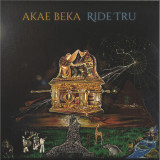
Akae Beka's inimitable style of rich, deep, multi-layered songwriting, uncompromising devotion to RasTafari and soulful healing melodies developed over decades performing with St. Croix based band Midnite and countless recordings. At the point of his untimely passing in 2019, he had released over 70LP's. He is without a doubt one of the most prolific reggae artists ever known.
The stellar production trinity that is Zion I Kings have been involved collectively and individually in creating some of the most highly regarded contributions to the vast Akae Beka catalogue. Ride Tru, originally released digitally and on CD in 2014, stood every chance disappearing into the all eclipsing shadow of the LP released by them earlier that year, Beauty for Ashes, which had been named by iTunes as the reggae album of the year. A monumental achievement for undiluted, uncompromising RasTafari roots reggae music this side of the millennium. So needless to say, the bar was high and Vaughn Benjamin and Zion I Kings must have known that, as they managed to raise it higher again.
Ride Tru continues in the same form, rootsy, soulful, refreshingly polished and authentically raw, the threads of anciency that any devout reggae lover will be looking for and the threads of modernity that keep it alive and appealing in the modern day. A uniquely regal tapestry that has become synonymous with music created from the unity of Zion I Kings and Vaughn Benjamin
Following 8 years of anxious anticipation, for the countless Akae Beka fans that are also vinyl connoisseurs, this LP is now being released on as a 12" vinyl LP courtesy of Before Zero Records. This offers the listener not only the chance to enjoy this LP in an analogue form, but also the chance to hold the artwork as a 12" square masterpiece, created by the hands of Ras Marcus, the artist who gave the powerful visual presence that became synonymous to much of the I Grade / Akae Beka works over the years.
“How does an artist follow an album considered by many to be the best reggae album of 2014?..... you get right back in the studio with the same brilliant production team and follow that album a few short months later with one that nearly eclipses it entirely.”
Midnight Raver — Worldareggae
“...remarkable for the clarity of Tippy’s mix and the contrast between the hardness of Lloyd Richards’ drums and the softness of the guitars, keyboards and brass. The woozy analogue warmth of an old Augustus Pablo production – Son of Jah Dub - for Worry Free demonstrates how well Vaughn sits on the sounds of the original masters (an avenue that should be pursued further). Another veteran guest is the late Style Scott - who beats out one of his final patterns on How I & I Carry On.”
Angus Taylor — United Reggae
out of Stock
Last delivered 4 years ago available to reorder, subject to availability
Brian Destiny is a seeker. Brian Destiny is truth. Brian Destiny has nothing left to sacrifice. Having spent a decade anchoring the Fat White Family on keys - co-writing the bands most popular tunes/stopping Saul Adamczewski and Lias Saoudi from stabbing each other – Nathan Saoudi AKA Brain Destiny, is finally ready to step out from the shadows and launch his own personally curated assault on the culture.
Having recently recovered from a lengthy, serious gambling addiction Brian Destiny finally wearied of betraying his talent, himself and the rest of the world and began laying down the first of what would eventually grow into a collection of EPs and a forthcoming album, the first of which Brain’s Got Talent is out this January. An outsider artist spiritually incapable of groupthink, Brian Destiny is what happens when you take an obsession with Marvin Gaye, The Ramones, Lee ‘Scratch’ Perry and an unhealthy fixation on the life and trials of Napoleon Bonaparte and smash them together at the back of a Ladbrokes in Sheffield on a never-ending Tuesday afternoon.
Brian Destiny has no time for your doom mongering. He knows too well our only salvation at this point is dedication and asks one simple, timeless question…is it gonna be love?
‘Reich’s music expands from minimalist austerity to more full-bodied passages and back again. Reminiscent of his earliest work, it is very beautiful.’ – Financial Times
‘The music has tender energy, and an undercurrent of melancholy. Its droning tones sometimes seem to be pulling apart – like taffy, or like Richter’s stretching spaghetti stripes of color.’ – New York Times
Nonesuch Records releases the first recording of Steve Reich’s Reich/Richter, performed by Ensemble intercontemporain and conducted by George Jackson. The composition was originally written to be performed with German visual artist Gerhard Richter and Corinna Belz’s film Moving Picture (946-3).
Reich describes Richter’s book Patterns, which served as source material for the film: “It starts with one of his abstract paintings from the ’90s. He scanned a photo of the painting into a computer and then cut the scan in half and took each half, cut that in half and two of the four quarters he reversed into mirror images. He then repeated this process of ‘divide, mirror, repeat’ from half to quarter, eighth, sixteenth, thirty-second, all the way up to 4096th. The net effect is to go from an abstract painting to a series of gradually smaller anthropomorphic ‘creatures’ (since the mirroring produces bilateral symmetry) to still smaller very fine stripes.
“Belz described the film in terms of ‘pixels’. It begins with two-‘pixel’ stripes and the music begins with a two-sixteenth note oscillating pattern. When the film moves to four ‘pixels’, the music moves to a four-sixteenth note pattern, then to eight, and sixteen,” the composer continues. “After that, I began introducing longer note values – initially eighth notes, and later to quarter notes. By the middle of the film, when the images move from 512 to 1064 pixels, the music really slows to dotted half notes. Finally, as the ‘pixel’ count begins to diminish, the music moves back into more rapid eighths and then ending with the most intense rapid sixteenth movement.”
After more than one hundred performances of Reich/Richter at The Shed in New York in 2019, it was performed in London at the Barbican by the Britten Sinfonia conducted by Colin Currie and then in Paris at the Philharmonie, where this recording was made. The Austrian ensemble Windkraft Tirol, led by Kasper de Roo, will perform Reich/Richter on September 8 at Szentrum, Silbersaal in Schwaz, and the LA Phil New Music Group, led by Brad Lubman, performs the piece, accompanied by Richter and Belz’s film, at Walt Disney Concert Hall in Los Angeles on April 1, 2023.
Nonesuch has recorded every new piece of music by Steve Reich since 1985, beginning with The Desert Music and continuing through 2018’s Pulse/Quartet, resulting in twenty-two albums and the two box sets Phases in 2006 and Works: 1965-1995 in 1997. The label will put out a collection of his complete works in 2023.
Reich released a book last month, Conversations, that includes dialogues with past collaborators, fellow composers, musicians, and visual artists who have been influenced by his work, including: David Lang, Brian Eno, Richard Serra, Michael Gordon, Michael Tilson Thomas, Russell Hartenberger, Robert Hurwitz, Stephen Sondheim, Jonny Greenwood, David Harrington, Elizabeth Lim-Dutton, David Robertson, Micaela Haslam, Anne Teresa de Keersmaeker, Julia Wolfe, Nico Muhly, Beryl Korot, Colin Currie, and Brad Lubman. Booklist said in its review, ‘Iconoclastic American composer Steve Reich is singular in his own right, and when he is in conversation with other equally iconoclastic composers, conductors, sculptors, musicians, percussionists, and video artists, sparks not only fly, they sparkle. Reich and his colleagues conduct lovely give-and-takes during which they share stories, creative approaches, and viewpoints. Reich's Conversations is the best kind of eavesdropping.’
Steve Reich has been called ‘America’s greatest living composer’ (Village Voice), ‘the most original musical thinker of our time’ (New Yorker), and ‘among the great composers of the century’ (New York Times). His music has influenced composers and mainstream musicians all over the world. Music for 18 Musicians and Different Trains have earned him two Grammy Awards, and in 2009, his Double Sextet won the Pulitzer Prize. Reich’s documentary video opera works – The Cave and Three Tales, done in collaboration with video artist Beryl Korot – have been performed on four continents. His recent work Quartet, for percussionist Colin Currie, sold out two consecutive concerts at Queen Elizabeth Hall in London shortly after tens of thousands at the Glastonbury Festival heard Jonny Greenwood (of Radiohead) perform Electric Counterpoint followed by the London Sinfonietta performing his Music for 18 Musicians.
In 2012, Reich was awarded the Gold Medal in Music by the American Academy of Arts and Letters. He has additionally received the Praemium Imperiale in Tokyo, the Polar Music Prize in Stockholm, the BBVA Award in Madrid, and the Golden Lion at the Venice Biennale. He has been named Commandeur de l’Ordre des Arts et des Lettres and has been awarded honorary doctorates by the Royal College of Music in London, The Juilliard School, and the Liszt Academy in Budapest, among others. ‘There’s just a handful of living composers who can legitimately claim to have altered the direction of musical history and Steve Reich is one of them’, states the Guardian.
Pierre Boulez founded the Ensemble intercontemporain in 1976 with the support of Michel Guy (who was France’s Minister of Culture at the time) and the collaboration of Nicholas Snowman. The Ensemble’s thirty-one soloists share a passion for twentieth and twenty-first century music. Under the artistic direction of Matthias Pintscher, the musicians work in close collaboration with composers, exploring instrumental techniques and developing projects that interweave music, dance, theater, film, video and visual arts. In collaboration with IRCAM (Institut de Recherche et Coordination Acoustique/Musique), the Ensemble intercontemporain is also active in the field of synthetic sound generation. New pieces are commissioned and performed on a regular basis. Resident of the Cité de la musique – Philharmonie de Paris, the Ensemble performs and records in France and abroad, taking part in major festivals worldwide.
George Jackson, winner of the 2015 Aspen Conducting Prize, came to attention after stepping in at short notice with Orchestre de Paris, where he stepped in for Daniel Harding. Recent highlights include leading Ensemble intercontemporain at Festival Romaeuropa, the Rainy Days Festival in Luxembourg, and Festival D’Automne in Paris, as well as conducting the RTÉ National Symphony Orchestra, the orchestra of Opéra de Rouen and the world premiere of Tscho Theissing’s Genia with Theater an der Wien. His varied operatic experience includes performances at Opera North, Hamburg State Opera and Opera Holland Park, as well as conducting a new production of Hänsel und Gretel at Grange Park Opera.
out of Stock
Last delivered 4 years ago available to reorder, subject to availability
Back in 2016, producer Seth Applebaum released two EPs that marked the inauguration of the band Ghost Funk Orchestra. `Night Walker' and `Death Waltz' were conceived as one-man-band, reel-to-reel tape recorded experiments that would bring together elements of all the sounds that Seth most adored at the time: tape-saturated drums, gratuitous spring reverb, surfy guitar, Latin-style percussion, odd time signatures, and Spanish-language female vocals. Initially released only in the digital domain and on a short run of cassette tapes, these two EPs that defined the early era of GFO are now finally available together on a single LP via Colemine Records. The tracks have been lovingly remastered by Doug Krebs. We invite you to take a dive into the humble beginnings of a project that has continued to grow, shape shift, and accrue new and exciting sounds for its sonic palette.
out of Stock
Last delivered 4 years ago available to reorder, subject to availability
**JAPANESE IMPORT CD NOW AVAILABLE TO PRE-ORDER FOR 12TH AUG**
Iconic indie folk pop duo from Galaxie 500 return with a dreamy collaboration with atmospheric Japanese guitarist Kurihara.
“With its meditative tempos and enveloping guitar work by Michio Kurihara—‘it’s like this golden net,’ Naomi said of his gorgeous, versatile playing—A Sky Record offers shelter from the squall. If it has the glow of a long-delayed reunion between friends, that’s not accidental: Kurihara hasn’t traveled outside of Japan in some time, so Damon and Naomi hadn’t recorded with him in nearly ten years. When they finally made it back to Japan in November 2019 for a brief tour, they were elated to book some time with Kurihara at the aptly named studio Peace Music.
“In those long stretches of quarantime, the tracks they returned from Japan with had distinct moods but not yet any lyrics. (Kurihara works best when trying to conjure a specific feeling or natural image—after all, he did once make a solo record, Sunset Notes, on which every song was based on a different sunset he’d witnessed...) How to write about the pandemic? How to not write about the pandemic? Naomi first struck upon the appropriate tone when re-reading the journals of one of her favorite abstract painters, Charles Burchfield. She arranged this found language into the lyrics of the iridescent ‘Season Without Time,’ which also became a tribute to a friend that she and Damon had lost in the last year.
“From there, the floodgates opened. The wistful and watery ‘Midnight’ (electrified, towards the end, by the slow screams of a Kurihara solo) conjures Naomi’s nostalgia for youthful summers spent at Jones Beach, while the gentle current of ‘Sailing By’ pays homage to those ritualistic BBC Shipping Forecasts and the waltzing, quintessentially British theme song from which it takes its name.”
—Lindsay Zoladz
When we can no longer move forward or look outward, some reflect and seek truth in themselves – some sharing, through the language of music, what might be impossible to say through words.
Amidst the budding tempest of 2020, Jeremiah Carter, hailing originally from Tennessee, found himself embroiled in a near suffocating air of uncertainty and anxious tension, mainly brought upon by the first spikes in a soon-to-be worldwide pandemic.
Only having recently relocated to the bustling city of New York, an unprecedented series of events took shape over the following months, isolating and dismaying the citizens around the globe in the process. It was during this time that Jeremiah turned his attention to music, discharging the emotional turmoil surrounding him, into a substantial wealth of newly composed work.
Beginning with the album »Rejoice«, which was completed in the wake of 2020 and released on A Sunken Mall that same year, two more albums took shape in a quasi-self-induced creative tremor, one that soon materialized a wealth of work, forming a triptych of three unique albums, produced within the span of only 6 months.
Finally, presented here is the second stage of the final triptych; »Speak, You Also«, dedicated to Paul Celan and giving us further insight into the heart of a beloved southerner, who amidst being tangled in the mesh of crisis, passion and communication, gave rise to a momentous yet equally timeless neoclassical body of work.
With a back catalogue that spans half a dozen studio LPs as Boom Bip,
plus another two as one half of electronic pop duo Neon Neon, Bryan
Hollon has already made a name for himself as a Mercury prizenominated producer and multi-instrumentalist
Equally impressive are the credits to Warpaint drummer Stella Mozgawa's name;
she's contributed percussion to albums by Kurt Vile, Cate le Bon, Courtney
Barnett, Sharon Van Etten, and Kim Gordon, among others. But as improvisational
techno duo Belief, the pair make music that harkens back to '90s acts like LFO
and 808 State – artists that indelibly, but near-anonymously, altered club and rave
culture, mostly identifiable by clean, bold logos on 12" sleeves. Without being
derivative of the era, they add their own instincts and experiences to grace the
musical universe with new answers to the question: What Would Mark Bell Do?
Hollon met Mozgawa just after she joined Warpaint, when Boom Bip shared a
rehearsal space in Echo Park with the band. The two quickly bonded over a love
of early Warp Records, drum breaks, acid house, and Y2K- era rave flyers. They
swapped playlists and ideas when Mozgawa played drums for Neon Neon's 2013
West Coast tour, but due to busy schedules, it would be another three years
before they packed every piece of gear they collectively owned into Eric
Wareheim's Absolutely Studios for an initial jam session. Instinctively playing to
each other's strengths and whims – and recording the session to build on later –
allowed Mozgawa to explore a style of music she'd long considered a dark art,
and pushed Hollon, known for his meticulous planning in previous work, to be
more spontaneous.
It was all in good fun – early shows billed the pair as 'Beef' with a comedic wink
to its pulsating minimalism. But as the two began committing themselves to
finalizing and recording more soulful, enigmatic tracks, the reverent nature of
what they were doing began to emerge: while Belief pays homage to the pioneers
of techno, the project is born out of an oddly divine foresight Mozgawa and
Hollon share, the synergy of two devout tastemakers building a shrine to inner
peace and outward pleasure
Very limited vinyl pressing, 500 copies in a full colour single outer sleeve and full colour printed lyric inner sleeve, housing black and white smoke effect vinyl. Two albums in and London’s Grave Lines, purveyors of ‘heavy gloom’ have already carved a unique niche in the myriad spheres of heavy music. Their first album ‘Welcome To Nothing’ set the tone for their distinct take on doom metal, which was broadened even further with album two ‘Fed Into The Nihilist Engine’. An epic feast of hard ‘n’ heavy riffs coupled with brooding sadness interspersed with thoughtful transcendent moments of introspection. Never a band to rely solely on trotting out those ‘doom metal’ tropes, the band began to weave in gothic and experimental elements into their music, to delve deeper into the dark shadows of the psyche. Now with their third album ‘Communion’ Grave Lines continue their exploration into the ugliness of the human condition, at the same time becoming a band that truly defies any pigeonhole. Continuing to hone and evolve their collective vision and aided by the masterful production of Andy Hawkins at The Nave Studios, 'Communion' sees Grave Lines creep further into the various corners of their sound. In a nutshell ‘Communion’ is a violent descent of bile-soaked intensity spiralling between filth laden swagger, and fragile mournful lament. The album delves into the internal aloneness of existence and the failings of the human connection. Owing as much to Bauhaus and Killing Joke as it does to Black Sabbath or Neurosis, there are moments of gut wrenching doomed up heaviness and bellowing noise rock, contrasting with ambient gothic passages and a thoughtful melancholy, to a create a powerful new chapter in their ceaseless journey through the gloom. The seven tracks act as distinctly separate representations of the album, each individually mirroring the remoteness of human consciousness. Opening track 'Gordian' doesn't waste any time, a burst of feedback kicks you straight into a filthy low slung punked up stomp before the band switch mood to drop off into a doom abyss, singer Jake raging at the void. 'Argyraphaga' continues the pummelling groove, gradually descending into nihilistic sludge. In direct contrast the sprawling atmosphere of 'Lyceanid' travels through the darkness. Jake’s vocals harnessing the spirits of Scott Walker and Mark Lanegan in equal measure. The rest of the band (on top form throughout) focus the dynamics over eleven enthralling minutes, as the song builds and builds to a towering crescendo before finishing with a plaintive acoustic coda. This is pure Grave Lines’. An immersive blend of darkness and light. 'Tachinid' is a violent palette cleanser, harsh industrial synths astride a hateful droning spoken word sermon. 'Carcini' is soaring melancholic doom, with the band at their most melodic whilst still able to crush the listener. Broodsac, with its circular riffs, is all gothic post punk noise rock meets fuzz fat riffs, and album closer ‘Sinensis’ offers a final delicate, melancholy moment of calm before launching into an industrial charged grind into oblivion. Grave Lines’ fusion of elements makes them one of the most powerful and mesmerising bands inhabiting the heavy music world at the moment, and with ‘Communion’ they have crafted an album that encapsulates their distinctive dynamic perfectly. ‘COMMUNION’ will be released in deluxe black and white smoke effect vinyl, housed in a full colour single sleeve with download included, CD and all digital platforms
Paul Wise aka Placid is the driving force behind ‘We’re Going Deep’ – a thriving online community and record label that’s showing no signs of slowing down as we pop, dip and spin into the spring season. As a label owner, Paul’s mission couldn’t be clearer - releasing new music for heads of all persuasions. Fresh cuts aimed squarely at the dance floor, your front room or even just the headphones. Rather than staying too hung up on the past, he continues to focus on serving up the best in new Acid, Electro, Techno, Deep House alongside scintillating slices of Downtempo music.
Sticking to the trusted format of 4 superlative cuts from equally talented producers, the quality and talent on show does not disappoint on WGD 007. Starting the dance with 303 maestro and label legend Tin Man, A1 “I Said Acid” is a tantalising twist on the classic combination of a Roland TR-707 and SH-101. As a metronomic pulsating kick carves out a squarely hewn path, slow opening filtered lead and hauntingly repetitive “Acid” vocals exert maximal pressure to create a sheer moment of joy. Balanced out by the dreamy atmospherics of A2 “I’ll Meet You On The Dancefloor”. UK Deep House supremo Rai Scott exerts her perfected knowhow: blending organically tinged percussion with profound melodic touches that meander across the borderlines of your consciousness.
On B1 “Necessary Order”, the machine mastery of Sound Synthesis collides in perfect harmony as Keith Farrugia demonstrates his deft turns of the dials that are becoming more in demand. A sprinkle of stargazing soul is woven around light touch acidic tweaks and snappy drums, echoing the twinkling embers of the cosmos. Not to be outdone, Dutch born German bred producer Roger Van Lunteren takes control with the final slice on B2 “Le Dee Trois Trio Prends Trois”. A wince inducing, sawtooth heavy jam that should not be taken lightly. As the saying goes, this one’s only for headstrong.
out of Stock
Last delivered 2 years ago available to reorder, subject to availability
Dubfire - Dark Matter | Dust & Gas
With a career spanning over 3 decades, Dubfire has achieved global success as an artist with relentless drive, talent, and intuition. Pioneering commercial notoriety came initially as one half of the Grammy award (2001) winning duo Deep Dish, before embarking on a truly groundbreaking solo career in 2007. A career filled with timeless tracks include his early works ‘Ribcage’, ‘Emissions, ‘Roadkill’ and the highly acclaimed ‘Exit’ with Kiss Kitten. Collaborative work highlights include Luke Slater, Moscoman, Oliver Huntemann, Chris Liebing, Tiga and co-producing two tracks on the legendary Underworld’s ‘Barking’ album. This year he finally releases his debut album ‘EVOLV’. An 11-track visionary into the mind of Dubfire to be released on his long-standing label SCI+TEC. EVOLV’s concept? The journey of the ‘hybrid’ being and its evolution since its first appearance in 2015, as part of his two-year World tour following the release of his retrospective release ‘A Decade Of Dubfire’.
The first of 4 singles launch in July with ‘Dark Matter’ and ‘Dust & Gas’. Both tracks set a brooding atmosphere. The rougher percussion, and eerie lead in ‘Dark Matter’ is accompanied by a stripped back sound and glitchy vocals sitting in a spaced-out atmosphere in ‘Dust & Gas’. Its deep and minimal drum work is exceptional. The start of a sonically evolved journey for its listeners, this album is what many have waited for, with a few unexpected twists along the way.
out of Stock
Last delivered 18 months ago available to reorder, subject to availability
The wait is over: Arch Enemy are back with the follow up to 2017’s ‘Will To Power’, and they have never sounded hungrier. Delivering a collection of the tightest, most streamlined, and, more importantly extreme metal, ‘Deceivers’ is comprised of 11 tracks that will have their fan base salivating. Every track is ruthlessly catchy and mercilessly violent, and with the likes of ‘Deceiver, Deceiver’, ‘House Of Mirrors’, ‘Handshake With Hell’ or ‘Poisoned Arrow’ the Swedish quintet have never sounded better. Released on July 29th, 2022, it is available in 4 formats, all of which offer something special for the fans. First, there is the hand-numbered Ltd. Deluxe 2LP + CD Artbook which includes a multicolored vinyl (each design is unique), zoetrope/picture vinyl, CD, two bonus tracks, art print and a 36-page LP-sized booklet with liner-notes. The similarly exclusive Ltd. Deluxe CD Box Set includes a special edition CD “PocketPac” (eco-friendly packaging), two bonus tracks, a 32-page DIN A5 booklet (with liner-notes), tote bag and metal pin. Then there is the limited black and colored LP that comes with an 8-page booklet and Obi-Strip, and finally the special edition CD that also comes with a “PocketPac” (eco-friendly packaging) and a 16-page booklet.
The wait is over: Arch Enemy are back with the follow up to 2017’s ‘Will To Power’, and they have never sounded hungrier. Delivering a collection of the tightest, most streamlined, and, more importantly extreme metal, ‘Deceivers’ is comprised of 11 tracks that will have their fan base salivating. Every track is ruthlessly catchy and mercilessly violent, and with the likes of ‘Deceiver, Deceiver’, ‘House Of Mirrors’, ‘Handshake With Hell’ or ‘Poisoned Arrow’ the Swedish quintet have never sounded better. Released on July 29th, 2022, it is available in 4 formats, all of which offer something special for the fans. First, there is the hand-numbered Ltd. Deluxe 2LP + CD Artbook which includes a multicolored vinyl (each design is unique), zoetrope/picture vinyl, CD, two bonus tracks, art print and a 36-page LP-sized booklet with liner-notes. The similarly exclusive Ltd. Deluxe CD Box Set includes a special edition CD “PocketPac” (eco-friendly packaging), two bonus tracks, a 32-page DIN A5 booklet (with liner-notes), tote bag and metal pin. Then there is the limited black and colored LP that comes with an 8-page booklet and Obi-Strip, and finally the special edition CD that also comes with a “PocketPac” (eco-friendly packaging) and a 16-page booklet.
Following the release and subsequent year of our first album, "The Hearth," we began nurturing some new compositions for a second release. This process began similar to the first album, each of working us separately on songs, then bringing the bones, veins, and skin of a track to the rest of The Creux to fully animate. We were all taking off in a lot of directions, which tends to lend greatly to our dynamic sound once harnessed, and it was a good departure after playing "The Hearth" tracks live for two years straight during tours and festivals. We ended up with around 25 or so song frames and delighted that list down to about 12 to lay into. Then, the pandemic hit. We were all separated into our own bubbles, trying to make responsible choices on how to continue writing and recording this record promptly as we had just penned a deal with our new label Freakwave; with a target of releasing sometime in 2020. It was a pretty challenging endeavor for a band that typically relies on each member to bring greatness to the sound. We began experimenting with using virtual jam sessions and shipping files to each other. Luckily, we are all decent home sonic production creators so creating and flying around edits and changes over the months leading up to our time in the studio wasn't tricky. Around the end of Summer 2020, we finally had the demo tracks prepped enough to start working with our engineer and producer, Patrick Hills of Earthtone Studios. He worked with us on our last album and is sort of a special weapon of creativity for what we can pull off. We would send in one member at a time to lay down studio versions of the finals in a separate room from Mr. Hills; mask on, the whole nine. We would fly out the takes each day and make edits, rinse, and repeat. It was tedious and was pretty trippy to make a record in that manner. "Goodbye Divine" took almost a year to finish recording and mixing. So, here we are, in the Summer of 2021, and it is complete and ready for release this October. Expect both departures and arrivals of what you might have predicted following "The Hearth." Yet, this album does, in true Creux Lies fashion, offer a complete range of emotions throughout the album; prepare to find yourself ass shaken, and watery-eyed before you raise the needle on "Goodbye Divine."
Todh Teri is back to make us groove with the tenth and final volume of the Deep In India series. A total double whammy of a record – this one happens to be a limited edition double vinyl that includes the best of the Todh Teri’s tracks from the previous volumes. As this alluring series comes to an end, get ready to shake a leg to some dark & dubby tunes one last time.
It all begins with Sampadan 34, a tune that makes you want to close your eyes and get lost in a musical trance with its intricate elements of this melody. This is followed by Sampadan 35, an iconic tune that takes you down memory lane, bringing back sweet memories of the yesteryears.
Using a historic sample from the 90s Indian cinescape, Todh Teri has added his touch to create Sampadan 36 - a track that you’re sure to get hooked onto. For the grand finale, wehave Sampadan 37, which brings in some old-school percussive beats into play that will
make your soul come alive.
For listeners who missed out, this final EP of the series also includes a second vinyl which has the best-selected tracks from Vol.1 - Vol.4. Deep In India has been Todh Teri’s heartfelt tribute to the golden age of Indian cinema that has given listeners a fresh perspective on its conventional music. Overall, this record has something for each listener with a magnificently illustrated album cover by Costanza Chandra in association with Masala Movement.
TODH TERI
I would like to thank everyone involved in this project from the bottom of my heart for their
constant support and encouragement. With this release we come to an end to this series
out of Stock
Last delivered 3 years ago available to reorder, subject to availability
Sounds like supergroup. Rarely have outstanding figures of such a variety of musical styles collaborated on one album to pay homage to a nearly forgotten artist, one of the few black Beatnik poets, Bob Kaufman.
"All Those Streets I Must Find Cities For" by The Plastik Beatniks is an attempt to acoustically reanimate Bob Kaufman, to return the Beat to him in a transatlantic collaboration. It is a shimmering psychedelic, at times jazzy concept album, sometimes reminiscent of Krautrock or hip hop, about a Beat-era poet who was as great as he was forgotten. It takes spoken word to a new level, as a transatlantic showcase of musical avant-gardes and a joyful "sound archaeology" of modernity, in which the tracks of the "Plastik Beatniks" meet the best voices of America.
The 12 wildly different songs and audi collages, on the transatlantically-produced album, "All the Streets I Must Find Cities For," is based on lyrics by Beat author Bob Kaufman. They were originally part of the radio play "Thank God for Beatniks," for which author Andreas Ammer ("Ammer & Einheit"), Notwist‘s Markus Acher and Micha Acher and loop maker Leo Hopfinger ("LeRoy") formed "The Plastik Beatniks." On the eastern side of the Atlantic they composed music and crafted soundscapes. On the west side of the ocean, they asked three of the most renowned singers, activists and producers in the U.S. to recite or sing Bob Kaufman's poetry.
Punk-pop icon Patti Smith immediately signed on to read Kaufman's poem "Ginsberg (For Allen)". Free jazz vocalist Moor Mother passionately performed Bob Kaufman's "War Memoir". American jazz clarinetist, composer, singer and “International Anthem” labelmate Angel Bat Dawid, a legitimate successor to Sun Ra, polyphonically read and sang such poems as "The Sun is a Negroe" and "West Coast Sound 1956" and included some clarinet solos on top. Also on the album, Bob Kaufman himself recites his previously unknown poems "Hollywood Beat", "Would You Wear My Eyes", and the "Jail Poem" "All Those Streets I Must Find Cities For". Beat chronicler Raymond Foye, who still lives at the Chelsea Hotel in New York, contributed an interview he conducted with late beatnik Allen Ginsberg about Bob Kaufman. Completing the circle was hip-hop artist Adam "DoseOne" ("13&God"), who once gave Markus Acher a well-thumbed volume of Bob Kaufman, whom he admired. He contributed some raps. Thus 12 tracks emerged, as diverse as the artists, poets and musicians who contributed to it. More than an album. An epitaph. A work for the eternity of Beat.
Regarding Bob Kaufman - of course the FBI kept a file on him – first as a sailor, then a communist, and finally a Beat poet. As one of the mainstays of the movement, he edited the literary magazine "Beatitude" in San Francisco and defined "Beatnik" to Allen Ginsberg: half rhythm, half sputnik. Bob recited his poetry loudly on the streets (when he wasn't sunk into years of silence in protest of the Vietnam War) and in the bars and bagel shops of North Beach. Once, he almost landed a pop hit ("Green Green Rocky Road"), which then made Dylan's companion Dave van Ronk famous. That Kaufman is today less known than his friend Allen Ginsberg may be because he was a black Beat poet, and also a Jew. This was not compatible with fame in the US of the 1950s. Though Kaufman had the same publisher, City Lights, as Ginsberg, he was frequently arrested and jailed, and was treated with electric shocks until he developed serious mental heath issues. There he wrote his "Jail Poems". The seventh of these lent this album its name:
"Someone whom I am is no one / Something I have done is nothing Someplace I have been is nowhere / I am not me What of the answers / I must find questions for? All these strange streets I must find cities for, Thank god for beatniks."
out of Stock
Last delivered 4 years ago available to reorder, subject to availability
Cult South Asian New Wave! Naya Beat is proud to announce its second release, Tere Liye, the highly sought after and impossible to find New Wave album by the unsung pioneers of the British Asian music scene, Pinky Ann Rihal. Remastered for vinyl by multi Grammy-nominated Frank Merritt at The Carvery and available for the first time since its limited 1985 release, the album is as fresh and relevant today as it was 37 years ago.
South Asian New Wave. Four words that you will rarely see together. Pinky Ann Rihal were the brainchild of two London-based Punjabi immigrants and progressive rock musicians – Harry Rihal and Jati Sodhi – at a time in the U.K. when progressive rock musicians were almost exclusively white and Punjabi musicians were almost exclusively making Bhangra. Encouraged by their friend and disco pioneer Biddu (yes, that Biddu!), they cut ‘Tere Liye’ – a one-off Hindi-language New Wave album with producer John Hamilton and vocalists Pinky Rihal (married to Harry) and Anne Barrett (married to John). It is an album that exemplifies the cultural collaboration and musical synthesis of the time. Complementing the rich, cosmic and layered synths and drum programming of Hamilton and the distorted guitars of Rihal and Sodhi are the Hindi lyrics of vocalists Pinky and Anne. The result is an amazing one-of-a-kind South Asian New Wave album. Nothing like it has come out before or since.
Stymied on its original release by bungled distribution, poor marketing and plenty of bad luck, this incredible album seemed destined to be lost to history. With Asian electronic music in the U.K. seeing a rebirth and capturing imaginations around the world,‘Tere Liye’ can finally take its rightful place as one of the pioneering albums of the Asian underground.
This is Naya Beat’s second release in a series of reissues, reworks and remixes, and compilations dedicated to uncovering electronic and dance music from the overlooked ‘80s and ‘90s South Asian music scene. Their first release Naya Beat Volume 1: South Asian Dance and Electronic Music 1983-1992 was named by the Vinyl Factory as the Number 1 reissue of 2021.
out of Stock
Last delivered 4 years ago available to reorder, subject to availability
In many ways Kumoyo Island represents the culmination of a journey for Kikagaku Moyo. While their decade-long career can be summarized as a series of kaleidoscopic explorations through lands and dimensions far and near, there’s a strong intention in each of their works to take the listener to a particular place, however real or abstract they may be. In that sense, the title and cover art for the band’s fifth and final album draws you into a magical mass of land surrounded by water—but the couch suggests that Kumoyo Island may not be a fleeting stop, but rather a place of respite, where one could pause and take it all in.
Reconvening at Tsubame Studios in Asakusabashi, Tokyo, where their earliest material had been recorded, the five members of Kikagaku Moyo found new inspiration in a familiar and comfortable environment. With their adopted homebase of Amsterdam under lockdown and their touring activities halted due to the pandemic, the band felt a renewed sense of freedom being back in shitamachi, or the old downtown area of their hometown. With unrestricted time in the studio, they began to build upon the demos and song fragments they’d amassed since their last tour. In the 1.5 months spent in Tokyo, everything started to come together.
“Monaka”, its name taken from a type of Japanese wafer sweets, takes melodic inspiration from traditional minyo folk styles, while “Yayoi Iyayoi” is a rare instance of the band singing in their native tongue, its evocative lyrics utilizing archaic words taken from old poetry and nature books found in one of the many secondhand bookstores of Tokyo. For “Meu Mar”, an Erasmos Carlos cover, the original Portuguese lyrics were translated into English, then to Japanese. Strangely enough, the words seem to conjure an image of the protagonist floating among the clouds, looking down upon Tokyo Bay.
In fact, it may be possible to draw a parallel between the topography of the band’s home country—an island nation, surrounded by bodies of water—and the mysterious isle of Kumoyo. Are they one and the same? Has the band finally made it back home? It’s up to the listener to decide.
out of Stock
Last delivered 3 years ago available to reorder, subject to availability
Demented Soul returns to AKO150 arcade and it’s been a while but we’re glad to finally put out this track. full of energy, breaks into a rare groove classic halfway through, and then returned with a high-energy amen. real jungle and one for the gunfinger crew. this is one of the few lined up from this talented producer and we hope you enjoy it.
Next, we welcome Hoodz from LA we’ve been friends for a while and we’re glad to have this little red groove roller on the label. expect more from Hoodz on the AKO imprint in the future but right now slap this on the vinyl turn up the bass and enjoy this riddim!
out of Stock
Last delivered 4 years ago available to reorder, subject to availability
The subterranean slumber of Nile mastermind Karl Sanders’ Eastern-ambient Saurian series finally ceases with the third chapter of his darkly hypnotizing saga, Saurian Apocalypse! The album’s musical and lyrical themes detail the vexing fictional journey of Dr. Eduardo Lucciani, one of very few survivors of mankind’s self-destruction, who descends into madness after discovering the violent horrors occurring at the hands of the Saurian Masters. Emphasized by unique instruments like the baglama saz (Turkish lute), Ancient Egyptian Anubis Sistrum, Dumbek (Middle Eastern goblet drum), glissentar and gongs, the album’s score weaves cinematic auras and deep grooves, accented by the tribal percussive stylings of original Nile drummer Pete Hammoura and returning Saurian vocalist Mike Breazeale. Whispering atop the ominous sands of opener “The Sun Has Set on the Age of Man” are resonant flutes, forewarning percussion, and an exquisitely tasteful and contextual acoustic guest solo by guitar virtuoso Rusty Cooley – kicking in the massive doors of Saurian Apocalypse. Immediately, the album’s impactful production and crystal clarity versus its predecessors is apparent
After three EP's in his own name, and one with Moreno Ácido at Holuzam, Diogo makes his debut 12” in the Discos Extendes series with “FINALMENTE!”. In a singular appropriation of the vast legacy of rave culture, Diogo crosses, along four tracks, a certain time span between the 90's and the 2020's, with all kinds of recycling and updates that the exercise entails. Syncopated rhythmic patterns, robust basses, junglist echoes, haunted voices or celestial pads make up a revivalist sound palette, here rearticulated beyond linear structures. “Até Segunda” sets the tone in territories close to Objekt's Theme from Q in a live sound design amidst sudden disturbances and rallying hooks. Tracks 2 and 3 stand out for their plot twists: “Ponto de Não Retorno” starts with a frenetic breaky maze before get immersed in a oneiric landscape, and “What?!” progresses gently within Vancouver coordinates to be opened to a schizophrenic rawness that, from there, completely remakes the track. “Errar É Ok” is an exercise of decompression, melodically woven, with a dreamy coda pointing to nostalgic horizons. Violet closes the EP with a muscular version of “Ponto de Não Retorno”. "Finalmente!" marks for this unstable balance between familiarity and strangeness, intuitiveness and disturbance, euphoria and immersion. Tracks for the dance floor, yes, with a twist, to be rediscovered as often as you like.
out of Stock
Last delivered 3 years ago available to reorder, subject to availability
High Focus Records are proud to present the latest collaboration from Verb T & Illinformed. ‘Stranded in Foggy Times’ both continues and completes the trilogy that began back in 2015, with ‘The Man with the Foggy Eyes’, before broadening the horizons with last year’s release ‘The Land of the Foggy Skies’. This final chapter returns to the same conceptual landscape as its predecessors, but also sees Verb T & Illinformed returning to a more classic approach to album making. In spite of its concept, the Foggy Trilogy is something of a personal outpouring for Verb T, with the original aim being to vicariously discuss the trials and tribulations that play a part in his life, including his struggles with chronic illness and the feeling of alienation from leaving his hometown, while also reflecting on the state of the world as a whole. Their approach to making the album meant taking it back to the most natural form, where the idea for the track would be outlined, Illinformed would make the beat, Verb T would write to it and then they would tweak and adjust accordingly. The result is 19 of the most finely crafted tracks to emerge from the UK shores this year. As with the previous albums, ‘Stranded in Foggy Times’ finds Illinformed moving away from the more rugged sound that has shrouded the British scene over the last few months, thanks to his collaborations with the likes of Datkid and Wish Master, instead providing Verb T with an arguably more mellow backdrop. From the string and piano driven introduction on ‘Legacy’, to the blissful head-nod vibes of the closing track, ‘Blind Faith’, the union between beats and rhymes sits at the perfect level. The album also boasts one of the most impressive guestlists of the year, one that is very much a product of both players’ worlds. Thanks to Illinformed’s Bristol connection, there are features from the likes of Res One, Datkid, Leaf Dog, Smellington Piff and Chillman, as well as some locally sourced cuts from DJ Rogue. While on Verb T’s side of the fence, we have features from Rye Shabby and Moreone, along with a collaboration that reignites the same creative spark he found in his early days, as King Kashmere steps into the booth on Feeling Strange. All in all, ‘Stranded in Foggy Times’ does exactly what it sets out to do, by drawing the trilogy to a close while also providing insights into Verb T’s personal world and the world at large. The fact that it also happens to be one of the strongest rap albums of the year is the icing on the cake
High Focus Records are proud to present the latest collaboration from Verb T & Illinformed. ‘Stranded in Foggy Times’ both continues and completes the trilogy that began back in 2015, with ‘The Man with the Foggy Eyes’, before broadening the horizons with last year’s release ‘The Land of the Foggy Skies’. This final chapter returns to the same conceptual landscape as its predecessors, but also sees Verb T & Illinformed returning to a more classic approach to album making. In spite of its concept, the Foggy Trilogy is something of a personal outpouring for Verb T, with the original aim being to vicariously discuss the trials and tribulations that play a part in his life, including his struggles with chronic illness and the feeling of alienation from leaving his hometown, while also reflecting on the state of the world as a whole. Their approach to making the album meant taking it back to the most natural form, where the idea for the track would be outlined, Illinformed would make the beat, Verb T would write to it and then they would tweak and adjust accordingly. The result is 19 of the most finely crafted tracks to emerge from the UK shores this year. As with the previous albums, ‘Stranded in Foggy Times’ finds Illinformed moving away from the more rugged sound that has shrouded the British scene over the last few months, thanks to his collaborations with the likes of Datkid and Wish Master, instead providing Verb T with an arguably more mellow backdrop. From the string and piano driven introduction on ‘Legacy’, to the blissful head-nod vibes of the closing track, ‘Blind Faith’, the union between beats and rhymes sits at the perfect level. The album also boasts one of the most impressive guestlists of the year, one that is very much a product of both players’ worlds. Thanks to Illinformed’s Bristol connection, there are features from the likes of Res One, Datkid, Leaf Dog, Smellington Piff and Chillman, as well as some locally sourced cuts from DJ Rogue. While on Verb T’s side of the fence, we have features from Rye Shabby and Moreone, along with a collaboration that reignites the same creative spark he found in his early days, as King Kashmere steps into the booth on Feeling Strange. All in all, ‘Stranded in Foggy Times’ does exactly what it sets out to do, by drawing the trilogy to a close while also providing insights into Verb T’s personal world and the world at large. The fact that it also happens to be one of the strongest rap albums of the year is the icing on the cake
High Focus Records are proud to present the latest collaboration from Verb T & Illinformed. ‘Stranded in Foggy Times’ both continues and completes the trilogy that began back in 2015, with ‘The Man with the Foggy Eyes’, before broadening the horizons with last year’s release ‘The Land of the Foggy Skies’. This final chapter returns to the same conceptual landscape as its predecessors, but also sees Verb T & Illinformed returning to a more classic approach to album making. In spite of its concept, the Foggy Trilogy is something of a personal outpouring for Verb T, with the original aim being to vicariously discuss the trials and tribulations that play a part in his life, including his struggles with chronic illness and the feeling of alienation from leaving his hometown, while also reflecting on the state of the world as a whole. Their approach to making the album meant taking it back to the most natural form, where the idea for the track would be outlined, Illinformed would make the beat, Verb T would write to it and then they would tweak and adjust accordingly. The result is 19 of the most finely crafted tracks to emerge from the UK shores this year. As with the previous albums, ‘Stranded in Foggy Times’ finds Illinformed moving away from the more rugged sound that has shrouded the British scene over the last few months, thanks to his collaborations with the likes of Datkid and Wish Master, instead providing Verb T with an arguably more mellow backdrop. From the string and piano driven introduction on ‘Legacy’, to the blissful head-nod vibes of the closing track, ‘Blind Faith’, the union between beats and rhymes sits at the perfect level. The album also boasts one of the most impressive guestlists of the year, one that is very much a product of both players’ worlds. Thanks to Illinformed’s Bristol connection, there are features from the likes of Res One, Datkid, Leaf Dog, Smellington Piff and Chillman, as well as some locally sourced cuts from DJ Rogue. While on Verb T’s side of the fence, we have features from Rye Shabby and Moreone, along with a collaboration that reignites the same creative spark he found in his early days, as King Kashmere steps into the booth on Feeling Strange. All in all, ‘Stranded in Foggy Times’ does exactly what it sets out to do, by drawing the trilogy to a close while also providing insights into Verb T’s personal world and the world at large. The fact that it also happens to be one of the strongest rap albums of the year is the icing on the cake
Jazz writer Walter Kolovsky has said that Friday Night In San Francisco "may be the most influential of all acoustic guitar albums." LPs of it have been a demonstration staple on turntables around the world for over 40 years. To celebrate the lasting impact of this singular album and the legendary concert that it represents, Impex Records is proud to announce the long-awaited follow up: Saturday Night In San Francisco.
Working with hours of original 16-track live session tapes, Al Di Meola and his team have brilliantly curated this musical tour-de-force, bringing to life for the first time on LP, SACD-Hybrid and CD the explosively virtuosic final performance of Di Meola, John McLaughlin, and Paco De Lucia at the Warfield Theater in San Francisco, December 6, 1980. In the exclusive essay by music historian Charles L. Granata, Di Meola says of that final night: "It's exciting because the audience was right there with us, savoring every single note of music. And, we were ripping. It was crazy good!"
Impex worked carefully with Di Meola, mixing engineer Roy Hendrickson (SPIN Studio), and mastering engineer Bernie Grundman to recreate the magic of Friday Night In San Francisco so these never-before-released solos and trios burst out of your system with striking clarity, dynamics and technical brilliance. "Crazy good," indeed.
Évariste is one of the rare specimens of artist-cum-scientists. Among his kind stand others like Pierre Schaeffer, a Polytechnique graduate (an engineer but also the father of musique concrète) and the eccentric Boby Lapointe (graduate of the École centrale and inventor of the Bibi-binaire system, patented in 1968). Évariste's songwriting, joyful and full of energy (albeit extremely critical), shrouds an original tragedy: born in 1943 among résistants, Joël Sternheimer (aka Évariste) grew up without a father, lost to Auschwitz. Although he makes little reference to Jewish culture in his music, his origins leave their mark: in 1974, he sings a Hebrew song on television. In 1966, the young Joël sports Princeton's colourful paraphernalia - that's because he's freshly returning from the US, where he was sent to pursue his research on "particle mass and the interpretation of observed regularities, such as the effects of a wave" (will understand who may). When he gets there the country's in the midst of the Vietnam War. With McNamara keen to find an alternative to the nuclear weapon and calling upon the country's biggest brains to undertake the task, there's a "fund shift" within the university - a diplomatic way to give notice to whoever may not be disposed to follow the government's scheme. Joël, who's under the supervision of a rebellious physician, is dismissed. He regardless keeps following the prestigious seminaries of the Institute for Advanced Study, chaired by Oppenheimer, inventor of the atomic bomb. Likely inspired by the hippie movement and music, Joël buys a guitar and starts playing in Washington Square - after all, Bob Dylan himself started there. He blithely skips Oppenheimer and receives a warm (though surprised) welcome from a crowd thoroughly unfamiliar with French. When the ageing physicist questions him about his decreasing attendance, Joël explains how drawn he is to music, and how he thinks it could help him in self-financing his research. Évariste recalls seeing the sickened man, his face torn by remorse, lighten up to his words and say: "What's keeping you - go for it! If I was still young that's exactly what I'd do." The student takes these words as a testimony from his professor - and it's enough to convince him . And so he takes the leap during the Christmas vacations he spends in Paris. A journalist friend he often sees around the Sorbonne introduces him to the artistic director of Disques AZ. The latter passes the tapes on to the label's boss, Lucien Morisse, also program manager on Europe N°1. Morisse is blown away - and signs him onto the label right away. Michel Colombier, arranger for Serge Gainsbourg and co-author of "Psyché Rock", with Pierre Henry, contributes some of his original ideas to the 7 inch "E=mc2": Évariste's preoccupation with the percussion sound on the track "Le calcul intégral" is that it goes "poom poom" and not "tock tock" - Colombier is aware of the issue and records Évariste's guitar like a percussion in an isolated booth. The organist Eddy Louis, who is to participate, in 1969, to the success of Claude Nougaro's "Paris mai", also appears on the record. It's 1966 and the Antoine phenomenon (signed on Vogue) storms through France. The two singers share similarities: Antoine is an engineer of the École centrale, gifted with a great originality in his song-writing. A godsend for the two labels who turn this resemblance into a commercial strategy, setting them out as rivals. To this day though, Évariste still denies what was little more than slushy tabloïd gossip. Success comes around swiftly and in 1967 Évariste launches into a second 7 inch, "Wo I nee", again arranged by Michel Colombier. Quantum mechanics fans finally get their anthem with "La Chasse Au Boson Intermédiaire" (or the "Intermediary Boson Pursuit"). To sum up what's a boson, say he's a close pal of the meson, photon and other gluons. A few months later, it's May 68 and everything's turned upside down. Évariste writes a series of songs inspired by the events, which he immediately submits to Lucien Morisse. When the man behind "Salut les copains", once married to Dalida, hears the song "La révolution" - a father and son dialogue - he can't take any more: AZ simply cannot release this. But there and then Lucien Morisse makes a gesture which will remain engraved in French music's history: sorry to be unable to officially stand by the singer, he encourages him to self-produce the record, but with his tacit support. He calls the pressing factory and asks they apply the same rate for Évariste as they would for AZ. The singer and his musicians use the same studio as for the previous record, all of them playing for free awaiting a return on investment. Évariste keeps singing at the Sorbonne with "Jussieu's gang" and "the young Renaud" he nicknames "le p'tit gavroche" (or "street urchin"). Renaud volunteers to type the lyrics of the song "La révolution" so that the chorus can be sung and recorded. A boy in the group is related to Wolinski and introduces them. The two get along so well that Wolinski ends up drawing the cover for the record "La révolution", for free. The self-released 7 inch "La révolution / La faute à Nanterre" is sold under the table and door-to-door for half the price of a standard record, on and around the boulevard Saint-Michel; and it runs out fast. In the end, there will be 6 releases of the record, and 25000 copies sold. When the theatre director Claude Confortès decides to adapt Wolinski's drawing series titled "Je ne veux pas mourir idiot" ("I don't want to die a fool"), he asks Évariste to write the original soundtrack. His friend, now cartoonist for Hara-Kiri Hebdo, often promotes him in accordance with a principle dear to him by virtue of which he gives a special place to his friends. Dominique Grange (writer of the song "Nous sommes les nouveaux partisans") soon joins the team. After 150 performances, Évariste leaves his place to Dominique Maurin (brother of Patrick Dewaere). Évariste composes the songs for Claude Confortès' next play, "Je ne pense qu'à ça" ("That's all I think about"), co-wrote with Wolinski in 1969. The comedians of the play record the songs on a 7 inch, with a cover signed, again, by Wolinski. In 1971, French television produces the documentary "Évariste et les 7 dimensions", but doesn't air it. Indeed, the scientific sub-comity of the programming comity (sic) censors the show. The given justification is that "Évariste dangerously mixed science with science-fiction, numerology and other non-scientific disciplines". The underlying motive might have been a will to censor the singer-mathematician's political discourse. In the documentary and among other things, Évariste discusses hierarchy, alienation and revolution. Half a century later the documentary remains invisible, though some excerpts resurfaced in 1992 in the cult show "L'oeil du cyclone", on Canal +. Though flourishing, Évariste's career is nearing its end. 1970 is the beginning of a decade in the course of which he is to make a decisive discovery in the musical and scientific domains. Following this breakthrough, he moves away from self-produced music and gaucho magazines to focus on science. He keeps Oppenheimer's encouraging words in mind, now freely pursuing his research thanks to the sales of his records. Joël realises that when decoding protein sequences, one finds musical sequences recognisable to humans. He names them "proteodies". If, when listening to a proteody, one responds by being so sensitive as to finding it beautiful, then it reveals a deficiency of the related protein - and this peculiar music may be the cure. We could trace back the music history in light of proteins lacking in a given artist, or within a public's majority. You always thought these hysterical groupies who'd throw their underwear with passion and faint in the pit had miraculously appeared because they had never heard anything as wonderful as the Beatles? Make no mistake! For Évariste, it all boils down to an intro's protein content. Indeed, the beginning of their first hit "Love Me Do" corresponds to dopamine, the neurotransmitter linked to compulsive buying. An intro like this could only unleash the fervour of groupies, victims of fashion and biology. Évariste's success is such that the income from his sales gives him the autonomy to which he had aspired when confiding to Oppenheimer. It made it possible for him to pursue his research without any institutional constraints. He now devotes himself to his proteodies, sat in the offices of the European University for Research, just around the corner from the Sorbonne he knew so well. Évariste is no more. Joël regained control of this strange and comical beast.
* Comes with the original 1985 artworks & obi strip. * All-star line-up featuring Herbie Hancock, Mory Kante & Bernie Worrell. * 180g blue Vinyl repress. Manu Dibango needs little introduction, born in Cameroon in 1933, Manu developed a musical style fusing jazz, funk, and traditional Cameroonian music. He's definitely among the best known African artists outside of Africa. Collaborations were numerous and include top acts like Fela Kuti, Herbie Hancock, Bill Laswell, Sly & Robbie, Don Cherry and Bernie Worrell. In addition to selling hundreds of thousands of copies of the albums he recorded, he played such huge venues as Yankee Stadium and Madison Square Garden. In 1972, at 40 years of age, Manu Dibango did something almost unheard of for an African artist - he had a pop hit. His song "Soul Makossa" became an enormous hit which influenced popular music for decades to follow. First picked up by David Mancuso (The Loft), "Soul Makossa" took New York dance floors by storm & in July 1973 it became the first disco record to enter the Billboard Top 40_an early instance of Western pop experiencing a paradigm shift thanks to Africa. The song's chant of "ma-mako ma-ma-sa mako-mako sa" echoes through the greatest-selling pop album of all-time, Michael Jackson's Thriller, and it's in the DNA of the music of Kanye West, Rihanna, A Tribe Called Quest, Akon and The Fugees. By 1985, Dibango was back in Paris, one of the most successful African artists in the world, to start on the recordings for the Electric Africa album. This album hooked Manu and the Soul Makossa Gang up with New York avant garde producer Bill Laswell, jazz pianist Herbie Hancock, Parliament-Funkadelic keyboard player Bernie Worrell, Pan African synthesist Wally Badarou, New York guitarist Nicky Scopelitis, African drummer Aiyb Dieng and Malian kora virtuoso Mory Kante. This means of working gave Manu and Laswell license to fuse synthesizers and kora, talking drums and samples, ngoni and electric guitar. What it all boils down to is world beat in its truest sense. Electric Africa remains one of Manu's strongest albums. His deep growl of a honey and sandpaper voice and the energetic honk of his saxophone merge with the seamless samples and the myriad hand percussion and overt funkiness of his band. Herbie Hancock plays on three tracks, contributing an amazing electric piano solo on the title track and interacting with Manu's sax while weaving to the warp of Mory Kante's kora during "L'arbre a Palabres." Similarly but more subtly, Laswell, Badarou and Worrell play dueling synthesizers in and around the band throughout "Pata Piya." All of this makes the album an hypnotic & upbeat Afro-Funk classic that will rock every part your body (and mind). Now finally back available as a limited vinyl edition (Blue vinyl, limited to 500 copies) for the first time since 1985.
* 25th anniversary of DCLXVI To Ride Shoot Straight and Speak The Truth
* Finally reissued/released packaged as the band originally intended it.
* Vinyl comes in Gatefold sleeve.
* CD version has the classic poster booklet.
* Newly remastered by Magnus Lindberg at Redmount Studios (Hellacopters, Alcest, Cult of Luna, Imperial State Electric, Misery loves Co, Lucifer, Dool, Refused and more…)
* Swedish Music Hall Of Fame inductees
* Long time out of print, now available again
* High class re-release that the fans waited for!
* Entombed are one of the originators of Scandinavian death metal
In the spring of 2020, Ben Cook _ a.k.a. Young Governor, Young Guv, or just Guv _ was holed up in the New Mexico high desert, his U.S. tour having been abruptly covid-cancelled during a southwest swing. He and his bandmates were living moment to moment in something called an Earthship, a solar-rigged adobe structure sustainably constructed with, among other things, recycled bottles and tires. And out there in the serene vastness, as a short ride-it-out stint turned into a nine-month sojourn, Ben was writing music, slowly, little by little, mostly at night while the others slept. By the New Year, almost in spite of himself, he had created a new album, two new albums actually, and through the ordeal he was forever changed. In a place he never expected to be, under circumstances no one could have predicted, and in the face of physical isolation, emotional desolation, and existential dread, Ben created GUV III & IV, a collection of songs dedicated and testifying to the eternal healing power of love _ how to find it in the world, in others, and most importantly, in himself. Written in the New Mexico wilderness and produced in Los Angeles, the double album will finally be available in it's entirety this summer via Run For Cover. Young Guv's talent as a songwriter has been with us for a long time. From forming iconic hardcore act No Warning in 1998 to joining Toronto legends Fucked Up, Ben Cook started writing songs as Guv in 2008 between a slew of other projects that were ambitiously working to define the genres they operated in. When he first started working with Run For Cover in 2019, the plan was to release a single record - but with too many songs to turn away, the project expanded into his first double album, GUV I & II. GUV III & IV finds the same ambition and expertise in hit-making, but this time the individual records hone into specific parts of Guv's sonic palette. GUV III is full of iconic hooks, power-pop guitar riffs and dancable-rock songs, while GUV IV takes notes from psych rock, electro pop and Laurel Canyon jangle to make something that as a whole, can only be defined as definitively GUV
In the late 90’s and early aughts, internet video capabilities like Real Video and Quicktime were expanding, proving the early prophecy that ‘anyone would be able to have their own television channel on the internet’ was indeed coming true. After the critical success of Mulholland Drive, director David Lynch doubled down on the medium, funneling virtually all of his time into personally animating, filming, and scoring content for his own internet destination: davidlynch.cm. It was fertile and limitless ground for a creative like Lynch, allowing him to return to the days of his experimental film roots, where it was actually possible for him to have his hands on every element of the process.
It was out of this newfound digital freedom that the early seeds of Inland Empire were born, evolving and fissuring from an internet-bound experiment itself, into something much more expansive. The film collated a variety of ideas and working methods that the recent web paradigm had nurtured in Lynch, one of which was an increased frequency of his own solo music productions. Having finished constructing his own personal recording studio in 1998, he was no longer tethered to the scheduling and high premiums of rented studio time and was free to accelerate his musical experimentation without constraint. As a direct result of this was a unique shift in Lynch’s musical trajectory; a shift that would eventually bear multiple albums and a short film featuring a lounge-crooning monkey. In the first weeks of 2005, Lynch would record a blues instrumental and instead of getting someone else to sing on the song, he would sing, via a formant and pitch-altering piece of equipment known as the Boss VT-1. It was because of the davidlynch animated series “Dumbland” that the director had discovered the device that would enable him to be ‘any character he needed.’ With “Ghost of Love,” Lynch was experimenting with bringing those ‘characters’ into his own musical compositions. Intrue Lynch fashion, it’s difficult to know which inspired which: did “Ghost of Love” birth a scene in Inland Empire, or did the film’s ideas birth the song? Just as “In Heaven” had served to encapsulate Eraserhead, “Ghost of Love” managed to encapsulate Inland Empire allowing its listener to close their eyes and immediately channel the film’s images and mood onto the screen of the mind.
“Ghost of Love” is backed with “Imaginary Girl,” originally released via CD single in 2006 are now finally seeing their vinyl and digital release for the first time in celebration of Inland Empire’s 2022 theatrical re-release. Both are signature cinematic Lynchian classics that feature Lynch on guitar and vocals, accompanied by his long-time collaborator and Sacred Bones staple Dean Hurley on bass.
out of Stock
Last delivered 4 years ago available to reorder, subject to availability
Classic Double Black Vinyl, DL card. The Nightingales' last original full-length for two decades stands as the final masterpiece postpunk album released before the C86 era. Back on vinyl for the first time in over 3 decades, the reissue is updated to include the whole of the 1985's 7" single "It's A Cracker" and "What A Carry On" 12" EP, plus a clutch of rare tracks never before released on vinyl and a bit of history from Robert Lloyd. Despondently anti-Thatcher and with an air of hopelessness, In The Good Old Country Way has the sense that time was allowed for experimentation and reflection during its creation. Expectations were high as The Nightingales released their sole Vindaloo album and possibly the most underrated album of the postpunk era. The opening number is heavy on the hoedown, not unlike records their pals The Mekons would release around the same time - a rootsy underlayment to songs of wit, energy and observation, adaptable both to lengthy groove-based observation and high-octane rants alike. Maria Smith's violin weaves in and out of songs, while the rhythm section of Pete Jenner (bass) and Ron Collins (drums) hold what might have been a disjointed mess, but it's multi-instrumentalist / arranger Pete Byrchmore who shares the spotlight with Lloyd. "It's A Cracker" stuns, not stylistically dissimilar to their recent records for the first ninety seconds, though featuring a bridge hinting at new developments in their sound which could be heard on the next Nightingales release, ‘What A Carry On’. A sublime record, it features the powerful title track in two version, one of the band's best songs, "Comfort And Joy", and the tenderly alienating "First My Job". "Lloyd's cracked it. A fucking good album." Mark E. Smith, The Fall.
Shrouded in mystery, abstracted by endearment and drenched in tone,
bigLOVE are set to make their presence known to the wider world on May
27 with their debut album, titled Crusaders of Joy, via Church Road
Records.Across the anonymous project’s four song inaugural release,
bigLOVE marries atmospheric sludge and themes of eternally
unconditional devotion in the name of all that is to be cherished in this
waking world of ours
bigLOVE establishes their vision of the genre on highlight tracks Harnessing the
Nectar from the Queen Bee and At One With - with both songs wielding Thouesque lead guitar lines and all the sonic weight of Alice In Chains’ doomier cuts.
Vocally, bigLOVE counterbalances the saccharine nature of their melodies with
corrosive and hymnal omnipotence.In an effort to eliminate unnecessary selfscrutiny and create instinctively, bigLOVE recorded Crusaders of Joy as it was
being written - with the release's final takes being recorded moments after each
part was finalised in the writing. Recorded between 2019 and 2020 before being
mastered by UK audio savant Lewis Johns at The Ranch, Crusaders of Joy
possesses a preternatural warmth in it’s production that beguiles as well as
engulfs. The debut full length is adroitly tied together thematically by Maria
Nemm’s (Holy Fawn, Slow Crush, Anthetic) album cover photography, adding
another dimension to bigLOVE’s enigma of obscurity and ubiquity.In the context
of the modern age paradox of instantaneous connection and spiritual disconnect,
Crusaders of Joy triumphs in it’s harnessing of love as philosophy, as it
spiritualizes sludge and doom metal’s sonic weight to transcendental heights.
Across the vast ocean of time, love remains at the core of all it is to be human.
We’re stoked to welcome back Medlar to Delusions for his third EP on the label and you’re in for a proper treat! One of the unsung heroes of UK underground house music, Medlar has released on Wolf Music, Wah Wah 45’s and West Friends. His remixes and edits for the likes of West End, Kon, Dele Sosimi, Glenn Astro, Disclosure and Billy Cobham always hit the spot with an authentic, raw and crunchy sound that work magic on the dance floor.
Here on his Interruptor EP we have 4 tracks which show off his range as a producer, taking in percussive tools, deep and dusty basement jams and blissful late night atmospherics. Lead track Interruptor is deceptively simple but devastating on a big system. Chopped up percussion, speaker wobbling bass and a heavy kick lay the foundation for crazy timbales and filtering syn-toms, all topped off with a familiar sample from back in the rave days.
Next up we have I Wish which features Kim Anh who delivers a brilliant vocal complimenting the low-slung disco drums, 808 percussion and fat bassline perfectly. This is our idea of what a modern day house hit should sound like. Raw and unpolished with a loose, un-quantized groove so you can feel the funk and a dynamic arrangement which keeps the energy high throughout.
Flipping over we have Cable Street which cranks things up with a techy house jam perfect for more peaks time sets. Once again, Medlar knows ex- actly how to make more with less and keeps the shuffling drums stripped back and simple stabs and modulating FX front and centre for maximum im- pact.
Finally, Turn Things Around brings a more 90’s deep NYC feel to the EP with floating pads, bouncing bassline, piano stabs and organ riff. Subtley epic and grandiose without being showy, this is a slow-burner that could just be one of those B2 tracks which become your favourite of the release.
out of Stock
Last delivered 3 years ago available to reorder, subject to availability