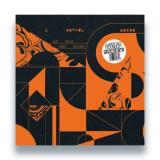
With A Meeting Point Of Old School Electro Acid Sound This Ep Dig For The Real Underground Side Electro Acid Famillies And Connections... Labels Notes About This Production Is 'the Circle Is An Ancient Geometric Figure, Used Since Prehistoric Times, Representing Endless Cyclicity.
The Circle Is In Fact A Continuous Line, Which Could Be Traced To Infinity In A Circular Sense That Represents Energy And
Spirituality,
The Sense Of Belonging To Something, To A Group, To A Thought.'
quête:fire at work
The sensational contribution of the Roman project Fire at work, risen over the millennium end, delivers the next 12 release of the label.
The sounds and visions of the two producers are coming directly from the most radical electronic counterculture's pot, the industrial dimension and the radical sound choice seem to be the best and right way to tell the story of a dystopian reality, a meaningful choice useful to criticise humans and their civilisation. The complex of the Fire At Work production represents an act of cultural resistance, therefore Monolith Records seems to be the right and natural follow up of a long multidisciplinary journey. This release is the meeting point of two generations sharing a similar electronic countercultural background, in the middle of the ruins of a modern world which is nothing but a ripped-off planet, a consumed scenario where the radicalisation of the exclusivity leads the beings to the recurring Post-humanistic alienation. The music journey develops through cuts deliberately violating the borders of genre and style, leaving to the dark decaying soundscapes the duty to shape coherence. The overall dimension of this work floats in a tension between the mental form of the synths and the implacability of the concrete drumming asset, that alternates straight and broken beats merged by the same obsessive character. In order to consistently remark the intention behind the production, the Remix by hypnoskull for 'Re_Sample The Future', a tool shaped by an heavy distorted timber that brings lyrics to clarify the common denominator of the EP: a totalitarian vision of reality involving the rejection of the status quo, together with the roles and the scopes of a totally dehumanised system. The 2.0 Man is unarmed and similar to a cadaver, and his desires and senses are reconciled by a perpetual stream of information, a data replacement of reality. The one way direction streaming can be interrupted by noise, as the element able to distort meaning the unexpected element occurring in the middle between the matrix of the message ed his audience. Given such conditions the style choice becomes part of the concept itself, and it is far from any kind of 'induced' choice.
With a meeting point of Old school electro Acid sound this EP dig for the real underground side electro acid famillies and connections... Labels notes about this production is 'The circle is an ancient geometric figure, used since prehistoric times, representing endless cyclicity.
The circle is in fact a continuous line, which could be traced to infinity in a circular sense that represents energy and
spirituality,
the sense of belonging to something, to a group, to a thought.'
New EP by Fire At Work (Fabrizio Rossi e Fabio Recchia)
Pre IDM post Dubstep slow Breakcore with an old school syncopathic remix by Somatic Responses aka Paul and John Healy (HYMEN Records, AD NOISEAM, etc.) and a light dark IDM traditional re-track by Fabrizio e Marco D'Arcangelo (REPHLEX U.K.)Excellent return of Idroscalo on vinyl!
The main tune, from Fire At Work, is a 140 BPM dub Breabeat, very organic and musical. Bringing a total Mystic Ambiance.... Then comes 2 remixes, one from Darcangelo, deeping the sound into IDM breakz, and one from Somatic Responses and carry a loud Breakcore dancefloor jewel
A few words for the album
Moment’s Aeternity:
a 12/8 composition celebrating the raw power of the “moment”, marked by whirling improvised moments between drums, bass clarinet and Harris P’s Armenian duduk.
Pajko, fire in the forest on the mountain:
in Sokratis own words: “I have a really vivid memory as a child. I was staring at the Djena mountain from my window in Archangellos which sits on the Pajko mountain. A little beam of light shone far in the horizon; it was a fire that in my little eyes looked as if the giants of Almopia were trying to communicate with each other using phryktoria (a way of contacting through fire in Ancient Greece).”
Footprints of some Giant Steps:
While the classic compositions of two true Jazz Giants- Wayne Shorter and John Coltrane- are certainly different, they do both connect in a mystical way. Rearranged in 5/8 combining half of each melody and half of each one’s chord progression, keeping the form of the piece for improvisation, still in 5.
Oson Zeis Fainou (Seikilo’s Epitaph):
found in a tomb stone in the Northeast of Greece, this is the only melody saved from the ancient times. It is accompanied by lyrics contemplating the meaning of life:
Ὅσον ζῇς φαίνου
μηδὲν ὅλως σὺ λυποῦ πρὸς ὀλίγον ἐστὶ τὸ ζῆν τὸ τέλος ὁ xρόνος ἀπαιτεῖ.
‘’While you live, shine
don’t feel blue for anything because our life is short and time demands an end.’’
Here is to Oghene K:
’’Hey man, where is the groove?’’, he would say, just to trigger another wave of inspiration for Sokratis. Oghene was a true force of nature, a well of kindness, a masterful artist that left this world too early. This one is for him.
Balkan Riff (for Milcho Leviev):
Milcho Leviev (1936-2019), was a long-time friend and collaborator and a true inspiration for expression, creativity and colorfulness. Expressing the deep sentiments evoked by the Balkan sound and history, this is a sorrowful dialogue between bass clarinet and contrabass.
Spirits of Djena:
one of the most esoteric and personal moments of the album. Composed and recorded during the challenging times of the COVID-era, you can hear the baritone and tenor saxophone firmly grounded on a crispy, hypnotizing contrabass groove.
Sokratis Votskos Quartet
Kostas Anastasiadis / Giorgos Klountzos - Chrysidis: Drums
Leandros Pasias: Piano
Vaggelis Vrachnos: Contrabass
Sokratis Votskos: Soprano Saxophone, Bass Clarinet and Compositions
Sokratis Votskos is a jazz saxophonist, clarinetist, composer, educator, and bandleader from Greece. Deeply invested in unearthing the folk sounds and heritage music of Greece and Eastern Europe, he weaves these into modern jazz compositions though the use of melodies, polyrhythms, and his reedy, timeless tone. He leads the Sokratis Votskos Quartet, he is one half of Kolida Babo and member of the Reggetiko Project. A highly regarded sideman and ensemble player, he has worked extensively with renowned jazz musicians with several highly acclaimed releases (MiC, Jazzman, Walt Disney and now Fair Weather Friends Records).
He has performed his music in numerous venues and festivals worldwide from Vinterjazz in Copenhagen, to the EFG London Jazz Festival where he performed at the legendary Ronnie Scott’s alongside Greg Foat.
He is also an archaeoacoustics researcher and enthusiast, having completed his Master studies on the field of ancient ritualistic caves of Greece research.
Leandros Pasias was born in Thessaloniki, Greece. At age 10 was introduced to piano, continuing his studies at the Modern Conservatory of Thessaloniki and later at the Conservatorium van Amsterdam in the department of jazz piano.Ηe holds a classical harmony diploma and a BA at the Department of Music Studies at the Aristotle University of Thessaloniki. In 2020 he received jazz improvisation lessons from Aaron Parks.
With a series of appearances in multiple international jazz festivals, Leandros has collaborated with a wide range of musicians from Nicolas Masson and James Wylie to Marina Osk, Ivo Papasov and Haris Lambrakis, among others.
A member of the Yako Trio, he released “OdesSea” on Fair Weather Friends Records (2021).
Vangelis Vrachnos was born in Thessaloniki, Greece, in 1989. While he started playing the bass at the age of 12, alongside his brother, his studies would commence a few years later. Introduced to double bass at the age of 23, he undertook jazz double bass studies at the Codarts Αcademy of Rotterdam. He has participated in several festivals such as the Technopolis and Odessa international jazz festivals. Since returning to his hometown, in 2015, he has been a founding member of Mordana and Yako Trio and has collaborated with a series of musicians like James Wyllie, Sokrates Votskos and Dimitis Agelakis, among others.
Kostas Anastasiadis is a tireless researcher, that has been diligently studying Tradition and its evolution, creating a fresh amalgam of sound moods. His mature improvisational virtuosity highlights a uniquely individual artistic expression and was recognized with the ̈Unique Individual Stylist" award by the PIT (Percussion Institute of Technology) in Los Angeles, California. He has been associated with various ensembles that have garnered significant interest in the global music scene. As an educator, he is the founder of "The Harmony of Rhythm" musical method, which aims to explore and establish the elements that constitute the concept of rhythm.
Giorgos Klountzos-Chrysidis was born in Thessaloniki in 1991. Following studies at the Modern Conservatory of Thessaloniki, he moved to France and the Conservatoire de Nice. With performances at well-known festivals like Nice Jazz Festival, Nuits du Sud and Jazz à Vienne, he had the opportunity to meet the American drummer Leon Parker, who encouraged him to move to Paris, where he spent the next two years under his tutoring and guidance.
In 2016, came a defining moment in his career as he traveled to New York for the first time. He participated in the quartet of saxophonist Diego Rivera for a series of performances and attended lessons by Rodney Whitaker and Randy "Uncle G" Gelispie at Michigan's State University.
Collaborations include Xavier Davis, Ricky Ford, Nicolas Masson, Diego Rivera, Craig Bailey, Baptiste Herbin, Marc Abrams, Pantelis Stoikos, Antonis Anissegos, David Lynch, Ziad Rajab and Ivo Papasov, among others.
- 1: Where To Now?
- 2: Mementos
- 3: In The Name Of The Moth
- 4: With A Shrug
- 5: No Such Place
- 6: Triangular Dream
- 7: Underwater
- 8: Frenzy
- 9: Immortality Project
- 10: Leviathan
There's a tendency in metal to mistake aggression for honesty, volume for depth. To confuse the performance of darkness with its actual weight. Hidden Fires Burn Hottest, the new album from San Francisco-based post-black metal band Bosse-de-Nage, sidesteps this entirely. It’s the group’s most fully realized work yet, precisely because it refuses to be pinned down.
Bosse-de-Nage have been working with The Flenser for over fifteen years. They were one of the first bands the label ever partnered with and have the longest active relationship in the label's history. But unlike most bands who build momentum through constant touring and visibility, Bosse-de-Nage has largely existed apart from the music world's usual machinery. They've evolved on their own terms, in relative isolation, allowing the work to develop without outside pressure or influence. What began rooted in black metal anonymity has mutated into something that actively defies categorization. The aggression is still there, but it's no longer the point. Hidden Fires Burn Hottest finds the band treating emotions like physical objects, feelings with spatial properties. “No Such Place"" describes a space that can't exist but does anyway, somewhere between thought and location. ""Immortality Project"" examines infinite possibility not as promise but as problem, endless options collapsing under their own weight. These songs don't use metaphor to describe emotion. They make emotion into something you could theoretically touch.
Tracked by Jack Shirley (Deafheaven, Oathbreaker) at Atomic Garden East and mixed and mastered by Richard Chowenhill of Agriculture, Hidden Fires Burn Hottest was years in development, with some tracks beginning in 2018.
The long writing process offered time that most records don't get. Time to live with ideas, revise endlessly, to let structures settle. For the first time, lyricist Bryan Manning wrote everything in advance, creating a surplus to pull from rather than working under deadline pressure. The difference shows.
Coming off Further Still, an album built on constraint and economy, Bosse-de-Nage sought the opposite: sprawl, strangeness, fewer rules. Space for ideas to develop without rushing them. Dynamics that move through quiet as much as noise. Presence earned through atmosphere instead of volume. The record even includes ""Mementos,"" which might be considered the first love song the band has ever written.
Nothing here coheres into a theme. These are pieces pulled from low moments and private feelings made public through sound. The band has never been interested in positivity, in music that resolves cleanly or offers comfort. But bleakness doesn't mean humorlessness. There's something darkly funny running through much of it, even when it shouldn't be.
Hidden Fires Burn Hottest doesn't explain itself. It just insists: what you feel is as real as what you can see."
There's a tendency in metal to mistake aggression for honesty, volume for depth. To confuse the performance of darkness with its actual weight. Hidden Fires Burn Hottest, the new album from San Francisco-based post-black metal band Bosse-de-Nage, sidesteps this entirely. It’s the group’s most fully realized work yet, precisely because it refuses to be pinned down.
Bosse-de-Nage have been working with The Flenser for over fifteen years. They were one of the first bands the label ever partnered with and have the longest active relationship in the label's history. But unlike most bands who build momentum through constant touring and visibility, Bosse-de-Nage has largely existed apart from the music world's usual machinery. They've evolved on their own terms, in relative isolation, allowing the work to develop without outside pressure or influence. What began rooted in black metal anonymity has mutated into something that actively defies categorization. The aggression is still there, but it's no longer the point. Hidden Fires Burn Hottest finds the band treating emotions like physical objects, feelings with spatial properties. “No Such Place"" describes a space that can't exist but does anyway, somewhere between thought and location. ""Immortality Project"" examines infinite possibility not as promise but as problem, endless options collapsing under their own weight. These songs don't use metaphor to describe emotion. They make emotion into something you could theoretically touch.
Tracked by Jack Shirley (Deafheaven, Oathbreaker) at Atomic Garden East and mixed and mastered by Richard Chowenhill of Agriculture, Hidden Fires Burn Hottest was years in development, with some tracks beginning in 2018.
The long writing process offered time that most records don't get. Time to live with ideas, revise endlessly, to let structures settle. For the first time, lyricist Bryan Manning wrote everything in advance, creating a surplus to pull from rather than working under deadline pressure. The difference shows.
Coming off Further Still, an album built on constraint and economy, Bosse-de-Nage sought the opposite: sprawl, strangeness, fewer rules. Space for ideas to develop without rushing them. Dynamics that move through quiet as much as noise. Presence earned through atmosphere instead of volume. The record even includes ""Mementos,"" which might be considered the first love song the band has ever written.
Nothing here coheres into a theme. These are pieces pulled from low moments and private feelings made public through sound. The band has never been interested in positivity, in music that resolves cleanly or offers comfort. But bleakness doesn't mean humorlessness. There's something darkly funny running through much of it, even when it shouldn't be.
Hidden Fires Burn Hottest doesn't explain itself. It just insists: what you feel is as real as what you can see."
There's a tendency in metal to mistake aggression for honesty, volume for depth. To confuse the performance of darkness with its actual weight. Hidden Fires Burn Hottest, the new album from San Francisco-based post-black metal band Bosse-de-Nage, sidesteps this entirely. It’s the group’s most fully realized work yet, precisely because it refuses to be pinned down.
Bosse-de-Nage have been working with The Flenser for over fifteen years. They were one of the first bands the label ever partnered with and have the longest active relationship in the label's history. But unlike most bands who build momentum through constant touring and visibility, Bosse-de-Nage has largely existed apart from the music world's usual machinery. They've evolved on their own terms, in relative isolation, allowing the work to develop without outside pressure or influence. What began rooted in black metal anonymity has mutated into something that actively defies categorization. The aggression is still there, but it's no longer the point. Hidden Fires Burn Hottest finds the band treating emotions like physical objects, feelings with spatial properties. “No Such Place"" describes a space that can't exist but does anyway, somewhere between thought and location. ""Immortality Project"" examines infinite possibility not as promise but as problem, endless options collapsing under their own weight. These songs don't use metaphor to describe emotion. They make emotion into something you could theoretically touch.
Tracked by Jack Shirley (Deafheaven, Oathbreaker) at Atomic Garden East and mixed and mastered by Richard Chowenhill of Agriculture, Hidden Fires Burn Hottest was years in development, with some tracks beginning in 2018.
The long writing process offered time that most records don't get. Time to live with ideas, revise endlessly, to let structures settle. For the first time, lyricist Bryan Manning wrote everything in advance, creating a surplus to pull from rather than working under deadline pressure. The difference shows.
Coming off Further Still, an album built on constraint and economy, Bosse-de-Nage sought the opposite: sprawl, strangeness, fewer rules. Space for ideas to develop without rushing them. Dynamics that move through quiet as much as noise. Presence earned through atmosphere instead of volume. The record even includes ""Mementos,"" which might be considered the first love song the band has ever written.
Nothing here coheres into a theme. These are pieces pulled from low moments and private feelings made public through sound. The band has never been interested in positivity, in music that resolves cleanly or offers comfort. But bleakness doesn't mean humorlessness. There's something darkly funny running through much of it, even when it shouldn't be.
Hidden Fires Burn Hottest doesn't explain itself. It just insists: what you feel is as real as what you can see."
We are excited to continue our work with Art P / Art Programming by finally offering the first full-length work from this Bremen-based electronic group. Originally released only on cassette in 1983, the self-titled album has now been fully restored and remastered, complete with bonus tracks and unreleased mixes unearthed from a rare demo.
The LP opens with "Wesen vom anderen Stern" ("Beings from Another Planet"), a downtempo, 808-driven electro synth wave track with German lyrics telling a story of aliens capturing earth, becoming the new "Herren" (lords), while humans are reduced to mere "objects." Art Programming founding member Jens-Markus Wegener notes that this track has always been a favorite during live performances, and it's easy to imagine how the futuristic sounds would have blown people away at the time.
Next is the electro/proto-techno title track "Art Programming," which we previously issued on a limited 12" in its full-length form. With its straightforward Roland 808 rhythms, catchy synth lines, and vocoder vocals, it's a classic example of German electro, and one of the earliest proto-techno tracks - long before Cybotron claimed the techno mantle. Its extensive break and electronic twist make it an early precursor to the genre. Wegener recalls that this track was created exclusively by him and Grotelüschen, with Grotelüschen contributing most of the melodic elements, while Wegener focused on drum machine programming and vocoder vocals.
On "That's Me," the album welcomes back singer Claudia Roebke. Although it's an electronic composition, Roebke adds a rock-infused, almost psychedelic vibe to the song. The lyrics, written by Wegener, depict a person obsessed with their appearance, using irony to critique societal beauty norms, questioning the obsession with perfection and attraction.
The album continues with a series of uptempo electro tracks: "Videoscreen," "La Gare," and "Genscher Pull 'N' Push." The first two feature slightly different mixes from an earlier demo that we personally prefered over the versions that were available on the final cassette release. "Videoscreen" expands on the theme of social isolation, with lyrics reflecting on a world obsessed with watching video all day - a topic that resonates strongly with today's culture of doom scrolling and social media addiction.
Next up, "Genscher Pull 'N' Push" is an incredible electro/wave/proto-techno track recorded in October 1982 with a political edge. Originally omitted from the album, it was only available on the demo cassette we mentioned earlier. The song takes aim at German politics, with lyrics that shout "bitte geh nach links / bitte geh nach rechts" ("please go to the left" and "please go to the right"), referencing the shifting political allegiances during the 1982 coalition change, when Genscher's party, the FDP, left the Helmut Schmidt cabinet to join the CDU/CSU opposition. The track was never released as the political topic had become outdated just a few months later.
The album closes with "Light and Fire," which originally served as the album's opening track. Its quirky, upbeat vibe now makes for a fitting outro.
The gear used on this album reads like a dream list for early 80s electronic music production: Roland Jupiter 4, TR 808, TB 303, System 100, SVC 350, Korg Mono/Poly, Moog Prodigy, FRICKE-Sequenzer, Roland CSQ-100 Sequenzer, Coron DS-8, MM 12/2, Sony TC 399, TEAC-244 Portastudio, Ibanez DM 1000, EH-Electric Mistress, EV-Micro. This unique lineup of equipment sets the album apart from NDW releases of the era, lending it a distinct sound with heavy proto-techno leanings and that straightforward electro vibe we all love.
The album is being released as a very limited edition of 300 copies on transparent red vinyl, complete with a full picture sleeve and lyrics inlay. This is yet another rediscovered and restored 80s gem on our label that you definitely don't want to miss!
- A1: Bps - Within Reason
- A2: 5Atms - A Dub Called Mondo
- A3: Scott K -Tighter & Tighter
- B1: Gryph - Winona At Sunset
- B2: Ssri - .Omnicallora
- B3: Scott Coats - Be Work Zone Alert (Pw Edit)
- C1: Gold Code & Dave Aju - Yolo Jungle
- C2: Warehouse Preservation Society - Data Bliss
- C3: Stacy Christine - .Smart Move
- D1: Sos - Obsesion Romantica (Free Winona Dub)
- D2: Dave Aju & Moniker - Chuy Luis
- D3: Vastir - Turnpike
LA underground hubs DISCOS XXX aka DX3 and Elbow Grease join forces to proudly present Point Winona Sound Library Vol 1 — featuring 20 distinct artists from the inspired local dance music scene, working under one unified studio roof in various collaborative
formation at the mighty Los Feliz hilltop palace Point Winona, overseeing the city they collectively represent. These timeless warehouse-wrecking tracks all stand on their own, but the compilation as a whole offers a solid geographic sonic statement with shared rhythmic DNA and bold rooted-futurist production blueprints, guided by the champion efforts of studio executive producers/curators Tavish DJ and Dave Aju.
The BPS stage-setting opener evokes crispy A.M. hours with lush Detroit-meets-Cali feels on “Within Reason” — then studio dream team 5 ATMs bring the dubwise floor vibes up a notch on “A Dub Called Mondo” and Chitown-to-LA legend Scott K lays down an FM bass-laced acid house heater with “Tighter & Tighter”. Nashville-born producer Gryph funks things up on the live space boogie bump of “Winona at Sunset” while SSRI, comprised of Underground Resistance’s DJ Dex/Nomadico, Aju, and Black Lodge’s fearless leader Kosmik, drop fierce robo-Italo bliss on “Omnicallora”. Things take a further psychedelic twist with the PW edit of Scotty Coats’ sublime midtempo tripper “Be Work Zone Alert”, then Omakase’s own Gold Code alongside longtime rave brother Aju drop the nasty J Saul-salute “Yolo Jungle”, and Warehouse Preservation Society aka Tavish DJ & TK fully detonate floors inna raucous Wicked Crew stylee with “Data Bliss”. Undisputed LA scene queen Stacy Christine arrives with her shining debut “Smart Move”, where she and Aju trade sly vox lines of party advice over a bouncing tech banger for the ages, before the “Obsesion Romantica (Free Winona Dub)” sees Sisters Of Sound aka Maddy Maia and Tottie's, OG track getting stripped back and fired up to acidic peak time form. Then Dave Aju and SF homies Moniker aka EO & Kenneth Scott unleash wild uptempo melodic bruk heaven on “Chuy Luis”, and Vastir sends us home with the stratospheric drum n bass closer "Turnpike"
When a Russian missile struck the ground not far from my studio in Kyiv, I vividly remember how my body reacted to the explosion, milliseconds before my mind did. That traumatic explosion reduced my essence to a primal state. There existed nothing but dread—the kind that, in scripture, accompanies the appearance of angels announcing, ’Be not afraid’.
The visions of Abbess, composer and mystic Hildegard von Bingen were preceded by bright, excruciating flashes of light. Modern medicine reduces them to cluster migraines, one symptom of which is the retinal aura, often accompanied by blurred vision and blind spots. Hildegard’s music can place great demands on the bodies of its performers, emphasizing uncomfortable intervals and the wide distance between the lowest and highest pitch. In comparison, Gregorian chant, the liturgical standard of the time, represents a tempered attempt to grasp God intellectually; indeed, Hildegard’s music was once described as a stick of dynamite thrown into a Gregorian chant.
This album is not a historically informed performance. Hildegard’s persona and music are a starting point—a distant mirror, akin to the shield of Perseus, used to reflect Medusa. It allows us to reflect, comprehend, externalise, and transcend traumatic wartime experience, reinstating the embodied origins of Christianity, which contained suffering but also offered the promise of transcendence. Andriana-Yaroslava Saienko emphasises this physical aspect of Hildegard’s music by drawing on authentic Ukrainian folk singing, a form that survived despite efforts by the Soviet occupation to replace it with a simulacrum that is naive, harmless, and devoid of contradictions—an attempt to ‘civilise’ the body by disembodying it.
The musical approach is also informed by my ongoing practice of reimagining early music in modular synthesis. I accompany Andriana-Yaroslava’s fiery singing with drones—extended sounds that also occurred in medieval music. The drones alternate with improvisations, one taking its starting point in medieval polyphony, the other working with the concept of the interchangeability of sound and light, referring both to Hildegard’s visions and the space in which we recorded the album: the Cistercian abbey of Sylvanès in Occitania, known for contemporary stained glass windows whose patterns reference the dispersion of acoustic waves inside the church.
The album features two compositions by Hildegard von Bingen: O Ignis Spiritus Paracliti (O Fire of the Spirit and Defender), dedicated to the Holy Spirit, and O Tu Suavissima Virga (O Sweetest Branch), in honour of the Virgin Mary. Both pieces are performed radically slower than usual, expanding in time and space. On vinyl, the compositions are designed to reflect one another and can be listened to in either order. In the digital edition, there is a bonus track titled Zelenaia Dubrovonka (The Green Oak Grove). Based on a Ukrainian folk song from the Polissia region, Andriana Yaroslava adapted the lyrics to reflect our contemporary reality. The green oak grove does not rustle with the wind; instead, it resonates with a different sound—perhaps the missile that struck near my Kyiv studio.
The long-overdue revival of Bim Sherman’s catalog begins here. These essential recordings will become widely available again for the first time in decades, opening a new chapter in the appreciation of one of Jamaica’s most distinctive voices and representing a major moment for reggae and dub aficionados around the world. This reissue series will not only preserve his legacy but will also offer listeners the chance to experience the depth and timeless resonance of Sherman’s work in its full glory.
Bim Sherman—born Jarret Lloyd Vincent, in Westmoreland, Jamaica—holds a unique place in reggae history. Emerging in the mid 70s, his ethereal, haunting vocal style quickly set him apart from his contemporaries. He was soon collaborating with the top producers and musicians of the era, including Adrian Sherwood and the On-U Sound collective, bridging the gap between roots reggae and experimental dub and laying the groundwork for the fusion of Jamaican sounds with the vibrant underground scene in the UK. His career, from Kingston to London to Mumbai, was marked by an artistic daring and spiritual intensity that has earned him enduring respect across generations.
The centerpiece of this reissue campaign is Ghetto Dub from 1988, a record that distills Sherman’s artistry into its most potent form. Originally released in a limited number, the album embodies the stark yet soulful beauty of dub production. With its reverb-drenched drums, cavernous basslines, and echo-laden atmospherics, Ghetto Dub transforms Sherman’s various tracks into spectral presences that drift in and out of the mix. The arrangement and production—minimal yet profoundly textured—captures both the raw urgency of Jamaican street culture and the forward-looking experimentation of the UK dub scene. Each track unfolds like a meditation, balancing grit with grace, density with space. Ghetto Dub is more than an album; it is an immersive soundscape that reaffirms Bim Sherman as one of reggae’s most otherworldly and visionary figures.
- 1: Reckless
- 2: Personal Rock N' Roll
- 3: Night Of Passion
- 4: Strip Me Down
- 5: Tongue Of Love
- 6: Love Tornado
- 7: Bad Girl
- 8: Street Survivor
- 9: Too Dangerous
- 10: Bodyrock
Black Vinyl[25,00 €]
British rock singer Chez Kane is back with her third studio album, “Reckless” — an explosive blend of arena-ready hooks, slick guitar work, and unapologetic 80s-style swagger. Following the success of her first two records, Chez levels up with a collection that’s bigger in sound, richer in emotion, and packed with pure melodic firepower. Once again written and produced by Danny Rexon, frontman of Swedish hard rockers Crazy Lixx, “Reckless” channels the golden age of melodic rock while injecting it with fresh energy and modern production. The chemistry between Chez and Danny continues to shine, resulting in a record that blends 80s-inspired anthems, infectious hooks, and soaring vocals into a modern rock statement with attitude.
From glam-infused bangers to emotional slow-burners, “Reckless” showcases Chez’s growing confidence and undeniable charisma, proving she’s not just riding the revival wave — she’s leading it. If you’re craving fist-pumping choruses, soaring vocals, and a no-holds-barred throwback to the glory days of rock, look no further. Chez Kane’s “Reckless” is melodic rock done right — bold, catchy, and undeniably alive. Turn it up loud. This one’s recklessly unforgettable.
British rock singer Chez Kane is back with her third studio album, “Reckless” — an explosive blend of arena-ready hooks, slick guitar work, and unapologetic 80s-style swagger. Following the success of her first two records, Chez levels up with a collection that’s bigger in sound, richer in emotion, and packed with pure melodic firepower. Once again written and produced by Danny Rexon, frontman of Swedish hard rockers Crazy Lixx, “Reckless” channels the golden age of melodic rock while injecting it with fresh energy and modern production. The chemistry between Chez and Danny continues to shine, resulting in a record that blends 80s-inspired anthems, infectious hooks, and soaring vocals into a modern rock statement with attitude.
From glam-infused bangers to emotional slow-burners, “Reckless” showcases Chez’s growing confidence and undeniable charisma, proving she’s not just riding the revival wave — she’s leading it. If you’re craving fist-pumping choruses, soaring vocals, and a no-holds-barred throwback to the glory days of rock, look no further. Chez Kane’s “Reckless” is melodic rock done right — bold, catchy, and undeniably alive. Turn it up loud. This one’s recklessly unforgettable.
As Nathan Fake rises from the nocturnal subterranea and rave catharsis of his previous records, on Evaporator, he resurfaces into the domain of daylight, bringing a tangible sense of air rushing against your face, of big skies, and endless landscapes. The idea of pop accessibility that trickled into 2023’s Crystal Vision is refracted here through the prism of sweeping ambient, deep electronica, and trance uplift. Evaporator is Fake’s idea of “airy daytime music”, with each track a different barometer reading across the album’s varying atmospheres, which range from vibrant sunbursts, bracing rainscapes, and fine mists of clement melodics. “It’s not overtly confrontational electronic club music,” states Fake. “It’s quite pleasant, it’s accessible. As I was progressing through making the tracklist, I called it a daytime album. It doesn’t feel like an afterparty album.” For the past decade Fake has been gingerly introducing collaborations with heroes and friends alike into his lone, idiosyncratic working process. Border Community alumni Dextro AKA Ewan Mackenzie transmutes his ferocious drumming for Pigs Pigs Pigs Pigs Pigs Pigs Pigs into the blurred choral thump of ‘Baltasound’. ‘Orbiting Meadows’, meanwhile, is his second collaboration with Clark, an eerily idyllic duet where microtonal 18EDO piano clangs slowly twirl around wailing pads. Evaporator marks the junction point of old technology and ever fresh creativity for Nathan. The trusty “dinosaur” age software, particularly Cubase VST5, that has powered two decades of music is rarely updated. “I used to sort of feel a bit ashamed of using such old software, and then I kind of had an epiphany – that’s just how I work”, comments Fake. “That’s just how I play. I’m very fond of these old tools, and I get the most joy out of them, but now I’ve incorporated new technology too.” When an artist accumulates so much synergy with their instrument, music making becomes instinctual. By Fake’s account, much of Evaporator just fell into place. The album title arrived randomly in his head (“it felt completely perfect. Airy.”), ideas looped and developed until things locked into place and just felt right. ‘The Ice House’ is a fleeting glimpse of the sonic world he taps into in this creative state, its glassy FM synths built around a counterpoint between rough-hewn crystalline arpeggios and sparse yet gravitas-bearing bass. “That riff I just wrote out on the keyboard, I just played it forever and ever and ever. The original track ended up being really short. Here you go, and it’s gone!” These unplanned channellings of sound call forth records from Fake’s past while he looks ahead, perhaps getting at the very essence of his musicianship. The opener ‘Aiwa’ (“the breeziest,” he muses) reminds of the introspection that characterised Providence, excited by the fire and grit of Steam Days’ textural experiments, its chunky slams and clatters surging into a flood of harmonic buzzing as they reach out for old wisdom. ‘Hypercube’ stampedes in a similar chronological confluence, infusing an incessant synth line reminiscent of the golden age of rave with the crackling, ecstatic energy of modern festival anthems. Like the vaporisation of liquid to particles, everything that Evaporator presents has a mutant desire to be amorphous. Sounds rarely settle; the irradiated garage beat of ‘Bialystok’ is pitched downwards to driving, rebounding effect, while ‘You’ll Find a Way’ warps static into shivering energy, cinematic synth strings building anticipation into a gradual gush of chords. This translates into a more expansive stereo field than Fake has explored before. ‘Slow Yamaha’ saves the wildest, most kinetic transformations for last with a cornucopia of crispy melodies and fried drums; a sibilance of cymbals on the left, a susurrus of shakers on the right, and kaleidoscopic lasers pulsing and fizzing all around. Evaporation culminating in pure excited atoms. In a world where music has increasingly become background content, making albums remains lifeblood for Fake: “It makes me realise how long; twenty years is ages! It’s weird to see how much the world has changed. Release day back then you did fuck all, now you spend all day on socials. When I grew up the people who made the electronic music I was into were quite mysterious, and the artwork was very abstract. There was a massive distance between you and that music, and that was a key part of it, really. Now it helps to be an extrovert, and I'm just not, but the album marks the first time my face has graced the cover art. I’ve never wanted to do this before, I'm very shy, and generally I don’t like being seen,” he professes. “But, twenty years in, I supposed I could try something new. I'm very lucky that I'm somehow surviving in this world, where the media world favours extroverts and interesting looking people. It’s not my world but somehow I’m still in it.” Evaporator continues to prove Nathan’s necessary presence, with some of his most engaging, varied, and magical music yet.
- A1: Here I Am Baby (Come And Take Me)
- A2: Everything I Own
- A3: Green Grasshopper
- A4: Play Me
- A5: Children At Play
- B1: Sweet Bitter Love
- B2: Gypsy Man
- B3: There’s No Me Without You
- B4: The First Time Ever I Saw Your Face
- B5: I Just Don’t Want To Be Lonely
- C1: Mark My Word
- C2: The First Cut Is The Deepest
- C3: Melody Life
- C4: Work And Slave
- C5: Working To The Top (My Ambition) (Part 1)
- C6: Don’t Let Me Down
- C7: Band Of Gold
- D1: Put A Little Love In Your Heart
- D2: I See You, My Love
- D3: It’s Too Late
- D4: Baby If You Don’t Love Me
- D5: Love Walked In
- D6: When Will I See You Again
- D7: Play Me (Part 2)
2025 Repress
140g vinyl, remastered, double LP with the original LP along with a second record of 14 rare tracks
Sweet And Nice is the vital debut album from Jamaica’s undisputed first lady of song Marica Griffiths. It’s reggae at its most soulful. Slinking through a tight ten tracks of R&B and pop-sourced material, it became an instant best seller. 45 years after its initial release the LP is available again on vinyl, now as a double LP, with an extra record collecting 14 rare tracks.
Sweet And Nice has appeared over the years with a revised running order and under different titles. But the original’s opening sequence of loping soul is legendary, even beyond reggae circles. These songs are now returned to how they were presented on that first Jamaican release, and under their intended album title. Be With doesn’t mess with magic.
Marcia’s version of “Here I Am (Come and Take Me)” has long been lusted after, played by genre-hopping selectors to snapping necks for decades now. It’s followed by the sophisticated, rollicking wah-wah funk of “Everything I Own” and the slice of smooth lovers soul par excellence that is “Green Grasshopper” and her ace, lilting Neil Diamond cover “Play Me”.
The thundering, humid funk of “Children At Play” “sounds uncannily like a precursor of Massive Attack”, as FACT Mag astutely noted when they put Sweet And Nice at number 16 in their list of the 100 best albums of the 1970s. Otherworldly, moody and essential.
Side two keeps the fire burning. “Sweet, Bitter Love” should leave you swooning, and is also one of the album’s alternate titles. Curtis Mayfield’s already-eternal “Gypsy Man” is up next, recast as proto-lovers rock.
“There’s No Me Without You” is elevated to canonical status by the majestic, forlorn horns of the Federal Soul Givers and Marcia’s heartbreaking delivery. And if this doesn’t get you then surely the next track will: arguably the definitive version of Ewan MacColl’s “The First Time Ever I Saw Your Face”. Yes, seriously.
“I Just Don’t Want To Be Lonely” re-takes its rightful place at the end of the LP’s second side… but we couldn’t leave it at that. So we added an entire second record of rare material recorded around the same time as Sweet And Nice, much of it unavailable since it was originally released. Some of these songs have only ever been found on now unattainable 7" singles and no, rarity doesn’t always correspond with quality, but in this case we’re talking about some seriously jaw-dropping music.
Amongst 14 extra tracks you’ll find the exquisite late-60s singles “Melody Life” and “Mark My Word” which, along with the sumptuous reading of “Band Of Gold”, are now £100 records, if you can find them! Just sayin’. There‘s also a fantastic version of “The First Cut Is the Deepest” and an alternate take of “Play Me” with producer Lloyd Charmers adding his own vocals.
Everything’s been remastered of course, including the original LP, so Sweet And Nice now sounds even sweeter, and even nicer.
BCUC – Bantu Continua Uhuru Consciousness – have been channeling the spirit of Soweto for over twenty years. Indigenous funk, hip-hop consciousness, and punk rock energy fused into something utterly original and deeply rooted. Their mantra: Music for the people, by the people, with the people. From humble beginnings rehearsing in a shipping container, a stone's throw from the church where Desmond Tutu organized the escape of the most wanted anti-Apartheid activists, they kept believing in their dream of self-empowerment. Today they command festival stages worldwide: Glastonbury West Holts, Roskilde, Afropunk Brooklyn, WOMAD, Fusion, Sziget, FMM Sines, Beaches Brew, Boomtown, Colours of Ostrava, Couleur Café – to name just a few. In 2023, BCUC were honoured with the prestigious WOMEX Artist Award, an accolade usually reserved for more established artists, in recognition of their fearless work and transcendent live performances.
THE ROAD IS NEVER EASY
The Road Is Never Easy is BCUC's fifth album and their debut on Outhere Records. On this new offering, BCUC take listeners on another Afro-psychedelic journey into the soul of Soweto. It feels like a gospel sermon colliding with a punk concert, "guaranteed to touch untapped corners of your soul" (OkayAfrica). BCUC's music is deeply rooted in history and echoes the voices of the ones who came before. The road was never easy for the people of Soweto who originally came to work in the mines of Egoli, the City of Gold, Johannesburg. When apartheid finally ended after a long struggle, it was hoped that life would improve. But more than 30 years later, many of those initial hopes and dreams are still waiting to be fulfilled. This album is about that struggle. The album contains 10 brand new songs – a record for BCUC, whose previous albums featured an average of 3 songs. It represents the culmination of more than two decades of performing together and building a reputation as a powerful live act. These ten songs encapsulate that same live energy, each one building gradually and drawing you into BCUC's Afro-psychedelic stream of consciousness. It's a seismic tour de force through life in Soweto today. Songs like Amakhandela (Breaking All the Chains) connect history to daily life: "How is this precious metal inflicting so much pain in us," sing BCUC, "this government has been telling us we are free, but we don't benefit from being free." The album also talks about all the hopes and dreams that remain: "I have too many wishes and dreams in my head," BCUC sing in Um duma khanda, "I think I am losing my mind". The album ends with the soothing Matla a rona ke Bophelo, "our strength is life", praising the spirits and thanking the elders for protection. The Road Is Never Easy is about the harsh reality of life in Soweto, where "people always carry heavy loads". BCUC are street poets trying to deal with that burden: sometimes revolutionary, sometimes soothing, but always hopeful and compassionate. "When you are from Soweto you can't retreat nor surrender." (Sebenzela)
RECORDING
The album was largely recorded in Munich, Germany during tour breaks over two sessions, each three days long. It took place in a small studio located in a German WW II bunker converted into rehearsal spaces. The songs were recorded in one take altogether in one room, with only a few overdubs added, mainly backing vocals, by BCUC at Fourways studio in Johannesburg. BCUC have created their own distinctive way of writing, or rather, finding and creating their songs. The recording process is like an improvised live performance. They bring their ideas into a zone where the music, the rhythm and the spirits take over until the song starts to form. In this Afro-psychedelic zone BCUC create their unique poetry that feeds on the dreams still dreamt, the hopes, the fears and the temptations lingering everywhere. BCUC's songs need to breathe and time to build. The right take was the one when the song took over, and just like their live performances, no one knew beforehand where the song would take them. During the recording, BCUC just let it all flow out: inner turmoil, cries of rebellion, but also resilience and a search for healing, love, unity and compassion. You don't have to be from Soweto to feel the deep meaning and impact of this music. In these times of so much hate and division, BCUC are like a campfire for people to gather around.
PRODUCTION & ARTWORK
"BCUC have a unique magic," says Outhere's Jay Rutledge, who produced the album. "It blew our minds. It's like punk and pure gospel at the same time. Their music can make you dance and it can make you cry, all at the same time. And when the song is over, you feel you're not alone in this world anymore. We felt compelled to do this." The album cover is based on a matchbox design, matches being a common household item in South Africa even today. "These were the matches people used to burn government buildings and cars," explain BCUC. Little messages, addresses, or phone numbers used to be scribbled on the back of these boxes; each one a reminder of the strength, resilience, and resistance that once drove the struggle for freedom in Soweto. BCUC keep this flame burning. The Road Is Never Easy is a heavy spiritual road trip, a deep dive into the subconscious of Soweto and a quest for truth, justice and sanity in this crazy world. BCUC tackle the harsh realities of the voiceless, guided by the spirit world of their ancestors. Rather than reinforcing stereotypes of poverty, BCUC's portrayal of Africa is one rich in tradition, rituals and beliefs. "We bring fun and Afro-psychedelic fire from the hood," says vocalist Kgomotso Mokone.
EP2 Limited 2 x 12" Vinyl & Digital Release The second digital and vinyl EP from Brian Jackson and Masters At Work’s highly anticipated ‘Now More Than Ever’ project is a masterclass in soulful innovation, musical legacy, and collaborative excellence. Carefully curated and expertly packaged for true fans, this release brings together extended versions and rare cuts that were simply too expansive, deep, and powerful to fit on the forthcoming triple LP — but far too important not to be heard. The double pack also includes the title track off the forthcoming album ‘Now More Than Ever’, a brand-new, never-before-heard track birthed organically during the energy and creative momentum of the recording sessions. It stands as a testament to the spontaneous brilliance of Jackson, MAW and their collaborators, capturing a moment of pure musical inspiration. The EP features seven tracks, including reimagined and extended versions of classics such as Kenlou Cult Classic ‘Moonshine’, Jackson and Heron’s ‘Lady Day and John Coltrane’, and ‘Home Is Where the Hatred Is’, plus a deep focus on ‘Racetrack in France’ — first recorded by Brian Jackson and Gil Scott-Heron in 1977 for their landmark Bridges album. Highlights include: The MAW (Masters at Work) Live Mix of ‘Moonshine’, featuring former Midnight Band/Amnesia Express multi-instrumentalist Carl Cornwell on saxophone. A sprawling 12" version of ‘Home Is Where the Hatred Is’ — a jazz-fuelled dancefloor reinterpretation blending political fire with sonic elegance. The 12” version of ‘Lady Day and John Coltrane’, featuring Rahsaan Patterson’s soulful vocal performance set against a lush, cinematic arrangement. A masterful reworking of ‘Racetrack in France’ featuring legends Josh Milan, J. Ivy, and Moodymann, each bringing their distinct voice and flavour to this seminal piece. The instrumental version is also included in this 2 x 12” EP. Whether you're a long-time devotee of Brian Jackson and Gil Scott-Heron’s influential catalogue, a DJ or collector chasing rare wax, or a new listener drawn to future-leaning soul and jazz, Now More Than Ever ‘EP Two’ is an essential release — a bridge between the past, present, and the music still to come.
- 1-: Fire Graphics
- 2: Secret Speech
- 3: Ex-Human Shield
- 4: History's Biggest T-Shirts
- 5: Not A Sound In Heaven
- 6: Company Town
- 7: You Can't Say Dallas Doesn't Love You
Bristol experimental band SUGAR HORSE are delighted to announce that their third album, Not A Sound In Heaven, will be released on 10th April 2026 via Fat Dracula Records.
To celebrate the news, the band are sharing the bruising lead single ‘Secret Speech’, available to stream on all good digital service providers from 12th February 2026.
Also announced today are a run of April 2026 UK album headline tour dates and an appearance at StrangeForms Festival 2026, with tickets on sale now (see below for full listings).
“We are fortunate enough to live in what is generally known as ‘The West’,” says front man Ash Tubb of the lyrical themes behind the new track. “I say fortunate with gritted teeth, because I know—as I’m sure the reader knows—that living in the West isn’t always rosy. The vast majority of people struggle everyday to feed, clothe and house themselves. Let alone receive adequate healthcare, schooling and workers’ rights.”
“We are, however, where all the world’s wealth is hoarded. We are at the centre of Empire. The people outside of this empire—those of the Global South—have had their resources extracted and their populations exploited by our own governments, with very little given back in return. This won’t go on forever. It will inevitably end, as all great empires do.”
“We in The West have a choice to make in the meantime; either help create a new, fairer world, or let the greed of our ruling classes become the undoing of all of us.”
The first glimpse of new material from the quartet, ‘Secret Speech’ starts as Not A Sound In Heaven means to go on—a politically-charged wrecking ball of a song that smashes its way through the often unbelievable chaos and brutality of the 21st century with vitriolic malice.
How do you capture the machinations of the geo-political industrial war machine—and all the horrors that go with it—in the studio, without seeming trite or crass? That’s the question that Sugar Horse have posed themselves on their forthcoming third album Not A Sound In Heaven, and they must surely be one of the only bands in existence capable of delivering on just that premise with both musical substance and cutting philosophical insight.
“Ever since I was born I can remember visions of war, famine, and death being beamed directly into my living room via the magic of television,” says Tubb of the record. “These visions were accompanied by newsreader narratives designed to either humanise or dehumanise the people involved. We humanise our government’s allies and dehumanise their enemies. This is taken as common sense, or even wisdom to some degree. People watch the news and accept it as fact, simple and true.”
“As a person gets older they move in one of three different directions with this acceptance of reality; They embrace what they’re being told, they fall into a kind of trust free nihilism or they learn that there are deeper narratives at play.”
“Not A Sound In Heaven is an aged acceptance of the latter. An acceptance of sitting at the centre of a global empire of both military and economic dimensions. An acceptance that the stories we’re told as a nation, or what’s generally in the zeitgeist, isn’t necessarily reality itself.”
“How does a person cope with the weight—and, frankly, the guilt—of a society that perpetuates such distinct inequalities? A society that thinks a bit of killing abroad is fine, as long as it improves the lives of people at home. You can see why so many choose to embrace it. Hell, nihilism seems pretty sensible. Once a person decides upon pursuing a degree of truth however, things get a bit depressing. Beyond depressing...maddening.”
“This album explores this kind of breezy, frivolous subject matter in a manner that will no doubt be uplifting to the listener and massively financially rewarding for the artist.”
The new album follows on from their standalone AA single ‘What’s Your ETA? Let’s Have A Tear Up’/‘Would You Like Me To Be The Cat?’ which was released late last year as a surprise double drop.
- A1: The Gathering
- A2: She Wants Me
- A3: Pants On Fire
- A4: War & Peace
- B1: Luva Changer
- B2: Samba
- B3: After Hours (Extended Euro Mix)
In the vibrant, post-millennial landscape of independent hip-hop, few collective names commanded as much respect as the Living Legends. A monumental alliance of some of the West Coast's most respected solo artists—including Murs, The Grouch, Eligh, Aesop, Bicasso, Luckyiam, Sunspot Jonz, and Arata—the crew's 2008 album, The Gathering, served as a powerful declaration of their unity and enduring relevance.
The Gathering was a snapshot of a legendary crew working at the peak of their collaborative power. The project masterfully weaves together the diverse styles of its eight members, moving effortlessly from the conscious storytelling of Murs to the soulful, introspective flow of The Grouch and Eligh, and the abstract lyrical dexterity of Aesop. The production, handled largely within the collective, provides a lush, sample-heavy, and distinctly West Coast soundscape that perfectly complements the lyrical fireworks. Tracks like the anthemic title track "The Gathering" and the legendary posse cut "After Hours" showcase the organic chemistry that made the Living Legends a seminal force in underground music.
For the first time ever, this pivotal album is being officially pressed on vinyl. This highly anticipated Record Store Day 2026 release finally delivers The Gathering to the format its rich, soulful production has always deserved. This limited edition pressing is presented on striking Coke Bottle Clear Vinyl, a perfect visual complement to the album's crisp, refreshing sound.
A crucial artifact of independent hip-hop history, The Gathering on vinyl is an essential addition for fans who have supported the Living Legends for decades and a must-have for vinyl collectors looking to own a tangible piece of the era's best crew collaborations. Don't miss the chance to own this definitive, first-ever vinyl pressing of a true underground classic.
- A1: Intro 0:50
- A2: Wordplay 3:17
- A3: Spontaneity 4:08
- A4: Rugged Ruff 3:08
- A5: Interlude 0:29
- B1: I Confess 4:06
- B2: Uknowhowwedu 3:35
- B3: Interlude 1:09
- B4: Total Wreck 3:26
- B5: Innovation 3:23
- C1: Da Jawn 5:19
- C2: Interlude 1:05
- C3: True Honey Buns (Dat Freak Sh*T) 3:41
- D1 3: Tha Hard Way 4:12
- D2: Biggest Part Of Me 4:51
- D3: Path To Rhythm 3:24
Bahamadia’s 1996 debut album Kollage is rightly regarded as one of the greatest rap albums of the 1990s. For the first time ever, Be With present the definitive double LP version of this eternal hip-hop classic, including the legendary "Path To Rhythm" which never appeared on the original LP or on vinyl, anywhere. An indelible VIBE from start-to-finish, Kollage presents Bahamadia's swirling rhymes delivered with an irresistibly butter flow and razor-sharp assuredness over a steady slew of smoothed-out, jazzed-up, blunted beats. Achingly cool and effortlessly funky throughout, it's an absolute must for true 90s hip-hop fanatics.
The entire Kollage project was recorded at D&D Studios and the ties to Gang Starr are keenly felt, with DJ Premier producing five tracks in addition to the killer songs Guru had already produced with her. Working with the cream of the mid-90s East Coast sound, Kollage is, accordingly, a record that demonstrates a varied musical taste with disparate influences, as Bahamadia has previously stated: “The title Kollage was a reflection of my state of mind. I first got interested in music from playing my parents’ and grandparents’ records, as well what I heard on the radio. I wanted Kollage to reflect that diversity both lyrically and sonically."
With intelligent, poetic lyricism and a laconic verbal style bursting with both warm texture and deceptive energy, Bahamadia’s flow was as inspired by Aretha and Nancy Wilson as it was Q-Tip, Schoolly D and Lady B. Swaggering out the gate, "WordPlay" finds Bahamadia confidently showcasing her considerable old-school battle-rhyme skills over a Guru beat that utilises an infectiously bouncy bassline with splashes of sultry jazz horns and a Jeru vocal snatch for the hook. Up next, the quietly shimmering and ruggedly beautiful "Spontaneity" is one of the most alluring on the record, Da Beatminerz crafting a brilliantly soulful and jazzy soundscape for Bahamadia's effortless vocals to float across. It's followed by "Rugged Ruff", where the rapper carefully constructs a swift off-beat flow over Premier's raw jazzy fire.
With smooth spacey synth vibes overseen by former Geto Boys producer N.O. Joe, "I Confess" is, without question, a fly love song and soothing (p)-funk groove. "UKNOWHOWWEDU" is an airy, chilled tribute to her hometown. Produced by Ski Beatz & DJ Redhanded, it rides a gloriously mellow break. It's a true Philly anthem, shouting out a who’s who of the entire city’s scene. Early banger "Total Wreck" follows, presenting a murky Guru instrumental elevated by jazzy horns. Bahamadia invokes the title's suggestion, firing her brilliant bars more aggressively than we’re accustomed to. More Beatminerz-brilliance comes in the way of "Innovation", an opportunity for the MC to invoke Freestyle Fellowship in her forward-thinking and literary verses. "Da Jawn" features hometown buddies The Roots, with Black Thought gliding into a back-and-forth with Bahamadia over ?uestlove’s warm, snapping percussion. With the strut club banger "True Honey Buns (Dat Freak Sh*t)", DJ Premier provides some laidback vibrant boom bap for Bahamadia to share a wild, cautionary tale about a night out with her girl, Kia.
Fan favourite "3 Tha Hard Way" is a hypnotically sinister cut, with Bahamadia, K-Swift and Mecca Star taking star turns to coast over DJ Premier’s raw beat whilst the tender "Biggest Part Of Me" is a heartfelt stunner dedicated to her son. Incredibly, only the European and Japanese CD versions of Kollage was released with the brilliantly breezy “Path To Rhythm”, featuring Ursula Rucker. Whilst ostensibly a "bonus track", it's anything but, to our ears. Very much in sonic conversation with KRS-One's stretched-out sleeper classic "Higher Level", it's absolutely essential so we had to include it, appearing on wax for the first time here, exclusively. Quite a coup.
Somewhat predictably, whilst Kollage was released to significant critical acclaim, it suffered from disappointing sales. In the intervening years - and for far too long - it was a criminally underrated record, an increasingly hidden gem. We hope this double LP reissue - which looks and sounds amazing - will go some way to correct this. This 2024 Be With double LP re-issue has been mastered for vinyl by Simon Francis, cut by Cicely Balston and pressed at Record Industry. It's too bold and beautiful to remain overlooked and underserved.
Mike Mareen – “Africa” (Previously Unreleased Maxi Single) – A long-lost Italo disco gem finally sees the light of day.
In the mid-80s, Mike Mareen was at the height of his fame, setting charts and dancefloors on fire with hits like “Love Spy” and “Agent of Liberty”. Riding that wave, he began work on his second album “Let’s Start Now”, which featured socially conscious songs addressing issues like the Berlin Wall, German reunification, and famine in Africa.
One standout track, “Africa”, was inspired by movements like Band Aid and USA for Africa. Though recorded and intended as a single, it was mysteriously shelved and never released in maxi format… until now.
Thanks to Vintage Pleasure Boutique, this missing piece of Mareen’s discography is finally available on vinyl, complete with a special DJ Edit crafted for today’s retro selectors. A must-have for fans and collectors of true 80s synth-pop and Italo disco.
- 1: Urn Burial
- 2: The Redness In The West
- 3: The Third Migration
- 4: They Came Like Swallows
- 5: The Living Theater
- 6: The Oceans Are Crying
- 7: Insight
Black Vinyl[30,67 €]
They Came Like Swallows is the first album-length collaboration between Thurston Moore and Kramer (now officially Bonner Kramer), two giants of alternative/ experimental music. The accomplishments and influence of these two artists in the world of independent music cannot be overstated and the result of their artistic union is a startlingly cohesive statement that burns through landscapes of primitive outsider rock, avant-garde composition, progressive ambient and further locales boldly and beautifully unnamable. “Kramer and I reconnected in Miami, Florida, a few years back, many many years after each of us had departed NYC on separate life adventures. It was only a matter of time before Kramer and I started making plans to record together and with his irrepressible due diligence he quickly set up a mobile recording contraption in the pad I was decamped in, the Florida sunshine flowing through the palm leaves, lithe lizards skittering across the windowsills, and we just went for it.
Kramer had the idea to cover a Joy Division tune, a left turn from the improvisations we had been tracking, though wholly in keeping with both our sensibilities of light and dark unifying in transcendent songwriting, both of us devotees of 'the song' as well as 'the freedom.’ What transpired is They Came Like Swallows, a session we immediately felt should exist as a prayer to the war-torn souls of the families of Palestine continually decimated by the brutality of genocide. We agreed beyond words to offer our music as a sonic activism and as a beneficent energy. This album is our duo exchange for human dignity, it is our soul music for any semblance of a peaceful planet.” ~ Thurston Moore “For the first time in our nearly 45 years of friendship, we had identical time windows open to make a record together,” recounts Kramer. After all this time not a moment is wasted as the duo immediately taps into the heightened core of improvisational tension across these seven offerings. Volcanic opener “Urn Burial” notches a similar historic union (John Cale and Terry Riley) to meet the circumstances of the moment, with swirling mists of organ and pounding toms over guitar that thickens the atmosphere with jagged, grimy dissonance.
Solemn strings open the second track, “The Redness In The West,” with Kramer’s cello and viola in dueling bow beneath the high tension drive and sustain of Thurston’s electric guitar, tapping out a Morse code of tension that mounts endlessly into a fog of inevitable war by the end. Moore and Kramer’s sense of experimentalism is in free and full grandeur throughout They Came Like Swallows, though the duo keep a strong and constant sideways eye on melody, composition and architecture, to the ends that any strict lines between song and improvisation are blurred beyond qualification.
As if to punctuate this point, Swallows closes with a nightwork cover of Joy Division’s “Insight,” a doleful coda that breathes out with a solemn inner grace under Thurston’s instantly stylistically recognizable guitar melodies as they weave into he and Kramer’s unison voices. As the lone vocal piece and only traditional ‘song’ form on the album, “Insight” is unique to this set and as a closing statement draws connective lines back to the kind of dynamic, electrified melodicism that wove deep, melancholy patterns into the untamed fire of Sonic Youth’s Sister and Daydream Nation. In the album’s final moments, the two voices repeat the lyric “I’m not afraid anymore” as mantra, underscoring the heavy, unsettled themes and methods that preceded it. Kramer describes the creative process of They Came Like Swallows: “I had composed and recorded a few pieces at my home studio over the course of a couple weeks. Thurston was spending the winter in South Florida, so I flew down and spent a few days recording his guitar parts in his home there. Watching him spontaneously compose his parts was pretty astonishing, to say the least. Once we'd finished working on those pieces, we began improvising and following wherever the music pointed us, and another few pieces were born. We got straight to it, without anything driving us other than the joy of finally working together.
My personal goal was to remain present and catch as many surprises as I could from Thurston's guitar work, and there were plenty during those few days. We had a fucking blast.” Thurston’s contributions here will be readily familiar to any acolytes of his other works, the through-line between his inspired playing, cradled in Kramer’s meticulous, solid arrangements. “If I had to make this record again, I'd do it all exactly the same way,” Kramer says. “It’s like jazz, you don't think about it. You just do it. It was miraculous, and you don't fuck with a miracle.”
They Came Like Swallows is the first album-length collaboration between Thurston Moore and Kramer (now officially Bonner Kramer), two giants of alternative/ experimental music. The accomplishments and influence of these two artists in the world of independent music cannot be overstated and the result of their artistic union is a startlingly cohesive statement that burns through landscapes of primitive outsider rock, avant-garde composition, progressive ambient and further locales boldly and beautifully unnamable. “Kramer and I reconnected in Miami, Florida, a few years back, many many years after each of us had departed NYC on separate life adventures. It was only a matter of time before Kramer and I started making plans to record together and with his irrepressible due diligence he quickly set up a mobile recording contraption in the pad I was decamped in, the Florida sunshine flowing through the palm leaves, lithe lizards skittering across the windowsills, and we just went for it.
Kramer had the idea to cover a Joy Division tune, a left turn from the improvisations we had been tracking, though wholly in keeping with both our sensibilities of light and dark unifying in transcendent songwriting, both of us devotees of 'the song' as well as 'the freedom.’ What transpired is They Came Like Swallows, a session we immediately felt should exist as a prayer to the war-torn souls of the families of Palestine continually decimated by the brutality of genocide. We agreed beyond words to offer our music as a sonic activism and as a beneficent energy. This album is our duo exchange for human dignity, it is our soul music for any semblance of a peaceful planet.” ~ Thurston Moore “For the first time in our nearly 45 years of friendship, we had identical time windows open to make a record together,” recounts Kramer. After all this time not a moment is wasted as the duo immediately taps into the heightened core of improvisational tension across these seven offerings. Volcanic opener “Urn Burial” notches a similar historic union (John Cale and Terry Riley) to meet the circumstances of the moment, with swirling mists of organ and pounding toms over guitar that thickens the atmosphere with jagged, grimy dissonance.
Solemn strings open the second track, “The Redness In The West,” with Kramer’s cello and viola in dueling bow beneath the high tension drive and sustain of Thurston’s electric guitar, tapping out a Morse code of tension that mounts endlessly into a fog of inevitable war by the end. Moore and Kramer’s sense of experimentalism is in free and full grandeur throughout They Came Like Swallows, though the duo keep a strong and constant sideways eye on melody, composition and architecture, to the ends that any strict lines between song and improvisation are blurred beyond qualification.
As if to punctuate this point, Swallows closes with a nightwork cover of Joy Division’s “Insight,” a doleful coda that breathes out with a solemn inner grace under Thurston’s instantly stylistically recognizable guitar melodies as they weave into he and Kramer’s unison voices. As the lone vocal piece and only traditional ‘song’ form on the album, “Insight” is unique to this set and as a closing statement draws connective lines back to the kind of dynamic, electrified melodicism that wove deep, melancholy patterns into the untamed fire of Sonic Youth’s Sister and Daydream Nation. In the album’s final moments, the two voices repeat the lyric “I’m not afraid anymore” as mantra, underscoring the heavy, unsettled themes and methods that preceded it. Kramer describes the creative process of They Came Like Swallows: “I had composed and recorded a few pieces at my home studio over the course of a couple weeks. Thurston was spending the winter in South Florida, so I flew down and spent a few days recording his guitar parts in his home there. Watching him spontaneously compose his parts was pretty astonishing, to say the least. Once we'd finished working on those pieces, we began improvising and following wherever the music pointed us, and another few pieces were born. We got straight to it, without anything driving us other than the joy of finally working together.
My personal goal was to remain present and catch as many surprises as I could from Thurston's guitar work, and there were plenty during those few days. We had a fucking blast.” Thurston’s contributions here will be readily familiar to any acolytes of his other works, the through-line between his inspired playing, cradled in Kramer’s meticulous, solid arrangements. “If I had to make this record again, I'd do it all exactly the same way,” Kramer says. “It’s like jazz, you don't think about it. You just do it. It was miraculous, and you don't fuck with a miracle.”
- A1: Unfelt Loss
- A2: So Easy To Love
- A3: Teardrops (Classic Hell On Earth)
- A4: Whiplash
- A5: Morning Doctor
- B1: Cherry Blossoms In Leschi
- B2: Southward Equinox
- B3: Velvet Rope
- B4: Backward Path
- B5: Don’t Remind Me
- C1: Season Of The Wish C2. The Last Resort
- C3: Two Rivers
- C4: A Little Game
- C5: Lilies Of The Field
- D1: Lifelong Sellout
- D2: Out Of My Mind
- D3: Golden Era
- D4: Sweet Routine
For two decades, Gun Outfit has been a band defined less by genre than by continuity, patience, and a commitment to making music that reflects their lived experience.
Formed in Olympia, Washington in 2006 but long since rooted in Los Angeles, the group has evolved from a raw duo into a quietly formidable five-piece, their sound growing from scrappy post-punk beginnings into something spacious yet intimate, and always underpinned by an experimental edge.
On Process & Reality, Gun Outfit return with their most ambitious and immersive work to-date, a sprawling 80-minute double album shaped by time, environment, and philosophy. Recorded over the course of a single month in the late summer of 2020, on an 80-acre ranch in Pine Flat, California, while a massive forest fire burned less than ten miles away, the seeds of these songs were stark and strange.
Its title, Process & Reality, draws from the central work of philosopher Alfred North Whitehead, whose philosophy places intuition, experience, creativity, and relationality at the center of existence.
The band’s current lineup reflects both longevity and openness. Sharp and Keith remain the band’s primary architects, joined by longtime drummer Daniel Swire, multi-instrumentalist Henry Barnes, and bassist Kayla Cohen. Additional collaborators include Chris Cohen, Warren Lee, and Danny Sasaki all of whom add further depth, leaving subtle fingerprints across the album.
Musically, the album expands the band’s palette without abandoning its core sensibility. Dulcimer, autoharp, sitar, melodica, keyboards, homemade electronics, and a wide range of acoustic and electric textures appear throughout. The sound is mellow yet expansive, songs move between fragility and hefty atmospheric passages.
Influences surface obliquely rather than overtly. Elements of reggae and dub inform the production’s spatial sensibility. Echoes of long-form European jam bands coexist with sharp post-punk. British folk traditions, American country, and classic West Coast songwriting drift in and out of focus; the band is never afraid to lead or follow.
Damian Lazarus reveals the eighth chapter of Crosstown Rebels acclaimed annual ‘SPIRITS’ VA compilation series.
The latest instalment sees the label founder once again curating a carefully balanced lineup of emerging voices and established names, with the eight-track collection set for release on 30th January 2026.
Since its inception in 2017, Damian Lazarus’ SPIRITS series has become a trusted barometer for the year ahead, spotlighting forward-thinking artists and cutting-edge club music from across the global electronic landscape. With ‘SPIRITS VIII’, Crosstown Rebels continues this tradition, delivering a refi ned yet adventurous selection that moves seamlessly between hypnotic house, melodic depth, and late-night energy - building on the momentum of previous volumes and capturing the label’s unmistakable essence.
Opening the release, Raz Alon sets the tone with ‘Hey It’s Me’, a warm and immersive opener that draws listeners in with emotive touches and fluid groove work. Lost Desert follows with ‘Ultima’, leaning into trippy, melodic-tinged sensibilities as tumbling rhythms meet expansive atmospheres and subtly evolving motifs. On the flip, TIMANTI ventures into a captivating voyage with ‘Warrior Spirit’, pairing swirling synths with hazy melodies, before STEB delivers ‘House Of STEB’, a groove-led cut packed with personality, swing, and club-ready flair.
The journey continues with Yuvèe’s ‘Set The Fire’, featuring FADO, a hypnotic and vocal-led track that balances emotional weight with understated rhythmic pressure. Ekoboy then ups the intensity on ‘Lose Control’, combining crisp percussion with infectious momentum designed for peak-time moments. On the final stretch, MADI brings a reflective buy playful touch with ‘Around Me’, weaving lush textures and subtle dynamics into a deeply absorbing listen, before JUAAN closes the compilation with ‘Bass Cliente’, a punchy and bass-forward finale that rounds things out with raw club energy.
With its continued ability to champion new talent while welcoming respected artists into its orbit, Crosstown Rebels remains a vital force within electronic music. SPIRITS VIII stands as another clear statement of the label’s vision, reaffirming its role in shaping the sound of contemporary house and techno.
- A1: Manha De Liberdade Feat. Jorge Bezerra
- A2: Float Feat. Octavio N. Santos
- A3: Be My Shelter Feat. Dominique Fils-Aimé
- A4: Conquest
- B1: Language
- B2: Line In The Sand Feat. Ernesto & The Basement Gospel
- B3: Water To Fire Feat. Clyde Beats
- B4: Good Night
The creative bond between Atjazz and Fred Everything is a story decades in the making. It began in 1998 at The Bomb in Nottingham during a DiY label night—a label through which they both released music. That first encounter sparked a lasting friendship and a steady exchange of ideas that would continue for many years. While they collaborated regularly and remixed each other’s work, it wasn’t until the summer of 2022 that they committed to making a full-length album.
The project took shape during an 8-day stay at Martin’s (Atjazz) home in the Midlands of England, where they set themselves the challenge of writing one track per day. Their shared musical language allowed ideas to move quickly, with some tracks forming in under an hour. Over the next three years, the material was carefully developed alongside their respective album projects: Atjazz’s Starbase 17, Fred Everything’s JUNO Nominated Love, Care, Kindness & Hope, and All Is Well’s A Break In Time.
A final session in Montreal in 2024, coinciding with Fred’s 50th birthday, brought the album into focus. From there, the duo invited a select group of world-class collaborators, including Jorge Bezerra (The Joe Zawinul Syndicate / St Germain), Octavio N. Santos (SiR, Lupe Fiasco), Clyde Beats, Ernesto & The Basement Gospel, and Dominique Fils-Aimé.
The result is a personal, well-constructed record that draws on the spirit of 90s deep house while applying three decades of experience to a deeply rooted, forward-thinking sound. It is a sonic testament that honours their mutual love of synthesizers, beat making, and sound design.
It is a project that took 8 days to start, 3 years to finish, and 30 years to perfect.
- 1: Wild Geese Arrive
- 2: Awaken The Insects
- 3: Mantis Vs Horse
- 4: Grain Rain
- 5: Tiger Sex
- 6: Feed The Fireflies
- 7: Offerings To The Beast
- 8: Limit Of Heat
- 9: Thunder Begins To Soften
'The Endless Dance' is the first collaborative album from Northern Irish producer and composer Hannah Peel and Chinese percussionist Beibei Wang. The record is grounded in the strength of ancient concepts, but comes alive with the joy and freedom of play as together, Peel and Wang travel through the 24 solar terms of the Chinese calendar with a cornucopia of sound in tow – synths and prepared piano alongside traditional and unconventional percussion.
The album is collaged together from recordings made over five days at legendary rural studio Real World, a setting which aligned with the duo’s inspiration from the natural world creating a permanent record of their shared musical landscape, informed by the flora and fauna that emerge and retreat through the seasons.
Both genre-defying, storied artists in their own right, Peel and Wang met while working on Manchester Collective’s 2023 album NEON and 'The Endless Dance' certainly represents a step-change from the duo’s shared classical backgrounds – but their knowledge and training is also the foundation of its freewheeling audacity, giving them the confidence to trust their instincts.
The album is produced by Mike Lindsay LUMP, Tunng, Guy Garvey, Jon Hopkins who, with free rein, brings added energy and creativity to the album, whilst Peel & Wang are also joined by Hyelim Kim on Daegeum, a Korean flute with “colourful overtones on every note”.
Track to track, 'The Endless Dance' is unpredictable and unexpected, which is in part due to the genuine curiosity and outside perspectives that each player brought to the sessions. “I am so familiar with Chinese heritage, but I don't see how it can present in electronics, for instance,” says Wang. “Hannah comes in with that direction, to imagine what the sounds could be together.” The characterful richness of the album stems from the commonalities they found in the sessions. “We both come from cultures where story is really important,” explains Peel. “The attention to detail comes from telling a story, and one note can set that off in a different direction.”
'The Endless Dance' is a major work from two accomplished, singular artists - but it’s also the sound of mutual curiosity and shared fun, or as Wang puts it: “Two women talking in totally different language that had a wonderful chat.”
- A | Side A
- B | Side B
Another DINTE tape curated by cult WFMU show and blogger Bodega Pop; Gary Sullivan's long-running project rooted in a passion for digging for music in bodegas and cell-phone stores across NYC's boroughs. This edition focuses in on late 1990s and early 00s hip-hop & rnb from across Southeastern Asia.
"While on a work trip to Chicago in the mid-2000s, I was craving a bowl of pho. A bit of sleuthing led me to hop on the red line "L" up to Argyle Street, ground zero of Chicago's Little Saigon. In the 1960s, Chicago restaurateur Jimmy Wong invested in property on Argyle Street with a vision to build the city's new Chinatown, a kind of mall with pagodas, trees, and reflecting pools. In 1971, the Hip Sing Association, a labor/criminal organization, established itself in the area, and along with Wong, they bought up 80% of the buildings on a three-block stretch of the street. Wong reportedly broke both hips in an accident, leaving his dream to wither; in 1979, Charlie Soo of the Asian American Small Business Association brought it back to life.
Soo expanded the area into a vibrant mix of Chinese, Vietnamese, and other Southeast Asian businesses, pushing for renovations, including an Argyle station facelift and the Taste of Argyle festival. At the time I exited the station and crossed the street to get a better look at a shop with a poster for A Vertical Ray of the Sun in the window, the area was home to some 37,000 Vietnamese residents.
Opening the door, I was gobsmacked by a cavernous Southeast Asian media store, bigger than any I'd been to in Dallas, Montreal, New York, or Seattle. I spent some time at the bins, pulling out collections by some of my then-favorite singers — Giao Linh, Khánh Ly, Phương Dung — before approaching the register to ask the young woman behind the counter if the they carried any Vietnamese rap. It was a longshot, I knew, but if such a thing existed on physical media and anyone carried it, it would be this place.
'Have you heard Vietnamese rap?' she replied, her tone of voice and facial expression betraying a comically exaggerated level of distaste. I admitted my ignorance but assured her that I had long cultivated a high threshold for cheesy pop music of all kinds and genuinely tended to like hip hop from around the world.
She rolled her eyes and pointed to an area I had missed. I walked toward a far corner of the store and knelt over a small box on the floor sparsely populated with CDs, VCDs, and cassettes. I pulled out half a dozen Vietnamese hip hop compilations and a strange-looking CD with a cavalcade of odd typefaces in a queasy multitude of colors: THAILAND RAP HIT, it boasted, with 泰國 "燒香" 勁歌金曲 below it. The information on the back provided an address in Kuala Lumpur and the titles in Thai and English translation. The first track included three simplified Chinese characters after the English-language version of the title, "The Chinese Association": 自己人.
WTF was going on here? Walking back to the register, I waved the CD, asking "What's up with this one?" She gave me a look. I placed it on the counter so she could bask in the cover's full glory. She shrugged. "I'm guessing it's Thai rap?" She looked disappointed in me when I said I'd take it.
It turned out to be a Malaysian pressing of half-Chinese Thai hip hop artist Joey Boy's third album, Fun Fun Fun from 1996, and it completely changed my sense what the genre could sound like. The rapper's self-assured, effortless, silly-but-cool rapid-fire delivery weaved in and out of the most bizarre, antic beats I'd ever heard. The six Vietnamese hip hop CDs were a mixed bag, mostly "serious" sounding mimicry of US rapping over predictable production, but the highs were very high. When I got home and listened to it all, I made a point to find as much hip hop from this part of the world as I could.
The tracks collected here provide a limited but potent reflection of the two-decade ascendency
and ultimate world-takeover of hip hop, as it displaced rock and its endless variants for millions of listeners. This not a fair and balanced overview of regional production: I've only included tracks from Cambodia, Indonesia, Myanmar, Philippines, Thailand, and Vietnam. Nor is this a biggest or most important artists collection; instead, I've tried to recapture the pure visceral thrill of that first time I heard Joey Boy, choosing bangers that sound like nothing else, from nowhere else."
—Gary Sullivan
Repress.
Fast-rising Dutch DJ/producer BELLA becomes the first new artist signing to Sally C’s Big Saldo’s Chunkers imprint, with the inspiring ‘Note to Self’ EP – her debut production.
Relationships are key for Sally C. Since the inception of Big Saldo’s Chunkers in 2020, she’s released three carefully chosen EPs, all from her own studio. When she met BELLA while playing a festival in Amsterdam during summer 2022, the click was instantaneous, with the pair going on to play an impromptu b2b that day. Vibing both musically and energetically, they kept in touch, with BELLA sending Sally her maiden productions ‘Note To Self’ and ‘Orchestra Spring’. Sally connected so deeply with the tracks that they’d form the backbone of her debut artist EP on Big Saldo’s Chunkers.
One listen to the final EP and it’s not hard to see why Sally wanted to emboss them as Chunkers. Three fresh originals taking in influence from ‘90s house, acid, electro and prog, all with a unique hard-to-pin-down energy that makes them hit with a special swing.
The title track – also the first production made for the EP - sees BELLA lay down a sonic blueprint – both for her own sound and the full body of work. “This set the vibe and guided me through the creative process. I was really trying to make something that felt my own, that was also unique and not something I’ve heard before,” she shares. ‘Note to Self’ is heavy on attitude and bounce, driven by banging old skool drums, a rapid-fire grime-style vocal and a duo of synth lines – one uplifting, the other mining a slick ‘80s sheen, and the results are memorable. An absolute tune that Sally’s delighted to add to the Chunker catalogue.
‘Orchestra Spring’ is the perky sequel, a wicked one-two punch of kaleidoscopic groovy house with lashings of attitude that loves to scribble outside the lines with lots of retro samples and trippy energy. ‘Odd Symphony’ completes the trio, a blazing late-night cut driven by a gurgling acid underbelly, gritty drums and warm chords, giving the EP a brilliant afterglow.
2026 Repress
Belgian based Phara makes a huge debut on Soma with The Great Attractor EP. With his fast, raw and energetic sound, Phara's ascent has been quick off the mark and this latest release has the young producer stretch himself farther with cleverly produced and exciting tracks. UK Techno don, Setaoc Mass backs up this already masterful EP, lending his own prowess to the title track.
Great Attractor leans on 90s, spaced out techno vibes as fast paced 909s fire against the backdrop of rapid, modulating synths. Setaoc Mass' remix comes up next, offering a deeper more restrained affair. However, as usual, the adept nature of his productions deal out devastating effect. On the flip, Mission 3,2,1 delves into dubbed out synth work whilst retaining drive and groove. Further dub explorations are found on closing track The Andromeda Manoeuvre. Spacial synth work and atmospherics ebb and flow as Phara's hard hitting and relentless percussive work deals the final blow.
The futuristic proto junglism of Coral continues. With work that's been in the pipes for quite some time, Coral finally delivers an impressive 5 track EP made up of lush pads and deep bass, accompanied by vicious stabs and heavy breaks. An EP aimed at both dance floor and living room. To compliment this jam-packed release, the Dutch hardcore master Tommy De Roos, also known as FFF, has taken one of the tracks a step further down the rabbit hole with even deeper bass and a massive (!) mantra to make all heads turn. Shout out to Dj Flight, Tim Reaper, Mantra and all for the support.
The soundtrack for the animated film Arco (directed by Ugo Bienvenu, winner of the Annecy 2025 Crystal Award for Best Feature Film, also presented at the Cannes Film Festival) was composed by Arnaud Toulon. Between orchestral flourishes and delicate electronic touches, he composes immersive, sensitive, and luminous music that evokes the great scores of Joe Hisaishi while asserting a resolutely contemporary identity.
Conceived as a true sonic journey, the soundtrack accompanies Arco's temporal wanderings with rare cinematic intensity. Each piece oscillates between poetry and dramatic tension, making this work an experience in its own right, to be discovered far beyond the images.
Awarded the Sacem Prize for original music for feature films in Annecy, this soundtrack is already establishing itself as a landmark piece of contemporary animated cinema.
2025 Repress
The mighty Falsetto voice of Mr Cornell Campbell is another we believe, unsung hero of the Jamaican music scene. Who in our opinion should have broke through to a wider audience, than his cult status currently provides. We have unearthed straight from the master tapes an album that was due for release around the mid 70’s. A few of these cuts, found their way out on limited 7”s, that were mainly for the domestic Jamaican market. But as a complete body of work, never found a release until now. We hope like us, once you have played the tracks, you will feel that this set of cuts, stands up amongst Cornell’s finest work. Cornell Campbell (born 1948, Jamaica), made his first recordings in the early 1960’s for Coxone Dodd at Studio 1. Tracks like ‘Under the Old Oak Tree’, ‘My Treasure’ and later as a duo with Roy Patton ‘Salvation’ and ‘Sweetest Girl’, were local hits on the Jamaican Sound Systems. A short spell with the Uniques was followed by his roll as lead vocalist with the Eternals, under the monicker of Don Cornell. Their finest moment being the classic ‘Stars / Queen of the Minstrels’ cuts which still stand up today as some of Jamaica’s finest.
The 1970’s saw Mr Campbell move on to work with producer Bunny ‘Striker’ Lee, for whom he cut most
of his big tunes. He and fellow singer Johnny Clarke, would become Bunny’s 70’s equivalent to his 1960’s stable of singers like Slim Smith, Pat Kelly and Ernest Wilson. They would provide the voice to his many hits of the day. Bunny not being called ‘Striker’ for nothing. Cornell also had a series of hits around his theme as the ‘Gorgon’. The mighty figure unbeatable at the dances in the Greenwich Town district of Kingston. ‘The Gorgon’, ‘The Conquering Gorgon’. ‘Natty Dread in a Greenwich Farm’. These were all firm favourites at the dances in Jamaica. He also worked with other notable producers around this time. Winston ‘Niney’ Holness “I Heart is Clean’, Tappa Zukie ‘Follow Instruction’
and culminating in a massive hit ‘Boxing’ in 1979 for producer Joe Gibbs. But it was his time with Bunny Lee that set the levels for his record output. This unreleased album is from this period in time, when Cornell Campbell never sounded sweeter......
Following a string of acclaimed collaborations, including Agua Dulce with percussionist Laura Robles and Mapambazuko alongside Congolese guitarist Titi Bakorta, Peruvian artist Alejandra Cárdenas (aka Ale Hop) returns with her most personal work to date yet, A Body Like a Home. Marking her first album under her birth name, the project is a sonic memoir exploring the tangled realms of trauma, recovery, and love through autobiographical soundscapes.
A Body Like a Home is the artist at her most exposed. Comprising 13 songs and 15 poems, the album sees her set aside collaborative fusions for solo catharsis, channeling years of turbulence - intergenerational scars left by colonialism, racism, domestic violence, and alcoholism - into a work that oscillates between brutality and tenderness. Cárdenas states: “I grew up under Alberto Fujimori’s dictatorship, when a veil of hopelessness seemed to settle over everything. This is the backdrop of the album. The songs and poems trace the inevitable loop between private wounds - addiction, domestic violence, fractured intimacy - and Peru’s national scars, carved by colonialism. It’s not a straight story or a resolution. Writing and composing became a ritual of digging for meaning, into what’s buried, disguised, or renamed, until the body itself became a living archive.
” At the heart of the album is Cárdenas’s own voice - part witness, part confessor - reciting over layers of electric guitars, electronic textures, the haunting violin of Mexican musician Gibrana Cervantes, and a collage of field recordings, from rainfall, muffled whispers, broken glass, to archival protest footage from Peru. The result is a work that resonates like a diary written in sound.
The first single, "Motherland", is a searing testimony where Cárdenas voice cracks under the weight of history and personal loss. Amid a storm of distorted guitars, she traces the cyclical legacies of colonialism, from state massacres branding Indigenous bodies as “terrorists” to the spiral of addiction as an unavoidable future. The lyrics draw parallels between political and domestic violence: a mother’s drunken knife pressed to her chest, and a motherland where racism is currency. She utters: “sacrifice demands a body.” Yet, amid the wreckage, a willful grip on love and faith persists. Ultimately, A Body Like a Home is a document of transformation. Tracks like "Evangelina" and the title piece "A Body Like a Home" hold space for resilience, spirituality, and love, while "Early Road" and "Going South" thread subtle nods to Peruvian folklore, opening up bright vignettes into a sense of belonging.
The poetry chapbook accompanying A Body Like a Home (five of its pieces are also recited on the album) extends the work, building a parallel architecture. Oscillating between the documentary and the mythic, the intimate and the forensic, the profane and the oniric, these poems practice a theology of the ordinary, where everyday objects - cameras, knives, moth-eaten cotton - are charged withspiritual and historical weight. Here, the body is land, house, battlefield, collective pain, geological territory; and trauma is, in contrast, archival, cellular, ritualistic, inherited. Read alongside the music, the stories refract across two mediums: songs give them breath and poems give them bone.
The 11th release on ALIM Music, Brian Jackson - Is That Jazz? is destined to be considered a masterpiece reworking of a masterpiece of an original. Featuring the vocals of Rahsaan Patterson and the quality production of Masters At Work, Brian Jackson has paid a real tribute to his former collaborator, Gil Scott-Heron, in covering a track originally released on Heron's 1981 Reflections album.
Brian Jackson truly is a legend of Black Music through his aforementioned collaborations with Gil Scott-Heron to his recent BBE releases This Is Brian Jackson, All Talk, Mami Wata and Little Orphan Boy. There is no need for hyperbole when speaking of Brian's contribution to music, because the music and his track record speak for themselves. He truly is a legend in his craft.
Rahsaan Patterson's distinctive vocal style has attracted praise and recognition from no less a beacon of Black Music than Chaka Khan. His co-billings have been equally impressive with a list that includes Lalah Hathaway and Earth, Wind & Fire, collaborations with Faith Evans, Ledisi and Rachelle Ferrell and he has had his own compositions recorded by Brandy and Van Hunt.
Heavyweight groove from ERP — deep electro pressure with Microcentric on the flip, plus a killer Convextion remix. Pure machine soul for late-night heads.
DJ Feedbacks :
Pariah : amazing
Erol Alkan (Phantasy Sound) : Downloading Thanks!
Ben Sims : Now downloading... will check asap!
Luke Slater : Thanks!
Dave Clarke (white noise radio) : Seismic and well crafted, full support
Peverelist (Livity Sound) : Awesome, thanks!
Tensal (Tensal, Falling Ethicss) : great, Gerard always on point, thx
Call Super (Houndstooth) : thxxxx
Confidential Recipe (Rekids Special Projects) : great ep!
DJ Bone (FURTHER) : The Convextion remix is fire.
Monty Luke (Rekids / Black Catalogue) : solid ep
GiGi FM : <3
Jon Hester (Rekids, EDEC, Les Enfants Terribles, L.A.G.) : Fantastic EP across the board, amazing stuff!!
Jako Jako (BPitch Control, Tresor) : Schön!
Dan Beaumont (Chapter 10 / NTS) : Brilliant! love the Convextion mix
Satoshi Tomiie (Abstract Architecture) : Next level production and quality. Hats off
MoMa Ready (RAVE UNIT, HAUS of ALTR, Method 808) : great remix
Josh Wink (Ovum) : Usually good and sensual Electro from E.R.P.
Carista : love the remix of convextion
DVS1 : Thanks!
Inland : Ace! the remix is so lush! Thanks
Laurent Garnier : Ohhh whaouuuu - THIS IS SUPERB Full support
Radio Slave (Rekids) : I'm sold... This is great and I really love all the tracks.
Marcel Dettmann : thx
2562 / A Made Up Sound (Delsin, Clone) : The Convextion version is fire! Thanks :)
Bake (All Caps/Rinse FM) : love! <3
Interstellar Funk (Rush Hour) : Sounds great! Thank you
Efdemin (Dial) : Insanely good ep from the master!
Darko Esser / Tripeo (Balans / Clone) : Always good in my book, fantastic record!
Bailey Ibbs (Metafloor Records / Habits / Dansu Discs) : Make Electro Great Again!!
Nathan Jonson (Hrdvision) : rad!!!!
Uncertain (RSPX, WRKTRX, Suara) : convextion remix for me
Dj Deep (Deeply Rooted) : super nice release!
ROD / Benny Rodrigues : !!!!!
Surgeon (Dynamic Tension Records) : Great work. Love all tracks. Will play Convexion remix in my DJ sets for sure.
Steffi (Dolly) : simply grea!!!!!!
Kr!z (Token Records) : absolutely fantastic, as always
Phase Fatale (Ostgut Ton, BITE, Hospital Productions, Jealous God) : awesome!
Theo Nasa (Rekids) : WICKED!!!
Kosh (Syncrophone) : Lovely release
Subradeon (Subradeon Records) : interesting stuff! thanks for sending. Convextion rmx is my fav!
Gramrcy (Peach Discs/FTD) : Convextion remix is sick
Stephanie Sykes (Vent) : All tracks are sounding Super nice!!! TY!!! especially feeling Four Alone, so beautifully nostalgic. Cant wait to play!
Tal Fussman (Survival Tactics / Innervisions / Cod3QR / Drumpoet / Rekids) : oh yes
Richie Hawtin (M_Nus) : downloaded for r hawtin
Alan Oldham (DJ T-1000) : Super high quality electro, but the Convextion remix is the one I'm more likely to play out. Will support!
Ben UFO (Hessle Audio / Rinse FM) : convextion remix!
Truncate : Dope cuts thanks
Jonas Kopp : Excellent stuff, but this more of the pre-existent material.
The Advent : amazing stuff, digging all the tracks.. 2 - E.R.P - Microsentric my Fav..
Ste Roberts : Absolutely out of order! Anything Gerard touches turns to gold. 10/10
Joris Voorn (Spectrum) : Downloaded, thanx.
Roberto / R.M.K / Fossil Archive (Fossil Archive) : Love this!
Raffaele Attanasio (Axis) : nicee1!!!
DJ Assassin (Recode Records / Cross Section / Connaisseur) : wicked
Soulwax 's first new album in 8 years, entitled "All Systems Are Lying" and set for October 17th release. Available on CD & various 2LP fromats . The campaign will kick off July 9th with a double single “All Systems Are Lying / Run Free”, album announcement + pre-order launch. Since 1995, David and Stephen Dewaele have consistently pushed the boundaries of music into new and innovative territory by diversifying into many different guises. They are a band (Soulwax), djs (2manydjs), a record label (DEEWEE) and a sound system (Despacio, created along with James Murphy from LCD Soundsystem).
They are also widely renowned as one of the most innovative remix and producer teams around. They have released 7 studio albums to date, including the critically acclaimed ‘Any Minute Now’ and ‘Nite Versions’. Some of their already cult remix credits include the Grammy nominated “Work It” by Marie Davidson, as well as Peggy Gou, Fontaines DC, Roisin Murphy, Robyn, Arcade Fire, The Rolling Stones, Tame Impala, Metronomy, Daft Punk, The Gossip, Hot Chip, MGMT and Warpaint, among many others.
Stephen and David Dewaele are familiar to millions as 2manydjs, a project which undoubtedly moved the needle for modern DJing. Alongside like-minded allies such as Erol Alkan, Tiga and Jacques lu Cont, 2manydjs swept international dancefloors into delirium, gifting a rock ‘n roll attitude to club culture.