Back when the first white labels started floating through the hands of German, British, American and Canadian DJs in late ’84, nobody was ready for what was coming. The official drop hit in early ’85 and the scene was never the same again. This was the moment Mike Mareen broke through the static. Yeah, he’d been working with Chris Evans-Ironside since the ’70s but nothing hinted that together they’d channel something this futuristic. “Dancing In The Dark” sounded like it had slipped through a wormhole: melancholic, hypnotic vocals wrapped in vocoder haze, riding an arrangement so razor-sharp it made most releases of the era feel prehistoric. It didn’t need the pop charts… It owned the clubs. And the clubs listened.
London. Berlin. Madrid. Rome. Paris. Lisbon. Amsterdam. Athens. Toronto. NYC. Tokyo. Mexico City.
One drop of that electro bassline and DJs were hooked. Crowds were hooked. The whole underground was hooked. Soon Europe’s radio charts caved under its pressure, and the track crossed borders on mixtapes, becoming a cult anthem behind the Iron Curtain. It was everywhere, even where it technically wasn’t allowed to be.
Fast-forward four decades and the spell hasn’t faded. “Dancing In The Dark” still shows up in indie dance, italo wave, house and deep house sets. Producers keep re-editing it like it’s sacred material. It’s one of those tracks that DJs treasure, a timeless weapon, one of the top three defining singles of Mareen’s entire career.
And now for the 40th anniversary of its official release, Vintage Pleasure Boutique and Night’n Day Records drop the vinyl every collector and selector has been waiting for: a special reissue loaded with four brand-new remixes spanning the full spectrum of today’s underground indie/disco/italo/house energy.
Tallac – the American Berlin dweller – dives deep into the hypnotic soul of the original, pulling out its buried deep-house DNA and carving out a spacious, emotional roller.
Luksek, Italian producer & DJ, goes raw and dirty: loop-driven, gritty, underground, hypnotic, the kind of edit that eats dancefloors alive.
Flemming Dalum, the Danish Italo grandmaster, finally gets to remix the track he’d always dreamed of touching and of course it’s pure Flemingish electro-italo magic.
And the Polish sparkle: A.P. Mono delivers a shimmering mix of italo disco, glitterbox groove, disco glamour and synthwave glow, all while keeping the spirit of Mareen’s original heartbeat intact.
The wax also features two historical heavy-hitters: the 1985 Jens Lissat’s team remix and Luis Rodriguez’s original arrangement, essential cuts in the Mareen universe.
This release isn’t nostalgia. It’s a resurrection. A celebration. A reminder. “Dancing In The Dark” didn’t survive 40 years by accident, it survived because it still moves bodies, breaks hearts and lights up floors in ways modern tracks can only wish for.
If you’re an indie, italo, wave, house or disco DJ… This record isn’t just worth owning… It’s mandatory.
quête:first bass
- A1: ) Think Fast, Make Conversation
- A2: ) Here Come The Rugby Boys
- A3: ) Limpet
- A4: ) Drinking On A Weeknight
- A5: ) Back On The Meds
- A6: ) The Day We Missed The Train
- B1: ) Oh Veronica, How Right You Are
- B2: ) Romantic Visions (Prepare For Disappointment)
- B3: ) Strictly Presbyterian
- B4: ) Everybody’s Moving To Australia
- B5: ) Say You’ll Never Leave Me
The Just Joans' new album Romantic Visions of Scotland finds the Glasgow band in characteristically melancholic form, pairing shambling indie pop with sharp observations on romantic pratfalls and everyday dis-appointments, all delivered with sardonic Scottish wit, fronted by siblings David and Katie Pope, whose wry lyrics and heartfelt vocals remain at the heart of the band’s distinctive sound.
Originally inspired by a grandiose exhibition title spotted on Glasgow buses in 2019 for a show at the Nation-al Museum of Scotland called Wild and Majestic: Romantic Visions of Scotland, the new album arrives six years later as a collection of semi-autobiographical snapshots from the Central Belt of Scotland. Whilst some of the details have been exaggerated for comic (or tragic) effect, the songs are based on personal experience of mundane failings, bitter regrets and missed opportunities that make up an unremarkable life.
Recurring themes of nostalgia for a bygone era and the fear of being left behind by lovers, friends and peers run throughout the album. Musically and lyrically, the band channels Village Green-era Kinks, with nods to The Television Personalities, The Smiths and Dolly Mixture.
In the past they have always recorded by themselves in a variety of bedrooms, living rooms – and the occasional toilet. For the first time they have abandoned their DIY recording practices to create what songwriter David Pope calls, “a corporate behemoth in an actual studio.” The album was recorded at Chem19 in Blan-tyre with Paul Savage, who is best known as a founding member of local legends The Delgados. He has also produced and recorded the likes of Teenage Fanclub, Arab Strap and Camera Obscura, and has captured a slightly more muscular version of the band while retaining their ramshackle charm.
The album artwork by vocalist and painter Katie Pope depicts Motherwell Train Station – an ordinary, boring place that speaks to the subject matter of the songs, but with a hint of potential escape. As David Pope ex-plains, “For me, the painting reminds me of the ending of Billy Liar in which Billy tries and fails to leave his hometown for the bright lights of London. Half the band also live in Motherwell, so it seemed appropriate.”
Funded by Creative Scotland, the recording allowed the band to bring in bass and cello arrangements, adding depth and a sheen of musical proficiency to their signature sound.
About The Just Joans - The Just Joans were formed in Glasgow in 2005 by songwriter David Pope. Early demos were collected together and released as a loose concept album, Last Tango in Motherwell, in 2006. Chris Elkin joined on guitar and was followed shortly after by David’s younger sister, Katie, on vocals and Fraser Ford on bass. Over the years they have released EPs and albums on WeePOP! and Fika Records and have gained a cult following as Scottish pop miserabilists.
The current line-up consists of Katie Pope (vocals), David Pope (vocals, guitar), Chris Elkin (lead guitar), Fraser Ford (bass), Arion Xenos (keyboards) and Jason Sweeney (drums).
Press Quotes:
“They fit snugly into the scratchy, low budget Scottish indie tradition of The Delgados and Arab Strap… There’s mischief in this miserabilism.” - Mojo 4*s
“Glasgow’s The Just Joans have documented the romantic pratfalls of a generation of indie kids with sardonic wit and a shambling musical style where Stephin Merrit lies down with The Vaselines.” - Uncut
“Funny and sad, it’s the kind of song that made Red House Painters, The Magnetic Fields and The Wedding Present’s early albums so easy to embrace; an unpretentious sharing of relatable gloom.” - Record Collector
A reflection on how we hold each other and how we let go, ‘Secular Music Vol 1’ is the first instalment in a triptych of albums by multi-limbed live dance music outfit Girls Of The Internet. Continuing their ongoing policy of “therapy through music”, the album touches all points on the shifting landscape of human connection: belief, doubt, loss, forgiveness. Emphasising human elements of songwriting, performance and production within the lineage of house, disco and electronic music; this first record furthers the band’s flair for manifesting the creative and communal spirit that birthed the scene. Joining the dots that have not been joined for a long time, the collective takes on people of all sexualities, gender expressions and body types. House music was created as an inclusive artform and Girls of the Internet are here to assert we are all invited. The group is completed with a rotating assembly of talented collaborators, including the live band with Nandi and Wynter on vocals and Tommy Peach on bass and trumpet. ‘Secular Music Vol 1’ also features guest appearances from Dani Siciliano, Sió, Pinty, i am an island, and James Alexander Bright - also a regular member of the live band. Girls Of The Internet’s 2024 album ‘When I Was Lost, I Found Myself’ was the follow-up to the acclaimed ‘Girls FM’, one of BBC 6 Music’s Albums of the Year in 2019. Firmly on the radar of key DJs Gilles Peterson, Tom Ravenscroft, Trevor Nelson, Pete Tong, and Lauren Laverne for some time, the band’s songs have more recently found fans in BBC Radio 1’s Sian Eleri and BBC 6 Music’s Nick Grimshaw as well as around the rest of the planet on tastemaker stations Byte FM, FIP, NTS, KALW, KCRW, KEXP and Soho Radio. Girls Of The Internet have performed on home turf at Glastonbury, The Warehouse Project’s Homobloc, Drumsheds, Printworks, Latitude, Lost Village festival, and a residency this summer at London’s Colour Factory. With Ibiza shows at Pikes and Glitterbox at #1 Club in the World Hï; this July saw Tom take on their first US dates with DJ sets in New York, LA and San Francisco. The live band are currently in the middle of an extended live tour that runs through to December. ‘Secular Music Vol 1’ is set for release on 14th November 2025 on Girls Of The Internet's own recently launched House Of the Internet label.
Yes, after a hiatus of 15 months, The ReMix Collection makes a highly anticipated return as Yotto steps up to take on the Shakra Mix of Power Circle’s ‘Garden Of Peace’.
Originally released in 1993, the track was an immediate Renaissance anthem, finding favour with all their key DJs. However, it became synonymous with one man in particular, namely, John Digweed, who cemented the track’s legendary status when he included it on his Journeys By DJ compilation the following year. Even today he’s been known to slide it into the mix, most recently episode 10 of his legendary Bunker streams. And the track has other contemporary fans too; a certain Mr. Plex was heard dropping it in 2020.
In short, it’s one of those records that’s stood the test of time and grown in stature year on year. Now, its evolution takes yet another step as it joins the ranks of Renaissance’ flagship ReMix Collection series.
Yotto’s modern interpretation is a high-octane juxtaposition of thunderous bass, rising pads and THAT vocal. ”Garden Of Peace is a record I missed first time around as a kid and had only heard on a mix, never knowing what it was, so when Renaissance approached me about a remix there was a strange sense of familiarity,” he explains, “The original is full of classic progressive house mystery and, while I took the whole thing apart, I wanted to keep that emotion with my interpretation.” On the B-side there’s a re-mastered cut of the original Shakra Mix, which isn’t released digitally and remains exclusive to vinyl only.
- 1: A Hate Inferior
- 2: Dör För Långsamt
- 3: Repeater Ii
- 4: Backengrillen
- 5: Socialism Or Barbarism
Yellow Vinyl[24,16 €]
“The GRILL will fucking rule things…” – Backengrillen’s debut album out in January "Backengrillen's music is a paean to chaos and destruction. The basic idea is to take a death/doom metal, or noiserock riff and play it until it loses meaning and then break it apart like a ravenous cat would a tiny forest mouse. It's filled to the brim with the self-hatred endemic to the province of Västerbotten from whence the member’s hail. The record was written on a Thursday during their first ever rehearsal, performed live on a Friday and recorded on a Saturday, so what you're hearing is raw, stupid, gut instinct music played by seasoned purveyors of hardcore punk, metal, free jazz, noise et cetera. Record no 2 is in the making, less stupid, more ugly. Stay tuned and fuck the pigs." - Backengrillen, November 2025 Backengrillen is a new ensemble with their roots in HC, punk, noise and free Jazz. All members from Umeå, with roots in the original version of Refused – and one with starting points in the jazz-rock ensemble Nirvana (1980). With a solid and yet varied background in the creativities of Refused, TEXT, INVSN, Fire Orchestra, The International Noise Conspiracy, The End, Serpent, The Thing, Final Exit and other classic jazz combos we will now start our journey of 4 colliding locomotives, creating a new form of beauty and energy. Antifascist, antiracists free form death – jazz – in the memory of Lars Lystedt – Backengrillen arrives with new perspectives on jazz. And punk. In-your-face HC jazz inspired by The Cramps, Little Richard, Albert Ayler, Polly Bradfield, Entombed, John Zorn, Misfits, Stooges, Lars Gullin, Can and much more. Backengrillen’s self-titled debut album is out on January 23rd, 2026 on vinyl, CD, and digitally on Bandcamp via Svart Records. Backengrillen Dennis Lyxzén – vocal and effects Mats Gustafsson – saxophones, flutes and live electronics Magnus Flagge – bass David Sandström – drums and electronics
- 1: A Hate Inferior
- 2: Dör För Långsamt
- 3: Repeater Ii
- 4: Backengrillen
- 5: Socialism Or Barbarism
Black Vinyl[23,32 €]
“The GRILL will fucking rule things…” – Backengrillen’s debut album out in January "Backengrillen's music is a paean to chaos and destruction. The basic idea is to take a death/doom metal, or noiserock riff and play it until it loses meaning and then break it apart like a ravenous cat would a tiny forest mouse. It's filled to the brim with the self-hatred endemic to the province of Västerbotten from whence the member’s hail. The record was written on a Thursday during their first ever rehearsal, performed live on a Friday and recorded on a Saturday, so what you're hearing is raw, stupid, gut instinct music played by seasoned purveyors of hardcore punk, metal, free jazz, noise et cetera. Record no 2 is in the making, less stupid, more ugly. Stay tuned and fuck the pigs." - Backengrillen, November 2025 Backengrillen is a new ensemble with their roots in HC, punk, noise and free Jazz. All members from Umeå, with roots in the original version of Refused – and one with starting points in the jazz-rock ensemble Nirvana (1980). With a solid and yet varied background in the creativities of Refused, TEXT, INVSN, Fire Orchestra, The International Noise Conspiracy, The End, Serpent, The Thing, Final Exit and other classic jazz combos we will now start our journey of 4 colliding locomotives, creating a new form of beauty and energy. Antifascist, antiracists free form death – jazz – in the memory of Lars Lystedt – Backengrillen arrives with new perspectives on jazz. And punk. In-your-face HC jazz inspired by The Cramps, Little Richard, Albert Ayler, Polly Bradfield, Entombed, John Zorn, Misfits, Stooges, Lars Gullin, Can and much more. Backengrillen’s self-titled debut album is out on January 23rd, 2026 on vinyl, CD, and digitally on Bandcamp via Svart Records. Backengrillen Dennis Lyxzén – vocal and effects Mats Gustafsson – saxophones, flutes and live electronics Magnus Flagge – bass David Sandström – drums and electronics
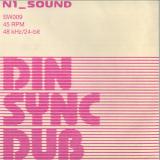
DIN SYNC DUB is an exploration of communication through sound. Six tightly packed experimental dub tracks use bass-heavy vibrations to rattle both body and mind, pushing the limits of self-expression in the hope of fostering deeper human connection.
The drive for more efficient and precise communication tools—whether between man and machine or machine and machine—has been a foundational force in the evolution of technology. This duality, the way we interface with computers and the way we speak to one another, is at the heart of DIN SYNC DUB. For this album, N1_SOUND looks back to 1980, drawing inspiration from Roland’s Din Sync—a 40-year-old synchronization technology once used to link musical machines in perfect harmony. While connecting machines to produce precisely sequenced music is nothing new, it’s the tension between perfection and imperfection—the mistakes of both man and machine—that gives DIN SYNC DUB its voice, its emotional rawness.
The journey begins with “Horizontal Hang”, which crashes through the door with a relentless bassline and crystalline synths. “Such Love” introduces a throbbing, guitar-driven groove, while “Intuition Dub” channels the spirit of Jah Shaka, offering a rhythmic pulse that echoes dub’s deep roots. “Us All” provides a moment of introspection with its sparse, three-dimensional melodies, before “Joy” reintroduces chaos, creating a post-dubstep soundscape that dismantles everything in its path. The album closes with “Mauzy” , a hopeful yet fragmented conclusion, reflecting the ever-evolving nature of technology and connection.
By the mid-to-late 1980s, Din Sync was superseded by the more widely adopted MIDI, yet obsolescence is built into the nature of all technology. Just as our relationship with machines shifts and fades, so too does our understanding of how those changes shape us. Before we can grasp the impact, the world has already moved on.
DIN SYNC DUB, the first full-length LP from Spiritual World, pulses with energy, on the edge of malfunction—a manifestation of the tension between the digital and the organic, the past and the present.
"Aroop Roy Vs Opolopo - Shigo Disgo" sees the two producers going head to head on another Canopy release, serving up club focused re-interpretations of two different Afro cuts : Chicco - Shigomase, a 1990s synth house bomb from South Africa and Spirit Konekson - Disco Party, a funky piece of 1970s Nigerian disco.
First up Aroop Roy takes on Chicco's proto house beast "Shigomase", dialling up the low end throb before bringing proceedings to a synthed out, hands in the air, euphoric crescendo.
Following on he takes his scalpel & bass guitar, chopping & flipping the Moog led funk of "Disco Party" into a restless Afro-boogie workout.
On the alternate side Opolopo channels extra sleaze into Shigomase, adding dirty dancefloor gristle and a raunchy back end, taking the vibe straight to the basement.
Rounding out proceedings Opolopo transports "Disco Party" into the present day with muscular drums and crunchy synth solos complimenting the loose limbed swing of the original
- Grace 00:58
- Ladida 03:43
- Sum 04:09
- The Boy 03:34
- Doing It Too 03:26
- Never Enough 04:00
- Words 2 Say 03:50
- Bite The Bait 04:06
- ON 2: Something 02:23
- Ttw 03:57
- Crave 03:27
- Get It Off 04:00
- Sweet Sensation 03:43
- Eyes Shut 03:09
- Close 2 Me 04:01
- I'm Your Muse 03:35
- Around 03:50
Rochelle Jordan is proudly stepping into her diva era. To those in the know, the Los Angeles-based British-Canadian singer and songwriter has long been an underground force coaxing together the mutually flirtatious scenes of daring alt-R&B and heart-pumping electronic music. With her longtime creative director/producer KLSH, she’s cultivated a singular marriage of sound — mixing soulful sensuality, house bump, DnB wildness, hip-hop swagger, and pure experimentalism — that’s spread not only through certain circles, but also to the mainstream. At the same time that her gauzy 2014 single “Lowkey” was going viral in 2023 — racking up 21 million streams on Spotify alone — she was in the studio cooking with tastemaking beatsmiths like KAYTRANADA and Sango, quietly preparing to melt dance floors and headphones alike.
Now, as the timelines merge, Jordan is approaching success with the sparkle of a brand new star and the stance of someone who’s earned everything she has. Her new musical chapter aims to carry forward the magic that fans feel in her coquettish vocals and bold soundscapes even as she reaches deeper into her pop bag. The fact that her first single of 2025, the darkly dazzling “Crave,” was produced by Chicago house legend Terry Hunter (Janet Jackson, Mariah Carey, Beyoncé) speaks volumes to this exact moment in Jordan’s ascendent trajectory.
“My goal when I first started making music was to bring back something that I felt had started to fade away for me,” says Jordan. “That certain essence or sound that would give me butterflies in my stomach when I’d listen to music — it would unleash some kind of chemical that would make me feel happy and excitable and curious, something that would make my soul shine. My number one goal is always: How do I give people that feeling when they listen to my music?”
Jordan grew up in Toronto raised by British-Jamaican parents. She remembers hearing one of her older brothers cycling through a variety of music at maximum volume in the room next to hers. “Reggae to soul to drum and bass to garage music to gospel,” Jordan recalls. “It was all intertwining for me at such a young age.” She developed her own sound quietly, and soon met KLSH through MySpace. They traded multiple songs back and forth daily until he flew her out to L.A. to record what would become her debut project, 2011’s R O J O. That collaboration hasn’t faltered since, resulting in sonically surprising, subtly infectious sets like Jordan’s breakthrough 2014 album 1021 (with “Lowkey”) and 2021’s dance-steeped revelation, Play with the Changes.
“If you’re talking about Rochelle Jordan, you’re talking about KLSH,” she says. “It’s one and the same. We come from the same inspiration source.” With him at her side to this day, Jordan is crafting new listening experiences as radiant as refracted light glimmering through a prism — an incredible space from within which to explore love in all its iterations — from romantic infatuation to self-affirmation, and strength in womanhood to pride for what she’s accomplished thus far.
More than a decade into her career, Jordan has arrived at a new stage of life and creativity — she’s a seasoned professional, a fully realized woman, and she’s excited to continue growing. “I know my story isn’t necessarily a new one,” she says. “I look at 2 Chainz, who became 2 Chainz way later on in his life. I look at Tina Turner, who became Tina Turner at 40. I want to be another story of resilience for people.” As she prepares to unveil more of her vision, and fans clamber for a long-awaited fourth album, Rochelle Jordan is casting aside self-doubt, and appreciating and underlining her status as a verifiably influential reigning diva in her one-of-one sonic space.
Are you Looking for Love? Advice? Good Luck? Then you’ve come to the right place. Fortune Three, the third release in the Psychic Readings catalog, Peach continues to explore her sound bringing 4 tracks dedicated to the dance.
It starts with In Ur Dreams, an ode to the dreamers and lovers in your fantasies. Peach gives some subtle organ hits a whirl with deeper basslines and punchy drums. Next, a track inspired by and sampling an old Christina Aguilera interview, What U Got is a warm, beachy roller which is reminiscent of hotter temperatures. Pretty pads, shiny stabs, and a weighty bassline create an endlessly playful groove – a Peach signature.
On the flip, we see Brady’s Song mixed two ways – the first being the deeper cut of the two, Brady’s Song slowly unravels melody after melody, playing with sassy stabs and a bassline on the subbier side. The Afters Edit takes a more upfront and jacking approach, focusing on the ability of the bass to roll through the whole track – shimmering percussion and the same stabs from the B1 carry us through until the last second.
All the tracks are a testament to her many moods as a DJ. From club use to home listening, this is an EP dedicated to the dance.
Melodies International’s next record features a previously unreleased collaboration between the Ariwa camp (Mad Professor’s label and studio) and rising UK R&B artist Abel Miller — a Lovers Rock cover of the classic 1960s Philadelphia soul track “Everytime I See My Baby” by The Delfonics.
A few years ago, Mad Professor teamed up with frequent collaborator and multi-instrumentalist virtuoso Black Steel — who regularly records bass, guitar, keys, and vocals for Ariwa Studios (“he can play anything” Mad Professor tells us) — to record a series of Lovers Rock covers of songs by The Delfonics. Mad Professor’s love for 60s and 70s US soul is no secret and shines through much of his production, but he realised he had never heard this particular song, originally written by Thom Bell and William Hart. For the session, they brought in Ashanti Selah on keys and Horseman on drums, with Abel Miller delivering the lead vocals. Mad Professor and his son Joe Ariwa recorded and produced the track.
Since their first reissue project with Mad Professor a few years back (Ariwa Sounds: The Early Sessions LP), he has occasionally performed with the Melodies crew — most recently on Floating Points’ Sunflower Soundsystem this past summer. At their Osaka gig a couple of years ago, he closed the show with this track, immediately blowing everyone’s minds. When asked what it was, he told the team that Melodies could release it!
The 7” single will be available in November, featuring the original studio version on one side and the live dub version Mad Professor performed in Japan on the flip (vinyl exclusive). Mastered by Frank Merritt at The Carvery, with printed sleeve artwork by Nevil Bernard.
A band that quit at the top... but now they're back! Sun-Rot was one of the most promising acts of the Hungarian indie scene with their floating, soulful, dreamy, yet psychedelic sound reaching it’s peak on their 2023 album, Mirage. Unfortunately, the band split up just after the album's release, however, after a two-year hiatus,
they have now reunited and are already working on new material. Budabeats Records is not letting Mirage be forgotten by releasing this little gem for the first time on vinyl, in the form it rightfully diserves: on 180 gram marbled vinyl, limited to 200 copies worldwide.
Credits:
Vocals: Míra Mészáros
Guitars: Péter Mónos, Gergo Balla
Bass: Gergo Dorozsmai,
Drums: Timár Benjámin
Music by Péter Mónos, Benjámin Timár, Péter Gál
Cover art by Máté Kováts, Péter Mónos
Sleeve layout: Miklós Fekete
Recorded, mixed and mastered at Tom-Tom Studios by Gergo Dorozsmai
Mastered by Anders Peterson (GS Mastering & Post)
A&R: Dj Gandharva & Von Yodi
- A1: Yamame
- A2: Memories Through Thick Glasses
- A3: Fly Casting
- A4: Like Someone In Love
- B1: Out Of Nowhere
- B2: Le Crepuscule Embaume
- B3: Like Sonny
'Yamame' (the Japanese name for a kind of freshwater salmon) was recorded in 1962 and was Miyazawa’s first album, but the sharpness and avant-garde modernity of the music creates a completely timeless quality. Miyazawa is one of a group of musicians who laid the foundation of the Japanese jazz scene. He wanted to express his cultural heritage by doing something he felt “only someone Japanese” could do, and so he dedicated himself to a pursuit of “Japanese jazz”. Incidentally, the album was originally simply titled “Akira Miyazawa”, but perhaps due to the impression the cover art and the track titles made, it was reissued in 1977 as “Yamame”, and has gone by that title ever since. This is an historic masterpiece of Japanese jazz.
Tenor Saxophone – Akira Miyazawa
Alto Saxophone, Flute – Sadao Watanabe (tracks: B1 to B3)
Baritone Saxophone, Clarinet – Tadayuki Harada (tracks: B1 to B3)
Trombone – Mitsuhiko Matsumoto (tracks: B1 to B3), Yasuhiro Tomoto (tracks: B1 to B3)
Trumpet – Akira Nakano (tracks: B1 to B3)
Piano – Masahiko Sato
Bass – Masanaga Harada
Bass Trombone – Takeshi Aoki (tracks: B1 to B3)
Drums – Kanji Harada, Takeshi Inomata
Supervised By – Jiro Kubota
- Somewhere, Nowhere
- Angles Mortz
- False Prophet
- Fluoride Stare
- The Void
- Ascension
- Just A Kid
- Host
- Landslide
- Renaissance
- 7: Am
- Blue In Grey
2026 Repress
Flickering in ultraviolet, there is an elusive place where blue pill meets red, ups become downs, and day merges with night. Those liminal spaces where anything is possible is where you’ll find Nightbus and their hypnotic debut album Passenger. Doom, uncertainty, and opportunity lurk in the shadowy corners of their murky existence with stops at disassociation, co-dependency, and addiction before reaching its final destination - a glimmer of hope.
The in-between of Nightbus’ own Gotham lies where Manchester’s city pulse meets Stockport’s outer realm. An audio-visual entity formed among a musical family of friends, freaks, and foes in messy mills and after hours on dancefloors alike, their sound bleeds from tension where collective creative forces are bound together and collide with the fallout of being torn apart. Before even playing a show, their So Young released single ‘Mirrors’ – a knowing nod of respect to some well-known gloomy Northerners - may have made old school indie heads shimmy at shows in Salford’s The White Hotel but also signalled the duo’s knack for offering listeners a Bandersnatch approach to hitchhiking their own personal Nightbus in whatever direction they choose to take. “Everyone can have their moment with our songs; the music is our response to who we are as young people, living in the city full of this energy right now,” they say.
Whilst reverb hefty melodies and dread-filled loops embody isolation from writing at each of their home studio set-ups, magic happens in the ether across 90s trip-hop, indie sleaze and electronica; Jake’s production layers Olive’s pop sentimentality with drums and samples whilst tales of a cast of faceless characters place Olive as puppet master; her severed self’s perspective manipulating their stringed limbs at arm’s length to see how their stories play out when scenes reflecting her own lie close to the bone. “It’s a bit fucked; like having this out of body experience with a made-up movie running through my head,” she says. “As I write I can see they’re all from a similar world, but they allow me to explore different feelings without giving away part of myself.”
Recorded at The Nave in Leeds with producer-engineer Alex Greaves (Heavy Lungs, Working Men’s Club), surprise and danger lies in every crevice. Brooding whispers turn to chants on 6-minute opus ‘Host.’ Improvised when performed live, its immersive shift in tempo leads to hefty dub courtesy of Jake’s pedals. Even then, you won’t know shit’s hit the fan until its mid-point reveal when ominous bass blasts a thunderous soundtrack as its protagonist defiantly walks away after committing the perfect crime. “It makes you wait, and more songs should have sirens,” Olive grins.
Leaning deeper into alter-egos via the video game-psychological horror of a Silent Hill dystopia, the band’s Fight Club moment ‘Angles Mortz’ turns its literal translation of death angles on its head as it reflects upon kink and internalised shame reincarnated as pride. Elsewhere the ice cool ‘Landslide’ is a Requiem for a Dream about the addiction of being in a band; ‘The Void’ explores co-dependency and estranged relationships; and carefully selected samples revive house track ‘Just A Kid’ from the band’s early incarnation. Passenger’s every direction is to face challenges head on. “That is what’s so great about horror; you can see through predictable patterns so when the unexpected occurs it's more realistic and uncomfortable… I want to own the dark stuff!”
As for Passenger’s first single, the pulsating ‘Ascension’ is a spiralling deep dive into death, suicide, and legacy around who or what we leave behind. A noughties club banger by way of NYC beats - ergonomically designed for those who like to stay out a little too often and too late - it throbs like a house party’s partition wall as the literal levelling up undergoes a neon transformation; blue glitching to pink, diffusing the white construct of the Nightbus Matrix. “It really does feel like the end of something and was purposely written that way,” they say, “the ascension is like a firework going off!”
With wheels in motion, Nightbus has become a movement surpassing sonic realms. Between shows from Porto to Brighton taking in The Great Escape, Rotterdam’s Left Of The Dial and Paris’ Supersonic; DJing; remixing; guesting (BDRMM’s Microtonic album); and even enlisting talented like-minds to craft a 3-part queer coming-of-age music video series which ties in with a new ‘hyperpop’ phase in the evolution of their popular Nightbus Soundsystem club night, heads are now being turned from sports brands to high-end fashion designers. “There are things we can’t reveal just yet,” tells Olive, “but we’re excited about the direction this beast we’ve created is heading.” As the album philosophises and asks one ultimate question; what does it truly mean to be ‘Passenger’? Nightbus may not claim to offer a definitive answer, but it might make you feel a bit better about those demons.
‘Pilot’ is the debut album from London quintet Miniseries. Channelling the epic sweep of TV themes and movie soundtracks into resplendent space rock they explore themes of youth and ageing, heartbreak and paranoia, euphoria and existential dread.
Songwriter Doug Morch (Longview) had been working on largely acoustic folk songs when he met Angela Gannon (The Magic Numbers) at Glastonbury 2017. Romance and musical collaboration ensued. The band coalesced in the hallowed environs of Farringdon's The Betsey Trotwood pub – a musical nexus where burgeoning indie and Americana scenes collide – where they met fellow songwriter and guitarist Dermot Watson (from Brighton's The Dials) and drummer Danny Abbasi and were joined by Doug's former bandmate Aidan Banks on bass. When they came together, their indie folk mutated into motorik art rock, with their first single being an eight-minute jam called "Road".
When it came to capturing their sound, the band reached for maverick musician and producer Sean Read. They recorded tracks at Read's Famous Times studio in Clapton, London, as well as at Edwyn Collins' Clashnarrow in Helmsdale, Scotland – one of the world's most breathtaking and idiosyncratic studio locations, adding unquantifiable magic to the proceedings.
For the closing track "May You Always", they headed to another studio imbued with tangible inspiration: Blueprint Studio in Salford with producer Craig Potter (Elbow) at the helm. For the song, Dermot drew cinematic inspiration from the Withnail & I line "I'll never play The Dane", the song is about realising that the things you aspired to in youth will never come to pass and being at peace with that realisation.
The recurring themes of youth and ageing are apparent in the resplendent lead track ‘You're Gold’ – a heartfelt call for young people to reject materialism and exploitative influencer culture in search of life's deeper meaning, with stylistic nods to The Pixies and early Stereolab.
On the opposite end of the spectrum, "Sepia" explores old age and fading memories through dementia, where the ending descends into chaos like a fragmenting mind. Elements of "Sepia" are foreshadowed in the album's opening track, the instrumental "Pilot Theme", which pays homage to TV theme music, invoking spy thrillers or perhaps something otherworldly from science fiction.
“Offcumdens” is a Calder Valley, Yorkshire term for people who live in the area but come from somewhere else. Hailing from Bury, Lancashire, Morch wrote the song while living in Hebden Bridge (and watching too much Happy Valley) and found himself being an offcumden. It’s a pop at the kind of local nativism which breeds intolerance and an illustration of the sinister rise of wider political populism.
Miniseries' Pilot is just the beginning of the story. Enthralling and atmospheric, the London quintet have created something familiar yet timeless. As singer Doug Morch says, "It's the Miniseries Pilot episode. Like the TV episode a studio makes to test whether it's viable.” In the age of streaming and box-sets, this is an album to truly binge on. We can’t wait to hear what happens next.
Dream Sonic Research kicks off its self-titled imprint with a debut release of four tracks crafted for forward-thinking dancefloors. Ethernal Horizons opens with deep techno textures, 303 acid squelches and immersive ambient layers. Alchemic brings a vintage mood, a straight-to-the-point melody and ’80s-inspired snares, delivering a hard-hitting, dancefloor-ready cut.
On the flip side, Bleep Systems fuses Italian-progressive basslines with UK-style bleep rhythms, before the closing track Information Superhighway drives into faster territories, offering precise, hypnotic tools for movement. A first step for the artist and the label, and a clear statement of intent.
Swan Song
The vinyl LP at the heart of this éthiopiques 31 tracks 2 to 11 was one of the very last vinyl records ever released in Ethiopia. But above all it represents, we felt, the absolute masterpiece of the Ethiopian Groove – the Swan Song of Swinging Addis. The album leaves a clear idea for posterity of the level of sophistication and mastery that modern Ethiopian music had achieved, before being crushed under the Stalino-military heel of the Derg – as the bloody revolution that was unfolding came to be called.
Ethiopia1976.
The Revolution that broke out in February 1974 rolled on in a ruthless march. The whole of Ethiopian society was utterly stunned. The bouquets of flowers handed joyfully to the first tanks of the coup d'état were to wilt very rapidly. From September 1976 to February 1978, 18 months of Red Terror (the name given by the junta itself) spilled blood throughout the country. This fratricidal conflict took its heaviest toll among students and youth. The shift from feudalism to a cruel and primitive Stalinism left the country's citizens deeply traumatised, and snuffed out any pretence of activism, whatever the sector of society. This ice age was to last for seventeen long years.
ሙሉቀን፡መለሰ Mulukèn Mellèssè Muluqän Mälläsä
It was three tracks by Muluken that served as the opener for éthiopiques-1 more than 25 years ago. Seven more tracks appeared on éthiopiques-3 and 13, all accompanied by The Equators, which was soon to become the Dahlak Band.
The first track, Hédètch alu, also the very first piece that Muluken ever recorded, left audiences both unsettled and amazed. Reflecting the singer's extremely young age (he was just 17 at the time), this angelic voice mystified many, who thought they were in fact listening to a feminine voice. He was not yet 22 when he released his last vinyl record in 1976 with Kaifa Records (KF 39LP), one of the very last to be issued in Ethiopia, before the cassette tape became the dominant medium for music distribution – and before the new revolutionary regime put a stop to all independent musical life, via an unspeakable barrage of prohibitions and other persecutions.
Mulu qèn, literally, “A well filled day”. This tender maternal intention wasn't enough to ward off the cruelty of fate. His mother's premature death drove Muluken to leave his native Godjam, in northeast Ethiopia, to live with an uncle in Addis Ababa. Born Muluken Tamer, he took his uncle's last name – Mèllèssè.
The spelling Muluken appeared in his administrative records. Transcription of Amharic to the Latin alphabet, both in Ethiopia and for scholars, gives rise to controversies and quibbles that can never be neatly settled. French allows for a closer approximation of the original pronunciation, thanks to its battery of accent marks, confusing as they may be to anglophones.
Between rather accommodating administrative record-keepers and the various versions that pop up in interviews given by the artist, Muluken's year of birth oscillates between 1953 and 1955…
1954? One thing is certain: the artist's talent made itself known very early indeed, because he got his start in 1966-67, at the age of 13 or 14. Photos from the period attest to his extreme youth. It's a strange sort of initiation for a very young teenager to become a sensation in the heart of Addis's nightlife at the time, Woubé Bèrèha – the Wilds of Woubé. And what's more, in the club of the Queen of the Night, the Godjamé Assègèdètch Alamrèw herself, the very same that was portrayed by Sebhat Guèbrè-Egziabhér in his novel-memoir Les Nuits d’Addis Abeba2… The legendary female club owner who is remembered to this day by the capital's ageing boomers.
Muluken first tried his hand at the drums, before he grabbed the microphone. He emigrated briefly to the Zula Club, across the street from the old Addis Post Office, one of the ground-breaking bars of the burgeoning musical scene, before joining the Second Police Band in 1968, for around three years. He spent a few months with the short-lived Blue Nile Band founded by saxophonist Besrat Tammènè. As the musical scene grew increasingly successful, and pulled slowly but decisively away from its institutional ties, Muluken released his first 45rpm single in February 1972 (Amha Records AE 440). It was included in two LP Ethiopian Hit Parade compilation albums in September of the same year. All in all, Muluken released eight two-track 45s and the same number of original cassette tapes between February 1972 and 1984, the year that he departed for permanent exile in the USA. After converting to Pentecostalism in 1980, Muluken gradually abandoned all secular musical activity. In 1985, at the end of a concert in Philadelphia, he decided to quit concerts and recording for good. Mèlakè Gèbré, the historic bass player from the Walias band who was playing with him that night, recalls that everything appeared so irredeemably diabolical in Muluken's eyes, that it was to be the end of his contribution to Ethiopian Groove.
The end of the story, the beginning of a legend.
Dahlak Band, forgotten by History
Aside from his personal history and vocal talents, it must be remembered that Muluken Mèllèssè was one of the biggest names in the musical innovations that marked the end of the imperial period. These éthiopiques aim to convince those who are just discovering this hidden gem... As for Ethiopians themselves, they are to this day captivated by this singular and atypical figure in the Abyssinian pop landscape – even though he withdrew from public life some 40 years ago. Incorrigible devotees of poetic twists, of more or less hidden meanings, Ethiopians appreciate above all the care Muluken took in choosing his lyrics and the writers who penned them, such as Feqerte Haylou, Alemtsehay Wodajo and, here, Shewalul Mengistu (1944-1977). Love songs, written by women, a far cry from the conventional drivel that pleases sappy sentimentalists.
Muluken is equally acclaimed for his perfectionism when it came to music, the opposite of the overly casual approach that is all too common. He remained a faithful partner of musicians who came from a lineage that borrowed from several inventive and pioneering bands (Venus, Equators, Dahlak). Amongst them were certain artists who began their musical lives with Nersès Nalbandian at the Haile Sellassie Theatre and who come of age in around 1973 – at just the wrong time, you might say. Among them were the pillars Shimèlis Bèyènè (trumpet), Dawit Yifru (keyboards) and Tilayé Gèbrè (sax & flute). Most notably Tilayé Gèbrè, certainly one of the most important musicians, composers and arrangers of his generation, of the end of the imperial era, and of the early years of the Derg.
It was only in 1981 that a miraculous opportunity arose for Tilayé to escape the Stalinist paradise of the dictator Menguistou Haylè-Maryam. Once again it was Amha Eshèté (1946-2021) who provided a solution. The spirited and courageous producer, who had been in exile in Washington since 1975, succeeded, thanks to his incredible perseverence, in bringing the Walias Band to the USA. It was, in fact an extended Walias Band comprising ten musicians3, six of whom chose to slip away after a few concerts and the recording of an LP (The Best of Walias, WRS 100). Tilayé Gèbrè was one of these. He has been living in the USA ever since. There he joined the then-nascent Ethiopian diaspora, which lived largely unto itself, and was making only very modest headway in the American musical market. It seems unfair that Tilayé Gèbrè and the Dahlak Band were not able to benefit earlier from the public recognition that they do deserve.
A similar draining away of the top-rate talents would lead to the reorganization of the major groups of the “Derg Time”. The remaining artists spread themselves around between Ibex Band (renamed Roha Band), Ethio Star Band and a remodeled Walias Band. That spelled the end of the Dahlak Band.
With this record, produced by the essential Ali Abdella Kaifa a.k.a. Ali Tango, we can appreciate everything that the Derg not only destroyed, but also prevented from flourishing. This gem of Ethiopian-style afrobeat came out in 1976 (and, by way of a parenthesis, before the FESTAC 1977 in Lagos, which was attended by an impressive delegation of Ethiopian musicians — although Fela was already personna non grata in his own country). Despite everything that might distinguish this ethio-groove from Fela’s music – no colonial axe to grind, no question of political confrontation with the authorities, no claims to negritude or Africanism for the Ethiopian musicians, and less extrovertion! –, this LP fits beautifully into the saga of intense and electrified soul of the new “African” groove that Fela and Manu Dibango embodied so well from that point onwards.
In restoring this record to its place in the afrobeat epic, it can be seen that, if nothing else, the timeline bestows a legitimate pedigree and a historical primacy to works that had no international impact when they were originally released.
Warning! Masterpiece!
- 1: Coptic Times
- 2: Attitude
- 3: We Will Not
- 4: Sailin' On
- 5: Rally Round Jah Throne
- 6: Right Brigade
- 7: F V.k. (Fearless Vampire Killers)
- 8: Riot Squad
- 9: The Meek Shall Inherit The Earth
- 10: Joshua's Song
- 11: Banned In D C
- 12: How Low Can A Punk Get
- 13: Big Takeover
- 14: I And I Survive
- 15: Destroy Babylon
- 16: Rock For Light
- 17: At The Movies
Rock for Light is the second full-length album by Bad Brains, released in 1983. It was produced by Ric Ocasek of The Cars. We're proud to present the original mix of the album, for the first time in decades, as the band originally intended. Most fans will be more familiar with the 1991 reissue, which was remixed by Ocasek and bass player Darryl Jenifer. In addition to new mixes, that version used an altered track order. This reissue marks the fourth release in the remaster campaign, re-launching the Bad Brains Records label imprint. In coordination with the band, Org Music has overseen the restoration and remastering of the iconic Bad Brains' recordings. The audio was mastered by Dave Gardner at Infrasonic Mastering and pressed at Furnace Record Pressing.
- 1: That Was Me
- 2: You Could Do Anything
- 3: What All Magic Needs
- 4: Can't Stop Thinking 'Bout You
- 5: Long Way From Home
- 6: Circus Song
- 7: I Returned Your Call
- 8: Get You Where You're Goin
- 9: Someone To Blame
- 10: First Purple Light
- 11: Prairie Fire
Jefferson Berry combines story telling with the intricacies of JamBand and Roots instrumentation. His songs are performed by a cadre of unique
players: The Urban Acoustic Coalition. The band is anchored by the virtuosity of Bud Burroughs and the harmonies of Theresa Ratliff. While acoustic
by nature, never missing is the locked-in bass/drums drive of Uncle Mike and Adam Stranburg. Complementing all this with a variety of guitar styles, Berry’s projects bring a danceable style and contemporary point of view to a unique wing of Philadelphia’s local music scene. With the release of his fourth album in five years, this reputation is spreading nationally. Berry’s lyrics are informed by his years in corporate media followed by a dozen years teaching African American History, Economics and Government to inner-city Philadelphia high school students. Symeer Woods (aka Lil Uzi Vert) and the late Rasheen Jones (aka Runup Rico) were among his students. Prairie Fire was originally released in 2023 and has 11 tracks in total featuring “That Was Me”,
“Long Way From Home” and the title track “Prairie Fire”.
- A1: Little Old Lady
- A2: Village Blues
- B1: My Shining Hour
- B2: Fifth House
- C1: Harmonique
- C2: Like Sonny
- D1: I'll Wait And Pray
- D2: Some Other Blues
Analogue Productions (Atlantic 75 Series) Celebrating the 75th Anniversary of Atlantic Records! Coltrane playing with his former Miles Davis bandmates Featuring originals "Harmonique" and "Like Sonny" 180-gram 45 RPM double LP Pressed at Quality Record Pressings Tip-on old style gatefold double pocket jacket by Stoughton Printing The first album to hit the shelves after Giant Steps, Coltrane Jazz was recorded in November and December 1959, although one of the eight tracks ("Villiage Blues") was recorded in late 1960.
On everything save the aforementioned "Village Blues," Coltrane used the Miles Davis rhythm section of pianist Wynton Kelly, bassist Paul Chambers, and drummer Jimmy Cobb AllMusic describes Coltrane Jazz as the saxophone legend's preparation for his launch into his peak years of the 1960s. There are three standards aboard, but the group reaches their peak on Coltrane's original material, particularly "Harmonique" with its melodic leaps and upper-register saxophone strains and the winding, slightly Eastern-flavored principal riffs of "Like Sonny," dedicated to Sonny Rollins. The moody "Village Blues" features the lineup of McCoy Tyner on piano, Elvin Jones on drums, and Steve Davis on bass; with the substitution of Jimmy Garrison on bass, that personnel would play on Coltrane's most influential and beloved 1960s albums. Sound excellence can be found on this definitive deluxe 180-gram 45 RPM 2LP Analogue Productions (Atlantic 75 Series) reissue of Coltrane Jazz.