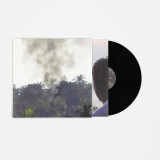
Liz Stringer has been a steadfast and captivating feature of the Australian musical landscape over a six album career. Venerated by her musical peers and devoted fanbase alike, Stringer's world-class vocals, multi-instrumental prowess, notoriously powerful live performances and story-rich, genre-defying songs place her among the most important songwriters of her era. Mirroring the scope and complexity of Stringer's sensibilities and accomplishment as an artist, The Second High draws from Stringer's wider influences of jazz, funk and soul, and takes her ability to dissect the minutiae of the human condition through song - and connect with her audience - to a new level. The album is redolent with motifs of self-actualisation, lessons learned, sharp and ever-relevant commentary on social issues, and a strong and consistent focus on justice and equality. Fuelled by keys-driven grooves ranging from poignant grand piano lamentations (When You Met Me), the Rhodes-led jazz odyssey of On the Level, hip-hop flavoured keys brightening the bottom-heavy and deeply funky The Second High, to virtuosic keys that dance between strings and soaring multi-layered vocals in To Survive, Stringer's seventh studio album is a fresh and engaging ride to a destination yet uncharted, even by Stringer's standards - thrilling, stark and transformative. If 2021's First Time Really Feeling was an excavation, The Second High is an exorcism.
Legendary postmodern, post punk, post human, past caring collective Mekons return with a brand-new album for 2025. Their first release on Fire Records, ‘Horror’ a collection of songs written in late 2022 but providing a horribly prescient reflection of the world in its current miasma and how we got here. ‘Horror’ looks at history and the legacies of British imperialism with mashed up lyrics set against a typically eclectic sound that amalgamates everything from dub, country, noise, rock & roll, electronica, punk, music hall, polka and you can even take your partner for a nice waltz on ‘Sad And Sad And Sad’. The roots of their global sound reflect their nomadic journey through time and space from Leeds to California in the West and Siberia in the East and is woven into the fabric and intricacies of their song creation… Sounding like The Chills and R.E.M circa the I.R.S Records years, ‘Mudcrawlers’ sees just about the whole band joining Jon Langford on vocals speaking of Irish famine and refugees journeying to Wales. ‘War Economy’ shivers in the cold of such Boroughs spiked one-liners: “Clinical coercion will not achieve dominance!” Sounding like its straight off a Jenny Holzer neon sign (she of Abuse Of Power Comes As No Surprise), it’s held together by a disgruntled swaggering riff that underpins an explosion of disquiet. Meanwhile, Rico takes the lead on the maliciously luscious ‘Fallen Leaves’ an appalled and appalling Hammer Horror take on climate breakdown reminiscent of Rolling Thunder Dylan, that recalls The Pogues at their most introspective, its Celtic twilightism augmented by Susie Honeyman’s keening violin as the dying sun sinks down and the river Styx flows on in the pitch black night. Almost 50 years in the making, these Mekons continue to astound, their sound, sentiment and method of delivery blended to perfection by bass player and studio wizard, Dave Trumfio. The Mekons are Jon Langford, Sally Timms, Tom Greenhalgh, Dave Trumfio, Susie Honeyman, Rico Bell, Steve Goulding, and Lu Edmonds. "Effortlessly eloquent post-punks" Pitchfork // “The Mekons are still vital” Rolling Stone // “The most revolutionary group in the history of rock ‘n’ roll,” Lester Bangs // UK Tour 8-15 May 2025 (including London, Manchester, Glasgow, and more).
During the pandemic, The Ophelias transformed uncertainty into Spring Grove, their fourth album and most dynamic offering yet. Named after a Cincinnati cemetery, the album blends nostalgia with fresh perspective, reflecting on themes of relationships, identity, and power dynamics. Singer-songwriter Spencer Peppet draws from her OCD diagnosis during the pandemic and the clarity that comes with growing older, resulting in lyrics that explore the cracks and complexities of human connection.
Produced by Julien Baker, who adds lush textures and harmonies, Spring Grove marks a turning point in the band’s evolution. Recorded at Young Avenue Sound in Memphis, the album centers on the core quartet—Peppet, violinist Andrea Gutmann Fuentes, bassist Jo Shaffer, and drummer Mic Adams—with arrangements that balance cinematic intensity and delicacy. Gutmann Fuentes’s violin provides striking countermelodies, while Shaffer’s bass lines, inspired by doom metal, explore melodic depth. Adams’s drumming reflects his first project after transitioning, offering nuanced rhythms that blend power and tenderness.
With one queer and two trans members, the band has moved beyond the reductive label of an “all-girl” group, delving deeply into themes of womanhood and identity. Tracks like “Salome” and “Parade” examine power dynamics and friendship, while nature imagery in songs like “Cumulonimbus” and “Vulture Tree” mirrors lived experience. Across 13 tracks, the album’s cinematic and introspective journey scavenges the past for meaning, ultimately embracing transformation. On the closing track, “Shapes,” Peppet reaches serene acceptance, singing, “I see what’s coming after... a reflection in the water. I am rippling forever.”
Spring Grove captures the band’s evolution, offering a transcendent meditation on self-awareness, identity, and growth, leaving listeners with a sense of profound discovery.
Colemine Records is excited to put out their first 45 with The Charities, a sweet-soul band out of sunny California. The group's sound is a melting pot of cultures, exhibiting a mix of soul, r&b, rock, and funk. The A-side of this 45, 'Fatal Attraction,' explores just that. In some relationships, the very qualities that draw you in can also lead to your destruction. She's captivating_beautiful, intelligent, and charming_but beneath the surface, she's narcissistic and self-centered, with no regard for the pain she causes. When you're lost in the intensity of love, it's easy to overlook these darker traits. But when the time comes for her to move on, she'll strike without hesitation, delivering a blow that cuts deep. Her words, sharp as a knife, tear through your heart with cold precision. As you bleed out, she offers nothing but a final, indifferent goodbye...."It's Not Our Time," on the B, tells the story of two lovers who find themselves at a crossroads, torn apart by the struggles they face in this chapter of their lives. Perhaps in the future, they'll rekindle their love and spark a new flame_one that burns even brighter then before. It's a bittersweet goodbye, with the belief that the distance and time apart will only strengthen their bond when the moment is right.The tracks are produced by Anthony Masino and were recorded at Penrose Recordings in Riverside, CA.
Chris Ryan Williams (trumpet & electronics) and Lester St. Louis (cello & electronics) work together as HxH (H by H). Their skills have seen them move smoothly across various situations, constantly carving out new terrain and working in new configurations of musicians at a rapid pace. While worth reading, their biographies capture only a part of their complex rhizome.
HxH started about three years ago. The project is a direct response to all their activity with others and more importantly all their future leaning sonic desires. Their debut album STARK PHENOMENA is both their first studio recording and their first physical release. The album is appropriately set to be released by KMRU on his growing label OFNOT. It’s an ideal introduction to their sound world and their approach.
HxH describe their music as “electroacoustic,” but until recently the presence of Black musicians in this field has been greatly overlooked and largely ignored, making this phrase only partially appropriate. What HxH do really is to always be unpredictable. Every gig is a new soundscape. Sometimes you might hear echoes of Autechre or Robert Hood but then the sound-field will open up into a new terrain all their own. Chris and Lester bring together techniques from across the sound spectrum of electronic music and also draw on their deep backgrounds in Jazz, Improvisation, Classical and Noise scenes to create a sound that is true to them. After all, these two have worked with the likes of Bennie Maupin and the music of Black Fluxus artist Ben Patterson. Their rhizome is deep.
One of the ways that their unique approach manifests is in their merging of both acoustic instruments and electronic instruments in real time. This is something few have managed to do – but their spontaneous leanings work in both complex and accessible ways because of their deep understanding of landscape crafting. You can hear this clearly on the track “Pyrex Vision.” Their approach makes it tempting to compare their music to Sun Ra jamming with Laurel Halo – a comparison that would be only partly accurate.
Chris and Lester note that the sounds on STARK PHENOMENA are “imbued with such hopeful, gracious care; one that is far flung from obsessive carefulness or fuck the world carelessness, but more a caring embrace without the fuzziness of nostalgia.”
They note that when they began working together, they would “always come back to speaking on our concepts of an architecture of the expanse,” noting that their live sets often take on the joyfully noisy task of “dreaming big.” For HxH it was essential that STARK PHENOMENA have a quality that is “almost sculptural.” They consider the album “an object to be viewed from all sides.” This kind of thinking has resulted in them directly engaging with numerous sculptors and artists including Torkwase Dyson. Shape wise HxH’s sound fields work in a parallel to Dyson’s black architectural works.
They also note that the opening cut “BEACH” (the opening and longest track from the album) was “written weeks after our first gig in a studio session donated to us by our dear friend jaimie branch.” And that Pyrex Vision “was continually being edited months after sending our ‘final mixes’ to KMRU.” Their sound sources and samples come from studio sessions, live gigs, durational installations, 3am improvised downloads and more.
KMRU notes: "I think there is an in-between layer on this record. I was first caught by the Pyrex Vision track which organically flows between monologue, subtle field recording, and instrumentation. It's such a beautiful track, evoking deep emotion through simplicity. STARK PHENOMENA effortlessly glides in between imaginative mosaics of sounds — free yet complex — unlocking memories within its layers."
out of Stock
Last delivered 5 months ago available to reorder, subject to availability
Flutter Ridder is the duo of Norwegian multidisciplinary artists Espen Friberg and Jenny Berger Myhre, both of whom play important roles in Oslo’s contemporary art and music underground. The pair first collaborated during the production of Friberg’s debut solo record, “Sun Soon” (Hubro, 2022), quickly recognizing in one another a creative kinship rooted in a playful, intentionally naive approach towards making art. In November of 2023, the pair decamped to the coastal town of Hvisten in southeastern Norway to record what would become this debut, self-titled album in an ancient wooden church. Drawing from a palette of Friberg’s idiosyncratic Serge modular system and the church’s resident pipe organ and intoxicating acoustic reverb, they began recording and sculpting music informed by the notion that air and electricity share a common flow, a continuous current that can be directed through valves and potentiometers. The pair came to think of the Serge and pipe organ as sibling instruments, the former yielding characteristically unpredictable and complex timbres that complement the wooly, reedy drones and strange, microtonal overtones of the latter. At once sublime, liturgical, and whimsical, Flutter Ridder offers its listener a series of moving, cinematic natural landscapes, affirming the sensibilities of its makers and the indelible influence of the environment in which it was produced.
out of Stock
Last delivered 18 months ago available to reorder, subject to availability
Dev/Null is one of my earliest friends in music, having done radio with him (Blog To The Oldskool on Jungletrain) for a decade and previously working with him on TDD, which was on Meeting Of The Minds Vol. 1, as well as collaborations on Globex Corp, Lobster Theremin & other label releases.
I'm happy to be able to release his first solo EP of jungle tunes, as I've been a long time supporter of his music and I think that some of the tunes on this release are some of his best work yet :)
Many thanks to Dev/Null for the work put in for this release and to Dwarde & Sonar's Ghost for their remixes.
out of Stock
Last delivered 18 months ago available to reorder, subject to availability
Firstly, I want to thank Soulox & Soeneido for their patience because I have slept on their music for years haha
They have both been sending me music for a long time which I was pretty slack on checking (as a lot of people may have also noticed when sending me music, there's a huge backlog to get through and not enough hours in the day!) but it wasn't until Pete Dev/Null was in London for an event and we met up in person to record a mix for Blog To The Oldskool (our show on Jungletrain) that I realised what these two were capable of. Pete started the show with Lavish and I had to know what it was straight away, he told me it was by Soulox & Soeneido and I felt so bad that I had probably not bothered to check this tune if they had sent it to me, but I knew I had to have it!
I messaged Soen the next day asking about this tune and thankfully it was still available, one thing led to another and this release now exists. Big thanks to both of them for their wicked tunes, big up Comfort Zone on his quality remix of Lavish and a special mention to Jay Vaz (of Dreaming Vinyl) who did the design for the b-side of this release.
out of Stock
Last delivered 18 months ago available to reorder, subject to availability
For Giammarco Orsini, music has always been about creating connections— between tracks, people, and moments in time. 'UNIT-Y 001' embodies this idea, with each track capturing a distinct moment in Giammarco Orsini’s life. The EP blends House, Electro, Progressive, and 80’s influences, while weaving together personal memories and experiences.
His long-awaited solo EP, 'UNITY-001,' will be released through the newly formed label UNIT-Y, created by the minds behind Partisan and Mood Waves. As a label, UNIT-Y celebrates friendship, collaboration, and the inspiration that emerges from shared artistic journeys. Giammarco Orsini’s longstanding friendship with both label’s founders made him the natural choice to be the first artist to debut on this new platform.
out of Stock
Last delivered 14 days ago available to reorder, subject to availability
dreamcastmoe is the recording project of singer, songwriter, producer, and DJ Davon Bryant, a lifelong resident of Washington, DC. His music moves freely between moods and modes, hypnotic, romantic, traversing electronic, R&B, funk, soul, and hip-hop... Resident Advisor dubs it "soulful, cross-genre dance music." This ability to adapt and finesse, to twist in different directions while staying true and coherent in vision, can be traced to his home city and its complex cultural history. "Most Black kids in DC don't ever get to this point," he says. "This is what I am making this music for, in the DC tradition of soul and empathy and love that is rooted in this city. My music is for real people dealing with shit every day." A versatile, modern artist and collaborator, dreamcastmoe has thrived in the underground since his first uploads to Soundcloud and Bandcamp in 2017 and subsequent releases with labels like People's Potential Unlimited, Trading Places, and In Real Life Music. Bryant's laid-back personality, emotional honesty, and infectious energy shine through his work and how he talks about it, as Crack Magazine notes in their 2021 Rising feature: "a steady combination of confidence, creativity, and calmness." He grew up playing drums in church; he's worked dead-end jobs, had ups and downs, even sold off all his gear one time, but never stopped reinvesting in himself. He is quick to praise his co-producers, rattle off influences _ the visual feel of NBA 2K, the comedic timing of Bernie Mac, the savvy legacy of Duke Ellington, for starters _ and credit resourceful DC breakouts like Ankhlejohn that showed him the roadmap. His voice, a steady instrument, seemingly connects it all, capable of slow falsetto flow, swaggering talk-rap, and outright croon. His storytelling style is choppy yet fluid, like a mixtape, which is how Bryant sees Sound Is Like Water, his debut on Ghostly's International's freeform label, Spectral Sound. The two-part project culminates as a full-length LP release in November 2022. The first side, released as Part I, opens on the blurred beats of "El Dorado," which dreamcastmoe dedicates to his journey. It's a head-nodder, an off-kilter earworm co-produced by Max D (Future Times, RVNG Intl, etc.), with Bryant harmonizing hooks with synth jabs and a pitched-down presence. "Complicated" is the slow jam, delivered smoothly from a Saturday night crossroads. dreamcastmoe is contemplative and committed... gliding and locking ad-libs into skittering rhythms courtesy of co-producer Zackary Dawson _ but also willing to let something go, "acknowledging that everything in life IS NOT easy." "RU Ready" takes off from the jump as a tribute, challenge, and promise to his partner and his city ("The times you sat with me when I needed you the most / Told me the things that I needed to see / Young black man, really trying to be what I can be / And I'm really from DC). In its potent two-plus minutes, the sonics (co-produced by ZDBT) press the message, all cymbal crashes, breakbeats, and serrated synth lines. "Cloudy Weather, Wear Boots" is a blitzing dance-punk track made in collaboration with Jordan GCZ on Bryant's first trip to Amsterdam. The album's flipside opens on "Much More," the first of two synth-and-beat ballads co-produced by ZDBT. Later on "Long Songz," he claims, "I'm not writing love songs no more," prioritizing the vibe with "all my day ones." He calls it "a cry for more normal moments. Everything doesn't have to be a fantasy love story, more time spent getting to the money, growing, and making a way." He saves two of his most propulsive cuts for the finale, co-produced by Sami, co-founder of DC dance label 1432 R. As their titles suggest, "Take A Moment" and "Make Ya Mind" operate as anthems for movement, with Bryant free-flowing commands above wildly-styled percussion. Per Bryant, the latter is both "wake & bake jam" and a "dance floor bomb." His parting line: "Action / You got to show me action / Reaction." The world of dreamcastmoe straddles virtual reality and the realness of DC, images both imagined and lived-in. Bryant has a knack for unexpected melodies but what makes his music so exciting is his capacity to defy the expectations of genre and image. A fluid ingenuity and vulnerability bottled by Sound Is Like Water, and this is just the beginning.
out of Stock
Last delivered 18 months ago available to reorder, subject to availability
Bugge Wesseltoft has long been a shaper of his own jazz idioms, through his diverse solo albums, his group projects such as New Conception of Jazz, OKWorld! and RYMDEN, and collaborations with artists such as Sidsel Endresen, Henning Kraggerud or Henrik Schwarz.
"Am Are" features special constellations of superb musicians that spans both generations and styles, and is an exploration of sonic textures, dynamic contrasts of mood and style, and ranges from sparse arrangements through to complex layers of dubs and loops and improvisational interplay.
The album begins with Bugge alone on "How?" with layers of undulating atmospheric synth, brought into focus by Bugge's piano at the forefront, creating a minimalist miniature that is both emotive and serene. For "Villrein" Bugge is joined by Elias Tafjord on drums, beginning with a santur-like synth figure, floating over ominous formant sci-fi bass synths bubbling and pulsing, and overlaid by phrenetic piano that only stops to lock into the santur figure before relaunching on its own journeys, all underpinned by Elias Tafjord's expressive drumming. "Is Anyone Listening?" demonstrate's Bugge's songcraft, layering muted percussive piano behind Rohey's distinctive and beautiful vocals punctuated by Martin Myhre Olsen's tenor saxophone, creating a soulful mood tinged with desperation.
"BAG" presents the first classic piano trio of the album - Bugge on piano and synths, Arild Andersen on bass, and Gard Nilssen on drums - announcing itself with an insistent riff, chattering drums, breaking into a progressive rock-style passage of bass and piano in unison. "Reel", the second track from this trio, is a mellow soundscape that evolves to become hazy urban downbeat jazz.
The second piano trio of Bugge (Rhodes and Korg MS20 synth), Sveinung Hovensjø (Electric Bass), and Jon Christensen (Drums and Bells) offers a completely different perspective. The first track "Render" features Bugge's Zawinul-esque Rhodes and monosynth leads, Sveinung's fuzz bass in something of a leading role, all carried with chattering gusto by Jon Christensen's dynamic drumming that brings texture and space as well as rhythm to the piece. "Vender" begins as an atmospheric piece, with reed organ-like synth washes, and octave-processed bass with a somewhat sitar-like tone, meandering until the track breaks down into drums and bass weaving around an insistent drum machine loop, dripping with synth pads and monosynth lead.
"JazzBasill" introduces the third piano trio - featuring Bugge (Piano), Jens Mikkel Madsen (Acoustic Bass) and Øyunn (Drums) - and offers a classic piano trio style with urban sophistication, that is lyrical, and interspersed with staccato cadences, giving a feeling of broken swing, slightly staggered yet driving forwards. The title track "AM ARE" is late night jazz, with baroque whispers, and distinctly melodic.
The final track, "Think Ahead" features the non-standard trio of Bugge (Piano/Organ), Oddrun Lilja (Guitar) and Sanskriti Shrestha (Tablas/Harp). Beginning with a minimalist piano figure, table, and sustained guitar, the track breaks down to a noise surge and ambient windscape, with guitar birds and abstract grinding, before returning to minimalist melodicism.
The shifting personnel across the album, as well as the three different studios in which it was recorded - Village Recording in Copenhagen, Rainbow Studios in Oslo, and his own Buggesroom Studio - creates a feeling of dynamic change and musical variety that is unified by Bugge's piano and keyboards. His playing moves between foreground, where he allows the music to elevate him, and background, where he move gently like a beneficent presence, tending to the demands of the spirit of the musical moments he has captured. It is an album powered by restless exploration and shaped by distinctive musical personalities; it is a journey through different moods, illuminated and brought into focus by Bugge's measured approach and guiding hand.
out of Stock
Last delivered 15 months ago available to reorder, subject to availability
Back in what now feels like a golden period in music and creativity, in the 1970s, many bands were formed by students. It almost seems like so many people could either sing, play, dance or write songs! This was also the case of several Woodland High School students in New York, who created Newban with fellow classmates.
The group started gigging around the tri-state area of New York, Connecticut and New Jersey, and were soon brought to the attention of legendary Bell Recording Studios audio engineer Malcolm Addey, who recorded with the band over a two-month period in 1974. Three years later the tracks made up two superb and sought-after albums released by tax scam label Guinness.
In 1977, Newban headed out to play the Los Angeles nightclub scene, closed a deal with A&M, and changed the band name to Atlantic Starr at the request of Herb Alpert.
For the first time on a 7” format, Soul4Real brings you two of the best songs from Newban. Enjoy the music...
out of Stock
Last delivered 18 months ago available to reorder, subject to availability
Dogma, die treuen Wahrheitssucher, veröffentlichen ihr selbstbetiteltes Debütalbum jetzt auf CD und LP. Das Album erzählt eine kraftvolle
musikalische Geschichte, die tief in die menschliche Psyche eindringt. Frontfrau Lilith sagt: „Auf unserem Debütalbum enthüllen wir eine rohe und
unverblümte Erzählung, die den Kampf gegen aufgezwungenen Glauben, ungerechte Zensur und die Befreiung von unlogischen Überzeugungen
beleuchtet. Es ist eine Reise durch verlorene Unschuld und eine Rebellion gegen archaische Zwänge. Ein kühnes Statement, das die Auflehnung gegen
gesellschaftliche Normen einfängt. Es geht darum, sich zu befreien, unsere Wahrheit anzunehmen und die uns auferlegten Beschränkungen
herauszufordern.“
Lilith führte weiter aus: „Visuell ist das Album-Artwork eine gewagte Reflexion der Allgegenwart der Lust in der Menschheit, unabhängig von allen
Bedingungen. Es dient als kühnes visuelles Testament, das die Wahrheit entlarvt, dass Lust ein inhärenter Teil unserer Natur ist, frei von jeglichen
auferlegten Beschränkungen wie falscher Moral und unlogischem Glauben.“ Dogma fordert uns auf, die Rebellion anzunehmen und unsere fleischlich
Gelüste zu entfesseln. Sie werfen die Ketten der Bescheidenheit beiseite und beschwören einen Sturm der Sinnlichkeit herauf, der unerschütterliche
Aufmerksamkeit und leidenschaftliches Mitmachen verlangt
out of Stock
Last delivered 7 months ago available to reorder, subject to availability
The first release from a brand new electronic dance label from Richard Norris (The Grid/Beyond The Wizards Sleeve), 'Let Yourself Go' is a sparse, powerful floor filler with Una Camille's anthemic vocal and more hooks than Jaws. Acid and electro remxes come courtesy of Norris and Leo Zero.
out of Stock
Last delivered 18 months ago available to reorder, subject to availability
We are overjoyed to present you the first Klangtrauma Records Vinyl.
Our label bosses Nadine Fehn and Duniz have teamed up for this one.
Nadine starts with "I feel you", a clear and massive dancefloor filler!
The remix comes from Audio State - so it's clear that it's going to be an absolute banger!
Duniz kicks things off with it's counterpart "Fühl ma", a seadily rising track that enriches any set and delivers a minimal, hypnotic journey with "Snail".
So keep an eye out for our next vinyl release.
out of Stock
Last delivered 18 months ago available to reorder, subject to availability
Research Records indicate their inclination for cosmic instrumentation and kraut pervaded polyrhythms once again with an introduction to newcomer Glass Beams. Recorded at the beginning of 2020, Mirage is the first release from the artist, issuing four compositions that lend from a profusion of sounds and influences.
The album's opener and title Mirage arrives with a coiling vocal mantra that conspires with a sliding bassline and transcendent synthwork, reminiscent of early 70's prog jams yet inverted and futuristic. Taurus is a brisk arrangement, steeped with spaghetti-western elements and space-jazz to pave the way for the agile Kong. Rife with psych-fusion guitar phrases and instrumentation, Kong unfolds like a forecast lysergic voyage. The finale Rattlesnake nudges the serpent with intergalactic scales and spellbinding riffs. We may not know much about the enigmatic Glass Beams but Mirage is one epic inauguration, leaving the listener with more questions than answers.
out of Stock
Last delivered 69 days ago available to reorder, subject to availability
Googling “paradise house”, the first results to pop up are an endless list of European b&b’s with whitewashed lime façades, all of them promising “…an unmatched travel experience a few steps from the sea”. Next, a little further down, are the institutional websites of a few select semi-luxury retirement homes (no photos shown, but lots of stock images of smiling nurses with reassuring looks). To find the “paradise house” we’re after, we have to scroll even further down. Much further down.
It feels like yesterday, and at the same time it seems like a million years ago. The Eighties had just ended, and it was still unclear what to expect from the Nineties. Mobile phones that were not the size of a briefcase and did not cost as much as a car? A frightening economic crisis? The guitar-rock revival?! Certainly, the best place to observe that moment of transition was the dancefloor. Truly epochal transformations were happening there. From America, within a short distance one from the other, two revolutionary new musical styles had arrived: the first one sounded a bit like an “on a budget” version of the best Seventies disco-music – Philly sound made with a set of piano-bar keyboards! – the other was even more sparse, futuristic and extraterrestrial. It was a music with a quite distinct “physical” component, which at the same time, to be fully grasped, seemed to call for the knotty theories of certain French post-modern philosophers: Gilles Deleuze, Félix Guattari, Paul Virilio... Both those genres – we would learn shortly after – were born in the black communities of Chicago and Detroit, although listening to those vinyl 12” (often wrapped in generic white covers, and with little indication in the label) you could not easily guess whether behind them there was a black boy from somewhere in the Usa, or a girl from Berlin, or a pale kid from a Cornish coastal town.
Quickly, similar sounds began to show up from all corners of Europe. A thousand variations of the same intuition: leaner, less lean, happier, slightly less intoxicated, more broken, slower, faster, much faster... Boom! From the dancefloors – the London ones at least, whose chronicles we eagerly read every month in the pages of The Face and i-D – came tales of a new generation of clubbers who had completely stopped “dressing up” to go dancing; of hot tempered hooligans bursting into tears and hugging everyone under the strobe lights as the notes of Strings of Life rose up through the fumes of dry ice (certain “smiling” pills were also involved, sure). At this point, however, we must move on to Switzerland.
In Switzerland, in the quiet and diligent town of Lugano, between the 1980s and 1990s there was a club called “Morandi”. Its hot night was on Wednesdays, when the audience also came from Milan, Como, Varese and Zurich. Legend goes that, one night, none less than Prince and Sheila E were spotted hiding among the sofas, on a day-off of the Italian dates of the Nude Tour… The Wednesday resident and superstar was an Italian dj with an exotic name: Don Carlos. The soundtrack he devised was a mixture of Chicago, Detroit, the most progressive R&B and certain forgotten classics of old disco music: practically, what the Paradise Garage in New York might have sounded like had it not closed in 1987. In between, Don Carlos also managed to squeeze in some tracks he had worked on in his studio on Lago Maggiore. One in particular: a track that was rather slow compared to the BPM in fashion at the time, but which was a perfect bridge between house and R&B. The title was Alone: Don Carlos would explain years later that it had to be intended both in the English meaning of “by itself” and like the Italian word meaning “halo”. That wasn’t the only double entendre about the song, anyway. Its own very deep nature was, indeed, double. On the one hand, Alone was built around an angelic keyboard pattern and a romantic piano riff that took you straight to heaven; on the other, it showcased enough electronic squelches (plus a sax part that sounded like it had been dissolved by acid rain) to pigeonhole the tune into the “junk modernity” section, aka the hallmark of all the most innovative sounds of the time: music that sounded like it was hand-crafted from the scraps of glittering overground pop.
No one knows who was the first to call it “paradise house”, nor when it happened. Alternative definitions on the same topic one happened to hear included “ambient house”, “dream house”, “Mediterranean progressive”… but of course none were as good (and alluring) as “paradise house”. What is certain is that such inclination for sounds that were in equal measure angelic and neurotic, romantic and unaffective, quickly became the trademark of the second generation of Italian house. Music that seemed shyly equidistant from all the rhythmic and electronic revolutions that had happened up to that moment (“Music perfectly adept at going nowhere slowly” as noted by English journalist Craig McLean in a legendary field report for Blah Blah Blah magazine). Music that to a inattentive ear might have sounded as anonymous as a snapshot of a random group of passers-by at 10AM in the centre of any major city, but perfectly described the (slow) awakening in the real world after the universal love binge of the so-called Second Summer of Love.
For a brief but unforgettable season, in Italy “paradise house” was the official soundtrack of interminable weekends spent inside the car, darting from one club to another, cutting the peninsula from North to centre, from East to West coast in pursuit of the latest after-hours disco, trading kilometres per hour with beats per minute: practically, a new New Year’s Eve every Friday and Saturday night. This too was no small transformation, as well as a shock for an adult Italy that was encountering for the first time – thanks to its sons and daughters – the wild side of industrial modernity. The clubbers of the so-called “fuoriorario” scene were the balls gone mad in the pinball machine most feared by newspapers, magazines and TV pundits. What they did each and every weekend, apart from going crazy to the sound of the current white labels, was linking distant geographical points and non-places (thank you Marc Augé!) – old dance halls, farmhouses and business centres – transformed for one night into house music heaven. As Marco D’Eramo wrote in his 1995 essay on Chicago, Il maiale e il grattacielo: “Four-wheeled capitalism distorts our age-old image of the city, it allows the suburbs to be connected to each other, whereas before they were connected only by the centre (…) It makes possible a metropolitan area without a metropolis, without a city centre, without downtown. The periphery is no longer a periphery of any centre, but is self-centred”.
“Paradise house” perfectly understood all of this and turned it into a sort of cyber-blues that didn’t even need words, and unexpectedly brought back a drop of melancholic (post?)-humanity within a world that by then – as we would wholly realise in the decades to come – was fully inhuman and heartless. A world where we were all alone, and surrounded by a sinister yellowish halo, like a neon at the end of its life cycle. But, for one night at least, happy."
out of Stock
Last delivered 3 months ago available to reorder, subject to availability
- Also available on black vinyl - First ever official reissue - Produced in full cooperation with Hiroshi Yoshimura's estate - Liner notes by contemporary music writer and professor Junichi Konuma - Remastered from original sources by John Baldwin - First time on vinyl, cassette, and streaming - 2xLP vinyl housed in gatefold jacket - Discs cut at 45 rpm for optimal sound quality // Following their 2024 reissue of Hiroshi Yoshimura's classic album, Surround, Temporal Drift proudly presents the first-ever reissue of FLORA, Yoshimura's underappreciated ambient classic. FLORA was originally recorded and completed in 1987, and remained unreleased until 2006, nearly three years after Yoshimura's passing in 2003. The album is chronologically and stylistically a follow-up to his acclaimed 1986 works GREEN and SURROUND, wherein Yoshimura continues to play with the ambience of sound and the sound of ambience, underscoring his mastery in the field of environmental music. Yoshimura's other recorded works include Music For Nine Post Cards (1982), originally produced to be played back inside a museum space, and Pier & Loft (1983), commissioned as accompaniment to a contemporary fashion show.
out of Stock
Last delivered 10 months ago available to reorder, subject to availability
Communique Records U.S.A. re-issues the sublabel Country Western!
Starting with Brian Douglas - Singularity from 1996.
Recorded from original DAT and re-mastered.
out of Stock
Last delivered 11 months ago available to reorder, subject to availability
Madronas’ debut LP Erogenous Biome is an amorphous, murky, cathartic offering. A duet of modular synthesizer and winds that’s equal parts doom and ecstasy, it’s the sound of a majestic butterfly emerging from it’s slimy chrysalis just in time to catch the sun setting on the end of days, a bewitching, heavy ceremony, a power-wash of both mind and spirit.
Tracked in one continuous take at Brooklyn’s Heavy Meadow studio, individual tracks were gleaned from the purge and eschew predictable structures, making for a dense, fluid suite of improvisation, like dancing smoke ribbons in the dark. The duo's chosen sound sources are seemingly opposite - Ry Fyan’s modular’s coming from electronic oscillators, Isaiah Barr’s saxophone and various flutes originating with the breath - but the visceral, imprecise, alive quality to the sound of both lends the record a thrilling combination of rapturous harmony and gritty, intense friction.
Opening the session in ritualistic, foreboding fashion, Voluntary lurches to life with rattles and wandering, bassy arpeggios before a suona’s cry signals the seance has officially begun. Ostraca Loam spits explosive modular rhythms and eerie shrieks for the flute to float above, while Detritus Harp smudges mechanical whirring, pensive horn and wind chimes for an untethered drift. Petrified Microdot swells with menacing sci-fi sequences and breathtaking sax runs until they both run out of breath, and Negative Lingam starts out in a panic of breathy riffing before exhaling into one of the most sublime passages on the record. Rhythmic pounding and undulating flutes punctuate Lenticular Shroud, before The Preparation Of The Novel sets the winds aside for a synthesized dual fit for electric dreams. The title track dominates the B-side, it's shimmering levity slowly unfurling to reveal itself as a kind of post-apocalyptic devotional music, deep space drifting grounded by earthly flutes, and Vale Of Cashmere offers an ascetic, contemplative closure, sparse flute and chiming rhythms organic or electronic - by this time it’s hard to know, it doesn’t matter either way.
Erogenous Biome is a world of it’s own, and one Impatience is honored to offer a window into.
RIYL - Senyawa, witchcraft, Colin Stetson , Civilistjavel, Mars (the planet), Finis Africae, raga, Stephen O’Malley, modular synthesizer, Anthony Braxton, Shabaka.
Madronas is Ry Fyan and Isaiah Barr. Fyan is a painter and tattoo artist, this is his first release. Barr is a prolific instigator of the downtown New York scene, producing and playing saxophone in jazz circles with his group Onyx Collective, as a player and/or producer on records by Nick Hakim, David Byrne and Wiki, performing live with William Parker and as part of his projects Universal Space Jam and Cafe Dewanee.
Erogenous Biome was recorded and mastered by Griffin Jennings at Heavy Meadow, Brooklyn.
Vinyl was cut by Beau Thomas at Ten Eight Seven Mastering, Berlin.
Artwork is by Ry Fyan, typography and layout by Nicolas Turek.
out of Stock
Last delivered 7 months ago available to reorder, subject to availability
Folding the ambient techno tradition into neatly arranged packets of rhythm and space, Delsin proudly presents a striking new collaboration from Tobias. and Doltz. A project developed from a chance encounter, Versus combines classic synth and drum machine configurations with needlepoint sound design to create a quintessential electronica listening experience. Tobias. is the lead alias from Tobias Freund, the celebrated German techno pioneer who has been actively exploring new territories in electronic music production since the early 1980s. As Doltz, Shun Watanabe has quickly developed his own impressive artistic stamp in the field of leftfield techno and ambient since debuting in 2020. After seeing Doltz perform a live set at Eden Festival 2024 in Japan, Freund instantly invited him to collaborate. After the success of the first collaboration, they went on to develop five of the tracks on Versus together, while Jiawen Wang performed additional vocals on 'We Are Not Alone'. Versus is an album that balances variety and consistency across its finely sequenced run time, maintaining a focus on pointillist, exploratory rhythm from crisp drum machines and twitchy digitalia alike, all backed up by richly rendered atmospherics from gaseous pads to icy drones. It's a warm and inviting sound world, but also fearlessly futuristic, speaking to both Freund's decades of refinement and the startling clarity of Doltz's vision.
out of Stock
Last delivered 9 months ago available to reorder, subject to availability
Toulouse appears to be a proper soundsystem town, a real Dub and Bass music hot spot. We were happy to get in touch with with Stefan Dubs from the former Folklore crew, running a handmade soundsystem with up to 6 full super scoops. He released several records under Folklore and later Maquis Son SistÈm, started a liveact which meanwhile runs under SÚn Du MaquÌs, organises soundsystem gatherings and raves around town with the ComitÈ Des FÍtes collective.
Luckily we were able to invite Jan Loup and him to Leipzig in 2023 to shake Bassmaessage with their soundsystem, including the amazing multi-track tape into vintage FX & mixing desk performance. If you ever have the chance to catch them live, you'll hear a special vividly rooted analogue sound, incorporating modern influences, covering various BPM from 120 to 170, but definitely bass heavy all along!
Irie skanks keep you floating along "Mogale Stepper", which shows SÚn's warm but forward bass abilities and the knowledge to keep it steppy without any militant aggressive kicks. "Puur Dub" has a the same instant reminiscence of digital reggae skanking, but adding a brilliant layer of Think break incarnations on top - killing advanced sub connoisseur meetings with ease. On the first check this plate may appear a bit different from the label's cutalogue, but if you settle in these lush textures and twisted dubs you'll see: this is a definitive 45seven sound!
out of Stock
Last delivered 18 months ago available to reorder, subject to availability
Because Sound Matters' meticulous One-Step process creates the definitive sounding audiophile version of k.d. lang Ingénue. This all-analog release comes from the original first-generation master tapes for the first time. Vinyl guru and editor Michael Fremer says, "This k.d. One-Step is insane – It's otherworldly great!"
This One-Step version is strictly limited to 3,000 copies. The album is housed inside a top-quality, foil-stamped, uniquely designed numbered slipcase. The enclosed gatefold jacket will feature an "old style" tip-on jacket with the original artwork.
Special care has been taken to faithfully preserve the original sound with exceptional clarity and depth, capturing the recording's nuances and subtleties at every step to create the best sounding record possible.
The One-Step process is highly regarded among audiophiles and collectors for its unparalleled sound fidelity and represents the pinnacle of vinyl manufacturing craftsmanship.
Ingénue was originally released March 17, 1992 and is k.d. lang's second solo album.
Upon release, the album charted at #18 in the US, #13 in Canada, #3 in the UK and Australia and #1 in New Zealand. Nominated for six Grammy® Awards with the breakout single "Constant Craving" winning a Grammy® Award for Best Female Pop Vocal Performance. "Miss Chatelaine" and "The Mind of Love" were follow-up singles.
k.d. received universal critical acclaim for the album from publications like Mojo, Pitchfork, Rolling Stone, Uncut and dozens more! Today, Ingénue is a true classic album and considered one of the great audiophile recordings of the modern era. This One-Step version certainly proves that!
Notes for This Release:
Ingénue was originally recorded and mixed on analogue tape and produced by Greg Penny, Ben Mink and k.d. lang. The original analogue master tapes were directly used as the audio source for this One-Step pressing! This is the first time the analogue tapes have been used as a vinyl source for this brilliant recording. The results are stunning.
Because Sound Matters used the Neotech VR900-D2 180g High-Performance vinyl compound, which is the same as what is known as Super Vinyl – the best in the world.
Chris Bellman at Bernie Grundman Mastering cut the lacquers with meticulous care! He also did the original mastering of the CD release in 1992.
Dorin Sauerbier at Record Technology, Inc (R.T.I.) has been plating records for decades and is considered the best in the world – he also has done more One-Step processing than anybody. This is a vital step in the process to ultimately delivering the absolute best sounding version of Ingénue ever.
Record Technology, Inc did the pressing – using the exact pressing machine used for so many other One-Step releases. The QC team is constantly monitoring each copy as it comes off the press.
Because Sound Matters' slipcases and gatefold "old style" tip on original art jackets were printed by world-renowned Stoughton Printing Company.
This new all-analogue edition will draw you into the music as never before—at least it did me. The sonic picture is rich, well-textured, harmonically saturated, spatially deep and all the rest of the audiophile buzzwords that no doubt the producers (who include lang) intended to give listeners but until now couldn't fully deliver. The musical flow will have you swooning in your seat. Before the opener 'Save Me' concludes you may already feel overwhelmed and in need of lifting the stylus to catch your emotional breath...What a treat!
-Michael Fremer, Tracking Angle, Music 11/10, Sound 11/10
Thaiboy Digital is a founding member of the music group and cultural phenomenon Drain Gang. Following huge success at D2C (over 2000 units sold), YEAR0001 are now presenting this first collection of Thaiboy Digital records to retail. “Tiger” is Thaiboy Digital’s first studio album and includes fan-favourite track “Diamonds” featuring Yung Lean. The album also includes features from Thaiboy’s Drain Gang compatriot Bladee.
"Body Jumper" is the first studio album from American band Provoker, who are paving the way for a new generation of post-punk. Produced by the band themselves, this breakout record sold over 1000 units sold via D2C previously and will now be available for the first time ever to purchase through retail. Packed with hits including "Bugs & Humans", this is a record that continues to grow along with the band.
Bladee is a founding member of the music group and cultural phenomenon Drain Gang. Following Bladee’s first-ever run of physical titles at retail last year, which was a huge success (over 8000 units sold, #24 in the 40 Vinyl Albums Chart), his fifth album “The Fool” is now going to be pressed for the first time ever on vinyl. Featuring fan favourite tracks like “Hotel Breakfast” and “Trendy”, demand for this release is very high.
In the spring of 1983, members of Genesis reconvened at their studio, named The Farm in Chiddingfold, Surrey, to start work on a new studio album, their first since Abacab (1981). Genesis became their first album written, recorded, and mixed in its entirety at the studio room; previously they had to write in an adjoining space. Having the group work in their own space without the additional pressure of booking studio time and fees resulted in a more relaxed environment. They were joined by engineer Hugh Padgham, who had also worked on Abacab,
AllMusic writes: "Moments of Genesis are as spooky and arty as those on Abacab — in particular, there's the tortured howl of "Mama," uncannily reminiscent of Phil Collins' Face Value, and the two-part 'Second Home by the Sea' — but this eponymous 1983 album is indeed a rebirth, as so many self-titled albums delivered in the thick of a band's career often are. ... Anybody who paid attention to 'Misunderstanding' and 'No Reply at All' could tell that this was a good pop band, primarily thanks to the rapidly escalating confidence of Phil Collins, but Genesis illustrates just how good they could be, by balancing such sleek, pulsating pop tunes as 'That's All' with a newfound touch for aching ballads, as on 'Taking It All Too Hard.'" AllMusic reviewer Stephen Thomas Erlewine gives the album 4.5 Stars.
For fans who appreciate the evolution of the band's music over the years, owning this album is important as it represents a distinctive phase in their career.
This is the definitive deluxe 45 RPM 2LP Analogue Productions (Atlantic 75 Series) reissue of the classic Genesis. A classic for all true Genesis fans!
“Legendary Member” is the second studio album from founding Drain Gang member Thaiboy Digital, featuring appearances from Yung Lean and the group’s other icons Bladee, Ecco2k and Whitearmor. Following huge success at D2C, where this title sold over 3000 units, this release will now be available in retail for the first time.
“Trash Island” is the second collaborative mixtape from Drain Gang. It features the biggest hit in the Drain Gang catalogue “Western Union”, which has accumulated millions of streams on DSPs. Featuring Yung Lean alongside key DG members Bladee, Ecco2k and Thaiboy Digital, this title is hotly anticipated by the fanbase. This will be the first time the mixtape is available on vinyl.
“Back 2 Life” is Thaiboy Digital’s third studio album. Featuring Yung Lean and fellow Drain Gang member Bladee, Back 2 Life dials in a forward-facing sound with the help of producers Rok (Lil Uzi Vert, Future) Outtatown (Kendrick Lamar, Playboi Carti) and others. This is the first time this release will be available at retail, having previously sold over 1000 units via D2C.
“Spiderr” is Bladee’s sixth studio album. Featuring Wondha Mountain and fellow Drain Gang member Ecco2k, the album features fan favorite tracks like “ICARUS 3REESTYLE” and “HAHAH”. This is the first time this release is being pressed on vinyl.
Soul music has always been in Paul Weller’s blood from early Jam covers of Martha & the Vandellas 1963 classic ‘Heatwave’. Along with other forms of music, soul found its way into Paul’s record collection, nourishing his ears and informing his own songwriting
We don’t need to recap a questing musical career from the Jam to the Style Council and then blossoming into one of the most productive and revered careers of any UK solo artist. Paul has written anthems, standards and a songbook that have always developed from his own feelings.
Whilst Paul has talked about his love of soul music he has, before now, simply been too busy to sit down and curate a collection of his favourite tracks and get it into the record racks.
Ace Records are honoured and delighted to finally release that Paul Weller curated collection which he has aptly titled, “That Sweet Sweet Music”.
This 2-LP set and CD open the curtains on 26 tracks that are some of Paul’s favourite soul records most of which nestle on vinyl in his own collection. He can still recall paying £70 for his copy of Jon Lucien’s 1971 ‘Search For The Inner Self’ 7” at a record shop in Leicester in the 90s. Some of these tracks are soul classics like James Carr’s 1966 ‘Pouring Water On A Drowning Man’ and Brother to Brother’s brilliant take on Gil Scott Heron and Brian Jackson’s ‘In The Bottle’ from 1974. Others are deliciously obscure wonderous gems like the A-side of Blackrock’s sole 1971 single ‘Blackrock “Yeah, Yeah”’, ‘Life Walked Out’ from the same year by the Mist or Syl Johnson’s ‘Black Balloons’ taken from his 1970 album “Is It Because I’m Black?”.
There are plenty of big vocal hitters such as Darrell Banks, Spinners, Joe Simon, O.C. Smith, the Dells and Betty Davis. Whilst the core is vocal soul the music does branch out with Paul selecting a wicked instrumental from the flipside of the Isley Brothers’ ‘Twist & Shout’ from 1962 and the funky jazz of the Headhunters ‘God Made Me Funky’, the A-side of their first 1975 seven-inch.
If every significant artist has an underrated gem in its catalog, then Mirage is that album for Fleetwood Mac. An obvious return to relative simplicity after the dramatic tension of Rumours and experimental ambitions of Tusk, the 1982 album finds the band re-grouping after a brief hiatus and again climbing to the top of the charts. Extremely well-crafted, well-produced, and well-performed, the double-platinum effort distills the group’s hallmark strengths into a filler-free set that never runs short of addictive pop hooks or daft accents.
Sourced from the original analog master tapes, pressed at Fidelity Record Pressing in California, and housed in a Stoughton jacket, Mobile Fidelity’s numbered-edition 180g 45RPM 2LP set presents Mirage in reference sound for the first time. The efforts co-producers/engineers Ken Caillat and Richard Dashut went to capture the splintered albeit formidable band can be heard with stunning accuracy, range, depth, and detail.
Though Rumours understandably gets a permanent spot in the audiophile hall of fame, the smooth, clear, and dynamic sonics on Mirage confirm that the record that stood as Fleetwood Mac’s last effort for five years deserves a place in the same vaunted arena. The presence and imaging of Mick Fleetwood’s percussion alone on this reissue might have you wondering how this slice of soft-rock bliss has gone under-noticed for decades. Other prized aural aspects — separation, definition, impact, tonal balance — are also here in spades.
Like much surrounding Fleetwood Mac in the 1980s, arriving at Mirage was not easy. Caillat searched for studios located outside of Los Angeles on a mission to change up the vibe of the band’s prior recording sessions. Everyone settled on Le Chateau in France, where relations between some members remained icy — and cooperation with the producers strained. Battles with exhaustion, bitterness, and addiction further informed the proceedings at the 18th century complex in the French countryside, where even communal meals were allegedly eaten in silence.
Inevitably, the feelings that co-producer Lindsey Buckingham, Stevie Nicks, Christine McVie, and company harbored — as well as the situations in which they found themselves — drifted into the songwriting. In its rapid ascent to rock-star royalty status, Fleetwood Mac drifted apart, embarked on solo pursuits, and found it was lonely at the top. Emptiness, the illusion of dreams, the longing for love, the want to escape to bygone times of innocence and happiness: Such themes inform a majority of the narratives. Even if the lyrics regularly take a back seat to easygoing arrangements that allow Mirage to come on like a refreshing breeze on a sunny summer afternoon.
Home to three Top 25 singles in the U.S. and having occupied the pole position of the Top 200 album charts for five weeks, Mirage rightfully resonated with the mainstream and attracted listeners on both sides of the pond. And how, via a smart blend of sugary melodies, warm harmonies, interlaced notes, nimble rhythms, taut structures, and passionate vocals. Not to mention the presence of what arguably remains Nicks’ signature song, the biographical “Gypsy,” a meditation on the loss of her close friend Robin Anderson that teems with majesty, mystery, and mysticism — and which gets an assist from Buckingham’s shaded tack piano and richly strummed guitar chords.
Its ranking as an all-time classic aside, that No. 12 hit has plenty of company when it comes to brilliant pop turns on Mirage. On the subject of Nicks, the raspy singer gets a little bit country on “That’s Alright.” Its clip-clopping pace and two-stepping progression complement subtle vocal swells that emerge during the final verse of a tune that is ostensibly about leaving but still conveys forgiveness and grace. And what would a Fleetwood Mac record be without Nicks drawing on the tools of the supernatural — cards, dreams, wolves, and the like — on the twirling “Straight Back.”
Despite the potency of Nicks’ primary contributions, Mirage seemingly unfolds as a tight competition between Buckingham and McVie — and one that ultimately ends in a draw. Buckingham’s salvos include the contagious “Can’t Go Back,” a yearning to time-travel back to the past that’s complete with hall-of-mirrors backing vocals; “Oh Diane,” out-of- left-field ear candy sweetened with hiccupped vocals and salt-and-pepper-shaken grooves; the chiming “Eyes of the World”; and “Empire State,” a delightfully fluttering track whose high-range vocals, lap harp notes, and ringing xylophones hint at the galaxies of sound that would erupt on Tango in the Night.
Then there’s McVie. As elegant, understated, and coolheaded as she’s ever been on record, she pours her heart out on cuts that revolve around her inevitable split with Beach Boy Dennis Wilson. In the process, she punctuates Mirage with a characteristic not always associated with catchy pop music: emotional weight, and the sense of dreaded acceptance in the face of dreams deferred.
“I wish you were here/Holding me tight,” McVie sings over a delicate melody on the album-closing piano ballad “Wish You Were Here.” Though they hoped otherwise, for the members Fleetwood Mac, distance and separation were always close at hand. Believing otherwise, inviting nostalgia, and pretending everything was fine only amounts to a mirage.
Casquiat and Controller 7 have united on DATUM Recordings for this high class new 45rpm which works as a fine weapon for your record bag or equally well as some superb home listening. Casquiat goes first with 'Set It Off' which has raw drum breaks and direct bars delivered over some wild guitar riffs, slamming hits and old school vocal chops. Controller 7's 'Dope On Plastic' is a percolating funk joint with old school hip-hop energy and some evocative bars that recall the likes of Beastie Boys. Add in smart horns, JB yelps and scratching and you have a real party starter.
Earthly Measures are very excited to bring to you 'Doroja', an album by Santiago Córdoba & The Bauls of Bengal. Different to past releases, EM explores another part of the world, introducing you to the traditional sounds of Bengal & its talented musicians.
Doroja, is the third album by Argentinian musician Santiago Córdoba, this time in collaboration with The Bauls of Bengal. Recorded at the Hansadhwani Studio in Calcutta, India, where Santiago arrived with only a synthesiser, some effects, and a Legüero Bass Drum (an Argentine percussive instrument used mostly in local folklore) - this album was first conceived in December 2017 during a residency in this mythical city, together with The Bauls of Bengal.
The Bauls believe the body and mind are the sources of all truths and that the expression of freedom cannot be restrained by the labelling of genres or religions, something which is evidently expressed in their music. This provides the perfect foundations for this album to develop without limitations and too effortlessly flow to whichever realms both Santiago and the Bauls of Bengal wish to take us too.
The album combines traditional songs of the Bauls, rhythmic Jhumar instrumental improvisations with the Argentinian legüero bass drum, and other compositions created together in the studio. The result is a melodic mixture/dialogue of cultures, folklore and ancestral sounds with modern influences that help create an experimental and addictive sound full of electronic textures.
Participating in these first recordings: Arpita Chakraborty (vocals), Chandan Ray (dotara), Pijush Baul (Vocals, Dubki) and Tanmoy Pan (percussion), who later, are joined by other artists from different latitudes to achieve a captivating fusion: Matías Romero on strings (Formosa, Argentina), Guilherme Peluci from Mineiro on winds and Daniel Guedes on percussion (Belo Horizonte, Brazil), Porteños Walter Broide on tabla and Cobra Rod on bass (both members of Poseidotica), and the Spanish Ángel Calvo on trumpet.
The album was mixed by Rodrigo Cursach at Delta Uno Estudio, mastered by Daniel Ovie, and the fascinating cover art is by Alejandro Sordi. It will be released on vinyl by the UK based label Earthly Measures, in addition to being available on all digital platforms.
‘Doroja’ means portal, and this album is indeed a magical portal to music, song and dance. Santiago's only means of communication with Bengali colleagues functioned as an astral portal to build the sounds of this journey through strange and unfathomable landscapes that captivate and surprise by building bridges between different cultures of our planet.
Santiago Córdoba is a multi-instrumentalist musician born in the city of Buenos Aires who has been developing his unique sound both with his solo project and with prominent bands from the Argentinian independent music scene. He has been developing his solo career through deep musical and spiritual searching, with the infinite journey as a primary objective.
In recent years, he has lived in places such as Madrid, Beirut and Berlin and has released two albums: ‘Corso’ (2015) and ‘En Other Places’ (2019).
out of Stock
Last delivered 4 years ago available to reorder, subject to availability
'It begins with a shoebox of mysterious provenance, full of recordings from the Vendée department on France’s western seaboard: songs of love and war, life and death, played out on land and sea. Songs passed down and sung by ordinary men and women, gracefully delivered with the poetic economy which unites the folk song of all peoples.
Next it takes a group of contemporary musicians to make selections from this treasure trove and sing these old songs anew; to sing them for their beauty, of course, and to reclaim the people’s tradition from those who would seek to exploit it for nefarious political ends. Who better for this task than Tartine de Clous, a singing trio from Vendée’s neighbouring department of Charente-Maritime, who burst into national and international consciousness with their debut album "Sans Folklore" in 2015? The result of their shoebox rummagings, the new album "Compter les dents", recorded in 2019 and finally seeing the light of day, is bound to delight old fans and win them many new ones.
Time makes many’s the alteration, and "Compter les dents" finds 'les garçons' - Geoffroy Dudouit, Thomas Georget and Guillaume Maupin - in a different state of being from their debut release. The trio, friends since youth, have certainly matured between albums, as one would expect; consequently the newer performances are more considered and poised, unfolding with a patient confidence. A relaxed domesticity prevails, something to do with the fact that the album was entirely recorded chez les amis, in contrast to the first album, which was mostly recorded at live performances in bars and night-spots across France.
Lending gravitas to the grain of their voices we mark a deepened richness, doubtless born of the various vicissitudes of daily existence which these gentlemen - and we too as citizens of this turmoiled globe - have weathered in the intervening years. Not too dissimilar, in fact,
from some of the vicissitudes detailed in those old Vendée songs. Plus 'ça change', right?
There’s a greater complexity and subtlety to their unique three-part harmonising, too. Their voices mesh in even stronger - almost telepathic - 'fraternité' than ever before: now commanding and mighty as a full-rigged counter-vessel, now gentle and lulling as a mother’s
cradle-croon, or as the whisper in a lover’s ear.
Three legendary figures of French traditional music, now sadly departed, preside as tutelary spirits over Compter les dents. They are: the late Claude Flagel, musician and ethnomusicologist; and the late Jean-Loup Baly of the well-known 1970s band Mélusine. Most of the album was recorded by Claude in the Brussels home he shared with his late wife Lou Flagel. The album is dedicated to the memory of Jean-Loup, Claude and Lou.
For the first time there are several guest instrumentalists working their magic to expand the Tartine de Clous sound. Jean-Loup plays a characterful accordéon on the song ‘La Veuve'. The other guests are: Maurice Artus (voice), Robert Thébaut (violin), Quentin Manfroy (piccolo, contrabassoon), Marceau Portron (cigar box guitar). Their contributions add even more conviviality to that which the trio of singers already share, a sensation which will doubtless be shared by those who happen to find a place in their lives for "Compter les dents".'
DJ Jewel Debuts with Mesmerizing 8-Track PHONK tape
Manchester DJ/Producer Glinks lands on Astral Black with ‘The Killaz’ his first project under the 'DJ JEWEL' alias, dedicated to diving deeper into the southern inspired phonk he explores monthly on @balamii with his 'the influence of memphis rap' show.
DJ Jewel's sound draws inspiration from Memphis rap, phonk, and ghettotech, infused with dusty soul and jazz samples, heavy 808s, and sharp snares that cut through the mix.
"This record is my introduction to the world as a producer," says DJ Jewel. "I wanted to pay homage to the sounds that shaped me while bringing my own twist to the genre." THE KILLAZ will be available on all major streaming platforms starting Feb 21st, with limited edition cassettes available via Astral Black.
out of Stock
Last delivered 18 months ago available to reorder, subject to availability
Finally available again! The 2023 release from Philadelphia's one and only The Dead Milkmen. Featuring such actual hits as "Astral Dad" and "Grandpa's Not A Racist (He Just Voted For One)", this LP is sure to bring joy to Milkmen fans across the globe. First new full-length since 2014, w/ Full color sleeve with lyrics and art For fans of The Dead Milkmen!
Driving is Sam Wilkes’ Indie Rock record. Iit is the first release on Wilkes Records, an imprint borne of the artist’s emergent need to self-release. The songs presented here exist comfortably within the ever-expanding Wilkesian cosmos, characterized as they are by virtuosity, torqued experimentalism, and collaboration with a range of talented musicians. But Driving’s influences, its sincerity, and its allegiance to a certain pop sensibility reflects a departure for an artist who has primarily staked his claim within the experimental jazz idiom.
Take the first track, “Folk Home,” which inaugurates the album’s fecundity—a bright, green, humid, summer feel. A swirling, freakout coda of reversed vocals gives way, in no short order, to a caterwaul of flute work that conjures Van Morrison’s (in)famous Astral Weeks sessions. Standing beside Morrison, the usual suspects are all present, if somewhat abstractedly. Dylan, The Dead, Joni, the Fab Four. Wilkes has developed a reputation as an experimental jazz luminary, but his deep affinity for the pop/rock/folk idiom of the latter twentieth century rings clear throughout Driving. More so than any Wilkes release to date, Driving is a collection guided by and dedicated to the man’s attention to songcraft.
Written and recorded during a period of rain-damage induced renter’s itinerance (and the attendant desire to produce a kind of therapeutic, self-soothing, home-feeling music), Driving loosely charts the trajectory/experience of “a protagonist,” both Wilkes and not, “who has figured out how to live an enlightened and fulfilled life, but is unable to do so because he thinks about it too much.” This friction is surely relatable — a symptom of our compulsively self-aware present. But Wilkes avoids the obvious pitfalls of public hand-wringing. Rather, Driving’s nine tracks evince a genuine, and mature searching-ness, both sonically and lyrically. The ending refrain of “Own” serves like something close to a thesis— “Letting go // isn’t a concept // it’s an action.” In an attempt to beat back ego, hyper-cogitation, language itself, Wilkes arrives at an axiom that feels so true and familiar, you’d swear you’d heard it one hundred times before.
Driving’s final third is, fittingly, its most emotive and cathartic. Tracks seven and eight, “Again, Again” and “And Again,” form a diptych, joined most obviously by the jangling, recursive grooves of guitarist Daryl Johns. Wilkes is said to have encouraged Johns to go “full Lindsey Buckingham” (clearly a welcome and resonant prompt), but one also catches stray Knopfler vibes, some intermittent Fripp, and (perhaps more-so in tone than technique) the spirit of DIY prophet and jangling man himself, Martin Newell (the Cleaners from Venus). Wilkes has stated that he finds joy in creating musical environments suitable to the contribution and flourishing of his favorite musicians. Throughout Driving, and in these two tracks especially, he has more than succeeded.
The record closes with the titular track: a story-song that, according to Wilkes, poured out of him (melody, composition, and lyrics) in a single sitting. The tale is told plainly, bravely, starkly; a mistake was made, regrets have been had, and all is wrapped up in the recollection of a deeply felt adolescent heartsickness—a time when the narrator was first afire with music and automotive freedom. The song captures the moment when meaning inexplicably falls into place, when a long-nagging memory suddenly assumes narrative form, and the subsequent sense of lightness and unburdening. It is fitting that Driving, a record conceived as a form of self-therapy, should culminate with a sense of humble revelation. That Wilkes is plainly eager to share the vulnerable fruits of this labor constitutes Driving’s joyful offering.