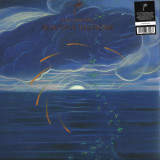
New York painter and musician exploratory industrialist Tor Lundvall initially envisioned his 14th album, Beautiful Illusions, as an entirely instrumental affair, "inspired by memories of sitting in a church or cathedral watching the shifting sunlight through stained glass." Although he ultimately chose to wreath the majority of the tracks with hushed, poetic vocals, his original muse still resonates. These are certainly songs of shadowplay and vaulted skies, the quiet grandeur of dusk deepening on the horizon. Lundvall characterizes the lyrical subject matter, too, in ways both specific and surreal, exploring "the doubts, the anxieties and even the bleak fantasies the mind spirals into during moments of isolation, separation and distance." Tricks of the eye, mind, and ear, magnified by silence and the looming long winter. Shivering pulses and muted bass lines tread the twilight while icicle synths and wiry guitar map the melody until the voice enters, narrating oblique moods of essence and absence, tenderness and truth. Glimpses of dark humor flicker in the wordplay but the greater sonic landscape is one of falling leaves and failing light, small gestures rendered as revelation, cloaked in reverb and spatial fog. Lundvall's mastery of nuance and negative space continues to heighten, whispered brushstrokes of the invisible and the unsaid, what lies beneath and what lies beyond: "Behind the shields and false fronts is usually a sadness. The heartbreaking reflections of what might have been."
out of Stock
Last delivered 3 years ago available to reorder, subject to availability
J. Alberts “config” EP for Couldn’t Care More is one more step into his very own microcosm of electronic music wizadry: There is the flickering groove of “Armor”, myriads of cut-up sonic pieces morphed into a glorious track somewhere next to Techno and House and there’s the distorted quiet beauty of slowly breathing “config4”, ambientesque but filled with tension like Huerco S does it. There are the holographic breakbeats of “config5”, with voice samples and synth stabs melted in New Yorks fiercest heat and there’s the sped-up ambient groove of ghostly “config2”. The last track “Court” sums it up, a breathless groove mutation topped by spheric keyboard sounds. J. Albert gets it all together and he does it with a quite uncanny certainty. A different level.
out of Stock
Last delivered 3 years ago available to reorder, subject to availability
Nach dem Erfolg des offiziellen Anno 1800-Vinylsoundtracks feiern Black Screen Records und Ubisoft Mainz die populäre Aufbausimulation mit "The Four Season": Der opulente zweite Soundtrack entführt in die lebendigen musikalischen Welten der vier Erweiterungssets des Spiels und erscheint pünktlich zum 25jährigen Jubiläum der Traditionsmarke am 31.03.2023, natürlich auf audiophilem 180g Doppelvinyl. Alle neuen Musikstücke werden zur gleichen Zeit auf Spotify verfügbar sein. Das Album wird erneut in wunderschönem Klappcover mit Artworks von Ubisoft Mainz ausgeliefert und kommt mit kostenlosem Download-Code für den digitalen Soundtrack, inklusive 8 Bonustracks. Musikalisch dokumentiert die Doppel-LP nicht nur die enorme inhaltliche Abwechslung der vier Anno 1800-"Seasons", sondern auch die stilistische Bandbreite der Komponisten Steffen Brinkmann, Jochen Flach, Armin Haas, Alexander Röder, Tilman Sillescu und Matthias Wolf (Dynamedion). Die Stücke erzählen von versunkenen Schätzen und reichen Ernten, von Expeditionen in die Arktis und ins gefährliche Land der Löwen, von der Eroberung des Reichs der Lüfte oder dem überwältigenden Ausblick von den majestätischen Dächern der Stadt. Kurzum: Die Welt von Anno 1800 und der facettenreichen Spielerweiterungen wird als akustische Reise erlebbar gemacht. Anno 1800 ist eine von Ubisoft Mainz entwickelte und von Ubisoft veröffentlichte Aufbausimulation, in der Spieler die industrielle Revolution anführen, Metropolen errichten und mit Diplomatie, Handel oder Krieg um die Vorherrschaft wetteifern. Das erfolgreiche PC-Strategiespiel begeistert mehr als 2,5 Millionen Spieler auf der ganzen Welt mit einer Kombination aus bewährten Spielelementen, innovativen Neuerungen und dynamischem Spielverlauf in einer der spannendsten Epochen der Menschheitsgeschichte.
Steve Gunn and David Moore's Let the Moon be a Planet is a volume of improvisatory exchanges between classical guitar and piano, and a meeting place where two artists become acquainted through instrumental dialogue without a single expectation distracting them from the joy and open field possibility of collaboration. A project enveloped by an aura of reciprocity, Let the Moon Be a Planet unfolded from an invitation to connect between two New York-based musicians who admired each other's work but had never intersected: guitarist and songwriter Steve Gunn, whose solo, duo, and ensemble recordings represent milestones of contemporary guitar-guided material, and pianist and composer David Moore, acclaimed for his minimalist ensemble music as the leader of Bing & Ruth. The exchange began remotely as Gunn and Moore responded to one another's solo improvisations, embarking on a synergistic progression of deep listening and connection through musical conversation. "We were both fans of each other's music and this was a chance to try a different process which was much more open," says Moore. "It felt like something I needed personally as an artist, to not be so controlling over the final output, and to truly collaborate with somebody else." Similarly for Gunn, who was exploring new pastures and passages in classical guitar when the dialogue began, the project was an invitation for pure conversation and exchange, creating space for him to revisit foundational forms with his playing: "I was trying to break out of what I was doing, to have something that just pulled away all the elements of usual structured things." Let the Moon Be a Planet intertwines the trajectories of two musicians acclaimed for pushing the boundaries of their instruments, unified by a shift away from what they recall as more "detail-oriented" approaches to composition. Fueled by the magnetism of their call and response exercise, Gunn and Moore set out on a nomadic songwriting venture without an intended destination. "We didn't know it was going to be an album," Gunn explains. "There was never pressure on us to complete or make something. It was interesting to start realizing that this could be an album and to take a step back_ to arrive at a project after the fact." Calibrating their focus to connect with a spectrum of inner and external emotional realities, the duo found their way into a world where the most subtle of gestures can eternally flow. Let the Moon be a Planet is an ode to experimentation over outcome; it holds a candle light to the corners of introspection and captures the patterns that flicker within. Cast across the compositions of the album is a gritty, filmic grain _ a quality that emerged partially from recording "without the greatest microphones" or their usual studio environments. For both artists, this lo-fi sensitivity felt integral to the record and its production, and they worked closely with engineer Nick Principe to preserve its otherworldly haze in the final mixes. Across the record's eight compositions, the rippling impulses of Gunn and Moore's inner worlds converge in the spirit of two strangers wandering the same path, engaged in a daydream state of natural back and forth. Melodic tableaux arise, drift and disperse across serene open spaces, painted in earthy hues of nylon string and balmy, undulating keys _ side by side, the duo converse in tessellating motifs and gestures of lucid introspection, cultivated by a shared desire for intuitive play. "This project was such a simple idea," says Gunn. "It got down to the very core of where I am or where I was, and where I'm trying to be as a musician. Making this record became a very beneficial ritual for me, almost a meditative process." As Moore recalls, "Our only motivation for making these tracks was that it felt good to make them and there was nothing else behind it_ I don't know that I've ever made a record that came about so naturally." While Let the Moon Be a Planet was envisioned through a deeply collaborative process, it uncovered a path for Gunn and Moore to respectively return home as musicians. Imbued with the forces of interconnection and balance, the record is an exploration of creative synergy while following the currents of inner experience _ of looking outwards to arrive at one's natural self. Steve Gunn and David Moore's Let the Moon Be a Planet will be released March 31, 2023 in LP, CD, and digital editions. The album represents the first volume of Reflections, a new series of contemporary collaborations orchestrated by RVNG Intl. A portion of the proceeds from this release will benefit St. John's Bread and Life, whose mission is to respect the dignity and rights of all persons by ensuring access to healthy, nutritious food and comprehensive human services resulting in self-sufficiency and stability.
Ground Groove, the third full-length release from the LA-based, Iranian-American producer and DJ, Maral, begins with an invocation: the sprawling, achingly heavy Feedback Jam opens the floodgates of history. Conventional (linear) spacetime collapses, crushed beneath the track’s lumbering 4/4 heartbeat and successive waves of distortion. As each wave recedes, samples trickle forward in the mix — seeking, perhaps, to fill the void. Voices and instruments rise and fall in uncanny reverse. Overlapping, implied melodies flicker into focus, then flit away. Feedback Jam is at once an initiation ritual, and a thesis statement for the record that follows.
Drawing upon a vast personal archive of Iranian folk, classical, and pop recordings (some sourced from mixtapes made by her parents in the eighties/nineties), Maral presents, on Ground Groove, a further refinement of the signature “folk club” sound she developed as a live DJ— a sound she would later codify on Mahur Club (2019) and Push (2020). By collecting, dissecting, and re/presenting sonic fragments from Iran, Maral practices a kind of dance-floor ethnomusicology. The subject of her inquiry: Iranian
culture and contexts, throughout history and in the present. But, crucially, this inquiry is instantiated within and throughout the body of the listener, whether this listener is dancing in the club, or riding the train, nodding along with headphones on.
Maral speaks of being in collaboration with her samples, treating each as a distinct bandmate, often consulting with an artist’s catalog (or even a single recording) as one would a trusted creative partner. In so-doing, Maral claims to seek to transcend the self. In this regard, her output neatly triangulates contemporary dance and heavy music with much of the traditional religious music that she samples. Broadly speaking, each of these idioms addresses a desire —shared by audience and performer alike—to transcend the self through volume, repetition, and movement.
Having, in her youth, studied the Setar under Nader Majd (the founder of Virginia’s Center for Persian Classical Music), Maral cycled through various genres (ex: punk, emo, dub) in her adolescence and early twenties, all the while expanding her knowledge of, and appreciation for, Iran’s diverse musical traditions during regular summer trips to Tehran. In college, Maral taught herself to make beats with a ripped copy of Ableton (which remains her DAW of choice), eventually transitioning to playing and hosting various club nights. Forever abiding by an autodidactic, DIY impulse to create art and foster community, Maral relocated to Los Angeles in 2013, where she quickly immersed herself in the city’s numerous overlapping music scenes.
Collaboration (beyond sampling) has proven an important component of her process, with notable spoken word contributions from the likes of Lee Scratch Perry and Penny Rimbaud, as well as a 2021 Panda Bear collab track (On Your Way), which the Animal Collective founder co-produced. Maral is equally attentive to the visual components of her records (album art, music videos, etc.), drawing upon the work of peers and friends for inspiration.
Indeed, the genesis of Ground Groove can be traced back to an audio-visual collaboration between Maral and the artist Brenna Murphy, originally commissioned for the 2021 Rewire Festival — a project that would eventually serve as the album’s foundation. Tracks eight through eleven on Ground Groove comprise Maral’s half of this installation, with tracks one through seven composed afterwards, inspired by the fruits of Maral and Murphy’s collaboration. Murphy’s visuals will be released alongside Ground Groove as a visual accompaniment. Additionally, Murphy designed the album’s art, directed the video for the lead single (the aforementioned Feedback Jam), and is featured on track six, Shy Night.
Composed largely on Ableton, Ground Groove features more frequent and more prominent live recordings from Maral (guitar, bass, and vocals) than either Push or Mahar Club. The cult favorite Roland MC-909 groovebox rears its head on Mari’s Groove. Mixed by Trayer Tryon (Hundred Waters) and mastered by Daddy Kev, the attention to sonic quality on Ground Groove constitutes another significant step in Maral’s development as a studio artist.
Ground Groove’s eleven tracks are “grooves” in the obvious sense, in that they are each driven by a persistent, propulsive rhythm, but the album’s title may just as well suggest the glacial passage of time—the scope of human history, in which individual voices, like streams, carve paths (impossibly) through earth and stone, winding their way to the vast sea of the present.
Hayley released her highly anticipated sophomore album ‘PANORAMA’, on 29th July 2022 on CD, & vinyl 3rd March 2023. Co-written by Hayley and produced by Kiyoko, Danja (Beyoncé, Britney Spears) and Pat Morrissey & Kill Dave, the transformative 12-track collection featured previously released singles, “For The Girls,” “Deep In The Woods,” “Chance,” and “Found My Friends”
“I went through a period of time after my last album where I'd lost my confidence and my self-worth. Thankfully I was surrounded by friends and family who kept me grounded, always supporting me in my lowest moments and reminding me who I was along the way. ‘Panorama’ was the last song I wrote for this album, in a moment of clarity to enjoy the present and not let my trauma define me. One of my favourite lyrics from this song is ‘I’m done confusing all these ashes with my worth,’ which is a metaphor for when we measure our own value only by our struggles and hardships, but in reality, our worth is unwavering. We just need to give ourselves the space to appreciate the highs and the lows of this beautiful journey.” – HAYLEY KIYOKO
In 2018, Hayley was at a high point. Following the success of her gold-certified anthem “Girls Like Girls,” Hayley’s landmark debut album, EXPECTATIONS, reacted with tastemakers and a legion of fans. Hayley resonated with a newfound community who brought her total streams to just shy of 1 billion as she sold out tours on multiple continents, lit up the stage at Coachella, and picked up “Push Artist of the Year” at the MTV VMAs.
Since her 2015 debut, Hayley has amassed over 606 million+ career WW audio streams, 507 million+ YouTube lifetime video views, and over 6 million followers across socials, notably 1.9m on Instagram and 1.7m on TikTok alone.
If we want to look into the future, we have to start considering the implications more holistically. All too often, science fiction is a dystopian projection of the current era's grimmest realities spiked with pragmatic historical hindsight - but what if instead it was able to reflect our needs, hopes, and dreams? On "SPINE", award-winning Danish composer SØS Gunver Ryberg considers a sustainable alternative, buoyed by interconnectedness, empowerment, and understanding. Channeling her dextrous sound design into advanced, time-bending music that fluctuates through techno, experimental ambient, and soundsystem-vibrating bass music, she maps out an artistic landscape that's futuristic and complex, but never oppressive.
Ryberg is an accomplished producer who's developed her sound over many years, playing concerts and working tirelessly on video game soundtracks, film scores, dance, performance, and multichannel installation pieces. Her first solo album "Entangled" appeared in 2019 on Berlin's esteemed Avian imprint, and was praised for its sensitive approach to noise and abstracted techno, while its EP-length followup "WHYT 030" was nominated for the Nordic Council's prestigious music prize this year. "SPINE" is the inaugural release on Ryberg's own label Arterial, and stands as a thematically dense statement of intent. The label provides a platform to extend Ryberg's artistic goals and reflect not just her world but a world she wants to see develop in the future: somewhere connected and creative, where exploration and free expression is prioritized over genre division and petty compromise.
This philosophy is central to the sounds on "SPINE", which have been carefully sculpted to accurately lay out Ryberg's worldview. Opening track 'Unfolding' presents a sonic ecosystem that flourishes as it spreads itself out, and quivering kick drums vibrate alongside unstable atmospherics. There's the faint fingerprint of Chain Reaction's notional dub techno in there somewhere, but Ryberg interrupts the thought before it can coagulate, assuring the listener that her vision isn't ponderous but playful and optimistic. This mood flickers into view again on the title track 'Spine', as fragmented breaks rumble beneath disorienting synths, faint images of a life we once knew refracted into cosmic beams of light. 'Mirrored Madness' meanwhile is warm, assertive, and optimistic, contrasting skittering cybernetic percussion with dense, enveloping harmonies.
When she pushes rhythm into the background, like on the cinematic 'We tumble on the edges', Ryberg's compositional skill is placed under the microscope. We're presented with the opportunity to examine another dimension of her work, the mystery beneath the stone, hearing saturated, alluring pads infused with hidden harmonies. In these moments, Ryberg implores all of us to consider the environment, asking us to think about the earth's essential nutrients on the dreamy 'Phosphorus Cycle', and what we might do to save ourselves on the delirious 'Where do we go from here'. Ryberg's concern isn't chastising, it's laid out in a warm embrace. The future could still be bright - there's something beautiful in the complexity if you just take the time to look closely.
out of Stock
Last delivered 3 years ago available to reorder, subject to availability
Alt-rap dissident Jam Baxter announces his newest solo venture, Fetch the Poison. Conceived during a state-wide alcohol ban in Mexico, the album is Baxter’s first to be composed in complete sobriety — though his hallucinatory style of storytelling and cast of monstrous characters make a welcome return. Lyrics on Fetch the Poison meld Baxter’s Latin American experience with visions of a grisly alternate dimension: sun, sea and glittering vistas are sullied by hollow-eyed addicts, shady bar tenders and duplicitous lovers. Amongst deft bars, the rapper includes a number of spoken word pieces that echo the prose in his now sold out book Off-Piste. The album also features Blah Records' Nah Eeto & Black Josh, as well as DJ Sammy B-Side and Jehst, alongside Brazil’s NOG, Black Alien and Xamã. Baxter reunites with frequent collaborator Chemo on production — now under the moniker Forest DLG — for much of the album, with appearances from Jack Danz, Dr Zygote, Wundrop (CMPMD) and Midlands' electronic stalwart Lenkemz. Despite its diverse credits, tracks are connected by icy, spaced-out electronics with beats twisted through tape distortion and anchored by chest- rattling bass. Baxter began writing the album in Mexico just before the pandemic began while holed up in the city of San Cristobal De Las Casas, Chiapas, as the world shut down. “All the streets were eerily empty and it was amazing. I had the city to myself,” he says. “Then suddenly there was a state- wide alcohol ban and I could no longer casually sip tequila as I went about my business. I didn’t really have a choice but to write” With no alcohol to fuel him, and San Cristobal largely silent, the rapper says he was surprised to find himself in a deeply creative — and prolific – state. “I took to it amazingly well, and I wrote this whole album in three months of clear-headed bliss in the same apartment. I would sit and write all day, and occasionally walk up a mountain when I got stuck ... or go and feed the stray dogs at the church on top of the hill. It was weirdly the most fun I’d had in years.” Fetch the Poison is Baxter’s seventh solo album.
Time and duration are core themes in the work of both William Basinski and Janek Schaefer, and this long-distance collaboration took a suitably long gestation of eight years from start to finish. In that time, our collective perception of time has at times become disorienting. “ . . . on reflection” remodels that instability as an exquisite work of art – one that is unmoored by time or space. Limitation breeds creativity, revealed as an expression of minimalism and close focus. Deploying a delicate piano passage from their collective archive, Basinski and Schaefer weave and reweave in numerous ways, forging an iridescent flurry of flickering melodies. The sounds of various birds heard from late night windows on tour can occasionally be heard throughout, ricocheting off mirrored facades, reflecting on themselves as they continually reshape their own environments with song. “ . . . on reflection” looks backwards, a bustling revelry of positive emotions heard through the aging mirrors of memory. It is a celebratory meditation where sound shimmers through time like the light of the sea’s waves glistening as it folds and unfolds upon itself. Created 2014-2022 between L.A. & London. Mixed at Narnia, Walton-on-Thames. For Harold Budd. Press Quotes: “At its best, William Basinski’s music inspires the sort of rapturous testimony usually reserved for peak experiences, cult leaders and the dead.” Pitchfork // "Schaefer finds peace in discord. His musique concrete pieces tend to evoke an ominous sense of mortal doom, yet enrapture in the process.” Pitchfork
Kelman Duran introduces LA’s Holodec to his Scorpio Red label with a debut album of flickering R&B torchsongs and ambient trap-soul that aches in a very special way. RIYL Dawuna, Burial, Junior Boys, MssingNo, claire rousay, Joy O, Triad God, Sampha…
The smouldering ’All Dogs Come From Wolves’ is a definitive statement by a quietly gifted artist who operates inside the long shadow of late ‘90s US R&B and the space where it intersects ambient, neo-classical, and the weightless bass interzones of contemporary UK club music. Bare boned and bathed in a dusky Californian half-light, the album’s 11 songs feel unnervingly stark yet full of tongue-tip sensuality, making a virtue of negative space and atmosphere with a lo-fi soundtrack-like quality that evokes the idea of nostalgic reflection as the route to the future; “a reminder to look to the past to remember where you’re from, to see where you’re going.”
Holodec's been assembling rugged dancefloor constructions for years now, teetering between 2-step, jungle, nu-rnb, and vaporous ambient forms, but rarely has he been as pointed or full-bodied as he is on ‘All Dogs Come From Wolves’. It's an album that can't possibly be cleaved from the place where it comes from, documenting LA's immigrant experience (Holodec is Asian-American), and finding thematic common ground with Space Afrika's "Honest Labour", absorbing prismatic reflections of footwork, rnb and hip-hop instead of trip-hop and dub techno.
Holodec croons soulfully over muted piano motifs on 'Tiles', evoking the spirit of Sampha or Dawuna, but with a gaseous glamor that's unmistakably Californian. The mood carries into 'The Wild', utilising wistful pads and saturated noise but refusing to let his music sink into the background. If you feel yourself drifting, there's inevitably a voice, a womp, or a stifled drum sound to drag you back into its presence. 'Bounce' is rhythmically heavy, but still somehow smudged around the edges; beats don't so much pump as fray, the closer you listen the more you hear it falling out of time and just out of space. It's more like a memory of neon-hued dance forms than a replication of the thing itself.
Even at the album’s rudest, the flinty jungle drums of ‘Black Market’ still remain desiccated, just out-of-reach, suggesting not telling, in a way that makes the album’s other highlights such as the vaporous R&B voice note of ‘And My Angel Dies Too’ or the shivering baroque figures of ‘Spirit’ so unusually seductive with their nuanced grasp of inference and a reserve of humility.
Aller Ende Anfang releases their first Various Artists EP, encompassing 5energetic tracks opening up a spectrum from breaky to straight, from powerful to dreamy. Side A pushes forward with flickering breakbeat electro by Icelandic Jadzia, whereas Bielefeld Murder Boys deliver a hard-hitting remix of Lord Pusswhip's "SVEIGÐ". Newcomer Unwucht strikes with a total rave hit, rounding out this driving side of the record.The more pensive side B opens up with "Splinters", an experimental and surging piece by crouds, which is accompanied by an ethereal and melodic breakbeat jam by aspiring Hungarian artist LAU.
out of Stock
Last delivered 2 years ago available to reorder, subject to availability
Meg Baird’s songs are rarely made up of tidy stories. In fact, for Meg, mystery itself is often the
medium. With ‘Furling’, Meg’s fourth album under her own name, she explores the breadth of
her musical fascinations and the environments around them - the edges of memory,
daydreams spanning years, loose ends, loss, divergent paths, and secret conversations under
stars. ‘Furling’ moves through these varied spaces with the slippery, misty cohesiveness of a
dream - guided by an ageless, stirring voice that remains singular and unmistakable.
Since co-founding the beguiling and beautiful Espers in the mid-aughts amid Philadelphia’s
fertile underground music community, Meg’s solo recordings have constituted just a fraction of
her work.
Her first solo LP, the disarmingly out-of-time ‘Dear Companion’ (2007), saw her carve a quiet,
sunlit space away from the flickering swirl of Espers. Since her last solo releases, ‘Seasons on
Earth’ (2011) and ‘Don’t Weigh Down the Light’ (2015), Meg has lent thunderous drumming,
lead vocal, and poetry to Heron Oblivion (Sub Pop) on an album that garnered praise from the
New York Times and made Mojo’s Top Ten Albums Of 2016 list. She collaborated with harpist
Mary Lattimore on the mesmerizingly hazy ‘Ghost Forests’ (2018). She’s played drums with
Philadelphia scuzz-punks Watery Love (In The Red, Richie Records) and explored her deep
familial folk roots in the Baird Sisters (Grapefruit Records). She also contributed her vocal
arrangements to albums from Sharon Van Etten, Kurt Vile, Will Oldham and Steve Gunn, and
toured with Angel Olson, Dinosaur Jr., Bill Callahan, Thurston Moore and Bert Jansch, among
others.
Yet ‘Furling’ is the album that most irreverently explores the span of her work and musical
touchstones. It showcases her natural tether to 1960s English folk traditions. But it also reveals
her deep love for soul balladry, the solitary musings of Flying Saucer Attack and Neil Young
shackled to his piano deep in the foggy pre-dawn, dubby Bristol atmospherics, the melancholy
memory collage of DJ Shadow’s ‘Endtroducing’, and the delicious, Saturday night promise of
St. Etienne.
‘Furling’ was primarily recorded at Louder Studios by Tim Green (Bikini Kill, Nation of Ulysses,
Melvins, Wooden Shjips). Additional piano and vocal recording were captured at Panoramic
Studios in Stinson Beach, CA with Jason Quever (Papercuts). It was mastered in Brooklyn by
Heba Kadry, who mixed Bjork’s ‘Utopia’ and mastered albums for Slowdive, Cass McCombs
and Beach House.
For all its adornments, ‘Furling’ remains deeply intimate. The entire album was performed by
Meg and her long-time collaborator, partner, and Heron Oblivion bandmate Charlie Saufley.
While her prior solo work hinted at more expansive horizons, ‘Furling’ explores the idea of Meg
Baird as a band much more freely. Venturing beyond the musical confines of fingerstyle guitar,
she plays drums, mellotron, organs, synths, and vibraphone over her piano and guitar
foundations. Her distinctive, simultaneously elegiac and uplifting vocals, meanwhile, connect
surreal dream montages, graft sunshine sonics to swooning mediations on romantic solidarity
in trying times, and weave odes to the simple gestures of friendship - and the loss of family and
friends.
This rich sound world makes the songs a varied bunch: ‘Twelve Saints’ mates Pacific sunset
ambience and Pink Floyd pastoral to a meditation on mortality and escape. The infectious and
kinetic ‘Will You Follow Me Home’ contemplates hope and longing through the looking glass of
a Jimmy Miller-era-Stones strut. And in the closing piece, ‘Wreathing Days’, language
disintegrates over tone clusters that feel somewhere between falling and flying.
‘Wreathing Days’ also reveals much about Meg’s mastery of contrast - situating the dear and
delicate adjacent to chaos. And while it’s true that some songs on ‘Furling’ grapple with
humanity’s existential unknowns in stark terms, they primarily revel in the mysteries that hide in
nature and humanity at their most ordinary. ‘Furling’ lives in the notion that whole universes of
experience, enlightenment, elation and ecstasy can bloom in these corners.
Following an outing on celebrated Italian label Cosmic Garden, Dynamic duo XPRESSION ready their Low Battery debut with four expressive cuts of jungle laced magic, with deep roots in the quintessential era of rave.
'Nitebreak' moves effortlessly across five minutes of cosmic acid and contemplative rhythms; flickering street lamps lighting the nocturnal city as day turns to night. 'Quadranite' diverts to a steadier pace, its springy percussion, vocal samples and zero gravity grooves giving off the nostalgic energy of a homecoming
visit.
The B side opens with 'Sacred Sessions', a primal slice of breakbeat heaven. Ethereal pads spill out amongst earthy drums in a spiritual relationship between body and soul. 'Quiet Earth' gently brings us back around as the midnight fire slowly begins to dim.
out of Stock
Last delivered 3 years ago available to reorder, subject to availability
The debut from new splinter alias of Manchester producer, sequencer designer, and Cong Burn label boss John Howes was made entirely on a Nord Modular G2, Elektron Machinedrum, and Monomachine – a rig he characterizes as “an authentic 2006 studio, best listened to on Windows XP Media Player or Winamp.” Paperclip Minimiser’s self-titled full-length collects eight elusively multi-dimensional constructs of stereo panned synthetics and slithering ambient techno, born of a web of generative patches subjected to improvisational alterations. Taking things further, Howes’ process involves “planting ghosts in the machines,” instilling each element with “some self-correcting behavior in a cybernetic / lo-fi AI / semi-autonomous agent kinda way.” The result is an ambiguous and dynamic hybrid of accident and intention, chaos and control, shuffling through an innerspace wilderness of psychic circuitry.
The title alludes to a 2003 thought experiment about the existential risk of artificial intelligence; how even a mundane objective, algorithmically extrapolated, could culminate in catastrophe. Here the notion is inverted, demonstrating the sonic infinities to be mined by “pushing and pulling at the strings” of musical systems. Howes aptly samples a vintage interview with electronic music pioneer Bebe Barron – co-composer of the Forbidden Planet soundtrack – discussing the anthropomorphic potential of randomized audio generation: “We thought of our circuits as actors in a script.” Paperclip Minimiser descends from a similar family tree, coaxed as much as crafted, flickering rhythmic synchronicities glimpsed in a mirage of wires and glass.
out of Stock
Last delivered 3 years ago available to reorder, subject to availability
Pleasure Pool are Finn O’Hare, Andrew Robertson and a rolling cast of Glasgow-based musicians, performers and artists. They sound like nothing else to have come out of Glasgow recently, exploring the territory between live performance and club culture through their collaborative ethos and party-starting attitude. Their debut EP, Night Scars, arrived in early March 2020 and now comes Love Without Illusion, Pleasure Pool’s debut album, released on Optimo Music.
Love Without Illusion adds layers of complexity and introspection to Night Scars’ squarely dance floor-focused brew, though the record still oozes danceable energy. Open Hours is like opening a door and finding a party already in full swing, an assortment of recurring Pleasure Pool motifs – echoing, dubbed-out vocals, gorgeous, impossibly airy synth melodies, louche percussion, cowbells, rising and falling flecks of trumpet – all introduced in short order. Lick The Bag, which prominently features vocalists Chloe Charlton and Raissa Pardini, has a controlled chaos befitting its morning-after-the-night-before name.
The rest of the album rides this glimmering, night-magic mood at varying frequencies, with the title track a gentle storm of grandiose walls of synth and pulsing vocal fragments. The slow and low flickering funk of album closer Zero Hours pulls all that has come before it together to end things in the woozy bliss of a walk back home in warm, gentle sunlight.
Love Without Illusion is a dazzlingly complete expression of Pleasure Pool’s intoxicating sound and vision. Dive on in and explore.
out of Stock
Last delivered 3 years ago available to reorder, subject to availability
Dublin-based DJ Jubilee 1997 has previously awed listeners with various releases on ‘Beyond Electronix’ turning in commanding, fierce and atmospheric jungle. Now, following on from his blistering ‘Aerial Warmth’ EP on Lobster Theremin last year, Jubilee services up four club-ready, spell-binding cuts on an emotionally captivating trip through the warehouse doors.
Opener ‘Ravers Theme’ hits hard, a dance floor hex sure to turn the most unbelieving of heads; shadow and smoke permeate the warehouse walls, with its peak-time sonics bouncing around the room and into ravers' minds. ‘Titan’ follows suit with it’s deep lows and wounding highs, its hypnotic and intangible sensibility adding to its allure. Jubilee’s ability to bring together ominous and apocalyptic melodies alongside fierce breakbeat structures, result in a barrage of boundary-defying energy.
As the meandering ravers lose themselves in it’s spell ‘Eastern Lines’ breaches its hold if only for a moment before ’Alchemist’ conjures the room to move; the lights flicker and flash moving from one end of the room to another at undetermined speeds; closing a record that’s both captivating and relentless.
out of Stock
Last delivered 3 years ago available to reorder, subject to availability
SoiSong is the stunning but short-lived partnership of Coil co-founder Peter "Sleazy" Christopherson and veteran Russian electronic experimentalist Ivan Pavlov. Though friends since 1997, the project birthed roughly a decade later in Bangkok, where Christopherson relocated following the death of his Coil collaborator John Balance in 2004. Named after the Thai word for `two' along with a notorious red-light district street nearby, the duo dialed into a cryptic language of lurching synthetics, Eastern minimalism, and interdimensional glitch, oscillating between elegance and mayhem. qXn948s collects some of their earliest recordings, and remains as transgressive and transcendent a listen now as it was upon its release a decade and a half ago. Pavlov characterizes SoiSong as less a musical group than a "utopian, semi-alien platform for collaboration, devoid of pronounced personality or centralized authority_ more like a message from elsewhere that anyone is welcome to participate in and spread." Every facet of the project was disruptive and oblique: self-released CDs packaged in elaborate origami that had to be destroyed to be accessed; a website with password protected sections, where different passwords were provided for different events, objects or releases; performance merchandise of headphones and a Walkman melted shut so the music can only be heard as long as the set of batteries last. Theirs was a muse as unprecedented as it was uncompromising, equal parts pranks and profundity. qXn948s began with samples and software composed intuitively in tandem before a large monitor, then progressively processed and scrambled into bewildering arrangements of digital frequencies, alternately spartan and claustrophobic, uneasy and uncanny. Vignettes of small melody emerge and are obliterated; gamelan-esque tones spiral above cybernetic pulse programming and funereal didgeridoo; skeletal piano meanders in the distance while flickering circuitry pummels patterns of white noise. Pavlov describes his and Christopherson's chemistry as "unspoken and sincere, and very efficient." That music this aggressively disorienting and complex congealed in a smoothly organic fashion is testament to the rare vision of its creators.
out of Stock
Last delivered 3 years ago available to reorder, subject to availability
SoiSong is the stunning but short-lived partnership of Coil co-founder Peter "Sleazy" Christopherson and veteran Russian electronic experimentalist Ivan Pavlov. Though friends since 1997, the project birthed roughly a decade later in Bangkok, where Christopherson relocated following the death of his Coil collaborator John Balance in 2004. Named after the Thai word for `two' along with a notorious red-light district street nearby, the duo dialed into a cryptic language of lurching synthetics, Eastern minimalism, and interdimensional glitch, oscillating between elegance and mayhem. qXn948s collects some of their earliest recordings, and remains as transgressive and transcendent a listen now as it was upon its release a decade and a half ago. Pavlov characterizes SoiSong as less a musical group than a "utopian, semi-alien platform for collaboration, devoid of pronounced personality or centralized authority_ more like a message from elsewhere that anyone is welcome to participate in and spread." Every facet of the project was disruptive and oblique: self-released CDs packaged in elaborate origami that had to be destroyed to be accessed; a website with password protected sections, where different passwords were provided for different events, objects or releases; performance merchandise of headphones and a Walkman melted shut so the music can only be heard as long as the set of batteries last. Theirs was a muse as unprecedented as it was uncompromising, equal parts pranks and profundity. qXn948s began with samples and software composed intuitively in tandem before a large monitor, then progressively processed and scrambled into bewildering arrangements of digital frequencies, alternately spartan and claustrophobic, uneasy and uncanny. Vignettes of small melody emerge and are obliterated; gamelan-esque tones spiral above cybernetic pulse programming and funereal didgeridoo; skeletal piano meanders in the distance while flickering circuitry pummels patterns of white noise. Pavlov describes his and Christopherson's chemistry as "unspoken and sincere, and very efficient." That music this aggressively disorienting and complex congealed in a smoothly organic fashion is testament to the rare vision of its creators.
out of Stock
Last delivered 3 years ago available to reorder, subject to availability
The liminal space between storytelling and dreaming is full of noise. Like whispers, flickering lines of static travel to the rhythm of tension, moving through moments of stillness and chaos. The sharp details of the hyper-personal become shared memories.
Dreams can be stories, their fabric transient and their logic malleable - like folk songs carrying ancient knowledge or clairvoyant wisdom.
White Dove Dream tells a story that only sound can. One that defies language and closed narrative; a story that is both a personal rumination and collective conversation.
There are layers of healing synthesis and dream logic improvisation; captured recordings coalesce somewhere beneath the scramble like deja vu. Like a diary entry, or a manifesto - noise is folk music and Icebear is noisy.
Icebear is Eilis Mahon, a sound artist from Kildare, Ireland.
White Dove Dream is her debut release on Weeding - an independent label and collective of friends based primarily in Dublin, Ireland, who love to make and share noise.
Recent play of “Funny Games / Garfield” on Pure Soil - NTS.
out of Stock
Last delivered 3 years ago available to reorder, subject to availability
“It was so great to see what came back when I gave these tracks from Flicker to various comrades, friends and heroes to play with,” says Andy. “They’ve given them a new technicolour life.” “David Holmes requested the opening track as he had formed a bit of a connection with it, and what he came up with turns the song into an hallucinogenic beast, taking pride of place here as the opening track but in a whole different way to how Flicker opens. “James Chapman AKA Maps has taken ‘It Gets Easier’ to a bigger, brighter and shinier place, he’s given quite a downbeat track a euphoric and epic sheen. James is an absolute master of electronic production and he’s taken the same care and attention over this remix as he does with his own wonderful music. “I couldn’t put Richard Norris’ lovely widescreen take on ‘Something Like Love’ better than the man himself – in his own words he found the ‘hitherto undiscovered sweet spot between ‘Roscoe’ and ‘Outdoor Miner’’ and he tapped into the melancholy euphoria at the core of the song. “bdrmm’s remix of ‘Way Of The World’ is one for headphones. There are so many great moments to love, all held together by a bassline worthy of Jah Wobble (by way of Andrew Weatherall). Astonishing!” A1 The Sky Without You (David Holmes Radical Mycology Remix) A2 It Gets Easier (Maps Remix)B1 Something Like Love (Richard Norris Remix) B2 Way Of The World (bdrmm Remix) Reworkings of songs from Flicker by David Holmes, Maps, Richard Norris and bdrmm.
Stripped down versions of tracks from Flicker. “On my debut solo album The View From Halfway Down I did all of my promotion via Zoom and pre-recorded interviews and acoustic sessions,” explains Andy of the EP. “I enjoyed making the acoustic versions and decided to do some more for this album.” “‘Something Like Love’ is the most popular song from Flicker and one of the oldest, starting life in the ’90s. It’s probably the only one that dates back to the Ride era. "The riffs for ‘World Of Echo’ were written while I was on tour with Oasis, at the height of my La’s obsession. It went through a few iterations from then onwards, but never had a final melody until last year. ‘She Calls The Tune’ was the first song I wrote after I joined Oasis, ending a period of writers’ block which I had started going through some time in 1999. The very first performance of it was to an audience of Liam Gallagher, Gem Archer and Richard Ashcroft in a Milan hotel room. No pressure! I don’t think I ever saw this as an Oasis song, but I have them to thank for the fact that I was able to write songs again at all.” ‘Lifeline’ was another riff I came up with while on tour with Oasis. I remember being on a UK tour with Shack, and sitting around backstage on acoustics with Mick and John Head jamming around the Simon & Garfunkel version of ‘Scarborough Fair’. The riff for ‘Lifeline’ followed soon after. It was always called ‘Lifeline’ but I never found the right lyric for it until recently. A1 Something Like Love A2 World Of Echo B1 She Calls The Tune B2 Lifeline
Songs that inspired Flicker by Yoko Ono, Pentangle, The Kinks and Arthur Russell. “The idea was that I would be covering songs which helped in some way to colour in the edges of the picture of the influences that make up Flicker,” explains Andy. "The song ‘Jenny Holzer B. Goode’ on the album refers to a few of the female artists from the music and art worlds who I find inspiring, including Yoko Ono, so it felt right to include a cover of ‘Listen, The Snow Is Falling’, my favourite Yoko Ono song. “Pentangle’s ‘Light Flight’ came out in 1970, the year I was born, and I’ve loved it ever since I heard it on the 1997 folk compilation Transatlantic Ticket. “Nat Cramp, the head honcho of Sonic Cathedral, requested that I cover ‘The Way Love Used To Be’. I’d never heard this song despite being a big fan of The Kinks, but it’s lovely and it felt very natural to do a version of. All hail Ray Davies! “Arthur Russell has been a big reference point for all my music away from ‘band world’. There is something impressionistic and open-ended about his records. I guess you could describe the production style I’m trying for on ‘Our Last Night Together’ as ‘World Of Echo meets This Mortal Coil doing Skip Spence’.” A1 Listen, The Snow Is Falling A2 Light Flight B1 The Way Love Used To Be B2 Our Last Night Together
Vinyl come packaged in a custom printed plastic casing, gatefold jacket, full color printed sleeves, metallic silver color double vinyl, 8-page LP lyric booklet, and free digital download card. While Southsiders is a celebration of the group's fortitude, it is also a deeply introspective, and sometimes conflicted, work. "It's a natural progression from the last record,The Family Sign, which was about growing my family," says Slug, now a father to three, who finds himself contemplating mortality. "I'm starting to think, 'What is post-family man? What am I supposed to rap about now?' I'm sticking to my roots, rapping about what I'm doing, what I think about. This record is, much like the other ones, a very detailed look at my life."
Self-recorded indie experimentalist from the Pacific Northwest. For fans of Grouper, The Microphones, Unwound’s Leaves Turn Inside You. Features Madeline Johnston (Midwife), Alex Kent (Sprain), Lula Asplund, a chamber ensemble and more. In 2019, Drowse’s Kyle Bates set out to produce a self-recorded new album. Marked by moving across state lines, long-distance relationships, and deaths in the family, the following years proved to be metamorphic. Now, three years later, he’s emerged with Wane Into It, continuing a distinctly Pacific Northwestern tradition of self-recording indie experimentalists (Grouper, The Microphones, Unwound’s Leaves Turn Inside You). One of the most impactful moments came during the looming passing of a family member. With death expected, the choice was made to conduct a bizarre “living-wake” gathering—with the soon-to-be1deceased in attendance. Shortly after, Bates found himself disturbed, preoccupied with the abstraction of memory. The experience led him to reassess the tool one uses to curate our selective memories: the internet. The internet, which creeped into even more aspects of life during the pandemic, serves as our self-made digital link to the past. Its uncaring presence layered over humbling thoughts of death and his own childhood memories of the Oregon Coast as he worked on Wane Into It; life’s hyperreal texture sank into the recordings as he felt his body age and wane. Big sounds were captured in bedrooms, hallways, practice spaces, forests, and on highways throughout West Coast vibraphones chime over black metal guitars, a mellotron drones under degraded samples, violins splinter against granular field recordings. In the process of documenting these aural moments Bates completed an MFA at Mills College, coloring the album with shades of avant electronic and minimalist composition (Pauline Oliveros, Terry Riley, Maryanne Amacher, Sarah Davachi etc…). To realize this scope Drowse collaborated with Madeline Johnston (Midwife), Alex Kent (Sprain), Lula Asplund, a chamber ensemble and more. Bates’s songwriting and production have never been more lucid; sounds flicker as he sings with fragile intensity. The record, Drowse’s third for The Flenser, impressionistically distills loss, distance, mystery, prescription drugs, the preservation of memory via recording, and ambient anxiety through its titular act: to Wane Into It, to disappear awaiting the next moon phase, water returning to sea before reemerging as a wave. Track Listing: 1. Untrue In Headphones 2. Mystery Pt. 2 3. (Ashes Over The Pacific Northwest) 4. Wane Into It 5. Telepresence 6. Gabapentin 7. Blue Light Glow 8. Three Faces (Cyanoacrylate) 9. Ten Year Hangover / Deconstructed Mystery
Self-recorded indie experimentalist from the Pacific Northwest. For fans of Grouper, The Microphones, Unwound’s Leaves Turn Inside You. Features Madeline Johnston (Midwife), Alex Kent (Sprain), Lula Asplund, a chamber ensemble and more. In 2019, Drowse’s Kyle Bates set out to produce a self-recorded new album. Marked by moving across state lines, long-distance relationships, and deaths in the family, the following years proved to be metamorphic. Now, three years later, he’s emerged with Wane Into It, continuing a distinctly Pacific Northwestern tradition of self-recording indie experimentalists (Grouper, The Microphones, Unwound’s Leaves Turn Inside You). One of the most impactful moments came during the looming passing of a family member. With death expected, the choice was made to conduct a bizarre “living-wake” gathering—with the soon-to-be1deceased in attendance. Shortly after, Bates found himself disturbed, preoccupied with the abstraction of memory. The experience led him to reassess the tool one uses to curate our selective memories: the internet. The internet, which creeped into even more aspects of life during the pandemic, serves as our self-made digital link to the past. Its uncaring presence layered over humbling thoughts of death and his own childhood memories of the Oregon Coast as he worked on Wane Into It; life’s hyperreal texture sank into the recordings as he felt his body age and wane. Big sounds were captured in bedrooms, hallways, practice spaces, forests, and on highways throughout West Coast vibraphones chime over black metal guitars, a mellotron drones under degraded samples, violins splinter against granular field recordings. In the process of documenting these aural moments Bates completed an MFA at Mills College, coloring the album with shades of avant electronic and minimalist composition (Pauline Oliveros, Terry Riley, Maryanne Amacher, Sarah Davachi etc…). To realize this scope Drowse collaborated with Madeline Johnston (Midwife), Alex Kent (Sprain), Lula Asplund, a chamber ensemble and more. Bates’s songwriting and production have never been more lucid; sounds flicker as he sings with fragile intensity. The record, Drowse’s third for The Flenser, impressionistically distills loss, distance, mystery, prescription drugs, the preservation of memory via recording, and ambient anxiety through its titular act: to Wane Into It, to disappear awaiting the next moon phase, water returning to sea before reemerging as a wave. Track Listing: 1. Untrue In Headphones 2. Mystery Pt. 2 3. (Ashes Over The Pacific Northwest) 4. Wane Into It 5. Telepresence 6. Gabapentin 7. Blue Light Glow 8. Three Faces (Cyanoacrylate) 9. Ten Year Hangover / Deconstructed Mystery
This delight of flicker and bent landing so delicately upon the ear?
It’s “peeled”, JJ+JS’ first outing on Daisart. It’s their second album, following their 2020 debut release as a duo, “1”, which saw JJ – John Jones (AV Moves, Geo Rip, among others) – and JS – Jesse Sappell (of Motion Ward) – flex their collaborative energies across an album of deep, textured meanderings in rhythm and sound on the perennial Lillerne Tapes. “peeled” sees the two pick up where they left off and veer into a ~ place ~ of sound, of sorts.
This place is likely familiar to those following the duo's output and goings-on, as one together and as themselves apart, but with a tweak to the framing of projects past, naturally. Where we find ourselves with “peeled” is reflective of the two’s interest in jamming without a specific destination in mind, a distillation of the two’s interests in a range of sounds and styles.
And though there is some arcane resemblance to all manner of ethereal music of the past, on this vaporous dream of a record, the haze shimmers somehow; the shake’s shudder is dissimilar.
There’s a pair of key interventions on this collection: one a wistful vocal guesting from Izella on the not-quite-folk mood ‘Lily Pad’, the other on ‘Syntropy’, where Daisart’s J pitches layers of texture and chord in polyrhythmic impression. Both bring something refined to the table on which JJ+JS work air into mirage, color into scene, folding the mundane into the magical.
For those of you versed in the catalogs of picnic, Motion Ward, West Mineral, and Experiences Ltd, a wander akin awaits on “peeled” – but this is not a much of a muchness likeness; more so a refreshing, important addition to the expanding catalog these two artists are crafting.
– Nico Callaghan
out of Stock
Last delivered 3 years ago available to reorder, subject to availability
Laila Sakini's new album 'Paloma' arrives via Modern Love and is her most striking and ambiguous to date - a pointed and timely meditation on hope and hierarchies that riffs on Zbigniew Preisner's magical "The Double Life of Veronique" score and enduring outsider music tome "The Langley Schools Music Project". Subtly transcendent, fathoms-deep music.
When Laila Sakini's debut album ‘Vivienne’ arrived in 2020, it felt like the record we were waiting for to map out our tangled reactions to an uninvited reality. Never self-consciously strange, it revealed itself slowly and cautiously, like a shadow in the corner of the eye, or an alchemical symbol in a bowl of alphabet spaghetti. This time around Sakini has worked her unique world-building to an even finer point, forming six tracks around a theme that's so close to our heart it's almost beating in time. Initially inspired by Krzysztof Kieślowski's 1991 arthouse classic "The Double Life of Veronique", the cult Polish director's enduring modern fairytale that serves as a cosmic rumination on identity and choice. Detailing two identical women - both singers, both in love - the film lets one live as the other dies, forcing us to consider the implications of art and endurance in the face of life's myriad challenges.
Sakini takes Polish composer Zbigniew Preisner's influential score for the film and uses it as a jumping-off point for ‘Paloma’, bending the more grandiose moments into baroque awkwardness on opening track 'Fluer D'Oranger' and evoking the mood of scene-setting cues 'Weronika' and 'Véronique' on the recorder-led 'The Light That Flickers In The Mirror'. And while Preisner's score zeroed in on the musical virtuosity of the film's lead characters, Sakini reinterprets that as a metaphor for self-discovery. Playing piano, violin, glockenspiel, timbale, recorder, and occasionally singing, Sakini captures a mood of innocence that immediately transports the listener back to simpler times. Her music isn't self-consciously simplistic, but forcing herself to interface with instruments impulsively rather than studiously, her sounds are all heart, no filigree.
In spirit, it reminds us of cult Canadian album "The Langley Schools Music Project", a collection of 1970s recordings of school kids singing rudimentary renditions of pop songs in a school gymnasium. That album's genius was in the bottling of hope and innocence: the feeling of joy from hearing and wholesomely interacting with music that's known and loved without a sense of hierarchy or desire for cultural clout. Sakini subtly subverts this by evoking the amateur spirit in the most bewitching way; instead of sourcing her ideas from Bowie, Fleetwood Mac and the Beach Boys, her stock is the established art canon, and by reforming those sounds she makes an insightful comment on intellectualism and access. European classical music is all too often trapped behind the frosted glass of respectability and assumed skill - craft replaces spirit, and technique replaces soul. By approaching these gestures from a different angle, Sakini softens the edges sonically and intellectually, finding music that bubbles with emotion, and most strikingly - hope.
Her choice of instruments and the way she interacts with them allows us to feel as if we're not only listening but contributing. It's a bottom-up way of absorbing art that's traditionally been top-down, and a reminder that we're all part of the experience, whether we're humming along to the remnants of a theme as it dribbles out of an ear in the shower, or dreaming of spotlights in a parallel life that may or may not be real. Sakini's music is nostalgic in a sense, but nowhere near the buttered popcorn and high-fructose candy migraine of the Netflix/Spotify algorithm generation of regurgitated churn. She makes sounds that remind us of what time and experience may have stolen from us, and how we might recover it.
Sunda Arc are brothers Nick Smart and Jordan Smart. Best known as key members of folk and jazz influenced minimalists Mammal Hands, their Sunda Arc project takes inspiration from the likes of Jon Hopkins, Rival Consoles, Moderat and Nils Frahm as well as their own music world. Their debut EP 'Flicker' was released in December 2018 and now the duo are set to release their debut LP, 'Tides' on 7th February 2020.
Named for a volcanic arc in the Indian Ocean, created by the process of massive tectonic plates colliding, Sunda Arc strives to mingle electronic and acoustic sounds until they become almost indistinguishable from each other. It's a process where they draw the acoustic properties and quirks out of electronic sounds and find the electronic potential in acoustic sounds. "Finding the ghost in the machine or blending the human elements of playing live is something we are always trying to explore in our work.
Experimentation is a large part of our process and we tend to combine carefully composed material with chaotic ideas to find the balance between the two" — Sunda Arc 'Tides', their debut album, takes its name from the idea of unseen forces that can affect our lives in myriad ways, being pushed and pulled and at the whim of powerful forces outside of our control as well as offering a nod to things such as the tides on our planet, tectonic plate movements and weather systems. There are often chaotic elements in these systems that function in a way that produce a type of controlled randomness on a large scale. This is something they try to reflect in their music by adopting some of the ways these systems work into musical sequences, and using ideas such as chaos theory to control musical parameters. "Tides is a reference to themes we were thinking a lot about during the making of this album. These include the similarities between macro and micro systems, or the circulatory and nervous systems in the body. Things that produce a type of controlled randomness on a large scale". — Sunda Arc 'Hymn', the first single from the album, uses Nick's voice sampled and played back through a keyboard to create a human yet electronic feel.
It mixes soft vocals with heavier electronic elements to create a danceable yet human sound world. 'Dawn', is best described as uplifting-techno, its use of repeated phrases building in intensity and variations to put you into a hypnotic state whilst also being industrial and danceable. 'Daemon' is one of the tracks that really resonates live. Drawing on the sound of UK dubstep it's intense but fun and the bass clarinet blends with synths at the end to create a sound almost like a vocal. 'Secret Window' brings forward another side of the band, focusing around a lo-fi recording of felted piano and bass clarinet.
These are blended with granularised and processed versions of themselves which emerge like ghosts of the instruments throughout the track. 'Cluster' is another key track. It utilises a small group of notes looped in an unusual way to create a sense of cascading patterns over a solid danceable drum groove. It emphasises soprano sax blended into the sound world half-way through to lift into the final section.
out of Stock
Last delivered 3 years ago available to reorder, subject to availability
The Microphones, Bon Iver, Lomelda, Vegyn, Hovvdy, Dijon. “Lemon Cream” vinyl is for Indies Only. Follow up to 2019’s critically acclaimed ‘bunny’. Sam Hall’s new album as ghost orchard, ‘rainbow music’, is a collage of patience and meditation. It’s filled with nuances as quietly imperceptible as the seasons, or the profound movement of time, where one day looking back you realize your whole spirit has shifted. Where 2019’s critically revered ‘bunny’ was a love letter to a romantic relationship, ‘rainbow music’ documents the culmination of Hall’s first personal experience with loss in several forms. At the end of 2020, his longterm childhood pet passed away, and with it the last continuing threads of familiarity between being a kid and adulthood. Still based in the Grand Rapids, Michigan town he’d grown up in, the static ease of familiar living seemed to be coming apart at the seams, as friends moved on to bigger cities, relationships shapeshifted and in a short period of time, another kitten he’d adopted passed away prematurely, leaving Hall to question the trajectory in which he himself was headed. Like “songs in the key of life,” the title ‘rainbow music’ refers to the myriad of colors and qualities within Hall that are refracted throughout. It’s a symbolization of hope and the aftermath, the flickering light at the end of the tunnel (or “when a rainbow shows up after a big storm”). “Wish I could have fun anymore,” Hall ruminates on “dancing”, as well as confessing he “wish he made more upbeat bangers.” But reality packs more of a punch, and this collection of songs sees him finally be at peace with the current state of affairs. Relatable to anyone who has contemplated what it means to settle down, or even just catch your breath in an era where anguish is commonplace, the release of ‘rainbow music’ is a happy ending in its own right, a marker of survival that remains close to the bone. // Ghost Orchard’s “bunny” is a blushing, beatific beat. - The FADER // Fluttering and transportive, a swirl of beats and plucky guitar and strings that feels like a cocoon. - Stereogum // Hip-hop inflected, stream-of-consciousness confessionals that’ll have you swooning in the lazy summer sunlight. – Paste // Track listing: 01. Rest 02. Jessamine 03. Cursive 04. Maisy 05. Cut 06. soot 07. memory storage 08. Dancing 09. bruise 10. sweet song 11. comfort (rainbow)
The Microphones, Bon Iver, Lomelda, Vegyn, Hovvdy, Dijon. “Lemon Cream” vinyl is for Indies Only. Follow up to 2019’s critically acclaimed ‘bunny’. Sam Hall’s new album as ghost orchard, ‘rainbow music’, is a collage of patience and meditation. It’s filled with nuances as quietly imperceptible as the seasons, or the profound movement of time, where one day looking back you realize your whole spirit has shifted. Where 2019’s critically revered ‘bunny’ was a love letter to a romantic relationship, ‘rainbow music’ documents the culmination of Hall’s first personal experience with loss in several forms. At the end of 2020, his longterm childhood pet passed away, and with it the last continuing threads of familiarity between being a kid and adulthood. Still based in the Grand Rapids, Michigan town he’d grown up in, the static ease of familiar living seemed to be coming apart at the seams, as friends moved on to bigger cities, relationships shapeshifted and in a short period of time, another kitten he’d adopted passed away prematurely, leaving Hall to question the trajectory in which he himself was headed. Like “songs in the key of life,” the title ‘rainbow music’ refers to the myriad of colors and qualities within Hall that are refracted throughout. It’s a symbolization of hope and the aftermath, the flickering light at the end of the tunnel (or “when a rainbow shows up after a big storm”). “Wish I could have fun anymore,” Hall ruminates on “dancing”, as well as confessing he “wish he made more upbeat bangers.” But reality packs more of a punch, and this collection of songs sees him finally be at peace with the current state of affairs. Relatable to anyone who has contemplated what it means to settle down, or even just catch your breath in an era where anguish is commonplace, the release of ‘rainbow music’ is a happy ending in its own right, a marker of survival that remains close to the bone. // Ghost Orchard’s “bunny” is a blushing, beatific beat. - The FADER // Fluttering and transportive, a swirl of beats and plucky guitar and strings that feels like a cocoon. - Stereogum // Hip-hop inflected, stream-of-consciousness confessionals that’ll have you swooning in the lazy summer sunlight. – Paste // Track listing: 01. Rest 02. Jessamine 03. Cursive 04. Maisy 05. Cut 06. soot 07. memory storage 08. Dancing 09. bruise 10. sweet song 11. comfort (rainbow)
The Microphones, Bon Iver, Lomelda, Vegyn, Hovvdy, Dijon. “Lemon Cream” vinyl is for Indies Only. Follow up to 2019’s critically acclaimed ‘bunny’. Sam Hall’s new album as ghost orchard, ‘rainbow music’, is a collage of patience and meditation. It’s filled with nuances as quietly imperceptible as the seasons, or the profound movement of time, where one day looking back you realize your whole spirit has shifted. Where 2019’s critically revered ‘bunny’ was a love letter to a romantic relationship, ‘rainbow music’ documents the culmination of Hall’s first personal experience with loss in several forms. At the end of 2020, his longterm childhood pet passed away, and with it the last continuing threads of familiarity between being a kid and adulthood. Still based in the Grand Rapids, Michigan town he’d grown up in, the static ease of familiar living seemed to be coming apart at the seams, as friends moved on to bigger cities, relationships shapeshifted and in a short period of time, another kitten he’d adopted passed away prematurely, leaving Hall to question the trajectory in which he himself was headed. Like “songs in the key of life,” the title ‘rainbow music’ refers to the myriad of colors and qualities within Hall that are refracted throughout. It’s a symbolization of hope and the aftermath, the flickering light at the end of the tunnel (or “when a rainbow shows up after a big storm”). “Wish I could have fun anymore,” Hall ruminates on “dancing”, as well as confessing he “wish he made more upbeat bangers.” But reality packs more of a punch, and this collection of songs sees him finally be at peace with the current state of affairs. Relatable to anyone who has contemplated what it means to settle down, or even just catch your breath in an era where anguish is commonplace, the release of ‘rainbow music’ is a happy ending in its own right, a marker of survival that remains close to the bone. // Ghost Orchard’s “bunny” is a blushing, beatific beat. - The FADER // Fluttering and transportive, a swirl of beats and plucky guitar and strings that feels like a cocoon. - Stereogum // Hip-hop inflected, stream-of-consciousness confessionals that’ll have you swooning in the lazy summer sunlight. – Paste // Track listing: 01. Rest 02. Jessamine 03. Cursive 04. Maisy 05. Cut 06. soot 07. memory storage 08. Dancing 09. bruise 10. sweet song 11. comfort (rainbow)
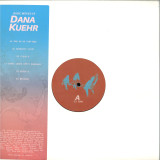
Welcome to BM-18 the biokinetic realm created by Dana Kuehr, a lush audio environment where organic and synthesized matter coalesce. As we float disembodied above this verdant pixel plain, Dana offers us shifting repetitions and sequences in disguise, each track a landscape within a world created in the utmost detail, from the minute bleeps and chirps to the enveloping and bumping bouncy basslines. Flickering drums explode like dandelion seeds in a breeze, searching for a place to lay, grow, and flourish. Sounds are captured (fingers tapping, rain patter, Belgian parakeets released from a '70s zoo, vocal oohs and ahhs) and hybridized with patterns, samples, and musical manoeuvres (jungle breaks, west coast hip hop, layered drums, IDM crunch and twinkle, reverb, delay, '90s R&B, underwater video game soundscapes). As in any imaginary sphere, there are characters who exchange and converse: rivers, coasts, clouds, lakes, echoes of dolphins, and peaceful frogs. Amidst their complex chatter, the sounds of BM-18 extend an invitation to dance, to feel our bodies alive and present, to acknowledge the impulse of movement and the pulsing heartbeats of each track. An ode to the Taoist consideration that all creatures live together in mystic unity, co-evolving and feeding each other, Dana brings together cloud ethereal with earth pounding, and like an orca's tail upon a restless sea, it slaps!!! All tracks written and produced by Dana Kuehr between April 2020 and November 2021 in Brussels, and mixed by Dan Piu at Checkpoint Charly Studio in Zurich between November 2021 and March 2022. Mastered and cut by Stefan Betke at Scape in Berlin. Original artworks by Camiflage and text by Ailsa Cavers. A1 was first digitally released on Ojoo Music. Dana thanks Michiel, George, Jakob, Camiel, Ailsa, Tania, Victor, Jill, Karen, Daphne, Arne, Oscar, Joe, and Gwenan for the love and inspiration. True voyage is return!
out of Stock
Last delivered 8 months ago available to reorder, subject to availability
OUT OF PLACE ARTEFACTS, the collaboration alchemizing the sounds of german producers Rødhåd and .VRIL, embarks on a new sonic exploration with “II” on Rødhåd’s label WSNWG.
This second longplayer ventures significantly deeper into the spheres of electronic music - exploring a wide range of abysmal drums and breaks as well as focusing on flickering sound sketches and elusive noises whose origin will have to remain a mystery for the listener. It aims to leave them in inexplicable realms between the dance floor and deep listening, unfolding its magnetism beyond genre definitions.
Throughout the listening experience, one is exposed to bewildering surprises such as traces of lightheartedness and stronger use of samples, vocals and strings. “Universian” invites a softer tone, revealing a more seductive, gloomier and poppier facette of the duo.
The closing track “Triskaideka” concludes the journey by featuring classical musicians Angelina Delgado (Violin) and Alexandra Ivanova (Viola).
OUT OF PLACE ARTEFACTS considerably developed the rapport between both artists' contributions for this LP- merging them into a more harmonious, yet very distinct expression. Each of the 13 tracks showcases layered, intricate arrangements so that they become their own microcosms, forming a radiant universe as a whole album.
out of Stock
Last delivered 5 months ago available to reorder, subject to availability
Time and duration are core themes in the work of both William Basinski and Janek Schaefer, and this long-distance collaboration took a suitably long gestation of eight years from start to finish. In that time, our collective perception of time has at times become disorienting. " . . . on reflection " remodels that instability as an exquisite work of art - one that is unmoored by time or space. Limitation breeds creativity, revealed as an expression of minimalism and close focus. Deploying a delicate piano passage from their collective archive, Basinski and Schaefer weave and reweave in numerous ways, forging an iridescent flurry of flickering melodies. The sounds of various birds heard from late night windows on tour can occasionally be heard throughout, ricocheting off mirrored facades, reflecting on themselves as they continually reshape their own environments with song. " . . . on reflection " looks backwards, a bustling revelry of positive emotions heard through the aging mirrors of memory. It is a celebratory meditation where sound shimmers through time like the light of the sea's waves glistening as it folds and unfolds upon itself. Created 2014-2022 between L.A. & London. Mixed at Narnia, Walton-on-Thames. For Harold Budd.
On a first, careless, listen, Stockholm four-piece Melby might seem like a
charming, fun little jangle-pop band - Pay a little more attention however,
and you'll find their waters run a lot deeper than that
The band have all the flash and sparkle of your favourite indie band, but add an
ability to touch moods and feelings with a meaning beyond most of their peers.
Their guitars, drums and synths rattle, roll and flicker around each other, all held
together by the soul-shiver in Wiezell's vocals, to make immaculate little guitarpop gems, equally dusted with sadness and sugar.Finding comfort in a sea of
uncertainty might be a good way to describe Looks Like A Map, the bands second
album. The record captures Melby at a moment where they're growing as people
and as a band, expanding the reach of their sonic horizons, and taking in deeper
and heavier themes, trying to find a home in an often-alienating world. The music
they made around that has a little touch of sorcery around it, sometimes soft as
smoke, sometimes woozy and dream-blurred, sometimes crashing and explosive.
But even through all that evolution, the heart and the soul have remained the
same, and Looks Like A Map still has that Melby-feeling, of a band who put all of
themselves into everything they make and their own blend of indie, psych, pop,
rock and folk. It's a new high for the band that have toured Scandinavia, Germany
and the UK and have played festivals such as Eurosonic, Reeperbahn and
By:Larm, and one that hints at even bigger things to come.
(Cargo Collective Title) RIYL: Barker, burger/ink, Andy Stott, Shackleton, Monolake, Jan Jelinek, Perila, Fax. 180gLP in 350gsm jacket + 190gsm inner + DL. CD in custom mini-gatefold paperboard jacket. T. Gowdy has kept up a productive albeit mostly virtual pace since the release of Therapy With Colour (his third full-length album and first for Constellation) which dropped just as things were locking down back in spring 2020: performances at numerous festivals including MUTEK Montréal, Node Festival and NEW NOW; audiovisual pieces exhibited at various European galleries and events; a track and video for Constellation’s Corona Borealis Longplay Singles Series; sound design for the documentary Atalaya by filmmaker Emma Roufs. Gowdy now returns with Miracles, his second full-length for Constellation, which draws on source materials originally performed in 2018 for an unreleased audio/visual project based around surveillance footage—a precursor to video1capped, monitor-based horizons that soon took on new meanings. Re-immersing himself in those recordings, Gowdy disassembles and deploys them as raw source material for new experiments with vactrols, noise gates and analog-to-digital triggering and aliasing, the original recordings juxtaposed anew amidst their successive textural and rhythmic treatments. Gowdy keeps this re-composition process stripped down, elemental and purposive, guided by an ascetic Aufhebung: synthesis as sublation—subjecting a temporal material/theme to analysis and transformation, reintegrating to form a whole that overcomes what it preserves without erasure, reshaping and intrinsically carrying its origins forward. Where Therapy With Colour was strictly and rigorously a set of stereo live performances, Miracles fuses iterative—though still spartan—layers of performance. “Therapy With Colour was about healing through self-hypnosis; Miracles is about forging a future with memory through subjection to trigger mechanisms” notes Gowdy. The result is a captivating collection of minimal IDM and oscillated electronics from the Montréal/Berlin producer, working primarily in a 120-140 BPM zone of tonal percussion and corrugated pulse. Gowdy’s sensibility and sound palette gets deeper and dirtier, summoning new pathways of alluvial flicker and abraded euphoria. As the album progresses, low-pass gate vactrols coalesce into a clear and vital theme, conveying immanence through woody timbres at times reminiscent of the Shinrin-yoku aesthetic (Japanese ‘forest bathing’), though always with a grainy transcendence rather than invoking any clean pure sheen. Gowdy consistently heats and heightens the presence of each component in the mix, balancing different elements in democratic compression/distortion, attaining an unornamental and earnest form of mantric-industrial majesty. Miracles is live, corporeal, activated electronic music of the highest caliber, deployed with monastic and meditative focus. Tracklist: 1 350J 2 Miracles 3 Déneigeuse 4 Transcend I 5 U4A 6 Vidisions 7 Clipse 8 Transcend II