Taking our time has become a sort of ESP modus operandi, often proving that when variables are left to cook long enough—relationships, styles, politics, moments in culture—we may collectively yield a more considered result. Once in a 'Blue Moon', we set sights on a record that conducts some strange voodoo, some rare combination of elements that commands our entire being. Entering our atmosphere with a concise 6-track debut, dub technician Brendon Moeller has brought us exactly that. Although we’ve long been admirers Brendon’s work, separated by only a few degrees—he and ESP’s Lovefingers are the same age and shared a decade of salad days in New York City—it took another decade before enough courage was mustered to suggest we actually work together. Our reticence has seen Brendon’s aesthetic and palette evolve over the years, and the label has simultaneously sculpted a tone of its own, but now we’re more than proud to finally marry his highly refined output with our, let’s say, “deliberate” appetite. 'Blue Moon' touches everywhere Brendon has been as an artist—from the obtuse corners of ambient to IDM, dub techno to liquid drones and bass—yet the vocabulary is honed and succinct, relying on a very intentional handful of expressions. This is almost an exercise in restraint, all 6 tracks are delivered from a disciplined and committed point-of-view, but what we find most captivating is the exploration that this allows in terms of depth, texture, fluidity and pacing. There is a complexity hidden in plain sight that begs to be studied, a comfort that allows us to slip inside like a warm bath, an addictive tingling sensation that we must prolong indefinitely. Even as we write this testimonial, the album is going on a fourth repeat and we languish the intervening silence between tracks. This is being under the spell of Brendon’s 'Blue Moon'.
Suche:fluid
A sunny and flamboyant spirit, the brazilian João Selva carries us away with his new wave album “Onda” - Underdog Records /2025.
Navegar (“to sail”) in 2021, Passarinho (“lit-tle bird”) in 2023... through the titles of these last two albums, João Selva will have displayed his ambitions and ideals: to fluidly and swiftly connect the musical components of a Black Atlantic that would extend from Brazilian samba to Angolan Semba, from Cape Verdean funaná to Caribbean zouk via Congolese rumba and American funk. His new album Onda continues to ride this same wave, crowning a luminous transatlantic artwork, imbued with sensuality and joie de vivre.
- Belt Of Orion
- Vestiges
Belt of Orion by Stockholm-based Isak Edberg is the composer's second solo release on XKatedral, and his first to focus solely on instrumental music in the form of two pieces of extended duration for solo piano. Isak Edberg is a composer of electronic and acoustic music as exemplified by Ondulations from 2017 and Lamé written in 2010 and released in 2022, both on XKatedral. Edberg was also a member of Golden Offense Orchestra, active from 2012 to 2014. Edberg writes that his music is informed by an enchantment of being and a search for holiness, rapture and transcendence through stillness, contemplation, dreaming and an attempt to uphold the present. Edberg regards his music to be an adornment of time. The two works presented here were composed in the south of France and in Stockholm during a period spanning the years 2016-2018. The music was inspired by the cold winds, starry nights and desolate, palely bright landscape of the provençal autumn, as well as reflections during a time of escapism and isolation in the life of the composer. More concretely, this music grew out of hours of improvised playing on an old piano while living alone on the countryside, during which harmonic structures and gestures were slowly worked out by means of performing and listening, assessing and balancing sounds and silences. Stylistically, the music draws on a range of sources, such as Feldman's use of space and resonance as projected through both harmonic and temporal distance, the ritualistic gestural repetitions of Satie, as well as Messiaen's resonant harmony, together with some of the harmonic lushness of Scriabin's late work. Belt of Orion is a piece that explores the contrast of two musical textures, the one being fluid, airy and progressive, the other being static, steady and repetitive. The music sequences through a series of harmonic tensions in search of a place of peace, exposing a rift in the weave of time where everything momentarily stands still. In Vestiges repetitive and rhythmic materials form a major part of the musical structure, while sections of sparse, floating harmonies temporarily interrupt with reflective pauses of stillness. The music thus employs two different and contrasting kinds of musical hypnosis, with the aim of cradling the listener into a dark and perhaps unsettling sleep. The music on this recording was performed by the renowned Swedish pianist Mats Persson, who has for many decades been a legend in the art music scene of Stockholm. Through his languid yet distinct interpretations the delicacy and intimacy of these works are elegantly brought to the fore. The recordings heard here were made over the course of two evenings at Fylkingen in Stockholm. Isak Edberg's music moves slowly through the seemingly endless world that is harmonic sound. In his practice he uses heavily reduced and carefully controlled materials to create states of maximum clarity.
Bluish Green was 15 + years in the making, passively percolating bi-coastly in the background of three family members' lives, waiting for the perfect opportunity to present itself. That moment came in January 2024 when Ball Sisters & N1_Sound settled into the Spiritual World home base of Studio Z in Toronto, Canada. What started as three casually blissful days, resulted in a debut album, combining a unique blend of dub, neo soul, ambient & downtempo. Bluish Green sits halfway between a low-key dance floor and late night back room.
The album was almost entirely created live in the studio with very little discussion, conversation or conscious direction. There were no goals or future plans, just mutual appreciation for the moment. Repeat takes were few and far between, with the group moving fluidly from one track to the next. This preservation of emotion and human touch is deeply embedded into the music, allowing the listener to share in the raw moments that were experienced while Bluish Green was organically taking shape.
Sonic themes of the natural world run throughout the five song, 30 minute album. “R U 4 Real” welcomes the listener into T3AL’s unique ecosystem with intimate cicade-esque shakers. A reverberous güiro frog (acquired on a family trip one year ago) and synthesized ocean waves create an ambient wetland on the album's 8 minute instrument track “Frog Legacy ''. Bluish Green comes to a shimmering close on “Flip That Switch” with dubbed out crystalline slide-flute melodies resembling ocean birds that fade into an iridescent horizon.
Digital drum patterns skip & stride around contemplative circular lyrical themes on four of the five album tracks, while spatial flute melodies simultaneously spin just under the surface. The bass guitar on Bluish Green is a continuous harmonic support system, repeating on a different tectonic rotation, much slower and deeper, offering familiar footing that stops the listener from drifting out in the rippling undertow of analogue delay feedback.
“R U 4 Real”?... A question that T3AL revisits frequently when thinking of the surreal weekend that resulted in the trio’s debut album, Bluish Green
“My introduction to “noise” came from a record shop in Lake Worth, Florida ran by a musician named Kenny 5. Kenny had left Detroit sometime in the mid nineties and had begun selling used records and CD’s from the downtown strip of this tiny southern Florida city in a humble shop sandwiched between a deli and a dog grooming business. Kenny previously was on labels like Amphetamine Reptile and timeSTEREO, and the records and videotapes that would be on repeat at his shop were a vast sonic expanse that spoke to the eclecticism of his experience as a touring musician participating and adjacent to American noise culture through the early to late 90’s. In 1998, I was eleven years old and I would order a pizza with him and watch VHS tapes of Japanese noise and deathmatch bootlegs, as well as any other sonic and subcultural rarities that far outstripped my age to comprehend (notably the RRR “Journey Into Pain” compilation and various Vanilla Tapes videos). This widecast net of information formed an introduction to a reality that did not fall deaf on me, but it took many years later for me to reorient the specific freedoms of what this dense and cathartic sound culture had imparted on my life and would continue onward to.
What does this have to do with this selection of choice recordings from the Secret Boyfriend catalog for the enmossed label? For the uninitiated, Secret Boyfriend is the long running moniker of Ryan Martin, North Carolina musician and label proprietor of the Hot Releases imprint. For over a decade from this writing I have watched Secret Boyfriend, and Hot Releases by extension as a curatorial and archival effort, embodying the multiplanal capacity that noise loosely functions from as an umbrella ideology and formalist avenue for sound creation. For anecdotal purposes, from (before) 2006 until roughly 2023 the East Coast of the United States showcased a vibrant network of eclectic regional festivals that saw wide swaths of artists addressing and negotiating the notion of what qualified “noise” from a conceptual and ideological perspective. Some festivals honed in on particularities in aesthetics and tropes, and others had a kind of “catch-all” implementation that allowed for a salvation of the sort of alienated and singular artistry that was amassing throughout these territories. While clear guidelines had been set from regional predecessors as to how noise with a capital “N” should maneuver, Secret Boyfriend is emblematic in the spirit of fluidity that was either implicitly coupled to the notion of the genre, or grew to evolve towards or devolve from.
Within Secret Boyfriend performances, I have seen and admired a mirroring from a ravenous appreciator of this culture at large back towards itself. Typical of a Secret Boyfriend set is an interchangeable narrative arc wherein blistering feedback laden scrap metal improvisations are forayed into naive ambient or “pop” songs, or skipping CDs, or mixer feedback play, or delayed Roland 707 drum workouts all at once and in a unique hegemony. Secret Boyfriend's stylistic mastery of each endeavor is at once an homage to a history of loving listening and enacting, while a brave step into the realm of actualizing the unique fluidity of his own practice. In performance and the action of network engagement, Secret Boyfriend operates a survey of that which he sought to hear and that which he cultivates around his work. His operations are mirrors, and the project (alongside his other peers) is a reflection on the ethos of his time.
Conversely his recording practice narrows in on these moments and allows for a different kind of intimacy or alienation for the non live listener. This record of selected “pop songs” (let's call them that) is particularly poignant at a time when the culture Martin mirrors is at a strange crossroads with itself. The aforementioned festival networks necessarily change and shift. The onlookers become the artists, the artists find new horizons, and the spaces for these cycles fade into locales of a distant memory. It seems, from my perspective, that audiences currently yearn for a more bottlenecked experience, searching for some ontologically vetted manifestation of an idea, of a sound and less for an experience that functions in opposition to our collective banalities. This makes sense in the face of general global catastrophism that plagues us. We need certainty of what something is somewhere, don’t we? Noise as an idea has expanded and contracted to so many iterations of itself it is hard to tell what it even is, and it is particularly difficult to identify in the absence of solid network activations a moment to reflect on its own complexities and nuances. In the face of so much change, I argue that the language of noise culture at large has on one hand become increasingly didactic and predictable, and laughably inclusive and non linear on the other. Probably has always been this way, but now we are in the midst of a moment of extreme access and indexicality, which somehow cauterizes expansion and naivety and chance.
This record highlights the Secret Boyfriend that obscures didacticism by highlighting output that opens up for more challenging catharsis and emotive signal processing. It provides an entry to the materialism of a cultural field full of ecstatic complexity and beautiful inconsistency. In these muted moments Secret Boyfriend has given us over his career we have an argument for evolving languages that further challenge our notions of what is supposed to happen and how it is supposed to be presented. In his more song oriented expansiveness, we can punctuate the ability to think in new modalities. Listening to these recordings reminds me of the polarity of sitting in the record store as a kid and understanding that His Name Is Alive is on 4AD and (gasp!) timeSTEREO. This trite early impression that nothing is really as different as our imaginations might want them to be, and that we can do whatever we want mostly within the creative realms we work through is an important filter to look through Secret Boyfriend as a project and a vessel. If we can achieve abandon and vulnerability through our artistic endeavors, then we have a sound model for, maybe, new potentialities. If that’s too much projection, or just complete liberal bullshit, I am fine with that. Secret Boyfriend's oeuvre at best offers us moments of reprieve to ponder these complexities, or at least a moment to zone out on a drive through North Carolina Highway 54.
You have one pocket of life that you must do whatever you want to inside of. Secret Boyfriend does it affectionately, in a variety of forms, and always with deep sentimentality. These recordings are a wonderful set of songs to begin further investigation from. Thank you Ryan for allowing as many avenues as possible to continue a broad cultural exchange and conversation that intersect and refract while being the kind of artist that is brave enough to not phone in the effort.”
- Nick Klein , May 2024
EN: The Ultraclean set is designed to mix a total of 5 litres of cleaning fluid.
Set consisting of:
1x 200ml Disco-Antistat Ultraclean concentrate (Art. No. 1302000)
5x 1 liter Disco-Antistat BiDest (Art.No. 1302001)
free of charge:
1x Disco-Antistat mixing bottle (art. no. 1302002)
1x sponge brush for cleaning the Disco-Antistat devices
1x microfiber cloth
DE: Das Ultraclean Set ist abgestimmt um insgesamt 5 Liter Reinigungsflüssigkeit anmischen zu können.
Set bestehend aus:
1x 200ml Disco-Antistat Ultraclean Konzentrat (Art.Nr. 1302000)
5x 1 Liter Disco-Antistat BiDest (Art.Nr. 1302001)
gratis dazu erahalten Sie:
1x Disco-Antistat Mischflasche (Art.Nr. 1302002)
1x Schwammpinsel zur Reinigung der Disco-Antistat Geräte
1x Mikrofasertuch
*2LP ON WARP IN GATEFOLD SLEEVE WITH PRINTED INNERSLEEVES
*INCLUDES DOWNLOAD CODE
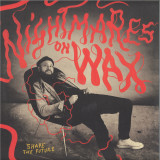
Iconic Warp mainstay Nightmares on Wax can now announce his long-anticipated return with new album Shape The Future. The marriage of soul, hip-hop, dub and timeless club sounds that N.O.W. has been mutating and perfecting for years finds perhaps its most fluid form yet on Shape The Future. Energized by globetrotting runs of studio sessions and DJ sets, this latest salvo is a masterpiece of contemporary and classic genre-blending that solidifies Nightmares On Wax's place as an inspirational electronic music figurehead.
Features guest vocals from Jordan Rakei (Ninja Tune), Mozez, Kanye West and Flume collaborator Allan Kingdom, Andrew Ashong, Kuauhtli Vasquez & Wixarika Tribe and Sadie Walker.
- Quality Crayon Wax Ok
- The Order Form
- Shabby Abbott
- World Friction
- Wake Up
- Albert
- Alkaline Loaf In The Area
- Collecting Dust
- Popcorn Boy (Waddle Ya Do?)
- Aerosol Burns
- World Friction (Single Version)
- Wake Up (Ep Version)
- Eagle Bird
- Quality Crayon Wax Ok (Ep Version)
- Bod's Message
- Flora Force
- Eugene
- Tame The Neighbours
- Music Is A Better Noise
- Moon Town
- Fanfare In The Garden
- The Captain
Iconic UK punk band X-Ray Spex co-founder Lora Logic was unexpectedly ousted before the recording of their debut album 'Germ Free Adolescents' in 1977. Undeterred, Lora went on to form and front the post-punk band Essential Logic. With trademark angular sax lines and her unmistakable vocal stylings, she went on to create some of the most liberating and exciting music of the early post-punk era, not only as Essential Logic, but also as a solo artist. 'Beat Rhythm News (Waddle Ya Play?)' is the band's debut studio album. Originally released in December 1979 on the Rough Trade Records label, whose founder Geoff Travis provided enthusiastic encouragement. The album reached number 11 in the UK Indie chart. Lora's solo album 'Pedigree Charm' followed in 1982. Lora and Poly Styrene would later reform X-Ray Spex for the band's sophomore and final studio album 'Conscious Consumer' in 1995. Essential Logic returned from an extended hiatus in 2022 with the 5 x LP boxset 'Logically Yours', including the new studio album 'Land of Kali', co-produced by Lora and Youth (Killing Joke), followed by 2024's remix album thereof - 'Rekalibrated', which enlisted the talents of an ambitious and diverse set, including Grammy Award winner - Dave Audé, Rave-pop legend - Adamski and Scottish Kandy-poppers - bis, amongst others on remixer duties. This 45th Anniversary 'Deluxe' edition compiles the original studio album together with a bonus album containing the complete Essential Logic studio recordings from 1978 - 1983, including the iconic Cells Records debut single 'Aerosol Burns' (1978), the 'Wake Up' EP (1979), included here for the first time on any physical release since its original pressing, together with the non-album b-side 'Flora Force' and 3 post album Rough Trade Records single releases: 'Eugene' (1980), 1981's 'Music Is A Better Noise' and 'Fanfare In The Garden', and their respective b-sides. Repackaged in a high gloss accented, spot varnished sleeve, on 2 x black and white splatter vinyl, foiler stickered, with inner-sleeves including full lyrics and new sleeve notes by Lora. This release also marks the long overdue and highly championed CD debut of the original album and bonus tracks. Following their recent UK tour with fellow punk legends Penetration, featuring Pauline Murray, in November 2024, Essential Logic show no signs of stopping or slowing down as they plan extensive live celebrations of the album throughout 2025 as well as the recording and release of their next studio album. Press Quotes : "Lora's voice is always doing the right, thrilling things...she frets and somersaults in such an intoxicating way" - NME // "A stunning record that remains a benchmark of the punk era" - AllMusic // "Beat Rhythm News suggests an impromptu brainstorming session between Kate Bush, Talking Heads and Captain Beefheart" - Louder Sound // "An intelligent and fluid benchmark for any band willing to dabble in both punk and dance music at the same time" - PopMatters
2024 Reissue
Following 2019's Inside, VC-118A returns to Delsin to present Spiritual Machines. Following a re-evaluation of his creative process, Samuel Van Dijk's fourth album encompasses more fluid shifts into abstract and downtempo, dub-inflected realms, without losing sight of the electro and techno qualities that have made VC-118A so compelling from the beginning. Burnished machine soul, aqueous atmospherics and immaculate drum programming abound, but in the mellow, enveloping sound world of Spiritual Machines you can hear Van Dijk guiding his music into a broader form that sounds at once more assured and more inspired.
Coming off a successful transatlantic exchange, Brian Kage and his Michigander label keep the momentum, and the collaborative spirit, moving with an EP that hits closer to home. For any Detroit artist, working with Delano Smith would be on the bucket list, as one of the city's original, more influential DJs — before the D developed any of its "waves" — who would come into his own as a producer later to, once again, help mold the Techno City's sound. Make no mistakes about it, this tastemaker had a ripple effect back before techno even had a name, when it was just "progressive" music and mixing. The thing is, the feeling of admiration and respect here is mutual, from the moment Smith first stumbled across one of Kage's records and had to know who was making these sounds. This meeting of the minds happened organically and timely, with Keep 'em Movin’ as the result.
Opening the release is the title track, a driving number with pulsating synth tones and deep, call and response piano stabs. The ever so slightly pitched down vocals are modern and effortlessly cool, a style that resonates with today's dancefloors, but done tastefully, and with lyrical content that sets the record straight about what it really means to represent Detroit.
"D Spirit" takes an ancestral turn. This is spaced-out Detroit techno meets afro deep at its finest. Forward moving keys are bathed in deep, celestial pads as shuffling hats accented by light hand percussion beckon the body to move. Lively marimbas cut through the hypnotic undertones and awaken the senses with soulful appeal. A fluid bassline rumbles beneath while baroque pianos add tension and heighten the atmosphere.
The final track rounds the release out with an exclamation mark. For lovers of Delano Smith's infamous remix of "A
Ben Klock & Fadi Mohem announce debut collaborative album featuring Coby Sey and Flowdan on new label LAYER
Ben Klock and Fadi Mohem present their first collaborative album on their new label LAYER. The ten-track full length project titled Layer One follows the hypnotic EP Klockworks 34 that set the stage in 2022. In a bold departure from the techno roots that have defined and nurtured their careers, Klock and Mohem are now pushing genre boundaries, exploring IDM, ambient and experimental electronic music while still retaining the brilliance that characterised their earlier work.
The conceptual direction of Layer One delves into a post-human world, where humans are close to extinction on Earth, leaving only imprints, traces, and relics behind—digital fossils and machine-generated images capturing fleeting moments of non-human photography, as Artificial Intelligence remains in a world that quietly thrives without us. We do not perceive this as a bleak apocalyptic dystopia, but more a sober and serene reflection of a world that continues to exist and flourish, indifferent to the absence of humanity. Despite this unremitting setting, through this journey we find survivors who signal a remembrance of the human sensibilities.
Elevating this project are two very human and dynamic collaborations featuring the charismatic Coby Sey and the legendary grime MC Flowdan. Sey, a prominent figure in the British music scene known for his work with artists like Tirzah and Mica Levi, injects his music with a mesmerizing emotional depth. Opening the album with the powerful track ‘Ultimately,’ Sey offers spoken-word musings on creativity and life over experimental landscapes meticulously crafted by Klock and Mohem. Nostalgia permeates this opening track, and track 7 ‘Clean Slate’ reinforces this sentiment with Sey’s stream-of-consciousness wordplay.
Flowdan, the gritty MC whose verses have become anthems of the UK grime movement, made headlines in 2023 with two songs that reached the top 20 of the UK singles chart. In 2024, he was awarded his first Grammy for the Skrillex and Fred Again collaboration Rumble, becoming the first grime artist to win in any category. On track ‘Our Sector,’ Flowdan unleashes his raw energy and dynamic flow, adding a thrilling vocal dimension to the album’s narrative. The fluid delivery of his lyrics and rhythmic timing are enhanced by the staccato beats and abstract synths. These collaborations are not mere features; they are pivotal moments that crystallize the album’s vision—an experimental re-imagining of electronic music’s possibilities.
Immediately offering an impressive entry to Klock and Mohem’s changing sonic universe ‘Escape Velocity’ shows the collaboration at its strongest. Deftly juggling between ambient chords and more densely intricate rhythmic moments. These tightly layered textures and intense clashing moments are continued through most of the album. On other tracks the duo are just as innovative ‘Rest Assured’ rips open the sound palette Klock and Mohem are known for, synths dart around flickering through into unexpected areas. Penultimate track ‘The Machine’ feels like the internal innards of a PC or synthesizer brought to life. Electricity flows through the track like an auditory exploration of the digital world's hidden mechanical and electrical processes. In contrast, final track ‘Melatonin’ does exactly what the name suggests; its soothing melodic ambience cradles the listener as the album draws to a close.
Alongside the album’s release, the duo will release two singles. This album represents the work of two artists at the peak of their creative powers, inviting listeners to step outside the familiar and explore a different musical perspective.
A1 Northern Lights
Darkly, tense tones take center stage as Northern Lights kicks the LP off, introduced with an eerie synth before classic, striking old school breaks that aficionados will recall from the likes of John Bs Secrets drop, chopped expertly by our Spatial duo to create a quietly vengeful beat pattern with heavy kicks and a unique stuttering detail. Circling menacingly around the mix we are treated to swathes of choral detail, subtle vocal samples and shimmering ambience..
A2 Sunset on Mars
Showcasing the strengths of both producers through a delightfully rich atmosphere, Sunset on Mars opens with soothing echoed effects that ooze a welcoming sense of wonder. Delicate in composition yet still packing a punch, the breaks sit over a sumptuous deep sub bassline which carries our journey through simple key melodies, vivid mood-changing synths superbly to create a pure, wholesome atmospheric bliss.
B1 Totality
Dominant hats and cymbals surf the peaks of the mix early in Totality, detailed old school breakbeats quickly seizing our attention constructed with an effortless attention to detail. A stark, thick atmosphere is carved from a broad backdrop of sound blending vocals and synths, enveloping the listener with a dense, bleak soundscape that develops continually as the breaks roll on with memorable intent.
B2 Reincarnation
A deeply evocative, interstellar intro opens Reincarnation, generating images of lonely spacewalks with trademark Spatial aplomb. The vibe continues through a barrage of heavy analogue amens which crush the mix, edited with a chunky, commanding panache. The listener can picture pillars of isolation and thundering defiance dancing in duality as the elements weave their way fluidly throughout.
C1 Seraphim
Into an intense, epically atmospheric piece next as Seraphim channels the spirit of yesterday for a journey into the souls core via scene-trademark Hot Pants breaks, a moody 808 bassline and swirling atmospheric pads, melodies & synths. Layered with detailed FX demanding repeated listens to soak it all in, Seraphim is a special track which will take over your setlist and the journey home.
C2 Prism of Light
Sit back and relax to another slice of classic atmospheric bliss with Prism of Light, opening with a DJ-friendly hi hat intro before melodic synths generate an instantly unforgettable late-90s vibe. Hot Pants breaks drive us forward with a wondrously simple yet effective mix of 2 step and double kick edits, as blissful ambient washes and vocal hits are drizzled over the mix. Delightful.
D1 Harmonic Function A uniquely constructed beat pattern guaranteed to move you opens Harmonic Function, building up from rushing cymbals and hats intertwined with a fantastic crunchy, metallic half-time snare. Throw in a slew of mournful melodies and blanketed pad work around the mix and youre left with a superbly laid back yet danceable piece from ASC & Aural Imbalance, continually innovating in their music as ever on Spatial.
D2 Fade to Grey
Old school rhythms are on the agenda as our duo close out the album with a tense, meandering exploration through space, circling the planets through mellowed out beats before a layer of dense, analogue breaks are added to the mix as the atmosphere escalates. Exquisitely programmed vocals provide texture and feeling, while an understated bassline rumbling on below, completing a timeless collage of sound.
Words by Chris Hayes (Spatial / Red Mist)
2024 Repress
DVS1 returns to his own imprint HUSH with his unique sonic palette of beats and rhythms, delivering stripped-down and slow-building tracks with remarkable clarity, easily imagined to be played on massive sound systems. HUSH 06 features DVS1's trademark sound with his interplay of elements rising and falling, fluid percussions seamlessly weaving in and out of the arrangements, highlighting an ever-shifting emphasis that draws its energy from minimalistic features.
Led by Sommer, the release signifies the first chapter of the drummers much much-anticipated Nordic trilogy on April Records, aiming to capture and document Nordic improvisation and composition across three carefully curated ensembles. Bassist Arild Andersens storied career stretches back to the 1970"s as one of ECM s first recording artists, collaborating with household names of the genre including Jan Garbarek, Don Cherry, Bill Frisell, John Taylor, Sonny Rollins, Chick Corea, and the list goes on. Welcoming the opportunity to work with and nurture younger artists, the ensemble was born when Daniel Sommer selected Andersen for a project during his studies at the Danish National Academy of Music. Later, impressed by Luft s performances in Ireland and Norway, Andersen suggested expanding the pair into a trio. A transcendent musical voyage, As Time Passes " blurs the lines of conventional trio roles, and celebrates the evolution of jazz as a fluid, versatile form of expression. By providing each musician the freedom of becoming a key contributor in the melodic discourse, the trio channels the spirit of jazz veterans such as the Bill Evans Trio and free free-jazz ensemble Air, while echoing the sounds and innovations of pan pan-European contemporary jazz. Mixing pensive rubato ambience with energetic grooves, instrumental dexterity, a modern ECM ECM-esque sound and folk undertones, the record s compositional clarity combined with the spontaneity of a live performance flows across and between genres, borders and generations alike. Luft s intricately over- dubbed layers of acoustic guitars, vast reverbs, and contrapuntal melodies expand the sound of the three piece into an immersive world of textures. Rendered in the stark beauty of Andersen"s bass lines, the nuanced strokes of Sommer"s drums, and capped with the lush, expansive timbres of Luft"s guitar, "As Time Passes" is a testament to the enduring and ever ever-evolving wonder of Jazz.
The seeds of composer Rafael Anton Irisarri’s latest LP were first planted during his 2016 tour in Italy, months before that Autumn’s unexpected presidential election. The linguistic glitch of an innocuous diner in Milan named “il Mito Americano” – meant as “The American Dream” but translated literally to English as “The American Myth” – sparked a series of ideas, both conceptual and musical.
Amid the chaos of 2020, while exploring the stark world of brutalist architecture and inspired by the false fronts of Potemkin villages, a vision started to take shape: FAÇADISMS. Composed over three years, it’s a late capitalist lament of simmering electric despondency.
Irisarri’s obsession with repeating motifs mirrors the cyclical nature of our tumultuous political history. The album’s eight tracks heave and storm like a tempest being drained of its rage. This is the sound of majestic dissipation, of morning afters, fashioned from a mournful haze with cavernous guitars and granular twilight. A euphony of a receding tide as one sifts through the remnants of what remains: dust, delusion, and memory.
Opening with the somber gauze of “Broken Intensification," FAÇADISMS moves fluidly between moments of absence and abandon. Ashen swaths of electronics billow above smoldering embers of melody, guitar, and scattered streaks of processed strings and voice, as on the rapturous doom of “Control Your Soul's Desire for Freedom,” featuring Julia Kent on cello and Hannah Elizabeth Cox on vocals. "The impoverished peoples of the Americas have known all along that 'freedom' is a cruel illusion crafted by the elites, akin to Potemkin's fake villages designed to impress Catherine the Great," Irisarri indicates. "FAÇADISMS illustrates a twisted inversion where the rulers deceive their subjects with illusions of safety, democracy, and free speech to create a grotesque mirage of control over their own lives.”
Elsewhere, Irisarri leans into passages of hushed oblivion (“Hollow,” “Dispersion of Belief”), while ragged drones rumble and disintegrate into wind-battered ambient wreckage. One has the sense that it’s all too late. The hour of fury has passed. The beauty has come and gone. Irisarri’s muse has become the crack in the façade of the unraveling myth.
The record closes with a climax of grand departure. Co-written with Kenyan sound artist KMRU, “Red Moon Tide” surges from flickering elegy to celestial disquiet, roiling waves of hymnal descent, and bristling noise. The effect is unsettling and unmooring: a soundtrack for the soul leaving the body, only to discover a void. It’s the sound of the center not holding, of shared illusions being dissolved in a tunnel of white light.
The cover photograph captures a profound sense of desolation. Taken in the historic shanty town of La Perla, Puerto Rico, where Irisarri spent his childhood, brutal colonial mysteries are lost to time. A skeletal concrete structure decays against an expansive blue horizon. Only the shadow of its shell ripples on the empty sea.
Has the American myth finally run its course?
The seeds of composer Rafael Anton Irisarri’s latest LP were first planted during his 2016 tour in Italy, months before that Autumn’s unexpected presidential election. The linguistic glitch of an innocuous diner in Milan named “il Mito Americano” – meant as “The American Dream” but translated literally to English as “The American Myth” – sparked a series of ideas, both conceptual and musical.
Amid the chaos of 2020, while exploring the stark world of brutalist architecture and inspired by the false fronts of Potemkin villages, a vision started to take shape: FAÇADISMS. Composed over three years, it’s a late capitalist lament of simmering electric despondency.
Irisarri’s obsession with repeating motifs mirrors the cyclical nature of our tumultuous political history. The album’s eight tracks heave and storm like a tempest being drained of its rage. This is the sound of majestic dissipation, of morning afters, fashioned from a mournful haze with cavernous guitars and granular twilight. A euphony of a receding tide as one sifts through the remnants of what remains: dust, delusion, and memory.
Opening with the somber gauze of “Broken Intensification," FAÇADISMS moves fluidly between moments of absence and abandon. Ashen swaths of electronics billow above smoldering embers of melody, guitar, and scattered streaks of processed strings and voice, as on the rapturous doom of “Control Your Soul's Desire for Freedom,” featuring Julia Kent on cello and Hannah Elizabeth Cox on vocals. "The impoverished peoples of the Americas have known all along that 'freedom' is a cruel illusion crafted by the elites, akin to Potemkin's fake villages designed to impress Catherine the Great," Irisarri indicates. "FAÇADISMS illustrates a twisted inversion where the rulers deceive their subjects with illusions of safety, democracy, and free speech to create a grotesque mirage of control over their own lives.”
Elsewhere, Irisarri leans into passages of hushed oblivion (“Hollow,” “Dispersion of Belief”), while ragged drones rumble and disintegrate into wind-battered ambient wreckage. One has the sense that it’s all too late. The hour of fury has passed. The beauty has come and gone. Irisarri’s muse has become the crack in the façade of the unraveling myth.
The record closes with a climax of grand departure. Co-written with Kenyan sound artist KMRU, “Red Moon Tide” surges from flickering elegy to celestial disquiet, roiling waves of hymnal descent, and bristling noise. The effect is unsettling and unmooring: a soundtrack for the soul leaving the body, only to discover a void. It’s the sound of the center not holding, of shared illusions being dissolved in a tunnel of white light.
The cover photograph captures a profound sense of desolation. Taken in the historic shanty town of La Perla, Puerto Rico, where Irisarri spent his childhood, brutal colonial mysteries are lost to time. A skeletal concrete structure decays against an expansive blue horizon. Only the shadow of its shell ripples on the empty sea.
Has the American myth finally run its course?
The seeds of composer Rafael Anton Irisarri’s latest LP were first planted during his 2016 tour in Italy, months before that Autumn’s unexpected presidential election. The linguistic glitch of an innocuous diner in Milan named “il Mito Americano” – meant as “The American Dream” but translated literally to English as “The American Myth” – sparked a series of ideas, both conceptual and musical.
Amid the chaos of 2020, while exploring the stark world of brutalist architecture and inspired by the false fronts of Potemkin villages, a vision started to take shape: FAÇADISMS. Composed over three years, it’s a late capitalist lament of simmering electric despondency.
Irisarri’s obsession with repeating motifs mirrors the cyclical nature of our tumultuous political history. The album’s eight tracks heave and storm like a tempest being drained of its rage. This is the sound of majestic dissipation, of morning afters, fashioned from a mournful haze with cavernous guitars and granular twilight. A euphony of a receding tide as one sifts through the remnants of what remains: dust, delusion, and memory.
Opening with the somber gauze of “Broken Intensification," FAÇADISMS moves fluidly between moments of absence and abandon. Ashen swaths of electronics billow above smoldering embers of melody, guitar, and scattered streaks of processed strings and voice, as on the rapturous doom of “Control Your Soul's Desire for Freedom,” featuring Julia Kent on cello and Hannah Elizabeth Cox on vocals. "The impoverished peoples of the Americas have known all along that 'freedom' is a cruel illusion crafted by the elites, akin to Potemkin's fake villages designed to impress Catherine the Great," Irisarri indicates. "FAÇADISMS illustrates a twisted inversion where the rulers deceive their subjects with illusions of safety, democracy, and free speech to create a grotesque mirage of control over their own lives.”
Elsewhere, Irisarri leans into passages of hushed oblivion (“Hollow,” “Dispersion of Belief”), while ragged drones rumble and disintegrate into wind-battered ambient wreckage. One has the sense that it’s all too late. The hour of fury has passed. The beauty has come and gone. Irisarri’s muse has become the crack in the façade of the unraveling myth.
The record closes with a climax of grand departure. Co-written with Kenyan sound artist KMRU, “Red Moon Tide” surges from flickering elegy to celestial disquiet, roiling waves of hymnal descent, and bristling noise. The effect is unsettling and unmooring: a soundtrack for the soul leaving the body, only to discover a void. It’s the sound of the center not holding, of shared illusions being dissolved in a tunnel of white light.
The cover photograph captures a profound sense of desolation. Taken in the historic shanty town of La Perla, Puerto Rico, where Irisarri spent his childhood, brutal colonial mysteries are lost to time. A skeletal concrete structure decays against an expansive blue horizon. Only the shadow of its shell ripples on the empty sea.
Has the American myth finally run its course?
The Boysnoize Records catalogue contains more than a decade of milestones in the life of Angeleno DJ and producer PILO. His signatures—a focus on sound design, and a digital crunch evocative of hardware rather than software—are present from the very beginning, but the evolution of Pilo’s skill and sophistication is clear as he stretches from electro to experimental to techno and back again in a slowly oscillating gradient. Yet despite his dozen or so releases in just as many years, G.L.A.M. (dropping November 8th, 2024 from BNR) is Pilo’s first proper album. That the record embraces the cyclical nature of time is apropos; the artist’s journey towards self-actualized mastery always ends with a new beginning.
Over the eight tracks of G.L.A.M., Pilo reaches deep into the dream that first ignited the passion that has driven him since. For a chosen few internet-connected American teens in the aughts, the sounds of European electro (and electroclash) trickled down their ethernet cables and instilled a fantasy of exotic, sartorial, sexually-fluid hedonism that felt a world away from the hard-edged masculinity of the hip-hop and skate cultures dominant at home. Pilo opens G.L.A.M. expressing this idealized fantasy with the track “Superstar DJ,” channeling the tongue-in-cheek self-celebritizing of Miss Kitten and The Hacker’s seminal work. “I’m a superstar, come meet me at the bar,” hiss Pilo’s heavily effected vocals, over a bassline of chopped mentasm synths driven by a swift, club-ready rhythm. The fingerprint of 2000’s electro a la International Deejay Gigolo Records is recognizably present, yet Pilo is too adept, too confident in his studio abilities to let his tracks rely on the retro. A great joy of this album is the future-facing richness of its production, always nodding to its spiritual guide of the past, while constantly breaking new sonic ground.
G.L.A.M. continues with “Girls Rule The World,” its vicious, droning bassline and sticky, titular hook making it the perfect electroclash soundtrack for a revenge plot on an ex-boyfriend. “What you Want” offers an instrumental exercise in “synthesizers are the new guitars,” and Pilo’s FX chops really shine as he warps and distorts his sounds into an undiscovered dimension existing somewhere between both. “Loverboy” enters the more melodic, Legowelt-inspired realm of electro, pushing above and beyond the foundation of analogue minimalism with flourishes of impressive sound design to construct something both climactic and cathartic. Scopa lends her perfect coldwave sprechgesang to titular track “G.L.A.M.,” with Pilo’s vocal processing offering surprises throughout and his FX chains wielded as instruments unto themselves.
On the track “A Slow Thinning Halo,” Pilo might be conjuring the haunting vocal chops and chiptune simplicity of early Crystal Castles, but the whiplash snap of his drums and sizzling production are all his own. “Spend the Night” is G.L.A.M.’s least nostalgic—and most unashamedly pop—offering, with the mic being passed between Sana and DEEVIOUS (previously featured on Pilo and Boys Noize’s 2023 track “Pvssy.”) DEEVIOUS’ sultry singing rides atop the bassline as it hypnotically struts across the floor, while Pilo’s skillful arrangement, deft rhythm programming, and atmospheric control elevate the songcraft into full-spectrum worldbuilding.
As the penultimate track, the contemporaneity of “Spend the Night” serves as transition away from the album’s previous, past-leaning exercises, allowing Pilo to step fully into the future with “One Last Embrace.” The closing track still references aughts sounds, but it borrows so widely and prolifically that Pilo’s reassemblage can only be described as singular. Here, Pilo pushes his engineering into psychoacoustic territory, as the eerie, beautiful melancholy of “One Last Embrace” explodes into a thrashing bassline that warbles like a drowning memory, struggling against the sinking weight of time. Pilo allows it to survive for 16 electrifying, gut-wrenching bars before letting go. In G.L.A.M., as in Pilo’s career, as in life, every ending can only be a new beginning.
Water ripples all around, and echoing sounds stretch out into a shady sub aquatic habitat. Its dark corners slowly burst into view as cresting noises reveal fresh caverns teeming with liquid life. This is Sueños acuáticos, the latest sonic exploration from Lamina, a musical project by French artist, Clarice Calvo-Pinsolle. Built from years of carefully gathered field recordings, the album constructs immersive, detailed soundscapes where watery environments, caves, and forests intertwine with digital manipulations.
Rooted in the myth of the ‘Lamina’, a creature from Basque folklore, the project blends this oral tradition with technology to build a geological myth. The Lamina’s world—a nocturnal ecosystem of water and stone—serves as the foundation for the album’s sound design. Lamina reshapes these natural recordings into something new: stretching, pitching, and layering them to build intricate sound environments that feel simultaneously organic and synthetic. “I transform these sounds much like I would sculpt in ceramics,” explains Calvo-Pinsolle, “by adding, removing material, and imagining landscapes.
Drawing from hydrofeminist and posthuman ideas, particularly those in Astrida Neimanis’ Bodies of Water, the album treats sound like water—shifting, flowing, connecting, and buoying life. Tracks flow into one another without clear boundaries, much like the natural currents they represent. The result is a continuous listening experience, inviting deep focus on texture above melody.
Lamina is exploring the potential of the field recording as a compositional tool. Natural sounds, like trickling water or wind through trees, are processed out of recognition—or cliché. A sense of weightless immersion takes hold as Lamins’a music unfolds, and listeners float freely and choose their own adventure in the Lamina’s home. Less a set of songs than its own evolving environment, Sueños acuáticos (‘Aquatic Dreams’ in English) is a meticulously constructed work in which we can freely float.
The acclaimed trio of Mikkel Ploug, Sissel Vera Pettersen, and Joachim Badenhorst is set to release their fourth studio album, Lento, on November 1, 2024, through the Klein label. Following their celebrated albums 'Equilibrium', 'Walking Voices', and 'Liquid Light', this new release further cements the group’s position as an innovative voice in contemporary music.
Lento offers an evocative blend of jazz, folk/world, classical, minimalism, and avant-garde influences, crafted through a dynamic mixture of free improvisation and original compositions. The trio’s unique synergy is evident in every track, pushing the boundaries of genre while maintaining an intimate and expressive core.
The trio comprises of the Norwegian vocalist and saxophonist Sissel Vera Pettersen, a multifaceted artist known for her collaborations with Chick Corea and Marilyn Mazur, Her contributions to Lento showcase her versatility, moving seamlessly between voice and saxophone with a fluidity that anchors the group’s explorative sound.
On guitar is Danish virtuoso Mikkel Ploug, who is renowned for his work with saxophonist Mark Turner and composer Bent Sørensen, Ploug's playing on Lento is both intricate and expansive. Completing the trio is the Belgian reed player Joachim Badenhorst, whose talents on the clarinet have earned him a spot in Downbeat Magazine’s "Rising Star" polls. Badenhorst is known for his work with Han Bennink Tony Malaby’s, Kris Davis and his own projects Carate Urio Orchestra and Zero Years Kid.
Having garnered praise from critics and fans alike for their previous albums, the trio continues to evolve and captivate. Lento is a testament to their ability to fuse disparate musical elements into a coherent, deeply moving whole. Expect meditative passages, explosive bursts of improvisation, and moments of pure musical dialogue that transcend traditional boundaries.