Saturazione Momentanea is the first single from the upcoming album by 291out, set to be released on Tasty Treats Records at the end of this year.
It is a warm soundtrack, built up on a hypnotic groove, enhanced by electric piano and brass solos and it's a blend of electronic music and jazz/fusion, sound of the 70/80's era. B side Saturazione Sistemica is built upon the motif of the other track but create a different atmosphere and it's characterized by a huge brass section, electronic arpeggiators and smooth flute solo.
291out are known for their passion for soundtrack and on these pieces you can hear the influences from notable italian composers such as Riz Ortolani, Francesco De Masi and Augusto Martelli, just to name a few.
Yuki Kanesaka, the multi-instrumentalist/Producer who's been the Mastermind behind his monolog project recordings is back with the delicious uptempo cover of "Watermelon Man". He indulges us with star-studded features of Bill Summers, the percussionist of the Head Hunters and Curtis "Fitz" Williams, the musical director and keyboardist/saxophonist of Kool & the Gang. The backstory is, Yuki traveled all the way to Bill Summer's home studio on Valence Street, New Orleans to record Bill playing a variety of alluring percussive instruments. That includes playing Hindewhu, the style of singing/whistle-playing of Central Africa mixed with a Peruvian Pan flute Zampoña much like the infectious Head Hunters version. Other notable instrumentations include congas, and shekere and Bill's hand scratching used as a human shaker. Curtis Williams plays the lead soprano sax melody we all know and love, with some added clavinet that adds extra sugar to the watermelon funk. B side features a special drum break version called "Bill's Valence Street Jam", so you can really savor the mouthwatering groove of the Watermelon Man. Both tracks are performed, produced, mixed, and recorded by monolog aka Yuki Kanesaka.
Bright Magus is an instrumental quintet born under the influence of Miles Davis' metaphysical electric period, a visceral and magical passion always shared by Giovanni Calella and Leziero Rescigno. Davis' most eclectic and psychedelic period, that of recordings for Columbia from 1969 throughout the 70s. Albums like “In a Silent Way”, “Bitches Brew”, “A tribute to Jack Johnson”, “On The Corner”, “Big Fun” made them immerse themselves in one of the most fascinating experiments that Miles has generated in his long and prolific career. We are talking about music that is difficult to fit into one genre, in these masterpieces you can feel the contemporaneity of that historical period. Electric Jazz, Funk, Psychedelia, Rock, Afrobeat, Ambient, drag you into something absolutely new, mysterious and sometimes furious. Just a year ago Giovanni and Leziero took courage and started recruiting musicians who had to have the right attitude and knowledge. Guitarist Alberto Turra was the first to be interested in the project, then came Mauro Tre, pianist and keyboard player and Gianni Sansone on trumpet. All seduced by Miles and in love with that magical period.
Before making the first album "Jungle Corner", the band did some live shows to amalgamate all the ideas that came out during the improvs recorded by Tullio Treffiletti in the trumpeter's home studio (later baptized Selim Studio). At the Isola Studio in Manuel Agnelli's space and with the help of the very talented Guido Andreani, Bright Magus then recorded in three days live all the material which in the meantime had been enriched with more structured melodic themes and less casual drafts . Mauro's contribution was very important in this. The finalization of the album was then managed by them in the small "Diabolicus Studio" taking care of editing, post production and mixing.
Guest on the album in two songs, Enrico Gabrielle of Calibro 35 on flute and clarinet.
The cover design is a work by Barba Ughi alias BAX.
born in canadian Newfoundland, aadja was drawn to music early. growing up in nature made a profound impact, the surrounding woods, rugged landscapes and nearby ocean inspiring her innate music language. she picked up a guitar at age five, and went on to play clarinet, piano, flute and baritone saxophone, as well as receiving classical vocal training.
isolation of the early 20's meant chaos for some, but for the canadian dj and producer this period in time presented itself as a gift. it became an environment to control and create, a time to dive into the fire of pyrocbs and emerge stronger and unfettered.
''pyrocbs'', the follow up of her excellent ''thought dealer'' record, features 11 compositions orchestrated by the prophet 6, and spiced with hilary's unique vocals. a bold, minimalist approach weaving a romantic dialogue between sounds.
like the eye of a storm, ''pyrocbs'' is what aadja defines as finding stillness amidst chaos.
Reverse board tip on with silver pantone print. The first ever reissue of Dorothy Carter's 1978 folk/psych/drone masterpiece. A truly unique album in Dorothy's catalog of otherwise traditional psaltery folk music, Waillee Waillee's essence sits in the confluence of Dorothy's mastery of the dulcimer; its shimmering notes fully enmeshed with the tremulous, cavernous drones of Bob Rutman's bowed steel cello. The core of this album, Dorothy's only with a full band, lies in the contradiction of traditional psych-folk idioms and the minimal avant-garde, referencing Henry Flynt and Laraaji as much as Karen Dalton. This LP version includes 12 page booklet with unpublished manuscripts, drawings, photographs, and songbooks of the songs from the album, as well as extended liner notes from friends and family of Dorothy Carter, including notable musicians such as Laraaji, Bob Rutman, and Alexander Hacke (of Einstürzende Neubauten). Drops soon - a joint release between Palto Flats & Putojefe Records.
Dorothy Carter was many things - a virtuoso player, storyteller, historian of Celtic and Appalachian folk music, avid lifelong busker, avant-garde musician, and itinerant troubadour, laying a framework for music that existed both within and outside of standard folk idioms - never better represented than on her 1978 masterwork, Waillee Waillee. Underscored by Bob Rutman’s cavernous bowing of the steel cello, the richness of Waillee Waillee’s sound produces an album unlike any other in her discography. In particular, its two side-ending pieces, “Summer Rhapsody” and “Tree of Life,’’ glide with the shimmering filigree of hammered dulcimer and Dorothy Carter’s ephemeral voice floating over Rutman’s droning buzz of the steel cello. The elements of these two tracks suggest something akin to a transcendental Appalachian raga or whirling cosmic folk music, an effortless combination that serves to add additional substance to the remaining tracks on the album.
The title track is one of her most enduring compositions, often performed in stripped down versions throughout her career, and one of her sole recordings featuring a full band, with the contrapuntal interplay of tremulous flute, vibrating steel cello, bass and drums. Lyrically and tonally, her voice would never sound as stirring and refi ned as on this, her most outwardly accessible song.
She counted musical colleagues as diverse as Constance Demby, Einstürzende Neubauten and Laraaji, as well as her lifelong artistic partner and friend Bob Rutman, whose imprint is felt throughout the grooves of this record. The master tapes for this recording were fortuitously discovered in Rutman’s Berlin studio, many, many years later. As recounted in Laraaji’s contribution to the liner notes, Dorothy was “someone who really influenced my early zither exploration and vocabulary and inspired my shift toward hammered zither performance and recording,” after encountering him busking on the sidewalk one day in the 1970s. Later, when living in Berlin in the early 1990s, Dorothy would begin work on manuscripts detailing the history of the dulcimer family and providing extensive sheet music, selected material of which is reproduced in the twelve page booklet included with this release. Dorothy would find later success touring and performing in the late 90s with the ensemble Mediæval Bæbes, which she led with British musician Katherine Blake, playing a prominent role on their first four albums.
The word Datasal paints inner pictures for most people growing up in Sweden during the 1990’s. The datasal (a classroom for computers) was an ordinary classroom with few changes to fit the school’s 10 newly leased computers. The room represented the change of times in Sweden during this period: the fixed institutions and the awaiting digital flood wave.
The music of Datasal sounds captures the feeling of printing a downloaded picture of your favorite hockey player or music artist or the expectations building up as you wait for the modem to log in to interact with the thousands of users of the internet in 1995. The tracks this release manifests the excitement but also the bit of fright you felt connecting to the world in the mid 90’s - a time when the internet still was fun.
The sound is built around repetitive sequencer loops and programmed beats where electric bass, electric guitar and flute improvise around a theme, creating a sound that is best described as cosmic flute house. Datasal is an harmonic reminder of a time where digital progress seemed less harmful than today.
Following up last year’s Acrobatic Thoughts album, Panoram delves even deeper into his own musical universe with Keep Looking Where The Light Comes From. We find the producer in confident form, exploring the fuzzy fringes of beauty and chaos. The result is an album that sounds even more like himself and yet surprising at each turn.
Opening track Feathers sounds like only Panoram can, buzzy arpeggiated distortion takes flight somewhere in the direction of a distant multiverse where Animal Collective and Boards of Canada soundtracked Koyaanisqatsi. But the psychedelic drift is all Panoram’s own, conjuring a stark sense of the uncanny with the repeated phrases. The digital guitar and vocal loops of I Can Only Repeat Your Love are practically on the brink of collapsing in on themselves, to the point where the structure begins to shift like a collapsing monument. Flat Stones nods towards ASMR, as flute and woodwind tones caress the ears and a whispered voice teases out an altered state.
It’s this dreamlike mood that pervades the whole album, a maximal effect that’s wrung from minimalist compositions. The Wide House picks up the baton from Laurie Anderson to trip gently through different states of awareness, while the piano patterns of Blank Sheep float through the synth ambience like ideas entering an empty dream. There Is A Hole Here is another mutant loop that unravels as it proceeds - the rhythms turn into a pulse, and despite what the lyrics say, it does indeed mess around with your brain.
Panoram balances dance tropes, classical composition, ambient drones and a washed out, fuzzy twist on avant garde pop, and manages to transform it all into a uniform whole that fits all those puzzle pieces together. Yet such is the assuredness of Panoram’s production that it sounds effortless. At this point, the music is more like a midwife, manifesting your future self‘s enlightened consciousness with surreal effect.
Astigmatic Records presents the two volumes of Wooden Music, a conceptual project created by Tomasz Stańko and his legendary quintet. A blank spot in the history of Polish jazz which has been stored in the archives of Radio Bremen for 50 years.
GIM Records is back from the Moon bringing a new release "In The Music" signed by the Italian team "Groove In Mind" aka GIM Productions (Onda Records).
The original track is a dancefloor oriented anthem with a groovy bassline and a House vibe feeling, fueled by magnetic Rhodes keys and flute.
Included are a couple of very hot remixes by the well-renowned Kai Alcé (NDATL Muzik) and the Italian Dj Emanuele Inglese (Cocoon Rec).
Limited Edition 12 Inch - 140 grams standard black vinyl with generic jackets
Kay-Dee Records is coming at you with a 45 double-hitter, presenting Bert Hector’s ‘The Phoenix’ and ‘The Kraken’ with Kenny Dope on remix duties.
On the first record, we’re treated to ‘The Phoenix’: a sure-fire funk gem with a super warm sound. The beat is as cool as it gets, with a laid-back and funky attitude, sitting beneath a joyous intermingling of sitar, flute, brass and guitar - all performed at expert levels.
‘The Kraken’ has a killer groove, struttin’ along at 85 bpm with a real old-school sound on the beat. Joining the breaks is a huge brass section which pumps loud, while flute solos and funky Wah-wah guitar chops take things up a notch. This is a pure, unadulterated groove.
Having released several solo projects, numerous collaborations and a series of LP's, EP's and singles with his band Ruby Rushton that centred on original compositions, he wanted to take a moment to focus his energy on exploring the classic jazz material that has inspired him over the years.
Players like Jackie McLean, Duke Pearson, Clifford Jordan and Wayne Shorter have all played significant roles in Tenderlonious' life and provide a constant source of inspiration for his development as a musician and composer. 'You Know I Care' is a tribute to those musicians and for this reason a landmark album - his first recording that purely delves into the American jazz songbook. Plus it's a way of encouraging a new generation of jazz listeners to explore some of the most significant contributors, and in some cases unsung heroes, to this everevolving genre.
This long player clearly follows in the footsteps of Tenderlonious' spiritual jazz hero's, paying particular attention to the original performers of these six masterpieces - Jackie McClean, Clifford Jordan, Wayne Shorter and Duke Pearson. This is also the first time that Tenderlonious has recorded on alto saxophone, a more recent love affair for this talented multi-instrumentalist, and hopefully the first of many.
There is something for everyone on this album, from brooding ballads to fullsteam ahead modal delights - and an opportunity to enjoy a fresh take on these timeless compositions.
Tenderlonious: alto saxophone, flutes
Hamish Balfour: piano
Pete Martin: bass
Tim Carnegie: drums
Mysteries Of The World is the stunning final studio album from legendary Philly supergroup MFSB. Expertly co-written and produced with the mighty Dexter Wansel, it features the untouchable, sparkling masterpiece "Mysteries Of The World". The whole album is truly exquisite; a stylish, classy collection of pure Philly soul and orchestral jazz-funk.
MFSB, an acronym for Mother, Father, Sister, Brother, was formed by producers Gamble & Huff of Philadelphia International Records. The band's roots can be traced back to the house band at the legendary Sigma Sound Studios, where they played on numerous hit records by artists like The O'Jays, Harold Melvin & The Blue Notes and The Stylistics. Mysteries Of The World comprises slick jazz-funk grooves, mostly penned by Wansel, who produced a fair chunk of the album in a similar style to his space-funk records. MFSB's smooth sound is retained but it receives a fresh, elegant and jazzy upgrade. While this album is as mellow as the rest of the latter-period MFSB recordings, it never forgets the group's soul music underpinnings.
Swaggering, well-timed horn blasts, sweeping strings and a percolating, hard thumping slap-bassline combine to devastating effect on amazing opener "Manhattan Skyline". It's a sexy mid-tempo instrumental which sets us up nicely for what follows. Essays could be written analysing the perfection of title track. Arguably the finest jazz-funk instrumental ever made, it's absolutely magnificent. Featuring musicianship of the highest calibre, the band play with their trademark tight discipline, cooking up a syncopating rhythm with an array of exploratory keyboard riffs wrapped around a punchy bassline sent from heaven. It sounds like house music, it's that ahead of its time. The string intro is sumptuous, hypnotic and divine and that's all before the beat hits. The track fuses classical, jazz and funk into a musical journey that you never want to end. Absolutely flawless, it's a dramatic disco dancefloor killer.
Says Dexter Wansel himself: "You know, of all the songs I wrote/produced/arranged for MFSB, this is for me the most different. I think it's an experiment in rhythmic, soft sonic synth and live string and harp combinations. I composed it in an effort to blend a funky groove, along with synthesis, and orchestral sounds. There are 3 synthesizers: Oberheim 4 voice, Polymoog, and of course Arp 2600v. And, as I remember, I recorded the track with the rhythm section, string, harp and flute players first. Then I added synthesis."
The profound elegance remains in abundance on the slinky, harp-laced "Tell Me Why"; Carla Benson's beautiful voice truly shines on this sophisticated cut. The side closes out in dramatic style with the string-drenched "Metamorphosis". It's a staccato, Blaxploitation groove workout featuring wah-wah guitar, creeping basslines, rich horn solos and soulful vocals drifting in and out of the mix. The bouncy, irrepressible "Fortune Teller" opens the B side in the bass-heavy orchestral funk style before the beautiful "Old San Juan" glides in, a Balearic-adjacent track with intricate arrangements, building its mellow soul groove around an atypical flamenco guitar hook. Melancholy, guitar-led instrumental "Thank You Miss Scott" is a real highlight, with gorgeous flute, string and percussive elements whilst closer "In the Shadow" works an otherworldly synth line into its bossa nova groove.
An essential record for fans of Philly soul and groovy jazz-funk, Mysteries Of The World was mastered for vinyl by Simon Francis and cut by Cicely Ralston for Alchemy at AIR Studios. The stunning artwork, the work of renowned illustrator Robert Giusti, was restored at Be With HQ to round out this beautiful reissue.
More than a decade after the release of ´Land Lines', the mythical Humboldt County, California based duo of Brian Pyle and Merrick McKinlay reappears seemingly out of nowhere with 'Atheistsaregods'. With past releases on such cult-like labels as Root Strata, Weird Forest, Blackest Rainbow or Digitalis, Starving Weirdos were an indelible part of a sprawling and loose network of artists in Northern America whose DIY work ethic and extreme activity revolved around shoestring-budget constant touring, numerous limited editions on CDR, tape and vinyl and a relentless drive to push the boundaries of genre.
Out of that cauldron, Starving Weirdos stood out as one of the most persistent and visionary acts, developing a mind altering body of work that went from warm soundscapes through droney digressions, freeform improvisation and raucous noise summoned from a myriad of instrumentation and low budget processing - vocals, keyboards, violin, flute, percussion and an assortment of less identifiable sound sources. 10 years on their legacy remains a timeless and wildly under-appreciated one, but hopefully this new album will shine a light on their idiosyncratic approach. As time itself was never a constraint. This is music suspended outside of it.
Right from the start with the echoing percussion, dissonant keys and processed vocals of 'Haiku Nagasaki', 'Atheistsaregods' draws a continuous flux of psychedelic elevation that goes from the gloomy electronic motifs not unlike the early Cluster vibes of 'Invocation' into the dank percussive maze of the appropriately titled 'Barulho do Samba'. The self titled track induces a sense of post-apocalyptic vertigo via hallucinatory scraps of voice, suspended synth tones and reverberating field recordings, connecting into the droney mystics of 'Dudukahar (Reed Prayer)'. Coming full circle, 'For Vinny' brings back the echoing percussion amidst hypnotic cello lines until it drifts off into the unknown. With the same palpable sense of urgency, Starving Weirdos feel as vital as ever. And even if we didn't realize it we were in need of them. Welcome back.
The new Hunter Complex album Airports and Ports arrives today Friday 2 September 2022 on Burning Witches Records and features contributions from Aquiles Navarro (trumpet, Irreversible Entanglements), new age legend Kat Epple (flute, Emerald Web), Alexander Hawkins (piano, Louis Moholo-Moholo), Justin Sweatt (aka Xander Harris, guitar) and Coen Oscar Polack (field recordings). Airports and Ports is the follow-up to the critically acclaimed synth albums Dead Calm and Zero Degrees (Burning Witches, 2020) and Open Sea (Death Waltz, 2019) and takes a new direction with influences from new age, ethereal jazz and krautrock.The gorgeous artwork was created by Luke Insect.For Airports and Ports,
Lars Meijer of Hunter Complex invited musicians from all around the globe to contribute to the album.Meijer: ‘I wanted to know what they would come up with, what new sounds and styles they would bring to my music. My previous album Dead Calm and Zero Degrees came out at the beginning of the Covid crisis in March 2020. I didn’t create music for months, it felt like time stood still. I missed the energy I got from being around people, from seeing concerts, from traveling. Those musicians gave that back to me and inspired me to create and discover new grounds.
Wildflower is a trio comprising Idris Rahman (sax), Leon Brichard (bass) and Tom Skinner (drums).
The trio takes you on an intense, meditative and spiritual musical journey that embodies the spirit of freedom. Based around hypnotic grooves laid down by Brichard’s unswervingly solid bass lines, drummer Skinner plays around artfully with the beats, grooving hard in constantly shifting, unexpected turns of rhythmic play. Rahman’s contributions range from subtle conversational interplay to loudly expressed angry passion to the most delicate of whispers, conveying a depth of emotion and a deep sense of musical structure withIn an ever changing sea of musical conversation.
Using simple, arresting melodies as a starting point, the trio create freely improvised waves of emotion ranging from powerful climaxes to hauntingly beautiful breath-like passages and everything in-between, creating unique forms and structures that react to the acoustics and the atmosphere of the situation.
Taking inspiration from the spiritual jazz pioneers such as John and Alice Coltrane, Pharoah Sanders, Yusef Lateef and Sun Ra, compositional influences range from Gnawa music to modal jazz to Bengali folk music but the scope is wider still and the important unifying factor is the spontaneous communication and interplay between the three musicians. Rather than having a tight rigid structure, the tunes are allowed to breathe and develop into new unexplored forms, allowing fresh interpretations that make each performance a unique experience.
The album is a collection of live and studio recordings that have been recorded and mixed by the band.
"We entered the shadowy mouth of a new space, descending into a realm that precedes the underworld, the arcane, far from our time. We met beasts that gave us lessons about their language which we started learning without grammar."
'The animal world is a constant in the work of Milan improvisational duo Rosso Polare. If Cani Lenti was guided by the diaphanous birdsong integrated into their sparkling mix of folklore, ambiences and occasional humming, on Bocca D’ombra the themes go darker, textures are harder to pin down and the animal presence takes on new connotations.
Instead of an anonymous, patchworked outdoors we enter a cavernous space that invokes the collective unconscious with bestial and funereal undertones, as the animals take on the role of the psychopomps, ancient guides through the shadow realm.
The album is influenced by Timothy Morton’s Dark Ecology, a thinker who sees the constant exchange between the human and natural world as an ongoing dialogue, the two influencing each other, in a series of reverberating loops. This looping is also reflected in their compositions, where improvisations with traditional instruments like electric and acoustic guitars, monophonic synths, horns or flutes meet natural noise-making tools like branches, rocks or nuts that amount to lugubrious, often dissonant textures. Bocca D’ombra is built on a series of whispers, breaths, panting and rustling, creating a feeling of closeness sometimes verging on the claustrophobic, ingeniously set against sounds evoking space – fireworks crackling, crows echoing, church bells reverberating, indistinct cries from a children’s playground.
Distance and repetition are deeply ingrained in their own understanding of sound and their surroundings, becoming the building blocks of their practice. Just like Gregory Bateson in the ‘70s, the duo believes in a more romantic approach to ecology, seeking a porous border between self and environment, human and animal, internal monologue and external ambient hum.
If earlier releases were noisier and denser, Bocca D’ombra is tight and focused - every sound and melody is given room to breathe and develop on its own, enhancing the haunting, otherworldly aspect of the music. The result is heady, intoxicating mix which sublimates chaos into sparkling compositions of contemporary animism.'
We are happy to announce that Ruf Dug, the Mancunian record producer, radio host, and self-professed video game freak is the latest artist to climb aboard the Pinchy train.
Well known for his kaleidoscopic approach both in the DJ booth and in the studio, Ruf Dug has touched on genres as diverse as street soul, vaporwave, and acid house over the years. He has released material on labels such as Rhythm Section, Klasse Wrecks, and his own Moodymann approved Ruf Kutz.
For his Pinchy & friends’ debut (there's a 6-song EP in the works as well) the NTS radio host distils some of these aforementioned influences and presents a two-track 12" that explores dub techno, Chicago acid, and atmospheric balearica.
Built around a solid, techy thud, "Thru The Night!" rides seismic bass waves and reverb-laden stabs to more tropical climes, thanks to gusts of echoed flutes and a catchy, 8-bit vocal hook.
On the flip, "I Love You" takes a minor-key synth riff and sends it off to music school for some late-night nasty dance floor bliss.
Flautist Johanna Orellana teams up with Carmen Villain for a collection of horizontal, pastoral field recordings and close mic-ed flute sounds that zero in on the instrument’s unstable resonance and levitational magic. There’s no cringe virtuoso business or fourth world firewalking here - just sonic purity, sublime minimalism and the precise capture of time, place and poetry.
You might have come across Johanna Orellana before if you’ve listened to Carmen Villain’s music (or seen her perform live), and Villain appears here in a producer’s role, using her engineering expertise to impart a level of restraint and sonic fidelity that’s quite startling. There are only really two central elements to the album: environmental recordings and flute. There’s no psychedelic delay, no cavernous reverb; no audible treatments at all - Orellana and Villain instead force us to consider the flute and its musical lineage.
‘El Jardín I’ introduces the instrument as a physical conduit; Orellana allows her breath to distort the sound - the padded pat pat of the keys forms a kind of rhythm, closely recorded so it’s amplified and jarring, linking to primal wind instruments like conch shells, bamboo flutes and wooden whistles. Recalling the way in which Debit interfaced with the ancient world using AI- assisted tech on last year’s ‘The Long Count’, Orellana uses a comparatively modern contemporary transverse flute, an instrument with roots that stretch back through the baroque era, into Medieval Europe, back to the Byzantine era and into Asia. The component that connects the instruments and eras is breath, and its amplification and modification through differently shaped pipes and vessels.
Orellana lets the environment sing: insects, rushing water and zephyr-like winds form a stage that presents her mortal energy, suggesting a harmony between our use of breath and its environmental ubiquitousness. Her technique is steeped in folk history and decouples itself from expectation by rooting itself in nature. It allows her to bridge the gap between equal temperament and less ordered (less commercially-focused) microtonality without overstating the concept. Other sounds waft in from the sidelines; what might be an Indian bansuri, stray notes, a gust of air.
There’s a link to the foundational new age recordings that Joanna Brouk made with Maggi Payne back in 1980, but Orelanna also absorbs the outdoor folk magic of Fonal or Stroom, and the improvisational grist of Bendik Giske or legendary US horn duo Nmperign.
Underground System return to Razor-N-Tape with the Looking In EP, A 5-track offering of fresh originals and remixes.
Ranging from low-slung Balearic grooves, to driving left-field funk and urgent up-tempo backbeats, the record is a fine-tuning of the US sound, complete with their signature flute and synth soundscapes, driving percussion, and catchy offbeat vocal hooks.
On the B-side, RNT mainstays Nenor and Clive From Accounts take two of the tunes into clubbier territory, with a pair of remixes primed for the dance floor.
Jazz music has more than its fair share of overshadowed figures that whilst contributing much to the music have little presence in its collective conscious. One such musician is the talented multi-reedist, Sahib Shihab. Born Edmond Gregory, as he was known before he adopted the Muslim faith in 1946, Sahib Shihab's music background shows a deep and significant evolution, influenced by Thelonious Monk, Dizzie Gillespie (his experience in Dizzie's band marked Sahib's switch to Baritone, the instrument he became most readily associated with), and above all by Charlie Parker's Bop. Had it not been for the post-war migration of many top American jazz musicians to Europe, it is quite likely that the legendary Clarke-Boland Big Band might never come into existence. Sahib, one of this musicians disillusioned with the politics and racism of the United States, accepted to join the band of Quincy Jones for an European tour in 1959. When the tour ended, Shihab he remained in Europe where he joined, in 1961, the Clarke-Boland Big Band. The collection 'Companionship', whose line up consists of seven elements which derives from this original band, spotlights the consummate musicianship and individuality of Sahib Shihab and is testimony to his special musical gifts - not only as a top-rank flautist and baritone saxophone but also as a composer. Furthermore, it provides a welcome reminder of the high quality of the Clarke-Boland Big Band's rhythm section, the lively style of vibraphonist Fats Sadi and the power and personality of two of the C-BBB's horn-playing stalwarts, Benny Bailey and Ake Persson. Here's a real rarity, surely a desert island disc. This double album has it all from frantic banging percussive workouts to modal numbers to beautiful ballads. It's a staggeringly good piece of music and worth every penny of the price tag it commands. Let's have a look to the most significant pieces. Francy Boland's "Om Mani Padme Hum", taken from a Tibetan prayer, shows Shihab in exuberant mood, playing against a vigorous percussion background and making dramatic use of his special technique of combining voice and flute. Boland contributes an incisive, effervescent solo. "Bohemia After Dark", a classic original by bassist Oscar Pettiford which he first recorded back in August 1955, finds Shihab in exultant form on baritone. "Companionship" has a Bossa Nova beat and features Bailey on flugelhorn and Shihab on flute, playing with a limpid, floating sound. Bailey's minor-key original, "Stoned Ghosts" was, he says, inspired by listening to some music written by Bela Bartok before he emigrated to the United States. The piece has an infectious back-beat pulse and showcases the superb walking technique of Jimmy Woode. In "Con Alma" Shihab's mellow flute set against a churning 12/8 beat in this stylish Boland arrangement. Woode's performance of the superb Mei Torme ballad, "Born To Be Blue", reveals his great affection for the song. "lt is the perfect combination," he says, "a beautiful melody married to a great lyric. I really love that tune." It is a song of rueful resignation, putting a brave face on the blues. "Balafon" is an up-tempo Francy Boland original written for the French mime artist, Marcel Marceau. The rhythm section really cooks on this track with Kenny Clarke's cymbal work outstanding. Boland's solo here is notable for its neat, left hand punctuations. "Calypso Blues" has been written by Nat King Cole and Don George. lt tells the wry and wistful tale of a Trinidadian in New York desperately homesick for the land where everything 5 so much cheaper (in New York "a dollar buy, a cup of coffee and a ham on rye") and the girls more natural than the artificial, painted beauties of New York. Woode's composition, "Sconsolato" is a haunting theme in A minor and it brings to a close a truly fascinating album. This is dynamic music played with vigour, verve and vitality - and it is an enormous pleasure to rediscover it. A shadowy fugitive from his home in the land of jazz, Sahib Shihab remains a true unsung figure, worthy of more attention. With his equally expert technique on Baritone, Flute, Alto and Soprano saxophones and his capacity to adapt easily to a variety of musical settings. His warm, individual, singsong sound in improvisation and his unusual and interesting compositions mark him out as a hidden treasure in the dusty corners of jazz archive.
The unmistakable Skatebård classic “The Bells of Mist” has received special remix treatment by Bård’s friend and co-conspirator Lauer. Twice! Accompanying the original are two new takes on the tune, stirring up the heavy grit of the original with some complimentary upbeat melodic rhythms. “Lauer Flute Mix” is a punched up house version with melodic keys and a spacey backdrop, enhancing the playful elements of the track. The “Marshall Mix” adds a distorted gritty touch topped off with classic piano riffs. Together with the memorable dubbed-out disco tune “Farver/Flimrer” also found on CDIII, this release reunites us with two Skatebård hard-to-find-on-wax originals and hot interpretations by Lauer. On red vinyl!
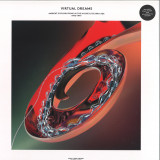
Music From Memory is delighted to be turning 50 with a special release: MFM050 - V/A - Virtual Dreams: Ambient Explorations In The House & Techno Age, 1993-1997 (3xLP/2xCD). The first in a series of compilations, alongside more in depth artist-focused releases, Virtual Dreams will delve into music produced during the 1990’s that redefined the boundaries of ‘Ambient’. This was music that explored the possibilities of Ambient music within a new setting, created often by House & Techno music producers for a world beyond dance floors but made very much with the pre and post-clubbing listener in mind.
When House and Techno exploded out of America in the mid 1980s a whole generation was redefined not only musically but also culturally and chemically speaking. Peaking, quite literally, with a second ‘Summer of Love’ in 1988, millions of young people across the world would experience the life-changing ups of a brave new world but with it of course came the downs; enter the concept of a ‘Chill-out’ room. Whilst early Chill-out rooms lacked a specific sound and were often soundtracked by music such as reggae and soul, slowly young Techno and House producers themselves would become increasingly interested in developing a futuristic ‘Ambient’ soundtrack to a world beyond the thud of the main room.
‘Ambient’ in this new age now though had sharper teeth than in Brian Eno's key text for ‘Music for Airports’, instead here the sounds were the mode of transport rather than the backdrop. While the melodies were pretty, the soundscape steered away from the pastoral, dreaming of outer-space and technology as opening up exciting new dimensions. Much like in the first Summer Of Love; the musicians were again exploring psychedelic, mind-altering and transcendental possibilities of music. And also much as in the first Summer Of Love, a psychedelic visual language would accompany the music. Though now the tracks could be accompanied by music videos, utilising early CGI techniques, they would look almost entirely to the future: envisioning technology, nature and humanity intertwined in a new Utopian future. Virtual Dreams of a better world.
From Ambient and early Chill-out classics, to lesser known one-off projects, as well as Ambient deviations by some of House and Techno’s leading producers, Volume One of Virtual Dreams features tracks by Bedouin Ascent, LA Synthesis, LFO, Marc Hollander, Mark Pritchard & Kirsty Hawkshaw, Richard H. Kirk and more.
To celebrate our 50th release the first 1000 copies include a holographic 'Virtual Dreams' sticker plus a special insert poster with artwork by Victoria Pacheco and design by Steele Bonus.
Max Von Sydow is the alias of Joakim hlund, founder of 90's electro-pop act Teddybears, garage-pop freaks Caesars and kraut space rockers Les Big Byrd among others
Max von Sydow is more of a sporadic experimental solo excursion, and he has previously released a couple of singles on Swedish labels Ingrid and Höga Nord for example. Here on his first release for Chimp Limbs he has taken the help of Gustav Ejstes from Dungen and Amason on flute and piano, as well as jazz prodigy Moussa Fadera on the drums.
The A-side, Fuzzy Ghost, has a driving bass line and an almost Klaus Dinger- like motorik drumbeat as well as hectic flute work and ethereal piano by Ejstes. And the B-side, Acid Sweat is a Moog synthdriven piece which features nice tape- echo flute- work by Ejstes and an
unrelenting funky drumbeat by Fadera.
NOW CLOSE YOUR EYES, PAUSE QUIETLY FOR A FEW MOMENTS, AND BE HERE NOW. ATTUNE YOURSELF WITH YOURSELF AND THE UNIVERSE AND, SO, WITH ALL OF US. IF YOU ARE MOVED BY THE SPIRIT, THANK YOU FOR SHARING THE SPIRIT WITH US.
Firescope are always on the lookout for new music, searching and sieving with headphones clamped over ears. GGGG, a recent discovery, unveils a stunning debut release. The co-founder of D.Ko Records may be a fresh face when it comes to releasing, but he has a wealth of both experience not to mention talent. His album, Gazé, is testament to this.
A spread of styles and influences coalesce to create GGGG’s unique sound. Ambient. Braindance. Electronica. Techno. All are melted and forged into the new. Processed percussion is the shifting sands from which a swooping melody takes flight, a melody that bends and soars as “K-Robot OG” ascends. Crystalline chords are shaven with fizzing drums in the frenzied elation of “Cas Contact.” And this is what lies at the heart of the collection, a rapturous joy that permeates the entire record. From the complexity and grandeur of “Chien Flûte 5.1” to the considered and subtle “Mudla 2”, the brightness of the audio palette chosen gives tracks an incandescence. This “joi de vivre” glistens and glows in the more playful tones of “Broutine Lamé” and “Cat Intro.” Textures are another area of interest for GGGG. Pieces like “Slowdry” and “Trip 2 Delinc” reshape and ruffle rhythms to bring a counterpoint to form and harmony. Beats are replaced by gentle waves of sound as the twelve-work collection culminates in “Sac Ala Blofel.”
Gazé tracks a course. From the energy and frenetic rhythms of first encounters to the atmospheric embrace of the latter part of the album, there is the sense that GGGG is celebrating the astounding of the ordinary, the amazing that is contained from the routine of dawn to dusk.
After our last release titled “jazz Baileys” we are back with House Experience Vol.2., this time in Ep format, presented by Bs As deep.
The previous volume was clearly dedicated to being a various artists, also with the participation of Bs As deep.
We have been working since vinyl number 4 with musicians, who have a participation in almost all the tracks released.
When we talk about musicians, we are including keyboardists, saxophonists, percussionists, guitarists or bassists.
Our goal or common thread has always been to achieve a warm and forceful sound, so that it can be heard in any environment, and at the same time be used at any time of the night, on a dance floor.
With those involved in both past and current releases, we share a common idea, which guides us in the interpretation of each song.
We also base ourselves on house influences from the late 90s (96,97,98,99)
Personally, we are moved by those times in which the sounds become more sophisticated, more elaborated in detail, and that is when we believe that the house that we listen to today with soul and jazz sounds, take on more relevance.
They also promote Afro and Latin percussion, leaning towards that New York and Puerto Rican fusion.
For all this, we like to include classic instruments, such as roland rhodes, the much-loved Juno, or korg packages with their inevitable M1.
Many shots are made live through a session expressed by the musician, who improvises for a while, from there we extract some part, which can be used several times in several tracks.
It is always necessary to do an editing job to adapt and correct any dissonance or variation in time that implies desynchronization in the beat. All this working in the sequencer of the daw to use.
On this album you will be able to hear soulful house sounds strongly impacted by keyboards, flutes and session basses, as well as some perfectly adapted percussion samples.
Some records just stop you in your tracks. They resonate with you and feel instantly familiar like an old friend, even on the first listen. SOYUZ's third album ‘Force of the Wind’ is one of those records. It holds all the trademarks, beauty, and eccentricities of classic Brazilian recordings, from the 60s and 70s, that we have come to love. Think artists such as Milton Nascimento, Lô Borges, Burnier e Cartier, Arthur Verocai et al. But this record wasn’t made in Brazil and is in fact a brand-new release.
SOYUZ (which translates as 'union') is a creative collective from Minsk, Belarus, led by composer, arranger, and singer, Alex Chumak, multi-instrumentalist, Mikita Arlou, and drummer, Anton Nemahai. SOYUZ's previous albums explored and reimagined the legacy of jazz-oriented, non-English-language pop music of the 20th century. For their third album, there is a stronger focus, and it is influenced by 70s Música popular Brasileira and building bridges from it to present-day Belarus. Alex notes that from the moment he first encountered Brazilian music, he found in it a kind of concentrated emotion that felt as if it were familiar to him from his childhood. This non-verbal emotion and connection between the listener and musician echoes in the music, regardless of understanding of the language the album is recorded in.
‘Force of the Wind’ includes songs sung in Russian and Portuguese as well as instrumental compositions. Its musical palette is both acoustic and electroacoustic: rich warm Rhodes piano, soaring string arrangements, and a controlled drum swagger sounding both relaxed yet super tight. Alongside Alex's sublime vocals, that grace the majority of the tracks, the album features guest performances by multi-talented musician and vocalist Kate NV and rising Brazilian star, Sessa. Alex also recently arranged a number of tracks on Sessa's highly praised 2022 album 'Estrela Acesa'.
On the album, the trio is joined by a cast of friends; NY-based musician of Turkish origin percussionist, Cem Mısırlıoğlu, classically trained composer, Simon Hanes, who aided with string arrangements and conducting the string players, Netherlands-based Brazilian multi-instrumentalist, Gabriel Milliet, on flutes. With the collaboration of these friends SOYUZ have created nine songs/suites that are subtle and plenitude and like the best albums, leave you aching for more.
‘Force of the Wind’ is an enigma, Brazilian yet not Brazilian, vintage yet still contemporary, out of sync with modern culture yet completely relevant and necessary.
Psychedelic Funk: this is the musical mood of the new Sexopolis. For those who enjoyed in the 70s or those who jus discover them today, will find in this last release internationa and very rare historical songs shuch as “Flute Salad” from JuPar Universal Orchestra, “Misty Purple” by Rolf Kühn, “Dove” by Cymande, and also some Italian gem
such as “Fall out” by The Braen's Machine (Alessandro Alessandroni ), “Nebbie misteriose” by Ugo Busoni.
16 tracks, 80 minutes of a music journey between the mystic and psychedelic, funk and afrofuturism, as always original versions gently remastered, and pressed on limited light blue splattered double vinyl.
Like in a fever dream she’s calling out to you to let you know… She loves you…
Original copies of this feel-good evergreen are few and far between but now it’ll finally make its way to your bag as for the first time in 30 years, KSM’s “Te Quiero” will see an official reissue. Originally released on X-Energy Records, one of Italy’s OG independent dance labels, it has everything you’re looking for in Italian deep house: silky pads, pianos, flutes, a killer vibraphone solo, and of course a sultry vocal. Non dormire, molto bene!
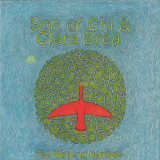
Son of Chi returns to Astral Industries, alongside Spanish artist Clara Brea, for the collaborative release of AI-29. A product of fate, chance experiments, but most of all, sensitive artistry - ’The Wetland Remixes’ exists as a confluence of two kindred musical spirits, a wayfaring epic that draws together a rich archive of ecological field recordings, live instrumentation and higher inspirations.
Ahead of Hanyo’s concert at Calma (Madrid) at the end of 2019, the curators organised a special dinner and arranged the meeting of Clara and Hanyo. As Hanyo recalls,“It was like stereochemistry. There was an instant match and understanding, and basically we decided in a split second to exchange recordings and to collaborate on future live and studio experiments.”
The auspicious meeting of the two ignited a remote exchange of materials and ideas, as the world descended into a series of pandemic-related lockdowns. The first of said recordings included the stems of Clara’s ‘Wetland Project’ - a site-specific audiovisual project originally produced for Eufonic Festival (Spain), using field recordings from the Ebro Delta nature reserve (one of the most threatened regions of climate change on the Iberian peninsula).
From this initial impetus, Hanyo began working on the first sketches of the album back in Rotterdam, Netherlands. Just like their meeting in Madrid, the project developed naturally and spontaneously with extraordinary ease. Later, Hanyo started adding field recordings from the Magic Cave and Wetlands of the ‘Kallikatsou’ (Patmos, Greece) as well as organic and acoustic overdubs, featuring bass, drums, percussion, guitars, oud, piano, hammond organ, wurlitzer, flutes, bells, and mouth harp.
In the distance, the sound of birds peak through the effervescent wash of the wetland soundscapes. The pass of running water flows deeper into a land full of secrets never told. On the strike of dusk, the silhouettes of shapely trunks and foliage melt slowly into the impenetrable darkness. As darkness passes, light emerges, with exquisite moments of tranquility that seemingly emerge from nothingness.
Beneath the shimmering veneer of textures, wildlife and melodies, one may hear the deeper references of ’The Wetland Remixes’. With credit to Clara’s input, for Hanyo the album process became a kind of refuge, and ultimately inspired the return to the core of Abstract Sound - what the Sufis call“Saut-i Sarmad.”Such references allude to the spiritual quality embedded in the music - the autonomous process of self-expression, the great mystery. Hanyo: “An ambience like this cannot be created by routine. There is no blueprint. The music has to find you. It’s like a blessing if it happens. You should not interfere, just observe and be impressed...”
Deep, luscious mind trips as per the classic Chi sound, ‘The Wetland Remixes’ beautifully correlates the interconnecting dots of geography, ecology, and mythology’s forgotten lore.
Three years after he released the incredible New Experience EP (picking up plaudits from Bill Brewster, Tim Sweeney, Laurent Garnier, Horse Meat Disco, Leo Mas & 6Music’s Tom Ravenscroft, among many more), Tokyo’s Kota Motomura returns to Hobbes Music for his debut LP, Pay It Forward. This is the first vinyl release on Hobbes Music since the much-loved ‘Aranath’ EP by Leonidas & Hobbes last Spring. While the label maintains the level of quality control for which it has become recognised, the artist continues to subvert electronic and dance music norms in his iconoclastic way on this extraordinary record.
He’s a mysterious character with an ear for idiosyncratic music that runs the gamut from ambient, exotica and jazz to disco, house and techno via post punk, new wave and funk. It’s highly original and all adds up to a confection perhaps best described as ‘Balearic’.
Album opener Paradise is a certified jazz-funk JAM. Destined for dance floors worldwide, this one’s been dropping well with DJs, Motomura demonstrating his piano chops alongside Mutsumi Takeuchi’s sax. Tropical pushes the boat in a more rhythmic direction, some pretty wild drum programming laced with more sounds of the, um, tropics, before mad vocal yelps suggest something yet more tribal. To Be Free initially resembles early 90s progressive house (pulsing bassline, synth-driven melodies), before the arrival of some new wave guitar licks a la classic Talking Heads/David Byrne and ooh ooh vocal chants take it to another dimension altogether.
B-side opener Emotion features Takeuchi again (on flute this time) and more vocal chants before things take a dramatic turn, threatening to open up into a full fanfare before calming and then bursting into wild life again with the exhortation that “C’mon, everybody dancing!” Rhythm flirts with an energy and pace more akin to a techno record: drums, drums, more drums plus a fair few yelps and chants - the kind of DJ tool that will send a simmering dance floor wild in the right hands. Flower closes things in a more melancholy style, familiar to fans of ‘Aboy’ from the New Experience EP, with plaintive acoustic guitar (performed by Akichi), birdsong and big piano chords.
Support from Bill Brewster, Leo Mas, Al Kent, Red Rack’em, Nick The Record, Phil Mison, Phat Phil Cooper, KZA, Sean Johnston (ALFOS), S/A/M, Dribbler, Joe Muggs, Monolith Cocktail and more…
‘Gonna review in MÜ mag... very fine stuff!’ JOE MUGGS
‘Will be reviewed on the blog’ MONOLITH COCKTAIL BILL BREWSTER played Flower on the DJ History podcast #641 (25.3.22) 'I really like this album, Flower and Paradise are my favourite' LEO MAS ‘I like Paradise’ AL KENT ‘Woo this is tasty. DEFO playing on my next radio show. The label’s A&R is defo getting better and better. HM has been putting out some dope stuff and this one seems really good quality’ RED RACK’EM
‘Paradise and Flower sounding good’ NICK THE RECORD
‘Tunes sound great!’ PHIL MISON ‘Going to include Paradise and Flower on my Sunday Ibiza global radio show PHAT PHIL COOPER (Nu Northern Soul)
‘Very nice album with influences from many different genres. I especially like To Be Free with nice synths and guitar cutting, and Flower, which is a chill vibe’ KZA (Mule Musiq, Endless Flight)
'100% correct about the ALFOS potential of To Be Free!' SEAN JOHNSTON (A Love From Outer Space)
'Stunning, will fit perfectly with the vibe of my radio show’ S/A/M (Music For Dreams, DK; Playa Del Sol, Ibiza)
'Stellar work, i'll make a bet that Flowers is a Balaeric classic this summer' DRIBBLER (Breakfast Club, Ibiza)
‘It's cool in a nice smelling psycho sense, it was a very DEEP sound that I couldn't produce. Congrats!’ ALTZ (Altzmusica)
‘Paradise is my jam, it's deep, sunny and never boring. I'm interested to see how this will work on the dance floor. Overall a great album with solid composition and impressive use of live instruments!’ SOBRIETY (fka Chloé Juliette)
'Very tidy selection' ASTROJAZZ (Kelburn Garden Party, Wee Dub, Samedia Shebeen, Disco Makossa) ‘This is a lovely release. Follows on from New Experience in the best way possible. It's got lots of vibes going on but holds together as a cohesive piece of work. Love it’ JAMIE THOMSON (La Cheetah, Glasgow)
‘To Be Free is a track i could imagine Andy Weatherall playing in one of his sets at A Love From Outer Space’ KIRSTIE PATON aka She-Bang Rave Unit (Threads Radio, Radio Magnetic)
Charlotte de Witte takes charge of her KNTXT label's 15th release with the new Universal Consciousness EP. It comes after Amazingblaze - Venture EP and features four more powerful and psychedelic techno cuts.
Charlotte is soon to be playing her biggest ever KNTXT party in mid April. It shall take place in her hometown of Ghent and see her play a historic 10 hour set to a vast crowd of people who shall go on an all night long journey. Also in April, Charlotte returns to London’s iconic Printworks for the first time in five years, this time with her KNTXT concept and once again is set to raise the roof. While staying busy on the road, she continues to curate the Apple Music x KNTXT page while cooking up ever fresh sounds in the studio. This latest EP is another subtle evolution in her signature style.
Says Charlotte of the EP, "following up on my latest Asura EP in September, I decided to delve a bit deeper in the world of psychedelia. All the tracks of the EP are psy inspired, some more than others. I’ve been playing these tracks for a while now in the clubs. It’s been a real pleasure to see the crowd’s reaction and see the amount of track ID requests online. This one is from me to you, I hope you enjoy my Universal Consciousness EP!"
Opener 'Satori' is dark and heavy. The chunky, raw drums hit hard and flat as the squelchy acid synths pan about the mix. An enchanting middle eastern vocal wail brings an extra trance-inducing element that is sure to lock in the hearts and minds of the crowd. The super 'Kali' is a slick and high speed piece that shows the love relation between psy trance and techno. The video game style synths peel off the groove next to alien sound effects, and the subtly evolving acid line burrows deep into your brain.
Then comes the dynamic, bouncy and acid laced-title cut ‘Universal Consciousness’. It's a fulsome tune with rubbery kicks and visceral 303 loops that will melt the mind as dancers fall into its hypnotic and tripped out spell. Last of all is 'Ahimsa' with its bright, lashing acid synths and hammering kick drums. It's the perfect mix of physical groove and psyched-out synth work, and is perfect for both sweaty basements and vast main rooms alike. When the mystical flutes come in, it takes things to another level entirely.
This is another all consuming EP of innovative techno from Charlotte de Witte.
A1 East Vision by Milanese’s finest Uabos uncovers an extraordinary musical experience with a lot of twists and twirls that are skilfully crafted. Constructed of mouth-watering synth textures and dusty melodic samples that hover over the rolling bass engine, Uabos surely delivers a dancefloor killer.
Herzel’s Transformation as the A2 track adds deep blue melodic depth on top of icy rhythmic pattern. It tickles the senses as sharp leads and powerful kicking stabs appear above the grinding bass line, providing mesmeric effect.
Flute Power’s Discothalia heats up the B side. Lush breaks and ripples meet a cloud-bursting bass line, intertwining with the ethereal vocal traces that unveil throughout the composition and into infinity.
Metropolitan Soul Museum in the closing B2 track Former Glory introduces a delicately structured musical narrative that has blocks of steady rhythmic percussion accompanied with unforeseeable melodic samples and tender vocal cut-ups.
Continuing to make 2020 their own Tropical Disco are back with four tracks of joyous dancefloor fervour in the shape of Volume 19 of their well loved vinyl series.
The EP see’s a welcome return for the outrageously talented and regular contributor to the label Phased Groove. He is appearing alongside a debut for the equally revered Ziggy Phunk and a welcome return of Vagabundo Club Social on a release which is completed by a dynamite collaboration between Kikko Esse & Emanuele Del Carmine.
This is an EP punctuated by the jazzy flourishes that we have come to love from Tropical Disco which sit perfectly alongside a prodigious selection of disco edged funk.
Phazed Groove’s ‘In Motion’ is the perfect opener for this ever so stylish collection. Its dashing groove packs in everything from subtle guitar licks and disco flutes to gentle keys and an ever so sensual breathless female vocal which has likely beamed in directly from the 70’s. It’s a track which belies its laidback notions and is deceptively energetic. Expect this one to be played everywhere from Miami pool soirees to Mediterranean boat parties in the coming months.
Danish artist Ziggy Phunk has seen his star rise rapidly over the last couple of years on the back of a series of sublime releases. His track here ‘Vibes of Nola’ is as captivating as anything that he has produced to date. Built around some incredible keys its funk infused bassline gives it some genuine dancefloor guile.
Over on the flip Kikko Esse & Emanuele Del Carmine’s ‘Funky Tranky’ brings to mind some of Masters at Works jazzier moments as Nuyorikan Soul. Built round some wonderful live bass guitar playing its layers of sumptuous guitar and brass are a joy.
Closing the EP is an essential Latin-edged dance-floor gem in the shape of ‘Calabao’ from Colombia’s irrepressible Vagabundo Club Social. Acidic bass notes and filtered vocals add the grit here. It’s a track which you can expect to be ubiquitous on in the know dancefloors across the tail end of 2020.
Yet again Topical Disco raises the bar ever higher for contemporary disco.
Samosa Records 10 is the brand new spin off label from Samosa Records concentrating on 2 choice cuts from some of the finest producers at the label one each side of a 10” vinyl. It also see’s Samosa announce an exciting collaboration with another of the finest labels out there Tropical Disco who will be handling the digital release for this one down the line.
Launching the brand new imprint it’s only fitting for the label bosses De Gama and Les Inferno to lead things out.
First up is De Gama’s Sometimes Sometimes which see’s him creating a much more reflective track than his previous powerful peak-time percussive club jams. Despite its ever so bluesy laid-back sentiments it’s no less a sublime outing. Velvety smooth the lead vocal is definitely one of those once heard never forgotten magical musical moments. It’s a track of simplicity, a smooth bassline, subtle guitar licks and the wonderful vocal performance. It’s an entrancing life affirming track which has all the hallmarks of a track which absolutely must be listened to again and again. And yeah, maybe just one more time!
Over on the flip Les Inferno takes us off towards classic Philly territory with an equally subtle but ever so funky slice of feel-good disco in ‘Yeah C’Mon’. Smooth percussion, an ever so danceable bassline, brilliantly performed yet subtle keys and another absolute monster vocal. And did we forget to mention the disco flute? Yeah Disco flute, does it get any better. We think not?
This is a 10” which is quite simply undeniable. You must have this in your collection right now because you will need to listen to it time and again. Samosa continues its quest to dominate the disco vinyl landscape with yet another ridiculously superb release.
What are you waiting for just order this and thank us later.
Berlin-based Frag Maddin bursts onto STRCTR with four hefty cuts. Maddin, whose hard-hitting sound has touched Mistress Recordings, Madhouse Records, W&O Street Tracks and Snatch! in the past makes his way into 2020 in style.
Side A’s lead track kicks of the label’s sixth release; the aptly-titled ‘Industrial Deafness’, is one warehouse-proof, downright dirty jumble of loose 4x4 drums and hardware groove. Nick Behringer’s remix forms its own subtle groove with a minimal house edge – more intimate bar, less cavernous warehouse.
Side B’s ‘Stuhltanz’ has floating flutes, jazz keys and one catchy vocal sample – a weighty kick and bumping bassline brings it together. And the DOS remix takes the euphoria of the special track one step further, adding a warm break and a complimentary sprinkling of acid.