Canadian performer and composer Sarah Belle Reid’s 2021 acclaimed album, first time on vinyl, expanded with two new incredible songs, remastered featuring new artwork. From distant ocean song to the clang and howl of a murky forgotten memory, MASS is a dreamlike collage of shrill shrieks, gasps, corroded brass choirs, and melting modular synth soundscapes, all heard through a mist of hiss and noise. Fused with equal parts spastic improvisation, shrouded ritual, and meticulous arrangement, it presents a sonic topography at once tongue-in-cheek, sensitive, and nightmarish. With discordant chorales and angular trumpet improvisations churning in an ever-evolving wash of whispers and howls, MASS is a collection of three hazy, harsh, and frightful sound worlds. With tracks meandering between aggressive rhythms, eerie ambiances, and abrasive cut-up electronic textures, MASS draws inspiration from early tape music, horror film soundtracks, and grindcore. It was assembled between listening to extended doses of Else Marie Pade, Daphne Oram, Eliane Radigue, the Locust, Edgard Varèse, Maryanne Amacher, Dick Raaijmakers, Naked City, Mr. Bungle, and Thomas Ankersmit, bringing a little bit of all of them along with it. MASS was recorded and mixed over the course of three weeks in January–February 2021 while in the midst of a cross-country move. Recorded entirely in short-term housing away from her studio (and most of her instruments), Reid relied exclusively on her voice, trumpet, flugelhorn, household objects, and Make Noise's Strega semi-modular synthesizer for all sound materials. Original sound materials were recorded loosely and independently with little to no overdubbing, instead relying on meticulous editing and processing in the manner of classic tape music.
Electric Feel Good a band from Hälsingland that has been around since 2015 are now releasing their
third Album "Jane's Inn" on the 23 of Feb! With their roots in the English seventies rock landscape they
started off with Faces as one their leading stars. Later on they've moved on to blend their seventies rock
sound with the Swedish pop-rock of the nineties. Electric Feel Good's third album is a must have for
anyone who's into Faces, The Rolling Stones, Atomic Swing and Ennio Morricone!
After nearly 14 years The Hope Conspiracy have emerged from their bunker to a reality entangled by this unwavering truth. Since their last release (True Nihilist, 2009) members have been active in a multitude of bands; All Pigs Must Die, Hesitation Wounds, Lies, Paint It Black, Spiral Heads, Ways Away and more. Efforts in the above may have kept them musically sharp, but it was the pressures and stresses
of our present day dystopia that awoke The Hope Conspiracy. Serving as the catalyst for some of the most vicious songs they have ever created in their legendary career. Four song EP by The Hope Conspiracy, engineered by Kurt Ballou and Zach Weeks at God City Studios
Several years of mutual appreciation and encounters on- and off-stage have been the root of this chance meeting, resulting in an unplanned mysterious collaboration album where the aura of each individual is augmented by the magic osmosis of united forces. The 12- tracks display a collage of dreamy musique concrète with desolate instrumental and vocal interventions, masterfully balanced out by Vincent Epplay.
1-2-3-4! Here we are and here we go! Broken Cuffs aus Kalifornien / U.S.A. veröffentliches ihren längst überfälligen ersten Longplayer und machen dabei keine Gefangenen. Aggressiv-vorwärtstreibender Streetpunk in bester Casualties , G.B.H. oder Exploited-Manier. Keiner der 11 Songs knackt dabei auch nur annähernd die 3 Minute Marke und auch textlich sind die Songs als Kampfansage gegen das Establishment und System auf den Punkt gebrachte Wut mit F**K You!-Attitude! ''Never Give Up The Fight. Fight ! Fight! Never Stop Fighting, This Is Your Life! knallt es aus den Boxen und das zieht sich durchs komplette Album. Extrem wütend, angepisst mit der perfekten Balance an Melodien und Chören! Ursprünglich 2005 gegründet um ein Jahr später schon wieder history zu sein, haben sich Broken Cuffs 2015 wieder zusammen gefunden und in den Folgejahren insbesondere auf den Clubbühnen für ordentlich Furore gesorgt. Diese geballte Power haben sie auch auf ihrem Debut-Album eingefangen! The real deal und genau SO muss Punk auch heute noch klingen!!!
The first-ever best of of Nim Vind is called Anthology 1 and is released by Sunny Bastards Records! This collection of audio medicinals created in a UFO vibrating in the Key of NV is guaranteed to blow your mind. Experience the energy and indulge in some Halloween candy with Nim Vind's 180-gram Vinyl album. This collection includes Nim Vind's most popular tracks from regular albums Fashion Of Fear, Stillness Illness & Saturday Night Seance Songs, along with some special versions or tracks that have never been released before. Nim Vind was introduced to Europe through Zillo Magazine and the Goth club "Pagan Love Songs". This led to the release of his first album, "Fashion of Fear", on Fiendforce Records Germany. The album was recognized by Metal Hammer UK, Maximum Rock n Roll and many other magazines that support underground artists. Rue Morgue Magazine (the world's biggest Horror Entertainment Print magazine) selected Nim's album "Saturday Night Seance Songs" as the Album of the Year. He has shared stages with the likes of Gary Numan, Filter, Blitzkid, The 69 Eyes, Todd Kerns (Slash with Miles Kennedy and the Conspirators), Peter Murphy of Bauhaus, and many more. The album kicks off with NV classic "Killing Saturday Night", which has garnered 1.7 million plays on Spotify and more than 330,000 views on YouTube. The collection attempts to showcase some of the songs that have been a part of his story, bringing us up-to-date with his current work. If you're a Horrorpunk, Goth, Post-Punk, Rock N Roll or Alternative collector, this collection is a must-have! Vinyl only compilation, for fans of MISFITS, JERRY ONLY, CHRIMSON GHOSTS, BLITZKID, THE OTHER.
One of the rarest, and greatest, horn instrumental dub albums of the seventies featuring the soaring saxophone of Tommy McCook in combination with Glen Brown, 'The Rhythm Master', is finally given a legitimate release.
The original title for this long playing release was initially advertised on the label of the seven inch release of 'Determination Skank' as 'The Sannic Sounds Tommy McCook', however the album was released in Kingston in 1974 in very limited quantities on a white label in a plain recycled cover rubber-stamped 'Tommy McCook Dub'. Three years later the set was released through Grounation in London, once again on a white label and without a cover, where it was known as 'Horny Dub'. It gave music lovers a fascinating opportunity to compare and contrast the work of Tommy McCook, one of the architects and builders of the Jamaican sound, with Glen Brown's role in taking and breaking it into pieces...,
Dub Store Records is the Ska, Rocksteady, Reggae, Roots and Dancehall reissue label run by the eponymous Tokyo based record store. The label aims at accurately covering the 50-plus years of Jamaican music, and pass on many rare and magnificent recordings, which are non-commercial and highly artistic. Carefully handing down the tradition of reggae music, Dub Store Records has so far issued recordings from labels and artists such as Studio One, Federal Records (Federal, Kentone, Merritone), Bunny Wailer's Solomonic, Familyman's Fam's, Jammys, King Tubby's Firehouse, Derrick Harriott, Kiddus I, Redman International, BMN and much more to come.
out of Stock
Last delivered 2 years ago available to reorder, subject to availability
Kyiv (Ukraine) born Sasha Renkas, made music as Antenna for almost a decade, releasing many EP's and a full length album. Now he follows his urge to make a different kind of music. The result is a full length album with slow, intimate, nighttime music varying from abstract pop ballads to ambient movie score pieces. At times they sound like stripped down Kate Bush instrumentals, drenched in reverb, or introvert Roxy Music with a touch of dub and nineties trip-hop. "This time I wanted to compose music and then perform my instruments live making this album. I used mainly old synthesizers and other instruments and a heavy layer eighties reverb machines. Before moving to the Netherlands, I was growing up in the nineties in Kyiv, surrounded by economic turbulence and a weird mix of music from different decades that overflowed the country after years of isolation. Accompanied by the weird early Ukrainian visual culture I was mesmerized by the music videos I saw on TV and I wanted to belong there. I guess I never really grew up, still drifting like a cowboy through imaginary spaces, in a timeless vacuum, outside of real life. I decided to release this album as Sasha Renkas, because it felt very personal and pure, all coming from a spacious, misty place where everybody is still alive and safe."
out of Stock
Last delivered 2 years ago available to reorder, subject to availability
After winning three leading Belgian music awards with Humo's Rock Rally, De Nieuwe Lichting and Sound Track, girl band BLUAI is expanding its horizons. On their debut album Save It For Later, the trio leaves for a road trip through the sonorous areas populated by the likes of Big Thief, Pinegrove, Haim, and Alabama Shakes.
Save It For Later is a record not unlike a Polaroid picture. Belgian songwriter Catherine Smet captures the memories of her youth in lyrics with a perfume of Americana, country pop, and indie folk. The stories areset in her native Flanders, but close your eyes, and galloping horses on a ranch in Mississippi form the backdrop of BLUAI's debut album.
Catherine Smet (vocals, guitar), Mo Govaerts (drums), and Caitlin Talbut (bass) joined forces with producer Willem Ardui (blackwave.) for this record. BLUAI's instrumentation was expanded with banjo, twelve-string guitar, and lap steel. Engineer Tobie Speleman received 'Nashville tuning' as a briefing. BLUAI thus shifts the focus from indie rock to Americana and breaks open the band's frame of reference, with influences ranging from Maggie Rogers to Alabama Shakes to The Japanese House.
Save It For Later is the creation of a group that came together two years after the formation of BLUAI, found a common drive, and is now cruising at full speed. BLUAI is here to stay.
out of Stock
Last delivered 2 years ago available to reorder, subject to availability
In March of 2023 Mercury Prize nominated composer & alto saxophonist Cassie Kinoshi premiered a commissioned suite of music in front of a sold out crowd at London"s Southbank Centre. She wrote the piece - gratitude - for her flagship large ensemble seed., in a special augmented formation that also featured turntablist NikNak and the London Contemporary Orchestra. Months later, Kinoshi passed the live recording to Dave Vettraino, who began the mixing process at International Anthem Studios in Chicago. Kinoshi and Vettraino then convened in November of 2023 at Livingston Studios in London to do final mixes and overdub additional sounds from members of seed.
out of Stock
Last delivered 2 years ago available to reorder, subject to availability
Big Crown Records is proud to present the debut full length offering from Les Imprimés, Rêverie. The stirring and ethereal sounds of Les Imprimés have been making fans of anyone who hears them since their first 7" single hit the speakers. Morten Martens is the man behind the band. Born, raised, and working in Kristiansand, Norway, he keeps a low prole while making his heart felt, highly infectious, and unique music. This album is a long time coming for Martens and it is sure to make him a name to be reckoned with. The first thing you notice listening to Les Imprimés is the high level of musician-ship. Martens plays nearly every instrument on the recordings and handles the production and arranging. He has been making records for decades, winning a Spellemann Award (aka, the Norwegian Grammy) in 2006 for producing a HipHop album as well as getting nominations across three other genres. While awards and accolades speak to the level of his talent, this new album really shows who he is an artist on his own terms. Moving away from being a hired gun on the touring scene naturally led him to start doing more studio work. Slowly collecting gear and getting more experi-ence behind the boards he built his own studio on the island of Odderoya and was making a living playing with and recording other people's music. As the story goes, after those sessions would end he would work on his own project into the wee hours of the night. From these late night sessions, Les Imprimés was born and Rêverie began to take shape. However, "it wasn't until COVID, when things locked down, that I was really able to nd the time to focus on Les Imprimés" Morten says about creating and leading his own solo project. "It was a scary time. But I knew I had to do something with it." He took the sum of his inuences, combined them with his own vibe and got busy writing the music, playing the instruments, and singing the songs. "It's soul music, but I don't exactly have the soul voice," Morten explains humbly. "But I do it my own way, in a way that's mine. "It is his sound, his fingerprint, his sensibility, that makes his music hard to put in a box. The album showcases both Martens' range and his ability to make a cohesive album. The lead single "Falling Away" starts with a raw drum break and turns into a lushly arranged tune that paints the picture of love when it slips away. On "Still Here" he professes his resilience through life's twists and turns over a thundering track that puts a new spin on the B side ballad genre. Songs like "You" and "Our Love" mix tones from 60s and 70s Soul with arrangement nods to Doo Wop records while Martens' lyrics and delivery leave you singing the melodies long after they finish. "Love & Flowers" finds Martens in a moment of clarity with a song that ts the niche sub genre of happy break up tunes, the four on the floor track will move the dancefloor or while the message will resonate with anyone who put too much effort into the wrong situation in their lives. However, it is songs like "Muse" and "Chess" that really encapsulate the uniqueness of Les Imprimés as they push the boundaries of genre, one a profession of love for music and the other a cover of an electronic record respectively. Martens' lyrics, emotion, and delivery truly make the whole thing come together and stand out from any of his peers. There's an infectiousness and a pop sensibility in the writing that is done with the utmost class and taste giving Les Imprimés the rare quality of immediate attraction that only deepens the more you listen.
out of Stock
Last delivered 2 years ago available to reorder, subject to availability
For the latest edition on Humanoid Recordings, co-founder 4D hits with a 4-tracker made for the dancefloor.
'Stupidity' starts with intention with ethereal driving tech house, reminiscent of the wiggle/end recordings golden days. 'Quantum Theory' follows in style with a relentless bassline, layered with satisfying arpeggios and naughty synth lines
'World in our Head' picks up the pace with an interweaving, high energy attack perfect for the peak time before 'Sowie Lockers' closes the EP - a euphoric after hours delight with bright pads and playful melodies, rounding things off in a tasty fashion.
out of Stock
Last delivered 4 months ago available to reorder, subject to availability
For their first new material in two years, Warpaint reunited with Rough Trade, the label behind their debut album and creative home for most of their existence. "It makes us smile to release them in collaboration with friends and family at Rough Trade," the band say, continuing "It feels like a perfect return to where it all began! With these new songs we tie a bow around this time in our lives, and all the experiences and songs we"ve shared over the years. It"s been an incredible journey and taken us all over the world sharing good times with beautiful people. Our hearts are full!" Warpaint"s Theresa Wayman says of "Common Blue", "It started with the chord progression on guitar. Jen and I jammed it in her living room in Echo Park and it became a song. We sent it around the houses (Stella and Emily"s houses) and all its elements were brought to life. It"s intended to inspire freedom! Common blue. Rising up again and again, climb a ladder to the sky, catch the view like a butterfly! Everything is possible... it ain"t over till it"s over!"
out of Stock
Last delivered 2 years ago available to reorder, subject to availability
At the same time that Neville 'Bunny Wailer' Livingston recorded his debut solo long playing masterpiece, 'Blackheart Man', he was also creating a series of singles for his own Solomonic label. These records were every bit as good, at times even better, but they have never been released outside of Jamaica. Until now...,
It is next to impossible to ever overstate the importance of The Wailers to the history of Jamaican music and, as the last surviving member of the group, Bunny Wailer rightly regards himself as the sole keeper of their history ever mindful of the group's exalted position in the story of reggae music and the importance of their legacy. In 2010 Dub Store were proud to be able to work with Bunny on re-releasing a selection of his earliest recordings for the Solomonic label, lovingly restored and presented in reproduction sleeves and labels, on limited edition seven and twelve inch singles. Now, taking another step forward, we are more than proud to present Bunny's timeless music on two beautifully packaged CD's and double LP's. Bunny's first solo album, 'Blackheart Man' originally released in 1976 on his own Solomonic label in Jamaica and on Island in the UK, is one of the undisputed all time classics of Jamaican music and established Bunny Wailer as a highly respected, world renowned artist in his own right. During this period Bunny also produced a series of singles released in Jamaica and the UK in strictly limited quantities without the benefit of international distribution, that are every bit as good and, in some cases, even better than this awesome debut long player. Original copies have subsequently become highly prized, and highly priced, collector's items. "Classic rarities" is an overused and abused term too often employed to describe average records that failed to sell on their initial release but both 'Tread Along' and 'Rise & Shine' are packed from beginning to end with a searing selection of some of the greatest and hardest to find reggae records ever produced. 'Tread Along' opens, naturally enough, with 'Tread Along' from 1969, one of the last singles for The Wailers' own Wail N Soul M label, and runs through the first release on the Solomonic label, 'Searching For Love' also known as 'Search For I', 'Bide Up' released as 1974 drew to a close, a radical reworking of 'Pass It On' and a marked contrast to the version on The Wailers' 'Burnin'', album, 'Life Line' and the prophetic 'Arabs Oil Weapon' kept the pressure on as Bunny began outlining the flawless 'Blackheart Man' album. Each release was a certified classic in its own right. Peter Tosh's melodica version to Bunny's 'Amagideon' ('Armageddon'), the first track on 'Rise & Shine', is followed by 'Love Fire', an update of another Wail N Soul M track, 'Fire Fire'/'Babylon Burning', through to one of the deepest roots records ever created, 'Rise & Shine', on to 'Riding' from the 'Bunny Wailer Sings The Wailers' sessions (but not featured on the album) and a huge hit in the UK in 1981, and closing with 'Rule Dance Hall' from 1985. No idle boast..., The liner notes feature the story of The Wailers, as told to Dub Store by Bunny himself in Kingston in an enlightening 2012 interview, and rarely seen contemporary photographs complete these essential releases. The music of Bunny Wailer was not only a medium for change and protest but also to elucidate and educate and 'Tread Along' and 'Rise & Shine' finally complete the canon of un-compiled Wailers music. "I'm quite satisfied, you know, reggae music is the kind of music that although sometimes you would look at it and say..., boy, it's hard..., then again you look at what it has done for the people of the world you know that that couldn't be locked up in a little place like Jamaica!" Bunny Wailer
Mr Lee Perry who in no uncertain terms defines the words musical genius, recorded some of the most inspiring, soulful, funny and weird / wild reggae music ever put down on tape. Working through all the manifestations of reggae from Ska to Roots and Dub, where his ground breaking 1973 ‘Blackboard Jungle’ LP, set the standards, he was an innovator. If this was not enough his recordings of THE WAILERS, many believe to be their finest work. Born Rainford Hugh Perry, 28 March 1936, Hanover, Jamaica. He began his career at the grand age of 16, working for Clement ‘Coxone’ Dodd’s sound system, rising quickly to the position of record scout and organising recording sessions during his 3 year period 1963-1966. Restlessness and unsatisfied with credit he felt due to him he moved on to work with Producers J.J. Johnson and Clancy Eccles, the later of which would help him set up his ‘Upsetter’ label in 1968,which would see his first of many recordings telling the injustices done to him by previous employees. ‘The Upsetter’ track itself pointed at Mr Dodd but reflected back to Perry when he inherited it as a nick name along side many others during the coarse of his career, including ‘Scratch’, again taken from one of his recordings ‘Chicken Scratch’ recorded in 1965/1966. Perry’s work in 1968 with producer Joe Gibbs was fruitful and resulted in many successfulreleases, but again lack of credit and itchy feet, it was time to move on. But not without leaving his trademark recording summing up his feelings at the time ‘People Funny Boy’ this time aimed at Mr Gibbs. Still not having a studio of his own, Perry recorded at the various Kingston establishments of the time, Randy’s Studio 17 on North Parade, Dynamics on Bell Road and Harry J’s on Roosevelt Avenue where the bulk of the aforementioned recordings with The Wailers were carried out. During this time and the years that followed Perry has built up a vast catalogue of backing tracks / instrumentals, he had cut over a 100 releases on his ‘Upsetter’ label alone. A library of music that he has an uncanny knack of reutilising to work into something new when put against a new song / singer. This collection of rare and unreleased dubs stems from his 1971-1974 period. We can here on tracks like ‘Perry’s Jump Up’ Ska-ish up tempo chopping guitar cuts leading through to organ laden tracks like ‘Roots Rock Dub’. The sound moving to a slowed down rhythm on ‘Perry in Dub’ which would predominate his sound, when in mid 1974 he’d open his own studio at his home in the Washington Gardens district of Kingston. We hope this selection of lost treasures will add to the jigsaw that makes Mr Perry’s output now spanning over 5 decades so remarkable.
RESPECT.... JAH FLOYD.
out of Stock
Last delivered 2 years ago available to reorder, subject to availability
Like the best of them, Daniel Chavez got his start immersing himself in the nightclubs, dingy basements, and record stores of Chicago. Cycling around the South Side with records and a small PA system strapped to his back, he found himself at Smartbar and eventually began slinging records at Gramaphone alongside some of the deepest heads of his generation. Before long, Daniel made the jump to Brooklyn and landed at A-1 Records, while diving further into the global deep house community and soaking up knowledge like a sponge. After sowing seeds in obscurity for many years, Daniel saw the fruits of his labor in 2023 with a debut 12” on Halo’s Muted Noise imprint.
These tracks were designed and refined over the course of a year to meet the strict specifications of the Jewel soundsystem and dancefloor. “Writing on Water” is a submersive, simmering tune that heaves and moans for eight minutes, but could probably go on for an hour. “Terras” strips away the layers to reveal a spacious, floating world supported by a fat, rolling bassline. On the flip, “Spiraling” echoes a feeling of early My Love Is Underground and the New York deep house golden era before it: a time of revolution. Finally, “67th Session” combines space and depth with a simple vibraphone riff that can go off day or night.
out of Stock
Last delivered 2 years ago available to reorder, subject to availability
Berlin, 20 August 2023 – In a world where music serves as a gateway to explore the intricate dance between reality and imagination, Shkoon, the innovative germany-syrian musical group, presents their newest single, "Al-Furat." This release is a captivating addition to their upcoming album, a collection that masterfully blurs the lines between the tangible and the ethereal. Its the first single of their 10 Track Album being released on 16st of November followed by a big concert tour.
"Al-Furat" is not merely a song; it's a satirical exploration of life's complex game. With a wink to the audience, the song invites listeners to look beyond its surface and decipher the layers of meaning hidden within. At the heart of it, "Al-Furat" beckons the audience to find what resonates with them, to uncover the deeper messages that lie beneath the harmonies and rhythms.
A Harmonious Blend of Emotions
Crafted with a touch of irony, "Al-Furat" humorously contrasts the declarations of love for one's homeland with the journey of Ameen, the protagonist, as he navigates the game-like challenges to reach France. It's a juxtaposition of joy and sorrow, presented through cheerful melodies and thought-provoking lyrics. This blend of emotions adds depth to the song, making it not just a musical piece but a thought-provoking experience.
Blurring the Boundaries
Shkoon doesn't stop at melodies and lyrics; they expertly play with boundaries. The video showcases Thorben crossing borders with a French baguette, a clever visual metaphor that challenges stereotypes. The inclusion of French demonstrations further blurs the lines between art and reality. It's a deliberate move that asks the audience to question their perceptions and assumptions.
Art with a Message
As with their previous works, Shkoon's "Al-Furat" carries a hidden message—a critique and commentary on societal norms and expectations. It's a call to look beyond the surface, to recognize the dual nature of art as both entertainment and a mirror to society. Shkoon's ability to weave such messages into their work is a testament to their artistry and depth.
The Album
After Rima (2019) some singles, EP’s and their touching live album “FIRAQ” (2022) Shkoon is coming up with another concept album “Masrahiya” which is arabic and stands for theater play. Shkoon created a strong message again, with a diverse piece of art combined with an album concert tour.
This play 'Masrahiya' delves deep into the blurred boundaries between reality and fiction, where the lines of truth and imagination intertwine like a mesmerizing dance. As the three captivating chapters unfold, tragedy, politics, and irony are seamlessly woven together, creating a tapestry of emotions that leaves the audience spellbound.5
out of Stock
Last delivered 15 months ago available to reorder, subject to availability
Queeste emerges with the nocturnal sounds of Haron's Wandelaar, an album exploring his long-term interest in music's talent for inducing and affecting dreams, successfully turning listening into an act of transport, leaving you in the midst of falling asleep, at a junction of dislocation, hazily arriving in a liminal world. In Wandelaar we hear Haron's playful reaction against the confines of dance music, gathering energy from his estrangement from the scene and using it as a means to reorder and interrogate sound. The modest piano takes centre stage, allowing each solo note to becoming fertile and full, suspended and considered, guided by the principles of minimal composers such as John Cage and Ryuichi Sakamoto. Haron delicately translates sparse chords into a cinematic narrative of ascension, conjuring up a 'moony landscape,' grey and desolate from afar, intricately detailed on approach. Haron's Wandelaar is available 6 July 2018 on LP. The vinyl release includes an art print by Fallon Does, who is also responsible for the graphic design of Wandelaar. All tracks written and produced by Haron Aumaj, mastered by Wouter for Brandenburg Mastering. Words by Jo Kali.
Early support by Ben UFO, Call Super, Beatrice Dillon, Kara-Lis Coverdale, Matt Werth (RVNG), Blowing Up The Workshop, Oceanic, Khotin.
Katà Métron is the Greek mythology-inspired collaborative album from Italian ambient auteurs ILUITEQ and Lorenzo Montanà.
For ILUITEQ, Ancient Greek culture, with its myths and philosophy, has strongly influenced their everyday lives and has provided constant inspiration in their musical endeavors. The Greek expression "Katà Métron" means "according to the right measure," representing how human beings should live in harmo- ny with themselves and nature. More often than not, the dominant model is to go beyond our limits, and having a "sense of measure" is not capitalistically profitable as we must nourish our constant desire to always wish for more, not caring for the consequences of such a "bulimic" attitude.
Lorenzo Montanà should need little introduction, with a more than two-decades-long career, a vast body of work on labels such as FAX and Projekt, and highlighting such collaborative partners as Pete Namlook and Alio Die. ILUITEQ approached Montanà as they admired his textural take on ambient. The duo presented the Greek mythology concept in which they might collaborate, and Montanà became instantly inspired to partici- pate. Montanà's contributions to "Katà Métron" shape the sound of ILUITEQ in new, evocative music territo- ries, where meticulously crafted rhythmic patterns and melodic echos blend with the Italian duo's soothing and ethereal ambient soundscapes.
out of Stock
Last delivered 8 months ago available to reorder, subject to availability
Africamore: The Afro-Funk Side of Italy (1973-1978)
Continuing Four Flies' dedication to delving into lesser-explored periods of Italian music, Africamore takes us on a captivating journey into the intersection of Afro-funk and the Italian soundscape during the six years between 1973 and 1978 - a time when disco was looming on the horizon and the nightclub market was rapidly expanding.
Before reaching Italian shores, the infectious sound originating from African and Afro-Caribbean roots traversed both the Mediterranean and the Atlantic, landing on New York dancefloors, where DJ Dave Mancuso discovered "Soul Makossa" by Manu Dibango. In 1973, from Mancuso's Loft parties, the song's hypnotic groove spread to the rest of the globe, including in Italy, where it sparked a wave of imitations and variations.
Tribal influences thus found their way into Italian soul-funk and early-disco productions released between 1973 and 1978 – from psychedelic-tinged tunes like Jean Paul & Angelique's "Africa Sound" to the Afrobeat-inspired club banger "Kumbayero" by composer/producer Albert Verrecchia (aka Weyman Corporation); and from groundbreaking Afro-cosmic songs like Chrisma's "Amore", co-written by Vangelis and featuring the rhythms of Ghanaian-British Afro-rock band Osibisa, to mind-blowing floor-fillers like Beryl Cunningham's "Why O", a re-write of Nat King Cole's "Calypso Blues" arranged by Paolo Ormi, with percussion breaks that sound pretty much like what would later become known as techno.
Combining feel-good vibes with driving rhythms, world-style percussion, and even synths, all these productions pushed the boundaries of dance music at a time when disco had not yet taken over. In doing so, they sowed many of the seeds of the later Italian cosmic scene and its unique mixture of African elements, disco-funk and electronic music.
This was a brief but nuanced period in Italian music history, one that deserves to be rediscovered, with love.
Africamore is due out on March 22nd and will be available as a gatefold 2LP and digipak CD. Both formats come with stunning artwork by Kathrin Remest and liner notes by Pierpaolo De Sanctis and Elena Miraglia.
out of Stock
Last delivered 2 years ago available to reorder, subject to availability
Mon Goose is multi-instrumentalists Yegang Yoo and Robert Lombardo (both ex-Alex Delivery Jagjaguwar). Flowing seamlessly between dance grooves to experimental soundscapes, their songs twist and turn melodically through dense layers, animated by inventive live percussion and a creative melding of electronic and acoustic sounds. A Seoul-native trained in classical piano and composition at an early age, Yegang transplanted to New York City in 2000, where she and Robert began playing music together. Robert's history spans from playing guitar and drums in garages and basements, to the rabbit-holes of experimental and dance musics, to the present where he pulls from all of those influences in the music of Mon Goose and as a sound designer and composer for films.
Very Still Right Now lives in the intersection of music to listen to and music to dance to. Showing influences from space disco (stand-out track “I Feel Goose” is gloriously remixed by Lindstrøm) to Krautrock to techno ... to soundtrack records ... to classical ... it shifts and turns, sweeping you unaware from the disco dance floor to the melancholic high seas with a unique ability to contain, expand, and gradually distort moods without sacrificing a sense of lightheartedness. The album is the culmination of several years’ work from the duo, tangled in the wires of an arsenal of analog gear in their basement studio in Greenpoint, Brooklyn, and is the first offering of much to come.
out of Stock
Last delivered 2 years ago available to reorder, subject to availability
IZIPHO SOUL are incredibly proud to announce our 100th 7” single!
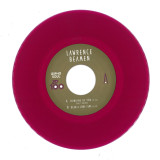
LAWRENCE BEAMEN - THINKING OF YOU
The unsurpassable bass-baritone voice of LAWRENCE BEAMEN originally recorded THINKING OF YOU in 2008. After years of pleas for a vinyl release; it’s finally here and sounding fresher than ever.
THE 7 REMIX courtesy of Don Turney at DKS Productions has added a magic touch and beefed up this classic even further!
Arranged and produced by Narada Michael Walden and Lawrence Beamen. Music Produced by Narada Michael Walden. Lyrics by Lawrence Beamen.
On the flip is a new recording entitled BEEN A LONG TIME - a banger of a tune, straight outta Oakland, California.
Packaged in a hole backed picture sleeve.
out of Stock
Last delivered 2 years ago available to reorder, subject to availability
The debut full-length of Denmark's promising purveyors of truly Medieval Black Metal, Formed in 2020, Heltekvad is a three-piece featuring members of some of Denmark's finest recent acts such as Afsky, Solbrud, Sunken and Morild.
While the sound of Heltekvad certainly shares the passion on display in the aforementioned projects - no doubt a result of the shared members behind each entity - what sets them apart is their approach to songwriting and crafting truly medieval soundscapes. This is partially shown through the medieval instrumental interludes, which are tastefully scattered across "Morgenrødens Helvedesherre", but more fully embodied by the epic, at times even heroic sounding melodies carried by the guitars. There is an element of unbridled wilderness to be found on these seven tracks, each one containing interesting twists and turns that are sure to keep listeners returning for repeat listens.
Beside Trawbreaga Bay, in Co Donegal, on the north coast of Ireland, in an old schoolhouse, with a suitcase full of hired recording gear, Oisin Leech strums gently on an acoustic guitar and watches the tide pull the water away from the ancient inlet - The thickness of Oisin's voice soothes the room as the sound waves bounce around in the land where his ancestors still live and still wander - With a musical history that led Leech from the street punk bands of yesteryear through an ongoing stint with folk duo The Lost Brothers, he found himself for the first time working on songs to sing alone. In his mind, the songs became imagined vignette films playing behind closed, guitar eyes. After writing nearly 40 new songs in this fashion, Leech wrote "October Sun" which would become the foundation for his debut solo record, Cold Sea.
Cold Sea was produced by guitarist/songwriter Steve Gunn. Leech dreamt of making the record in Donegal Ireland, a county significant to him because it is the home of his ancestors. Pitching this idea to Gunn sparked the first of several serendipities circling the Cold Sea sessions - Gunn had always wanted to visit Donegal to connect with his own familial roots in the region.
Cold Sea is perhaps most notable for its tremendous warmth. Each song was recorded in a few takes and adorned gently with synthesizers and guitar from Gunn. Several songs feature contributions on the upright bass by Bob Dylan band stalwart Tony Garnier. M. Ward plays guitar on October Sun and there are strings by Roisin McGrory and bouzouki by the legendary Donal Lunny throughout. It is a friendship record but even at its most collaborative, Cold Sea remains centered around the humble acoustic guitar and wool blanket vocals of Leech.
WAREHOUSE FIND! INSTOCK NOW Long overdue restock of this Kelley Stotlz staple! Pressed up on his own label, CHUFFED! And we’re chuffed as ever to have more Kelley on our racks.. 17 Incredible tracks! This time Kelley genre plays in the POWER-PUB world, with dashes of Undertones, Stiff Records, 80's Iggy evenly applied. A chance buy of a $75 Japanese Electric Guitar conducive only to power chords, and repeated spins of the Mick Trouble LP made for a wild week of recording this edgy delight. Recorded Fall 2019 at Electric Duck Studios SF, CA. Mastered by Sir Mikey Young. Brought to you by Chuffed Records, a Puzzling Records Company. 250 pressed on split black and white vinyl.. a beauty mate!
My debut studio album. Recorded at Yawn Studios, West Kirby with Bill Ryder-Jones. A collection of songs I have written over the past few years of travelling far and wide with some fresh versions of familiar favourites and newer tracks too.
The album is also available on yellow and spatter Vinyl via slinky.to/btmatm
I would love for you to buy a copy. This really has been a labour of love and I have poured my heart, soul and bank account into it
My debut studio album. Recorded at Yawn Studios, West Kirby with Bill Ryder-Jones. A collection of songs I have written over the past few years of travelling far and wide with some fresh versions of familiar favourites and newer tracks too.
The album is also available on yellow and spatter Vinyl via slinky.to/btmatm
I would love for you to buy a copy. This really has been a labour of love and I have poured my heart, soul and bank account into it
Dire Straits never made a big to-do about its final run. In classic understated British fashion, the band simply let its music speak for itself. And how. Originally released in September 1991, On Every Street became the group's swan song – a lasting testament to the influence, musicianship, and integrity of an ensemble whose merit has never been tainted by cash-grab reunions or farewell treks. It remains an essential part of the Dire Straits catalog and a blueprint of the distinctive U.K. roots rock the collective played for its 15-year career.
Sourced from the original master tapes, housed in gatefold packaging, and pressed at RTI, Mobile Fidelity's 180g 45RPM 2LP set of On Every Street presents the album like it has always been meant to be experienced: in reference-grade audiophile sound. Recorded at AIR Studios in London and produced by Dire Straits leader Mark Knopfler, it features all of the band's sonic hallmarks – wide instrumental separation, visceral textures, seemingly limitless air, broad soundstages, atmospherics that you can almost reach out and feel. Each element is made more vibrant, physical, and lifelike on this collectible reissue, which marks the first time this 60-minute work has been available at 45RPM speed.
Afforded generous groove space and black backgrounds, the songs from On Every Street burst with nuanced details and vibrant colors. Dire Straits' playing appears to float, their intricate performances organized amid hypnotic, fluid, three-dimensional arrangements. Mobile Fidelity's definitive-sounding set also brings into transparent view Knopfler's finely sculpted guitar lines, expressive tones, and laid-back vocals – as well as the balanced accompaniment from his band mates. Here's a record on which you can hear the full blossom and decay of individual notes, and imagine the size and shape of the studio. It is in every regard a demonstration disc. And it happens to be filled with timeless fare.
Remarkably, On Every Street almost never came to light. Dire Straits initially dissolved in September 1988 after touring behind its blockbuster Brothers in Arms and suffering the departure of two members. At the time, Knopfler professed his desire to work on solo material; bassist John Illsley also explored side projects. But Knopfler's decision in 1989 to form the country-leaning Notting Hillbillies reignited a spark to reconvene his primary band and craft a fresh batch of songs. Six years removed from Brothers in Arms, Knopfler, Illsley, keyboardist Alan Clark, and keyboardist Guy Fletcher teamed with A-list session pros – steel guitarist Paul Franklin, percussionist Danny Cummings, saxophonist Chris White, guitarist Phil Palmer included – to create what still stands as an unforgettable farewell.
The platinum record brings the band full circle in that it returns Dire Straits to a quartet formation; finds the group refreshingly out of step with the era's prevailing trends; and sees Knopfler and Co. knocking out song after song with the deceptive ease of a punter tossing back a pint at a pub. That subtle cool, clever poise, and innate control – signature traits that no other band ever matched – dominate On Every Street. Knopfler's clean, virtuosic six-string escapades unfurl with dizzying melodicism and economical efficiency. Led by his winding fills and focused solos, Dire Straits traverse a hybrid landscape of rock, jazz, country, boogie, blues, and pop strains with near-faultless prowess.
More than any other entry in the group's oeuvre, On Every Street welcomes quick detours down back alleys and into the depths of human souls. What makes it more brilliant is its staunch refusal to cater to commercial expectations or take advantage of prior successes; every passage feels true, every measure echoed in the service of song. It's evident in the humorous satire of "Heavy Fuel," closeted desperation of the witty "Calling Elvis," and shake-and-bake bounce of "The Bug." It pours from the album's darker corners, as on the high-and-lonesome melancholy of the title track and bruised emotionalism of "When It Comes to You."
Hinting at the open-minded approaches and boundless curiosity he'd embrace as a solo artist, Knopfler doesn't limit himself when it comes to style or subject matter. Look no further than "You and Your Friend," a shuffle whose all-inclusive lyrics encourage an array of interpretative meanings. Another of the album's deep cuts, "Iron Hand," comes on as one of the band's most memorable moments – the narrative addressing the abuses of power at the 1984 Battle of Orgreave during the U.K. miners' strike. Given cinematic heft by the expert production, the true-fiction account puts into perspective the richness, poetry, and depth of On Every Street.
"Every victory has a taste that's bittersweet," sings Knopfler on the title track. At least that bittersweetness seldom sounded so damn good on record.
Introducing, the experimental violinist and performer Vanessa Bedoret.
The London-based French musician today announces that she’ll be joining, Scenic Route, a label renowned for selecting and nourishing rising stars for the release of her debut album, Eyes, due out on 8th of March 2024. Launching with a taste of what’s to come, today she also shares single “1/2”, a textural track that tells of the dichotomy between those who are selfless and those who are self-centred, and their need to merge as one. This duality is reflected in the industrial metallic echoes under Vanessa’s soaring vocals and the piercing strings of her chosen instrument, the violin.
Treating songwriting as an instinctive process, Bedoret transforms her deeply personal experiences into pure emotion. Not following any set narrative, Eyes takes the listener on a journey via their own experiences, prompting introspection through Bedoret’s hypnotic melodies.
Through the album, she awakens the audience's imagination, to open up their emotional response. On “Ballad”, a vague, loving lyrical letter to someone close, Bedoret’s heartbreakingly soft lament is barely audible over the dramatic atonal strings. She flips her narrative again in the titular track, “Eyes”, so the listener empathises through her isolated violin, and takes on her anguish, not needing to understand the full story.
Bedoret began her classical training at age 6 and on completion at 18 she embraced the thrill of playing guitar in punk bands, and like many at the turn of adulthood, was quickly captured by the allure of the dancefloor. Her far-reaching taste doesn’t stop there, she also counts black metal to opera and from eurodance to IDM as inspiration. Her deep understanding of musical form elevates her experimentation to a truly unique sonic experience, one that never strays too far from her original love of classical music.
With only a string of releases under her belt via independent labels like Laura Lies In and Archaic Vaults, her refined skillset has meant she’s been in high demand for both solo shows and collaborations. These accolades include playing violin with New York avant garde collective Standing On The Corner at The Serpentine, as well as a part of Kahil El’Zabar conducts MOKI at the ICA, and Linder: Another Music in a Different Arcadia at the Design Museum alongside artist Linder Sterling, Naima Cherry, Maxwell Sterling, Kenichi Iwasa & Ella Frears.
For her solo performances, she’s shared stages with Standing on the Corner, Ekaterina Bazhenova-Yamasaki, Philomème Pirecki, John T. Gast and Nexcyia to name a few. She’s also performed as a duo alongside musician Severin Black in support of their collaborative EP release, First Passage / Excommunicated.
Through the lens of a life lived to it’s fullest and one that does not shy from experiencing the rawest of emotions, it’s clear that Bedoret has a nack for translating personal observations into cinematic crescendoes. The field recordings throughout only heighten this feeling adding both a grounding and other worldy sensibility. Lyrically, she allows you to peek into her private world and for a fleeting moment letting you lock eyes with hers, asking what do you see?
This debut is a glowing experimental work that purrs with a distinctive narrative. Vanessa Bedoret is a promising new act, ready to take 2024 by storm.
For a few years Leo Robinson was the sort of hidden secret you sometimes come across in local music scenes. First in Manchester and now in Glasgow, he’d pop up regularly on DIY bills or as local support to a touring act, quietly blowing them off stage with his rich baritone vocal and homespun lo-fi tales of folklore and animism. With The Temple – his debut on PRAH Recordings – he looks set to cross over from being a cult concern.
“There's a spectrum within the album between fully mythologising or symbolising my lived experience, and just stating it in very matter of fact terms - that push and pull between the need to abstract and the need to break through the abstraction and have an honest moment with oneself” he explains. “This is one of the themes of the album as well as part of the process. The aim was to take all these anecdotal or symbolic elements and merge them into one narrative and one world, in a way that you can find your way through the record as if it were a landscape or language with its own logic.”
The record takes on a pastoral, slightly baroque nature that Robinson partly attributes to a friend screening a lot of ‘70s BBC material in his book shop that they used to hang out at. There are also elements of jazz, flickering to life in “The Spring”’s piano-led finale and coda.
Thematically, Robinson likens it to a Jungian ‘Hero's Journey’, his voice possessing a character who goes through several defined stages of consciousness. From conception and the beginning of an earthly life, the first half of the album recognises the development of the protagonist’s narrative and identity, before “The Pink Light”’s freeform departure from the hitherto more song-based suite devastatingly shatters this. The second half of the album then sees the protagonist witness “the uncontainable” water; learning that true divinity lies not in the individual self or lofty notions of gods and temples, but in the unremarkable nettles, insects and dogs on the roadside riverbank - referenced on tracks “The Cormorant” and “The Spring”.
Although now residing north of the border, The Temple was written while Robinson was finding his feet in Manchester, having moved there to go to art school as a teenager (as a visual artist, he has exhibited at the Tiwani Contemporary in London and Cardiff’s Chapter Arts Centre). As a result, many of the tracks bear out the shadows of his experiences in the northern city – at their most visible and explicit on the beautifully fragile storytelling of “The Pavement”. Written the day after the Manchester Arena Bombings, it recalls Robinson waking up to go to work on a hot summer’s day to discover that his street had been blocked off for terrorism investigations; it then progresses through the rest of his day, amidst the grimly surreal aftermath of the previous night.
Having written the chords, melodies and lyrics to the album, Robinson fleshed out the tunes by scoring out parts for the additional instrumentation, but it was only when a friend sent a demo to PRAH that he was able to fund its full recording. Guitars, vocals, piano and French Horn (the latter recorded by Lauren Reeve-Rawlings) were put down at Green Door Studios in Glasgow. Microphones were placed around the room and the sound of the musicians stepping on creaky floorboards and opening creaky doors were left audible to further the record’s live feel. The harpsichord heard on “The Serpent”, meanwhile, came from University of Glasgow lecturer David McGuinness. Strings were then recorded at PRAH Studios by Francesca Ter-Berg and Raven Bush, the Social Singing Choir adding their choral vocals to “Temple II”.
The result is an album that feels both luscious and yet intimately raw; as grand as Richard Dawson at his most panoramic but containing the rough edges and skeletal looseness of a Calvin Johnson work. At times Robinson lyrically moves towards the surreal, but ultimately this is a record grounded in reality; a true showcase of Robinson’s skill as a lyricist and songwriter.
"For a long time, I'd come across these discs without really understanding what connected them, apart from a button and that famous logo designed by René Dessirier. Then, with a little more digging, I discovered the "self-production" link. For choirs, schools, folk singers, young pop groups, popular homes and even great composers who engraved unique copies of certain recording sessions...
The French equivalent of the English "Derby Service", the Kiosque d'Orphée, formerly at 7 Rue Grégoire de Tours in the 6th arrondissement, was taken over by Georges Batard in 1967 and moved to 20 Rue des Tournelles in the 4th arrondissement of Paris. The adventure lasted until 1991. Georges Batard was a sound engineer who used a Neumann tube engraver to engrave acetates from the tapes he received, before printing the precious vinyls in the press factories of the day, where he was able to produce very small runs of between 50 and 500 copies.
Of course, there were other structures for releasing his records, such as Voxigrave or, later, FLVM, but none of them had so many records in their catalog. Le Kiosque d'Orphée was neither a label nor a publisher, but a structure that allowed you to press your own vinyl, at a time when it was quite an adventure to get your first 45 rpm or 33 rpm album released!
Georges Batard was described as passionate and conscientious. His son, bassist Didier Batard, wrote of him:
"Georges was passionate about recording and reproducing the stereo sound of his great passion, music. He paid close attention to distortion rates, signal-to-noise ratios, response curves, rise times and other damping factors in audio equipment. He was looking for the exact reproduction of concert hall sound in his living room (with the same sound level, if possible...). In the late '50s/early '60s, he found other sound enthusiasts in AFDERS (Association Française pour le Développement de l'Enregistrement et de la Reproduction Sonores). He became its honorary president. Every Saturday afternoon, its members met to test au- dio equipment. Their opinions were published in the monthly Revue du Son.
All you had to do was send in your tapes and choose the number of record copies you'd like to take home with you, so you could finally share your creations and, in a way, exist. You could opt for a generic sleeve, available in several colors, directly customizable with your name and credits, or you could design your dream sleeve yourself in your living room or at a printer's.
This "Do It Yourself" temple gave birth to some superb pouches. Stencilled, hand-written, illustrated with paintings, drawings, illustrations by friends or girlfriends of the time, photo prints hastily stuck in the middle of a blank, white sleeve, on which the traces of time would leave their imprints, so that collectors and the curious would come and buy them decades later, with the promise of a musical discovery, unfortunately not always fulfilled...
What most of these records have in common is the youth of their songwriters, whether or not they've had a career. Stories of buddies, of getting by and dreams of glory made up this catalog. Most of them were amateur productions, both in terms of the level of the musicians and the quality of the recordings, made on a two-track or, the ultimate luxury, a 4-track in a teenager's bedroom or parents' living room.
It was the beginning of the home studio, thanks to the advent of the Revox portable tape recorder. A bit of a shaky DIY system, but, in return, the luxury of setting no limits: one-sided tracks, no outside censorship, no artistic director, no manager, no Barclay or EMI/Pathé Marconi logos...
When you finally had your own record, you could give it away or sell it to friends, family or after concerts. You could also drop it off at the nearest record shop, with undisguised pride.
It was also a calling card that could be sent to radio stations or music labels, in the hope of launching a career...
Many of the protagonists in this story tried to sign with labels, but in those days, bridges were not so easy to build between one's hometown, or even one's village, and the major or more specialized label that might have released these records. At the time, the advertisements published in the press by the Kiosque d'Orphée opened up the field of possibilities for provincial composers. It was now possible to make their own record, without having to go through the process of signing with a label.
Some of the composers who have gone on to make a career have used this channel to release their first record or parallel projects (Claude Engel, Dominique A, Andy Emler, Michel Deneuve, Claude Mairet, Mick Piellard, Tristan Mu- rail...) and sometimes even single or very limited pressings of work or promotional copies (Bernard Parmegiani, Jef Gilson...).
This album is the conclusion of a long investigation, begun six years ago. It took a long time to find the records, scattered all over the place, in the homes of collectors and sometimes the musicians themselves, and then to listen to them, sometimes painstakingly, to unearth these moments of grace.
From this work, 23 tracks remain, but there are dozens of others that could have been included, so we had to choose, and the choice had to be as universal as possible. This selection is obviously not objective, but I hope you'll like it.
James Hudson is a captivating and charming performer who has a natural affinity with an audience. His outstanding voice can communicate the nuances of a melody and lyric with great interpretive prowess which undoubtedly sets him apart as a jazz singer at the top of his game.
James Hudson's upcoming second album 'Moonray' is a bold and ambitious project that features a unique ensemble including horns, vibraphone and strings to create a rare and accomplished sound. This follows his debut album 'Tomorrow', which attracted international media coverage and exceptional reviews from many top jazz publications (BBC Music Magazine, London Jazz News, Jazzwise, JazzViews), plus air-time across national radio stations where it was named 'Album of the Week' by Jazz FM.
Having recently sold out his first show at the world- renowned Ronnie Scott's, James is in demand at many of the UK's most respected jazz clubs. Regularly performing to sell- out crowds at Pizza Express Jazz Club Soho, Crazy Coqs, Piano Smithfield, Peggy's Skylight, and Hull Truck Theatre, he has appeared at the EFG London Jazz Festival, Leeds Jazz Festival, and Wigan International Jazz Festival. James is sought after by some of the top big bands and orchestras in the industry whom he has guested with all over the world.
James has taken great inspiration from the likes of Mel Torme, Frank Sinatra, Nat King Cole, and Sarah Vaughan which when combined with his passion for jazz standards has inspired him to establish his own voice and unique style, which is captured in his music and live performances.
Japanese alt-rock band BO NINGEN are delighted to announce they will be releasing an alternative soundtrack album to cult director Alejandro Jodorowsky's seminal film 'The Holy Mountain', set for release on 15th March 2024 via Alcopop! Records on double CD and a limited box set of triple vinyl, each in their own unique colour In partnership with Deeper Into Movies, the band will also be hosting a very special live performance of their alternative soundtrack at EartH, Hackney on 1st March 2024 --a 700 capacity tiered seated venue with original Art Deco features and state of the art L-ISA sound system, to provide the best possible experience of this must-see-and-hear event.
Commenting on the release, Kohhei Matsuda (guitar/synth) and Monchan Monna (drums) said: "We wanted to make something more than 'a band jamming to the film' live score. To do so, we tried to decipher the secret of Jodorowsky's alchemy to reach our own Holy Mountain, reflecting the underlying structure of the film-- which is delusional at sight, yet mystically logical throughout--in each stage of the music. It was quite an experience to work on the piece that way, diving deep into the director's vision where the border between the reality, delusion, the film, and real life blurs. Trying not to drown in it all, we had to find our own path back to our own version of reality. This is an aural representation of our own version of the film. We hope each of you find your own way to your own version of The Holy Mountain through reliving this mind-altering journey with us."
The band originally performed their alternative soundtrack to the film 'Holy Mountain' in July 2019 for 2 sold out nights at the Rio Cinema in Dalston, where it was nominated for 'Best Event Cinema Campaign Of The Year 2019'. During the brief latter periods of the pandemic when the band were allowed to travel internationally between London and Japan, BO NINGEN at last managed to reconvene as a unit in London to finally commit the soundtrack to record.
Miles Davis' A Tribute to Jack Johnson is the best jazz-rock record ever made. Equally inspired by the leader's desire to assemble the "greatest rock and roll band you have ever heard,” his adoration of Johnson, and Black Power politics, Davis created a hard-hitting set that surges with excitement, intensity, majesty, and power. Bridging the electric fusion he'd pursued on earlier efforts with a funkier, dirtier rhythmic approach, Davis zeroes in on concepts of spontaneity, freedom, and identity seldom achieved in the studio — and just as infrequently accepted by the mainstream.
Sourced from the original analog master tapes, pressed on MoFi SuperVinyl, and housed in a Stoughton jacket, Mobile Fidelity's 180g LP reissue brings it all to fore with startling realism. Benefitting from SuperVinyl’s nearly inaudible noise floor, superb groove definition, and clean, ultra-quiet surfaces, this 180g LP showcases everything — from the bold tonality of the headliner's white-hot trumpet solos to the decay of crashing cymbals, carry of wiry guitar notes, and echoes of the studio — in reference fashion.
Bristling with exuberance, Davis' high-register passages explode with authority and commanding presence. Around him, a barrage of urgent backbeats, knifing riffs, and supple bass lines emerge amidst black backgrounds. One of the most prominent differences long-time fans will notice is how much more aggressive, immediate, and vibrant the music sounds, with those aspects central to the composer's original desires.
Utilizing wah-wah and distortion, the go-to instrumentalist of the performances— guitarist John McLaughlin — attacks with a nasty edge, slashing style, and vicious streak that allows A Tribute to Jack Johnson< cross the until-then-impenetrable divide between rock and jazz. Davis puts both feet in the former camp and erases any gap. The stories of the record’s creation are nearly as legendary as the sounds within: Two sessions, multiple jams, different sets of musicians (several uncredited), and near-miraculous production perfectionism that made it all appear cohesive.
The least-well-known masterpiece of Davis' career, the 1971 record — seamlessly assembled and spliced together by producer Teo Macero — was a victim of limited record-label promotion. Audiences also didn’t immediately know what to make of its original cover art — faithfully replicated here. In addition, the powers that be at Columbia Records were directing the public’s attention to Miles at Fillmore, a completely different kind of album guided by two keyboardists. A Tribute to Jack Johnson practically lives in a different universe, one from the future. To many listeners who did manage to hear it — among them critic/musician Robert Quine, Stooges leader Iggy Pop, and renowned critic Robert Christgau — it surpassed everything that came before.
Indeed, Davis treated it as a personal manifesto: An opportunity to salute the Black championship boxer admired for his threatening image to the establishment and impeccable taste in clothes, cars, women and music. Davis explains in the liner notes his affinity for Johnson — a stance mirrored by the defiant music, which hits with a prize fighter's force and reflects the graceful elegance with which a pugilist navigates the ring — and closes the album with a Johnson quote read by Brock Peters.
Inspired not only by Johnson but by Jimi Hendrix and Sly Stone, Davis changed his approach and his band. He surrounds himself with a cadre of musicians in their 20s and, in the case of bassist Michael Henderson, a 19-year-old fresh from touring with Stevie Wonder. Henderson gives Davis what he requested: boogie-based grooves that don’t lose shape or direction. Soprano saxophonist Steve Grossman, drummer Billy Cobham, and organist Herbie Hancock adhere to a similar aesthetic that prizes brazenness, innovation, and energy.
In that vein, during a portion of “Yesternow,” Davis segues into a separate performance (which became known in its entirety as “Willie Nelson”) played by guitarists McLaughlin and Sonny Sharrock, bass clarinetist Bernie Maupin, keyboardist Chick Corea, bassist Dave Holland, and drummer Jack DeJohnette. Dig it!
Talking with jazz scholar Bill Milkowski — who himself noted how McLaughlin’s unrestrained style, decibel-forward volumes, and rapid-fire power chords engendered himself to the rock crowd at the same time that his harmonics and syncopation still definitely made him a jazz player — guitarist Henry Kaiser summed up part of the appeal of A Tribute to Jack Johnson as well as anyone, saying: “It’s a jazz record that way way more open than other jazz records at the time, but still not free jazz. McLaughlin’s rhythm guitar playing on ‘Right Off’ — the use of different chords in a rock shuffle than what anybody had used before — was revolutionary.”
And to think that’s just one aspect of a record that contains multitudes. “Never let them forget it.” Indeed.
Ivan The Tolerable is the alter ego solo project of Middlesbrough based musical wizard Oli Heffernan. Aside from his solo work as ITT, Oli has played in numerous bands over the years including Year Of Birds, King Champion Sounds with members of the Ex, Detective Instinct, and Shrug, and has collaborated with icons like Mike Watts of the Minutemen, and J Mascis of Dinosaur Jr.
Ivan The Tolerable started by accident in 2013 when Heffernan recorded a bunch of songs for his band at the time (Year Of Birds). These were a bit too left-field for a speedy garage band, so Oli decided to put them out on tape himself, and hasn’t looked back since with releases on Up In Her Room, Stolen Body Records and Library of the Occult to name just a few.
We are delighted to bring you our next entry from the Ivan The Tolerable archive reissue series, 2019’s ‘Wild Nature!’ Originally released on CD by Ack Ack Ack Records back in 2019, the album has now been remastered and repackaged, and will be released on super ltd edition orange wax. Here’s a bit about the album in Oli’s own words.
‘Wild Nature was originally recorded sporadically during the first half of 2019. It started life in one house, then I moved and it was finished in another. I remember screenprinting the original CD artwork on the sly at my old job during my lunch breaks and hand-assembled a small run of about 50 that are all long gone. I also remember walking around Albert Park early one morning in thick fog with a field recorder to capture the sounds that were then processed to form 23 Minutes Over Albert Park (condensed to 4 mins for the reissue due to time constraints). I think this was also the last album I recorded vocals on and also the last one I recorded completely by myself - all instruments, recording, mixing, mastering and artwork done by me at home. I know the first and last tracks were recorded as a birthday present for someone but I cant remember much about the other songs i'm afraid - 4 years is a long time in my speedy world. I've been asked a bunch over the years about a vinyl edition of this one - so here it is. Enjoy - especially everything that went through the delay pedal, which is sadly no longer with us.’
John Coltrane's landmark 1961 jazz album My Favorite Things was born of the same recording sessions that yielded a majority of the albums Coltrane Plays the Blues (1962), Coltrane's Sound (1964), and Coltrane Legacy. That My Favorite Things was recorded in less than three days was in itself, remarkable. This record marked a significant turning point in Coltrane's career and showcased his distinctive playing style, which continues to inspire and influence musicians to this day. Coltrane's playing on My Favorite Things can be described as innovative, exploratory, and deeply emotive. The unforced, practically casual soloing styles of the assembled quartet — which includes Coltrane (soprano/tenor sax), McCoy Tyner (piano), Steve Davis (bass), and Elvin Jones (drums) — allow for tastefully executed passages à la the Miles Davis Quintet, a trait Coltrane no doubt honed during his tenure in that band, notes AllMusic. Coltrane was known for pushing the boundaries of jazz and expanding the possibilities of the saxophone as an instrument. Throughout the album, Coltrane's improvisations are characterized by their intensity, virtuosity, and sheer creativity. The title track is a modal rendition of the Rodgers and Hammerstein song "My Favorite Things" from The Sound of Music. Coltrane's use of modal playing made him a pioneer — modal jazz emphasizes improvisation over specific chord progressions. Coltrane's modal approach allowed him to explore a broader range of tonal colors and to create more open and expansive musical landscapes. Each track of this album is a joy to revisit. The ultimate listenability may reside in this quartet's capacity to not be overwhelmed by the soloist. As a soloist, the definitive soprano sax runs during the Cole Porter standard "Everytime We Say Goodbye" and tenor solos on "But Not for Me" easily establish Coltrane as a pioneer of both instruments. In 1998, My Favorite Things received the Grammy Hall of Fame award. The album attained gold record certified status in 2018, having sold 500,000 copies. We've given this definitive reissue of such a landmark album the presentation it deserves: Mastered directly from the original master tape by Ryan K. Smith at Sterling Sound and cut at 45 RPM. Pressed on 180-gram vinyl at Quality Record Pressings, and housed in tip-on old style gatefold double pocket jackets with film lamination by Stoughton Printing.
Most audiophiles know Alan Parsons Project's I Robot by heart. Engineered by Parsons after he performed the same duties on Pink Floyd's Dark Side of the Moon, the 1977 record reigns as a disc whose taut bass, crisp highs, clean production, and seemingly limitless dynamic range are matched only by the sensational prog-rock fare helmed by the keyboardist and his creative partner, Eric Woolfson. Not surprisingly, it's been issued myriad times. Can it be improved? Relish Mobile Fidelity's stupendous UltraDisc One-Step 180g 33RPM box set and the question becomes moot.
Mastered from the original master tapes and pressed at RTI on MoFi SuperVinyl, I Robot comes to life with reference-setting realism on this numbered, limited-edition reissue. Boasting immaculate highs and lows, generous spaciousness, and see-through transparency that takes you into the studio with Parsons and Woolfson at Abbey Road, this definitive edition is designed to demonstrate the full-range capabilities of the world's best stereo systems while offering listeners the convenience of having all the music on one LP.
Featuring a nearly inaudible noise floor, this transcendent UD1S edition functions as a repeat invitation to savor reference-grade soundstages, immersive smoothness, sought-after instrumental separation, three-dimensional imaging, and consummate tonal balances. Able to be played back at high volumes without compromise or fatigue, it is a demonstration record for the ages – the likes of which are no longer being made. This is the very reason you own and invest in high-end audio gear.
The special characteristics of this UD1S version extend to the premium packaging. Housed in an elegant slipcase, the reissue features special foil-stamped jackets and faithful-to-the-original graphics. Aurally and visually, it is made for discerning listeners who prize sound quality and production, and who desire to fully immerse themselves in everything about this conceptual landmark. The Alan Parsons Project's most famous record deserves nothing less.
Inspired by and loosely based around the Isaac Asimov stories of the same name, I Robot delves into themes of artificial intelligence and technological dominance that make the record extremely relevant in the 21st century. Indeed, Parsons and Woolfson's pinnacle creation dovetailed with the ascendency of Star Wars, which itself is experiencing a rebirth in an age of self-driving cars, smart devices, and mindless automation. Lyrically, songs such as "The Voice" call into question human behavior – and their relationship to increasing robotic supremacy – in everyday life. Parsons and Woolfson reflect the associated paranoia, dichotomy, and transformation via shifting sci-fi arrangements steeped in drama and moodiness.
The absorbing tunes on I Robot also continue to fascinate due to their perfectionism and innovation. Borrowing from Pink Floyd's strategies, Parsons and Woolfson utilize a looped sequence on the title track to create new downbeats. "Some Other Time" employs two different lead vocalists and yet gives the illusion that only one is involved. Captivating strings, a piccolo trumpet, and bona fide pipe organ grace "Don't Let It Show." The origins of "Nucleus" stem from a unique analog keyboard concoction dubbed "the Projectron," devised by Parsons and electronic engineer Keith Johnson. Andrew Powell's orchestral and choral arrangements top it all off, with "Total Eclipse" arriving as a frightening track that presages the climactic "Genesis Ch. 1 V. 32."
Does man or machine win in the end? Decide as you get lost in Mobile Fidelity's UltraDisc 180g 33RPM LP pressing. Secure your numbered copy today!
More About Mobile Fidelity UltraDisc One-Step and Why It Is Superior
Mobile Fidelity Sound Lab's UltraDisc One-Step (UD1S) technique bypasses generational losses inherent to the traditional three-step plating process by removing two steps: the production of father and mother plates, which are created to yield numerous stampers from each lacquer that is cut. For UD1S plating, stampers (also called "converts") are made directly from the lacquers. Since each lacquer yields only one stamper, multiple lacquers need to be cut. Mobile Fidelity's UD1S process produces a final LP with the lowest-possible noise floor. The removal of two steps of the plating process also reveals musical details and dynamics that would otherwise be lost due to the standard multi-step process. With UD1S, every aspect of vinyl production is optimized to produce the best-sounding vinyl album available today.
MoFi SuperVinyl
Developed by NEOTECH and RTI, MoFi SuperVinyl is the most exacting-to-specification vinyl compound ever devised. Analogue lovers have never seen (or heard) anything like it. Extraordinarily expensive and extremely painstaking to produce, the special proprietary compound addresses two specific areas of improvement: noise floor reduction and enhanced groove definition. The vinyl composition features a new carbonless dye (hold the disc up to the light and see) and produces the world's quietest surfaces. This high-definition formula also allows for the creation of cleaner grooves that are indistinguishable from the original lacquer. MoFi SuperVinyl provides the closest approximation of what the label's engineers hear in the mastering lab.
Violist, violinist and singer-songwriter Marla Hansen returns to Karaoke Kalk with "Salt", her second full-length album to date. Building upon the sonic palette the Berlin-based musician established with her debut "Dust" in 2020, "Salt" takes the delicate mixture of acoustic instruments such as viola, violin, piano and guitar combined with subtle electronics to the next level. The new album is both a remarkable departure and at the same time sheds a new yet reassuring light on Hansen's work and creativity. "Salt" features numerous collaborations with like-minded musicians and friends, e. g. producer and composer Simon Goff, The Notwist's drummer Andi Haberl and the renowned artist DM Stith.
The "Dust" has settled. After having recorded her solo debut of that name, in 2020 the world came to a grinding halt, leaving Marla Hansen left to her own devices in her adopted home of Berlin. For Hansen, who previously had lent her talent to many creative minds such as The National, Sufjan Stevens, The Hidden Cameras, Jay-Z and Ravi Coltrane, the collaborative aspect of writing and producing music had always played a crucial part in finding her own path as a solo artist.
"I started to explore synthesizers and electronic production myself," she remembers of the time when meeting other musicians in person was out of the question. "I am proud that I accomplished many of the electronic elements of the new album by myself, and otherwise laid the groundwork for the final electronic structures through my own experiments. I always wanted to record a 'big' record, one that has a lot of power and sound, and this one is 'bigger' than anything I have done so far."
"Salt" is big, indeed. The opener "Chains" is driven by a gliding bass line, bobbing 808 snares, deep chords and a mesmerizing chorus doubled by luscious strings, marking the beginning of a new chapter in her creative journey. A stark statement, both musically and lyrically. Meanwhile, the title track of the album is an almost abstract sounding ambient miniature, sketch-like, dark and haunting, showcasing Hansen's voice in a shy, brittle and fragile state. If This Mortal Coil/The Hope Blister were ever to record another album, these songs should be high up on the shortlist of tunes to pick. "The One Time" - a duet with Hansen's long-time friend DM Stith - gently meanders between a Philip Glass-inspired piece for chamber orchestra and a vocal ensemble performing on Top Of The Pops. In this range of styles and approaches, Hansen's vision is more present than ever.
For refining and finishing the songs, Hansen turned to Simon Goff, who produced the album and engineered much of the recording, merging Hansen's newly-found songwriting approach with the artistic delicacy which made her debut album an exceptional piece of work. Features include among others: Alice Dixon (Oriel Quartett) on cello, Kyle Resnick (The National, Beirut) on trumpet, Benjamin Lanz (The National, Beirut) on trombone and tuba, and Miles Perkin on bass. And then there is The Notwist's Andi Haberl, who "crafted perfect drum and percussion parts to move the songs wherever they needed to go, either into their driving grooves, slow-build explosions or gentle swells of feeling."
But what are songs actually about? "The themes revolve around a feeling of being trapped. Having to stay inside during the pandemic, with all the silence and stillness coming with it. Simultaneously, I was caught up in a professional situation that was not working for me, yet it required a lot of energy and time. I was thinking a lot about how to break old habits and patterns. Patterns in my life, patterns I saw my friends and loved-ones stuck in. There are a lot of ways that people can be trapped, and breaking out of that requires a lot of courage and energy - on all levels. The title 'Salt' seemed to fit, ocean themes showed up naturally in some of the songs, and I thought often about the quote: 'The cure for anything is salt water: sweat, tears or the sea.' Maybe I was just dreaming of the ocean, since it was inaccessible for the first time! But I wanted a cure for this feeling of being trapped, in a time of uncertainty and anxiety, salt as a remedy seemed to have some truth in it: sweat, tears or the sea."
Perseverance and the urge for freedom prevailed in the end. "Salt" is a bold artistic achievement, with songs as big as the biggest waves imaginable. With melodies as alluring as the most comfortable breezes. Perfect from start to finish.
Miles Davis created just one studio album with his original sextet: Milestones. And he made every moment count. Pairing with Cannonball Adderley, John Coltrane, Red Garland, Paul Chambers, and Philly Joe Jones, Davis not only laid the groundwork for the modalism that immediately followed but tailored a genuine modern-jazz masterwork laden with performances among the most explosive of his distinguished career. Sandwiched between the more famous 'Round About Midnight and the epochal Kind of Blue, Milestones remains a seminal work of art.
Sourced from the original master tapes and pressed on dead-quiet SuperVinyl, Mobile Fidelity's numbered-edition 180g LP grants each musician their own space amid broad soundstages. Afforded the benefits of a nearly non-existent noise floor and supreme groove definition, this vinyl reissue doubles as a time machine back to the February-March 1958 recording sessions.
Colors, shapes, and dimensions appear in the manner that resembles what you'd glean from behind a studio control room's window. Davis' burnished trumpet is rendered in three-dimensional perspective and seemingly coaxes the band to play with unburdened zest. Coltrane's trademark saxophone teems with lifelike tonality and images with specificity; his solos work in tandem with and against the driving rhythms. Garland's swaggering piano lines? Visualize the keys as he hits full stride, the chords and fills slithering around skeletal frameworks.
Inducted into the Grammy Hall of Fame and selected as a "Core Collection" record by the Penguin Guide to Jazz, Milestones is as famous for its title track – widely considered ground zero for modalism and bolstered by Jones' hallmark "Philly Lick" rim shot – as the players that produced it. The launching pad for many of Davis' improvisational flights, the album teases the explorations Coltrane would soon chase. Davis' own solo work broaches territories that far exceed what he had done in his bop-rooted past. Every song is a highlight.
Take the bravado "Dr. Jackle," featuring a hot-foot pace and bebop strains, or "Sid's Ahead," which continues the album's blues theme while juggling edgy harmonics and inside-out structures. On "Billy Boy," distinguished with an arco bass solo from Chambers, Garland gets a turn in the spotlight and channels the openness practised by one of his heroes, Ahmad Jamal. Even more instructive is the band's reading of Dizzy Gillespie's "Two Bass Hit." Three years removed from the version Davis and company recorded for the trumpeter's Columbia debut, this interpretation demonstrates the extent to which the group had jelled in a relatively short amount of time.
Then there's "Straight, No Chaser," the definitive rendition of Thelonious Monk's signature piece. Coltrane's marbled playing pulls at the tune's borders, Adderley takes liberty with solos, and Davis dances around his mates, at one point quoting "When the Saints Go Marching In" while demonstrating his knowledge of tradition and casting an eye towards the future.
About that future. Garland already had one foot out the door during the Milestones sessions to the extent Davis spells him on "Sid's Ahead." Jones would stick around for a bit longer but soon plot his exit. History proves Davis navigated the changes with visionary aplomb. Yet the chemistry, excitement, and beauty the sextet achieves on Milestones cannot be overstated. This reissue helps put the album in proper perspective – and presents the music the fidelity it deserves.
Suffolk-based singer songwriter James Varda’s fourth and final album before his death from a long battle with cancer in 2015, Chance And Time, set for a vinyl only reissue on Unspun Heroes is an astonishing aural document of a creative, forward -thinking musician coming to terms with a life slowly evaporating away. There is hubris, melancholy and an undeniable weight of sadness in these ten songs but, miraculously, there is also a stoic realisation and acceptance from Varda that is both heart-wrenching and deeply affecting. On Chance And Time Varda reconnects the human spirit to the land, a heavy, fearful heart to an optimistic soul, and in a beautiful poetic flourish gives a real tangible sense of loving and hope to his family and friends offering genuine reassurance and even, at times, a green light for celebration.
Carrying a certain air of mystique, that same sense of a ‘other worldliness’ if you will of say a Karen Dalton or a Jeff Buckley, Varda’s delivery and tone carries huge emotional weight here and an unique ability to add an honest perspective and warmth to the starkest of realities. The hard hitting impact of the opening tracks is blunt and sharply defined. There is pain, hardship, and fear wrapped in these tales - ‘The Doctor Spoke, Two Hearts Broke” - made all the more hitting as this is a real life journey in the here and now being catalogued. As we move towards the second half of the record there is something even deeper and truly incredible at play. Varda’s whole demeanor is one of understanding and acceptance - hear the celebratory shamanic vibe of the extraordinary ‘Pass It On’ and the poignantly reflective, chokingly sad finale ‘We Won’t Dream’ - bringing to an end a record that will leave a mark on everyone who hears it. Real art is both timeless and omnipresent, these songs from James Varda will hang in the air forever and be there for those who look to find understanding, joy and a sense of hope. Chance And Time is both an extraordinary record and poignant study of life and living, of death and what comes after.
James Varda released four albums between 1988 and his death in 2015. A fledgling career beginning on the singer-songwriting folk scene where his arrival was met with both curiosity and critical acclaim as was his debut, the John Leckie produced Hunger. Any momentum was lost however as it would be ten years before the next, In The Valley was met with a ruffle of applause. Cancer took hold of the troubadour and for a number of years Varda lived life and wrote songs until The River And The Stars appeared like a phoenix from the flames as he began to wrestle with the realities of his situation. It’s a record that beautifully lays the ground for this his masterpiece that was to follow.
Unspun Heroes, a new label set up by Simon White, has the sole purpose of finding and reissuing albums that he considers both undervalued and seemingly ignored. All releases will be on vinyl only complete with Obi strip and extensive liner notes. Each will be individually numbered and limited.