Following his recent EP, The Circle of Life, on Pushmaster Discs, Milan's rising techno star Maike Depas returns with a brand-new release on his renowned The Innovation Studio Records. Titled “Sexy Devil Horse”, it is a powerful 10-track collection, featuring many iconic international artists from the Hard Techno space such as Etruria Beat’s headmaster Luca Agnelli, Dutch-based sensation OGUZ and the “Demon of hard techno” also known as Michael Katana, as well as Southern Italian talents CHRS and Gianni Di Bernardo.
This release marks a pivotal moment in Maike Depas’ journey to become one of the highest rated talents in the Hard Techno scene. It will also be followed by a key paradigm shift his label’s business model in 2025. For this occasion, Maike has lined up an amazing group of artists to celebrate those who have shared his musical vision along the way.
The title is meant to be provocative and captivating, just like its content: catchy and fresh enough to attract ravers and clubbers from around the world. Its artwork was created by the master Luden Works. It features a plastic female figure with an undefined appearance, yet with sensual curves and a powerful surge of energy, like a wave enclosed in a sphere, representing Maike’s and The Innovation Studio Records’ logos.
From the galloping rhythm of “Sexy Devil Horse” and “Hear The Sound” to the groovy and elegant “Ce Soir” there is an immediate feel about the artist’s singular touch and eclecticism. Same goes for the tangible contrasts which make a key element of this release, where the minimalistic mood of “StarKiller” and its maximalist counterpart “Dark Serenade” carry the listener through a full-spectrum emotional rollercoaster.
Hard Techno and Psy Trance vibes go hand in hand with ‘90s Trance and Rave echoes, creating a blend of recognisable and innovative samples that can resonate with many different types of audience and like-minded artists. This aspect is fundamental in the direction Maike and his team have decided to take.
It all comes from afar: starting with a classical musical background – playing the piano at Conservatory level for many years, including Berlin’s own Funkhaus. This theoretical and practical knowledge, mixed with a long-time passion for electronic music, made it easier for Maike to shape and cultivate his authentic sound since a very young age.
As part of its evolution, The Innovation Studio Records will officially open its doors to new talent and renowned artists starting in 2025. The team’s vision is to create an international reference point for quality and innovation, shaping a brand-new artistic movement based on combining the modern vision of our generation with our cultural heritage from the past, thanks to the team that we put together, both in terms of approach and technique.
It'll be a structure built from the ground up, combining the best of analogue technology in a modern workflow with the highest level of music hardware, audio monitoring and studio design. In their view, there are two types of productions: those that stay ‘inside the box’ and those that get into your heart.
The desire to unite instead of dividing, to join forces instead of competing, is the key to Maike’s success and a real drive to turn the studio lights on every single day. Despite playing a lot with dystopic, cyberpunk-like atmospheres throughout his artistic journey, music doesn’t feel like a means to escape reality for Maike. In fact, it’s quite the opposite.
The definition Maike uses the most to describe what The Innovation Studio Records wants to become is “a mysterious display cabinet”: a place where an artists will never know what emotion will arise or what direction will be taken next. Although hard work, professionalism and common inspiration will ultimately still be its main fuel, a true sense of community and empathy will be crucial to shape the future Maike and his team have in mind for it.
In a very romantic way, the idea is to re-create the same atmosphere from the Italian Renaissance masters’ workshops. Places where different artists - with opposite backgrounds and styles - could all mingle and inspire each other, in order to foster the creation of something unique. A collective effort for a greater good.
About MAIKE DEPAS
Young hard techno DJ-producer Maike Depas (born Michelangelo De Pasquale) has seen the future of music and it’s called metaverse: “In the future it will blow up,” he predicts. “And it’s going to revolutionize the way we experience music.” Bowled over by Skrillex and Martin Garrix by the age of eight, and DJing at smaller Milan clubs by the time he was eleven, Depas went on to study composition and piano at the prestigious
Milan Conservatory before learning ‘life- changing” lessons from the best in the business at Catalyst’s 4-week Advanced Sound Design course in Berlin’s Funkhaus . His production gets inspired by huge 90s trance synths as much as pounding hard techno from artists such as Kobosil, In Verruf and Amelie Lens.
2024 marked the launch of MAIKE DEPAS 2.0, a tectonic audio-visual shift that entails a wide array of content from DJ sets livestreamed from Berlin’s Teufelsberg and other dystopic locations around Europe to cyberpunk-inspired outfits designed by Demobaza, a cyberpunk-inspired casual couture brand best known for their sustainable Dune X Demobaza collection. Over the course of a developing metamorphosis from a flesh-and-bone individual to a mysterious CGI character, Depas is another step closer to revolutionize the dance music scene through the metaverse.
Suche:force sense
repress !
Sasha & Super Flu join forces for electrifying new single, ‘Astra’. Last Night on Earth label head Sasha is proving to be as innovative as ever in the studio of late. The globally renowned producer and game-changing DJ continues exploring rich new musical ground while retaining his signature sense of melody, drama, and energy. He has also made his label an outlet renowned for its quality output and backs that up here with a new collaboration alongside Feliks Thielemann & Mathias Schwarz, better known as Super Flu.
The German pair has a sound that knows no bounds and breaks all rules. They tinker with music-making gear, draw from diverse musical influences and are underground mainstays with an enviable discography on numerous key labels.
The electrifying 'Astra' is awash with smart effects and filters that smudge and stretch a vocal over rising synth tension. The heavy drums jostle for your attention as the chord vamps twist and turn, ramping up the pressure as they go and building towards a dramatic breakdown. It locks you in the moment before setting off again on more tightly woven drums and synths. The Sasha Daydream Mix is a more blissed-out and late-night rework with shakers, floating drums and deft synth lines drifting about up top to soothing and atmospheric effect.
Red Vinyl. Since emerging in 2015, Sextile have been a party-provoking force on the LA underground, capable of kicking up a riot with the raw-edged squall of a synth or the sharp-elbowed jerk of a guitar. Sextile are now ready to rage with a serotonin-boosting new album, a new group dynamic, faster BPMs, and an even wilder new direction. Recorded in Yucca Valley, Push bounces and bops at the fringes of hardcore dance music, with the hallmarks of drum & bass, gabber and trance illuminating the record like glowsticks at a `90s Fantazia rave. "Contortion" introduces the album with shadowy vocals from Keehn and a `00s-ready twist of dirty electro bass, setting the tone for the dance-punk rave-up that unfolds across 11 attention-grabbing tracks. There's plenty of historic teen angst and biting social commentary written into the album's vivid tales and misadventures. Balancing storytelling with face- melting synths that turn the tune into an acid trance character study, "No Fun" is penned from the perspective of a teenager trying to flee their town. A punk spirit underscores the album. The clue's in the name with "Crassy Mel," which partly serves as a high-energy dedication to `70s anarcho-punk legends Crass . The track's headbang - ing heft, vocal yelping, and Prodigy -shaped breakbeats accentuate the album's overwhelming sense of fun. Plus, the dreamy ambient wash at the end of the song is the ultimate palate- cleanser. Push was inspired by the kind of pleasure-seeking music fans whose social calendar comprises both the punk show and the rave. Josh Wink, Iggy Pop, Goldie, and early XL Recordings have all been namechecked as influences on Push , and the dancefloor remains a constant pres - ence. Repping their place of origin, "New York" brings these musical touchstones off the page, guiding the album like an acid-soaked lodestar with its grinning nod to "Higher State of Consciousness" and a whirlygig of music-box synths. There are still nods and "hellos" to the caustic post-punk of Sextile's earlier work. Sextile haven't relinquished their punk credentials, they've just given them a smiley-faced revamp.
Obscure & outstanding free jazz album reissued for the first time since it’s original release in 1969. Old-style gatefold sleeve LP, with liner notes by Ed Hazell.
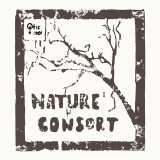
In the late 1960s, young jazz musician Bobby Naughton, a keyboardist and vibraphonist, faced significant challenges as he sought to record his first album. With major record labels and jazz clubs catering only to big names, Naughton and other creative musicians of his generation found themselves sidelined by the mainstream music industry. They turned to self-reliance and self-production, becoming part of a movement of independent musicians. Naughton’s debut album, Nature’s Consort, was a DIY effort in every sense—recorded on home equipment and featuring a hand-printed woodblock cover. The album was distributed independently at concerts and by mail, receiving little attention initially, but over the years it gained a reputation as a rare, sought-after artifact of the period.
Though recorded during an outdoor concert in Connecticut, Nature's Consort reflected the "loft jazz" scene in New York City. This avant-garde jazz movement centered around musicians who lived and played in loft spaces in lower Manhattan. Naughton commuted from his home in Southbury, Connecticut, to play with his bandmates Mark Whitecage, Mario Pavone, and Laurence Cook in New York's lofts. These musicians regularly performed at venues like Studio We, a key gathering spot for free-form jazz, where musicians could experiment and develop their sound, often with no audience present.
Naughton’s journey into jazz was a winding one. Originally from Boston, he played rockabilly and blues-rock before transitioning into free jazz. Inspired by avant-garde artists like Carla Bley and Paul Bley, Naughton sought to explore new forms of music that went beyond traditional jazz structures. His bandmates, Mark Whitecage and Mario Pavone, were both deeply affected by the death of John Coltrane in 1967, which prompted them to quit their day jobs, attend Coltrane’s funeral, and move to New York to pursue jazz full-time.
Nature’s Consort was a collective project, with band members sharing equally in any profits. However, Naughton was the driving force behind the group’s creative direction. He composed much of the original material and selected pieces by Ornette Coleman and Carla Bley for the band’s repertoire. Jazz critic Nat Hentoff praised the album for its “high-risk improvisation” and the musicians' ability to anticipate each other’s moves. Though Nature’s Consort received little press at the time, it has since been recognized as a significant early document of the loft jazz era, representing Naughton’s disciplined, improvisational approach to music.
Dreems returns with his second full-length album, a languid journey through ambient dimensions. Following up his self-titled debut from 2014, these two LPs will stand together as test of time, a snapshot of the atmosphere that surrounded him throughout the decade.
As a versatile club-DJ with a respected catalog of mixed-tempo club remixes, and as half of the ‘Krautback’ / elementally Australian industrial act ‘Die Orangen,’ Dreems merely hints at his musical identity as an album artist, an expansive space in which he truly does soar with the spirit of a true artist, plumbing the depths of his emotional being, achieving catharsis in the shimmering pleasure of sound.
Diamond Bay’s 12 tracks surprise and reward the listener with the great gift of capturing your attention without ever attempting to hijack it. In a world gripped by the algorithmic nightmare of millennial whoops and material hooks, Dreems has charted a course for something altogether different - a peaceful kind of sonic painting. These are pastoral, passing vignettes. They highlight our awareness without forcefully directing our thoughts, except on the vocal pieces which reinforce the contemplative themes, adding not only specificity, but bringing a real sense of intimacy to the record.
Equal parts soft and sorrowful, Myriam Gendron’s stunning Not So Deep As A Well LP became something of a sleeper hit upon its initial release back in 2014. Her debut album shone a warm lamp-light glow upon a curious and captivating new voice in the Quebecois folk world.
Nearly ten years on from its release in her native Canada and America, Not So Deep As A Well gets a European release for the first time this autumn, with a new pressing on the Basin Rock label (Julie Byrne, Aoife Nessa Frances, Trevor Beales, Juni Habel) which features two tracks not included on the original release - ‘Bric-à-brac’ and ‘The Small Hours’ - both written and recorded in the early days of 2014.
Recorded alone in her apartment, with no knowledge of sound engineering, it could almost be a lost artefact, a dust-lined document of a forgotten time and place. Taking the poems of Dorothy Parker, whose work Gendron stumbled upon by chance in a Montreal bookstore, she imbues the words with a graceful, gentle expression, a lingering sense of sorrow always present.
A stark, spellbinding collection, Not So Deep As A Well is raw and unyielding in so many ways we no longer expect to hear. As if sitting in the room with her, Gendron’s voice is cracked and unadorned, quietly forced into a push and pull between
Blake Lee has always been fascinated by the unknown, and space, in its isolating, mysterious vastness, embodies this theme immaculately. The open void, captured so memorably by Stanley Kubrick in '2001: A Space Odyssey', is Blake's far-reaching canvas on 'No Sound In Space', a cinematic meditation on the cosmos that's painted in nuanced, emotionally sincere colors. The Los Angeles-based composer has been contemplating his full-length debut since 2021, using his guitar as a sonic paintbrush rather than find himself snared in its traditional aesthetic constraints. Transforming its characteristics with effects and subtle processes, he layers sustained tones and intimate improvisations, creating richly visual polychromatic utopias teeming with unknown life.
Since 2011, Blake has been most known for being the guitarist and a music director for Lana Del Rey, notching up three songwriting credits on her acclaimed ‘Ultraviolence’ full length. He sees his solo work is a form of escapism, a place where he can experiment and find comfort and catharsis outside of expectations and formal structure. The album was written instinctively, and Blake made sure he didn't force anything, letting go and getting out of his own way, listening intently as sounds and textures materialized organically. "I didn't want to ruin it by being a perfectionist," he laughs. And his collaboration with Kenyan sound artist KMRU, who runs the OFNOT label and contributes to two of the tracks on the album, occurred similarly organically.
Blake was moved to reach out to KMRU when he caught a performance of 'Natur' at Los Angeles' Zebulon in 2022, leading to a prolonged back-and-forth. They didn't meet in person until earlier this year, by which time they'd become firm friends, continuously sharing music and conversation. KMRU had lent a valuable ear to Blake, who sent early playlists of 'NSIS' that, over the months, slowly evolved into the finished album. It's the first release on OFNOT that's not by KMRU himself; the label emerged last year with the release of KMRU's own 'Dissolution Grip', and Blake's debut immediately expands its sonic universe. Alongside the playlists, Blake also provided KMRU with the tracks' raw stems, which KMRU began to edit and expand in his Berlin studio. 'Miura' and 'Waiting' are the result of this process, two sublime abstractions that augment Blake's dreamlike, euphoric tones with KMRU's pebbly distortions and booming low-end rumbles. And this same playful sense of freeness seeps into Blake's other compositions.
On the misty 'In A Cloud', he surrounds cascading string tones with soft-focus pads that swell until they're like crashing waves, and on the two 'Echoplexx' pieces, he uses delay and reverb to smudge his sounds until they're viscous residue, the harmonies obscured by whooshes of white noise and distant chimes. The mood is quieted somewhat on 'Moving Air', as Blake's swirling tones form half-heard lullabies, coalescing into a dense, melancholy crescendo, and he fills out the sound with reverberant airport recordings on 'Pan Am', letting pitchy My Bloody Valentine-esque drones warble beneath the transitory chatter. Each track melts into the next, forming a billowing, cryptic narrative that leaves more questions than answers. Blake is constantly searching, and fills his unoccupied space with warmth, perception and sensitivity.
Blake Lee has always been fascinated by the unknown, and space, in its isolating, mysterious vastness, embodies this theme immaculately. The open void, captured so memorably by Stanley Kubrick in '2001: A Space Odyssey', is Blake's far-reaching canvas on 'No Sound In Space', a cinematic meditation on the cosmos that's painted in nuanced, emotionally sincere colors. The Los Angeles-based composer has been contemplating his full-length debut since 2021, using his guitar as a sonic paintbrush rather than find himself snared in its traditional aesthetic constraints. Transforming its characteristics with effects and subtle processes, he layers sustained tones and intimate improvisations, creating richly visual polychromatic utopias teeming with unknown life.
Since 2011, Blake has been most known for being the guitarist and a music director for Lana Del Rey, notching up three songwriting credits on her acclaimed ‘Ultraviolence’ full length. He sees his solo work is a form of escapism, a place where he can experiment and find comfort and catharsis outside of expectations and formal structure. The album was written instinctively, and Blake made sure he didn't force anything, letting go and getting out of his own way, listening intently as sounds and textures materialized organically. "I didn't want to ruin it by being a perfectionist," he laughs. And his collaboration with Kenyan sound artist KMRU, who runs the OFNOT label and contributes to two of the tracks on the album, occurred similarly organically.
Blake was moved to reach out to KMRU when he caught a performance of 'Natur' at Los Angeles' Zebulon in 2022, leading to a prolonged back-and-forth. They didn't meet in person until earlier this year, by which time they'd become firm friends, continuously sharing music and conversation. KMRU had lent a valuable ear to Blake, who sent early playlists of 'NSIS' that, over the months, slowly evolved into the finished album. It's the first release on OFNOT that's not by KMRU himself; the label emerged last year with the release of KMRU's own 'Dissolution Grip', and Blake's debut immediately expands its sonic universe. Alongside the playlists, Blake also provided KMRU with the tracks' raw stems, which KMRU began to edit and expand in his Berlin studio. 'Miura' and 'Waiting' are the result of this process, two sublime abstractions that augment Blake's dreamlike, euphoric tones with KMRU's pebbly distortions and booming low-end rumbles. And this same playful sense of freeness seeps into Blake's other compositions.
On the misty 'In A Cloud', he surrounds cascading string tones with soft-focus pads that swell until they're like crashing waves, and on the two 'Echoplexx' pieces, he uses delay and reverb to smudge his sounds until they're viscous residue, the harmonies obscured by whooshes of white noise and distant chimes. The mood is quieted somewhat on 'Moving Air', as Blake's swirling tones form half-heard lullabies, coalescing into a dense, melancholy crescendo, and he fills out the sound with reverberant airport recordings on 'Pan Am', letting pitchy My Bloody Valentine-esque drones warble beneath the transitory chatter. Each track melts into the next, forming a billowing, cryptic narrative that leaves more questions than answers. Blake is constantly searching, and fills his unoccupied space with warmth, perception and sensitivity.
Did you know there are horses on the cover of Earth 2: Special Low Frequency Version? There are at least three in the right hand corner, gathered inexplicably near a white canvas tent, a human possibly perched among its folds. As widescreen and vast as the cover may seem, those little details-the horses, the possible human, the faint wisp of white clouds-give it depth and wonder, something to which the imagination can return. Did you know that the music on Earth 2-repressed now for its 30th anniversary, back in its original artwork, and accompanied by a riveting set of remixes that demonstrate the reach of what Dylan Carlson long ago called "ambient metal"-works much the same way? The surface is massive and obvious, the meatpaw riffs of Carlson and bassist Dave Harwell pounding and swiping and pawing at the speakers, a true bludgeon in three-dimensional sound. Listen, though, for the details in the corners, for the finesse beneath the force, and Earth 2 reveals new levels of depth and wonder. The widespread impact of Earth 2 suggests that others have indeed been leaning in, listening to these minutiae and making something new of them. A masterpiece without many genre precedents, Earth 2 surely helped send doom metal down its more modern drone, ambient, and avant-garde avenues. Those descendants are obvious. Perhaps more surprising and gratifying are the ways it has influenced electronic music, modern composition, and even hip-hop by realigning our senses of tempo, time, and texture. Earth 2 engendered a rearrangement of expectations, regardless of preferred form.
Just under a year after their acclaimed self-titled debut, dreampop duo deary release a brand new six-track EP – Aurelia – via Sonic Cathedral on November 1. It includes the singles ‘The Moth’, ‘Selene’ and ‘The Drift’ and features Slowdive drummer Simon Scott playing on three songs. It will be available on three different vinyl variants, a CD with three bonus tracks and digitally. It’s a stunning record, which displays a new-found maturity in terms of production as well as musically and lyrically. The band – singer Rebecca ‘Dottie’ Cockram and guitarist/producer Ben Easton – have had to grow up in public since the release of their debut single at the start of 2023, supporting legends such as Slowdive and Cranes and TikTok sensations like Wisp along the way. An aurelian is a rare old term for a lepidopterist – someone who studies and collects moths – derived from the Latin aurelia, meaning chrysalis. The perfect title for an EP which is based around the theme of metamorphosis and change. “It leans on the natural world, the human body, the earth and sky as well as human emotion,” says Ben of how the EP represents physical and metaphysical growth. “Change can be daunting but equally exciting, which is something we’ve come to learn.” “While writing the EP, I found a letter I had written to myself when I was 22,” adds Dottie. “I was fresh out of university and had moved back in with my parents as Covid was in full force. I was uninspired and lost and reaching out to my future self for some hope. It was a physical representation of what can happen in a few years; how much can change and how you never know what’s coming next. “I found it interesting that – at the age of 26 – here I was looking back to my younger self for hope or just some comfort in the fact that things will and do move on. It was important to me to bring both of these versions of myself into the new songs.” “Personally, I had noticed a change in myself; a new level of social anxiety, a strange disassociation to things that once brought me joy as well as negative repetitions in my daily life,” reveals Ben. “I began the year sober which allowed me to finish the writing process as a letter of care to my own mental health. There are motifs throughout the EP – for example the riffs in ‘The Moth’ and ‘The Drift’ being reminiscent of each other – which are like musical reflections of these repeated cycles.” It’s musically where the change deary have undergone is most obvious. ‘The Moth’ mixes howling guitars atop a strident breakbeat making it more Curve than Cocteaus; ‘Selene’ is a slow-building wall of noise; ‘The Drift’ combines a perfect pop melody with an incredible sense of urgency. These three singles are balanced by the brief but beautiful ‘Where You Are’ which leads into the Portishead-style trip-hop of ‘Dream Of Me’. The title track has been a staple of their live sets for about a year as ‘Can’t Sleep Tonight’, but its mix of The Cure circa Disintegration and Mezzanine Massive Attack has grown and evolved so much that they renamed it ‘Aurelia’ as the embodiment of the change they have been through. “We’ve allowed deary to naturally grow over the past year, we didn’t want to force it to take a certain shape or sound,” explains Dottie of the duo’s slow and steady approach. “A lot of the last EP was written by sending ideas back and forth over WhatsApp, but this time we were able to sit in the same room and I think that really shows. We know each other a lot better now as we have experienced this journey together and that benefits the writing process as we are more open with each other and can be vulnerable.” “Aurelia definitely feels a lot more collaborative, more personal and more fully realised than the first EP,” concludes Ben. “It feels like a real document of what has been a very important time in both of our lives. Ironically, the band has changed and matured even more since the recording, so we’re both excited to document the next stage
Something About Livingis an album of live recordings by experimental jazz composer/multi-instrumentalist Robert Stillman. The music was captured over the course of Stillman's time as the solo support act for The Smile (Thom Yorke, Jonny Greenwood, Tom Skinner). The album weaves excerpts from various theater and arena shows along the tour's North American routing into a seamless whole, creating a 40-minute program that represents an expanded version of Stillman's ever-transforming live set.
Something About Livingis the product of a steady, on-stage evolution that happened over the course of the nearly 60 shows opening for the Smile across the EU, UK, US, Canada and Mexico. However, the creative origins of the set began in relative isolation during the pandemic, through Stillman's work on projects like his multi-media installationUnseen Forcesand his monthly broadcast for Margate Radio, both of which drew upon solo improvisation using saxophone, cassettes, Yamaha DX7 synthesizer, and effects.
"At the time The Smile asked whether I'd like to open for them on their first tour, I felt like I'd already been preparing without really knowing it," says Stillman. "I'd been doing this music constantly, but always for a hypothetical audience" During the pandemic, Stillman's solo set-up served as the research lab where he worked on all the concepts he was interested in: solo improvisation, creating and manipulating cassettes, FM synthesis, analogue delays chains, no-input mixing, and non-metric rhythmic pulses. So when he was offered the first Smile tour, the idea was to bring "the lab" onto the stage.
What Stillman could not have prepared for was the experience of playing in venues with capacities of up to ten thousand listeners. "The first tour was in summer 2022, so not that long after the worst of the pandemic, when I had pretty much made peace with the idea that I might never be able to perform for an audience again. Then all of a sudden I found myself in front of huge numbers of people, and felt the massive responsibility of being with an audience, of this thing I'd done alone for so longactually being witnessed, and it was completely overwhelming!" On the flip-side, Stillman also recalls, was a new appreciation of how powerful the live performance was as a social phenomenon. "It's a cliche, but also true: the moment of making and hearing music in a shared time and space has a very specific meaning and power; there was a sense that everyone in the venue was necessary to make it real, regardless of what they were doing, or how they felt about it. There was an inevitability about it that I'd never fully appreciated."
Over the course of the tours that followed, Stillman transformed this appreciation of the shared moment into an ethic of spontaneity that guided the development of his live set. "An important reference for this set has always been an Animal Collective show I saw when I first moved to New York, probably in 2001 or so, that has always set the high-water mark for what I wanted to do live- they were improvising a lot, and out of what would seem to be absolute chaos they'd find their way to something structured, and then back out again into the unknown. It was so thrilling to witness".
ThoughSomething About Livingcompiles recordings from different dates along the tour, Stillman has edited and mixed them into a work that seeks to reflect the ebb and flow between 'chaos and control' that characterizes his live set. Among the compositions featured are some from previous album releases ("Time of Waves", "What I Owe", "What Does it Mean to Be American") as well as some new compositions ("The Dream of Waking", "Renaissance 2.0," and the title track, "Something About Living").
The album/track title "Something About Living" is a reference to a line from Stillman's favorite film,My Dinner With André: "André Gregory is explaining the value of life experiences that, as he says, are'to do with living'.That really struck me, the way he articulated it. I strongly believe live music situations can ask these kinds of questions, for performers and audiences. I hope that's reflected in this music."
[a] 01: Time of Waves (Live in Miami FL) [Live]
[b] 02: What Does It Mean to Be American (Live in Forest Hills NY) [Live]
[c] 03: The Dream of Waking (Live in St Augustine FL) [Live]
[d] 04: Something About Living (Live in Richmond VA) [Live]
[e] 05: What I Owe (Live in Chesterfield MO) [Live]
[f] 06: Renaissance 2.0 (Live in Chesterfield MO) [Live]
The sea has long been central to Japanese culture, symbolizing both sustenance and spiritual depth. Charles A.D.'s Deep Diver draws inspiration from this, channeling the ancient traditions of diving and fishing into his music. Historically, the sea has influenced everything from Shinto rituals to the livelihoods of coastal communities. In Deep Diver, this reverence flows through aquatic soundscapes, where rhythmic waves of 90s house and Detroit techno meet Japanese minimal production techniques, New Age and Pacific Jazz. Like the tides, the album ebbs and flows, creating a serene yet dynamic homage to the timeless connection between Japan and the sea.
The opening track 'Deep Diver' plunges into the depths, its abstract sound design capturing the sensation of deep-sea propulsion. Rhythmic bubbles pulse gently alongside slow-moving chords, creating an otherworldly atmosphere. The textures are lush yet restrained, setting a tranquil stage that pulls the listener into a submerged world. 'Underwater Ruins' builds on this aquatic theme, introducing rhythmic layers and bass-heavy notes reminiscent of mid-90s Japanese ambient techno. The smooth, melodic flow nods to pioneers like Mr.YT and Susumu Yokota, while subtly incorporating the Detroit techno influence through soulful, deep basslines.
The track feels like a fusion of ambient and techno, balancing serene tones with a rolling groove, emblematic of Japanese techno soul. As the album progresses into 'Bubble Ring', it becomes clear that Charles A.D. is a master of minimalism. The production is timeless, leaning
on analog techniques where echo-drenched chords and carefully layered soundscapes take on an addictive, hypnotic quality. The simplicity of the composition is deceptive, as each element carries weight, drawing the listener deeper into the rhythm and space between the notes.
'Merperson' is where organic rhythms truly come into play. Charles A.D. gently evolves the patterns, allowing each percussive hit to flow naturally into the next. Soothing melodies emerge from within the track’s structure, eventually reaching an emotional peak without ever feeling forced. The organic nature of the arrangement creates an effortless progression that feels deeply connected to the natural movement of water.Starting the second half with 'Deep Exploration', the theme of underwater excursions becomes even more pronounced. Light, steady drumming anchors the track, allowing the melodic layers
to develop gradually. It unfolds with a calm, measured pace, before ending softly, almost as if the sounds are drifting off into the oceanic depths. 'Diffuse Reflection' stands out as the most dub house-influenced on the album, with rolling rhythms and hypnotic elements reminiscent of Maurizio's deep, pulsing sound. Yet here, the production feels submerged, with aquatic effects swirling around the rhythmic core, blending dub house with a fluid, oceanic touch. 'Traitors' delves even deeper into dub-inspired territory. Deep, resonant bass hits combine with wooden drums, while static-like sounds evoke the image of a radio tuning through static to find clarity.
Chords shimmer briefly before fading back into the liquid depths, evoking the ebb and flow of the tide. The final track on Deep Diver 'Levitation', is a fitting conclusion, as the rhythms merge and overlap like waves gently lapping the shore. The minimalistic arrangement allows each element to blend effortlessly into the next, creating a sense of unity and closure. The sounds move with the gentle grace of water, ending the album in a way that feels both complete and
open-ended, like the infinite motion of the sea.
The Wild Classical Music Ensemble is a Belgian experimental rock band formed in 2007 by artists with mental disability within the social-artistic non-profit organisation Wit.h in Kortrijk. Their unique sound is a blend of punk/rock riffs, fanatical rhythms and soaring flutes and fiery synths, over which gravitate multiple, multilingual voices that scratch harshly as much as they comfort. There's something very Belgian about this harshness and noisiness. We often think of compadre Arno, from the TC Matic era. During the Covid crisis, the disabled members of the Wild Classical Music Ensemble were undoubtedly subjected more than others to the harsh conditions of confinement, alone in their rooms. Damien Magnette was still able to visit them with sound equipment. This was one of their all-too-few windows onto the world. Forbidden to meet, let alone play together, the members of Wild were nevertheless able to compose songs in tandem with Damien. The tracks were then sent to musician friends - Fabrice Gilbert, Ava Carrère, Wim Opbrouck, Shht, Arthur Satàn, Nathan Roche and Julien ZLDR - who added their artistic touch. Jean Lamoot and Carl Roosens joined the adventure, one as mixer, the other as video director. It's a result of the conditions under which it was created, this is the band's most highly-produced album, and perhaps its most accessible: frankly rock, with a great deal of freedom in production, and sometimes with a certain pop allure. Jean Lamoot's contribution to the mix had a lot to do with it. In addition, the forced slowdown allowed us to devote much more time and attention to writing the lyrics. Leader Damien Magnette says: "For over a year, we were all confined. But what about when you're a mentally handicapped person? Well, it's very different from you and me... We have the right to choose, the luxury of deciding for ourselves what rules we want to follow or not. We have free will. They don't. This series of confined songs is dedicated to all the people who have gone through this crisis, deprived of their free will. We send them our thoughts, hugs and kisses full of true love! The songs respond to a deep desire to look out for each other in adversity (the so obvious "Comment ça va?" by Johan Geenens and Wim Opbrouck, or "Waarom ben je boos" by Sébastien Faidherbe with Wim Decoene, the latter full of empathy). A sense of loneliness is logically present on the album ("Dat is mijn verdriet" by Linh Pham, a very real, very concrete and particularly touching poem, or "Loneliness", whose text was improvised by Wim), if not an understandable rage ("Je ne veux pas" and "My Frustrations"). It worth noting that on "On reste heureux", Sébastien Faidherbe composed all the parts in one go, with an optimism that stands out from the anger expressed in his other songs. Let's make no mistake: none of this is really over. All these emotions, suffering, pain and hope, speak to us far beyond this grim story of covid.
It is summer dawn . . . and you are alone. Here is music for your strange mood. The piano starts the first track, slow tempo beat, a strict beat, a swinging beat. Lillemor—here minor harmonies give the tune a rural, romantic feeling of some place in Spain or France. The tempo changes to medium fast—the flute solos. Light phrasing contrasts beautifully to the earthy, swinging beat of the rhythm section and the repeating piano figures. The trombone adds a new color, a counterpoint of sound and phrasing, backed by the pulsating beat of this wonderful rhythm and the driving piano. Summer dawn . . . This music has more to offer, because it shows the personality of Sahib Shihab at its best. Sahib is a universal musician who reflects musical experiences in jazz since the end of the thirties. He lived through the important periods of modern jazz with his heart and mind wide open toward everything that was good music, regardless of being termed "Mainstream", "Bop", "Cool", "Westcoast", "Eastcoast", "Hard Bop'', et cetera. When you listen closely to his music, you will find traces of all these, but they are immersed in his deep musicianship and his true jazz personality. Sahib Shihab's background reads like the record of a master of advanced studies. Furthermore he played and collaborated with the coolest jazz musician of that period. Above all let's name Budd Johnson, Theolonius Monk, Tadd Dameron, Milt Jackson, Dizzy Gillespie, Illinois Jaquet, Elmer Snowden, Luther Henderson, Larry Noble, Fletcher Henderson, Roy Eldridge. In his early professional years, Sahib was heard mostly on alto sax; later, more often on baritone sax and flute. Today, his name is inseparably connected with these two instruments. The unity of his jazz performances is not alone bound up with the com¬positions and the arrangements of Sahib Shihab, though in their understated simplicity they have a melodic beauty that is seldom found in jazz of today. The rhythmical subtleties add to the overall qualities of being relaxed vehicles for free-blowing, but there is an immediacy that you hear and feel every moment when listening which defies analysis. The playing of the rhythm section helps greatly to promote the sense of flux and contrasting constant renewal that makes listening to this record so invigorating an experience. Well, this is no surprise, with Kenny Clarke as the nucleus of the rhythm group. Kenny 'Klook' Clarke is a major figure and contributor in jazz, one of the founders of modern jazz, and is ranked as one of the all-time great drummers. He influenced a whole generation of musicians with his playing, though living in Paris since the middle of the fifties somewhat dimmed his name to the general American public. Nevertheless, his name alone will assure a connoisseur to expect top class musical experiences. Talking of the rhythm section we have to name Jimmy Woode's bass, which together with Kenny's drumming, is the driving force for the group and the reliable harmonic anchor for the improvisors. By the way, Jimmy has been with the Duke quite a while, and this alone is an award for extraordinary craftsmanship and artistry. The good sounding rhythm with its full-bodied color is also a result of the added bongos of Joe Harris, who manages to stay out of the way of the players—a quality not often found with drummers—but his playing is felt through the set. There are two members of the group not yet mentioned. Two Europeans, pianist-composer-arranger Francy Boland from Belgium, and trombonist Ake Persson from Sweden. Francy Boland this time is a sideman, though normally he is a leader of recording sessions, both as composer-arranger and as musical director of the band. In the fifties he was in the States writing arrangements for different name-bands, such as Basie and Goodman. In Europe, he is famous for his swinging modern big band arrangements; and his inventiveness as a writer is reflected in his piano playing. He has the talent of using the right dynamic approach every moment, thus making his playing helpful to soloists and interesting for listeners as well. Ake Persson has been Scandinavia's out-standing trombone player for about ten years. There are only a few trombonists in Europe who might match his talents at times, but they lack the consistency of his playing. He is impressive, whether playing in a big band, or whether main soloist in his own small groups. American musicians love the sound of his slide trombone and his easily flowing romantic improvisations, so he often joins American name-bands as they travel in Europe. The music speaks alone . . . , we said it before. You have your soul to feel the beauty, to follow lines and structure, and to enjoy the spiritual excitement. Whether you enjoy the flowing, easy sounding theme of "Please Don't Leave Me", or the climaxing piano solo in the same piece—the bass solo in "Waltz For Seth" or the swinging baritone sax—listen to the first bars of this solo and pay attention to Kenny. Whether you listen to "Campi's Idea", (named after Gigi Campi, the well known Cologne jazz enthusiast who organized this recording) with the romantic flute solo of Sahib, the interesting tempo changes, the piano comping, the moving trombone solo; or to the up-tempo "Herr Fixit", with the cooking Kenny and humorous, driving flute solo, you know that these six musicians where in the right mood, in the right stimulating surroundings to feel what we all feel when it's: SUMMER DAWN.
Carla Boregas is a Brazilian musician, composer and sound artist. By merging synthetic and acoustic instrumentation and techniques, Boregas builds up sonic scenarios driven by an invisible force, where the sensation of presence and discovery lies between density and delicacy. Her work spans composition, improvisation, performance, sound installation and radio art, and aims to transport the listener to different subjective perspectives of time and space, to invoke memories and to reflect about the nature-human relationship.
Carla Boregas writes: "Using a Tascam Portastudio 4-track cassette recorder, I invited three musicians to improvise alone with the sound recording of the sea that I did in Massaguaçu, the place where I used to live in Brasil. The recorder that I used had a defect in one of its tracks, therefore I could only invite two musicians – Vinicius Cajado (double bass) and Réka Csiszér (cello), plus the sea in another track. While listening to the tracks together, I felt a deep sense of absence ("ausência" in Portuguese). Perhaps due to their sonorous answers surrounded by the tape hiss? Because that's one of the symbolic meanings of the ocean? Maybe "saudades do mar, de estar ao seu outro lado"? Who knows – listening can be something very mysterious. Afterwards I played with and interweaved them all: the sonorous sea, Vinicius Cajado, Réka Csiszér and the absence - "Absência Tape" is the final result." – Carla Boregas, Berlin, 8 August 2024.
Uni Cover[11,72 €]
Born and raised in Sicily but now based in Berlin, SLV is known for his innovative approach to techno and its various shades. He has released on revered labels like Soma and received support from key industry players who respect his ability to blend old-school vibes with modern production techniques. Away from the club, he also produces music for film soundtracks, adding a sense of cinematic edge to his techno cuts and is a master of both analog and digital technologies - a true audio engineer who crafts unique, compelling sounds. Having previously featured on the labels Federation of Rytm III compilation, he returns to SHDWs Mutual Rytm imprint with his Night Echoes EP to open up October.
Graustufen opens with punch drum programming and scintillating percussion that dances atop the groove as booming bass brings serious weight down low. The superb Grand Cayman is another potent techno weapon, this time with icy synth atmospheres and eerie moods pervading the tightly programmed drums and bass to deliver an unstoppable force. Voids brings urgent funk with its hunched-over, closely stacked kicks and suspensory pads, which never let up and keep you locked in the moment, while Elastik Pho echoes a classic Detroit sound with its soul-drenched beats and serene, uplifting, beautiful hi-tek style. Last but not least, That Night shows SLVs extraordinary range as it brings some soulful vocal loops and optimistic chords over thunderous drums, which are sure to power dance floors through to euphoria. The EP includes two digital bonus cuts: Basic Uno, which is a raw, percussive and heads-down banger, and Persistence Of Memory, which is stripped-back, glitchy and dubby techno for strobe-lit warehouses.
Continuing his fruitful relationship with Discrepant after the third volume of his ongoing Organic Music Tape Series on Sucata Tapes, Tiago Sousa returns with two longform pieces for organ with 'A Thousand Strings'. A self-explanatory title in itself, 'A Thousand Strings' drifts fluidly into a celestial realm of cascading melodies and cycling patterns that never feel forced or strict throughout its two hypnotic tracks. Pulsating with life and ecstatic abandon.
Taking cues from the tradition of American minimalists like Steve Reich and, particularly, Terry Riley, the Portuguese composer's work flows with a life of his own, that, while acknowledging those influences, transcends them into his own signature. On the A side, 'A Thousand Strings' goes seamlessly from intertwining crepuscular harmonies to ascending keyboard runs in the manner of 'Persian Surgery Dervishes' finishing with a coda of rhythmic marimba-like pulses. On the flipside, 'The Things Passed' creates this maze-like tapestry of melodies that seem to drift apart only to converge back again into its internal process before setting on sustained tones infused with a sense of longing. For all things passed. For what is yet to come.
Black Vinyl. In Rumi's poem A Great Wagon he writes of a place of total acceptance. "Out beyond ideas of wrongdoing and rightdoing, there is a field. I'll meet you there," It is a boundless, liminal space where we can release the judgments we make and carry of ourselves, and the comparisons to others. When we think of this field, there is a sense of tranquility that only comes when we are undisturbed by the shadow self and see existence as neither bright nor dim, white nor black. But as lead singer Greg Bertens explains, arriving there is a whole different story. "This is a poem I've returned to over the years, and I love the idea of this place, but getting there is life's journey." Bertens adds "I think the longing for and elusiveness of this field is a recurring theme in our music." Field is enveloped by themes of regret, disconnection and frustration but with the space to understand that these feelings are a natural part of the struggle between reconciling the inner and outer self. The Los Angeles/San Francisco-based group have been indie shoegaze stalwarts since their formation in 2001. After two decades and a handful of line-up changes, their extensive discography presents a dynamically textural, lush psychedelic rock that has featured guest appearances by members of Pavement, My Bloody Valentine, and Snow Patrol, among others. 2021's LP We Weren't Here (Sonic Ritual) was hailed for its dense instrumental blanket, where unrelenting hi-hats and heavy kicks exist alongside dreamy drone guitar. This propulsive nature permeates Field, as members Bertens, Noël Brydebell (vocals), Nyles Lannon (guitar), Jason Ruck (synths), Justin LaBo (bass), and Adam Wade (drums) produce a kaleidoscopic sonic landscape. Patient, sprawling instrumentation builds a foundation in which Bertens' themes of endurance, perseverance and clarity can bloom with a considered poise. As a lyricist who writes in response to the instrumental arrangements, rather than a focus on a specific theme or person, Field is a testament to Film School's ability to create in the moment, and to showcase the magic that stems from when we are truly present. With over two decades in the industry, Field cements Film School as a distinct, dominant force in the shoegaze scene. Soaked in an emotionally open, imaginative atmosphere, the album is both singular and expansive, and leaves the door open for a constantly evolving interpretation. Film School have never confined themselves to the rigidity of specifics, and it's on Field that they urge us to look beyond the binary of certainty, and to take a second look.
Aesthetically, Ed Schrader’s Music Beat hates to tread water. At the same time, the Baltimore-based two-piece of vocalist Ed Schrader and bassist Devlin Rice won’t force their songs to fit a preconceived style. “The next album’s always gotta be different from the last one. We’re different people from record to record. So, writing authentically to ourselves will always bring our work to a place that we haven’t been to yet,” Rice said. Schrader added, “We’re terrified of turning into AC/DC. We never want to be married to one scene or time or sound. We want to be the Boba Fett of bands! Constantly altering the way in which we make records has been pretty key in that process.”
For Orchestra Hits, the band’s latest, that alteration was welcoming longtime musical comrade Dylan Going into the fold as a co-writer and co-producer. A songwriter in his own right, a guitar sideman for ESMB on their last two tours, and a collaborator with Rice in the noise riffage band Mandate, Going had both a unique vision and an intimate familiarity with the ESMB vibe.
“Dylan came to every show we’ve ever played in New York—no matter how weird it was,” Schrader said. “He’d be standing there ready to move an amp or feed us barbecued cactus after the gig and toss on some Golden Girls so we could decompress. It felt like family as soon as we began working, but I honestly had no idea how damn good he was at tossing out these hooks.”
According to Schrader, the songs “just poured out of us” over the course of a highly caffeinated three-day weekend in a tiny room in Devlin’s house while his cat, Sandy Goose, screamed continually. “It was like three kids hiding from the world to get into some lovely mischief,” they said. The lack of external pressure in the process gives Orchestra Hits an almost paradoxical vibe. For all of the album’s layers, that mix live and sequenced instruments, it never loses the raw energy of a small handful of friends in the same room plugging in, cranking up, and playing until they pass out.
Lyrically, the album finds Schrader, now 45, meditating on experiences in their youth to make sense of the present moment. “We are not into the garden,” Schrader wails on the relentless “Roman Candle,” a song about the sad debacle of Woodstock ’99, and a direct response to Joni Mitchell’s “Woodstock,” a utopian ode to hippie idealism. A 19-year-old Schrader, having snuck into Woodstock ’99 through a hole in the fence, was there the night members of the crowd used candles intended for a vigil for victims of the Columbine High School massacre to set fires all over the grounds. Even before the fires, Schrader remembered feeling disconnected from the music, the nostalgic cash grab, and the meatheads in the crowd. After watching a press tower collapse, they boarded a random shuttle bus and were dropped off near a Denny’s. “It was a far cry from the Garden of Eden,” Schrader said. “That experience defined what I didn’t want to be a part of, and yet America is more like Woodstock ’99 than ever.”
With percolating synthesizer arpeggios, and climbing bass grooves, “IDKS” is the album’s dance-floor slapper. “’IDKS’ is a funny one,” Schrader said. “We already had a pretty satisfying suite of songs when Dylan was packing up to head back to New York, but he missed the train because of a freak snowstorm. Realizing he’d be stuck in town another day, he says to me, ‘Here’s this other weird thing I have.’ It was ‘IDKS.’ The hooks were so good I felt like Homer Simpson at a free donut convention. I just dove right in, and we cranked that baby out in like 20 minutes.”
Lyrically, “IDKS” is a letter from the true self to public-facing self. “It’s an angry song,” Schrader said. “Because the public-facing self is always looking for an easy escape, but it forces the true self into a cage. I honestly thought my lyrics were corny and was about to change them, but Dylan was digging it just the way it was. So that’s what you hear.”
With the soaring “Daylight Commander,” the band went against all of their musty-basement-bred instincts. “I went full High School Musical with the vocals,” Schrader said. “At first it felt almost embarrassing, but I remember reading somewhere that Bowie recommended always floating a little bit above your comfort zone, and that’s what we did here.” The song is part exercise in absurdity and part pop Trojan horse. “If ever we had a ‘Shiny Happy People’ moment, I guess this is it,” Schrader said.
A/B Side Effect, Black & Gold, limited to 200 copies. More than 4 years after "Sculpture Of Violence," GIVER from Cologne, Germany, announce their third album "The Future Holds Nothing But Confrontation" for September 20, 2024, on End Hits Records. In recent years, GIVER have not only refined their hardcore sound to be more brutal and atmospheric with elements of metal and post-punk, but thematically, it's clear that their new album serves as an even more drastic political manifesto. Capitalism, culture wars, the climate crisis, and their societal implications and consequences are central themes on "The Future Holds Nothing But Confrontation." GIVER critique the prevailing neoliberalism and its ongoing agitation for the uncompromising pursuit of happiness and satisfaction. The band explains: "What neoliberalism has established is a lonely place. Its driving force is the individualized pursuit of constant fulfillment, altering the way we interact with each other. Whatever we do to achieve satisfaction, there's always a lingering sense of something missing. Happiness and contentment are never the goal; they've been replaced by profit margins and excess. These are endless and extremely unevenly distributed. Anger arises in this vacuum. With this album, we want to remind that it's the economic conditions and inequalities that should be the target of our collective frustration. They create depression, despair, and a downward spiral. Being anti-fascists is not enough; we must also be anti-capitalists." This anger is also reflected musically in the furious 11 new tracks. Filled with powerful guitar riffs and sometimes bilingual lyrics, some of the songs also introduce a new, deep style of spoken word for GIVER, making the eventual eruptions that much more impactful. With the release of their third album, GIVER venture into fresh and melodic territory, integrating elements of post-punk, black metal, and hardcore into a sound that sits somewhere between bands like Oathbreaker, Converge, or Chelsea Wolfe. Although "The Future Holds Nothing But Confrontation" builds on a foundation of biting, powerful metal, it also incorporates dark vocal lines that could be found on a Fontaines D.C. or IDLES record. "The Future Holds Nothing But Confrontation" was produced by Lewis Johns (Rolo Tomassi, Employed To Serve, Funeral For A Friend).