Singer-songwriter Willis Alan Ramsey was 20 years old when he became the third signing to Leon Russell and Denny Cordell's Shelter Records – after Russell himself and the legendary J.J. Cale. The result was Ramsey's 1972 eponymous debut, a masterpiece of laid-back Texas country-rock, blues-inflected folk and outlaw ballads.
As a child, Ramsey was an obsessive radio listener – from Elvis and the Beatles to Delta blues, country and even classical music. By middle school, he had formed his first garage band and started writing songs. After a brief stint at the University of Texas, he took to the burgeoning coffeehouse circuit where he toured alongside folks like Townes Van Zandt, Jerry Jeff Walker and Keith Sykes. It was during these shows that Ramsey developed much of the material for his LP, a diverse yet coherent mix that revealed his varied influences.
Recorded in Memphis, Nashville and at Russell's home studio in the Hollywood Hills, the album features some of the era's greatest session musicians: Eddie Hinton on guitar, Red Rhodes on pedal steel and the rhythm section of Leland Sklar and Jim Keltner. A true songwriter's songwriter album, its tunes have been covered by Waylon Jennings ("Satin Sheets"), Jimmy Buffett ("The Ballad of Spider John") and, most famously, Captain & Tennille ("Muskrat Love"), but no cover can beat the originals from the wise-beyond-his-years Ramsey.
Though Willis Alan Ramsey has continued to perform regularly and write new songs, a second album is yet to be released. For years, whenever someone asked about it, Ramsey was known to answer "What's wrong with the first one?" The answer is, of course, absolutely nothing. In fact, it's perfect.
This first-time vinyl reissue reproduces the original lyric sheet. Includes new interview with Ramsey and liner notes by author Richie Unterberger.
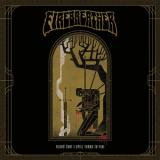
"Firebreather formed in Gothenburg in 2016, rooted in crushing, sludge-doused doom from the very beginning. Never wavering from that commitment across all three of their incendiary full-length releases, the trio has pursued weight with purpose, not as spectacle, nor as an exercise in excess, but as the only language broad enough to hold the emotional reach and sonic heft of their sound. The music arrives in a way that writes itself with no distance between the words and the sound; they rise from the same cursed ground, and that honesty has become the band's defining force. Firebreather is a band that never postures or asks to be admired for their heaviness- and to see them live is to experience exactly why. Their weight takes on another life entirely. The band's towering tone and consuming grit don't fill a room so much as alter it. Volume presses against the body before the first lyric lands and riffs arrive like shifting earth. The drums don't drive the songs forward; they anchor them while the line between sound and physical force begins to disappear. Years spent crossing Europe and North America have only sharpened that purpose, and a decade on with a fourth album on the way via the notorious Heavy Psych Sounds Records, Firebreather remains exactly where it belongs. Head down. Volume up."
Gold Nugget Vinyl, limited to 400 copies. "Firebreather formed in Gothenburg in 2016, rooted in crushing, sludge-doused doom from the very beginning. Never wavering from that commitment across all three of their incendiary full-length releases, the trio has pursued weight with purpose, not as spectacle, nor as an exercise in excess, but as the only language broad enough to hold the emotional reach and sonic heft of their sound. The music arrives in a way that writes itself with no distance between the words and the sound; they rise from the same cursed ground, and that honesty has become the band's defining force. Firebreather is a band that never postures or asks to be admired for their heaviness- and to see them live is to experience exactly why. Their weight takes on another life entirely. The band's towering tone and consuming grit don't fill a room so much as alter it. Volume presses against the body before the first lyric lands and riffs arrive like shifting earth. The drums don't drive the songs forward; they anchor them while the line between sound and physical force begins to disappear. Years spent crossing Europe and North America have only sharpened that purpose, and a decade on with a fourth album on the way via the notorious Heavy Psych Sounds Records, Firebreather remains exactly where it belongs. Head down. Volume up."
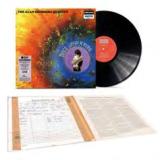
„Once Upon A Time“ ist ein Schlüsseldokument des britischen Modern Jazz um 1970. Alan Skidmore
stellte das Quintett für das Montreux Jazz Festival 1969 zusammen, wo es gleich drei Preise gewann –
darunter als beste Gruppe und Skidmore als bester Solist. Der Erfolg führte zur Zusammenarbeit mit
Deram-Produzent Peter Eden. Mit Kenny Wheeler, John Taylor, Harry Miller und Tony Oxley vereinte
Skidmore einige der später wichtigsten Stimmen des europäischen Jazz. Das 1969 aufgenommene und
1970 auf Deram Nova (SDN 11) erschienene Album verbindet Skidmores Coltrane-geprägtes Tenorspiel
mit Modal Jazz und freien Formen.
It all began in the late 1980s with *Calypso of House* by K.T.E. (released by Irma Records), a track that made history
in Italian house music.
The man behind the project, Francesco "Kekko" Montefiori, went on to collaborate with Claudio Rispoli (aka DJ
MozArt) under the name SOFTHOUSE COMPANY, creating cult classics like *What You Need*.
He later formed the duo Montefiori Cocktail with his twin brother, Federico "Chicco" Montefiori, touring the world together.
Now, the story continues.
Kekko Montefiori and Lorenzo "Meo" Meoni (resident DJ at BICIO PAPAO)
are launching OTUM Records to revive the Softhouse Company and Keytronics Ensemble projects.
The goal: to capture the original energy of the Italian House Music "Golden Age" and project it into the future.
No nostalgia—just high-quality dance music.
"Otum" means "excellent" in the slang of Italy’s Romagna region.
MEMORIALS jump off the waterslides and head above the clouds with their stunning second album, ‘All Clouds Bring Not Rain’. The duo of Verity Susman and Matthew Simms (formerly of Electrelane and WIRE) locked themselves away in a studio in a barn secluded deep in the woods in southwestern France and re-emerged with a beautiful, unusual record that is both melodic and unconventional. For such an ambitious album it’s striking that it was written, performed, recorded and mixed solely by the two of them. Sounding like an unearthed classic, MEMORIALS twist their influences into their own unmistakable sound. Imagine Nico singing with Can produced by David Axelrod and you’re somewhere in the right ballpark.
The record draws inspiration from a wide range of music including folk, dub, post punk, experimental tape music, 60s soul, garage rock, 70s spiritual jazz and Canterbury prog. This attention to detail in their sound meant finding several other studios to get what they needed to record with, including a harpsichord at 4AD’s studio in London and a vibraphone and vintage Leslie speaker in Stereolab drummer Andy Ramsay’s studio Press Play. Verity’s distinctive, unadorned singing is a focal point of the record, moving from tender to wild. Her vocal melodies quickly become earworms, providing the tuneful heart around which the songs’ more unorthodox elements are arranged, which is where Matthew’s unconventional approach to recording and production comes to the fore. With their adventurous arrangements, classic songwriting skills and innovative production techniques, MEMORIALS have created another mesmerising listen that’s accomplished and compelling in its unique approach yet remains dizzyingly immersive - just like their acclaimed live shows.
Tomorrow’s World is the new album from synth-punk/darkwave artist N8NOFACE. Fully produced by Dave Sitek of TV on the Radio, the record also features contributions from Hudson Mohawke, Snow Wife, and Angélica Garcia.
On Tomorrow’s World, N8NOFACE pushes beyond the DIY spaces that formed him, delivering his most ambitious album yet: a collection of hard-as-nails songs that manage to be furiously catchy. In line with N8's cyberpunk aesthetic, Tomorrow's World's title comes from the 1960s British TV show of the same name about tech and science. N8 came across the show when he found a clip of Kraftwerk performing and breaking down their music on it, with Tomorrow's World being credited in breaking the band to a wider audience. In N8's words, the album sees him “imagining what the punks and the street kids might be listening to in 2077.”
One of the most popular and notorious of all British hardcore acts, the Exploited were formed on a dire Edinburgh council estate in 1978 by singer Terry Buchan and guitarist Stevie Ross, although Buchan’s brother Wattie would soon become leader and the lineup seldom stayed stable. Influenced by the Pistols, they built their large working class and skinhead following through an aggressive, fast-paced, and uncensored hardcore style. Gathering singles from their street punk days and the best tracks from their first three albums, Totally Exploited was the band’s first compilation and it remains the best by far. Essential Exploited!
Kassie Krut is comprised of Kasra Kurt and Eve Alpert — former members of Philadelphia math rock institution Palm — alongside Matt Anderegg (Mothers, Body Meat). On their self-titled debut EP, the newly minted Brooklyn three-piece have retained the fangled snarl of their prior work, outlining sugary melodies with visceral flourishes. Front to back, 'Kassie Krut' smudges starkness & filth, settling into a commanding partnership fit for muddy raves, basement punk spaces, and festival stages alike.
After years of twisting rock instrumentation into unknown shapes, the first release by Kassie Krut represents a transformative refocusing of energies. These tracks evince the kind of wisdom that only comes from experience—and the kind of experience that can only be scored by new sounds, still glittering with the metal filings of their making
The new album ‘Notte Davvero’ will be a surprise for Castelli's fans and lovers of the Italic synth-pop scene. The solo project of Milanese Stefano Castelli, former frontman of the post-punk band Clone Culture, combines 80s-inspired synth-pop and new wave
Das wandlungsfähige Trio Vanishing Twin präsentiert sein neues Album ,Archives" - eine Collage aus postmoderner Songkunst, die im gemeinsamen Schaffensprozess Transzendenz findet. Der Albumtitel spielt auf den unverwechselbaren Ansatz von Vanishing Twin an, tägliche Aufnahmesessions anzuhören, zusammenzufügen und neu zu bearbeiten. Gründungsmitglied Cathy Lucas beschreibt den Prozess so: ,Material sammeln, damit herumspielen, es auf den Kopf stellen, versuchen, die Teile zusammenzufügen und daraus eine Geschichte zu erschaffen". Da Lucas mittlerweile ins ländliche Frankreich gezogen ist und Valentina Magaletti sowie Susumu Mukai in London leben, verbinden sich die drei, indem sie Songs und Instrumentalfragmente in einem virtuellen Studio austauschen. Die geografische Distanz wird durch ihre kollektive Kreativität überbrückt, wobei jedes Mitglied als Multi-Instrumentalist seinen Beitrag leistet. Jeder Musiker bringt umfangreiche Erfahrung in Zusammenarbeit und Improvisation mit, wobei das Anhören und Bearbeiten von Studio-Sessions ein wesentlicher Bestandteil des kreativen Prozesses ist. Konzepte von Urheberschaft und Eigentumsrechten lösen sich in der Musik von Vanishing Twin auf, während die Mitglieder Instrumente tauschen und sich ganz dem Moment der Zusammenarbeit hingeben. Die ,Archive", die dem Albumtitel seinen Namen geben, werden zu Dokumenten der kollektiven Intelligenz des Trios. Die chaotische Energie von ,Archives" treibt Vanishing Twin in ungewohnte Formen und Richtungen. Außerhalb ihrer Komfortzonen findet das Trio neue Momente der Erleuchtung und Freude. Tief im Mix hörst du vielleicht, wie Magaletti zum Bass greift, Mukai unerwartet am Schlagzeug einspringt oder Lucas chamäleonartig durch die Lücken gleitet. ,Archives" verfeinert Vanishing Twins Modell des kollektiven Musizierens, bei dem Egos in spielerischen Mix-and-Match-Spielen in den Hintergrund treten und die Kreativität zwischen den drei Multi-Instrumentalisten fließt. Sie bewegen sich zwischen und außerhalb konventioneller Genrekategorien und reihen sich neben Weggefährten wie dem Tara Clerkin Trio und Still House Plants ein, wodurch sie die Vorstellung vom zeitgenössischen Musikensemble erweitern. Nach einem Jahrzehnt ihres Bestehens sind Vanishing Twin wandelbarer denn je.
A former architect of the cult DiY sound in Nottingham, as well as being a member of downtempo outfit Bent, Nail is a house making machine whose own distinct fingerprint is all over everything he makes. His sound is raw but never hostile - he always finds a neat sample to bring some soul to his louche, loose drums. This EP for his In The Dance label starts with 'And So', a wonky sound infused with sensual whispers, while 'Before' blends woozy pad work with deep drums and prickly percussion. 'Grief' is a sombre affair with bluesy sax lines weaving between the dusty drums, and 'Size A Dat' gets choppy, playful, and funky. Another majestic EP.
Often credited as the father of multi-media theatre, Alwin Nikolais (1910-1993) took complete creative control over his productions - including cutting-edge approaches to lighting and costume that transformed human bodies into shifting sculptural shapes, while also composing wildly innovative electro-acoustic and synth-based audio as accompaniment.
After initially experimenting with musique concrète and tape manipulation (as demonstrated on the 1959 LP Choreosonic Music of the New Dance Theatre of Alwin Nikolais) Nikolais became the first owner of Robert Moog's synthesizer at the Audio Engineering Society convention in New York in late 1964. Relying heavily on the Moog and later the Synclavier synth/sampler, these 21 tracks document Nikolais' highly-prescient compositions across the mid 1960s through to the late 1980s - existing not only as extensions of his other-worldly choreographic productions, but standalone pieces of foundational mid-century American electronic and experimental music.
"Born in Southington, Connecticut in 1910, Nikolais’s early years and early career were in acting, music and puppetry. It was not until the late 1930s that he began his work as dancer/choreographer in Hartford, Connecticut, where he was commissioned by the Avery Memorial Theatre, a part of the Wadsworth Atheneum, to create an evening-length work to the music of Ernst Krenek. Previously his work and study as a pianist-organist found him accompanying silent films. This sort of accompaniment required from the musician not only a playing skill but also a versatility in improvisation, matching movement to sound, and evoking mood to situation.
Nik was drawn initially to dance by his involvement with the percussion scores used by the illustrious early twentieth century German dancer Mary Wigman. In trying to learn more about percussion, he was lured into dance class and thus his career began. His development of music and dance occurred simultaneously. His introduction to the twelve-tone technique opened his mind to the expanding areas of atonal music, and his dealing with music as sound per se. In 1948, after being appointed director of the Henry Street Playhouse in New York, Nikolais formed the Playhouse Dance Company, later known as the Nikolais Dance Theater, and began his aesthetic orientation toward dance as a study of motion. By the 1950s, he had ceased creating literal dances and began his explorations and eventual milieu as an abstractionist.
Sound became an important part of his abstract theatre. For his first dances, which involved his new thinking of dance as both a visual and kinetic art, he used live percussion scores in which he directed his dancers to play instruments of all nature. There was a combination of children’s toy instruments as well as harsh and resonant automobile brake drums, and other pitched auto parts which he also used to accompany classes. Once he installed his own tape recording machines, he quickly used the limited range these instruments provided in a new way, slowing and increasing speed and reversing sound. He also made the sounds adhere to the choreographic structure (not the other way around), thereby giving the dance its independence from the musical phrasing. But the real need remained: the search for new sound. Nik made a sound library, recording noises and percussion and vocal sounds, which the French aptly called musique concrète. Needless to say, he became a master at splicing bits and pieces.
From 1956 to 1962 Nikolais composed eleven major scores for his theatre pieces using such techniques. In 1963, James Seawright, who at the time was assisting Nik in his productions and also working at the Columbia-Princeton Center for Electronic Music, recorded a sound bank for the production Imago (1963). With this material, Nikolais created his first synthesizer score. Imago won the Paris Grand Prix in 1968 and launched the Nikolais Dance Theatre towards its national and primarily international acclaim.
During the same period, Seawright came to Nik and told him of a young man who had invented and constructed a simplified synthesizer and insisted that Nik visit the electronic fair currently being held in New York. Nik did so and met Robert Moog. He was completely taken by the new machine and after making some suggestions to Moog, (which Moog made), Nik bought the inventor’s first machine with the aid of a Guggenheim Fellowship. Moog himself was astonished by what his machine could produce for Nik. This machine was later acquired by the Museum of Musical Instruments at the University of Michigan at Ann Arbor as the first Moog synthesizer. The Synclavier was Nik’s next source of sound and since the mid-1970s remained the major instrument in the Nikolais soundroom.
Alwin Nikolais has been honored and awarded throughout the world. He has received the French Legion of Honor, the Kennedy Center Honors, National Medal of the Arts, two Guggenheim Fellowships, as well as Mellon, Ford, and Rockefeller grants. He has been a recipient of NEA grants since 1966, been awarded five honorary doctorates, all for his remarkable achievements in Dance Theater. His genius has influenced several generations of artists."
—Murray Louis
Hackney based Hidden Sounds Records launches – with support from Emotional Recordings – it’s Dark Times label by diving in the the music of Alkahest, a short-lived project from Canadian brother-production duo Lex and Rew MacCrimmon.
For the second EP, the Twisted Up release is re-examined, with a tweaked track list to represent the times and how their sound continues in relevance today. Released in 2 years (1994-1996), Alkahest was the darker side of the MacCrimmon’s productions and allowed them to focus on twisted, psychedelic electronics, away from their main Legion Of Green Men project.
Self-described music obsessives from a young age – lying under a home-made harpsichord, with their heads in the resonator box was an early indication of a love outside the norm. Experiments with forks and pencils on strings – totally unaware of the likes John Cage – highlighted an interest in sound from unusual places.
Anything with a synth notably grabbed their attention, going to the public library to take out BBC Sound Effects and Morton Subotnick albums, sat alongside contacting European mail order catalogues, to grow their knowledge and record collections.
As early productions formed, working under the sound production name of Incarnate, their love of art was just as influential as music. The likes of M.C. Escher, Salvador Dali, Bridget Riley and the Op Art movement, was all part of brothers in their progression to form the Post Contemporary label in 1992.
Following the DIY ethos of the music they had long been buying, their “indie ethic” influences all coalesced in the label, not conforming to one sound or tempo, placed them within the electronic music coming from Canada, but also, out on their own.
Twisted Up expands the Alkahest sound, the title cut a stomping anthem, it’s unrelenting drums and lifting strings a call to arms. The compelling Shake arrives, acid techno rewiring synapsis, dub static between the beats.
On the flip, Twisted Another is just that, a reversion excursion, pushing the psychedelic synthesis to the forefront, stabs call and respond. Closing the EP with the perfectly titled, Kiss My Acid, a journey of industrial bang, reflexed, Alkahest showing their sound is pulsating, widescreen overtures.
Hackney Electronica come to Dark Entries with the Feedback Memory EP, featuring 5 cuts of acidic rave-inflected wave. Quinn Whalley (Paranoid London), Unai Trotti (Cartulis Music), and Margo Broom (Hermitage Working Studios) formed Hackney Electronica during COVID era. Trotti and Whalley were spending countless hours digging through records and making music during lockdown. As their sound took shape – heavy and hypnotic – they invited Broom to join, cementing the motley trio. Following their debut EP, Synaptic Shadows, the five pieces on Feedback Memory muse on the loss of self in the digital era and the fine line between pleasure and paranoia. Each track pulses like a memory from the backstreets of Hackney, where the night transforms the city into an electrified maze of fleeting highs and inevitable crashes. Their hard-hitting dancefloor indulgences shine on “Trapped in the Circuit” and “Six Foot Seven,” which features Mutado Pintado on vocals, while tweaked-out wave sounds blossom on “Feedback Memory” and “Lost Trip - Destino.” Things close out with “Compressed Air,” a lush, breakbeat-laced affair that veers into trip-hop territory. Housed in a sleeve designed by Germán Bardo, Feedback Memory continues Hackney Electronica’s tumultuous journey through the flickering alleys of the mind, where tension and transcendence intertwine.
Strut proudly presents the first release in almost a decade from the legendary Senegalese group Orchestra Baobab with Made In Senegal. Few groups embody the spirit of African music like Orchestra Baobab. Formed over 50 years ago as the resident band of the Baobab Club in Dakar, their timeless fusion of Afro-Cuban rhythms, Wolof griot traditions, mbalax, Congolese rumba and jazz continues to resonate across generations and continents. Now, the celebrated big band marks a new chapter in their illustrious history with Made in Senegal, their first new studio album since Tribute To Ndiouga Dieng in 2017 for World Circuit. Released on respected imprint Strut Records in conjunction with Madoky Music, the new album celebrates home, heritage, love and resilience and was recorded entirely in Dakar. On Made In Senegal new songs sit effortlessly beside re-imagined classics. Lead single "Togne Bakhoul", composed by late Baobab vocalist Rudy Gomis is a poignant ode to his wife and "Tioro Bye Samba" reprises a classic Thione Seck song while "Casamance" celebrates the culturally rich Southern Senegalese region, homeland of several Baobab members. "Baobab 50 Ans" marks the 50-year anniversary of this indomitable group. Made In Senegal is another modern Baobab classic combining a fresh approach with roots fixed firmly in Senegal"s rich traditions. It is the perfect time for a new generation to discover the elegant, hypnotic sound of one of Africa"s greatest ever big bands.
Layne & Chang might not be household names to everyone, but in the underground they’re long-established fixtures. Chang—who’s released music under a string of aliases over the years—was tipped by Urb magazine as one to watch back in the mid-’90s and has been embedded in dancefloor culture ever since. Alongside him, Layne Fox (formerly San Francisco, now back in Florida) brings deep disco credentials, having helmed the cult-loved Disco Dimensions label and recording as 40 Thieves—best known for the underground anthem Don’t Turn It Off. In short, the boogie lineage on this record runs deep.
And that’s before you even get to Dan Tyler. As one half of the Idjut Boys and co-founder of Noid Recordings, Tyler helped lay the groundwork for London’s edit culture long before it became a global phenomenon. His involvement here only strengthens the package.
“Shake Your Body” opens the release with a locked-in, funk-driven groove—swirling melodic lines, subtly acidic textures, warm vocoder touches, and tight, punchy drums all dialed for peak-time movement. On the A2, “In The Desert” shifts the mood into something more transportive: a hazy, late-night burner equally suited to open-air parties, after-hours sessions, or home listening with the lights low.
Flip to the B-side and Dan Tyler delivers two cosmic reworks that push things further out. Psychedelic, elastic, and built for serious systems, both cuts hit that sweet spot between heady and physical—already circulating among a handful of tastemaker DJs and primed for heavy rotation as festival season ramps up.
A strong, floor-ready release that sits comfortably in the Whiskey Disco catalogue—rooted in disco, but reaching well beyond it.
The Garden, experimental punk duo made of twin brothers Wyatt and Fletcher Shears and their new album Bootleg is available on vinyl and CD via Epitaph Records. Recorded in Los Angeles and produced by Wyatt and Fletcher, the 14-track album is packed with The Garden"s eclectic instrumentation and visceral production work. Formed in 2011 by twin brothers Wyatt Shears and Fletcher Shears, The Garden built their signature "Vada Vada" style from the raw foundation of bass, drums, and eerie electronic textures. Their minimalist approach delivers an explosive, genre-defying sound that is equal parts chaotic, precise, and unmistakably original. Blending an uncanny, arthouse-inspired visual identity with fearless creativity, The Garden has become one of alternative music"s most influential cult acts, beloved by Tyler, the Creator and Mac DeMarco. Renowned for their explosive live performances, they"ve cultivated a fiercely dedicated global following while inspiring a new generation of artists and fans drawn to their singular creative vision.
Music From Memory presents ‘Mutualkind’, by Asa Tone, the collaborative project of Melati ESP, Tristan Arp and Kaazi. Written between Indonesia, Mexico City, Berlin and New York, the record unfolds through a process of continual exchange, where distance itself becomes part of the group’s music formation.
At the centre of the album is the idea of a shared language, formed across differences in geography, experience and musical approach. One such process explores Tristan’s electronic hand percussion triggering fragments of Melati’s voice in real time, while a library of spoken words and phonemes are reshaped through chance-based rhythmic processes. Voice becomes percussion, rhythm becomes melody, and the lines between individual contributions begin to dissolve.
Some pieces, including ‘Water Talk’ and ‘Second Language’, were recorded live in a single take, while others were assembled gradually through remote exchange. During the final sessions in Indonesia, Balinese percussionist Putu Septa contributed kendang to two tracks, bringing the instrument into dialogue with modular synthesis, FM textures, electronic drums, MIDI wind instruments and Melati’s shifting vocal forms.
Sounds are slowed, stuttered and reorganised, reflecting a world shaped by illusory borders, vanishing landscapes and glitching ecosystems. Yet the album remains rooted in the act of tending to something shared: a musical field built through listening, improvisation and repeated moments of reunion.
‘Mutualkind’ seeks to blur boundaries without erasing the identities that meet across them, providing a space in which voice and instrument, self and other, separation and togetherness can briefly exist at once.
MFM086 will be released on vinyl and digitally via Music From Memory on October 22nd 2026.
,Lick the Spoon, Let it Soften" ist das zweite Album von Lamplight, dem Projekt des in Virginia ansässigen Songwriters Ian Hatcher-Williams und seiner Band aus bewährten Mitstreitern, darunter Mitglieder von Lightning Bug und hemlock. Das selbstbetitelte Debütalbum aus dem Jahr 2024 wurde von KEXP, Stereogum, WBUR, Brooklyn Vegan und The FADER gelobt, landete auf Playlists von Apple Music, KEXP und der Numero Group und führte zu gemeinsamen Auftritten mit Jake Xerxes Fussell, Advance Base, John Andrews und Mutual Benefit. Während das Debüt über mehrere Jahre hinweg Gestalt annahm, entstand dieses Album recht schnell. Die meisten Songs entstanden im August im Rahmen einer ,Ein-Song-pro-Tag"-Schreibübung, teilweise inspiriert von Kahlil Gibrans ,Der Prophet". Das Album wurde dann komplett in Eigenregie in einer Hütte am See in Vermont produziert und aufgenommen, mit einer weiteren Session in der Stadt im selben Winter. Das Ergebnis ist zugleich gemeinschaftlich und privat: ein Album über Trauer und ein verändertes Verständnis von Liebe in all ihren Formen, das sich durch straffere Arrangements und prägnanteres Songwriting auszeichnet als sein Vorgänger. Es ist außerdem unverhohlen appalachisch geprägt. Das ist kein Alt-Country, aber selbst seine vielschichtigsten Momente tragen einen natürlichen Twang in sich.