The A-side delivers two sublime cuts drenched in that unmistakable Italo-Balearic magic. Warm chords, sun-kissed melodies and effortless grooves transport you straight back to the golden days of mid-'90s Italian house music. Eyes closed, you're cruising along the Riviera with the top down, lost in pure bliss.
Flip it over and the mood shifts firmly toward the dancefloor.
The B-side explores deeper territory, moving through a range of shades while keeping things locked into a tough, clubfocused framework. There's a distinct New York stomp running through these tracks—driving, hypnotic and full of attitude— yet they never lose the emotional depth and musicality that have become a Westcoast Goddess trademark.
Just when you think the journey is complete, the EP saves its ace for last. Closing things out is a hypnotic funk groove built around silky Rhodes, a tight rhythm section and an iconic bassline—a fitting finale that leaves a lasting impression. A seriously strong package from start to finish, and another essential chapter in the ever-expanding world of D3 Elements.
Frenchman Franck Roger seems to be in something of a purple patch right now, with a steady stream of succulent deep house vibes flowing from his studio, most often on Seasons Limited. 'In Motion' is a perfect set builder with its traditional deep house groove infused with whimsical melodies and a sprinkling of percussion that gets you ready for more. 'SH Time' is named after a choice piece of Roger's studio gear and swirls with lovely smeared pads, and '6th Track' closes with some persuasive swing and just the right amount of vocal heat. Early doors, late at night, outdoors in the sun, this is a useful EP for real house heads.
Second chapter in the Alkaline series. Five electro cuts and one techno excursion, crafted by two artists with decades of dedication to electronic music.
On Side A, Raakel Bloody Raakel brings decades of discipline and formal training into a sharp, uncompromising sound. Active since the late 90s and rooted in both classical education and underground culture, his work reflects precision, intensity and structural control.
On Side B, Roi delivers three focused electro pieces forged through years of experimentation and dancefloor experience. His approach blends coherence, tension and forward motion, driven by a continuous commitment to evolving the language of electronic music.
Two trajectories. One alkaline framework. Built for those who understand the craft.
DJ DIE SOON is the apocalyptic alter-ego Daisuke Imamura, whose performances of masked malice have been a fixture in the Berlin underground for the past decade. His latest record My Brothel The Wind takes inspiration from Sun Ra at his most grotesque, conjuring a distorted phantasmagoria with an eclectic crew of compatriots like Rully Shabara, Sara Persico, and longtime collaborator Kiki Hitomi. Film director Hiroo Tanaka’s visual contributions in the album art, poster, and music video complete the album’s narrative, telling a story not of villainy but of phantom caprice in a dying world.
My Brothel The Wind shows DJ DIE SOON as an alchemist of distortion, transmuting the club-forward beats of his 2020 debut Kappa Slap and the seething horrorscapes of DIEMAJIN, his 2022 collaboration with Tokyo vocalist MA. Imamura’s obsession with noise stems from his upbringing in Tokyo, where he grew up hearing the deafening roar of trains every day. “The buildings were really tall, so the sounds reflected so much and it was so loud that you couldn’t even have a conversation on the phone. Hearing this noise every minute when living in this flat, it became a normal thing,” he says. While most would content themselves with avoiding loudness, DJ DIE SOON seeks to unpack its visceral potential.
DJ DIE SOON’s subterranean productions form a monstrous gestalt with the eclectic contributions of his network of co-conspirators. “Unfinished” and “Directions” are pulsating chimeras that highlight animalistic vocalizations from Hitomi and Shabara; Italian MC Franco Franco’s verses snake underneath the noisy onslaught. The tectonic textures of “Dandelion Crackers” are courtesy of multi-instrumentalist Laure Boer’s handmade stone synth. Sara Persico’s mangled vocables hang as fleshy reminders of human fragility on “SAQ4IME”; in the Hiroo Tanaka-directed music video, the track’s sonic uncanniness is made cinematic, with an ambient dread that references Hiroshi Teshigahara’s 1964 psychological thriller Woman in the Dunes.
While Sun Ra’s intergalactic Moog reached for the stars, DJ DIE SOON plunges into the depths of hell. “Everybody, Shake Your Body, We Chill At Party” feels like the sonic equivalent of a wax museum burning to the ground, rigid smiles melting into the fire. Rather than a vision of the future, My Brothel The Wind is a laugh-cry of despair in the face of a Hadean present. DJ DIE SOON confronts the world with a new hand-made mask, reborn in the ashes.
Italian sound artist Giulio Aldinucci returns with his 5th album on Karlrecords: "Materia" is unsurprisingly a truly masterfully composed and sound-designed ambient masterpiece that adds perfectly to a series of critically acclaimed albums like “Disappearing In A Mirror” (2018) or “Shards Of Distant Times” – some of which made it onto several year’s best lists.
Giulio Aldinucci is an Italian composer and sound artist from Siena, Italy. His work focuses on ambient and experimental music, blending field recordings, electronic processing, and acoustic elements. Active since the early 2000s, he has released several solo albums on international labels including Karlrecords, Home Normal, and 99chants. His compositions often explore themes of memory, perception, and the relationship between sound and place.
Aldinucci's music is characterized by immersive, multilayered textures and meticulous attention to sonic detail. He constructs expansive soundscapes by integrating processed environmental recordings, choral elements, instrumental timbres, and subtle harmonic shifts. His style draws from both the aesthetics of contemporary ambient and the techniques of electroacoustic music, resulting in works that are at once atmospheric and conceptually grounded. The interplay between organic and synthetic sound sources is central to his approach, blurring the boundaries between the natural world and the constructed sonic environment.
His works have been presented at international festivals. He has also created art installations and multidisciplinary performances. In addition to his solo output, Aldinucci has collaborated with a wide range of musicians and artists, developing projects that intersect sound art, composition, and performance.
Aldinucci about "Materia": "Materia focuses on the idea of sound as a matter, which can be shaped into complex forms by removing excess material from the sound mass.The album originates from the dichotomy between accumulation and subtraction, creating compositions out of frequency-dense audio material in order to unearth what is “hidden” inside the raw sound mass. Unlike sculpture, in music time can be matter too by shattering sounds into milliseconds andrecompose them with a different fragments order, going beyond the traditional notions of rhythm and duration.“
Jazzbois Around The World - a project built around mutual musical respect, encompassing MCs from all around the globe - Some who we've had the pleasure of meeting personally, some who we connect with online. Much love to all of you for being a part of this.
Absolutely born out of an admiration of live hiphop and beats culture - a musical collage of international collaboration. So proud of all our culprits:
now available on 500pcs limited edition 12" vinyl
Artwork/Illustration: Roland Herczkó
Print master: Lobotworks
All tracks produced by the jazzbois
Track 6 co-produced by Franky Bones
Track 3 co-produced by FAKT
Track 1 co-produced by MrSlipz
Track 10 co-produced by BluntOne
All tracks mixed & mastered by Czirják Tamás / jazzbois
Jazzbois are
Bencze Molnár - keys, sampling, editing
Viktor Sági - bass, guitars, sampling, editing
Tamás Czirják - drums, editing, drum sampling
SELN Recordings is proud to present Sillons, the debut release from French musician Pierre François.
Straight from Nantes with love and sadness; Sillons is the soundtrack to being shut inside and sheltered from all the dread beyond your bedroom door. What may at first appear as a collection of abstract loops unravels into something much greater throughout its entirety.
Underneath a thick atmosphere of tape hiss and crackle, minimal synth explorations emerge and float away while the occasional guitar-esq riff ebbs in and out of the foreground like waves at the shore. Percussive refrains come through with perfect timing, their occasional rudimentary timbre all in the spirit of ‘do it yourself magique’.
Picture the following: it’s been decades and you’ve forgotten how to communicate with the world outside, all you have left are message-songs which leave behind a story of what it was like to be separated from everything you’d ever known during an existential sabbatical. This is very near to the audio experience that Sillons gives and thus makes it so real. On this merit alone François deserves his flowers.
Even the shortest of songs manage to conjure up visceral imagery. For example ‘Abouile’, with an impressive runtime of 51 seconds, dives straight into the eeriest corners of a Cold-War era ‘Numbers Broadcast’ being sent out from malfunctioning military personnel venturing off into the depths of their consciousness.
All in all there is something distinctly ambitious and positive within Francois’ work. It takes you to a place where little else matters except the mood and feeling the music provides, a hopeful and emotive landscape.
“The alarm had been sounding for so long that nobody remembered what it had been warning about. The protocol had become routine; every signal acknowledged, every command obeyed. Dreams were archived, memories rewritten, emotions reduced to corrupted fragments of data. The city continued to function with mechanical precision, while the last traces of humanity slowly dissolved into the noise.”
With Oblivion Protocol, The Relic continues his ongoing ARK series, once again excavating hidden layers of industrial hardcore’s past while transforming them into something unmistakably his own. Across six meticulously crafted tracks, echoes of classic hardcore attitude, doom-like heaviness and early industrial brutality surface before being reshaped into a bleak, contemporary vision. Nostalgia is never the destination; it provides fragments for reconstruction. The release constantly shifts in weight and momentum. Crushing mid-tempo passages give way to relentless bursts of energy, while distorted textures, commanding vocal samples and melodic fragments create an atmosphere that is as oppressive as it is immersive.
The archaeology continues, but the discoveries become increasingly unsettling: What once promised the future now echoes through abandoned systems, corrupted memories and hostile sonic environments.
Jason Wilkins aka Cammile welcomes Lello Di Franco to his long-running Adeen imprint. As usual the Italian veteran has an eye-catching selection of collaborators in tow. Chief amongst these is Javontte, who not only guests on opener 'Do It Right' - a nostalgic chunk of classic house/boogie/jazz-funk fusion - but also flipside cut 'Elements', a hybrid deep house/Afro-house/disco house bouncer topped off with poetic spoken word vocals courtesy of Yvette Garrett. Alongside the duo's original vocal mix, we also get a jacking, stripped-back Toddsonic33 take and a propulsive, percussion-rich 'Vocal Dub'. Elesewhere, Orlando Voorn lends a hand on the appropriately titled 'The Deep', and Di Franco offers up the languid, organ-rich mid-tempo house shuffle of 'Lely The SBT'.
From the depths of Rotterdam's machine soul, Gerd returns with Plasmic Echo - a four-track transmission drifting between submerged dub atmospheres, decayed textures and hypnotic late-night pressure. Released on Frame Of Mind, the EP moves through dense fog, frozen delays and low-end currents with precision and restraint. Deep, spacious and subtly psychedelic, Plasmic Echo balances stripped-down rhythm tracks with immersive atmospheres and pulsing analog textures. Built for dark rooms, long blends and those moments where time starts to dissolve into the groove.
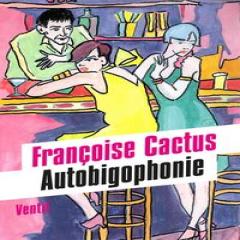
Mit Autobigophonie schuf Françoise Cactus, die unvergessene Sängerin von Stereo Total, einen der charmantesten Klassiker der deutsch-französischen Popliteratur. In diesem autobiografisch inspirierten Roman erzählt sie mit lakonischem Humor, Melancholie und feiner Ironie vom Aufwachsen in der französischen Provinz, von Jugend, Rebellion und dem Aufbruch ins Berlin der Hausbesetzer- und Punkära. Zwischen Schloss, Mädchenpensionat, Revolutionsgeist und Underground-Musikszene entsteht das Porträt einer jungen Frau, die sich gegen Konventionen und Erwartungen behauptet. Fast 30 Jahre nach der Erstveröffentlichung erscheint dieses literarische Juwel nun in einer überarbeiteten Neuausgabe. Ein kluger, witziger und zeitloser Roman über Selbstfindung, Popkultur und die Sehnsucht nach einem anderen Leben.
Catapult yourself back to the early-'90s raves with this limited edition vinyl of Human Resource's 'Dominator'. Including legacy-championing renditions from Klubbheads, Frank De Wulf and Rebuke alongside the UK-charting original mix, this multi-track pressing represents the sound that's proven to be rougher and tougher than any other.
Few have dared to record all twenty of Philip Glass’s piano Etudes in their entirety. Even fewer have attempted to remix them. Vanessa Wagner’s 2025 album, Philip Glass: The Complete Piano Etudes, crowns a longstanding passion for Glass’s compositions. While it focuses less on the dialogue between composer and producer that she cultivated with Murcof on Study Of The Invisible, Inland, and Statea, Glass’s music resonates deeply within the world of contemporary electronic music. This EP, part of InFiné’s “Versions” series, passes the baton to a new generation of composer/producers who radically reinterpret these unique piano pieces: Aho Ssan, Carmen Villain, Cucina Povera & Tauceti.
Vanessa Wagner’s album of Philip Glass’s Piano Etudes received unanimous critical and public acclaim, both in France and internationally. This success earned the pianist a nomination for the 2026 Victoires de la Musique Classique. Following numerous sold-out concerts across France, Vanessa Wagner is currently continuing her tour around the world. She will also serve as curator of the Folle Journée de Nantes in 2027 and 2028.
Hanne Lippard and Renato Grieco's Today's Special is a suite of language works synthesising melody and diction that integrates the literary and the audible in a repertoire of songs that bask in the melody of voice and the punctuations of structured composition. Working with methods of reduction rather than opulence in both tonal composition and rhetoric, each piece pegs the poetic to the musical with compositional schematics and methods. It is important to state that there is little to none improvisation here, instead, the duo set up matrices, rules and structural links that facilitated meaningful locus of exchange between their two practices. Lippard's texts are a collection of new and previously completed works. In these, as is typical for her work, she enjoys the easy pleasure of wordplay, iterative language, and decontextualised anecdote, as in opener Portrait of a Betrayal, a piece about the loss of a phone and the way it haunted the owner who dropped it, based on a lived experience. Grieco's instrumentation works with Lippard's language art as a form of acoustic typography. "I studied graphic design and I think about how you can express typography through voice," she says. "Renato's use of the viola da gamba becomes like an underline, or a font's brushstrokes, in ways that feel typographical." In this, the classically-trained composer Grieco often finds and echoes the pitch movements of Lippard's voice, intonation mirrored and revealed, linguistic meaning doubled and shadowed by plucked, strummed or bowed strings. His main instrument is the viola da gamba, the instrument considered closest to the human voice for its tonal range and ability to mimic inflections and timbre, and here he brings it even closer to the voice, building systems by which it moves with and around Lippard. He also plays piano and Wurlitzer, and joins her in speaking on Receiver and in conversation for final track The Black Rose. "Hanne's voice is an artist's voice, embodied as the artwork itself," he says. "But where my approach is from the perspective of a composer, hers is around rhetoric and language. We worked towards each other in this sense, Hanne finding a space to welcome my voice, and me designing an acoustic space to enhance her vocal persona." In some tracks the structural connections are obvious - the matched tumbling delivery and stepped pitches of voice and piano in Aficionado sounding like two tipsy friends descending a staircase. In others, like the triptych of tracks Three Rungs Ladder, structured with rules derived from nursery rhymes, or cumulative song (akin to the 12 Days of Christmas). For the Colour 1 and Colour 2 pieces, the duo worked from palettes of colours connected to clusters of harmonies, which underlined the power of the word and its articulation. The absurd Labradorable personifies a people pleaser, A Story About Being Blue is an imagined playful monologue from the Deep Blue supercomputer - requesting in sing-song stop motion to be called Debbie, and Larry - as Grieco echoes in factual reportage. Hurtbeat unpacks and recomposes a tweeted non-apology by a Russian art collector about owning a piece of racist art, Grieco shadowing Lippard's generating a third `drop-shadow' performer from the resonances between the duo, typographic re-articulation of the source material. The Receiver includes lines from Robert Ashley's Improvement (Don Leaves Linda), Ashley existing as a spiritual parent of sorts to the practices contained on Today's Special, and here interpolated as if he is being quoted and written through within the audible world of the piece in a palimpsest of borrowed sentences. Closing track The Black Rose contains its own self-aware comedy, a lightly distorted conversation sourced from a Reddit thread about whether black roses exist, recorded as if it were an internet radio or a low budget podcast, the casual exchange stilted in the delivery of platitudes as scripted speech. Today's Special was developed in person over the course of a series of small residencies - at Deutsche Akademie Rom Villa Massimo, Rome; Fondazione Morra, Napoli; Callie's, Berlin. In these limited periods that rarely stretched beyond a week, Lippard and Grieco developed strategies for the works, keeping tightly locked to musical concepts. This, for Grieco, is about maintaining a solid, meaningful connection within the compositions, and committing to everything having a purpose for existing within the work. Each element pulls its weight; has something to say, literally and metaphorically speaking. In the same way that Lippard's work leaves nowhere for her to hide, he wants the music to exist with its own naked purpose: "It's is about exposing nudity via reduced materials," says Grieco. "This is a form of courage we want to embrace. Once we take off everything, it needs to be extremely precise to maintain a connection with the audience. We have a lot of tools to hide behind now, to protect ourselves and our identities as artists, performers, and in life more generally. It's something I don't want to do. I want extreme reduction: no hiding."
A document of chill-out room dreamscapes transmitted from San Francisco circa 1993-1994.
Rooted in live improvisation and arriving at the sweet spot where nascent dance music collided with dub tradition, Selene Songs marked an early highpoint for Sunshine and Moonbeam Jones' enduring partnership as Dubtribe Sound System. This collection of dreamy, harmonious grooves and ambient excursions were recorded between November 1993 and January 1994, captured live in the chill-out room at the duo's legendary Come-Unity parties held at their home on Bryant Street in San Francisco.
Selene Songs was originally released on Chicago-based label Organico in 1995 as a CD and abridged 12" EP. Now it receives a full reissue that spreads the blissed-out majesty of the full seven-track album across a double vinyl pressing and CD digipak edition. Across all formats, Kristen Anderson's original artwork has been faithfully reproduced.
“… All the elements of classic ambient dub with the Tribe’s own sense of love wonderment. One from the heart." - Muzik Mag - 1995
“ We have faith that the universally accessible warmth oozing from these tracks will eventually entice a larger audience." - Billboard - 1995
Number 1 on the Eastern Bloc shop chart - Muzik Mag - 1995
A document of chill-out room dreamscapes transmitted from San Francisco circa 1993-1994.
Rooted in live improvisation and arriving at the sweet spot where nascent dance music collided with dub tradition, Selene Songs marked an early highpoint for Sunshine and Moonbeam Jones' enduring partnership as Dubtribe Sound System. This collection of dreamy, harmonious grooves and ambient excursions were recorded between November 1993 and January 1994, captured live in the chill-out room at the duo's legendary Come-Unity parties held at their home on Bryant Street in San Francisco.
Selene Songs was originally released on Chicago-based label Organico in 1995 as a CD and abridged 12" EP. Now it receives a full reissue that spreads the blissed-out majesty of the full seven-track album across a double vinyl pressing and CD digipak edition. Across all formats, Kristen Anderson's original artwork has been faithfully reproduced.
“… All the elements of classic ambient dub with the Tribe’s own sense of love wonderment. One from the heart." - Muzik Mag - 1995
“ We have faith that the universally accessible warmth oozing from these tracks will eventually entice a larger audience." - Billboard - 1995
Number 1 on the Eastern Bloc shop chart - Muzik Mag - 1995
“Cue Blue”, the latest and fifth studio recording from Australian down under, gritty jazzfunk grooves ensemble Kerbside Collection sees a return to a more classic, stripped back, meat-and-potatoes, home-cooked, quartet formation sound of guitar, bass, drums and brass.
A sound formed on previous, recent recordings (incl. Golden Rules compilation tune “Fleet Streak” etc), seemingly harking back to the approach of the group’s first recordings (2013’s “Mind The Curb”, “Night in Tunisia” etc), whilst embodying inspirations from more ‘true school’, classic, bluesy New Orleans funk and soul groove flavours à la early Meters, Boogaloo Joe Jones, Melvin Sparks, Billy Butler etc. But it’s not all completely ‘retro’ and ‘looking back’, the album definitely taps into some of the current exponents and leaders of the contemporary deep funk sound – The Greyboy Allstars, Eddie Roberts, The New Mastersounds, The Mighty Mocambos, Breakestra and fellow Aussie funksters Cookin’ on 3 Burners, Lance Ferguson and The Bamboos etc.
The lead single and first tune “Shivers” gives us a clear, picture and definitive opening statement to the record with all the characteristics you’ve come to expect from the Kerbside gritty jazzfunk sound: silky guitar line phrasing, rubbery bass-lines, tight crusty drum breaks, and sweet brass arrangements. Then it’s straight into a frenetic, jangly, mod-funk workout complete with Northern Soul & Motown inflections in the surging B sections. “City Park Avenue” conjures up classic New Orleans funk flavours with its strutting brass, slinky guitar and swinging tambourine groove. There’s classic, b-boy funk territory covered in “Coffee Grinder” (a breakdance move) with its razor-sharp drum break groove and chunky riff complete with sizzling trombone solo. Before the pace of the record changes up with the finger-clicken’, hand-clappin’ boogaloo, reminiscent of early 60s Harlem x Puerto Rican Bronx sounds (à la Willie Bobo, Mongo Santamaria, Ray Barretto) loaded with a scintillating baritone sax solo from long standing part of the collection ‘Papa Joe’ Roberts.
“Sittin’ On The Porch” cools the temperature down even more, delving into slight Southern Louisiana Delta blues territory, while suggesting some of the hot and muggy atmosphere and imagery of their home town location in suburban Brisbane Australia, complete with kooky Casio percussion representing familiar yard sounds such as sprinklers (spinning lawn watering devices) and ‘mozzies’ (mosquitos), passing cars indicated by trombone, and guitarist TC Tyler, channelling some bluesy John Lee Hooker, R.L. Burnside guitar flavours - you can almost feel the humidity on your skin.
Then it’s time for a stroll down memory lane, with their version of a People Under The Stairs hip hop classic “San Francisco Knights”, bringing the tune full circle back into band mode, also with another tasty guitar solo. The album then enters its final stages with a mesmerising, soulful, jazz ballad “Shimmer”, complete with Elliott Parker’s sultry upright double bass, and trombone taking the melody for a gentle stroll down the street. The album finally closes and arrives at its title “Cue Blue”, a classic blue-eyed soul number (penned by bassist Parker), emitting the scent of true school, vintage R&B and soul (à la Donny Hathaway, Marvin Gaye).
An album of funky arrangements and refined compositions, mostly penned by recent new-ish member, guitarist Tyler (for fans of Tower of Power & John Scofield guitar playing) taking the ensemble through their paces with all the usual characteristics of the Kerbside sound, on top a groove that will take you round-the-block-and-back :P Gritty jazzfunk and rustic soul grooves with definite bluesy overtones, some classic 60s, 70s flourishes and down-home funk flavours.
BATTISTINO, the artistic alias of Marco Battistini, is an Italian musician, songwriter, producer and DJ. His project is rooted in the meeting point between Italo Disco, French Electro, late-’70s Disco Music and Italian pop culture, reinterpreted through a contemporary vision that avoids nostalgia in favor of a distinctive sonic identity. His main influences include the aesthetic vision of Daft Punk, the musical freedom of Daniele Baldelli’s Cosmic Sound, the international disco movement of the late 1970s, and the golden era of Italian Italo Disco, with a special admiration for Righeira. His productions combine driving synth grooves, pulsating basslines and immediate melodies. Gritty electronic drums, saturated synthesizers and subtle harmonic distortion deliberately break away from the polished sound traditionally associated with classic Italo Disco. The result is a more physical and textured sonic palette that preserves the melodic elegance at the heart of the project. BATTISTINO’s visual identity follows the same philosophy. Elegant, reserved and almost bureaucratic, he prefers to remain behind the scenes rather than at the center of attention. More than a performer, he acts as the curator of a sonic archive, where every track represents a fragment of a larger story.
“Il Segreto” is the opening chapter of a conceptual trilogy inspired by an affair that was never revealed, set on the Italian Riviera in the early 1980s. Rather than telling the story itself, the project explores what remains: silence, forgotten details, invisible traces and memories suspended in time. Music, visual design and imagery all become chapters of the same narrative. Every release is a new file, every track a recovered document, every production another fragment of a story that will never be fully disclosed. BATTISTINO doesn’t tell stories. He preserves them. And, from time to time, he allows part of them to surface.