Search:framework music

Styles
All
not even noticed - Aerial

Tartelet is pleased to welcome the tranquil acid delights of fast-rising Frankfurt-Leipzig duo not even noticed for a brightly melodic, rolling EP of positive party gear.

Since forming in 2020, the pair have won over a succession of well-established labels and dancefloors with their infectious, easy-going approach to acid and breakbeat. The mellow, soulful mood on their Aerial EP arrives as the perfect soundtrack to the brightening skies of Spring in the Northern hemisphere.

From the airy pads of 'Aerial' and the psychedelic chill-out breaks of 'Voidness' to the tough groove of 'Fidelity' and 'Affected's tightly wound electro framework, there's plenty of scope across the whole record without losing a grip on the warm and grounded mood that makes this duo such a resounding success wherever their music gets an airing.

Coming correct with an all-too-rare restorative quality to their tunes and a serious weight that comes to life over a big system, not even noticed are a perfect fit right here on Tartelet.

The 12-inch is limited to 300 copies and comes in a black sleeve with sticker.

In Stock

On Stock and ready to ship

15,34
Sarah Wreath - 光と影 Hikari to Kage

Hikari to Kage is the next chapter in the story of Wabi Sabi Audio Imprint, diving into the experimental and ambient realms of electronic music.

This beautiful album comes from the hands of Sarah Wreath, a German artist whose unique approach to sound exploration captured our hearts the moment we saw her live at Monument.

The album It's a narrative, an introspective journey that doesn't tell you what to feel but gently guides you toward your own perspective.

Three incredible remixes by DJ Hi-C, Pianeti Sintetici, and Jorge Fons bring their own vision of Sarah's music, each artist weaving their own story within Sarah's framework. Like Yin and Yang, light and shadow exist in balance, defining the beauty of the other-this is Hikari to Kage.

In Stock

On Stock and ready to ship

13,03
Flabaire - At Last

Flabaire

At Last

12inchLAX-ES12
Skylax Records
22.05.2025

Flabaire, a seasoned French DJ and producer, has been a mainstay in the electronic music scene for years. As the head of the renowned D.KO Records for a decade and a multi-instrumentalist with the ability to play classics from The Band and Fleetwood Mac, Flabaire's artistry knows no bounds. We're thrilled to welcome him back to our label (his talent previously shone on the « Skylax House Explosion » compilation, curated by DJ Sprinkles and Hardrock Striker). With this latest release, we genuinely believe Flabaire has reached a new height of maturity in his production, delivering what we consider some of the finest deep house we've heard in years. This EP is steeped in the timeless essence of deep house, aligning with the legacy of Black Jazz Consortium (aka Fred P), the late, great Mike Huckaby, and the silky elegance of Soul Capsule. Every track feels meticulously crafted within the same creative framework, creating a cohesive listening experience that's as suited to at-home sessions as it is to the dancefloor. This isn't music designed for quick attention or fleeting trends—it's a powerful moment of deep house reclaiming its voice in a landscape crowded with Instagram “DJs” and shallow hype. The EP opens with A1.Echoes, an evocative track that draws listeners into its lush, immersive soundscape, immediately setting the tone for the record. A2.Eventually continues the journey, layered with smooth textures and a subtle groove that feels both intimate and expansive. On the flip side, B1.Lip Them explores deeper, jazz-infused rhythms, each note purposefully placed, creating a rich, hypnotic atmosphere. Finally, B2.La Haye rounds out the release, offering a dreamy, ambient house vibe that seems to float effortlessly—a testament to Flabaire's refined touch and sophisticated style. Each track flows seamlessly into the next, much like the movement of a jazz record, with even the titles evoking a Pink Floyd-esque sense of introspection. This is ambient house at its finest: real club music made for dancing, socializing, and deep listening. Beyond a simple EP, this record is a statement—a testament to the artistry and authenticity of true deep house.

In Stock

On Stock and ready to ship

12,40
Om Unit - Acid Dub Studies

Om Unit

Acid Dub Studies

12inchADS001
Om Unit
20.05.2025

2025 Repress

Jim Coles once again turns the tide towards a new horizon and travels further into the echo chamber. Leading on from the much-lauded ‘Secret Location’ mini-album with Seekersinternational, one-offs such as ‘Open Palms dub’ (Dub Stuy) and other teasings, ‘Acid Dub Studies’ is the fully-fledged result of the merging of the calligraphic expression of the 303 Acid bassline with the stern sway of Dub Reggae and the hazier edges of Dub Techno and Ambient music.

For those who have been paying close attention, this project will come as a welcome return to the vulnerability and playfulness of early Om Unit records such as his sub-radar single from 2010 ‘Lightgrids/Lavender’ (All City Records) or the unearthed chugging ambience of ‘Friend of Day’ (Idle Hands) and indeed in some sense draws from similar wellsprings as moments on 2013’s Bass classic ‘Threads’.

Whilst being perhaps an ‘interim project’ this is still a vital and important expression of exploration and playfulness. A study in the true sense and borne out of a subtle but pervasive frustration with the rigidity found in musical words he has up to now been cohabiting, Acid Dub Studies comes from the pressing need to break with perceived expectation and to explore an honest and natural space away from the genre labels and tags that had been often lazily applied to his sizeable catalogue of music.

With no desire to reinvent the wheel, rather to paint pictures in an honest framework, the LP was crafted using a medley of classic analogue mixing techniques inspired as much by the adventurous dubbing of Adrian Sherwood as by the inward-delving haze of Scott Monteith’s Deadbeat project. Created during a period of lonely introspective walks through his home town of Bristol, the cover art is a photograph of some of the iron kerbstones that are found almost exclusively in the characterful and hardy city which were installed in the late 1800’s to protect pavements from cart wheels. Something about the permanence of those iron slabs and cobblestones inspired a sense of comfort and determination.

Acid Dub Studies is due for release as yet another self-released label-free project leading on from recent EP titles ‘Violet’ and ‘Submerged’ both of which hinted at some of the shapes found in this full length album.

Once again Jim has shown a rare convincing adaptability that few electronic artists can embody. Another step on the journey of personal and creative curiosity that fans are sure to appreciate.

In Stock

On Stock and ready to ship

23,49
Various - Relics Vol. 2

Various

Relics Vol. 2

exclDARCWAX002
Darcoform
19.05.2025

Darcoform proudly presents DARCWAX002, a carefully curated four-track vinyl that encapsulates the essence of storytelling within the minimal house and breakbeat realms. Featuring four distinct artists, this release offers a sonic journey through layered textures, deep grooves, and masterful production.

Side A

Vid – Soundscapes

A pioneer of the minimal house genre, Vid delivers a profoundly immersive experience with Soundscapes. The track unfolds like a narrative, weaving intricate rhythms with atmospheric depth, taking the listener on a contemplative yet dynamic journey.

Cim Pian – Visions of Neverland

Cim Pian introduces us to a dreamlike world with Visions of Neverland. The track blends subtle melodic elements with a tight, groovy framework, evoking a sense of wonder and nostalgia that feels both grounded and otherworldly.

Side B

Mtps – Book Of Truth

Mtps crafts a delicate balance of groove and introspection in Book Of Truth. With its textured layers and driving rhythm, the track resonates as a personal yet universal story, making it a standout in any minimal selector's collection.

Durosai – Str8 Chillin

Closing the release is Durosai with Str8 Chillin, a minimal breakbeat track infused with electro influences. Its sharp percussion, intricate breaks, and playful basslines create a laid-back yet punchy vibe, perfect for injecting energy into any set.

DARCWAX002 is a testament to Darcoform’s commitment to showcasing unique voices in the underground music scene. Stay tuned for its release—this is a record not to be missed.

Graphician: Cimpian Mark from FaceToShape Studio
Mastering Engineer: Robin Virag from RV Audio

collecting

Order now. Collecting orders for repress.

11,72

Last In: 11 months ago
Luke's Anger - Ceiling Walker

Luke's Anger (real name Luke Sanger) delivers his first outing on Love Love, Ceiling Walker. Sanger is a relentlessly interesting hero of the underground, probably best known as a techno and electro producer and an active player in the live experimental techno scene across Europe, notably including multiple appearances at Berghain/PanoramaBar. Based out of Norwich, UK, Luke has put out a plethora of banging records for two decades in styles from across the rave spectrum on some of our favourite record labels like Tigerbeat6, Don't and Sneaker Social Club, as well as an increasing amount of more ambient-leaning releases under his real name in recent years. Recognised as a true techno stalwart, Luke has received support from the likes of Surgeon, Dave Clarke, The Advent and Jerome Hill.

This EP fits firmly into the 'banging' camp - more than a nod to classic stateside sci-fi electro stylings as well as UK dance music's bleep techno bass foundations, this is popping, caustic, mechanical phunk expertly engineered to make you shake and wiggle. Particle Swarm kicks the EP off with strung-out synth chirps and plenty of latex squelch before moving onto the bounciest number, Threshold Rider, with buoyant bassline droplets poking through a solid 808 framework. On the flipside, title track Ceiling Walker utilises rushing crescendos and fluttering analogue rhythms to keep the dancefloor in rapture while closer, Silicon Boogie, achieves maximum levels of funk by aptly juxtaposing digi vocal snippets against square wave bass.

In Stock

On Stock and ready to ship

11,13
Bézier - Contraption

Bézier

Contraption

12inchKSPAN003
Körperspannung
25.04.2025

From the same recording sessions as Bézier's first EP on Körperspannung records 'Negative Velocity', 'Contraption' channels a few moods and scenarios.

On the a-side 'Contraption' is an insignificant droplet darting through the sky. Soon it joins a disarray of objects positioned above the atmosphere, maneuvers in formation to reveal randomized, decentralized nodes packed for mayhem.

On the b-side Bézier shows a slice of his lived experience. Back in 2004 he used to go to house parties around East LA with friends they grew up with every weekend to listen to music. Winding through the Southern Californian roadway sprawl they'd drive 1/2 an hour to 1 hour on the I-10 (sometimes diverting to Route 60 if gridlock is expected) to get to the location, usually in a residential neighborhood. Being respectful of the communities and the struggle of the progenitors of this music, Bézier presents 'Blue Halo' as an homage to that sound with a twist: Cumbia-Synth to provide a little sauce for your ears. Dave Easlick joins the milieu to provide a percussive framework for this tune.

Lastly, 'Bit by an Electric Wire' showcases Easlick's drumming with an overlay from Bézier. As Dave rips and shreds through his drum kit the OCD machine living inside Yang's brain switches on and organizes, collates and files that dataset into a hardcore rhythm track.

In Stock

On Stock and ready to ship

14,66
Edictum - A Cosmic Scale

The album’s title deftly gestures to the sheer vastness of astronomical dimensions, while simultaneously capturing the musical breadth within, where the eight planets are imagined as the eight notes of an octave. The work draws inspiration not only from earlier compositions —most notably Gustav Holst’s The Planets—but also from the rich astronomical and cultural contexts surrounding these celestial bodies. Here, the focus transcends direct citation of melodic motifs, instead embracing an intriguing conceptual approach on a meta level, unfolding in a series of vividly contrasting soundscapes. These contrasts shape a sweeping sonic journey, one that fully embraces the album format with both arms, inviting the listener to venture into realms both strange and wondrous, feeling the immensity of the interstellar space that lies between them. Contrast, after all, is the brushstroke that enriches our world.

Embarking on an auditory voyage, "Astral Guide" establishes the sonic framework that propels us into the boundless expanses of the cosmos. Its ethereal tones evoke the vastness of space, crafting a mood ripe for exploration within the realms of sci-fi. The subsequent tracks unfold like constellations, weaving a rich tapestry of sound that seamlessly marries cinematic soundscapes with pulsating, club-oriented rhythms. This album invites listeners to traverse its immersive landscapes, whether nestled in the comfort of home or dancing under the starlit sky, each note a guide through the transcendent experience of a nocturnal journey.

"Solar Flares" draws its inspiration from the awe-inspiring expanse of solar phenomena, capturing the majestic power of the sun as it reaches into the cosmos. This track resonates with the idea that energy, while vital, can also be a force of destruction when unleashed with overwhelming intensity. The composition beautifully mirrors the sun’s duality, where brilliance and devastation coexist, inviting listeners to reflect on the delicate balance between creation and annihilation. Through its rich textures and dynamic shifts, "Solar Flares" serves as both a homage to the celestial and a poignant reminder of nature's formidable power.

"Mercury – The Winged Messenger" embodies a meticulously crafted soundscape where artistry meets astronomy. The tempo of 173.6 BPM, derived from precise astronomical data, propels the composition into a vibrant realm that resonates with cosmic energy. Synthwave sound design intertwines seamlessly with the fluid rhythms of Drum’n’Bass, imbuing the piece with an uplifting dynamism that evokes the ethereal grace of Mercury itself. In this sonic exploration, listeners are invited to ascend on wings of sound, navigating the celestial tapestry of the universe with each invigorating beat.

"Venus, The Bringer of Peace" strikes a decidedly cozy note, presenting a poignant contrast to the more tempestuous themes often found in cosmic narratives. This composition evokes a nostalgic vision of an optimistic era, one in which humanity transcended borders and embraced the infinite possibilities of space exploration, where no destination felt too distant. The dense, languid atmosphere envelops the listener, creating a tangible sense of serenity that unfolds gradually, allowing for a meditative journey through sound. Each note serves as an invitation to linger in this tranquil embrace, reflecting on the harmonious potential of our collective aspirations and the beauty of connection in a vast universe.

The central theme of „Gaia, The Bringer of Life“ —originally not part of the planetary cycle— is the profound enabler of life on Earth. The arrangement delicately mirrors the slow, tentative unfolding of this potential, marked by an initially sparse orchestration that gradually builds in momentum. This progression crescendos, embodying the explosive dynamism of the Cambrian burst of life, ultimately culminating in a euphoric fanfare—a triumphant, celebratory flourish echoing life’s victorious emergence.

"Blue Moon" unfolds as a contemplative reverie on the tranquil clarity of a night sky, now seldom glimpsed in its natural purity, unclouded by the relentless haze of urban light. The listener is drawn into the vast embrace of the star-strewn firmament, a journey that sways between euphoric awe at nature’s sublime beauty and a profound melancholy for its fragile and imperiled state. Musically, this duality finds expression in the delicate interplay of modal mixtures, while an ever-shifting triplet groove, poised at the intersection of Outrun and melodic house, lends a pulse that is both nostalgic and forward-looking—echoing the beauty and transience of a world on the brink.

Rather than replicating the original composition of „Mars, The Bringer of War“, this interpretation seeks to evoke its profound, foreboding atmosphere. Cyberpunk emerges here as an ideal genre, channeling the dark, relentless march synonymous with Mars, the ancient god of war. The piece reverberates with intensity, as distorted vocalizations rise, embodying the anguish and visceral torment that shadow war’s violent crescendo. This auditory descent into conflict captures the relentless pulse of warfare, where sound itself becomes an embodiment of suffering and fury.

Majestically, "Jupiter, the Bringer of Jollity" emerges on the celestial stage, sweeping away the somber tones with its radiant vigor. Drawing inspiration from the triumphant strains of the original, and borrowing a melodic motif in the refrain, the piece expresses joy and buoyancy through a shift to a major key and the lilting sway of a danceable 12/8 meter. Spirited and exuberant, it leaps boldly from major to minor and back again, playfully shifting time signatures to capture a mood of unbridled festivity and jollity.

Here, a more conciliatory concept is chosen than in the original inspiration. „Saturn“ aligns with the number six, being the sixth planet from the Sun and bearing the iconic hexagonal pattern at its northern pole. What, then, could be more fitting than to render this piece in a 6/8 time signature? The arrangement unfolds with a multifaceted richness, mirroring the countless stones and ice fragments that form the foundations of Saturn’s majestic rings.

„Uranus“ adopts the theme of a light-footed, dancing instrumentation, giving the impression of perpetual motion, never quite settling. This musical choice harmonizes with the planet’s own orbit, as it spins with breathtaking velocity, teetering and swaying, seemingly unable to attain rest or stability.

The chill and vastness of the cosmos find expression in „Neptune, The Mystic“. At its core, an electronic soundscape envelops a classical arrangement, its unreachability intensified by an ethereal, otherworldly choir. Hovering at the outermost boundaries of the solar system, where warmth is but a distant memory, the composition lingers in a slow, contemplative tempo, evoking a realm where space for speculation stretches wide and silence reigns supreme.

Though Pluto may have lost its planetary status, and its companion Charon never achieved one, this shift in classification subtly aligns with the cosmic scale invoked here—one that mirrors the musical tradition of an eight-note sequence. Fittingly, the album closes with „Kuiper Belt“, a composition emblematic of the turbulence and vitality of countless smaller

celestial bodies that, though diminutive, find their rightful place within the vast architecture of the solar system.

They say nature is the greatest composer, shaping the universe with a symphony of chaos and order, beauty and danger. It is this duality that fuels the artistic vision of Edictum—a producer who, armed with a doctorate in chemistry, delves as deeply into the mysteries of molecules as he does into the depths of sound. In the tension between the vastness of the cosmos and the microscopic processes that dictate life’s rhythm, Edictum creates sonic landscapes that dissolve the boundaries between science and art.

His music is a story of contrasts—a sonic tale where the raw forces of nature clash with the intricate structures of human culture. Opposites intertwine to form a harmonious whole: the primal rhythms of the earth meet the celestial melodies of the cosmos, the rigid laws of physics blend with the boundless freedom of art. Edictum explores these polarities with meticulous devotion, each composition an expedition into uncharted soundscapes—a quest to give voice to the unfathomable.

With over 20 years immersed in the realms of electronic music, Edictum has honed a keen sense for rhythm and movement. His driving beats compel both body and mind into a hypnotic flow. Yet beyond the pulse of dance lies a complex framework of conceptual thought. Today, his creative focus revolves around holistic album projects—self-contained worlds with overarching narratives that embrace contrast and complexity. Each track stands alone as a fragment of the whole, but together, they weave a cohesive tapestry, much like the chapters of a novel that guide the listener on an emotional and sonic journey.

Edictum’s distinctive musical signature has earned him international recognition. With over 150 releases, many on prestigious platforms like the iconic *NewRetroWave* label, and collaborations with artists such as Jan Johnston, Azumi Inoue, Powernerd, and Turbo Knight, he has solidified his place in the global electronic music scene. His latest work, *A Cosmic Scale*, marks his seventh vinyl album and is released under his own label, *Echoes of Expanse*. The label’s name is no coincidence—it captures the essence of his art: echoes of infinity, the vibrations of the universe distilled into a singular sonic experience that carries the listener ever further into the boundless expanse of sound and space.
In Stock

On Stock and ready to ship

22,90
Fabble aka. Fabio Caria & Hubble - Fabble Part One

Fabbleaka.. Fabio Caria&Hubble

Fabble Part One

12inchHOOPS001
Hoops
03.03.2025

Fabio Caria is pleased to announce the launch of his new label, Hoops, a project designed to explore the intersection of house and techno through a minimalistic lens. The label's debut release, "Fabble Part One" (HOOPS001), sees Fabio collaborate with Hubble, a long-time friend and creative partner, under the moniker Fabble. This EP features three meticulously crafted tracks that fuse hypnotic rhythms and introspective textures, offering a bold sonic experience for the dancefloor, with a special guest appearance by Claudio PRC.

Catharsis (A1) opens the EP, centering a 3-note Rhodes piano atop a broken beat. Here, elements ebb and flow like a living organism, gradually filling the sonic space with psychedelic synthesizers and ominous sub-basses. Donald (A2) adopts a 4/4 framework, with a persistent kick driving the rhythm, complemented by somber pads and delicate, high-pitched pianos. Powerful sub-basses cut through the mix, establishing a groove with profound character. Persignis (feat. Claudio PRC) (B1) emerges as the EP's most dancefloor-friendly track. Its steady groove provides a foundation for a broad palette of heavily processed piano stabs, reverbed and echoed throughout the entire sonic space, evoking a profoundly emotional yet introspective atmosphere.

"Fabble Part One" establishes a compelling vision for Hoops, signalling the label's commitment to producing immersive music that resonates both on and off the dancefloor. Breaking down conventional boundaries, the release reflects the longstanding collaborative history of Fabio and Hubble, known for their ability to craft deep, atmospheric, and experimental soundscapes of timeless appeal.

In Stock

On Stock and ready to ship

13,40
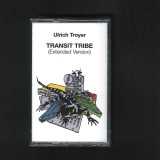
Ulrich Troyer - Transit Tribe MC (TAPE)

Ulrich Troyer has been producing music now solidly for over twenty years within a largely genre free framework, but whilst navigating forms such as avant-garde, techno, leftfield, field recording, electronica, glitch and ambient it is the aesthetics of dub that guide his creative direction. Not really recognisable in an orthodox form as remixed versions of roots reggae songs but in the way sonics are manipulated with space, the application and layering of delay, reverb and echo that fixes his output well within the scope of what might be called futurist dub.

The nearest comparisons to his new album TRANSIT TRIBE can only be established by a synthesis of some of the more adventurous explorations in modern music such as African Head Charge, Jon Hassell, Pole (Stefan Betke), Bill Laswell or even Miles Davis; featuring a diverse selection of artists and friends not only from Vienna and environs but also from around the world, sounds are not so much fused but allowed to float along the continuous flowing tide of warm waves of bass.

Rather than to allow the names of Ulrich Troyer's collaborators be merely listed in the album credits, what they bring to this joyful affair needs to be outlined, albeit briefly: Co-producer credits go to Osman Murat Ertel from Istanbul, who employed a variation on the old foolproof Nick Lowe method for checking out the impact quality of his own sound productions by playing tracks through his car sound system speakers!

Murat is a member of the electro-psych-folk group Baba Zula where he plays electric saz, oscillators and theremin and played a key part in the creative development of the album. Mamadou Diabate, the balafon master originally from Burkina Faso and now resident in Vienna, has developed his own unique technique of playing solos that replicate the sound of three instruments playing in unison; however the multi-talented Mamadou is engaged here on singing and playing the talking drum. From South Tyrol Reinhilde Gamper is a member of the experimental trio Greifer who are bringing the sound of the zither into the twenty-first century using new playing techniques and electronic gadgets. Susanna Gartmayer is an Austrian composer and bass clarinetist specialising in improv and multimedia sound research. Diggory Kenrick has been engaged with creating new dub fusions and also re-energising classic rocksteady and roots reggae classics, renowned for his interventions on flute. Didi Kern is an electronic dance musician and drummer from Vienna with a focus on free improvised music. Hamidou Koita, a singer and multi-instrumentalist, is from a traditional Griot family in Burkina Faso but now resident in Vienna and a regular musical partner of Mamadou Diabate playing drums and calabash. Austrian Lukas Lauermann is both a studio and live musician playing cello, also working on electronic sound design and writing string arrangements. He has recorded extensively and appeared on stage with both Mark Lanegan and Hans-Joachim Roedelius. Martin Mallaun is a Tyrol-born specialist in both the development of the zither in modern music and also as a researcher in the effects of climate change on the vegetation of Alpine ecosystems. Mystica Tribe is the musical alias of Tokyo-based dub/techno producer Taka (Takafumi) Noda. He collaborated with Vienna's own Vegetable Orchestra on 2020's "Transplants (Mystica Tribe Version)". After studying classical percussion Flip Philipp is now a jazz vibraphone player and member of the Vienna Symphony Orchestra. Wolfgang Pfistermüller is a member of the Vienna Trombone Quartet and the developer of the incredible bass-trombone Aurora with its uniquely warm and resonant sound. Roger Robinson is a renowned British poet, winner of many contemporary poetry prizes and member of the experimental music group King Midas Sound. Kwame Yeboah is a Ghanaian born UK based keyboard wizard who tours regularly with Yusuf / Cat Stevens, Ms. Dynamite and Pat Thomas.

So contained on the album is an astonishing mix of musicians and instruments: sounds of cowbells recorded in the South Tyrolean alps processed by modular synthesizers and heavy analogue bass synths combined with instruments such as zither, bass-zither, electro saz, flute, talking drum, trombone, cello, vibraphone, marimba, djembe, contra-alto clarinet, melodica, Farfisa - all bound together by organic live-drums and dub effects.

Liner notes by Steve Barker

In Stock

On Stock and ready to ship

14,92
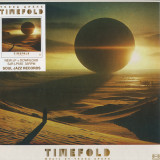
Trees Speak - TimeFold LP

Trees Speak are releasing their new album TimeFold worldwide on 15 Nov 24 on Soul Jazz Records.

Trees Speak return with TimeFold, their sixth release on Soul Jazz Records, further expanding their ever-evolving sonic universe. This new album builds on their signature blend of hypnotic krautrock rhythms, post-punk angularity, and experimental soundscapes while venturing into new terrain by blending influences from avant-garde electronics to ceremonial sound forms.

On TimeFold, Trees Speak (comprised of the Tucson-based duo Damian Diaz and Daniel Martin Diaz) push their musical boundaries from expansive, intergalactic landscapes to eerie, imagined 1970s Italian and French sci-fi horror film scores. The album seamlessly weaves John Carpenter-esque synthesizer motifs with ambient sound sculptures, conjuring immersive worlds that are both cinematic and otherworldly.

The album also incorporates the duo’s deep-rooted influences, which span across electronic pioneers like Jean-Michel Jarre (Oxygene), Tangerine Dream, and Karlheinz Stockhausen. Drawing on the revolutionary techniques of Musique Concrète, TimeFold features experimental track splicing, looping, and collage work that harkens back to the golden age of avant-garde music. At times, the album channels the ceremonial tones and hypnotic rhythms reminiscent of early 1970s krautrock, fusing these sounds with organic instrumentation like dulcimers, adding an earthy, drone-like ritual quality to the experimental electronic framework.

A new element in this release is the inclusion of spoken word by Ashley Christine Edwards, which lends the album a haunting, apocalyptic edge. Her contributions evoke a tone reminiscent of the 1970s avant-garde scene, recalling literary and conceptual artists like Ruth White. The spoken words create a sensory experience akin to ceremonial chants, adding to the atmospheric intensity of the album. These vocal elements tie into the overall theme of TimeFold, which continues Trees Speak’s exploration of futuristic technologies and the communication of nature, with the evocative concept of trees and plants acting as organic hard drives storing data and knowledge.

Drawing further influence from Italian and French horror cinema, Trees Speak explore cinematic tension throughout TimeFold, creating a layered listening experience. The record transports the listener from the haunting, desolate beauty of Southwestern desert vast landscapes to an auditory space that melds early electronic experimentation with the contemporary urgency of conceptual art.

Since their debut Ohms in 2020, Trees Speak’s prolific output on Soul Jazz Records has continually redefined genre boundaries. TimeFold solidifies their position as visionaries in experimental music, offering an album that is as much a meditation on future technologies as it is a tribute to the avant-garde traditions that have come before.

In Stock

On Stock and ready to ship

18,78
MarcelDune - Buy Success

Marceldune

Buy Success

12inchSKIN008
Intrepid Skin
13.12.2024

Next up on Intrepid Skin, MarcelDune readies four heaters direct from the scuzziest corners of the rave, out on Friday 13 December on digital / vinyl.

Based in London but hailing from Athens, they draw upon a lifelong relationship with music spanning jazz studies, opera singing, and the punk DIY scenes of their hometown.


In connecting the dots between these disparate aspects, they've committed to engaging with music that honours resistance and authenticity, and draws inspiration from those seeking liberation from oppression and societal frameworks.

With this new release MarcelDune hones in on the ethos that underpins their aesthetic, with touches of euphoria, huge drums, and quintessentially fun.

Title track 'Buy Success' brandishes raw serrated edges and an industrial core whilst never losing the groove. 'Remedy for evil' moves into bouncier feels with the hardest groove. On 'Tell Me Who They Are', vocal chops ricochet over angular percussion and glitching machines. Closing things off, 'Romantic and Other Fantasies' lays down some weighty percussion driving a madhouse of effects forward.

In Stock

On Stock and ready to ship

14,92
Ulrich Troyer - TRANSIT TRIBE

Ulrich Troyer has been producing music now solidly for over twenty years within a largely genre free framework, but whilst navigating forms such as avant-garde, techno, leftfield, field recording, electronica, glitch and ambient it is the aesthetics of dub that guide his creative direction. Not really recognisable in an orthodox form as remixed versions of roots reggae songs but in the way sonics are manipulated with space, the application and layering of delay, reverb and echo that fixes his output well within the scope of what might be called futurist dub.

The nearest comparisons to his new album TRANSIT TRIBE can only be established by a synthesis of some of the more adventurous explorations in modern music such as African Head Charge, Jon Hassell, Pole (Stefan Betke), Bill Laswell or even Miles Davis; featuring a diverse selection of artists and friends not only from Vienna and environs but also from around the world, sounds are not so much fused but allowed to float along the continuous flowing tide of warm waves of bass.

Rather than to allow the names of Ulrich Troyer's collaborators be merely listed in the album credits, what they bring to this joyful affair needs to be outlined, albeit briefly: Co-producer credits go to Osman Murat Ertel from Istanbul, who employed a variation on the old foolproof Nick Lowe method for checking out the impact quality of his own sound productions by playing tracks through his car sound system speakers!

Murat is a member of the electro-psych-folk group Baba Zula where he plays electric saz, oscillators and theremin and played a key part in the creative development of the album. Mamadou Diabate, the balafon master originally from Burkina Faso and now resident in Vienna, has developed his own unique technique of playing solos that replicate the sound of three instruments playing in unison; however the multi-talented Mamadou is engaged here on singing and playing the talking drum. From South Tyrol Reinhilde Gamper is a member of the experimental trio Greifer who are bringing the sound of the zither into the twenty-first century using new playing techniques and electronic gadgets. Susanna Gartmayer is an Austrian composer and bass clarinetist specialising in improv and multimedia sound research. Diggory Kenrick has been engaged with creating new dub fusions and also re-energising classic rocksteady and roots reggae classics, renowned for his interventions on flute. Didi Kern is an electronic dance musician and drummer from Vienna with a focus on free improvised music. Hamidou Koita, a singer and multi-instrumentalist, is from a traditional Griot family in Burkina Faso but now resident in Vienna and a regular musical partner of Mamadou Diabate playing drums and calabash. Austrian Lukas Lauermann is both a studio and live musician playing cello, also working on electronic sound design and writing string arrangements. He has recorded extensively and appeared on stage with both Mark Lanegan and Hans-Joachim Roedelius. Martin Mallaun is a Tyrol-born specialist in both the development of the zither in modern music and also as a researcher in the effects of climate change on the vegetation of Alpine ecosystems. After studying classical percussion Flip Philipp is now a jazz vibraphone player and member of the Vienna Symphony Orchestra. Wolfgang Pfistermüller is a member of the Vienna Trombone Quartet and the developer of the incredible bass-trombone Aurora with its uniquely warm and resonant sound. Roger Robinson is a renowned British poet, winner of many contemporary poetry prizes and member of the experimental music group King Midas Sound. Kwame Yeboah is a Ghanaian born UK based keyboard wizard who tours regularly with Yusuf / Cat Stevens, Ms. Dynamite and Pat Thomas.

So contained on the album is an astonishing mix of musicians and instruments: sounds of cowbells recorded in the South Tyrolean alps processed by modular synthesizers and heavy analogue bass synths combined with instruments such as zither, bass-zither, electro saz, flute, talking drum, trombone, cello, marimba, djembe, contra-alto clarinet, Farfisa - all bound together by organic live-drums and dub effects.

In Stock

On Stock and ready to ship

23,49
James Tenney - Postal Pieces

Since its founding back in 2014, Blume has carved a unique place in cultural landscape, issuing free-standing works, spanning the historical and contemporary, that represent singular gestures of creativity within the field of experimental sound. Joining their broad efforts in building networks of context and understanding that already includes the works by Werner Durand, Sarah Hennies, Bruce Nauman, John Butcher, Jocy de Oliveira, Mary Jane Leach, Valentina Magaletti, Alvin Curran, Julius Eastman, Alvin Lucier, and others, Blume return with the first ever vinyl release to attend to James Tenney’s legendary “Postal Pieces”, Marking the first ever appearance of five of the suite’s works - “Maximusic, for Max Neuhaus” (1965), “Having Never Written a Note for Percussion, for John Bergamo” (1971), “FFor Percussion Perhaps, or... Night, for Harold Budd” (1971), “Cellogram, for Joel Krosnick” (1971), and “Beast, for Buell Neidlinger” (1971) - on vinyl, drawing upon recordings made in 2003, by the Amsterdam based ensemble, The Barton Workshop, under the direction of James Fulkerson. Among the most important and highly regarded efforts in Tenney’s canon of compositions, as well as within the history of 20th Century music, these five pieces represent a crucial bridge between Fluxus-oriented conceptualism, minimalism, and the microtonal complexities that would emerge in their wakes. Issued in a highly limited vinyl edition of 300 copies, it includes exact replicas of the original postcard graphic scores, and features newly commissioned liner notes by Bradford Bailey, Blume’s brand new edition takes great steps to centring Tenney at the eye the storm during some of experimental music’s most important years.

A student of composition under Carl Ruggles, John Cage, Harry Partch, and Edgard Varèse - remaining close to all of them, and later performing in both Cage and Partch’s ensembles - as well as acoustics, information theory, and tape music composition under Lejaren Hiller, James Tenney carved a wide path within the contexts of experimental and avant-garde music during the second half of the 20th Century. Not only was he a tangible bridge between the generations of composer’s who laid much of the groundwork and the later movements of Fluxus, Minimalism, and the broader practices of experimental music, but Tenney is credited as having contributed one of the earliest applications of gestalt theory and cognitive science to music in 1961, before helping to pioneer the field of computer music at Bell Labs, during the following years.

Over the course of his career, Tenney produced music of such complexity and sophistication - paying little mind to the seductions of taste or dominant tropes of its own moment - that his work and legacy have largely remained under-recognised by the broader publics that have attended to most of his peers. Perhaps more pertinently, the body of work he produced can be perceived as too varied and complex to fit neatly within standard creative histories or critical frameworks, comprising harmonically complex works for acoustic instrumentation, musique concrète, the groundbreaking 1961 “plunderphonic” composition, “Collage No.1 (Blue Suede) (for tape)” - sampling and manipulating a recording of Elvis Presley - as well as algorithmic and computer synthesized music. Even here, within this single decade, a clear image of Tenney’s endeavours remains elusive. In addition to penning important theoretical texts, he collaborated and / or played with Max Neuhaus, La Monte Young, Steve Reich, Philip Glass, Michael Snow, Terry Riley, and numerous others; was an active member of Fluxus; starred in and composed music for Stan Brackage’s films; regularly worked with the Judson Dance Theater; co-founded and played in the ensemble, Tone Roads, with Malcolm Goldstein and Philip Corner; was a vocal advocate of the works of Conlon Nancarrow and Charles Ives, playing a significant part in the revival of both of their legacies; and regularly collaborated as a composer, musician, and actor with his then-partner, the artist Carolee Schneemann, notably co-starring in her film, “Fuses” (1965) and her legendary 1964 performance, “Meat Joy”, as well as creating sound collages for her films “Viet Flakes” (1965) and “Snows” (1970). Curiously, for a relatively absent figure in the historical and critical narratives, Tenney seems to have been the thread that bound multiple generations and disciplines of avant-garde practice in New York during this period.

Tenney was deeply invested in the quality and perception of sound. By 1970, this led him back to composing exclusively for acoustic instrumentation (though sometimes processed with tape delay) - in most cases utilising non-well tempered tuning systems to explore harmonic perception - a practice that he would remain steadfast to for the remainder of his life. This development roughly corresponded with his relocation to California, at the outset of the 1970s, following an invitation to teach at the newly founded music department at California Institute of the Arts (CalArts) in Valencia. Finding himself in regular contact with the harpist Susan Allen and the artist Allison Knowles, as well as at a great distance from many of his friends, in 1971 he completed (with the assistance of Knowles and Marie McRoy) “The Postal Pieces”, a project he had begun in 1965.

A suite of eleven compositions, “The Postal Pieces”, stands among Tenney’s well known and celebrated compositions, and illuminates the dualities embraced by the composer, notably his use of sound to develop consciousness in and of others, and his willingness to draw on elements and observations of everyday life; citing his strong dislike of writing letters as being the primary inspiration for their inception. In lieu, he conceived to send his friends - John Bergamo, Allison Knowles, Pauline Oliveros, La Monte Young, Harold Budd, Philip Corner, Joel Krosnick, Buell Neidlinger, Susan Allen, Max Neuhaus, and Malcolm Goldstein - short scores on the back of postcards. The suite is composed around three themes: Tenney’s concept of swell form (utilizing repetition and progressing through a structurally symmetrical arch), intonation, and the desire to produce “meditative perceptual states”.

A hugely important addition to Blume’s ever expanding efforts in context building and networks of creative practice, James Tenney’s “Post Pieces” is issued in a highly limited vinyl edition of 300 copies, which includes a exact replicas of the original postcard graphic scores, and features newly commissioned liner notes by Bradford Bailey.

In Stock

On Stock and ready to ship

19,96
David Heine X Konstantin Kost - Freedom From Escape EP

Erich Fromm's “Escape from Freedom” was published 83 years
ago. His assumption was that modern man, having freed himself
from the shackles of the old days and living freely, longs to
return to the totalitarian, destructive and conformist world. In
2024, the pluralistic and individualized way of life of the socalled West seems self-evident. Boundless freedom is suggested -
but we continue to flee. Utopias are crumbling and conservatism
is experiencing a renaissance. At the same time, the freedom to
decide “ to be able to stay” in contrast to “having to leave”
currently seems to represent a high value.

This EP, between the two producers from Germany and Ukraine, was
created in this field of tension. David Heine and Konstantin
Kost are already working together on the current AMAS project
(Odessa EP)

"Freedom From Esacape" adapts the former title of Erich Fromm's
central work, which is given a prominent role on this record.
Music and techno are freedom and escape at the same time:
transcendence and escapism. In interaction and contradiction at
the same time.

The cover picture was taken on 25 July 1909, when Louis Blériot
became the first person to cross the English Channel in an
aeroplane with the Blériot XI, which he had designed himself.
The reversal of the title and the idea for the cover artwork
came about during a conversation with the artist Jennifer Mattes
in Vienna.

About the tracks:
On the A-side, the two protagonists create a world of minimalist
dub techno, which also has melodic, flat side strands in its
narratives. The more than 60-year-old fragments from TV
interviews with Erich Fromm on the subject of freedom,decisions, constructivism and destruction are presented so
densely and rustlingly that you don't feel compelled to follow
the lecture. Instead, the spoken word corresponds with the
minimalist framework of the two pieces. The old audio recordings
are embedded as part of the composition. Some of it may be
understood and arouse the listener's curiosity, but again and
again you get lost in the repetitive swamp of sound, so that you
may understand more of the text each time you listen to it
without it imposing itself on you.

The two remixes of the first track take a different approach.
"Save Your Atoll" specifically frames and limits the spoken word
in its interpretation and embarks on a hypnotic journey that is
less worldly and more futuristic.

"Anna Kost" goes one step further by literally suffocating the
old man's spoken word, as if the destructive drum patterns were
trying to shut him up.

"Freedom From Escape" will be released on 18 October 2024 in a
physical edition of 200 records and is available digitally on
all common portals.
WEIRDMOUTHRECORDS2024

In Stock

On Stock and ready to ship

13,03
Various - AfroMagic Vol.2 – Hypnotic Grooves & Ecstatic Moves LP

"Deep Dancefloor Jams of African Disco, Funk, Boogie, Reggae & Proto Electro Music 1977-1986reggWhen a passionate DJ and crate digger intuitively selects music for a DJ compilation, without artistic compromise and without the burden of trends, AfroMagic vol.1 emerges from the depths of his soul. Herewith we present the new favorite phonomancer’s tool for all the DJs who experience the dance floor as a sanctuary and a source of freedom and love.

The most fundamental thing that defines African music is that it was created for dancing. In African dance, there is often no clear distinction between ritual celebration and social recreational entertainment – one can seemlessly merge with the other. Because dance and rhythm have more power than gesture and more richness than words, and because they express the deepest experiences of human beings, dance is in itself a complete and self-sufficient language. It is truly an expression of life with all of its emotions – joy, love, sadness and hope – without which there is no African music and dance. For the African people, dance and music are integral parts of the body and soul, thus depicting the expression of life, current emotional states, visions or dreams. Through hypnotic repetitive music and dance, people communicate with each other and with the souls of the dead, the animals, the plants, the stars, the Gods… They free the body and the spirit through ecstatic states, reaching a healing sense of freedom, happiness, and satisfaction.

Throughout history, this transcendental perception of rhythm and dance originating from Africa, influenced popular music worldwide, thus creating new living and breathing forms of musical genres – freeing them from their industrial mold. Funk, disco, soul, boogie, reggae, dancefloor jazz etc., developed in parallel all over the world. It is foolish to perpetually discuss where they originated from and who were the creators of all these fiery dance floor genres – being obvious that they directly or indirectly originate from the African continent and its people who were as well, over the centuries, influenced by disturbing socio-cultural factors of colonialism. However, no one can enslave the soul. The seeds of free and uninhibited dance and rhythm, true to their original form, initially first sprouted onto the USA’s fertile fields of clubbing and popular music while later evolving in other parts of the world.

The disco funk club culture manifested itself as a phenomenal explosion of artists and grooves in the second half of the 70s in the USA. Shortly it spread around the world continually reigning over charts in its various forms – to this day. Clubs emerged where the DJ is an almighty shaman and the dancers are a tribe united under one roof. This urban ritual had and still has a single goal: togetherness, freedom, and love. Clubs have evolved into temples where we free ourselves from the burden of a consumerist lifestyle and suppressed emotions – a place where we receive love and give love – to be who we really are.

Disco funk clubbing was such an influential global phenomenon that its influence can be observed in various other genres from the disco funk era i.e. progressive rock, which mutated by layering complex rock arrangements with a disco funk groove resulting in hybrids, highly sought by today’s diggers, producers and collectors. The profit-hungry music industry of the 80s very quickly commercialized the original disco funk sound by amputating of its original Afro groove to be able to easily ‘sell’ it globally. So, the original disco funk groove became underground again, and it has remained so until this day. Today, for a DJ to unearth that ravishing groove that will lead the dancers to the stars, he must dig passionately like a true musical archaeologist in search of that groove that picks you up after just a few initial beats. That groove which forces the atoms in your body to vibrate, that groove which unites the body and releases the burden.

The AfroMagic compilation series is created as a tool for real DJs who stick to the aesthetics and essence of clubbing.

This continuation of the Afromagic compilation by DJ Borovich was created in a private jam session which served as an escape route from intense and complex love problems.

Unconsciously driven by intuition and emotion and following a live mix tape framework where many tunes are arranged instantaneously, Borovich narrates his story with a strong rhythm that cuts loose even the most blocked off energy nodes and restores happiness to the spirit and the body.

The musical experience of the groove is completed by the lyrics of the songs, which symbolically give DJ Borovich universal answers to his questions arising from questioning the boundaries, nuances and other forms of love.

When considering that Borovich’s selection was created to facilitate an escape from the burdens of reality through rhythm and dance, we can be sure that Afromagic Vol. 2 will have a 100% uplifting, energized and spaced-out effect on the listeners.

The intro to A1, “Feeling Happy” by the Apostles, introduces us to an experienced and slow, cool and irregularly tight groove containing a confidently sung chorus that instantly gives a sense of freedom and hints at the remainder of Afromagic Vol. 2: “I’m gonna feel happy, ´cause I know I’m gonna be myself.” After the anthemic song mantra of the Apostles, Aigbe Lebarty uncompromisingly continues with a dirty disco rhythm. Acidified by accented synths that elevate it to shamanic levels and held together by a female tribal choir, we embark on an uncompromising ritual disco journey. Without a moment to take a breather the prog funk band Mighty Flames and their Road Man launch a highly vicious and raw, thick funk groove spiced with acid synths and dirty RnR breaks, raising the bar for the A side. Jimi Hendrix himself would surely praise it given the ultimate freedom and virtuosity in the solo sections. With the last tune on A side DJ Borovich decides to burn the floor with Geraldo Pino’s psychedelic, acid furious groove and lyrics which describe this HEAVY part of love problems: “The way she walk, the way she talk, the way she does a funky dances, she is really really heavy – that woman”.

While the A side represents a compact intoxicating afro groove machine that separates us from reality and lifts us up to the stars in over 23 minutes, the B side is a treasure trove of proto sub-genres gems. This selection represents the mission of the Afromagic: to find singular events in African recorded discography of popular music from the 70s and 80s that give evidence to the birth of new modern genres on the Dark Continent even before they emerged in the U.S.A. or Europe. The beginnings of electronic music influenced genres are represented back to back with 80s synth jazzy pop, all painted in African colours.

The B side opens big with Jake Sollo and a huge reggae blues number singing about the humiliation of a man – goosebumps guaranteed! “You think I’m nobody that’s why, you don’t know the way for me, I’m somebody I know, I found myself at last”. Adolf Ahanotu then enters the scene with a hard sliding tackle at B2 and an exotic rare disco funk dancefloor napalm. A ‘Sensation’ that would ignite even the coldest of introverts. While we approach the end of the compilation the narrative revolves again and takes a different turn. No less and no more than to the proto-electro that Baad John Cross serves us in “Give Me Some Lovin´”. The fat and repetitive broken electro synth groove, championing many early 90s electro tracks, is presented here without hesitation and with constant tension accompanied by a mantric chorus “Gimme some, gimme some, gimme some looooovin’, EVERBODY!!!”. Finally, we’re guided to the end of Afromagic Vol. 2 by Eji Oyevole’s 80s synth pop style presented in an authentic afro manner, giving us a glimpse at yet another released Afromagic edition, as well as giving an answer to DJ Borovich’s love problems. A smoothly broken electronic rhythm resembling electrified highlife sounds, carried on the wings of a virtuoso dreamy saxophone on top of which Eji presents the most intimate parts of himself. Finalizing the track with a symbolic chorus, on the surface referring to the dancefloor and simply having fun, but in actuality referring to the skill and happiness of living: “I´m a dancer, I can dance”. So, get up and dance among the stars with DJ Borovich and Afromagic.

In Stock

On Stock and ready to ship

25,17
Espen Horne - The Anatomy Of Serene Eloquence LP

2023 sees the return of multi-talented Norwegian producer Espen Horne to Wah Wah 45s, after a 24 year hiatus. The man behind the label's very first release, the now seminal Magnetica, never lost his connection with the imprint and has remained very much part of the Wah Wah family, making a comeback this year with his first solo material under his own name since that club classic from 1999.

Back in the spring, the first single from the project, the gorgeous soul-jazz beauty Bakeren, featuring the stunning vocals of Resonators' Faye Houston, quickly found a home on Gilles Peterson's internationally renowned BBC Radio 6 show as well as that of Jazz FM legend Robbie Vincent, Bandcamp Weekly and the Fresh Finds Jazz Spotify playlist.

Following that, Bergen Sunrays, became a weekly fixture on the Craig Charles Funk & Soul Show on BBC 6 Music, with the limited 7-inch of both singles selling out within hours of release.

Next up was the wistful Den Franske Gitaren, a lugubrious soul-jazz piece with drum & bass leanings featuring Bergen based MC and vocalist Aich, which found favour with legends Laurent Garnier and Jazzanova as well as hot Japanese production outfit Dazzle Drums.

This was closely followed by the final single to be taken from the album, the stunning and outspoken vocal jazz waltzer Nada Pode Me Calar (which roughly translates to Nothing Can Shut Me Up!) featuring the sublime talent of Olav Wöllo on vocals and Juno - anotherr big one with Gilles Peterson on Worldwide FM and Deb Grant on BBC 6 Music.

And now the full album, entitled The Anatomy Of Serene Eloquence is available for your aural delectation. Recorded largely during lockdown, the LP is a sophisticated and composed piece of work that sees the Norwegian producer make connections with musicians from across Europe, and some closer to home, to collaborate on this sedate and peaceful collection of songs.

The aforementioned Faye Houston also appears on the soulful, dub flavoured Don't Fall Asleep, a piece of music that explores the feeling of being isolated whilst sharing a mutual love and drive to explore new sonic possibilities.

Elsewhere, Olav Wöllo pops up again too, this time on O Mar E A Lua and once again singing in Portuguese to give this track a certain Tropicalia feel, as Espen explains:

"Olav Wöllo is a close friend, an excellent musician and vocalist, and a capoeira professor here in Bergen. He has spent much of his life living in Brazil and speaks Portuguese fluently. He wrote the lyrics for this tune years ago and had just been waiting for the right collaboration to come along.

We went to his lovely studio out on this remote island, made a massive gyoza meal, had some serious good wine and stayed the whole night to record his vocal harmonies and outspoken lyrics."

The single Bergen Sunrays also appears on the album in instrumental form with featured keys courtesy of London based player Rory More - here entitled Rory's Sunrays. His Lowrey organ adds a more melancholic feel to the track, as it does on the stunning Belle Époque, alongside the ivory work of Eirik Blåsternes - an emotional, contemplative and atmospheric track that was tested and shaped in the eclipse of Covid.

As with Belle Époque, La Psychosomnie is a playful yet explorative cut that examines insomnia, paralysis and hypnosis courtesy of some enigmatic French spoken word spinning around a framework of drums, bass and swirling keys.

And finally, the album offers up an alternative version of the single Den Franske Gitaren, this time featuring Martin Halla, a vocalist out of the Bergen Grieg Jazz Academy and winner of the Norwegian version of The Voice back in 2012! The perfect flip to Aich's more mournful interpretation of this bass and drum future classic.

In Stock

On Stock and ready to ship

22,65
JONNY NASH - POINT OF ENTRY LP

2024 repress

Melody As Truth founder Jonny Nash returns to action with his first solo album in four years.

Over the course of eleven mesmerising tracks, Nash points the compass gently inwards, casting aside any conceptual frameworks in favour of exploring an imaginative and idealised “personal folk music” that combines elements of traditional acoustic music with the producer’s richly immersive interpretation of ambient, a sound he has been developing for well over a decade.

From the smudged acid-folk bliss of ‘Theories’ and ‘Eternal Life’, to the layered acoustic guitars of ‘All I Ever Needed’ and the delay-soaked, Durutti Column-esque ‘Light From Three Sides’, a wide variety of musical textures weave their way throughout the album.

Point of Entry is much more than a mere ‘guitar album’ – it draws on a rich and diverse palette to achieve its purpose. The delicate saxophone work of ambient-jazz contemporary Joseph Shabason swells on ‘Ditto’ and ‘Light From Three Sides’. Cascading piano lines ripple through the crystal clear sonic waters of ‘Face of Another’, whilst echoes of Nash’s work with Gigi Masin and Young Marco as Gaussian Curve appear in the dancing synth sequences of ‘Ditto’ and ‘Golden Hour’. Nash’s reverb-laden voice also appears for the first time since 2016’s critically acclaimed Exit Strategies, used delicately throughout the album to conjure up a world of dusk and golden light.

Combining the delicate human touch and naivety of earlier Melody As Truth releases with widened scope and vision, Point Of Entry is arguably Nash’s most complete work to date – an album that’s as much a statement of his “personal folk” vision as a future ambient classic.

In Stock

On Stock and ready to ship

20,59
Adrian Roman - This Is What I Was For A Moment

microCastle’s first offering of 2024 welcomes Adrian Roman back to the label for his second artist showcase. Hailing from Spain, Adrian Roman first rose to prominence in 2021 with a string of superlative releases which redefined his sound, resulting in an aesthetic that was both cutting edge and effortlessly cool. F, nmully formed within the creative confines of his Castello studio, Adrian’s first microCastle project, 2022’s‘ Disturbing the Perception’ succeeded in showcasing his inventive approach to composition, while remaining club-effective, and in turn earning play from Aera, Fideles and Jimi Jules, amongst others. Moving forward the next eighteen months have proved to be impactful for the young Spaniard, recording standout projects for AZZUR and Sum Over Histories, releases which continued to build on his creative acumen, while remaining in the playlists of underground tastemakers Ame and Dixon. With 2024 beginning with Adrian’s latest Sum Over Histories vehicle ‘Oratorical Ability’, the Spaniard now makes a welcome return to microCastle with a six-track showcase entitled ‘This Is What I Was For A Moment’.

From the opening monochromes of ‘Le Sabbat’ Adrian’s craftsmanship reveals itself across this slow-burning piece, one where grating growls, granular flares and panoramic arps ultimately set the pace for the groove-centric ‘Customized Reality’. It’s here where Adrian puts a greater focus on the dancefloor, marrying hopeful vocal phrasing and silky chord stabs for a rejuvenating experience, while a drum-driven drop ultimately charts the course for a finale of deconstructed sonics and post-rave bliss. The haywire electricity of ‘Faces of Belmez’ finds the Spaniard once again flexing his creative muscles, as corrugated bleeps and cataclysmic rhythms provide a vast sense of space, creating the ultimate backdrop for distorted synths to propel choppy rhythms into dark underground passages, and perhaps onto some of the world’s most adventurous dancefloors.

The collection’s midway point is marked by the hypno-architecture of ‘Mind Design’. Trickling reverberations and long sighs of tonal tension wade through its pulsating framework, with frayed effects and thumping rhythms submerged beneath a buzzing panoramic glow. Played by Ame and sitting as one of the project's most enigmatic tracks is ‘TAGDI’ (They Are Gonna Do It). Tinted with contemplative synths and guttural vocals, Adrian’s unique emotionality peaks here, as he crafts a low-slung, slow-building dystopian romance, all while weaving in cerebral manipulations for an unforgettable ride. The mist breaks instantly on the collection’s final piece, as your thrusted into the muscular grooves of ‘Fear Track’. Horrifying vocal stabs strike, leaving the gauzy purple skies of ‘TAGDI’ behind for a more robust romp, one where anabolic bassline, retro-arps and off kilter percussion bring the release to a feverish peak. A fitting conclusion to a diverse collection of music, one where Adrian creates a journey that speaks to the complexities of life against an immersive and challenging backdrop.

Artwork: Maurcio Seidel

In Stock

On Stock and ready to ship

14,24
Bardino - Memória da Pedra Mãe LP

Bardino

Memória da Pedra Mãe LP

12inchJAZZEGO009
Jazzego
08.04.2024

Diogo Silva, Nuno Fulgêncio and Rui Martins collectively go by the name Bardino. With their sound consisting of an inventive mix of
electronica, rock, jazz, the Porto-based trio are pushing their sound into unchartered waters. A feeling that will be reinforced after
experiencing their new album, ‘Memória da Pedra Mãe’.
Their enthralling music draws upon the imagery of the beautiful and rugged scenery of their home country. ‘Centelha’ , their previous
album (released by Saliva Diva in 2020) was recorded in Chaves,
in the very remote region of Trás-os-Montes. Their 207 EP of the same name was created in the rustic heart of Serra das Meadas. In this
latest offering, the mention of "Pedra Mãe" (Mother Stone), refers to a rare geological phenomenon popularly known as "breeder stones"
found in isolated, deserted, and inhospitable places. On the inspiration of the new album, they explain that they want to refer to "the
importance of collective memory in the cohesion and identity of communities and the process of creating new memories, a process that
is both natural and conflicting, since it mirrors a tension between past, present and future".
The album was recorded in the summer of 2023 at Arda Recorders in Porto and produced by João Brandão and Rui Martins. In this
new material, Bardino's resources expand: Nuno Fulgêncio's drums, Diogo Silva's bass and Rui Martins' veritable arsenal of keyboards
(acoustic and electric piano, various synthesisers) are augmented by the alto and tenor saxophones of Brian Blaker (who stands out in
"Memória" and "Black Mica"), the guitar of Leonardo Outeiro (who features on "Punctum No 2") and, already indicating their affiliation
with the Porto label Jazzego, Hugo Oliveira, who records as Minus & MRDolly (and is a guest on "Pedra Mãe") and Sérgio Alves, aka
AZAR AZAR (who plays piano and Moog on "Tília"). Bardino's entry into the increasingly unavoidable Jazzego catalogue also reinforces
their obvious links to a new wave of projects that have been experimenting with different tangents to the notion of "jazz", taking this
music as part of a wider set of coordinates.
Over the course of eight tracks, and clearly benefiting from the distinct imprint of the recognised quality work of João Brandão, one of
Portugal's current best producers, Bardino presents dense, deeply cinematic music of the highest definition, in which the different
instruments translate a broad emotional and visual landscape, with solos of enormous elegance arranged over grooves that induce the
idea of movement. All the musical coordinates mentioned earlier are present, but perhaps in this new material you can feel a greater
fluidity, certainly the result of honing the vision of the central trio through a vast experience collected on stages all over the country. And
there are even echoes of a decidedly Portuguese songbook, as is so clearly felt in "O Semeador", something new in the range of aesthetic
references embraced by Bardino. This is, in fact, music that thrives on a benign tension between past, present and future, in the sense
that it embraces traditions and history, seeks a new framework in this diverse now and dares to project itself forward. Because the future
is the best of all locations.

In Stock

On Stock and ready to ship

25,00
Items per Page:
N/ABPM
Vinyl