Cerca:francois x

Generi
Tutto
Joseph Capriati - Metamorfosi (The Remix Collection) 3x12"
In Stock

Disponibile in Stock e pronto per la spedizione

35,08
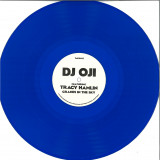
DJ Oji - Cranes In The Sky EP

Limited Edition - Transparent Blue Vinyl

‘Cranes In The Sky,’ was originally written by Beyonce’s baby sister Solange alongside Raphael Saadiq, for her album back in 2016 that was cited by Rolling Stone as one of the most important 500 records of all time. The words exploring a fearless journey inward, pulling up the root of a problem, and the first glimpse of blue sky after the storm has passed.

Fast forward to 2022 - Ross Allen and Andy Thompson’s Foundation Music Productions enlist the expertise of Baltimore club legend, Dj Oji, together with Tracy Hamlin (Pieces Of A Dream), to take Solange’s breakout delivery to the dancefloor. Soulful vocals will heal you, while the mid-tempo moments will mellow the masses, and UK Funky grooves will keep the shuffle moving along way into the early hours. Three remixes come in the form of the ethereal DJ Pope Funkhut Reprise, a signature Joe Goddard groover and the Star One. KDA. Meltdown Dub.


Press:

Gazza Premiere

House Salad Music Premiere

Madoras Premiere

Music Is 4 Lovers Review

Le Visiteur Review

Hot House Picks

Faith In The Defected Basement - Livestream play


DJ Feedback:

FRANCOIS K
Yes! I played the vocal version the other day again.

KAI ALCE
Dope re-interpretation from Baltimore stalwarts OJI, POPE & Tracy!

GREG WILSON
What's not to like? Love the orig Solange jam!

DANNY KRIVIT
Nice, I like a lot of DJ Oji.

SOUL CLAP/ ELI GOLDSTEIN
Fire right here

DAZ I KUE/ BUGZ IN THE ATTIC
Yea I love this one…cool vibes.

THATMANMONKZ
Oh yeah, love the Solange original, and I’m a big Oji fan! That reprise version might come in very useful for the right set!

TERRY FARLEY/ FAITH
Got to be contender for single of the month with that story x

HOT TODDY
Simply beautiful.

CRAIG SMITH/ 6TH BOROUGH PROJECT
Loved the original of this from Solange a few years back, this is a real nice interpretation of it. Liking the reprise and Dub, handy tools

CHARLES WEBSTER
Nice soulful groover. Like this.

FISH GOO DEEP/ GREG DOWLING
Lovely re imagining of one of my favourite tracks of all time

FRANK BOOKER
Love this package. Reprise mix is the one for me. Very cool!

NICK V/ LA MONA
Thanks a lot I actually prefer the dub version :)

JIMPSTER/ FREERANGE
Killer groove on this and really nice to hear a housed up version of Cranes which is such a stunning song in it’s OG form. Def something I’d like to play out.

FELIX JOY/ SWU.FM
Yes ! I flippin love a good reprise mix and this one is doing it for me. Love the original version by Solange and this is a really great rework!

STEVE PARRY / FOR SASHA
Really Smoove love it.

GROOVE ARMADA/ TOM FINDLAY
THIS IS LOVELY!!

RALPH SESSION/ HALF ASSED RECORDS
Wow the dubstrumental really gives it new life.

QUENTIN HARRIS
I love this package.

GRAME PARK/ THE HACIENDA
This is tremendous

HECTOR ROMERO/ DEF MIX
Good to see this one got picked up. I’ve played this a few times since 2018 but will get it back in rotation. Glad to see this song is getting some traction. I look forward to the unreleased versions.

ANDY BUCHAN
What a sun-dappled slice of beauty! Full support on this, what a gorgeous EP. And those drums are ace, really propulsive.

DANIELLE MOORE/ CRAZY P
Yeah I really like this. I mean I love the original but theres something quite interesting about this. Nice yeah x

MARC MEISNERE/ SOL POWER SOUND
Yes please! Can’t wait to play this one!

STEFANO TUCCI/ HELL YEAH
This is one of the best best vocal of recent times, I love It, the crescendo towards half of the track is nothing but gorgeous!

TREVOR FING/ GRAFITTI KINGS
Love these remixes.

MAX P/ HELL YEAH
Yeah, full pack is what I needed !

HORSE MEAT DISCO/ SEVERINO
Really into this!

SEAN JOHNSTON/ ALFOS
I wouldn't play it, but it's a beautiful piece of work

GRAEME PARK/ THE HACIENDA
I’m gonna enjoy playing this its lovely.

NICK V/ LA MONA
Thanks a lot I actually prefer the dub version :)

TREVOR FUNG/ GRAFITTI KINGS
Love this !!

QUENTIN HARRIS
Being a fan of the Original I love everything about this.

ALAN DIXON/ MIDNIGHT MAGIC
Killer!!!!

DAVE JARVIS/ FAITH
This is amazing! Absolutely love xx

NICK V/ LA MONA
This is a fantastic track!

MAX P/ HELL YEAH
Oh yeaahhhh

RICK GILL/ OUTLAWS YACHT CLUB
Beautiful soulful house. Quality production and top draw vocals.

MICKEY JUKES/ 1BTN
Ooof! Such a strong record to step to but i love this. Classy production, vocals are killer. All round winner!

TOMMY TURBO JAZZ/ JAXX MEDICINE
I was a fan of the OG but I really needed this cut!!

RUSSELL FORMAN/ PIKES/ HARRYS KEBABS
This is great .... I'm writing an article on the Coney Island Boardwalk house parties atm.

JIM LISTER/ 1BTN
Loving the reprise and the dub!I'm a big fan of the Solange original, so it's nice to hear a new angle on it

CHRIS DE BEURRE/ THE EAGLE
Gorgeous vocal! And such a deep production - really like this! Infectious x

DAIRMONT/ ROOM WITH A VIEW
Amazing track. Loving it!

STEVE PARRY/ FOR SASHA
Beautiful super smooth.

LES CROASDAILE/ FREIGHT ISLAND
Tune this, reminds of Southport weekender!

In Stock

Disponibile in Stock e pronto per la spedizione

12,82
Lorraine Johnson - The More I Get, The More I Want / Feed The Flame

repressed !

Serious holy grail business on this rare 12-inch extended disco version of Lorraine Johnson - The More I Get, The More I Want on Prelude Records. Original copies of this promo-only cut will set you back £400+ and it doesn’t take a genius to work out why. Produced by Jesse Boyce and Moses Dillard and mixed by Rafael Charres the man behind the mixing desk for classics such as Rare Pleasure - Superfine Feeling and Keith Barrow - Turn Me Up, it’s a dream team cohort that created this Paradise Garage classic.

Backed with equally enthralling, Boyce and Dillard produced, Francois K mixed ‘Feed The Flame’, also loved by the Garage dance floor.

In Stock

Disponibile in Stock e pronto per la spedizione

12,56
The Brooks - Anyday Now LP 2x12"

Named "best kept secret of Canadian funk" by the Quebecois newspaper La Presse, The Brooks are a band of accomplished musicians, well-known in the soul/funk scene across the Atlantic. Expert instrumentalists led by Alexandre Lapointe create a dazzling combo with frontman Alan Prater— an incredibly energetic showman who has worked alongside some of the biggest names in the music industry. This passionate and experienced band fan the sacred fire every time they perform! Thanks to a solid realization, their musical message comes across beautifully. The Brooks go beyond mere interpretation and style exercises: they are a powerful groove machine and a driving force in their sector. 50 years of African American music are condensed in the band's aesthetic. In their live shows and in their records, you can hear James Brown's meticulousness, D'Angelo's delightfulness, Fela Kuti's radiance, Herbie Hancock's intergenerational openness, and J. Dilla's innovative spirit. These heroes of music didn't let rules and trends dictate their messages, and neither do The Brooks. Just like these history makers, they built their reputation with sweat and rigor, outside of conventional channels. The Brooks are incredibly hard workers united in a project where pleasure and complete artistic freedom are the only key words. After 8 years of existence, with an EP and two albums, they have already won many awards and nominations (GAMIQ, Independent Music Awards, ADISQ...) and built a solid reputation in the Quebec indie world.

Who are The Brooks? First, there's the icon, Alan Prater! This Florida-born musician can boast that he shared the stage with the Jacksons! Thanks to his many trips and experiences, he became a key member of Montreal jazz. He is the band's biggest asset: if The Brooks were a sports team, Alan Prater would be captain. Then, at the drums: Maxime Bellavance, one half of the Beat Market duo, whose "dancy and retro futurist" groove can be heard in several major and underground projects in Canada. Philippe Look aces guitar and vocals. His experience as a session musician working with famous bands for 20 years allowed him to take part in different projects: rock, downtempo, trip hop, electro… As one of the founding members of The Brooks, he also wrote many of the band's songs. Keyboardist Daniel Thouin is an integral part of the Montreal jazz scene. He is both an accomplished acoustic piano player and synthesizer player, well versed in writing as well as in improvising, in organic sounds as well as in the latest technologies. Thouin possesses a double vision, which allows him to both exalt and lead productions. Composer Sébastien Grenier wows us with his saxophone. Thanks to his theoretical knowledge and his 20 years of experience, acquired through continuous training all around the world, he is a true guiding force. French trumpetist Hichem Khalfa begun learning the instrument at 7 years old. He attended a musical conservatory before going to the Haute École de Musique and finally pursuing his studies at McGill University. He won prizes at Rimouski International Jazz Festival and received the François Marcaurelle prize at Montreal Off Festival. His successful jazz projects allowed him to work with famous musicians like Blitz the Ambassador, Nomadic Massive, Rhonda Ross and Kalmunity. Philippe Beaudin can be considered an apostle of Afro-Latin percussions, which he teaches and practices with great passion. Thanks to his participation in several projects, you can discover his talent both on stage and onscreen. The Brooks' philosophy is based on art in its rawest form, on perfectionism in musical practice. The choices they make and the directions they take are motivated mostly by instinctive feelings. This is how The Brooks recently crossed the path of Underdog Records during a trip in France. It was love at first sight for the two groups who share a passion for soul. Their chemistry allows them to be completely free in their creative process and natural as ever in their conception-creation-communication approach.

In Stock

Disponibile in Stock e pronto per la spedizione

17,61
Michael Wilson - Groove It To Your Body

What can be said about this monstrous Disco Funk extravaganza from 1982? Well, plenty actually... the only entry in the mighty Prelude back catalogue from Michael Wilson, 'Groove It To Your Body' is what this music is all about, a proper dance record, drenched in the funk, a groove that just doesn't stop.

The A-side is incredible, but it's really the b-side dub mix that steals the show. Francois Kevorkian, who was Prelude's A&R man at the time, mans the desk on both mixes, but for a truly stellar work-out the dub flips all of the essential ingredients into a stew of rumbling synth and tape feedback and deep space delay and echo.

This mix could be seen as the template of what was to come, and is an all-out dancefloor wrecker. Try it! It doesn't get any better than this.

A Disco essential. 2nd hand copies of this nugget go for serious wedge these days, now's your chance to snag an *official* licensed reissue from Prelude direct. All totally Above Board! Do it!

In Stock

Disponibile in Stock e pronto per la spedizione

12,14
Glenn Davis - Namida (Tears Of Happiness) EP

F*CLR Records are delighted to release Dublin based producer and remixer Glenn Davis’s outstanding new EP, Namida (Tears of Happiness), the eagerly anticipated follow up to his hugely acclaimed Body & Soul’ 12”.

With remixes from Ashley Beedle & Darren Morris’s Afrikanz on Marz production unit, it has already been given the legendary François Kevorkian seal of approval with massive support on his Worldwide FM show. Mr Davis has been busy in the studio this year creating complete dancefloor and radio fire - house music to lift you up and save your soul.
The original mix of Namida (Tears of Happiness) would sit comfortably next to anything on the Nu Groove label roster, the Burrell Brothers would be saluting Glenn for his beautiful attention to detail.

Ashley Beedle x Darren Morris take their Afrikanz on Marz remixes onto a cosmic disco level and with a bass line that takes no prisoners, deliver a sparkling remix + dub. With the addition of the properly late night sleazy bizniss UGetting Down, it’s party time for deep headz. Enjoy!!

In Stock

Disponibile in Stock e pronto per la spedizione

11,13
Powerline - Journey / Double Journey

Classic jazz/funk/disco cut that became an instant anthem on all discerning dance floorswhen it was originally released, and for decades to follow. Includes the previously commercially unreleased Sax Mix of 'Journey', cut loud at 45rpm.

Championed by DJs including Francois Kevorkian, David Mancuso, Larry Levan and more, it's a record that, alongside tracks like Atmosfear's 'Dancing In Outer Space', become synonymous with the UK influence on US club music at the time.A sound that many forward thinking DJs in New York, Chicago etc. embraced to stand out from the crowd and bring depth to the dance floor.

Driving jazz/funk, legato bass, grooving beats, subtle keys, dubbed out percussion and guitar licks that bring you to a simple but infectious piano melody.

A collaboration between Andy Sodjka and Jerry Pike, mastered by Herb Powers.

In Stock

Disponibile in Stock e pronto per la spedizione

12,82
Palm Unit - Hommage À Jef Gilson LP 2x12"

Back in the day, French pianist, composer and all-round jazz superstar Jean-François Quiévreux, a.k.a. Jef Gilson, was up there alongside the likes of peers John Coltrane, Oscar Peterson, and Sun Ra. In a fitting homage to the decades worth of sublime music, and his sad passing away in 2012, French quarter Palm Unit have released a lively, honest tribute, upbeat and contemporary re-interpretative vision of his legacy.
.
Gilson has been noted for changing the face of bebop with free-jazz and afro. Along the way his big band featured the likes of Lloyd Miler, Bill Coleman, Michel Portal, and others. With his own recording studio and label Palm Records, Gilson released music from greats including Byard Lancaster, David S. Ware, François Jeanneau, and more. He also helped embed a more entho style to the world of jazz, inspired by his visits to Madagascar, which resulted in the famous Malagasy jazz albums.

Palm Unit are a wildly eclectic super-group of jazz greats includes uKanDanZ's saxophonist Lionel Martin, keyboardist Fred Escoffier from Le Sacre du Tympan, drummer Philippe 'Pipon' Garcia whose mostly known from his worth with the Erik Truffaz Quartet, and special guest Del Rabenja -- who played alongside Gilson in Malagasy -- on the Magascan valiha harp. Palm Unit plays Gilson's repertoire without any a priori, in a totally complex-free manner, reinventing it whilst preserving its original essence. The keyboards sound almost psychedelic (and often not that far from the style of Eddy Louiss on Jef Gilson's 60's albums), the sax scratches, mews and wails, whilst the drums make the whole thing swing. Even Del Rabenja was surprised to rediscover the songs still sounding so modern, decades after they were created.

In Stock

Disponibile in Stock e pronto per la spedizione

18,07
Various - La Bande A Bonnot (commdie Musicale De B

Gatefold 1 LP Paris, 1954. Henri-François Rey wrote the thema of the piece « la bande à bonnot » and asked Boris Vian to write the songs in order it to become a musical comedy. « la bande a bonnot » was the name of a french illegal anarchist group... As soon as the piece was played at Théâtre du Quartier Latin, french authorities made it being stopped. Musical parts have been lost . 1971, Jacques Canetti has been told the original handwritten lyrics of the Boris Vian songs have been found again. Jacques Canetti asked Louis Bessières to re create music parts. 1975, Jacques Canetti released this record with songs being performed by Judith Magre, Yves Robert, Lucienne Vernay , Pierre Jamet, Kim Ibarra, Maurice Barrier & Cécile Vassort. + 2 bonus tracks whose lyrics were suppsoed to be too for the original spectacle : « la java des chaussettes à clous » by Jacques Higelin & « l »anguille » by Magali Noël.

In Stock

Disponibile in Stock e pronto per la spedizione

13,40
Byard Lancaster - Us

'At the beginning of the 1960s, at the Berklee College of Music, Byard Lancaster met some feisty friends: Sonny Sharrock, Dave Burrell and Ted Daniel. It is easy to see why he rapidly became involved in free jazz. Once he was settled in New York, he appeared on Sunny Murray Quintet, recorded under the leadership of the drum crazy colleague of Albert Ayler.
'In 1968, the saxophonist and flutist recorded his first album under his own name: It’s Not Up To Us. The following year he came to Paris in the wake of… Sunny Murray. He would come back to France in 1971 (again with Murray) and in 1973 (without Murray for a change). This is when he met Jef Gilson, the pianist and producer who encouraged him to record under his own name again. On Palm Records (Gilson’s label), he would release four albums: Us, Mother Africa, Exactement and Funny Funky Rib Crib.

'Us, the first of the four records was recorded on November 24th, 1973 with Sylvin Marc on electric bass (a Fender… Lancaster?) and the evergreen Steve McCall on drums.
'On the album, the trio works from the John Coltrane model; free jazz shook up by the timely contributions of the bassist, followed by a mesmerizing atmospheric music. Then, Lancaster delivers a sinuous solo path, which is a reminder of his unique tone. On the album’s companion single, the trio launches into great black music of a different genre which would lead the clairvoyant François Tusques to claim that Byard Lancaster is an “authentic representative of soul/free jazz”, to sum up this is Great Black Music!'

non in magazzino

Ordina ora e ordineremo l'articolo per te presso il nostro fornitore.

27,94

Last In: 17 days ago
Byard Lancaster - Mother Africa

'A few months after recording Us, Lancaster recorded Mother Africa along with Clint Jackson III, a trumpeter, partner of Khan Jamal or Noah Howard on other recordings.
On march 8th, 1974, Lancaster and Jackson headed up a group composed of Jean-François Catoire (electric and double bass), Keno Speller (percussion) and Jonathan Dickinson (drums). Together, they create an immediate impression. From the first seconds of We The Blessed, they develop a free jazz which rapidly abandons any virulence under the effect of blues and soul based interventions.
When Gilson’s composition Mother Africa begins, listeners are transported into the studio, listening to the musicians setting up: chatting and joking… Then comes the melody: a dozen or so notes of a repeated theme which is accelerated and deformed according to their whims… The jazz played by the association Byard Lancaster / Clint Jackson III is rare: creative AND recreational. We the blessed, is apt listening to this again today!'

non in magazzino

Ordina ora e ordineremo l'articolo per te presso il nostro fornitore.

25,84

Last In: 17 days ago
Intercommunal Free Dance Music Orchestra - Vol. 2 Concert A Prades Le Lez

Concert at Prades-le-Lez marks the origins of the Intercommunal Free Dance Music Orchestra. In 1974, François Tusques and his companions (Michel Marre, Jo Maka, Adolf Winkler and Guem), in the spirit of Don Cherry or Chris McGregor, playfully dismantle all borders and all styles of creative music.

On this second volume, the Intercommunal builds unprecedented soundscapes around a song of revolt, a dance tune, or a burst of dissonance. The journey is unforgettable, no question about it. On repeat listening, it even becomes… lunar!

“The music that we make is primarily meant to be listened to live,” warned a leaflet from the Intercommunal Free Dance Music Orchestra. This is precisely why the (restored!) reissue of the two volumes of Concert at Prades-le-Lez, recorded on January 25 and 26, 1974 by François Tusques and his comrades, is such an important event.

In 1971, after recording a series of albums that would leave a lasting mark on French jazz (Free Jazz, of course, with Michel Portal, François Jeanneau, Bernard Vitet, Beb Guérin and Charles Saudrais, but also Le Nouveau Jazz with Barney Wilen, or the solo Piano Dazibao), François Tusques founded the Intercommunal—a grouping whose very name called for the fraternization of the various communities making up the country: Our music will help, we hope, to resolve the contradictions that exist between workers be longing to different communities, by breaking down various forms of national chauvinism, and more particularly the chauvinism of certain French people toward the cultures of Third World countries… Long live the friendship between the peoples of the whole world!

Among the great records made by the Intercommunal Free Dance Music Orchestra, the two volumes of Concert at Prades-le-Lez come first, before L’Inter Communal, Vol. 4, Le Musichien, and Après la marée noire (four titles already reissued by Souffle Continu). François Tusques and his companions (Michel Marre and Jo Maka on saxophones, Adolf Winkler on trombone, and Guem on percussion) performed on January 25 and 26, 1974 at the Moulin de Prades-le-Lez, a few kilometers from Montpellier. It was thus in the southern region of Occitanie that the first echoes of this musical vision of a borderless brotherhood were recorded.

“We’re not among the Colonels,” the Intercommunal reassures us right away, performing a stride piano tune carried by African winds that the audience cannot resist for long. The energy is already striking and it never lets up throughout these two recordings, from start to finish: jazz, blues, traditional music, minimalism, even funk… The musicians of the Intercommunal have heard a lot of great music and now delight in reinventing it by mixing it all together.

“We want the song form to take its place as a weapon in the struggle against capitalist exploitation and all those who oppress us morally and materially,” declared an Intercommunal leaflet, quoting Jean-Baptiste Clément, author of the lyrics to “Le Temps des cerises.” The struggle was therefore serious—but it did not prevent François Tusques and his group from waging it in a festive spirit: each piece on Concert at Prades-le- Lez sends out a call for love and fraternity. Fifty years later, the message remains as relevant as ever—and once again, it is François Tusques who makes it heard.

pre-ordina ora17.04.2026

dovrebbe essere pubblicato su 17.04.2026

23,95
Intercommunal Free Dance Music Orchestra - Vol. 1 Concert A Prades Le Lez
  • On N'est Pas Chez Les Colonels
  • Intercommunal Blues
  • Mazir
  • Kan-Ha-Diskan - We Shall Over Come
  • African Rythm-N-Logy
disponibile anche

2[23,95 €]


Concert at Prades-le-Lez marks the origins of the Intercommunal Free Dance Music Orchestra. In 1974, François Tusques and his companions (Michel Marre, Jo Maka, Adolf Winkler and Guem), in the spirit of Don Cherry or Chris McGregor, playfully dismantle all borders and all styles of creative music.

On this first volume, the Intercommunal takes its audience from New Orleans to Brittany and on to North Africa. The journey was bold, without a doubt—and its memory remains unforgettable.

“The music that we make is primarily meant to be listened to live,” warned a leaflet from the Intercommunal Free Dance Music Orchestra. This is precisely why the (restored!) reissue of the two volumes of Concert at Prades-le-Lez, recorded on January 25 and 26, 1974 by François Tusques and his comrades, is such an important event.

In 1971, after recording a series of albums that would leave a lasting mark on French jazz (Free Jazz, of course, with Michel Portal, François Jeanneau, Bernard Vitet, Beb Guérin and Charles Saudrais, but also Le Nouveau Jazz with Barney Wilen, or the solo Piano Dazibao), François Tusques founded the Intercommunal—a grouping whose very name called for the fraternization of the various communities making up the country: Our music will help, we hope, to resolve the contradictions that exist between workers be longing to different communities, by breaking down various forms of national chauvinism, and more particularly the chauvinism of certain French people toward the cultures of Third World countries… Long live the friendship between the peoples of the whole world!

Among the great records made by the Intercommunal Free Dance Music Orchestra, the two volumes of Concert at Prades-le-Lez come first, before L’Inter Communal, Vol. 4, Le Musichien, and Après la marée noire (four titles already reissued by Souffle Continu). François Tusques and his companions (Michel Marre and Jo Maka on saxophones, Adolf Winkler on trombone, and Guem on percussion) performed on January 25 and 26, 1974 at the Moulin de Prades-le-Lez, a few kilometers from Montpellier. It was thus in the southern region of Occitanie that the first echoes of this musical vision of a borderless brotherhood were recorded.

“We’re not among the Colonels,” the Intercommunal reassures us right away, performing a stride piano tune carried by African winds that the audience cannot resist for long. The energy is already striking and it never lets up throughout these two recordings, from start to finish: jazz, blues, traditional music, minimalism, even funk… The musicians of the Intercommunal have heard a lot of great music and now delight in reinventing it by mixing it all together.

“We want the song form to take its place as a weapon in the struggle against capitalist exploitation and all those who oppress us morally and materially,” declared an Intercommunal leaflet, quoting Jean-Baptiste Clément, author of the lyrics to “Le Temps des cerises.” The struggle was therefore serious—but it did not prevent François Tusques and his group from waging it in a festive spirit: each piece on Concert at Prades-le- Lez sends out a call for love and fraternity. Fifty years later, the message remains as relevant as ever—and once again, it is François Tusques who makes it heard.

pre-ordina ora17.04.2026

dovrebbe essere pubblicato su 17.04.2026

23,95
Various - Tchic Tchic: French Bossa Nova 1963-1974  Colored Edition LP 2x12"
  • A1: Les Masques - Il Faut Tenir (1969)
  • A2: Isabelle Aubret - Casa Forte (1971)
  • A3: Christianne Legrand - Hlm Et Ciné Roman (1972)
  • A4: Jean Constantin - Pas Tant D'chichi Ponpon (1972)
  • A5: Billy Nencioli & Baden Powell - Si Rien Ne Va (1969)
  • B1-: Marpessa Dawn - Le Petit Cuica (1963)
  • B2: Jean-Pierre Sabar - Vai Vai (1974)
  • B3: Sophia Loren - De Jour En Jour (1963)
  • B4: Isabelle - Jusqu’à La Tombée Du Jour (1969)
  • B5: Sylvia Fels - Corto Maltesse (1974)
  • C1: Frank Gérard - Comme Une Samba (1972)
  • C2: Ann Sorel - La Poupée Des Favellas (1971)
  • C3: Charles Level - Un Enfant Café Au Lait (1971)
  • C4: Andrea Parisy - Les Mains Qui Font Du Bien (1970)
  • C5: Audrey Arno - Quand Jean-Paul Rentrera (1969)
  • C6: Aldo Frank - T’as Vu Ce Printemps (1970)
  • D1: Christianne Legrand - Cent Mille Poissons Dans Ton Filet (1972)
  • D2: Clarinha - Lemenja (1970)
  • D3: Hit Parade Des Enfants - Aquarela (1976)
  • D4: Jean-Pierre Lang - Tendresse (1965)
  • D5: Magalie Noël - Une Énorme Samba (1970)
  • D6: Françoise Legrand - La Lune

Ever since the late 1950s bossa-nova revolution, Brazil’s influence on French music has been undeniable. Pierre Barouh, Georges Moustaki and a vast array of lesser known artists, all made the Musica Popular Brasileira (MPB) an axis of promotion at the service of a cool and metaphysical, modern and mixed Brazilian lifestyle. Some were seduced by the poetic languors of the bossa, some were looking for fun, and others just loved the American hybridization of jazz-bossa, jazz-samba.


What is bossa nova? One of its creators, Joao Gilberto said: "Its style, cadence, everything is samba. At the very start, we didn't call it bossa nova, we sang a little samba made up of a single note - Samba de uma nota so .... The discussion around the origins of bossa nova is therefore useless”. It is nevertheless useful to remember that these magnificent Brazilian songs, which the guitarist describes as samba, were shifted and balanced around improbable chords. "I like things that lean, the in-betweens that limp with grace," said Pierre Barrouh, quoting Jean Cocteau.


With emotion, arrangements for violin and supple guitar licks, bossa nova rapidly changed. A transformation that can be heard in the Tchic, tchic, French Bossa Nova 1963-1974 compilation, the result of a cultural reappropriation, which traveled through the United States and supplemented itself in France.

A musical revolution that has remained significant, bossa nova was born in Rio. From 1956 to 1961, Brazil lived through its golden years. In five years, the country had invented its modernist style. Elected president in 1956, Juscelino Kubitschek de Oliveira, an elegant man with a broad forehead, brandished a promising slogan: "Fifty years of progress in five years". He quickly got to work. Not worried about increasing debt, he launched the project for a new federal capital, Brasilia, designed by the communist architect Oscar Niemeyer. Volkswagen opened state-of-the-art factories and created the “fusquinha”, the Beetle. In Rio, the Vespa made its first appearance. The Arpoador Surf Club crew run into the “girl” from Ipanema, Helô Pinheiro - the tanned garota ("chick"), between a flower and mermaid, who at 17 walked by the Veloso bar, where the fiery author and composer, Tom Jobim and Vinicius de Moraes, were getting drunk on whiskey. From then on, bossa symbolized cool.

In 1958, Joao Gilberto recorded Chega de Saudade, which the directors of Philips denied, calling it "music for fagots". The marketing director, who believed in it, secretly pressed 3000 78-inch vinyls and distributed them at schools around Rio, creating a tidal wave.

American jazzmen then took over. In particular, trumpeter Dizzy Gillespie and guitarist Charlie Byrd. In November 1962, the Brazilian Ministry of Foreign Affairs funded a "Bossa-Nova" concert at Carnegie Hall in New York, inviting the genre’s pioneers. Unprepared, the show soon turned to disaster. But the troupe was invited to the White House by Jackie Kennedy. The first lady loved "the new beat" and in particular Maria Ninguem, a song by Carlos Lyra, later covered by Brigitte Bardot.

In Brazil, the 1964 military coup quickly ended this euphoria. The destructive atmosphere that ensued pushed many Brazilian musicians to leave, if not to exile. Thus, Tom Jobim, Sergio Mendes and Joao Gilberto arrived to the United States. In New York, Joao Gilberto met saxophonist Stan Getz. At the time, he was married to the Bahianese Astrud Weinert Gilberto, who had a German father. She had never sung before, but she knew how to speak English. Getz therefore asked her to replace her husband on The Girl From Ipanema. The Getz/Gilberto record with Tom Jobim on piano, was released in March 1964. Phil Ramone, the "pope of pop" was in charge of sound.

Bossa nova arrived in Paris through the classic “guitar-voice” channel (Pierre Barouh, Baden Powell, Moustaki…) But France loved jazz and Paris had already welcomed its American contributors. All these good people were to pass through Saint-Germain-des-Prés. The cabaret l'Escale became the Mecca of Latin American sound where one could find Pierre Barrouh and his friends, such as the Camara Trio, samba-jazz aces, whose only record was published by the Saravah label. With a band strangely called Les Masques (a band that included Nicole Croisille and Pierre Vassiliu, among others), the Camara Trio recorded an interesting Brazilian Sound, including the track Il faut tenir which is present on this tasty compilation of rarities.

Other enlightened musicians can also be found on the compilation, such as Jean-Pierre Sabar (songwriter for Hardy, Auffray, Leforestier ...) and the French pop rock organist Balthazar. In 1975, Sabar recorded Aurinkoinen Musiikkimatka on a Finnish label, which featured the crazy Vai, Vai, included on this record. We are now following the footsteps of Brazilian electronic musicians such as Sergio Mendes, Eumir Deodato or Marcos Valle who created funk and disco sounds on their keyboards and synthesizers. A style that influenced Véronique Sanson when she wrote Jusqu’à la Tombée de la nuit in 1969 for Isabelle de Funès, the niece of Louis and a great friend of Michel Berger - Sanson did end up singing this track on her 1992 Sans Regret record.


The pinnacle of exoticism and travel, Sylvia Fels’ Corto Maltese includes bongos, sea mist and ocean sounds. The title was taken from Jacky Chalard’s concept album written in 1974, Je suis vivant, mais j’ai peur (I am alive, but I am scared), based on Gilbert Deflez’s science fiction novel.


However, bossa nova extended the scope of popularity. "In the 1970s, I was a fan of Sergio Mendes, Getz / Gilberto. I fell in love with this music that I knew because I had been an orchestral singer, " explained Isabelle Aubret, who in 1971 delivered a composite record of covers by the very funky Jorge Ben, Orfeu Negro, Tom Jobim, Vinicius de Morais and Jean Ferrat. "I recorded this album for Meys Records in Paris, far from Brazil, with wonderful musicians, François Raubert, Roland Vincent, Alain Goraguer...". The latter wrote the arrangements for Casa Forte, a very percussive title borrowed from Edu Lobo, one of the initiators of the bossa who spent time in California. "Jazz and bossa came together and produced very rhythmic music. I love singing, it allows me to dream, to have fun, to feel a high on stage, and these songs brought me joy, made me swing, my singing felt like a dance.”


The world tours of French singers and their desire for the tropics, often brought them to Rio with its hills, forests, caipirinhas and tanned bodies. There are surprises though, like this Iemenja (Iemenja is the goddess of the sea in the Afro-Brazilian candomblé religion). Not unlike the composer and musician Jean-Pierre Lang, based in Sao Paulo, Claire Chevalier taught Brazil to Brazil. In 1970, the singer and painter published a 45-inch vinyl, Mon mari et mes amants (My husband and my lovers), under the improbable pseudonym of Clarinha (little Claire). She was then living in Rio, with her husband, Joël Leibovitz, who founded a band called Azimuth, and who owned a record label specialized in "sambas enredos" songs for samba school parades.


For its B side, she asked Pierre Perret to come up with lyrics for a song composed by Carlos Imperial: "Oh goddess of the sea, o goddess Iemenja, I bring a white rose to adorn your long hair ..." . "Perret came to see us, and we had fun, remembers Joël Leibovitz. We wrote Lemenja for fun, we recorded it at the Havaí studio, behind the Central do Brasil the central station. Erlon Chaves, the arranger who worked with Elis Regina, joined us" adding his share of Afro-Brazilian percussions and funky brass to the mix.

There is a common misunderstanding in Franco-Brazilian history: that bossa, admittedly hedonistic, is perceived as funny, even though the poets who wrote the texts are often philosophizing on the human condition. Its French interpreters pull it towards a carnival inspired universe, far removed from its fundamental essence. Thus, Jean Constantin covered the famous Samba da minha terra, an ode to the art of samba written by the classic Bahian composer Dorival Caymmi, renaming it with the enticing title of Pas tant de tchi tchi pompon: "On your pier there is no tchi tchi / when you arch your back, you know everything is alright ”(lyrics by Gérard Calvi). This expedited bossa aims for the absurd, but retains a certain elegance.

Indeed, Jean Constantin was not an idiot, the rather large man had a huge mustache and liked fantasy, (Les pantoufles à papa, Le pacha, inspired by cha-cha-cha-cha, salsa and jazz) but he was also the lyricist of Mon manège à moi interpreted by Edith Piaf, the composer of Mon Truc en plume by Zizi Jeanmaire and the soundtrack of François Truffaut’s 400 Blows. Le Poulpe, published in 1970, from which this bossa is extract, was arranged by Jean-Claude Vannier, an accomplice of Serge Gainsbourg’s Melody Nelson. In short: "There is enough of samba / By looking at the parasol / Because my poor cabeza / Is going to die in the sun".

Even the American actress Marpessa Down, who was at the heart of the bossa nova revolution with her role as Euridyce in Marcel Camus’ film Orfeu Negro, winner of the 1959 Cannes Palme d'or, fed the clichée with Je voudrais parler au petit cuica - "Tell me how you manage to always make people want to dance / It's true, I must admit that I cannot resist your magic" - in consequence, once can hear the cuica, a little drum inherited from the Bantu.


But bossa nova had many angles. Societal, of course, pushing actresses who were symbols of women's liberation like Brigitte Bardot, Jeanne Moreau, or Sophia Loren to engage in the exercise of accelerated bossa. In February of 1963, Sophia Loren made a record in French in Rome, Je ne t'aime plus, featuring the song De jour en jour, a bossa written by two Italians, Armando Trovajoli and Tino Fornai, which was released a little later by Barclay. Bossa accompanied the 1960s, a decade of moral liberation. Ann Sorel, who interpreted La Poupée des favellas, caused a sensation with L’amour à plusieurs, a provocative song written by Frédéric Bottom and Jean-Claude Vannier. As for the actress Andrea Parisy, she displayed her bourgeois cheekiness in Marcel Carné's Les Tricheurs before interpreting Les mains qui font du bien. And Magalie Noël, the friend of Boris Vian, who sung Johnny fais-moi mal, was hired to sing Une énorme Samba, composed by Alain Goraguer (arranger to Gainsbourg, Bobby Lapointe and Jean Ferrat) with lyrics by Frédéric Botton.

But in the end, of what wood is bossa nova made of? The answer is given by Christianne Legrand, daughter of Raymond the conductor, and sister to Michel the composer: "With me, with jà" - jà means "immediately" in Portuguese. In 1972, the singer, an expert in vocal jazz and a member of the Double Six, published Le Brésil de Christianne Legrand. Two songs included on the Tchic Tchic compilation that demonstrate how bossa, jazz, funk, rock, etc. work like a swiss army knife: the music is used to denounce broken systems, or miracles, HLM et ciné roman, Cent mille poissons dans ton filet, two songs from the O Cafona soundtrack, a successful telenovela broadcast, at the time in black and white, on TV Globo. The first was adapted in French by the fighter and friend of the Legrand tribe, Agnès Varda. The second is content with a play on words, jostling them into a summer fun.


Véronique Mortaigne

pre-ordina ora17.04.2026

dovrebbe essere pubblicato su 17.04.2026

27,31
Various - SPECTRES IV: A Thousand Voices - Mille Voix

Fourth issue of Shelter Press' annual publication series »Spectres« (in association with INA GRM), this time themed around ›voice‹. Featuring contributions from/about François J. Bonnet, John Giorno, David Grubbs, Yannick Guédon, Lee Gamble, Sarah Hennies, Haela Ravenna Hunt-Hendrix, Stine Janvin, Joan La Barbara, Youmna Saba, Akira Sakata, Pierre Schaeffer, Peter Szendy and Ghédalia Tazartès.

The book includes an essay about the essence of improvisation by Joan La Barbara, Lee Gamble looking at neural networks and vocal simulation systems, an untitled anecdote from Ghédalia Tazartès (RIP) and Stine Janvin on the necessity of singing, plus much more.

»The voice is everywhere, infiltrating everything, making civilisation, marking out territories with infinite borders, spreading from the farthest reaches to the most intimate spaces. It can be neither reduced nor summarised. And accordingly, when taken as a theme, the voice is inexhaustible, even when seen in the light of its very particular relation with the sonic or the musical, as is the case in most of the texts collected in this volume. There is no point therefore in trying to circumscribe or amalgamate the multiple avatars of the voice. We must rather try to apprehend what the voice can do, to envisage its landscape, its potential effects.«

— Extract from the editors' foreword.

non in magazzino

Ordina ora e ordineremo l'articolo per te presso il nostro fornitore.

21,22

Last In: 25 days ago
Stephan Eicher - Spielt Noise Boys

2025 Reissue.


Münchenbuchsee, a suburb of Bern, Switzerland. Stephan Eicher is the youngest of three children. His father, a radio and TV repairman, is also a jazz violinist and a sound tinkerer in his spare time. In the family home's converted fallout shelter turned studio, Mr. Eicher experiments with homemade sequencers, tortures handcrafted drum machines, and abuses reel-to-reel tape recorders—all under the fascinated gaze of young Stephan.

The boy quickly develops a musical curiosity, exploring sound through various experiments and wanderings. Alongside his younger brother Martin, Stephan crafts audio plays on a homemade multi-track recorder (essentially several cassette decks hooked together!), which they write, record, add sound effects to, and perform for family and friends. Just a couple of nice kids, really...

Then comes 1972, and Lou Reed's Transformer album changes everything for the Eicher kids. For 13-year-old Stephan, it's a revelation—especially "Vicious", the opening track, which he plays on repeat for months. He convinces his father to buy him an electric guitar. Not stopping there, his father also builds him a tube amp using an old radio.

Then comes adolescence. A rough one. Stephan leaves home at 16 and moves to Zurich. With obvious artistic talent, he persuades his art teacher to help him get into F+F, a radical, alternative art school—despite his young age. Accepted, he starts learning video techniques, determined to become a filmmaker.

At F+F, Stephan organizes Dada-style happenings and concerts with a group of friends known as the Noise Boys. Among them: one of his teachers on bass, Veit Stauffer on drums (who would later found ReR/Recommended Records), his girlfriend Sacha on vocals, and Stephan on guitar. In one of their early performances, they release a remote-controlled mouse covered in dull razor blades into the audience to create panic and chaos. Keeping with this aggressive, confrontational spirit, they once played a concert while wearing headphones blasting Tristan and Isolde, trying to perform their own songs simultaneously—to maximize the cacophony. The goal was always the same: clear the room.

Their “songs,” if you can call them that, followed suit. Take "Hungeriges Afrika", for instance—performed entirely with power drills and some drum feedback.

To make ends meet, Stephan returns to Bern on weekends to work as a waiter at the Spex Club, the city’s main punk venue. On September 16, 1980, during a show by proto-electro group Starter, the police raid the club and arrest everyone. Stephan, who manages to avoid arrest, seizes the opportunity to “borrow” Starter’s gear left behind. He suddenly finds himself in possession of a Roland Promars synth, a Korg MS20, and a gorgeous CR78 drum machine, which he runs through a Big Muff distortion pedal to get that perfect gritty sound.

He then sets out to reinterpret some Noise Boys tracks, reworking them during impromptu sessions recorded on a dictaphone (yes, a dictaphone—now the lo-fi sound makes more sense, doesn’t it?). He ironically titles the resulting cassette "Stephan Eicher spielt Noise Boys" ("Stephan Eicher plays Noise Boys"). This gem features seven tracks, which are the ones reissued here.

Back in Zurich, he visits his friends Andrew Moore and Robert Vogel, who have a DIY cassette duplication setup. They make 25 copies of Stephan Eicher spielt Noise Boys for Stephan and his friends. Robert encourages him to visit Urs Steiger of Off Course Records and play him the tape.

Without much hope, Stephan shows up at Urs’s office. But Urs is instantly hooked and suggests releasing a 7” single. Due to space constraints, they reluctantly drop two of the seven tracks ("Hungeriges Afrika" and "One Second"). As for the musical score featured on the cover—it was randomly chosen and remains a mystery to this day. Calling all music theory nerds!

The 7-inch is pressed in 750 copies and released in the first week of December 1980—a date Stephan remembers well, as it’s the same week John Lennon was killed. Smartly, Urs sends a promo copy to François Murner, Switzerland’s answer to John Peel, who hosts a show on alternative station Sounds. Murner falls in love with the record and starts giving it airtime. To Stephan’s surprise, sales follow—and people actually seem interested in his music.

Even this modest underground success scares Stephan a bit. He stops making music for a year and moves to Bologna, where he works as a programmer at Radio Città, a feminist radio station.

Meanwhile, Stephan’s younger brother Martin, who’s also involved in the punk scene, joins the band Glueams as a singer and guitarist. Glueams, named after the fanzine run by two of its members (drummer Marco Repetto and bassist GT), eventually rebrands as Grauzone. Stephan is invited to their shows to project hacked Super 8 visuals live on stage.

Urs Steiger, now working on a compilation titled Swiss Wave – The Album, asks Grauzone to contribute alongside bands like Liliput, Jack and the Rippers, The Sick, and Ladyshave (Fall 1980).

For the album, Martin tasks Stephan with producing their recording sessions. Under Stephan's artistic direction, two tracks emerge: "Raum" and "Eisbär". During "Eisbär", Martin plays a minimalist bass line borrowed from post-punk band The Feelies (just an open string). Drummer Marco Repetto struggles to keep time. Later that evening, unhappy with the takes, Stephan builds a four-bar drum loop from a ¼-inch tape and uses it instead of the flawed original. He then adds bleepy synths and wind sounds to complete the track’s icy vibe before handing it over to Urs.

The Swiss Wave – The Album compilation is released quietly at first, but things snowball thanks to "Eisbär", which eventually becomes a smash hit—selling over 600,000 singles.

Meanwhile, Stephan plays in a rockabilly band called SMUV (named after Switzerland’s social security agency) and begins producing artists, including the debut album of Starter (1981), which includes a more pop-oriented version of "Minijupe".

By early 1982, Stephan starts spending time with the post-punk girl band Liliput (formerly Kleenex). They’re older than him, and he happily drives them around in his Renault Major, acting as their roadie.

By 1983, Grauzone—signed to the major label EMI, which turned out to be a misstep—is falling apart. Stephan begins to pivot toward a more mainstream pop sound with his debut solo album Les Chansons Bleues.

But that... is already another story.

non in magazzino

Ordina ora e ordineremo l'articolo per te presso il nostro fornitore.

23,11

Last In: 12 days ago
Bergur Anderson - Around the Songsters Commune (TAPE)

Tape

Around the Songster's Commune was made quite quickly and purposefully without a lot of fuss -- made to preserve the spirit of its making -- at Diana Duta's generous Jambes studio in Brussels. It's a collection of meditations: compositional fragments, whimsy ditties, field recordings and (live/d) experiments with troubadour song-making methodologies. It's a sonic drift -- sonically drifts. Here, Bergur seems to be exploring the looseness of world-making. Or, maybe better said, exploring how loose he can get with world-making and the realization of sonic realities. Exploring how unconscious, how trusting of himself, as an artist/composer/sound-maker/human, he can be.

pre-ordina ora

Questo articolo non è stato ancora rilasciato. È possibile pre-ordinare il prodotto ora.

11,72
STEPHEN O'MALLEY - SPHERES COLLAPSER

STEPHEN O'MALLEY

SPHERES COLLAPSER

12inchXKLP32
XKatedral
27.02.2026out soon
  • Phase I Organ
  • Phase Ii Organ

Brandneues Album von Stephen O'Malley, dem Mitbegründer von SUNN O))), mit neuen, bisher unveröffentlichten Stücken für Pfeifenorgel. Diese Platte hat zwei lange Stücke für Orgel von Stephen O'Malley, die er auf diesen Aufnahmen zusammen mit der bekannten Organistin Kali Malone und Frederikke Hoffmeier (Puce Mary) spielt. Das Album wurde an Weihnachten 2021 in der Église Saint-François in Lausanne, Schweiz, auf Les Grandes Orgues (Scherrer (1777), Walker (1867), Kuhn (1995)) in der Église Saint-François in Lausanne, Schweiz, aufgenommen und ursprünglich von Stephen im Rahmen einer Suite mit dem Titel Les Sphères (effondrez-les), Phasen I-V, für eine Zusammenarbeit mit der bekannten belgisch-schweizerischen Choreografin Cindy Van Acker komponiert. Neben den beiden Orgelwerken auf dieser Platte umfasste die Suite auch die Phasen III und V für E-Gitarre, Verstärker und Elektronik (gespielt von Stephen O'Malley und Kali Malone) sowie die Phase IV für Percussion-Ensemble (gespielt von Eklekto). Abgemischt von Stephen O'Malley im EMS, Stockholm, und von François-Xavier Delaby und Tristan Mazire, Paris, im Februar 2022. Gemastert und geschnitten von Rashad Becker, Berlin, Juni 2025. Perfekte Pressung bei Optimal, Deutschland. Dieses Album ist eine Koproduktion mit La Becque Editions. Stephen O'Malley ist auch auf der kommenden Compilation ,XKatedral Anthology Series III" vertreten. Stephen O'Malley ist Gründungsmitglied von Sunn O))), die 2026 ausgiebig auf Tournee sind.

pre-ordina ora

Questo articolo non è stato ancora rilasciato. È possibile pre-ordinare il prodotto ora.

24,79
Kanyon / DJ John Brooklyn - Duplex EP

Kanyon (John) is a NYC based producer/dj who has cut his teeth in the underground US techno scene through raw live sets, and dynamic djing. Keeping the quality high with his signature no-bs style of production and performing, he has played live supporting legends like Steve Poindexter, DJ Hyperactive, and Francois K. His productions have garnered support from Ben Sims, Akua, Ron Like Hell, Kush Jones and many others.

The Duplex EP is a split record featuring John's house alias DJ John Brooklyn on the A side (A1, A2, locked groove) & techno alias Kanyon on the B side (B1, B2). Exploring NY house and trippy, dubby minimal techno respectively, Duplex EP is a heady start to 2026.

non in magazzino

Ordina ora e ordineremo l'articolo per te presso il nostro fornitore.

17,23

Last In: 25 days ago
Various - Wizzz! French Psychorama Volume 5 (67-75)

The journey through French-speaking pop archives continues with this fifth volume, packed with fuzz, gimmicks, and dissent. Far from the charts, the selected tracks display a great creative freedom, often backed by corrosive humor. Welcome to the surprising, kaleidoscopic, and colorful world of the late sixties and early seventies, Wizzz!
Born in Montauban, Robert Pico stumbled into music by chance when he met René Vaneste, then artistic director at Pathé-Marconi. René brought him to Paris to record his first 45 RPM EP in 1964. A year later, Pierre Perret introduced him to Vogue, where he recorded his second album with Claude Nougaro’s orchestra. Sylvie Vartan then introduced him to RCA, where he recorded four singles, including the astonishing "Chien Fidèle," a track backed by a hair-rising fuzz guitar. Alongside his solo career, he also composed for other artists like Alain Delon (the song was recorded but remains unreleased), Magali Noël, Bourvil, and Georges Guétary. In the Paris of the sixties, he mingled with Mireille Darc, Elsa Martinelli, Marie Laforêt, France Gall, Françoise Hardy, Petula Clark, Régine, Dani, Serge Gainsbourg, Joe Dassin, Franck Fernandel, Charles Level, and Roland Vincent. Despite his efforts and winning a Grand Prix Sacem for his final record, Robert Pico didn’t achieve the expected success in show business and decided to leave Paris and return to the Southwest, where he devoted himself to writing. He is the author of 23 books (including Delon et Compagnie, Jean-Marc Savary Editions 2025, a memoir about his youth and his many encounters). Today, he is relieved to never have become a celebrity and devotes himself to his work with passion.
In 1969, the Franco-Italian movie Erotissimo was released, directed by Gérard Pirès (who later directed Taxi in 1998, written and produced by Luc Besson). This pop comedy features Annie Girardot, Jean Yanne, Francis Blanche, Serge Gainsbourg, Nicole Croisille, Jacques Martin, and Patrick Topaloff. The soundtrack was written by Michel Polnareff and William Sheller, with lyrics by Jean-Lou Dabadie. "La Femme Faux-cils," performed by Annie Girardot. It recounts the feelings of a rich CEO's wife who seeks to develop her sex appeal under the influence of advertisement and magazines. Groovy, sparkling and light, this track, with ITS lush arrangements humorously critiques consumer society and feminine beauty standards.
“Je suis l’Etat” (1967) is the flagship track of the first EP by singer-songwriter Spauv Georges, aka Georges Larriaga, better known as Jim Larriaga (1941-2022). Born into a family of bakers, the young man was initially planning to become a hairdresser when he discovered English-speaking music through Elvis Presley and the Beatles. After this revelation, he decided he would become a songwriter and gave himself five years to succeed. He recorded his first two EP’s independently for RCA under the pseudonym Spauv Georges; meaning “that poor George”, a nickname given to him by the mother of her friend Jean-Pierre Prévotat (future drummer of the Players, Triangle, or Johnny Hallyday). Portraying a depressed and eccentric young man, Spauv Georges created corrosive and amusing songs that didn’t reach a wide audience, despite a TV appearance with Jean-Christophe Averty.
Supported by his loyal friend and fellow songwriter Jean-Max Rivière, Georges Larriaga met the future singer Carlos in the early '70s, then Sylvie Vartan’s assistant. He wrote songs for Carlos, including the popular "La vie est belle," "Y’a des indiens partout," and "La cantine", which went onto become a huge hit in 1972. He also composed for Claude François (“Anne-Marie”, 1971), Charlotte Julian (“Fleur de province”, 1972), helped launch child singer Roméo (who sold 4 million records), and later wrote the hit "Pas besoin d’éducation sexuelle" (1975) for the young Julie Bataille. In 1971, Jim recorded an album for Disc'Az: “L’univers étrange et fou de Jim Larriaga”, which featured pop gems like “La maison de mon père”.
The story of the song "Zoé" began when Pierre Dorsay, artistic director at Vogue Records, asked Swiss singer and musician Pierre Alain to write a song for a new female singer. The inspiration came when he realized that Zoé (the artist's name) was also the name of France's first atomic battery, created in 1948, which consisted of uranium oxide immersed in heavy water! The lyrics reflect a bubbling energy that must be handled with caution, while the instrumentation echoes this atomic theme, notably with the use of a theremin.
Zoé’s career lasted only as long as a single 45 RPM, but it seems Christine Fontane was the vocalist behind this pseudonym, who is known for several EPs, a good "popcorn" album in 1964, and a handful of children’s singles in the '70s. Regardless, the photograph on the cover is of a different girl entirely.
Later, Pierre Alain continued his career, writing songs for himself, Marie Laforêt, Danièle Licari, Alice Dona, Arlette Zola (3rd place in Eurovision 1982), and achieving multiple gold and platinum records in Canada. Also an inventor with several patents, president of the Romande Academy, and head of the French Alliance in Geneva, he now composes atonal music, books, and poetry. Moreover, he is also the host of "Les Mardis de Pierre Alain" at "Le P'tit Music'Hohl" in Geneva.
Filled with oriental choruses and fuzz guitar, "Fou" is from Jacques Da Sylva's only EP released by Vogue in 1967. Despite the quality of this recording, all traces of this singer disappear after this first effort.
Valentin is a baroque pop singer born in Belgium. He is the songwriter and composer of most of the tracks on his three singles released in the late 60s in Canada. A legend says that he reincarnated himself as Jacky Valentin during the 1970s for a rock'n'roll revival career in Belgium, but his older brother sadly debunked this story. Valentin's first two singles were arranged by Claude Rogen, a Parisian session pianist who had come to Canada to promote the song “Mister A Gogo”, a cover of David Bowie’s “Laughing Gnome”, adapted by singer Delphine, his wife at the time. Far from his usual network, Claude Rogen arranged music for Polydor, including the arrangements for “Je suis un vagabond” in 1969, a jerk tune with string arrangements and a furious optimism.
Jacques Malia wrote, composed, and recorded his only 45 EP for Festival in 1966. “Histoire de gitan” is an incredible beat track with bohemian scat that tells the story of a gypsy musician who came to Paris to make it in the Music-Hall, to no avail. The hero of the song and its author probably shared a similar fate, as Jacques Malia faded into anonymity after this remarkable attempt.
Bernard Jamet recorded two EPs for Barclay in the late sixties and co-wrote several songs with Christine Pilzer, Pascal Danel, and prolific songwriters Michel Delancray and Mya Simile. The track “Raison Légale” (1968), his masterpiece, immerses the listener in a courtroom right when a murderer is being judged, with jerk rhythm and free arrangements. A unique, paranoid, judicial, and psychedelic oddity.
Jean-Pierre Lebrot-Millers started his career in show business in 1967 as a singer and songwriter for the Philips label. After three singles, he wrote several songs of a new kind with his friend Pierre Halioche, in the midst of the sexual liberation movement and the democratization of drugs. With provocative lyrics, “Les filles du hasard” and “Barbara au Chapeau Rose” were released on a Philips singles in 1968. The character of Barbara was inspired by a queen of Parisian nightlife during the psychedelic years: model Charlotte Martin, who dated Eric Clapton from 1965 to 1968, then Jimmy Page from 1970 to 1983. Jean-Claude Petit’s arrangements, with a table-filled intro, soul brass, and Hendrixian guitar, emphasize the flamboyance of a hedonistic and sexy character, whose dog is named Junkie because “Junkie est un nom exquis”! The track was recorded live in three takes with a full orchestra.
Upon its release, the record was censored by Europe 1 and RTL due to its references to drug use. Jean-Pierre Lebrot was then banned from the airwaves and later dismissed by his record label. He changed his artist name to Jean-Pierre Millers, while his companion Pierre Halioche became D. Dolby for a new dreamy composition, “Chilla”, which Jean-Pierre produced himself with arrangements by Jean Musy. Once again, the song was immediately censored everywhere. After this setback, he decided to stop singing and started taking on odd jobs to support his Swedish wife and their son until the day he met Jean-Pierre Martin, then production manager at Decca, who had worked with Manu Dibango. Martin offered Jean-Pierre Lebrot-Millers, then employed at Rank Xerox, the position of artistic director at Decca. He accepted and became, a year later, promotion director (radio, press, TV). He worked on Julio Iglesias’s first album for Decca, which became a massive hit and allowed him to meet Claude Carrère. The latter asked him to write new songs and find their performers, much like a “talent scout.” It’s through him that Jean-Pierre discovered Julie Pietri and Corinne Hermès. He composed “Ma Pompadour” for Ringo, Sheila’s husband, and took the microphone again for the syncope hit “Rendez-Vous” in 1982.
That same year, Jean-Pierre Lebrot-Millers tried to release a track for which he had heavily gone into debt: “Si la vie est un cadeau”. Having recorded it in London, he presented it to numerous professionals, all of whom refused to get involved. The same thing happened with Antenne 2 and the Sacem when he proposed the song as France’s entry for Eurovision. He then met Haïm Saban, who was producing cartoon soundtracks and had just launched the Goldorak theme song. Saban, having listened to the song, declared it had the potential to become a hit. He sent Jean-Pierre and Corinne Hermès to meet the CEO of the Luxembourg radio and television network. The latter received them, asked to hear a verse and chorus a cappella in his office, and immediately hired them to represent Luxembourg at Eurovision 1983. They reworked the arrangements and recorded a new version with Haïm Saban as co-producer. The song ended up winning Eurovision 1983, a great comeback for our hero. He continued producing and hung out with the band Nacash in Belgium when a couple came to introduce their daughter for an impromptu audition in a hotel room. The girl sang “Les démons de minuit” while dancing to a radio cassette. Impressed, he had her take singing lessons for a year and composed a song for her (for which he had the melody and title, but no lyrics). This required him to go on the hunt for a lyricist, who ended up being Guy Carlier. They recorded the song, which was initially a ballad, at Bernard Estardy’s CBE studio, and gave the singer a new name: Melody. They showed the song around their industry network without success. Later, Estardy called Jean-Pierre to suggest changing the rhythm and making it pop-rock. Orlando, Dalida’s brother, liked the result and decided to co-produce the track. “Y’a pas que les grands qui rêvent » became a classic hit. The song has since been covered by Juliette Armanet (as a ballad, like the original) and Valentina.

Born into an aristocratic Breton family, Hervé Mettais-Cartier worked as a DJ at Queen Kiss, a nightclub in Poitiers, where he formed the band Les Concentrés with Michel (an actor) and Christian (a radio technician). Together, they created a repertoire of whimsical songs (“Ma bique est morte”, “J’suis un salaud”, “Fils de dégénéré”...) that they performed on stage dressed in white (in homage to “concentrated milk”). They performed at Bliboquet and Olympia in 1968 for the 10th edition of the “Relais de la chanson Française” organized by L’Humanité-Dimanche and Nous les Garçons et les Filles, sponsored by Pepsi Cola. Winners in the author-composer category, alongside Danish singer Dorte, their visibility allowed them to record a 45, and appear on television in Jean-Christophe Averty’s show. The A-side of the disc features Bruno le ravageur, a casatchok dedicated to Bruno Caquatrix, the director of Olympia, nicknamed in the song “Coq Atroce” or “croque-actrices”. The B-side is dedicated to “Fils de dégénéré”, a quirky tribute to Hervé's aristocratic roots, mixing absurdity with sophisticated vocal harmonies.
After Les Concentrés, Hervé Mettais-Cartier formed the duo La Paire et sa Bêtise with his friend Olivier Robert. They performed in Parisian cabarets and toured with Pierre Vassiliu. In the late 1970s, Hervé began a solo career. He recorded two albums for the Motors label in 1978 and 1979, which did not achieve their anticipated success due to lack of promotion. In 1980, he met Bernadette, with whom he started a family and created a “Chansons à voir” (songs to see) show that he performed until his death at the end of 2024.

Publicité comes from the final EP by the Missiles (Ducretet Thomson, 1966), a disc that also includes “La (nouvelle) guerre de cent ans”, featured on Volume 4 of our Wizzz! series. Please refer to the booklet for the story of the band.

“He’s 1.82 meters tall, 28 years old, weighs 135 kg, is black and Belgian”: this is the description of singer Hegesippe on the back of his sole single (Decca, 1967). He appears on the album cover wearing a Greek toga, like a hippie gag – we are at the end of the year 1967. In “Le crédo d’Hegesippe”, this former bodyguard of Antoine and the Charlots plays the delightful card of the thick brute converted to Flower-Power and non-violence, with arrangements by Jean-Daniel Mercier, aka Paul Mille.
“Ethéro-disco” was released on a promotional record for clients of the Maréchal company (Liège, Belgium) for the New Year 1979. Over a funky rhythm, celebrity impersonations (Brigitte Bardot, Jacques Dutronc, Fernandel…) deliver an enigmatic text about pharmaceutical products like ether, bismuth, and aspartate. The track was composed by Dan Sarravah (responsible for Joanna's “Hold-up inusité” featured on Wizzz! Volume 3) and Tony Talado, who was also a singer (one 45 in 1967), songwriter (with over a dozen credits between 1964 and 1985 in various styles from surf music to disco), author (Devenez Végétarien, Dricot Editions, 1985), ad designer, and psychologist.

Décollez-les is on the A-side of Mamlouk's only single, a pseudonym for Marsel Hurten, who is known for his work on several EPs in the late sixties, as well as composing music for Hervé Vilard’s “Capri, c’est fini”, Claude Channes' “La Haine”, Annie Philippe’s “On m’a toujours dit”, and Nancy Holloway’s “Panne de Cœur”.
This strange song, with Afrobeat horns and absurd dialogues between a chef and his kitchen staff, is the result of a collaboration between Marsel Hurten and one of his neighbors, a photographer from Pavillon-sous-Bois (93), where the musician settled after returning from the Algerian War. A music video was shot to promote the record.
Marsel Hurten was born in Tourcoing (59) into a musical family. At a young age, he joined the brass band founded by his grandfather, playing the piston before studying trumpet at the conservatory, as well as teaching himself how to play the guitar. As an orchestra musician, he toured in France, Belgium, Germany, and England. He released a series of solo 45’s between 1965 and 1968 for the DMF and Az labels before stopping recording to focus on working for other artists (Gilles Olivier, Noëlle Cordier…).
“L’amour nu” (Vogue, 1971) is the work of the short-lived Belgian band Mozaïque. The track, written by singer Jacques Albin, closely resembles another of his compositions, “Carré Blanc”, which he recorded in 1969 for Disc’AZ.
Represented by the Lumi Son micro-label based in Marignane (Côte d'Azur), Jean-Marc Garrigues released two 45 RPMs in the late sixties, defending the French jerk sound. The song “Je dis Non” is a short, joyful ode to youth, pop music, and rebellion.
Songwriter and performer Jacques Penuel released three singles. The first one, “Astronef 328” (Fontana, 1969), features a dizzying series of chords punctuated by sound effects, a sci-fi story, and arrangements by Jean-Claude Vannier.

We would like to sincerely thank Pierre Alain, Moon Blaha, Marsel Hurten, Bastien Larriaga, Jean-Pierre Lebrot-Millers, Bernadette Mettais-Cartier, Robert Pico, Olivier Robert, Claude Rogen, Micky Segura.

non in magazzino

Ordina ora e ordineremo l'articolo per te presso il nostro fornitore.

23,11

Last In: 3 months ago
Nacho Marco - Colors in dub vol. 1

Nacho Marco

Colors in dub vol. 1

12inchPHONOGRAMME71
PHONOGRAMME
30.01.2026

Nacho Marco drops Colors in Dub Vol.1—deep house soaked in warm analog dub. From the hypnotic “Midnight Blue” and its Satoshi Tomiie remix to the raw pulse of “Bumblebee Yellow” and “Electric Green,” this wax rides late-night frequencies straight from Valencia to Paris.

DJ Feedbacks :


Francois Kevorkian (Wave) : Love the Satoshi mix
Eddie Fowlkes (Detroit Wax, Rekids, Classic Music Company) : thanks
Travis Kirschbaum (Warehouse Preservation Society) : Loving this. Especially Midnight Blue!
Sascha Dive : Midnight Blue for me!!
Brothers' Vibe (Luv4Wax) : Super ep, great works!!
Radio Slave (Rekids) : Another superb ep from Phonogramme and Satoshi's mix is great.
Giles Smith : "midnight blue" is nice
Alexkid (Rawax / FUSE / NG Trax) : Totally my vibe. <3
Aleqs Notal : Yes !!
Italojohnson (Italojohnson) : Track 1 for me!
Ben Sims : Now downloading... will check asap!
Okain (Talman / Infuse / Pleasure Zone) : Electric Green is dope!
Satoshi Tomiie (Abstract Architecture) : Receiving great feedback from the dance floor!
Steffi (Dolly) : lovely release!!
Laurent Garnier : Cool tracks
DJ Bone (FURTHER) : Electric Green and Satoshi Tomiie remix work for me.
Harri (Sub Club) : lovely stuff, will play and support
Rob Pearson (Evasive Records / Sine 102.6fm) : lovely - right up my street, cheers ;-)
Felix Dickinson (Futureboogie, Rush Hour, Cynic) : Solid E.P. current fave Electric Green
Jorkes (Freeride Millenium) : lovely, thanks so much. xo
Kassian (Phonica White / Heist Recordings) : wicked
Jaye Ward (Dalston Super Store / Netil Radio) : massive quality as ever!! super deep and pulsing gear, electric green is ace! thx
Tim Sweeney (Beats In Space) : Sounds great
Chloe Caillet (Smile Records) : love this!
Stevie Cox (Sub Club) : really lush, thank you !
Raresh (ar:pi:ar) : thanks
Ame (Innervisions) : thanks
Geir Aspenes (G-Ha (Sunkissed)) : Thank u
Saoirse (Body Movements) : Super nice dubby vibes
Amotik : Very nice :)
Kai Alce (Real Soon) : Satoshi remix is hot!
Domenic Cappello (Subclub) : nice dubby house
Cee ElAssaad (ENSOULED) : Just the way I like it! dubby and groovy.
Mike Shannon (Cynosure) : Excellent work here from Valencia's finest!

non in magazzino

Ordina ora e ordineremo l'articolo per te presso il nostro fornitore.

14,71

Last In: 20 days ago
ORCHESTRE TOUT PUISSANT MARCEL DUCHAMP - REVENANT DU NORD/SIILENT
  • Revenant Du Nord
  • Siilent

With this new 7"", Orchestre Tout Puissant Marcel Duchamp continues to blur musical boundaries through bold collaborations. On one side, Revenant du Nord - co-written with Frànçois and the Atlas Mountains - weaves stories of migration, Moroccan memories, and layered polyrhythms into a swirling orchestral movement. On the flip side, Siilent, composed with Jo Burke, dives into darker dub territory, inspired by a late-night Geneva dancefloor and shaped by the ensemble"s signature instrumental finesse. Two tracks from different roots, united by the same drive for organic power and musical vertigo.

pre-ordina ora16.01.2026

dovrebbe essere pubblicato su 16.01.2026

13,40
Iliona - Tête Brulée

Iliona

Tête Brulée

12inchART202202
Artside
16.01.2026
  • 1: Micha
  • 2: Si Tu M’aimes Demain
  • 3: Garçon Manqué
  • 4: Tête Brûlée
  • 5: Wherever You Hide, The Party Finds You
  • 6: Cocoon
  • 7: Ta Vedette
  • 8: Cent Fois
  • 9: Quelque Chose De

French chanson, electro beats, pared-down or synthetic piano: at 21, Iliona draws on all of this. Plural, multifaceted, elusive. Yet her lyrics resonate as if one were singing heartache—and the love one hopes for—for the very first time.
She composes, records, and produces her tracks alone, determined to keep them as close as possible to the tunes, harmonies, and silhouettes she holds in her mind. This time, they are infused with the light of an intense love, and still carried by extreme sparseness in their arrangements: nothing—from electronic arpeggios to melodic autotune—is ever superfluous; everything has its place. Lifted by a new lightness, the tracks also echo the spirit of the yéyé sound Iliona has been listening to for a few years, without necessarily knowing the name of every songwriter or the mark they left behind. It’s their longing for carefree abandon that hovers over the hypnotic Si tu m’aimes demain and its music video inspired by the New Wave, the Beatles, and all those future memories you begin to build when you’re in love.


A gentle warmth also sweeps through the hazy doo-wop contours of Tête brûlée, and the lo-fi twist of Cocoon; but always with that veil of shadow that once floated over the apparent nonchalance of Françoise Hardy’s songs. That unease, that worried smile, resurfaces in the lovely pop gallop of Garçon manqué, an ode to the deepest friendships—the ones you hold in your arms to dance or, sometimes, to cry. Or in the delicate Cent fois, which whispers, “when will the movie scenes we quietly dreamed of come to life?”
The answer, perhaps, lies in wherever you hide, the party finds you, a superb soundtrack to an imaginary drama, whose venomous keyboards unfold the pictorial strength of Iliona’s songs.

pre-ordina ora16.01.2026

dovrebbe essere pubblicato su 16.01.2026

18,91
La Femme - Psycho Tropical Berlin LP 2x12"

First album of French band La Femme released in 2013 with which they won Best New Band of the year at the French Music Awards and god certified gold. It marked also the beginning of their international recognition, confirmed since with their 2nd album Mystère in 2016 and their brand new album Paradigmes today. Includes the hits Sur La Planche, It's Time to Wake Up and Antitaxi! La Femmes's debut LP, is a mix of surf revival, updated cold wave (in a similar vein to countryman Lescop), 1960s yéyé and psychedelia. "Psycho Tropical Berlin: is apparently also their self-penned genre, they have also said "strange wave, new Motown, witch wave, silly mental wave"... whatever, aach term makes for a pillar to describe their music. Psycho Tropical Berlin is the story of a couple who slipped into chaos and survives by watching each other. Le Danger est partout - Peril is all around - as written in the booklet. Rock and pop, rococo bauhaus, fed from multiples influences (Krafwerk, Elli & Jacno). La Femme just want to please you. Generous and welcoming, she stretches you her white hand in the dark, if you grasp it, it could be the shiver of your life.

non in magazzino

Ordina ora e ordineremo l'articolo per te presso il nostro fornitore.

26,47

Last In: 3 months ago
Clint Jackson III, Byard Lancaster - Mother Africa

At the beginning of the 1960s, at the Berklee College of Music, Byard Lancaster met some feisty friends: Sonny Sharrock, Dave Burrell and Ted Daniel. It is easy to see why he rapidly became involved in free jazz. Once he was settled in New York, he appeared on Sunny Murray Quintet, recorded under the leadership of the drum crazy colleague of Albert Ayler.


In 1968, the saxophonist and flutist recorded his first album under his own name: It’s Not Up To Us. The following year he came to Paris in the wake of… Sunny Murray. He would come back to France in 1971 (again with Murray) and in 1973 (without Murray for a change). This is when he met Jef Gilson, the pianist and producer who encouraged him to record under his own name again.

On Palm Records (Gilson’s label), he would release four albums: Us, Mother Africa, Exactement and Funny Funky Rib Crib.


A few months after recording “Us”, Lancaster recorded “Mother Africa” along with Clint Jackson III, a trumpeter, partner of Khan Jamal or Noah Howard on other recordings.

On march 8th, 1974, Lancaster and Jackson headed up a group composed of Jean-François Catoire (electric and double bass), Keno Speller (percussion) and Jonathan Dickinson (drums).


Together, they create an immediate impression. From the first seconds of “We The Blessed”, they develop a free jazz which rapidly abandons any virulence under the effect of blues and soul based interventions.

When Gilson’s composition “Mother Africa” begins, listeners are transported into the studio, listening to the musicians setting up: chatting and joking… Then comes the melody: a dozen or so notes of a repeated theme which is accelerated and deformed according to their whims… The jazz played by the association Byard Lancaster / Clint Jackson III is rare: creative AND recreational. “We the blessed”, is apt listening to this again today!

This CD edition contains a bonus track, the magnificent “Love Always” that was originally released on the fourth (and last) volume of the Jef Gilson Anthology series released in 1975.


Recorded on 8th March 1974, it is a beautiful 15-minute-long modal jazz piece. Four notes from the bass (the relentless Jean-François Catoire, who makes up the rhythm section alongside drummer Jonathan Dickinson and percussionist Keno Speller), and the group is up and running!

On piano, Gilson shows the subtle tact of a sideman, leaving the lions’ share of the place to the horns. This allows us to hear the trumpet of Clint Jackson III and the alto (which sometimes sounds almost flute-like) of Byard Lancaster each staking their claim in a long hallucinatory march which moves from moments of direct exaltation to profoundly sensitive collective playing.

pre-ordina ora05.12.2025

dovrebbe essere pubblicato su 05.12.2025

26,47
Byard Lancaster, Steve Mc Call & Sylvin Marc - Us

At the beginning of the 1960s, at the Berklee College of Music, Byard Lancaster met some feisty friends: Sonny Sharrock, Dave Burrell and Ted Daniel. It is easy to see why he rapidly became involved in free jazz. Once he was settled in New York, he appeared on Sunny Murray Quintet, recorded under the leadership of the drum crazy colleague of Albert Ayler.


In 1968, the saxophonist and flutist recorded his first album under his own name: It’s Not Up To Us. The following year he came to Paris in the wake of… Sunny Murray. He would come back to France in 1971 (again with Murray) and in 1973 (without Murray for a change). This is when he met Jef Gilson, the pianist and producer who encouraged him to record under his own name again.

On Palm Records (Gilson’s label), he would release four albums: Us, Mother Africa, Exactement and Funny Funky Rib Crib. “Us”, the first of the four records was recorded on November 24th, 1973 with Sylvin Marc on electric bass (a Fender… Lancaster?) and the evergreen Steve McCall on drums.


On the album, the trio works from the John Coltrane model; free jazz shook up by the timely contributions of the bassist, followed by a mesmerizing atmospheric music. Then, Lancaster delivers a sinuous solo path, which is a reminder of his unique tone. On the album’s companion single, the trio launches into great black music of a different genre which would lead the clairvoyant François Tusques to claim that Byard Lancaster is an “authentic representative of soul/free jazz”, to sum up this is Great Black Music!
crédits

pre-ordina ora05.12.2025

dovrebbe essere pubblicato su 05.12.2025

26,01
Françoise Hardy - Voilà ! The Very Best of LP 2x12"
disponibile anche

Crystal Clear vinyl[43,66 €]


"As iconic as she was discreet, Françoise Hardy established herself in the '60s as a major artist in the genre of ""French chanson."" Her voice, songwriting, and ability to surround herself with talented collaborators helped her seduce the whole world and, over the decades, shape a discography of the highest caliber.
This brand-new Best Of compilation is the very first to cover Françoise Hardy’s entire career, spanning from her 1962 debut to her final recordings in 2018. Featuring a timeless 1960s-inspired cover, it brings together her most iconic songs, from early classics like ""Tous les garçons et les filles"" and ""Le temps de l’amour"" to signature hits such as ""Comment te dire adieu"" (a streaming and sync favorite), ""Message personnel,"" the viral sensation ""Voilà"" (#1 viral hit, with over 300k TikTok creations), and ""Le large."""

pre-ordina ora21.11.2025

dovrebbe essere pubblicato su 21.11.2025

35,17
Françoise Hardy - Voilà ! The Very Best of LP 2x12"
disponibile anche

Black vinyl[35,17 €]


"As iconic as she was discreet, Françoise Hardy established herself in the '60s as a major artist in the genre of ""French chanson."" Her voice, songwriting, and ability to surround herself with talented collaborators helped her seduce the whole world and, over the decades, shape a discography of the highest caliber.
This brand-new Best Of compilation is the very first to cover Françoise Hardy’s entire career, spanning from her 1962 debut to her final recordings in 2018. Featuring a timeless 1960s-inspired cover, it brings together her most iconic songs, from early classics like ""Tous les garçons et les filles"" and ""Le temps de l’amour"" to signature hits such as ""Comment te dire adieu"" (a streaming and sync favorite), ""Message personnel,"" the viral sensation ""Voilà"" (#1 viral hit, with over 300k TikTok creations), and ""Le large."""

pre-ordina ora21.11.2025

dovrebbe essere pubblicato su 21.11.2025

43,66
TORRE - PHOCAEA VOL.1

TORRE

PHOCAEA VOL.1

12inchMV01
MusiqVoyage
14.11.2025

Musiq Voyage sets sail with its debut release by TORRE Bros, a producer duo from Aix-en-Provence. A heartfelt tribute to Marseille and the Mediterranean through two shimmering Space Disco cuts: Gyptis and La Pointe Rouge.
Remixed by the legendary Moplen, Alex From Tokyo, and Julien HBT, this EP blends house, boogie, and balearic vibes into a warm and elegant sonic journey.
//
After cruising their native Provence and spinning on the mythical shores of Ibiza with their iconic pink-and-blue DJ truck, the Musiq Voyage crew is proud to launch their new label with a sun-soaked debut EP.
Rooted in Mediterranean soul, Phocaea Vol. 1 features longtime friends and local legends TORRE Bros (Jean-Marc & Patrick Torre), producers from Aix-en-Provence with over two decades of musical exploration—from disco and house to hybrid electronic jams. Known for underground hits like Corps à Corps and Baleora, supported by artists such as Carl Craig, the duo now pays tribute to Marseille, their beloved coastal city.

A1 – Gyptis
Named after the legendary princess said to have founded Marseille, Gyptis is a lush space-disco homage to the city’s ancient roots—where Greek sailors met local tribes, and myth met the Mediterranean.
A2 – Gyptis (Moplen Remix)
Italian disco don Moplen (Chaka Khan, Talking Heads, Loose Change) delivers a floor-ready rework—elevating the groove with cosmic flair while keeping the original’s dreamy vibe.
B1 – La Pointe Rouge
A sonic postcard of one of Marseille’s most iconic seaside spots—sunsets, sailing, and slow walks by the sea. Built on a strong boogie beat, 80s synths, and balearic textures.
B2 – La Pointe Rouge (Alex From Tokyo & Julien HBT Remix)
Legendary DJ/producer Alex From Tokyo (Tokyo Black Star, Innervisions) teams up with Parisian underground figure Julien HBT (Demented, with François X) for a deep, syncopated reimagining. Infused with Chicago house and leftfield boogie influences, this remix flips the original into a spaced-out late-night groover.
More than just a legendary DJ, Alex From Tokyo has built a global career bridging cultures and sounds. After growing up in Japan, he returned to Paris in the early ’90s and co-founded A Deep Groove with DJ Deep and DJ Gregory, launching one of France’s first underground dance radio shows on FG 98.2 FM.
A key link between Europe and Japan, Alex worked with labels like F Com, Mr Bongo, and Yellow Productions, before living in NYC, Berlin, and beyond.

non in magazzino

Ordina ora e ordineremo l'articolo per te presso il nostro fornitore.

13,87

Last In: 86 days ago
NATACHA ATLAS - THE BEST OF (REMASTERED)
  • Leysh Nat'arak - New Version
  • Mon Amie La Rose
  • Eye Of The Duck
  • Ezzay
  • Fakrenha
  • Mistaneek - 2005 Edit
  • Leysh Nat'arak - Tj Rehmi Remix
  • You Only Live Twice
  • Yalla Chant - 2005 Edit
  • Fun Does Not Exist - New Mix
  • I Put A Spell On You
  • (It's A Man's Man's) Man's World
  • Amulet - 2005 Edit
  • Kidda
  • Leysh Nat'arak - 2005 Dub Mix
  • Le Printemps (For Mona)
  • Moustahil - Live

Natacha Atlas ist eine international gefeierte Künstlerin mit einer der markantesten Stimmen der Welt. Die anglo-ägyptische Sängerin verbindet seit mehr als zwei Jahrzehnten elektronische Beats mit nordafrikanischer und arabischer Musik, entdeckt Verbindungen zwischen scheinbar gegensätzlichen Musikgenres, erforscht neue klangliche Welten und arbeitet dabei mit zahlreichen gleichgesinnten Künstler:innen aus aller Welt zusammen. The Best Of Natacha Atlas wurde ursprünglich im Mai 2005 veröffentlicht und ist jetzt erstmals als Vinyl erhältlich. Als dieses Best-of damals erschien, wollte Natacha nicht einfach nur eine Sammlung von Albumtiteln herausbringen. Mehrere Stücke wurden neu gemischt oder überarbeitet, was Natacha selbst in die Hand nahm. Damals sagte sie: "Ich habe beschlossen, ein paar Titel neu aufzunehmen, von denen ich fand, dass sie eine Überarbeitung oder Aktualisierung brauchten." Ebenfalls enthalten sind ihre atemberaubenden Versionen des Françoise-Hardy- Klassikers , des James-Bond-Themes , und James Browns.

pre-ordina ora14.11.2025

dovrebbe essere pubblicato su 14.11.2025

26,68
Forever Pavot - Melchior Volume.1
  • A1: Waiting For The Sign (Feat Lispector)
  • A2: Patch 1985
  • A3: Count To 10 (Feat Domotic)
  • A4: Godbot
  • A5: Skyway
  • A6: Le Robot Gentilhomme
  • B1: Ufo (Feat Lispector)
  • B2: Cosmic Battle
  • B3: Olympus
  • B4: Shoppers On The Run
  • B5: Postcard (Feat Kumisolo)
  • B6: Melchiator

Emile Sornin has a robot in his life. It's not love, but it's not friendship either, and Forever Pavot is releasing an album documenting the affair on Born Bad. After a bunch of bold pop studio albums and a small stack of soundtracks, Emile needed a break. To put an end to it, he embarked with handyman extraordinaire Jonas Euvremer on the manufacture of an automaton destined to make his musician’s life easier. Melchior, who gave his name to the record, has the face of a ventriloquist's dummy, two plastic left hands, preppy clothes and a primitive logic circuit. This goodie two-shoes cousin of Bender’s is supposed to be doing the interviews and deal with socials for Emile. The plan worked admirably : Melchior is a perfect cover-boy, and his very existence has put our man back to work.


They set a path for phat electronic ventures (and by the way, mostly english-speaking). Sub- continental bass & massive drums, heavy-footed and unabashed : as much appreciated as unexpected. The half-android shares songwriting credits and vocal parts vocoded to perfection. Not a jealous lad, Melchior makes way for a guest of choice on “UFO” and “Waiting for the sign” : Lispector. Julie Margat sings and collaborated on the lyrics for these two bangers that provide a lot of context (robot angst is real). Kumisolo, our favorite Japanese « it » girl in Paris, also sent her “Postcard”, more vapour than song, unreal musical cotton candy of arrangements.


Domotic, who mixes and co-produces, gives a nice spin to “Count to 10”, a hip-hop/kraut crossover with a BEAK> flavour. The Forever Pavot, once a big-band, will be touring as a bass/ drums/keys & vocals trio, with Melchior as guest.


Record after record, Emile Sornin has become an increasingly literate musical illiterate. When needed, his music can still become a thicket of ancient and modern finds. « Le robot gentilhomme », a skillful pastiche of baroque composer Jean-Baptiste Lully, would stand a few rounds against Wendy Carlos. His love for oldies also shines through “Skyway”, a nod to the late Pierre Arvay, France’s Colonel Sanders of library music nuggets.


Forever Pavot may have gone wild, but remains indebted vis-à-vis the golden age of film music. Forebears deluxe Ennio Morricone & François de Roubaix make Hitchcock-style cameos: discreet appearances that you’ll watch out for (those syncopated cascades of syllables at the end of « UFO », and I guess we can indulge with some clavichord/ondioline Victoria sponge). His new flirt is all but a toxic relationship. « Melchior, Vol. 1 »: the robo-bromance is not over yet.

pre-ordina ora07.11.2025

dovrebbe essere pubblicato su 07.11.2025

21,43
Project Gemini & Wendy Martinez - Time Stands Still / Le temps s'arrête

Having worked together on his 2024 album Colours & Light, Project Gemini aka Paul Osborne joins forces once again with Wendy Martinez, French singer and composer, and also part of renowned psych-girl group Gloria on a new collaborative EP. Landing on Mr Bongo, ‘Time Stands Still / Le temps s'arrête’ is a sonic exploration that shows a shared love of the progressive music emanating out of France in the ‘60s and ‘70s and the celebrated film soundtrack composers of the time. A more melodic and romantic excursion than Paul’s previous recordings, this EP marries his richly textured, cinematic psych rock with Martinez’s captivating vocal presence.

A body of work born during the period Paul was finishing up his last LP Colours & Light, he penned an album’s worth of instrumental library-style music and had the idea of having Wendy add vocals and lyrics to a selection of them. The instrumental record got scrapped, but thankfully ‘Time Stands Still’ grew out of it.

Paul was a fan of Wendy’s work as both a solo artist and in the band Gloria, and her inclusion on the Project Gemini tracks ‘Entre chien et loup’ & ‘Extra Nuit’ showed a clear synergy to their musical approaches and sounds. For ‘Time Stands Still’ he sent over instrumental tracks one by one, with Wendy taking time to find melodies and French poetry she was happy with and returning her ideas from her home just outside of Lyon.

Drawing inspiration from French soundtrack composers such as François de Roubaix, Frances Lai and Michel Colombier, as well as French female artists including Léonie and Laurence Vanay, these productions are a contemporary love letter to this sound, not a homage. Mixing psych, folk, chanson, and French new wave, it’s music that pulls you in deeper, with groove, grit and passion at its core.

'Je n'ai plus peur' kicks things off with a sultry energy. It’s a psych-funk production drenched in attitude, swagger, and edge, which nods to the left-field side of Serge Gainsbourg’s music. Elsewhere, 'Âme contre âme' feels like the opener from a forgotten new-wave film, managing to be at both beautiful yet sinister and longing. 'The Crawler' could be incidental music from the same film, with Wendy using her voice as an instrument layering the backing track as Paul's bass takes centre stage. The ghostly spoken word of 'Ce qui est intact' echoes a funky version of what the Théâtre du Chêne Noir d'Avignon may have recorded.

A transportive journey ‘Time Stands Still’ is nostalgic yet new in the same smoke-filled breath. Fuzzed-up guitars and driving basslines meld with folk-leaning organs and mellotron vibrations to give that eerie, otherworldly edge. All of which are seasoned by the sensuous, layered vocal tones of Wendy Martinez, alongside crisp drums from Tony Coote and considered percussive touches by Paul Elliot.

non in magazzino

Ordina ora e ordineremo l'articolo per te presso il nostro fornitore.

21,89

Last In: 7 months ago
Fred P - Distant Travels EP

Francois Kevorkian (Wave) : Lovely EP, atmospheric vibes.
Chris Udoh (Various) : Lovely !!!
Lea Lisa (Phonica Records / Folklor Club) : Fred P is a master of deep house. Live Long Love & When in Miami for me.
Will Hofbauer (Third Place, Wisdom Teeth, Rinse) : nice n deep ty!
Radio Slave (Rekids) : The King is back and what an EP ! Full support.
Jon Hester (Rekids, EDEC, Les Enfants Terribles, L.A.G.) : Lovely vibes on When In Miami and Live Long Love!
Jacques Renault : Nice EP, into When In Miami and The Heights in particular
Danny Howells (Dig Deeper) : Love Fred so much, always the highest quality music with soul. All four are stunners.
Dan Beaumont (Chapter 10 / NTS) : Always brilliant.. deeep! When in Miami for me
DJ Sprinkles (Comatonse) : thank you
Kai Alce (Real Soon) : Live Long Fred P!
Tomoki Tamura (Holic Trax) : pure class, deep house
Raresh (ar:pi:ar) : super! thanks
Laurent Garnier : FRED P alwayssssssssssssssss
Marcel Dettmann : thx
Archie Hamilton (Microhertz / FUSE) : Nice thanks
DVS1 : thanks
Alinka (Twirl, Classic, Crosstown Rebels, Batty Bass) : Beautiful tracks
Pat Hyland (Northside Loft Society) : Fred P is a master of deep. AWEsome EP!
Thor (Thor-Thule Records) : Another great release by the master of Deep House. Full support
Colin Dale : One of my fave producers from way back! Excellent 4 tracker with all the cuts 'hittin' the mark'. Will rotate & support.
Geir Aspenes (G-Ha (Sunkissed)) : Thank u
Jaye Ward (Dalston Super Store / Netil Radio) : Syncrophone just continues to churn out the goodness.. love Fred P too. so deep and full of the good soul ace! thx
Ame (Innervisions) : thanks
Domenic Cappello (Subclub) : love this
Greg Gow (Restructured / Transmat / KMS) : cool vibes full support
Jerome Sydenham (Ibadan) : When Miami is the business! Overall nice E.P!
Bill Brewster (NTS) : FRED P RETURNS!
Bailey Ibbs (Metafloor Records / Habits / Dansu Discs) : Live Long Love <3

In stock dal14.05.2026

14,71

Last In: 20 days ago
Foncedalle - Foncedalle LP

Foncedalle

Foncedalle LP

12inchXAGLPW52
Exag Records
26.09.2025
  • Ransu
  • Meghan
  • Saint Angers
  • Old
  • W.a.n.e
  • Louis Ii
  • Kdb
  • Heatwave
  • François Roses
  • Dayy Club
  • Nightt Club

FONCEDALLE is a high-volume amplified trio, a warm wave of acid guitars fuelled by addictive bass and electronic beats. In late 2021, they released their Traboule EP and went on a tour that saw them perform 40 gigs between 2022 and 2023, half of which were in Europe. Their debut, self-titled album is set to be released in March 2024 on EXAG’ Records (BE). It's rawer, with tracks meticulously crafted and reworked live. While still exploring the realms of rock fused with machines, electronic trance, and melodic flights, the album also has its share of oppressive sections, unbridled chaos, and ambient, ethereal passages. FONCEDALLE serves as the missing link between the Manchester scene of the 80s, Gilla Band’s noise rock, Soulwax’s electronic rock, and the motoric turbines of Turing Machine. Preferring not to choose between being an open door or an impertinent product, the band chooses to concoct a recipe it envisions coming from the future rather than flipping through a book filled with references

pre-ordina ora26.09.2025

dovrebbe essere pubblicato su 26.09.2025

22,27
RABBATH ELECTRIC ORCHESTRA - AMALL

François and Sylvain Rabbath have turned six years of touring into a joint album that patiently and intensely distills a variety of musical flavors gathered from around the world.

Since the early 1960s, François Rabbath's double bass has resonated through enough landmark recordings to fill several shelves in a record collection. As an arranger, composer, and musician, his imprint on music goes far beyond his collaborations with Barbara, Paco Ibáñez, Charles Aznavour, or Édith Piaf. Aspiring double bassists owe him a groundbreaking method for learning the instrument. Born into a lush musical universe that quickly became his own, his son Sylvain first accompanied him on his travels before settling at the piano and sharing stages around the world at his side.

Those years of accumulating visas in their passports were put to good use by father and son. The continents, countries, and cities they passed through became a rich source of inspiration for composing Amall, the album by the Rabbath Electric Orchestra.

Long hours spent in the air or on the road, watching passing landscapes that never stayed the same, were transformed into compositions imbued with the atmospheres of the places they crossed or visited. Inspiration sometimes struck with force, like a green oasis appearing in a desert of stone—unexpectedly, as glowing red rocks suddenly dominated an otherwise open landscape with an endless horizon, while the mind wandered into a state between meditation and introspection.
Born from these travels, the pieces took on their final colors once brought into the studio, refined, and finally arranged to welcome the guitars of Keziah Jones and Matthieu Chedid, the piano of Laurent de Wilde, the bass of Victor Wooten, the saxophone of Raphaël Imbert, and the percussion of Minino Garay. Enhanced by the scale of the jazz-soul orchestrations, by the richness of arrangements bursting from strings, brass, rhythms, or keyboards, the epic breath of vast plains became ingrained. The urban tension of funk, echoing their movements, found its place—alongside more electric expressions or the ambience of a darkened room.
Melancholic and melodious, expressive and edgy, the bowed double bass—played in the high register where few dare to go—emerged as the musical guide. One that draws a path between Seville and Minneapolis, connects François Rabbath's native Syria to France, and bridges South America to Europe. It sets the tone to follow—the emotion that will carry the piece, and if not filled with light, will carry it there nonetheless.
Musical visions packed in luggage, transported in cargo holds, or imprinted in their minds just long enough to cover the distances to the next stop—father and son deepened their bond, beyond family and art. And their hands have never held each other more tightly.

François et Sylvain Rabbath ont fait fructifier six ans de tournées pour un album commun distillant patiemment et intensément la variété de parfums musicaux récoltés autour du monde.
Depuis le début des 60’s, la contrebasse de François Rabbath résonne dans assez de références pour combler plusieurs étagères d’une collection de disques. Arrangeur, compositeur, musicien, l'empreinte laissée dans la musique va bien au-delà de ses collaborations avec Barbara, Paco Ibanez, Charles Aznavour, ou Edith Piaf. C’est à lui que les
apprentis contrebassistes doivent une méthode novatrice pour apprendre l’instrument.

Né dans un univers musical luxuriant qui est vite devenu aussi le sien, c’est d’abord dans ses voyages que son fils Sylvain l’a accompagné, avant de s’installer au piano, et parcourir les scènes du monde à ses côtés. Ces années où les visas se sont entassés sur leurs passeports, père et fils les ont mises à profit. Continents, pays, et villes qui se sont succédés sont devenues un gisement pour composer Amall, l’album du Rabbath Electric Orchestra.

Les longs moments passés dans les airs ou sur la route à contempler un paysage qui défile sans pour autant rester le même, se sont convertis en compositions habitées par les ambiances de ces endroits traversés ou visités. Là où l’inspiration s’est imposée parfois brutalement, sous
la forme d’un oasis de verdure surgissant au milieu d’un désert de pierres. Au hasard d’imposantes roches rougeoyantes s’invitant dans un paysage jusqu’alors dégagé sur un horizon sans fin, quand l’esprit se laisse aller à un mélange de méditation et d'introspection.

Nés de ces pérégrinations, les titres ont pris leurs couleurs définitives une fois ramenés en studio, peaufinés puis, enfin, pensés pour y inviter les guitares de Keziah Jones et de Matthieu Chedid, le piano de Laurent de Wilde, la basse de Victor Wooten, le saxophone de Raphaël Imbert, les percussions de Minino Garay. Sublimé par la dimension des orchestrations jazz-soul, par la richesse des arrangements jaillissant des cordes, des cuivres, des rythmiques ou des claviers, le souffle épique des plaines immenses s’est imprimé.
La nervosité citadine du funk rythmant les déplacements a trouvé sa place, non loin d’une expression plus électrique ou d’une atmosphère de salle obscure.

Mélancolique et mélodieuse, expressive et nerveuse, la contrebasse jouée à l’archet, dans les notes hautes du manche où peu s’aventurent, s’est érigée en guide musical. Celui qui trace le chemin entre Séville et Minneapolis, relie la Syrie natale de François Rabbath à la France,
réduit la distance entre l’Amérique du Sud et l’Europe. Donne la note à suivre, l’émotion qui traversera le morceau qui, s’il n’est pas habité par la lumière, le portera néanmoins jusque là.

Visions musicales mises dans le coffre, transportées en soute ou imprimées dans l’esprit le temps de couvrir les distances qui les mèneront aux prochaines, c’est côte à côte que père et fils ont prolongé leur lien par delà des seules limites familiales et artistiques. Et leurs mains ne se sont jamais serrées aussi fort.
credits

pre-ordina ora19.09.2025

dovrebbe essere pubblicato su 19.09.2025

20,59
VARIOUS - BELGIAN VAULTS VOL 5 LP
  • A1: Time For A Change (Paul’s Collection)
  • A2: Nobody Will Ever Help You (The Klan)
  • A3: 20Th Century (Berry Clan)
  • A4: See My Car (New Inspiration)
  • A5: I Don’t Need You (The Jumpers)
  • A6: Woman Don’t Love Me (The Swallows)
  • A7: When I’m Down (Ferre Grignard)
  • B1: Only Lonely Me (The Mec-Op Singers)
  • B2: Lonely Tears (R And The R’s)
  • B3: Mad Jane (François Nico)
  • B4: Tomorrow (The Midgets)
  • B5: Freedom (Les Altesses)
  • B6: Tus Es Mon Enfer (Mosaïque)
  • B7: Cocaine Blues (Patrick)
disponibile anche

Vol.4[23,95 €]

Vol.3[23,95 €]


Starman Records, the Belgian label renowned for re-releasing Belgian rock from the 60s, 70s, and 80s, has so far released five volumes in the highly anticipated and widely acclaimed Belgian Vaults Series, praised by both press and fans.

These unique albums focus entirely on the sixties and early seventies, compiling many rare and hard-to-find tracks—mainly originally released as singles on small, long-forgotten labels. Covering genres such as pop, beat, rock ’n’ roll, and psych, these gems are well worth rediscovering. Belgian Vaults are not just collector’s items; each album features restored and remastered sound quality and is carefully curated to appeal to all fans of sixties rock.

pre-ordina ora12.09.2025

dovrebbe essere pubblicato su 12.09.2025

23,95
DIANE DENOIR & EDUARDO MATEO - INEDITAS
  • Je Suis Sans Toi
  • Rendez-Vous D'automne
  • La Dernière Valse
  • Le Lendemain
  • Un Amour, Un Sourire, Une Fleur
  • Corcovado
  • Gua De Beber
  • Berimbau
  • Vivo Sonhando
  • Fever
  • Garota De Ipanema
  • So Nice
  • Las Flores Nuevas
  • Y Hoy Te Vi
  • Esa Tristeza
  • Mejor Me Voy

Born as Diana Reches, Diane Denoir made her debut as a singer in 1966, backed by Eduardo Mateo on guitar. Influenced by Françoise Hardy and Astrud Gilberto, along with her own unique style, she performed a special blend of chanson française, bossa nova (sung in Portuguese, English, and French), and jazz. By then, Mateo was already a well-known guitarist in the Uruguayan music scene and a sought-after arranger. He was also beginning to establish himself as an incredible songwriter, connecting different musical universes in unique ways. The two formed a fruitful artistic partnership that lasted until the early seventies. This album, originally released in 1998 on CD, is a compilation of various unreleased recordings from different sources (concerts, radio and TV recordings, homemade tapes) made between 1966 and 1968. It is a unique document that showcases their incredible musicianship and creativity in their early years. The duo swings from bossa nova classics like "The Girl from Ipanema" to the rhythm and blues of "Fever," including chanson française standards like "Le lendemain" and "La Dernière Valse." The album also features earlier versions of the three best-known Mateo songs performed by Diane: "Y hoy te vi," "Esa tristeza," and "Mejor me voy," all of which were inspired by Diane. Inéditas unveils a new dimension of South American music from an unforgettable era.

pre-ordina ora05.09.2025

dovrebbe essere pubblicato su 05.09.2025

35,50
Kassel Jaeger - Fernweh LP

Black Truffle is pleased to announce a new edition of Kassel Jaeger’s Fernweh, returning François J. Bonnet’s electroacoustic project to the label five years after the acclaimed Meith (BT069). Originally released on Giuseppe Ielasi and Jennifer Veillerobe’s impeccably curated Senufo Editions in 2012, Fernweh stands near the beginning of the gradual expansion of Bonnet’s approach after the austere acoustic textures of Aerae and Algae (both released on Senufo), leading to the lush, layered environments of recent solo works on Shelter Press and the epic electronic expeditions undertaken in duo projects with Stephen O’Malley and Jim O’Rourke.

A major work in the Kassel Jaeger oeuvre, stretching over two LP sides, Fernweh draws together synthesized and musique concrète materials into a drifting assemblage. Its title’s meaning is close to the concept of ‘Wanderlust’, fitting for this music that moves freely and unexpectedly between what Bonnet calls ‘climates’. Beginning with fizzing electronics whose rhythm of gradual approach suggests breaking waves, the clinical atmosphere is soon haunted by intangible traces of lived reality. Textures call up wind, water, insects, the crunch of feet on sand or the clinking of glasses, yet they can never be identified with any certainty. At times these concrete elements possess a vivid ‘closeness’; at others, the sounds shade into a formless distance. Though the listener forms no clear picture from the concrete sounds, these elements aerate the music, lending it their space.

Drawing from the rigorous formal language and conceptual apparatus of the French musique concrète tradition—with which Bonnet, as director of the GRM and researcher into its deepest archival recesses, is intimately familiar—the music of Kassel Jaeger is equally informed by how underground experimental music has rethought electroacoustic techniques, with Fernweh at times calling up the grit and grime of para-industrial eccentrics like Maurizio Bianchi or the Toniutti brothers, and at other moments suggesting the slow-moving grandeur of early Olivia Block. Subtle features of dynamics and rhythm act as connective tissue between the numerous ‘scenes’, with wave-like envelopes, rapid pulsations, and short, tape-loop patterns all recurring throughout the piece, shared ambiguously between electronic and concrete sounds. Amid these shifting, often inharmonic textures, the electronic elements sometimes cohere into melodic shapes and chordal patterns, cutting through the fog in distorted arcs or underpinning the layered surface with slow-moving harmonies. Like his friend and collaborator Jim O’Rourke, Bonnet displays a radical openness at odds with academic tradition, allowing unabashed emotion to coexist with rigorous experimentation. As Fernweh dies away with mysterious shudders, listeners are left at once moved and unsure of exactly what they just heard.

non in magazzino

Ordina ora e ordineremo l'articolo per te presso il nostro fornitore.

22,90

Last In: 9 months ago
VARIOUS ARTISTS - AFROBEATS

VARIOUS ARTISTS

AFROBEATS

2x12inchFF0054
MPO Records
27.06.2025
  • A1: Space Afro– Blessed
  • A2: Dualbox & Aracy Carvalho– Feel (Afrobeats Mix)
  • A3: Bellestar & Trippynova– A Different Path
  • A4: Nikko Mad & Space Afro– On My Mind (Mona Lisa Mix)
  • A5: Future Soundscapes & Françoise Sanders– Honestly
  • A6: Dualbox & Sapce Afro– Used To Be
  • A7: Motor City Squad– One Truth
  • B1: Space Afro & Monsoon– Ready
  • B2: General Soundbwoy & Nikko Mad– You Trap Me
  • B3: Golden Smirk– Missing You (Afrobeats Mix)
  • B4: Dual Sessions– Us Together
  • B5: Urban Love– I Want You, Girl
  • B6: Space Gang & Frederik Young– Can't Go On
  • B7: Max Dubster & General Soundbwoy– Kenya (General Soundbwoy Mix)
  • C1: Future Soundscapes– Body
  • C2: Monsoon– Pretty Nature (Nikko Mad Mix)
  • C3: Space Afro & Nikko Mad– Lights
  • C4: Don & Gene– For My Love (Afrobeats Mix)
  • C5: Dual Sessions– Bikini
  • C6: Monsoon– I Think About You Every Day
  • C7: Hypnomusic– Can't Stop
  • D1: Space Afro– Liquor (Afrobeats Mix)
  • D2: Space Afro– Sweet Gal
  • D3: Monsoon– Scars (Afrobeat Mix)
  • D4: Rhythmic Control– Burghalle
  • D5: D G– Senegal Dreams
  • D6: Gilbert Mota– Number One
  • D7: Rhythmic Contro– One, Two, Three
pre-ordina ora27.06.2025

dovrebbe essere pubblicato su 27.06.2025

30,97
VARIOUS ARTISTS - MUSIQUE EXPERIMENTALE
  • A1: Volumes; Composed By – François-Bernard Mâche
  • A2: Crucifixion; Compilation Producer – Romuald Vandelle
  • A3: Ambiance Ii (Toast Funèbre); Composed By – Michel Philippot; Text By – S. Mallarmé*; Voice – Nelly Delmas
  • B1: Tautologos Ii; Composed By – Luc Ferrari
  • B2: Texte Ii; Composed By – André Boucourechliev
pre-ordina ora26.06.2025

dovrebbe essere pubblicato su 26.06.2025

13,07
OS MUTANTES - OS MUTANTES

Os Mutantes

OS MUTANTES

12inchLRC141
Lilith
11.06.2025

Distortion and feedback on Brazilian classics? Only these Sao Paulo mutants dared to reinterpret the standards of the giants of Música Popular Brasileira. Exceptionally talented, curious, and inventive, Os Mutantes infused tropicália with a generous dose of psychedelia. While some listeners were outraged at the time, they stood firm, and their debut album went on to become one of the gems of Brazilian music. Don"t miss their delightfully eccentric coversof "Tempo No Tempo"(The Mamas and The Papas) and "Le Premier Bonheur du Jour" (Françoise Hardy). A true treasure.

non in magazzino

Ordina ora e ordineremo l'articolo per te presso il nostro fornitore.

32,35

Last In: 11 months ago
Moonee - Brotherhood EP

For its latest release, Last Year in Marienbad welcomes back French producer Moonee, who delivers an EP brimming with his signature blend of euphoric and emotive grooves.

One of François Lefevre’s main aliases, Moonee explores the airier side of dance music, crafting deeply immersive sonic experiences that evoke introspection and escapism. While initially focused on deep house, his sound has evolved across recent releases, particularly on his Sandquest LP for OATH. His finely curated approach highlights fluid, intuitive soundscapes that invite repeat listens.

His new EP, Brotherhood, is perhaps his most refined and carefully poised work to date. The title track’s Glitched version opens with a sense of urgency, combining a stepping garage beat, lo-fi vocal snippets, and deep basslines. Existenzfollows, elevating four-on- the-floor energy with intricate rhythmic textures and a rich, orchestral-like melodic palette. Panorama rounds off the EP’s initial arc with playful vocal samples and an uplifting bassline—perfect for late-night city wanderings.

Closing out the release, Oath affiliate Moomin reinterprets the title track with an electro-infused remix. More understated than the original, his version builds gradually, offering a masterclass in energy control.For those seeking enriching grooves, entrancing melodies, and warmth, Brotherhood delivers. It’s a journey through electronic currents, shifting effortlessly between moments of calm and surging energy—press play and dive in.

non in magazzino

Ordina ora e ordineremo l'articolo per te presso il nostro fornitore.

13,24

Last In: 3 months ago
Justin Moore - The Radio Phonics Laboratory - Telecommunications, Speech Synthesis, and the Birth of Electronic Mus

The Radio Phonics Laboratory by Justin Patrick Moore is the story of how electronic music came to be, told through the lens of the telecommunications scientists and composers who helped give birth to the bleeps and blips that have captured the imagination of musicians and dedicated listeners around the world.

Featuring the likes of Leon Theremin, Hedy Lamarr, Max Matthews, Hal 9000, Robert Moog, Wendy Carlos, Claude Shannon, Halim El-Dabh, Pierre Schaeffer, Pierre Henry, Francois Bayle, Karlheinz Stockhausen, Vladimir Ussachevsky, Milton Babbitt, Daphne Oram, Delia Derbyshire, Edgar Varese & Laurie Spiegel.

Quotes
“From telegraphy to the airwaves, by way of Hedy Lamarr and Doctor Who, listening to Hal 9000 sing to us whilst a Clockwork Orange unravels the past and present, Moore spirits us on an expansive trip across the twentieth century of sonic discovery. The joys of electrical discovery are unravelled page by page.”
Robin Rimbaud aka Scanner

“Embark on an odyssey through the harmonious realms of Justin Patrick Moore’s Radio Phonics Laboratory echoing the resonances of innovation and discovery. Witness the mesmerising fusion of telecommunications and musical evolution as it weaves a sonic tapestry, a testament to the boundless creativity within the electronic realm. A compelling pilgrimage for those attuned to the avant-garde rhythms of technological alchemy.”
Nigel Ayers (Nocturnal Emissions)

“In this captivating exploration of electronic music, Justin Patrick Moore unveils its evolution as guided by telecommunication technology, spotlighting the enigmatic laboratories of early experimenters who shaped the sound of 20th century music. A must-read for electronic musicians & sound artists alike—this book will undoubtedly find a prominent place on their bookshelves.”
Kim Cascone

non in magazzino

Ordina ora e ordineremo l'articolo per te presso il nostro fornitore.

17,61

Last In: 11 months ago
BEATRICE DILLON /  HIDEKI UMEZAWA - BASHO / STILL FORMS
  • Basho
  • Sill Forms

Der Titel dieser Arbeit von Beatrice Dillon ist dem Begriff ,basho" entnommen, der von Kitaro Nishida, dem japanischen Philosophen und Vater der Kyoto-Schule, entwickelt wurde. Kitaros ,basho" bezieht sich auf einen grundlegenden Ort oder ein Feld, in dem Dinge existieren und interagieren. Dabei geht es nicht nur um einen physischen Ort, sondern um einen abstrakteren Raum, in dem alle Erfahrungen, Gedanken und Phänomene miteinander verbunden sind. In Nishidas Philosophie ist ,basho" ein dynamischer, lebendiger Ort, an dem Subjekt und Objekt, Selbst und Welt, nicht getrennt sind, sondern sich gegenseitig bedingen. Inspiriert davon entwickelt Beatrice Dillon eine Musik von komplexer Natur, die nie aufhört, sich als reine Präsentation zu konstituieren, die ständig neu belichtet wird und in jedem Moment sowohl das Objekt der Aufmerksamkeit als auch den Hörer, der darauf zielt, reaktiviert. Dillons Basho, das sowohl seine Klänge (die keinen wirklichen Ursprung oder inneren Raum haben) als auch seine Idiome aus der elektronischen Musik entlehnt, ist eine Ablenkung, eine Neuanordnung, die uns durch vertraute, aber plötzlich fremde Elemente in ein Feld des reinen Hörens zurückführt. Still Forms des japanischen Komponisten Hideki Umezawa schöpft sein Klangmaterial aus der Erforschung der Baschet-Klangstrukturen, Instrumente, die von den Brüdern Bernard und François Baschet in den 1950er Jahren entwickelt wurden und seitdem in der Welt des zeitgenössischen Musikschaffens hoch geschätzt werden. Diese Strukturen wurden 1970 auf der Weltausstellung in Osaka vorgestellt, und einige sind in Japan geblieben. In verschiedenen Aufnahmesitzungen in Japan, aber auch in Frankreich, erforscht Hideki Umezawa das faszinierende klangliche Potenzial dieser atypischen Instrumente neu, um sie in eine hochgradig beherrschte Komposition einzubinden, in der Klänge akustischen Ursprungs und elektronische Texturen aufeinander reagieren, wie in der verzerrten Reflexion der Resonatoren der Baschet-Strukturen. Still Forms ist somit eine Hommage an und eine Zeitreise durch die unglaubliche Inspirations- und Erfindungskraft dieser Klangstrukturen, aber auch ein zugespitzter Vorschlag für eine zeitgenössische elektroakustische Komposition, die sich zu erneuern weiß, ohne ihre Ursprünge zu verleugnen.

pre-ordina ora02.05.2025

dovrebbe essere pubblicato su 02.05.2025

22,65
Various - Bass Scene Investigation Vol 1

EC Underground is back with more inquisitors of low-end heavy sounds on Bass Scene Investigation vol 1 and again digs deep into the worlds of electro, techno, breakbeat and IDM. The compilation kicks off with the skittish percussive patterns of Illektrolab's 'Making Heads Dip', then heads into moody ground with ADJ, Pablo Funk brings some menacing synth work and Errorbeauty gets all weird and trippy with some mad electronics. Francois Dillinger offers a dystopian electro sound full of irresistibly jacked-up drums. A fine investigation indeed.

non in magazzino

Ordina ora e ordineremo l'articolo per te presso il nostro fornitore.

22,27

Last In: 8 months ago
Intercommunal Free Dance Music Orchestra - Vol. 4 Jo Maka

Rerelease of the fourth album of the Intercommunal Free Dance Music Orchestra recorded with the Guinean saxophonist Jo Maka. The title says it all: Vol.4 – Jo Maka.

The Intercommunal Free Dance Music Orchestra was created in 1971 by an “old hand” of French free jazz, François Tusques. Free Jazz, was also the name of the recording made by the pianist and other like-minded Frenchmen (Michel Portal, François Jeanneau, Bernard Vitet, Beb Guérin and Charles Saudrais) in 1965. But, six years later Tusques had had his fill of free jazz.

So he then founded the Inter Communal, an association a name under which the different communities could become closer and compose, simply. In 1976, on the first album: L’Inter Communal, we can already hear Tusques playing without borders in the company of Carlos Andreu, Ramadolf, Michel Marre and Jo Maka (as a conclusion to this Vol. 4, we can hear them in 1977 at the Moulin de Prades Le Lez). Over the next decade, the, association kept going with concerts at the Dunois theatre, in 1980 and 1981, it welcomed old hands and new recruits (Bernard Vitet, Jean-Jacques Avenel, Jacques Thollot, Sylvain Kassap…).

If Vol. 4 – Jo Maka is an homage to the Guinean saxophonist, who passed away a few months before the release of this selection of concert recordings, it also displays a proud collective inspiration! One foot in the blues, and ears open to everything else, Tusques begins with a lament that the Company rapidly transforms into a joyful dance (“Vive la Commune”), weaves a full-blown party piece (“Poses ton fardeau et remets la machine en route”, “7 rue des prêcheurs”, “Mazir”) or gets fabulous with Mingus (“Fable Of Faubus”). And there you have it, with so many revolutions François Tusques is almost back to free jazz.

pre-ordina ora04.04.2025

dovrebbe essere pubblicato su 04.04.2025

24,79
Intercommunal Free Dance Music Orchestra - Après la Marée Noire

If the jazz of François Tusques is “free”, his spirit is even more so: having recorded Free Jazz with other like-minded Frenchmen (Michel Portal, François Jeanneau, Bernard Vitet, Beb Guérin and Charles Saudrais), the pianist had covered a lot of ground, with Barney Wilen (Le Nouveau Jazz) or even solo (Piano Dazibao and Dazibao N°2), so as not to repeat himself…

In 1971 he founded the Inter Communal Free Dance Music Orchestra which, as the notes the this album stated, “is an interpretation of a music which synthesizes the different communities living and working in France.” In 1976, on the first album (L’Inter Communal) we can already hear Tusques playing without borders in the company of Carlos Andreu (vocals), Michel Marre (trumpet and saxophone), Jo Maka (saxophone) and Ramadolf (trombone). It is a meeting between jazz and music from Catalonia, Occitanie and Africa. So far so good, but what about Brittany, that, Tusques knows “by heart”? Having lived for a long time in Nantes, he would expand his ‘brittanitude’ on the canal linking the city to Brest by playing with, for example the Diaouled-Ar-Menez. With these “devils from the mountain” who, under the baton of Yann Goasdoué, worked throughout the 1970s on the renewal of music from Brittany, Tusques met, notably, Tanguy Ledoré and invited him one day, with trois bombards and some bagpipes (Jean-Louis Le Vallegant, Gaby Kerdoncuff and Philippe Lestrat), to join the ranks of the Intercommunal. And so they set of towards a new music from Brittany, as the title states; Vers une Musique bretonne nouvelle!

With percussion from Samuel Ateba and Kilikus, the association launches the ‘bombardier’: the repetitions and dissonance of the different members all serve a common cause however: the dance, which is always the reason for the party. This sets a whole universe spinning, which can bring to mind Chris McGregor’s Brotherhood of Breath (“La rencontre”) when not taking on board waltz, swing, blues and gavotta or even revealing mysteries like those of Gurdjieff (“Les racines de la montagne” or “Le cheval” sung by Andreu). Only one thing to say to this Brotherhood Of Breizh: Mersi!

pre-ordina ora04.04.2025

dovrebbe essere pubblicato su 04.04.2025

24,79
Papooz - Green Juice

Papooz

Green Juice

12inchHA001LP
Half Awake
21.03.2025
  • A1: Ann Wants To Dance
  • A2: Simply Are
  • A3: Toria's Song
  • A4: Stories Of Numbers
  • A5: Green Juice
  • A6: Trampoline
  • B1: Good Times On Earth
  • B2: Chubby Baby
  • B3: Brother
  • B4: Wanted
  • B5: Louise
  • B6: One Of Those Days

Who doesn’t remember their hit song Ann Wants To Dance ?

Soundtrack of the summer 2015 and which music video made by Soko got a few millions views. This cheerful and addictive tune laid the foundations for the four-handed songwriting style of Ulysse Cottin (brown hair) and Armand Penicaut (blond hair). Those two performers, who compose and sing effortlessly in English, posed with a cheerful attitude on the sleeve of their first album Green Juice (2016) recorded at the Cap Ferret and mixed by Ash Workman (Metronomy, Frànçois & The Atlas Mountains, Baxter Dury). Papooz have a talent for sway pop and irrefutable groove like very few of their compatriots, aside from Phoenix we cannot think of anyone else. Tropical pop here, wild bossa nova there, all of it deeply anchored in the American style of the Seventies, Ulysse and Armand are perfectly matched. Falsely dabbler and completely inspired, the duo fights the ambient gloom with their songs.

pre-ordina ora21.03.2025

dovrebbe essere pubblicato su 21.03.2025

22,90
BusCrates - Altitude

BusCrates is a Producer / Synthesist / DJ hailing from the Steel City -Pittsburgh, PA
BusCrates blurs the lines between boogie funk and boom bap hip hop beats
Returning to Bastard Jazz following two well loved albumsBlasting Off(2020) andControl Center(2023)
BusCrates' increasingly popular Twitch channel streams live every Thursday and Friday night to over 13,500 followers
A noteworthy resume production credits including Mac Miller, Wiz Khalifa, Curren$y, and Phonte & Eric Roberson
He's toured throughout the US playing with artists like RJD2, DJ Epik, J Rawls, Tall Black Guy and more
BusCrates counts big names such as Jazzy Jeff, Francois K, Dâm Funk, Rich Medina and Spinna as fans

pre-ordina ora21.03.2025

dovrebbe essere pubblicato su 21.03.2025

15,08
GOWDY, T. - TRILL SCAN

Gowdy,T.

TRILL SCAN

12inchCSTLP181
CONSTELLATION
14.03.2025
  • Anonymous Iv
  • Blest Age!
  • Richmond Rd
  • Courante
  • Anonymous V
  • Materiadiscipuli
  • Novus Lumen
  • Pentaarc
  • Flit
  • Arislei Bone
  • Strewn

T. Gowdy returns with a major statement and luminous stylistic expansion on his third album for Constellation. Trill Scan is an exquisite suite of songs literally and figuratively about alchemy, where Gowdy melds his background in choral and medieval music with his trademark analogue electronics. Following the acclaimed Miracles (Bleep Album of the Week / Albums of the Year 2022), Gowdy's bar-raising new LP centers human voice for the first time. Choral set-pieces and solo lead vocals, along with his own lute playing, are novel elements in Gowdy's work, and draw on strains of Middle Ages polyphony and the Baroque "broken style" to further distinguish Trill Scan from anything in his discography to date. Gowdy sees "the modal language of medieval Europe as a less distant cousin to indigenous traditional music practice" compared to a Classical-colonial "patriarchal order of tonality that honours a system of domination." The 12th century Notre Dame School of choral music and 17th century style brisé each carry tonal materiality, heterodox technique, and cultural-historical symbolism central to Trill Scan's conceptual and compositional alchemy. Gowdy coheres these beautifully into his palette of serpentine slowburn electronics, a minimal analogue-driven techno shaped by aleatory strategies and tinged with post-punk grit. Gowdy's sound has been aptly described as "gently transportative, flickering like a busted halogen lamp" and his overriding pursuit of psychoacoustic immanence likened to "getting your brain massaged" and praised as "blissful work that bristles with effervescent energy, like brain waves coming in and out of focus." Trill Scan expands this sonic sensibility with more conspicuous harmonic complexity, stylistic variety, and humanistic narrative arc. Alternately sacramental and intimately personal vocals, sometimes wordless and sometimes lyrical, are worked into superlative instrumental tracks, yielding a warmly immersive concept album that's equally Gowdy's most musical. Gowdy sings explicitly of alchemy on the hypnotic album centerpiece "Novus Lumen" with lyrics that gesture at these medieval processes of material investigation. The tension between the scientific and esoteric is crucial; the separation and synthesis of physical substances in medieval alchemy maps onto his fixation with the interplay between the materiality of sound and psychoacoustics. Gowdy follows the Jungian interpretation of classic alchemical texts as an historical bridge to theories of the psyche, where consciousness itself is treated as materiality and similarly subjected to methodical analysis and experimentation, to deconstruction, dissolution, transformation, reintegration, metamorphosis. Song titles like "Arislei Bone" and "Materiadiscipuli" further reference these mythopoetic throughlines from medieval alchemy to modern psychology. Gowdy chooses disruptive forms from the history of Western music that symbolize and prefigure the modern psychological subject and its struggle for/against order, even as they also evoke liturgy and the Renaissance court. The sacramental adds a potent dimension to his pursuit of psychoacoustic activation, meditation, and transcendence, as choral passages intersperse with electronic drone and pointillism throughout the album. His gorgeous Fennesz-meets-lute rendition of the Baroque composition "Courante" by François Dufault offers idiomatic salon-secular counterpoint. Album closer "Strewn" is bookended by a final recurrence of choral invocation, with pulsing earworm motorik techno in between, over which Gowdy whisper-sings a dreamlike vision quest of mythic-alchemical imagery: "as I washed my eyes they turned to metal / and the memories melted to the metal / the metal of my heart." A mesmerizing final song that explicitly invokes Gowdy's search for materialized abstraction and substantive musical immanence wrought from his own psycho-therapeutic subjectivity, and encapsulates the album's turn towards more harmonic, historicized, and humanistic elements. Trill Scan commingles empyrean and earthly electronic songcraft to genuinely original and absorbing effect. Thanks for listening. RIYL: Coil, Nicolás Jaar, Alessandro Cortini, Pantha Du Prince, Fennesz, Visible Cloaks, Actress,

pre-ordina ora14.03.2025

dovrebbe essere pubblicato su 14.03.2025

21,22
THE LIMIÑANAS - Faded LP 2x12"

The Limiñanas

Faded LP 2x12"

2x12inchBEC5614669
Because Music
28.02.2025

Following "Shadow People" (2018) and "De Pelicula" (2021) done with Laurent Garnier , The Limiñanas are making their big comeback with their new album entitled "Faded" , whose first single is "Prisoner of Beauty" featuring Bobby Gillespie (Primal Scream), supporter of the band for years. The French psychedelic - garage duo has also gathered on " Faded" for duets artists such as Jon Spencer, Bertrand Belin, Rover, Penny, Anna Jean & Pascal Comelade.

non in magazzino

Ordina ora e ordineremo l'articolo per te presso il nostro fornitore.

30,88

Last In: 14 months ago
THE LIMIÑANAS - Faded LP 2x12"

The Limiñanas

Faded LP 2x12"

2x12inchBEC5614668
Because Music
21.02.2025

Following "Shadow People" (2018) and "De Pelicula" (2021) done with Laurent Garnier , The Limiñanas are making their big comeback with their new album entitled "Faded" , whose first single is "Prisoner of Beauty" featuring Bobby Gillespie (Primal Scream), supporter of the band for years. The French psychedelic - garage duo has also gathered on " Faded" for duets artists such as Jon Spencer, Bertrand Belin, Rover, Penny, Anna Jean & Pascal Comelade.

pre-ordina ora21.02.2025

dovrebbe essere pubblicato su 21.02.2025

29,54
Claude Fontaine - La Mer

"With their dulcet fusion of ‘60s French ye-ye pop, slinky Studio One reggae, and liminal Brazilian tropicalia, Claude Fontaine’s songs embody the best kept dreams of a globally connected world. The second album from the Los Angeles artist reflects the dream of creating the soundtrack for this utopia by the sea.

Released on Innovative Leisure, La Mer is a mesmerizing portal. It’s impossible for it to exist outside of the modern moment, but it floats on the gilded dust of the past. At times, Fontaine channels Jane Birkin as backed by Jorge Ben. Francois Hardy locked into sonic reverie with Mulatu Astatke, or Margo Guryan making lovers rock.

None of this is a happy accident. For her second opus, Fontaine assembled some of the most gifted musicians of the last five decades. First and foremost is her co-writer and producer, the multi-platinum Grammy-Award winning Lester Mendez, whose resume includes everyone from Grace Jones and Baaba Maal to Shakira and Nelly Furtado.

As with Fontaine’s self-titled first album, the legendary Tony Chin appears on guitar, bringing the orphic tones expected from someone who has played with some of the greatest reggae musicians of all-time (King Tubby, Dennis Brown, Lee Perry, Jackie Mittoo, Max Romeo, Sly & Robbie). On bass, there’s Ronnie McQueen, one of the co-founders of Steel Pulse. Sergio Mendes’ percussionist, Gibi Dos Santos, supplies propulsive locomotion. So does Ziggy Marley’s drummer, Rock Deadrick. And that’s just the abridged list of storied instrumentalists who appear on La Mer."

non in magazzino

Ordina ora e ordineremo l'articolo per te presso il nostro fornitore.

33,82

Last In: 14 months ago
MARTIN CIRCUS - EVOLUTION FRANCAISE - 1969/1985
  • Tout Tremblant De Fièvre (1969, Single "Tout Tremblant De Fièvre")
  • Fac,On De Parler (1971, Album "Acte Ii")
  • Annie, Christine Ou Patricia (1972, Single "Il Faut Rêver")
  • A Bas Tous Les Privilèges (1973, Compilation "La Révolution Française")
  • Les Indiens Du Dernier Matin (1974, Album "Acte Iii")
  • Mon Premier Hold-Up (1975,Album "N°1 Usa Hits Of The 60'S")
  • Disco Circus (François K Edit) (1978, 12" Single)
  • Bains Douches (1980, Album "De Sang Froid")
  • J't'ai Vu Dans Le Canoe' (1983, Single "Solange")
  • Pourquoi Tu M'la^ches Pas? (1985, Single "Trop Sentimental")

As soon as Martin Circus was born in 1969, the band laid foundations for the French "Pop Musique" genre, deliberately turning its back on both French yéyés and rock'n'roll to better embrace psychedelia and the French language. In 1971, they were a pioneering, innovative group moving as fast as a speeding train, building upon everything they found on the way. However, faced with band members changing often, management issues and music evolution, Martin Circus ended up trying to fit in every style: soul, R&B, glam rock, disco, new wave, 80s mainstream music. To follow their journey is to listen to the world shifting along music charts. Behind the scenes, since the very first days of the band, one man had been pulling all the strings. Manager and artistic director Gérard Hugé used to work for both the band and the label - this has never been good news. What he cared about the most was getting records out, no matter who played on them. In the mid-70s, he registered the Martin Circus name, granting himself full power over the band. Deciding that it no longer had either a lyricist or a composer, he made the remaining musicians embark on a series of American 60s hits adaptations. As a result, they made tons of money : "Marylène" was a huge hit and gave them a new impulse. The Martins adopted a new look by wearing shiny Courrèges-style suits and platform boots, and on stage they performed dance moves choreographed by the eccentric Amadeo. They completely fit into the disco craze which was about to take over. Still, their music blended doo-wop and rockabilly with glam rock and funk music. They eventually hit disco with a soundtrack in the mannerof French disco groups such as Space and Voyage. Effortlessly, they released the epic 14- minute "Disco Circus", a track which was to become a real underground gem. DJ and remixer François Kevorkian then released it on the American Prelude label in a self-edited version, shortened to 7 minutes while retaining all the dazzling passages of the original track. It came to be a hit in the clubs of New York and Chicago, making a lasting impression on everyone who heard it. It got sampled on at least 40 tracks over the following decades and featured in dozens of bootlegs and prestigious compilations - by Laurent Garnier, Carl Craig, Juan Atkins, Joey Negro, The Beatnuts, The Rapture, and by Danny Krivit in the DJ culture film Maestro. As the 80s arrived, Martin Circus once again changed the way they looked and their style. Inspired by Devo and their cold dance music, by Buggles' synthpop and Plastic Bertand's postpunk. Throughout their career full of ups and downs, Martin Circus nonetheless managed to keep up with one stable element: contrary to what they seemed, the musicians never took the easy way out. Their playing and arrangements were consistently flawless and polished, they relentlessly dedicated themselves to playing quality music and this can only compel admiration. As Coco Chanel once said, "Fashion goes out of fashion, style never does."

pre-ordina ora14.02.2025

dovrebbe essere pubblicato su 14.02.2025

22,06
VINCENT TAEGER - ET LE JAZZ KAMASUTRA	OK CROONER

Back in the day, when he was the drummer for Poni Hoax, Vincent Taeger would sing in French whatever came to his mind backstage after concerts, just for fun, to amuse his friend the late Nicolas Ker. Since then, time has flown by, undoubtedly bringing its share of ups and downs. Nonetheless, today, this artist with a long career is finally releasing his debut album as a singer, OK Crooner. It's indeed an album for a singer, but also one for a musician. For this part, Taeger doesn't come alone; he brings along the Jazz Kamasutra, a sexy sextet that knows how to play everything and will later accompany him on stage. To get to this point, Vincent Taeger had to stop playing around with big names like Air, Damon Albarn, Justice, Lenny Kravitz, Skepta, Tony Allen, Oumou Sangaré, Jeff Mills, Archie Shepp, Sampa the Great, Andrea Laszlo de Simone... More than half of the major artists with whom he once collaborated, contributing to their albums or simply laying down a drum, bass, or any other heavy instrument line. Before OK Crooner, he also transformed into Tiger Tigre. This roaring alias was used for a first solo album, instrumental and so deep that one might have thought the ghost of François de Roubaix had taken shape. But that was before, before this exceptional musician decided to dive into the vast ocean of French variety to give a sequel, a culmination to this project. During COVID, Vincent Taeger started frantically listening to Souchon, Chamfort, Gotainer, and Christophe. Inspired by his elders, while not renouncing his attachment to the meticulous arrangements reminiscent of Alain Goraguer's soundtracks, he picked up a pen to jot down snippets of songs to accompany his increasingly sophisticated compositions. And the worst part is that he enjoyed it! Coming from rap, he has a knack for punchlines. Throughout the album, he delivers just as many harsh or soft words as good ones, alternating between risqué humor, Gaulish wit, and poetry. Partially recorded at Studio Ferber, but mainly at home with his partner, known by the alias La Plongée, who co-produced the album for the occasion, OK Crooner is a key album in Vincent Taeger's discography. Besides being the one where he finally unveils his voice to the public, without pretense as it is prominently featured and minimally, if at all, retouched, Taeger also offers music that suits him perfectly. Sharp yet accessible, jazz, pop, baroque, classical, modern, and resolutely marked by Tony Allen's legacy, which he daringly mixes with Beethoven in the Fifth Symphony. His alter ego, Vincent Taurelle, with whom he has produced many albums, took care of mixing this one.

pre-ordina ora14.02.2025

dovrebbe essere pubblicato su 14.02.2025

21,22
Nara Leao - Dez Anos Depois LP 2x12"
  • A1: Por Toda A Minha Vida
  • A2: Desafinado
  • A3: Minha Namorada
  • A4: Rapaz De Bem
  • A5: Vou Por Aí
  • A6: O Amor Em Paz
  • B1: Sabiá
  • B2: Meditação
  • B3: Primavera
  • B4: Este Seu Olhar
  • B5: Outra Vez
  • B6: Demais

Nara Leão’s Dez Anos Depois, released in 1971, is a stunning double album that revisits her musical journey and celebrates her contributions to Brazilian music.

Known as the “Muse of Bossa Nova,” Leão recorded this reflective and intimate collection of reinterpreted classics in both Paris and Rio de Janeiro.

The recordings also include the involvement of Tuca, renowned for her work on Françoise Hardy’s La Question, whose contributions enrich the album with her distinctive guitar playing and musical sensitivity.

Dez Anos Depois captures the essence of Brazil’s rich musical heritage while highlighting Leão’s versatility and artistry.

This album serves as both a tribute to her earlier works and a timeless introduction to her legacy, making it essential listening for fans of bossa nova and Brazilian music. Dez Anos Depois is available on black vinyl

pre-ordina ora07.02.2025

dovrebbe essere pubblicato su 07.02.2025

34,66
DON CHERRY - Symphony For Improvisers

Recorded in 1966 and released by Blue Note Records in August of 1967, Don Cherry's Symphony for Improvisers features Gato Barbieri, Henry Grimes, and Ed Blackwell, all of whom had appeared on Cherry's previous album Complete Communion. Also featured are Karl Berger, Jean-François Jenny-Clark, and Pharoah Sanders. The album received a rating of ****½ on AllMusic, with reviewer Steve Huey stating that, "Even though the album is full of passionate fireworks, there's also a great deal of subtlety. Feverish but well-channeled, this larger-group session is probably Cherry's most gratifying for Blue Note."

pre-ordina ora31.01.2025

dovrebbe essere pubblicato su 31.01.2025

29,83
Model 500 - Deep Space LP 2x12"

Model 500

Deep Space LP 2x12"

2x12inchMLP095
Metroplex
23.12.2024

Model 500's "Deep Space," released in 1995, is a landmark album in electronic and techno music, crafted by Detroit pioneer Juan Atkins. This work seamlessly combines atmospheric textures with pulsating beats, reflecting the innovative spirit of the Detroit techno scene. With tracks like "The Chase" and "No UFOs," "Deep Space" captivates listeners through its hypnotic melodies and complex rhythms, creating an immersive experience that feels both expansive and futuristic. The album is revered for its groundbreaking sound and continues to inspire artists and fans alike in the electronic music landscape. This new pressing has been carefully remastered and re-cut from original sources to achieve The best sonic experience possible.

non in magazzino

Ordina ora e ordineremo l'articolo per te presso il nostro fornitore.

27,10

Last In: 17 days ago
FRANCOISE HARDY - FRANCOISE HARDY EN VOGUE: BEST OF 1962-1967 LP 2x12"
  • A1: Tous Les Garçons Et Les Filles 3:06
  • A2: Le Temps De L'amour 2:22
  • A3: Le Premier Bonheur Du Jour 1:51
  • A4: J'aurais Voulu 2:08
  • A5: Pourtant Tu M'aimes 2:18
  • A6: Et Même 2:11
  • B1: Mon Amie La Rose 2:15
  • B2: Je N'attends Plus Personne 3:15
  • B3: Je Veux Qu'il Revienne 2:39
  • B4: La Nuit Est Sur La Ville 2:13
  • B5: Dis-Lui Non 2:33
  • B6: All Over The World 2:29
  • C1: L'amitié 2:21
  • C2: Le Temps Des Souvenirs 2:29
  • C3: Tout Ce Qu'on Dit 2:09
  • C4: Ce Petit Coeur 2:06
  • C5: Je Ne Suis Là Pour Personne 2:55
  • C6: Il Est Des Choses 2:30
  • D1: La Maison Où J'ai Grandi 3:38
  • D2: Comme 1:53
  • D3: Je Changerais D'avis 2:55
  • D4: Rendez-Vous D'automne 2:38
  • D5: Au Fond Du Rêve Doré 1:57
  • D6: Voilà 3:20

Francoise Hardy's Vogue years have marked the history of French and international music. Even today, the five years between 1962-67 remain an exceptional moment in her career, the one when she exploded in the eyes of a generation that was born during or just after the Second World War, the generation that would be part of the May 1968 Paris protests. Hardy exploded not only in France alongside her fellow 'Yeyes', but also internationally where she became the symbol of French elegance, talent and charm: the United States, Japan, the United Kingdom, Germany, Italy, Spain... no one could resist Francoise, and she recorded most of her hits in English, Italian and German. 'Tous les garcons et les filles', 'Mon amie la rose', 'L'amitie', 'Le temps de l'amour', etc. are songs that have crossed generations and can be heard in recent movies (Wes Anderson loves Francoise Hardy and has included her songs several times in his films), international television series ('The Walking Dead', 'Industry', 'Week-end family') and advertising spots (Dior 2022 campaign). Available on x24 trk, double Black LP Vinyl & single CD formats. Marketing activity.

pre-ordina ora29.11.2024

dovrebbe essere pubblicato su 29.11.2024

23,11
DIE GOLDENEN ZITRONEN - INVENTUR (1984 - 2024) LP 3x12"
 
44

Die Goldenen Zitronen sind seit mehr als drei Dekaden eine der prägenden Bands in der deutschen Independent-Szene. Seit ihrer Gründung 1984 in Hamburg haben sie 13 reguläre Alben veröffentlicht. Anfangs als Teil der Funpunk-Szene, erweiterten sie ihr musikalisches Spektrum von einfachen, schnellen Punk- und Rockabilly Songs zu komplexeren und experimentellen Songstrukturen. In ihrer Musik finden sich sowohl Verbindungen zu New Wave Bands der 80er und zum Krautrock der 70er-Jahre, als auch zu zeitgenössischen Formen elektronischer Musik. In ihren Texten wurden die Goldenen Zitronen seit den 90er-Jahren immer mehr zu scharfsinnigen Beobachtern gesellschaftlicher Zustände und entwickelten einen ganz eigenen Stil, mit der deutschen Sprache umzugehen. 2024 feiern sie ihr 40. Jubiläum mit einer Best Of Zusammenstellung auf 3 Vinylen inkl. 24 Tourplakaten aus allen Dekaden.

pre-ordina ora29.11.2024

dovrebbe essere pubblicato su 29.11.2024

39,45
Zeta Reticula - Stars Wobble

Zeta Reticula

Stars Wobble

12inchCNSRM005
Censor
06.11.2024

2024 Repress

Zeta Reticula makes his Censor debut with Star’s Wobble EP. The A side starts with the EP title track with rushing leads, arps and a distinct energy that ZR is known for, all held together with electronic clangs and atmospheres adding tension to the mix.

Next is Planet’s surface which has a murkier and tougher sound, jumping between broken beats and 4/4 electro territory in sections that creates a twisting, turning wormhole straight to the galaxy from which it was made. Unaided Eye is the final track of the A with a deeper and more drum focused mix intertwined with tripped out pads and fx.

On the flip, Sync 24 & Alex Jann take care of the title track remix adding a rushing bass, claustrophobic edits, builds and impacts that the pair are known for respectively. Francois Dillinger brings the B-Side to a close with a sparse stripped back electro sound adding almost a down-tempo alternative to Zeta Reticula’s original.

This is Censor’s 5th vinyl release following on from London Modular Alliance, Assembler Code and Alex Jann.

Mastered by Alden Tyrell
All tracks Uroš Umek
Remix P by Sync 24 & Alex Jann (Star’s Wobble Remix) // Francois Dillinger (Planet’s Surface Remix)

non in magazzino

Ordina ora e ordineremo l'articolo per te presso il nostro fornitore.

14,24

Last In: 14 months ago
Etienne Daho - Les Chansons De L'Innocence Retrouvee LP 2x12"

Written and recorded in London at Abbey Road Studios, "Les Chansons de l'Innocence retrouvé", Etienne Daho's 11th studio album, is now reissued on LIMITED EDITION double LP. Two vinyl with 23 additional tracks on the double LP (live versions, alternatives...). " Les Chansons de l'Innocence retrouvé " is a free and out-of-fashion album written and produced with Jean-Louis Pierot. Cinematographic and epic, with a permanent tension oscillating between lightness, flamboyance and gravity. We meet the ghosts of Francis Bacon, the slums of Soho, William Blake and John Barry for the haughty beauty of the strings or David Lynch for a dizzying “L’homme qui marche”,Debbie Harry, Nile Rodgers, Dominique A, Jenny Beth, Yan Wagner, François Marry and Au Revoir Simone come to accompany Daho on this dense and Dionysian journey. A masterstroke.

pre-ordina ora01.11.2024

dovrebbe essere pubblicato su 01.11.2024

34,03
The Offline - Les Cigales / En clair obscur LP

‘Les Cigales’ takes its’ sonic cues from the structure of film and TV music from the 1960s and 70s, channelling the influence of film composers such as Francois de Roubaix and David Axelrod, whilst also sitting somewhere between the washed out, sun-soaked sonics of Surprise Chef and Robohands. As the EP unwinds, its narrative reflects a love story, full of longing, melancholy and drama, connecting with the story of Gyptis and Protis – the founding myth of Marseilles – whose love broke convention and welcomed the arrival of foreign people on French soil.

The project follows The Offline’s debut album ‘La couleur de la mer’, released in November 2023, which saw him create his own soundtrack to a film yet to be made. Inducing images of manorial, fog- swept villas at the seas edge, silhouetted sailing boats and cigar-chomping villains attempting to thwart the mission of an imaginary hero, the record is a masterfully composed sonic journey. ‘Les Cigales’ sees him continue to build upon a distinctive sound that moves from dramatic cues to fragile romanticism, incorporating psychedelic spaciness, retro soul and hip-hop sensibilities informed by his extensive record collection.

pre-ordina ora25.10.2024

dovrebbe essere pubblicato su 25.10.2024

27,94
The Montgolfier Brothers - Seventeen Stars

Fully Restored Vinyl Remaster & Restored Original CD Release Artwork For Vinyl With
Memorabilia Assemblage Full Colour Inner-Sleeve
“A pitch-perfect exercise in the type of literary pop music that I felt had gone amiss since
Factory stopped releasing records. “ Alan McGee (On 17 Stars – The Guardian 2009 )
After a short label hiatus, Caroline True Records are delighted to bring you a limited
vinyl edition of a classic Salford /Manchester album.
The Montgolfier Brothers, Mark Tranmer (GNAC) & Roger Quigley (At Swim Two Birds)
initially released “Seventeen Stars” on the Salford-based Vespertine label in 1999.
Much critical acclaim & appreciation from pop dynamo Alan McGee led to a 2000 re
release on his nascent post-Creation Poptones imprint.
“So we ended up pressing records as usual. Our first record was Seventeen Stars by the
Montgolfier Brothers, a baroque, cinematic classic that almost no-one has ever heard.” Alan
McGee (On Poptones in “Creation Stories: Riots, Raves & Running A Label” 2013 )
Since that moment, “Seventeen Stars” has gathered universal plaudits & affection,
along with occasional live performances from the group.
To mark the 20th anniversary of the original release, CTR have remastered this brilliant
work for vinyl. The sleeve expands the original Vespertine CD release artwork to LP
size. Beautiful, memorable, fragile ... An album that proves the longevity of great
songwriting, tunes and textures that stay with you.
“An exquisitely beautiful elegy to a lifetime of misspent opportunities.”. (Exclaim – USA 2000)
For lovers of Felt, The Durutti Column, Jacques Brel, The Blue Nile & François de Roubaix.
This is a vinyl only strictly limited-edition release with no repress.

non in magazzino

Ordina ora e ordineremo l'articolo per te presso il nostro fornitore.

18,45

Last In: 18 months ago
Lenparrot - La Conversation

Lenparrot's third studio album, La Conversation, is a reflective exploration of human experiences, performed in French and recorded in a renovated sheepfold in the Corbières region. The album marks a shift from Lenparrot's previous work, embracing the French language more fully after experimenting with it in earlier tracks. Influenced by personal milestones such as becoming a father and coping with loss, the album was born from creative collaboration. In March 2022, Romain Lallement (Lenparrot) joined artists Nina Savary, producer Astrobal, and multi-instrumentalist Vincent Guyot to compose this album, which came together quickly in the inspiring rural setting. The result is a harmonious blend of introspective and uplifting themes, capturing the essence of life’s joys and challenges.

pre-ordina ora18.10.2024

dovrebbe essere pubblicato su 18.10.2024

19,96
Intercommunal Free Dance Music Orchestra - Le Musichien

The Intercommunal Free Dance Music Orchestra was created in 1971 by French free jazz pianist legend, François Tusques. Free Jazz, was also the name of the 1965 recording Tusques made along with and other Michel Portal, François Jeanneau, Bernard Vitet, Beb Guérin and Charles Saudrais. Six years later, in 1971 Tusques would go ahead of free jazz.

Wondering if free jazz wasn’t a bit of a dead end together with Barney Wilen (Le Nouveau Jazz) or even solo (Piano Dazibao and Dazibao N°2), Tusques formed the Inter Communal Free Dance Music Orchestra, an association under the banner of which the different communities of the country would come together and compose, quite simply. If at first the structure was made up of professional musicians from the jazz scene it would rapidly seek out talent in the lively world of the MPF (Musique Populaire Française).French Popular Music, ndlt

As with L’Inter Communal a few years earlier, Le Musichien follows on from the group of varying musicians that Tusques had conceived as a “people’s jazz workshop”. In 1981, at the famous Paris address, 28 rue Dunois, the pianist sang with his partner Carlos Andreu “Le Musichien”, an Afro-Catalan tale over an exceptional bass line from Jean-Jacques Avenel backed by percussion from Kilikus, saxophones from Sylvain Kassap and Yebga Likoba and trombone from Ramadolf which presented a myriad of constellations. The sky has no limits, let’s make the most of it.

“Les Amis d’Afrique” is recorded the following year, at the ‘Tombées de la Nuit’ festival in Rennes, bassist Tanguy Le Doré would weave with Tusques the fabric on which would evolve an explosive “brotherhood of breath”: Bernard Vitet on trumpet, Danièle Dumas and Sylvain Kassap on saxophones, Jean-Louis Le Vallegant and Philippe Le Strat on... bombards. With hints of modal jazz inspired by Coltrane or Pharoah Sanders, the Intercommunal Free Dance Music Orchestra is an ecumenical project which speaks to the whole world.

non in magazzino

Ordina ora e ordineremo l'articolo per te presso il nostro fornitore.

23,74

Last In: 18 months ago
MYRIAM GENDRON - MAYDAY  LP

Myriam Gendron

MAYDAY LP

12inchTHRILLX615
Thrill Jockey
09.10.2024

Mayday is the third LP by Montreal-based artist, Myriam Gendron. It follows her earlier, critically acclaimed albums, Not So Deep As A Well (2014) and Ma délire - Songs of love, lost & found (2021). Myriam began exploring the complex folk traditions of Quebec (and beyond), with Ma délire, which combines traditional and original songs with arrangements that make space for avant-garde musical interludes by such folks as guitarist Bill Nace (Body/Head) and renowned jazz percussionist Chris Corsano. Mayday presents an even more syncretic fusion of the elements Myriam uses to create her sound. Most of the songs are original, sung in both English and French, and they blend traditional and avant elements with abandon. She is often accompanied on this album by the guitarist Marisa Anderson and drummer Jim White (Dirty Three, Xylouris White), whose work provides a quietly aggressive sort of free-rock base. Additional players include Montreal bassist Cédric Dind-Lavoie, Bill Nace and saxophonist Zoh Amba. Mayday is a thoroughly thrilling effort that manages to create new vistas of sound while maintaining a feel that is both intimate and familiar. The music here certainly possesses a richly serious tone, but Myriam Gendron (like Leonard Cohen) is able to infuse her darkness with a subtle, powerful light that reminds us that even the most pitch-black night is but a transitional state. Beautiful work.

non in magazzino

Ordina ora e ordineremo l'articolo per te presso il nostro fornitore.

29,20

Last In: 19 months ago
Ace Buzz - Moskitos

Ace Buzz

Moskitos

12inchTHANKYOU038
Thank You
13.09.2024

Ace Buzz is one of the various projects of Tony Baron and Gery Francois (the minds behind projects like "Teknokrat's" and others that would found their output on labels like Carrere). Potentially naive for some, but surely playful and raw, an exquisite example of the sound of Belgian "New Beat". Void of the usual aggressive temper known to the genre, "Moskitos" comes in with a slight juxtaposition of Balearic accents in the form of those classic, very simple, piano chords we might have heard enough of. The samples employed invoke the image of someone in a cheap hotel room in Ibiza without AC trying to kill the airborne vermin celebrated in the title while hallucinating from an August drug infused heatwave, who knows. On the B-side, things slow down into a deeper more serious mood, "Nuevo Mondo" departs from the usual New Beat potency into something a bit more digestible to the ear in a rather unique way, followed by a Remix that sounds more like a complete facelift of a cover version by studio maestro Anatolian Weapons.

non in magazzino

Ordina ora e ordineremo l'articolo per te presso il nostro fornitore.

17,19

Last In: 16 months ago
Fleur - Nous Continuerons a marcher ensemble

Mesdames et Messieurs! Another 7" from FLEUR! If you dig THE KINKS, HOLLY GOLIGHTLY, FRANCOISE HARDY and THE REMAINS, this 7" is essential!

A-side "Nous Continuerons a Marcher Ensemble" is a stop-and-go pounder that starts with a biting guitar riff and builds to the catchy and powerful chorus. This song will also feature on her upcoming new album later this year.

B-side (and 7" exclusive!) "Tu M'as Mise a Genoux" is a fast moving punker with leading fuzzbass.

Two uptempo pounders written by Mark ten Hoor from THE KRYNG. These cats also recorded all the backing tracks for this 7", the previous 7" "Tu Es Un Etre Parfait" and the upcoming album.

This fabulous black vinyl 7" comes with a sticker!

pre-ordina ora06.09.2024

dovrebbe essere pubblicato su 06.09.2024

16,60
Articoli per pagina:
N/ABPM
Vinyl