quête:francois x

Genres
Tout
The Thousand Order - The Thousand Order

Tape

International Chrome continues its Data Planet cassette series with a cinematic long-player by The Thousand Order, a collective comprising Detroit's Francois Dillinger with British producers Cyphon and Obzerv.

A darker offering than standard International Chrome releases, The Thousand Order follows classic sci-fi themes of assimilation and networked hive minds across ten tracks of upfront electro.

En stock

Disponible en stock et prêt pour l'expédition

13,91
Joseph Capriati - Metamorfosi (The Remix Collection) 3x12"
En stock

Disponible en stock et prêt pour l'expédition

35,08
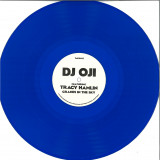
DJ Oji - Cranes In The Sky EP

Limited Edition - Transparent Blue Vinyl

‘Cranes In The Sky,’ was originally written by Beyonce’s baby sister Solange alongside Raphael Saadiq, for her album back in 2016 that was cited by Rolling Stone as one of the most important 500 records of all time. The words exploring a fearless journey inward, pulling up the root of a problem, and the first glimpse of blue sky after the storm has passed.

Fast forward to 2022 - Ross Allen and Andy Thompson’s Foundation Music Productions enlist the expertise of Baltimore club legend, Dj Oji, together with Tracy Hamlin (Pieces Of A Dream), to take Solange’s breakout delivery to the dancefloor. Soulful vocals will heal you, while the mid-tempo moments will mellow the masses, and UK Funky grooves will keep the shuffle moving along way into the early hours. Three remixes come in the form of the ethereal DJ Pope Funkhut Reprise, a signature Joe Goddard groover and the Star One. KDA. Meltdown Dub.


Press:

Gazza Premiere

House Salad Music Premiere

Madoras Premiere

Music Is 4 Lovers Review

Le Visiteur Review

Hot House Picks

Faith In The Defected Basement - Livestream play


DJ Feedback:

FRANCOIS K
Yes! I played the vocal version the other day again.

KAI ALCE
Dope re-interpretation from Baltimore stalwarts OJI, POPE & Tracy!

GREG WILSON
What's not to like? Love the orig Solange jam!

DANNY KRIVIT
Nice, I like a lot of DJ Oji.

SOUL CLAP/ ELI GOLDSTEIN
Fire right here

DAZ I KUE/ BUGZ IN THE ATTIC
Yea I love this one…cool vibes.

THATMANMONKZ
Oh yeah, love the Solange original, and I’m a big Oji fan! That reprise version might come in very useful for the right set!

TERRY FARLEY/ FAITH
Got to be contender for single of the month with that story x

HOT TODDY
Simply beautiful.

CRAIG SMITH/ 6TH BOROUGH PROJECT
Loved the original of this from Solange a few years back, this is a real nice interpretation of it. Liking the reprise and Dub, handy tools

CHARLES WEBSTER
Nice soulful groover. Like this.

FISH GOO DEEP/ GREG DOWLING
Lovely re imagining of one of my favourite tracks of all time

FRANK BOOKER
Love this package. Reprise mix is the one for me. Very cool!

NICK V/ LA MONA
Thanks a lot I actually prefer the dub version :)

JIMPSTER/ FREERANGE
Killer groove on this and really nice to hear a housed up version of Cranes which is such a stunning song in it’s OG form. Def something I’d like to play out.

FELIX JOY/ SWU.FM
Yes ! I flippin love a good reprise mix and this one is doing it for me. Love the original version by Solange and this is a really great rework!

STEVE PARRY / FOR SASHA
Really Smoove love it.

GROOVE ARMADA/ TOM FINDLAY
THIS IS LOVELY!!

RALPH SESSION/ HALF ASSED RECORDS
Wow the dubstrumental really gives it new life.

QUENTIN HARRIS
I love this package.

GRAME PARK/ THE HACIENDA
This is tremendous

HECTOR ROMERO/ DEF MIX
Good to see this one got picked up. I’ve played this a few times since 2018 but will get it back in rotation. Glad to see this song is getting some traction. I look forward to the unreleased versions.

ANDY BUCHAN
What a sun-dappled slice of beauty! Full support on this, what a gorgeous EP. And those drums are ace, really propulsive.

DANIELLE MOORE/ CRAZY P
Yeah I really like this. I mean I love the original but theres something quite interesting about this. Nice yeah x

MARC MEISNERE/ SOL POWER SOUND
Yes please! Can’t wait to play this one!

STEFANO TUCCI/ HELL YEAH
This is one of the best best vocal of recent times, I love It, the crescendo towards half of the track is nothing but gorgeous!

TREVOR FING/ GRAFITTI KINGS
Love these remixes.

MAX P/ HELL YEAH
Yeah, full pack is what I needed !

HORSE MEAT DISCO/ SEVERINO
Really into this!

SEAN JOHNSTON/ ALFOS
I wouldn't play it, but it's a beautiful piece of work

GRAEME PARK/ THE HACIENDA
I’m gonna enjoy playing this its lovely.

NICK V/ LA MONA
Thanks a lot I actually prefer the dub version :)

TREVOR FUNG/ GRAFITTI KINGS
Love this !!

QUENTIN HARRIS
Being a fan of the Original I love everything about this.

ALAN DIXON/ MIDNIGHT MAGIC
Killer!!!!

DAVE JARVIS/ FAITH
This is amazing! Absolutely love xx

NICK V/ LA MONA
This is a fantastic track!

MAX P/ HELL YEAH
Oh yeaahhhh

RICK GILL/ OUTLAWS YACHT CLUB
Beautiful soulful house. Quality production and top draw vocals.

MICKEY JUKES/ 1BTN
Ooof! Such a strong record to step to but i love this. Classy production, vocals are killer. All round winner!

TOMMY TURBO JAZZ/ JAXX MEDICINE
I was a fan of the OG but I really needed this cut!!

RUSSELL FORMAN/ PIKES/ HARRYS KEBABS
This is great .... I'm writing an article on the Coney Island Boardwalk house parties atm.

JIM LISTER/ 1BTN
Loving the reprise and the dub!I'm a big fan of the Solange original, so it's nice to hear a new angle on it

CHRIS DE BEURRE/ THE EAGLE
Gorgeous vocal! And such a deep production - really like this! Infectious x

DAIRMONT/ ROOM WITH A VIEW
Amazing track. Loving it!

STEVE PARRY/ FOR SASHA
Beautiful super smooth.

LES CROASDAILE/ FREIGHT ISLAND
Tune this, reminds of Southport weekender!

En stock

Disponible en stock et prêt pour l'expédition

12,82
Lorraine Johnson - The More I Get, The More I Want / Feed The Flame

repressed !

Serious holy grail business on this rare 12-inch extended disco version of Lorraine Johnson - The More I Get, The More I Want on Prelude Records. Original copies of this promo-only cut will set you back £400+ and it doesn’t take a genius to work out why. Produced by Jesse Boyce and Moses Dillard and mixed by Rafael Charres the man behind the mixing desk for classics such as Rare Pleasure - Superfine Feeling and Keith Barrow - Turn Me Up, it’s a dream team cohort that created this Paradise Garage classic.

Backed with equally enthralling, Boyce and Dillard produced, Francois K mixed ‘Feed The Flame’, also loved by the Garage dance floor.

En stock

Disponible en stock et prêt pour l'expédition

12,56
The Brooks - Anyday Now LP 2x12"

Named "best kept secret of Canadian funk" by the Quebecois newspaper La Presse, The Brooks are a band of accomplished musicians, well-known in the soul/funk scene across the Atlantic. Expert instrumentalists led by Alexandre Lapointe create a dazzling combo with frontman Alan Prater— an incredibly energetic showman who has worked alongside some of the biggest names in the music industry. This passionate and experienced band fan the sacred fire every time they perform! Thanks to a solid realization, their musical message comes across beautifully. The Brooks go beyond mere interpretation and style exercises: they are a powerful groove machine and a driving force in their sector. 50 years of African American music are condensed in the band's aesthetic. In their live shows and in their records, you can hear James Brown's meticulousness, D'Angelo's delightfulness, Fela Kuti's radiance, Herbie Hancock's intergenerational openness, and J. Dilla's innovative spirit. These heroes of music didn't let rules and trends dictate their messages, and neither do The Brooks. Just like these history makers, they built their reputation with sweat and rigor, outside of conventional channels. The Brooks are incredibly hard workers united in a project where pleasure and complete artistic freedom are the only key words. After 8 years of existence, with an EP and two albums, they have already won many awards and nominations (GAMIQ, Independent Music Awards, ADISQ...) and built a solid reputation in the Quebec indie world.

Who are The Brooks? First, there's the icon, Alan Prater! This Florida-born musician can boast that he shared the stage with the Jacksons! Thanks to his many trips and experiences, he became a key member of Montreal jazz. He is the band's biggest asset: if The Brooks were a sports team, Alan Prater would be captain. Then, at the drums: Maxime Bellavance, one half of the Beat Market duo, whose "dancy and retro futurist" groove can be heard in several major and underground projects in Canada. Philippe Look aces guitar and vocals. His experience as a session musician working with famous bands for 20 years allowed him to take part in different projects: rock, downtempo, trip hop, electro… As one of the founding members of The Brooks, he also wrote many of the band's songs. Keyboardist Daniel Thouin is an integral part of the Montreal jazz scene. He is both an accomplished acoustic piano player and synthesizer player, well versed in writing as well as in improvising, in organic sounds as well as in the latest technologies. Thouin possesses a double vision, which allows him to both exalt and lead productions. Composer Sébastien Grenier wows us with his saxophone. Thanks to his theoretical knowledge and his 20 years of experience, acquired through continuous training all around the world, he is a true guiding force. French trumpetist Hichem Khalfa begun learning the instrument at 7 years old. He attended a musical conservatory before going to the Haute École de Musique and finally pursuing his studies at McGill University. He won prizes at Rimouski International Jazz Festival and received the François Marcaurelle prize at Montreal Off Festival. His successful jazz projects allowed him to work with famous musicians like Blitz the Ambassador, Nomadic Massive, Rhonda Ross and Kalmunity. Philippe Beaudin can be considered an apostle of Afro-Latin percussions, which he teaches and practices with great passion. Thanks to his participation in several projects, you can discover his talent both on stage and onscreen. The Brooks' philosophy is based on art in its rawest form, on perfectionism in musical practice. The choices they make and the directions they take are motivated mostly by instinctive feelings. This is how The Brooks recently crossed the path of Underdog Records during a trip in France. It was love at first sight for the two groups who share a passion for soul. Their chemistry allows them to be completely free in their creative process and natural as ever in their conception-creation-communication approach.

En stock

Disponible en stock et prêt pour l'expédition

17,61
Michael Wilson - Groove It To Your Body

What can be said about this monstrous Disco Funk extravaganza from 1982? Well, plenty actually... the only entry in the mighty Prelude back catalogue from Michael Wilson, 'Groove It To Your Body' is what this music is all about, a proper dance record, drenched in the funk, a groove that just doesn't stop.

The A-side is incredible, but it's really the b-side dub mix that steals the show. Francois Kevorkian, who was Prelude's A&R man at the time, mans the desk on both mixes, but for a truly stellar work-out the dub flips all of the essential ingredients into a stew of rumbling synth and tape feedback and deep space delay and echo.

This mix could be seen as the template of what was to come, and is an all-out dancefloor wrecker. Try it! It doesn't get any better than this.

A Disco essential. 2nd hand copies of this nugget go for serious wedge these days, now's your chance to snag an *official* licensed reissue from Prelude direct. All totally Above Board! Do it!

En stock

Disponible en stock et prêt pour l'expédition

12,14
Glenn Davis - Namida (Tears Of Happiness) EP

F*CLR Records are delighted to release Dublin based producer and remixer Glenn Davis’s outstanding new EP, Namida (Tears of Happiness), the eagerly anticipated follow up to his hugely acclaimed Body & Soul’ 12”.

With remixes from Ashley Beedle & Darren Morris’s Afrikanz on Marz production unit, it has already been given the legendary François Kevorkian seal of approval with massive support on his Worldwide FM show. Mr Davis has been busy in the studio this year creating complete dancefloor and radio fire - house music to lift you up and save your soul.
The original mix of Namida (Tears of Happiness) would sit comfortably next to anything on the Nu Groove label roster, the Burrell Brothers would be saluting Glenn for his beautiful attention to detail.

Ashley Beedle x Darren Morris take their Afrikanz on Marz remixes onto a cosmic disco level and with a bass line that takes no prisoners, deliver a sparkling remix + dub. With the addition of the properly late night sleazy bizniss UGetting Down, it’s party time for deep headz. Enjoy!!

En stock

Disponible en stock et prêt pour l'expédition

11,13
Powerline - Journey / Double Journey

Classic jazz/funk/disco cut that became an instant anthem on all discerning dance floorswhen it was originally released, and for decades to follow. Includes the previously commercially unreleased Sax Mix of 'Journey', cut loud at 45rpm.

Championed by DJs including Francois Kevorkian, David Mancuso, Larry Levan and more, it's a record that, alongside tracks like Atmosfear's 'Dancing In Outer Space', become synonymous with the UK influence on US club music at the time.A sound that many forward thinking DJs in New York, Chicago etc. embraced to stand out from the crowd and bring depth to the dance floor.

Driving jazz/funk, legato bass, grooving beats, subtle keys, dubbed out percussion and guitar licks that bring you to a simple but infectious piano melody.

A collaboration between Andy Sodjka and Jerry Pike, mastered by Herb Powers.

En stock

Disponible en stock et prêt pour l'expédition

12,82
Palm Unit - Hommage À Jef Gilson LP 2x12"

Back in the day, French pianist, composer and all-round jazz superstar Jean-François Quiévreux, a.k.a. Jef Gilson, was up there alongside the likes of peers John Coltrane, Oscar Peterson, and Sun Ra. In a fitting homage to the decades worth of sublime music, and his sad passing away in 2012, French quarter Palm Unit have released a lively, honest tribute, upbeat and contemporary re-interpretative vision of his legacy.
.
Gilson has been noted for changing the face of bebop with free-jazz and afro. Along the way his big band featured the likes of Lloyd Miler, Bill Coleman, Michel Portal, and others. With his own recording studio and label Palm Records, Gilson released music from greats including Byard Lancaster, David S. Ware, François Jeanneau, and more. He also helped embed a more entho style to the world of jazz, inspired by his visits to Madagascar, which resulted in the famous Malagasy jazz albums.

Palm Unit are a wildly eclectic super-group of jazz greats includes uKanDanZ's saxophonist Lionel Martin, keyboardist Fred Escoffier from Le Sacre du Tympan, drummer Philippe 'Pipon' Garcia whose mostly known from his worth with the Erik Truffaz Quartet, and special guest Del Rabenja -- who played alongside Gilson in Malagasy -- on the Magascan valiha harp. Palm Unit plays Gilson's repertoire without any a priori, in a totally complex-free manner, reinventing it whilst preserving its original essence. The keyboards sound almost psychedelic (and often not that far from the style of Eddy Louiss on Jef Gilson's 60's albums), the sax scratches, mews and wails, whilst the drums make the whole thing swing. Even Del Rabenja was surprised to rediscover the songs still sounding so modern, decades after they were created.

En stock

Disponible en stock et prêt pour l'expédition

18,07
Various - La Bande A Bonnot (commdie Musicale De B

Gatefold 1 LP Paris, 1954. Henri-François Rey wrote the thema of the piece « la bande à bonnot » and asked Boris Vian to write the songs in order it to become a musical comedy. « la bande a bonnot » was the name of a french illegal anarchist group... As soon as the piece was played at Théâtre du Quartier Latin, french authorities made it being stopped. Musical parts have been lost . 1971, Jacques Canetti has been told the original handwritten lyrics of the Boris Vian songs have been found again. Jacques Canetti asked Louis Bessières to re create music parts. 1975, Jacques Canetti released this record with songs being performed by Judith Magre, Yves Robert, Lucienne Vernay , Pierre Jamet, Kim Ibarra, Maurice Barrier & Cécile Vassort. + 2 bonus tracks whose lyrics were suppsoed to be too for the original spectacle : « la java des chaussettes à clous » by Jacques Higelin & « l »anguille » by Magali Noël.

En stock

Disponible en stock et prêt pour l'expédition

13,40
Fouk - Tune it Out

Fouk

Tune it Out

12inchSSINT005
SOUTH STREET
11.05.2026

This perfectly formed EP brings together Dutch duo Fouk with a selection of collaborators across four groove-led cuts blending house, disco, and nu-disco influences.

The title track sees Fouk teaming up with The Phenomenal Handclap Band, delivering a vibrant vocal cut driven by warm basslines, uplifting melodies, and classic disco instrumentation. Importantly, both the vocal and instrumental versions appear here as extended mixes exclusive to the vinyl release.

Further collaborations with Archil & Leon and 79.5 continue the EP’s groove-heavy approach, combining soulful vocals, live instrumentation, and dancefloor-ready arrangements.

Already receiving strong support across radio, DJs, and streaming platforms, including plays from Bill Brewster (NTS Radio), Colleen Cosmo Murphy, Dom Servini, Francois K, Graeme Park, Hot Toddy, Massimiliano Pagliara, Pete Herbert, Slothboogie, Tim Zawada / Star Creature Universal Vibrations, Dave Pezzner, Nadiem Shah, Luxxury, Dj Supermarkt, Luke Solomon, Seamus Haji, Sophie Lloyd, J-Kriv, DJ Rocca, Faze Action.

The release has also landed #1 placements on Spotify’s Nu Disco editorial playlist.

With warm grooves, uplifting vocals and strong crossover appeal between disco, house and nu-disco scenes, this EP offers high playability for DJs and strong appeal for modern disco and house collectors.

En stock du15.05.2026

13,87
Byard Lancaster - Us

'At the beginning of the 1960s, at the Berklee College of Music, Byard Lancaster met some feisty friends: Sonny Sharrock, Dave Burrell and Ted Daniel. It is easy to see why he rapidly became involved in free jazz. Once he was settled in New York, he appeared on Sunny Murray Quintet, recorded under the leadership of the drum crazy colleague of Albert Ayler.
'In 1968, the saxophonist and flutist recorded his first album under his own name: It’s Not Up To Us. The following year he came to Paris in the wake of… Sunny Murray. He would come back to France in 1971 (again with Murray) and in 1973 (without Murray for a change). This is when he met Jef Gilson, the pianist and producer who encouraged him to record under his own name again. On Palm Records (Gilson’s label), he would release four albums: Us, Mother Africa, Exactement and Funny Funky Rib Crib.

'Us, the first of the four records was recorded on November 24th, 1973 with Sylvin Marc on electric bass (a Fender… Lancaster?) and the evergreen Steve McCall on drums.
'On the album, the trio works from the John Coltrane model; free jazz shook up by the timely contributions of the bassist, followed by a mesmerizing atmospheric music. Then, Lancaster delivers a sinuous solo path, which is a reminder of his unique tone. On the album’s companion single, the trio launches into great black music of a different genre which would lead the clairvoyant François Tusques to claim that Byard Lancaster is an “authentic representative of soul/free jazz”, to sum up this is Great Black Music!'

pas en stock

Commandez maintenant et nous commanderons l'article pour vous chez notre fournisseur.

27,94

Derniere entrée: 17 jours
Byard Lancaster - Mother Africa

'A few months after recording Us, Lancaster recorded Mother Africa along with Clint Jackson III, a trumpeter, partner of Khan Jamal or Noah Howard on other recordings.
On march 8th, 1974, Lancaster and Jackson headed up a group composed of Jean-François Catoire (electric and double bass), Keno Speller (percussion) and Jonathan Dickinson (drums). Together, they create an immediate impression. From the first seconds of We The Blessed, they develop a free jazz which rapidly abandons any virulence under the effect of blues and soul based interventions.
When Gilson’s composition Mother Africa begins, listeners are transported into the studio, listening to the musicians setting up: chatting and joking… Then comes the melody: a dozen or so notes of a repeated theme which is accelerated and deformed according to their whims… The jazz played by the association Byard Lancaster / Clint Jackson III is rare: creative AND recreational. We the blessed, is apt listening to this again today!'

pas en stock

Commandez maintenant et nous commanderons l'article pour vous chez notre fournisseur.

25,84

Derniere entrée: 17 jours
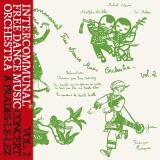
Intercommunal Free Dance Music Orchestra - Vol. 2 Concert A Prades Le Lez

Concert at Prades-le-Lez marks the origins of the Intercommunal Free Dance Music Orchestra. In 1974, François Tusques and his companions (Michel Marre, Jo Maka, Adolf Winkler and Guem), in the spirit of Don Cherry or Chris McGregor, playfully dismantle all borders and all styles of creative music.

On this second volume, the Intercommunal builds unprecedented soundscapes around a song of revolt, a dance tune, or a burst of dissonance. The journey is unforgettable, no question about it. On repeat listening, it even becomes… lunar!

“The music that we make is primarily meant to be listened to live,” warned a leaflet from the Intercommunal Free Dance Music Orchestra. This is precisely why the (restored!) reissue of the two volumes of Concert at Prades-le-Lez, recorded on January 25 and 26, 1974 by François Tusques and his comrades, is such an important event.

In 1971, after recording a series of albums that would leave a lasting mark on French jazz (Free Jazz, of course, with Michel Portal, François Jeanneau, Bernard Vitet, Beb Guérin and Charles Saudrais, but also Le Nouveau Jazz with Barney Wilen, or the solo Piano Dazibao), François Tusques founded the Intercommunal—a grouping whose very name called for the fraternization of the various communities making up the country: Our music will help, we hope, to resolve the contradictions that exist between workers be longing to different communities, by breaking down various forms of national chauvinism, and more particularly the chauvinism of certain French people toward the cultures of Third World countries… Long live the friendship between the peoples of the whole world!

Among the great records made by the Intercommunal Free Dance Music Orchestra, the two volumes of Concert at Prades-le-Lez come first, before L’Inter Communal, Vol. 4, Le Musichien, and Après la marée noire (four titles already reissued by Souffle Continu). François Tusques and his companions (Michel Marre and Jo Maka on saxophones, Adolf Winkler on trombone, and Guem on percussion) performed on January 25 and 26, 1974 at the Moulin de Prades-le-Lez, a few kilometers from Montpellier. It was thus in the southern region of Occitanie that the first echoes of this musical vision of a borderless brotherhood were recorded.

“We’re not among the Colonels,” the Intercommunal reassures us right away, performing a stride piano tune carried by African winds that the audience cannot resist for long. The energy is already striking and it never lets up throughout these two recordings, from start to finish: jazz, blues, traditional music, minimalism, even funk… The musicians of the Intercommunal have heard a lot of great music and now delight in reinventing it by mixing it all together.

“We want the song form to take its place as a weapon in the struggle against capitalist exploitation and all those who oppress us morally and materially,” declared an Intercommunal leaflet, quoting Jean-Baptiste Clément, author of the lyrics to “Le Temps des cerises.” The struggle was therefore serious—but it did not prevent François Tusques and his group from waging it in a festive spirit: each piece on Concert at Prades-le- Lez sends out a call for love and fraternity. Fifty years later, the message remains as relevant as ever—and once again, it is François Tusques who makes it heard.

pré-commande17.04.2026

il devrait être publié sur 17.04.2026

23,95
Intercommunal Free Dance Music Orchestra - Vol. 1 Concert A Prades Le Lez
  • On N'est Pas Chez Les Colonels
  • Intercommunal Blues
  • Mazir
  • Kan-Ha-Diskan - We Shall Over Come
  • African Rythm-N-Logy
également disponible

2[23,95 €]


Concert at Prades-le-Lez marks the origins of the Intercommunal Free Dance Music Orchestra. In 1974, François Tusques and his companions (Michel Marre, Jo Maka, Adolf Winkler and Guem), in the spirit of Don Cherry or Chris McGregor, playfully dismantle all borders and all styles of creative music.

On this first volume, the Intercommunal takes its audience from New Orleans to Brittany and on to North Africa. The journey was bold, without a doubt—and its memory remains unforgettable.

“The music that we make is primarily meant to be listened to live,” warned a leaflet from the Intercommunal Free Dance Music Orchestra. This is precisely why the (restored!) reissue of the two volumes of Concert at Prades-le-Lez, recorded on January 25 and 26, 1974 by François Tusques and his comrades, is such an important event.

In 1971, after recording a series of albums that would leave a lasting mark on French jazz (Free Jazz, of course, with Michel Portal, François Jeanneau, Bernard Vitet, Beb Guérin and Charles Saudrais, but also Le Nouveau Jazz with Barney Wilen, or the solo Piano Dazibao), François Tusques founded the Intercommunal—a grouping whose very name called for the fraternization of the various communities making up the country: Our music will help, we hope, to resolve the contradictions that exist between workers be longing to different communities, by breaking down various forms of national chauvinism, and more particularly the chauvinism of certain French people toward the cultures of Third World countries… Long live the friendship between the peoples of the whole world!

Among the great records made by the Intercommunal Free Dance Music Orchestra, the two volumes of Concert at Prades-le-Lez come first, before L’Inter Communal, Vol. 4, Le Musichien, and Après la marée noire (four titles already reissued by Souffle Continu). François Tusques and his companions (Michel Marre and Jo Maka on saxophones, Adolf Winkler on trombone, and Guem on percussion) performed on January 25 and 26, 1974 at the Moulin de Prades-le-Lez, a few kilometers from Montpellier. It was thus in the southern region of Occitanie that the first echoes of this musical vision of a borderless brotherhood were recorded.

“We’re not among the Colonels,” the Intercommunal reassures us right away, performing a stride piano tune carried by African winds that the audience cannot resist for long. The energy is already striking and it never lets up throughout these two recordings, from start to finish: jazz, blues, traditional music, minimalism, even funk… The musicians of the Intercommunal have heard a lot of great music and now delight in reinventing it by mixing it all together.

“We want the song form to take its place as a weapon in the struggle against capitalist exploitation and all those who oppress us morally and materially,” declared an Intercommunal leaflet, quoting Jean-Baptiste Clément, author of the lyrics to “Le Temps des cerises.” The struggle was therefore serious—but it did not prevent François Tusques and his group from waging it in a festive spirit: each piece on Concert at Prades-le- Lez sends out a call for love and fraternity. Fifty years later, the message remains as relevant as ever—and once again, it is François Tusques who makes it heard.

pré-commande17.04.2026

il devrait être publié sur 17.04.2026

23,95
Various - Tchic Tchic: French Bossa Nova 1963-1974  Colored Edition LP 2x12"
  • A1: Les Masques - Il Faut Tenir (1969)
  • A2: Isabelle Aubret - Casa Forte (1971)
  • A3: Christianne Legrand - Hlm Et Ciné Roman (1972)
  • A4: Jean Constantin - Pas Tant D'chichi Ponpon (1972)
  • A5: Billy Nencioli & Baden Powell - Si Rien Ne Va (1969)
  • B1-: Marpessa Dawn - Le Petit Cuica (1963)
  • B2: Jean-Pierre Sabar - Vai Vai (1974)
  • B3: Sophia Loren - De Jour En Jour (1963)
  • B4: Isabelle - Jusqu’à La Tombée Du Jour (1969)
  • B5: Sylvia Fels - Corto Maltesse (1974)
  • C1: Frank Gérard - Comme Une Samba (1972)
  • C2: Ann Sorel - La Poupée Des Favellas (1971)
  • C3: Charles Level - Un Enfant Café Au Lait (1971)
  • C4: Andrea Parisy - Les Mains Qui Font Du Bien (1970)
  • C5: Audrey Arno - Quand Jean-Paul Rentrera (1969)
  • C6: Aldo Frank - T’as Vu Ce Printemps (1970)
  • D1: Christianne Legrand - Cent Mille Poissons Dans Ton Filet (1972)
  • D2: Clarinha - Lemenja (1970)
  • D3: Hit Parade Des Enfants - Aquarela (1976)
  • D4: Jean-Pierre Lang - Tendresse (1965)
  • D5: Magalie Noël - Une Énorme Samba (1970)
  • D6: Françoise Legrand - La Lune

Ever since the late 1950s bossa-nova revolution, Brazil’s influence on French music has been undeniable. Pierre Barouh, Georges Moustaki and a vast array of lesser known artists, all made the Musica Popular Brasileira (MPB) an axis of promotion at the service of a cool and metaphysical, modern and mixed Brazilian lifestyle. Some were seduced by the poetic languors of the bossa, some were looking for fun, and others just loved the American hybridization of jazz-bossa, jazz-samba.


What is bossa nova? One of its creators, Joao Gilberto said: "Its style, cadence, everything is samba. At the very start, we didn't call it bossa nova, we sang a little samba made up of a single note - Samba de uma nota so .... The discussion around the origins of bossa nova is therefore useless”. It is nevertheless useful to remember that these magnificent Brazilian songs, which the guitarist describes as samba, were shifted and balanced around improbable chords. "I like things that lean, the in-betweens that limp with grace," said Pierre Barrouh, quoting Jean Cocteau.


With emotion, arrangements for violin and supple guitar licks, bossa nova rapidly changed. A transformation that can be heard in the Tchic, tchic, French Bossa Nova 1963-1974 compilation, the result of a cultural reappropriation, which traveled through the United States and supplemented itself in France.

A musical revolution that has remained significant, bossa nova was born in Rio. From 1956 to 1961, Brazil lived through its golden years. In five years, the country had invented its modernist style. Elected president in 1956, Juscelino Kubitschek de Oliveira, an elegant man with a broad forehead, brandished a promising slogan: "Fifty years of progress in five years". He quickly got to work. Not worried about increasing debt, he launched the project for a new federal capital, Brasilia, designed by the communist architect Oscar Niemeyer. Volkswagen opened state-of-the-art factories and created the “fusquinha”, the Beetle. In Rio, the Vespa made its first appearance. The Arpoador Surf Club crew run into the “girl” from Ipanema, Helô Pinheiro - the tanned garota ("chick"), between a flower and mermaid, who at 17 walked by the Veloso bar, where the fiery author and composer, Tom Jobim and Vinicius de Moraes, were getting drunk on whiskey. From then on, bossa symbolized cool.

In 1958, Joao Gilberto recorded Chega de Saudade, which the directors of Philips denied, calling it "music for fagots". The marketing director, who believed in it, secretly pressed 3000 78-inch vinyls and distributed them at schools around Rio, creating a tidal wave.

American jazzmen then took over. In particular, trumpeter Dizzy Gillespie and guitarist Charlie Byrd. In November 1962, the Brazilian Ministry of Foreign Affairs funded a "Bossa-Nova" concert at Carnegie Hall in New York, inviting the genre’s pioneers. Unprepared, the show soon turned to disaster. But the troupe was invited to the White House by Jackie Kennedy. The first lady loved "the new beat" and in particular Maria Ninguem, a song by Carlos Lyra, later covered by Brigitte Bardot.

In Brazil, the 1964 military coup quickly ended this euphoria. The destructive atmosphere that ensued pushed many Brazilian musicians to leave, if not to exile. Thus, Tom Jobim, Sergio Mendes and Joao Gilberto arrived to the United States. In New York, Joao Gilberto met saxophonist Stan Getz. At the time, he was married to the Bahianese Astrud Weinert Gilberto, who had a German father. She had never sung before, but she knew how to speak English. Getz therefore asked her to replace her husband on The Girl From Ipanema. The Getz/Gilberto record with Tom Jobim on piano, was released in March 1964. Phil Ramone, the "pope of pop" was in charge of sound.

Bossa nova arrived in Paris through the classic “guitar-voice” channel (Pierre Barouh, Baden Powell, Moustaki…) But France loved jazz and Paris had already welcomed its American contributors. All these good people were to pass through Saint-Germain-des-Prés. The cabaret l'Escale became the Mecca of Latin American sound where one could find Pierre Barrouh and his friends, such as the Camara Trio, samba-jazz aces, whose only record was published by the Saravah label. With a band strangely called Les Masques (a band that included Nicole Croisille and Pierre Vassiliu, among others), the Camara Trio recorded an interesting Brazilian Sound, including the track Il faut tenir which is present on this tasty compilation of rarities.

Other enlightened musicians can also be found on the compilation, such as Jean-Pierre Sabar (songwriter for Hardy, Auffray, Leforestier ...) and the French pop rock organist Balthazar. In 1975, Sabar recorded Aurinkoinen Musiikkimatka on a Finnish label, which featured the crazy Vai, Vai, included on this record. We are now following the footsteps of Brazilian electronic musicians such as Sergio Mendes, Eumir Deodato or Marcos Valle who created funk and disco sounds on their keyboards and synthesizers. A style that influenced Véronique Sanson when she wrote Jusqu’à la Tombée de la nuit in 1969 for Isabelle de Funès, the niece of Louis and a great friend of Michel Berger - Sanson did end up singing this track on her 1992 Sans Regret record.


The pinnacle of exoticism and travel, Sylvia Fels’ Corto Maltese includes bongos, sea mist and ocean sounds. The title was taken from Jacky Chalard’s concept album written in 1974, Je suis vivant, mais j’ai peur (I am alive, but I am scared), based on Gilbert Deflez’s science fiction novel.


However, bossa nova extended the scope of popularity. "In the 1970s, I was a fan of Sergio Mendes, Getz / Gilberto. I fell in love with this music that I knew because I had been an orchestral singer, " explained Isabelle Aubret, who in 1971 delivered a composite record of covers by the very funky Jorge Ben, Orfeu Negro, Tom Jobim, Vinicius de Morais and Jean Ferrat. "I recorded this album for Meys Records in Paris, far from Brazil, with wonderful musicians, François Raubert, Roland Vincent, Alain Goraguer...". The latter wrote the arrangements for Casa Forte, a very percussive title borrowed from Edu Lobo, one of the initiators of the bossa who spent time in California. "Jazz and bossa came together and produced very rhythmic music. I love singing, it allows me to dream, to have fun, to feel a high on stage, and these songs brought me joy, made me swing, my singing felt like a dance.”


The world tours of French singers and their desire for the tropics, often brought them to Rio with its hills, forests, caipirinhas and tanned bodies. There are surprises though, like this Iemenja (Iemenja is the goddess of the sea in the Afro-Brazilian candomblé religion). Not unlike the composer and musician Jean-Pierre Lang, based in Sao Paulo, Claire Chevalier taught Brazil to Brazil. In 1970, the singer and painter published a 45-inch vinyl, Mon mari et mes amants (My husband and my lovers), under the improbable pseudonym of Clarinha (little Claire). She was then living in Rio, with her husband, Joël Leibovitz, who founded a band called Azimuth, and who owned a record label specialized in "sambas enredos" songs for samba school parades.


For its B side, she asked Pierre Perret to come up with lyrics for a song composed by Carlos Imperial: "Oh goddess of the sea, o goddess Iemenja, I bring a white rose to adorn your long hair ..." . "Perret came to see us, and we had fun, remembers Joël Leibovitz. We wrote Lemenja for fun, we recorded it at the Havaí studio, behind the Central do Brasil the central station. Erlon Chaves, the arranger who worked with Elis Regina, joined us" adding his share of Afro-Brazilian percussions and funky brass to the mix.

There is a common misunderstanding in Franco-Brazilian history: that bossa, admittedly hedonistic, is perceived as funny, even though the poets who wrote the texts are often philosophizing on the human condition. Its French interpreters pull it towards a carnival inspired universe, far removed from its fundamental essence. Thus, Jean Constantin covered the famous Samba da minha terra, an ode to the art of samba written by the classic Bahian composer Dorival Caymmi, renaming it with the enticing title of Pas tant de tchi tchi pompon: "On your pier there is no tchi tchi / when you arch your back, you know everything is alright ”(lyrics by Gérard Calvi). This expedited bossa aims for the absurd, but retains a certain elegance.

Indeed, Jean Constantin was not an idiot, the rather large man had a huge mustache and liked fantasy, (Les pantoufles à papa, Le pacha, inspired by cha-cha-cha-cha, salsa and jazz) but he was also the lyricist of Mon manège à moi interpreted by Edith Piaf, the composer of Mon Truc en plume by Zizi Jeanmaire and the soundtrack of François Truffaut’s 400 Blows. Le Poulpe, published in 1970, from which this bossa is extract, was arranged by Jean-Claude Vannier, an accomplice of Serge Gainsbourg’s Melody Nelson. In short: "There is enough of samba / By looking at the parasol / Because my poor cabeza / Is going to die in the sun".

Even the American actress Marpessa Down, who was at the heart of the bossa nova revolution with her role as Euridyce in Marcel Camus’ film Orfeu Negro, winner of the 1959 Cannes Palme d'or, fed the clichée with Je voudrais parler au petit cuica - "Tell me how you manage to always make people want to dance / It's true, I must admit that I cannot resist your magic" - in consequence, once can hear the cuica, a little drum inherited from the Bantu.


But bossa nova had many angles. Societal, of course, pushing actresses who were symbols of women's liberation like Brigitte Bardot, Jeanne Moreau, or Sophia Loren to engage in the exercise of accelerated bossa. In February of 1963, Sophia Loren made a record in French in Rome, Je ne t'aime plus, featuring the song De jour en jour, a bossa written by two Italians, Armando Trovajoli and Tino Fornai, which was released a little later by Barclay. Bossa accompanied the 1960s, a decade of moral liberation. Ann Sorel, who interpreted La Poupée des favellas, caused a sensation with L’amour à plusieurs, a provocative song written by Frédéric Bottom and Jean-Claude Vannier. As for the actress Andrea Parisy, she displayed her bourgeois cheekiness in Marcel Carné's Les Tricheurs before interpreting Les mains qui font du bien. And Magalie Noël, the friend of Boris Vian, who sung Johnny fais-moi mal, was hired to sing Une énorme Samba, composed by Alain Goraguer (arranger to Gainsbourg, Bobby Lapointe and Jean Ferrat) with lyrics by Frédéric Botton.

But in the end, of what wood is bossa nova made of? The answer is given by Christianne Legrand, daughter of Raymond the conductor, and sister to Michel the composer: "With me, with jà" - jà means "immediately" in Portuguese. In 1972, the singer, an expert in vocal jazz and a member of the Double Six, published Le Brésil de Christianne Legrand. Two songs included on the Tchic Tchic compilation that demonstrate how bossa, jazz, funk, rock, etc. work like a swiss army knife: the music is used to denounce broken systems, or miracles, HLM et ciné roman, Cent mille poissons dans ton filet, two songs from the O Cafona soundtrack, a successful telenovela broadcast, at the time in black and white, on TV Globo. The first was adapted in French by the fighter and friend of the Legrand tribe, Agnès Varda. The second is content with a play on words, jostling them into a summer fun.


Véronique Mortaigne

pré-commande17.04.2026

il devrait être publié sur 17.04.2026

27,31
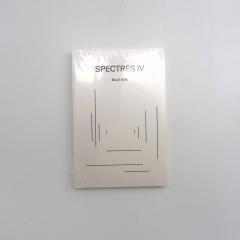
Various - SPECTRES IV: A Thousand Voices - Mille Voix

Fourth issue of Shelter Press' annual publication series »Spectres« (in association with INA GRM), this time themed around ›voice‹. Featuring contributions from/about François J. Bonnet, John Giorno, David Grubbs, Yannick Guédon, Lee Gamble, Sarah Hennies, Haela Ravenna Hunt-Hendrix, Stine Janvin, Joan La Barbara, Youmna Saba, Akira Sakata, Pierre Schaeffer, Peter Szendy and Ghédalia Tazartès.

The book includes an essay about the essence of improvisation by Joan La Barbara, Lee Gamble looking at neural networks and vocal simulation systems, an untitled anecdote from Ghédalia Tazartès (RIP) and Stine Janvin on the necessity of singing, plus much more.

»The voice is everywhere, infiltrating everything, making civilisation, marking out territories with infinite borders, spreading from the farthest reaches to the most intimate spaces. It can be neither reduced nor summarised. And accordingly, when taken as a theme, the voice is inexhaustible, even when seen in the light of its very particular relation with the sonic or the musical, as is the case in most of the texts collected in this volume. There is no point therefore in trying to circumscribe or amalgamate the multiple avatars of the voice. We must rather try to apprehend what the voice can do, to envisage its landscape, its potential effects.«

— Extract from the editors' foreword.

pas en stock

Commandez maintenant et nous commanderons l'article pour vous chez notre fournisseur.

21,22

Derniere entrée: 25 jours
Stephan Eicher - Spielt Noise Boys

2025 Reissue.


Münchenbuchsee, a suburb of Bern, Switzerland. Stephan Eicher is the youngest of three children. His father, a radio and TV repairman, is also a jazz violinist and a sound tinkerer in his spare time. In the family home's converted fallout shelter turned studio, Mr. Eicher experiments with homemade sequencers, tortures handcrafted drum machines, and abuses reel-to-reel tape recorders—all under the fascinated gaze of young Stephan.

The boy quickly develops a musical curiosity, exploring sound through various experiments and wanderings. Alongside his younger brother Martin, Stephan crafts audio plays on a homemade multi-track recorder (essentially several cassette decks hooked together!), which they write, record, add sound effects to, and perform for family and friends. Just a couple of nice kids, really...

Then comes 1972, and Lou Reed's Transformer album changes everything for the Eicher kids. For 13-year-old Stephan, it's a revelation—especially "Vicious", the opening track, which he plays on repeat for months. He convinces his father to buy him an electric guitar. Not stopping there, his father also builds him a tube amp using an old radio.

Then comes adolescence. A rough one. Stephan leaves home at 16 and moves to Zurich. With obvious artistic talent, he persuades his art teacher to help him get into F+F, a radical, alternative art school—despite his young age. Accepted, he starts learning video techniques, determined to become a filmmaker.

At F+F, Stephan organizes Dada-style happenings and concerts with a group of friends known as the Noise Boys. Among them: one of his teachers on bass, Veit Stauffer on drums (who would later found ReR/Recommended Records), his girlfriend Sacha on vocals, and Stephan on guitar. In one of their early performances, they release a remote-controlled mouse covered in dull razor blades into the audience to create panic and chaos. Keeping with this aggressive, confrontational spirit, they once played a concert while wearing headphones blasting Tristan and Isolde, trying to perform their own songs simultaneously—to maximize the cacophony. The goal was always the same: clear the room.

Their “songs,” if you can call them that, followed suit. Take "Hungeriges Afrika", for instance—performed entirely with power drills and some drum feedback.

To make ends meet, Stephan returns to Bern on weekends to work as a waiter at the Spex Club, the city’s main punk venue. On September 16, 1980, during a show by proto-electro group Starter, the police raid the club and arrest everyone. Stephan, who manages to avoid arrest, seizes the opportunity to “borrow” Starter’s gear left behind. He suddenly finds himself in possession of a Roland Promars synth, a Korg MS20, and a gorgeous CR78 drum machine, which he runs through a Big Muff distortion pedal to get that perfect gritty sound.

He then sets out to reinterpret some Noise Boys tracks, reworking them during impromptu sessions recorded on a dictaphone (yes, a dictaphone—now the lo-fi sound makes more sense, doesn’t it?). He ironically titles the resulting cassette "Stephan Eicher spielt Noise Boys" ("Stephan Eicher plays Noise Boys"). This gem features seven tracks, which are the ones reissued here.

Back in Zurich, he visits his friends Andrew Moore and Robert Vogel, who have a DIY cassette duplication setup. They make 25 copies of Stephan Eicher spielt Noise Boys for Stephan and his friends. Robert encourages him to visit Urs Steiger of Off Course Records and play him the tape.

Without much hope, Stephan shows up at Urs’s office. But Urs is instantly hooked and suggests releasing a 7” single. Due to space constraints, they reluctantly drop two of the seven tracks ("Hungeriges Afrika" and "One Second"). As for the musical score featured on the cover—it was randomly chosen and remains a mystery to this day. Calling all music theory nerds!

The 7-inch is pressed in 750 copies and released in the first week of December 1980—a date Stephan remembers well, as it’s the same week John Lennon was killed. Smartly, Urs sends a promo copy to François Murner, Switzerland’s answer to John Peel, who hosts a show on alternative station Sounds. Murner falls in love with the record and starts giving it airtime. To Stephan’s surprise, sales follow—and people actually seem interested in his music.

Even this modest underground success scares Stephan a bit. He stops making music for a year and moves to Bologna, where he works as a programmer at Radio Città, a feminist radio station.

Meanwhile, Stephan’s younger brother Martin, who’s also involved in the punk scene, joins the band Glueams as a singer and guitarist. Glueams, named after the fanzine run by two of its members (drummer Marco Repetto and bassist GT), eventually rebrands as Grauzone. Stephan is invited to their shows to project hacked Super 8 visuals live on stage.

Urs Steiger, now working on a compilation titled Swiss Wave – The Album, asks Grauzone to contribute alongside bands like Liliput, Jack and the Rippers, The Sick, and Ladyshave (Fall 1980).

For the album, Martin tasks Stephan with producing their recording sessions. Under Stephan's artistic direction, two tracks emerge: "Raum" and "Eisbär". During "Eisbär", Martin plays a minimalist bass line borrowed from post-punk band The Feelies (just an open string). Drummer Marco Repetto struggles to keep time. Later that evening, unhappy with the takes, Stephan builds a four-bar drum loop from a ¼-inch tape and uses it instead of the flawed original. He then adds bleepy synths and wind sounds to complete the track’s icy vibe before handing it over to Urs.

The Swiss Wave – The Album compilation is released quietly at first, but things snowball thanks to "Eisbär", which eventually becomes a smash hit—selling over 600,000 singles.

Meanwhile, Stephan plays in a rockabilly band called SMUV (named after Switzerland’s social security agency) and begins producing artists, including the debut album of Starter (1981), which includes a more pop-oriented version of "Minijupe".

By early 1982, Stephan starts spending time with the post-punk girl band Liliput (formerly Kleenex). They’re older than him, and he happily drives them around in his Renault Major, acting as their roadie.

By 1983, Grauzone—signed to the major label EMI, which turned out to be a misstep—is falling apart. Stephan begins to pivot toward a more mainstream pop sound with his debut solo album Les Chansons Bleues.

But that... is already another story.

En stock du18.05.2026

23,11

Derniere entrée: 12 jours
Bergur Anderson - Around the Songsters Commune (TAPE)

Tape

Around the Songster's Commune was made quite quickly and purposefully without a lot of fuss -- made to preserve the spirit of its making -- at Diana Duta's generous Jambes studio in Brussels. It's a collection of meditations: compositional fragments, whimsy ditties, field recordings and (live/d) experiments with troubadour song-making methodologies. It's a sonic drift -- sonically drifts. Here, Bergur seems to be exploring the looseness of world-making. Or, maybe better said, exploring how loose he can get with world-making and the realization of sonic realities. Exploring how unconscious, how trusting of himself, as an artist/composer/sound-maker/human, he can be.

pré-commande

Cet article n'a pas encore été publié. Vous pouvez pré-commander le produit maintenant.

11,72
STEPHEN O'MALLEY - SPHERES COLLAPSER

STEPHEN O'MALLEY

SPHERES COLLAPSER

12inchXKLP32
XKatedral
27.02.2026out soon
  • Phase I Organ
  • Phase Ii Organ

Brandneues Album von Stephen O'Malley, dem Mitbegründer von SUNN O))), mit neuen, bisher unveröffentlichten Stücken für Pfeifenorgel. Diese Platte hat zwei lange Stücke für Orgel von Stephen O'Malley, die er auf diesen Aufnahmen zusammen mit der bekannten Organistin Kali Malone und Frederikke Hoffmeier (Puce Mary) spielt. Das Album wurde an Weihnachten 2021 in der Église Saint-François in Lausanne, Schweiz, auf Les Grandes Orgues (Scherrer (1777), Walker (1867), Kuhn (1995)) in der Église Saint-François in Lausanne, Schweiz, aufgenommen und ursprünglich von Stephen im Rahmen einer Suite mit dem Titel Les Sphères (effondrez-les), Phasen I-V, für eine Zusammenarbeit mit der bekannten belgisch-schweizerischen Choreografin Cindy Van Acker komponiert. Neben den beiden Orgelwerken auf dieser Platte umfasste die Suite auch die Phasen III und V für E-Gitarre, Verstärker und Elektronik (gespielt von Stephen O'Malley und Kali Malone) sowie die Phase IV für Percussion-Ensemble (gespielt von Eklekto). Abgemischt von Stephen O'Malley im EMS, Stockholm, und von François-Xavier Delaby und Tristan Mazire, Paris, im Februar 2022. Gemastert und geschnitten von Rashad Becker, Berlin, Juni 2025. Perfekte Pressung bei Optimal, Deutschland. Dieses Album ist eine Koproduktion mit La Becque Editions. Stephen O'Malley ist auch auf der kommenden Compilation ,XKatedral Anthology Series III" vertreten. Stephen O'Malley ist Gründungsmitglied von Sunn O))), die 2026 ausgiebig auf Tournee sind.

pré-commande

Cet article n'a pas encore été publié. Vous pouvez pré-commander le produit maintenant.

24,79
Articles par page:
N/ABPM
Vinyl