Lael Neale's minimalist drone pop draws inspiration from the Transcendentalists, the alienation of modern life, and a rich array of musical influences-ranging from Dionne Warwick and John Lennon to primitive American gospel and Spacemen 3. Her expansive new record, Altogether Stranger, due May 2, was written and recorded in the early morning quiet of Los Angeles. Clocking in at just 32 minutes, the 9-song LP covers an unexpected breadth of musical and lyrical terrain-from garage rock nursery rhymes and creation myths to Motorik dance dirges and solitary Omnichord meditations. A brilliant lyricist, Neale has a unique ability to uncover the extraordinary within the mundane, tackling themes of polarity that recur throughout her work-country vs. city, humanity vs. technology, isolation vs. society. This album is her third collaboration with producer Guy Blakeslee who helps expand the tonal palette while staying true to Neale's commitment to the raw immediacy and hand-made intimacy of home recording. Altogether Stranger - a stunning album filled with dreamlike reverie, Neale's crystalline voice, and echoes of the Velvet Underground - was conceived after four years of oscillating between rural solitude and urban chaos. It finds Neale perched at the piano in a hilltop bungalow, looking down on a rare curve of Sunset Blvd. Here, in this daily ritual of writing, singing, and painting-what David Lynch referred to as "the Art Life"-she creates the space for her most adventurous work to date. Born and raised in Virginia's idyllic countryside, Neale brought the high-lonesome sound of her home state with her when she moved to California to pursue music. After years of writing songs on guitar and playing small venues in Los Angeles, she discovered the Omnichord in 2019, which sparked a new creative direction. This led to her 2021 Sub Pop debut album, Acquainted With Night. That album's 2023 follow-up, Star Eaters Delight, deepened the collaboration with Blakeslee, infusing minimalist soundscapes with a heightened electric energy. The album found a devoted audience, and Neale's subsequent tour included sold-out shows in Los Angeles, New York City, London, and Paris, multiple trips across Europe, and a West Coast run supporting kindred spirit Weyes Blood. This marked yet another return to Los Angeles. Indeed, Los Angeles is not just the backdrop of Altogether Stranger but a lead character. The album's accompanying film - created with Neale's faithful Sony Handycam - builds on her ongoing series of videos, telling the story of Neale as an alien in a suit of mirrors stranded on Earth. Wandering through modern-day LA, she finds both absurdity and beauty in our fragile, untenable way of life. Over the long year it took to write Altogether Stranger, Neale vacillated between childlike optimism and existential melancholy. While she may not have been able to reconcile these opposing states, Altogether Stranger represents an ambitious breakthrough for this singular, self-sufficient artist.
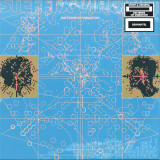
One of clubland’s most unmistakable and loved duos, Steffi & Virginia present a new album of upfront house music, Patterns of Vibration.
Eight gracefully-driven songs stretch out from the hazy fog of the dancefloor to the sun-drenched future decades of house, offering a glimpse into the rich heritage and distinct forward momentum of the two artists.
With their first productions dating back to 2010 the pair continue on a long-lasting journey together as creators and partners. Their debut, Reasons, was quickly followed by the seminal Yours on Ostgut Ton - the blueprint for their trademark sound, embedding gorgeous vocal hooks within luxuriant, weighty club tracks.
In their own words, “a celebration of joyful moments,” Patterns of Vibration was put together over a three month period of intensive work and play. The pair immersed themselves in the daily ritual of putting down ideas at their Candy Mountain studio in the Portuguese countryside. At the same time Steffi’s 50th birthday celebrations fueled their creative fires, reconnecting with old friends and tapping into a deep love for those ecstatic moments of freedom and unity, soundtracked by house music.
In no time a huge folder of ideas amassed and they set about selecting the purest, stand-out signals with the motto, “let the positivity shine through!” It’s been a process that has gifted the two artists with energy and perspective as they continue on their unique path.
With the spirit of the fierce night streaming through on every track, this album marks a bright new chapter in the duo’s story - channeling that special potion of emotional vibrations found when music, dance, friends and lovers meet.
Thanks to countless hours behind the decks at their Berghain / Panorama Bar residencies and global touring, the album glistens with an ageless urgency and a straight-to-club core. That driving, early morning pulse is mirrored by a deft skill for conjuring arresting electronic hymns; transmitting their passion and collective years together on the road, in clubs, in the studio, and at home.
From the moody tribalism of lead single Nightflight, to the chord-led heaven of Stab Stealer, or the tracky 7 In The Morning, Steffi & Virginia’s partnership is alive with the essential throb of a movement that continues to blossom as it enters its 4th decade.
Virginia’s jubilant vocal hooks are front and centre on every track, enriched with Steffi’s precision analogue bump. Punchy and direct kick drums carry jacking snares and interwoven synth stabs. Perfectly placed basslines massage the low-end, leaving plenty of space for Virginia’s vivescent vocals.
A homogenous sonic code is woven throughout, as Virginia’s voice provides not only the soaring leading lines but also the “ornaments and tentacles” of each track, with percussive details and micro-elements melting into the grooves of every cut.
Steffi & Virginia’s house music is the stuff of folklore. Patterns of Vibration weaves a narrative through a record crate full of emotions, a forever-chorus calling out through the night, till the earthy glow of the new dawn.
out of Stock
Last delivered 13 months ago available to reorder, subject to availability
Listen to This.” As the original working title for Bitches Brew, the instruction and invitation remains to this day as the best way to approach a record that shattered conventions, altered music history, and, 55 years later, still sounds far ahead of its time. The template for jazz fusion, Bitches Brew is rightly ranked by virtually every significant outlet among the 100 greatest albums ever made. Sewn together with vibrant colors, voodoo textures, and ethereal moods, the 1970 landmark emerges with supreme detail and nonpareil feeling on Mobile Fidelity’s UltraDisc One-Step 180g 33RPM 2LP vinyl set.
Sourced from the original master tapes, strictly limited to 5,000 numbered copies, and pressed at Fidelity Record Pressing in California, this definitive-sounding 55th anniversary reissue enhances every element of a double album that established new possibilities for studio recording techniques. You’ll hear wide and deep soundstages, separation between instruments, and an extremely broad dynamic range. If ever a jazz album can be said to have gone to outer space and back, this is it.
Sourced from the original master tapes, strictly limited to 5,000 numbered copies, and pressed at Fidelity Record Pressing in California, this definitive-sounding 55th anniversary reissue enhances every element of a double album that established new possibilities for studio recording techniques. You’ll hear wide and deep soundstages, separation between instruments, and an extremely broad dynamic range. If ever a jazz album can be said to have gone to outer space and back, this is it.
Davis conceived Bitches Brew by having the musicians stand in a semi-circle. There, he pointed at them with vague directions for tempo, solos, and cues. The collective improvisation and interplay spawned a galaxy of melodies and grooves that were later spliced together by producer Ted Macero. Benefitting from the ultra-low noise floor and superb groove definition of this pressing, these distinct creations take shape with utmost realism. Compositions stretch across jet-black backgrounds and paint canvases laden with millions of colors and shades. Juxtaposed percussion, loose jams, and melodic segues explode with impressionistic verve.
Bitches Brew also boasts visionary artwork. By design, the lavish packaging and gorgeous presentation of the UD1S Bitches Brew set call attention to such matters. Housed in a deluxe slipcase, it features special foil-stamped jackets and faithful-to-the-original graphics that illuminate the splendor of the recording. It is made for discerning listeners who desire to fully immerse themselves in everything surrounding the album, from the images to the tones. And this is one effort where every last detail matters.
Gathering a Hall of Fame-worthy lineup of musicians and tweaking it according to his desires, Davis follows through on his idea to “put together the greatest rock and roll band you ever heard.” Central to his proposition is the presence of two (and sometimes three) drummers and two bassists, a tactical move that makes rhythms a central focus. Akin to the futuristic album cover art, the drum-driven suites head toward distant universes and uncharted territories. At once hypnotizing and grooving, they chart maverick adventures via quixotic rock, funk, and R&B elements.
A without-a-net experiment involving interchangeable double-quintet lineups, Bitches Brew explores the previously unimaginable with electrified instruments — Fender Rhodes piano, processed trumpet, dissonant guitars, and bass among them — and an emphasis on feeling over composition. Mesmerizing and soothing, jarring and smooth, overt and subtle: The music seemingly covers an entire map of emotions and sensations, and like no record before, ties together the groundbreaking creativity of the multiple disciplines that were changing popular culture at the end of the 1960s and dawn of a new decade.
Conceptually, Davis described Bitches Brew as “a novel without words” and “an incredible journey of pain, joy, sorrow, hate, passion, and love.” The vast psychedelic expanses of warped echoes, liquid reverb, and tape loops confirm such ambitious contrasts of light and dark, fear and hope. Yet the most absolute characteristic of the watershed effort lies in how it resists definitive interpretation and encourages free thought — the very principles Davis used to conceive Bitches Brew.
More About Mobile Fidelity UltraDisc One-Step and Why It Is Superior
Mobile Fidelity Sound Lab’s UltraDisc One-Step (UD1S) technique bypasses generational losses inherent to the traditional three-step plating process by removing two steps: the production of father and mother plates, which are created to yield numerous stampers from each lacquer that is cut. For UD1S plating, stampers (also called “converts”) are made directly from the lacquers. Since each lacquer yields only one stamper, multiple lacquers need to be cut. Mobile Fidelity's UD1S process produces a final LP with the lowest-possible noise floor. The removal of two steps of the plating process also reveals musical details and dynamics that would otherwise be lost due to the standard multi-step process. With UD1S, every aspect of vinyl production is optimized to produce the best-sounding vinyl album available today.
Norman Westberg (guitar), Giridhar Udupa (ghatam, konnakol, khanjira, percussion) and Jacek Mazurkiewicz (double bass, electronics)An extraordinary meeting of three artists from three different musical worlds and three different continents. Norman Westberg (ex-Swans) and Jacek Mazurkiewicz have already released one album together "First Man In The Moon" in 2021 (published by the Swiss label Hallow Ground).In the new project, they are accompanied by Giridhar Udupa, an Indian master of ghatam (a clay percussion instrument that looks like a jug). The album will feature 3 long trance compositions, referring to ambient, krautrock, free jazz and Indian music.Jacek Mazurkiewicz describes the creation of this album as follows:"I met Norman Westberg while supporting the Swans tour in Poland as 3FoNIA. A few years later, during Norman's tour with Gira, we recorded a duet.The trio session took place similarly to the previous duet session during Norman's solo concert in Warsaw on the Swans tour.Recorded with Adam Toczko, a quick meeting on a day off from work.I invited Giridhar Udupa to the trio, whom I had met earlier during the period when I co-founded the band Limboski. I once invited Wacek Zimpel to play a few concerts with Giridhar. Wacek later created Saagara and I was wondering about some unusual musical context in which I would find myself with Giridhar. I was looking for an interesting sound configuration, but also a cultural one, with a different approach to creating music. I got the impression that for both Norman and Giridhar it was a fairly fresh meeting, not obvious. And on the other hand, ordinary - everyone did their own thing."Detroit guitarist Norman Westberg moved to New York in 1980 and became a part of the experimental music scene that was experiencing its golden age. Westberg himself became a permanent fixture when he joined the iconic avant-rock band Swans in 1983, and was the only member other than frontman Michael Gira to play with them for most of the band's run, both until their 1997 disbandment and his return in 2010. Westberg has also been involved with other legendary New York noise-rock acts, including Jim Thirlwell's Foetus and the post-Swans Heroine Sheiks, in which he played with Cows frontman Shannon Selberg; and in 2014, he joined the noise-rock supergroup Hidden Rifles, whose members included Mike Watt of Minutemen and Mark Shippy of U.S. Maple. Westberg's solo compositions, most often for solo guitar and a set of effects, draw on drone and post-minimalism, bringing to mind dark ambient passages from Swans albums.Giridhar Udupa is an extremely valued teacher and world-renowned artist, an Indian master of ghatam (a clay percussion instrument that looks like a jug). He was born into a family with long musical traditions. He began learning to play at the age of four, guided by his father. At the age of twelve, he already had his first performances behind him. He currently gives concerts alongside the greatest masters. He has received many prestigious awards. He performs in the USA, Spain, Canada, France, Switzerland, Germany, Oman and Kuwait. Giridhar Udupa is a member of the band of the Indian vocalist Bombay Jayashri, nominated for an Oscar for the best song for the film Life of Pi. He is one of the founders of the Layatharanga band. He also plays virtuoso other traditional instruments of South India, such as mridangam and kanjira, and is excellent at using the konnakol technique (a type of rhythmic vocalization).For three decades, the artist has been a global ambassador and icon of Carnatic music. He is the founder of The Udupa Foundation, a charity organization established in 2015 to promote Indian music, performing arts and culture. He has participated in recording dozens of albums. He is also well-known in our country thanks to his cooperation with Polish performers, which resulted in excellent artistic effects, such as the famous Indialucia - Michał Czachowski's group / project or the Saagara formation, led by Wacław Zimpel. Udupa also played on the album Lechoechoplexita, released by Leszek Hefi Wiśniewski, and on the album of the band Layatharanga, released in our country.Jacek Mazurkiewicz is interested in music in the broad sense. He puts his sounds together based on emotional impressions and pulse. Combining acoustics with electronics, he is constantly looking for a new sound. Solo as 3FoNIA, in a duet with Mikołaj Trzaska or Tomek Dąbrowski, the JMB trio with Wojtek Jachna and Jacek Buhl, in the Modular String Trio quartet, the Afrobeat quintet Faso Tamala are just some of his musical incarnations. With Patryk Zakrocki, as part of an audio mission, he massaged hundreds of pairs of ears in the Inner Ear Massage Office. He also deals with sound design, composing and producing music for films and theatre performances. He collaborated with many Polish and foreign artists.
Co-directed with Maxime Daoud (Ojard), this 7th opus was written and composed with passion and recorded with an outstanding team of musicians. The message of Barbara Carlotti's new album is direct and essential: "Cherish your future!" It is an invitation to welcome the unknown, to view our destinies with tenderness, to strive toward the future while taking care of our style, to counter life's setbacks, to chase the green ray, and to reinvent love. The goal is to liberate expression, heal the wounds of the past, articulate desire with elegance and humor, and let ourselves be moved by fleeting yet eternal joys, the sight of the ocean, or the infinite beauty of a singing voice that fills us with hope and strength in an outpouring of freedom.
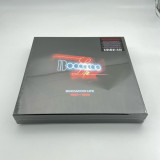
(10x12" box set, limited to 1000 copies, with premium finishing, uniquely numbered, incl. 10 records in individually printed sleeves, a booklet detailing the club's history & exclusive stickers) Boccaccio has secured its place among legendary venueslike Paradise Garage in New York and The Hacçinda in Manchester. Its bold fusion of emerging electronic genres such as New Beat, Acid, House, and Techno was way ahead of its time, drawing music lovers and clubbers from across Belgium and beyond.
Belgian label Music Man Records presents Boccaccio Life 1987-1993, a new compilation offering a fresh perspective on the legacy of the iconic Belgian club Boccaccio - often associated with the short-lived New Beat movement. The 40-track compilation highlights the raw and futuristic early house and techno sounds that were heard in the pioneering club.
Located in rural Destelbergen (Belgium), just a stone's throw from Ghent, Boccaccio has secured its place among legendary venues like Paradise Garage in New York and The Hacçinda in Manchester. Its bold fusion of emerging electronic genres such as New Beat, Acid, House, and Techno was way ahead of its time, drawing music lovers and clubbers from across Belgium and beyond. Sundays at Boccaccio were unlike anywhere else-offering sounds you couldn't hear anywhere else.
Boccaccio Life 1987-1993 is carefully curated by resident DJ Olivier Pieters and club regular Stefaan Vandenberghe, standing as the ultimate testament to a club that was more than just a venue. For those who experienced it, it was a community - a way of life. Hence the club's full name: Boccaccio Life.
This compilation stands as a testament to an innovative time in electronic music, capturing the raw, futuristic sounds of early house and techno. It sheds light on another side of Boccaccio, one that goes far beyond the short-lived New Beat scene. A carefully curated selection of 40 tracks, resonating with those who were there by offering familiar classics, while also reaching a new generation-those who never experienced it firsthand.
With tracks from Blake Baxter, Virgo, Frankie Knuckles, Tyree, and A Guy Called Gerald, the unmistakable influence of black American pioneers is clear-the originators of the firstanalog house and techno sounds. On the other hand, UK sound innovators such as The Orb and LFO bring both sharp textures and rough breakbeats to the table.
Club staple tracks include dreamy excursions from Roger Sanchez under his Egotrip moniker, the relentless basement house of Circus Bells by Robert Armani on Dance Mania, an uplifting take on a hip-house cut from The D.O.C. (Portrait of A Masterpiece in the CJ Ed-Did-It Mix), a timeless remix of UK Formation's Age of Chance from 1994, and an alternate take on The Tape by Boccaccio club regular and Belgian producer Frank De Wulf, taken from his B-Sides project.
While not always the obvious hits, these tracks have gracefully withstood the test of time, and were exclusive to Sundays at Boccaccio. Now, they are finally available to experience together in one collection, offering a timeless snapshot of a unique era.
out of Stock
Last delivered 14 months ago available to reorder, subject to availability
Looking behind the obvious, forming an orchestra out of everyday surroundings.
Finding the essence in the trivial, clarity in the complex, poetry in simplicity. All of this is part of the goal, meaning and character of Oh No Noh, the project of Leipzig-based guitarist, robot programmer, magnetic tape crumpler and composer Markus Rom. All of this floats and shines through "As Late As Possible", the third Oh No Noh album, which will be released on April 4th, 2025.
The focus of this album, as the title "As Late As Possible" suggests, was patience. A creative lingering, the selfimposed principle of letting ideas mature, consciously leaving them lying and looking at them again in order to discover and refine new things. Always looking for new ways of producing musical sounds, Markus Rom has been blurring the boundaries between LoFi, Indietronica, Postrock, Kraut and Pop with his solo project for several years. His main instruments for this are electric guitar, MIDI robots, tapes and samples. For “As Late As Possible”, Rom expands his setup with a new sound sources (acoustic guitar, banjo, organ) and musical guests: Damian Dalla Torre (Squama) on bass clarinet and Andi Haberl (the Notwist, Sun) on drums.
“As Late As Possible” continues the signature of past releases and adds new facets. Rom's distinctive looping in and over each other is particularly evident in the tracks “Missing the Point”, “Orb” and “Almost Everywhere”. With "Loot", a straightforward and folk-pop piece finds its way onto the album and coexists with math-trained tracks like "Dog Years" or "Dot", which conjure up associations with Weilheim bands like COUCH. The tracks "Bliss of Disconnect" and "Fawn" were created in collaboration with the featured guests Liz Kosack and KMRU. The confidently unplanned is one of the principles around which Oh No Noh itself is also continuously evolving. Part of this development: the radio series "Oh No Noh Radioh", which has so far consisted of over 40 parts, for which Rom invites a guest in each episode to research music together along roughly defined concepts, ideas and inspirations. Together with technology composer Hainbach, free jazz artist Limpe Fuchs and sound artist Elsa M’Bala, for example, encounters were created whose patient search and find and whose controlled coincidences also characterize “As Late As Possible” – but here concentrated, concise, and with all the love of sound and experimentation always committed to the song. With this will to create a song-like narrative, to move, to develop, “As Late As Possible” remains suspended and searching. Its concentration seems light-footed, its happy accidents well-placed, the melancholic beauty of outdated technologies, forgotten musical toys and broken noise sources always forward-looking. Music like the one that comes about when someone programs an entire robot band, which then becomes just a friendly part of the whole.
The artwork for “As Late As Possible” was created by Leipzig comic artist Anna Haifisch. The album was mixed by Adam Lenox and mastered by Frida Claeson Johannsson.
out of Stock
Last delivered 17 months ago available to reorder, subject to availability
Carrying on their longstanding dedication to the seminal output of Merzbow, Urashima returns with what is unquestionably their most ambitious release to date: “Collection 001-010”, a deluxe, 10 LP vinyl box set limited to 299 copies, gathering together the entirety of the project’s first ten releases, originally released in 1981. Encountering the band in its early incarnation of the duo of Masami Akita and Kiyoshi Mizutani, raw, exposed and bristling with energy, foreshadowing numerous trajectories they would follow over the coming years, these astounding full lengths - the majority of which have never been released on vinyl - come housed in a beautifully produced, deluxe wooden box, with each LP in its own individual sleeve reproducing the original artwork, and a LP-sized 32-page book containing reproductions of artworls and collages by Masami Akita, an interview conducted by Jim O'Rourke, and liner notes penned by Lasse Marhaug, Thurston Moore, and Akita himself, amounting to what is unquestionably one of the most historically significant releases we’re likely to encounter in 2025.
Deluxe Edition of 299 copies, remastered from the original analog tapes by Masami Akita, each LP comes in its individual sleeve reproducing the original artwork, also includes a LP-sized 32-page book. ** Since its founding during the late 2000s, the Italian imprint, Urashima, has become a definitive voice in the landscape of noise. Bringing forth beautiful limited edition releases, they’ve sculpted a singular vision of one of the most vibrant and revolutionary bodies of experimental sound to have graced the globe. Among the many projects that they have supported over the decades, there has been an undeniable dedication to the output of the seminal Japanese noise outfit, Merzbow, making a significant amount of the project’s out of print back catalog available across a range of formats. Now they return with what is arguably their most stunning and ambitious release dedicated to the project to date: “Collection 001-010”, gathering the entirety of Merzbow’s first ten releases, largely privately released by the band on cassette across 1981, in a deluxe, 10 LP vinyl box set. Representing what is effectively ground zero in Japanese noise and collectively amounting to some of the most sought after releases ever produced within that movement, Urashima’s truly beautiful collection comes fully remastered by Masami Akita himself from the original tapes, presenting all but a small number in their first ever vinyl pressings, with each LP housed in its own individual sleeve reproducing the original artwork, alongside a LP-sized 32-page book containing reproductions of artworks and collages by Masami Akita, an interview conducted by Jim O'Rourke, and liner notes penned by Lasse Marhaug, Thurston Moore and Akita himself. Towering with energy and groundbreaking creative vision, within the realms of noise and experimental music, releases don’t get more monumental or historically important than this!
Merzbow came roaring onto the Tokyo scene in 1979, and remains, to this day, one of the most prolific and aggressively forward-thinking projects in experimental music. Eventually becoming the solo vehicle for the efforts of Masami Akita, in its earliest incarnation the project was the duo of Akita and Kiyoshi Mizutani, taking their name from German artist Kurt Schwitters' pre-war architectural assemblage, The Cathedral of Erotic Misery or Merzbau, and quickly set out to challenge entrenched notions of what music could be. Embracing technology and the machine, even in its earliest iterations, Merzbow pushed toward new territories of the extreme, arriving at a space of pure, unadulterated sonic onslaught that has continued, for over 40 years, to set the pace for the entire genre of noise, and has remained one of the movement’s most important, definitive voices, continuously laying the groundwork for countless artists who have followed in its wake.
When dealing with historical gestures, there’s an invertible aura surrounding original line-ups and early statements, and rightfully so. It is often within a band’s debut that we catch the purest glimpse of the raw energy and creative ferment that made them what they are. This is certainly the case when regarding the coveted early releases of Merzbow, capturing the emergence of the project in its form as the duo of Masami Akita and Kiyoshi Mizutani as they helped set the blue print from the then emerging movement of Japanese noise. Over the course of its nearly five decades of activity, Merzbow has always been noted for how prolific and ambitious the project is. This was no less the case in the very beginning. While they were active for roughly two years prior, in 1981 alone they issued ten self-released cassettes numerically titled “Collection 001-010”, albums which have both individually and collectively become holy grails in the realms of noise, with only two - “Collection 007” and “Collection 009” - ever receiving vinyl reissues prior to now.
As Lasse Marhaug deftly articulates in the newly commissioned liner notes for “Collection 001-010”, despite having been recorded in different location across a span of time, the sum total of Merzbow’s first ten releases might be best regarded as a single release to be listened to in the same, durational sitting, with the material standing well apart from what most came to expect from Merzbow, while foreshadowing numerous trajectories the project would take over the coming years. Not only do these recordings feature a vast array of instrumentation - tapes, acoustic and electric guitar, violin, drums, voice, recorder, organ, found sounds, clarinet, homemade and prepared instruments, a vast arsenal of effects and electronics, and piano, to only begin to scratch the surface - the majority of which would disappear from the project’s active sources of sound generation over the subsequent years, but there is a slow pacing and raw sense of openness and exposure that reveals strong connections to the avant-garde improvisations of groups like AMM, Musica Elettronica Viva, and Gruppo di Improvvisazione Nuova Consonanza, the psychedelia of groups like Taj Mahal Travellers and Flower Traveling band (both of whom Akita mentions having seen in youth within his interview with Jim O’Rourke), and rock in general - albeit in fully abstracted forms - unspooling as brittle, pointillistic, textural, raw and abrasive forms, that occasionally flirts with unexpected tonal sensibilities. As Marhaug describes it in his excellent liner notes: «Sonically, “Collection” sounds more sparse and stripped. It’s dry sounding, up-front, no reverb, and there’s less heavy low-end grime and thin on the signature frequency sweeps. Viewed in a 1981 context, musically, it’s more akin to what the LAFMS (Los Angeles Free Music Society) pool of artists were doing at that time than what was happening in industrial music... There’s a strong playfulness throughout, like the sound objects are being explored for the first time, without neither restraint nor hurry. Events are allowed to be fully examined before the music moves on, or simply cuts off. To a large degree, the music on “Collection” feels acoustic in nature, although a Electro-Harmonix ring-modulator features prominently throughout.»
Easily described as a rarely encountered revelation into the original and earlier documented studio sound of Merzbow, “Collection 001-010” collectively amounts to an engrossing sonic journey in its own right, while also allowing for important, often overlooked connections drawn from numerous other creative wellsprings, notably free jazz, underground rock, the output of European and Japanese avant-garde music, as well as Dada, Fluxus, and Mail Art, much of which, beyond the illumination made possible by the sounds, Jim O’Rourke’s fantastic interview with Akita, published in the booklet, further explores, offering great insights into the origins of Merzbow and the thinking behind the project, as well as aspects of the earliest days of Japanese noise.
Mark Rae is a well respected artist and has woked with, and alonside many legends in the music industry. Originally finding success with Rae & Christian, Mark grew his record label Grand Central Records into one of the biggest indies of the late 90's. Now writing novels with soundtracks Mark is proving himslef to be a true renaissance man. Expect big things from this project. It is unique and filled with universal emotion.
£8000 booked spend on singles plugging to radio and book PR. Expect coverage on BBC Radio 6 and 4. Expect press coverage across major publications. Supported by Chris Hawkins. This release is backed with a vinyl that comes with a free novel, and a novel that comes with a free acoustic CD.
Originally released on CD only – those were the days – “Triola im Fünftonraum“ counts as one of the most iconic albums of the early Kompakt era. Experience this timeless masterpiece of lush electronica lovingly restored and remastered for the first time on vinyl – 21 years after its inception.
We found this review from back in the days that perfectly sums up what “Triola im Fünftonraum” is all about:
The press material for “Triola im Fünftonraum” made allusions to home listening, when the album is mostly about movement… in a car …preferably a fast one … on a muggy spring day.
This might catch followers of producer Jörg Burger off guard. Up until this point, the producer’s Triola tracks – limited to three consecutive appearances on Kompakt’s yearly Pop Ambient series and a spot on “Leichtes Hören Teil 1” – were free-floating ambient washouts (albeit wondrous free-floating ambient washouts) with no pulse. The album, on the other hand, is beat-driven. Though still resolutely ambient – more an update of Burger’s lushest Bionaut tracks, only fully engaging instead of mildly diverting.
The soft, synthetic hand drums and tranquil vapors of “Leuchtturm” from Pop Ambient 2003, remain untouched and begin the album. Two other tracks that might sound familiar receive dynamic overhauls, now supported with quick dance rhythms and additional layers of synth gauze; the whispy flute trills and lightly flickering keys of “AG Penthouse”, for instance, are melted into a churning rhythm and some singing keyboard vamps that resemble a relaxed take on Tangerine Dream’s suspenseful soundtrack work for “Thief” (minus the crazy guitars).
What really makes the whole thing glow is the manner in which the tracks are attached, flowing in and out of another, rising and cresting and receding, with supreme poise – even if its title provides no indication, the album is as much a travelogue as Carl Craig’s “Landcruising”, Morgan Geist’s “Driving Memoirs” and Model 500’s “Deep Space”.
These are some of Burger’s most inventive productions, a remarkable feat since he’s been doing this so long. Catch yourself in the right frame of mind and you’ll wonder if everything he has released has been one extended ramp-up to this. In this age, it’s also refreshing to have a purely ambient techno album with absolutely no connection to “Boards of Canada”.
In other words, it’s a landmark for both its label and its genre.
Andy Kellman
Copyright 2025 TiVo Corporation
Ursprünglich nur auf CD veröffentlicht – das waren noch Zeiten – zählt „Triola im Fünftonraum“ zu den ikonischsten Alben der frühen Kompakt-Ära. Dieses zeitlose Meisterwerk schwelgerischer Electronica erscheint nun 21 Jahre nach seiner Entstehung erstmals liebevoll restauriert und remastered auf Vinyl.
Wir haben diese zeitgenössische Rezension gefunden, die perfekt zusammenfasst, worum es bei „Triola im Fünftonraum“ geht:
Das Pressematerial für „Triola im Fünftonraum“ spielt auf das Zuhören zu Hause an, obwohl es in dem Album hauptsächlich um Bewegung geht … in einem Auto … vorzugsweise einem schnellen … an einem schwülen Frühlingstag.
Das könnte die Fans des Produzenten Jörg Burger überraschen. Bis zu diesem Zeitpunkt waren die Triola-Tracks des Produzenten – beschränkt auf drei aufeinanderfolgende Auftritte in der jährlichen Pop-Ambient-Reihe von Kompakt und einen Platz auf „Leichtes Hören Teil 1“ – frei schwebende Ambient-Auswaschungen (wenn auch wundersame frei schwebende Ambient-Auswaschungen) ohne Puls. Das Album hingegen ist beatgetrieben, obwohl es immer noch entschieden Ambient ist – eher eine Aktualisierung von Burgers üppigsten Bionaut-Tracks, nur dass es voll und ganz fesselt, statt nur leicht abzulenken.
Die sanften, synthetischen Handtrommeln und die ruhigen Dämpfe von „Leuchtturm“ aus Pop Ambient 2003 bleiben unangetastet und bilden den Auftakt des Albums. Zwei weitere Stücke, die einem bekannt vorkommen könnten, erhalten eine dynamische Überarbeitung, die nun von schnellen Tanzrhythmen und zusätzlichen Schichten von Synthesizer-Gaze unterstützt wird; die flüsternden Flötentöne und leicht flackernden Tasten von „AG Penthouse“ zum Beispiel verschmelzen zu einem aufgewühlten Rhythmus und einigen singenden Keyboard-Vamps, die an eine entspannte Version des spannenden Soundtracks von Tangerine Dream erinnern, der für „Thief“ (ohne die verrückten Gitarren) verwendet wird.
Was das Ganze wirklich zum Leuchten bringt, ist die Art und Weise, wie die Tracks miteinander verbunden sind, wie sie ineinander fließen, ansteigen und ihren Höhepunkt erreichen und wieder abklingen, und das mit höchster Gelassenheit – auch wenn der Titel nichts darauf hindeutet, ist das Album ebenso ein Reisebericht wie Carl Craigs „Landcruising“, Morgan Geists „Driving Memoirs“ und Model 500s „Deep Space“.
Dies sind einige von Burgers einfallsreichsten Produktionen, eine bemerkenswerte Leistung, wenn man bedenkt, wie lange er schon dabei ist. Wenn man sich in die richtige Stimmung versetzt, fragt man sich, ob alles, was er bisher veröffentlicht hat, eine einzige Vorbereitung auf dieses Album war. In der heutigen Zeit ist es auch erfrischend, ein reines Ambient-Techno-Album zu hören, das absolut nichts mit „Boards of Canada“ zu tun hat.
Mit anderen Worten: Es ist ein Meilenstein für das Label und das Genre.
Andy Kellman
Copyright 2025 TiVo Corporation
out of Stock
Last delivered 18 months ago available to reorder, subject to availability
Berlin-based Frenchman Alexkid lands on Rawax with ‘Wake Up’, a fantastic new album that explores acid from many different angles.
As an early protagonist in the 90s Parisian electronic music culture, Alexkid has been paving his own path for over two decades. Obsessed with drum-machines since his teens, he is a skilled producer and sound engineer who imbues his productions with real soul and warmth, even releasing his own lauded Ableton Live Plugins. He is a Rex club resident, released albums on Laurent Garnier's legendary F Communications and has also appeared on labels like FUSE London, Rekids, Ovum, Freerange, and
Underground Quality. With this new album he proves once again why he is so well respected by presenting eight acid laced beauties on the infamous Rawax, following appearances from iO (Mulen), Shonky, Enzo Siragusa, Julian Perez, and Diego Krause. 'Kick It' is a bristling, in your face and pricking acid banger with restless 303 lines spraying about above
punchy kicks, the mood switches up for the headier and dubbed out, but still acid laced, 'Le Manteau d'Argent', and 'Tribute' then takes you down a deeper, more shadowy and sparse late night path with a warm, bubbly acid bassline leading the way. Sublime atmospherics characterise the spacious, deeply cosmic 'Revolutions' which has contorted drums and bass making you move, followed by the physical force of acid head wrecker 'No Hiss'. The
excellent 'Idle' strips things back to a propulsive drum groove and a molten sub pattern, 'Yussuf Is In Control' is led by the sort of prying, freaky lead synth that is perfect for the afters, 'Your Love Is Fading' is a masterful track of suspensory synths and soulful vocal sounds all fused to a brightly airy house groove making this another fantastically accomplished album from one of the best in the game.
Support by:
Delano Smith, Seth Troxler, Radio Slave, Dan Curtin, Butane, Ian Pooley, Spacetravel, Satoshie Tomiie, Posthuman, Diego Krause, Samuel Deep, Sonja Moonear, Traumer, Akufen, Sakro, Italojohnson, Enzo Siragusa, Laurent Garnier, Dirian Paic, Ryan Crosson, Reiss, Roger Gerresen, Sebo K, Vinyl Speed Adjust, Franck Roger, Mihai Popoviciu, Fabe, Jamie Jones, Raresh
out of Stock
Last delivered 12 days ago available to reorder, subject to availability
2LP in printed inner sleeves + 12 page booklet with detailed info, secrets and unpublished pictures written by Walter Verdin himself. This collection dives deep into Verdin's prolific and experimental music from 1980 to the beginning of this millennium, capturing an era of a DIY punk spirit, improvisation, creative freedom and swimming against the tide.
We are thrilled to announce the upcoming release of 'Pingpong', a 2LP compilation showcasing previously unreleased works by Walter Verdin, the founding member behind Pas De Deux, the Belgian band which delivered 80's cult classics 'Rendez-Vous' & 'Cardiocleptomanie'. This collection dives deep into Verdin's prolific and experimental music from 1980 to the beginning of this millennium, capturing an era of a DIY punk spirit, improvisation, creative freedom and swimming against the tide.
This album is not just a compilation-it's a sonic journey into Verdin's unique approach to music-making, which he nurtured in the AV studio at KU Leuven's Audiovisual Department (AVD). Having begun his civil service there in 1980, Verdin was exposed to a rich array of audio and video tools that would shape his work for years to come. From the outset, Verdin's process was defined by an openness to experimentation, where he would explore sound and music organically rather than following pre-existing concepts.
The songs on Pingpong reflect his fascination with creating spontaneous, layered compositions. These recordings were made using limited tools, such as his duophonic Yamaha CS-40M synthesizer, borrowed drum machines, and tape loops, and were further enriched by techniques such as reverb and vintage sound manipulation. The results are raw, tactile, and full of personality-often more vibrant and personal than the polished, commercial recordings that would follow in professional studios.
Throughout the 1980s and 1990s, Verdin developed his craft, regularly drawing from his diverse interests in film history, soundtracks, video art, and avant-garde music. His innovative use of tape recorders, improvisational techniques, and later, MIDI and digital tools, makes for a fascinating and varied listening experience. This compilation includes everything from proto-techno and abstract new wave to avant-pop songs, sample-driven experiments, and the oddball TV-inspired tunes that have long been a staple of his work.
This selection is a true reflection of Verdin's "keen amateur" approach: a method focused on discovery, happy accidents, and unexpected results. These compositions aren't about achieving technical perfection, but about capturing moments of sonic exploration and transformation. The 21 recordings have been meticulously curated, with some tracks freshly arranged while others remain true to their original, unedited forms.
'Pingpong' finally brings these forgotten gems into the light. The album includes not only unreleased music but also fragments from Verdin's video art and multimedia projects, offering a rare glimpse into his creative evolution over two decades. Stretching up the boundaries between medium and message, aligning his own musical univers.
Take a deep breath and dive into the works of an artist whose explorations pushed his boundaries of sound and technology.
A Belgian sonic cut up, ping ponging in between many worlds.
out of Stock
Last delivered 18 months ago available to reorder, subject to availability
Enigmatic producer ANiML returns to the freeform Los Angeles-based label StrataSonic to release a six-track mini album, Star Walk. The new body of work, which comes alongside a new music video for “Bruv” (directed by Spanish visual artist YZA Voku), is out now.
Picking up where ANiML left off with “Breather” and “Bruv,” Star Walk elaborates further on that woozy-yet-sophisticated psychedelia, materializing as cinematic trip-hop, cavernous dub, and other unique genre concoctions across its six tracks. “Cherry,” with its free-spirited, delay-soaked guitar riffs, depicts a colorful, post-rock-inspired soundscape. “BabyD,” in step with “Bruv,” features a mischievous marimba melody among ghostly vocal samples, a punchy drumkit, and a slackened bassline.
These scenes are brought to life thanks to YZA Voku, a groundbreaking visual artist who is at the forefront of AI-assisted filmmaking in the animation space (see his work for The Weeknd, Swedish House Mafia, Hï Ibiza, and XG). The new music video for “Bruv,” out today, unfolds in stark black, white, and red, evoking a noir-inspired aesthetic steeped in mystery and intrigue. Shadowy figures move rhythmically through dimly lit alleys and smoke-filled ballrooms, blending calculated steps with hypnotic dance sequences.
The production blended real-life recordings with digital effects like blur, negatives, masks, analog textures, and AI-driven transformations using Runway’s video-to-video tools. AI-generated sequences created with Midjourney and Runway were merged to contrast real footage with synthetic imagery. This type of work is a rejection that AI is simply used as a shortcut in art and comes at a time when musicians are beginning to embrace such tools for the visual components of their products.
out of Stock
Last delivered 18 months ago available to reorder, subject to availability
Chris Ryan Williams (trumpet & electronics) and Lester St. Louis (cello & electronics) work together as HxH (H by H). Their skills have seen them move smoothly across various situations, constantly carving out new terrain and working in new configurations of musicians at a rapid pace. While worth reading, their biographies capture only a part of their complex rhizome.
HxH started about three years ago. The project is a direct response to all their activity with others and more importantly all their future leaning sonic desires. Their debut album STARK PHENOMENA is both their first studio recording and their first physical release. The album is appropriately set to be released by KMRU on his growing label OFNOT. It’s an ideal introduction to their sound world and their approach.
HxH describe their music as “electroacoustic,” but until recently the presence of Black musicians in this field has been greatly overlooked and largely ignored, making this phrase only partially appropriate. What HxH do really is to always be unpredictable. Every gig is a new soundscape. Sometimes you might hear echoes of Autechre or Robert Hood but then the sound-field will open up into a new terrain all their own. Chris and Lester bring together techniques from across the sound spectrum of electronic music and also draw on their deep backgrounds in Jazz, Improvisation, Classical and Noise scenes to create a sound that is true to them. After all, these two have worked with the likes of Bennie Maupin and the music of Black Fluxus artist Ben Patterson. Their rhizome is deep.
One of the ways that their unique approach manifests is in their merging of both acoustic instruments and electronic instruments in real time. This is something few have managed to do – but their spontaneous leanings work in both complex and accessible ways because of their deep understanding of landscape crafting. You can hear this clearly on the track “Pyrex Vision.” Their approach makes it tempting to compare their music to Sun Ra jamming with Laurel Halo – a comparison that would be only partly accurate.
Chris and Lester note that the sounds on STARK PHENOMENA are “imbued with such hopeful, gracious care; one that is far flung from obsessive carefulness or fuck the world carelessness, but more a caring embrace without the fuzziness of nostalgia.”
They note that when they began working together, they would “always come back to speaking on our concepts of an architecture of the expanse,” noting that their live sets often take on the joyfully noisy task of “dreaming big.” For HxH it was essential that STARK PHENOMENA have a quality that is “almost sculptural.” They consider the album “an object to be viewed from all sides.” This kind of thinking has resulted in them directly engaging with numerous sculptors and artists including Torkwase Dyson. Shape wise HxH’s sound fields work in a parallel to Dyson’s black architectural works.
They also note that the opening cut “BEACH” (the opening and longest track from the album) was “written weeks after our first gig in a studio session donated to us by our dear friend jaimie branch.” And that Pyrex Vision “was continually being edited months after sending our ‘final mixes’ to KMRU.” Their sound sources and samples come from studio sessions, live gigs, durational installations, 3am improvised downloads and more.
KMRU notes: "I think there is an in-between layer on this record. I was first caught by the Pyrex Vision track which organically flows between monologue, subtle field recording, and instrumentation. It's such a beautiful track, evoking deep emotion through simplicity. STARK PHENOMENA effortlessly glides in between imaginative mosaics of sounds — free yet complex — unlocking memories within its layers."
out of Stock
Last delivered 5 months ago available to reorder, subject to availability
dreamcastmoe is the recording project of singer, songwriter, producer, and DJ Davon Bryant, a lifelong resident of Washington, DC. His music moves freely between moods and modes, hypnotic, romantic, traversing electronic, R&B, funk, soul, and hip-hop... Resident Advisor dubs it "soulful, cross-genre dance music." This ability to adapt and finesse, to twist in different directions while staying true and coherent in vision, can be traced to his home city and its complex cultural history. "Most Black kids in DC don't ever get to this point," he says. "This is what I am making this music for, in the DC tradition of soul and empathy and love that is rooted in this city. My music is for real people dealing with shit every day." A versatile, modern artist and collaborator, dreamcastmoe has thrived in the underground since his first uploads to Soundcloud and Bandcamp in 2017 and subsequent releases with labels like People's Potential Unlimited, Trading Places, and In Real Life Music. Bryant's laid-back personality, emotional honesty, and infectious energy shine through his work and how he talks about it, as Crack Magazine notes in their 2021 Rising feature: "a steady combination of confidence, creativity, and calmness." He grew up playing drums in church; he's worked dead-end jobs, had ups and downs, even sold off all his gear one time, but never stopped reinvesting in himself. He is quick to praise his co-producers, rattle off influences _ the visual feel of NBA 2K, the comedic timing of Bernie Mac, the savvy legacy of Duke Ellington, for starters _ and credit resourceful DC breakouts like Ankhlejohn that showed him the roadmap. His voice, a steady instrument, seemingly connects it all, capable of slow falsetto flow, swaggering talk-rap, and outright croon. His storytelling style is choppy yet fluid, like a mixtape, which is how Bryant sees Sound Is Like Water, his debut on Ghostly's International's freeform label, Spectral Sound. The two-part project culminates as a full-length LP release in November 2022. The first side, released as Part I, opens on the blurred beats of "El Dorado," which dreamcastmoe dedicates to his journey. It's a head-nodder, an off-kilter earworm co-produced by Max D (Future Times, RVNG Intl, etc.), with Bryant harmonizing hooks with synth jabs and a pitched-down presence. "Complicated" is the slow jam, delivered smoothly from a Saturday night crossroads. dreamcastmoe is contemplative and committed... gliding and locking ad-libs into skittering rhythms courtesy of co-producer Zackary Dawson _ but also willing to let something go, "acknowledging that everything in life IS NOT easy." "RU Ready" takes off from the jump as a tribute, challenge, and promise to his partner and his city ("The times you sat with me when I needed you the most / Told me the things that I needed to see / Young black man, really trying to be what I can be / And I'm really from DC). In its potent two-plus minutes, the sonics (co-produced by ZDBT) press the message, all cymbal crashes, breakbeats, and serrated synth lines. "Cloudy Weather, Wear Boots" is a blitzing dance-punk track made in collaboration with Jordan GCZ on Bryant's first trip to Amsterdam. The album's flipside opens on "Much More," the first of two synth-and-beat ballads co-produced by ZDBT. Later on "Long Songz," he claims, "I'm not writing love songs no more," prioritizing the vibe with "all my day ones." He calls it "a cry for more normal moments. Everything doesn't have to be a fantasy love story, more time spent getting to the money, growing, and making a way." He saves two of his most propulsive cuts for the finale, co-produced by Sami, co-founder of DC dance label 1432 R. As their titles suggest, "Take A Moment" and "Make Ya Mind" operate as anthems for movement, with Bryant free-flowing commands above wildly-styled percussion. Per Bryant, the latter is both "wake & bake jam" and a "dance floor bomb." His parting line: "Action / You got to show me action / Reaction." The world of dreamcastmoe straddles virtual reality and the realness of DC, images both imagined and lived-in. Bryant has a knack for unexpected melodies but what makes his music so exciting is his capacity to defy the expectations of genre and image. A fluid ingenuity and vulnerability bottled by Sound Is Like Water, and this is just the beginning.
out of Stock
Last delivered 18 months ago available to reorder, subject to availability
Bon Iver's debut full-length For Emma, Forever Ago has been making major waves in critics circles based on the strength of an early artist-pressed advance cd and a couple awe-inspiring sets at CMJ in October 2007. The New York Times called it "irresistible" and Pitchfork stamped its early review of the album with a Recommended tag. For those of you hiding away in a cabin of your own, it's time that you hear the story, and more importantly, the music. Bon Iver (pronounced: bohn eevair; French for "good winter" and spelled wrong on purpose) is a greeting, a celebration and a sentiment. It is a new statement of an artist moving on and establishing the groundwork for a lasting career. For Emma, Forever Ago is the debut of this lineage of songs. As a whole, the record is entirely cohesive throughout and remains centered around a particular aesthetic, prompted by the time and place for which it was recorded. Justin Vernon, the primary force behind Bon Iver, seems to have tested his boundaries to the maximum, and in doing so has managed to break free from any pre-cursing or finished forms. It wasn't planned. The goal was to hibernate. Vernon moved to a remote cabin in the woods of Northwestern Wisconsin at the onset of winter. He lived there alone for three months, filling his days with wood splitting and other chores around the land. This solitary time slowly began feeding a bold, uninhibited new musical focus. The days slowly evolved into nights filled with twelve-hour recording blocks, breaking only for trips on the tractor into the pines to saw and haul firewood, or for frozen sunrises high up a deer stand. All of his personal trouble, lack of perspective, heartache, longing, love, loss and guilt that had been stock piled over the course of the past six years, was suddenly purged into the form of song.
out of Stock
Last delivered 18 months ago available to reorder, subject to availability
Bei Stepptanz denkt der Musikfreund natürlich zunächst an Gene Kelly und Fred Astaire. Auch wenn nicht mehr so populär wie in der ersten Hälfte des 20. Jahrhunderts, findet der Tapdance nach wie vor in den Shows am Broadway statt. Die perkussive Ausdrucksform mit den schnellen rhythmischen Beinbewegungen ist die Spezialität des Wiener Musiker Thomas Marek, der zu den gefragten Tapdancern in Europa zählt. Der 52jährige Choreograf und Schlagzeuger hat diese Tradition schon vor einigen Jahren aufgegriffen und zeigt seine expressive Tanzkunst in vielen Theatershows. Gemeinsam mit dem Pianisten Patrick Bebelaar und dem Bassisten Jan Roder hat Marek jetzt Tapdance, Perkussion und Schlagzeug im Rahmen einer LP-Aufnahme integriert, die sowohl ausgewählte Jazzstandards, als auch ausdrucksstarke Improvisationen beinhaltet. "Footprints" heißt die im Frühjahr 2024 in Wien aufgenommene Musik, die wir nun im Rahmen unserer Vinyl-Edition als LP präsentieren. Altbekannte Standards wie "Tea For Two" und "Softly As In The Morning Sunrise" sind ebenso zu hören, wie emotional geprägte Balladen von Bebelaar und rhythmisch vielschichtige Improvisationen von Thomas Marek. Entstanden ist mit "Footprints" ein musikalisches Kaleidoskop mit Elementen von Swing bis Free, das von drei erstklassigen Musikern eingespielte wurde. Pianist Bebelaar, hat viele Jahre mit dem Trompeter Herbert Joos und dem französischen Tubisten Michel Godard zusammengearbeitet und ist zudem ein ausdrucksstarker Komponist. Bassist Jan Roder ist fester Bestandteil der Jazzszene Berlin und Bandleader Thomas Marek ist sowohl als Drummer, wie als Tapdancer auf dieser LP zu hören.
"“We can still hold the line of beauty, form, and beat. No small accomplishment in a world as challenging as this one... hard times require furious dancing. Each of us is proof” Alice Walker, Hard Times Require Furious Dancing
Snapped Ankles have given up trying to make sense of it all. The forest only offers so much protection. Feeding on a diet of fractured narratives, meme culture, viral moments and the very worst of human impulses weighs heavy. The woodwose hold up a mirror to the absurdity of modern life once again. The only sane response is to dance. Make your way to the clearing, gather around the megalith of speakers, drum machines, amps and synthesisers and dance like there’s no tomorrow.
Hard Times Furious Dancing is an invitation to all those lost in the unrelenting noise of the present, to leave it all behind and come together in the forest. Driven by the primitive thrust of their single-oscillator ‘log’ synths, high and low culture collide in a surreal, free flowing narrative - but the rhythm is universal. This is easily the closest Snapped Ankles have come to capturing their rapturous live energy in the studio.
The sound of Hard Times Furious Dancing evolved at Snapped Ankles’ South London ‘Forest Rayve’ club nights in 2024 in response to that age-old primal urge to bring people together and make them move. It’s the first time the woodwose have road tested new material to this extent before committing it to tape since debut album Come Play The Trees, and in doing so have harnessed that feral energy once again. This surreal human/woodwose connection is the very best release from an algorithm that knows you better than you know yourself. Dance it all loose."
As a founding member of Dublin experimental folk group Lankum, Ian Lynch explores submerged leylines of music and song. Forging a musical path that is all at once dark, mysterious and foreboding, but ultimately transcendental. His new solo project One Leg One Eye sees him taking a fresh approach to musical arrangement culminating in a sound that is more rooted in the raw aesthetics of second wave black metal than contemporary folk. The project was born across 2021, a period in which Lynch was able to enjoy the freedom of experimenting and exploring different paths of sound design without expectation or pressure. Seeking out interesting settings to record music and gather field recordings, there are several environments, external and interior, whose respective essence have seeped into the spirit of the music and come to represent Lynch’s artistic approach and development with this singular debut album, …And Take The Black Worm With Me. Rediscovered spaces in Dublin and the familiar enclave of his bedroom are intrinsic to the distinct and sometimes harrowing atmosphere conjured throughout the album’s five enveloping compositions. One particular location, an abandoned factory where his father worked when Ian was a child, provided a space of great inspiration and intrigue during this time. Lynch frequently visited the large abandoned warehouse and sang with his shruti box, contented in his solitude. ‘I’d Rather Be Tending My Sheep’, grew into existence from those initial sessions, eventually finding a home as an emotive centrepiece to the album. Reflecting on the overall recording of …And Take The Black Worm With Me, Lynch says, “Everything I was doing with these songs was all kind of new to me; experimenting with different sounds, textures and palettes and seeing what I could come up with by piecing it all together. I spent about a year making the album. I loved the whole process because it was basically just me in my bedroom recording everything. The experience of recording like this and having my own time to do it was amazing. I could focus on recording a specific element and happily spend all day working on that one part, doing it as many times as I wanted. At the end of the day if it didn’t feel right, I could just try it again the next day. When you’re on your own you can spend as much time as you want on particular parts until you feel that it’s absolutely perfect. I found that to be a really liberating experience. It was probably my favourite experience recording music.” The collection of songs (and their chronology) featured on …And Take The Black Worm With Me tell a story unique to Lynch’s experiences with anxiety and recognising his shadow self. Whilst the album became an outlet of personal expression for Lynch, the overarching themes and subsequent journey to confront one’s internal dichotomy of light and dark before accepting this inherent duality is universally shared. The eerie and often unsettling world contained within the album’s texturally dense opener ‘Glistening, She Emerges’, driven by the captivating drone of distorted uilleann pipes, immediately immerses the listener in this transportive work. It descends with a great heaviness, yet woven throughout the arrangement is a fascinating and indescribable entity that draws you further into this otherworldly dimension. This mood continues as the tracklist progresses and transitions into Lynch’s haunting realisation of ‘Bold and Undaunted Youth’ which further demonstrates a cinematic influence to Lynch’s compositional style. Sonically, Lynch effectively builds an impressively vast terrain with brilliantly murky lo-fi recording techniques and an unshakable curiosity to move beyond conventional structures and play with the timbre of the instruments available to him. From recording hurdy-gurdy or concertina to tape and experimenting with loops and effects pedals to stitching field recordings together, there’s an intimacy established between Lynch and his audience established through the simultaneously eerie and beautiful tones courting through …And Take The Black Worm With Me. This culminates in ‘Only the Diceys’, the extraordinary closing track in which we reach a place of resolution mapped into the album’s narrative structure. Mixed by longtime collaborator John ‘Spud’ Murphy in his Dublin-based Guerrilla Sounds Studio and mastered by Harvey Birrell …And Take The Black Worm With Me features contributions from Ruth Clinton (Landless) on church organ and vocals by Laurie Shanaman (Ails, Ludicra). Of Shanaman’s participation, in particular, which further illustrates the lo-fi and DIY ethos to the recording, Lynch says, “Laurie is my favourite black metal vocalist of all time and so I reached out to her hoping to have her involved in some way. She did, and she features on the opening track by providing some incredible screams. She recorded them into her phone and sent them over to me; what appears on the album is literally a phone recording of her screaming in her kitchen!” …And Take The Black Worm With Me continues Ian Lynch’s groundbreaking work with Lankum; recontextualising traditional forms and generating new spheres of music in his wake, confirming his status as one of the most interesting and innovative artists working in Ireland today.
Also includes a large double sided poster , colour inner sleeves and liner notes by Gerald V Casale.
Spuds rejoice. After years of requests, Futurismo are thrilled to announce a brand new limited pressing of the DEVO’s incredible Recombo DNA 4xLP with Mini CD Set, plus also available is a brand new 3xCD version.
For decades Devo have been working non-stop at Recombo DNA Laboratories on a new kind of research to keep up with the mutating world around us. That extensive research is now ready for public consumption once again. Futurismo were the first to bring you this on vinyl and now they present unhindered access into Devo’s labs, documenting the scientific analysis and demonstrations as conducted by the band between the years 1977-2008.
This tireless research has manifested itself in Recombo DNA…an unmissable collection of studio demos and unreleased rare tracks that span Devo’s entire recording career, from their original basement days to their famed ’Freedom Of Choice’ era, right the way through to unused demos from their last studio album. You may know the track ‘Baby Doll’ but do you know it’s original incarnation as ‘Satan’? If you submit to the findings of Recombo DNA Labs you will, Futurismo’s version of this compilation includes six bonus tracks taken from the archives that had never been released, or even heard before.
This limited edition 4xLP set is a sonic fusion of demos, alternate versions and outtakes, demonstrating the true breadth and talent of one of America’s most important bands. But this set doesn’t stop at four beautiful slabs of mutated vinyl, also included is ’The Somewhere Suite’ served up on the format it was originally intended to be back in the May of ‘89, advertised although never released, it’s contained here in all it’s full length glory on a 3” Mini CD. Recombo DNA is also coming on a 3xCD digipak version for the very first time from Futurismo, including all the wonderful artwork and bonus material. Devo’s Recombo DNA is an essential addition to the collection of any science fearing spud, and the perfect sister release to last years Art Devo. The original 2017 pressing of Recombo DNA sold out in less than 48 hours, so grab this while you can. Each set includes 4xLP on limited edition coloured vinyl and includes a Mini CD. This fantastic collection of devolved recordings and bonus tracks are contained within the gloss laminated wide spined sleeve, with newly tweaked artwork, a huge A1 poster, full colour inner sleeves and liner notes by Gerald V Casale. A 3xCD digipak version is also available. Submit to these findings and witness audio mutation in action.
With a Swedish Grammy (GRAMMIS) nomination for her 2023 sophomore album ‘Be Free’ and a packed touring schedule, the in-demand trombonist, songwriter and producer sough to quiet the noise around her and challenge the jazz genre’s rigid rules for her next project.
The end result is ‘When You Know’; a smoky and melancholic 10-track cocktail of jazz, alternative R&B, indie, Hip-Hop and ambient sonics that experiments at every turn. On hand to co-produce the record and provide the electronic elements that move ‘When You Know’ away from the jazz world and into more avant-garde territory, Ebba collaborated with Berlin-based producer Lucy Liebe.
Packing a potent emotional punch, the 10 tracks are a reflection of Ebba herself: direct, driven, precise. Retreating to a cabin outside of her small hometown of Hammarö, 200 miles west of Stockholm, she recorded the album in the dead of winter. With the temperatures outside nearing minus-thirty degrees, Åsman logged off for a month – disconnecting from TV, social media and emails. Embracing with vigour both the deep sense of calm and the challenges that come with the cold but also the stillness and solitude that is yielded by being in the wilderness.
No names, no faces-just sound and vision, stripped of ego, free from expectation. Concept Werkstatt is not an identity but an experiment. A space where music exists for itself, where art breathes without explanation.
This first transmission unfolds in raw textures and hypnotic movement-an EP crafted for those who listen beyond the surface. A dialogue between sound and silence, between rhythm and abstraction.
No fame, no persona-only what remains when everything else is removed.
Welcome to Concept Werkstatt.
out of Stock
Last delivered 13 months ago available to reorder, subject to availability
Because of their mix of hellified gangster shit and progressive compositions, I once jokingly called Clipping "Deathrow Tull." Well, it's not a joke anymore. While Clipping's last few projects have been record-long concepts like classic prog rock, their cyberpunk-infused new album Dead Channel Sky is mixtape-like, a carefully curated collection in which every track is a love letter to a possible present. It sounds crisp and classic at the same time. When something strikes us as retrospective and futuristic at the same time, it's a reminder of how slipshod our present moment truly is. Juxtaposing high-tech, corporate command-and-control systems (the "cyber") with the lo-fi, D.I.Y. underground (the "punk"), cyberpunk proper starts in 1982 and ends in 1999, from Blade Runner to The Matrix. Concurrently, hip-hop matured, went through its Golden Era, then melted into further forms: it went from from Fab 5 Freddy to Public Enemy to Missy Elliott. While other genres flirted with it, hip-hop was fickle and fey. Rap and rock birthed mutant offspring maligned by most, and hip-hop's relations with electronica rarely fared any better. What if someone explicitly merged hip-hop and cyberpunk - those twin suns of the '80s and '90s - into one set and sound? After all, both movements are the result of hacking the haunted leftovers of a war-torn culture that's long since moved on. On Dead Channel Sky, Clipping texture-map the twin histories of hip-hop and cyberpunk onto an alternate present where Rammellzee and Bambaataa are the superheroes of old; where Cybotron and Mantronix are the reigning legends; where Egyptian Lover and Freestyle are debated endlessly, and Ultramag and Public Enemy are the undeniable forefathers; where the lost movements of 1980s and the 1990s are still happening: rave, trip-hop, hip-house, acid house, drum & bass, big beat-the detritus of a different timeline, the survivors of armed audio warfare. Clipping are no strangers to sci-fi: two of their records were nominated for Hugo Awards (one of science fiction's top literary prizes), and a novella spun-off from their music was nominated for a third. On Dead Channel Sky, Clipping's co-conspirators include everyone from the guitarist Nels Cline, to their labelmates Cartel Madras, rapper/actor Tia Nomore, and wordsmith Aesop Rock. Diggs is known for intricate lyrics and rapid-fire rapping, and the tracks that Snipes and Hutson build in the background are no less complex. All of the above serves to give us a glimpse of an adjacent possible present, where hip-hop and cyberpunk are one culture. Binary stars are often perceived as one object when viewed with the naked eye. Like those twin sun systems, it'll take some special equipment and some discerning attention to pull the stars apart on this record. As Diggs barks on the fire-starting "Change the Channel": Everything is very important!
out of Stock
Last delivered 15 months ago available to reorder, subject to availability
The Shard: A colossal feat in engineering, savagely piercing the London skyline with zero f**ks.
Shard View: An uncompromising moment in Boylan’s bass engineering, piercing the London soundscape with even fewer f**ks.
It’s 2025. We’ve officially moved a second closer to extinction and Boylan’s wasting no time. After years of releasing noxious missives on the most influential likes of FWD>>, Artikal, Deep Dark & Dangerous, Sentry and Mean Streets, he finally launches his own label - Shard View.
A brand new vehicle for the potent strain of ice cold apocalyptic breakbeat he and his closest allies are currently making, Shard View is inspired by the vista he and the likes of Slimzee, Trends, D.O.K, U.S.F and Youngsta see every time they’re cooking up a darkness in his Peckham studio.
Coated in visual armor from Simon Oil Gang, Shard View is London, Detroit and Berlin wrapped up in one. It’s bass, it’s techno, it’s tribal, it’s No U-Turn, it’s Virus, it’s Horsepower, it’s warehouse raves. It’s timeless. And it starts with ‘Tunnel’, an extensive 10 track trip into instrumental, full physical, heavily percussive unapologetic breakbeat music. Boylan is the main consistency throughout but all the above-mentioned names are involved and always will be. Like the great collectives of past bass epochs, the energy here is molten as the friends inspire each other with this fresh take on a classic sound.
Two more EPs should follow later this year. And as the world continues to ramp up the turbulence, so will Shard View. This is not a drill.
Any questions about any of these products feel free to get in touch and we'll help you out!
albert.preston@sequence.cc
out of Stock
Last delivered 17 months ago available to reorder, subject to availability
Sharpening his modernist, hybridised club sound with the restless energy he’s made his name on, Breaka returns with Aeoui. Nodding to the vowel-only vocal samples he scatters throughout his tracks, this much-anticipated second album reaffirms Charlie Baker’s reputation as a many-sided bass music innovator.
Since 2019, Breaka has been primarily shaping his own destiny by self-releasing most of his music, and it’s afforded him the space to evolve his sound on his own terms. In the wake of his 2022 debut LP We Move, the consistently prolific producer had been looking for a fitting window to channel his work into a second full-length. The opportunity arose when he struck on a fit of jet-lagged inspiration in late 2023 and laid down two of the new album’s key tunes, ‘squashy track’ and ‘yolo bass rewind’. Jutting out at a distinct angle from his other work, Breaka knew he’d found the anchor point around which to build out the next phase of his sonic evolution.
This productive period also aligned with a new studio space to work in, leading to the album’s striking double-dose opening of ‘Aeoui’ and ‘Are We There’. With the flavour of his new album established, Breaka was able to comb back through his reams of existing ideas and find the remaining pieces that fit the emerging puzzle. There are enduring influences which bind together the Breaka sound — footwork, techno and dancehall continue to guide the infectious floor-ready pressure of the record, but he worked free of stylistic concerns to find a vibe that remained true to his independent spirit.
It’s clear the Breaka DNA reaches beyond purist club music — his roots as a jazz drummer from an early age guide the expressive flair in his beat programming, while he took a more direct influence from a mind-blowing Sons Of Kemet gig in 2022 to make psychedelic centre-piece ‘Roundhouse’. Elsewhere ‘Cascara’ pays tribute to the Afro-Cuban rhythm of the same name, which he fused with amapiano’s lithe log drums and shakers, Brazilian percussion and edgy sound design to create a maverick soundsystem wrecker.
The collision of organic and synthetic, crisp forms and chaotic energy are captured perfectly in the cover artwork created with Jordan Core. It’s a savvy sum-up of where Breaka is at right now, continually building out with clear intentions while embracing the unpredictable energy of lived experiences and the ideas that get sparked along the way. That’s why Aeoui sounds like no one else out there but Breaka.
out of Stock
Last delivered 16 months ago available to reorder, subject to availability
'LOVERS DANCE ACADEMY' is a moving celebration of soul, broken beat, house and jazz, packed to the brim with exquisite rhythmic percussion, vibrating improvised synths and syncopated bass lines. The record showcases Close Counters' effortless and infectious instrumentation, while intricate production allows the tracks to retain an energetic yet spacious feeling. Collaboration has always been at the heart of Close Counters' music, and the album showcases exuberant feature performances from Lyric Jones, Tiana Khasi, Allysha Joy, Jace XL and Shiv, plus nods to their wider collaborative team on the record (Lucky Pereira, Robyn Poppins, Matthew Hayes, Ryotaro Noshiro, Tiaryn Griggs, Annalisa Fernandez, plus Adam Halliwell of Mildlife on the album opener) creating a festive community and captures their live-performance energy throughout.
out of Stock
Last delivered 14 months ago available to reorder, subject to availability
'LOVERS DANCE ACADEMY' is a moving celebration of soul, broken beat, house and jazz, packed to the brim with exquisite rhythmic percussion, vibrating improvised synths and syncopated bass lines. The record showcases Close Counters' effortless and infectious instrumentation, while intricate production allows the tracks to retain an energetic yet spacious feeling. Collaboration has always been at the heart of Close Counters' music, and the album showcases exuberant feature performances from Lyric Jones, Tiana Khasi, Allysha Joy, Jace XL and Shiv, plus nods to their wider collaborative team on the record (Lucky Pereira, Robyn Poppins, Matthew Hayes, Ryotaro Noshiro, Tiaryn Griggs, Annalisa Fernandez, plus Adam Halliwell of Mildlife on the album opener) creating a festive community and captures their live-performance energy throughout.
out of Stock
Last delivered 18 months ago available to reorder, subject to availability
Bandler Ching makes a bold return from within the vibrant, Brussels music scene with their sophomore album, Mercurial. In this latest offering, the band edges even closer to the ever-evolving world of electronics and dance music while retaining the improvisational spirit that has always defined their sound at its core.
On Mercurial, the band navigates the fringes of industrial trap, while expertly bending and pushing the possibilities of their instruments. Ambroos De Schepper's saxophone transcends its traditional role even more, becoming a dynamic, shapeshifting entity capable of evoking haunting melodies one moment and otherworldly harmonies the next. Federico Pecoraro's bass transforms into ethereal ambient pads that drift through the mix like vapor, adding depth. Meanwhile, Olivier Penu's drums form the rhythmic backbone, laying down eclectic grooves that defy the constraints of any single genre, merging seamlessly from trap to electronica, hip-hop, and beyond.
Known for their ability to blend disparate genres and experiment with textures, Bandler Ching forges a new instrumental language, one that feels untethered to convention and free from classification. It's not a genre-crossing experiment-but a daring move towards a new instrumental genre in the digital age.
Fans of experimental electronic icons like Aphex Twin, Squarepusher, and Ceephax Acid Crew will find much to admire in the upcoming Mercurial album- it's a next step in pushing to a new musical territory and boldly casting off the jazz genre in the process.
It's been two years since Bandler Ching first released their debut album Coaxial on Sdban Ultra. Kicking off the album campaign with an album release show in Volta, the Brussels hotbed for a new generation of Belgian artists. What followed was a series of concerts in key venues and festivals across Belgium and the Netherlands to honorable reviews in national and specialized press.
out of Stock
Last delivered 19 months ago available to reorder, subject to availability
The new recording of The Book of Sounds is an intimate exploration of the piano by pianist Carlos Cipa - a way of looking into the sound, of listening into the moment when Cipa's fingers press down on the piano keys. The Book of Sounds, composed between 1979 and 1982 by composer and pianist Hans Otte, is a musical pendulum movement of one hour in twelve 'pieces', as the composer himself describes them. Chords and melodies repeat themselves, sometimes quickly, sometimes slowly; they follow each other in harmonic cadences and yet never dissolve - a timeless back and forth.
The Book of Sounds is the European-German answer to the concert music of American minimalism. But it is also the essence of many questions about society and the human condition at that time. Inspired by Zen Buddhism, Otte was convinced that a return to simplicity, to the unagitated - a piano, harmonic cadences, a middle register - frees the listener to focus on what is really important in art: the human being. Introspection begins with listening. Seldom have simple chords and melodies been so selectively staged. It is a process of endless reduction - no wild sound dramaturgies, no climaxes, hardly any beginning or end. The interpreting pianist simply prepares a tableaux of perception for the listener. Cipa naturally sets accents; he recorded the 12 pieces on three different pianos - a Steinway grand piano, a Yamaha piano, and a Yamaha CP-70, an early electric piano - to help shape the tonal characteristics.
Carlos Cipa hits the nerve of the times with this new recording. What music can be as art is still up for debate today. The Book of Sounds is not 'art-proof' and in this it is still a provocation today; absolutely unspectacular and practising relaxation. It is a wonderful invitation to feel, experience, and perhaps even find oneself in the confrontation with the work - and for a moment not to fuel the discourse. Cipa, who otherwise appears as a composer himself, here carries out Otte's intended gesture of withdrawal in a double sense and steps into the background as creator but also interpreter, in order to bequeath The Book of Sounds to the loudspeakers and headphones at home in one step forward.
After appearing with Archie Shepp at the landmark Pan-African Cultural festival in Algiers in 1969, African-American trumpeter-cornetist Clifford Thornton recorded a set of his own compositions in Paris later that year. The result was Ketchaoua, an important political and spiritual as well as musical statement that reflected the inspiration that he took from Islam. Indeed, the title of the album refers to the awe-inspiring mosque in Algiers.
Clifford Thornton’s superb band comprised his compatriots, saxophonists Archie Shepp and Arthur Jones, drummer Sunny Murray, trombonist Grachan Moncur III, pianist Dave Burrell, and bassist Earl Freeman, as well as French bassist Beb Guérin. Together they brought energy and ingenuity to the leader’s compositions, which were characterized by vivid atmospheres, exploratory, mysterious sounds and haunting themes. And the song titles conveyed an important social and cultural message. Pieces such as ‘Brotherhood’ pointed to the sense of unity and kinship that African-American artists felt with the citizens they encountered on their journey to North Africa and Europe.
This newly remastered deluxe edition of Ketchaoua provides an opportunity to hear one of the major entries in Clifford Thornton’s relatively small yet nonetheless highly impressive discography. It is an album that marks him out as a figure in the avant- garde movement of the late 60s and early 70s who deserves far wider recognition.
Wrocław-Toruń noise rock band founded by Szymon Szwarc (swrcfx, Jesień) and Damian Kowalski (SKI). They are currently collaborating with Cezary Rosiński (Młyn) and Krzysztof Rogalski (Pchełki). The band has performed in clubs and at festivals in Poland, Germany, the Czech Republic, Slovakia, Austria, Lithuania, Latvia, and Estonia. So far, two full-length albums by RZWD have been released: POMPY (Fonoradar Records 2020) and GOLD (Fonoradar Records 2022).
Album GAPS Recorded in November 2023, is the result of two years of work that merges classic POST-PUNK GUIDE with a rich electronic influence. On GAPS, RZWD aims to craft DANCE NOISE CLUB MUSIC on their own terms, pushing the limits of what a LIVE BAND can be in achieving this.
Most of the tracks evolved during RZWD's concerts in countries like Lithuania, the Czech Republic, Germany, and Estonia. These experiences and ideas were shaped into the album between November 2023 and May 2024. Live recordings in Szczecin were done by Adam Sołtysiak, while additional recordings and production were handled in Toruń under the supervision of swrcfx.
The core idea behind GAPS was to use developed themes as a starting point for further variations and exploration within DANCE NOISE CLUB MUSIC. This time, the instrumentation includes bass and an ever-expanding, mutating layer of modulation. Therefore, the album features four brand new compositions alongside four remixes of tracks from previous albums.
The album also features guest appearances by: DANIELIUS PANCEROVAS from the Lithuanian band KANALIZACJIA, adding a saxophone touch to the track DIESEL, and KRZYSZTOF FREEZE OSTROWSKI - a renowned Polish electronic musician and producer, bringing a new sonic perspective to EURO TRACK from the DMO EP.
Among the multidimensional concepts blending environments, genres, styles, and techniques found on GAPS, the pursuit of synthesizing acoustic and electronic sounds stands out. RZWD creates a space where the boundaries between these domains blur and lose their significance.
The result is a groove-driven and noisy mix of dance music styles such as RAVE, TECHNO, HOUSE, and FOOTWORK, played beyond rigid tempo measurements and DAW limitations, relying on natural skills and intuition. It's a soundtrack that works best as a backdrop to movement, whether coordinated or not.
RZWD:
SKI - DRUMS, ELECTRONICS
KRZYSZTOF ROGALSKI - BASS GUITAR
CEZARY ROSIŃSKI - DUBS, SYNTH, MOD. ELECTRONICS
swrcfx - DUBS, SYNTH, GUITAR
ALBUM GUESTS:
DANIELIUS PANCEROVAS - SAXOPHONE in DIESEL V3
KRZYSZTOF FREEZE OSTROWSKI - ELECTRONICS in EURO TRACK V2
out of Stock
Last delivered 20 months ago available to reorder, subject to availability
Loyle Carner will release his highly anticipated sophomore record, 'Not Waving, But Drowning' on 19 April via AMF Records.
'Not Waving, But Drowning' follows Loyle's BRIT (Best Male, Best Newcomer) and Mercury Prize nominated, top 20 debut 'Yesterday's Gone'. The bedrock of honest and raw sentimentality that you heard on 'Yesterday's Gone' left an inextinguishable mark on music in general and UK Hip Hop in particular, standing out as an ageless, bulletproof debut.
'Not Waving, But Drowning', Loyle's new album, gives yet more evidence - as if it were needed - of his razor-sharp flow and his unique storytelling ability. Yes, he can rap, but he allies that with the sensitivity of a poet, the observational skills of a novelist, and warmth of your best friend. The album opens with 'Dear Jean', a letter to his mother in which he's telling her that he has found the love of his life, 'a woman from the skies', and he's moving out.
It goes without saying that Loyle's music is hard to categorise, but what is even more impressive is that for someone who grew up listening to Mos Def, Biggie Smalls, Roots Manuva, and Wu Tang Clan, he doesn't sound like any of them. Although he might from time to time give lyrical nods to them, he's no imitator.
Loyle loves cooking. There are two tracks on this album named after chefs. The British-Israeli chef Yotam Ottolenghi, and the now deceased Italian chef Antonio Carluccio. 'Ottolenghi' the first single from the album was featured on the BBC Radio 1 B-list, BBC 6 Music A-list and has already been streamed over 5 million times.
Loyle refers to real life for everything, the title of 'Yesterday's Gone' came from a song of his step father, the title of his new album 'Not Waving, But Drowning' comes from a poem by his grandfather, which in turn came from a Stevie Smith poem. What you hear on the track 'Krispy' is real. He is pouring his heart out to his best friend Rebel Kleff after their relationship went downhill, he invites him on the track to say his piece but he doesn't turn up, so we get a flugel solo instead.
Loyle also has his own personal black consciousness movement. When he refers to his 'fathers' in the track 'Looking Back' he really is referring to two fathers. His biological father, a black man who he knows, but knows very little of, and his step father, a poet and musician who happens to be a white man but died a sudden unexpected death from epilepsy (SUDEP). With no real emotional ties to his biological father, but a deep connection with a deceased step-father, where does a young child turn He succinctly captures many of the great, unspoken, cultural and historical paradoxes of multicultural Britain on 'Looking Back'.
An album like this is hard to find. It is for those who like their Hip Hop to have soul, and their soul to have spirit. This is because it works on so many levels, but it is reflecting the personality of its creator. There are a host of collaborators here, Jorja Smith, Rebel Kleff, Kiko Bun, Kwes, Jordan Rakei, Sampha, Tom Misch and more, but none are overpowering. They blend righteously into place.
Loyle is not bitter with people who have let him down, or a society that lets so many down, but the combination of anger and love he has gives his voice the perfect blend of strength and vulnerability. This might be a coming of age album, but it's also a coming of ageless album. Loyle's 2019 Spring tour - which includes London's Roundhouse - sold out within 20 minutes of being on sale.
Not Waving, But Drowning
A rapper that raps about family is hard to find. The boys in the 'hood' tend not to be that interested in how much a 'brother' loves his mother, or how much he misses his dad, or even how much he misses his best friend. The boys in the 'hood' tend to be obsessed with the size of their cars, girls, bank accounts, and other personal 'possessions'. Loyle Carner's Mercury and BRIT Prize nominated debut 'Yesterday's Gone' (Released 2017), made it clear that he wasn't that kind of rapper. In fact, every time I talk to him about his work we talk about the world, and we tended to confuse ourselves by calling his work rap, poems, or songs, sometimes in the same sentence. They are in truth all of these things.
Here's some poetry.
Honestly I need them.
I hate them but I grieve them
I think I've finally found the reason
Trust
Like the fire needs the air.
I won't burn unless you're there.
'Not Waving, But Drowning', Loyle's forthcoming new album, gives us yet more evidence, (if it were needed), that he still has what rappers call, flow, but he hasn't lost any of his story telling qualities. Yes, the boy can rap, but a rapper with the sensitivity of a true poet, the observational skills of a novelist, and warmth of your best friend. The album opens with 'Dear Jean', a letter to his mother in which he's telling her that he has found the love of his life, (a woman from the skies), and he's moving out. He really loves the woman from the skies, but he still loves his mum, and so he reassures her that there is no competition, and tells her that 'She's not behind me or behind you, but beside we and beside two', his words. Or to put it another way, moving out without moving out. My words.
It goes without saying that Loyle's music is hard to categorise, but what is even more impressive is that for someone who grew up listening to Mos Def, Biggie Smalls, Roots Manuva, and Wu Tang Clan, he doesn't sound like any of them. Although he might from time to time give lyrical nods to them, he's no imitator. He says finding his own voice was something he always found easy. Although young, (in terms of a musical career), he has confidence in his own words and his own voice, and has never been tempted to sound like he's been hanging out in the USA, or rolling in 'Grime' on the mean streets of East London. And so when it comes to the creative process he doesn't simply find a beat to jump on and ride. Beats are important, but they are tenderly layered with samples, keyboards, or live drums, all imaginatively assembled for the laying on of words. Some tracks start with the idea, some with poetry, and some with a verse from a singer or some other melodic inspiration, but there is no formula.
Here's some poetry.
Don't hold any memories of us
Rather hold you everyday until the memories are dust
Yo we only caught the train
Cos you know I hate the bus
A prolific reader, who has dyslexia is hard to find. Add ADHD (Attention deficit hyperactivity disorder) to that and life should become even more difficult. To deal with your difficulties you devise coping strategies, which can differ from person to person. Loyle loves cooking. There are two tracks on this album named after chefs. The British-Israeli chef Ottolenghi, and the now deceased Italian chef Antonio Carluccio. Loyle describes himself as 'weird' because he is happy to read a cookbook as if he was reading a novel or a book of poetry. He has opened a cookery school for young adults not just because he loves food and wants to make more of it, but because it is one of the few things that can focus the ADHD mind. And when it comes to his other love, football, his approach is the same. Focus. He wanted to be a striker he says, up front scoring goals, but found his best position was in midfield because he was able to focus, check options, and see passes ahead of time, providing passes for other players just when they needed them. He says, 'You don't grow out of ADHD, you grow into it.' Loyle is also working with Levi's® on their music project where he is mentoring young musicians over a six month period, culminating at Liverpool Sound City festival.
More poetry.
When the going is tough
I wait till it falls on deaf ears
Hearsay
Without the boundaries of love
He also said, 'Ask most people and they will say that they love their mothers, but most are not going to rap about her'. On his first album Loyle's mum Jean wrote about the 'scribble of a boy' that growing up would take things apart to see how they worked. On this album she speaks with pride about a man who has found his place in the world.
Yes, poetry.
I'm still looking for the answers
Trying to find the right questions
Still waiting for my fathers
But can't break them in to sections
This poetry is serious. Loyle has his own personal black consciousness movement. He told me that he always felt safe at home, and being the darkest one in the family never meant a thing, but then when he had to face the outside world he felt hostility. It shook him up. Now he had to start asking questions, but what were the questions. This is serious. When he refers to his 'fathers' in the verse above taken from the track 'Looking Back' he really is referring to two fathers. His biological father, a black man who he knows, but knows very little of, and his step father, a poet and musician who happens to be a white man but died a sudden unexpected death from epilepsy (SUDEP). So to whom would a young black (or mixed race) kid turn He succinctly captures many of the great, unspoken, cultural and historical paradoxes of multicultural Britain when he says, 'My great grandfather could of owned my other one.' We are a people descended from enslaved people on one hand, and enslavers on the other, something we are still struggling to come to terms with, and this can be apparent in one family. A big book could have told you that, but here we get it in one line on the track, Looking Back.
Loyle refers to real life for everything. The album is peppered with captured moments that he records on his phone. These moments can range from conversations with taxi drivers, to capturing the moment when England scores a goal in the world cup. The title of 'Yesterday's Gone' came from a song of his step father, the title of his new album 'Not Waving but Drowning' comes from a poem by his grandfather, which in turn came from a Stevie Smith poem. What you hear on the track 'Krispy' is real. He is pouring his heart out to his best friend after their relationship went downhill, he invites him on the track to say his piece but he doesn't turn up, so we get a flugel solo instead. Yes people, this is real.
An album like this is hard to find. It is for those who like their Hip Hop to have soul, and their soul to have spirit, this is an album for those who have, (I'm sorry, I'm going to say it), emotional intelligence. This is because it works on so many levels, but it is reflecting the personality of its creator. There are a host of collaborators here, Jorja Smith, Rebel Kleff, Kiko Bun, Jordan Rakei, Sampha, Tom Misch and more, but none are overpowering. They blend righteously into place. Loyle is not bitter with people who have let him down, or the society that has let him down, but the combination of anger and love he has gives his voice the perfect blend of strength and vulnerability. This might be a coming of age album, but it's also a coming of ageless album. His first album worked, and this second album is a continuation of that work. Not creating a form, but being formless, as someone like Bruce Lee once said.
And here's some poetry from mum.
We talked long in to the darkest hours
Until we saw the burnished sky
And our eyes stung
As our words blurred and became thoughts
As we were silenced by the dawn
We clung to each other like sailors in a storm
out of Stock
Last delivered 19 months ago available to reorder, subject to availability
Volume 1 of this expertly curated project of 90s Italian House - put together by Don Carlos.
If Paradise was half as nice… by Fabio De Luca.
Googling “paradise house”, the first results to pop up are an endless list of European b&b’s with whitewashed lime façades, all of them promising “…an unmatched travel experience a few steps from the sea”. Next, a little further down, are the institutional websites of a few select semi-luxury retirement homes (no photos shown, but lots of stock images of smiling nurses with reassuring looks). To find the “paradise house” we’re after, we have to scroll even further down. Much further down.
It feels like yesterday, and at the same time it seems like a million years ago. The Eighties had just ended, and it was still unclear what to expect from the Nineties. Mobile phones that were not the size of a briefcase and did not cost as much as a car? A frightening economic crisis? The guitar-rock revival?! Certainly, the best place to observe that moment of transition was the dancefloor. Truly epochal transformations were happening there. From America, within a short distance one from the other, two revolutionary new musical styles had arrived: the first one sounded a bit like an “on a budget” version of the best Seventies disco-music – Philly sound made with a set of piano-bar keyboards! – the other was even more sparse, futuristic and extraterrestrial. It was a music with a quite distinct “physical” component, which at the same time, to be fully grasped, seemed to call for the knotty theories of certain French post-modern philosophers: Gilles Deleuze, Félix Guattari, Paul Virilio... Both those genres – we would learn shortly after – were born in the black communities of Chicago and Detroit, although listening to those vinyl 12” (often wrapped in generic white covers, and with little indication in the label) you could not easily guess whether behind them there was a black boy from somewhere in the Usa, or a girl from Berlin, or a pale kid from a Cornish coastal town.
Quickly, similar sounds began to show up from all corners of Europe. A thousand variations of the same intuition: leaner, less lean, happier, slightly less intoxicated, more broken, slower, faster, much faster... Boom! From the dancefloors – the London ones at least, whose chronicles we eagerly read every month in the pages of The Face and i-D – came tales of a new generation of clubbers who had completely stopped “dressing up” to go dancing; of hot tempered hooligans bursting into tears and hugging everyone under the strobe lights as the notes of Strings of Life rose up through the fumes of dry ice (certain “smiling” pills were also involved, sure). At this point, however, we must move on to Switzerland.
In Switzerland, in the quiet and diligent town of Lugano, between the 1980s and 1990s there was a club called “Morandi”. Its hot night was on Wednesdays, when the audience also came from Milan, Como, Varese and Zurich. Legend goes that, one night, none less than Prince and Sheila E were spotted hiding among the sofas, on a day-off of the Italian dates of the Nude Tour… The Wednesday resident and superstar was an Italian dj with an exotic name: Don Carlos. The soundtrack he devised was a mixture of Chicago, Detroit, the most progressive R&B and certain forgotten classics of old disco music: practically, what the Paradise Garage in New York might have sounded like had it not closed in 1987. In between, Don Carlos also managed to squeeze in some tracks he had worked on in his studio on Lago Maggiore. One in particular: a track that was rather slow compared to the BPM in fashion at the time, but which was a perfect bridge between house and R&B. The title was Alone: Don Carlos would explain years later that it had to be intended both in the English meaning of “by itself” and like the Italian word meaning “halo”. That wasn’t the only double entendre about the song, anyway. Its own very deep nature was, indeed, double. On the one hand, Alone was built around an angelic keyboard pattern and a romantic piano riff that took you straight to heaven; on the other, it showcased enough electronic squelches (plus a sax part that sounded like it had been dissolved by acid rain) to pigeonhole the tune into the “junk modernity” section, aka the hallmark of all the most innovative sounds of the time: music that sounded like it was hand-crafted from the scraps of glittering overground pop.
No one knows who was the first to call it “paradise house”, nor when it happened. Alternative definitions on the same topic one happened to hear included “ambient house”, “dream house”, “Mediterranean progressive”… but of course none were as good (and alluring) as “paradise house”. What is certain is that such inclination for sounds that were in equal measure angelic and neurotic, romantic and unaffective, quickly became the trademark of the second generation of Italian house. Music that seemed shyly equidistant from all the rhythmic and electronic revolutions that had happened up to that moment (“Music perfectly adept at going nowhere slowly” as noted by English journalist Craig McLean in a legendary field report for Blah Blah Blah magazine). Music that to a inattentive ear might have sounded as anonymous as a snapshot of a random group of passers-by at 10AM in the centre of any major city, but perfectly described the (slow) awakening in the real world after the universal love binge of the so-called Second Summer of Love.
For a brief but unforgettable season, in Italy “paradise house” was the official soundtrack of interminable weekends spent inside the car, darting from one club to another, cutting the peninsula from North to centre, from East to West coast in pursuit of the latest after-hours disco, trading kilometres per hour with beats per minute: practically, a new New Year’s Eve every Friday and Saturday night. This too was no small transformation, as well as a shock for an adult Italy that was encountering for the first time – thanks to its sons and daughters – the wild side of industrial modernity. The clubbers of the so-called “fuoriorario” scene were the balls gone mad in the pinball machine most feared by newspapers, magazines and TV pundits. What they did each and every weekend, apart from going crazy to the sound of the current white labels, was linking distant geographical points and non-places (thank you Marc Augé!) – old dance halls, farmhouses and business centres – transformed for one night into house music heaven. As Marco D’Eramo wrote in his 1995 essay on Chicago, Il maiale e il grattacielo: “Four-wheeled capitalism distorts our age-old image of the city, it allows the suburbs to be connected to each other, whereas before they were connected only by the centre (…) It makes possible a metropolitan area without a metropolis, without a city centre, without downtown. The periphery is no longer a periphery of any centre, but is self-centred”.
“Paradise house” perfectly understood all of this and turned it into a sort of cyber-blues that didn’t even need words, and unexpectedly brought back a drop of melancholic (post?)-humanity within a world that by then – as we would wholly realise in the decades to come – was fully inhuman and heartless. A world where we were all alone, and surrounded by a sinister yellowish halo, like a neon at the end of its life cycle. But, for one night at least, happy.
out of Stock
Last delivered 86 days ago available to reorder, subject to availability
The classic album now returns with new analogue mastering and stunning smoky blue vinyl pressing Originally released in 1970, Soul Rebels marked the first full-length album credited to Bob Marley and The Wailers, establishing it as a cornerstone of the roots reggae movement and a musical monument in the early stages of their career.
This album is a powerful blend of love songs and defiant rebel anthems that captures the essence of the era's burgeoning reggae scene. With its catchy rhythms, revolutionary spirit, and thought-provoking lyrics, this recording stands as a testament to the band's ability to seamlessly merge the themes of love, liberation, and self-awareness.
The title track, ‘Soul Rebels’, has become an anthem for those seeking freedom from societal norms and restrictions, encapsulating the themes of resistance and self-determination that Bob Marley, Peter Tosh, and Bunny Wailer wove into their music. The album also highlights their collaboration with visionary producer Lee ‘Scratch’ Perry, recorded at the renowned Randy’s Studio in Kingston, which became the birthplace of some of the most influential sounds in reggae history.
First concept album by Bob Marley and The Wailers
New analogue mastering restores the 1970 album to its original brilliance
Pressed on smoky blue vinyl Released on the Upsetter label, celebrating the groundbreaking collaboration between Bob Marley and The Wailers and Lee ‘Scratch’ Perry.
(Standard black vinyl version) With their anticipated new album, Black Flower delves into the transformative power of rhythm and motion.
Each groove, rhythm and pulse channels raw energy, acting as a disruptor that drives transformation. When the mind feels stuck-cemented in patterns, rigid in its views, overwhelmed by obstacles-Kinetic serves as a reminder that the body's motion can be the force to shatter those confines. To move is to adapt, evolve, and transform.
The album embodies a philosophy of flowing with change rather than resisting it, offering a bold, dynamic statement on breaking free from life's limitations. Kinetic is a call to dance through life's chaos and to harness the power of movement as a tool for liberation.
The album showcases Black Flower's signature blend of Ethio-jazz, oriental influences, dub, and afrobeat. The jazz combo, hailed by tastemakers such as Gilles Peterson, The Gaslamp Killer, and Lefto Early Bird, has performed live sessions on BBC Radio 3 and Worldwide FM. Their previous albums earned widespread acclaim, with glowing reviews from prestigious publications such as MOJO, Stereogum, Q Magazine, and Uncut Magazine. The band has toured extensively across Europe, building a strong fanbase.
File under: contemporary Jazz / ethio jazz
out of Stock
Last delivered 20 months ago available to reorder, subject to availability
It’s safe to assume no one in the audience at Carnegie Hall on March 30, 1974 anticipated what Miles Davis would play at the concert documented on Dark Magus: Live at Carnegie Hall. Recorded near the tail end of his electric period, the double album remains the darkest, most ferocious statement of Davis’ career — a visionary effort that foresaw developments in jungle, noise-rock, funk, and drum ‘n’ bass.
Initially issued in Japan in 1977, Dark Magus waited two decades for U.S. release. Now, more than 50 years after Davis and his ensemble blew minds at the famous New York venue, it gets its first-ever domestic issue on vinyl — and on a definitive-sounding pressing at that.
Mastered at Mobile Fidelity's California studio, housed in a Stoughton gatefold jacket, and pressed at Fidelity Record Pressing, this numbered-edition 180g 33RPM 2LP set of Dark Magus invites you to pull up a seat and wrap your head around an exhilarating performance that simultaneously functions as an audition, experiment, release, and magnificent explosion of jazz-rock fusion. We hope your turntable and speakers are up to the challenge.
This collectible reissue presents the improvisational magic that unfolded onstage — the skronking tonalities, wah-wah-pedal bluster, acid-washed effects, furious drumming, run-the-voodoo-down grooves, menacing riffs, crashing cymbals —with incredible detail, color, and pace. It also captures the band’s unbelievable energy, rendering both instruments and on-the-fly changes with revealing depth, definition, and dynamics. At its core, MoFi’s audiophile set takes you deep into the boundless mystery, promise, and uncertainty of Davis and company’s efforts like never before.
The story behind Dark Magus is nearly as unbelievable as the spur-of-the-moment compositions that resulted when Davis brought drummer Al Foster, bassist Michael Henderson, percussionist James Mtume, horn virtuoso Dave Liebman, and guitarists Pete Cosey and Reggie Lucas together, and, in a new twist for the concert’s second half, added guitarist Dominique Gaumont and tenor saxophonist Azar Lawrence to mix. That the latter two instrumentalists had never seen each other until that night adds to Davis’ legend — and penchant for bold, unorthodox moves.
Ditto Davis’ own actions that spring evening, which reportedly included showing up to the show an hour late and taking the stage with his back facing the crowd. The strategy worked. Davis inspired the group to play in a bold manner that few, if any, had heard before. Dark Magus is a rhythmic bonanza. Rooted in Afro-centrist techniques, avante-garde sensibilities, and exploratory moods, the songs eschew set arrangements and solos, and, for the most part, melodic devices.
For Davis, Dark Magus represented a personal triumph amid a period marked by health issues, addictions, and critical decline. The latter slight would be corrected, but not until decades later when Dark Magus saw Stateside release in 1997 via a CD reissue. Of course, the free-form patterns, unpredictable passages, dense structures, and distorted blues that course through the songs — titled after Swahili numerals — are not for everyone. And certainly not for the fainthearted. Though Dark Magus contains majestic moments marked by quiet restraint and something on the level of balladry, its rich and radical concoction of tormented thwacks, thumps, cracks, clatters, wails, bleeps, burbles, stomps, and enigmatic beats remains its adventurous heart and soul.
Primal and enigmatic, fierce and jagged, forceful and revolutionary, jolting and terrifying, Dark Magus seemingly attacks from any and all directions. Turn it up loud and let the prophetic brilliance of this inimitable and relentlessly funky album wash over you.
With their anticipated new album, Black Flower delves into the transformative power of rhythm and motion. Each groove, rhythm and pulse channels raw energy, acting as a disruptor that drives transformation. When the mind feels stuck-cemented in patterns, rigid in its views, overwhelmed by obstacles-Kinetic serves as a reminder that the body's motion can be the force to shatter those confines. To move is to adapt, evolve, and transform.
The album embodies a philosophy of flowing with change rather than resisting it, offering a bold, dynamic statement on breaking free from life's limitations. Kinetic is a call to dance through life's chaos and to harness the power of movement as a tool for liberation.
The album showcases Black Flower's signature blend of Ethio-jazz, oriental influences, dub, and afrobeat. The jazz combo, hailed by tastemakers such as Gilles Peterson, The Gaslamp Killer, and Lefto Early Bird, has performed live sessions on BBC Radio 3 and Worldwide FM. Their previous albums earned widespread acclaim, with glowing reviews from prestigious publications such as MOJO, Stereogum, Q Magazine, and Uncut Magazine. The band has toured extensively across Europe, building a strong fanbase
out of Stock
Last delivered 20 months ago available to reorder, subject to availability
Smouldering Secrets was released in 1975 by Copeland Davis and his band and it's a great example of his energetic piano performances. The album opens with the melodic 'No Arms Can Ever Hold You' while tracks like 'Perfidy' and 'So in Love' feature lively instrumentals. Highlights include the soulful 'Jet,' where Davis sings, and the mellow 'Morning Spring,' famously sampled by Nujabes. This reissue also includes the vocal version of 'No Arms Can Ever Hold You' which makes its debut release on vinyl. Davis later gained popularity in Japan during the Free Soul and Rare Groove movements which is why this rich record one is being put out by P-Vine.
Four silhouettes levitating above an endless expanse of sand, their movements being captured like stolen from time, that is the cover image of Later.’s sophomore album ‘Golden Bay’. This striking visual sets the tone for an album that delves into profound themes—exploring the sacred, the transformative power of music, and love as a gateway to an inner world. It offers a dreamlike escape into a world governed by instinct, passion, and freedom. ‘Golden Bay’ stands out with its distinctive fusion of electronic-pop, gospel, and rock influences. The prominent use of synthetic sounds intertwined with organic elements creates this warm feeling of being at the heart of Later.’s imagination. Lyrically, the album is infused with a blend of sensuality and raw honesty, retaining the unfiltered emotion that has become a hallmark of Later.’s music.
Quote from the band : “This whole album was built like a trip. After our first album it was hard for us to figure out where we wanted to go musically. We never made as many demos and drafts- almost forty or fifty - for any release before. Then suddenly Paul played a guitar riff and we knew that something had been unlocked in our creative process, like a revelation, it later became our album opener ‘Open the Gates’.
Everything escalated from this first melody and we began seeing the picture of what we wanted sonically: prominent synths creating this levitating feeling, powerful uplifting guitars and lyrics that captured the almost spiritual high we get when creating music. Every time we hit the studio, ‘Golden Bay’ became this sacred space—our escape where we could let go and liberate ourselves. Overall it’s a pop album, but it has this raw energy and carefree spirit that we wanted to preserve throughout the use of live sounds.
Our biggest wish with this album is that the listeners embark on a trip and feel the way we do when we’re in the studio, at 3am, and we don’t want to stop because you have to catch these rare moments when inspiration strikes you, and you become the messenger of something beautiful.”
For roundabout a decade now, The Lavender Flu has been pumping their inimitable, underground group-sound way past all manner of lesser modern muck, moving only and always as their varied inspirations prompt them. As players, Chris Gunn, Ben Spencer, and Scott Simmons remain open to where any given moment might take them, which has resulted in thrilling experiences both live and on record at every turn. Tracing The Sand By The Pool, their latest album for In The Red, finds The Flu firing at their most crisp and direct, a full-band collection of meander-free hits triumphantly captured to tape by the lads themselves. Moments will tug, others will stun, but there can be no doubt this new communiqué is their mightiest. The record unfolds from “Within,” born out of a Kiwi brightness that is methodically guided through a series of near-crashes and sly, inward moves, spotlighting the key pillars of the band’s songcraft and tailored to convert the uninitiated. Gunn’s guitar work continues to fascinate and marvel, boasting too many moments of both melodic sweetness and violent shattering to detail here. Their cover of the hangmen’s “I’m Gonna Love You” capably inverts Suicide’s menace to a hopeful, romantic sheen. Of critical note are a pair of guest contributions from The Spatulas’ Miranda Soileau-Pratt, who lends vocals to multiple songs including the deceptive 80s dosed pop of “Snail On The Map”, and The Tube Alloys’ Shelby Jacobson, who takes lead on a cosmos-injected cover of Fleetwood Mac’s “That’s Alright,” as well as “Patron Eyes (Cocoon 2069),” the most vicious, smashingly punk moment the band has unleashed to date. From the jump to its final rest, the album is boundless and full of gifts.