Les Disques Bongo Joe return to the scorching Kabyle rock of Abranis, the pioneering Algerian band that blended traditional Berber music with western rock, folk, disco, and funk, all the while proudly celebrating their Kabyle heritage. Amazigh Freedom Rock is a comprehensive look into their discography, from the garage-rock experimentations of their early days to their lushly orchestrated North African fusion masterpieces of the 1980s.
The Abranis story begins in the mid-sixties, when Shamy El Baz and Karim Abdenou crossed paths in one of Paris' bohemian neighborhoods. Both were Kabyle, the Berber
people from Algeria’s northern regions, both loved rock music, and both were passionate about fostering a modern Algerian sound, as inspired by Kabyle rhythms and melodies as it was by western rock. The two musicians founded Les Abranis in 1967.
Together they experimented by mixing Kabyle vocals and melodies with garage and psych-rock but as the '70s progressed they increasingly moved away from the garage and psychedelia of their early days and began to interpret their Kabyle repertoire in more open and creative ways melting prog rock, jazz and some early electronic influences.
Over 11 electrifying tracks, Amazigh Freedom Rock 1973-1983 highlights their legacy as the underground kings of Kabyle rock.
out of Stock
Last delivered 3 years ago available to reorder, subject to availability
In 2012, the two moved to an abandoned funeral home in rural southern Illinois where they founded Rose Raft, an artist residency and analog recording studio. This was done in part to alleviate the financial stress of being an artist in an expensive city, and it has allowed them to remain totally immersed in their craft, not unlike Dead Moon or Low.
“The biggest reason we were motivated to make our own studio is that it was the only conceivable way we could keep things going. We started as a band so trashy and raw and ‘low-fi’ is because that’s what we had access to.” says Jessee. The studio is all analog, and the pair has once again found how to find freedom in constraint, using the limitations of the process to think creatively and to inform their songwriting. Tracked entirely live, the new record celebrates the magic and physicality of analog recording, leaving in raw sounds and charming artifacts, like their dogs Junimo and Joja Cola barking at the tail of the keeper take of “Velvet Cash”.
Glow in the Dark Flowers finds Philip and Jessee reinventing their sound with maturity, grace, and poeticism, but without abandoning the fuzzed out sound and studio adventurousness of their earlier work. The album's intimate opener “Growing Cosmos” is propelled by an unquantized drum machine that stutters in and out of tempo, accompanied by enveloping hard-panned bass guitar. “Still Close To Me” recalls the duo’s effortless and hypnotic pop sensibility that made The Funs such a captivating live band in Chicago’s then thriving DIY scene. The albums closer “When The Leaves Have Fallen”, originally composed for a performance by the artist Lise Haller Baggesen, continually builds on its original theme until the drums drift out and gives way to cascading distorted guitars folding in on each other.
The band's new album represents a new level of their devoted partnership that continually produces raw and beautiful music. Glow in the Dark Flowers is a true representation of their passion and dedication to their drive for creation.
On 28 April, Fuzati and Le Motel will unveil Baltimore, an album conceived between 2020 and 2022, in a period where freedom of movement has never been so reduced.
Paradoxically, the album's transversal theme is travel in all its forms. Because there are the journeys we have made, those we cannot make, or no longer want to make, those we like to relive in our memories, and inner journeys too.
The album cover features an aeroplane staircase. Standing alone in the middle of a runway, we don't know if it has just been used for boarding or if it is waiting for a plane that will never come. Baltimore is also a little more than a record. It has been designed to be listened to in one go, under very specific conditions. Those who want to live this experience to the full can go to Brussels, to the Alice Gallery, from 25 April.
“Dancing Around Fire” is the new album by LA-based drummer and composer Tommaso Cappellato in partnership with Pavimento Fertile, the Italian break dance collective founded by Paolo “Frigo” Montesi. Inspired by the energy of dance and improvisation, this album serves up a dynamic fusion of experimental soul and timeless grooves that command the body to move. This unique collaboration between dancer and musician was born out of Cappellato’s live performance at the Pavimento Fertile dance jam in 2021.
Seeing how Cappellato’s rhythms brought out new layers in the dancers’ movements inspired Montesi to commission an album of original music that celebrates the culture of drum breaks and sampling which fuel freestyle dance. The album’s seven tracks, composed by Cappellato in as many days, take the listener straight to the dance floor.
Cappellato weaves the soulful vocals of Lalin St. Juste (on “Made of Golden Light”) and Cameron Kinghorn (on “Heart to Mend”) alongside percussive electronic tracks (like “Battle Moves”) that emphasize the importance of the drum in unleashing the power of human expression.
out of Stock
Last delivered 16 months ago available to reorder, subject to availability
Over the course of a 19-year career, Marshall Watson has released all manner of musical treats for a similarly wide array of labels, yet it’s the effortless beauty of his downtempo works – and particularly his ambient and Balearic excursions – that have often left a lasting impression.
It certainly caught the attention of NuNorthern Soul founder Phil Cooper, who brought the West Coast producer to the label in the summer of 2021. That EP, Sunsets on Larkin Parts 1 & 2, was undeniably special. The same can be said about his belated return to the label, Foothills, an EP packed to the rafters with slow-burn melodies, sustained chords, becalmed textures and gently unwinding grooves.
Watson’s distinctive take on Balearic naturally comes to the fore on EP opener ‘High Desert’, a soft-focus delight where languid electric guitars, starry electric piano lines, echoing chords and gently pulsing electronics stretch out across a shuffling groove. While tailor-made for watching the sun set off his beloved Pacific Coast – and over the Mediterranean Sea – ‘High Desert’ offers a dose of hazy sonic sunshine that can brighten up even the greyest of days.
Fittingly, the accompanying remix comes from long-time friends of the label Seahawks, whose textured, layered and atmospheric productions similarly blur boundaries between Balearic, ambient, pitched-down dancefloor grooves and glassy-eyed psychedelia. Employing opaque, shape-shifting pads, effects-laden guitars, subtle spoken word snippets and yearning, almost melancholic chords – all atop a crunchy, head-nodding beat and toasty bassline – the duo deliver a remix that’s as emotive and sonically stunning as Watson’s original mix.
The EP’s three other tracks amply demonstrate the subtle variety within Watson’s downtempo output. Vocalist Julie Childe makes her mark on ‘Sweet Sounds’, a brilliant blend of warming deep house and laidback Balearic nu-disco that sports subtle hints to his work as one half of synthwave duo Causeway, while ‘Open Sky’ brilliantly wraps undulating TB-303 acid lines and echoing Spanish guitars around a hypnotic, locked-in dancefloor groove.
Then there’s ‘The Landscape’, a deliciously saucer-eyed slab of breakbeat-powered, TB-303-sporting genius that evokes the immersive, early morning waviness of the ambient house era, the beach party psychedelia of San Francisco’s free party movement, and the bleeping wonder of turn-of-the-90s UK dance music. Like the rest of the EP, it’s an enveloping, head-soothing and mind-expanding treat.
e B2 High Desert Seahawks High Sky Remix
out of Stock
Last delivered 8 months ago available to reorder, subject to availability
Mammal Hands announce spell-binding new album 'Gift from the Trees', their fifth studio album, pointing to subtle shifts and exciting new departures for the unique trio
"We're at a point now where playing and writing together can sometimes feel almost telepathic, that as individuals we can tune in to a collective resonance..."
Mammal Hands fifth album 'Gift from the Trees' offers a fresh perspective on the unique trio's singular music. The first to be recorded in a residential studio, the band enjoyed the opportunity to go late into the night searching for a deeper, more organic experience, closer to both their writing process but also their trance-like live performances. While some of the music was pre-composed and had even been performed live, the band also enjoyed the opportunity to improvise ideas in the studio. Drummer Jesse Barrett explains:
We wanted to have a more immersive experience that felt closer to our writing process. One thing that was really important to us was feeling free to jam out ideas as they came to us. We're at a point now where playing and writing together can sometimes feel almost telepathic, that as individuals we can tune in to a collective resonance and just follow that thread where it wants to go. Sometimes it's something as simple as a rhythmic, textural flow, like in Sleeping Bear.
There was also a conscious decision to move away from the sound and ambiance of the recording studio, with the band opting to engineer the record with their go-to live engineer Benjamin Capp before mixing the sessions with Greg Freeman in Berlin. The idea was to try and capture more of the energy of the band's captivating shows, saxophonist Jordan Smart explains:
Considering the group of tracks we had, it made sense to try and capture this process as organically and honestly as possible, and so a change in studio environment felt like the right move to us. Some of the tracks have a raw joy and energy that came with being able to play together again after a long period of time of having been apart, and capture that feeling of just being happy to be in a room with our instruments altogether again.
Whereas for pianist Nick Smart there was also the chance to really go deep into the band's music:
The new studio environment really opened us up to different ways of working and thinking because we could record at any hour of the day or night. I think this allowed us much more freedom to try unusual ideas and push elements of the music to extremes because we had the time to really focus in on the detail and work on things without time pressure. With some tracks, we were trying to find the boundaries of our playing ability and push beyond that point. With others, it was just getting into the right mindset and putting as much energy and emotion into the take as possible.'
The Welsh environment outside the studio doors seeped into the music presented on Gift from the Trees, with two recording sessions (one in winter and one in the spring) bringing different moods: one bleak and wintery, the other more hopeful and bright – an energy that permeates through tracks such as Kernel and Dimu.
Gift from the Trees opens with wonderfully elevating The Spinner which grew from one of Nick's piano parts and was developed and arranged into a complete tune without losing the feeling of constant flow and motion. It is almost like a dance, with the interaction of different melody parts and the doubling of certain parts melding together and fitting into the overall energetic flow, while Jesse's drums are both floating and deeply melodic. Riser aims to capture the band's raw energy and intriguingly is influenced by both breaks and modern drum production but also minimalist classical composition. Nightingale features the band at their most delicate and lyrical – a band favourite it draws heavily on modern folk with a beautifully realised melody that came unforced to pianist Nick Smart before being jammed out together. It was recorded early one morning, bringing an extra light and brightness to this beautiful performance.
Another album highlight is Dimu which utilises one of drummer Jesse Barret's favourite rhythmic devices from the Tabla repertoire and draws inspiration from Indian, Greek and Arabic music as well as modern folk arrangements. Dimu starts with saxophone over a bed of drones and percussion and moves through many different sections that frame and present the melodies in unique ways. The beguiling, intimate Deep within Mountains aims to place you in the room with the band as they play; it was recorded late at night to capture a dreamlike, liminal ambiance. The piano solo really reflects this mood and energy while the tenor is some of the softest and closest on the recording. Elsewhere, the remarkable Labyrinth started with what Nick describes as "some weird recording on my phone from a soundcheck, where Jordan was playing some crazy sounding bass clarinet part and I quickly recorded him", giving birth to a captivating, complex slice of propulsive 'almost' contemporary classical that like so much of the music on Gift from the Trees really couldn't be any other band than Mammal Hands.
Finally, the album draws to a close with the glorious Sleeping Bear, a tune that was wholly improvised in the studio. Nick and Jesse entered a simple but 'weird' locked groove and Jordan improvises melodies over the top. The track came about without any planning or thought; it was one of those special things that came by surprise and the band felt offered the perfect ending to their latest gift to us all: a deeply enthralling album that captures so much of what makes Mammal Hands a special band while mapping out new routes and paths for their beautiful, beguiling music.
out of Stock
Last delivered 3 years ago available to reorder, subject to availability
It’s been a while since Toronto based Hi Bias Records and Crash Records left their indomitable mark on house music, and although not noted for being as musically productive as its North American counterparts of Chicago, Detroit, New York and Jersey, there is none the less a bubbling underground scene there, of which Brother Charles is at the vanguard of. Yogi literally stumbled across Charles on social media and called Roual up right away to make him aware of this prolific producer’s talent, and to explore the possibilities of a vehicle to drop Charles’ incredible, Afro, deep, soulful music on the street. Roual was in agreement with Yogi after viewing Charles’ numerous online videos, all of which feature Charles’ urban freestyle street dancing friends and his skater lovin’ crew too. Is it too early to compare Brother Charles’ deepness to the likes of Kerri Chandler, Larry Heard, Roland Clark, or Osunlade? We think not, and we believe that Toronto is ‘bout to be put back on the musical map, where it belongs.
Space Lady Recordings is a brand new label born out of an irrational musical passion harboured by two industry hardened cronies. Roual Galloway is the A&R man behind Cordial Recordings, was also one of the proprietors at Love Vinyl and he is a man with a wealth of knowledge in the vinyl and CD manufacturing business. Yogi Haughton has worked in A&R at several labels over the years, including one of the U.K.s first modern soul labels, Move Records, as well as numerous respected house labels. He is also one of the U.K.s most influential tastemaker DJs and a record producer, and a former scribbler at DJ Magazine (16 years).
out of Stock
Last delivered 3 years ago available to reorder, subject to availability
Liberation is the latest evolution by David West, a dedicated underground dweller and traveler with his groups Rat Columns and Rank/Xerox and previously spotted in Lace Curtain and Total Control. Many familiar elements of West's songwriting creep out from the speakers this time around, albeit in a sonically more adventurous and personal manner. Swathed in analogue and FM synths, pinned down by near-funk drum machines, and with a vision expanded into the past and future. While in previous incarnations, West's alienated and fragile vocal has battled with jangling guitars and distortion, Liberation sets free his woes and ruminations into space. Taking inspiration from the heyday of Mute Records, the beginnings of electronic dance music's rudimentary sampling, broken and sound art, Liberation's debut LP is 10 songs of the road, about the nameless ghosts on the highway, accidental lovers, the alienation of the stranger in a strange land, the unbearable weight of freedom.
Beginning with a curveball, Liberation's first vocal sets out the position of the forever-cuckold, the sad lover hanging on: Looking For A Lover combines a Roland 707's loping mid-tempo with creeped-out synth lines as West intones his intentions close to the ear. Continuing in a more baroque manner, Move Me makes astounding use of string samples and space, with esteemed engineer Mikey Young's (Total Control / Eddy Current Suppression Ring) production prowess making for a distilled yet inviting loneliness. Forget is the night-drive centerpiece of the album, a 7 minute that erupts into a nihilistic sub-disco darkness. A constant theme of Liberation is the friction between West's characters: a frustrated love in victim-status paired with a menacing intent. The adorable, fragile stalker in the moonlight, illuminated by Whatever You Want, a
subjugated protagonist offering they have while the city burns. The brightest pop moment of the album has this in abundance: Cold And Blue, a classic synth pop jam to be played on repeat til the end of time, like New Order played by one man in his bedroom, with no drugs for a cushion, coming down the stairs, she looks like a perfect fear and Im a monument to your existence. But West has moments of touching sincerity that speak direct to the listener, as in album highlight Leaves Falling; a sparse string arrangement frames his vocal, "why do I keep falling for you I must just really like to be alone." Liberation is the freedom from attachments, about how sometimes they're what you want most.
Lael Neale still has a flip phone and there were no screens involved in the creation of her new record Star Eaters Delight. The album is her second for Sub Pop and reveals an expansion of her sonic collaboration with producer and accompanist Guy Blakeslee. In April of 2020, in the wake of transformations both personal and global, Lael moved from Los Angeles back to her family's farm in rural Virginia. Looking at the world from a distance and getting in tune with her own rhythms, she wrote and recorded steadily for two dreamlike years, driven by a need to make order out of chaos. Forged in isolation, Star Eaters Delight is a vehicle for returning, not just to civilization, but to celebration. She says, "Acquainted with Night (recorded in 2019, and released in 2021), was focused inward, amidst the loud and bright Los Angeles surrounding me. It was an attempt to create spaciousness and quiet reverie within. When I moved back to the farm, I found that the unbroken silences compelled me to break them with sound. This album is more external. It is me reaching back out to the world, wanting to feel connected, to wake up, to come together again." Album opener and lead single "I Am The River" melts the ice with a dynamic explosion of minimalist transcendental pop clearly descended from the Velvet Underground's branch of modern music's family tree. Blakeslee's spare yet cinematic arrangements create an ambient space in which Neale's clear and unaffected voice can explore familiar themes in an unexpected way. Subtle but potent references to Shakespeare, Emerson and the Bible (which she hasn't read) swirl together with deeply personal musings and touches of wry humor, always more optimistic than cynical. While this is a record about polarities- country vs. city, humanity vs. technology, solitude vs. relationship - the deeper intention is to heal; to come to terms with our differences and put the broken pieces back together again. Lael's affinity with the Transcendentalists has to do with her quest to hold onto sovereignty over her own mind. In a time when our devices are constantly flooding us with information, opinions and propaganda, Lael is intentional about what she takes in - hence the flip phone and the cassette recorder. Neale identifies as a minimalist "not because I don't like things, but because I value freedom more."
Lael Neale still has a flip phone and there were no screens involved in the creation of her new record Star Eaters Delight. The album is her second for Sub Pop and reveals an expansion of her sonic collaboration with producer and accompanist Guy Blakeslee. In April of 2020, in the wake of transformations both personal and global, Lael moved from Los Angeles back to her family's farm in rural Virginia. Looking at the world from a distance and getting in tune with her own rhythms, she wrote and recorded steadily for two dreamlike years, driven by a need to make order out of chaos. Forged in isolation, Star Eaters Delight is a vehicle for returning, not just to civilization, but to celebration. She says, "Acquainted with Night (recorded in 2019, and released in 2021), was focused inward, amidst the loud and bright Los Angeles surrounding me. It was an attempt to create spaciousness and quiet reverie within. When I moved back to the farm, I found that the unbroken silences compelled me to break them with sound. This album is more external. It is me reaching back out to the world, wanting to feel connected, to wake up, to come together again." Album opener and lead single "I Am The River" melts the ice with a dynamic explosion of minimalist transcendental pop clearly descended from the Velvet Underground's branch of modern music's family tree. Blakeslee's spare yet cinematic arrangements create an ambient space in which Neale's clear and unaffected voice can explore familiar themes in an unexpected way. Subtle but potent references to Shakespeare, Emerson and the Bible (which she hasn't read) swirl together with deeply personal musings and touches of wry humor, always more optimistic than cynical. While this is a record about polarities- country vs. city, humanity vs. technology, solitude vs. relationship - the deeper intention is to heal; to come to terms with our differences and put the broken pieces back together again. Lael's affinity with the Transcendentalists has to do with her quest to hold onto sovereignty over her own mind. In a time when our devices are constantly flooding us with information, opinions and propaganda, Lael is intentional about what she takes in - hence the flip phone and the cassette recorder. Neale identifies as a minimalist "not because I don't like things, but because I value freedom more."
it was in february 2015 when japanese producer and sound designer kuniyuki takahashi, sometimes known as koss, releases with the ep 'newwave project '2' a record, that tapped some roots of his musical education: new wave, german electro punk from bands like a daf, ebm from acts like front 242 as well as industrial music.
styles, about kuniyuki claims that they are his 'favourite music'. now, nearly two years after his first newwave project ep, he drops an album that is leaning towards his musical love from the past. compared to his former work, that was rooted in worlds of classic, jazz, house, ambient, and electronic song-writing, his new tunes are full of melodic drifts and rhythmical shifts.
as usual all is loaded with tones and rhythms straight from the heart that filter and modulate human emotions without losing their natural source. to get a sound that is fresh but still leaning to the 1980ees, he used some old synthesisers like a roland jupiter 8, a juno 60, a korg ms 20, an old tape echo machine but also new instruments like the roland aira. furthermore, his modular synthesizers talk too.
instead of having a masterplan, kuniyuki just made sound, drifted on his machines and moved into a territory, that his far away from his former sound. also the use sampled voices and other alienated sound sources of unknown origin inject his new tunes otherworldly atmospheres.
his skills as a fine instrumentalist is evidence as kuniyuki also played the piano, percussions or flute, if he felt their warm sound is needed for his freely grooving tracks. some dance in a house or techno outfits.
other slam like a mix of funk and ebm. tunes like 'puzzle' or 'body signal' are twisted treasures that bemuse deeply. in-between you hear the echoes of cosmic spheres, the darkness of the cold war days and some bewitching tribal jungle vibes. a new, moving, unorthodox and yet catchy side of kuniyuki takahashi.
it is not totally novel to him, as he already released some industrial, ebm and electronic with the project drp in 1990 on the belgium label body records. but for his listeners, that know him for detailed house, jazz and classic or that love him as a man of collaborations who already worked together with artists like innervisions jazz house heavyweight henrik schwarz, the famous japanese pianist fumio itabashi or the british synth-pop protest spoken word icon anne clark, the 'newwave project' sheds a light on a different artistic side of kuniyuki takahashi.
it is diversified, has many rhythmical and atmospheric turns but stays stirring and compelling in all twelve tracks. a true new wave, formed, played in and envisioned with a view on the past that was filtered through the now while feeling the future. the cover art work comes from the swiss artist augustin rebetez - a man who also loves to generate unknown poetic universes in his drawings, sculptures, videos and installations.
out of Stock
Last delivered 61 days ago available to reorder, subject to availability
Abstraxion once again delivers another twist to his exotic musical tale with "Trance Body Music". A four track collection of 90’s-infused club rockets. Hi-NRG sounds that traverse the trance-techno-rave intersection.
Lead single ‘Whole’ is a distorted and relentless number that hammers along with skewed vocal chops and lashings of bounce. ‘Gold’ however, is a more pushy heads-down affair. It's ramped BPM and vocals muster dewy-eyed Bonzaimemories, whilst harnessing the free spirit of the resurging eurodance movement.
Next out of the rave cannon comes ‘Force’, with its fierce tempo, jittering synth stabs and playful melody working together to create a tidy dancefloor moment. The show is brought to a close with the bubbling title track Trance Body Music. A perfect, almost soothing, finale to a wonderfully energetic adventure.
out of Stock
Last delivered 10 months ago available to reorder, subject to availability
For polymath artist Wesley Joseph, writing a song is like shooting a film - he sees in terms of scenes and colors, lighting the proper mood, drawing the right emotional arc. Music and filmmaking are Joseph’s two great loves. Film came first—he started making DIY videos at age 12 to entertain himself and his friends growing up in a small town in the UK. “There wasn’t really much happening,” he remembers, “and from a young age it created this mindset that doing everything myself was the only way to do it.”
But when he moved to London to study as a filmmaker, he discovered something in the freedom and independence of city life that demanded to be captured in song, and found a crew of collaborators—including A.K. Paul, Dave Okumu, Joy Orbison, Leon Vynehall, Lexxx, Loyle Carner and his childhood friend Jorja Smith—to help him do it. The result was his breakthrough single ‘Ghostin’’ and the 2021 debut ULTRAMARINE - released on his own imprint EEVILTWINN - a deeply textured collection of avant-R&B and soulful future-pop that stretched from psychedelic ballads to hard hip-hop bars (often in the span of a single track) and crystallized the mood of a young cohort trying to find love and live their dreams while the world is falling apart. Whilst his collaboration with Loyle Carner on single ‘Blood On My Nikes’ lead to him featuring on the artist’s critically acclaimed - and #3 charting album - earlier this year.
Now the nascent auteur returns with his Secretly Canadian debut GLOW, eight more songs of love, loss, anxiety, and joy about coming of age at a time of unprecedented change. Showcasing his range across songwriting, performing, and production—not to mention his flawless transitions between singing and rapping, between character studies and raw emotional honesty—it’s a stunningly beautiful work that makes it clear Joseph’s on the path to becoming a world-changing talent.
GLOW opens with the title track’s warm analog synths and cascading vocals that channel the harmonious Northern soul Joseph’s dad raised him on, a shimmering bed of clouds for the project’s opening credits. But like any good director, he quickly deepens the mood, drawing together disparate influences and emotions to build a unique sonic world spilling over with synchronicities and juxtapositions. “MONSOON” conjures nocturnal hedonism at the same time as it contemplates grief.
As on previous projects, Joseph is providing his own visual accompaniments for GLOW, creative directing its artwork and adding to his growing filmography as a director—he’s repped by the renowned production company Stink—with its first video. “COLD SUMMER” finds Joseph singing from a supervillain’s perspective over woozy film-score strings, and the concept bleeds over into its video accompaniment, a cryptic post-post-Tarantino film shot in Kazakhstan.
“I've never really seen them separately,” Joseph says of music and film. “They kind of just constantly drift into each other. And when they come together, it's like it was meant to be in my head the whole time.
It’s usually hyperbole to call an artist as young and new as Joseph “visionary,” but it’s undeniable that he has a vision, one that transcends old ideas of genre and medium, one that seems to get bigger and richer every time he steps into a studio or behind a camera. GLOW is one of the deepest and most satisfyingly cinematic listening experiences of the year—and Wesley Joseph is just getting started.
Angelo is an EP, named after a car, featuring nine songs Brijean have crafted and carried with them through a period of profound change, loss, and relocation. It finds percussionist and singer Brijean Murphy and multi-instrumentalist/producer Doug Stuart processing the impossible the only way they know how: through rhythm and movement. The months surrounding the acclaimed release of Feelings, their full-length Ghostly International debut in 2021 which celebrated tender self-reflection and new possibilities, rang bittersweet with the absence of touring and the sudden passing of Murphy's father and both of Stuart's parents. In a haze of heartache, the duo left the Bay Area to be near family, resetting in four cities in under two years. Their to-go rig became their traveling studio and these tracks, along with Angelo, became their few constants. Whereas Feelings formed over collaborative jams with friends, Angelo's sessions presented Murphy and Stuart a chance to record at their most intimate, "to get us out of our grief and into our bodies," says Murphy. They explored new moods and styles, reaching for effervescent dance tempos and technicolor backdrops, vibrant hues in contrast to their more somber human experiences. Angelo beams with positivity and creative renewal _ a resourceful, collective answer to "what happens now?". Angelo the car is a 1981 Toyota Celica they got off Craigslist during their first stint in Los Angeles, where Murphy and Stuart have since settled. "Such a bro-y, `80s dude car, it's been super fun to drive around in a new town," Murphy says. "He's older than us, he's a classic, he's got a story." It is a spiritual vehicle with a cinematic appeal, first dropping them off in an alleyway for the scene-setting intro, "Which Way To The Club." The question is quickly resolved by "Take A Trip" as a cruising bassline mingles with crowd sounds, hand-claps, cuíca hiccups, whip-cracks, even a horse neigh. Brijean have found some club on this cross-dimensional trip - the kind of imagined space or chamber within one's self capable of "shifting a fraction of who you are," says Murphy. They wrote the track with the simple intention to be "as free as we could be," adds Stuart, likening the flip on the B section to a realm unlocked: "What if the world changed completely? You open the door to a new room." Next is "Shy Guy," a motivational anthem for the wallflowers among us. Murphy sets up the daydream: "We are in junior high, we're on the dance floor, what's going down, who is dancing, who is not, how are we gonna make them dance?" The narrator, the MC, hypes up the room as conga-driven rhythms bounce between languid synth and guitar lines. "Show me how to move...I feel something...I know you feel it too," Murphy sings sweetly, calling back to the opening lines of Feelings, and this time the audience chants it back. It is easy to picture Brijean performing this one - something they only got to do a handful of times until more recently, opening shows for Khruangbin and Washed Out, an experience they found informative. Murphy explains, "It was inspiring to be out there and let loose more. To see how people can expand their expression on stage gave me more liberty with how I viewed my musicianship. My role for so long was to be a backup percussionist, so why would I ever leave the drums, you know? But then after playing all these runs, you see these artists and realize you can, you have permission." "Angelo" and "Ooo La La" deliver the danciest stretch in Brijean's catalog to date. The title track adopts a deep house pulse replete with strings, hi-hats, and kicks. The latter opts for a funkier groove that foregoes verses in favor of warbled hums and extended breakdowns. What follows is perhaps the duo's dreamiest run, a comedown initiated with the honey-hued interlude "Colors" drifting into "Where Do We Go?", a tropicália reverie where Murphy contemplates the passage of time and space. It all culminates in "Caldwell's Way," a fond farewell to their Bay Area community - "a part of my life that I knew couldn't come back," says Murphy. Above shimmering organ sounds, lush strings, and the birdcall of their former neighborhood, she wistfully articulates the uncertainty of moving on by remembering the characters dear to them. There's the wisdom of their neighbor, Santos, who refused payment when helping them move out: "I'd rather have 100 friends than 100 dollars." And the song's namesake, Benjamin Caldwell Brown, a friend and club night cohort for many years. "I'm only miles away, maybe I'm just feeling lonely," the line resigns to warm nostalgia, and "Nostalgia" runs the closing credits to this healing and transportive collection.
out of Stock
Last delivered 3 years ago available to reorder, subject to availability
"Dance Fever was recorded predominately in London over the course of the pandemic in anticipation of the world’s reopening. It conjures up what Florence missed most in the midst of lockdown -clubs, dancing at festivals, being in the whirl of movement and togetherness -and the hope of reunions to come. It’s the album that brings back the very best of Florence – the festival headlining Boudicca, wielding anthems like a flaming sword.
Just before the pandemic Florence had become fascinated by choreomania, a Renaissance phenomenon in which groups of people - sometimes thousands - danced wildly to the point of exhaustion, collapse and death. The imagery resonated with Florence, who had been touring nonstop for more than a decade, and in lockdown felt oddly prescient.
The image and concept of dance, and choreomania, remained central as Florence wove her own experiences of dance - a discipline she turned to in the early days of sobriety - with the folkloric elements of a moral panic from the Middle Ages. In recent times of torpor and confinement, dance offered propulsion, energy and a way of looking at music more choreographically."
Mammal Hands announce spell-binding new album 'Gift from the Trees', their fifth studio album, pointing to subtle shifts and exciting new departures for the unique trio
"We're at a point now where playing and writing together can sometimes feel almost telepathic, that as individuals we can tune in to a collective resonance..."
Mammal Hands fifth album 'Gift from the Trees' offers a fresh perspective on the unique trio's singular music. The first to be recorded in a residential studio, the band enjoyed the opportunity to go late into the night searching for a deeper, more organic experience, closer to both their writing process but also their trance-like live performances. While some of the music was pre-composed and had even been performed live, the band also enjoyed the opportunity to improvise ideas in the studio. Drummer Jesse Barrett explains:
We wanted to have a more immersive experience that felt closer to our writing process. One thing that was really important to us was feeling free to jam out ideas as they came to us. We're at a point now where playing and writing together can sometimes feel almost telepathic, that as individuals we can tune in to a collective resonance and just follow that thread where it wants to go. Sometimes it's something as simple as a rhythmic, textural flow, like in Sleeping Bear.
There was also a conscious decision to move away from the sound and ambiance of the recording studio, with the band opting to engineer the record with their go-to live engineer Benjamin Capp before mixing the sessions with Greg Freeman in Berlin. The idea was to try and capture more of the energy of the band's captivating shows, saxophonist Jordan Smart explains:
Considering the group of tracks we had, it made sense to try and capture this process as organically and honestly as possible, and so a change in studio environment felt like the right move to us. Some of the tracks have a raw joy and energy that came with being able to play together again after a long period of time of having been apart, and capture that feeling of just being happy to be in a room with our instruments altogether again.
Whereas for pianist Nick Smart there was also the chance to really go deep into the band's music:
The new studio environment really opened us up to different ways of working and thinking because we could record at any hour of the day or night. I think this allowed us much more freedom to try unusual ideas and push elements of the music to extremes because we had the time to really focus in on the detail and work on things without time pressure. With some tracks, we were trying to find the boundaries of our playing ability and push beyond that point. With others, it was just getting into the right mindset and putting as much energy and emotion into the take as possible.'
The Welsh environment outside the studio doors seeped into the music presented on Gift from the Trees, with two recording sessions (one in winter and one in the spring) bringing different moods: one bleak and wintery, the other more hopeful and bright – an energy that permeates through tracks such as Kernel and Dimu.
Gift from the Trees opens with wonderfully elevating The Spinner which grew from one of Nick's piano parts and was developed and arranged into a complete tune without losing the feeling of constant flow and motion. It is almost like a dance, with the interaction of different melody parts and the doubling of certain parts melding together and fitting into the overall energetic flow, while Jesse's drums are both floating and deeply melodic. Riser aims to capture the band's raw energy and intriguingly is influenced by both breaks and modern drum production but also minimalist classical composition. Nightingale features the band at their most delicate and lyrical – a band favourite it draws heavily on modern folk with a beautifully realised melody that came unforced to pianist Nick Smart before being jammed out together. It was recorded early one morning, bringing an extra light and brightness to this beautiful performance.
Another album highlight is Dimu which utilises one of drummer Jesse Barret's favourite rhythmic devices from the Tabla repertoire and draws inspiration from Indian, Greek and Arabic music as well as modern folk arrangements. Dimu starts with saxophone over a bed of drones and percussion and moves through many different sections that frame and present the melodies in unique ways. The beguiling, intimate Deep within Mountains aims to place you in the room with the band as they play; it was recorded late at night to capture a dreamlike, liminal ambiance. The piano solo really reflects this mood and energy while the tenor is some of the softest and closest on the recording. Elsewhere, the remarkable Labyrinth started with what Nick describes as "some weird recording on my phone from a soundcheck, where Jordan was playing some crazy sounding bass clarinet part and I quickly recorded him", giving birth to a captivating, complex slice of propulsive 'almost' contemporary classical that like so much of the music on Gift from the Trees really couldn't be any other band than Mammal Hands.
Finally, the album draws to a close with the glorious Sleeping Bear, a tune that was wholly improvised in the studio. Nick and Jesse entered a simple but 'weird' locked groove and Jordan improvises melodies over the top. The track came about without any planning or thought; it was one of those special things that came by surprise and the band felt offered the perfect ending to their latest gift to us all: a deeply enthralling album that captures so much of what makes Mammal Hands a special band while mapping out new routes and paths for their beautiful, beguiling music.
out of Stock
Last delivered 3 years ago available to reorder, subject to availability
38 Spesh has quietly become tastemakers’ top pick for “next to blow.” Just ask LeBron James, Kevin Durrant, DJ Premier, Sway, Method Man, or Lloyd Banks, all of which have co-signed this Upstate New York emcee. His 7 Shots EP, the third and final instalment in his fan-favorite “Shots Series,” marked the moment that many caught on to the TRUST movement. The 8 track offering gives underground Hip-Hop fans exactly what they want, hard bars over soulful beats. The project features guest verses from Freeway, Ransom, Eto, and Che Noir, as well as production from Streetrunner, The Heatmakerz, LT Beats, Thanos Beats, and more. Mixed and mastered by Chris Pinset Cover by Laz Art Direction by Jordan Commandeur A&R by Ransom
[h] B4. Last Gasp (feat. Ransom & Tearz) [7 Shots Version] (prod. by Mayor, Ty Jamz & Bernard B. Westwood)
This album originally came out on vinyl only in Europe, so there is still a lot of pent-up demand for a new LP reissue of this 1991
classic from the Voïvod catalog (especially in Canada, where the
band is worshipped). Produced by Terry Brown of Rush fame, Angel
Rat moved the band further into spacy psychedelic territory with
such tracks as “Golem” and the title track. A mesmerizing, moody head trip of a record. Metallic blue vinyl pressing. Remastered for vinyl by Peter Moore
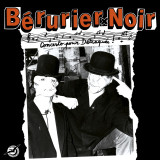
Concerto Pour Détraqués" was ranked 52nd best French rock album by Rolling Stones magazine in 2010.
Eleven tracks like so many vitriolic pictures of a sick society: rape, extreme right-wing, psychiatric confinement, security paranoia, alcoholism and all the other crap that the future seems to hold. Loran and François express more than ever their rage and their refusal of the adult world in a recital with three chords: more aggressive guitars, more incisive lyrics and voices while an armada of chorus members and a saxophone come to heckle or underline this darkness.
"Concerto Pour Détraqués" is the band's reference album, with a string of hymns to insubordination and freedom: Petit Agité, Vivre Libre ou Mourir, Les Rebelles, Porcherie, Hélène et le Sang...
The band's name alone evokes the epic of alternative rock: rebellious and committed.
Born by mistake on a February evening in 1983, Bérurier Noir soon found itself the driving force behind a vast "Youth Movement", determined to take control of its life in the face of a society that was ultra conservative at the time. Times have hardly changed.
From the first self-produced records distributed by hand to the creation of self-managed labels, from concerts in squats and wild appearances in demonstrations, on the street or in the metro to endless tours, from interviews given to fanzines and free radio stations to unclassifiable appearances in the mainstream media, Bérurier Noir has waged the most exciting war of independence in the history of French rock, with only a microphone, a guitar, a drum machine, a few red noses and patched-up theatre masks.
The last finger of honour of this turbulent and irrecoverable raia, François, Loran and their "Troupeau d'Rock" commit hara-kiri, at the peak of their glory, during three last concerts in the heart of Paris in November 1989.
Forty years after its birth, Bérurier Noir's work still resonates, whether in demonstrations or free parties, nourishing the hopes of those who wish to overthrow this world to build a truly libertarian, united and fraternal society.
The label Archives de la Zone Mondiale reminds those who missed this unprecedented adventure, 8 discographic parts of the group Bérurier Noir in the form of reissues on particularly original colour vinyls (crown finish), in a limited series and distributed throughout the year.
Nach der Veröffentlichung der 2CD-Version des Albums Moonage Daydream im letzten Jahr, wird der Soundtrack nun am 31. März als 3LP Vinyl veröffentlicht.
"Moonage Daydream" beleuchtet das Leben und Genie von David Bowie, einem der produktivsten und einflussreichsten Künstler der jüngeren Musikgeschichte.
Auf Spielfilmlänge nimmt uns Brett Morgen mit in die Welt Bowies, erforscht anhand von großartigem, vielfältigem und nie zuvor gesehenem Filmmaterial, Live-Auftritten und Musik (Morgen sichtete vier Jahre die Archive des David Bowie Estates) seine kreative, musikalische und spirituelle Reise.
Durch den Film führt uns dabei die Erzählerstimme von David Bowie selbst.
Das Begleitalbum zu "Moonage Dream" enthält Songs aus Bowies gesamter Karriere, darunter bisher ungehörtes Material, speziell für den Film und dieses Album angefertigte Mixe und Gesprächspassagen Bowies.
Zu den Highlights des Tracklistings zählen ein bisher unveröffentlichtes Live-Medley von "The Jean Genie / Love Me Do / The Jean Genie", aufgenommen beim berühmt-berüchtigten letzten Ziggy-Stardust-Konzert im Londoner Hammersmith Odeon 1973 und mit Jeff Beck an der Gitarre. Weitere Raritäten sind eine frühe Version
des Hunky-Dory-Favoriten "Quicksand" und eine bisher unveröffentlichte Live-Version von "Rock 'n' Roll With Me", mitgeschnitten bei der legendären "Soul Tour" 1974.
“Wild Boy …” is a reissue of the well-known 2016 release curated by Brian Chidester, renowned researcher and biographer of Eden Ahbez. Especially for this album, Brian wrote an interesting text about Abi’s life, which definitely became the decoration of the release.
With the new 2020 re-release, we went a little further and kept what is commonly referred to as studio cuts. It’s a few more minutes in the studio with ahbez himself, full of emotion and life. In addition, to the delight of fans, the edition includes an additional composition Nature Boy (Mantovani Orchestra).
Especially, it is worth noting the outstanding mastering prepared from practically decomposed tapes by the Grammy-nominated Jessica Thompson, which guarantees the deepest and warmth possible sound. Jessica a huge ahbez fan and we’re highly appreciated for what she has done to save his music for the future.
Eden Ahbez is definitely at the origin of psychedelic music and this release can be taken as further proof. Over the past twenty years, the iconic figure of the world’s first hippie Eden ahbez has become famous primarily for his 1948 song “Nature Boy”, praising universal love, and his amazingly solo album from the 1960s called “Eden’s Island” – one from the first concept albums in the history of music and probably the first psychedelic music album. “Wild Boy: The Lost Songs Of Eden Ahbez” deepens understanding of the origins of the psychedelic movement in the 1950s.
The disc contains a musical selection of works by Eden ahbez himself, written by him in the period after Nature Boy. The inclusion of songs such as “Palm Springs” – Ray Anthony Orchestra and “Hey Jacques” by Erta Kitt gives the listener the chance to discover for the first time the little-known recordings of world-famous artists composed by Eden ahbez. Through “Wild Boy” and “Surfer John” you can hear the author’s handling of absurd rock and exotic experimentation, as well as sweet psychedelic pop like Monterey (with Paul Horn on flute). Overall, Wild Boy: The Lost Songs Of Eden Ahbez offers an overview of the lost works of 1949-1971 with seven unpublished recordings and eight rare singles.
If in 2020 you are missing the hallucinogenic content in Eden Ahbez, it amazingly makes up for that deficiency with simple chords, expansive arrangements, and lyrics about travel, relaxation, free love, and spirituality. Thus creating the standard of psychedelic music. Eden Ahbez’s songs weren’t only fantasy and his personal philosophy was the real thing that he lived.
reviews:
“This carefully and extensively researched compilation culls covers by top notch mainstream artists juxtaposed with unreleased Eden recordings. What might sound like a mixed bag is actually more like a chronological, musical non-fiction novel about Eden Ahbez. While Eden was writing hundreds of songs and performing live and making recordings in various styles, his songs were also being picked up by popular artists like Nat King Cole and Eartha Kitt who recorded with a more polished mainstream style. There are also some early rock n roll style recordings here. Eden’s professionally recordings often end up as Novelty Pop records such as “Child of Nature” and “The Clam Man” but if you read between the lines and listen to the lyrics it is pretty eye-opening that he is singing about Eastern-religion-style and pre-hippie philosophies about being at one with the planet Earth.
All of this is explained in the lengthy liner notes inside the lp along with a few choice photos that establish Eden as a founding father of Southern California mystic/psychedelic music.” – Tiki_News
“Eden Ahbez’s life philosophy was summed up in the lyrics of his most famous song, “Nature Boy,” a 1948 hit for Nat King Cole: the song describes a “strange enchanted boy” who wanders the world in search of truth. “The greatest thing you’ll ever learn,” he concludes, “is to love and be loved in return.” Ahbez was a pre-cursor of California’s beatniks and hippies, and an exalted icon of ex-otica via his rare 1960 album Eden’s Island. Beyond “Nature Boy” and Eden’s Island, though, there were nu-merous lesser-known Ahbez record-ings. Ahbez biographer Brian Chidester has been doing an exemplary job of archiving and documenting that catalog of work. The Exotic World of Eden Ahbez (reviewed in UT#38) appeared a few years ago, gathering together 14 Ahbez-related rarities” – Ugly Things
The endlessly prolific and unpredictable Richard Youngs returns to Black Truffle with Modern Sorrow. As any Youngs fan knows, one of the great pleasures of following his career comes from not being able to predict what the next entry in his inexhaustible string of releases will bring: Unaccompanied voice? Country songs? Shakuhachi? Guitar pieces played with his feet? Shredding fuzz bass over the top of hyper-speed distorted drum machine beats? Continuing in the grand Youngs tradition of exploring new techniques, instrumentation and approaches while bringing to all of them his idiosyncratic touch, Modern Sorrow serves up two sides of twistedly elegiac, radically stark takes on contemporary pop production. The side-long title track is built from a piano sample, synthetic bass notes and organ swells, and an iterative blurt that seems to have wandered out of a 90s jungle track. Eventually joined by a shuffling drum machine, the track moves very slowly through a series of chords, each delayed long enough that its arrival comes as a major event. Over the top, Youngs’ heavily pitch-corrected voice is heard. The processing paints his signature wandering melodic improvisations with shades of contemporary R&B; at the same time, it cuts the natural swoops and glides of Youngs’ melodies into rapid microtonal trills, giving his voice a quavering, middle eastern feel. Unfolding languorously over more than 17 minutes, the piece’s final minutes make room for an extended drumless coda, returning to the stark palette of its opening moments. On the second side, the two parts of ‘Benevolence’ push this minimalism ever further, its first half consisting of nothing more than a remarkably slow drum machine hit, bass-heavy chords and pitch-corrected voice, here so heavily processed that it starts to resemble a shawn solo. In its second part, the harmonic foundation drops out from under the piece while two more voices join; at some moments the voices pause, leaving nothing more than isolated, metronomic drum hits. Though Youngs has explored the sound worlds associated with dance music and contemporary pop in previous work, here these elements are radically reduced, foregrounding a meditative bed of silence with a boldness equal to any more academically inclined contemporary composer. Embracing the accessible digital tools of contemporary music production just as at another moment he would pick up a kazoo, like much of Youngs’ work Modern Sorrow uses simple DIY tools to generous ends, producing formally radical music that remains both free from pretension and deeply moving.
out of Stock
Last delivered 3 years ago available to reorder, subject to availability
YoshimiOizumikiYoshiduO"s debut album To The Forest To Live A Truer Life combines the thrill and precision of masterful improvised music practitioners unearthing new sonic possibilities. Yoshimi P-We, now known as YoshimiO, is best known for her work as one of the founders and drummer in the Japanese rock band Boredoms alongside IzumikiYoshi (synthesizer, sampler, and programmed midi instruments on Vision Creation Newsun and Super æ), and multi-instrumental work in the all female group OOIOO. She has worked as a session player and vocalist on Yoshimi Battles the Pink Robots by The Flaming Lips. A balance of YoshimiO"s live improvisations and IzumikiYoshi"s correlated processed sounds give the pieces a sense of grounding and weightlessness in tandem. Being described by Wayne Coyne (The Flaming Lips) as "one of those strange genius musicians", YoshimiO uses the piano as her primary instrument in addition to her singular voice- every move is bent, stretched, and mutated by IzumikiYoshi"s modular synthesizer into cascades of brightly colored waves and dotted constellations of sound. Rather than taming YoshimiO"s spirited performances, IzumikiYoshi adorns every unique flutter with complementary otherworldly textures. Recorded primarily in a cafe nestled in a forest in Japan, To The Forest To Live A Truer Life is a celebration of pure potential, of music born of the moment expanding in every direction. YoshimiO has collaborated with and worked on numerous projects, most notably a raga band called SAICOBAB, an ambient project called Yoshimi and Yuka, the tribal drum OLAibi, and indie supergroup Free Kitten.
Hot on the heels of their sophomore release with DJ Rocca, Cyphon Recordings welcome Tijuana’s Cyborg Nerve to the family for the third installment in their busy label schedule.
A new project helmed by the Cedillo brothers - also known for their work under the monikers Soul of Hex and Mano De Fuego - Cyborg Nerve’s sound tips the hat to the roots of Detroit electro and techno.
The Vicario Musique Recordings bosses have already made a mark under their Soul of Hex alias, pushing their cosmic, vibrant take on deep house. It’s caught the ear of labels and artists across the world; the likes of Delusions of Grandeur, Freerange Records and Quintessentials have shared their music and they’ve even earned the Larry Heard seal of approval, with the legendary Chicago producer stepping up to remix their 2014 track ‘Lip Reading’. As Mano De Fuego they’re also getting their music into the hands of pioneering figures in the American dance music scene - summer of this year saw them release a shamanistic debut via the inimitable Underground Resistance.
For their debut outing as Cyborg Nerve, the pair deliver four tracks of old school electro grooves. Title track ‘Cristalizacion’ kicks things off. A slice of intergalactic electro; celestial pads soar above warm bass and staccato drum rhythms. Their eponymous track follows and takes the energy levels up a notch: a warbling bass line drives the track forward, whirring and revving while crisp hats fizz overhead.
‘Tijuana 3000’ is another cut that's custom-made for the dance floor. As with the title track, the duo call to mind the interstellar jazz-tinged electronics of Detroit outfit Galaxy 2 Galaxy, as they pair cosmic twinkling melodies with a hypnotic acid line that takes centre stage. ‘Machine Effect’ brings the EP to a close. Like its name suggests the track is powered by a raw, machine funk groove and precise drum programming - no bells and whistles, just pure cosmic vibrations to move your body.
out of Stock
Last delivered 2 years ago available to reorder, subject to availability
'Unconscious Collective' is the first album by PS5 - the new ensemble led by Pietro Santangelo (Nu Guinea, Slivovitz, Fitness Forever) - and it will be out for Hyperjazz Records on 21th May 2021.
It's a musical experiment where layered memories and hidden feelings resonate as if they arise directly from the most recondite part of the unconscious and produce a suspension of the stream of consciousness. With the aim to create a state of trance and override the human reason, this is an imaginary round trip across the Mediterranean Sea and the Atlantic Ocean, ideally connecting Naples with North Africa and Latin America.
The arrangements wrote by Santangelo are based on great freedom of improvisation: while the melodic textures of the two saxophones didn't give any clear references, the other musicians followed the rhythmic pulse and its unpredictable ways. The music moves naturally along an imaginary line highlighting the ancestral connection between Jamaica and Ethiopia or between Nigeria and Cuba. In the background, Naples is a synthesis of all the sonic ingredients, mixed and cooked in its own mystical and spicy belly.
Besides Santangelo himself on the tenor and soprano saxophones, the collective is made up of: Paolo Bianconcini, a brilliant Neapolitan percussionist with a very deep Afro-Cuban background; Giuseppe Giroffi, young and talented alto and baritone saxophonist; the bassist Vincenzo Lamagna and the drummer Salvatore Rainone, both loyal members of the former Santangelo's trio.
Recorded live at the Auditorium Novecento in Naples, the legendary studio of Phonotype Records, 'Unconscious Collective' is mixed in analog format by Fabrizio Piccolo, and mastered by Davide Barbarulo at his 20Hz20KHz Studio.
Pietro Santangelo
Pietro was born, lives and plays in Naples. As a saxophonist and composer, he has released five albums with Slivovitz and one with his PS3 trio (Clinamen, Emme records 2017). Graduated in Digital Sound Processing at the Faculty of Physics of Federico II University, he is involved and engaged in the Italian scene of radical improvisation (Franco Ferguson, Elio Martusciello and Officina Arti Soniche, Collettivo NISE).
Multi-instrumentalist since forever, he has collaborated with Nu Guinea, Enzo Avitabile, Fitness Forever, Marzouk Mejri, Dennis Bovell and many others.
He's also author of soundtracks and electronic musician. He appreciates analog photography, loves walking outdoors. He hates biographical notes.
out of Stock
Last delivered 19 months ago available to reorder, subject to availability
There is a global musical movement happening right now, and an integral part of this rhythmic and cultural evolution is the legendary Grammy award-winning DJ / Producer / Artist Louie Vega.The movement is comprised of the Expansions In The NYC album and the Expansions NYC events, and it represents the very best in music, dance and club culture from New York City to London to Miami to Ibiza and every locale around the world where people appreciate the power of house music.
Up next in the continuing series of product releases and events in connection with the Expansions juggernaut, a limited edition Expansions In The NYC 7” boxset on Nervous Records.
“Releasing vinyl has always been part of my mantra, but this is a unique one,” said Louie Vega. “For the first time having our music released on a (10) piece 7” set along with new original art by Andrew Thiele (who also created the Expansions In the NYC Album cover), it’s a highlight in the history of all my vinyl releases. Not too many artists release 10 pieces of vinyl within a set. And what makes it even more special is the calibre of all the amazing artists who worked on the tracks and songs with me. This is a landmark and essential collector’s item. A veritable “Must Have!” Never before have all these artists graced one album together from Honey Dijon to Lisa Fischer, Moodymann to Bernard Fowler, Robyn to Unlimited Touch, and Karen Harding to Kerri Chandler. It’s a dancer’s and vinyl collector’s paradise.
out of Stock
Last delivered 18 months ago available to reorder, subject to availability
Created between Palm Springs, California and Hilo, Hawai'i, V is the first double album from the Hawaiian-New Zealand singer-songwriter, multi-instrumentalist and producer Ruban Nielson's Unknown Mortal Orchestra band. Designed to play as one continuous movement and road-tested on dry California freeways, V is the definitive Unknown Mortal Orchestra car record. It's also the fifth full-length album Ruban has released in twelve years. Across fourteen sunbleached songs - written solo or with his brother Kody - Ruban draws from the rich traditions of West Coast AOR, yacht rock, weirdo pop and Hawaiian Hapa-haole music. Over a laidback blend of singalong anthems and cinematic instrumentals, he evokes blue skies, afternoons spent lounging by hotel swimming pools and the alluring darkness that lurks below perfect, pristine surfaces. It's a duality expressed in the dilapidated sunset blues and the saltcorroded soul Ruban explores through tracks like `Layla' and `Nadja. ' During the pandemic's early days, Ruban reunited with Kody at a cousin's wedding in Hawai'i. With assistance from their father, Chris Nielson (saxophone/flute) and longstanding Unknown Mortal Orchestra member Jake Portrait, they brought everything Ruban had been thinking about together. The result was V, due for release on March 3, 2023, through Jagjaguwar. When they talked about records that moved them in that spine-shivering manner, Ruban started thinking about the 70s AM radio rock and 80s pop songs that had lurked on the edge of his subconscious mind for most of his life. He wanted to write his version of records like that, leading to the two glorious uptempo singles Unknown Mortal Orchestra released in 2021, `Weekend Run' and `That Life'. However, the golden good times never last forever. Not long after, health issues began to plague his extended family.Putting his recordings aside, he helped his mother and his uncle move home from New Zealand and Portland to Hawai'i, and began dividing his time between Hawai'i and Palm Springs. During this period he reconnected with his relatives, reassessed his past, and started to look at things with fresh eyes. Hawai'i brought back memories of the darker side of his parents' lifestyle as entertainers. On those trips, he heard those classic AM radio rock records everywhere. They were inextricably intertwined with the palm trees, swimming pools, and glamorized hedonism he'd internalized from his childhood. There's a type of music in Hawai'i called Hapa-haole (Half white). You can hear it expressed in signature Unknown Mortal Orchestra style through the humid guitar-led atmosphere of V's penultimate song, `I Killed Captain Cook'. Although the songs are presented in a traditional Hawaiian manner, they're mostly sung in English. Having been influenced by Hawaiian music since Unknown Mortal Orchestra's first album, Ruban saw a space for himself within the tradition. When he reflected on his success, he realised he had the responsibility and platform to represent Hapa-haole music on the global stage.
Created between Palm Springs, California and Hilo, Hawai'i, V is the first double album from the Hawaiian-New Zealand singer-songwriter, multi-instrumentalist and producer Ruban Nielson's Unknown Mortal Orchestra band. Designed to play as one continuous movement and road-tested on dry California freeways, V is the definitive Unknown Mortal Orchestra car record. It's also the fifth full-length album Ruban has released in twelve years. Across fourteen sunbleached songs - written solo or with his brother Kody - Ruban draws from the rich traditions of West Coast AOR, yacht rock, weirdo pop and Hawaiian Hapa-haole music. Over a laidback blend of singalong anthems and cinematic instrumentals, he evokes blue skies, afternoons spent lounging by hotel swimming pools and the alluring darkness that lurks below perfect, pristine surfaces. It's a duality expressed in the dilapidated sunset blues and the saltcorroded soul Ruban explores through tracks like `Layla' and `Nadja. ' During the pandemic's early days, Ruban reunited with Kody at a cousin's wedding in Hawai'i. With assistance from their father, Chris Nielson (saxophone/flute) and longstanding Unknown Mortal Orchestra member Jake Portrait, they brought everything Ruban had been thinking about together. The result was V, due for release on March 3, 2023, through Jagjaguwar. When they talked about records that moved them in that spine-shivering manner, Ruban started thinking about the 70s AM radio rock and 80s pop songs that had lurked on the edge of his subconscious mind for most of his life. He wanted to write his version of records like that, leading to the two glorious uptempo singles Unknown Mortal Orchestra released in 2021, `Weekend Run' and `That Life'. However, the golden good times never last forever. Not long after, health issues began to plague his extended family.Putting his recordings aside, he helped his mother and his uncle move home from New Zealand and Portland to Hawai'i, and began dividing his time between Hawai'i and Palm Springs. During this period he reconnected with his relatives, reassessed his past, and started to look at things with fresh eyes. Hawai'i brought back memories of the darker side of his parents' lifestyle as entertainers. On those trips, he heard those classic AM radio rock records everywhere. They were inextricably intertwined with the palm trees, swimming pools, and glamorized hedonism he'd internalized from his childhood. There's a type of music in Hawai'i called Hapa-haole (Half white). You can hear it expressed in signature Unknown Mortal Orchestra style through the humid guitar-led atmosphere of V's penultimate song, `I Killed Captain Cook'. Although the songs are presented in a traditional Hawaiian manner, they're mostly sung in English. Having been influenced by Hawaiian music since Unknown Mortal Orchestra's first album, Ruban saw a space for himself within the tradition. When he reflected on his success, he realised he had the responsibility and platform to represent Hapa-haole music on the global stage.
out of Stock
Last delivered 2 years ago available to reorder, subject to availability
Created between Palm Springs, California and Hilo, Hawai'i, V is the first double album from the Hawaiian-New Zealand singer-songwriter, multi-instrumentalist and producer Ruban Nielson's Unknown Mortal Orchestra band. Designed to play as one continuous movement and road-tested on dry California freeways, V is the definitive Unknown Mortal Orchestra car record. It's also the fifth full-length album Ruban has released in twelve years. Across fourteen sunbleached songs - written solo or with his brother Kody - Ruban draws from the rich traditions of West Coast AOR, yacht rock, weirdo pop and Hawaiian Hapa-haole music. Over a laidback blend of singalong anthems and cinematic instrumentals, he evokes blue skies, afternoons spent lounging by hotel swimming pools and the alluring darkness that lurks below perfect, pristine surfaces. It's a duality expressed in the dilapidated sunset blues and the saltcorroded soul Ruban explores through tracks like `Layla' and `Nadja. ' During the pandemic's early days, Ruban reunited with Kody at a cousin's wedding in Hawai'i. With assistance from their father, Chris Nielson (saxophone/flute) and longstanding Unknown Mortal Orchestra member Jake Portrait, they brought everything Ruban had been thinking about together. The result was V, due for release on March 3, 2023, through Jagjaguwar. When they talked about records that moved them in that spine-shivering manner, Ruban started thinking about the 70s AM radio rock and 80s pop songs that had lurked on the edge of his subconscious mind for most of his life. He wanted to write his version of records like that, leading to the two glorious uptempo singles Unknown Mortal Orchestra released in 2021, `Weekend Run' and `That Life'. However, the golden good times never last forever. Not long after, health issues began to plague his extended family.Putting his recordings aside, he helped his mother and his uncle move home from New Zealand and Portland to Hawai'i, and began dividing his time between Hawai'i and Palm Springs. During this period he reconnected with his relatives, reassessed his past, and started to look at things with fresh eyes. Hawai'i brought back memories of the darker side of his parents' lifestyle as entertainers. On those trips, he heard those classic AM radio rock records everywhere. They were inextricably intertwined with the palm trees, swimming pools, and glamorized hedonism he'd internalized from his childhood. There's a type of music in Hawai'i called Hapa-haole (Half white). You can hear it expressed in signature Unknown Mortal Orchestra style through the humid guitar-led atmosphere of V's penultimate song, `I Killed Captain Cook'. Although the songs are presented in a traditional Hawaiian manner, they're mostly sung in English. Having been influenced by Hawaiian music since Unknown Mortal Orchestra's first album, Ruban saw a space for himself within the tradition. When he reflected on his success, he realised he had the responsibility and platform to represent Hapa-haole music on the global stage.
The roots of JuJu started in San Francisco after Plunky had met his musical mentor, Zulu musician Ndikho Xaba, helping to form his band Ndikho and The Natives. Three members of The Natives (Plunky, bassist Ken Shabala and vibes / flute player Lon Moshe) then joined Marvin X’s theatrical production The Resurrection Of The Dead, joining local musicians Al-Hammel Rasul (keyboards), Babatunde Lea (percussion) and Jalango Ngoma (timbales).
When the production ended, the six musicians formed Juju. “We had high-energy rehearsals that lasted for hours and, as a band, we became powerful and began gigging around the Bay Area,” remembers Plunky. Although orientated towards Black Nationalism, the
band fed off the Bay Area’s culturally diverse communities as Plunky shaped an inclusive worldview based on collective political, social and artistic activities. During this time, the Soledad Brothers case and Angela Davis were prominent and the band supported Professor Davis and the cause. Juju’s music matched the fire of their activism. “As a band, we blew, pounded and stroked our instruments like there was no tomorrow, like our life’s work was wrapped up in each session. We approached our performances like religious rites and the music mesmerised, informed and awakened people.” The band’s first album, a Message from Mozambique, was intentionally political. While the anti-war movement focused on Vietnam, Juju looked towards wars being waged in South Africa, Angola and Mozambique over issues of white supremacy and control of natural resources. A second album, ‘Chapter Two: Nia’ would follow before the birth of Oneness Of Juju during the mid-‘70s. This definitive reissue is fully remastered by The Carvery from the original tapes and features original artwork and a new interview with Juju bandleader James “Plunky” Branch.
The Well & The Gentle, two of the major works of Pauline Oliveros, are presented here in a first time reissue on double vinyl in a gatefold sleeve with extensive liner notes.
If Oliveros had followed a more conventional path she may have, all social obstacles aside, been considered among the major composers of her time. However, Oliveros approached composition in a more egalitarian manner. She wrote music for musicians to interact with or, in the composers words, she wished to create "an inclusive and interdependent and unfolding world of relationships."
Oliveros' propensity towards inclusion is part of what makes this work so remarkably distinctive. The Well & The Gentle is carefully crafted, allowing performers to participate in the creation of the work. Players are asked to collaborate, focus, react and make imaginative choices. Only then can the performers "pass through stages of awakening to the possibilities inherent in making music, working together, leading to the essence of what can shape musical impulses and individual freedom simultaneously."
Unlike most major composers of the era, Oliveros' work focuses on collaboration and improvisation. For Oliveros, the processes involved in making music are as fundamental as the music itself. Oliveros creates, as Arthur Sabatini put it so eloquently in the liner notes, "A world in which sound and the practices entailed in making music merge; become, at once, source and atmosphere, energy and essence, presence and dynamic."
Pauline Oliveros was an electronic music pioneer, accordionist, composer and educator who resided in Kingston, New York. Her instrument was tuned in Just Intonation and she often included it in her meditative improvisational music. Her music is not meditative in the sense that it is intended for listening to while meditating, rather each piece is a form of meditation, such as her aptly titled Sonic Meditations.
A central figure in post-war electronic art music, Oliveros is one of the original members of the San Francisco Tape Music Center (along with Morton Subotnick, Ramon Sender, Terry Riley, Steve Reich and Anthony Martin), which was the resource on the U.S. West coast for electronic music during the 1960s. The Center later moved to Mills College, where she was its first director, and is now called the Center for Contemporary Music. Oliveros often improvised with the Expanded Instrument System, an electronic signal processing system she designed, in her performances and recordings.
Tartelet Records is thrilled to present the debut album from Doc Sleep – 10 tracks of exquisitely rendered melodies and rhythms shaped with grit and beauty in equal measure. Birds (in my mind anyway) is a widescreen vision of electronica as a medium to express your personal situation and respond to your environment – a rave adjacent art form free from the perceived rules of the dancefloor. To date, Melissa Maristuen known as Doc Sleep has established herself in the context of the club – first engaging with the culture in San Francisco before moving to Berlin. She helps run the Room 4 Resistance party, DJs on Refuge Worldwide, co- owns the Jacktone label and has released on Detour, Dark Entries and her own label. But in making Birds (in my mind anyway) she set herself an ultimatum.
“At the time of recording this album, my life, all my routines and priorities had to change – music was no exception. I decided if I couldn't be happy making an album free of the dancefloor, I was finally going to be done with music. Instead, I found a musical voice free of tempo and textural restriction. Eventually, I had a sound, and once I had the sound, the album came pretty quickly. It was a very different process writing music for no one...except myself.”
If the impression given is one of a consistent style across the album, think again. Doc Sleep moves freely between tempos and themes, even if there are some recurring qualities binding the music together. She weaves fluttering arps with poise, lending them an almost choral quality which gives the album a very human touch. But they’re equally emotionally ambiguous or pockmarked with sonic interference – reflections of the collisions and conflicts
that typify the human experience.
Every inch of the album is a personal touch – the title was pulled from Doc Sleep’s mother’s response to hearing the album, while her friend Kiernan Laveaux offered a beautiful text which appears on the back. Those closest to her all fed into the artwork process, which captures the curious dichotomy between urban brutalism and botanical finery often found in the parks of Berlin – a vital place of respite when she was making the album.
out of Stock
Last delivered 3 years ago available to reorder, subject to availability
The Mothership has come! It has arrived in the form of the strictly limited collection box “Music Is The Healing Force Of The Universe”, containing all singles released on the label between 2019 and 2021. The Höga Nord – galaxy resounds of all good between strict electro and loose jams, fluffy krautrock and moist world music to underwater techno and space funk. Although, what it is that defines the Höga Nord sound is not genres, instead it is, to cite Mathias Nilsson, founder of and boss for the label, music “strongly connected to fantasy, to the creative world.” Creativity over profit!
The collection is an overview on Gothenburg’s underground music and on an international scene that breathes similar air as the local Swedish acts that Höga Nord Rekords has chosen to highlight. The kinship between Jesse’s 80’s varnish sports car-electro and Purple Desert Rain God’s more traditional mountain sound can appear distant but the artists come together in their free spirited approach to their own productions – what all acts on this collection has in common is that they move toward something new, something beyond the genre they are in.
“Music Is The Healing Force Of The Universe ” mark the closer for Höga Nords first run. The 2010s are over and the 2020s lies open for further investigation of the cream of the Swedish and international of underground scenes!
out of Stock
Last delivered 3 years ago available to reorder, subject to availability
Freestyle serve up a slept-on piece of music history with the first ever reissue of Chartz "Girls World" - a prime 1983 boogie-funk groover from out of Wolverhampton, and the first ever release from a songwriting and production partnership that would go on to hit the pop music big time!
----------------
Chartz were a short-lived Wolverhampton-based covers band who also performed original material written by founder members Bernadette (Berny) Cosgrove and Kevin Clark. During its short lifetime Chartz was a springboard for lead singer/guitarist Berny and keyboard player Kevin to showcase and develop their songs, following their originally working together to write and produce jingles. They wrote, arranged and produced this 12" Girls World in 1983 with lyrics "celebrating female strength and independence whilst loving and respecting their partner", says Kevin & Berny. Shortly after this they went on to win a Sony Songwriters of the Year award and moved to London to co-form Hard Times Productions, with the 1986 self-titled Hard Times LP leading to the single "Never Give Into Love" the year after for Supreme Records - and then came the exciting offer of a songwriting contract with Motown's publishing company in New York!
A 10-year spell in the Big Apple saw Berny's solo artist debuts on movie soundtracks "True Love" and Lonely In America", and, after increasingly lucrative publishing deals with the likes of Sony, EMI & Warner Chappell, she and Kevin were commissioned for songwriting projects with an exhaustive list of pop stars spanning from Matt Goss, Rick Astley and Des O'Connor to Gary Barlow, Sheena Easton, Gloria Gaynor, Jimmy Sommerville and countless others. Berny & Kevin also wrote and produced two platinum selling US number 1 albums with boy-band Dream Street, and their biggest song to date is the internatinal hit "Crush" by Jennifer Paige which has sold in excess of 12 million copies worldwide.
Berny & Kevin's illustrious career definitively went from "Chartz" to CHARTS, and here you are able to go back to where it started as we serve up the first ever vinyl reissue of "Girls World" (original copies of which change hands for over £100) with the extended instrumental and radio mix on the flip.
out of Stock
Last delivered 3 years ago available to reorder, subject to availability
The Decades Collected compilations are part of the Collected compilation series, which is a collaboration between Universal Music and Music On Vinyl. The compilations bring together the biggest names of each decade, combined with forgotten hits and less discovered gems, giving the listener an experience of listening to their favourite tunes while uncovering new musical grounds at the same time.
Mexico city based, Guatemalan cellist Mabe Fratti releases second album (translated Can We Understand Each Other Now) on new experimental label Unheard of Hope (Peter Zummo, Military Genius). Reconciling Mabe's steps throughout her musical past, the LP features pop and experimentation that reflects her time working amongst the improvisation scene in Mexico City. Mabe Fratti's sensibility is the triumph of experimentation over technical do-minion of an instrument. The experimentation of sound with feelings, with ex-istence itself, with an open heart, letting herself to be transformed by what she lives and hears. This is what has led Mabe Fratti from Guatemala to Mexico City. From the crea-tion of pop songs to free improvisation, from the academy to noise, from col-laborations in ensembles and duos to the profound personal journey that is reflected in her solo works. This album was created during May 2020 in an old juice factory in a place in Veracruz called La Orduna. We were quarantining with many musician friends who had moved into the place some months before everyone went into lock down. The general lyri-cal idea of the album was inspired by a conversation about how we are some kind of funnel and how we need to simplificate in order to communicate. Even when we want to communicate things to ourselves. The idea of understanding becomes complicated but based in this fact of omission and clumsiness.
out of Stock
Last delivered 3 years ago available to reorder, subject to availability
Gondwana Records announces 'Goodbyes' the debut album from Estonian pianist and composer, Hanakiv, a deeply beautiful, meditative piano album featuring special guest Alabaster dePlume
"This is an album about healing. It is about saying your goodbyes to everything that doesn't serve you anymore. Each of these songs has a little goodbye in it. So, these are very beautiful and necessary goodbyes".
Hanakiv is a young composer and musician from Estonia (now based in London) who creates meditative piano-based ambient music with elements from classical and electronic music. 'Goodbyes' is her debut recording and draws on influences as diverse as Tim Hecker, Björk "Vespertine", Kara-Lis Coverdale, Arvo Pärt, Erkki-Sven Tüür and Aphex Twin as well as her own cultural heritage. Music has an important part in Estonian culture, especially choir music and its traditions, but Hanakiv also draws on her love of nature – the beautiful Estonian seaside and forests - and on her time in Iceland. However, it was moving to London that gave her the freedom to make her own music: "London gave me the freedom and courage to really be who I am (as a person and musically)" and her heritage and her new home both offer inspiration to Goodbyes, as Hanakiv moves between these two opposite places, a bustling metropolis and a small country full of nature, drawing inspiration from both as she sculpts her own voice.
Hanakiv had an unconventional music education – she started studying music at a school for handbells when she was nine and was part of a handbell ensemble for eight years. Starting on piano at the same time she went on to study composition at high school, and later at the Estonian Academy of Music. Eventually switching to electroacoustic composition, she studied in Reykjavik, and did internships in Malmö, and again Reykjavik before moving to London. She grew up in a musical family and her grandmother was a piano teacher and choir conductor.
"I would always ask her to take me to her choir rehearsals. I remember sitting under the grand piano, listening to the choir and just being mesmerised by the sounds. She also teaches in a local music school in the south of Estonia with about ten pianos, and I'd spend a lot of time there as well. I believe this was the starting point for me to get to where I am now. The last two pieces on the album (Home II and Home I) are composed in this same music school, so it feels like a full circle.
An early influence was Regina Spektor "the first artist who made me really want to play piano" alongside dream pop and Sigur Rós' as well as Estonian contemporary composers such as Erkki-Sven Tüür and Arvo Pärt. Later her studies took her to Reykjavík: "There is this amazing record shop called 12 Tónar in Reykjavik where you can drink espressos and listen to all their vinyls. I spent quite a lot of time there. There is something about Icelandic music that really excited me (the mixture of contemporary electronic sounds with melancholy, emotionality). This is when I started getting more into electronic music, and experimenting outside of classical music". Following a year long break from studying and inspired by making an electroacoustic soundtrack for a friend's abstract video, she was inspired to complete a masters in electroacoustic composition, diving fully into the worlds of sound recording and mixing and focusing on surround sound and how to position and move sounds in space, eventually doing an internship with composer Kent Olofson in Malmö, who works with multi-speaker systems for theatre productions. "I learnt a lot from him and he introduced me to some of my favourite plugins I've used a lot on this album as well."
Hanakiv moved to London just as the pandemic hit and found herself trapped, in a big new city, without any network or family and so just concentrated on making music. "I stayed in my room with my basic equipment - keyboard, Korg minilogue, SM 58 and Rode nt1-a microphones, laptop and speakers. I was reading about mixing, and trying out different things and listening to a lot of music to get the sense of the mixes and production and finishing a commission piece for 5.1 multi speaker system at that time so I set up four speakers for quadrophonic surround sound in my room!". She also found her way back to piano - my instrument – and started practicing again, playing the pieces she used to play, but also just improvising, and this was the beginning of what would become her debut album, 'Goodbyes'.
"I started appreciating everything about music again (even melody!), and everything just came together naturally, and I arrived to a point where I finally found my voice, and I had something that I wanted to say and share. I composed "Meditation I" first and started with "Goodbye", and all the other pieces are derived from that. Without "Meditation I" there wouldn't be this album. If you listen closely, "Meditation I" starts where "Goodbye" ends; "Meditation II" is born from "Meditation I".
But it was meeting Fi Roberts, a sound engineer based at the legendary Strongrom Studios in Shoreditch, London in December 2020 that really brought the album into focus. The pair bonded over an interest in prepared piano and a similar approach to production ideas (a balance of not overdoing it, and letting the songs speak for themselves, but being open to explore) and Fi became a friend but also a confidant and eventually co-producer
"Fi has a big impact on this record but I don't know how to really explain that properly. Of course, this album is sonically stunning thanks to her amazing mixes and recording skills, but she also believed in this music so much and it created something very special - that's difficult to measure with words. She just works with heart, and I really appreciate that"
This then is 'Goodbyes', the first offering from a major new voice, who offers us a meditative work full of space and tranquillity but also life and friendship and meaning. And we are very proud to welcome her to the Gondwana family.
out of Stock
Last delivered 3 years ago available to reorder, subject to availability
American singer-songwriter, poet, and photographer Thomas Meluch, known musically as Benoît Pioulard, returns with his most structured and vocal release to date. Titled »Eidetic,« a word denoting the ability to recall mental images with extraordinarily rich precision, the album presents unprecedented clarity and vitality for Benoît Pioulard. To access its thematic ground, Meluch looked inward with an affinity towards the people he loves during a period marked by his move from Seattle to Brooklyn in 2019. The resulting work engages with the universe's unflinching mortality and, as he says, »the ways it has modified and improved my relationships, especially with family.« Embodied by the creek, leaves, and ferns of the cover photography — taken in Michigan’s Burchfield Park, where he and his dad used to hike and »muse on existence« — the music glistens and unfurls with the flow of life he’s come to know. »Eidetic« is the culmination of Meluch's craft both as a producer and writer. An evocative sonic vocabulary meets deft lyrical introspection, articulated with the nuance, vulnerability, and confidence of a longtime artist hitting a stride.
Meluch has continually refined, redefined, and adjusted the focus of his gentle pop project over the last 20 years. Recorded primarily with guitar, tapes, and voice — and spanning labels with albums for Kranky, Morr Music, Beacon Sound, and Past Inside the Present — his catalog flows seamlessly between ambient improvisation and pop composition. Much like the analog photos that often accompany his releases, songs can feel dreamily softened and distant, and others beautifully vivid and detailed. 2021 full-length »Bloodless« found Meluch deep in droning decay, expressive yet wordless. With »Eidetic,« he swings back to sharpened forms. Lush banks of treated guitar and synth brush against hushed percussion; there is mist in the distance, but everything up close is intricately constructed and radiant. Meluch's voice is notably forward in the mix — a warm and calming tenor, a harmonic coo more than a whisper — ever-observant and actively processing.
To record much of the album, Meluch filled a cabin in rural Maine with his usual setup of simple percussion, a couple of Fender electrics, and a parlor guitar made by his friend who does bespoke luthier work. The modest utility is what he knows best, and here he pushes the output to its most pristine potential.
»Eidetic« opens in a swirl of familiar haze; »Margaret Murie« eases listeners in, as lush and verdant as the landscapes conserved by its famed namesake. With the setting established, Meluch, the narrator, enters the foreground with »Crux,« a tender piece written about finding new motivations in a new city. »We covet this rare green hue / Here at the farthest point from home,« he sings above a reassuring pattern of strums and percussion. Meluch's prose shines on the swiftly-moving »Nameless,« inspired by the neurological effects that came with the antiquated practice of manufacturing mercury mirrors; »folks would slowly go insane while looking into their own reflections every day,« he adds. The idea informs a series of surreal abstractions before everything drops out in the final minute, and we are left free-floating in eerie nothingness.
Across the album, labyrinthine lyrical ponderings scatter with dazzling imagery, artfully blurring scenes from world history with Meluch's more personal, present-day. The propulsive and earnest »Thursday Night« catches his mind overly active and too stoned, riffing on black holes and songwriting itself. »Halve« references the splitting of the atom, what he considers »the beginning of man's downfall,« and the unrealized initiative proposed by the US government that would have created 'nuclear refuges' in its national parks. Meluch's loved ones weave throughout; »Tet« holds his father's experience in Vietnam and its lasting effects. »Lillian Isola« touches on his maternal grandmother's spinal curvature, and »Pastel Dust« navigates the wake of his cat, who died on New Year's Eve 2020.
At first blush, Meluch's atmospheric and melodic sensibilities resonate purely in their own right. Upon closer meditation, his ability to render stories — many of which surround human tragedy, misfortune, and understanding — through the prism of his poetry makes »Eidetic« even more rewarding.
American singer-songwriter, poet, and photographer Thomas Meluch, known musically as Benoît Pioulard, returns with his most structured and vocal release to date. Titled »Eidetic,« a word denoting the ability to recall mental images with extraordinarily rich precision, the album presents unprecedented clarity and vitality for Benoît Pioulard. To access its thematic ground, Meluch looked inward with an affinity towards the people he loves during a period marked by his move from Seattle to Brooklyn in 2019. The resulting work engages with the universe's unflinching mortality and, as he says, »the ways it has modified and improved my relationships, especially with family.« Embodied by the creek, leaves, and ferns of the cover photography — taken in Michigan’s Burchfield Park, where he and his dad used to hike and »muse on existence« — the music glistens and unfurls with the flow of life he’s come to know. »Eidetic« is the culmination of Meluch's craft both as a producer and writer. An evocative sonic vocabulary meets deft lyrical introspection, articulated with the nuance, vulnerability, and confidence of a longtime artist hitting a stride.
Meluch has continually refined, redefined, and adjusted the focus of his gentle pop project over the last 20 years. Recorded primarily with guitar, tapes, and voice — and spanning labels with albums for Kranky, Morr Music, Beacon Sound, and Past Inside the Present — his catalog flows seamlessly between ambient improvisation and pop composition. Much like the analog photos that often accompany his releases, songs can feel dreamily softened and distant, and others beautifully vivid and detailed. 2021 full-length »Bloodless« found Meluch deep in droning decay, expressive yet wordless. With »Eidetic,« he swings back to sharpened forms. Lush banks of treated guitar and synth brush against hushed percussion; there is mist in the distance, but everything up close is intricately constructed and radiant. Meluch's voice is notably forward in the mix — a warm and calming tenor, a harmonic coo more than a whisper — ever-observant and actively processing.
To record much of the album, Meluch filled a cabin in rural Maine with his usual setup of simple percussion, a couple of Fender electrics, and a parlor guitar made by his friend who does bespoke luthier work. The modest utility is what he knows best, and here he pushes the output to its most pristine potential.
»Eidetic« opens in a swirl of familiar haze; »Margaret Murie« eases listeners in, as lush and verdant as the landscapes conserved by its famed namesake. With the setting established, Meluch, the narrator, enters the foreground with »Crux,« a tender piece written about finding new motivations in a new city. »We covet this rare green hue / Here at the farthest point from home,« he sings above a reassuring pattern of strums and percussion. Meluch's prose shines on the swiftly-moving »Nameless,« inspired by the neurological effects that came with the antiquated practice of manufacturing mercury mirrors; »folks would slowly go insane while looking into their own reflections every day,« he adds. The idea informs a series of surreal abstractions before everything drops out in the final minute, and we are left free-floating in eerie nothingness.
Across the album, labyrinthine lyrical ponderings scatter with dazzling imagery, artfully blurring scenes from world history with Meluch's more personal, present-day. The propulsive and earnest »Thursday Night« catches his mind overly active and too stoned, riffing on black holes and songwriting itself. »Halve« references the splitting of the atom, what he considers »the beginning of man's downfall,« and the unrealized initiative proposed by the US government that would have created 'nuclear refuges' in its national parks. Meluch's loved ones weave throughout; »Tet« holds his father's experience in Vietnam and its lasting effects. »Lillian Isola« touches on his maternal grandmother's spinal curvature, and »Pastel Dust« navigates the wake of his cat, who died on New Year's Eve 2020.
At first blush, Meluch's atmospheric and melodic sensibilities resonate purely in their own right. Upon closer meditation, his ability to render stories — many of which surround human tragedy, misfortune, and understanding — through the prism of his poetry makes »Eidetic« even more rewarding.