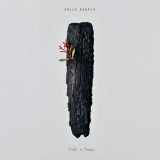
Rare debut LP by the eccentric Peruvian singer Jean Paul "El Troglodita", known for his wild performances and extreme way of life. Enrique Roberto Tellería made his Peruvian television debut in 1965 under the stage name Jean Paul El Troglodita and wearing an imitation leopard skin suit. He would switch from melodic calm to shouting wildly or suddenly drop to the floor on his knees and smash the furniture like crazy. At the age of 19, DisPerú signed him to the label on the strength of these early performances. His first single included a freely translated version of 'Secret Agent Man' in Spanish. He began to work on the eleven cover versions that would feature on his first LP immediately, writing all his own lyrics and accompanied by the beat band Los Steivos. Despite the predominance of English beat music in Peru, the album only included three songs directly related to the British invasion: 'Bus Stop' by The Hollies, also played in raga rock style; 'Paint it Black' by The Rolling Stones; and 'The House of the Rising Sun', which follows the arrangement recorded by The Animals. So most songs come the American songbook. Apart from 'Tema de El Troglodita' (a versión of 'Secret Agent' by The Challengers), we find the bluesy 'Mustang Sally' (Sir Mack Rice). Two other US numbers, originally performed with orchestral accompaniment, were adapted to fit the rock band format: 'Poor Side of Town' (Johnny Rivers) and 'Take Me to the Moon' (Kaye Ballard). 'El verdadero amor' ('True Love'), an uncredited version is in a similar vein. The Spanish song 'Negro es negro' (Los Bravos) and the Brazilian track 'Que todo se vaya al infierno' (Roberto Carlos) also feature on the LP. El Troglodita's association with the so-called nueva ola, indicated on the back cover, needs clarification. In Peru, nueva ola was a mixed bag rather than a specific musical style and encompassed slow rock, twist, bossa nova and all the styles that the record industry produced to tame the wild rock 'n' roll impulses of teenagers in the early sixties. The Peruvian artists that performed these inoffensive Spanish adaptations of Paul Anka, Neil Sedaka or Frankie Avalon, were presented as successful models of youth culture. This was until 1964, when the Beatles with their mop-top haircuts hit the charts, vindicating rock 'n' roll and imposing the group format over the soloist model. Meanwhile the press continued to call any youth music recorded during the rest of the decade nueva ola. Jean Paul noted these distinctions early on and distanced himself from it in several statements. He saw his performance more in a style as a solo artist as following in the footsteps of e.g. Los Saicos. His 'hippie' lifestyle got him arrested by the new de facto military government in 1968, who accused him of promoting drug consumption and corrupting the Peruvian youth. The charges were soon dropped but his reputation was tarnished, and he ended up emigrating to Central America. The album includes Spanish sung versions of British beat songs and covers of the American songbook as well as various international hits.
Cerca:free association
The Intercommunal Free Dance Music Orchestra was created in 1971 by French free jazz pianist legend, François Tusques. Free Jazz, was also the name of the 1965 recording Tusques made along with and other Michel Portal, François Jeanneau, Bernard Vitet, Beb Guérin and Charles Saudrais. Six years later, in 1971 Tusques would go ahead of free jazz.
Wondering if free jazz wasn’t a bit of a dead end together with Barney Wilen (Le Nouveau Jazz) or even solo (Piano Dazibao and Dazibao N°2), Tusques formed the Inter Communal Free Dance Music Orchestra, an association under the banner of which the different communities of the country would come together and compose, quite simply. If at first the structure was made up of professional musicians from the jazz scene it would rapidly seek out talent in the lively world of the MPF (Musique Populaire Française).French Popular Music, ndlt
Compiling extracts from concerts given between 1976 and 1978, L’Inter Communal demonstrate the “social function” which inhabited free jazz and popular music at the time calling upon Spanish singer Carlos Andreu along with Michel Marre, Jo Maka, Adolf Winkler and Jean Méreu. Andreu, claimed Tusques, was a griot “who created of new genre of popular song improvised with our music, based on events going on at the time”.
L’Inter Communal can start the festivities: on “Blues pour Miguel Enriquez”, it is first Thelonious Monk who is invoked in an homage to one of the leading figures of the Chilean revolution, and a victim of Pinochet. The circumstances may be serious, the music, though, is not. The musicians light a bonfire to bring together on the same frequency France and Spain, the Americas and Africa: “L’heure est à la lutte” (the time to fight is here ndlt), is the new song offered by the l’Intercommunal Free Dance Music Orchestra... As if proof were needed that their music is still more than timely!
As the winds of music blow, a wise heart navigates the spiral, finding wisdom in each of its twists and turns.
As the releases of DUBBLACK’s catalogue pile up, the novelty and exploration for new music keeps on thriving.
A brand-new record is approaching, as always available both on a 12” vinyl – limited to 300 copies – and in digital format, featuring the presence of two Masters from the Electronic Music scene: A2 Abd El Monim and Tocchitek.
The two-track EP baptised “Dark Side” includes the gems “Euriale” and “Steno”; two expansive compositions that, also due to their length, masterly observe the task of narrating two complementary stories, each with its distinct moments, yet marked by a strong rhythmic temper. Both tracks are planned to share similar sonic elements: a pulsating 160 bpm kick drum, ghostly pads serving as an inevitable backdrop, and indispensable rhythmic details enriching the whole structure and arrangement.
A2 Abd El Monim, born Alan Abd El Monim, is an Italian-Egyptian artist/composer. He expresses himself through the creation of music ranging from electronic to purely instrumental, and through the interaction between the arts. His poetics opens in a “dark” dimension that considers and interprets the facts through the notion of shadows and darkness but also through penombre. His “dark” vision stands as a filter through which he reads the world and its interactions, therefore using also the notion of light. His music has been performed in Festivals including Musica d’arte (Riccione – Italy), Luci d’Artista (Salerno – Italy), GAMO (Firenze – Italy), Spazio Musica (Cagliari – Italy), On Air – On site (Den Haag -Netherlands), Sound Spaces (Malmö – Sweden), etc.
He composed songs for the solo exhibition “La pelle degli oggetti” and for works Lui&Lei by the artist Giovanni Oberti. In 2020 he undertook a collaboration with the poet Milo De Angelis , putting to music the lyric “A volte , sull’orlo della notte, si rimane sospesi”. He wrote music for several theatre performances by director Emily Tartamelli and has written music for several directors films including Reto Gelshorn, Enea Francia, Paola Piscitelli and Fabio Corbellini. He collaborated with the London based fashion brand B DODI and was invited as an artist to participate in the collective exhibition “Instructions to Light-Keepers” (Milano – Italy). In March 2023, “Periodo Nero”, its interactive and generative installation music and video, was selected for the tribute to Picasso in the city of Florence, will be presented at the Certosa of Florence in September of the same year. In 2017 he won the International Competition of Composizione Silenzio Musica, in 2020 the diploma from President and Artistic Director of Winterreise International Composition Competition Moscow, in 2021 the Call For Scores banned by the Cultural Association Esecutori di Metallo su Carta. A2 Abd El Monim is signed to international label F.M.T Records and Dubblack Records, with which he regularly publishes his electronic music.
Tocchitek is an underground Tekno producer and performer born in Milan, Italy. He started playing live in 2007 as part of the “Approdo Caronte” sound system based in Milan. His first significant appearance as a live performer was at a “Mayday Parade” in 2008 in Milan. In 2009, he joined the “R909 Records” chapters crew based in Milan, bringing his live set to many local club dance floors. Meanwhile, he collaborated and played with many crews around Europe, spreading his music in the free Underground Tekno movement. In 2021, in Milan, he launched “F.M.T Records”.
Simplicity is often the hardest thing to achieve when producing this type of music, primarily designed for uncompromising dance-floors, but the duo successfully channels their message with purity and truthfulness.
The visual aspects of layout and design are once again entrusted to Vittorio Valigi, who puts a greyscale spiral at the center of the cover. A spiral within which one an eye can be glimpsed – the eye of the musical soul of DUBBLACK harmoniously fused with that of A2 Abd El Monim and Tocchitek, who become worthy ambassadors of the Dubblack’s sonic mission.
1981, the leaden years are over, the socialist left is in power in France and the first wave of punk seems a long way off. However, the youth of the day had not said its last word, and bands were springing up all over the place, free radio stations were opening up, fanzines were being published, concerts were being staged on the fly and little by little a scene was forming, a motley crew of kids in revolt, radical activists and just plain old folk passing through.
After having cut their teeth in a variety of more or less confidential bands, in which you'd come across a good number of players from this up-and-coming alternative scene, the members of Guernica moved up a gear, determined to blow on the still-glowing embers of rebel rock. With the shortage of venues the rule at the time, they began by scouring the suburban MJCs, putting on wild concerts and eventually meeting up with the squatters of the Couronnes commune and the members of V.I.S.A., with whom they played an active part in organising concerts in squatted buildings in these relegated areas of the capital.
In February 1983, the V.I.S.A. association and the Abattoir art collective (which included some members of Guernica) organised a concert at the Usine Pali-Kao. That evening, two groups took to the stage in succession: Guernica and a fledgling duo, Bérurier Noir. The evening will go down in the history of alternative rock as one of the key turning points of the period. After the departure of Loran, who played guitar with both bands, Fabrice Benoît joined Guernica on guitar, and the gang continued for a few more months, ending on a high note with a chaotic concert at the Eldorado in Paris.
Until now, it's been impossible to get your hands on any of the band's recordings unless you're lucky enough to own the Paris Mix compilation, the Guernica/Bérurier Noir split or the V.I.S.A. Usine Cascades 1982 cassette. This vinyl, a perfect record of the era, brings together the six tracks recorded by the band at the time.
Warehouse Find! Test Pressing!
Simbad makes a welcome return to Freerange following last year’s brilliant Take My Hand EP featuring South African vocalist Brian Temba. Now based predominantly in Cape Town, the French Londoner producer and DJ is one of the most prolific artists in the scene having notched up countless EP’s, remixes and production work for labels like Apron, G.A.M.M. Faces, Hyperdub, Atjazz, BBE & Brownswood. His association with Gilles Peterson and Worldwide runs deep, hosting regular shows on WWFM as well as traversing the globe delivering his unique and eclectic sets from Africa
to Asia and beyond.
Peaceful Revolution is one of those special house tracks which transcends boundaries, encapsulating an outernational sound in a way that Simbad excels in. Featuring South African upcoming producer Zito Mowa & vocalist Lwandile Zulu who brings a raw and impassioned energy to the deep and soulful mood, this tune was recorded in support of the troubled events from the past few months (Black Lives Matter movement).
Next up we have a track entitled Let Go which could quite easily be the lead track of the EP if they weren’t all as good as each other! This is late night emotive house music at its most sublime. Drop this at the right time and watch the floor come together in collective bliss.
Flip over for SMBD’s Shaolin Dub remix of Peaceful Revolution which pushes the original to the outer limits of the audio spectrum. Sub-sonic low end rumbles sitting in contrast to the ghost like whispers, glitches and industrial noises that pierce the ethereal pads.
Closing out this special release we find the unassumingly titled Soulful Jam, a low-slung groove which sees Simbad going heavy on fizzing analogue synths with a serene synth solo takin centre stage amongst the lush chords.
The opening line of Emily Dickinson’s short poem ‘‘Hope’ is the thing with feathers’ inspired the central image of Emily Barker’s new single ‘Feathered Thing’, written while she navigated cumulative grief.
When Barker was first introduced to producer Luke Potashnick (Gabrielle Aplin, Jack Savoretti, Katie Melua) in May 2022, she brought with her a full album’s worth of songs. But after visiting Potashnick’s storied studio, The Wool Hall and hearing his ambitious production ideas, she was inspired to write one more song.
“I also needed to process some heavy news” she comments. Barker and her husband Lukas Drinkwater had been trying to start a family. Following a couple of failed IVF cycles (and other “starts that we’d lost”), they investigated adoption and had decided to relocate to Australia to be closer to Barker’s family.
“It felt like we couldn’t work out what we wanted, but we finally reached a point where we both felt at peace with not having kids,” Barker recalls. “It had been an incredibly intense time, coinciding with a house move and the pandemic.”
And then Barker found she was pregnant. “We’d done all these things to try to make it happen, and then it happened naturally (and against all biological odds). Having previously navigated losses throughout our pregnancy journey, we now had to get our heads around what having this new person in our lives might look like - emotionally and practically.”
Soon after work began on the album, Barker had a miscarriage.
“Songwriting has always been a way of processing throughout my life.” Barker reveals how the new song came quickly as she sat at her piano at home. She shared an early version with Potashnick and remembers him politely asking, “Do you mind telling me what this is about?”
“I think I’d left it too abstract, initially,” she reflects. “It was difficult to open up about the miscarriage, but Luke was very supportive and encouraged me to dig a little deeper without necessarily being specific. I revisited the lyrics, and the result is much stronger.”
“I went to the burnt-out woods/ A tourist with some damaged goods/ Remembered how the trees withstood fires before…”
“The opening line is a metaphor for knowing that I’ll get through this,” Barker clarifies. “It’s about recovery and hope, allowing yourself both the space to grieve and permission to move on”. But Barker’s optimism is never misplaced – she knows the imprint of imagined futures and lost children are carried in hearts and minds forever:
“It’s so hard to let go, wanted to know wanted to know you …”
“I think that it's important to share and normalise these stories, which are all too common, yet not openly spoken about. People hide their pain and don’t want to burden friends and family. I think behind all this anguish, there’s a deep, often untold story.”
Now that Barker is settled back in Western Australia, she’s embracing being an auntie. “I’ve got three younger siblings over here who I’m close to, and they all have kids,” she enthuses. “I look after my brother's kids, aged two and five, one morning a week.”
Recorded - along with the entirety of the new album - at The Wool Hall, ‘Feathered Thing’ begins gently, with oscillating piano and distant drums, until the arrangement gradually transforms into an instrumental dervish of vibrant strings, bass drones and cymbal crashes. Throughout, Barker’s vocals float tantalisingly like a slipstreaming feather.
Watch the video, filmed at The Wool Hall here. The Wool Hall is a studio in Beckington, Somerset, set up by Tears for Fears in the 1980s and used by artists including The Smiths, Pretenders, Joni Mitchell and many more.
Emily Barker is an award-winning singer-songwriter, best known as the writer and performer of the theme to the hugely successful BBC crime drama ‘Wallander’ starring Kenneth Branagh.
Her last album, 2020's ‘A Dark Murmuration of Words’, was produced by Greg Freeman and recorded at StudiOwz, a converted chapel in the Welsh countryside. Lyrically probing, by turns both dark and optimistic, Barker searches for meaning through the deafening clamour of fake news and algorithmically filtered conversation, delivering a timely exploration of the grand themes of our age. It garnered widespread acclaim, with Uncut calling it “…a kind of Australian equivalent of PJ Harvey’s Let England Shake”.
Barker has released music and toured as a solo artist as well as with various bands and collaborations, most notably her long association with Frank Turner, and has written for TV and film, including composing the soundtrack for Jake Gavin’s lauded debut feature ‘Hector’ starring Peter Mullan and Keith Allen.
‘Fragile as Humans’ is scheduled for release on May 3rd 2024 through Everyone Sang/Kartel Music Group. The album will also feature earlier singles: the vast, cinematic ‘Wild to be Sharing This Moment’ and the meditative, crestfallen ‘Loneliness’.
Causa Sui's three volumes of Summer Sessions are back in print! This time on the band's own label, on individual LPs for the first time since they were first released in 2008 and 2009. Re-packaged in El Paraiso's signature style. Originally the Summer Sessions were intended as a side project for the band - a chance to explore their love for other genres such as American free jazz, krautrock, 1970s soundtracks, as well as the psychedelia and detuned stoner-rock that characterized Causa Sui's first two albums. But these three albums came to define the band, and have become modern classics of psychedelia and progressive rock since their initial release ten years ago. In a scene often characterized by loyalty to a specific period, there's something refreshing about Causa Sui's eclectic approach. With several guest appearances by Coltrane-devotee Johan Riedenlow on sax and electronics wiz Rasmus Rasmussen, Causa Sui venture far beyond stoner-rock platitudes. Take the grandiose opening statement for example - the 24 minute "Visions of Summer" taking up the entire A-side: here new and old sounds dissolve in a mindbending excursion that recalls Future Days-era Can, breezy tropicalia or Herbie Hancocks Mwandishi group, as much as it sparks associations to Kyuss or Hendrix. Other tracks, such as the frenetic Rip Tide (vol. 2), heads into straight up free jazz territory with Riedenlow going absolutely bonkers on the sax. But this set also allows plenty of room for atmospheric pieces such as the sun-drenched "Venice by the Sea" (vol. 3) or the Morricone-esque "Cinecitta" (vol. 2).
On A Golden Shore arrives as The Hanging Stars reflect on a year of triumphs. With an Americana Music Association Bob Harris - sanctioned award and a Nashville sell-out in Third Man’s Blue Room with Jack White approvingly looking on, they’re a leading light in the UK Cosmic Americana cohort. Their standing has allowed them to pay less attention to any preconceptions of what they are ‘supposed to be’. On A Golden Shore - their fifth album and their second for the pioneering Loose Music, following 2022’s Hollow Heart - finds them definitively themselves and presents a set of disparate songs whose fundamental linkage is the band that made them. On A Golden Shore was recorded at Edwyn Collins’ Clashnarrow Studios with Sean Read producing. Singer/guitarist Richard Olson, drummer Paulie Cobra, multi-instrumentalist Patrick Ralla, plus freshman bassist Paul Milne – laid down the album’s backbone over eight days. Mostly recorded live, even the solos done as a piece. Much is first take because trying better, it never worked as well. Pedal-steel player Joe Harvey-Whyte created and added his parts at his London studio bringing ‘shimmery psychedelic goodness’. Smartly sequenced On A Golden Shore proceeds in clusters of songs; commencing with the free and easy choogle of ‘Let Me Dream Of You’, encompassing the sunny glam of ‘Sweet Light’, the baggy Balearic waft of ‘Happiness Is A Bird’, the pan pipes and bongos of the exotic ‘Golden Shore’, through to the rolling banjo of ‘No Way Spell’ and the celestial cascades of ‘Heart In A Box’. Fashioned instinctively On A Golden Shore is ultimately an album of sensation as much as thought, filled with fleeting moments of blissful excess, and stumbling, rushing flutters of sound; its evanescent psychedelia, divine choruses, and shards of strings combine into an infectious, compelling Cosmic Heartbreak Boogie.
Recorded in Oslo in September 1970, Afric Pepperbird was released on New Year's Day in 1971. Half a century later, it still conveys the freshness and excitement of discoveries being made. The album signalled the arrival of four Norwegian improvisers - Jan Garbarek, Terje Rypdal, Arild Andersen and Jon Christensen - at the fledgling ECM label. It was the start of a lifelong association with each of the musicians, whose influence was soon to reach far beyond the borders of their homeland. In extended passages on Afric Pepperbird, with Christensen and Andersen stretching out, it's quite often Rypdal effectively holding the centre with taut chords. Everybody is roaring here, with Garbarek deep into his free jazz vocabulary. "Garbarek should be heard," wrote reviewer Joe Klee in DownBeat. "I would venture that not since Django Reinhardt has there been a European jazz musician so original and forward-looking as this young Norwegian."
- A1: The Great Hen-Yuan’ River
- A2: Summer Will Not Come
- A3: Six Coral Devils (Part Ii)
- A4: Six Coral Devils (Part Iii)
- A5: Six Coral Devils (Part Iv)
- A6: Six Coral Devils (Part V)
- A7: Six Coral Devils (Part Vii)
- A8: Definitely That Ketsal
- A9: The Waltz Windows On The Floor
- B1: Blue
- B2: Kwolyj Twist (Slow Twist)
- B3: Argolida (Part I)
- B4: Argolida (Part Ii)
- B5: Argolida (Part Iii)
- B6: Argolida (Part V)
- B7: Argolida (Part Vi)
- B8: Argolida (Part Vii)
- B9: Argolida (Part Viii)
- C1: All Secrets Of A Poem (Part Iii)
- C2: All Secrets Of A Poem (Part Iv)
- C3: All Secrets Of A Poem (Part Vi)
- C4: All Secrets Of A Poem (Part Vii)
- C5: Poliuwannia (The Hunt)
- C6: Smilywo Chodit’ Do Zymy (Walk Brave To The Winter)
- D2: Widen Spyt’ (Vienna Is Sleeping)
- D3: Wartowyj (The Stand Guard)
- D4: Procesija Mertwych (Dead Ceremony)
- D5: Na Skryni (On The Basket)
- D6: Untitled (Bonus Track)
- C7: Zradnyky (The Traitors)
- D1: Obminaj Misce (Around This Place)
The founders of Cukor Bila Smert’ (Ukrainian: Цукор– Біла Смерть, English: Sugar – White Death) band were Svitlana Okhrimenko (a.k.a. Svitlana Nianio), Oleksandr Kohanovs’kyi, and Tamila Mazur, who studied at the Reinhold Glier Kyiv Academy of Music in 1984-1988. In the summer of 1988, they got acquainted with Eugene Taran, a young guitarist and artist. He joined the band and also became the ideologist of Sugar – White Death. Moreover, Eugene coined the name for the band: the irony towards the Yellow Press. The musicians gathered at Kohanovs’kyi’s house, where they spent their free time not only playing music but also listening to and discussing new records and thinking about the conception of their new project.
For two years, the band recorded a few home-made albums, such as “Rhododendrons Coral Aspides” in 1988 (which is considered lost), where Kostyantyn Dovzhenko took part as a guitarist and sound engineer. He also replaced Taran during the recording session because Eugene was passing an exam at that time. The band also recorded another album – “Lilies and Amaralises,” in 1989, which is also considered lost. Eugene remembers that the band made a lot of recordings but did not pay so much attention to them. Sugar – White Death played live occasionally but spent more time creating their own sound, which was named by Oleksii Dekhtyar (a founder of “Ivanov Down”) as a “sugar calypso sound.” At that time, the music was mostly created by Oleksandr Kohanovs’kyi, and the lyrics were written by Svitlana Okhrimenko and Eugene Taran.
In February 1990, a quartet came to the Scientists House Studio in Kyiv, where they had one studio session only, recorded by Valerii Papchenko. Musicians played live for about one take. This session was represented on the “Mannered Music” compilation by several blocks – “Venus with Long Neck,” “The New Sissies,” and “Rhododendrons Coral Aspides,” which was shortened to “Rhododendrons” on the cassette (two songs from which – “Summer Will Not Come” and “The Great Hen-Yuan’ River,” dedicated to Grigorii Khoroshylov, the sinologist from Kyiv). The compilation cover design was created by Eugene Taran. Later, this tape got to Vlodek Nakonechnyj, the founder of Koka Records, a young Polish label, who released “Mannered Music” on cassettes and made efforts to invite Sugar – White Death to play several gigs in Poland.
In November 1990, Sugar – White Death played their last gig as a quartet in Kharkiv. They were invited by Sergii Myasoyedov, who curated the art association “Nova Scena” (The New Scene). The band played selected tracks from the albums “The New Sissies” and “The Shellfishes in Gold Wrappers” (the last one is also considered lost). Due to Sergii Myasoyedov's efforts, the performance was documented: he saved a lot of photos and fragments of soundboard recordings on reel-to-reel tape.
Later, Oleksandr Kohanovs’kyi and Tamila Mazur left Sugar – White Death: Oleksandr founded his own project Pan Kifared, and Tamila became a bass player of Shake Hi-Fi (whose co-founder was Eugene Taran). Sugar became a duo of Svitlana and Eugene. They started to focus on their next work: “Antinoy Is Leaving” in late 1990.
In 1992, they were also invited by Sergii Myasoyedov for a studio session in Kharkiv, where due to the efforts of Oleksandr Vakulenko, Sugar recorded the new album called “All Secrets Of A Poem”. Some tracks from the work (“Dead Ceremony,” “Vienna Is Sleeping,” and “Untitled”) were released on their next and last album, “Selo” (“The Village”). The rest compositions were published as a part of the compilation for the first time.
In the autumn of 1992, the musicians went to Poland, where Vlodek Nakonechnyj, who wanted Sugar to come to a “real” studio, organized their last recording session. Although the journey’s beginning was unsuccessful (Eugene’s guitar was taken away by a customs officer when crossing the border), the musicians worked fast during the session at the Arek Was studio at Marki on an 8-track reel-to-reel machine. Boleslav Blazhchyk took part as a cellist, playing the parts created by Svitlana. The album was completed in three days – the musicians spent two days recording and one-day mixing, mostly done by Eugene Taran. In 1993, this work was released as “Selo” (“The Village”) album on cassette tapes by Koka Records (remastered by Tadeusz Sudnik). Later, Sugar – White Death was disbanded.
Credits:
Cukor Bila Smert’: Svitlana Okhrimenko (lyrics, keyboards, piano, vocals), Eugene Taran (lyrics, keyboards, guitar), Oleksandr Kohanovs’kyi (piano, A1-B2), Tamila Mazur (cello, A1-B2), Boleslaw Blaszczyk (cello, C5-D6)
Cover photo by Vlad Urazovs’kiy
Photo archive courtesy: Vlad Urazovs’kiy, Vlodek Nakonechnyj (Koka Records),
Oleh Yuhrinov, Sergii Myasoyedov
Audio archive courtesy: Vlodek Nakonechnyj (Koka Records), Guido Erfen,
Sergii Myasoyedov
Liner notes: Vlad Yakovlev
Compiled by Dmytro Nikolaienko, Dmytro Prutkin and Sasha Tsapenko
© ? Shukai / Cukor Bila Smert’
2024
- 1:
- 2:
- 3:
- 4:
- 5:
- 6:
- 7:
- 8:
- 9:
- 10:
First vinyl edition of the album Rhetorical Islands, originally released by Giuseppe Ielasi in 2012 as a limited-edition CD on his Senufo Editions label, with recordings made in 2011 as a commission for l’Audible Festival, Paris.
The album’s ten tracks have neither titles nor accompanying text, standing for themselves as what Ielasi himself has called “isolated sound worlds”. They are nonetheless unparalleled in their plasticity, acoustic events with a rare degree of tangibility. Ielasi evokes physical objects, some of which seem to have been constructed out of paper and cardboard, others based on a mechanics of elastic materials. Of course these objects are hallucinations, and precisely because Ielasi constructs them so masterfully there’s no need for any further information. Here’s to everyone creating their very own sculptures while listening to Rhetorical Islands!
The front and back cover features 0.058, a work on paper by the artists Thomas & Renée Rapedius. They make sculptures whose form and artistic inspiration are defined by their materials. Like Ielasi’s acoustic islands, their impact derives from self-referentiality, resulting in paradoxical objects that embody both a detailed material study and a potential for free association.
Causa Sui's three volumes of Summer Sessions are back in print! This time on the band's own label, on individual LPs for the first time since they were first released in 2008 and 2009. Re-packaged in El Paraiso's signature style. Originally the Summer Sessions were intended as a side project for the band - a chance to explore their love for other genres such as American free jazz, krautrock, 1970s soundtracks, as well as the psychedelia and detuned stoner-rock that characterized Causa Sui's first two albums. But these three albums came to define the band, and have become modern classics of psychedelia and progressive rock since their initial release ten years ago. In a scene often characterized by loyalty to a specific period, there's something refreshing about Causa Sui's eclectic approach. With several guest appearances by Coltrane-devotee Johan Riedenlow on sax and electronics wiz Rasmus Rasmussen, Causa Sui venture far beyond stoner-rock platitudes. Take the grandiose opening statement for example - the 24 minute "Visions of Summer" taking up the entire A-side: here new and old sounds dissolve in a mindbending excursion that recalls Future Days-era Can, breezy tropicalia or Herbie Hancocks Mwandishi group, as much as it sparks associations to Kyuss or Hendrix. Other tracks, such as the frenetic Rip Tide (vol. 2), heads into straight up free jazz territory with Riedenlow going absolutely bonkers on the sax. But this set also allows plenty of room for atmospheric pieces such as the sun-drenched "Venice by the Sea" (vol. 3) or the Morricone-esque "Cinecitta" (vol. 2).
Limited pastel red LP version! 2022 RZA LP, who reprises his own Bobby Digital Production Persona for this one, produced in association with DJ Scratch. Back in 1998, RZA had already cemented his status as Wu-Tang Clan's man behind the boards, producing the entirety of the group's respective solo albums. But when it came to his own breakout moment, the producer opted to introduce the world to Bobby Digital, a cartoonishly hedonistic mad-rapping alter-ego and grew so fond of the character that he released another album under the moniker before finally delivering 2003's Birth of a Prince as the RZA. Now it seems Bobby Digital is back in the picture and potentially set square up with his host. On Friday, RZA announced a new album, RZA vs. Bobby Digital, with the release of the hard-hitting new single, "Saturday Afternoon Kung Fu Theater." According to a press release, production on the album is handled by DJ Scratch. "Giving Scratch the reins as a producer and me taking the reins as an MC, that's what frees me up creatively and lets me play more with lyrical gags and lyrical flows because I don't have to be focused on everything," the producer noted in a statement. The new single marks the second Bobby Digital drop of the year, following "Pugilism," which was slated to be featured on the long-rumored project, The Cure, but seems to be a part of another upcoming collection of songs under the moniker titled Digital Potions. However, neither of those projects have a firm release date at the moment.
- Interruption Introduction
- Passé Composé
- Les Orpailleurs
- Vitesse & Précipitation
- Octopolis
- La Ligne Claire
- The Coordinates Of A Soul
- Sens Dessus Dessous
- Catamaran Cameraman
- Une Minuscule Effervescence
- Le Devoir De Vacances
- Stereogrammes
- The Patterns Of A Hand
- Ainsi Souffle Le Vent
- Schmall Talk
- Maritime Jazz
- The Laws Of Subtraction
- Le Dictionnaire Des Sentiments
- Passé Decomposé (Bonus)
- Les Murènes (Bonus)
- The Contrast Of Characters (Bonus)
Jakarta Records is proud to present “Les Grandes Vacances” courtesy of Beirut’s Cosmic Analog Ensemble, aka multi-instrumental phenom Charif Megarbane. The LP is an expansive musical odyssey, one that paints a melodic tapestry woven from an eclectic panorama of sonic tools. Funky beats, dreamy melodies + cinematic flair combine to create an experience that transcends time. From vibrant funky energy to introspective moods and library-inspired tunes, “Les Grandes Vacances” captures the essence of past and present, inviting you to indulge in the perfect balance of “groove-stalgia.” Out January 19, 2024.
Cosmic Analog Ensemble (1.6k Spotify Monthly Listeners – SML), the prolific one-man band helmed by Charif Megarbane (61.5k SML), the staggeringly prolific producer, instrumentalist, and all-around musical mastermind, returns to his “Ensemble” with LP “Les Grandes Vacances.” Megarbane's artistry has garnered widespread recognition, with notable placements in Spotify Editorial Playlists like "Global Groove" (679k) and "Folk Fabrique" (162k), along with coverage from esteemed platforms / publications such as BBC Radio, Bandcamp, The Vinyl Factory, Time Magazine, and Esquire, among others. Building on the success of his debut solo release “Marzipan” in 2023 via Habibi Funk, “Les Grandes Vacances” is a sonic journey that captures the full scope of Megarbane’s sonic habitus. As a composer and producer, Megarbane touts hugely versatile, sometimes volatile musicianship — his 100+ catalogue of projects (including legendary groups like the Cosmic Analog Ensemble, Free Association Syndicate, Monumental Detail, etc.) features a huge domain of sonic direction. Now, Jakarta Records presents a new expansion in the Megarbane sonic universe.
In the enchanting sonic world of “Les Grandes Vacances,” Cosmic Analog Ensemble expertly combines diverse musical elements to craft an immersive experience. From vibrant funky energy to introspective moments and library-inspired compositions, the album's sonic palette is rich and varied. The meticulously designed artwork by Simone Cihlar (known for collabs with Anderson Paak., Tom Misch, Ivan Ave, Tapioca and others) complements the album's thematic depth, enhancing the visual and auditory journey for listeners.
First single is the thrilling sonic escapade, “La Ligne Claire,” set to release on November 10th in conjunction with LP pre-order. The track immerses listeners in vintage spy movie ambiance, featuring groovy drums, warm keys, thematic guitars, and strings that create an unforgettable car chase scene. As part of the rollout schedule, this single offers a glimpse into the album's captivating fusion of nostalgia and innovation, promising a musical adventure that lingers and resonates in your ears. Second single, the lush and groovy “Le Dictionnaire des Sentiments,” follows in the sonic footsteps of Serge Gainsbourg (complete with beautifully poignant French lyricism), out December 8th to round out the year. The track jerks the listener towards a more meditative state and expanding, cinematic sound.
Kicking of 2024 will be the absolute funkified single 3 “Maritime Jazz,” out January 5th. The track transports you to a groovy marina where the movement of the sea and boats sways you along a Madlib / Yesterdays New Quintet-esque groove.
Reflecting on his creative process, Megarbane cites a stream of consciousness approach to the Cosmic Analog Ensemble: “It’s a very spontaneous, playful, and diary-like approach and workflow…I trust my instinct because instinct is based on experience.”
Banger of a Freetek and hardcore sound !
All benefits goes to association "Fédérer Entraide Sri Lanka.
A school in Sri Lanka.
- A1: String Quartet No. 5 I
- A2: String Quartet No. 5 Ii
- A3: String Quartet No. 5 Iii
- A4: String Quartet No. 5 Iv
- A5: String Quartet No. 5 V
- B1: String Quartet No. 4 (Buczak) I
- B2: String Quartet No. 4 (Buczak) Ii
- B3: String Quartet No. 4 (Buczak) Iii
- C1: String Quartet No. 2 (Company) I
- C2: String Quartet No. 2 (Company) Ii
- C3: String Quartet No. 2 (Company) Iii
- C4: String Quartet No. 2 (Company) Iv
- D1: String Quartet No. 3 (Mishima) 1957 – Award Montage
- D2: String Quartet No. 3 (Mishima) November 25 – Ichigaya
- D3: String Quartet No. 3 (Mishima) 1934 – Grandmother And Kimitake
- D4: String Quartet No. 3 (Mishima) 1962 – Body Building
- D5: String Quartet No. 3 (Mishima) Blood Oath
- D6: String Quartet No. 3 (Mishima) Mishima/Closing
When Kronos plays a piece, they become fellow composers, true collaborators. Without them, we wouldn’t have the kind of string quartet playing that we find around us today. There are two kinds of string quartet playing: the ‘Before Kronos’ and the ‘After Kronos’.” – Philip Glass
‘Kronos Quartet has broken the boundaries of what string quartets can do.’ – New York Times
Nonesuch releases Kronos Quartet’s acclaimed album Kronos Quartet Performs Philip Glass on vinyl for the first time to coincide with Kronos Quartet: Five Decades, a year-long celebration marking the quartet’s 50th anniversary. Originally released in 1995, the album features David Harrington (violin), John Sherba, (violin), Hank Dutt (viola) and Joan Jeanrenaud (cello) performing Quartet No. 2 (Company) (1983), No. 3 (Mishima) (1985), No. 4 (Buczak) (1990), and No. 5 (1991), the first piece Glass wrote especially for Kronos. Recorded at Skywalker Sound in California, the album was produced by Judith Sherman, Kurt Munkacsi and Philip Glass. The cover art features Francesco Clemente’s painting The Four Corners (1985). At the time of the album’s release, the New York Times said, ‘It contains some of Glass's best music since Koyaanisqatsi. His ear for sumptuous string sonorities is undeniable,’ while the Washington Post called it ‘An ideal combination of composer and performers.’ It was a top 10 hit on Billboard’s Top Classical Albums, and spent 12 weeks on Billboard’s Classical chart.
In his original liner note, critic Mark Swed wrote, ‘Glass’ string quartets may contain his most intimate music. They are works through which a very public composer, perhaps the most important opera reformer of our age and a longstanding collaborator in large-scale music theater, holds up a mirror to himself and his way of composing. “In an odd way,” Glass explains, “string quartets have always functioned like that for composers. I don’t really know why, but it’s almost impossible to get away from it. It’s the way composers of the past have thought and that’s no less true for me. It’s almost as if we say we’re going to write a string quartet, we take a deep breath, and we wade in to try to write the most serious, significant piece that we can.” Glass says that as he sat down to write String Quartet No. 5, he had discovered that perhaps not taking a serious tone might be the most serious way to deal with it. “I was thinking that I had really gone beyond the need to write a serious string quartet and that I could write a quartet that is about musicality, which in a certain way is the most serious subject.”’
Glass’ first numbered quartet was written in 1966; however, he did not return to the string quartet medium until 1983, when he provided incidental music for a dramatization of Samuel Beckett’s prose poem, Company. During those 17 years, Glass had formed an ensemble and developed his style in a series of increasingly elaborate pieces for it. String Quartet No. 3 is also adapted to dramatic music, this time from his score to the 1985 Paul Schrader film, Mishima. It was with the music of Mishima that Kronos became associated with Glass, recording the string quartet sections of the soundtrack and subsequently working extensively with the composer on all five of his numbered quartets. Kronos also gave the first concert performances of Company and Mishima. String Quartet No. 4 was composed in remembrance of the artist Brian Buczak, who died of AIDS in 1988.
As Kronos’ anniversary season continues with further concerts around the world, Nonesuch will reissue Black Angels on vinyl on February 16. First released in 1990, the award-winning album includes George Crumb’s title piece, which inspired David Harrington to found the quartet. Called ‘an unusually elevated and searing Vietnam War protest’ by the New York Times, it sets a dark, powerful tone for this collection, which addresses the political/physical/spiritual consequences of war. Also featured are works by Charles Ives, István Márta, Thomas Tallis, and Dmitri Shostakovich. ‘Stylishly packaged, intelligently programmed, superbly recorded and brilliantly performed,’ proclaimed Gramophone. ‘In short, very much the sort of disc we’ve come to expect from the talented and imaginative Kronos Quartet.’ The Evening Standard included it among its ‘100 Definitive Classical Albums of the 20th Century’.
Born in Baltimore, Maryland, in 1937, Philip Glass is a graduate of the University of Chicago and the Juilliard School. By 1974, he had created a large collection of music for The Philip Glass Ensemble. The period culminated in the landmark opera, Einstein on the Beach. Since Einstein, Glass’s repertoire has grown to include music for opera, dance, theatre, orchestra, and film. His scores have received Academy Award nominations (including Kundun and The Hours, as well as Notes on a Scandal) and a Golden Globe (The Truman Show). Recent works include his memoir, Words Without Music, his first Piano Sonata, opera Circus Days and Nights, and Symphony No. 14. Glass received the Praemium Imperiale in 2012, the US National Medal of the Arts from President Barack Obama in 2016, and 41st Kennedy Center Honors in 2018.
Nonesuch’s relationship with Glass began in 1985, with the release of the score for Paul Schrader’s Mishima featuring Kronos Quartet. Over the years other Glass works on Nonesuch have included Einstein on the Beach (1993), Kronos Quartet Performs Philip Glass (1995), Music in Twelve Parts (1996), Glass Box (2008), as well as the soundtracks for Powaqqatsi (1988), Kundun (1997), Koyaanisqatsi (1998), and The Hours (2002), amongst others.
For 50 years, San Francisco’s Kronos Quartet – David Harrington (violin), John Sherba (violin), Hank Dutt (viola), and Paul Wiancko (cello) – has challenged and reimagined what a string quartet can be. Founded at a time when the form was largely centred on long-established, Western European traditions, Kronos has been at the forefront of revolutionizing the string quartet into a living art form that responds to the people and issues of our time. In the process, Kronos has become one of the most celebrated and influential groups of our era, performing thousands of concerts worldwide, releasing more than 70 recordings of extraordinary breadth and creativity, and collaborating with many of the world’s most accomplished composers and performers. Through its nonprofit organization, Kronos Performing Arts Association, Kronos has commissioned more than 1,000 works and arrangements for string quartet – including the Kronos Fifty for the Future library of free, educational repertoire. Kronos has received more than 40 awards, including three Grammy Awards and the Polar Music, Avery Fisher, and Edison Klassiek Oeuvre Prizes.
Kronos is prolific and wide-ranging on recordings. The ensemble’s expansive discography on Nonesuch includes three Grammy-winning albums: Terry Riley’s Sun Rings (2019), Landfall with Laurie Anderson (2018), and Alban Berg’s Lyric Suite featuring soprano Dawn Upshaw (2003); the 40th-anniversary boxed set Kronos Explorer Series; Nuevo (2002), a Grammy- and Latin Grammy–nominated celebration of Mexican culture; Pieces of Africa (1992), a showcase of African-born composers that simultaneously topped Billboard’s Classical and World Music charts; and Folk Songs (2017), Nonesuch’s 50th album with Kronos, which featured Sam Amidon, Olivia Chaney, Rhiannon Giddens, and Natalie Merchant singing traditional folk songs.
- A1: Baba Says Cool For Thought
- A2: Free Chilly
- A3: Go Go Gadget Flow
- A4: The Coolest
- A5: Superstar
- B1: Paris, Tokyo
- B2: Hi-Definition
- B3: Gold Watch
- B4: Hip-Hop Saved My Life
- B5: Intruder Alert
- C1: Streets On Fire
- C2: Little Weapon
- C3: Gotta Eat
- C4: Dumb It Down
- D1: Hello/Goodbye (Uncool)
- D2: The Die
- D3: Put You On Game
- D4: Fighters
- D5: Go Baby
Lupe Fiasco's The Cool (commonly referred to as The Cool) is the second studio album by American rapper Lupe Fiasco. It was released on December 18, 2007 by 1st & 15th Entertainment and Atlantic Records. It was recorded between 2006 and 2007, with Lupe Fiasco himself and Charles Patton (Chilly) serving as executive producers. The concept album The Cool is based on the song and a title character from his debut album Food & Liquor (2006).
The album features guest appearances by Gemini, Snoop Dogg and Matthew Santos, while production was handled by Patrick Stump, Soundtrakk and Unkle, among others. The album debuted at #15 on the U.S. Billboard 200, selling 143,407 copies in its first week.
The album debuted as the number one rap record and lasted for 9 weeks. As of 2022, the album was certified platinum by the Recording Industry Association of America (RIAA). At the 2009 Grammy Awards, the album was nominated for Best Rap Album.
Punk pioneers Crass continue their vinyl reissue series, repressing their limited releases by adjacent artists through Crass Records, in association with One Little Independent. The series, including over twenty bands and solo artists recorded at the legendary Southern Studios and produced by Penny Rimbaud, continues with two more historic pieces from the Crass Records catalogue; ‘Farce’ by Rudimentary Peni and ‘Can’t Cheat Karma’ by Zounds.
Zounds are an English post-punk band from Reading, Berkshire, formed in 1977. Originally, they were part of the cassette culture movement, releasing material on the Fuck Off Records label, and were also involved in the squatting and free festival scene. The name of the band is derived from the old English ‘zounds’, a contraction of ‘God’s wounds’, referring to the crucifixion wounds of Jesus Christ, formerly used as a mildly blasphemous oath.
The band met up with fellow anarchists Crass when, legend has it, their van broke down on the road. They made their way to nearby Dial House, where Crass were based, who helped them with repairs. The two bands became friends, and although musically very divergent, they shared many common political views. Zounds shortly afterwards released their first EP, ‘Can't Cheat Karma’, on the Crass Records label in 1980. The EP featured possibly their most well-known track ‘Subvert’, a call to arms against the grind of daily life. The release of this EP and association with Crass led to an increase in the band's profile in the embryonic anarcho-punk scene, touring with both Crass and Poison Girls. They split in 1982 but reformed in 2007, and remain active today.
Penny continues; “Zounds could have made a fine pop group, but they were far too socially sassy to fall for that one. No, their commitment to radical political change, so abundantly clear in their lyrics, set them apart from the commercialism that had so blighted the likes of The Clash and other punkish pretenders. Having been drawn from the ranks of hippy bands like Here and Now, Zounds encouraged dissent and personal change, and, at their own cost, to pursue and promote them as ideologies. Can't cheat karma? No, nor ever beat it. Zounds were hip to this fine point. Want a better life?
Then make it for yourself. Ain't no one gonna help you out on that one. Find your own way, it's the only way there is.”
First released on 7” vinyl, limiting the sound, the new series has been remastered for 12” by Alex Gordon at Abbey Road Studios, allowing them to be heard as never before. This, plus enlarged replicas of the original covers, brings new gusto to their already radical sound.
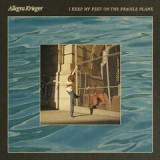
It contains all the signatures of her best lyricism: delicate and precise phrasings, moments that flicker between beauty and banality, meaning that forms through the accretion of observations, memories, and unexpected adages. This is an album that is at once post-theistic and devoted to a relationship with the divine, each song blinking in and out of "the fragile plane," a place Krieger describes as "a middle ground in the universe," both abstract and peaceful, where time, bodies, and names don't exist.
Krieger initially collaborated with Luke Temple and Jeremy Harris to record her vocals and guitar to tape at Panoramic Studios in West Marin, CA. As the album continued to form, Krieger envisioned instruments - like the French and English horn (Nancy Ranger and Priscilla Reinhart), electric guitar (Jacob Drab), and pedal steel (Kevin Copeland) - as characters which would walk in and out of the soundscape. What emerged from conversations with composer Sammy Weissberg, are brass parts that have a dark, almost surreal logic: horns arise to emphasize a word or phrase, fall out completely, only to rush back with dissonant orchestrations that gesture simultaneously toward deterioration and generation.
While Krieger takes inspiration from Elliot Smith's honesty, Judee Sill's cosmic reaching, and Joni Mitchell's sharp noticing, the dream-like association, harmonic dissonance, and angular melodic ascensions in each song are singularly and delightfully Krieger's.
"I Keep My Feet on the Fragile Plane" is a daring collection of songs by an artist who scries with both the cold glass eye of truth and the beating heart of empathy; who portrays life in all its twisted complexities.