2026 Repress
A notoriously jaw-dropping folk-funk classic, long treasured by the Balearic fraternity, the self-titled LP from the brothers Batteau nevertheless remains a criminally underheard gem. Appealing to fans stuck on Ned Doheny's scorching blue-eyed soul as well as Gene Clark's rich country-rock, it's an honour to present the first officially licensed vinyl reissue of this undoubted masterpiece of proto-Yacht-Rock.
Like a forgotten piece of baroque folk caught in 1973, Batteaux's eponymous album somehow sounds magically timeless. A full 45 years after the fact, it remains a mystery as to why they weren't better known. The lush production and virtuoso playing conforms with the ruling aesthetic of the time - well-crafted, melodic songs performed with precision and balance - whilst the shimmering AOR atmosphere and sun-dappled vocal washes align neatly with the best Crosby, Stills & Nash records.
Throughout, the beautifully penned tracks hold traces of Jimmie Spheeris, America and Seals & Crofts. The immaculately orchestrated percussion and additional instrumentation (electric piano and fiddle to name a few) are performed by perennially celebrated West-Coast cats including Tom Scott, John Guerin and Andy Newmark.
It's no surprise that the heavenly "High Tide" is such a Balearic touchstone. A free soul aqua-space groover, its sophisticated rhythms predict the swing of CSN's canonical "Dark Star" by a full four years. An alternative measure of its enduring magnificence can be gauged by MF Doom sampling Paul Horn's wonderful version, subsequently used by Ghostface Killah.
The highlights are many and memorable. Gorgeous opener "Tell Her She's Lovely" is the perfect example of the addictive, melody-driven songwriting which really should have earned them stardom. Moody ballad "Living's Worth Loving" is nothing short of heartbreaking whilst the chugging elegance of "Wake Me In The Morning" showcases their bewitching harmonies. The hypnotic yearning of "Lady Of The Lake" is an exquisitely string-drenched, piano-laced favourite that achieves a peculiar strutting-funk. It's that good.
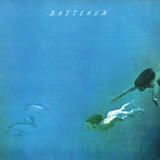
This lovingly curated reissue enables a long overdue reappraisal of the hitherto buried genius of Batteaux. The serene aqua artwork which adorned the original jacket - their father worked on a dolphin-human communication project in Hawaii, hence the infamous design - and sumptuous inner sleeve have been faithfully restored. Whilst, with access to the original tapes, Simon Francis' sensitive mastering elevates the sound throughout and, as ever, it has been pressed at a reassuringly weighty 180g.
Cerca:free time
Church Andrews and Matt Davies return with Tilt, a pinpoint collection of skewed microtonal and discordant compositions for percussion and digital synth.
Tones ascend but don’t resolve, rhythms loop, collapse and reassemble, patterns wriggle with geometric precision, sounds tilt, the edges fray.
Kinetic, elastic, wonky without being obtuse, Church Andrews (aka Kirk Barley) and Matt Davies new LP Tilt is the culmination of six years of creative collaboration, refining and redrawing the relationship between Davies’ virtuoso percussive practice and Barley’s off-kilter synthesis.
Where their 2024 release Yucca, took rhythmic cues from the Fibonacci sequence, Tilt explores a more intuitive approach, returning the duo to a minimal sound interrogating the interplay of chance and control, system and body, freedom and mechanisation. Featuring prepared guitar, finely resonant muted percussion and a crisp palette of digital synths, it draws on the pair's long-standing interest in alternate time signatures.
Here, a tripped-up 11/8 beat gives ‘Yokai’ a disorientating quality, threading unusual paths through the playful, mysterious 5-note Hirajoshi scale - a pentatonic scale from Japan hinted at in the track’s playful reference to a supernatural spirit in the country’s folklore.
Using a simple on-off system between drum and synth to trigger a Shepard tone - an auditory illusion of a sound that ascends or descends in pitch without actually changing - ‘Shepherd’ revels in the stripped-back simplicity of its sonic palette, where the nuance lies in what Barley calls “subtleties in the timbre of the sounds” as they dialogue with Davies’ warped loops.
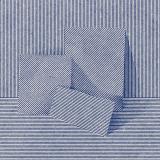
It’s these finely tuned melodic drum tones and an eerily abstracted prepared guitar that give ‘Debris’ its uncanny feel, yet never feeling overly controlled. Like the album’s meticulous, graphic artwork, Tilt seeks the shifting ground between the physical and the digital, as acoustic tones are tweaked and disambiguated into new and unexpected forms.
Tilt represents Church Andrews and Matt Davies’ ongoing collaboration in its purest form - a hyper-defined evocation of gravitational potential in their live sound.
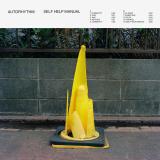
/// First track, Symmetry, debuted on BBC Radio 6 New Music Fix, 10th February: "A beautiful, beautiful album" /// I got my life back. On 17 February 2025, 1024 rays of ultra sound converged at an operation table in Bern, Switzerland, and disconnected a noisy circuit on my brain. 90% of the manifestation ceased – of a disease that I no longer wish to mention by its name. During the same period, I completed my new album: Self Help Manual. I’ve read more current research about the nameless disease than my neurologist, who despite that I didn’t follow his advice on suitable treatment, called me after the successful operation: a brave, brave man. I have composed the music in the same way as in my previous album – Songs for the Nervous System – through layers upon layers of improvisations in dialogue with my synthesizers, most of which are the same age as me. I made the majority of the songs in my studio in the remains of Old Hagalund in Solna. I edited the recordings in my bed during the waking hours of clarity at night. Some songs – NAC, Ketosis, Overkill – were recorded in the basement of my childhood home in Skutskär, in Norduppland, where I’d returned to be nurtured by my retired parents – who during a night when I couldn’t turn over in bed, or pull the blanket over me – made a list of what would happen to my belongings. To my friends who have stood out with me despite my disease, I want to state: you will not inherit me yet. On the new album, the electric bass takes on a leading role. ESG and Liquid Liquid have been important when I reinvented my baselines, limited and liberated by my poor fine motor skills. Plasma is my homage to Summertime Rolls by Jane’s Addiction, that I listened to frequently in my youth. I guess that no one will hear the resemblance. In several songs, the Fender Rhodes plays an important role, a magical instrument that I bought shortly after my diagnosis over a decade ago, and for a long time didn’t dare to touch out of respect for Herbie Hancock and Fela Kuti. A couple of songs draw inspiration from the Horn of Africa – Inner Nile and Delta. At first, subconsciously in the reverb-drenched Inner Nile, then more consciously in Delta. I’m sorry it doesn’t swing the right way, but it was my attempt to return to the cradle of humanity. Longevity is possibly my favourite. The melody is played by an arpeggiator that I controlled by pressing down different keys in an exhilarating sense of freedom. One song in particular, the second track – One – has caused friends to associate freely: one thought it sounded like Patrick Cowley, another like Sly & Robbie meets Kraftwerk, a third like Air – Moonlight Safari. I made one song just before the surgery: opening track Symmetry. It’s the mightiest and most minimal song. I made one song after the surgery: finishing track Self Help Manual. My previous medication pump is heard through the microphone of my Ovation Magnum. It’s the most hopeful song on the album. I took the cover photos with my Hasselblad during walks in Tokyo suburbs of Ōmori and Kamata more than ten years ago. It was something about the faith of the traffic cones that fascinated me – born in the same streamlined form, they had over the years become increasingly individual and lovable. The mixing was finalized by Christoffer Roth in the newly built Studio Dubious in Nacka. Rashad Becker, who in an interview said that he listens as much with his mouth as with his ears, mastered the album at Clunk in Berlin. Right now it feels like anything is possible. My recovery is perhaps a small step for mankind, but a giant leap for me. I hereby leave the music to you. Joakim Forsgren
Andreu G. Serra and Kiran Leonard first met in Lisbon nine years ago, arriving in the city within weeks of each other by chance. Living together in a crumbling warehouse in Alto São João, they recorded a series of improvisations that became The Piri Piri Samplers (Memorials of Distinction, 2019): Serra’s abrasive, tape-warped guitar lines colliding with Leonard’s stark, pedal-free counterpoint. They played a single gallery show, left Lisbon that summer, and then spent almost a decade living in different countries.
When Stroom reissued The Piri Piri Samplers in 2024, the label suggested the duo make a new record. At first, it seemed impossible: Leonard was in London, Ubaldo in southern Catalonia, and their attempts at long-distance recording quickly collapsed into nothing. But the near-failure sparked something. Leonard travelled to Catalonia to restart the process in person; soon after, Serra moved to South London, and the pair began meeting every week.
The result is Making Friends: a richer, more expansive album built over six months. Where The Piri Piri Samplers was assembled from raw improvisations, Making Friends transforms fragments into fully realised songs, weaving together nylon and steel-string guitars, piano, drums, bells, samplers and more. For the first time, Serra and Leonard sing together, each in his own language - Catalan and English - sometimes translating one another in real time.
Musically, Making Friends still carries the jagged dissonance and free-blues spirit of the duo’s earlier work, while opening outward toward everything from emo and blown-out noise to fractured chamber pop. There are only three guests on the album, and they are worth mentioning: Rachel Leonard and Antonia Serra (the musicians' mothers) on the seventh tune, and the American poet Pete Simonelli (of Enablers) appears on Top of Duboce / Tyne Bridge Crossing, one of the album’s two sprawling centerpieces.
At its heart, Making Friends is an album about friendship: about distance, reunion, family, and the stubborn need to make music together. It begins with uncertainty and disconnection, but ends somewhere stronger - with, as put on the closing track, “molta il.lusió per lo que pugue vindre” or “much excitement for what may come.”
STRICTLY LIMITED TO 100 COPIES ARTIST PROJECT After discovering techno at La Concrète, invited by my girlfriend, it was a revelation, and I very quickly felt the urge to contribute in my own way. My intention has been to create tracks infused with positive energy (even if the creative process sometimes leads into slightly darker corners of music). Still, I realized—rather late—the importance of the musical genre known as “techno.” Here is my reflection on it: Nothing is closer to village music (with everything that implies among indigenous peoples, for example—important and respected moments of communion) than techno. On one side, you have basic organic instruments and the voice; on the other, the most advanced technology available. But fundamentally, the difference is only superficial—the essence is the same: a guide, and people who participate intuitively, ultimately finding or discovering their own inner paths… individuation. Techno represents the re-emergence of a kind of initiation rite that had been missing in the West for quite some time—a sort of continuation of Woodstock, more spread out over time but just as powerful from a societal perspective. This release is my contribution to that revival, in the same way a villager might feel free to join trance music with a simple stick that sounds right, or a drum—something intuitive that all our ancestors must have practiced naturally at one point or another. In short, nothing pretentious—just something made with heart
Finally, finally, FINALLY! After many years of fruitless praying, a true collector grail can finally grace every turntable the world over. Bright And Shining is a miraculous leftfield library classic from the genius mind of Barbara Moore. It's Highly Addictive Happiness Music TM and one of the coolest records to come out of anywhere...ever! With originals almost impossible to find - and, when they do, going for over £300 - you already know how crucial this beautiful reissue is.
Recorded in 1981 for Sylvester Music Company, Bright And Shining is breezy, dreamy and funky in a perfectly smooth jazzy-soul-groove fashion, with Moore's patented celestial male-female vocal harmonies this time benefitting from the addition of Fender Rhodes and pumping bass lines.
As one particularly enthusiastic Discogs user put it: "If Eno is responsible for Music for Airports, Moore is responsible for Music for Holidays." Indeed, this is brilliantly unique, "maximum happiness music". If you miss the sun-dappled soft-psych soul of Koushik, the heavenly vocal arrangements of the great Library Music doyenne Barbara Moore - her depth, richness, sophistication and warmth - will see you just right.
The gigantic title track, "Bright And Shining", gallops out the gate, all sophisticated, jazzy leisure-soul with sax and guitars backing Moore's effortless vocal swag in this relaxed, mid-tempo head-nod strut. Worth the price of admission alone. Up next, the sunny, vibey "Fly Me High" features strolling, "unworded" vocals (aside from the refrain of the title) alongside breezy alto sax and electric guitar. Pastoral and perfect. The slow'n'sultry "Affluence" presents a moody elegance, a classical "downlifting" gem. Another crucial highlight is the breezy "Going On Holiday". It's happy. It's sunny. It's lively. It's cool and happy. Did we say happy? A mid-tempo, romantic sax workout, "Alto Sex"presents smooth jazzy funk before the first side closes out with the soaring, jazzy "Stay With Me". Seriously uplifting.
Side B opens with "Feel Fine", an excellent uptempo and bright jazz groove. Up next, "Canon" is wracked with refinement, a peaceful, smooth vocal harmony over repeating bass making for an elegant, late-night classic. It's followed by the laconic "Smooth And Soft", a laidback, casual sophisticated soul and easy-feeling jazz gem. The jazzy "Real Thing" is another exercise in strolling sophistication, complete with wordless vocal harmonies. The fairly self-explanatory "Voice Over Sax" sounds precisely how you would expect; a relaxed sax number with heavenly vocal support! To close, the carefree "Feeling Free" is a pleasant, light and breezy mid-tempo groove.
The audio for Bright And Shining has been meticulously remastered by Be With regular Simon Francis, ensuring this release sounds better than ever. Cicely Balston's expert skills have made sure nothing is lost in the cut whilst the records have been pressed to the highest possible standard at Record Industry in Holland. The original, iconic sleeve has been restored here at Be With HQ as the finishing touch to this long overdue re-issue. We'll grant the final word to MillionDollars. on discogs from about 10 years ago: "If you listen to the record on a sunny day you feel like going out surfing in a white linen suit with a blunt on your lips, catching a cool breeze."
Making a welcome return nine years on from his last outing on Dekmantel, Makam offers up a generous helping of wayward grooves that take his curious spirit even further into unmarked territory. With a strong dub sensibility grounding his rich tapestry of percussion and instrumentation, Guy Blanken follows his own path to arrive at an album that embodies house music as a launchpad for experimentation.
Blanken says himself he was determined to approach his first Makam productions in years from a place of total freedom — "It's not a single direction, but rather a landscape of sounds, moments, and textures. TARP feels like a new beginning, a free project that just had to happen naturally." The steady pulse of the club remains a guiding principle boldly manifested on heads down roller 'Static Shade', but even in the lilting organic loops and tumbling percussion of 'Forgive' there is a funkiness that's beholden to continuous movement.
At times the direct thump of 4/4 disco juts out as a call to dance, not least on 'Flying Birds' and 'La Tuna', but elsewhere the rhythms are more slippery. 'Dub In Loen' plots a delicate path through dub techno and 'Lummel Spirit' casts off into pattering Balearic bliss. The pervasive dub mood of the record comes to the fore on expertly crafted stepper 'Diagonal Rain' and crooked album opener 'Clear Skies'. 'Jackie B' lands as a love letter to quintessential deep house, and yet still there's a left-of-centre charm that gives the track a personality that is pure Makam.
Exuding warmth and imagination at every turn, TARP is the perfect example of how to make a groove-oriented album a rich home listening experience. There are ample moments primed for the spectacle of the dancefloor, but the mellow hue and broad sweep of approaches make Makam's welcome return utterly compelling from end to end.
GiGi FM is going back to her first love, Jungle. It’s one of the defining genres that shaped her journey into music. The DJ, music producer, dancer and poet is releasing her first jungle EP, Shelter Our Time on her label Sea-rène.
Following her 2025 techno EP Virgo Space Acid, GiGi FM turns inward on these 5 deeply personal, pop-infused liquid drum & bass tracks. It also marks the first time GiGi prominently centers her own lyrics and singing at the emotional core that thread the rhythm and movement of the music.
Written during a period of enforced stillness, the record became a form of transportation to imaginary realms; warm sunsets, liquid horizons and underwater dreamscapes that became portals to spaces where GiGi’s mind could still move freely.
Beyond its warmth, Shelter Our Time became a space of processing. The music acted as a catalyst – transforming experience into rhythm, memory into melody. For GiGi, music has always been a form of therapy, a way to metabolize life in real time. As she puts it, “It’s about learning to hold joy and pain in the same body and choosing to keep dancing anyway.”
The third release on Pan Records comes from BRS (British Rhythm Services), a UK deep house production collective active since 2000. They first appeared on the Parisian label Cyclo Records and quickly followed up with releases on Imperial Dub (San Francisco) and Leeds-based 20/20 Vision.
Throughout the 2000s, BRS — originally formed by Ben Vacara, Robert Evans and Mr. Mulatto — built a strong reputation for quality deep house. In 2001 they launched their own imprint, Friends & Families, while their music also appeared on major labels and compilations including Café del Mar, Ministry of Sound, Paper Recordings, Peng, Late Night Tales and React.
Over the years the project evolved, with core members Ben Vacara (also known as Frank Situation) and Mr. Mulatto continuing at the forefront, joined by musicians such as Dom Thompson, Phil “Dr. Keys” Campbell and James Payne. In 2019, BRS saw a new wave of reissues and fresh material on Cyclo, Wolf Music, Pressed For Time and their own label, Situationism.
Still active as producers and DJs, BRS have now been shaping UK deep house for over 25 years.
Following their 2023 LP Presents, Nathan Nelson's American Cream Band bring the Twin City heat back to Quindi with an album rooted in duality. From the yin and yang party-starting A side and meditative B side to the dual-attack boy-girl vocals, the nature of opposites and equals steer the expansive, artful strain of rock n' roll that spill out of this wholly unique Minnesotan export. For the ever intriguing Quindi, it's a strident step into Spring after the frosty introspection of Roudi Vagou & Läuten der Seele's Taghelle Nacht. While the world burns and injustice prevails, Twin is a celebration of unity and radical expression-all the more urgent against the backdrop of authoritarian overreach and righteous protest that has whipped through Minneapolis in recent times.
Twin continues Nelson's drive at the helm of American Cream Band to draw in a colourful cast of players to feed into his orgiastic sound, meshing the trance-induction of krautrock with the irrepressible funk of the post-punk-new-wave explosion. But principal among the cast of characters and forming a central tenet to the identity of this album is Liz Buhmann, lead vocalist and a formidable, playful foil to Nelson's own Midwestern twang. Around the electric spark between Buhmann and Nelson, a heavy duty ensemble wrangle guitar, bass, sax, a cornucopia of synths and a battery of percussion into all manner of sonic forms.
The double-sided concept manifests throughout Twin. On 'Call Me' Buhmann sings in French to contrast Nelson's English, while the strident strut of the NYC disco groove is offset by an inherent dreaminess that turns the track into a more cosmic kind of dancefloor workout. 'Ethical Vampire' is a spiky cut with a garage rock patina that spirals into a psychedelic, synth-soaked get-down. 'Don't Burn The House Down' is a loose and limber roller that captures Can at their funkiest along with the hypnotic vibe of other such esteemed long format jammers, but American Cream Band boils that energy into a hook-laden art pop sensibility before a gentle, drawn out landing.
Even the more pensive moments on Twin find space for friction. For all its tender, smoky temperament, 'Leda and the Swan' lets the electric piano and guitar fray at the edges and bleed into the red while Mat Heinrich's tumbling drums lurch with pent-up intensity on the one. 'No Funeral Necessary' skirts around the mellow pools of new age but prefers to let liberally doused Tape Echo tweak out Alex Meffert's honeyed sax inflections and Buhmann and Nelson's disparate sermons.
Nelson describes Twin as "an oppositorum coincidentia" - a reference to the mystical Latin concept of the coincidence of opposites that suggests contradictory ideas 'fall together' in a higher reality. Beyond the sound of the album, this idea also manifests in the cover photography by Sho Nikado and the swans on the LP labels by Autumn Garrington. As freewheeling and wide-open as American Cream Band feels, nothing appears by accident. The end result feels like a nourishing whole - rich with substance and nuance, deep enough to be explored and absorbed yet also so brazen and immediate you can't help but feel its surface charms from the first thrusts of 'The Hive Is Pissed' to the last ripples of 'We're Not So Sinister'.
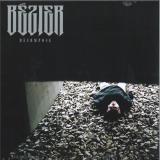
Bézier ripples their way back to Dark Entries with Decompose, an LP of doomed spa music. Multi-instrumentalist Robert Yang has made numerous appearances on Dark Entries for more than a decade, with releases spanning the stylistic gamut from hi-NRG disco floor-fillers to lush ambient epics. Decompose, Bézier’s second LP, is perhaps his most introspective work yet. It is an album almost ten years in the making, a deep investigation of life, loss, and the struggle of knowing oneself. If one were to pull a tarot deck for this album it would be the Nine of Swords. The album honors the lives of the fallen victims of Pulse Nightclub. It honors lives lost or suffering through the ongoing genocide in Gaza. The title track takes the form of a Buddhist chant, a brooding synth-driven meditation that scales steadily until breaking into John Carpenter-esque arpeggios halfway through. Tracks like “Egg,” “Marionette,” and “A Fading Citadel Atop Black Sand Bluffs” build on this soundworld, one in which intricate melodies and cavernous reverb induce in the listener feelings of both claustrophobia and free-fall. The album’s dancefloor-leaning moments, like “Codebreaking” and “Split a Path Towards the Thicket” are spartan, tunnel-vision techno tracks speeding towards ego-death. Decompose chronicles Yang’s journey to find peace with himself, as a gay Asian American. During this process, they learned to “repot” long-lost parts of their identity so they could grow forth in wholesome fashion. The sleeve for Decompose was designed by Eloise Shir-Juen Leigh, and features a photograph by Frankie Casillo of Robert laying on a bed of rocks in savasana pose, resembling an ascetic, evocative of the monastic vibes of the record.
Demuir is a firm part of the deep house world by now and always brings sounds that are as sophisticated as his alias suggests they should be. This time, he's heading up a new EP for Selections that opens with 'Free', a percussive sound with organic, live-sounding drums that are woody and funky with smooth vocals and pads up top. Oscar P reworks it with a heavier, house-driven low end but keeps some playfulness in the trumpets. 'Fate For Faith' is a warm and steamy mix of bongos and hadn't drums with muffled beats and cosmic synth rays that reach for the stars. A cuddly dub closes down what is a heartfelt and human EP.
Zürich-based musician Angelo Repetto returns with his new album Between Worlds: Interference, released on Subject to Restrictions Discs. The record is the result of a unique collaboration with Argentinian visual artist Clara Grabowiecki, extending their immersive live project Between Worlds into a sonic and tangible form.
«This album is a continuation of the deep conversations Clara and I had about concepts of perception that led us to question silence, time, transcendence, and the future», says Repetto. «It’s not about finding answers, but about opening spaces where sound, image, and emotion can flow freely.»
Between Worlds: Interference oscillates between hypnotic rhythms, kraut-inspired synth layers, and psychedelic atmospheres – hallmarks of Repetto’s style that listeners may recognize from earlier releases such as Sundown Explosion and Kamiokande. At its core it is an invitation into an open dimension where disciplines, experiences, and realities dissolve into one another. It is both a deeply personal statement and a collective journey into new perceptual spaces.
* Solid digital roots reggae classic from Rick Wayne, originally released on the Pathway To Freedom label in 1997, backed with a minimalist dub version with emphasis on the juggernaut rhythm,
* `Almighty Father’ has gained popularity in recent times due to its inclusion on shared recordings of late-1990 Jah Shaka sessions that have been circulated.
Water can retain or wash away memory; flowing or freezing. It gives life and shapes earth, while frozen imprints of an ancient past are waiting to melt – back into sound or fluid motion, or simply to dissipate and disappear. For their split release, Yoichi Kamimura and Olli Aarni offer two distinct reinterpretations of a performance recorded live at the Temppeliaukio Kirkko – a church in Helsinki built directly into solid rock and bathed in natural light – meditating on glacial landscapes and water cycles, using shared field recordings that bifurcate into two sonic visions of “ice journey”.
Yoichi Kamimura’s extensive recordings formed the bedrock of the original performance, notably from time spent on Suomenlinna Island just outside Helsinki in 2021, aiming to capture the remnants of the glacial movements that formed the area’s geology. Elsewhere, the voices of ringed seals, underground waterways of Kyoto, and icy rivers in Lapland from Kamimura’s library float in as well. “The small, charming, and gentle islands floating in the Baltic Sea—some with little cottages and restaurants—reminded me of the drifting ice in the Sea of Okhotsk between Japan and Russia,” describes Kamimura. Fragments of a Christmas choir creep in too, recorded at the church on Suomenlinna Island. Titled Kōri no ryokō , Kaimimura’s reinterpretation of the performance emphasises a shared future across all icy sea regions of the world: thawing ancient memories and the threat of disappearing entirely.
On Jäämatkailu, Olli Aarni presents his own expansive reworking of the same source material, heavily processed alongside his own field recordings from Vantaanjoki river and Suontee lake in Finland. “I was thinking about the processes of erosion, water carving rock, the prehistoric glaciers over the landscape in my own environment,” explains Aarni. The soundscape hums with both intimate details and macrocosmic flow, and a submersible bass rumble hinting at an iceberg far below the tip, morphing at time scales beyond human comprehension.
Side A is composed by Yoichi Kamimura using field recordings of drift ice (Shiretoko, Hokkaido, 2019–2022), the Lake Biwa Canal (Kyoto, 2020), the Therme Vals baths (Vals, 2017), spring water (a fountain next to Saint Benedict Chapel, 2017), a Christmas choir (Suomenlinna Church, Helsinki, 2021), ice in the Juutuanjoki River (Inari, 2021), and recordings from Yoichi’s and Olli’s concert (Temppeliaukion kirkko, Helsinki, 2021), KORG iPolysix, and KORG minilogue xd.
Side B is composed by Olli Aarni using the aforementioned sounds + field recordings of the river Vantaanjoki and the lake Suontee, sampled sounds, and a computer.
- A1: From Loch Raven To Fells Point
- A2: Calliope Wailer
- A3: Tightroping
- B1: Critical Masses
- B2: Reservoir Drop > The Summer Song
Jeffrey Alexander and the Heavy Lidders return with their best album yet, and a UK tour this August. Press by Silver PR
‘’On the alternate timeline where the Meat Puppets inherited the bulk of the Grateful Dead’s tourheads when Jerry Garcia died in 1995, none of this would be necessary, because Jeffrey Alexander and the Heavy Lidders are a household name for evolving their own musical space that overlays dusty folk, cosmic jazz, deep psych, free improv, and even (gasp!) indie rock, building an audience that ranges from open-eared curiosity seekers to deep committed music weirdos that’s also yielded the Heavy Lidders, an infamous sub-cult of concert tapers that you’re already sick of hearing about. A lot of other things are better over on that timeline, too.
But in this consensus reality (and probably the other one, too), Liquid Donnon catches the Lidders at their heaviest, “heavy” in the Lidderverse being far from a monolithic musical idea. There’s heavy like the album-opening “From Loch Raven to Fells Point,” one of several tracks with elegant and gnarled conversational jams featuring the core Lidders lineup of Alexander alongside guitarist Drew Gardner and bassist Jesse Sheppard (both of Elkhorn) and drummer Scott Verrastro. But there’s heavy, too, like “Calliope Walker” and “Tightroping,” featuring Gardner shifted to dream-space vibraphone, the former with saxophonist Tacuma Bradley, the latter with Christina Carter of Texas noise-psych legends Charalambides on veil-crossing wordless vocals, her first collaboration with Alexander in some 20 years.
But then there’s also heavy like the cover photo of Alexander’s late friend and album namesake Donnon, taken at a Dead show at Rich Stadium in Buffalo in 1989, a spirit threading through the songs and weaving unexpectedly into Alexander’s life decades later, emerging especially when Alexander passed through a near-death experience of his own. But, taken together, the different heavies of Liquid Donnon add up into a state of musical grace, where all the Heavy Lidders from all the universes come together as one. Just, like, imagine.
Convened in 2019 on Alexander’s relocation back to his native east coast, the Heavy Lidders are the latest hard-touring expression for the guitarist’s music, joining a vast and tangled discography (and tape list) that includes the beloved long-running west coast Dire Wolves Just Exactly Perfect Sisters Band and, before them, the Iditarod and Black Forest/Black Sea, as well as a bushel of solo play-all-the-instruments projects, a stint with Jackie-O Motherfucker, sessions with Kemialliset Ystävät and Avarus and others, and you’ll have to keep digging for the rest.
And while it’s not hard to find tapers at Lidders gigs (and they encourage you to be one), or to track themes and songs over Alexander’s many live releases, Liquid Donnon makes a new primary text, the original versions of six new pieces for the repertoire. The album closes with a devastating pairing of “Reservoir Drop” into “The Summer Song,” floating into a duo between Alexander’s guitar and Carter’s voice. Catch a half-dozen Lidders shows this summer, and you might not ever catch them playing it like that again, but you just might open the doorway back to that better place." - Jesse Jarnow (writer, WFMU DJ, producer and host of The Good Ol’ Grateful Deadcast)
Melbourne / Naarm stronghold Butter Sessionsclock 15 years in the game with a trilogy of 12"s, sustaining their uncompromising streak of peak-form electronics. The family-style V/A binds friends, collaborators, former studio neighbours and DJ booth allies, capturing a label that exists as community as much as catalogue.
Disc Two lifts off with recurring contributor Rory McPike's first label outing as Rings Around Saturn, a blissed-out cosmic floater skimming the periphery. Booked in the early days of the label's formative Mania residency, Japanese don Gonno twists freestyle, techno and breaks into pure ecstasy, before the unerringly bold Jennifer Loveless spikes the punch with a hallucinatory mix of drums, disembodied voice and jazz club keys.
On the flip, Boorloo's Guy Contact rolls out Dance In The Grey, a shadowy prog churn pitched between new-romantic vocal sheen and EBM muscle, with Kate Miller completely rewiring the script on Sub Series E - a masterfully minimal, double-time meditation. suki presents his Sniper1 alias to close with a demonic body-jacking groove loaded for the system.
Whether taken alone or folded into the three-disc triptych, each instalment stands as a bag-ready constant, charged with Butter Sessions' curatorial finesse.
- A1: C’est Loin
- A2: Là Où Tu Veux (Deixa A Gira Girá)
- A3: Pas Tant De D'chichi Ponpon
- A4: Assez
- A5: Le Soleil En Haut
- A6: Tout L’or
- B1: Désillusion
- B2: Attends-Moi
- B3: O Sapo
- B4: Horssaison
- B5: Presque Rien
- B6: Vou Festejar
For his sixth solo album, Ezéchiel Pailhès returns with a new collection of songs infused by a sunny wandering spirit.
Within each of the twelve songs on SOL is a thread of melancholic happiness that has permeated much of Pailhès’ music and songwriting. He addresses love, the passing of time, hope, lost illusions, fleeting moments of grace, the temptation of forgetting, a need to escape, and desire. All this is
insulated by understated orchestrations that blend acoustic and electronic instrumentation with deft confidence.
The Portuguese and Brazilian concept of saudade—a form of melancholic longing and nostalgia— pervades, thanks in part to Pailhès decision to record the album in Rio de Janiero and to reinterpret some of the finest works of Música Popular Brasileira (MPB). In particular, he revisits a handful of
lesser known classics from the mid-century samba and bossa nova era—originally written or performed by talents including Vinícius de Moraes, João Gilberto, Tom Zé, Dorival Caymmi, João Donato, Os Tincoãs, and Ataulfo Alves.
The shift from Brazilian Portuguese to French and the decision to adapt rather than perform a straightforward cover versions, allows Pailhès to invent a form of prosody and euphony (the musicality and harmonious combination of words) that feels vibrant and unlike anything else in today’s French
chanson landscape.
“Some lyrics are simple translations from Portuguese, in what I’d call an expanded version. For others, I started from a single word or a single phrase and embroidered an entirely new text that carried me elsewhere,” explains Pailhès. “I allowed myself great interpretive freedom, while preserving the humanist dimension of the original songs. I’ve always been deeply moved by the way Brazilians transfigure reality through heightened emotion. I love this visceral and spontaneous country, which always seems to live through emotion. And above all, I love its music both popular and unifying,
bringing together all social classes. In that sense, it’s very political music, but even more so utopian, made by the people and for the people.”
On this new album, however, the French artist was keen to avoid cliché. Each song is therefore built around a carefully balanced interplay between Pailhès’ piano and synthesizers, alongside restrained arrangements of percussion, brass, bass, and cavaquinho (a small four-string plucked guitar). These parts were recorded in Rio de Janeiro with two musicians who regularly perform alongside the legendary Caetano Veloso—Kainã Do Jêje and Alberto Continentino—joined by Thomas Harres, Antônio Neves, Eduardo Neves, and Gabriel Loddo.
Since the 1960s, France and Brazil have shared a long-standing cultural and musical relationship. Some Brazilian artists, most famously Gilberto Gil, took refuge in France during the dictatorship years (1964–1985). But above all, French chanson quickly fell in love with the richness and ingenuity of
bossa nova and samba, translating and reinventing them in the language of Molière. Throughout the 1960s and 1970s, albums and hits by Henri Salvador, Georges Moustaki, Pierre Barouh, Pierre Vassiliu, and Claude Nougaro all drew from the MPB repertoire.
Fifty years later, with SOL, Ezéchiel Pailhès reinvents this rich Franco-Brazilian musical legacy, bringing to it a personality and modernity that stand confidently alongside those of his forbears.
As the so-called “Latin boom” becomes a new anchor for hard-swung club sounds, it is crucial to recognize that the region’s musical culture extends far beyond dembow edits and the pop-trap hybrids that have edged into the mainstream. Monterrey-born, New York City-based producer and DJ Delia Beatriz, aka Debit, returns to NAAFI with Potpourri, a generous and kinetic collection of dancefloor-oriented tracks filled with percussive flourishes, squelching 303 basslines, and rhythmic mutations that actively challenge the status quo. Rather than rebuilding “Latin sounds” as a fixed category, the album rethinks their internal logic, tracing the evolution of techno and house in cities like Detroit, Chicago, and New York alongside parallel innovations emerging in Mexico, Colombia, and across the wider Latin world. Positioned on the bridge between Mexico and the US, Potpourri does not seek synthesis as a gesture of smooth fusion, but as a site of disruption.
The album can be heard as a loose follow-up to System (2018), Debit’s NAAFI-released EP that expanded the sonic potential of tribal guarachero through triplet-driven rhythms, industrial pressure, and noisy reconstruction. Potpourri retains guaracha as a structural backbone while drawing further influence from veteran DJ and producer Javier Estrada—who also appeared on System—and particularly from his fast-paced, nonlinear style of mixing. That approach becomes a formal principle here: canonical structures are dismantled, repetition is avoided, and tracks evolve without sacrificing propulsion. Coming after the introspective temporal inquiry of Desaceleradas and the speculative historical acoustics of The Long Count, Potpourri arrives as a deliberate surge of energy. As Beatriz explains: “It’s a manifesto for rethinking form and sound in dance music. By stepping outside traditional structures and embracing the potpourri approach, I’m creating new meaning with familiar rhythms. I’ve also been applying this to my DJ sets, using it as a tool to break free from established norms and explore new narrative possibilities.”
Years in the making, Potpourri imagines an alternate timeline in which the psychedelic squelch of acid—echoing pioneers such as DJ Pierre and Mr. Fingers—and the dub-inflected atmospheres of Basic Channel entered into direct and sustained contact with Latin American club mutations. Those references are legible, but never merely quoted. Instead, they are folded into syncopated hi-hats, overdriven kicks, and unstable arrangements that absorb both the intensity of the parties Beatriz remembers from Monterrey and the abrasive edge she sharpened at DIY noise shows in New England. The result is unmistakably a dancefloor record—heard in tracks as forceful as “Pero like” and the peak-time pressure of “tuvesuerte”—but one saturated with grotesque, psychedelic atmospheres, where sounds dissolve into hoarse croaks, acidic smears, and anxiety-inducing growls. Here, the rave becomes not simply a site of release, but a platform for navigating identity, hybridity, and artistic formation across borders. Moving through peaks and ruptures, Potpourri reveals a party narrative that is not linear but multidimensional.
By folding together the fluidity of DJ culture, the experimental charge of acid, and the rhythmic vitality of guaracha, Potpourri proposes a space of formal and political innovation within Latin America’s rapidly expanding electronic music landscape. It is a record that refuses containment, pushing against the templates through which Latin electronic music is often consumed, and insisting instead on friction, instability, and transformation as generative conditions for the dancefloor.