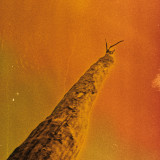
Mr Bongo proudly presents the debut album from Tasmania-born, Melbourne-based, Finn Rees. Gliding across a swirling palette of saturated hues, Dawn Is A Melody feels vintage yet vibrant, new but familiar at the same time. A spiritual, deep and textured jazz record, tipping its hat to greats from the past, capturing memories and reformulating them into new ideas with the help of some of Melbourne’s finest talent.
Expert keys player for the likes of 30/70 and Elle Shimada, alongside one-half of Close Counters, this debut LP was Finn’s conscious departure from the realm of groove-based jazz. Instead, Dawn Is A Melody places the piano and arrangements centre stage, giving Finn and his fellow Melbourne crew freedom to explore the spaces in between, new emotions and alternate soundscapes.
In Finn’s own words: “My intention with Dawn Is A Melody was to create a world; a microcosm of colour. Something rich and beautiful that allowed the melodies and compositions to reach their full potential. It was driven by hope, curiosity and the search for beauty and reassurance in this ever-changing world. The emotion behind the music is really about the journey of life, growing up and changing, as well as my relationship with Tasmania’s natural landscapes where I grew up, a part of the world that is incredibly unique and beautiful.”
The album arcs between opening, middle and end. Beginning with the optimism of ‘Looking Up’ and ‘Lagoon’, the former a celestial, string and harp marbled slice of positivity, the latter a spiritual journey of exuberance and hope, Finn’s fingers dancing across the ‘70s Yamaha grand piano. From there the songs blossom outwards with the cinematic soulful journey of ‘It’s Behind Me Now’ and Brazilian-inspired ‘Expansion’, as the divine ‘Crossing’ signals a transition to a new realm. The energy is transformed from the rich cosmic textures to a more intimate and personal feeling with ‘Ablaze’, ‘Between Spaces’ and ‘As It Passes’ which blissfully fades down to simply piano and strings to close out the record.
Recorded at Rolling Stock in Collingwood, Melbourne, Henry Jenkins was drafted in as recording and mix engineer, his minimal vintage mic setups giving a live aesthetic and warmth to the arrangements. Lucky Pereira and Blakely McLean Davies form the rock-solid rhythm section, with a hand-picked line-up of other Melbourne talent on display, including Cheryl Durongpitikul on tenor sax, Siwei Wong on harp, Audrey Powne on trumpet and Allysha Joy on vocals to name only a few.
Plotting a course from Alice Coltrane, through Herbie Hancock, to Arthur Verocai, this is a debut nourished by the past but firmly made in the present. A record unable to be age-stamped, casting ambiguity as to when, what era and by whom it has been crafted. Like a vintage lens capturing a current scene, Dawn Is A Melody is warm and familiar yet focused on the here now.
Suche:free time
- 1: La 2020 (Feat. Exile)
- 2: Ca All Day (Feat. Vcl Tha Moslem)
- 3: In Living Color (Feat. Skye Louise)
- 4: I’m G (Omg) (Feat. Chuuwee And Born Allah)
- 5: La Summer (Feat. G Kidd, Jack Davey, And Like)
- 6: We Originals (Feat. Longevity, Sahtyre, And Onwun)
- 7: We Bang (Feat. Med, Thurz, And Yah Ra)
- 8: The Joy (Feat. Speed Walton And Mykestro)
- 9: West Coast (Feat. Iman Omari And Imani)
- 10: Weekdays (Feat. Polyester The Saint)
- 11: Roll Up (Feat. Jimetta Rose, Donel Smokes, And Tiron)
- 12: Red, White, & Me (Feat. Colin Devane)
- 13: Out Of The Blue (Feat. Shaq Husayn, Ta’raach, Ayun Bassa, Propaganda, And Jo Roq)
- 14: Colorful (Feat. Cashus King, Self Jupiter, And Myka 9)
From weaving thought-provoking poetics to channeling the spirit of vintage West Coast gangsta rap, acclaimed Los Angeles emcee Blu is a dynamic musical presence, forever evolving and defying expectations. Supremely talented producer and musician Shafiq Husayn has a similarly diverse skill set, with a storied history as a member of Sa-Ra Creative Partners and solo production credits for top artists across the musical spectrum, from Erykah Badu to Ice-T to Anderson .Paak to Jurassic 5 and many more. After linking up for the mixtape The Blueprint back in 2018, Blu and Shafiq Husayn are reuniting for the new album Out Of The Blue, elevating their collaboration to a new level. “The Blueprint was just me rhyming over some of Shafiq's beats that I found online,” Blu explains. “This time we were actually in the studio together. We’ve been working together since 2008, but this is our first official album.” Awash in Shafiq’s dense sonic architecture, Out Of The Blue showcases the intricacy of Blu’s spiritual street talk while simultaneously delivering a series of bass-heavy L.A. anthems. Entirely produced by Shafiq Husayn, the collection features guest appearances by MED, Exile, Chuuwee, Thurz, Speed Walton, Jimetta Rose, and Freestyle Fellowship members Myka 9 and Self Jupiter. “Out Of The Blue is my G-Funk album,” Blu explains. “Big brother Shafiq gave us a master class in production. We just in here being funky and having fun.”
Luxury Apartments have spent long enough pondering in the orb of creative frustration as art charged city dwellers and have alchemised a jagged piece of guitar work that calls on the past for a quick catch up before cracking on with their day as a witty, energised and wiry punk band. Formed before your favourite East London neighbourhood became full of high rises, cockapoos and pubs with Madri & Beavertown on Draft, there’s a whole swath of words you could use to describe Luxury Apartments, but doing so might draw too many parallels to estate agent listings wo we’re gonna let their track record and new LP do the talking… LA played with the likes of TOY, TELEGRAM, Deep Tan, Es, The Chisel and Rifle before even having an LP. Mixing dry humour with a belting live show served them well while the guys were woodshedding and earnt them early fans such as Graham Coxon and Jamie Reynolds, who I can only gather shed a single tear of seeing where they came from with all the chaotic guitar-busting, skin-splitting, bottle-smashing madness of an early LA show. But we’re here talking about NOW and NOW is the time to get your pre-order for their first LP, a half hour of power smashing the atoms of 80s c86 indie on lead track ‘Energy’, 77 punk on ‘Wire’ and new garage rock explosions on ‘Taliban’ which morph in to a piece of black wax that’s 100% guaranteed to get the disenfranchised wiggling, the fed-up hurling half bricks through foxtons windows and the punk lifers flipping off yet another boss before carving out another fork in their paths of resistance.
"Listen to This." As the original working title for Bitches Brew, the instruction and invitation resonates to this day as the best way to approach a record that shattered conventions, altered music history, and, more than five decades after its original release, still sounds far ahead of its time. The aural Mount Rushmore of jazz fusion, Bitches Brew is rightly ranked by virtually every significant outlet among the 100 greatest albums ever made in any genre. Sewn together with vibrant colours, voodoo textures, and ethereal moods, the 1970 landmark emerges with supreme detail on Mobile Fidelity's definitive 180g 33RPM 2LP set.
Sourced from the original master tapes and pressed on 180g vinyl at RTI, this numbered-edition version of Bitches Brew joins the audiophile ranks of other essential Miles Davis sets reissued by Mobile Fidelity. Having established new possibilities for studio-recording techniques, the record can now be experienced to maximum degree by way of a pressing that widens and deepens the soundstage, opens up separation between instruments, and broadens the dynamic range. If ever a jazz album can be said to have gone to outer space and back, this is it.
Davis conceived Bitches Brew by having the musicians stand in a semi-circle, where he pointed at them with vague directions for tempo, solos, and cues. The collective improvisation and interplay spawned a galaxy of melodies and grooves later spliced together by producer Ted Macero. On this reissue, these creations take shape with utmost realism. Compositions stretch across black backgrounds and paint abstract canvasses on par with those of Axis: Bold As Love and Abraxas. Juxtaposed percussion, loose jams, and melodic segues explode with impressionistic verve.
And "verve" defines Bitches Brew. Gathering a Hall of Fame-worthy lineup of musicians and tweaking it according to his desires, Davis follows through on his idea to "put together the greatest rock and roll band you ever heard." Central to his proposition is the presence of two (and sometimes three) drummers and two bassists, a tactical move that thrusts rhythms into central focus. Akin to the futuristic album cover art, the drum-driven suites head toward distant universes and uncharted territories. At once hypnotizing and grooving, they chart maverick adventures with quixotic rock, funk, and R&B elements.
Conceptually, Davis described Bitches Brew as "a novel without words" and "an incredible journey of pain, joy, sorrow, hate, passion, and love." The vast psychedelic expanses of warped echoes, liquid reverb, and tape loops confirm such ambitious contrasts of light and dark, fear and hope. Yet the most absolute characteristic of this watershed effort lies in how it resists definitive interpretation and encourages free thought — the very principles with which Davis conceived the everlasting beauty and fascination that remain Bitches Brew.
A floating drift toward a mysterious reality, between Nature and Cosmos, poised between sleep and wakefulness, temporal co-presences and impossible spatial ubiquities. In this phantasmagorical saga, inspired by TV science-fiction as well as 60s and 70s horror movies, Nicola Giunta/Lay Llamas creates a miraculous balance between original inserts and retrievals of freely chosen fragments from old audio documentaries on vinyl, perfecting the art of sound collage in an absolutely psychedelic way. Nonlinear dream textures become labyrinths of sudden openings, empty rooms, interstellar platforms, narrating voices from other worlds or ghostly churches from beyond the grave. A piercing electronica of cosmic synths, dense with the mists and dusts of distant times, past and future at the same time, where lysergic percussions merge with echoes of flutes vibrating in endless tropical forests and natures. Until the final awakening, in the reality of the first light of dawn. Originally released on cassette by Miracle Pond
An’archives presents the latest album by Japanese free saxophonist and vocalist Harutaka Mochizuki, Doppelgänger ga boku wo. Since the early 2000s, Harutaka has quietly, yet steadily, released a string of solo and collaborative releases that have allowed multiple perspectives on one of the most singular voices in modern music. In collaboration, he seems to prefer the duo format, and digging through his discography, you’ll find releases where he pairs with Tomoyuki Aoki (of Up-Tight), Michel Henritzi, and Hideaki Kondo. But Harutaka’s solo performances, with their lyricism and physicality, are where the magic truly happens.
If earlier albums, like Solo Document 2004 (Bishop, 2005) and Pas (no label, 2014), were raw documentations of solo alto saxophone performances, in recent years, Harutaka’s solo albums have become more complex, more mystifying. Most significantly, they’ve become more personal; there are few musicians extant whose albums feel quite so much like diaristic interventions, and Harutaka’s music now is deeply moving in its intimacy. Developing that thread of revelation, Doppelgänger ga boku wo offers a still richer exploration of many facets of Harutaka’s artistry.
The two double-tracked alto saxophone performances here feel consummate, with Harutaka shadowing himself, exploring the possibilities of the multiple self: Doppelgänger is me, indeed. The playing here is rich with affect, but still exploratory, voiced with rigour and intent. Two short pieces for keyboard and voice (about Giacometti and Genêt, respectively) are fragile miniatures, with clusters of chords, and passing phrases, wrapping around Harutaka’s untutored but lovely singing.
The ‘karaoke’ performance that closes the album, of “Woman ‘W no higeki’ yori”, speaks to the iterative aspects of Harutaka’s music. A cover of the Hiroki Yakushimaru song, the theme to Shinichirō Sawai’s 1984 film W’s Tragedy, he’s returned to this song several times, and here, his delivery perfectly captures the spirit of what Michel Henritzi, in his typically beautiful liner notes, evocatively details as “one of those sad love songs that accompany lonely sake drinkers in smoky night bars, sharing their spleen.”
Gorgeous, human, heartrending - Doppelgänger ga boku wo is Harutaka Mochizuki in element and in spirit.
DJ Support: Gilles Peterson, Sean Johnston, Jaye Ward, Max Essa and Francois K
Limited to 300 copies
Having been long-time admirers of one another from afar, Hell Yeah and Michele Mininni finally come together for Pop Archetypes. It is a multifaceted debut album that collides broken beats, worldly rhythms, jazz, eastern melodies, live drums and much more into one thrilling 15-track opus that arrives on May 31st.
Italian artist Mininni has always had a leftfield take on electronic music and imbued it with rhythms, melodies and instruments from around the globe. He has released it on cult labels like R&S, Optimo Trax, Internasjonal and Curle Recordings but has saved his magnificent debut album for Hell Yeah. It is much more than a collection of sounds he has already explored and instead finds him heading off into all new territory without losing his signature sense of inventive and beguiling rhythm and melody. It is a multicultural journey that takes in heterogeneous styles and diverse influences but distills them all into one cohesive album with its own unique storyline.
Says Mininni of the record, 'I wanted each track to be like pieces of a unique, multifaceted picture, like walking through train cars or progressing through the levels of a video game, all filtered through my own vision and concentrated into 36 minutes. I wanted a pop album rooted in the extraordinary richness of popular music and projected into the future, a continuum where pieces communicate with each other and are received by the ears in symbiotic balance.'
Despite that concept, the album is a spontaneous listen full of surprises, left turns and original ideas that all hold together in thrilling fashion. It kicks off with the tumbling jazz drums and swirling synths of 'Spinning Around Cotton Candy', takes in mellifluous melodic layers and broken beats on 'Golden Room' and 'Slipped Air' casts you adrift amongst gorgeous piano keys and refracted vocals on the suspensory 'Vertigo'. There are jungle interludes with Eastern string melodies like 'Bangkok Tempo', lavish fusions of organic and synthetic sounds on 'Kundalini' and more charming Far Eastern rhythms on 'Muting Cat'. 'Congoflash' brings electrifying cosmic rays to busy hand drum patterns, 'The Magic Of Synesthesia' combines dark amen breaks and bright and uplifting flutes while 'Carousel Of Tears' douses you in watery melodies and celestial pads that awaken the soul.
Pop Archetypes is an adventurous work packed with meticulous and infinite details but all with an overarching narrative that makes it far more than the sum of its parts.
In a flurry of madcap sampling pitched towards the heat of the night, Pedro Zopelar builds on the premise of his 2022 electro- funk love letter Charme, shifting his approach towards a particular
90s flair and a method with a specific end result. Ritmo Freak took root in studio experiments for a momentous — and rare — live set at São Paulo festival Não Existe in 2023, where Zopelar was caught up in one of those right-place, right- time moments we carry with us through life. As he explains himself: “This album is dedicated to freaky club culture. While I was playing at the festival there was a crazy tropical storm outside and the room was packed with the freakiest crowd. I’ve tried hard to immortalize that feeling on this record.” With the intended energy in mind, Zopelar focused on a particular mode of production centred around 12-bit sampling from his ample record collection. Considering his background as a trained pianist, here his musical instincts are forced to work within the limitations of short, snappy cuts from dusty 12”s. The lo-fi sound sources and the resourceful ways Zopelar works them gives the record an unmistakable old-skool flavour which he applies to forthright house, techno and electro funk rhythms, always taking care to draw out the soul of the music.
The stylistic touchstones flow past thick and fast on Ritmo Freak. From the amped up fierceness of the title track with its gaudy, cut n’ paste, vintage techno flavour to the effervescent electro funk of ‘Gabriellinha’s Boogie’ on to the surreal Balearic inversion of ‘Distraction’, this is a high-velocity, endlessly charming record bursting with the musicality Zopelar has made his name on. As the driving force behind many warehouse parties in São Paulo,
Zopelar has been immersed in club culture for a long time, and his distinctive catalogue of jazz, funk, acid and techno has graced highly respected labels like Apron, Selva Discos and Mother Tongue. Throughout, he’s displayed an affinity for the tangled roots of the groove with an open-eared, big-hearted sound. That’s what comes through on Ritmo Freak
Metropolis; a powerful song addressing city inequalities and their impact on youth. It's a call for freedom, criticizing large corporations. The lyrics remind us of our basic human needs, while the smooth music eases the despair about environmental issues. Despite being recorded over forty years ago, the message feels relevant today, as we continue to struggle with harmful capitalism.
Originally part of a 1975 charity compilation LP raising money for environmental charities in California, which later became a collectors artifact changing has for silly money (which didn’t fit well with the Déjà vu kid team), so this Balearic nugget, the crown jewel of this album, was released on 7”…There is no better way to share it again than on it’s own 45 inch release at a fair price.
Moonboots, Danny Psychemagik, Spruzzi Monorecords, Micky Browne, Paul Hillery are just a selection of names who have championed this track from this great album and now we can reshare it with you in this first time format.
Artwork redesigned by GNB Studios.
The last, and previously unreleased, recordings from the legendary and world renowned Swedish psychedelic organist Bo Hansson before he passed away. (Jimi Hendrix was a fan and recorded his song "Tax Free"). Here you can listen to Bosse in fine form together with his lively organ student and keyboardist extraordinary; Eric Malmberg, joined by drummer Niklas Korsell, creating mesmerizing and ethereal space jazz. The music seems to contain information about a deep perspective that questions both time and space and recognize the universe unfolding its abstract process of creation.
- A1: Rehearsal #1 (“I’ve Been Looking From The Outside”) 4:13
- A2: Rehearsal #2 (Metal Sludge, Aka "Bufo Gutturalis") 6:56
- A3: Rehearsal #3 (“Early Morning Haze”) 6:56
- A4: Rehearsal #4 (“Free To Blow With The Wind”) 3:04
- B1: Rehearsal #5 (Heavy Acid Funk Groove) 2:55
- B2: Rehearsal #6 (More Heavy Acid Funk Groove) 2:12
- B3: Rehearsal #7 (“Sunshine Comes My Way”) 3:27
- B4: Rehearsal #8 (Grind Groove) 1:02
- B5: Rehearsal #9 (Grind Groove, W/Solos) 2:42
- B6: Rehearsal #10 (Acid Rock Groove) 2:44
- B7: Rehearsal #10 (Acid Rock Emergency) 1:33
- B8: Rehearsal #11 (Shred And Stroll) 3:42
Influences from heavy bands of the time, such as Black Sabbath, Deep Purple and Steppenwolf are noticeable, with proto-doom and psych/funk undercurrents.
Do you like fuzz guitar? You're going to hear it screaming and wailing and building to epic tidal waves and crashes, the kinds of astonishing guitar cascades not heard since you cued up the best of all available live Jimi Hendrix recordings. Talking about a track known online as 'Bufo Gutturalis,' a poster's assessment: "I gotta say this is one of the most shocking songs from 60s, it's impressive how the sound can be heavy and dark -- it is also one of the earliest released songs most closely to call proto-doom."
Dexys are back! 11 years since the release of their last album of original music, the acclaimed One Day I'm Going to Soar, the band return with a stunning new record, The Feminine Divine, out July 28th on 100% Records.
The Feminine Divine’s arrival is heralded by today’s release of the glorious first single ‘I’m Going To Get Free’, soaked in horns and with a heavy dance-hall feel. "The character is optimistically breaking free from internalised trauma, depression and guilt," Kevin Rowland said of the track.
The Feminine Divine is Dexys’ fifth album of original material produced once again by Pete Schwier, along with acclaimed session musician and producer Toby Chapman. After taking some time out to refocus his energy, Kevin Rowland came back to music with a fresh perspective and new-found positivity. A personal, if not strictly autobiographical, record portraying a man whose views have evolved over time. Not just on women, but the whole concept of masculinity he had been raised with: an education and an un-learning that is traced across the arc of The Feminine Divine with dizzying effect.
With two tracks on the album with Goddess in the title in ‘My Goddess Is’ and ‘Goddess Rules’, it’s no surprise Kevin chose to use a painting inspired by Pele, the Hawaiian goddess of fire and volcanoes, for the artwork.
Dipping into the archives for a song he’d originally written in 1991, the album’s opener, ‘The One That Loves You’, is a tough-guy feint before he lifts the curtain on “what I really feel”, as announced by a classic bit of Kevin spoken word that leads into the second track, ‘It’s Alright Kevin (Manhood 2023)’.
The record’s first half is full of music hall-esque swagger, much of it written with original Dexys’ trombonist Big Jim Paterson. The second side of the record is like nothing Dexys have done before. A saucy, synth-heavy cabaret, written in collaboration with Sean Read and Mike Timothy. It’s steamy, fizzing and sultry, at times doom-laden and heavy and at other times raunchy and funky. Quite a heady mix.
Today the band is more of an “organic” assemblage – Kevin, Jim (a non-touring band member), Sean Read and Mike Timothy. “It’s always just natural with me,” says Kevin. “The inspiration comes first, I think about what I can do, what songs I’ve got, then approach the band.” He describes their current lineup as “very much the nucleus, these days.”
With over a billion worldwide streams, three top 10 albums in the UK, two number 1 singles, a Brit Award and a multi-platinum selling album with their sophomore release Too-Rye-Ay (as Dexys Midnight Runners), Dexys are as vital and exciting today as ever. With live shows set to be announced shortly in support of the record, The Feminine Divine marks a new chapter in a book that just keeps getting better and better.
“I’ve been doing this a long time,” says Kevin. “But I feel I’ve got to it now.”
Dexys are back! 11 years since the release of their last album of original music, the acclaimed One Day I'm Going to Soar, the band return with a stunning new record, The Feminine Divine, out July 28th on 100% Records.
The Feminine Divine’s arrival is heralded by today’s release of the glorious first single ‘I’m Going To Get Free’, soaked in horns and with a heavy dance-hall feel. "The character is optimistically breaking free from internalised trauma, depression and guilt," Kevin Rowland said of the track.
The Feminine Divine is Dexys’ fifth album of original material produced once again by Pete Schwier, along with acclaimed session musician and producer Toby Chapman. After taking some time out to refocus his energy, Kevin Rowland came back to music with a fresh perspective and new-found positivity. A personal, if not strictly autobiographical, record portraying a man whose views have evolved over time. Not just on women, but the whole concept of masculinity he had been raised with: an education and an un-learning that is traced across the arc of The Feminine Divine with dizzying effect.
With two tracks on the album with Goddess in the title in ‘My Goddess Is’ and ‘Goddess Rules’, it’s no surprise Kevin chose to use a painting inspired by Pele, the Hawaiian goddess of fire and volcanoes, for the artwork.
Dipping into the archives for a song he’d originally written in 1991, the album’s opener, ‘The One That Loves You’, is a tough-guy feint before he lifts the curtain on “what I really feel”, as announced by a classic bit of Kevin spoken word that leads into the second track, ‘It’s Alright Kevin (Manhood 2023)’.
The record’s first half is full of music hall-esque swagger, much of it written with original Dexys’ trombonist Big Jim Paterson. The second side of the record is like nothing Dexys have done before. A saucy, synth-heavy cabaret, written in collaboration with Sean Read and Mike Timothy. It’s steamy, fizzing and sultry, at times doom-laden and heavy and at other times raunchy and funky. Quite a heady mix.
Today the band is more of an “organic” assemblage – Kevin, Jim (a non-touring band member), Sean Read and Mike Timothy. “It’s always just natural with me,” says Kevin. “The inspiration comes first, I think about what I can do, what songs I’ve got, then approach the band.” He describes their current lineup as “very much the nucleus, these days.”
With over a billion worldwide streams, three top 10 albums in the UK, two number 1 singles, a Brit Award and a multi-platinum selling album with their sophomore release Too-Rye-Ay (as Dexys Midnight Runners), Dexys are as vital and exciting today as ever. With live shows set to be announced shortly in support of the record, The Feminine Divine marks a new chapter in a book that just keeps getting better and better.
“I’ve been doing this a long time,” says Kevin. “But I feel I’ve got to it now.”
The Shawshank Redemption tells the story of Andy Dufresne (Tim Robbins), a banker who is sentenced to life in Shawshank State Penitentiary for the murder of his wife and her lover, despite his claims of innocence. During his time at the prison, he befriends a fellow inmate, Ellis Boyd Red' Redding (Morgan Freeman), and finds himself protected by the guards after the warden begins using him in his money-laundering operation.
The film received multiple award nominations (including seven Oscar nominations) and highly positive reviews from critics for its acting, story, and realism. It is considered to be one of the greatest films of the 90s. In March 2011, the film was voted by BBC Radio 1 listeners as their favorite film of all time. The Shawshank Redemption is the highest-rated movie on IMDB with an average star count of 9.3, closely followed by The Godfather.
The Shawshank Redemption score was composed by multiple (Grammy) award winner Thomas Newman. The score was nominated for an Academy Award for Best Original Score in 1994, which was Newman's first Oscar nomination.
A central scene in the film features the soprano Letter Duet' ( Canzonetta sull'aria') from Mozart's The Marriage of Figaro, which is included on the soundtrack. Original songs by Hank Williams and The Inkspots are included as well.
Kein Zweifel: Die große musikalische Weiterentwicklung der Hamburger Sleaze-Rocker Night Laser ist auf ihrem neuesten Studioalbum ‚Call Me What You Want‘ in jeder einzelnen Note zu spüren. Die fünfköpfige Band hat die gesamte Erfahrung aus den drei Vorgängerscheiben ‚Fight For The Night‘ (2014), ‚Laserhead‘ (2017) und ‚Power To Power‘ (2020) sowie den mehr als 200 Konzerten gebündelt und in ihre bislang abwechslungsreichste
und kraftvollste Studioproduktion einfließen lassen. Verantwortlich dafür sind – neben den Bandgründern/Brüdern Benno (Gesang) und Robert Hankers (Bass) – die Neuzugänge Felipe Zapata Martinez, Vincent Hadeler (beide Gitarre) und Schlagzeuger Ingemar Oswald, aber auch Produzent Dirk Schlächter (Gamma Ray, Ross The Boss) und Mix/-Mastering-Koryphäe Eike Freese (u.a. Deep Purple, Helloween, Simple Minds). Veröffentlicht wird ‚Call Me What You Want‘ am 24. Mai 2024 über Steamhammer/SPV als CD, Vinyl und digitaler Download. Bereits vorab werden mit den Album-Openern ‚Bittersweet Dreams‘ und ‚Way To The Thrill‘ und der Hymne ‚Don´t Call Me Hero‘ mindestens drei Singles inklusive Videos
ausgekoppelt.
It was just a matter of time till these two pearls of the Berlin club scene came together for the ultimate master combo: SACHSENTRANCE x DURCH.
The result stands for the core values of both collectives itself: pressed into a double vinyl with tracks of Metaraph, OCD, dj genderfluid, H369 & Trancemaster Krause, Tonni3000, Sabu! ft. $errano $chinken and Akribisch Rapid, this collaboration embodies a harmonious blend pushing the ideals of inclusivity, diversity and a liberated mindset, celebrating the beauty of different perspectives expressed through music and paving the way for a culture founded on openness and freedom of existence.
The current lineup of New Haven's long running Mountain Movers (guitarist/vocalist Dan Greene, bassist Rick Omonte, guitarist Kr yssi Battalene, & drummer Ross Menze) have been playing together for over a decade now, making their recorded debut on a slew of singles released from 2011-2013, but it wasn't until 2015's "Death Magic" (released on New Haven label Safety Meeting) that the potential of that iteration of the group became clear; Mountain Movers are a force of nature. The camaraderie & sensitivity to each others playing has only grown over time, cr ystallizing on the group's trio of albums for Trouble In Mind; 2017's eponymous "Mountain Movers" served as a reintroduction of the group to a larger audience, while 2018's "Pink Skies" raged like a group confident in its strengths, and 2020's prescient "World What World" - written & recorded before the world shut down - slightly shifted focus away from the jams & back toward the weight of guitarist/songwriter Dan Greene's poetic tales of magical realism. The band's ninth album "Walking After Dark" finds a happy medium between both aspects of the band's strengths; Greene's lyrical compositions and the group's long-form improvised jams. To those that are tuned in, that feeling of communion is evident in the Movers' playing. The members swap & cycle effortlessly through instruments without missing a beat, utilizing the downtime of lockdown to write & record every jam in their practice space. Those piles of tapes would eventually get edited & sequenced into "Walking After Dark", a tour-de-force double-album that balances fried, stony brilliance with outré excursions of experimental serenity. Consider the opening track "Bodega On My Mind" that ambles in like a road-worn traveller, its lysergic folk strums peppered with acidic lead lines from Battalene's Telecaster, eventually giving way to "The Sun Shines On The Moon, where the group's sizzling guitars are buoyed by Omonte's pillowy bass & Menze's percussion. From there on out, tracks like "Factory Dream" give the listener a taste of The Movers' modus operandi here; a mixture of (more) traditional song craft interspersed between long-form, improvised pieces of modern psychedelia. The group shuffles through instruments; synths, drum machines, auto-harp, various forms of percussion (and whatever else was laying around) as well as the trad guitar/bass/drums configuration to craft a suite of songs that - while not necessarily similar in composition - feel unified in their overall sonic scope. Tracks like the 14-minute "Reclamation Yard", whose deep-space electronic pulse is juxtaposed against side C opener "See The City "s persistent acoustic strum that showcase similar ideas of the `spirituality ' of losing ones self in repetition, but executed differently. In many ways "Walking After Dark"s duality feels like a merger of "On The Beach"-era Neil Young & the collective freak-outs of Amon Düül, taking inspiration in the `incorporeality ' of free music and lacing it with Greene's hazy, haunting lyricism and is an exciting step forward for a band that's already a few steps ahead. "Walking After Dark" is released on black double-vinyl in a full color gatefold jacket & includes an insert with artwork & lyrics by member Dan Greene.
Several times in his career star alto-saxophone soloist Johnny Hodges struck out on his own, only to return each time to Duke Ellington's band. Critic Michael Ullman suggested that the blues classics chosen for this program may have been neutral ground, where Ellington's playing could come to the fore and Hodges' irrepressible sensuality could have free rein. This is one of the very best small-group records Ellington ever made — a perfectly integrated set of music that truly swings the blues.
Black Truffle is pleased to announce the first vinyl reissue of Trancedance, a wild slice of Swedish Afro-fusion from Christer Bothén, originally released in 1984. A major figure in Swedish jazz and improvised music since the 1970s, often heard on bass clarinet and tenor sax, Bothen studied doso n’koni (the large six-stringed ‘hunter’s harp’ of the Wasulu) in Mali in 1971-2 before turning to the guinbri (the three-stringed lute of the Gnawa/Gnauoua) in Marakesh later in the decade. In between, he performed extensively with Don Cherry during his Organic Music Society period and taught Cherry the doso n’koni. In the later 70s and 80s he worked with the most important figures in the distinctive Swedish jazz-rock-world fusion scene, joining Archimedes Badkar for their African-influenced Tre and participating in Bengt Berger’s legendary Bitter Funeral Beer Band. Many of the musicians who played on the Bitter Funeral Beer Band’s ECM LP (including Berger on drums, Anita Livstrand on voice and percussion and Tord Bengstsson on piano, violin and guitar) joined Bothén for one of the sessions that produced Trancedance, the first release under his own name, dedicated to his compositions. The other session introduced his seven-piece group Bolon Bata, heard on the second track of each side. The title track opens the album with the rubbery buzzing strings of the doso n’goni playing a hypnotic ten beat pattern, soon joined by bass and piano before the entire nine-piece group kicks in with a rollicking Afro-jazz workout, Berger’s drums driving an intricate, winding melodic line played by the horns with Mattias Helden’s cello throwing in pizzicato slides and smears. Bothén then takes centre stage on tenor sax, soloing with a wide, vibrating tone and moving seamlessly from soaring melodies to guttural stutters. After a return to the composed horn lines and a solo from Elsie Petrén on alto sax, the piece builds to an ecstatic conclusion of yelping voices and handclaps, gradually simmering down to return to the solo doso n’koni where it began.
The hypnotic sounds of the hunter’s harp carries over to ‘Mimouna’, where it is joined by Bothen’s overdubbed guinbri. The piece develops into a haunting whispered and sung invocation, gradually building momentum until the organic textures of strings, voices, and hand percussion are ruptured by Lennart Söderlund’s distorted guitar, which brings an unmistakable touch of 1984 to the otherwise timeless sound. Joined by chicken scratch guitar and increasingly dominated by the insistent clang of three of Bolon Bata’s members on karqab (a kind of cast-iron castanet), the grove develops frenetically.
The B side opens with the multi-part epic ‘9+10 Moving Pictures for the Ear’, at over 16 minutes the record’s longest piece. Though Bothen is heard only on horns on this piece, the hypnotic repeating bass line carries on the first side’s link to African musical traditions. Using an expanded 16-piece ensemble, the music balances untethered improvisation with carefully arranged passages of knotty ensemble playing that at points suggest Mingus, Moacir Santos or some of the ambitious post-free work being done in the same years by figures like David Murray or Henry Threadgill. The piece ends with a triumphant passage of looping unison melody reminiscent of the Scandinavian folk explorations of Arbete och Fritid (whose Kjell Westling is heard on bass clarinet and soprano sax here). The sound of Bjorn Lundqvist’s fretless bass introduces the odd left turn made by the record’s final track, a spaced-out expedition into bluesy horn lines and distant guitar atmospherics set to a semi-reggae beat, perfumed by the core Bolon Bata group and bearing the appropriate title of ‘The Horizon Stroller’. A must for fans of the Swedish scene around groups like Arbete och Fritid and Archimedes Badkar, as well as any listener who has been seduced by Louis Moholo’s Spirits Rejoice!, The Brotherhood of Breath, or, more recently, the guinbri grooves of Natural Information Society, Trancedance is a lost classic ripe for rediscovery.
SIHR: sonic manifesto by a post-anything quartet feat. multi-instrumentalists from the Mediterranean inland Sea. New folklore for a devastated planet, including Frédéric D. Oberland (Oiseaux-Tempête), Grégory Dargent (H), Tony Elieh (Karkhana) & Wassim Halal (Polyphème).
After a few concerts/screenings improvised as a duo in Cairo and Beirut, as well as for the Rencontres d’Arles, the Lille photography center and the Belgian magazine Halogénure, Dargent and Oberland have teamed up with mavericks Elieh and Halal for a puzzling cross-border manifesto. The first sonic moves of this eclectic quartet, made in a bunker studio somewhere between Paris and Berlin, urgently took the form of a quest, that of a neo-folklore for troubled times, a music seeping with many kinds of atavism and experimenting in all directions. A fertile no-man’s-land where trance and contem- plation, jazz and electronica, acoustics and electricity would merge in a stimulating mystical magma.
From the possible emergence of a Babelian language to the shared desire to rediscover music as a ceremonial act, this encounter took place over three days of improvised sound bacchanalia, the phases of which were all recorded by Benoit Bel (Zombie Zombie, Thurston Moore Group, Oi- seaux-Tempête). A hallucinated and generous testimony, SIHR is a synergy of many different worlds and many different possibilities, the sonic vision of a present conjugated in a hybrid tense and exalted by too many tangos danced on the glowing ashes of our days.
Multi-instrumentalist & photographer, Frédéric D. Oberland has been leading the Oiseaux-Tempête collective for over ten years, lying somewhere between avant-rock and free jazz, repetitive music and electronics. Founding member of the bands FOUDRE! and Le Réveil des Tropiques, he’s also perfor- ming solo and composing soundtracks for cinema and installation art. Since 2018, Oberland co-cu- rates the NAHAL Recordings imprint alongside producer Mondkopf.
Electric guitarist, oud player, composer and photographer, Grégory Dargent cultivates his musical schizophrenia and identity through improvised music, trance music, jazz, hijacked maqam, repeti- tive music, pop, electro-acoustic installations and French chanson. From L’Hijâz’Car to Babx, from Berber singer Houria Aïchi to Rachid Taha, from Trio H to Sirventés enragés, from music for images to contemporary choreography, from the most acoustic of ouds to the most nuclear of guitars, he conducts, accompanies, composes, deciphers, questions, delves, makes mistakes, bounces back, ar- ranges, orchestrates and tirelessly shares his creative passions.
Tony Elieh is one of the pioneers of experimental music in Lebanon. A founding member of the first post-rock group of post-war Lebanon, The Scrambled Eggs, he has since developed his unique elec- tric bass skills in various groups and styles of music including collaborating with in groups such as Karkhana, Calamita and Wormholes Electric. Relocated in Berlin in recent years, he has performed a solo set of heavily processed bass generated sounds.
Is Wassim Halal only a darbuka player? Maybe !? But what about his music, compositions, ideas. You can find him with Polyphème playing and co-composing popular-contemporary music with Gamelan Puspawarna, or next to the french bagpiper Erwan Keravec, with the Bey.Ler.Bey trio (w/ Laurent Clouet & Florian Demonsant) working on an improvised-balkan-already-improvised-music, with per- formers and drawers Benjamin Efrati and Diego Verastegui, with Gregory Dargent and Anil Eraslan in H, creating a new pedal generating »Random taksim«, composing his own »Poème Symphonique pour 100 youyou« or composing pieces for ensembles.