SIHR: sonic manifesto by a post-anything quartet feat. multi-instrumentalists from the Mediterranean inland Sea. New folklore for a devastated planet, including Frédéric D. Oberland (Oiseaux-Tempête), Grégory Dargent (H), Tony Elieh (Karkhana) & Wassim Halal (Polyphème).
After a few concerts/screenings improvised as a duo in Cairo and Beirut, as well as for the Rencontres d’Arles, the Lille photography center and the Belgian magazine Halogénure, Dargent and Oberland have teamed up with mavericks Elieh and Halal for a puzzling cross-border manifesto. The first sonic moves of this eclectic quartet, made in a bunker studio somewhere between Paris and Berlin, urgently took the form of a quest, that of a neo-folklore for troubled times, a music seeping with many kinds of atavism and experimenting in all directions. A fertile no-man’s-land where trance and contem- plation, jazz and electronica, acoustics and electricity would merge in a stimulating mystical magma.
From the possible emergence of a Babelian language to the shared desire to rediscover music as a ceremonial act, this encounter took place over three days of improvised sound bacchanalia, the phases of which were all recorded by Benoit Bel (Zombie Zombie, Thurston Moore Group, Oi- seaux-Tempête). A hallucinated and generous testimony, SIHR is a synergy of many different worlds and many different possibilities, the sonic vision of a present conjugated in a hybrid tense and exalted by too many tangos danced on the glowing ashes of our days.
Multi-instrumentalist & photographer, Frédéric D. Oberland has been leading the Oiseaux-Tempête collective for over ten years, lying somewhere between avant-rock and free jazz, repetitive music and electronics. Founding member of the bands FOUDRE! and Le Réveil des Tropiques, he’s also perfor- ming solo and composing soundtracks for cinema and installation art. Since 2018, Oberland co-cu- rates the NAHAL Recordings imprint alongside producer Mondkopf.
Electric guitarist, oud player, composer and photographer, Grégory Dargent cultivates his musical schizophrenia and identity through improvised music, trance music, jazz, hijacked maqam, repeti- tive music, pop, electro-acoustic installations and French chanson. From L’Hijâz’Car to Babx, from Berber singer Houria Aïchi to Rachid Taha, from Trio H to Sirventés enragés, from music for images to contemporary choreography, from the most acoustic of ouds to the most nuclear of guitars, he conducts, accompanies, composes, deciphers, questions, delves, makes mistakes, bounces back, ar- ranges, orchestrates and tirelessly shares his creative passions.
Tony Elieh is one of the pioneers of experimental music in Lebanon. A founding member of the first post-rock group of post-war Lebanon, The Scrambled Eggs, he has since developed his unique elec- tric bass skills in various groups and styles of music including collaborating with in groups such as Karkhana, Calamita and Wormholes Electric. Relocated in Berlin in recent years, he has performed a solo set of heavily processed bass generated sounds.
Is Wassim Halal only a darbuka player? Maybe !? But what about his music, compositions, ideas. You can find him with Polyphème playing and co-composing popular-contemporary music with Gamelan Puspawarna, or next to the french bagpiper Erwan Keravec, with the Bey.Ler.Bey trio (w/ Laurent Clouet & Florian Demonsant) working on an improvised-balkan-already-improvised-music, with per- formers and drawers Benjamin Efrati and Diego Verastegui, with Gregory Dargent and Anil Eraslan in H, creating a new pedal generating »Random taksim«, composing his own »Poème Symphonique pour 100 youyou« or composing pieces for ensembles.
quête:free time
London outfit Kassian continue their broadly- evolving yet highly detailed journey through and beyond sound towards something ever more expansive. Their second release for !K7 Records comes in the wake of creating a dedicated hardware-forward studio in a Northeast London container complex, where they have the freedom to interlink their machines. This renewed focus brought them to Supercontinent EP, named for the ancient geological era when Africa and South America were joined as Pangea.
A reformulation of rhythmic ideas inspired by South= African Amapiano and South American Baile Funk governs the two hemispheres of the record. The pair examine and deconstruct dancefloor material, eschewing 4/4 for interlocking shaker patterns, searing acid lines, cracking breakbeats, and vocal samples in Zulu and Brazil Portuguese.
The immediacy of the restless rhythm and bass-led funk of “Yena” (the word Yena translates to ‘he/him /man’)forms a sweet spot where double-time and half-time can coexist. “Yami” (‘mine’ in Zulu) is a slinkier proposition which sheds prominent percussion in favour of a weighty, fluid, acid-informed bassline undulating from below.
An ascending percussive riff marks the arrival of “Pulgueiro”, followed closely by break beats and the nostalgia of distinctly British acid electro; it is an intentionally future-forward retelling of a vintage sound, replete with a mind-melt breakdown of rave pads.
A dubbed-out groove dominates the bottom-heavy “Sistema” – a groovy, steady roller that chugs and propels and chugs with head-nod hypnotism through an intricately minimalistic approach.
The music industry, once revered as a realm of artistic expression and creativity, has gradually transformed into a breeding ground for commercial nonsense. The rampant commercialization of music has resulted in an environment where genuine talent often takes a backseat to profit-driven motives. It’s high time we unmask and challenge the prevailing commercial bullshit that plagues the music scene today.
In the midst of all this commercial nonsense, it’s essential to recognize that there is a thriving underground and independent music scene where authenticity and creativity still flourish. Listeners can play a vital role in reshaping the music industry by supporting independent artists, seeking out diverse sounds, and rejecting the homogenized offerings of major labels.
To combat the commercial bullshit in the music scene, we must prioritize artistry over profit, diversity over uniformity, and creativity over conformity. Only by championing these values can we hope to revive the music industry as a bastion of authentic expression and genuine talent, free from the shackles of commercial exploitation.
With 'Stone Flute', the free-improvising duo's third studio album proper, Galecstasy returns to the universe of synthesizers to deliver an aural odyssey, conjuring the ancient tones of a forgotten world.
The album was entirely conceived and recorded in, and around, the majestic landscapes of Joshua Tree National Park in the magnificent high desert of southern California. From atop the mountain, the two sonic surveyors were witness to a 360 degree view of the stars at night. From above, the giant rocks looked like immense wise faces looking up at the sky, or even huge bodies resting on the Earth and looking up at space. It was during this time that Galecstasy started a ritual that ended up being called the “Moon Cruise”. This would involve waiting for the full moon to rise and then driving into the national park after dark. They would turn off the headlights of the car and drive slowly through the alien landscape lit up by the moon. Boulder fields took on the shape of temples; faces carved into the rocks everywhere they looked; giant heads with smiles or haunting expressions; and the knowledge that people had been living, dancing, and making music here for thousands of years. It was during these enchanting escapades that 'Stone Flute' was conceived.
In the mountain-top recording studio, the band were utilizing every potential space to tap into the best vibrations the land had to offer. Where the mic was placed: Perhaps a giant boulder once stood, or an ancient tree. One could feel the different energies of every room. The fireplace in the living room was built of giant lava rocks for the music to swirl around. Sounds would spill and climb around the house.
"The living room was just a beautiful tangle of synthesizers and plants. It was an inspiring place to make great records. We channeled the music of the boulders buoyed by the energy shooting up from the fault lines. The good feelings emanated from the studio, it had become our own temple and the birthplace of 'Stone Flute'."
With 'Stone Flute', the free-improvising duo's third studio album proper, Galecstasy returns to the universe of synthesizers to deliver an aural odyssey, conjuring the ancient tones of a forgotten world.
The album was entirely conceived and recorded in, and around, the majestic landscapes of Joshua Tree National Park in the magnificent high desert of southern California. From atop the mountain, the two sonic surveyors were witness to a 360 degree view of the stars at night. From above, the giant rocks looked like immense wise faces looking up at the sky, or even huge bodies resting on the Earth and looking up at space. It was during this time that Galecstasy started a ritual that ended up being called the “Moon Cruise”. This would involve waiting for the full moon to rise and then driving into the national park after dark. They would turn off the headlights of the car and drive slowly through the alien landscape lit up by the moon. Boulder fields took on the shape of temples; faces carved into the rocks everywhere they looked; giant heads with smiles or haunting expressions; and the knowledge that people had been living, dancing, and making music here for thousands of years. It was during these enchanting escapades that 'Stone Flute' was conceived.
In the mountain-top recording studio, the band were utilizing every potential space to tap into the best vibrations the land had to offer. Where the mic was placed: Perhaps a giant boulder once stood, or an ancient tree. One could feel the different energies of every room. The fireplace in the living room was built of giant lava rocks for the music to swirl around. Sounds would spill and climb around the house.
"The living room was just a beautiful tangle of synthesizers and plants. It was an inspiring place to make great records. We channeled the music of the boulders buoyed by the energy shooting up from the fault lines. The good feelings emanated from the studio, it had become our own temple and the birthplace of 'Stone Flute'."
Remastered and expanded release of Toyah’s 1982 Top 20 album. Originally released as a live double album in October 1982, ‘Warrior Rock’ was recorded at Hammersmith Odeon, London across the final two nights of the tour.
The album presents 15 songs centred around material from the band’s Top Ten albums ‘Anthem’ and ‘The Changeling’. The album is named after ‘Warrior Rock’, the B-Side of Toyah’s 1982 single ‘Brave New World’. The band’s hit singles ‘It’s A Mystery’, ‘I Want To Be Free’ and ‘Thunder In The Mountains’ all feature on the album alongside fan
favourites ‘Ieya’, ‘Danced’ and ‘War Boys’. This expanded re-issue now documents ‘The Changeling Tour’, Toyah’s highly successful run of 25 UK concert dates in June/July 1982 in a more comprehensive fashion.
The 3CD set was compiled by Craig Astley and Joel Bogen and presents 41 remastered tracks from master tapes/archive sources
featuring 26 previously unreleased bonus tracks. A total of 19 different songs feature from 11 different gigs, recorded at nine different locations. For the first time ever, the “four sides” of the original live double album are included on CD - unabridged and uncut. Nick Watson/Fluid Mastering has remastered the package from the original master tapes and archive sources, overseen by Joel Bogen. A wealth of bonus tracks have been unearthed from the archives to provide both a glimpse backstage at concert preparations, and act as a definitive souvenir of the tour’s journey across the UK
December 2012 I showed up totally exhausted in Vancouver BC after touring stupidly and relentlessly for however many straight months and got a job at a call centre raising money for the Red Cross. It was a scent free office but one time this woman cooked a piece of fish in the microwave for 10 minutes on low and hot boxed the whole office - we got sent home early no pay. There was the other woman I named the Call Centre Coltrane because her pitch and routine usually involved improvised flights of fancy that went off in both directions at once somehow landing back down with a credit card number and a donation. I used to sleep under the desk. I was there a few months and at the time I reconnected with John Brennan who I had played with briefly in Montreal at the Mutek Festival. In Montreal John was running an experimental music night at a burrito shop downtown called Garbage Night. While in Vancouver I began connecting with the music scene there and would go hang out with the Shearing Pinx lads who I think lived with Sydney the bass player at the time. I knew Nic and Jer from an AIDS Wolf Tour and was so stoked to get to know them both better. I really fell in love with that era of Vancouver's music scene.
Fast Forward to today. 2024
Actually it was the dying days of 2023 but you get it and John asks if I'll sit in with Earth Ball and I keep thinking about Earth Balance, the vegan butter everyone eats here. I brought my aching bones and my ipads on the beautiful ferry named the Queen of Oak Bay and out to Nanaimo BC, home of the nanaimo bar (a dessert treat - special to this region - that seems to be more popularly found under the weird glass sneeze guards in office building deli's out east in Ontario.... anyhoops ). No one in Nanaimo wants to talk to me about the famous treat. I asked a couple of people. Silence. Nanaimo is like London, Ontario but more fried and by the sea. The town is filled with blown out old sea dawgs with tin coffee pots and loose leaf tobacco, then there's the usual streetfolk you find in this part of the Canadian Pacific Northwest and a bunch of bohemians who I guess have left Vancouver behind - that fine city having become uninhabitable for those not making over 100k a year. And then up the way are all the retirees.
Yup Nanaimo is a strange one. They mined the shit out of this region and Nanaimo is surely haunted by those buried in mining shafts or maimed by the heavy machinery or blown up by accident in the explosives store house. And when Earth Ball fire up the amps in Izzy and Jer's basement you can hear the voices of the ghosts hum through electrical lines and out the speakers, Kellen's hued feedback, Izy's sturdy basslines, Jer's paperbag guitar tone and rumble pack zaps, Liam's (aka the Kid) sheets of sound and Brennen's multidirectional drums.
You wouldn't guess Earth Ball was auto-composing and from what my rat brain can tell - the lyrics are improvised too...Improvising lyrics and singing them is the hardest thing to do in all of music.. Izzy and Jer are pros. And their attitudes are pro too.
The live show is scorched and without naming names they've been known to make headliners nervous. Lucky ones will get to see them live as they tour this beast of a record entitled ‘It’s Yours’ (out May 17th on Upset The Rhythm) and I hope I'm one of them.
But now you, fan of fun but totally fucked up music, have the opportunity to Ball with them thanks to Upset The Rhythm. Enjoy
-Alex Moskos, Montreal QC, Feb 2024
Freedom is deeply rooted in the working-class rock of the 70's and 80's, giving us a sound like no other. With meaningful lyrics, power chords and mighty choruses, they're inevitably creating a soundtrack to the journey of life itself. Nicke Andersson once described Freedom as a "bargain basement Springsteen" - a band making music meant to follow you through thick and thin, far into those never-ending summer nights.
Since Freedom first started in 2019, they've established themselves as an amazing live act, filling clubs throughout Sweden with both energy and audience. In 2022 they were honorably chosen to play at the official release party of The Helicopters at the notorious Hamburger Börs in Stockholm.
The band recently added two new members to the crew: Ola Göransson (Heavy Feather, Stacie Collins) and Matte Gustafsson (In Solitude, Siena Root, Heavy Feather). Their combined experience of heavy roots-rock and sense of stage presence, makes Freedom one of Swedens strongest live bands - guaranteed.
Their self-titled debut album from 2021 became a great topic of conversation, leaving a permanent mark in the rock-world of Sweden. Finally, it's time for the awaited second album to be released - once again produced by Martin "Konie" Ehrencrona (Viagra Boys, Håkan Hellström and Les Big Byrd).
Jinte Deprez aka J. Bernardt, eine Hälfte und Co-Frontmann der belgischen Band Balthazar, veröffentlicht sein zweites Solo-Album. 'Contigo' greift auf eine Vielzahl von Einflüssen zurück, darunter Pop, Soul, Funk und Spaghetti-Western-Soundtracks, und spiegelt Deprez' Liebe zu Künstlern wie Serge Gainsbourg oder Ennio Morricone wider. Das Album dient als Soundtrack für verlorene und verwundete Liebende, ist eine emotionale Achterbahnfahrt und fängt Deprez' persönliche Reise mit einer Mischung aus Melancholie und Humor ein. 'Contigo' ist ein dramatisches, fesselndes und farbenfrohes Werkund beweist J.Bernardts außergewöhnlichen Fähigkeiten als Sänger, Songwriter, Instrumentalist und Produzent.
- 1: Life
- 1: 2Soft Summer Breezes
- 1: 3Here's Where I Get Off
- 1: 4Little Daisy
- 1: 5Can You Tell
- 1: 6Why Why Why
- 1: 7Gentle Flying Dove
- 1: 8When Will It End
- 1: 9The Journey
- 1: 0Wounds Heal And Birds Fly Free
- 1: Fall On Me Rain
- 1: 2A Flower For All Seasons
- 1: 3Baby Buggy
- 1: 4Someday
- 1: 5You'll Know The Words
- 1: 6The Time Of The Year Is Sunset
Im Gefolge der Chartstürmer der Zombies, Beatles und Left Banke blühte mit dem Baroque Pop in der zweiten Hälfte der 60er Jahre ein dandyhafter Ansatz des Garagenrocks auf. Inmitten von majestätischen Cembalos, beschwingten Gitarren, melancholischen Orgeln und Mittelschulorchestern fängt "Soft Summer Breezes" mit 16 sanften Momenten weicher Psychedelia den letzten Hauch von Optimismus des Jahrzehnts ein.
It’s 1 year since JFB’s incredible ‘Jammy Fader Breaks’ sold out almost instantly! To celebrate we give you a super limited (200 copies Worldwide) Silver vinyl repress with alternative colourway sleeve! JFB needs no introduction, an absolute MONSTER on the turntables and 3 times DMC World Champion, he has nothing left to prove on the battle scene or club circuit. However Woodwurk are very proud to bring you a first from this legend in the game, JFB’s first ever battle break record - JAMMY FADER BREAKS
Side A contains a huge library of JFB’s personal scratch sample collection including original and hilarious vocals from beatbox innovator Beardyman. There are 9 skip-proof vocal phrases perfect for scratch jams, practice and battle sets plus a large selection skip-proof beats and drum phrases ideal for beat-juggle and drumming practice. The side ends with a never ending locked groove electro beat for scratch sessions. Side B contains another 2 huge sections of scratch samples from the JFB volts plus a selection of beats and sounds from some of JFB’s
World conquering routines, allowing you to try them out for yourself or create something new. This side again finishes with an electro beat lock groove to jam over. Buy 2 copies for twice the fun, this record is a must for beat jugglers and scratchers alike! Much like the man himself, Jammy Fader Breaks is a beast with something for everyone!
Artwork comes courtesy of Woodwurk Records head honcho DJ Woody, bringing to life some of the suggestions made by JFB fans as to what the letters of his name really stand for.
• Produced by 3x World DMC Champion turntablist JFB.
• Skip-proof scratch phrases, drumming phrases, 133.33bpm juggle beats, full sentences, instrumentals, routines and lock grooves.
• Unique battle samples from JFB’s own collection, including vocals by Beardyman.
• Perfect for battle routines, freestyle scratching and juggle practice.
• Artwork by DJ Woody
- 1: Born To Boogie 2:3
- 2: Easy Action :13
- 3: Country Honey 1:54
- 4: Broken Hearted Blues 2:09
- 5: Rapids 3:02
- 6: Tenement Lady 1:28
- 7: Darling (Mellotron Version) 1:4
- 8: Electric Slim & The Factory Hen 3:17
- 9: Shock Rock 2:38
- 10: Mister Mister 2:48
- 11: The Street & Babe Shadow 2:21
- 12: Highway Knees 2:35
- 13: Mad Donna 2:12
- 14: Free Angel 2:24
- 15: Life Is Strange 2:32
- 16: Left Hand Luke (Piano & Backing Vocals)
All different alternate versions of songs featured on 1973’s Tanx album. • Many appear on vinyl for the first time. • Limited edition of 400 copies on Pink Vinyl with printed inner bags. All royalties go to Light of Love Foundation for the Marc Bolan School of Music & Film
- 1: Forró Violento (Instrumental)
- 2: Grão De Areia
- 3: Não Vou Reclamar De Deus
- 4: Toda Beleza
- 5: Put@Ria!
- 6: Rubelía
- 7: Posso Dizer
- 8: Vinheta As Palavras I
- 9: As Palavras
- 10: Forró Violento
- 11: Torto Arado
- 12: Lua De Garrafa
- 13: Na Mão Do Palhaço
- 14: Doutor Albieri
- 15: Samba De Amanda E Té
- 16: Amor De Mãe
- 17: Vinheta As Palavras Ii
- 18: Assum Preto
- 19: Forró No Escuro
- 20: Toda Beleza (Pelos Loirinhos)
Black Vinyl[26,68 €]
Some albums are game-changers in a genre. Take OutKast's Speakerboxxx / The Love Below or Primal Scream's Screamadelica, they observe, study, and then flip what an album can mean to a genre or moment in time.
From the very first listen of Rubel’s Latin Grammy-nominated third album As Palavras, Vol. 1 & 2, you can feel its transformative force for the MPB genre. Here we see one of Rio’s brightest stars, fusing the contemporary with the classic, soaking up the richness of Brazil’s musical heritage. The result is a marauding 20-track epic, incorporating traditional styles such as forró, MPB, pagode and samba with modern baile funk, rasteirinha and hip-hop.
The album exudes a sense of freedom and creativity, playfully and provocatively juggling the familiar with the forward-thinking. The tracks are divided across two records, navigating feelings of love, heartbreak and discovery, whilst balancing themes of violence, passion, irony and affection. Collaborating with some of the country’s most esteemed artists such as Gabriel do Borel, Liniker, Luedji Luna, Tim Bernardes and Ana Caetano, Rubel takes this fusion of styles, subjects and flavours to the global stage.
The grand, forró-blending, choral opener, ‘Forró Violento (Instrumental)’ sets the tone for the album, with references and links between tradition and modernity everywhere to be seen. From the Ana Frango Elétrico produced, funk flexing, samba-soul brilliance of ‘Não Vou Reclamar de Deus’, to the album’s title cut ‘As Palavras’, in collaboration with Tim Bernardes, that melds MPB influences with electronic elements and hip-hop touches.
Across both sides of the album, Rubel’s story-telling gift is given space to shine. ‘Torto Arado’ featuring Liniker and Luedji Luna, beautifully references the racial injustice, tragedy, hope and ambition found in one the most celebrated Brazilian novels of recent times by Itamar Vieira Júnior. Elsewhere, ‘Na Mão do Palhaço’ manifests a satirical march about a suicidal conservative middle-aged man, who is rescued by the miracle of the carnival.
At times the album is gentle and intimate with tracks like ‘Toda Beleza’ featuring Bala Desejo, or the ode to friendship ‘Lua de Garrafa’, composed with the legendary Milton Nascimento. At others, the grooves hit harder, with sounds from the favelas laced within. ‘Put@ria!’, explores the universe of baile funk, with BK’ and MC Carol trading off on the mic, as ‘Rubelía’ moves between reggaeton, funk, and hip hop. The latter is a tribute to a key influence of the album, Spanish star Rosalía and her parallel mix of current with classic.
Ultimately though the beauty of this album lies in its concept. In the midst of a country divided, ‘As Palavras Vol. 1 & 2’ sets out to bring together genres and generations, grounded in rhythms and words that have helped define Brazil through the ages.
repress !
Following acclaimed singles from Powell, Blood Music, Shit & Shine and Prostitutes, the next release from Diagonal is a landmark. It marks both the London label's first full-length album release, and the return of abrasive and furiously funky hip-hop deconstructionists Death Comet Crew, one of the most quietly influential underground acts to emerge from the creative melting pot of 1980s New York.
Ghost Among The Crew documents the group's return to studio operations for the first time since the 80s, as well as their first ever full-length studio album. It's a remarkable trip: a consolidation of their early feral disassemblies of hip-hop and electro, but also broader in scope, chewing up and spitting out fragments of soul, jazz fusion, punk and industrial music.
Death Comet Crew were founded in New York City in 1983 by Stuart Argabright, a founder member of post-punk/industrial mavericks Ike Yard and the mind behind Dominatrix and later Black Rain. Their sound, then as now, was a singular proposition: urban in mood, exploratory, often compellingly danceable, yet confrontational. It emerged from the interweaving talents of the group's varied members: guitarist Michael Diekmann (of Ike Yard), bassist Shinichi Shimokawa (later of Black Rain) and Nick Taylor aka DJ High Priest, frequently joined by the late, great hip hop artist and graffiti writer Rammellzee. Having recorded two studio EPs - 1985's At The Marble Bar (featuring Rammellzee) and its follow-up Mystic Eyes - the group disbanded barely a year after forming. They left behind a reputation for their incendiary live performances, several recordings from which were gathered on crucial 2004 compilation This Is Riphop.
The musical climate that first birthed Death Comet Crew was one of fertile cross-pollination of styles. In the late 1970s and early 1980s, the seeds of modern day urban musics - hip hop, punk and post-punk, no wave - were taking root in the streets of recession-struck New York City. Argabright recalls dancing at the downtown Mudd Club around 1980 to a bold mixture of styles, with DJs cutting from synth-pop and post-punk to funk, soul and early hip-hop: Bowie and James Brown next to Run DMC, Ultravox and Gary Numan. Indeed, the names of his New York contemporaries operating around the same time - the likes of Liquid Liquid, Run DMC, Afrika Bambaataa, Arthur Russell, ESG, Swans, Sonic Youth, Bill Laswell and more - have since been inscribed in modern music history.
With previous projects Dominatrix and Ike Yard having recently become inactive, in 1984 Argabright formed Death Comet Crew as a means of exploring new sonic avenues. He'd been experimenting with tape, recording and procesing the sounds of his surrounding environment and dialogue from films and TV. Joined by Shimokawa, Diekmann and Taylor, and using drum machines, turntables, spidery guitar and bass, the group assembled a scrambled collage of rhythms and sampled voices. Their live performances were, in Argabright's words, "aurally violent, sharp-edged, downright lacerating", hacking gleefully away at hip hop and electro's rhythmic frameworks. Rammellzee joined the group to vocal 1985 debut EP At The Marble Bar; his MC turn on highlight 'Exterior Street' is all the more remarkable for having been entirely freestyled in the studio. When Death Comet Crew reformed in 2003 for a string of live shows, he continued as an active member of the group, touring and working with them during the recording of Ghost Among The Crew, until he sadly passed away in 2010.
After reforming, Death Comet Crew began writing and recording new material. Now, following on from their just-released Galacticoast 12" through Citinite, Ghost Among The Crew - its title a homage to Rammellzee - hones the group's abrasive early experimentations while tripping into bold and astrally minded new territory. Alongside the core quartet of Argabright, Diekmann, Shimokawa and Taylor are new voices, including Rapscallion (a friend of Rammellzee's), Jessica 6/Hercules & Love Affair singer Nomi Ruiz, and Carolyn 'Honeychild' Coleman. Its eight tracks are steeped in the impulsive spirit of electric Miles and the deep space romances of Sun Ra, and possessed of an enigmatic yet undeniable pop edge. But equally they're pricked with urban paranoia and dread, traits that have long been hallmarks of Argabright's musical projects.
'Me Czar Of The Magyars' opens the album in a twist of tension like the turning of a ratchet. Its taut electroid shudder is paired with machine gunned cymbal hits and a voice telling of "wormwood and opium dens" - the sound of being teleported from everyday city streets into the astral plane, where every sensory input is heightened and the promise of danger or pleasure lurks unseen around every corner. Later, Coleman's lyrics pay tribute to Rammellzee on the sci-fi funk of 'Deep Space Woman'. 'Let The Clubs Ring' melts lounge bar organs and frazzled guitar into freakishly unstable shapes, while 'Drag Racing' matches its title, rocketing along frantically atop clattering drums. 'Moons On Titan's Seas' is halfway interlude pause for rest, like an exotic cocktail in a bar orbiting some as-yet-undiscovered new world. These varied strands are somehow all summarised in album closer 'Ignition Spark', which sets Ruiz's vocals alongside Taylor's and Argabright's. The zone the trio inhabit in this final track exists in perpetual push-pull between contemplation, memory, intrigue and violence, a decisive opening of a new chapter in Death Comet Crew's history.
As with all Diagonal releases, the initial vinyl pressing will be packaged in unique, specially designed artwork.
Warehouse Find!
With Manuel Tur's Es Cub LP just out and winning high praise from all corners of the electronic music press we present you DJ's and vinyl aficionados with the second part of the two separate 12's highlighting Manuel's brilliant third album. As RA put in their review - 'This is among the most seductive collection of house tracks so far this year.'
In 2012 Manuel spent a year living in Ibiza, the birthplace of his father and somewhere he has always felt a strong connection with despite never having lived there. This period became something of a sabbatical, a year of orientation both privately and musically and despite managing to visit not one single club in his
entire time there the esoteric and cabalistic nature of the island clearly became a big influence.
Here in Part 2 things get off to a suitably raw and bumpy ride with El Soplo where a depth and certain majestic beauty are created from the simple, stripped back, rolling beats and flowing pads. Flux takes things in a more minimal direction with echoing percussion hits and plucked synth line giving a sense of space, the driving, the single note bass reminding us of the more techno side of say Ame or Baikal. Flipping over we have Basilia which picks up the tempo and pushes a single reverberating vocal hit to the front of the mix before we are introduced to the glassy chiming arpeggiations that have become Manuel's signature sound for this LP. Finally, El Dub goes for a subaquatic vibe with a slow pace and dubby FX allowing us to get absorbed in the foggy haze Manuel creates with his thoughtfully conceived
minimalism and minute attention to detail. Expect to be hearing much more from Manuel in the coming months. He has become
in demand for his mixing skills, working regularly with Andre Hommen for Objektivity, Shit Robot for DFA and Marcus Worgull for Innervisions.
Warehouse Find!
Last month saw the re-release of the this stone-cold classic from 1988. Now we give you the re-edits from The Black Madonna, Adjowa and Jimpster. The Black Madonna should need little by way of introduction seeing as she is almost singlehandedly regenerating Chicago's House music legacy through brilliant
her brilliant productions as well as her position as booker and resident at the legendary Smart Bar. It seemed only right and proper to have the youngest generation of Chicago native revisit such an infuentional classic from the first wave of House. With only the stereo track to work with she stretches things out
and teases with a filter-frenzied arrangement and plenty of twists and turns to bring a fresh new spin to In The Heat Of The Night.
Adjowa grabbed our attention after his amazing Science And Soul 10' last year and seemed the perfect choice to bring some seriously raw warehouse vibes to the release. He certainly goes for the jugular with a more in depth remix adding extra bass and beats with plenty of grit and dirt. Finally, Jimpster gives us his Stretchdit, keeping the vibe of the original intact but offering up an extended DJ friendly version with extra hats, FX and a
sprinkle of pixie dust adding sizzle and drama. We hope you agree that with club music like this sounding every bit as mind-
blowing today as it did in 1988 it seems only right to help introduce such innovative, influential and timeless music to a wider audience.
Warehouse Find!
As we hurtle towards our 200th Freerange release the quality output you've come to expect from Freerange shows no sign of faltering with Bas Amro bringing you an absolutely stellar EP entitled You And Me. Dutch wunderkind Bas has built himself a solid reputation through only a handful of releases on labels such as Wolfskuil, Kutchuli and most notably his 2011 EP Ten on Freerange which has gone onto become a stone-cold classic in the deep house mecca of Johannesburg. This long awaited follow up delivers on every level and if early feedback and crowd
response is anything to go by looks set to push Bas further into the spotlight where he deserves to be.
You And Me starts in a deceptively understated manner wrapping you in a shroud of warm, dubby stabs underpinned by a rolling groove that can't fail to draw you onto the dancefloor. Things stay deep with hints of Chandler and echoes of Basic Channel until the breakdown arrives, the filters roll up and the whitenoise
shines through bringing a new energy and dynamic to the track. A classic, timeless vibe which we're proud to be bringing you on Freerange. As with his previous release Ten, Bas works hard to deliver not one but two faultless originals so flip over for Across The Street featuring the vocals of Jennifer and you won't be disappointed. A simple, repeating six-measure synth hook drives the track and brings with it a lovely looseness and lack of obvious
structure. Kennifer's sparse, almost improvised sounding vocal drops heighten the sense of space and freefall effect making such a refreshing change to most of todays formulated and conventional house music. Last up is an amazing remix of You and Me from rising start Matt Karmil who brings his own unique and refreshing sound to the EP. Karmil's recent LP on PNN
won rave reviews from all corners and with just two other releases on Beats In Space and International Records Recordings he seems to have burst from out of nowhere but has certainly become hot property in the last 12 months. His forthcoming remix for John Talabot and Axel Boman under their Talaboman is immense and here he treads a similar path focusing on a raw percussion-heavy sound with very minimal tweaks and effects adding subtle colour and interest. These days it's very hard to breakthrough with an original, new approach to house
but Matt Karmil seems to have done it with ease.
Live albums are often a ‘hit or miss’ affair but ‘Live Oblivion’ 1 & 2 buck that trend, Recorded across 2 nights in 1974 at the Hollywood venue The Whisky A Go Go. The group were finishing off a huge US tour that had roared down the east coast then across the Midwest and by the time they hit LA, as Brian recalls “we were all absolutely performing at our height. So I decided that I really needed to record the band live at that point”. Utilising the Wally Heider Mobile Truck, the scene was set for one of the greatest jazz-fusion live recordings to be made. The show opens with a hyper fast version of Beginning Again due to drummer Steve Ferrone being almost an hour late and running high on adrenaline, Brian remembers thinking “I don’t even know if I can play it that fast!” Fortunately, he and the Oblivion Express including stellar vocalist Alex Ligertwood rise to the challenge and the result is akin to some frenetic jazzy drum & bass but also pushes the group onto another level altogether for the rest of the show. Across both volumes there are no fillers and the highlights are many - Bumpin’ On Sunset, Freedom Jazz Dance, and Inner City Blues are all stunning, but especially the epic version of Maiden Voyage which Mos Def sampled on his 1997 'If You Can Huh! You Can Hear', and both DJ Mitsu in 2004 and 2017 Crimeapple both dipped into Live Oblivion to sample that fire for their own projects.
Repress!
PRINCE PHILLIP MITCHELL has been performing, writing and producing since the early sixties and even spent a little time with Alvin Cash's backing group the Cash Registers. He wrote hits for Mel And Tim and Millie Jackson but is best known on the Northern Soul scene for his 'Shout' recording Free For All' and our chosen side, the crossover soul anthem I'm So Happy'.
LOU RAGLAND shot to fame on the Northern Soul scene with his 4-figure rarity I Travel Alone', recorded for 'Amy' Records in May 1967. It was his home town buddy, Edwin Starr, that helped Ragland secure the deal and although a flop at the time it cemented his popularity in England. When Starr came to the UK in 1983 with his Ric-Tic Revue Ragland was invited along and, at last, got the recognition he deserved.
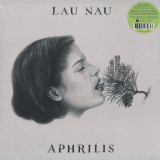
The title of the Lau Nau's 10th album, Aphrilis, derives from the Latin word aperire, meaning "to open." A fitting verb for the month of the year it is closely associated with — April. And while the images of plants and blossoms coming back to colorful life after a long, cold winter feels appropriate when listening to the rich and lustrous bloom of music on Aphrilis, another definition of open feels even more apt. For under the abundance lies the memory of times of austerity, the friction of hard choices, the acceptance that nothing is fixed and the future is unknown. This literal and metaphorical exploration of complexity and contradiction makes Aphrilis a multi-dimensional antidote for our troubled times, one that emphasizes the quiet and communal over noise and spectacle. Laura Naukkarinen, the Finnish artist behind this project, has long kept her mind and spirit open to whatever sounds and creative ideas felt appropriate for the moment. For the past six years that has meant primarily working with modular synthesis — learning how to build modules and releasing acclaimed work centered on its sounds like 5x4 (2023) or Puutarhassa (2022). Running parallel to this work, however, has been a continued exploration of acoustic instruments and group performances with her trio Lau Nau ja Seitsemäs Taivas. Aphrilis arrives then like fresh growth in a creative season cycle. A companion to her brilliant 2017 release Poseidon, the album, says Naukkarinen, "felt like a needed moment to embrace songs with lyrics again." And through the creation of this work, she remained open not only to her own creative muse, but also the input of her chosen collaborators. Each player on Aphrilis — Matti Bye on celesta and synths, Pekko Käppi on jouhikko, Hermanni Yli-Tepsa on violin and contrabass, Topias Tiheäsalo on electric guitar, Samuli Kosminen (Múm) on various instruments — was given free reign to arrange their own parts to accompany Naukkarinen's compositions. Kosminen’s lush fingerprint can also be heard in the mixing and production of the album, as with Poseidon six years ago. The moniker of this project may be taken from Naukkarinen’s own name, but Lau Nau feels more like a band than ever before. The delicacy and softness of the music is reflected in Naukkarinen’s lyrics. Each song is rife with imagery and creatures from the natural world. The spiders in the forest. The animals that keep a young woman company in her refuge in the woods. Wet grass. The feeling of the music is almost tactile, as if listening to the album will leave a bit of dew or sap on your fingers. The theme of this material, says Naukkarinen, runs even deeper. “The songs tell about cracks and changes of direction in different histories: personal, societal, planetary,” she says. “About moments when a yes can become a no and vice versa. The album wants to propose that at the moment of a crisis there is a possibility to influence the histories by our choices.” That may feel like a lot for such a fragile sounding collection of songs to bear. But Aphrilis is an album of surprising strength and resilience
1981, the leaden years are over, the socialist left is in power in France and the first wave of punk seems a long way off. However, the youth of the day had not said its last word, and bands were springing up all over the place, free radio stations were opening up, fanzines were being published, concerts were being staged on the fly and little by little a scene was forming, a motley crew of kids in revolt, radical activists and just plain old folk passing through.
After having cut their teeth in a variety of more or less confidential bands, in which you'd come across a good number of players from this up-and-coming alternative scene, the members of Guernica moved up a gear, determined to blow on the still-glowing embers of rebel rock. With the shortage of venues the rule at the time, they began by scouring the suburban MJCs, putting on wild concerts and eventually meeting up with the squatters of the Couronnes commune and the members of V.I.S.A., with whom they played an active part in organising concerts in squatted buildings in these relegated areas of the capital.
In February 1983, the V.I.S.A. association and the Abattoir art collective (which included some members of Guernica) organised a concert at the Usine Pali-Kao. That evening, two groups took to the stage in succession: Guernica and a fledgling duo, Bérurier Noir. The evening will go down in the history of alternative rock as one of the key turning points of the period. After the departure of Loran, who played guitar with both bands, Fabrice Benoît joined Guernica on guitar, and the gang continued for a few more months, ending on a high note with a chaotic concert at the Eldorado in Paris.
Until now, it's been impossible to get your hands on any of the band's recordings unless you're lucky enough to own the Paris Mix compilation, the Guernica/Bérurier Noir split or the V.I.S.A. Usine Cascades 1982 cassette. This vinyl, a perfect record of the era, brings together the six tracks recorded by the band at the time.