There was an immediate buzz surrounding This Is What I Know About Being Gigantic, the 2001 debut EP by Seattle indie phenomenon Minus the Bear. It wasn’t the kind of viral interest that translated into a string of sold-out tour dates, but it meant that the tuned-in crowd eagerly anticipated their next move. To help stir up the excitement for their first proper full-length, the band followed up Gigantic with a promo CD featuring two tracks from their upcoming album, a short instrumental interlude, an exclusive new song, and a demo version of another album track. Packaged in a cardboard slipcase, it was the kind of cheaply manufactured promotional item that could be handed out for free at shows or thrown in as a bonus in online orders—a relic of the final years of the CD age before the advent of the iPod and mp3. The sampler CD was christened Bands Like It When You Yell “YAR!” At Them in a nod to the upcoming album Highly Refined Pirates.
While these kinds of promotional items typically had an ephemeral existence, filed away in some neglected binder of CDs or tossed out during one of the many apartment-to-apartment moves of the band’s principal demographic of urban twentysomethings, Bands Like It When You Yell “YAR!” At Them had a curiously persistent presence. Perhaps it was because it was packaged more like a proper EP than a sampler. It certainly helped that it was a free release, meaning anyone who came to a show likely walked away from the evening with the cardboard slipcase tucked in their jacket pocket. It’s also noteworthy that the EP showcased three songs from the back half of Highly Refined Pirates rather than the album’s live staples and fan favorites from side A. Whatever the combination of factors at play, “YAR!” took on a life of its own and was ultimately re-packaged in a jewel case and sold as a proper EP in 2004 in the wake of Highly Refined Pirates’ success. And now in 2026, it’s getting its first proper release on vinyl.
Opening with the driving beat, chirping guitars, and funky low-end of “Spritz!!! Spritz!!!,” Bands Like It When You Yell “YAR!” At Them quickly cements Minus the Bear’s foundation of sophisticated revelry, a spirit further emphasized in the Highly Refined Pirates title choice. Part of the Bear’s lore involves them playing their first show three days after 9/11, and just as New York City’s indie rock scene took a sharp turn towards nightclub debauchery and a rejection of ‘90s rock’s dour fatalism in the wake of the World Trade Center tragedy, so did the Bear turn away from the Seattle’s scene’s penchant for gloom and angst towards a cerebral after-hours pop sound. The inclusion of “Women We Haven’t Met Yet” helped elevate what could have otherwise been seen as an album deep cut into a lead track. The fact that these first two songs essentially served as preview singles over future Pirates hits like “Monkey!!!Knife!!!Fight!!!” and “Absinthe Party At The Fly Honey Warehouse” speaks to the high quality of every song the band cranked out in their early years. The EP’s exclusive track “Drop It Like It’s Hot” presaged Snoop Dogg’s mega-hit single of the same name by two years, but whereas Snoop leaned into restrained minimalism, the Bear unleashes some of their fiercest work here, building off of interwoven riffs and electronic layers to a climax of stabbing guitars and hollered vocals. Much like Nirvana’s Hormoaning EP, Minus the Bear’s Bands Like It When You Yell “YAR!” At Them was initially more of a marketing gimmick than a proper release, but given the popularity of the pivotal studio albums that stemmed from the same recording sessions, these extended plays serve as compelling companion pieces that have earned a special spot in their respective fanbases’ hearts. Suicide Squeeze is proud to offer Bands Like It When You Yell “YAR!” At Them on vinyl on September 18, 2026, nearly 25 years after the band’s first show.
Remastered for vinyl by Bernie Grundman with lacquers cut at 45rpm, this limited edition pressing of 1000 copies on Puget Sound-colored vinyl helps document and preserve the exciting early years of one of American indie rock’s most beloved acts.
BBE Music’s celebrated J Jazz compilation series reaches its fifth and final volume in early 2026, culminating in a track list that maintains the exceptionally high standard first set with volume one back in 2018. This final volume features a selection of tracks that is as diverse as it is deep, reflecting the rich and varied Japanese jazz scene that spanned from the late 1960s to the late 1980s, a golden era of innovation and creativity. J Jazz volume 5 sees compilers Tony Higgins and Mike Peden dig ever deeper into their respective record collections to reveal tracks that encompass myriad styles including white hot jazz funk fusion from Toshiyuki Honda (Eastern Legacy) and Mikio Masuda (Sonic Barrier), super rare ethnic jazz crossover by Christal Zone - their one-off 45 promo release from 1971, Rai Rai, a deconstructed and abstract jazz classic by Yasuhiro Kohno with his solo piano rendition of My Favourite Things, and Mile and Half’s skin-tearing, shredding freak-out from their mega rare private press album.
A track that is so relentless, it leaves the listener in need of oxygen and a Valium. These hand-picked selections sit alongside other specially chosen numbers that embrace hard-driving samba (Seiichi Nakumura’s Judy’s Samba), epic head-nodding soul jazz (Masaru Imada’s World Line), psychedelic private press fusion (Aoyama Gakuin 101’s Fervor), angular post-bop tear-ups (Akira Miyazawa’s Nijimasu), intense and insistent fusion (Motohiko Hino’s Olive Step), serene cinematic pianism (Hideo Ichikawa’s On the Trade Wind) and tripped-out hallucinogenic tribal funky jazz (Masahiko Sato’s Garandoh’s Africa to Africa). Most of the tracks on this collection are being reissued for the first time, many of them only available previously on extremely limited and mega-rare private press or independent releases. J Jazz volume 5 is a fitting end to a compilation series that helped create a new audience and appreciation of Japanese jazz Some of the albums the tracks are drawn from are featured in the large format book J Jazz: Modern and Free Jazz from Japan 1954-1988, by Tony Higgins and Mike Peden, published by BBE Music in 2024. With almost 7000 words of extensive sleeve notes, J Jazz volume 5 comes in a triple 180g vinyl set inside a deluxe gatefold sleeve with obi strip, and comes with a 4-page insert, with photographs from the renowned Tokyo Jazz Joints project. It is also available as a double CD and digital download. Mastered at the Grammy-nominated Carvery Studio by Frank Merritt, this latest collection is a worthy successor to the preceding four volumes that set the bar so high. The J Jazz series is curated for BBE Music by Tony Higgins and Mike Peden.
out of Stock
Last delivered 66 days ago available to reorder, subject to availability
Crackazat returns to Freerange for his latest EP entitled Shine, and sees the artist in his finest form to date! An absolute anthem in the making the title track appears here in Club Mix and Mana’s Dub form, plus an amazing flip of Crouching Tiger from Baltimore legend Karizma Shine is a soulful, jazz-inflicted epic which will have any dance floor worth it’s salt fully locked in. Crackazat’s own vocals bring hints of Jamiroquai whilst his production calls golden era MAW and Blaze to mind. Add an incredible arrangement, live horns, bass and drums to this already heady concoction and you get an idea of why we’re so excited about this release. These kind of club tracks are few and far between these days! Next up we have one of Crackazat’s own Mana’s Dubs of Shine.
A chance for Ben to strip things back, loop things up and dub things out. Keeping the funk intact, we’re treated to a feelgood party-starting house track which has a classic sound that can’t fail to warm the cockles! Flip over for a proper curve-ball from everyone’s favourite Baltimore house hero Karizma who turns Crouching Tiger into the kind of twisted, rolling, jazzy and leftfield workout we love him for. A driving force of the city’s underground, he always comes with the raw energy and fearless creativity. A staple of the dance floor and a leader beyond it, Karizma represents the past, present, and future of Baltimore House and once again proves why he’s such a don.
Drop this one and run for cover whilst the dancers throw crazy shapes! Closing out the EP we have Crackazat’s Mana’s Dub take on previous single Watchu Say. Looping up the killer piano hook and his live bass line, Ben manages to craft the kind of warm, uplifting slice of house music which simply works. And for those who love a big drop, this one should fit the bill with a trademark Mana’s Dub seratonin-boosting build that hits all the right buttons.
out of Stock
Last delivered 34 days ago available to reorder, subject to availability
The Bug and Ghost Dubs relentlessly probe and atomize original material culled from Kevin Richard Martin's critically acclaimed 'Sub Zero' album. ("Monolithic and unforgiving, even by the Bug's standards, representing his most suffocating take on ambient dub yet." Pitchfork). Remixed to punish sound systems and freeze up the dance, both Fiedler and Martin trade fresh, contrasting blows, after their recent IMPLOSION face off album on PRESSURE last year. (Dub/Reggae album of the year, 2025, in 'The Wire') The resulting 4 remixes are every bit as hypnotic and persuasive as you would hope for from productions fresh out the soundlabs of Michael Fiedler aka GHOST DUBS and Kevin Richard Martin under his dancefloor destroying Bug alias. Both producers intensify the desolate mood of the originals but introduce demolition inducing beats which provide the literally irresistible momentum. Echoes of the originals are respected and heard throughout, but the extra gear shifts pay off brilliantly. Guaranteed to push serious air, and test the most powerful of sub woofers, these 4 remixes vary from heavy to superheavyweight. i.e. GHOST DUBS outputs a deliriously stoned headnod with his zonal refix of 'When I'm Gone', which miraculously sounds both subtley mysterious, but monolithically huge, whilst The Bug prowls ice cold, on the noirish, narcotic, instrumental hip hop of 'Too Human', which sounds like prime Mobb Deep mixed by Rhythm & Sound' at 16 bpm. Essential remixes of an already very special album, the original atmosphere is not only captured expertly, it is categorically amplified. LARGE.
Jimpster delivered some great releases in 2023, most notably his Natural Child collab EP with Crackazat as well as his Tribute EP featuring South African vocalist Mavhungu and including heavy Osunlade remixes. He also produced some of his best remixes to date including Thakzin’s Don’t Let Me See, Blaze’s Wonderland and Detroit Rising’s Rocket Love.
It’s always a good day to announce a new Jimpster EP on Freerange and with two captivating originals plus a stunning Atjazz remix you’re in for a treat! You’re My Ecstasy sets the tone with Jimpster’s trademark deep Rhodes pads, punchy bassline and shuffling classic house drum groove. He once again manages to strike a great balance between soulful, musical, warm and just a touch moody.
Next up we have The Passion which builds a deep and jazzy mood around a 4 bar piano progression whilst the sampled interviewee gives his insight into how he maintains his passion for music. London based trumpet player KingCrowney adds some lovely horn parts, emphasising the jazz feel to compliment the spoken word.
Atjazz gets well and truly stuck in on his remix of The Passion. Reportedly completed in just two studio sessions the hardest working man in deep house (as Jimpster calls him) brings his well-loved deft touch introducing an beautifully syncopated bassline and classic Atjazz drums making for a clubby interpretation for the deep, discerning dance floors.
out of Stock
Last delivered 3 months ago available to reorder, subject to availability
Let Me In is a sweet drop of musical sunshine, a song of love and yearning distilled in the southern hemisphere and elevated by the dulcet tones of Dub Princess.
The bones were first created by Isaac Chambers in 2015 as a rough sketch, and over the years more elements were added, including a woodwind section played by Jarrod Bremerton and a guitar solo by Prosad Freeman. It stayed as an instrumental until 2020 when Dub Princess added her stunning vocals to lock the tune into its final form.
“I love the long journey this song took to reach the finish line. Some tunes are created quickly and others need to marinate for years before all the ingredients come together” (Isaac Chambers)
On the flip, International Observer is on stellar form, weaving an accordion melody in to the original to create a taut, bass-forward dub mix.
Longtime Observer observers will recognise many of his distinctive production trademarks, originally developed in the eighties and honed further still since his debut release on Different Drummer in the early noughties set audiophiles ears aflame.
"What a pleasure it was to take a deep dive into dub with Isaac and Dub Princess” (Tom Bailey)
out of Stock
Last delivered 38 days ago available to reorder, subject to availability
Celebrated producer and musician Danger Mouse and prodigiously talented New York rapper Jemini are gearing up to release their long delayed collaborative album, Born Again Remarkably this soul and funk infused hip-hop tour de force arrives two decades after its creation and the duo's debut LP, Ghetto Pop Life which celebrates its 20th anniversary this year. Enthused by the response to Ghetto Pop Life, soon after Danger Mouse and Jemini began to tour and to write and record Born Again. Finally, having been recorded two decades ago and indefinitely shelved until now, Born Again will finally be released to coincide with the twentieth anniversary of Ghetto Pop Life. The previously unheard record retains many of the elements of Danger Mouse and Jemini's debut; the fun- loving, shit- talking innocence, but also adopts a noticeably more introspective and confessional tone. This time, in addition to lighthearted topics such as being an incredible artist (Knuckle Sandwich II, Brooklyn Basquiat), living large and being a magnet for attention (Me), Jemini also delivers highly- personal and occasionally devastating lyrics about missed opportunities and redemption (All I, Born Again), his time in prison (Locked Up) and complicated relationship with his father (Dear Poppa). His effortless free flowing cadence and indelible sing-song delivery elevate each track with a melodic infectiousness whilst Danger Mouse exhibits an affinity for resonant instrumentals built from sampled organ, vibraphone, or guitar loops and infused with his trademark minor key magic. The result is a classic, timeless hiphop record.
Celebrated producer and musician Danger Mouse and prodigiously talented New York rapper Jemini are gearing up to release their long delayed collaborative album, Born Again Remarkably this soul and funk infused hip-hop tour de force arrives two decades after its creation and the duo's debut LP, Ghetto Pop Life which celebrates its 20th anniversary this year. Enthused by the response to Ghetto Pop Life, soon after Danger Mouse and Jemini began to tour and to write and record Born Again. Finally, having been recorded two decades ago and indefinitely shelved until now, Born Again will finally be released to coincide with the twentieth anniversary of Ghetto Pop Life. The previously unheard record retains many of the elements of Danger Mouse and Jemini's debut; the fun- loving, shit- talking innocence, but also adopts a noticeably more introspective and confessional tone. This time, in addition to lighthearted topics such as being an incredible artist (Knuckle Sandwich II, Brooklyn Basquiat), living large and being a magnet for attention (Me), Jemini also delivers highly- personal and occasionally devastating lyrics about missed opportunities and redemption (All I, Born Again), his time in prison (Locked Up) and complicated relationship with his father (Dear Poppa). His effortless free flowing cadence and indelible sing-song delivery elevate each track with a melodic infectiousness whilst Danger Mouse exhibits an affinity for resonant instrumentals built from sampled organ, vibraphone, or guitar loops and infused with his trademark minor key magic. The result is a classic, timeless hiphop record.
CrackedanklesRecords are proud to present Polypores “Wrigglers” - the latest emergence from Stephen James Buckley’s strange and overgrown brainforest, an artist who has seen recent albums crack the national top 40 charts.From the opening bars of lead single ‘Memespawn’, it is clear that this incendiary release is going to defy all precedent Polypores releases. Kicking off with a heady mix of woozy, slewed melody lines and a relentless Motorik beat, it soon breaks down into a gritty instrumental redux and a frenetic syncopated woodwind jazzathon before bursting out again into spine-tingling melody that resembles some deformed cousin of synth-pop. It’s beautifully melodic, whilst still maintaining Buckley’s trademark sense of the chaotic and the downright wonky. Endlessly listenable electronic music that breathes and moves like a physical organism, and always refuses to stand still. A restless misfit of an artist who inhabits the fringes of whatever scenes he inhabits, Buckley maintains a certain crackling unease throughout the whole thing, but it results in jubilant outbursts and freewheeling joy, tethered only by the mechanical constraints of the machines it’s wrought from, like some broken robots have cobbled together an orchestra and they’re writing a soundtrack for a film they haven’t seen.
LA underground hubs DISCOS XXX aka DX3 and Elbow Grease join forces to proudly present Point Winona Sound Library Vol 1 — featuring 20 distinct artists from the inspired local dance music scene, working under one unified studio roof in various collaborative
formation at the mighty Los Feliz hilltop palace Point Winona, overseeing the city they collectively represent. These timeless warehouse-wrecking tracks all stand on their own, but the compilation as a whole offers a solid geographic sonic statement with shared rhythmic DNA and bold rooted-futurist production blueprints, guided by the champion efforts of studio executive producers/curators Tavish DJ and Dave Aju.
The BPS stage-setting opener evokes crispy A.M. hours with lush Detroit-meets-Cali feels on “Within Reason” — then studio dream team 5 ATMs bring the dubwise floor vibes up a notch on “A Dub Called Mondo” and Chitown-to-LA legend Scott K lays down an FM bass-laced acid house heater with “Tighter & Tighter”. Nashville-born producer Gryph funks things up on the live space boogie bump of “Winona at Sunset” while SSRI, comprised of Underground Resistance’s DJ Dex/Nomadico, Aju, and Black Lodge’s fearless leader Kosmik, drop fierce robo-Italo bliss on “Omnicallora”. Things take a further psychedelic twist with the PW edit of Scotty Coats’ sublime midtempo tripper “Be Work Zone Alert”, then Omakase’s own Gold Code alongside longtime rave brother Aju drop the nasty J Saul-salute “Yolo Jungle”, and Warehouse Preservation Society aka Tavish DJ & TK fully detonate floors inna raucous Wicked Crew stylee with “Data Bliss”. Undisputed LA scene queen Stacy Christine arrives with her shining debut “Smart Move”, where she and Aju trade sly vox lines of party advice over a bouncing tech banger for the ages, before the “Obsesion Romantica (Free Winona Dub)” sees Sisters Of Sound aka Maddy Maia and Tottie's, OG track getting stripped back and fired up to acidic peak time form. Then Dave Aju and SF homies Moniker aka EO & Kenneth Scott unleash wild uptempo melodic bruk heaven on “Chuy Luis”, and Vastir sends us home with the stratospheric drum n bass closer "Turnpike"
out of Stock
Last delivered 5 months ago available to reorder, subject to availability
Now, Fantastic Cat has defied the odds—and their therapists’ strong recommendations—to return with their third and finest album yet, Cat Out Of Hell. Produced by the band and mixed by D. James Goodwin (Goose, Kevin Morby, The Hold Steady), the collection elevates Fantastic Cat’s trademark blend of craftsmanship and chaos to new sonic heights, capturing the freewheeling, lightning in a bottle energy of their must-see live show and channeling it into a ramshackle house party full of existential searchers, desperate romantics, and barstool philosophers.
Writings on the topic that go off in all directions, mind-numbing lectures given by academics, and testimonies, most of them heavily doctored, from those who “lived through that era”: so many people today fantasize about the early days of punk in our country… This blessed moment when no one had yet thought of flaunting a ridiculous green mohawk, taking Sid Vicious as a hero, or – even worse – making the so-called alternative scene both festive and boorish. There was no such thing in 1976 or 1977, when it wasn’t easy to get hold of the first 45s by the Pistols or the Clash. Few people were aware of what was happening on the fringes of the fringes at the time. Malcolm McLaren was virtually unknown, and having short hair made you seem strange. Who knew then that rock music, which had taken a very bad turn since the early 1970s, would once again become an essential element of liberation? That, thanks to short and fast songs, it would once again rediscover that primitive, social side that was so hated by older generations? Who knew that, besides a few loners who read the music press (it was even better if they read it in English) and frequented the right record stores? Many of these formed bands, because it was impossible to do otherwise. We quickly went from listening to the Velvet Underground to trying to play the Stooges’ intros. It’s a somewhat collective story, even though there weren’t many people to start it.
The Guilty Razors were among those who took part in this initial upheaval in Paris. They were far from being the worst. They had something special and even released a single that was well above the national average. They also had enough songs to fill an album, the one you’re holding. In everyone’s opinion, they were definitely not among the punk impostors that followed in their wake. They were, at least, genuine and credible.
Guilty Razors, Parisian punk band (1975-1978). To understand something about their somewhat linear but very energetic sound, we might need to talk about the context in which it was born and, more broadly, recall the boredom (a theme that would become capital in punk songs) coupled with the desire to blow everything off, which were the basis for the formation of bands playing a rejuvenated rock music ; about the passion for a few records by the Kinks or the early Who, by the Stooges, by the Velvet mostly, which set you apart from the crowd.
And of course, we should remember this new wave, which was promoted by a few articles in the specialized press and some cutting-edge record stores, coming from New York or London, whose small but powerful influence could be felt in Paris and in a handful of isolated places in the provinces, lulled to sleep by so many appalling things, from Tangerine Dream to President Giscard d’Estaing...
In 1975-76, French music was, as almost always, in a sorry state ; it was still dominated by Johnny Hallyday and Sylvie Vartan. Local rock music was also rather bleak, apart from Bijou and Little Bob who tried to revive this small scene with poorly sound-engineered gigs played to almost no one.
In the working class suburbs at the time, it was mainly hard rock music played to 11 that helped people forget about their gruelling shifts at the factory. Here and there, on the outskirts of major cities, you still could find a few rockers with sideburns wearing black armbands since the death of Gene Vincent, but it wasn’t a proper mass movement, just a source of real danger to anyone they came across who wasn't like them. In August 1976, a festival unlike any other took place in Mont-de-Marsan – the First European Punk Festival as the poster said – with almost as many people on stage as in the audience. Yet, on that day, a quasi historical event happened, when, under the blazing afternoon sun, a band of unknowns called The Damned made an unprecedented noise in the arena, reminiscent of the chaotic Stooges in their early adolescence. They were the first genuine punk band to perform in our country: from then on, anything was possible, almost anything seemed permissible.
It makes sense that the four+1 members of Guilty Razors, who initially amplified acoustic guitars with crappy tape recorder microphones, would adopt punk music (pronounced paink in French) naturally and instinctively, since it combines liberating noise with speed of execution and – crucially – a very healthy sense of rebellion (the protesters of May 1968 proclaimed, and it was even a slogan, that they weren’t against old people, but against what had made them grow old. In the mid-1970s, it seemed normal and obvious that old people should now ALSO be targeted!!!).
At the time, the desire to fight back, and break down authority and apathy, was either red or black, often taking the form of leafleting, tumultuous general assemblies in the schoolyard, and massive or shabby demonstrations, most of the time overflowing with an exciting vitality that sometimes turned into fights with the riot police. Indeed, soon after the end of the Vietnam War and following Pinochet’s coup in Chile, all over France, Trotskyist and anarcho-libertarian fervour was firmly entrenched among parts of the educated youth population, who were equally rebellious and troublemakers whenever they had the chance. It should also be noted that when the single "Anarchy in the UK" was first heard, even though not many of us had access to it, both the title and its explosive sound immediately resonated with some of those troublemakers crying out for ANARCHY!!! Meanwhile, the left-wing majority still equated punks with reckless young neo-Nazis. Of course, the widely circulated photos in the mainstream press of Siouxsie Sioux with her swastikas didn’t necessarily help to win over the theorists of the Great Revolution. It took Joe Strummer to introduce The Clash as an anti-racist, anti-fascist and anti-ignorance band for the rejection of old-school revolutionaries to fade a little.
The Lycée Jean-Baptiste Say at Porte d’Auteuil, despite being located in the very posh and very exclusive 16th arrondissement of Paris, didn’t escape these "committed" upheavals, which doubled as the perfect outlet for the less timid members of this generation.
“Back then, politics were fun,” says Tristam Nada, who studied there and went on to become Guilty Razors’ frontman. “Jean-Baptiste was the leftist high-school in the neighbourhood. When the far right guys from the GUD came down there, the Communist League guys from elsewhere helped us fight them off.”
Anything that could challenge authority was fair game and of course, strikes for just about any reason would lead to increasingly frequent truancy (with a definitive farewell to education that would soon follow). Tristam Nada spent his 10th and 11th unfinished grades with José Perez, who had come from Spain, where his father, a janitor, had been sentenced to death by Franco. “José steered my tastes towards solid acts such as The Who. Like most teenagers, I had previously absorbed just about everything that came my way, from Yes to Led Zeppelin to Genesis. I was exploring… And then one day, he told me that he and his brother Carlos wanted to start a rock band.” The Perez brothers already played guitar. “Of course, they were Spanish!”, jokes their singer. “Then, somewhat reluctantly, José took up the bass and we were soon joined by Jano – who called himself Jano Homicid – who took up the rhythm guitar.” Several drummers would later join this core of not easily intimidated young guys who didn’t let adversity get the better of them.
The first rehearsals of the newly named Guilty Razors took place in the bedroom of a Perez aunt. There, the three rookies tried to cover a few standards, songs that often were an integral part of their lives. During a first, short gig, in front of a bewildered audience of tough old-school rockers, they launched into a clunky version of the Velvet Underground's “Heroin”. Challenge or recklessness? A bit of both, probably… And then, step by step, their limited repertoire expanded as they decided to write their own songs, sung in a not always very accurate or academic English, but who cared about proper grammar or the right vocabulary, since what truly mattered was to make the words sound as good as possible while playing very, very fast music? And spitting out those words in a language that left no doubt as to what it conveyed mattered as well.
Trying their hand a the kind of rock music disliked by most of the neighbourhood, making noise, being fiercely provocative: they still belonged to a tiny clique who, at this very moment, had chosen to impose this difference. And there were very few places in France or elsewhere, where one could witness the first stirrings of something that wasn’t a trend yet, let alone a movement.
In the provinces, in late 1976 or early 1977, there couldn’t be more than thirty record stores that were a bit more discerning than average, where you could hear this new kind of short-haired rock music called “punk”. The old clientele, who previously had no problem coming in to buy the latest McCartney or Aerosmith LP, now felt a little less comfortable there…
In Paris, these enlightened places were quite rare and often located nex to what would become the Forum des Halles, a big shopping mall. Between three aging sex workers, a couple of second-hand clothes shops, sellers of hippie paraphernalia and small fashion designers, the good word was loudly spread in two pioneering places – propagators of what was still only a new underground movement. Historically, the first one was the Open Market, a kind of poorly, but tastefully stocked cave. Speakers blasted out the sound of sixties garage bands from the Nuggets compilation (a crucial reference for José Perez) or the badly dressed English kids of Eddie and the Hot Rods. This black-painted den was opened a few years earlier by Marc Zermati, a character who wasn’t always in a sunny disposition, but always quite radical in his (good) choices and his opinions. He founded the independent label Skydog and was one of the promoters of the Mont-de-Marsan punk festivals. Not far from there was Harry Cover, another store more in tune with the new New York scene, which was amply covered in the house fanzine, Rock News (even though it was in it that the photos of the Sex Pistols were first published in France).
It was a favorite hang-out of the Perez brothers and Tristam Nada, as the latter explained. “It’s at Harry Cover’s that we first heard the Pistols and Clash’s 45s, and after that, we decided to start writing our first songs. If they could do it, so could we!”
The sonic shocks that were “Anarchy in the UK”, “White Riot” or the Buzzcocks’s EP, “Spiral Scratch” – which Guilty Razors' sound is reminiscent of – were soon to be amplified by an unparalleled visual shock. In April 1977, right after the release of their first LP, The Clash performed at the Palais des Glaces in Paris, during a punk night organised by Marc Zermati. For many who were there, it was the gig of a lifetime…
Of course, Guilty Razors and Tristam were in the audience: “That concert was fabulous… We Parisian punks were almost all dressed in black and white, with white shirts, skinny leather ties, bikers jackets or light jackets, etc. The Clash, on the other hand, wore colourful clothes. Well, the next day, at the Gibus, you’d spot everyone who had been at this concert, but they weren’t wearing anything black, they were all wearing colours.”
It makes sense to mention the Gibus club, as Guilty Razors often played there (sometimes in front of a hostile audience). It was also the only place in Paris that regularly scheduled new Parisian or Anglo-Saxon acts, such as Generation X, Siouxsie and the Banshees, the Slits, and Johnny Thunders who would become a kind of messed-up mascot for the venue. A little later, in 1978, the Rose Bonbon – formerly the Nashville – also attracted nightly owls in search of electric thrills… In 1977, the iconic but not necessarily excellent Asphalt Jungle often played at the Gibus, sometimes sharing the bill with Metal Urbain, the only band whose aura would later transcend the French borders (“I saw them as the French Sex Pistols,” said Geoff Travis, head of their British label Rough Trade). Already established in this small scene, Metal Urbain helped the young and restless Guilty Razors who had just arrived. Guitarist for Metal Urbain Hermann Schwartz remembers it: “They were younger than us, we were a bit like their mentors even if it’s too strong a word… At least they were credible. We thought they were good, and they had good songs which reminded of the Buzzcocks that I liked a lot. But at some point, they started hanging out with the Hells Angels. That’s when we stopped following them.”
The break-up was mutual, since, Guilty Razors, for their part, were shocked when they saw a fringe element of the audience at Metal Urbain concerts who repeatedly shouted “Sieg Heil” and gave Nazi salutes. These provocations, even still minor (the bulk of the skinhead crowd would later make their presence felt during concerts), weren’t really to the liking of the Perez brothers, whose anti-fascist convictions were firmly rooted. Some things are non-negotiable.
A few months earlier (in July 1978), Guilty Razors had nevertheless opened very successfully for Metal Urbain at the Bus Palladium, a more traditonally old-school rock night-club. But, as was sometimes the case back then, the night turned into a mass brawl when suburban rockers came to “beat up punks”.
Back then, Parisian nights weren’t always sweet and serene.
So, after opening as best as they could for The Jam (their sound having been ruined by the PA system), our local heroes were – once again – met outside by a horde of greasers out to get them. “Thankfully,” says Tristam, “we were with our roadies, motorless bikers who acted as a protective barrier. We were chased in the neighbouring streets and the whole thing ended in front of a bar, with the owner coming out with a rifle…”
Although Tristam and the Perez brothers narrowly escaped various, potentially bloody, incidents, they weren’t completely innocent of wrongdoing either. They still find amusing their mugging of two strangers in the street for example (“We were broke and we simply wanted to buy tickets for the Heartbreakers concert that night,” says Tristam). It so happened that their victims were two key figures in the rock business at the time: radio presenter Alain Manneval and music publisher Philippe Constantin. They filed a complaint and sought monetary compensation, but somehow the band’s manager, the skilful but very controversial Alexis, managed to get the complaint withdrawn and Guilty Razors ended up signing with Constantin with a substantial advance.
They also signed with Polydor and the label released in 1978 their only three-track 45, featuring “I Don't Wanna be A Rich”, “Hurts and Noises” and “Provocate” (songs that exuded perpetual rebellion and an unquenchable desire for “class” confrontation). It was a very good record, but due to a lack of promotion (radio stations didn’t play French artists singing in English), it didn’t sell very well. Only 800 copies were allegedly sold and the rest of the stock was pulped… Initially, the three tracks were to be included on a LP that never came to be, since they were dropped by Polydor (“Let’s say we sometimes caused a ruckus in their offices!” laughs Tristam.) In order to perfect the long-awaited LP, the band recorded demos of other tracks. There was a cover of Pink Floyd's “Lucifer Sam” from the Syd Barrett era – proof of an enduring love for the sixties’ greats –, “Wake Up” a hangover tale and “Bad Heart” about the Baader-Meinhof gang, whose actions had a profound impact on the era and on a generation seeking extreme dissent... On the album you’re now discovering, you can also hear five previously unreleased tracks recorded a bit later during an extended and freezing stay in Madrid, in a makeshift studio with the invaluable help of a drummer also acting as sound engineer. He was both an enthusiastic old hippie and a proper whizz at sound engineering. Here too, certain influences from the fifties and sixties (Link Wray, the Troggs) are more than obvious in the band’s music.
Shortly after a final stormy and rather barbaric (on the audience’s side) “Punk night” at the Olympia in June 1978, Tristam left the band ; his bandmates continued without him for a short while.
But like most pioneering punk bands of the era, Guilty Razors eventually split up for good after three years (besides once in Spain, they’d only played in Paris). The reason for ceasing business activities were more or less the same for everyone: there were no venues outside one’s small circuit to play this kind of rock music, which was still frightening, unknown, or of little interest to most people. The chances of recording an LP were virtually null, since major labels were only signing unoriginal but reassuring sub-Téléphone clones, and the smaller ones were only interested in progressive rock or French chanson for youth clubs. And what about self-production? No one in our small safety-pinned world had thought about it yet. There wasn’t enough money to embark on that sort of venture anyway.
So yes, the early days of punk in France were truly No Future!
out of Stock
Last delivered 6 months ago available to reorder, subject to availability
DJ Support: Garnier, Opolopo, Worldwide FM, Marcia Carr, Bill Brewster, Timeout Moscow, Craig Smith, Delfonic, Tony Nwachukwu, Marcel Dettmann, DJ Rocca, Shuya Okino, Borrowed Identity, Titonton Duvante, Alex Attias, Rainer Truby, Sol Power All-Stars, Kyri R2, Robert Luis, Severino Panzetta, Lars Behrenroth, Kassian, Alkalino, Getdown Edits, Moodymanc, Gerd, Lea Lisa, Young Pulse, Mark de Clive-Lowe, Mark Grusane, Alex Barck….
International dance music heavyweight, producer and DJ Alexander Lay-Far returns with a powerful new chapter - Lay-Far Dance Orchestra (LFDO) - a fully-fledged live band project that reconnects him with his jazz-funk and fusion DNA while pushing dance music forward with unmistakable groove, musicianship and emotional weight. Formed in early 2024, LFDO is no nostalgia exercise. With Lay-Far at the helm as bassist, bandleader, composer, arranger and sound engineer, the orchestra has already been turning heads with explosive live performances, reinventing classic Lay-Far cuts, and now unveil their first album “Skybreak” with all new and original material written and produced by Lay-Far together with his bandmates and star guests, including Lipelis, Antoha MC and Seven Davis Jr. This work shows the departure from the predominantly electronic sound of Lay-Far's previous solo albums in favour of live instrumentation recorded to analogue tape and effortlessly bridging the gap between Jazz, Library Music, Disco-Funk, House, Broken Beat and Drum’n’Bass. “Skybreak” is dynamic, passionate, spiritual, cinematic, playful, heartfelt, life-affirming, dreamy and deeply romantic. Ultimately, there’s something profoundly romantic in recording and releasing such music in this day and age!
“Take Flight (Part 1)” is opening the album with style. It takes us on a beautifully orchestrated journey, blending the sensuality of Library Music with high-octane Jazz-Funk and raw b-boy breaks, propelled by breathtaking flute and Rhodes solos of Timur Nekrasov and Maxim Glonti. This aural symbiosis of “beauty and the beats” will become more and more prominent as the album unfolds.
It’s time for “Aquarius Love” created with the inimitable artist and vocalist Seven Davis Jr. (Secret Angels, Ninja Tune). In this composition cinematic soul and heavy jazz meet the restless energy of live drum & bass with deep and heartfelt vocals - timeless sound combined with a timeless message about love and life!
Next is “Head In The Clouds” - a theme for an imaginary rom-com, an ode to all the dreamers - sweet, light, naive and heartwarming. Space-Disco-Funk at its best!
“Where You From” is a fiery Soulful House number with heavy Afro-Latin influences recorded in collaboration with Lipelis. It’s full of Sun, joy and passion. Its irresistible rhythm is emphasised by funky octave bass, wah-wah guitar, catchy piano riffs, guitar solo by Lipelis and seemingly light conscious message delivered by Lay-Far and Maryag. Summer is here!
Now the album takes an unexpected twist in the form of “The Harp of Boom” which at first glance appears to be a classic-sounding Boom-Bap banger. Yes, It’s loud, raw, and gritty, yet it gradually evolves into something delicately-touching and deeply-soulful thanks to a memorable flute melody and lush string arrangement. Definitely recorded with tongue in cheek.
Next is “Feel The Moment” a remarkable collaboration with one of the most recognisable and distinctive Russian artists, singer, trumpeter and cultural icon Antoha MC. It’s a feel-good song, hopeful, life-affirming and bittersweet. A stylish excursion into Brit-Funk and Soviet Jazz-Fusion sound, drawing inspiration from the likes of Atmosfear, Light Of The World or Soviet Jazz bands like Allegro and Arsenal, but reimagining the influences through the modern West London broken beat lens.
The spectacular music journey continuous with “Take Flight (Part 2)” - it’s all about the deep infectious jazz-funk groove, heavy beats, rolling percussion and the glory of the soloing instruments - saxophone and flute by Timur Nekrasov, demonstrating the wide range of emotions from thoughtful and lyrical to restless and borderline vicious. One for freestyle dancing!
As the album draws to an end a vibrant musical triptych “Soul Constant” awaits, mixing together the deep and sensual mood of spiritual jazz with heavy syncopated drum’n’bass rhythms by Michail Fotchenkov, lush orchestration, expressive saxophone solos and the ending which can simply be described as “aural bliss”. It’s breath-taking!
A pleasant bonus is the exclusive version of “Where You From” by Lipelis himself, who is taking it into dub territories, further enhancing the rhythm section and enriching the song with his trademark playful synth flourishes and dreamy guitar solos for maximum effect (and appeal).
The album “Skybreak” by Lay-Far Dance Orchestra is the work of real artistry and craftsmanship with timeless sound that’s not only deeply-rooted but also forward-thinking.
out of Stock
Last delivered 4 months ago available to reorder, subject to availability
Alexander Hacke became obsessed with classical music at an early age, but ended up dropping out of school and hanging out with punks, squatters, and bohemians in the West Berlin underground scene. After his first music projects under the pseudonym Alexander von Borsig, he joined the newly formed EinstuIêrzende Neubauten in 1980. While the Neubauten became a groundbreaking and hugely successful band, Hacke not only experimented with all kinds of stimulants, but also continued to develop musically: whether as an internationally successful solo artist, collaborating with Crime & the City Solution, as a film composer, or together with his wife, the artist Danielle de Picciotto, with whom he has been roaming the world since 2010. "Blast" is a dazzling testimony to the wild West Berlin before the fall of the Wall, the rise of EinstuIêrzende Neubauten, and the thrilling life story of a jack-of-all-trades. Hacke recounts international tours and surprising collaborations, as well as his cinematic soundscapes, and offers personal reflections on art and society. He looks back on an artistic career that uniquely combines avant-garde art, pop success, and creative freedom.
8-page lyric / drawing booklet, glossy poster, download card (inc. mp3s), white inner paper bags, sticker on cover.
After 7 strange years of relative silence, and 13 years of being a band, Dog Chocolate have returned with ‘So Inspired, So Done In’. Their fourth album is their most focused, cohesive and song-y yet. They still sound like a bin full of wasps, but now the bin has double-cream or a Viennetta or something at the bottom. While many of the 16 songs on here barely make it past the 3-minute mark, each one is bursting with all the textures and colours of an office cupboard: full of old sweets, fluorescent markers, and multiple ways to fix paper together.
Thematically, a lot of ground is covered, with songs tackling subject matter as diverse as overheard conversations, healing fungal toenails, the Rogerian concept of the Actualising Tendency, bronze age living conditions, dreaming songs into being and human-plant relations. Work (and anti-work) is a recurring theme, as is artistic inspiration and burnout. Dog Chocolate revel in the mundane and incidental, to explore bigger, existential questions. Recorded and mixed by POZI’s Toby Burroughs and mastered by Sofia Lopes, ‘So Inspired, So Done In’ charts a long and confusing period in the band’s collective life, marked by major life changes, losses and shifts, colouring the band’s trademark frantic, daft and anxious energy with a contemplative glaze. Dog Chocolate continue to investigate their internal and external landscapes with playful curiosity, frustration, silliness and empathy.
Pre/history of the band: In the early 2000’s Andrew (vocals), Rob (guitar, vocals) and Matthew (guitar, vocals) played together as teenagers in South-East London-based maximalist, costumed surrealist punk band Yeborobo. They met drummer Jonathan playing with his instrument-swapping masked band Limn at art space Utrophia in Deptford. Later, when both bands had split, Dog Chocolate formed with a shared desire to make a band that was simpler than their theatrical past: small amps and light guitars, no more than 2 drums at any one time, a keyboard no longer than a ruler and a shared ethos… “it’s about giving a shit, but at the same time not giving a shit, but not ‘whatever’, not giving up never!”. The band floated the term “pencilcase punk” to describe their jumbled, colourful, dense and instant music.
Dog Chocolate built on this early scrappiness, bedding into their sound over several albums. Their first “Or” (2014) was a split with Ravioli Me Away, soon followed by “Snack Fans” (2016) and “Moody Balloon Baby” (2018). Along the way they played gigs with bands as wide ranging as Deerhoof, No Age, Dry Cleaning, Palm, Daniel Wakeford, Shopping and Pozi.
With a tendency to converse with each other both lyrically and musically cultivated over many years, the members of Dog Chocolate bounce off each other, respectfully disagree, try to make each other laugh and share some of their most vulnerable feelings with each other. ‘So Inspired, So Done In’ is their own unique offering during these unsteady times: a language of friendship translated into songs.
out of Stock
Last delivered 7 months ago available to reorder, subject to availability
Hardcover slipcase box
Celebrate twenty-five years of Ape Escape and thirty years of PlayStation with Ape Escape 3 Originape Soundtracks in a Box!
Saru Get You 3
As with the Ape Escape Originape Soundtrack, composer Soichi Terada has meticulously re-recorded and reconstructed all tracks from the Ape Escape 3 Original soundtrack. Previously only available on CD, this is the complete soundtrack's first time on vinyl. This box set was produced in partnership with Mr. Terada and Far East Recording, and is an officially licensed Sony Interactive Entertainment product.
This release contains eighty tracks, spanning four individually sleeved records, housed in a hardcover box. It is similar in construction to the Ape Escape Originape Soundtracks in a Box release (2024), and the two will look quite nicely next to one another on your shelf!
We are happy to announce that this box set features a definitive edition of the Ape Escape 3 Originape tracklist. This also includes "Swanlake," a track previously unavailable on the CD release. At its core, the Ape Escape 3 soundtrack features much of Soichi Terada's signature sound: lush electronic, jungle, silky smooth synthesizer, humor, and charm.
Ape Escape 3 was originally released in 2005 (Japan), and its moviemaking pipos were unleashed across the rest of the globe in 2006. The game features two new protagonists (Kei and Yumi) who battle the Freaky Monkey Five, underlings of the nefarious Dr. Tomoki and the evil monkey Specter.
Complimenting the game's journey through the TV-verse, the Ape Escape 3 soundtrack also features twists on themes from Wild West Showdowns, Kung-Fu movies, and space operas. Fans of the Ape Escape Originape Soundtrack, as well as newer work like Asakusa Light, will certainly enjoy all elements of Soichi Terada's music present in Ape Escape 3.
The music on this box set was mastered by Justin Perkins of Mystery Room Mastering, who also mastered the original Ape Escape Originape Soundtracks box set (2024). Using Mr. Terada's premastered source files, the music was completely and specifically mastered for vinyl. The box set also features original Ape Escape 3 character renders and key art. All of the design elements have been put together with careful thought, referencing the original Japanese guidebook for inspiration and visual cohesiveness.
It is with great pleasure that we celebrate Soichi Terada's music and the Ape Escape franchise with this four-disc release!
Logical Absurd is very proud to present the 20th Anniversary of the album "She And Me Fall Together In Free Death" by Nurse With Wound. "She and Me Fall Together in Free Death" is probably the most approachable, largely "musical" album that NWW has released since Rock N' Roll Station. It's also one of his strangest concepts, a marriage of trance inducing Krautrock grooves with a traditional jazz standard and some jarringly atonal musique concrete. Side A is the 20- minute title track: a slow-motion jam reminiscent of of one of Can's sidelong tracks on Tago Mago or the more avant-garde grooves of Tony Conrad and Faust's Outside the Dream Syndicate.
The propulsive Jaki Liebezeit drumbeat is the foundation for a long jam session with what sounds like a dijderidoo and layers of guitar feedback. It's a massive, heavy sound, the kind that Julian Cope would devote a whole chapter to in his "Kratrocksampler". Side B is one long piece with three distinct movements. Beginning with those familiar, World Serpent-trademark windchimes, the listener is quickly ushered into Staple- ton's singing debut (!) in a rendition of the oft-covered traditional jazz ballad "Black is the Color of My True Love's Hair" This was a favorite of the recently deceased Nina Simone, and also of the avant-jazz screamer Patty Waters. Nurse With Wound's version is backed by cello drones, repetitive guitar strums and tambourine, sounding very much like The Velvet Un- derground's "Venus in Furs".
It's such a treat to hear Steven Stapleton's multitracked vocals cover this classic song, and this eerie version rates as one of my favorites. This song and the title track prove to the naysayers that Nurse With Wound is equally adept at rock n' roll songcraft as he is at demented sound collages. The creepy jazz cover seques into "Chicken Con- cret (For Missy E)", a truly warped tape-edit job that juxtaposes chicken squawks and sythesized birdcalls with random bleeps, speaker hiccups and gongs.
If you've been following the Payfone story over the last 13 years, you'll know that Phil Passera and Jimmy Day's long-running collaborative project has specialised in one-off musical morsels - sublime songs cooked up in cahoots with all manner of guest musicians and vocalists. Never ones to rest on their laurels, Day and Passera have now delivered a full six-track tasting menu in the shape of Lunch, their hotly anticipated debut album.
Recorded over an 18-month period at Passera's Barcelona studio and Day's studio in Brighton, Lunch is an unsurprisingly assured and musically detailed affair that's entirely made up of previously unheard songs. Unlike acid-flecked recent single 'Volt To Volt', which delivered a tweaked take on late 1980s house music, the album's six tracks showcase the trademark sound the duo has been developing since first joining forces 13 years ago.
Trawl back through Passera and Day's high-quality catalogue, which includes outings on Leng, Golf Channel Recordings and Defected as well as their own OTIS imprint, and that distinctive musical recipe becomes clear. Rooted in their love of classic drum machines and their trusty JUNO-60 synthesiser, the Payfone sound combines equal amounts of electronic and organic instrumentation, warm and inviting downtempo and mid-tempo grooves, and pertinent and thoughtful lyrics delivered with panache by an impressive roll call of guest vocalists.
Lunch, then, is a standalone sonic statement - an initially vinyl only album on their own OTIS imprint - that continues this impressive lineage. Like all Passera and Day's collaborative work, it is free of samples, with the pair preferring to create their own sounds from scratch. Opener 'Movin' On', featuring the honeyed vocals of former XL Recordings artist Willis Earl Beal AKA Nobody and slap-bass from Jo Gabriel Harris (who also features on three other songs across the album), is a deep and effortlessly evocative mid-tempo delight that perfectly sets the tone for what's to come.
Brooklyn-born April Pittman and Russian/Armenian vocalist Zara Kian lend their talents to woozy, sun-baked shuffler 'Paperman' before regular Payfone collaborator Ludmilla Rodriguez headlines 'Joan of Arc', a veritable Mediterranean breeze rich in tumbling analogue synth synths, elastic bass and tumbling guitar solos. Those yearning for a touch of lightly disco-flecked dancefloor heat will savour 'Spend The Night', where Los Angeles singer Collette Tibbetts AKA Carmella The Balls, accompanied by virtuoso keys courtesy of Parisian pianist Gabriel Cazes, rises above a sweet, melodious, dub disco-adjacent backing track. In contrast, 'Pamela' is low-slung and hypnotic, with 'Sofian' vocalist Barbara Alcindor ushering us through a deep, heady groove-scape.
Fittingly, Passera and Day round off Lunch via a vibrant and potent sweet treat, 'Pony Bar'. Headed up by the J.J Cale-esque lead vocals of man of mystery Leon Lace, the pedal steel-sporting song joins the dots between dusty Americana, kaleidoscopic Balearic beats and lilting, slow-motion disco. Like the rest of the album, you'll be thinking about it long after you've washed down the last few musical mouthfuls.
out of Stock
Last delivered 3 months ago available to reorder, subject to availability
London, UK— Musicians Mats Gustafsson, Neneh Cherry, Joe McPhee, Thurston Moore, along with music writer Byron Coley have contributed to an illustrated collector’s guide to records — replete with 277-pages pages of beatific album art, labels, sleeve notes and collector musings on their life-long obsessions of record collecting, with a distinct focus on the recorded history of Free Jazz and Free Improvisation.
Compiling personal archives with discussions and debates of their selections of recordings which could be contenders within a list defined by a parameter of 100 most essential releases presented in chronologic order, acknowledging the music to be preternaturally non-competitive, non-hierarchical, and of equal value. NOW JAZZ NOW is a book for all adventurous music lovers, whether ravenous record collectors, avant-garde jazz enthusiasts, students of radical culture, or simply curiosity seekers in wonder to this music’s illustrious history and lineage.
The gleanings of Cherry, Coley, Gustafsson, McPhee and Moore will enlighten, delight, amuse, and bemuse all who follow their streams of consciousness, knowledge, perception, and, most importantly, unbridled respect and regard for a genre of music dedicated to the dignity of practicing freedom.
AUTHOR BIOS:
Mats Gustafsson is an improviser, musician, composer and record collector aka “discoholic”. His own work is influenced by noise, free jazz, and rock. The artwork from this book comes from his collection and the selection process was curated in part by Gustafsson.
Neneh Cherry is a Swedish singer, songwriter, actor, occasional DJ, and author who recently published her memoirs A Thousand Threads about growing up daughter of West African percussionist Amadu Jah and artist Moki Cherry and being raised by her mother and her trumpeter stepfather Don Cherry. Cherry penned an introductory text for this book.
Joe McPhee is an American jazz multi-instrumentalist who plays tenor, alto, and soprano saxophone, trumpet, the flugelhorn and valve trombone. McPhee has contributed a poetic afterword musing on the expression free jazz.
Thurston Moore is a musician and composer. His latest album Flow Critical Lucidity was a Rough Trade ‘Album of The Year’. Moore recently published Sonic Life: A Memoir (Faber, UK / DoubleDay, US) about his band Sonic Youth.
Byron Coley is a collector and writer based in Western Massachusetts. He turned a serious focus towards free jazz in the early '80s, when working at the Rhino Records store in Westwood, CA. Under the stern tutelage of Jon Williams, Nels Cline, John Breckow and Richard Grossman, he was revelated.
Elations Recordings presents "Return of the Airpoets", an exploratory recording from longtime collaborators Reuben Lewis (I Hold The Lion's Paw) & Adam Halliwell (Mildlife, IHTLP), occupying a unique space between contemporary experimental music and avant jazz. Engineered and mixed by Reuben Lewis in 2023, and featuring guest appearances from acclaimed Australian drummer Ronny Ferella.
"Return of the Airpoets" continues a conversation begun with 'Cygon Dance', an extended duo between Lewis and Halliwell from Halliwell's 2023 LP "Freedom Lapse"; a dialogue that stems from a shared love and respect for Jon Hassell's Fourth World music. Sonic pioneer and adventurer, Hassell's futuristic vision advocated possible musics, stressing plurality and multiplicity. Faithful to his vision, Adam and Reuben, as trailblazers rather than imitators, delight in boundless musical possibilities, adopting Hassell's futurism as stock-in-trade, making it their own while augmented with neo noir hues and hints of the tilted electro-funk of Miles Davis' collaborations with Marcus Miller.
These nine tracks flow together as a unified suite, their shadowy presence stitched from fractured narratives: imaginary crimes, murders, dreams, the unspoken. At the same time, you can detect the artists' meticulous attention to sonic detail, feel the undercurrents, the complex layering. This music has been distilled, winnowed, from extended improv sessions, with the artists - as producers - zeroing in on offcuts, shards, and splinters, seamlessly patching together fragments in post-production to construct intricately layered sound collages, taking a leaf out of Tao Macero's book, building from the ground up.
Who are these airpoets? Their mystifying trial suggests the travails of Joseph K, sentenced for unspecified crimes. But I prefer to see them as fugitives escaped from Robert Bolaño's novel, "Savage Detectives". In Bolaño's book, poet Juan Garcia Madero is granted admission to the shadowy group of poets, the Visceral Realists, whose movement has no clear aims, and whose members "walked backward . . . gazing at a point in the distance, but moving away from it, walking straight toward the unknown." Like the visceral poets, these airpoets, Reuben Lewis and Adam Halliwell, set their sights on a point on the distant horizon, setting off without map or compass, drawing nearer and moving away, towards the unknown.
Straight out of the local mud of the city of Antwerp comes dancing this next Souvenirs from Imaginary Cities slab of free-flowing bits of electronic wonder : Schönen Abend by Simon B. Just in time to ease you out of this endless winter and right into springtime. Like the previous hit by Purple Uncle, this flower takes some time to bloom and fill up your head and body with it's ear wormy fragrance.
It's hazy and cinematic, makes you think of Italian electronic pioneers and their library magic, Patrick Cowley's School Daze and Haruomi Hosono in some kind of gothic manner. It's quite stripped and lush at the same time, rhythms like minimal mechanics make you fly above the river and land just outside reality. It's a nice place where soft jazz tingles right around the dark corner, and that particular mix of exotica and melancholia — the trademark of this port city's best electronic auteurs is definitely in the air. The river still shines, but she’s deeply poisoned. The old town has lost every bit of fresh air but keeps on digging for old gold. This bitter pill is served with delicacy and lightness, the wound is dressed up seductively — feet in the mud, head in the air. Stuff is sensuous, with quiet places reminding of the good side of those times when the big wheel stopped turning ever so madly. A strange quietness whistles through the leaves. Some things take time to unfold. In or out of C.
Four years in the making, this is the solo debut LP of Simon B, a longtime contributor to Antwerp's improvised music scene (Groovecats Deluxe, Wij Blij Trio ). Primarily a double bass player, he also has a deep-felt passion for offbeat electronica and the rainbowy side of American minimalism, which takes front here. The smoky voice on the last track belongs to Nina-Joy Thielemans, Nina-Joy is part of Particals, a trio working with live electronics and field recordings, releasing an lp on Ultra Eczema later this year. Furthermore, you can hear the tenor and soprano saxophone of Adia Van Heerentals on 4 tracks, deepening out Simon's naturally flowing compositions and playing around with his melodies. You may know her from Bodem and her strong presence in the Belgian jazz scene lately.
Simon's electroacoustic experiments — using a clarinet and some outboard effects — were important tools in finding the very specific colour of this record. There's this airy character, like wind blowing through old layers of bricks and over the river, anchored with a deep sense of bass, gathering ages of dust and memories in these eight elegantly wobbling tracks, forming a perfect whole that’s really coming together in one deep listening from A to Z.
The centrepiece is perhaps Come to Me, instrumental and reprise with vocals, but no fillers on this one. Every part of the mystery is needed to come to its end and back again. It's a record that works in the morning, to open up a day and in the quiet corners of the night, with it's sleazy quirkiness, smiling towards you from the right corner of the eye. A perfect compagnon for your long-form wandering habits, light reflections on a wet surface obsessions, coffee slurping in the morning and the forgotten art of beachcombing. Quite essential these days, witnessing a world going apeshit.
out of Stock
Last delivered 10 months ago available to reorder, subject to availability
Tell me something that makes a difference’ demands Gaia Weiss in Tenashee’s debut single. Something that immerses crisp melody into stodgy bass, collides warm dub with icy sound design, all the while slowly expanding like a supernova. ‘Tell me something’ takes the sounds and styles of the past and places them in a gravity-free future, while evoking an ethereal and precise atmosphere.
Gaia Weiss is an actress - not a singer by trade - and summons Charlotte Gainsbourg & Brigitte Bardot to deliver the spoken words as a fractured monologue, guiding us through splintered visions, and detuned chord progressions, in pursuit of the seemingly unattainable; ‘something that can make a difference’.
With this six-chapter journey on the newborn Street Cinema label, Tenashee (DJ Tennis and Ashee, Manfredi Romano and Joseph Ashworth) have crafted and refined - like two artisans from another era - a unique creation: a creature that reconnects electronic music with complexity and richness, fully aware of hyper-contemporaneity, yet capable of resisting surrender to it.
“Blink To Check It’s Real” featuring artist Campbell King - poet and beautiful soul - immediately immerses us in an electronic reality check, with 90s-inspired tweaking and glitching, all woven together with a poem from Campbell that contrasts the dizzying intensity of lust and connection with the comfort of being able to ‘loosen their grip’ and ‘make it safe.’
In ‘I Can See Now,’ Aurelia Ray (the stage name of pop-music-writing powerhouse Caitlin Stubbs) evokes a sense of serenity, pure love, and trust within a refined, spacious piece of minimalist electronica. “Blindsided” is a journey through pure, airy abstraction, a dance floor companion to the glacial trip-hop instrumental “Cold Logic”.
Finally, in “Memories,” the last track in the setlist but actually the first song the duo worked on, conceived and developed five years ago in 2020, the voice of Chinese German artist Mona Yim transports us to a place that is both emotionally introspective and intense, balancing on the edge between desire and reality.
“You should know where I go when I dream,” she states.
Over the course of five years, through exchanges, writing sessions, and fine-tuning in Paris, London, Saint Martin, and Ibiza, the world evolved, but Tenashee’s musical mission remained unchanged. The mini-album reflects the musical backgrounds of its two creators, their unique sensitivity to the present, and their desire to challenge each other with sharp, emotional, yet weightless styles and sounds. It is no longer just DJ Tennis; the successful DJ touring worldwide, organising events, and founding influential labels like Life & Death; nor only Joseph Ashworth with his scientific approach and creativity as a
producer and writer in the competitive world of pop; nor Ashee, with his releases on Circoloco and Aus Music. No, Tenashee is something more.
It is a duet searching for a thread that connects electronic music—past, present, and future—through experimentation, craft, and artistry. The moment has truly arrived for Tenashee to ‘tell us something.’
out of Stock
Last delivered 10 months ago available to reorder, subject to availability
Newton Faulkner"s eighth studio album, OCTOPUS, marks a bold new chapter for the multi platinum selling singer-songwriter - his most authentic and adventurous to date. Over five years in the making, the album sees Faulkner stepping into a new era with a refreshed sense of artistic freedom, blending unexpected influences from funk and R&B to soul and Latin grooves. Swapping his trademark acoustic guitar for a distortion-charged Hofner Violin Bass, he unlocks a fresh songwriting approach that fuels standout tracks like the anthemic lead single "Alright, Alright, Alright." Rich in collaboration, OCTOPUS features contributions from Lissie, Los Bitchos and Bloom Twins, bringing new textures to his sound. It"s a record that celebrates creative reinvention, grounded by moments of heartfelt reflection and driven by a renewed passion for making music.
Newton Faulkner"s eighth studio album, OCTOPUS, marks a bold new chapter for the multi platinum selling singer-songwriter - his most authentic and adventurous to date. Over five years in the making, the album sees Faulkner stepping into a new era with a refreshed sense of artistic freedom, blending unexpected influences from funk and R&B to soul and Latin grooves. Swapping his trademark acoustic guitar for a distortion-charged Hofner Violin Bass, he unlocks a fresh songwriting approach that fuels standout tracks like the anthemic lead single "Alright, Alright, Alright." Rich in collaboration, OCTOPUS features contributions from Lissie, Los Bitchos and Bloom Twins, bringing new textures to his sound. It"s a record that celebrates creative reinvention, grounded by moments of heartfelt reflection and driven by a renewed passion for making music.
The Delines "Scenic Sessions" 10th anniversary Coke Bottle Green Colored LP reissue. Originally issued in 2015 as a Rough Trade and Tour exclusive The Delines album, Scenic Sessions sold out in a period of weeks with their End of the Road Festival appearance that Sept. It was time for a reissue as it is one of the fans favourites and never available outside of the UK at retail with only 1000 copies printed. The band always thinks of this one as The Delines at summer camp. We recorded it during a minor heat wave, it"s loose and a bit rawer than most of our other records, and there"s a no pressure easy going feel to the session that really comes across. It"s a band favorite, too, because while recording it I think we all knew we were becoming a real band.
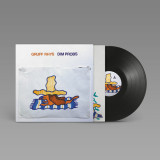
Der legendäre Gruff Rhys kehrt mit "Dim Probs" zurück, seinem neunten Soloalbum, dem vierten walisischen Longplayer und der ersten Veröffentlichung über Mogwais Rock Action Records.
Mit den walisischen Künstlerkollegen Cate Le Bon und H. Hawkline an den Backing Vocals und produziert mit seinem langjährigen Kollaborateur Ali Chant (Yard Act/PJ Harvey) in dessen Studio in Bristol, UK, erinnert "Dim Probs" an die Wärme und Nähe von Gruffs karrierebestimmendem ersten Soloalbum ("Yr Atal Genhedlaeth" von 2005) und die sternensuchende Melancholie von "Seeking New Gods" von 2021.
Auf „Dim Probs“, das komplett in Walisisch/Cymraeg geschrieben und eingesungen ist, sitzt der Hörer Seite an Seite mit einem der größten und nachdenklichsten Songwriter des Landes in einer Ecke des Studios, während die Songs sich aufbauen. Das Ergebnis ist eine intime und hypnotische Platte, die akustischen Folk mit dem Sound verkratzter, primitiver elektronischer Maschinen mischt.
"Dim Probs" ist Gruff Rhys' erstes komplett walisischsprachiges Album seit "Pang!" von 2019 und der Nachfolger seines gefeierten Albums "Sadness Sets You Free" von 2024, das bei Rough Trade Records erschienen ist und vom Mojo Magazine (UK) als eines der 20 besten Alben des Jahres bezeichnet wurde.
Der legendäre Gruff Rhys kehrt mit "Dim Probs" zurück, seinem neunten Soloalbum, dem vierten walisischen Longplayer und der ersten Veröffentlichung über Mogwais Rock Action Records.
Mit den walisischen Künstlerkollegen Cate Le Bon und H. Hawkline an den Backing Vocals und produziert mit seinem langjährigen Kollaborateur Ali Chant (Yard Act/PJ Harvey) in dessen Studio in Bristol, UK, erinnert "Dim Probs" an die Wärme und Nähe von Gruffs karrierebestimmendem ersten Soloalbum ("Yr Atal Genhedlaeth" von 2005) und die sternensuchende Melancholie von "Seeking New Gods" von 2021.
Auf „Dim Probs“, das komplett in Walisisch/Cymraeg geschrieben und eingesungen ist, sitzt der Hörer Seite an Seite mit einem der größten und nachdenklichsten Songwriter des Landes in einer Ecke des Studios, während die Songs sich aufbauen. Das Ergebnis ist eine intime und hypnotische Platte, die akustischen Folk mit dem Sound verkratzter, primitiver elektronischer Maschinen mischt.
"Dim Probs" ist Gruff Rhys' erstes komplett walisischsprachiges Album seit "Pang!" von 2019 und der Nachfolger seines gefeierten Albums "Sadness Sets You Free" von 2024, das bei Rough Trade Records erschienen ist und vom Mojo Magazine (UK) als eines der 20 besten Alben des Jahres bezeichnet wurde.
Second part of second album! Originating from Normandy, France, psychedelic noise-pop quartet You Said Strange presents a unique blend of indie rock that incorporates elements of psych pop-rock, shoegaze, and proto-grunge. Thousand Shadows volume 2, a second chapter was needed to highlight the many shadows that still linger everywhere. The shadows that linger on the borders, hiding the violence of the fights for them. The shadows that time has on the relationships and their persistence, because the shadows move. Plato's cave, modern version, would be the one of toxic relationships, antidepressants and the acceptance of the regression of freedom and/or the vision of a dying world... Between shoegaze, noise pop and psychedelic rock, You Said Strange absorbs its time to incant a music in which melancholy, love and the search for plenitude meet. The band recorded their first album, Salvation Prayer, in 2018 in Portland (USA), with Peter G. Holmstrom from The Dandy Warhols, which saw release via Fuzz Club Recirds. In 2022, the band shared their LP Thousand Shadows Vol. 1. Mythomaniac kings, the Mediterranean, the colors of mourning _ these are the detailed subjects, described against a backdrop of psychedelic pop, proto grunge, and shoegaze. The first part of a powerful, reverberant, melodious second album, drawing its inspiration and production stem from encounters during their 2022 European and North American tours, between Normandy, New York, and Oregon. Most recently, You Said Strange shared the second part of their sophomore release, a follow-up to Vol. 1 entitled Thousand Shadows Vol. 2.
Wishbone Ash reigned supreme through the 1970s — centered on inspired musicianship, joyful spirit and inventive songs. Their concerts were uplifting and their recorded work sublime. Argus remains a stunning high point in the band's startling repertoire. Argus was a 1972 tour de force, a hard-rocking masterpiece that has gone on to have a huge impact on rock bands moving forward. If you've never heard Argus, you've surely heard music that it inspired.
The British quartet's trademark harmony guitars became a touchstone for many: Thin Lizzy, Iron Maiden, Opeth, and Lynyrd Skynyrd have all acknowledged an Ash influence, and tracks such as Lizzy's "The Boys Are Back in Town," Maiden's "The Trooper," and even Steely Dan's "Reeling in the Years" all have twin-guitar moments that hark back to Argus. But Wishbone Ash were different from the start. They were never strictly a hard rock band; their soaring vocal harmonies and musical grandeur placed them close to progressive rock.
But they weren't strictly prog either: They had no keyboards, no real classical influence and weren't into side-long suites. Their roots were in the blues, and their calling card was twin lead guitars in harmony (played in the original lineup by Ted Turner and Andy Powell). Even the hardest Ash rockers — like "Blowin' Free," the most famous track from Argus — had an ethereal touch. They could rock the big stages, but they did it with subtlety and grace. This is reflected perfectly in the classic album sleeve by prog-associated designers Hipgnosis: The front cover shows a Greek sentry — the "argus" of the title — staring off into the distance. It's a mythic, old-world kind of image until you look closely at the back cover, and see that he's heralding the arrival (or perhaps watching the departure) of a spaceship.
Two worlds colliding. Exactly what the band and album were all about. By the time of Argus, Wishbone Ash were stars in England and cult heroes among Anglophiles in the US. What made Argus a step forward was its flow of moods. The songs don't run together, but there's an emotional connecting thread from the album's somber beginning to its heroic end. The band insisted at the time that lyrics were something of an afterthought: Shortly after its release, main lyricist Martin Turner told NME that he wrote them mainly to fit the mood of the music: "The music that was coming out was very English, very medieval, and the lyrics had to reflect that." Added Powell at the time, "The expression comes out in the guitars. We wouldn't play it if it didn't express something." Now, Analogue Productions has applied all of its vaunted craft and technical expertise to make this epic album shine! Two 45 RPM LPs pressed on virtually silent 180-gram vinyl at Quality Record Pressings make the remastered audio sparkle. Quieter lyrical sentiments and softer musical passages are rendered precisely, while majestic riffs and fist-waving anthems fully reveal the energy of the music! Argus isn't just another rock record — it's a journey through a sonic landscape rich with depth, emotion and technical prowess. It's the album that solidified Wishbone Ash as masters of twin guitar harmony. Discerning audiophiles will find Argus an essential addition to their record collection. It's a masterclass in sound engineering that fully captures the intricate interplay of dual guitars with pristine clarity and a warmth that only analog recordings can provide.
This is where it all starts. Without any reminiscing about their former band Operation Ivy, Matt Freeman (bass) and Tim Armstrong (guitar/vocals) blast through their debut without any hints of ska or blatant Clash plagiarizing. On the contrary, this album rips through 15 tracks of high-energy punk that"s accompanied by heavy bass leads and Armstrong"s permanently slurred vocals. And to top it all off, the lyrical content deals with urban blight and the lifestyle of being a public nuisance. With this trademark sound, Rancid provides the perfect soundtrack for any car chase that includes massive property damage; is it a wonder MTV wouldn"t touch this? -Mike DaRonco
Born from a virtual encounter in lockdown between two Parisian neighbors, the DJ/producer Prosper and saxophonist Le Marabout, this new playful and joyous project is pulling freely from the Afro, Funk, Disco, Hip-Hop, Oriental and Electro influences of the two artists.
The iconoclastic DJ Romain “Prosper” Coolen, fervent purveyor of no holds barred euphoria on the dance floor, and the versatile saxophonist, composer and jack-of-all-trades Johann “Le Marabout” Guihard offer us a lavish, eclectic, uninhibited, coherent and furiously groovy listening experience.
First single “C’est Vrai“, from their forthcoming album ‘Le Moustache Conspiracy’ (released October 2022) is a banging Electro Afro Funk joint featuring Fou Malade and Niagass, two luminaries of the Senegalese Hip-Hop scene.
Over the bouncing beat and snarling horns, these two juggle lyrics back and forth in Wolof (Senegal’s most widely spoken language), calling out those fake friends who smile in your face before stabbing you in the back.
out of Stock
Last delivered 14 months ago available to reorder, subject to availability
18 tracks pressed across three vinyls. A limited-run tee. Seven digital relics, unearthed for Bandcamp only.
As always, dance floor-focused with a clear nod to the ’90s — Progressive, deep & dubby, transcending, 303s. Immersive, but never drifting. Direct, but never dry. Forward thinking, expansive.
Direct, 303s, raw — this lane’s locked down by Roza Terenzi, Cybernet, Aju, Kalani, Ash Is and Xupid, each carving out their space with raw, floor-focused energy. On A2, Xupid slips in Raindanc94 — a long-lost gem some might recognise from D.Dan’s 2021 Boiler Room. Unreleased until now, it’s finally getting the drop it deserves.
Transcending? You know it. Trance mind-melters? Always. Plastic GRNchannels that classic 90s Xpander sound, Alfred Czital drops a dance floor annihilator, while Dutch duo Match Box keeps it as bright and club-ready as ever. It’s a full spectrum of sound, each track weaving into the next with peak energy and timeless hooks.
Progression, progression, progression — it’s shaped our sound from the start. Uplifting, expanding, always pushing into the outer zones. DJ Life, Aiden Francis, Jeku, Tifra, Cosmic G and Laars are back on the label and doing the business. Whether it’s a floor-heating bopper by DJ Life or emotive, widescreen territory by Aiden Francis, this release has it all.
And of course, no 6-year celebration of ND would be complete without a deep dive. Dubbed-out rollers and hypnotic house cuts come courtesy of Baumb, Glen S, and Harrison BDP. Fresh off his second EP last month, Baumb returns with those trademark low-end orbs, guiding us through the fog with finesse. Glen S strips it back and locks into a tech-deep groove. BDP lands on F1. Sublime, heads-down deep house with that unmistakable sample finesse — pure signature gear.
A nod to the 9 incredible artists who feature on the release through digital exclusives — Astro alongside Ash Is, Rounds & Plastic GRN, Primitive Needs, Hotpretty, Tourman, Skinner (making his way through the Pyramid Fields portal), and Wigs — whose Trigger Step track has been getting heavy rotation from Spray and Roza Terenzi, to name a few.
out of Stock
Last delivered 12 months ago available to reorder, subject to availability
Exploring the great Louis Vega's legacy and re-visiting the raw impact and enduring influence of Mobb Deep, tracing their blueprint on East Coast hip-hop and beyond.
Wax Poetics is back with Volume 3, Issue 1. We've been away for a minute with fresh words but this Summer we return and return hard.
Our spiritual home is New York and in this issue the city is a character and the mag is a movie. With our cover star Louie Vega we explore his legacy - from Bronx discos to the highs of house via Latin, hip-hop, freestyle and New York club culture. This is a trademark Wax Poetics deep-dive, with classic photos provided by the man himself. Then we flip from the dancefloor to the street with our second cover stars of Mobb Deep. We go hard on their career, their role in defining that 90's gritty, loopy, heavy heavy heavy hip-hop sound. With unique photos and ephemera lifting the story, there has never been a piece like this about the duo.
Wider articles include: Ace Records, Arthur Baker, Chris Clark, Dante's HiFi, Daupe!, Jazzy Joyce, Lotti Golden, Re:Discoveries, Record Rundowns and Tony Wilson... You know the score, the best god damn music journalism around.
Korn sind mit einem neuen Album zurück. Der Output wird den Titel "The nothing" tragen" und zeigt die Formation um Jonathan Davis in Höchstform. Der Nachfolger des 'The serenity of suffering'-Werkes aus dem Jahr 2016 beinhaltet alle Trademarks der Nu Metal-Ikone und wird sicherlich ein Höhepunkt des Jahres.
out of Stock
Last delivered 11 months ago available to reorder, subject to availability
Born from a virtual encounter in lockdown between two Parisian neighbors, the DJ/producer Prosper and saxophonist Le Marabout, this new playful and joyous project is pulling freely from the Afro, Funk, Disco, Hip-Hop, Oriental and Electro influences of the two artists.
The iconoclastic DJ Romain “Prosper” Coolen, fervent purveyor of no holds barred euphoria on the dance floor, and the versatile saxophonist, composer and jack-of-all-trades Johann “Le Marabout” Guihard offer us a lavish, eclectic, uninhibited, coherent and furiously groovy listening experience.
First single “C’est Vrai“, from their forthcoming album ‘Le Moustache Conspiracy’ (released October 2022) is a banging Electro Afro Funk joint featuring Fou Malade and Niagass, two luminaries of the Senegalese Hip-Hop scene.
Over the bouncing beat and snarling horns, these two juggle lyrics back and forth in Wolof (Senegal’s most widely spoken language), calling out those fake friends who smile in your face before stabbing you in the back.
out of Stock
Last delivered 16 months ago available to reorder, subject to availability
Yearly compilation series RADAR KEROXEN return with its fifth volume of themed based albums showcasing the talents and misfortunes of carefully selected musical projects based or connected with the Canary Islands.
With its first volume released in 2020 aiming to introduce and divulge adventurous Island based music, the Keroxen imprint now presents Vol.5 with a collection of tracks born out of an in-situ collective performance at the Keroxen Festival iconic venue - a massive disused gasoline tank near the harbour of Santa Cruz de Tenerife.
The Radar Drone Ensemble, as it was named for that night only, took advantage of the tank’s natural reverb to perform an improvised piece exploring the cavernous resonance corners inherent to the locale. The four artists then took a few months to compose a 9 track LP inspired by the site’s peculiar sound.
Gonçalo F. Cardoso kicks opens up the proceedings with two broody new tracks, in a style not heard since his 2015 album A Study of 21st Century Drone Acoustics. Doomed and menacing atmospherics brush shoulders with creepy and ethereal chants creating the perfect opening for this drone themed edition of Radar Keroxen. Eduardo Briganty (also from MINIATURa) follows with two equally deranged feedback based compositions letting his guitar riffs and distortions roam free. Afgan aka Mladen Kurajica (from GAF, Lagoss and Tupperwear) takes things further to an Angus MacLise inspired drone collage of mystic percussions, field recordings and electronic modular storms. Resonance aka Javier Perez wraps up the journey with his now trademark soothing synth compositions full of warm tones and blissful melodies.
The album comes, as always, wrapped into a dizzying post-tropical collage artwork by Pura Marquez.
out of Stock
Last delivered 18 months ago available to reorder, subject to availability
SC returns with a full length LP showcasing his vast armoury of musical ability in a controlled, contemplative reflection of his inner self, laid bare in breaks-driven form for the enjoyment of Spatial fans new and old - continuing the ongoing celebration and evolution of classic atmospheric drum & bass.
A1 - Fear of the Deep
Curious, high twinkling bells cautiously introduce Fear of the Deep, reminiscent of classic sci-fi movies building atmosphere and intrigue, before the hi-hat heavy, snappy break previously used in Spatial classic Essence (also by ASC) makes a welcome return. The 2-step - occasionally broken - beat pattern drives the track along with a darkly, investigative energy, while a typically deep bassline rumbles beneath, setting the scene perfectly.
A2 - Concentric Circles
A change of pace for ASC here with Concentric Circles, exploring a jazzier spectrum of influences not often broached in his production adventures, with broken scattershot beats toying and playing around a wealth of reverberating brass samples to create a minimal yet quietly imposing undertone. Double bass props up the composition wonderfully, completing an exquisitely quirky entry to the LP.
B1 - Say It
Opening with rousing strings and quietly ominous effects, ASC utilises a unique fusion of melancholic atmospherics, jazzy basslines and a classic old-school breakbeat to form Say It. Dense, purposeful kicks stomp across the mix as the strings and synthwork wash in the foreground, developing a sombre, contemplative tone to the track throughout, before a wonderful outro ending with those delightful strings.
B2 - Virtual World
Filtered Hot Pants breaks gently ease their way to the forefront of a beautifully constructed intro to Virtual World, trademark crispness and intricacy etched onto the beats effortlessly, as we've come to expect from ASC. Delicately nuanced vocal samples combine with an intense concoction of synths and micro-melodies, dancing over the sharp breaks and a suitably earthy undertone bassline.
C1 - Eons
The classic, intense atmospherics continue with Eons, a spacey piece introduced by a memorable melody, tinged with purpose and allure. This melody continues through sci-fi computer FX reminiscent of early 720, and persistent backdrop synths as we are treated to a gentle flurry of perfectly edited amens leaping and falling over subtle, juddering basslines creating that elusive blend of both headphone and dancefloor appeal.
C2 - Timeslides
ASC flexes the timeless Hot Pants break again - crisply edited with a sharpness in the mix which is simply to die for - in Timeslides, a track which continues the brooding, introspective tone of the LP. Utilising a varied array of samples and effects which will transport you straight back to that unmistakable era of 90's atmospheric heaven with several nods to forefathers of this wonderful sound - just how we like it at Spatial.
D1 - Lightspeed
Take a moment to appreciate the bells tolling, glimmering and colliding during an enchanting intro, freely crafting layered melodies without a care as ASC presents us with an immensely memorable piece in Lightspeed. Long, elongated vocals drift and swirl through the airy soundscape, all punctuated by finely tuned and arranged Circles breaks, energetically deployed for the discerning breakbeat aficionado.
D2 - Nightvision
Intensity is dialled up to 11 in Nightvision, a deeply atmospheric track which showcases a perfect, symbiotic combination of melancholy, drama and raw energy. The lively breaks take center stage over a heavy, consistent 808 bassline with enveloping masses of atmospherics circling, gripping your attention, joined by dreamy vocal samples deployed subtly in an ever-changing tone to close the LP in style.
Words by Chris Hayes (Spatial / Red Mist)
out of Stock
Last delivered 11 months ago available to reorder, subject to availability
Man-of-the-minute Jorg Kuning returns to Facta & K-LONE’s Wisdom Teeth imprint with ‘Elvers Pass’: a new 6-track exposition of his singular sound, and his most accomplished and comprehensive work to date. By now, the Jorg Kuning trademark is well established. Cherrypicking influences from the wiggiest ends of tech house, electro and bass music, his music is instantly set apart by his totally unique sound palette.
In fact, it’s hard to think of another club artist who has emerged with such a distinct and recognisable voice in recent years. Bubbling and funky with that unmistakable dose of wonk, you can tell a Jorg Kuning tune the minute it enters the mix. Since last appearing on Wisdom Teeth with 2022’s ‘Chosta-del-sol’ EP, the Welshpool-based artist has become a cult name on the global club and festival circuit - his must-see live set turning heads wherever he pitches up. Anybody who frequents the summer circuits around Freerotation, Love International, Gottwood and Dimensions will know exactly what we’re talking about. Along the way he has picked up a number of ardent and outspoken fans, including Lukas Wigflex and Koreless - the latter of whom tapped Jorg for a stellar remix on last year’s ‘Deceltica’ EP on Young. On ‘Elvers Pass’, Jorg manages to ring an exceptionally rich diversity of life from the circuitry of his modular machines.
The record’s melodies flutter and swirl like deep-sea creatures, and his synths ooze as if dredged from some primordial swamp. More so than ever, a host of otherworldly voices have begun to creep into his music: ‘Mercedes’ centres around a fluttering chorus of disembodied vocal chops, while ‘Synthetic Squashies’ rocks back and forth on a looping dialog between two AI chatbots. Across the record, synths mimic animal vocal tones, from the belching bass licks on ‘Skudde’ to the amphibious synth groans on ‘Teen Frogue’. Playful, oddball and in a class of its own, ‘Elvers Pass’ is a welcome New Year offering for ravers and club adventurers worldwide.
out of Stock
Last delivered 5 months ago available to reorder, subject to availability
Volume 1 of this expertly curated project of 90s Italian House - put together by Don Carlos.
If Paradise was half as nice… by Fabio De Luca.
Googling “paradise house”, the first results to pop up are an endless list of European b&b’s with whitewashed lime façades, all of them promising “…an unmatched travel experience a few steps from the sea”. Next, a little further down, are the institutional websites of a few select semi-luxury retirement homes (no photos shown, but lots of stock images of smiling nurses with reassuring looks). To find the “paradise house” we’re after, we have to scroll even further down. Much further down.
It feels like yesterday, and at the same time it seems like a million years ago. The Eighties had just ended, and it was still unclear what to expect from the Nineties. Mobile phones that were not the size of a briefcase and did not cost as much as a car? A frightening economic crisis? The guitar-rock revival?! Certainly, the best place to observe that moment of transition was the dancefloor. Truly epochal transformations were happening there. From America, within a short distance one from the other, two revolutionary new musical styles had arrived: the first one sounded a bit like an “on a budget” version of the best Seventies disco-music – Philly sound made with a set of piano-bar keyboards! – the other was even more sparse, futuristic and extraterrestrial. It was a music with a quite distinct “physical” component, which at the same time, to be fully grasped, seemed to call for the knotty theories of certain French post-modern philosophers: Gilles Deleuze, Félix Guattari, Paul Virilio... Both those genres – we would learn shortly after – were born in the black communities of Chicago and Detroit, although listening to those vinyl 12” (often wrapped in generic white covers, and with little indication in the label) you could not easily guess whether behind them there was a black boy from somewhere in the Usa, or a girl from Berlin, or a pale kid from a Cornish coastal town.
Quickly, similar sounds began to show up from all corners of Europe. A thousand variations of the same intuition: leaner, less lean, happier, slightly less intoxicated, more broken, slower, faster, much faster... Boom! From the dancefloors – the London ones at least, whose chronicles we eagerly read every month in the pages of The Face and i-D – came tales of a new generation of clubbers who had completely stopped “dressing up” to go dancing; of hot tempered hooligans bursting into tears and hugging everyone under the strobe lights as the notes of Strings of Life rose up through the fumes of dry ice (certain “smiling” pills were also involved, sure). At this point, however, we must move on to Switzerland.
In Switzerland, in the quiet and diligent town of Lugano, between the 1980s and 1990s there was a club called “Morandi”. Its hot night was on Wednesdays, when the audience also came from Milan, Como, Varese and Zurich. Legend goes that, one night, none less than Prince and Sheila E were spotted hiding among the sofas, on a day-off of the Italian dates of the Nude Tour… The Wednesday resident and superstar was an Italian dj with an exotic name: Don Carlos. The soundtrack he devised was a mixture of Chicago, Detroit, the most progressive R&B and certain forgotten classics of old disco music: practically, what the Paradise Garage in New York might have sounded like had it not closed in 1987. In between, Don Carlos also managed to squeeze in some tracks he had worked on in his studio on Lago Maggiore. One in particular: a track that was rather slow compared to the BPM in fashion at the time, but which was a perfect bridge between house and R&B. The title was Alone: Don Carlos would explain years later that it had to be intended both in the English meaning of “by itself” and like the Italian word meaning “halo”. That wasn’t the only double entendre about the song, anyway. Its own very deep nature was, indeed, double. On the one hand, Alone was built around an angelic keyboard pattern and a romantic piano riff that took you straight to heaven; on the other, it showcased enough electronic squelches (plus a sax part that sounded like it had been dissolved by acid rain) to pigeonhole the tune into the “junk modernity” section, aka the hallmark of all the most innovative sounds of the time: music that sounded like it was hand-crafted from the scraps of glittering overground pop.
No one knows who was the first to call it “paradise house”, nor when it happened. Alternative definitions on the same topic one happened to hear included “ambient house”, “dream house”, “Mediterranean progressive”… but of course none were as good (and alluring) as “paradise house”. What is certain is that such inclination for sounds that were in equal measure angelic and neurotic, romantic and unaffective, quickly became the trademark of the second generation of Italian house. Music that seemed shyly equidistant from all the rhythmic and electronic revolutions that had happened up to that moment (“Music perfectly adept at going nowhere slowly” as noted by English journalist Craig McLean in a legendary field report for Blah Blah Blah magazine). Music that to a inattentive ear might have sounded as anonymous as a snapshot of a random group of passers-by at 10AM in the centre of any major city, but perfectly described the (slow) awakening in the real world after the universal love binge of the so-called Second Summer of Love.
For a brief but unforgettable season, in Italy “paradise house” was the official soundtrack of interminable weekends spent inside the car, darting from one club to another, cutting the peninsula from North to centre, from East to West coast in pursuit of the latest after-hours disco, trading kilometres per hour with beats per minute: practically, a new New Year’s Eve every Friday and Saturday night. This too was no small transformation, as well as a shock for an adult Italy that was encountering for the first time – thanks to its sons and daughters – the wild side of industrial modernity. The clubbers of the so-called “fuoriorario” scene were the balls gone mad in the pinball machine most feared by newspapers, magazines and TV pundits. What they did each and every weekend, apart from going crazy to the sound of the current white labels, was linking distant geographical points and non-places (thank you Marc Augé!) – old dance halls, farmhouses and business centres – transformed for one night into house music heaven. As Marco D’Eramo wrote in his 1995 essay on Chicago, Il maiale e il grattacielo: “Four-wheeled capitalism distorts our age-old image of the city, it allows the suburbs to be connected to each other, whereas before they were connected only by the centre (…) It makes possible a metropolitan area without a metropolis, without a city centre, without downtown. The periphery is no longer a periphery of any centre, but is self-centred”.
“Paradise house” perfectly understood all of this and turned it into a sort of cyber-blues that didn’t even need words, and unexpectedly brought back a drop of melancholic (post?)-humanity within a world that by then – as we would wholly realise in the decades to come – was fully inhuman and heartless. A world where we were all alone, and surrounded by a sinister yellowish halo, like a neon at the end of its life cycle. But, for one night at least, happy.
out of Stock
Last delivered 83 days ago available to reorder, subject to availability
The Dancefloor Records reissues on Emotional Rescue comes in the form a true House classic. Produced and released by the Chicago legend Andrew Komis, It’s You is an original Deep House bomb and an education to those increasingly misusing the term today.
Essentially a cover / updated version of the all-time early House classic in ESP’s Its You, this 1989 update shows how much the scene was progressing in just 3 years with a tougher, heavier and deeper 12” that was all about rocking club sound systems.
Coming out on Komis’ own (Dancefloor subsidiary) Big Shot Records, this might not of been as big as Dionne’s Come Get My Lovin’, but has long been an ‘in the bag’ record for the likes of Derrick Carter and Solar. Just one listen spread across the time-defining “Mixes” and it’s clear why.
The stepping bass of the New York – London Mix was so indicative of the time. As the latter’s ascent as a clubbing capital took hold, ears were pinned to what was emanating from across the seas, especially the clubs of NYC and ‘Windy City’. Trademark Komis bass and hats ride are all here to allow the breathy vocals space to do their magic.
However it is the Free House Mix that really shows where things were at. Skipping hats, electro-meets-Belgian bass and a dark synth line pull the track down before acid touches take the song to a much deeper place and has long been the favourite version for the discerning DJ.
Ending with what was indicative of the time, the title says it all with the NU Style Mix. A drum heavy work out, taking in elements of successful records of the time, we get Break 4 Love percussion arranged around a NYC influenced Konder’s style quick cut-up editing for a more 'freestyle' mix to round out what is simply, an underground bomb and therefore, worthy of what this label has always been about, bringing great records to new ears.
out of Stock
Last delivered 3 months ago available to reorder, subject to availability


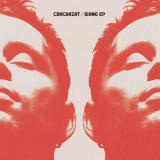
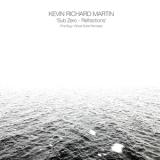







![NOW JAZZ NOW - 100 Essential Free Jazz & Improvisation Recordings [1960-80] (BOOK)](https://www.deejay.de/images/l2/6/1/1191661.jpg)