
Reservar29.09.2025
debe ser publicado en 29.09.2025
64,66 €
debe ser publicado en 29.09.2025

Gwenan Spearing, known for her perceptive, groove-oriented DJ sets, and more recently as a live performer working with hardware improvisation, launches a new imprint, Phase Space, with Degrees of Freedom, a debut album diving deep into generative electronics, modular systems, and real-time response. Composed and recorded in 2019-2020, the album treats constraint as creative fuel, floating between ambient,
sonic sculpture, and improvisation, mapping Gwenan’s path from rural Wales to Berlin’s outer zones of experimental sound.
Sync opens with a theme on a slow triangle wave, expanding the space as it evolves. Some Pluck explores generative counterpoint using LFOs and Euclidean rhythms. Generator I unfolds in an oscillating time where keyboard and bass circuits cross-modulate. Sleep Pressure is a lullaby for grown-ups, capturing that eerie threshold before sleep, followed by Loper, where time flows fluid and unstable. The closer, Generator II, holds machine heartbeats in delicate equilibrium before unraveling into graceful decay, a soft farewell. (That’s the Universe waving.) Degrees of Freedom is algorithmic music with a pulse: visceral, hand-wired, and built for deep listening.
Haga su pedido ahora y le encargaremos el artículo en nuestro proveedor.

Recently I was approached by my old friend Travis Millard to make some original music for Freedom Finger - a crazy space-shooter video game he had been developing with Jim Dirschberger and Wide Right Interactive game studio. I was able to land 6 instrumentals that pop up at various points throughout the gameplay.As the game was being rolled out, the idea arose to have me do 3 more tracks - this time fully fleshed out songs with lyrics mostly inspired by Freedom Finger's gameplay. These tracks would accompany some brand new levels that would be made available as downloadable content for the game.We have decided to release all of the music I have done for Freedom Finger as a 10" vinyl EP available through Rhymesayers Entertainment. This includes the 3 full length vocal tracks, as well as the 6 shorter beats that loop throughout the game. Some of these tracks also feature additional instrumentation from my friends and frequent collaborators, Grimace Federation.Furthermore, Jim has directed a video for the song Drums on the Wheel - featuring Freedom Finger gameplay, and some brand new visuals drawn by Travis and animated by Steven Gong.The game is an absolute blast, and I hope you enjoy this music. All relevant links below. <3Love,A.R.
debe ser publicado en 05.09.2025

debe ser publicado en 04.09.2025

Foehn & Jerome feat. Sonya Zlo - Macho Madness (PFFD003)
Berlin, Summer 2025 - A raw, hypnotic, and deeply conceptual collaboration is about to make waves. Austrian DJ and producer duo Foehn & Jerome, residents of Berlin's iconic Club Der Visionaere and founders of the Perfumed Freedom label, team up with Ukrainian artist and producer Sonya Zlo to present "Macho Madness" - a wild and genre-bending release born from an unfiltered studio jam that spiralled into something bigger. In addition to their experimental project Space Curls, with which the three artists also perform live shows, Sonya, Fabian, and Jerome have been working on their new techno/house project.
In a world where stereotypes wrestle for power, "Macho Madness" challenges everything we thought was normal. Overblown masculinity, the illusion of strength, and staged rituals of dominance – that is what we call the "Macho Madness".
Foehn & Jerome, known for their electrifying DJ sets, have been shaping Berlin's underground scene for over a decade. Sonya Zlo, who moved to Berlin from Kyiv in 2022, stumbled upon their gig by chance - and what started as a conversation about track ID's turned into a full-on collaboration.
"Working with Foehn & Jerome has taught me so much," says Sonya. "I come from a jazz background, so this was completely new territory for me - but bringing my melodic instincts into this heavy, industrial sound was crazy exciting".
Following Perfumed Freedom's recent releases "The Frisbee of No Return" and "Hermanngirl", the new record "Macho Madness" will be released in summer 2025. Play it, stream it, or pick up the limited vinyl - just don't expect anything ordinary.
Haga su pedido ahora y le encargaremos el artículo en nuestro proveedor.

* Speaker distressing early 1990s UK dub from The Disciples.
* `Chant of Freedom and `Armageddon' are dubplate cuts only ever heard before in sound system dances.
* The original versions of `Chant of Freedom' tracks appeared on 10' on the Boomshackalacka label in 1995, while `Armageddon' is previously unreleased on any format.
* Disciples, along with the likes of Sound Iration, Manasseh, Alpha and Omega and Conscious Sounds are the forerunners of what became known as the UK roots/dub scene.
* Highly regarded for their custom built dubplate cuts for Jah Shaka. Disciples have a sizable following worldwide, particularly in the UK, France, Germany and Japan.
Haga su pedido ahora y le encargaremos el artículo en nuestro proveedor.

Fit for Consequences: Original Recordings, 1984–1987 is the first ever archival release from Repetition Repetition, the “two-man electric minimalist band” consisting of Ruben Garcia and Steve Caton hailing from Los Angeles in the mid 1980’s. Repetition Repetition’s unique blend of cosmic art-rock minimalism / maximalism was self-released across a series of cassettes produced in micro editions, and while garnering the attention and participation of luminaries such as Harold Budd, remained under the radar during the band’s existence. Fit for Consequences: Original Recordings, 1984–1987 collects select material from across the duo’s catalog.
It was over a plate of Mexican breakfast food when Ruben Garcia and Steve Caton first told Harold Budd of Repetition Repetition and the worlds they intended to explore by respective way of synthesizers and guitars --- a rendezvous instigated by the former’s fan mail to the legendary composer. If the upstarts entered this restaurant from a one-way street of admiration, they would leave with not only Budd’s interest but, sometime later, a blessing in the wake of many hours shared by the three in Garcia’s Los Angeles home recording studio: “This is going to be difficult, but God help them, I think they’re great,” noted Budd in a USC lecture in 1985. Now several degrees removed from prior rock music aspirations, the real game was afoot.
Between 1984 and 1988, Repetition Repetition operated within something akin to the underground of the experimental underground, although even that designation perhaps overstates the case. The duo’s sparse output consisted of three cassettes self-released on Garcia’s Third Stone Music label: Repetition Repetition (1985), Lakeland (1987), and The Machinist (1987). Their songs would also be included during this period on Trance Port Tapes’ vital scene-scanning compilations assembled by A Produce. Live performances occurred with similar infrequency, but Garcia and Caton counted converts in quality over quantity, numbering among them the aforementioned Budd, a Chambers Brother, and, judging by a memorably drop-jawed reaction following a rare Repetition Repetition gig, Jackson Browne.
Likewise, critical support materialized in the form of KCRW deejays Brent Wilcox and Dean Suzuki, whose steady airplay positioned Repetition Repetition’s music amidst fearless company like Jon Hassell, Hiroshi Yoshimura, and Richard Horowitz. Yet, to hear fellow Trance Port featured players like Tom Recchion and Bruce Licher of Savage Republic tell it, Garcia and Caton moved as ghosts --- a notion more vexingly endorsed by the silence of record companies that failed to come knocking --- and therein lies an overarching truth to the work itself.
Journey to the heart of Repetition Repetition and one discovers a collective ear impossibly attuned to the hypnotic possibilities of stylistic convergence, the resulting music possessed of seamless multimodalities which beckon to a glimmering plane of the disembodied. Where Caton sought his artistic fixes at an intersection of popular genres, Garcia zoned in on the sonically spare, drawing from the same wellspring as the Enos and Rileys of his personal avant-garde pantheon, and in their coming together the two tapped into a deeper cosmic source. Synthetic walls of keyboard sound in forever states of reprise met waves of shimmering --- and at times even punishing --- guitar in reply, their soundscapes hovering convincingly between, as suggested in fittingly dualistic fashion in a press kit assembled by Garcia, such disparate sensations as bird flight in one song and oil drilling in the next.
But don’t call it a push-pull dynamic, as this was a creative partnership founded upon fluidity and organicism by way of, naturally, repetition. In contrast to, say, the Bressonian ideal of repetitive motion as a great stripping away, the concept in the hands of Garcia and Caton equated to ascendancy via continuous unfolding, a maximal route to minimalism. To be sure, their recording philosophy morphed over the course of the act’s short history, and what started as a process defined by consistent in-person interplay developed into a more isolated method formulated by Garcia, who eventually took to his own one-man bedroom-studio sessions in order to fully chart any and all potential ostinato-loaded paths which he could travel down, the Tascam-captured resonances subsequently provided to Caton as blueprints from which to take flight himself, adding layer upon layer of steel to the proceedings.
If the practice and execution changed, however, the evidence certainly didn’t rest in the results: The seamlessness remained, and, despite the brevity of their time together, so has Repetition Repetition. With this finely calibrated collection of songs in Fit for Consequences: Original Recordings, 1984–1987, Freedom To Spend sees to it that the private worlds of Garcia and Caton can now be visited by all rather than just the count-‘em-on-both-hands lucky few whose musical endeavors or collector vocations carried them into this once-distant dimension.
Repetition Repetition’s Fit for Consequences: Original Recordings, 1984–1987 will be released on Freedom To Spend in vinyl and digital editions on May 30, 2025. The collection includes extensive liner notes from Bill Perrine, and wil be offered alongside Over & Over, a supplemental collection of music available exclusively as a mail order cassette from Freedom To Spend and RVNG Intl.
debe ser publicado en 30.05.2025

Now releasing their third album together, ‘Deep Freedom’ on Connessioni, Lorenzo Fortino and Brody have grown even closer and more complementary as artists.
Renowned and recognized globally as producers thanks to their two previous albums, they take another step forward with this new work, delivering something truly unique and unlike anything else. Their sound remains consistent, mature, and decisive, driven by a commitment to absolute artistic freedom.
The EP opens with “Our Truth” (A1), a techno/electro track where electronic drums, bass, and atmospheric synths blend seamlessly. Lorenzo’s processed vocals add depth to the composition, uilding to a point where body and mind move in unison on the dancefloor.
The journey continues on the same side with “Homemade Mould” (A2), a raw and direct house track that most closely embodies the recognizable hallmark of the two Italian producers.
Side B begins with “Deep Freedom” (B1), featuring singer Veronica Marini in her recording debut. The song delivers an explicit message of rebellion, layered with a profound call to action for the world. Set against a deep, immersive soundscape that bridges house and techno, it seeks to awaken the spirit—encouraging listeners to embrace life and fight for freedom.
The album concludes with “Leave Those Memories” (B2), a house track that feels like an instant global hit from the very first listen. The drums, bass, and synths come together flawlessly, creating the perfect backdrop for Veronica Marini to shine. Her remarkable jazz-infused soul takes center stage, moving effortlessly through lyrics that showcase her distinctive interpretative style — one that can only come.
Haga su pedido ahora y le encargaremos el artículo en nuestro proveedor.

The Freedom Affair hat von Anfang an tiefe Wurzeln in der Soulmusik geschlagen, aber nach fast einem Jahrzehnt gemeinsamer Arbeit konzentriert sich der Sound der Gruppe auf ihrem selbstbetitelten zweiten Album genau dort, wo Muscle Shoals und Memphis Soul aufeinandertreffen. Es ist eine Meisterleistung an leidenschaftlicher Message-Musik, die zeitlose Themen wie Ungerechtigkeit, Liebe und Zusammengehörigkeit erforscht. Eine schicksalhafte Begegnung mit dem Grammy-prämierten Toningenieur Boo Mitchell (Mark Ronson, Bruno Mars, Al Green) in den Royal Studios im Februar 2023 löste einen Funken aus, der die Band mit neuer musikalischer Überzeugung zurück nach Kansas City schickte. Im November kehrte die Band zurück, um in dem legendären Studio in Memphis völlig neue, vom Southern Soul inspirierte Songs aufzunehmen. Das stets starke weibliche Trio an der Spitze der Band - Paula Saunders, Seyko Groves und Shon Ruffin - ist das Markenzeichen des Sounds und der Identität von The Freedom Affair, und ihr kollektives stimmliches Können ist in vollem Umfang zu hören - von hart bis zart, von Herzschmerz und Hoffnung. Die Erfahrung in den Royal Studios hat die Band davon überzeugt, dass es keinen besseren Raum gibt, um Bläser aufzunehmen. Die ,One-Take"-Bläser von Pete Carroll an der Trompete und Brett Jackson am Saxophon beweisen, dass sich ihre jahrelange Zusammenarbeit mit ihrer Präzision und den perfekt auf die Stimmung abgestimmten Linien ausgezahlt hat. Das Personal der Rhythmusgruppe ist das gleiche wie auf dem Debütalbum "Freedom is Love", aber Chris Hazelton wechselt vom Bass zu seinem Hauptinstrument, der Hammond B3-Orgel, sowie zu verschiedenen Keyboards. Branden Moser tauscht den Bass, der auch sein Hauptinstrument ist, mit seiner früheren Rhythmusgitarre aus. Cole Bales greift an der Leadgitarre weiterhin zu zeitlosen Riffs, und Dave Brick sorgt am Schlagzeug für das Rückgrat mit dem schweren Boom-Bap. Dieses Album hat den Sound von The Freedom Affair zementiert: beständige Melodien mit reichhaltigen Arrangements, unterstützt von einem düsteren Puls. Royal war der perfekte Ort für dieses Album, und die Band nutzte die Geschichte des Studios in vollem Umfang, indem sie Studiogeräte und Relikte während des gesamten Prozesses einbezog. Da die Band nur vier Tage Zeit hatte, um das zehn Songs umfassende Album aufzunehmen, bestand sie darauf, das gleiche Ampex 1"-Bandgerät zu verwenden, mit dem alle Hi-Record-Hits von 1974 und davor aufgenommen wurden, um die Authentizität zu wahren. Es war das erste Mal seit 1974, dass dieses Gerät für ein Album verwendet wurde. Die Einschränkungen und Macken, die sich aus der Verwendung alter, analoger Geräte ergeben, machten Platz für magische Momente, die den Charme des Albums ausmachen. Die Platte erweckt den klassischen Southern Soul zu neuem Leben, mit all der Gemütlichkeit und Wärme, die man erwarten würde, wenn man Al Green oder Ann Peebles Aufnahmen aus dem selben Raum hört. Abgemischt von Vince Chiarito (Hive Mind, Jalen Ngonda, Charles Bradley) und gemastert von JJ Golden (Sharon Jones & the Dap Kings, The James Hunter Six, Antibalas), ist dieses Album eine wahre Lektion in Sachen Soulmusik.
debe ser publicado en 09.05.2025
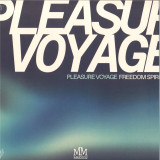
MM Discos presents 'Freedom Spirit' by Pleasure Voyage: a sonic journey into the essence of Balearic Beat From the sunniest corners of the Balearic imagination, MM Discos opens the doors to a new musical expedition with Freedom Spirit, the highly anticipated vinyl release by Pleasure Voyage. A tribute to freedom, nature, and the connection to the ethereal, this EP encapsulates the spirit of eternal summer with six carefully crafted tracks that move between ambient landscapes, hypnotic downtempo, and immersive grooves. This work is a testament to Pleasure Voyage's talent for capturing the magic of the sea breeze and the ebb and flow of the waves in sound form. From the first chord of Cloud Waves (New Age Balearic Mix) to the deep reflection of Cloud Waves (Ambient Meditation Mix), each track is a gateway to a state of escape and immersive enjoyment. Side A kicks off with Cloud Waves (New Age Balearic Mix), an enveloping anthem with celestial pads and floating arpeggios, followed by Surf Meditation, an ode to the ocean with pulsating basslines and ethereal percussion. Verano Española closes the A-side with a warm groove and guitars that evoke golden sunsets and cocktails by the sea.
Haga su pedido ahora y le encargaremos el artículo en nuestro proveedor.
Founded by Robbie Redway and psychedelic researchers Mathieu Seynaeve and WaiFung Tsang, UK-based 'United Freedom Collective' has grown into a network of artists including Jordan Stephens, Falle Nioke, Eliza Shaddad, Labdi, William Rees and Facesoul. Originally conceived around psychedelic therapy sessions, online yoga and breathwork channels, the musical scope has expanded on each of the four EPs released on Maribou State's 'Dama Dama' label, and here continues with their debut on Multi Culti. This time Robbie takes the lead on production and sole vocal duties on all five tracks, presenting a range of influences and style. Lead single 'Between Memories' blends tropes of ecstatic dance with uplifting vocal piano house, somehow making flutes fit in with Detroit strings to epic, hands-in-the-air effect.' Title track ‘Bright Patterns’ bridges the gap between Jungle, Jai Paul, and Jamiroquai, a fusion of funky filtered disco-house and electroclash with side-chained pop vocal hooks. ’El Yo’ smooths things out, a dope, laid back groove with a measured reflection on psychedelic healing and the perils of spiritual bypassing. ‘Higher Drums’ warms things back up for the dancefloor with trumpet, afro-latin percussion, and flute flourishes. Finally, ‘Moonshine’ is a soaring, Amapiano-inflected post-desert-house ballad. Influenced, in their words, 'by birds, trees, Buddhism, yoga, headless way meditations, Jungian analysis, Zen Taoism, Chinese plant medicines, indigeneity, Amazonian and psychedelic cultures, icaros and world healing traditions,' the music is eclectic, ranging from afro-inspired jazz to Chinese folk, psych-rock to dub and dance music, an ambitious and inclusive range, collabs that extend well beyond the borders of western musical traditions. Their sound was described by Clash Magazine as an 'aural mosaic that glitters with colour and potential,' and while the sheen of the production and precision of the arrangements might seem a departure from Multi Culti's left-field endeavours, the psychedelic idealism and global connectivity make it a natural fit with the open-ended ethos of the label. Having already had radio support from KEXP, BBC6 Music (Laverne, Ravenscroft, Charles, Nemone, Letts), Jazz FM and Worldwide FM (Gilles Peterson), with a live show that sold out Dalston Curve Garde and The Waiting Room as well as supporting Maribou State for their recent comeback show at Islington Assembly Hall in London the collective's future is looking exceptionally bright.
Haga su pedido ahora y le encargaremos el artículo en nuestro proveedor.

Haga su pedido ahora y le encargaremos el artículo en nuestro proveedor.

Remastered vinyl copy in a Vinyl Fanatiks housebag with a black paper inner. Pressed on 180g Black Vinyl. The original red vinyl pressing sold out back in 2021. Cut by Beau at Ten Eight Seven. Limited run of 150.
Haga su pedido ahora y le encargaremos el artículo en nuestro proveedor.

Haga su pedido ahora y le encargaremos el artículo en nuestro proveedor.

debe ser publicado en 24.01.2025

Freedom Sound, the 1961 debut by The Jazz Crusaders, began a prolific and successful decade-long association with Pacific Jazz. The Houston, Texas founded band featuring Stix Hooper, Joe Sample, Wayne Henderson, Wilton Felder, and Jimmy Bond blended jazz aspirations with R&B roots to create an enticing sound. This stereo Tone Poet Vinyl Edition was produced by Joe Harley, mastered by Kevin Gray from the original analog master tapes, pressed on 180g vinyl at RTI, and packaged in a deluxe tip-on jacket.
debe ser publicado en 10.01.2025

debe ser publicado en 29.11.2024

The Invisible Road: Original Recordings, 1985–1990 compiles an unheard, previously unreleased body of recordings by Sussan Deyhim and Richard Horowitz, dissidents from diametric backgrounds who met during the heady days of Downtown New York in the 1980s. This collection reveals the creative and life partners’ radical shared vision of avant-garde pop in all of its boundary pushing freedom, combining Deyhim’s singular approach to vocalization, Horowitz’s invention of new musical languages, and touchstones of traditional music from around the world, creating a new music that ultimately retains a voice entirely its own. Despite their difference in backgrounds and respective journeys, at the time of their meeting in the early 1980s in New York City, Sussan Deyhim and Richard Horowitz were both products of the search for freedom and understanding (and resultant awakenings) that swept the globe and helped culturally define the late 1960s and 70s. Deyhim, born and raised in Tehran, spent her teens dancing with Iran’s Pars National Ballet company, performing weekly on Iranian national television, and travelling her home country studying with master folk musicians and dancers, before relocating to Belgium and joining Maurice Béjart’s prestigious Béjart Ballet of the 20th Century. Horowitz, born and raised in Buffalo, New York, had spent much of the decade before abroad, first departing for Paris under the shadows of the Vietnam War, where he studied piano, Eastern philosophy, and became entrenched the city’s free jazz scene, playing with the likes of Steve Lacy, Anthony Braxton, and Alan Silva, before embarking south to Morocco where his friendship with Paul Bowles helped cultivate a deep passion for the country’s musical traditions and a shift in his musical practice.
The pair met by chance sometime in 1981 at Noise New York, a small studio on West 34th Street founded by the musician and recording engineer, Frank Eaton, as a utopian creative laboratory that beckoned artists and bands like Arthur Russell, Christian Marclay, Liquid Liquid and Butthole Surfers into its orbit. Both artists had recently relocated to the city, Horowitz having recently released his debut album, Oblique Sequences (Solo Nai Improvisations), on the legendary Paris based imprint Shandar, and fallen in with members of New York avant-garde like La Monte Young, Jon Hassell, David Byrne, and Brian Eno, and Deyhim having begun to more actively incorporate singing into her practice, notably recording a vocal score for choreography she was doing at La MaMa Experimental Theatre.
Initially bonding over a cassette tape of field recordings made by Paul Bowles that had been given to mutual friend and writer Brian Cullman (seeking answers for Ornette Coleman’s question “what is the sound of sound”), their earliest collaboration was documented on Horowitz’s 1981 album, Eros In Arabia, with Deyhim contributing vocals to the track “Queen Of Saba.” Over the coming years, their deep connection would routinely gravitate them into the studio, culminating in the body of recordings that would appear on their 1986 album for Crammed Discs, Desert Equations: Azax Attra. Unknown to nearly all but the artists, laying in wait over the decades on numerous multi-track and stereo reels, DAT tapes, and reference cassettes, were a vast array of recordings made by Deyhim and Horowitz bookending Desert Equations. The 13 pieces represented on The Invisible Road: Original Recordings, 1985–1990 were recorded largely between Noise New York and Daylight Studio in Brussels, during a period that Deyhim describes the partnership between herself and Horowitz’s as seeking a music “free of any specific cultural reference, with a personal musical signature,” blossoming into a body of sonority that embraced the energy of contemporary boundary pushing pop and the avant garde, filtered through their mutual love and study of various musical traditions from across the globe and deep engagement with the ideas and tactics of experimental music.
Undeniably rooted in Horowitz’s study of the North Africa ney and the music of the Berber and Gnawa cultures during his time in Morocco, Deyhim’s deep engagement with the folk traditions of Iran, and the couple’s immersion in the interconnected Downtown underground music scenes, each piece on The Invisible Road offers its own vision creative and cultural hybridity. Deyhim sings in both English and Farsi, as well as a composite tongue that she developed by drawing upon numerous indigenous vocal techniques from around the world, intuitively responding to Horowitz’s simultaneous sound syntax forming and combining a wide range synthetic and acoustic instrumentation, and experimental tape techniques, within a visionary series of free-standing expressions.
Haga su pedido ahora y le encargaremos el artículo en nuestro proveedor.

Haga su pedido ahora y le encargaremos el artículo en nuestro proveedor.

Erich Fromm's “Escape from Freedom” was published 83 years
ago. His assumption was that modern man, having freed himself
from the shackles of the old days and living freely, longs to
return to the totalitarian, destructive and conformist world. In
2024, the pluralistic and individualized way of life of the socalled West seems self-evident. Boundless freedom is suggested -
but we continue to flee. Utopias are crumbling and conservatism
is experiencing a renaissance. At the same time, the freedom to
decide “ to be able to stay” in contrast to “having to leave”
currently seems to represent a high value.
This EP, between the two producers from Germany and Ukraine, was
created in this field of tension. David Heine and Konstantin
Kost are already working together on the current AMAS project
(Odessa EP)
"Freedom From Esacape" adapts the former title of Erich Fromm's
central work, which is given a prominent role on this record.
Music and techno are freedom and escape at the same time:
transcendence and escapism. In interaction and contradiction at
the same time.
The cover picture was taken on 25 July 1909, when Louis Blériot
became the first person to cross the English Channel in an
aeroplane with the Blériot XI, which he had designed himself.
The reversal of the title and the idea for the cover artwork
came about during a conversation with the artist Jennifer Mattes
in Vienna.
About the tracks:
On the A-side, the two protagonists create a world of minimalist
dub techno, which also has melodic, flat side strands in its
narratives. The more than 60-year-old fragments from TV
interviews with Erich Fromm on the subject of freedom,decisions, constructivism and destruction are presented so
densely and rustlingly that you don't feel compelled to follow
the lecture. Instead, the spoken word corresponds with the
minimalist framework of the two pieces. The old audio recordings
are embedded as part of the composition. Some of it may be
understood and arouse the listener's curiosity, but again and
again you get lost in the repetitive swamp of sound, so that you
may understand more of the text each time you listen to it
without it imposing itself on you.
The two remixes of the first track take a different approach.
"Save Your Atoll" specifically frames and limits the spoken word
in its interpretation and embarks on a hypnotic journey that is
less worldly and more futuristic.
"Anna Kost" goes one step further by literally suffocating the
old man's spoken word, as if the destructive drum patterns were
trying to shut him up.
"Freedom From Escape" will be released on 18 October 2024 in a
physical edition of 200 records and is available digitally on
all common portals.
WEIRDMOUTHRECORDS2024
Haga su pedido ahora y le encargaremos el artículo en nuestro proveedor.

Original[39,08 €]
Joseph Omicil, Jr, a.k.a. Jowee Omicil, is a Haitian-Canadian jazz musician. He has worked in the past with artists such as Roy Hargrove, Pharoah Sanders, Tony Allen, Kenny Garrett, Jacob Desvarieux, Glen Ballard, Harold Faustin, Michel Martell, etc. He hosted Quincy Jones' 85th birthday celebration at Montreux Festival. He also starred in the Netflix series The Eddy, produced by Damien Chazelle, and Le temps d'aimer, directed by Katell Quillévéré (Cannes Festival 2023). The Bois- Caïman ceremony was Haiti's first major collective uprising against slavery. On his new album, SpiriTuaL HeaLinG: Bwa KaYimaN FreeDoM SuiTe, Jowee performs his ancestors' revolution in his own way. Joweebroughttogetherallhisinnertubes,soprano,alto,tenor,wood,clarinets, piccolo flute, cornet, that blows, that winds, that rumbles. Thisrecord is an incantation, a therapy, it cleanses the world by drawing onthe fantasized memory of the Haitian revolution. There are FreedomSuites by Sonny Rollins, Max Roach and others. Prayer music, music tobreak the chains in your head and on your wrists, music of black powerandwhitemagic.ForJowee,akidfromMontreal,sonofaHaitianpastor, who sang Jesus in all the tones, and then Michael Jackson, andthen2Pac,wholearnedjazzfromOrnetteColeman,theceremonynecessarilyhasthetasteoffree.Thisrecordisahealinghour-longimprovisation.
Haga su pedido ahora y le encargaremos el artículo en nuestro proveedor.
"In July of 2023, Neil Young released the OFFICIAL RELEASE SERIES VOLUME 5, a stunning collection comprised of four classic albums that begins with the exciting renaissance that came with the release of FREEDOM in 1989, and continues on the unequaled exploration of collections RAGGED GLORY (1990), WELD (1991) and ARC (1991). In many ways, it is a musical travelogue of how Young saw the future and opened up creative worlds for the use of sound and originality which had not been used before.
Now, each of these titles from ORS 5 will become available once again as stand-alone albums on both
vinyl and CD. When these four albums were released in the box set last July, it was the first time they had
been remastered for vinyl."
debe ser publicado en 04.10.2024

debe ser publicado en 30.09.2024

BLUE NOTE TONE POET EDITION: Stereo, produziert von Joe Harley, komplett analog von Kevin Gray
von den Originalbändern remastert, RTI-Pressung (180g), stabiles Tip-on-Single Sleeve, wattierte Innenhülle.
Auf seinem Album ”Let Freedom Ring” spiegelt Saxofonist Jackie McLean den Wandel wider, der 1962 in
der Luft lag: die musikalischen Freiheiten der aufkommenden Avantgarde und die sozialen Veränderungen,
die von der Bürgerrechtsbewegung gefordert wurden. Begleitet wird er von Walter Davis Jr. am Klavier,
Herbie Lewis am Bass und Billy Higgins am Schlagzeug.
debe ser publicado en 06.09.2024

Haga su pedido ahora y le encargaremos el artículo en nuestro proveedor.

Gregory T.S. Walker’s Minstrels & Minimoogs was self-published by a young, nomadic composer and virtuoso in 1988 to accompany an immersive multimedia performance at the University of Colorado Boulder’s Fiske Planetarium. Created with this outer, and other, world setting in mind, the four tracks find Walker stretching toward an ancient-to-future vision where Egyptian myths and Hieronymus Bosch-ian tableaus are rendered in a screaming three dimensional circuitry of electronic drums, synth guitars, and, of course, Minimoog. Given the musical terrains and outmoded topics traversed, and that this entirely DIY effort was originally released as a micro one-sided 12” edition, Minstrels & Minimoogs is as perplexing and euphoric a document lost-to-time as it is now found.
Born in 1961 into an intensely musical family spanning four generations, Gregory’s mother Helen Walker-Hill was a noted musicologist specializing in the rediscovery and work of historical Black female composers, while his father, George Walker, was the first African American composer to win the Pulitzer Prize for music. Both parents studied with the famed (and famously strict) Nadia Boulanger in Paris in the 1950s, and held to lofty aesthetic standards in their home life. Walker began studying the violin as a child, but when a burgeoning interest in the electric guitar and rock music as a teen manifested, it was largely verboten in the household. The rule was that the music played in the home was to be acoustic and classical. Although the elder Walkers eventually relented and allowed Gregory’s guitar to be plugged in for a brief interval on the weekends, the remaining days he settled for strumming it sans amplification.
Gregory, conditioned and eager for a life in music but looking to get out from under the influence and yoke of his famous composer father, ultimately chose to study computer music at the University of California at San Diego, where he earned a Master of Arts. This was followed by another MA in electronic music composition at that hotbed of West Coast experimental music, Mills College. Intermedia and multimedia in the arts was the rage in the 1980s, and Mills was one of the centers for it; audacious spectacle meeting visionary performance, such as one of the realizations for Anthony Braxton’s music for multiple orchestras a young Gregory performed in with his violin.
After a series of solo synthesizer concerts around California, Gregory followed a girlfriend on a mid-country move to Boulder, Colorado. After picking up yet another composition degree at University of Colorado Boulder, his life as a composer really started, writing a piece for extended technique for guitar, a passacaglia for vocoder and orchestra, as well as Minstrels & Minimoogs.
Envisioned as a multimedia performance such as the kind he’d experienced at Mills (which was all but unknown in Boulder at the time), Gregory roped in a number of college going or aged friends of varying skill levels and musical sympathies to accompany him with distorted sax or oblique spoken interludes. Confronted with a lack of finances, but driven to get his ideas captured in a complete musical package, the album was recorded in his brother’s apartment. If not every player assembled was on Gregory’s virtuosic level, so be it; it was more about capturing the spirit of his intentions and embracing the serendipity of mistakes.
An inspired attempt at world building, Minstrels & Minimoogs draws on the deep well of musical knowledge Gregory gathered from his parents and teachers, but all the while subverting that historical basis by incorporating mutant strains of prog and pop music. The work accumulated is not unlike the playful 1980s work of Gregorio Paniagua, where medieval estampies and rondeaus are wrenched into an anachronistic present where Hildegard Von Bingen and Kate Bush are contemporaries. Ars nova, new art, a 20th century minimalist jester and troubadour.
A one sided LP was the cheapest option Gregory found to have Minstrels & Minimoogs memorialized on vinyl, so somewhere between 50 to 100 copies were pressed. There was no distribution, outside of copies that were handed out to friends or sold at the performances at the planetarium. Gregory T.S. Walker’s cosmic-futuristic forays into oblique pop and baroque subversion could forever reside perfectly in both the domed simulacrum of our universe for which it was composed, in the formats it is being reintoduced now, and our own biblical firmament. For in the words of Gregory, straight from the original liner notes: “God Is A Minimoog”
Gregory T.S. Walker’s Minstrels & Minimoogs arrives again August 23, 2024 on vinyl and digitally as part of uncommon¢ (“uncommon sense”), an open-ended, serialized endeavor from Freedom to Spend that provides new meaning for rarefied recordings from music's outermost fringe.
debe ser publicado en 23.08.2024

"Jordan Hamilton's ""Project Freedom"" revolves around the non-traditional ways Jordan applies the Cello to play chords, layer melodies, and create songs. This is a record about breaking limitations and boundaries - a fusion of RnB, Soul, Hip-Hop, Electronic, and Jazz.
Located halfway between Detroit and Chicago, Project Freedom was written in Kalamazoo, Michigan where cellist Jordan Hamilton began his journey as a songwriter, producer, and artist. This is Cello-Beats and Folk-Soul Rhythms.
This introspective journey is narrated by Jordan's lyricism that expresses the wisdom gained through life's lessons at home, chasing dreams, living with loss, and falling in love. These are the lessons that earned him the ability to move through this world all the more free.
This is an album made to accompany you through all of life's changes."
debe ser publicado en 09.08.2024

debe ser publicado en 30.07.2024
debe ser publicado en 26.07.2024

debe ser publicado en 19.07.2024

D. Carbone steps up for the next entry on UFO Inc. with four exhilarating energy boosts. Raised in the Vesuvian area but a longtime resident of Berlin, Davide Carbone has spent years honing in on a bold, industrial-leaning sound that targets the body and mind in equal transcendence. His aesthetics are seemingly on the harsher side, but underneath each phrase lies a carefully arranged sonic mapping that weaves together the raw, the delirious, and the euphoric. As a producer and DJ who works across multiple aliases, Davide's commitment to the culture has been firmly planted over many years of exploring the weirder corners of techno, working with a wide range of beloved labels and performing across the globe. For his debut on UFO Inc, he focuses on a clear sonic paradigm, considering the fusion of uplifting, trance-y breaks and contrasting hard rhythmic frameworks in order to craft a unique space between two extremes.
Haga su pedido ahora y le encargaremos el artículo en nuestro proveedor.
debe ser publicado en 10.07.2024

Freedom is deeply rooted in the working-class rock of the 70's and 80's, giving us a sound like no other. With meaningful lyrics, power chords and mighty choruses, they're inevitably creating a soundtrack to the journey of life itself. Nicke Andersson once described Freedom as a "bargain basement Springsteen" - a band making music meant to follow you through thick and thin, far into those never-ending summer nights.
Since Freedom first started in 2019, they've established themselves as an amazing live act, filling clubs throughout Sweden with both energy and audience. In 2022 they were honorably chosen to play at the official release party of The Helicopters at the notorious Hamburger Börs in Stockholm.
The band recently added two new members to the crew: Ola Göransson (Heavy Feather, Stacie Collins) and Matte Gustafsson (In Solitude, Siena Root, Heavy Feather). Their combined experience of heavy roots-rock and sense of stage presence, makes Freedom one of Swedens strongest live bands - guaranteed.
Their self-titled debut album from 2021 became a great topic of conversation, leaving a permanent mark in the rock-world of Sweden. Finally, it's time for the awaited second album to be released - once again produced by Martin "Konie" Ehrencrona (Viagra Boys, Håkan Hellström and Les Big Byrd).
Haga su pedido ahora y le encargaremos el artículo en nuestro proveedor.

Freedom Weaver: The 1959 European Tour Recordings is the first official release of the 'Saxophone Colossus' Sonny Rollins’ European tour in 1959 with bassist Henry Grimes, and drummers Pete La Roca, Kenny Clarke and Joe Harris. Available previously only as a bootleg release, this is the first official release in cooperation with Sonny Rollins and released as a 3-CD set. Freedom Weaver includes an elaborate booklet with rare photos by Ed van der Elsken, Jean-Pierre Leloir, Bob Parent and many others; lead liners by jazz scholar Bob Blumenthal, and new interviews with Rollins himself, Branford Marsalis, James Carter, Joe Lovano, James Brandon Lewis and Peter Brötzmann. Mastered by the legendary mastering engineer Bernie Grundman.
Haga su pedido ahora y le encargaremos el artículo en nuestro proveedor.
debe ser publicado en 27.05.2024

Freedom is deeply rooted in the working-class rock of the 70's and 80's, giving us a sound like no other. With meaningful lyrics, power chords and mighty choruses, they're inevitably creating a soundtrack to the journey of life itself. Nicke Andersson once described Freedom as a "bargain basement Springsteen" - a band making music meant to follow you through thick and thin, far into those never-ending summer nights.
Since Freedom first started in 2019, they've established themselves as an amazing live act, filling clubs throughout Sweden with both energy and audience. In 2022 they were honorably chosen to play at the official release party of The Helicopters at the notorious Hamburger Börs in Stockholm.
The band recently added two new members to the crew: Ola Göransson (Heavy Feather, Stacie Collins) and Matte Gustafsson (In Solitude, Siena Root, Heavy Feather). Their combined experience of heavy roots-rock and sense of stage presence, makes Freedom one of Swedens strongest live bands - guaranteed.
Their self-titled debut album from 2021 became a great topic of conversation, leaving a permanent mark in the rock-world of Sweden. Finally, it's time for the awaited second album to be released - once again produced by Martin "Konie" Ehrencrona (Viagra Boys, Håkan Hellström and Les Big Byrd).
debe ser publicado en 17.05.2024

debe ser publicado en 17.05.2024

Repress!
Extending the heritage left from the first chapter of the homonymous collection, Schema Records presents "Freedom Jazz Dance Book II". The concept comes from an idea of Luciano Cantone aiming at offering "New Standards" that can be understood and responsively absorbed by young generations. The title deriving from a composition from Eddie Harris describes precisely the project's essence: the intuition of something overcoming hurdles laid by rigid market rules. From this, the artistic meaning of "Freedom", solid funded in "Jazz", from which spawns subsequently the natural impulse to movement, manifesting in "Dance" in fact. With "swing" setting the right pathway without hesitations, the objective of the project remains capturing younger people inside the magic of Jazz. The only possible way it's organic: by leaving the music to free up the spirit within themselves.
debe ser publicado en 10.05.2024

Ein Albumtitel, der gleich in doppelter Hinsicht perfekt passt: ‚Silver Romance‘ heißt die neue Scheibe der süddeutschen Melodic-Powermetaller Freedom Call. Der Name symbolisiert nicht nur das 25-jährige Bestehen der Band – von Sänger/Gitarrist und Bandgründer Chris Bay augenzwinkernd als „unsere Silberhochzeit“ bezeichnet –, sondern trifft auch inhaltlich zu: „Dem Edelmetall Silber werden Eigenschaften wie Klarheit, Freiheit und Leichtigkeit zugeschrieben“, erklärt Bay und fügt hinzu: „Außerdem soll Silber das Selbstbewusstsein und die Fantasie stärken können. Allesamt
Attribute, die auch zu Freedom Call passen und die wir sowohl musikalisch als auch textlich in unseren neuen Songs haben einfließen lassen.“
Veröffentlicht wird ‚Silver Romance‘ als CD, Doppel-LP, Box-Set und digitaler Download am 10. Mai 2024 über Steamhammer/SPV, bereits wenige Tage später starten Bay und Co. ihre 2024er Konzertaktivitäten. Um den Fans die Wartezeit bis dahin zu versüßen, werden vorab gleich vier Singles ausgekoppelt: Am 21. Februar startet die Reihe mit dem Titeltrack ‚Silver Romance‘ inklusive eines Making-Of-Videos, am 20. März und 10. April folgen ‚In Quest Of Love‘ bzw. ‚High Above’ jeweils mit Lyric-Clips. Zwei Tage vor dem Album-Release, genauer gesagt am 8. Mai 2024, rundet dann der Song ‚Supernova‘ mit einem sehenswerten Video das Single-Quartett ab
debe ser publicado en 10.05.2024

A groundbreaking album, originally released on Belgian label Antler in 1984. Fesobi Olawaiye debut is finally been re-issued, showcasing the incredible talent of the African musician, a longtime Fela Kuti associate in the legendary Afrika 70. Ander the moniker Feso Trombone he just prove an authentically brilliance, moving forward the afro-beat dogma while providing incredible white funk harmonies and contagious rare groove. Remastered from the original tapes!
debe ser publicado en 20.04.2024
