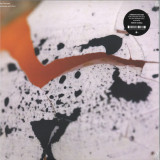
Black Truffle is pleased to present Landscape and Voice, a radical new work (and rare vinyl release) from major Japanese sound artist Toshiya Tsunoda. Undoubtedly one of the most influential artists working with location recordings since the 1990s, Tsunoda’s work possesses a rigorously searching quality that sets him apart from his contemporaries. Tsunoda is known to many listeners for the subtle atmospheric poetry of his early Extract from Field Recording Archive series, which focussed on vibrations recorded in various indoor and outdoor environments in his native Miura Peninsula, often inside pipes, bottles and other vessels. In more recent years, his work has explored the implications of his claim that field recording should be seen as ‘depiction’ rather than ‘documentation’. He has explored disorienting editing and processing in his works with Taku Unami, and, perhaps most radically, represented Maguchi Bay as a kind of kinetic sculpture for shaking speakers by removing all but the inaudible low frequencies from a field recording (Low Frequency Observed at Maguchi Bay).
One of the recurrent concerns of Tsunoda’s recent work, as he explains in the crystalline liner notes accompanying this release, is ‘exploring how I can establish a subjective relationship with an environment, rather than seeing it merely as an object to be recorded’. This has taken various forms, from documenting simultaneously an outdoor environment and the blood flowing through the listener/recorder’s body (captured with a stethoscope) on The Temple Recordings, to representing his own experience of the landscape as made up of ‘grains of space and time’ by inserting looped fragments into field recordings in Grains of Spring.
On Landscape and Voice, this meeting between subject and object becomes an almost mystical union between the natural and the human. As with all of Tsunoda’s work, a relatively simple concept leads to compelling, thought-provoking results. Landscape and Voice combines vowel sounds spoken by six voices with short, looped fragments of field recordings, their noise character suggesting consonants: voice and landscape thus join together in something like words. The record consists of three pieces, each using a different, richly evocative field recording, which periodically freezes, catching on a looped fragment to which is synchronised an abruptly looped spoken vowel sound. The lengths between these interruptions vary, as do the tempi of the loops. The interruption of these lushly immersive recordings of the world – bristling with bird song, rushing water, distant traffic, and clinking metal – only serves to intensify them, as if the depicted environment itself had been returned to the listener each time it abruptly reappears. At the same time, the constant interruption creates an uncannily frozen effect, as if the recorded environment were an object rather than a stretch of recorded time. When combined with the bare human presence of the vowel sounds, the result is both austere and magical. Pressed on 45RPM for maximum fidelity, in a gorgeous sleeve designed by Lasse Marhaug with liner notes from the composer, Landscape and Voice is a radical proposition from one of the deepest thinkers in contemporary sound.
Buscar:freeze
A Sagittarium returns to Rekids this May with ‘Strange Brew EP’
Following his ‘Mazes & Monoliths’ EP on Rekids in 2021, as well as releases on Running Back, Hypercolour, Idle Hands, and Craigie Knowes, the Elastic Dreams boss returns to Radio Slave’s label for another standout three-track EP of colourful and psychedelic cuts.
Leading the release is ‘The Mind Blanks At The Glare’, which sees the Bristolian utilise low-slung breakbeats, bouncing basslines, and fluttering synths for a chugging start to the EP. ‘Don’t Look In The Freezer’ follows with dubbed-out FX and stomping low end, before ‘Cosmic Trigger’ brings hypnotic bass together with trippy, twinkling arps and dreamy pads for a gentle final.
Following up to their acclaimed "Hold" EP from last year, German duo Alma reemerge on Definition with their new transmission, "Mother". Through four cuts dropping anchor down the most remote nooks of our dance-friendly galaxy, Alma move the cursor from proper floor-focused 4x4 grooves to kosmische-informed pop excursions with dextrous style and seamless elegance. Crafting their own blend of emotionally whelming club music, it's material primed for extended use whether you are sitting on some high-rise, towering rooftops at sunrise or enjoying a freeze-dried cocktail on Alpha Centauri. Presented in both original version and remix form courtesy of label head Definition himself, title-track "Mother" is the epitome of a slo-burner, rolling at low speed but gaining tension, weight and impactfulness as it runs. Circuits sizzling and piano stabs blazing, Alma dish out a compelling sample of their cross-dimensional wares, sure to take any dancefloor in the zone without further ado. Definition's Remix revamp trades the original's steady swing for a further syncopated, newbeat-infected swagger, laying further emphasis on the synth leads and lashing drumwork as poetic, bleached-out pads keep painting the sky all shades of pastel. A more Italo-inflected affair at first, the tear-jerking "Lost In The Stars" has us gliding in a parallel universe of its own, where epic-sized synth combers and muscular bass onslaughts avalanche over brittle lines of soft-tongued vocals. As concretely submerging as it is designed to trigger off deep emotional response from the ravers, this one is tailored to weave instant communion between the jockey and his audience. Flinging in the breaks and cross-cutting delays, Kiel outfit Avidus shift the angle of approach towards harder, faster EBM firepower, binding their rowdy, FX-soaked chords with the chorus to create a wholly distinct dancing and listening experience.
Sam Evian knew he wanted to leave New York City almost as soon as he arrived, more than a decade ago. An upstart songwriter and producer, he, of course, loved its creative wellspring—the ideas, the instrumentalists, the energy. But he’d grown up in the woods of upstate New York and, later, along the coast on the rather empty eastern end of North Carolina. The city was expensive, anxious, and unsettling, however inspiring it could be. So in the Summer of 2017, he and his band decamped to a rented house upstate to cut his second album, the magnetic You, Forever. He then realized he could no longer resist the urge; two years ago, Sam and his partner, Hannah Cohen, split from the city, building their refuge in the quiet of a Catskills town. That reflective, relaxing environment inexorably shaped Time to Melt, his third LP and debut for Fat Possum. A glowing set of soulfully psychedelic pop gems, Time to Melt is a testimonial to the life and wisdom to be found when you give yourself the mercy of space..
The new album from Cambridge's pop-surrealist Pete Um, a world unto
himself, but also a standard-bearer for the kind of heroic DIY
befuddlement and unfinching self-analysis that Deep Freeze Mice, Mick
Hobbs, Robert Storey and the Homosexuals minted
Pete Um is a lyrical troubadour and lo-f electronic maverick. Um has supported
Thom Yorke, received critical acclaim from The Wire and released more music
than most artists have written.Um's sprawling catalogue is a beast that can't be
tamed or reasoned with, but it's endlessly rewarding: time and time again he nails
that going-mad-in-the-potting-shed-ness that is the historic, and perhaps eternal,
English condition. Even at its most demented and disorderly your man sounds
like he's wrenching everything he possibly can out of his primitive keyboard-andmic set-up.
While the infuence of 80s UK squat-whimsy looms large, we're reminded too of
the synth-fuelled early-noughts of the The Soft Pink Truth and Safety Scissors,
and, more than anything or one, R. Stevie Moore – unexpectedly powerful and
unforgettable songs emerging unexpectedly out of awkward, enervating loops
and the more obviously pranky vignettes.
"It takes a while to enter Pete Um's world: his songs are brief, dense and
ramshackle; he revels in a reviewer's dismissal of his live act as "grindingly
awkward shithop", and wears his self-doubt on his sleeve - Can't Get Started is an
ironic title, for Um is prolifc across videos, blogs and music. A Remarkable,
coherent document, an excellent introduction to Um's misft creativity." The Wire
Emigrate. The one-time project has become more than that. Much more. The three studio albums, EMIGRATE (2007), SILENT SO LONG (2014) and A MILLION DEGREES (2018), prove that squarely behind Emigrate stands Richard Zven Kruspe – an extremely creative mind who needs the freedom to explore his music and his vision in ways outside of Rammstein. With Emigrate there are no limits, no barriers. Everything is possible, nothing held back, and it’s this ethos that underlines THE PERSISTENCE OF MEMORY, the new studio album, set for release on November 5th. THE PERSISTENCE OF MEMORY is a special jewel indeed, with the nine featured songs bringing together ideas that Richard has collected across the last two decades. Industrial Rock, Rock with electronic elements, however you choose to describe it, there’s no question that the songs here always contain a strong sense of melody, as rousing as they are deep. At one stage, it seemed that the tracks might be part of a bigger project – a vinyl box set of the first three albums with an additional LP included. On this bonus LP would be a selection of unreleased songs dating from 2001 right through to 2018. In the end, however, this material was considered too precious to sit beneath the ‘bonus’ heading, so THE PERSISTENCE OF MEMORY was born... Richard reacquainted himself with his hard drives, coming across ideas, songs and lyrics that deserved to be brought into the light, material too good to remain in the archives. He threw himself fully into the task at hand, as he always does, working on the basis that "A good idea remains a good idea”, and if he felt that there was more to be gained he was open to taking another look at the arrangements and the lyrics; new parts were also recorded here an’ there, after which the entire mix was given a fresh polish, ensuring that the nine songs have a contemporary yet timeless coat of paint. This time, Richard tried to keep things as simple as possible, allowing the creativity to flow, keeping his sights firmly set on pure, raw Emigrate songs. Says Richard: "These songs were created at a certain point in my life, but ideas don't have an expiration date. Sounds, lyrics and themes, on the other hand, do." "Freeze My Mind", for example, is one of the first Emigrate songs ever written, going right back to 2001. Now, 20 years later, it sounds fresh, of the moment, yet Emigrate through & through, something that is true of the album as a whole. Some of the elements are forged in a familiar heat, but these are married to new ways of working, new influences and challenges.
Akira Ifukube Returns! It's 1996 AD and Toho decide to freeze their Godzilla franchise, so what better way to go out with than a nuclear meltdown, which happens in GODZILLA VS. DESTOROYAH. Directed by Takao Okawara, the epic kaiju flick has Godzilla deadlier than ever before, with the absorption of uranium sending the temperature of his nuclear reactor heart soaring, which will ignite Earth's atmosphere and kill everybody when it explodes. Oh, and there's also another kaiju on the loose, the prehistoric mutation Destoroyah. It never rains but it pours!
Returning to score GODZILLA VS. DESTOROYAH was Akira Ifukube, the man who created the Big G's sound in 1954. Fittingly, for his final film, he got to lay Godzilla to rest once again, but first brought back several of his older pieces for the mayhem, including the original Godzilla theme, with another repurposed for the amazing new Super-X3. Destoroyah also receives a terrifying theme with powerful brass, but even his strength isn't enough for Godzilla's awesome force. But with that comes the death of the Big G, and Ifukube composes a beautiful requiem for his final scene. The king is dead. Long live the king! (Charlie Brigden)
Composed by Akira Ifukube
Artwork by Wes Benscoter
Manufactured in Czech Republic
Far Out Recordings presents a double bill of two monumental Brit funk classics. Keep In Touch and Stay were the first two 12” singles by the iconic Freeez, both self-funded passion projects of its founding member John Rocca, for his own Pink Rhythm imprint.
It all started over the counter at Derek’s Records on Petticoat Lane, London in the mid-70s. Rocca - at the time a budding teenage percussionist - met the prolific guitarist, composer, producer and all round brit funk fixer Jean-Paul “Bluey” Maunick (also the father of Far Out producer Daniel Maunick). Best known as the founding member of Light of the World, Incognito, and more recently Str4ta, Bluey’s involvement in the origins of Freeez are lesser known, but no less crucial. Bluey invited Rocca to a weekly jam session in an East London basement, where they would develop their craft, form their first band Freeez and develop the idea for ‘Keep In Touch’: “Back in the basement there was this one particular track we were playing that I really loved. It had a groove that I thought I could sell” Rocca reminisces.
Going against the advice of all the musicians involved, who thought he was mad and set to lose all his money, John decided to go full DIY, hire out a high end studio in the West End to record ‘Keep In Touch’ and release it as a private press, birthing his now famed Pink Rhythm label. Featuring Bluey on guitar, Peter Maas on bass, Paul Morgan on drums, Jason Wright on keyboards, and John Rocca on percussion, Keep In Touch was a surprise underground hit selling over 5000 copies and reaching #49 in the UK, leading Freeez into a record deal with Pye / Calibre.
Still giddy from the experience of having produced and pressed his first record at the age of just 19, John set out to do it all again with ‘Stay’ and ‘Hot Footing It’, enlisting Bluey & co once again. This time Rocca attempted to take things to the next level by adding vocals into the mix. Though this new arrangement initially backfired and cost John the deal with Pye / Calibre who weren’t feeling the slight change of vibe, original copies of the Stay 12” have become one of the most in demand from the brit funk canon.
These foundational DIY 12” singles paved the way for Freeez to become a household name in the history of British funk who went on to record hits like ‘Southern Freeze’ and ‘IOU’ as well as underground cult classics like ‘Melodies of Love’ and ‘India’ as Pink Rhythm, John Rocca’s later formation of Freeez named after his imprint.
- C1: Crystal (Type 1)
- C2: Crystal (Type 2)
- C3: Crystal (Type 3)
- C4: Crystal (Type 4)
- C5: Crystal (Type 5)
- C6: Crystal (Type 6)
- D1: Crystal (Type 7)
- D2: Crystal (Type 8)
- D3: Crystal (Type 9)
- D4: Crystal (Type A)
- A01 00: (Title)
- A02: Be-Ta Force (How To Play - Player Select)
- A03: Kd-0084 (Heroes Team)
- A04: Lv-4 (Winner Demo)
- A05: Inner Shade (Benimaru Team)
- A06: Terry115 (Fatal Fury Team)
- A07: Beauty & The Beast (Art Of Fighting Team)
- A08: The Trooper (Ikari Team)
- A09: Cat Tail (Interrim Demo)
- A10: Will (Psycho Soldier Team)
- B01: Come Up Smiling (Women Fighters Team)
- B02: Wild Party (Korea Team)
- B03: Lv-1 (Winner Demo Single Play)
- B04: Good Bye Esaka (Kyo Kusanagi)
- B05: Stormy Scream (Iori Yagami
- B06: Be Freeze (Mid-Boss Intermediary Demo)
- B07: Ice Place (Mid-Boss)
- B08: Devil (Final Boss Appearance Demo)
- B09: Slasher Zero (Final Boss)
- B10: Dream Eater (Final Boss Vanishing Demo)
- D5: Crystal (Type Overseas) Staff Roll Type Overseas
- D6: Sukuwareru (Continue)
o B05 Stormy Scream (Iori Yagami [Stormy Saxaphone 4])
[u] C1 Crystal (Type 1) [Staff Roll Type 1
[v] C2 Crystal (Type 2) [Staff Roll Type 2
[w] C3 Crystal (Type 3) [Staff Roll Type 3
[x] C4 Crystal (Type 4) [Staff Roll Type 4
[y] C5 Crystal (Type 5) [Staff Roll Type 5
[z] C6 Crystal (Type 6) [Staff Roll Type 6
[xa] D1 Crystal (Type 7) [Staff Roll Type 7
[xb] D2 Crystal (Type 8) [Staff Roll Type 8
[xc] D3 Crystal (Type 9) [Staff Roll Type 9
[xd] D4 Crystal (Type A) [Staff Roll[Type A
[o] B05 Stormy Scream (Iori Yagami [Stormy Saxaphone 4])
[u] C1 Crystal (Type 1) [Staff Roll Type 1
[v] C2 Crystal (Type 2) [Staff Roll Type 2
[w] C3 Crystal (Type 3) [Staff Roll Type 3
[x] C4 Crystal (Type 4) [Staff Roll Type 4
[xa] D1 Crystal (Type 7) [Staff Roll Type 7
[xb] D2 Crystal (Type 8) [Staff Roll Type 8
[xc] D3 Crystal (Type 9) [Staff Roll Type 9
[xd] D4 Crystal (Type A) [Staff Roll[Type A
[y] C5 Crystal (Type 5) [Staff Roll Type 5
[z] C6 Crystal (Type 6) [Staff Roll Type 6
The album follows Stevenson’s 2019 career milestone The Big Freeze,
celebrated for its ‘finely detailed, wrenchingly intimate songwriting’
(All Songs Considered), and a 2020 NPR Tiny Desk
(counted as one of the year’s 20 Best).
Produced by John Agnello (Sonic Youth, Dinosaur Jr., Kurt Vile,) at The Building in Marlboro, NY, Laura Stevenson is an altogether beautiful record, a sincere portrait of a human heart in all its vibrant colors.
More than anything, it is about bearing one’s whole self in the face of those you love’uncomfortable, and exposed, but vital, present. Here.
Cindytalk is the mercurial, expressionist outlet of Scottish artist Cinder. An evolution of her early 1980's Edinburgh-based punk band The Freeze, she launched the project upon moving to London, inspired by the crossroads of exploratory UK post-punk and early European industrial. Her work thrives on chance and transformation, collaging elements of noise, balladry, soundtrack, catharsis, and improvisation. After a series of celebrated albums for the Midnight Music label as well as collaborations with This Mortal Coil and Cocteau Twins, Cinder migrated to the United States, becoming involved with various underground techno collectives around the Midwest and West Coast. Subsequent relocations to Hong Kong and Japan further expanded Cindytalk's horizons, resulting in a fruitful partnership with Viennese experimental institution Editions Mego, for whom she released five full-lengths of swooning, granular atmosphere. 2021 finds her as engaged as ever, at the precipice of long-awaited back catalog reissues alongside multiple new works, guided by her lasting love of discovery and deviation: “new pathways always being uncovered.”
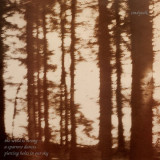
The 3rd album by Scottish industrial enigma Cinder aka Cindytalk began life as the soundtrack to an experimental film by English director Ivan Unnwin entitled Eclipse (The Amateur Enthusiast's Guide To Virus Deployment), and was originally slated for release via Factory Records' video division, Ikon. Inspired heavily by Alan Splet's eerily disembodied sound design in David Lynch's Eraserhead, the collection's 15 pieces seethe between field recordings, wistful piano vignettes, and lurking metallic haze – a hybrid palette Cinder characterized at the time as “ambi-dustrial.” Unfortunately Ikon collapsed on the eve of the project's completion so the film was never distributed, but the Midnight Music imprint repackaged Cindytalk's score as an LP in 1990 under the name The Wind Is Strong... (full title: The Wind Is Strong - A Sparrow Dances, Piercing Holes in Our Sky).
Cindytalk is the mercurial, expressionist outlet of Scottish artist Cinder. An evolution of her early 1980's Edinburgh-based punk band The Freeze, she launched the project upon moving to London, inspired by the crossroads of exploratory UK post-punk and early European industrial. Her work thrives on chance and transformation, collaging elements of noise, balladry, soundtrack, catharsis, and improvisation. After a series of celebrated albums for the Midnight Music label as well as collaborations with This Mortal Coil and Cocteau Twins, Cinder migrated to the United States, becoming involved with various underground techno collectives around the Midwest and West Coast. Subsequent relocations to Hong Kong and Japan further expanded Cindytalk's horizons, resulting in a fruitful partnership with Viennese experimental institution Editions Mego, for whom she released five full-lengths of swooning, granular atmosphere. 2021 finds her as engaged as ever, at the precipice of long-awaited back catalog reissues alongside multiple new works, guided by her lasting love of discovery and deviation: “new pathways always being uncovered.”
The 3rd album by Scottish industrial enigma Cinder aka Cindytalk began life as the soundtrack to an experimental film by English director Ivan Unnwin entitled Eclipse (The Amateur Enthusiast's Guide To Virus Deployment), and was originally slated for release via Factory Records' video division, Ikon. Inspired heavily by Alan Splet's eerily disembodied sound design in David Lynch's Eraserhead, the collection's 15 pieces seethe between field recordings, wistful piano vignettes, and lurking metallic haze – a hybrid palette Cinder characterized at the time as “ambi-dustrial.” Unfortunately Ikon collapsed on the eve of the project's completion so the film was never distributed, but the Midnight Music imprint repackaged Cindytalk's score as an LP in 1990 under the name The Wind Is Strong... (full title: The Wind Is Strong - A Sparrow Dances, Piercing Holes in Our Sky).
Cindytalk is the mercurial, expressionist outlet of Scottish artist Cinder. An evolution of her early 1980's Edinburgh-based punk band The Freeze, she launched the project upon moving to London, inspired by the crossroads of exploratory UK post-punk and early European industrial. Her work thrives on chance and transformation, collaging elements of noise, balladry, soundtrack, catharsis, and improvisation. After a series of celebrated albums for the Midnight Music label as well as collaborations with This Mortal Coil and Cocteau Twins, Cinder migrated to the United States, becoming involved with various underground techno collectives around the Midwest and West Coast. Subsequent relocations to Hong Kong and Japan further expanded Cindytalk's horizons, resulting in a fruitful partnership with Viennese experimental institution Editions Mego, for whom she released five albums of swooning, granular atmosphere. 2021 finds her as engaged as ever, at the precipice of long-awaited back catalog reissues alongside multiple new works, guided by her lasting love of discovery and deviation: “new pathways always being uncovered.”
Across decades of activity Cinder’s body of work has forever followed its own elusive muse but nowhere is this restless spirit more apparent and ambitious than the 4th Cindytalk LP, Wappinschaw. Conceived as “a call to arms” inspired by Scotland and its struggle for independence, the title refers to an archaic Scottish battle inspection during which clan chieftains surveyed their group's weapons to ensure they were combat ready. A mindset of reflective preparation threads throughout the record, manifested in forms both naked and noisy, ancient and anguished.
Opening with an aching solo vocal rendition of the British folk standard “The First Time Ever (I Saw Your Face),” the album then surges into the Cindytalk classic, “A Song Of Changes,” sparkling and spiraling in strange waves of sorrow and joy. From there the mood fragments, tracing asymmetrical paths of feverish dirge, pensive spirituals, noir abstraction, spoken word (landmark Glaswegian writer Alasdair Gray guests on “Wheesht”), bagpipe drone, and apocalyptic post-punk. Given its aggressive eclecticism, it's not surprising that Cinder describes the creation of Wappinschaw as a “precarious” process, composed from “scraps” with abruptly shifting personnel – a situation only compounded by the impending dissolution of their label at the time, Midnight Music.
Cindytalk is the mercurial, expressionist outlet of Scottish artist Cinder. An evolution of her early 1980's Edinburgh-based punk band The Freeze, she launched the project upon moving to London, inspired by the crossroads of exploratory UK post-punk and early European industrial. Her work thrives on chance and transformation, collaging elements of noise, balladry, soundtrack, catharsis, and improvisation. After a series of celebrated albums for the Midnight Music label as well as collaborations with This Mortal Coil and Cocteau Twins, Cinder migrated to the United States, becoming involved with various underground techno collectives around the Midwest and West Coast. Subsequent relocations to Hong Kong and Japan further expanded Cindytalk's horizons, resulting in a fruitful partnership with Viennese experimental institution Editions Mego, for whom she released five albums of swooning, granular atmosphere. 2021 finds her as engaged as ever, at the precipice of long-awaited back catalog reissues alongside multiple new works, guided by her lasting love of discovery and deviation: “new pathways always being uncovered.”
Across decades of activity Cinder’s body of work has forever followed its own elusive muse but nowhere is this restless spirit more apparent and ambitious than the 4th Cindytalk LP, Wappinschaw. Conceived as “a call to arms” inspired by Scotland and its struggle for independence, the title refers to an archaic Scottish battle inspection during which clan chieftains surveyed their group's weapons to ensure they were combat ready. A mindset of reflective preparation threads throughout the record, manifested in forms both naked and noisy, ancient and anguished.
Opening with an aching solo vocal rendition of the British folk standard “The First Time Ever (I Saw Your Face),” the album then surges into the Cindytalk classic, “A Song Of Changes,” sparkling and spiraling in strange waves of sorrow and joy. From there the mood fragments, tracing asymmetrical paths of feverish dirge, pensive spirituals, noir abstraction, spoken word (landmark Glaswegian writer Alasdair Gray guests on “Wheesht”), bagpipe drone, and apocalyptic post-punk. Given its aggressive eclecticism, it's not surprising that Cinder describes the creation of Wappinschaw as a “precarious” process, composed from “scraps” with abruptly shifting personnel – a situation only compounded by the impending dissolution of their label at the time, Midnight Music.
Clear Vinyl
Eugene Synegal's early career as a teenager was the guitarist of Sam & The Soul Machine before moving to Los Angeles to join the group Sage and later in the 1970s recording on Lee Dorsey's Night People and The Neville Brothers records.
These previously unreleased recordings were birthed in the early 1970s, sometime during Eugene's trips back and forth between Los Angeles and New Orleans. A couple years after these recordings were immortalized onto 1/4" reel-to-reel tape an unusual crime scene involving Eugene and his girlfriend reads as if it was a chapter taken directly out of a pulp fiction novel. An Australian socialite named Patrica Galea, remained unsolved for 30 years. The robbers took $400, two diamond rings, a $1,400 cigarette lighter and two mink coats. They failed to collect Galea's $6,402 which was hidden in her freezer. This money was sent from Australia and was being used to fund Eugene's album as well as starting a new music publishing company in Hollywood. This was the life of Eugene. Playboy extraordinaire, jet-setter and guitar chops that would turn the head of Hendrix!! Around 2006 the owner of the West Hollywood apartment expressed a desire to learn more about its history and met with detectives who were unable to locate the file since it was buried in the cold cases section. The files were found, the case was reopened, solved and two men were arrested in 2007.
These recently unearthed 1970s recordings by Eugene are a reflection of his pure soul as well as a blend of psychedelia and funk that the band Sage was experimenting with in Los Angeles during that time period.
From a historical sense, these two recordings are significant because it bridges the historical and influential New Orleans music scene during the early 70's with the psychedelic rock and folk scene that was emerging just walking distance from the West Hollywood apartment that Eugene was living in with Galea during that time.
Eugene's unique guitar style paired with a deep-rooted gospel sensibility is a window into the artistry and songwriting capability of this incredibly talented man.
"Flowers Bloom, Butterflies Come" is the result of a dialog between the stunning Japanese photographer and artist Miho Kajioka and the wonderful UK musicians and composers Ian Hawgood and Craig Tattersall (The Humble Bee), initiated by IIKKI, between August 2019 and January 2021.
Born in the United Kingdom, Ian Hawgood spent most of his adult life living in Japan, Italy and Poland. Currently he calls Peacehaven (on the south coast, near Brighton) his home. Since 2009, he’s well-known with his work as the curator of the Home Normal label. He makes music using an array of reel-to-reel and tape machines in his studio by the sea, where he also master works for many labels and artists alike. You could often catch him on the coast with his faithful Nagra recorder, hydrophone and field microphones. These days his focus of music is on decayed ambient works using old synths and reels mostly, alongside his childhood piano. (site)
Craig Tattersall is a former member of The Remote Viewer and Famous Boyfriend bandmate Andrew Johnson. Tattersall's music can be found these days more often under his alias The Humble Bee; as a founder member of The Boats; and in his collaborative works with the likes of Bill Seaman in The Seaman And The Tattered Sail. He has run the wonderful label Cotton Goods from 2008 to 2015 and since 2009 he has recorded 12 albums on his moniker The Humble Bee.
Miho Kajioka (b. 1973, Japan, lives in Kyoto) is an artist and a photographer since 2011. Kajioka’s work has been exhibited in Spain, Italy, France, the Netherlands, the USA, Germany, Belgium, Portugal and the United Kingdom. Kajioka’s latest book ‘so it goes’ won Prix Nadar in October 2019. "Kajioka's artistic practice is in principal snapshot based; she carries her camera everywhere and intuitively takes photos of whatever she finds interesting. These collected images serve as the basic material for her work in the darkroom where she creates her poetic and suggestive image-objects through elaborate, alternative printing methods. Kajioka regards herself more as a painter/drawer than as a photographer. She feels that photographic techniques help her to create works that fully express her artistic vision. Her images evoke a sense of mystery in her constant search for beauty. The focused, creative and respectful way in which she uses the medium of photography to creating her works seems to fit in the tradition of Japanese art that is characterized by the specifically Japanese sense of beauty, wabi sabi. (…) According to her, photography captures moments and freezes them; printing impressions is like playing with the sense of time and getting lost in its timeline." (Ibasho Gallery)
"Flowers Bloom, Butterflies Come" is the result of a dialog between the stunning Japanese photographer and artist Miho Kajioka and the wonderful UK musicians and composers Ian Hawgood and Craig Tattersall (The Humble Bee), initiated by IIKKI, between August 2019 and January 2021.
Born in the United Kingdom, Ian Hawgood spent most of his adult life living in Japan, Italy and Poland. Currently he calls Peacehaven (on the south coast, near Brighton) his home. Since 2009, he’s well-known with his work as the curator of the Home Normal label. He makes music using an array of reel-to-reel and tape machines in his studio by the sea, where he also master works for many labels and artists alike. You could often catch him on the coast with his faithful Nagra recorder, hydrophone and field microphones. These days his focus of music is on decayed ambient works using old synths and reels mostly, alongside his childhood piano. (site)
Craig Tattersall is a former member of The Remote Viewer and Famous Boyfriend bandmate Andrew Johnson. Tattersall's music can be found these days more often under his alias The Humble Bee; as a founder member of The Boats; and in his collaborative works with the likes of Bill Seaman in The Seaman And The Tattered Sail. He has run the wonderful label Cotton Goods from 2008 to 2015 and since 2009 he has recorded 12 albums on his moniker The Humble Bee.
Miho Kajioka (b. 1973, Japan, lives in Kyoto) is an artist and a photographer since 2011. Kajioka’s work has been exhibited in Spain, Italy, France, the Netherlands, the USA, Germany, Belgium, Portugal and the United Kingdom. Kajioka’s latest book ‘so it goes’ won Prix Nadar in October 2019. "Kajioka's artistic practice is in principal snapshot based; she carries her camera everywhere and intuitively takes photos of whatever she finds interesting. These collected images serve as the basic material for her work in the darkroom where she creates her poetic and suggestive image-objects through elaborate, alternative printing methods. Kajioka regards herself more as a painter/drawer than as a photographer. She feels that photographic techniques help her to create works that fully express her artistic vision. Her images evoke a sense of mystery in her constant search for beauty. The focused, creative and respectful way in which she uses the medium of photography to creating her works seems to fit in the tradition of Japanese art that is characterized by the specifically Japanese sense of beauty, wabi sabi. (…) According to her, photography captures moments and freezes them; printing impressions is like playing with the sense of time and getting lost in its timeline." (Ibasho Gallery)
When a synth master like Steve Moore joins forces with the legendary KPM, magic must materialise. And so it does with Analog Sensitivity: cinematic, enigmatic synthscapes to both haunt and heal.
New York-based multi-instrumentalist/producer/film composer Steve Moore is probably best known for his synthesizer and bass guitar work as Zombi, together with Anthony Paterra. But he is also part of Miracle and Titan as well as being a prolific solo artist releasing music as Gianni Rossi, Lovelock and under his own name. Steve’s music has found a home across labels like Future Times, Mexican Summer, LIES, Static Caravan, Relapse, Kompakt, Spectrum Spools, Death Waltz and Ghost Box, and much of his recent work has been scoring films like The Guest and Cub. Prolific indeed.
The story of Analog Sensitivity starts with those soundtracks, or more specifically the time in between them. Rather than being commissioned by KPM, this LP comes from music Steve was recording sporadically and tinkering with for over three years during the downtime between his film projects. There were no ideas about what it was nor a plan for how it would be released, or even if it was going to be released at all.
However, after Jon Tye invited him to play on the Ocean Moon project for KPM Steve realised that the hallowed library label might be the perfect home for what he had been working on. The people at KPM agreed. Finishing production in late 2019 in Albany, NY, he came up with the track sequencing and suddenly, he had an album: Analog Sensitivity.
The LP opens with the dystopian electronic minimalism of “Eldborg”, its dark synth bass unfolding to ominous synth pads, shadowy sustains and glistening arpeggios. “At The Edge Of Perception” brings an unsettling retro-future of edgy analogue leads and desolate FX. The sound of a robotic core tears through the sparse textures of the enigmatic “Rose Of Charon”. A chilling breeze blows through a persistent, hypnotic synth sequence on “Time Freeze”. Title track “Analog Sensitivity” is a sparkling transcendental synthscape of melody, drones and celestial synth. The brooding “Behind The Waterfall” winds down the first side, building subtle strings and a desolate sound beneath its haunting organ.
“Mirror Mountain” ushers in side two, its woozy bass and arpeggio unfolding to envelop the muffled, muted echos of its organic leads. "Syzygy" emerges you in bubbling sequences, airiness and ambient electric guitar tones. It’s followed by the cinematic minimalism of “Pentagram Of Venus” and its trickling FX. The wind swirls through the otherworldly “Of Dust Thou Art” kicking up clouds of unsettling, plodding synth sequences leading to the uneasy atmosphere of “Message From The Beast” which builds to the echo of the last refrain of some choral incantation. Closing track “Urge Surfing” is as cool a climax as you’d hope from something so brilliantly titled, riding along hushed waves of brooding electronics.
With the clue right there in the title, Analog Sensitivity is built up from the quieter aspects of the sound Steve has been exploring and evolving for over 20 years. It’s a layering of ambivalently dense and airy, muffled and echoing sounds from his collection of synthesizers and other electronic music hardware. And whilst some of Steve’s other work uses this vintage equipment to conjure the past, that wasn’t his intention here. Steve explains “I wanted Analog Sensitivity to feel atemporal, as though it could have been released any time over the past 30 or 40 years. While not specifically in the spirit of any particular album, I’m really into old KPM artists like Alan Hawkshaw and Brian Bennett”.
It's tempting to think that you have all the answers, screaming your gospel every day with certainty and anger. Life isn't quite like that though, and the debut album from London four-piece TV Priest instead embraces the beautiful and terrifying unknowns that exist personally, politically, and culturally. Posing as many questions as it answers, Uppers is a thunderous opening statement that continues the UK's recent resurgence of grubby, furious post-punk music. It says something very different though - something completely its own. Four childhood friends who made music together as teenagers before drifting apart and then, somewhat inevitably, back together late in 2019, TV Priest was borne out of a need to create together once again, and brings with it a wealth of experience and exhaustion picked up in the band's years of pursuing 'real life' and 'real jobs', something those teenagers never had. Last November, the band - vocalist Charlie Drinkwater, guitarist Alex Sprogis, bass and keys player Nic Smith and drummer Ed Kelland - played their first show, to a smattering of friends in what they describe as an "industrial freezer" in the warehouse district of Hackney Wick. "It was like the pub in Peep Show with a washing machine just in the middle_" Charlie laughs, remembering how they dodged Star Wars memorabilia and deep fat fryers while making their first statement as a band. Unsurprisingly, there isn't a precedent for launching a band during a global pandemic, but among the general sense of anxiety and unease pervading everything at the moment, TV Priest's entrance in April with the release of debut single "House Of York" - a searing examination of the Monarchy set over wiry post-punk and fronted by a Mark E. Smith-like mouthpiece - served as a breath of fresh air among the chaos, its anger and confusion making some kind of twisted sense to the nation's fried brains. It's the same continued global sense of anxiety that will greet the release of Uppers, and it's an album that has a lot to say right now. Taking musical cues from post-punk stalwarts The Fall and Protomartyr as well as the mechanical, pulsating grooves of krautrock, it's a record that moves with an untamed energy. Over the top of this rumbling musical machine is vocalist Charlie, a cuttingly funny, angry, confused, real frontman. Uppers sees TV Priest explicitly and outwardly trying to avoid narrowmindedness. Uppers sees TV Priest taking musical and personal risks, reaching outside of themselves and trying to make sense of this increasingly messy world. It's a band and a record that couldn't arrive at a more perfect time.
-LTD. LOSER EDITION-
This LIMITED LOSER INDIES edition is on GREY MARBLED Vinyl! It's tempting to think that you have all the answers, screaming your gospel every day with certainty and anger. Life isn't quite like that though, and the debut album from London four-piece TV Priest instead embraces the beautiful and terrifying unknowns that exist personally, politically, and culturally. Posing as many questions as it answers, Uppers is a thunderous opening statement that continues the UK's recent resurgence of grubby, furious post-punk music. It says something very different though - something completely its own. Four childhood friends who made music together as teenagers before drifting apart and then, somewhat inevitably, back together late in 2019, TV Priest was borne out of a need to create together once again, and brings with it a wealth of experience and exhaustion picked up in the band's years of pursuing 'real life' and 'real jobs', something those teenagers never had. Last November, the band - vocalist Charlie Drinkwater, guitarist Alex Sprogis, bass and keys player Nic Smith and drummer Ed Kelland - played their first show, to a smattering of friends in what they describe as an "industrial freezer" in the warehouse district of Hackney Wick. "It was like the pub in Peep Show with a washing machine just in the middle_" Charlie laughs, remembering how they dodged Star Wars memorabilia and deep fat fryers while making their first statement as a band. Unsurprisingly, there isn't a precedent for launching a band during a global pandemic, but among the general sense of anxiety and unease pervading everything at the moment, TV Priest's entrance in April with the release of debut single "House Of York" - a searing examination of the Monarchy set over wiry post-punk and fronted by a Mark E. Smith-like mouthpiece - served as a breath of fresh air among the chaos, its anger and confusion making some kind of twisted sense to the nation's fried brains. It's the same continued global sense of anxiety that will greet the release of Uppers, and it's an album that has a lot to say right now. Taking musical cues from post-punk stalwarts The Fall and Protomartyr as well as the mechanical, pulsating grooves of krautrock, it's a record that moves with an untamed energy. Over the top of this rumbling musical machine is vocalist Charlie, a cuttingly funny, angry, confused, real frontman. Uppers sees TV Priest explicitly and outwardly trying to avoid narrowmindedness. Uppers sees TV Priest taking musical and personal risks, reaching outside of themselves and trying to make sense of this increasingly messy world. It's a band and a record that couldn't arrive at a more perfect time.
This cassette collects some of these stills, or better said freeze frames. Freeze frames that become almost landscapes that one can enter or not, listen closely to or use as mere background ambience. Wilson went in and untied the knot, yet while investigating the situation, posing more questions. This is as open-ended a release can get, so captiously simple.I met Andrew Wilson, (aka Berko, Art Wilson, Andras), a few months ago in Tokyo where we were both to perform on a sort of Balearic Ambient variety show in the heart of Shibuya. At some point Andrew was telling me about his interest in Youtube videos of truck accidents, animals attacking people and bloopers. With creating one-shot samples of these sort of “popular fringe finds” he started creating long-form drones of harmonic beauty, without being overtly and subjectively emotional. Wilson presented some of these pieces on said night in Tokyo, in a dandyesque manner all dressed in white, sitting behind a small restaurant table. "Table for one, please … "
Ein einzigartiger Künstler an einem legendären Ort: Tripping with Nils Frahm dokumentiert seine transzendentalen Liveshows in der geschichtsträchtigen Kulisse des Funkhaus Berlin. Gleich vier Shows im Funkhaus Berlin gaben den Auftakt zu Nils Frahms ambitionierter All Melody Tournee Anfang 2018, die sein gleichnamiges und allseits gepriesenes Studioalbum in den nächsten zwei Jahren auf die Bühnen dieser Welt brachte. In den folgenden über 180 ausverkauften Shows war der Ausnahmekünstler unter anderem im Sydney Opera House, in der Disney Hall in Los Angeles, im Barbican in London, in der Elbphilharmonie sowie auf zahlreichen großen Festivalbühnen zu Gast. Dennoch blieben Frahm die Konzerte im ehrwürdigen und für seine großartige Akustik gerühmten Saal 1 im Funkhaus Berlin in,mm besonderer Erinnerung.
Als Frahm ein knappes Jahr später zu vier weiteren Konzerten im Funkhaus einlud, waren die Tickets binnen Stunden vergriffen. Frahms langjähriger Freund und Filmemacher Benoit Toulemonde, der unter bereits für die Film-Konzertserie La Blogothèque mit zahlreichen weltbekannten Künstler-innen und Bands zusammenarbeitete, hielt die Abende an diesem geschichtsträchtigen Ort mit einem siebenköpfigen Kamera-Team fest.
Tripping with Nils Frahm ist ein Dokument Frahms vielfach gepriesener Fähigkeiten als Komponist und passionierter Live- Musiker sowie der besonderen Stimmung und Atmosphäre seiner legendären Funkhaus-Shows. Ein außergewöhnlicher musikalischer Trip — exklusiv und intim, roh und direkt.
"It was about time to document my concerts in picture and sound, trying to freeze a moment of this period where my team and I were nomads, using any method of travel to play yet another show the next day. Maybe tonight is the night where everything works out perfectly and things fall into place? Normally things go wrong with concerts, but by combining our favorite moments of four performances, we were able to achieve what I was trying to do in
these two years of touring: getting it right! When you hear the applause on the end of the film you should know that I was smiling happily, being a tad proud and feeling blessed to share these moments with you.
Much love, Nils"
The Master Scratch Band was first break-dance / hip-hop / electro funk band in Yugoslavia in 1984. The band members were Zoran Vracevic, Zoran Jevtic and Milutin Stoisiljevic, previously known as Data and Sizike. Jugoton, the biggest label in Yugoslavia, published Data 7'' and MSB's 'Degout' 12'' with limited edition cassette containing two bonus tracks. Impossible to find on the collectors market, Fox & His Friends team in collaboration with Jugoton / Croatia Records is releasing a full, complete version of the rare "The Breakwar" tape, with tracks "Tonight" and "Pocket" never pressed on vinyl. All tracks are sourced from original studio tapes. With the kind help of Zoran Vracevic on credit list and liner notes, this is now the ultimate Master Scratch Band album, released originally in a year 1984 when break-dance was in the peak of its popularity in Yugoslavia. While Data was synthpop, Sizike mellow synth-disco recorded in private studio, this release is pure breaks and hip-hop electro, done old-school way in one of the best studios in Yugoslavia, Enco Lesic's 'Druga maca' in Belgrade. MSB used impressive electronic gear and were helped by huge list of famous musicians and guests: Duca Markovic from hit-show 'Hit meseca' (Yugoslavian Top Of The Pops); Japanac on bass, Max Vincent of Max & Intro on synths, Dudu Vudu from Du-Du-A, Goranka Matic as photographer and many more. MSB sampling technique and choices are unique: from obscure industrial records to freestyle; from found-sounds to cut-up breaks and even real prank-calls. This is document of time that still sounds fresh and needs to find it's new, young audience of hip-hop history researchers, break-dancers, b-boys, b-girls and DJ's. When you know that it's produced in 1984 Yugoslavia, far away, but actually, so close to its USA & EU brothers and sisters, it's even more mind-boggling. Thanks to Fox & His Friends and Jugoton CR collaboration, this gem is waiting for your freezes, footwork and electric boogie moves. ----- Equipment used: Commodore 64 Computer, Roland MC-4B Microcomposer, Prophet Pro-One, RSF Cobol II Expander, Korg Mono-Poly Synthesizer, PPG Wave 2.3 Synthesizer, PPG Waveterm Computer, Boss DE-200 Digital Delay, Drumtraks Digital Drum Machine, Roland TR-808 Rhythm Composer, Electro Harmonix Vocoder, Linn Drum MKII, Juno 60, SH-101, SVC-350, VP-330 Vocoders, Polysix & MS10, Simmons drum module.
The album 'Balance' by Frank Bretschneider & Taylor Deupree was originally released in 2002 by Mille Plateaux on CD only. The 9 tracks on 'Balance' are a perfect example for the aesthetics to arise within the Click & Cuts scene and (ambient-)glitch music movement of the late 90s and early 2000s.
The two masters of microscopic sounds and sine wave/white noise-based music constructed these seamlessly mixed pieces around rhythms and melodies, which grants the album plenty of dynamics. The wide variety of carefully chosen ambient sounds throughout the whole work endows 'Balance' warmth and intimacy.
The recordings are now available for the first time on vinyl within the KeplarRev series, presented in a new updated artwork based on the original layout with photographs by Taylor Deupree.
From the original press release in 2002:
"Balance is the first and so far only collaborative release from Frank Bretschneider (Berlin) and Taylor Deupree (Brooklyn). Both of these artists are no strangers to the ears of many; Taylor Deupree is one of New York's most vibrant electronic producers. From his early techno days as a member of Prototype 909 to his current status as one of N. America's key "microscopic" electronic composers and to add runs the prestigious 12K and LINE labels. Frank Bretschneider is a key member and founder of the prestigious Raster Music label, he has critically acclaimed releases under the names Komet and Produkt. It's easy to say that Frank Bretschneider has created some of the most influential spatial electronics of the late 90's.
Utilizing both artists keen ears for carefully crafted sounds, Balance blends the clean sine wave / white noise of Bretschneider with the defined grit of Deupree's granular synthesis. Realized entirely on Nord Modular synthesizers, Bretschneider and Deupree exchanged patch files through email and began constructing foundation loops. Bretschneider then created initial mixes of 9 songs and then sent them to Deupree who remixed and re-processed them. This digital exchange allowed for them to work using their own methods and aesthetic while combining the similarities of each others interests. The result is a looping and churning rhythmic work that is both synthetic, warm, dubby and tonally challenging. Thus Balance creates an engaging balance between the 2 artists aesthetics."
Denise Rabe has quickly attracted attention with her distinctive approach to techno: powerful percussive force, detailed sound design, and slowly modulating compositions crafted to induce dancefloor hypnosis. Following acclaimed releases on Arts Collective, Stroboscopic Artefacts, and her own Rabe label, Denise joins Blacklabel Distillery with a new 12” that digs deep into the hypnotic dimensions of her sound. “Brilliance” is a shimmering monolith, serpentine sounds woven through head-nodding beats. “Outta Body” delivers on its promise of transcendence with slowly evolving drones unfolding over a driving rhythm. Perc brings things back down to earth with a relentless remix that conjures images of malfunctioning, mutating machinery, while Sverca freezes “Brilliance” into suspended animation, captivating with just a few layers of sound. The digital tracks highlight Rabe’s exceptional compositional skills, exploring subtly shifting alien soundscapes on “Spacetrouble” and mesmerizing with the massive cosmic sounds of “Fully In”. Track list 12″ A – Outa Body AA – Brilliance B – Outa Body (Perc remix) BB – Brilliance (Svreca remix)
French synth-pop talent Lucien & The Kimono Orchestra unveils his new solo piano album, a journey into cinematic soundscapes
Alone at the piano, Lucien takes us on a very personal album in a deep and quiet reverie. We spend a soft winter morning in his company, reminiscing about tender childhood memories.
Between previously unreleased tracks and revisited Kimono Orchestra pieces, "Piano Matinée" concludes a trilogy of recordings which have barely been released, while paving the way for a wider future. Universal, sensitive, cinematographic, the piano language spoken here by Lucien opens us to his musical world in a light that is both more authentic and accessible.
The album also tells us a personal story. That of a grandfather - an exceptional pianist but forced to give up his career when the Second World War broke out - who passed on to him a taste for music in his early childhood, before passing away.
Many years later, Lucien came across old cassette recordings of his eldest son, soon afterwards having a disturbing dream in which he swore he had had a dialogue with him and decided to go his own way. The self-taught musician spent a whole year honing his piano skills before deciding to freeze his performance in the summer of 2019 at the legendary Steinway at the Studios Saint-Germain.
Drawing freely on all his influences - jazz, funk, classical, cinema - Lucien's "Piano Matinée" is a special object, as intimate as it is melodious.
Bram De Looze is a Belgian pianist and composer whose distinct musical vision has found its way through both solo projects and collaborations. His unique technical skill and musical maturity have earned him considerable critical acclaim back home as his work spotlights his far-ranging interests - from traditional classical piano music, to solo improvisations that have often been compared to Keith Jarrett and Jason Moran. On the 21st February 2020, Sdban Ultra will release his highly anticipated new solo album, 'Colour Talk'.
De Looze made his entrance onto the national jazz scene with LABtrio, formed in 2007 with Anneleen Boehme and Lander Gyselinck, and he immediately impressed, flirting with urban jazz, electronics and hip hop.
After a period of studying abroad at the New School for Jazz and Contemporary Music in New York, where he studied with Uri Caine and Marc Copland, in 2014, De Looze launched the international septet, Septych, that once again stressed his affinity for jazz, classical music and improvisation. With diverse and astounding improvisors like Daniel Levin, Lester St-Louis, Robin Verheyen, Gebhard Ullman, Bo Van Der Werf and Flin Van Hemmen, it was the start of an explorative musical journey.
Over the past few years, De Looze could frequently be heard with kindred spirits like Stephane Galland, Dre Hocevar and Antoine Pierre but it was a visit to the historical collection of pianofortes of Chris Maene that inspired De Looze to release his first solo album 'Piano e Forte' (2017), and it received critical acclaim for its creativity, spontaneity and passion. He would later garner further acclaim working alongside fellow Belgian Robin Verheyen and American rhythm painter Joey Baron with whom he recorded 'MixMonk' (2019), a tribute to the legendary jazz pianist Thelonius Monk.
Bram De Looze's solo career took off in an unexpected way with 'Piano e Forte', a project for which he approached historical instruments from a contemporary perspective. The switch to the Chris Maene Straight Strung Grand Piano for 'Switch The Stream' (2018) indicated a renewed search for movement, evolution and introspection. His latest solo project 'Colour Talk', continues this trajectory with another revolutionary piano model, designed by lauded architect Rafael Vinoly, and a continued attempt to renew from within.
On 'Colour Talk', what you hear is a musician who has freed himself from stylistic constraints and limitations. While still rooted in jazz, classical music and free improvisation have found a new balance, a coexistence that enables the pianist to express himself with a new vigour. Switching between shorter pieces that feel like curious, unresolved puzzles and more extended explorations, 'Colour Talk' is once again an ode to (re)invention in the grey zone were the classical idiom and improvisatory urges meet, with the 13-minute tour-de-force of 'Hypnosis' as one of several undisputed highlights.
If you asked De Looze about his current position as an artist, he would probably tell you that it's all about forward movement and the need to keep evolving, about a trajectory as work-in-progress. However, if you consider 'Colour Talk' as a freeze frame of where De Looze is at, it is hard not to consider it a highlight in a career that should have some more surprises in store.
Please find enclosed one 'Deluxe' stereophonic gramophone record from Concept City, containing thirteen recordings of musics entirely produced upon 4-track portastudio for your pleasure and discourse - the sole work of Mr Robert Grant of this parish.
So states the photocopy insert from the 1985 November LP on Cordelia Records. Home to R. Stevie Moore, Rimarimba recently reissued by Freedom To Spend - and label owner Alan Jenkin's The Deep Freeze Mice, Cordelia was home to a menagerie of sound collage plucked from the ether.
Included is the only vinyl release from Concept City, spreading across 13 instrumental tracks of samples and noise. The Welsh choir and robovox meets hypnotic bass of Open The Network glides to the acoustics of Jayne Andrews and Filament, before Steam amasses TV ad cassette archives. As Etruria and Lapse Wine's Durutti meets reel-to-reel to the cold wave of War, Children and wasp synth of Helsinki, Grant slowly unfolds a masterpiece.
Looped drum samples, multiple layered to tape, sped up and slowed down for phasing, the title track is a pinnacle of 80s DiY genius. 'Crossroads' multi-sampling Meg leads to the exotica 'muzak' closings of Penetration and Friends. With just 5 albums over 40 years the music of Mr Concept can be a discovery and cherished.
Continuing the series of single releases from Carlton Jumel Smith's album "1634 Lexington Ave." is a beauty of a track in the form of "Ain't That Love". In soul music guitar doesn't always take lead the way it does here played by Seppo Salmi of Timmion house band Cold Diamond & Mink. You might know those tracks like Darondo's "Didn't I" or "Oh Love" by Iron Knowledge that begin with a guitar line that just freezes the heart.
And there's of course one soulful guitar man we can't leave out here. If Carlton ever put his Bobby Womack to the front, it might be the case with this mid-tempo shuffler. Carlton always sings like he's squeezing the last drops of emotion from the human race, but in this number he's really aiming for the cherry. Cold Diamond & Mink supply the right ingredients for the mix with a strong beat and mellowed out horn melodies.
If there's one single you want to pick from Carlton's album for those Autumn Sundays looking through the window or walking in the park, make it this one.
2x12"
A stunningly accomplished work, ‘Deep Rave Memory’ is an insight into Fearless’ worlds – both metaphysical and geographical. Pulsating in unison with the heartbeat of a modern metropolis, it was recorded at the Metal Box’ – his studio located on the peninsula of land where the River Lea meets the Thames.
The haunting and wistful blue ambient ‘Vision of You’ leads into the bracingly chilly ‘New Perspective’, which evokes a heavy rush where perceptions are blurred and vision is freeze framed, via elements of techno-soul, Sheffield Bleep and Mika Vainio.
A snarling beast of a track, the relentless machine funk of ‘Devil on Horseback’ perfects the pure cathartic release of dark ‘n’ hot body music, whilst ‘Acid Angels’ is a throbbing low-fi 303 requiem, which encapsulates that perfect dancefloor moment, when the first light breaks through the shutters.
A future classic and the album’s modus operandi, title track ‘Deep Rave Memory’’s discordant filter passes sweep across a hypnotic melody, communicating a deep sense of warm nostalgia and taking you on an epic journey – stretching out a single riff over 12 minutes – akin to the krautrock greats of which Fearless is so fond.
‘Atlas of Insanity’ is big room techno with pounding kicks, death-whip metallic snares and head spinning, spiralling synth lines that drill into your core. This is raw, impulsive and frantic music that sizzles with electric effervescence.
The Germanic kosmische idyll of ‘Driving with Roedelius’ is a homage to one of Richards’ heroes – Hans-Joachim Roedelius – and was inspired by his experience playing a set consisting solely of the electronic pioneer’s music, at a festival celebrating his life and career.
On the album's closer, Fearless recounts, “‘Broken Beauty’ is something I’ve always strived for in my art. It’s inspired by Robert Frank, William Eggleston and the way they could take the most inane object a turn it into something of beauty. It’s equally schooled by the aggressive simplicity of King Tubby’s dubbing and the transcendence of Joy Division’s ‘Decades’. The sparse allure of the best dub and techno is something I’m always striving for; being able to conjure emotion with the fewest possible elements; to not fix what’s broken, but to make it shine.
Limited to 500 copies.
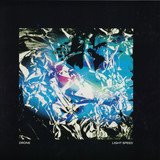
Bristol-based producer Drone finally makes his bow for Coyote Records with the release of new four-track EP, 'Light Speed'. Written over the first six months of 2018, 'Light Speed' forms Drone's most accomplished and absorbing release to date, bringing new textures, layers and depth to his music and to the club - a space where his beats have been a mainstay in the sets of producers like Kahn & Neek since debuting on Hear Other Sounds in early 2017. A regular at Coyote's Bristol parties over the course of 2016 and 2017 and inspired by the clinical, freeze-dried grime of label contemporaries like Last Japan, as well as Sector 7 bosses Boofy and Lemzly Dale, Drone has probed, honed and developed his sound to marry the raw impact of his early beats with detailed, widescreen scope. There are nods to the soundsystem culture of his new home city of Bristol on the coarse textures and booming, dubby low-end of 'Narroways' for example, while title-track 'Light Speed' captures the icy, shimmering Coyote sound aesthetic in full view. B-side tracks 'Probiscus' and 'Fangz' continue this theme apace, bleeding into one another like patchwork to showcase a grime sound moulded by the club, but finessed away from it. Born in Hastings, Drone has spent the last three years studying Music Production in Bristol, during which time he's guested on Rinse FM, released on London's Hear Other Sounds and Boofy and Lemzly Dale's influential Sector 7 imprint, as well as self-releasing a limited edition USB - comprised of a slew of unreleased beats - in February 2018.
Freedom To Spend's first catalog wide deep dive into an artist's career focuses on four albums from Rimarimba, beginning with 1983's Below The Horizon, followed by 1984's On Dry Land, 1985's In The Woods, and finally, the once-imagined, now-realized assembly of 1988's Light Metabolism Number Prague.
Somewhere out there around the turn of the 1980s, to the left of the post-punk crew, to the right of the minimalists, and surfacing with a friendlier face than the dour industrialists of the time - there existed, seemingly unbidden, an entire, networked, tape-trading community; a community that crossed continents and oceans, that relied on the postal service to do its bidding; a community full of humble visionaries and lost, misunderstood, or just plain ignored home steeped genius.
Exploring that thicket of weirdness in the UK wild, you'd likely stumble across labels like Cordelia, Hamster, and Unlikely; compilations like the should-be-legendary Obscure Independent Classics series, or the Real Time cassettes; and inexplicable one-offs like The Deep Freeze Mice, Jody & The Creams, R. Stevie Moore, Leven Signs, Jung Analysts, and Rimarimba.
Rimarimba was the project of Robert Cox, based in Felixstowe, on the seaside in Suffolk, UK. Rimarimba was not Cox's first entry into the world of recorded music, but was the first time he explored, most perceptively, the parameters of a particular musical mode: one where minimalism is removed from its 'high-art' mantle, Cox inveigling its practices in amongst the doit-yourself creativity of a burgeoning and beguiling underground, letting the music breathe - and most importantly, letting it play, gifting it with imagination.
The first in the Rimarimba series, 1983's Below The Horizon, feature Cox in exploratory mode, figuring out exactly how to make his music. There's a pleasure in hearing how he feels out the parameters of his aesthetic, here - there's a boxy minimalism, slightly clunky and charming with it, that reflects the home-spun, improvisatory tenor of the compositions. It's ambitious music, though, wanting to do the most and the best it can with its limited resources. Cox himself admits to not being 'pre-wired' to making this music, but that only makes it more compelling: 'Were I to be properly musical, it wouldn't actually work as well in some ways; it'd be just another album of contemporary clattery music.'
On October 5, Freedom To Spend will offer Below the Horizon in a one-time edition of 750 copies, followed On Dry Land and In The Woods on January 8, 2019 and February 22, respectively. Each album features artwork reinterpreted from its original edition by Will Work For Good, and accompanying abstracts by Jon Dale.
* Released for the first time on vinyl
* The ultimate collection of rare early materials by this electronic music pioneer
* Comes as a deluxe double LP set with insert and extensive liner notes . Limited black vinyl pressing (700 copies) with obi strip.
Klaus Schulze is a German electronic music pioneer, composer and musician that needs very little introduction. In the late sixties & early seventies he was a member of several iconic bands such as 'Tangerine Dream', 'The Cosmic Jokers' & 'Ash Ra Tempel' before launching a solo career consisting of more than 60 albums released across five decades. Collaborations were numerous and highlights include working with Steve Winwood, Brian Eno & Alphaville... just to name a few.
Klaus Schulze's proto moog-synthesizer work is regarded as a milestone in electronic music & during the decades he released landmark albums in genres catalogued as 'Ambient', 'Electronic', 'New Age', 'Berlin School', 'Experimental', 'Kosmische Musik' & 'Krautrock'. Mr. Schulze had a more organic sound than most electronic artists of the time, often he would throw in decidedly non-electronic sounds such as acoustic guitar and a male operatic voice. Schulze is also known for developing a Minimoog technique that sounds uncannily like an electric guitar, which is quite impressive in concert.
On occasions he would also compose film scores such as Body Love (1977), Barracuda (1978), Next of Kin (1982), & Angst (1983). His best known song 'Freeze' has been used in films like Manhunter (1986) and more recently in Sofia Coppola's 'The Bling Ring' from 2013.
In 2009, producer Klaus D. Mueller and Schulze began releasing La Vie Electronique ( The Electronic Life'), a series of sets that collected rare sought-after early works & unreleased tracks put in chronological sequence. These sets contain some of the best music Klaus ever created and are early 70's masterworks that will appeal to both fans and collectors.
Now available for the first time on vinyl, One Way Static Records presents the first volume in our new archival series 'La Vie Electronique'. This volume (1.0) focuses on the years 1968-1971 and is spread over two glorious LP's containing +78 minutes of Klaus Shulze rarities. This deluxe vinyl set also comes with an insert containing extensive liner notes.
TS07 is the 4th EP of the TONE SERIES project and in line with the previous three releases TS08, -09 and -10. However, while MACHINE DREAM freezes you up with its winter grooves whilst on your way to the club, KEEP THE BOMB warms you up as soon as you get inside. Whereas MACHINE DREAM unveals shamanik percussions driving a tribal acid vibe with a big amount of pads that make the track ramping crescendo up, KEEP THE BOMB establishes itself as a major dance floor tune with its killer beast, cruising vibe and staccato voice percussion. With regard to the artwork, as shown on the cover, each track has its own colour. There is neither a A nor a B-side. The same applies to the record vinyl itself. Each track stands on it own. As a result, MACHINE DREAM and KEEP THE BOMB distinguish themselves from each other through their vibes and colours, although they remain in the same spirit. In summary, TONE SERIES brings together the idea of interdependence between music and design: what colour follows on from music and, in return, which musicality comes out of colours.TONE SERIES was born from the collaboration between late Villa's former bouncer (one of the most underground clubs of Berlin) Wolfram, French music producer, live performer and DJ David K, and LumièresLaNuit's co-founder and An der Grenze's founder.
First complete Sonic Youth album is one of Thurston Moore's favorites. Includes live cover of The Stooges' I Wanna Be Your Dog'. Vinyl includes digital download. Originally slated to be a 7' to follow up their self-titled debut, Sonic Youth's Confusion Is Sex blossomed into the band's first album: a brain-bludgeoning, completely fried endeavor of dissonance and disarray, a perfect soundtrack for running from a chain-wielding gang near the SIN Club. This was the sound of 1983 New York City, nothing like the jangly roots of college radio rock starting to formulate in Athens, Georgia. It sounded like no one else on Earth, for that matter. The raw, Wharton Tiers 8-track production is dark, the Kim Gordon- scrawled cover figure art of Thurston Moore is dark, Lee Ranaldo's back cover photo-collage and Catherine Ceresole's crumpled-xeroxed images that adorned the inside are dark. It's an album that moves Sonic Youth forward from their first EP almost by devolving backwards into true ugly, lo-fi primitivity. The bareboned arsenal of junkpile guitars and implementation of alternate tunings was growing, and so were the songs that matched the individual attributes of each instrument: certain ones groan and growl a specific way that the band started to realize itself could become the compositional germ of a song. Herein is the threshold of a new explosion of the band's creativity, replacing the comparatively cleaner buzz of the Sonic Youth EP with guitars that spew fractured, uglier chunks of sound everywhere, held down by menacing minimalist basslines (actually played by Thurston on half of this LP, and for the only time ever on Protect Me You,' Lee) and the brutal-yet-controlled metronomic drumming of Jim Sclavunos, augmented with replacement drummer Bob Bert's notable bashing on Making the Nature Scene' and grotty no-fi live rendition of I Wanna Be Your Dog.' Hearing the crashedwindow intro of Inhuman' and subway-brake screech of The World Looks Red,' you can attest that while Sonic Youth's guitars are not quite yet being utilized in the totally controlled, lyrical fashion seen later on albums like Evol, Daydream Nation et al., they were well aware of the colors and tonalities that were unfolding and the possibilities presented. Also, they were getting a grasp on adding colors to the chaos with tempered, simmering moments like Gordon's Shaking Hell' and Renaldo's chimy, home-taped Lee is Free.' Making the Nature Scene' and The World Looks Red' even toss in glints of hip-hop vocal approach way ahead of its time, albeit through a blender. While its confrontationalism might have put off some critics, time has rewarded Confusion with a truly distinctive air and atmosphere in the Sonic discography, enough to have Moore declare it his fave along with the band's swan-song The Eternal. Brian Turner, WFMU.