Search:french phil

Styles
All
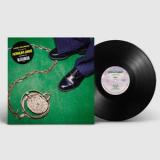
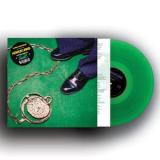
George T (aka George Demure) - The Melodica Sessions

"Back in 2022, Ban Ban Ton Ton raved about George T’s then digital-only release, “Roll On, Kings Cross”. We described it as a “dynamite dose of poetry and digidub.” Likening the prose – which describes a train journey from the coast to the city – to Michael Smith and Joe Duggan, while comparing the production to Dennis Bovell’s remixes of Jarvis Cocker’s “Swanky Modes”, and The Sabres Of Paradise’s “Wilmot”. Melodica-led with a hefty post-punk flavour, its dub, which focuses on manipulating and morphing the bass-line, we called “hollowed out house.”

These tracks have now been pressed to vinyl for the second release on new imprint Noetic Rhythm, where they’re joined by Leonidas’ “Great Northern” mix. Eschewing his usual futuristic ethno techno jacking, here he drops into roots reggae. Creating something more skanking, more stepping. An extended “discomix” showered in filtered, Mutron Bi-phased percussion, ghostly horns and peppered with the odd syndrum pop. Washes of sampled surf appropriately accompanying George informing us that “to the left there’s the sea.”

The 12 also features, “Dr Doctor”, a fresh collaboration with Yas Mine, The singer / guitarist’s French vocals countering George’s Matt Johnson-esque delivery, and a John Barry / “Midnight Cowboy”-like melodica melody serenading the song’s slow, squelchy, electronic skanking. The dub, instead, showcasing Yas’ fine fretwork." BAN BAN TON TON review

-

"These tracks are massive! I love Roll On King's Cross the best" KAY SUZKI (Time Capsule)
"I played the dub (Dub On, King's Cross) at a club in Oslo alongside some Maurizio and it sounded great. Bit of an oddball." Also played on NTS Radio and in Mixmag mix. JONNIE WILKES // OPTIMO
"Really digging Mr Demure when he drops into dubwise" DR ROB // BAN BAN TON TON
"Yes. Nice" NICK THE RECORD
"Awesome" JONNY ROCK
"I really like this EP... Love the Leonidas dub!" CEDRIC WOO (Beauty & The Beat, LDN)
"Love the blend of Augustus P vibes with a post punk dub feel. Bingo!" DICKY TRISCO
"I love it and will be playing" TREVOR FUNG (Ibiza Legend)
"Yes this is dark but kinda friendly.... brilliant...It's like ghost town ...I love Leo's mix" FOR MANKIND (Pikes Ibiza)
"Love the release and LOVE LOVE LOVE Dr Doctor!!!! Psyched to play this one out all weekend." ZILLAS ON ACID // James Weissinger (Philadelphia, US)
"This is amazing. Dub on kings cross is a banger - really love this one" ARVEENE
"Loving the Leonidas dub" ATEMI (Blackbush Orchestra / Abstrack)
+
PREVIOUSLY
"Melodica heaven" JD TWITCH/OPTIMO (RIP)
"I love this" IVAN SMAGGHE
"It's hot!!" JONNY ROCK
+ plays/support from:
DON LETTS (BBC 6Music)
TOM RAVENSCROFT (BBC 6Music)
HARRI (Sub Club)


[f] Roll On, King's Cross [Leonidas' Great Northern Mix] 06:54
[g] Dr Doctor [Instrumental Mix] 03:25

pre-order now09.10.2026

expected to be published on 09.10.2026

14,92 €
HOWLIN' JAWS - LIVING THE DREAM
  • 1: Time Has Come
  • 1: 2Troubled Mind
  • 1: 3Living the Dream
  • 1: 4Miss You
  • 1: 5Up On the Roof
  • 1: 6Do What You Gonna Do
  • 1: 7Maximum Speed
  • 1: 8Terminal Buzz
  • 1: 9Sunset Laundromat
  • 1: 0So Sorry
  • 1: That Kind of Pain
also available

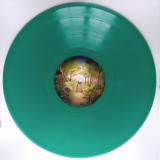
GREEN COLOURED VINYL[27,94 €]


For their eagerly awaited third album, the Parisian trio Howlin' Jaws have teamed up with Swedish producer Kalle Gustafsson Jerneholm (bassist with The Soundtrack Of Our Lives and producer for Foals, The Hives, Jose Gonzalez and Junip) and have taken a major step forward, affirmingthe universal appeal of their explosive yet elegant psych-rock. This new album, Living The Dream, crystallises just about everything we'd ever dreamt of hearing from Howlin' Jaws. Here, more than ever, their dreams take the form of unifying choruses, transforming grief ("Troubled Mind") or separation ("Do What You Gonna Do", "So Sorry") into genuine bursts of hope. Rich in texture (with the Omnichord and Mellotron featuring on the spellbinding "Miss You" and the twilight-tinged "Up On The Roof" respectively) and in wit (led by the biting "Living The Dream"), the eleven-track album is equally diverse in its range of influences. Disco looms large on "Terminal Buzz", country creeps in on "Sunset Laundromat", whilst the fiery "Maximum Speed" is a joyful reminder of King Gizzard & The Lizard Wizard's trippy flights of fancy. The trio are stunning when they're in full swing, but just as impressive when they slow the tempo down. Behind its layers of cosmic keyboards, "Time Has Come" immediately sets the scene and subtly invites introspection. Like an echo at the end of the journey, "That Kind of Pain" rubs shoulders with the stars of the French Touch (the Air school), letting the strings of the Stockholm Philharmonic Orchestra burst forth amidst its melancholic swells. All in all, whether he simmers his albums like an omelette or a beef bourguignon, Howlin' Jaws proves he's never short of imagination.

pre-order now23.10.2026

expected to be published on 23.10.2026

25,00 €
HOWLIN' JAWS - LIVING THE DREAM

For their eagerly awaited third album, the Parisian trio Howlin' Jaws have teamed up with Swedish producer Kalle Gustafsson Jerneholm (bassist with The Soundtrack Of Our Lives and producer for Foals, The Hives, Jose Gonzalez and Junip) and have taken a major step forward, affirmingthe universal appeal of their explosive yet elegant psych-rock. This new album, Living The Dream, crystallises just about everything we'd ever dreamt of hearing from Howlin' Jaws. Here, more than ever, their dreams take the form of unifying choruses, transforming grief ("Troubled Mind") or separation ("Do What You Gonna Do", "So Sorry") into genuine bursts of hope. Rich in texture (with the Omnichord and Mellotron featuring on the spellbinding "Miss You" and the twilight-tinged "Up On The Roof" respectively) and in wit (led by the biting "Living The Dream"), the eleven-track album is equally diverse in its range of influences. Disco looms large on "Terminal Buzz", country creeps in on "Sunset Laundromat", whilst the fiery "Maximum Speed" is a joyful reminder of King Gizzard & The Lizard Wizard's trippy flights of fancy. The trio are stunning when they're in full swing, but just as impressive when they slow the tempo down. Behind its layers of cosmic keyboards, "Time Has Come" immediately sets the scene and subtly invites introspection. Like an echo at the end of the journey, "That Kind of Pain" rubs shoulders with the stars of the French Touch (the Air school), letting the strings of the Stockholm Philharmonic Orchestra burst forth amidst its melancholic swells. All in all, whether he simmers his albums like an omelette or a beef bourguignon, Howlin' Jaws proves he's never short of imagination.

pre-order now23.10.2026

expected to be published on 23.10.2026

27,94 €
Sound Klash - Sound Klash 02

Release 2: French Dub (Sound Klash Mix) / Don't Turn (Sound Klash Horror Edit) Stompa Phunk resident Sound Klash delivers a double-header of raw, analogue, weight-engineered music for heads. This isn’t clean; it's when vintage hardware is pushed to its limits. Built on a foundation of second-hand samplers, overdriven preamps, and tape-spliced editing, these tracks are raw and physical.

The Philosophy: This release is a pure distillation of the ethos that has sustained Stompa Phunk’s dancefloors since 1996. It is uncompromising electronic music built for the heads; rooted in heavy sampledelia, jackin' bodies, Acid energy, and a classic disco-dub mentality.No compromises, no trends. Just Jackinacidiscotech!

pre-order now30.10.2026

expected to be published on 30.10.2026

14,08 €
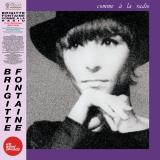
Brigitte Fontaine - Comme à la Radio (2x12")
  • A4: J'ai 26 Ans
  • B1: L'été L'été
  • B2: Encore
  • B3: Léo
  • B4: Les Petits Chevaux
  • B5: Tanka I
  • B6: Lettre À Monsieur Le Chef De Gare De La Tour De Carol
  • C1: Comme À La Radio – English Version
  • C2: J’ai 26 Ans – English Version
  • C3: Le Goudron – 7’’ Single
  • C4: Le Noir C'est Mieux Choisi – 7" Single
  • D1: Les Beaux Animaux – 7’’ Single
  • D2: L'été L'été – Early version
  • D3: L'été L'eté – Instrumental Version
  • D4: Tanka I – Instrumental Version
  • D5: Tanka II – Instrumental Version with Flute
  • D6: Le Brouillard – Instrumental Version
  • D7: Lettre À Monsieur Le Chef De Gare – A Cappella English Version
  • A1: Comme À La Radio
  • A2: Tanka II
  • A3: Le Brouillard
  • LP2: Non LP singles, Alt. and Inst. Versions

Wewantsounds is delighted to reissue Brigitte Fontaine’s landmark 1970 Saravah album Comme à la Radio, recorded with Areski Belkacem (who sadly died last June), Wadada Leo Smith and the Art Ensemble of Chicago. This deluxe 2-LP edition pairs the original album with a second LP of rare bonus material. The release is accompanied by a lavish 24-page bilingual booklet featuring an introduction by journalist Andy Beta, essays by Wadada Leo Smith, Brigitte Fontaine biographer Benoît Mouchart and Benjamin Barouh, plus a recent interview with Brigitte Fontaine and the late Areski Belkacem. The booklet also includes complete lyrics and a selection of rare archival photographs by Jean-Pierre Leloir and Philippe Gras. The reissue is announced alongside its companion, the deluxe 2-LP set Comme à la Radio "On Air", featuring previously unreleased ORTF live recordings and additional studio rarities.


Wewantsounds pursues its Brigitte Fontaine reissue program with Comme à la Radio, originally released in 1970 on Pierre Barouh’s cult Saravah label, fusing Fontaine’s radical lyricism with Areski Belkacem’s minimalist compositions and the fearless improvisations of the Art Ensemble of Chicago + Wadada Leo Smith. Its title track has since become a cult classic in jazz and groove circles.
The album has been newly remastered from the original tapes and is reissued in a deluxe 2-LP edition featuring 11 bonus tracks. The first LP presents the original album in restored clarity, while the second gathers rare non-album singles, English-language takes, alternate versions and previously unreleased instrumental recordings showcasing the Art Ensemble's artistry, including the elusive English version of Comme à la Radio, and a striking early version of L’été L’été.
Also included is a 24-page bilingual booklet featuring rare archival photographs by cult photographers Jean-Pierre Leloir and Philippe Gras, complete lyrics, and contributions by Andy Beta, Wadada Leo Smith, Benoît Mouchart and Benjamin Barouh, plus a recent interview with Brigitte Fontaine and the late Areski Belkacem. The reissue is announced alongside its companion Comme à la Radio "On Air", a deluxe 2-LP set presenting previously unreleased ORTF live recordings and additional studio rarities.
Comme à la Radio stands as a visionary landmark of French music and a defining statement in Brigitte Fontaine’s career. This expanded edition confirms its enduring influence more than fifty years after its original release.

a A1. Comme À La Radio 8.03
b A2. Tanka II 2.04
c A3. Le Brouillard [3.24]
[d] A4. J'ai 26 Ans [3.04]
[e] B1. L'été L'été [3.56]
[f] B2. Encore [1.34]
[g] B3. Léo [3.50]
[h] B4. Les Petits Chevaux [0.43]
[i] B5. Tanka I [1.45]
[j] B6. Lettre À Monsieur Le Chef De Gare De La Tour De Carol [6.04]

[l] C1. Comme À La Radio – English Version [8.08]
[m] C2. J’ai 26 Ans – English Version [3.56]
[n] C3. Le Goudron – 7’’ Single [4.12]
[o] C4. Le Noir C'est Mieux Choisi – 7" Single [5.03]
[p] D1. Les Beaux Animaux – 7’’ Single [3.16]
[q] D2. L'été L'été – Early version [4.38]
[r] D3. L'été L'eté – Instrumental Version [4.23]
[s] D4. Tanka I – Instrumental Version [1.47]
[t] D5. Tanka II – Instrumental Version with Flute [1.40]
[u] D6. Le Brouillard – Instrumental Version [3.57]
[v] D7. Lettre À Monsieur Le Chef De Gare – A Cappella English Version [2.46]

[a] A1. Comme À La Radio [8.03]
[b] A2. Tanka II [2.04]
[c] A3. Le Brouillard [3.24]
[d] A4. J'ai 26 Ans [3.04]
[e] B1. L'été L'été [3.56]
[f] B2. Encore [1.34]
[g] B3. Léo [3.50]
[h] B4. Les Petits Chevaux [0.43]
[i] B5. Tanka I [1.45]
[j] B6. Lettre À Monsieur Le Chef De Gare De La Tour De Carol [6.04]

[l] C1. Comme À La Radio – English Version [8.08]
[m] C2. J’ai 26 Ans – English Version [3.56]
[n] C3. Le Goudron – 7’’ Single [4.12]
[o] C4. Le Noir C'est Mieux Choisi – 7" Single [5.03]
[p] D1. Les Beaux Animaux – 7’’ Single [3.16]
[q] D2. L'été L'été – Early version [4.38]
[r] D3. L'été L'eté – Instrumental Version [4.23]
[s] D4. Tanka I – Instrumental Version [1.47]
[t] D5. Tanka II – Instrumental Version with Flute [1.40]
[u] D6. Le Brouillard – Instrumental Version [3.57]
[v] D7. Lettre À Monsieur Le Chef De Gare – A Cappella English Version [2.46]

[a] A1. Comme À La Radio [8.03]
[b] A2. Tanka II [2.04]
[c] A3. Le Brouillard [3.24]
[d] A4. J'ai 26 Ans [3.04]
[e] B1. L'été L'été [3.56]
[f] B2. Encore [1.34]
[g] B3. Léo [3.50]
[h] B4. Les Petits Chevaux [0.43]
[i] B5. Tanka I [1.45]
[j] B6. Lettre À Monsieur Le Chef De Gare De La Tour De Carol [6.04]

[l] C1. Comme À La Radio – English Version [8.08]
[m] C2. J’ai 26 Ans – English Version [3.56]
[n] C3. Le Goudron – 7’’ Single [4.12]
[o] C4. Le Noir C'est Mieux Choisi – 7" Single [5.03]
[p] D1. Les Beaux Animaux – 7’’ Single [3.16]
[q] D2. L'été L'été – Early version [4.38]
[r] D3. L'été L'eté – Instrumental Version [4.23]
[s] D4. Tanka I – Instrumental Version [1.47]
[t] D5. Tanka II – Instrumental Version with Flute [1.40]
[u] D6. Le Brouillard – Instrumental Version [3.57]
[v] D7. Lettre À Monsieur Le Chef De Gare – A Cappella English Version [2.46]

[a] A1. Comme À La Radio [8.03]
[b] A2. Tanka II [2.04]
[c] A3. Le Brouillard [3.24]
[d] A4. J'ai 26 Ans [3.04]
[e] B1. L'été L'été [3.56]
[f] B2. Encore [1.34]
[g] B3. Léo [3.50]
[h] B4. Les Petits Chevaux [0.43]
[i] B5. Tanka I [1.45]
[j] B6. Lettre À Monsieur Le Chef De Gare De La Tour De Carol [6.04]

[l] C1. Comme À La Radio – English Version [8.08]
[m] C2. J’ai 26 Ans – English Version [3.56]
[n] C3. Le Goudron – 7’’ Single [4.12]
[o] C4. Le Noir C'est Mieux Choisi – 7" Single [5.03]
[p] D1. Les Beaux Animaux – 7’’ Single [3.16]
[q] D2. L'été L'été – Early version [4.38]
[r] D3. L'été L'eté – Instrumental Version [4.23]
[s] D4. Tanka I – Instrumental Version [1.47]
[t] D5. Tanka II – Instrumental Version with Flute [1.40]
[u] D6. Le Brouillard – Instrumental Version [3.57]
[v] D7. Lettre À Monsieur Le Chef De Gare – A Cappella English Version [2.46]

[a] A1. Comme À La Radio [8.03]
[b] A2. Tanka II [2.04]
[c] A3. Le Brouillard [3.24]
[d] A4. J'ai 26 Ans [3.04]
[e] B1. L'été L'été [3.56]
[f] B2. Encore [1.34]
[g] B3. Léo [3.50]
[h] B4. Les Petits Chevaux [0.43]
[i] B5. Tanka I [1.45]
[j] B6. Lettre À Monsieur Le Chef De Gare De La Tour De Carol [6.04]

[l] C1. Comme À La Radio – English Version [8.08]
[m] C2. J’ai 26 Ans – English Version [3.56]
[n] C3. Le Goudron – 7’’ Single [4.12]
[o] C4. Le Noir C'est Mieux Choisi – 7" Single [5.03]
[p] D1. Les Beaux Animaux – 7’’ Single [3.16]
[q] D2. L'été L'été – Early version [4.38]
[r] D3. L'été L'eté – Instrumental Version [4.23]
[s] D4. Tanka I – Instrumental Version [1.47]
[t] D5. Tanka II – Instrumental Version with Flute [1.40]
[u] D6. Le Brouillard – Instrumental Version [3.57]
[v] D7. Lettre À Monsieur Le Chef De Gare – A Cappella English Version [2.46]

[a] A1. Comme À La Radio [8.03]
[b] A2. Tanka II [2.04]
[c] A3. Le Brouillard [3.24]
[d] A4. J'ai 26 Ans [3.04]
[e] B1. L'été L'été [3.56]
[f] B2. Encore [1.34]
[g] B3. Léo [3.50]
[h] B4. Les Petits Chevaux [0.43]
[i] B5. Tanka I [1.45]
[j] B6. Lettre À Monsieur Le Chef De Gare De La Tour De Carol [6.04]

[l] C1. Comme À La Radio – English Version [8.08]
[m] C2. J’ai 26 Ans – English Version [3.56]
[n] C3. Le Goudron – 7’’ Single [4.12]
[o] C4. Le Noir C'est Mieux Choisi – 7" Single [5.03]
[p] D1. Les Beaux Animaux – 7’’ Single [3.16]
[q] D2. L'été L'été – Early version [4.38]
[r] D3. L'été L'eté – Instrumental Version [4.23]
[s] D4. Tanka I – Instrumental Version [1.47]
[t] D5. Tanka II – Instrumental Version with Flute [1.40]
[u] D6. Le Brouillard – Instrumental Version [3.57]
[v] D7. Lettre À Monsieur Le Chef De Gare – A Cappella English Version [2.46]

pre-order now30.10.2026

expected to be published on 30.10.2026

36,77 €
BATTISTINO - IL SEGRETO EP

BATTISTINO, the artistic alias of Marco Battistini, is an Italian musician, songwriter, producer and DJ. His project is rooted in the meeting point between Italo Disco, French Electro, late-’70s Disco Music and Italian pop culture, reinterpreted through a contemporary vision that avoids nostalgia in favor of a distinctive sonic identity. His main influences include the aesthetic vision of Daft Punk, the musical freedom of Daniele Baldelli’s Cosmic Sound, the international disco movement of the late 1970s, and the golden era of Italian Italo Disco, with a special admiration for Righeira. His productions combine driving synth grooves, pulsating basslines and immediate melodies. Gritty electronic drums, saturated synthesizers and subtle harmonic distortion deliberately break away from the polished sound traditionally associated with classic Italo Disco. The result is a more physical and textured sonic palette that preserves the melodic elegance at the heart of the project. BATTISTINO’s visual identity follows the same philosophy. Elegant, reserved and almost bureaucratic, he prefers to remain behind the scenes rather than at the center of attention. More than a performer, he acts as the curator of a sonic archive, where every track represents a fragment of a larger story.

“Il Segreto” is the opening chapter of a conceptual trilogy inspired by an affair that was never revealed, set on the Italian Riviera in the early 1980s. Rather than telling the story itself, the project explores what remains: silence, forgotten details, invisible traces and memories suspended in time. Music, visual design and imagery all become chapters of the same narrative. Every release is a new file, every track a recovered document, every production another fragment of a story that will never be fully disclosed. BATTISTINO doesn’t tell stories. He preserves them. And, from time to time, he allows part of them to surface.

The 12″ includes a N.O.I.A. Remix!

pre-order now30.10.2026

expected to be published on 30.10.2026

14,50 €
MAYA DHONDT - WOW, X LP

Balancing glitch-pop and contemporary piano, the Belgian pianist explores the edges of her voice, language and twisted electronica


The Belgian pianist and producer maya dhondt releases a new album titled 'wow, x', marking her debut solo album under her own name. Navigating between bedroom glitch-pop and contemporary piano, she presents sounds of alienating beauty.


The album ‘wow, x’ will be released on September 13 on vinyl and all digital platforms via VIERNULVIER Records.


“I find beauty in the uncomfortable and disorienting" - maya dhont


The first single, 'desire,' is a mutated synth-pop track that gets under the skin. The song centralizes longing for something you don't know (yet). Perhaps it's the smell of damp earth, which can be both pleasant and unsettling? The single is now available on all streaming platforms and comes with a schizophrenic video by Sakis Brönnimann.


The first release show is scheduled for Saturday, October 5, at De Koer, Ghent.

More shows will be announced soon.


A postmodern cramp, that's how one could describe the music of pianist and producer maya dhondt. Her music is an intuitive and a never ending exploration that has the potential to be and become a multitude of things at once.


On her first solo album under her own name, 'wow, x,' she presents 10 varied tracks in which she creates equally idiosyncratic sound worlds. She takes the liberty to endlessly experiment with vocals, piano, and a mix of distorted lo-fi electronic sounds with an open mind. The result is sometimes synthetic and weird, sometimes compellingly beautiful, and always captivating, drawing you into its underlying melody. These intelligently crafted productions are connected by a penchant for alienating beauty: like a warm, but damp cave where it’s pleasant to linger just a little longer. Her original sound moves within a sonic spectrum reminiscent of contemporary artists such as Lolina, Astrid Sonne, claire rousay, aya or Carla Dal Forno.


"What I create never stands alone, it can be many things at once"


If the world were a sculpture garden, maya dhondt eagerly picks from it to draw inspiration from both visual and literary passages as well as personal experiences. Her highly personal bedroom productions are grounded firmly in the world due to philosophical references and politically charged messages. And the world she lives in is being questioned on 'wow, x', as the title refers to "What Or Why?". This is evident in the single 'desire': "What is the thing that matters / to exist / or to know you’re existing?" What does one choose in life: to live in the moment or to live to remember that moment?


In the lyrics on 'wow, x', maya dhondt plays - at times childishly - with language and its boundaries. On 'tip toe tip,' banal wordplay leads to an unexpected confession, and the seemingly simple phrases in 'untitled' conceal hidden life lessons. dhondt's world of words is multilayered and multilingual: Dutch ('kleine cijfers, groot verlies'), English ('desire'), and French ('untitled') are at her disposal. And on the fierce track that is 'minimalinvasiv,' not only she turns to hardstyle, but also to German - a language dear to her due to her Swiss heritage.

In Stock

On Stock and ready to ship

Last In: 3 months ago
20,13 €
LOW JACK - MARKET

LOW JACK

MARKET

7"-VinylBAMBE006
Bambe
30.03.2026

Bambe welcomes Low Jack — the alias of French producer Philippe Hallais — to the label with his debut single “MARKET,” backed by a remix from Bambe label head Bambounou. Following the dark ambient explorations of his recent album Lacrimosa on Stroom, Low Jack returns decisively to the dance floor, channeling his club instincts while preserving a deep-rooted connection to contemporary art.

Originally conceived as a commissioned composition for Australian visual artist Thomas Jeppe, “MARKET” was created to accompany an immersive installation exploring the hallucinatory rhythms of cosmopolitan life. The work was presented in February 2025 at Circolo UltraFiorucci, a newly launched cultural space in Milan, where sound and image converged to envelop visitors in Jeppe’s vivid, destabilized urban vision.

Recontextualized for the club, “MARKET” bridges installation and dance floor, reinforcing Low Jack’s singular ability to move fluidly between experimental art contexts and forward-leaning club music — now sharpened further by Bambounou’s remix, which pushes the track into electro territory.

In Stock

On Stock and ready to ship

Last In: 4 months ago
10,50 €
SIMO CELL & ABDULLAH MINIAWY - DYING IS THE INTERNET

In a sharp-angled, fiercely inventive reflection on the nature of club culture and digital fatigue, Simo Cell and Abdullah Miniawy reunite to deliver their new album, Dying is the internet, to Dekmantel's UFO series.

French producer Simo Cell has blazed a singular path from his dubstep-influenced origins to become a leading light in contemporary leftfield club music, twisting up adventurous rhythms and flamboyant production in pursuit of a perpetual freshness for the floor. Egyptian singer, poet, producer and composer Abdullah Miniawy has become equally omnipresent in the past 10 years, straddling the arts world and leading with his piercing Arabic lyricism while maintaining an eternally curious spirit that leads into open-ended, experimental music from the abstract to the propulsive.

Following up on their 2020 EP for BFDM, Kill Me Or Negotiate, Miniawy describes their sharply focused new album as "a playful prophecy about the triggers of a new global revolution." Cell considers the title, Dying is the internet, to be a mantra about "how the internet lost its soul," becoming "less about sharing ideas and more about surviving in a digital business ecosystem." Deliberately at odds with the reel-ready two-minute attention span of the average social media surfer (i.e. everyone), the pair set out to make an album that takes its time to reveal nuanced ideas and expressions. Rather than one-note despair for the modern malaise, Cell and Miniawy offer a philosophical reminder that this present moment in the human experience is a temporary phase, no matter how overwhelming it feels.

Dying is the internet finds Miniawy experimenting with auto-tune across the record, while Cell has developed his voice design chops and compositional instincts, moving closer to fully realised song structures without losing the fundamental 'clubbiness' of each track. The result is a cohesive, wildly original kind of heavyweight dance music that slings out hooks left right and centre, from Miniawy's laconic trumpet looming through low-slung 'Reels in 360' and 'Travelling In BCC' to the persistent handclaps that bring 'Living Emojis' to life. Miniawy's poetry explores the power of insistent, repeated phrases in a break from his more typically structured form.

Kenyan powerhouse Lord Spikeheart adds extra snarl to stripped-back, slow-burn opener 'I See The Stadium', but otherwise Dying is the internet is purely the work of Miniawy and Cell casting their considerable chops out into unexplored territory. The results are electric, bound together by a consistent economy of sound that burrows into a shroud of bass-heavy minimalism barely masking Cell's incredibly detailed studio flex. Even the beatless flourish of the Miniawy-produced 'Tear Chime' comes loaded with physicality — a sensory rush at the mid-section of the album bookended by some of the most idiosyncratic club music in recent memory.

Both Simo Cell and Abdullah Miniawy have already proved themselves as fearless innovators across different fields. The strength of their partnership lies in their ability to make space for each other while letting their distinctive sonic identities ring loud and true. Dying is the internet has immediacy and physicality to translate over a soundsystem, but its intricacies are purpose-built for repeat visits and contemplation, unveiling hidden dimensions the deeper you dive into it.

In Stock

On Stock and ready to ship

Last In: 76 days ago
20,59 €
Michel Banabila - Through Global Frequency  LP

Following on from the November release of the Material Things / Pike album Rain & Cymbals, 12th Isle enter the new year with a limited vinyl edition of Through Global Frequency, a prescient work of ambient synth, electro-acoustic music and voice recordings by long-standing Dutch multimedia artist Michel Banabila (b. Amsterdam, 1961). Structured around a poem largely composed of titles from recordings he has made over the years, and written during a period marked by new Dutch migration policies, the genocide in Gaza, and the rise of the far right across Europe, Banabila enlists the voices of friends and family, each reciting the poem back to him in their native language. These voice recordings are set within a unique composition that works with the tonality, cadence and rhythm of the vocals, encompassing languages such as Arabic, Spanish, isiZulu, German, French, English, Japanese, Turkish, Ukrainian, and Dutch. Contributions come from Scanner (Robin Rimbaud), Ines Kooli, Sebastian Lee Philipp (Die Wilde Jagd), Yuko Kobayashi, Simone Eleveld, Cengiz Arslanpay and more.

“I felt the need to create something warm, something that embraced diversity. Every voice here is uniquely recognisable and reflects how I know them. I truly enjoyed working with these recordings, focusing on their personalities and the distinctive sound of their languages. For me, making music has always been a way to stay sane, and I have always loved working with voice recordings.”

Music, mix and poem by Michel Banabila,
track 3 featuring Robin Schaeverbeke,
track 8 featuring Cengiz Arslanpay,
track 10 featuring Machinefabriek.
Cello on track 9 by Peter Hollo.

In Stock

On Stock and ready to ship

Last In: 7 months ago
22,65 €
Khan Jamal - Give The Vibes Some

On “Cold Sweat,” James Brown famously called to “give the drummer some.” In 1974, Philadelphia vibraphonist Khan Jamal called to Give the Vibes Some, with superb results. Pianist and composer Jef Gilson’s PALM label gave Jamal the platform he needed to deliver a thorough exploration of contemporary vibraphone. After launching PALM in 1973, Gilson quickly demonstrated that he would only produce records not found anywhere else. Give the Vibes Some, PALM number 10, was another confirmation of this guiding principle.

Raised and based in Philadelphia, Khan Jamal took up the vibes in 1968, after two years in the army during which he was stationed in France and Germany. Decisively drawn to the instrument by the work of the Modern Jazz Quartet’s Milt Jackson, Jamal studied under Philadelphia vibraphone legend Bill Lewis and soon made his debuts in the local underground.

Early in 1972, Jamal made his first recording, with the Sounds of Liberation. The band attempted an original fusion of conga-heavy grooves with avant-garde jazz soloing. Saxophonist Byard Lancaster, an important figure in Jamal’s development, contributed much of the solo work. Later in 1972, Jamal made his leader debut with Drum Dance to the Motherland, a reverb-drenched, never-to-be-replicated experiment with live sound processing. Both albums appeared on the tiny musician-run Dogtown label.

“We couldn’t get no play from nowhere. No gigs or recording sessions or anything. So I took off for Paris,” Jamal recalled in a Cadence interview with Ken Weiss. “Within a few weeks, I had a few articles and I did a record date. It didn’t make me feel good about America.” That was in 1974, while Byard Lancaster was recording the music gathered on Souffle Continu’s recent The Complete PALM Recordings, 1973-1974.

Jamal’s record date delivered Give the Vibes Some. At its core, it was an exploratory solo vibraphone album, even if two tracks added (through technological resourcefulness?) a très célèbre French drummer very much into Elvin Jones appearing under pseudonym for contractual reasons. Another track, for which Jamal switched to the vibes’s wooden ancestor, the marimba, added young Texan trumpeter Clint Jackson III. The most notable article published on Jamal during this stay in France was a Jazz Magazine interview. Jamal’s last word there were “The Creator has a master plan/drum dance to the motherland.” “Give the vibes some” could be added to this programmatic statement.

In Stock

On Stock and ready to ship

Last In: 9 months ago
23,95 €
C-Soul Aka Magnus Asberg - PAN002

C-Soul Aka Magnus Asberg

PAN002

exclPAN002
PAN Records
10.06.2025

The second release from PAN Records comes from Magnus Asberg, aka C-Soul. The French-based DJ and Producer fron Sweden, known for his innovative sound, has previously released music on labels such as Robsoul, Evasive, DiY Disc, Real Deal Records, Romana records and On the House Records.

This EP features four original tracks produced by Magnus Asberg in the early 2000s. It’s remarkable how music created years ago still sounds fresh and innovative today. Characterized by deep basslines, house grooves, hypnotic yet simple vocals, and rich melodies, the EP feels both new and timeless. It carries the charm of old-school music while embracing the essence of underground house from an era when music was created with a purity that remains at the heart of PAN Records' philosophy.

collecting

Order now. Collecting orders for repress.

Last In: 16 months ago
11,72 €
Wlud - Carrycroch' LP

Wlud

Carrycroch' LP

12inchOM67005-25
Omega Studio
22.05.2025

"Carrycroch'" is the title of the first album by the Alsatian progressive rock band WLUD. This French band is composed of Philippe Wendling on keyboards, Bernard Labroche on guitars, Gigi Untersinger on bass and Gianni Drago on drums. WLUD is the acronym of the musicians' names, W for Wendling Philippe, L for Labroche Bernard, U for Untersinger Gigi and D for Drago Gianni. All compositions are by WLUD. The original vinyl record released in 1978 was as successful abroad (notably in the USA and Japan) as in France. This record is a reissue of the original production at the time but for this reissue, a bonus track has been added on the B-side which did not exist on the original 1978 version. Another vinyl album followed in 1979 under the name “second”, also reissued in its original form.

In Stock

On Stock and ready to ship

Last In: 16 months ago
23,66 €
Wlud - Second LP

Wlud

Second LP

12inchOM67010-25
Omega Studio
22.05.2025

“Second” is the title of the second album of the Alsatian group WLUD This French band is composed of Philippe Wendling on keyboards, Bernard Labroche on guitars, Gigi Untersinger on bass and Gianni Drago on drums. WLUD is the acronym of the musicians' names, W for Wendling Philippe, L for Labroche Bernard, U for Untersinger Gigi and D for Drago Gianni. All compositions are by WLUD. The original vinyl record released in 1979 was as successful abroad (notably in the USA and Japan) as in France. This record is a reissue of the original production at the time. A first album called "Carrycroch'" was released in 1978.

In Stock

On Stock and ready to ship

Last In: 16 months ago
23,66 €
Ibrahim Maalouf - Trumpets of Michel-Ange

After 17 albums and a prestigious GRAMMY® Awards nomination, Ibrahim Maalouf returns with a new and highly innovative musical project. In terms of philosophical, historical and musical aspects, T.O.M.A, which stands for "Trumpets of Michel Ange", is a great adventure that takes us to a world where folklore and modernity become one. As always, Ibrahim's music strikes the perfect balance between sophistication and approachability, making it both challenging and inviting for a diverse audience. "T.O.M.A” is first and foremost a mixed album, a true blend of influences where the festive and nostalgic East is expressed with a rare freedom.

"T.O.M.A" is also the name of a brand of trumpets created by Ibrahim in collaboration with French manufacturers. It is this unique instrument, invented over half a century ago by his father, that Ibrahim plays on stage, and on which he now educates the new generation of trumpet players.

Last but not least, 'T.O.M.A' is a big celebration that brings together generations, amateurs and professionals alike, along with special guests!

With T.O.M.A, Ibrahim lays the cornerstone of an ambitious life project combining lutherie, French cultural exceptionalism, teaching, albums and live performance, and above all aiming to bring us together around shared values.

In Stock

On Stock and ready to ship

Last In: 7 months ago
28,36 €
Bibi Flash - Histoire D1 Soir (Bye Bye Les Galères)  2024 Edition

2024 Repress

Great classic and timeless tune of the 80s and French Boogie scene, « Histoire d’1 Soir (Bye bye les galères) » is an ode to party, liberty, youth and freedom, interpreted by Bibi Flash aka Brigitte Gasté, an atypical singer from the French Boogie.

With its light lyrics and mythical chorus, its euphoria and irresistible disco-rap vibe, this track produced by Philippe Renaux (Holly Guns, Clever, Pianola…) released in 1983 is a sincere photography of its time, during which these children of the « summer of love » and May 68 criss-crossed Paris in search of endless nights, pleasure and freedom.

A prized and rare record which is nowadays repressed by Barbecue imprint in 2021, in its 12’’ version, with the original, the Disco Mix, instrumental and the A Cappella, and is accompanied by a new modern and festive edit by French house producer Blutch.

As a bonus, an insert with exclusive texts and photos by Bibi Flash and Philippe Renaux, in a fun and flash universe full of bright colors, revealing the spirit of these good old times.

In Stock

On Stock and ready to ship

Last In: 13 days ago
15,34 €
Obsidian - Childhood Odyssey

TUNEZ005 coming through with 4 absolute beast tracks from the talented producers Obsidian. Dreamy panpipes, sneaky breaks and thoughtful pads make up this record which is full of feeling from the French collective.

For your listening pleasure

All tracks written and produced by Gaétan L’Hévéder, Théophane Wallerich and Philippe Pige.
Mastered by Analogcut in Berlin.
System Error MM GmbH, Berlin, Germany, Earth © 2024

In Stock

On Stock and ready to ship

Last In: 2 years ago
6,68 €
Yoanson & Karamie / Prof Jah Pinpin 4tet - African Leaders / The Final Bird (Le temps d’une vie)

New Parisian label, Disques Messager, presents its new and second release. As its name suggests, the label has a simple leitmotiv: to place itself among the best messengers for rarities and sought-after gems of the international rare groove. A mission which began like fire last year with a 7inch reissue release including two Brazilian Disco bangers by Cristina Camargo. For this second efforts, the label doesn’t deviate from the artistic and quality path taken, however also making quite a U-turn, this time presenting 2 underrated kind of musical UFO, both from the French scene.
Not many info can be found about Yoanson & Karamie, two young artists from the French African diaspora, who randomly met with Nessim Saroussi and his label Ness Music in the late 80s. Nessim himself doesn’t remind much about the 2 guys, except that he quickly offered to produce them, which resulted in their only EP release, Kalimba (1988). Part of this EP, “African Leaders” is a stunning track melting Afro-Tropical percussions, Disco bass, Early-Electro beats and Leftfield vocals in a way that could remind of Doctor L or Arthur Russel productions.
On the contrary, Philippe de Lacroix-Herpin (aka Prof Jah Pinpin) has a long musical career started in the mid-70s and became a renowned saxophonist playing and recording for many famous French acts such as Jean-Jacques Goldman, Alain Chamfort, FFF, or even rap band NTM. In 1994, he moved definitely to the Reunion Island where he quickly launched the Prof Jah Pinpin 4tet, in his own words willing to play “free/funk/jazz/rock/tropical” music… Quite a vast and large musical tag, but which immediately make sense when listening to the surprising “The Final Bird” track. Only released as CD in 1996, this instrumental production has indeed a unique sound and flavor mixing all kinds of elements together (even samples of Weather Report).
Well as you can understand, words are not the best way to describe these 2 hidden treasures, so we strongly recommend the spinning to make your own view!

In Stock

On Stock and ready to ship

Last In: 2 years ago
12,19 €
HANNAH ARCHAMBAULT - Uneven Places Of Love

Hannah Archimbault is a multidisciplinary French artist based in London. Hannah opens up her inner deep emotions throughout minimal sequences and loops of sustained and touching organ notes, with reminiscences of Philip Glass, Eva-Maria Houben, Harold Budd or Kali Malone and a contemporary vein that questions love in current times. "The EP came after a break up as I decided to compose in the process of going through this love grief and how you could grow from it, learn to love oneself after the break-up. Each song represents a different stage on this life chapter.". Indeed moving anger, sadness and acceptance are well represented on this sonic, brave redemption of the grief through the artform.

In Stock

On Stock and ready to ship

Last In: 2 years ago
15,34 €
Anthony Georges Patrice - X5NRG

Anthony Georges Patrice

X5NRG

12inchABLK004
AUSBLICK
26.10.2023

Supported by Roger Gerressen, Andrey Pushkavev, E.Wan, Hermanez, youANDme, Philipp Priebe, Ohm, Jason Kendig, Barbara Preisinger

French Berlin-based producer and DJ Anthony Georges Patrice returns to his own Ausblick imprint this October with 5NRG accompanied by a remix from the much loved Playhouse artist LoSoul.
Throughout the past decade France's Anthony Georges Patrice has been steadily unveiling his productions on the likes of Berlin's Lossless, Ghetto Rhythms Records and of course his own Ausblick where he returns here, all the while honing his skills as a DJ through regular appearances on his adopted home turf of Berlin and further afield to Amsterdam, Paris and beyond.
Here, Anthony makes awelcome return to Ausblick with a new 12" release and leading the way is on the a-side is the original mix of ‘X5NRG’, a DJ tool like clubcut fuelled by trippy vocal loops, murky atmospherics, a throbbing bass groove and resonant synth sweeps all underpinned by a crisp4/4 rhythm.
On the flip-side Germany's groove maestro LoSoul flips the original with his own unique twist, laying down a near twelveminutes of subtly unfurlinghypnotisminhis signature fashion. Fragments of the originals atmospherics and vocals are dubbed out while LoSoul's raw, skippy rhythmic style and unfaltering drive keeps listeners locked in
throughout.

In Stock

On Stock and ready to ship

Last In: 24 days ago
11,72 €
Philippe Maté & Jef Gilson - Workshop

In October 1974, the first number of “L'Indépendant du Jazz”, a small self-produced magazine DIY -before punk supposedly invented the concept- was launched by Jef Gilson, Gérard Terronès, Jean-Jacques Pussiau and a few other specialists of a different kind of jazz in France, it looked at the already long career of Jef Gilson and in detail at the album with saxophonist Philippe Maté:
“The ‘Workshop’ is, with Philippe Maté (alto-sax), an undeniable success. Maté is genuinely ‘the’ most inventive French saxophonist since Michel Portal burst onto the jazz scene (who has also worked with Jef Gilson on both “Enfin” and “Gaveau”).”

Even though the author of the article is a mysterious I.H. Dubiniou, and it is difficult to know if it is a real person or a pseudonym used by one of the merry bunch, it is also tempting to hear it as what Jef Gilson really thought about his new discovery. Even more so as the two men would work together over a long period, as Maté became one of the key figures of Gilson’s Europamerica orchestra up until the 1980s.

Philippe Maté had started to make a name for himself with the Acting Trio when they released an album on the BYG label in 1969, and he was also one of the regular sidemen for the Saravah studios (he can notably be heard on albums by Higelin, Fontaine or his cult duo album with Daniel Vallancien).

The album was recorded on 4 February 1972, at the Foyer de Montorgueuil, where Gilson had set up his studio, with more or less the same team found on “La Marche Dans Le Désert” by Sahib Shihab + Gilson Unit (recorded ten days later). This was drummer Jean-Claude Pourtier and pianist Pierre Moret (regular Gilson accomplices since “Le Massacre Du Printemps”), alongside Maurice Bouhana and Bruno Di Gioa on various percussions and/or wind instruments. On bass is Didier Levallet, of the now mythical Perception, (Jean-François Catoire would replace him with Shihab) and Philippe Maté who took top billing, rather than the American saxophonist afterwards. The two albums are however quite different. This “Workshop” is more abrasive, more free. Made up of two long improvisations each of over 22mn, “L'Œil” on side A and “Vision” on side B (Gilson specialists would recognise the nod to one of his albums from the 60s), the album plunges you into the depths, attempting to drown you in electronic waves, dragging you back to the surface by the collar, giving you a good shakedown, before showing you the light, leaving you breathless on the shore after 46mn of the most intense music French has to offer. “An undeniable success”, they said. (by Jérôme "Kalcha" Simonneau)

In Stock

On Stock and ready to ship

Last In: 3 years ago
17,02 €
Wrekin Havoc - Wrong Number EP

The Havoc guys have been on an enforced hibernation through the winter due to a lurgy that had been affecting the planet. They have remained in the cave throughout this time huddling up to keep warm and exploring what had become their home away from home for months on end. One night, whilst lighting a fire, trying to find motivation for the next release (basket weaving had lost its appeal) they spotted a glint across the way – On further inspection, it was a small bottle and had a label of sorts – It looked to be medicine or smelling salts – Liquid Gold. Curious creatures they are they all took a long good sniff of this elixir. And just like that, they rummaged around the records stacked in the corner put some more coal in the old computer and began their work.

Soon the A-Side of the new EP was born. Most certainly a step up in the BPM from the previous A-Side off EP1. A1 kicks off with a Germanic Proto Throb Job, that's sure to cause errr...Havoc on the dance floor. Whilst A2 is a Bassline Driven, Reconstructed Austrian Euro Pop Monster. One for late-night Discos.

After a while they had stopped sweating, hearts had stopped beating quite so quick. Whilst the creative juices were flowing a few more records were dug out and a log put on the fire and a cup of fungus juice imbibed. B2 came rattling out the speakers in no time at all in all its chugging glory, the vocals take in a nod to god after the devil has done his dirty work.

At this point, the sun was starting to peek through the mouth of the cave and a new day was upon them. One last record had been found, earlier, that was decided would work at this time, actually after consideration, any damn time... B2 Is like a familiar Balearic Back rub with pop-infused French vocals and beats for days...So now EP2 is complete. Back out into the world our intrepid or is it tepid threesome went... Let's only hope their wives haven't left them after all this time locked away.


DJ Support:

Jim (HMD)
Bill Brewster
Kelvin Andrews
Eric Duncan
Al Mackenzie
James Holroyd (Begin)
Pete Herbert
Phil Mison
Nick The Record
Justin Robertson
Coyote
Mind Fair
Steve KIW
Craig Christian
Dr Rob
Dave Jarvis
Max Essa
Andy Simms (Soft Rocks)
Howler
Jaye Ward
Nancy Noise
Andy Taylor (WATS)
Graeme Fisher
Severino (HMD)

In Stock

On Stock and ready to ship

Last In: 8 months ago
11,34 €
Cøncenträte - Semantika Ep

French techno artist Cøncenträte returns for his second vinyl release of Gynoid with a very deep and haunting track Semantika, that also gets a slightly more industrial rework by Jonas Kopp . The second track Timewarp is much fatter with lots of dance-floor punch and a bonus Developer remix.

The EP has already gained support from Ben Klock, Dave Clarke, Deep Space Helsinki, Drumcomplex, Kwartz, SLAM, Philippe Petit, Robert S (PT), Arnaud Le Texier, Rraph, Takaaki Itoh, Amelie Lens, Noaria, Advanced Human, Tom Hades, T-Dok, Unbalanace, Marcel Fengler, Cari Lekebusch.

collecting

Order now. Collecting orders for repress.

Last In: 5 years ago
8,36 €
Lost Souls Of Saturn - Cycloned By Pépé Bradock

Lost Souls Of Saturn (Seth Troxler and Phil Moffa) launch their new label ‘Holoverse Research Labs’ as the hub for both LSOS’s audio transmissions and their adventures in media and technology.

The first release HRL 001 presents special interpretations of Lost Souls Of Saturn’s eponymous debut album by the legendary Pépé Bradock. ’Cycloned by Pépe Bradock’ finds Lost Souls of Saturn, in the words of Bradock, “Dreamed, Weighted and Micro-Waved”. This is the album shattered into pieces and brought back together into new forms as the parts and files fall. Deconstruction or reconstruction? It’s unclear. What’s tangible is that the new tracks are very special, with Pépé bringing his unique talents to the control room / operating table.

“Bouillabaisse From Space Remix” is the sound of Pepe singlehandedly launching the French space program to find lost dance floors deep in our own cerebral cortex. “Pacific Limbo Bonus Beat” channels more of the same. This is head music for the dance floor. No amateurs.

Further remixes of tracks from the ‘Lost Souls of Saturn’ album are to follow in March from Mathew Jonson, Freedom Engine and Carl Craig.

In Stock

On Stock and ready to ship

Last In: 88 days ago
10,88 €
The Brooks - Anyday Now LP 2x12"

Named "best kept secret of Canadian funk" by the Quebecois newspaper La Presse, The Brooks are a band of accomplished musicians, well-known in the soul/funk scene across the Atlantic. Expert instrumentalists led by Alexandre Lapointe create a dazzling combo with frontman Alan Prater— an incredibly energetic showman who has worked alongside some of the biggest names in the music industry. This passionate and experienced band fan the sacred fire every time they perform! Thanks to a solid realization, their musical message comes across beautifully. The Brooks go beyond mere interpretation and style exercises: they are a powerful groove machine and a driving force in their sector. 50 years of African American music are condensed in the band's aesthetic. In their live shows and in their records, you can hear James Brown's meticulousness, D'Angelo's delightfulness, Fela Kuti's radiance, Herbie Hancock's intergenerational openness, and J. Dilla's innovative spirit. These heroes of music didn't let rules and trends dictate their messages, and neither do The Brooks. Just like these history makers, they built their reputation with sweat and rigor, outside of conventional channels. The Brooks are incredibly hard workers united in a project where pleasure and complete artistic freedom are the only key words. After 8 years of existence, with an EP and two albums, they have already won many awards and nominations (GAMIQ, Independent Music Awards, ADISQ...) and built a solid reputation in the Quebec indie world.

Who are The Brooks? First, there's the icon, Alan Prater! This Florida-born musician can boast that he shared the stage with the Jacksons! Thanks to his many trips and experiences, he became a key member of Montreal jazz. He is the band's biggest asset: if The Brooks were a sports team, Alan Prater would be captain. Then, at the drums: Maxime Bellavance, one half of the Beat Market duo, whose "dancy and retro futurist" groove can be heard in several major and underground projects in Canada. Philippe Look aces guitar and vocals. His experience as a session musician working with famous bands for 20 years allowed him to take part in different projects: rock, downtempo, trip hop, electro… As one of the founding members of The Brooks, he also wrote many of the band's songs. Keyboardist Daniel Thouin is an integral part of the Montreal jazz scene. He is both an accomplished acoustic piano player and synthesizer player, well versed in writing as well as in improvising, in organic sounds as well as in the latest technologies. Thouin possesses a double vision, which allows him to both exalt and lead productions. Composer Sébastien Grenier wows us with his saxophone. Thanks to his theoretical knowledge and his 20 years of experience, acquired through continuous training all around the world, he is a true guiding force. French trumpetist Hichem Khalfa begun learning the instrument at 7 years old. He attended a musical conservatory before going to the Haute École de Musique and finally pursuing his studies at McGill University. He won prizes at Rimouski International Jazz Festival and received the François Marcaurelle prize at Montreal Off Festival. His successful jazz projects allowed him to work with famous musicians like Blitz the Ambassador, Nomadic Massive, Rhonda Ross and Kalmunity. Philippe Beaudin can be considered an apostle of Afro-Latin percussions, which he teaches and practices with great passion. Thanks to his participation in several projects, you can discover his talent both on stage and onscreen. The Brooks' philosophy is based on art in its rawest form, on perfectionism in musical practice. The choices they make and the directions they take are motivated mostly by instinctive feelings. This is how The Brooks recently crossed the path of Underdog Records during a trip in France. It was love at first sight for the two groups who share a passion for soul. Their chemistry allows them to be completely free in their creative process and natural as ever in their conception-creation-communication approach.

In Stock

On Stock and ready to ship

Last In: 3 years ago
17,61 €
David Duriez - Can U See Dat/ On & On

David Duriez

Can U See Dat/ On & On

12inchHOUSEWAXLTD013
HOUSEWAX
12.09.2016

It is very difficult to present David Duriez without writing an encyclopedic tome as its influence on the House music in France was decisive. Since its inception in 1992, David released over a hundred records under his name, tens under various pseudonyms, mainly on vinyls on the most renowned labels like 2020Vision, Ovum, Systematic, Pokerflat, F Communication, Under the Counter, Stickman, Crosstown Rebels, The End, etc .. (the list is long, see Discogs to be convinced) and as many remixes for some of the greatest artists (think Moby, Dj Sneak, Gemini, DJ Hell, Llorca, Telex, Random Factor, Johnny Fiasco, Paul Johnson, Jori Hulkkonen, Ralph Lawson, Random Factor, Kenny Hawkes or Mr.C).

Founder of the label Brique Rouge and a whole galaxy of other labels, he participated in the creation of internationally recognized labels such as Robsoul with Phil Weeks, Freak n'Chic with Dan Ghenacia (from Apollonia) or Rz Muzik. At a time when David had federated online the cream of the House producers via a forum (far and long before social networks), Ivan Smagghe had nicknamed him "the producer of the producers." , A true House Music activist,

But most of all David Duriez is a devastating dancefloor DJ, He did several tours around the world and played in some of the biggest clubs in the world between 1995 and 2010. Truly one of the most important players in the French electro scene, David is back on tracks after a few years hyatus. But don't call it a comeback because he has never really gone awol, he has been watching the scene and now he's back in the studio. You can expect a (very) long serie of releases for 2016, you have been warned!

In Stock

On Stock and ready to ship

Last In: 9 days ago
11,72 €
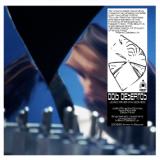
JOÃO PIMENTA GOMES - DOIS DESERTOS

Recorded in Los Angeles over the course of a single day at a studio in the Eagle Rock neighborhood, Dois Desertos was produced by Mario Caldato Jr. and emerged without a predetermined plan or schedule. The project took shape during Portuguese musician João Pimenta Gomes' stay in Los Angeles with his family. During that time, through Rodrigo Amarante, João met Mario and Samantha Caldato, as well as musicians Abe Rounds (drums and percussion) and Gabe Noel (bass and cello). From those encounters, the album began to unfold organically.

Working from simple scores—some containing little more than chord progressions—the sessions left plenty of room for improvisation. Every performance was captured live, in a single take, with no overdubs. The mixing process, also carried out live by Mario Caldato Jr., followed the same philosophy: effects and level adjustments were performed in real time and printed directly to the final two-track master.

At the heart of the album's sound is the Cristal Baschet, a rare instrument played by rubbing glass rods with the hands, causing metal resonators to vibrate and produce an ethereal, resonant tone. João describes its sound as "a trace, almost like a shadow." Rather than taking the lead, the instrument serves as a textural foundation, while the bass and cello carry the melodic lines. Some of these melodies are original compositions, while others draw from traditional Portuguese fado, reimagined through an open and exploratory approach.

The album has a dreamlike atmosphere, reflecting the perspective of someone experiencing Los Angeles from the outside—not in a rush to belong, but fully receptive to the city's unique energy. Two films helped shape this imaginary landscape: Model Shop (Jacques Demy, 1969), in which the French filmmaker uses Los Angeles as a pretext to simply observe and inhabit the city, and Thom Andersen's Los Angeles Plays Itself. The result is Dois Desertos, an album that, in João's own words, "could never have been made anywhere else."

With Dois Desertos, João Pimenta Gomes invites listeners into a deeply immersive experience, revealing a more exploratory side of his artistic practice while reinforcing Amor in Sound's commitment to releasing original works that engage with the many languages of contemporary music.

pre-order now25.09.2026

expected to be published on 25.09.2026

27,69 €
JOÃO PIMENTA GOMES - DOIS DESERTOS

Recorded in Los Angeles over the course of a single day at a studio in the Eagle Rock neighborhood, Dois Desertos was produced by Mario Caldato Jr. and emerged without a predetermined plan or schedule. The project took shape during Portuguese musician João Pimenta Gomes' stay in Los Angeles with his family. During that time, through Rodrigo Amarante, João met Mario and Samantha Caldato, as well as musicians Abe Rounds (drums and percussion) and Gabe Noel (bass and cello). From those encounters, the album began to unfold organically.

Working from simple scores—some containing little more than chord progressions—the sessions left plenty of room for improvisation. Every performance was captured live, in a single take, with no overdubs. The mixing process, also carried out live by Mario Caldato Jr., followed the same philosophy: effects and level adjustments were performed in real time and printed directly to the final two-track master.

At the heart of the album's sound is the Cristal Baschet, a rare instrument played by rubbing glass rods with the hands, causing metal resonators to vibrate and produce an ethereal, resonant tone. João describes its sound as "a trace, almost like a shadow." Rather than taking the lead, the instrument serves as a textural foundation, while the bass and cello carry the melodic lines. Some of these melodies are original compositions, while others draw from traditional Portuguese fado, reimagined through an open and exploratory approach.

The album has a dreamlike atmosphere, reflecting the perspective of someone experiencing Los Angeles from the outside—not in a rush to belong, but fully receptive to the city's unique energy. Two films helped shape this imaginary landscape: Model Shop (Jacques Demy, 1969), in which the French filmmaker uses Los Angeles as a pretext to simply observe and inhabit the city, and Thom Andersen's Los Angeles Plays Itself. The result is Dois Desertos, an album that, in João's own words, "could never have been made anywhere else."

With Dois Desertos, João Pimenta Gomes invites listeners into a deeply immersive experience, revealing a more exploratory side of his artistic practice while reinforcing Amor in Sound's commitment to releasing original works that engage with the many languages of contemporary music.

pre-order now11.09.2026

expected to be published on 11.09.2026

27,69 €
Prisoner - Prisoner

Prisoner

Prisoner

12inchWKC7585501
Wicked Cool Records
07.08.2026
  • 1: La femme qui s'était faite toute seule
  • 2: Jeu de main, jeu de vilain
  • 3: Je ne retiendrai que toi
  • 4: Borne pour obéir
  • 5: Am I an Al?
  • 6: Ton histoire n'est pas mon histoire
  • 7: Il nous faudrait une bonne guerre
  • 8: L'enfant qui est en moi parle
  • 9: Le trouble fête
  • 10: Le paradis perdu
  • 11: Le village olympique
  • 12: Le retour de l'homme qui valait mieux
  • 13: Raumpatrouille
  • 14: Les peine à jouir

The self-titled debut from French outfit PRISONER arrives as a raw, hypnotic burst of modern garage rock—less a traditional song-based album and more a mood piece built from repetition, texture, and atmosphere. Released on Wicked Cool Records, the record leans into a stripped-down philosophy: riffs first, everything else second. Unlike many garage releases, Prisoner is largely instrumental, with vocals used sparingly— often as distant, almost incidental elements rather than the focal point. This gives the album a cinematic, drifting quality. Tracks like “Je ne retiendrai que toi” and “Il nous faudrait une bonne guerre” feel less like songs and more like evolving soundscapes, driven by cyclical guitar figures, motorik rhythms, and a persistent, almost trance-like momentum. The result is hypnotic rather than explosive: music that pulls you inward instead of shouting at you

pre-order now07.08.2026

expected to be published on 07.08.2026

26,47 €
Various - Tchic Tchic: French Bossa Nova 1963-1974  Colored Edition LP 2x12"
 
22

Ever since the late 1950s bossa-nova revolution, Brazil’s influence on French music has been undeniable. Pierre Barouh, Georges Moustaki and a vast array of lesser known artists, all made the Musica Popular Brasileira (MPB) an axis of promotion at the service of a cool and metaphysical, modern and mixed Brazilian lifestyle. Some were seduced by the poetic languors of the bossa, some were looking for fun, and others just loved the American hybridization of jazz-bossa, jazz-samba.


What is bossa nova? One of its creators, Joao Gilberto said: "Its style, cadence, everything is samba. At the very start, we didn't call it bossa nova, we sang a little samba made up of a single note - Samba de uma nota so .... The discussion around the origins of bossa nova is therefore useless”. It is nevertheless useful to remember that these magnificent Brazilian songs, which the guitarist describes as samba, were shifted and balanced around improbable chords. "I like things that lean, the in-betweens that limp with grace," said Pierre Barrouh, quoting Jean Cocteau.


With emotion, arrangements for violin and supple guitar licks, bossa nova rapidly changed. A transformation that can be heard in the Tchic, tchic, French Bossa Nova 1963-1974 compilation, the result of a cultural reappropriation, which traveled through the United States and supplemented itself in France.

A musical revolution that has remained significant, bossa nova was born in Rio. From 1956 to 1961, Brazil lived through its golden years. In five years, the country had invented its modernist style. Elected president in 1956, Juscelino Kubitschek de Oliveira, an elegant man with a broad forehead, brandished a promising slogan: "Fifty years of progress in five years". He quickly got to work. Not worried about increasing debt, he launched the project for a new federal capital, Brasilia, designed by the communist architect Oscar Niemeyer. Volkswagen opened state-of-the-art factories and created the “fusquinha”, the Beetle. In Rio, the Vespa made its first appearance. The Arpoador Surf Club crew run into the “girl” from Ipanema, Helô Pinheiro - the tanned garota ("chick"), between a flower and mermaid, who at 17 walked by the Veloso bar, where the fiery author and composer, Tom Jobim and Vinicius de Moraes, were getting drunk on whiskey. From then on, bossa symbolized cool.

In 1958, Joao Gilberto recorded Chega de Saudade, which the directors of Philips denied, calling it "music for fagots". The marketing director, who believed in it, secretly pressed 3000 78-inch vinyls and distributed them at schools around Rio, creating a tidal wave.

American jazzmen then took over. In particular, trumpeter Dizzy Gillespie and guitarist Charlie Byrd. In November 1962, the Brazilian Ministry of Foreign Affairs funded a "Bossa-Nova" concert at Carnegie Hall in New York, inviting the genre’s pioneers. Unprepared, the show soon turned to disaster. But the troupe was invited to the White House by Jackie Kennedy. The first lady loved "the new beat" and in particular Maria Ninguem, a song by Carlos Lyra, later covered by Brigitte Bardot.

In Brazil, the 1964 military coup quickly ended this euphoria. The destructive atmosphere that ensued pushed many Brazilian musicians to leave, if not to exile. Thus, Tom Jobim, Sergio Mendes and Joao Gilberto arrived to the United States. In New York, Joao Gilberto met saxophonist Stan Getz. At the time, he was married to the Bahianese Astrud Weinert Gilberto, who had a German father. She had never sung before, but she knew how to speak English. Getz therefore asked her to replace her husband on The Girl From Ipanema. The Getz/Gilberto record with Tom Jobim on piano, was released in March 1964. Phil Ramone, the "pope of pop" was in charge of sound.

Bossa nova arrived in Paris through the classic “guitar-voice” channel (Pierre Barouh, Baden Powell, Moustaki…) But France loved jazz and Paris had already welcomed its American contributors. All these good people were to pass through Saint-Germain-des-Prés. The cabaret l'Escale became the Mecca of Latin American sound where one could find Pierre Barrouh and his friends, such as the Camara Trio, samba-jazz aces, whose only record was published by the Saravah label. With a band strangely called Les Masques (a band that included Nicole Croisille and Pierre Vassiliu, among others), the Camara Trio recorded an interesting Brazilian Sound, including the track Il faut tenir which is present on this tasty compilation of rarities.

Other enlightened musicians can also be found on the compilation, such as Jean-Pierre Sabar (songwriter for Hardy, Auffray, Leforestier ...) and the French pop rock organist Balthazar. In 1975, Sabar recorded Aurinkoinen Musiikkimatka on a Finnish label, which featured the crazy Vai, Vai, included on this record. We are now following the footsteps of Brazilian electronic musicians such as Sergio Mendes, Eumir Deodato or Marcos Valle who created funk and disco sounds on their keyboards and synthesizers. A style that influenced Véronique Sanson when she wrote Jusqu’à la Tombée de la nuit in 1969 for Isabelle de Funès, the niece of Louis and a great friend of Michel Berger - Sanson did end up singing this track on her 1992 Sans Regret record.


The pinnacle of exoticism and travel, Sylvia Fels’ Corto Maltese includes bongos, sea mist and ocean sounds. The title was taken from Jacky Chalard’s concept album written in 1974, Je suis vivant, mais j’ai peur (I am alive, but I am scared), based on Gilbert Deflez’s science fiction novel.


However, bossa nova extended the scope of popularity. "In the 1970s, I was a fan of Sergio Mendes, Getz / Gilberto. I fell in love with this music that I knew because I had been an orchestral singer, " explained Isabelle Aubret, who in 1971 delivered a composite record of covers by the very funky Jorge Ben, Orfeu Negro, Tom Jobim, Vinicius de Morais and Jean Ferrat. "I recorded this album for Meys Records in Paris, far from Brazil, with wonderful musicians, François Raubert, Roland Vincent, Alain Goraguer...". The latter wrote the arrangements for Casa Forte, a very percussive title borrowed from Edu Lobo, one of the initiators of the bossa who spent time in California. "Jazz and bossa came together and produced very rhythmic music. I love singing, it allows me to dream, to have fun, to feel a high on stage, and these songs brought me joy, made me swing, my singing felt like a dance.”


The world tours of French singers and their desire for the tropics, often brought them to Rio with its hills, forests, caipirinhas and tanned bodies. There are surprises though, like this Iemenja (Iemenja is the goddess of the sea in the Afro-Brazilian candomblé religion). Not unlike the composer and musician Jean-Pierre Lang, based in Sao Paulo, Claire Chevalier taught Brazil to Brazil. In 1970, the singer and painter published a 45-inch vinyl, Mon mari et mes amants (My husband and my lovers), under the improbable pseudonym of Clarinha (little Claire). She was then living in Rio, with her husband, Joël Leibovitz, who founded a band called Azimuth, and who owned a record label specialized in "sambas enredos" songs for samba school parades.


For its B side, she asked Pierre Perret to come up with lyrics for a song composed by Carlos Imperial: "Oh goddess of the sea, o goddess Iemenja, I bring a white rose to adorn your long hair ..." . "Perret came to see us, and we had fun, remembers Joël Leibovitz. We wrote Lemenja for fun, we recorded it at the Havaí studio, behind the Central do Brasil the central station. Erlon Chaves, the arranger who worked with Elis Regina, joined us" adding his share of Afro-Brazilian percussions and funky brass to the mix.

There is a common misunderstanding in Franco-Brazilian history: that bossa, admittedly hedonistic, is perceived as funny, even though the poets who wrote the texts are often philosophizing on the human condition. Its French interpreters pull it towards a carnival inspired universe, far removed from its fundamental essence. Thus, Jean Constantin covered the famous Samba da minha terra, an ode to the art of samba written by the classic Bahian composer Dorival Caymmi, renaming it with the enticing title of Pas tant de tchi tchi pompon: "On your pier there is no tchi tchi / when you arch your back, you know everything is alright ”(lyrics by Gérard Calvi). This expedited bossa aims for the absurd, but retains a certain elegance.

Indeed, Jean Constantin was not an idiot, the rather large man had a huge mustache and liked fantasy, (Les pantoufles à papa, Le pacha, inspired by cha-cha-cha-cha, salsa and jazz) but he was also the lyricist of Mon manège à moi interpreted by Edith Piaf, the composer of Mon Truc en plume by Zizi Jeanmaire and the soundtrack of François Truffaut’s 400 Blows. Le Poulpe, published in 1970, from which this bossa is extract, was arranged by Jean-Claude Vannier, an accomplice of Serge Gainsbourg’s Melody Nelson. In short: "There is enough of samba / By looking at the parasol / Because my poor cabeza / Is going to die in the sun".

Even the American actress Marpessa Down, who was at the heart of the bossa nova revolution with her role as Euridyce in Marcel Camus’ film Orfeu Negro, winner of the 1959 Cannes Palme d'or, fed the clichée with Je voudrais parler au petit cuica - "Tell me how you manage to always make people want to dance / It's true, I must admit that I cannot resist your magic" - in consequence, once can hear the cuica, a little drum inherited from the Bantu.


But bossa nova had many angles. Societal, of course, pushing actresses who were symbols of women's liberation like Brigitte Bardot, Jeanne Moreau, or Sophia Loren to engage in the exercise of accelerated bossa. In February of 1963, Sophia Loren made a record in French in Rome, Je ne t'aime plus, featuring the song De jour en jour, a bossa written by two Italians, Armando Trovajoli and Tino Fornai, which was released a little later by Barclay. Bossa accompanied the 1960s, a decade of moral liberation. Ann Sorel, who interpreted La Poupée des favellas, caused a sensation with L’amour à plusieurs, a provocative song written by Frédéric Bottom and Jean-Claude Vannier. As for the actress Andrea Parisy, she displayed her bourgeois cheekiness in Marcel Carné's Les Tricheurs before interpreting Les mains qui font du bien. And Magalie Noël, the friend of Boris Vian, who sung Johnny fais-moi mal, was hired to sing Une énorme Samba, composed by Alain Goraguer (arranger to Gainsbourg, Bobby Lapointe and Jean Ferrat) with lyrics by Frédéric Botton.

But in the end, of what wood is bossa nova made of? The answer is given by Christianne Legrand, daughter of Raymond the conductor, and sister to Michel the composer: "With me, with jà" - jà means "immediately" in Portuguese. In 1972, the singer, an expert in vocal jazz and a member of the Double Six, published Le Brésil de Christianne Legrand. Two songs included on the Tchic Tchic compilation that demonstrate how bossa, jazz, funk, rock, etc. work like a swiss army knife: the music is used to denounce broken systems, or miracles, HLM et ciné roman, Cent mille poissons dans ton filet, two songs from the O Cafona soundtrack, a successful telenovela broadcast, at the time in black and white, on TV Globo. The first was adapted in French by the fighter and friend of the Legrand tribe, Agnès Varda. The second is content with a play on words, jostling them into a summer fun.


Véronique Mortaigne

out of Stock

Order now and we will order the item for you at our supplier.

Last In: 87 days ago
27,31 €
Assal - Set Me Free / Emotions (7")
  • 01: Set Me Free
  • 02: Emotions

A super-powerful mashup where a female vocal shines over the groove of “Ain’t No Stoppin’ Us Now”!

This 7-inch release extracts the backing track from McFadden & Whitehead’s legendary 1979 Philly soul classic and layers it with Qubiko’s “Set Me Free,” resulting in a deeply groovy rework.

This release features two powerful tracks by French prvoducer Assal, who energetically delivers killer dance tracks mainly in the digital distribution field. The tracks are selected from the extensive catalog of the French label Plaizir Muzic, run by Stephane Deschezeaux, who also releases music by T-Groove.

The A-side reconstructs the hard-hitting rhythm track and lush, memorable string sections of the dance classic-famously covered by artists such as Biz Markie-and overlays them with the soulful female vocals from Italian producer Qubiko’s “Set Me Free,” creating a truly magical tune.

On the B-side, the tempo of Merry Clayton’s 1980 mid-tempo boogie is pushed up and the rhythm intensified, updating it into a fully floor-ready version.

pre-order now26.06.2026

expected to be published on 26.06.2026

28,15 €
ERWAN KERAVEC - WHITEWATER

Erwan Keravec is a virtuoso Scottish bagpiper, accomplished composer, innovator and performer of considerable distinction. Active since the 1990s, he represents a singular and remarkable figure within the French musical landscape, navigating the fertile terrain between Breton traditional music and cutting-edge contemporary creation. His forthcoming solo album "Whitewater," to be released through Ici d'ailleurs, marks a deeply personal artistic statement-a homecoming of sorts for the musician, following fifteen years devoted primarily to collective endeavours. His sonic palette evokes the pioneering electronic work of Eliane Radigue, the experimental philosophy of Pauline Oliveros, and the musique concrète innovations of Nurse With Wound. A Homecoming: The album represents a work of artistic maturation, gestating over several years whilst Keravec devoted considerable energies to developing his ensemble projects since 2010. For this accomplished musician, the album marks a significant return to intimate, personal engagement with his instrument-a meditative and exploratory practice pursued in solitude. A Poetic Journey: "Whitewater" stands as a rich and deeply poetic achievement-a sound voyage of considerable delicacy and enchantment, which reinvents the bagpipe as a portal to profound listening. Rather like an immersion within water itself, it invites the attentive listener into a wholly transformed relationship with an instrument of ancient provenance.

pre-order now26.06.2026

expected to be published on 26.06.2026

19,29 €
LEROY HUTSON - LUCKY FELLOW (’94 MIX) / REALITY
  • A1: LUCKY FELLOW (’94 MIX)
  • B1: REALITY

The fourth instalment in the Hutson Sevens 7‑inch series finds Home of the Good Groove Records taking a slight detour away from the vaults of unreleased material this time, but back to a pivotal moment in LeRoy Hutson’s creative journey.

Fear not: more unheard gems are on the horizon. But for this chapter, the label rewinds to 1994, a year that marked a meaningful renaissance for the soul legend.

After years of legal battles and persistence, Hutson finally reclaimed partial ownership of his catalogue in 1989 — a hard‑won victory that opened the door to a new era. Though celebrated as a musician, composer, lyricist and performer, the world of publishing was uncharted territory for the musical legend. By 1994, Hutson stepped confidently into that new chapter, signing his first licensing agreement with a Japanese label and publisher.

From that landmark agreement come two recordings now making their debut on 7‑inch vinyl, presented with the care and reverence they deserve.

The A‑side brings us “Lucky Fellow (’94 Mix)”, a track with a storied lineage. First recorded by Maurice Jackson in 1971, it became one of Hutson’s signature moments when he released it on his 1975 album Hutson — a version that remains a fan favourite to this day.

Nearly two decades later, Hutson returned to the studio to revisit the song once more, applying his unmistakable production finesse to craft a fresh, radiant mix. Initially released in Japan on Lucky Fellow: The Best Vol. 2 and then later resurfacing on a Deepbeats Hutson compilation album in 1997.

Now, for the first time, this ’94 version arrives on 7‑inch vinyl — a lovingly curated snapshot of Hutson’s evolution, and a reminder of just how timeless his artistry remains.

Hutson’s “Lucky Fellow” gets a striking reimagining here, trading the warmth of the original for a brighter, crisp production, lifting the melody into sharper focus. While the added vocal riffs don’t just embellish the track — they give it a fresh, expressive identity.

Think of “Lucky Fellow (94 Mix)” as the cool cousin who shows up uninvited and immediately steals the spotlight. It tightens the groove, brightens the melody, and sprinkles in a handful of sly vocal riffs that flip the familiar tune into something delightful and freshly polished.


The flip side of this release digs a little deeper into Hutson’s 1994 chapter, bringing the track “Reality” to the 7‑inch format for the very first time — a moment many collectors and soul devotees have been waiting on.

Originally recorded in 1982, the track spent twelve quiet years on the shelf before finally surfacing on a 1994 P‑Vine CD Hutson compilation. It reappeared twice again on CD throughout the following years and made its first vinyl appearance on a Deepbeats Hutson compilation in 1998.

Nearly two decades later, in 2017, French record label Saph Records reintroduced the track to a new wave of listeners as part of its Unreleased Boogie Tracks 12‑inch series, cementing somewhat of a cult status among Hutson boogie fans.

Cut during the sessions for Hutson’s Paradise era, “Reality” carries the unmistakable sheen of early‑’80s soul — a buoyant, melodic groove wrapped in Huston’s recognisable warmth.
Now freshly remastered in 2026 by UK’s Phil Ward, the track gains an added depth and clarity that enhances its rhythmic glide without losing its vintage charm.
It’s a notable moment in Hutson’s catalogue and a killer selection to finally receive the 7‑inch treatment — a long‑overdue spotlight for a track that has spent far too long in the 7-inch shadows.

out of Stock

Order now and we will order the item for you at our supplier.

Last In: 3 months ago
18,07 €
Palo Alto - Les Furtifs, émeute musicale [remixes] LP

In 2019, La Volte released Les Furtifs, the latest novel by science fiction writer Alain Damasio. At that time, to mark the publication, Damasio invited the band Palo Alto to join him on stage in response to an invitation from the literary festival Oh les beaux jours !, held at La Criée – Théâtre national de Marseille. What was initially intended as a one-off performance led to a multi-date tour across France. The show performed at La Maroquinerie was filmed and recorded in multitrack and will be release on the 12th of June 2026 on Hublotone (HUBLO006CD).

At the same time, to join this release, Palo Alto invited eight artists to remix the pieces composed for the show: Ptôse, Pacific 231, Judith Juillerat, Herb Duncan, Norscq, Thierry Zaboitzeff, Lefdup & Lefdup, and Electronicat.

Bringing together the best of the French underground music scene, these tracks echo avant-garde artists such as Coil and Tuxedomoon, blending electronic music with string instruments, instrumental compositions with acid club influences. They will be available on vinyl in a gatefold sleeve featuring artwork by Kiki Picasso (ex-Bazooka). Inside the gatefold, an exclusive text by Alain Damasio introduces the project.

Palo Alto is a French band formed in Paris in the late 1980s. They have recorded a dozen albums and developed several projects featuring guest musicians such as Scanner, Simon Fisher Turner, Ramuntcho Matta, J. G. Thirlwell / Foetus, Richard Pinhas and the New York trumpeter Rhys Chatham. They contributed to a tribute album to John Balance / Coil and asked a dozen artists to reinterpret "Half-Mute", Tuxedomoon’s debut album, featuring the original members of the American band (Steven Brown, Blaine L. Reininger and Peter Principle). In 2018, they were selected by the Californian band The Residents to take part in a cover album released on Cherry Red Records. Their latest album, dedicated to the philosopher Gilles Deleuze, was released on the Belgian label Sub Rosa in 2020.

a A1 - The Stealthy Ones remix By Ptôse
[c] A2 - Une Grâce [remix By Pacific 231]
[e] A3 - Menace Prophylaxie Niveau 6 [remix By Judith Juillerat]
[g] A4 - La Ville Est À Nous ! [remix By Herb Duncan]
[i] A5 - Lueur Ultramarine [remix By Norscq]
[k] B1 - Une Clameur De Sabbat [remix By Thierry Zaboitzeff]
[m] B2 - Un Cri [remix By Lefdup & Lefdup]
[remix By Electronicat]

[a] A1 - The Stealthy Ones [remix By Ptôse]
[c] A2 - Une Grâce [remix By Pacific 231]
[e] A3 - Menace Prophylaxie Niveau 6 [remix By Judith Juillerat]
[g] A4 - La Ville Est À Nous ! [remix By Herb Duncan]
[i] A5 - Lueur Ultramarine [remix By Norscq]
[k] B1 - Une Clameur De Sabbat [remix By Thierry Zaboitzeff]
[m] B2 - Un Cri [remix By Lefdup & Lefdup]
[remix By Electronicat]

pre-order now12.06.2026

expected to be published on 12.06.2026

21,22 €
STUART MOXHAM - WINTER SUN
  • 1: COTTONMILL LANE
  • 2: DAGGER AND PILL
  • 3: BEFORE WE PRAYED
  • 4: HEART OF GLASS
  • 5: THE QUIET ONE
  • 6: ANCIENT TIME
  • 7: A DIFFERENT DAY
  • 8: STATE OF PENITENTIARY
  • 9: DO THE LOCOMOTION
  • 10: STORMS
  • 11: A DIFFERENT DAY II

Few artists arrive as compellingly yet elusively as did Stuart Moxham upon the startling debut of Young Marble Giant's sole studio album, Colossal Youth. Initial excitement was thrust upon the young Alison Statton, who sang songs written by Stuart with a couple of exceptions. The unaffected tone of her voice was in steep contrast to the typical goings-on in that still quite punky time, but it was what she sang that fully sold it. Moxham's lyrics were both intensely personal and woefully oblique. There seemed to be a sort of story in there. Confusingly, that story often felt like it was Alison's rather than the fellow who'd penned it. The unexpected miracle a deal with Rough Trade and the album's subsequent success had the band stymied for a second act and it wasn't long before the group disintegrated, although circumstances often brought members and a few of their peers - among them Debbie Pritchard, Spike Williams, and a third Moxham brother, Drew. - Phil Moxham was the band's bassist - together in odd combinations and pairings. None of the three YMG members have been especially prolific, but it's Stuart's career that has seemed the least straightforward, as if he'd wondered, "What to do when your debut is a nearly perfect artefact?" In the case of his first "solo" full-length in thirty years, Stuart took the unusual step of entering an alien studio with American producer Dave Trumfio (who's also the leader of Pulsars and bassist for Mekons) and allowing him to decide what tracks (of a large number submitted by Stuart) to record, and how they'd be orchestrated. Or not. In this case - save for the writing and composing - it's really Dave's album as much as Stuart's. The tracks went with Dave back to LA, where they were mixed, a few parts added (including subtle backing vocals from the incredible Linda Smith) . . . then later unmixed and reworked by John Henderson and Roni Ayala back in Valencia. Both versions will be made available, and both have a compelling cohesion missing from some of Stuart's work since YMG. Stuart's minimalism is quite intact, the range of emotions quite wide. There are few artists operating today like Stuart Moxham, a composer of the upper echelon of innate talent who combines avant-garde ideas with deceptively forthright personal lyrics, solid hooks, ambience and vaguely off-centre instrumentation which defies the casual marketplace as confoundingly as it ever did to the underground, whatever that is these days. His songs have been admired and / covered by everyone from Lush to Kurt Cobain, adaptations in Japanese and even a French-language hit by Etienne Daho, adaptations by Hole, Galaxie 500, Magnetic Fields, Belle And Sebastian and many others - but a new Stuart Moxham album is a special kind of joy.

pre-order now12.06.2026

expected to be published on 12.06.2026

24,79 €
Julianna Barwick & Mary Lattimore - Tragic Magic LP

Repress

The Collaboration - Having toured together over the years, Lattimore and Barwick now join forces to co-write and record this full-length album. Their creative synergy brings together harp, voice, and analog synths in a deeply emotional, immersive sound journey. The album was recorded at the Philharmonie de Paris with co-producer Trevor Spencer (Fleet Foxes, Beach House). This album continues a unique series of collaborations between the label and the Musée de la Musique, featuring historical instruments in contemporary composition. Since 2017, InFiné and the Philharmonie de Paris have co-developed a series of albums designed to highlight the extraordinary instrument collection of the Musée de la Musique. Following the albums InBach by Arandel (2020) and Saturn 63 by Seb Martel (2022), this third release is a meeting of two iconic contemporary ambient voices: Mary Lattimore and Julianna Barwick. The project offers the artists full access to the museum’s playable instruments for recording, sound conservation, and creative reinterpretation.


--


Tragic Magic brings together Julianna Barwick and Mary Lattimore, two of contemporary ambient, experimental and electronic music’s most celebrated composers, for a unique collaboration at the Philharmonie de Paris, with extraordinary access to the Musée de la Musique’s instrument collection, in partnership with the French label InFiné. The album features seven immersive, evocative compositions guided by the human spirit – intimate, grounded in friendship, both earthly and cosmic – and part of a greater continuum, reflecting the solace and transformative power of artistry across generations.

Co-produced by Trevor Spencer (Fleet Foxes, Beach House), Tragic Magic was created in just nine days, a testament to the “musical telepathy” that has developed between Barwick and Lattimore over years of touring and friendship. Arriving in Paris from Los Angeles shortly after the 2025 wildfires, their sessions combined improvisation with the emotions and experiences they carried, in a setting both inspiring and deeply supportive. Lattimore selected harps tracing the instrument’s evolution from 1728 to 1873, while Barwick chose several iconic analog synthesizers, including the Roland JUPITER and Sequential Circuits PROPHET-5. In freeform dialogue between voice and instrument, they create a meditation on tragedy, wonder, and the restorative power of shared experience.

The duo, often joined by Spencer, also explored the city, sharing meals and visiting museums and landmarks, each encounter leaving an impression on their next session. The experience allowed them to work intimately with rare instruments, blending their personal sensibilities with centuries of history, resulting in music that honors the past while remaining a deeply authentic expression of the present.
Throughout Tragic Magic, Barwick and Lattimore find something beyond themselves: a sense that while everything may not be okay, beauty persists. Their approach – transforming life into music, observing, feeling, and creating – continues a lineage of creative expression and visionary invention, embodied in the very instruments they employed for this project.

out of Stock

Order now and we will order the item for you at our supplier.

Last In: 7 months ago
23,11 €
Pomplamoose - Photogénique LP
  • A1: C'est Simple
  • A2: A Cabo (Feat Larry Goldings)
  • A3: Angélique
  • A4: Tu Peux Pas Savoir (Feat Larry Goldings)
  • A5: On Est Bien Là (Feat Laura Cahen)
  • A6: Nuclear Kittens
  • B1: False D'antan (Feat Larry Goldings)
  • B2: Tu Me Manques
  • B3: Julie
  • B4: Pauline
  • B5: Nulle Part
  • B6: Félicitations!

For the last three years, Pomplamoose has shared the making of ‘Photogénique’, a lush and groovy French bossa-pop album produced by Jeremy Most (Emily King), Jack Conte and Philip Etherington (Lizzy McAlpine)

It’s a romantic, playful and deeply nostalgic coming-of-age story steeped in Dawn’s childhood memories of France and Belgium. Collaborations include legendary jazz organist Larry Goldings and French singer songwriter Laura Cahen.

out of Stock

Order now and we will order the item for you at our supplier.

Last In: 5 months ago
22,65 €
Guilty Razors - Complete Recordings 1977 - 1978

UILTY RAZORS, BONA FIDE PUNKS.


Writings on the topic that go off in all directions, mind-numbing lectures given by academics, and testimonies, most of them heavily doctored, from those who “lived through that era”: so many people today fantasize about the early days of punk in our country… This blessed moment when no one had yet thought of flaunting a ridiculous green mohawk, taking Sid Vicious as a hero, or – even worse – making the so-called alternative scene both festive and boorish. There was no such thing in 1976 or 1977, when it wasn’t easy to get hold of the first 45s by the Pistols or the Clash. Few people were aware of what was happening on the fringes of the fringes at the time. Malcolm McLaren was virtually unknown, and having short hair made you seem strange. Who knew then that rock music, which had taken a very bad turn since the early 1970s, would once again become an essential element of liberation? That, thanks to short and fast songs, it would once again rediscover that primitive, social side that was so hated by older generations? Who knew that, besides a few loners who read the music press (it was even better if they read it in English) and frequented the right record stores? Many of these formed bands, because it was impossible to do otherwise. We quickly went from listening to the Velvet Underground to trying to play the Stooges’ intros. It’s a somewhat collective story, even though there weren’t many people to start it.
The Guilty Razors were among those who took part in this initial upheaval in Paris. They were far from being the worst. They had something special and even released a single that was well above the national average. They also had enough songs to fill an album, the one you’re holding. In everyone’s opinion, they were definitely not among the punk impostors that followed in their wake. They were, at least, genuine and credible.

Guilty Razors, Parisian punk band (1975-1978). To understand something about their somewhat linear but very energetic sound, we might need to talk about the context in which it was born and, more broadly, recall the boredom (a theme that would become capital in punk songs) coupled with the desire to blow everything off, which were the basis for the formation of bands playing a rejuvenated rock music ; about the passion for a few records by the Kinks or the early Who, by the Stooges, by the Velvet mostly, which set you apart from the crowd.
And of course, we should remember this new wave, which was promoted by a few articles in the specialized press and some cutting-edge record stores, coming from New York or London, whose small but powerful influence could be felt in Paris and in a handful of isolated places in the provinces, lulled to sleep by so many appalling things, from Tangerine Dream to President Giscard d’Estaing...
In 1975-76, French music was, as almost always, in a sorry state ; it was still dominated by Johnny Hallyday and Sylvie Vartan. Local rock music was also rather bleak, apart from Bijou and Little Bob who tried to revive this small scene with poorly sound-engineered gigs played to almost no one.
In the working class suburbs at the time, it was mainly hard rock music played to 11 that helped people forget about their gruelling shifts at the factory. Here and there, on the outskirts of major cities, you still could find a few rockers with sideburns wearing black armbands since the death of Gene Vincent, but it wasn’t a proper mass movement, just a source of real danger to anyone they came across who wasn't like them. In August 1976, a festival unlike any other took place in Mont-de-Marsan – the First European Punk Festival as the poster said – with almost as many people on stage as in the audience. Yet, on that day, a quasi historical event happened, when, under the blazing afternoon sun, a band of unknowns called The Damned made an unprecedented noise in the arena, reminiscent of the chaotic Stooges in their early adolescence. They were the first genuine punk band to perform in our country: from then on, anything was possible, almost anything seemed permissible.

It makes sense that the four+1 members of Guilty Razors, who initially amplified acoustic guitars with crappy tape recorder microphones, would adopt punk music (pronounced paink in French) naturally and instinctively, since it combines liberating noise with speed of execution and – crucially – a very healthy sense of rebellion (the protesters of May 1968 proclaimed, and it was even a slogan, that they weren’t against old people, but against what had made them grow old. In the mid-1970s, it seemed normal and obvious that old people should now ALSO be targeted!!!).
At the time, the desire to fight back, and break down authority and apathy, was either red or black, often taking the form of leafleting, tumultuous general assemblies in the schoolyard, and massive or shabby demonstrations, most of the time overflowing with an exciting vitality that sometimes turned into fights with the riot police. Indeed, soon after the end of the Vietnam War and following Pinochet’s coup in Chile, all over France, Trotskyist and anarcho-libertarian fervour was firmly entrenched among parts of the educated youth population, who were equally rebellious and troublemakers whenever they had the chance. It should also be noted that when the single "Anarchy in the UK" was first heard, even though not many of us had access to it, both the title and its explosive sound immediately resonated with some of those troublemakers crying out for ANARCHY!!! Meanwhile, the left-wing majority still equated punks with reckless young neo-Nazis. Of course, the widely circulated photos in the mainstream press of Siouxsie Sioux with her swastikas didn’t necessarily help to win over the theorists of the Great Revolution. It took Joe Strummer to introduce The Clash as an anti-racist, anti-fascist and anti-ignorance band for the rejection of old-school revolutionaries to fade a little.

The Lycée Jean-Baptiste Say at Porte d’Auteuil, despite being located in the very posh and very exclusive 16th arrondissement of Paris, didn’t escape these "committed" upheavals, which doubled as the perfect outlet for the less timid members of this generation.
“Back then, politics were fun,” says Tristam Nada, who studied there and went on to become Guilty Razors’ frontman. “Jean-Baptiste was the leftist high-school in the neighbourhood. When the far right guys from the GUD came down there, the Communist League guys from elsewhere helped us fight them off.”
Anything that could challenge authority was fair game and of course, strikes for just about any reason would lead to increasingly frequent truancy (with a definitive farewell to education that would soon follow). Tristam Nada spent his 10th and 11th unfinished grades with José Perez, who had come from Spain, where his father, a janitor, had been sentenced to death by Franco. “José steered my tastes towards solid acts such as The Who. Like most teenagers, I had previously absorbed just about everything that came my way, from Yes to Led Zeppelin to Genesis. I was exploring… And then one day, he told me that he and his brother Carlos wanted to start a rock band.” The Perez brothers already played guitar. “Of course, they were Spanish!”, jokes their singer. “Then, somewhat reluctantly, José took up the bass and we were soon joined by Jano – who called himself Jano Homicid – who took up the rhythm guitar.” Several drummers would later join this core of not easily intimidated young guys who didn’t let adversity get the better of them.

The first rehearsals of the newly named Guilty Razors took place in the bedroom of a Perez aunt. There, the three rookies tried to cover a few standards, songs that often were an integral part of their lives. During a first, short gig, in front of a bewildered audience of tough old-school rockers, they launched into a clunky version of the Velvet Underground's “Heroin”. Challenge or recklessness? A bit of both, probably… And then, step by step, their limited repertoire expanded as they decided to write their own songs, sung in a not always very accurate or academic English, but who cared about proper grammar or the right vocabulary, since what truly mattered was to make the words sound as good as possible while playing very, very fast music? And spitting out those words in a language that left no doubt as to what it conveyed mattered as well.
Trying their hand a the kind of rock music disliked by most of the neighbourhood, making noise, being fiercely provocative: they still belonged to a tiny clique who, at this very moment, had chosen to impose this difference. And there were very few places in France or elsewhere, where one could witness the first stirrings of something that wasn’t a trend yet, let alone a movement.

In the provinces, in late 1976 or early 1977, there couldn’t be more than thirty record stores that were a bit more discerning than average, where you could hear this new kind of short-haired rock music called “punk”. The old clientele, who previously had no problem coming in to buy the latest McCartney or Aerosmith LP, now felt a little less comfortable there…
In Paris, these enlightened places were quite rare and often located nex to what would become the Forum des Halles, a big shopping mall. Between three aging sex workers, a couple of second-hand clothes shops, sellers of hippie paraphernalia and small fashion designers, the good word was loudly spread in two pioneering places – propagators of what was still only a new underground movement. Historically, the first one was the Open Market, a kind of poorly, but tastefully stocked cave. Speakers blasted out the sound of sixties garage bands from the Nuggets compilation (a crucial reference for José Perez) or the badly dressed English kids of Eddie and the Hot Rods. This black-painted den was opened a few years earlier by Marc Zermati, a character who wasn’t always in a sunny disposition, but always quite radical in his (good) choices and his opinions. He founded the independent label Skydog and was one of the promoters of the Mont-de-Marsan punk festivals. Not far from there was Harry Cover, another store more in tune with the new New York scene, which was amply covered in the house fanzine, Rock News (even though it was in it that the photos of the Sex Pistols were first published in France).
It was a favorite hang-out of the Perez brothers and Tristam Nada, as the latter explained. “It’s at Harry Cover’s that we first heard the Pistols and Clash’s 45s, and after that, we decided to start writing our first songs. If they could do it, so could we!”
The sonic shocks that were “Anarchy in the UK”, “White Riot” or the Buzzcocks’s EP, “Spiral Scratch” – which Guilty Razors' sound is reminiscent of – were soon to be amplified by an unparalleled visual shock. In April 1977, right after the release of their first LP, The Clash performed at the Palais des Glaces in Paris, during a punk night organised by Marc Zermati. For many who were there, it was the gig of a lifetime…
Of course, Guilty Razors and Tristam were in the audience: “That concert was fabulous… We Parisian punks were almost all dressed in black and white, with white shirts, skinny leather ties, bikers jackets or light jackets, etc. The Clash, on the other hand, wore colourful clothes. Well, the next day, at the Gibus, you’d spot everyone who had been at this concert, but they weren’t wearing anything black, they were all wearing colours.”

It makes sense to mention the Gibus club, as Guilty Razors often played there (sometimes in front of a hostile audience). It was also the only place in Paris that regularly scheduled new Parisian or Anglo-Saxon acts, such as Generation X, Siouxsie and the Banshees, the Slits, and Johnny Thunders who would become a kind of messed-up mascot for the venue. A little later, in 1978, the Rose Bonbon – formerly the Nashville – also attracted nightly owls in search of electric thrills… In 1977, the iconic but not necessarily excellent Asphalt Jungle often played at the Gibus, sometimes sharing the bill with Metal Urbain, the only band whose aura would later transcend the French borders (“I saw them as the French Sex Pistols,” said Geoff Travis, head of their British label Rough Trade). Already established in this small scene, Metal Urbain helped the young and restless Guilty Razors who had just arrived. Guitarist for Metal Urbain Hermann Schwartz remembers it: “They were younger than us, we were a bit like their mentors even if it’s too strong a word… At least they were credible. We thought they were good, and they had good songs which reminded of the Buzzcocks that I liked a lot. But at some point, they started hanging out with the Hells Angels. That’s when we stopped following them.”

The break-up was mutual, since, Guilty Razors, for their part, were shocked when they saw a fringe element of the audience at Metal Urbain concerts who repeatedly shouted “Sieg Heil” and gave Nazi salutes. These provocations, even still minor (the bulk of the skinhead crowd would later make their presence felt during concerts), weren’t really to the liking of the Perez brothers, whose anti-fascist convictions were firmly rooted. Some things are non-negotiable.
A few months earlier (in July 1978), Guilty Razors had nevertheless opened very successfully for Metal Urbain at the Bus Palladium, a more traditonally old-school rock night-club. But, as was sometimes the case back then, the night turned into a mass brawl when suburban rockers came to “beat up punks”.

Back then, Parisian nights weren’t always sweet and serene.

So, after opening as best as they could for The Jam (their sound having been ruined by the PA system), our local heroes were – once again – met outside by a horde of greasers out to get them. “Thankfully,” says Tristam, “we were with our roadies, motorless bikers who acted as a protective barrier. We were chased in the neighbouring streets and the whole thing ended in front of a bar, with the owner coming out with a rifle…”
Although Tristam and the Perez brothers narrowly escaped various, potentially bloody, incidents, they weren’t completely innocent of wrongdoing either. They still find amusing their mugging of two strangers in the street for example (“We were broke and we simply wanted to buy tickets for the Heartbreakers concert that night,” says Tristam). It so happened that their victims were two key figures in the rock business at the time: radio presenter Alain Manneval and music publisher Philippe Constantin. They filed a complaint and sought monetary compensation, but somehow the band’s manager, the skilful but very controversial Alexis, managed to get the complaint withdrawn and Guilty Razors ended up signing with Constantin with a substantial advance.

They also signed with Polydor and the label released in 1978 their only three-track 45, featuring “I Don't Wanna be A Rich”, “Hurts and Noises” and “Provocate” (songs that exuded perpetual rebellion and an unquenchable desire for “class” confrontation). It was a very good record, but due to a lack of promotion (radio stations didn’t play French artists singing in English), it didn’t sell very well. Only 800 copies were allegedly sold and the rest of the stock was pulped… Initially, the three tracks were to be included on a LP that never came to be, since they were dropped by Polydor (“Let’s say we sometimes caused a ruckus in their offices!” laughs Tristam.) In order to perfect the long-awaited LP, the band recorded demos of other tracks. There was a cover of Pink Floyd's “Lucifer Sam” from the Syd Barrett era – proof of an enduring love for the sixties’ greats –, “Wake Up” a hangover tale and “Bad Heart” about the Baader-Meinhof gang, whose actions had a profound impact on the era and on a generation seeking extreme dissent... On the album you’re now discovering, you can also hear five previously unreleased tracks recorded a bit later during an extended and freezing stay in Madrid, in a makeshift studio with the invaluable help of a drummer also acting as sound engineer. He was both an enthusiastic old hippie and a proper whizz at sound engineering. Here too, certain influences from the fifties and sixties (Link Wray, the Troggs) are more than obvious in the band’s music.

Shortly after a final stormy and rather barbaric (on the audience’s side) “Punk night” at the Olympia in June 1978, Tristam left the band ; his bandmates continued without him for a short while.

But like most pioneering punk bands of the era, Guilty Razors eventually split up for good after three years (besides once in Spain, they’d only played in Paris). The reason for ceasing business activities were more or less the same for everyone: there were no venues outside one’s small circuit to play this kind of rock music, which was still frightening, unknown, or of little interest to most people. The chances of recording an LP were virtually null, since major labels were only signing unoriginal but reassuring sub-Téléphone clones, and the smaller ones were only interested in progressive rock or French chanson for youth clubs. And what about self-production? No one in our small safety-pinned world had thought about it yet. There wasn’t enough money to embark on that sort of venture anyway.

So yes, the early days of punk in France were truly No Future!
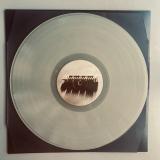
out of Stock

Order now and we will order the item for you at our supplier.

Last In: 5 months ago
21,43 €
MARKET EAST - FRENCH STREET
  • ANGEL FROM THE SKY
  • MEDITATIONS ON MOTHER EARTH
  • CIRCLES OF TIME
  • ECHOES OF MY HEART
  • EVERYDAY, SPRINGTIME
  • IN THE DELTA
  • THE CASTLES OF OUR MINDS
  • ROSES
  • ITALIAN MARKET WINE
  • FRENCH STREET
  • ST. RITA
  • SO HARD TO SAY GOODBYE
also available

PAISLEY PEACH VINYL[24,79 €]


Market East teilt endlich seine wichtigste Botschaft mit der Welt in Form seines Debütalbums ,French Street". Die Band, bestehend aus Kurt Cain (Gesang), Vincent John (Gesang, Bass, Gitarre und Keyboard) und Maxwell Perla (Gesang, Schlagzeug und Percussion), liefert ihre charakteristischen himmlischen dreistimmigen Harmonien über Arrangements, die noch nie so reichhaltig und fesselnd geklungen haben. ,French Street" ist extrem gefühlvoll und die Vocals sind üppig, als hätten die Zombies in Muscle Shoals aufgenommen. Die Texte sind poetisch und nostalgisch, da die Band Songs über ihre vergangenen ,goldenen" Jahre geschrieben hat. Damals hatten die Jungs nicht viel außer einander und ihrer gemeinsamen Liebe zur Musik. Sänger Kurt Cain lebte in einem kleinen Reihenhaus in North Philadelphia in einer fast verlassenen Gasse namens French Street. Hier trafen sich Cain, John und Perla jede Woche, um der Realität zu entfliehen und sich gemeinsam an der Musik zu berauschen. Sie entwickelten eine tiefe Wertschätzung für alles aus den 60er- und 70er-Jahren, von Simon & Garfunkel bis The Moments und allem, was dazwischen liegt. All diese Jahre später hat Market East ein eigenes klassisches Album geschaffen. Vom Barock-Pop des Titelsongs und dem mitreißenden Soul von ,Roses" bis hin zu den lateinamerikanischen Klängen von ,Echoes of My Heart" und den orchestralen Klängen von ,Everyday, Springtime" zeigt Market East ihre beeindruckende Bandbreite. Die Platte wurde in Philadelphia auf Analogband aufgenommen und von Market East und Eraserhood Sound produziert. Hol dir noch heute dein Exemplar dieses zeitlosen Klassikers.

pre-order now03.04.2026

expected to be published on 03.04.2026

23,49 €
Items per Page:

Language